




These Politics of Planned Development Class 12 Notes give a quick, exam-ready summary of how independent India chose to grow its economy, set to the 2026-27 CBSE syllabus. The notes pull together every key date, term and debate from Chapter 3 of Politics in India Since Independence. Students can use them for a fast revision the night before a test or to fix the main ideas before they attempt the back-exercise questions.
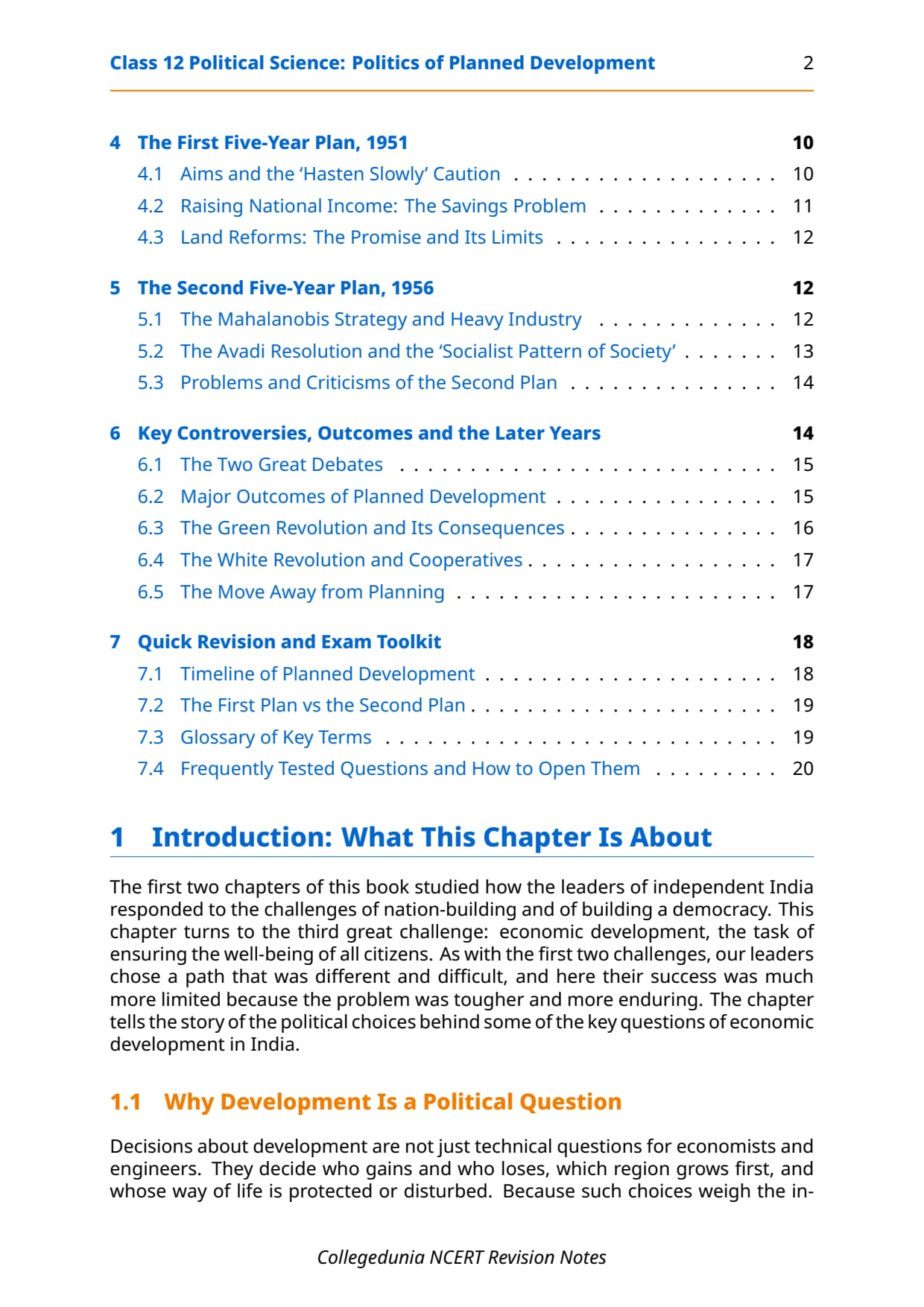
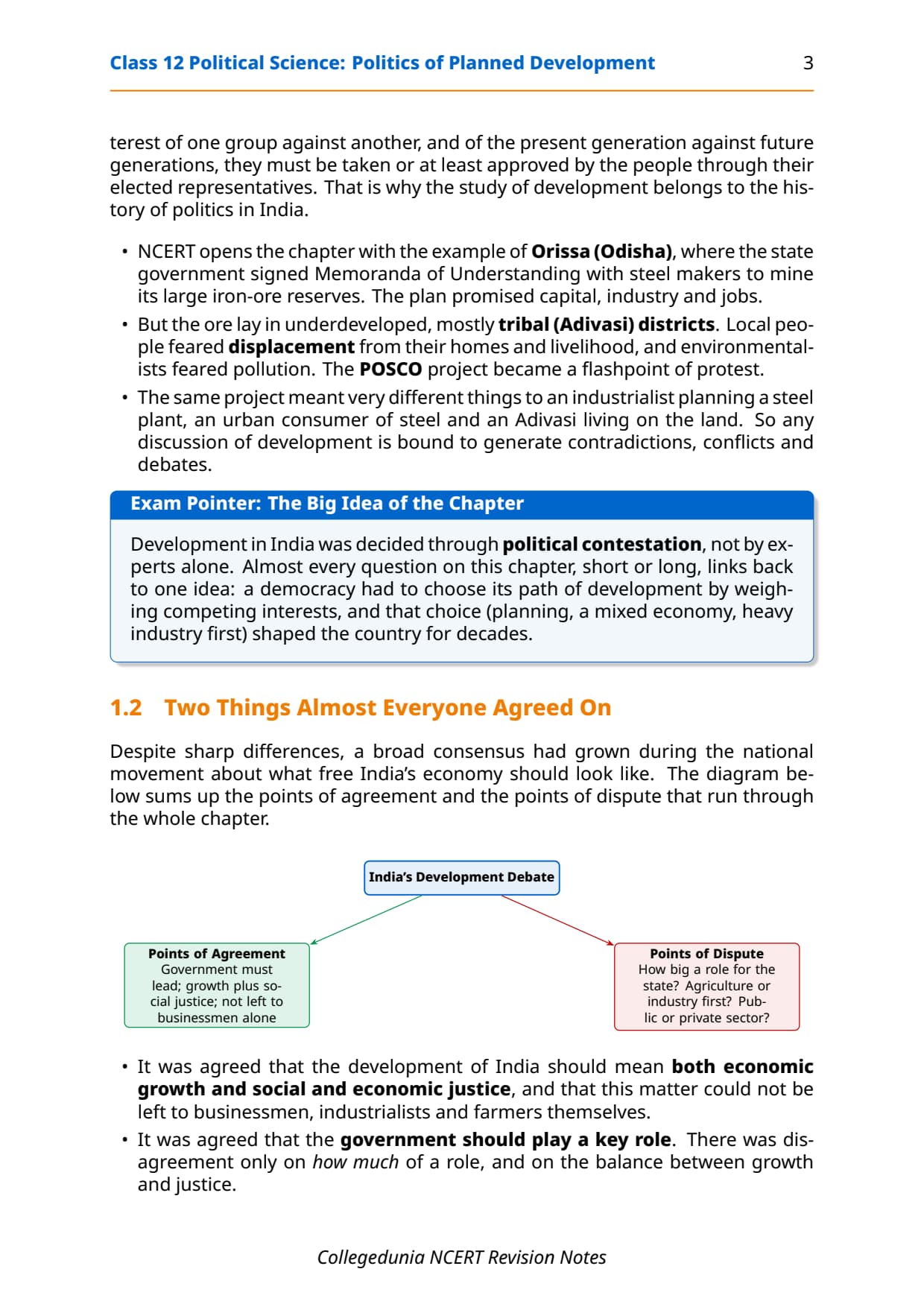
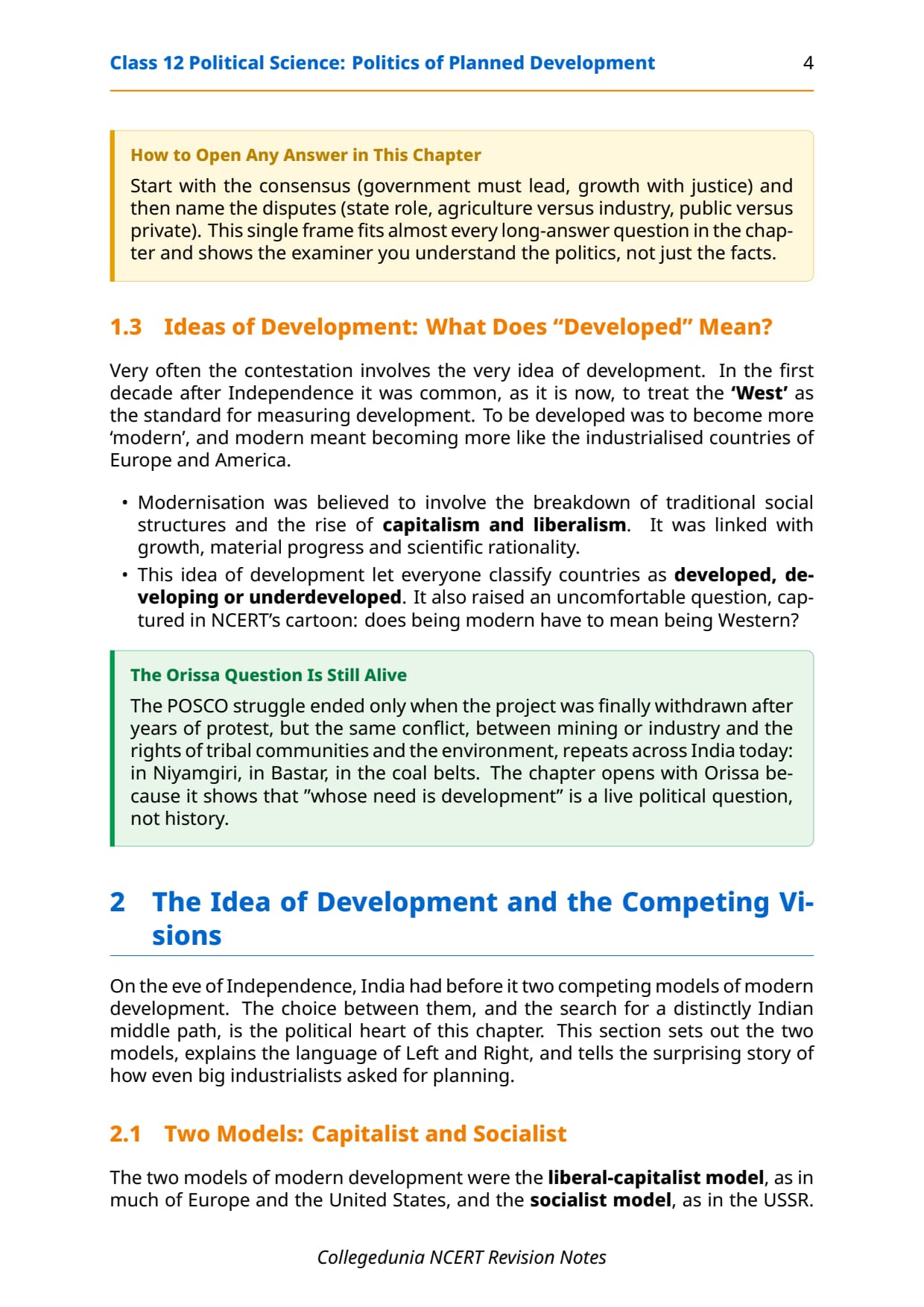
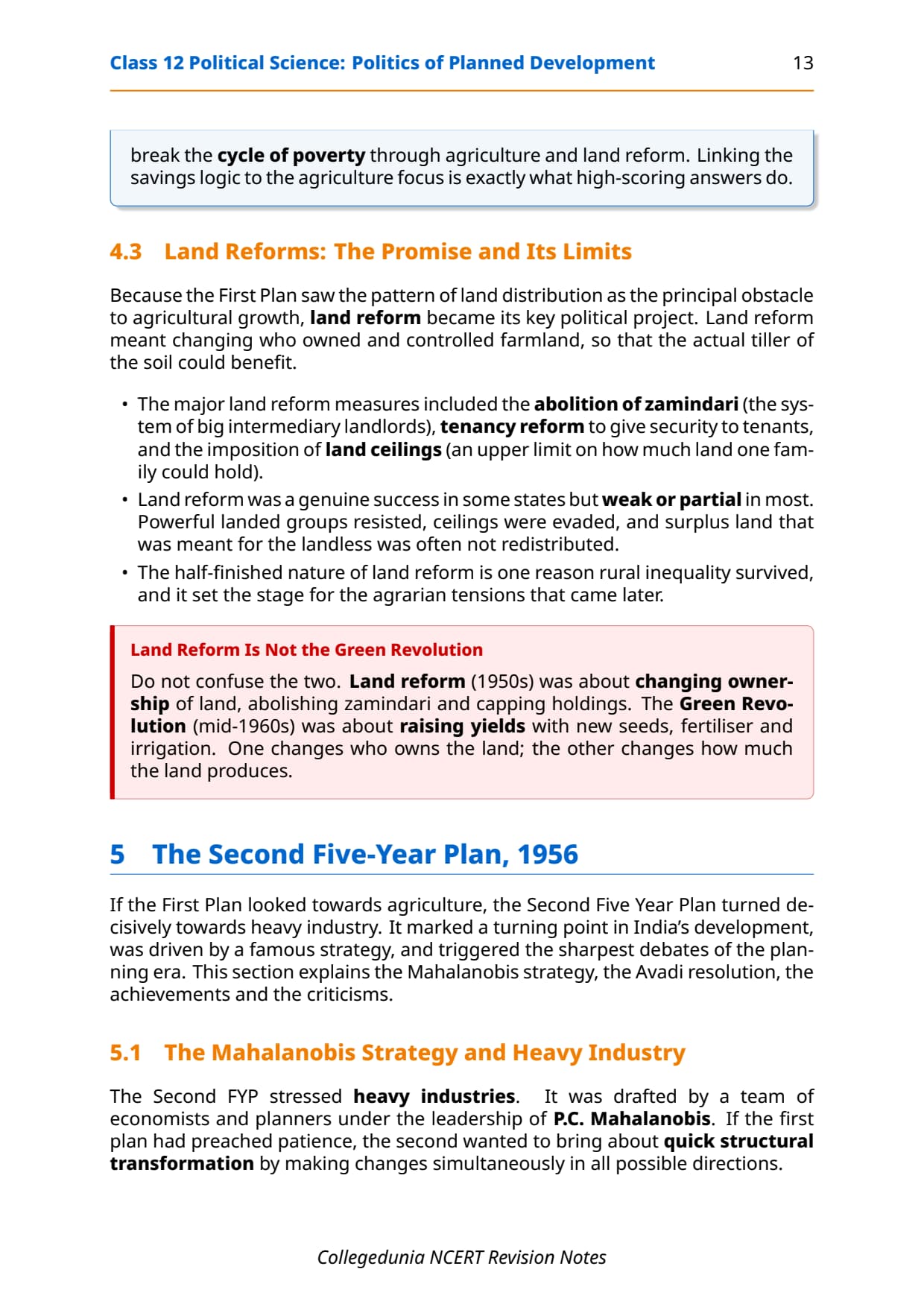
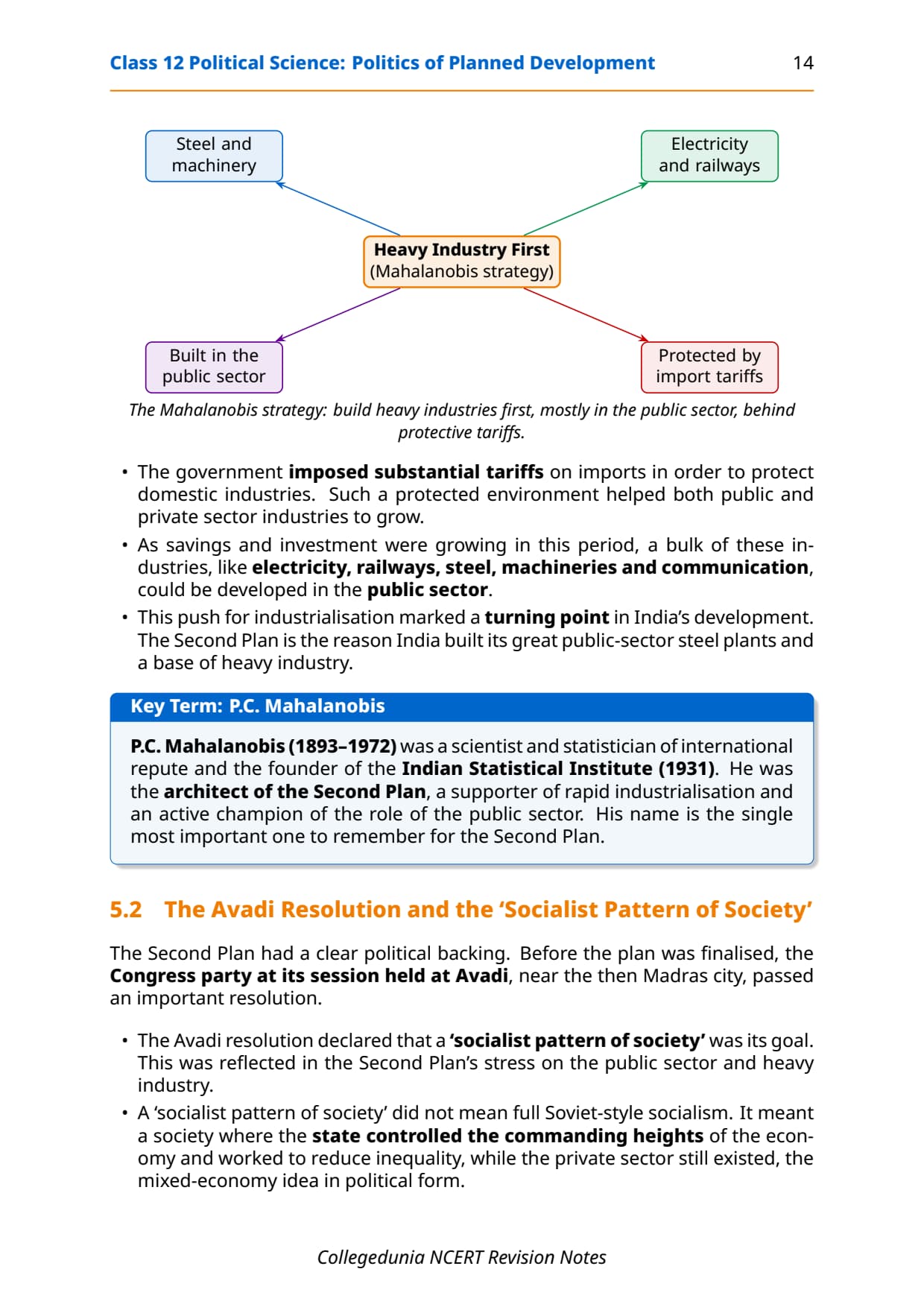
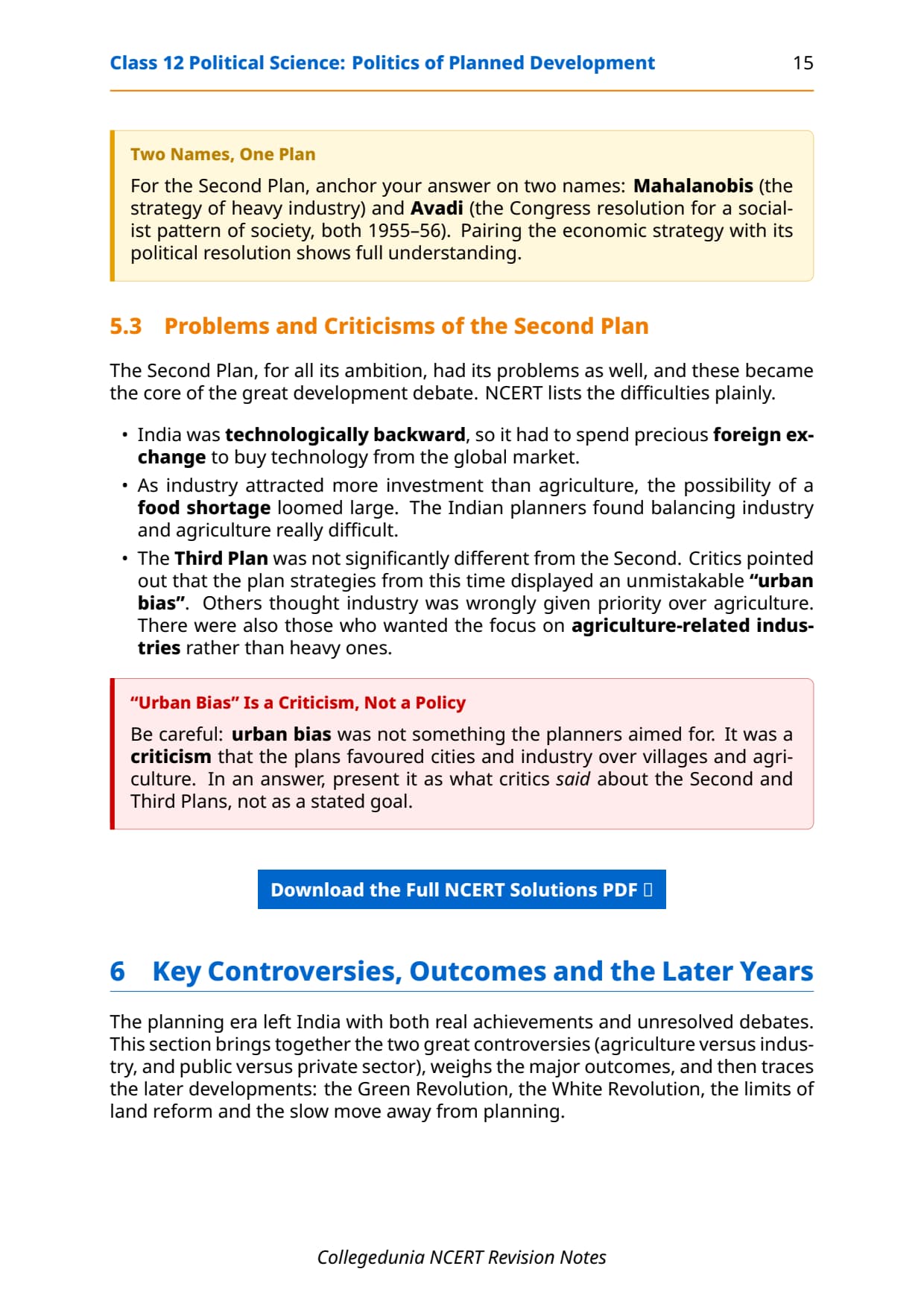
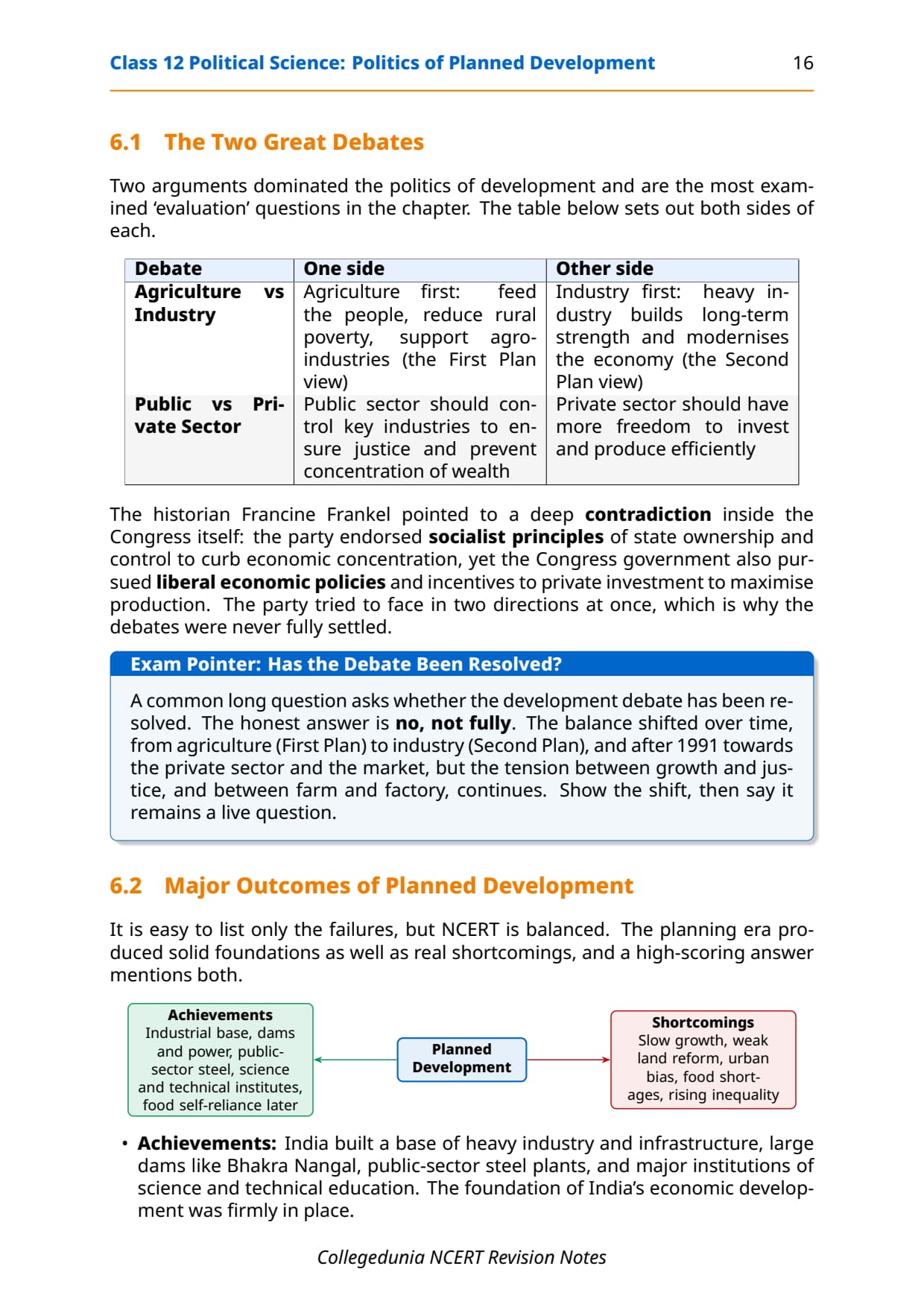
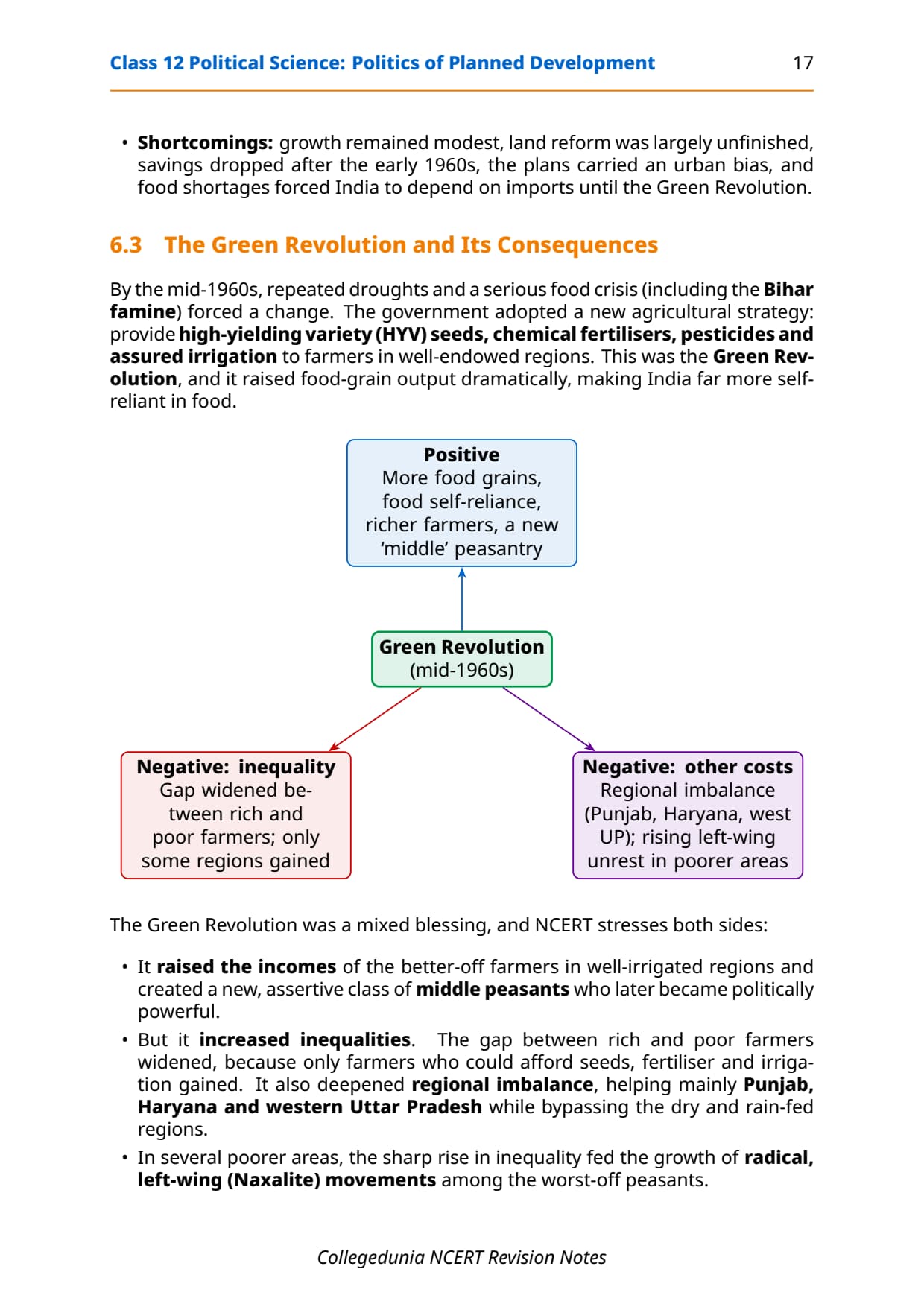
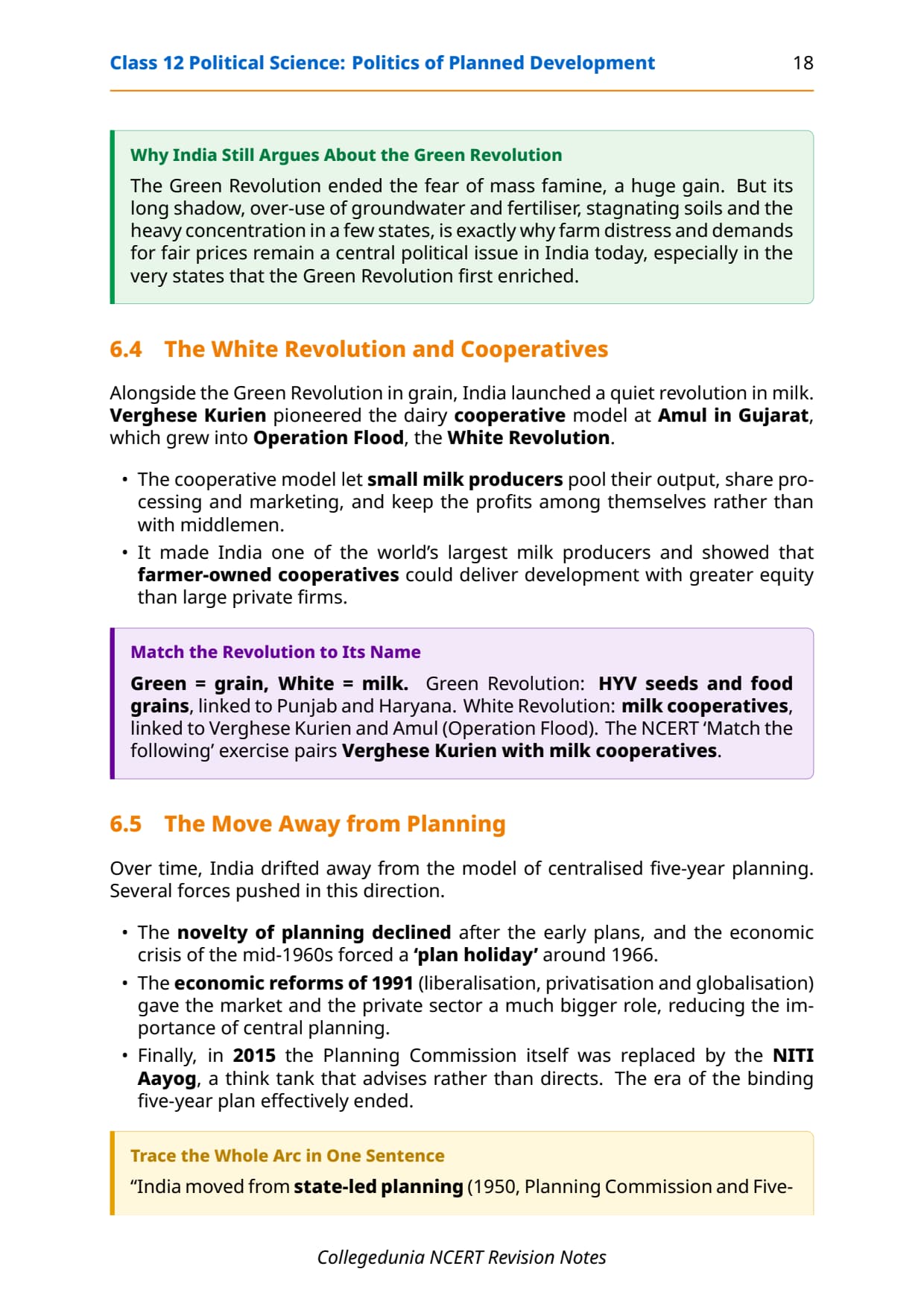
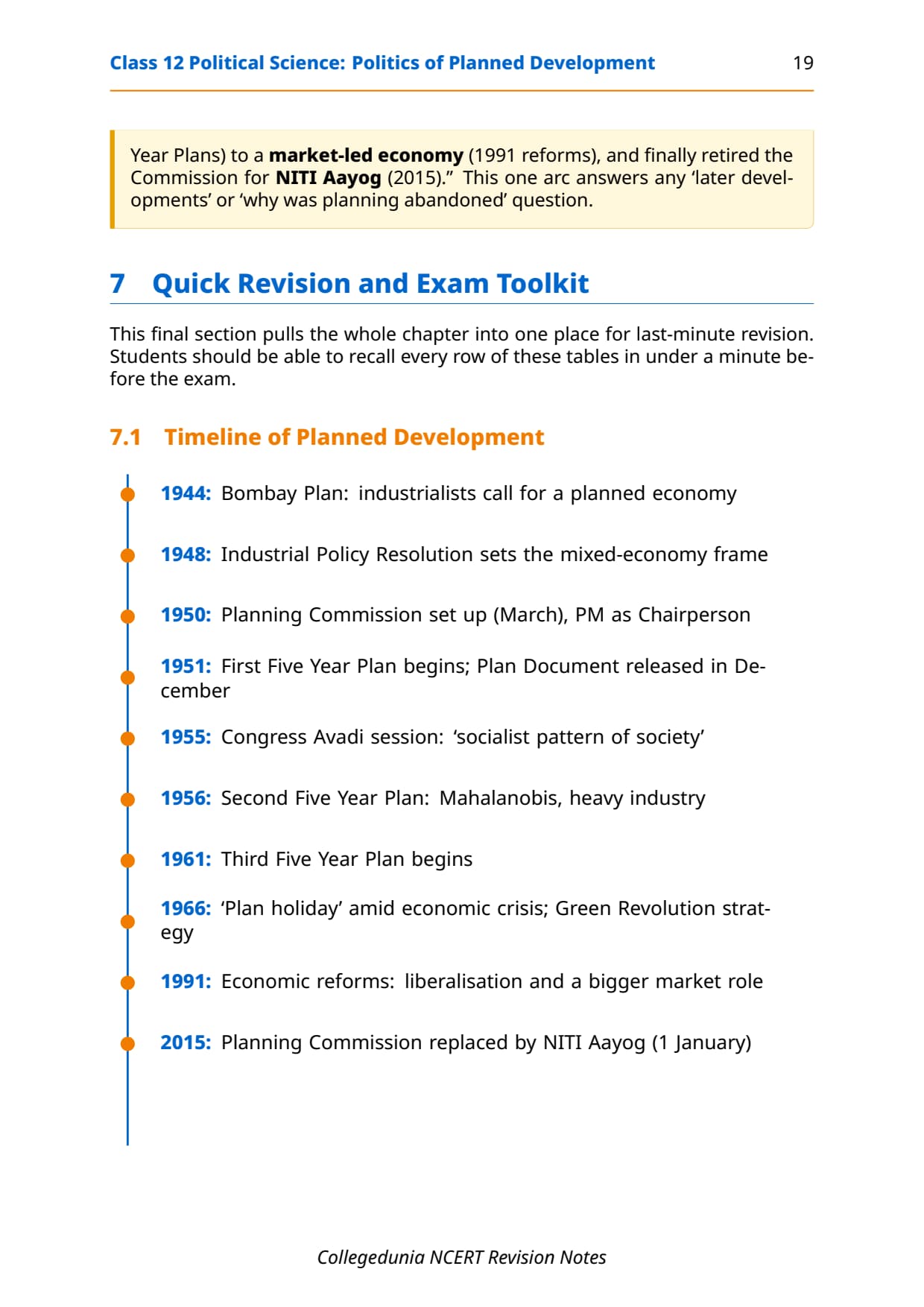
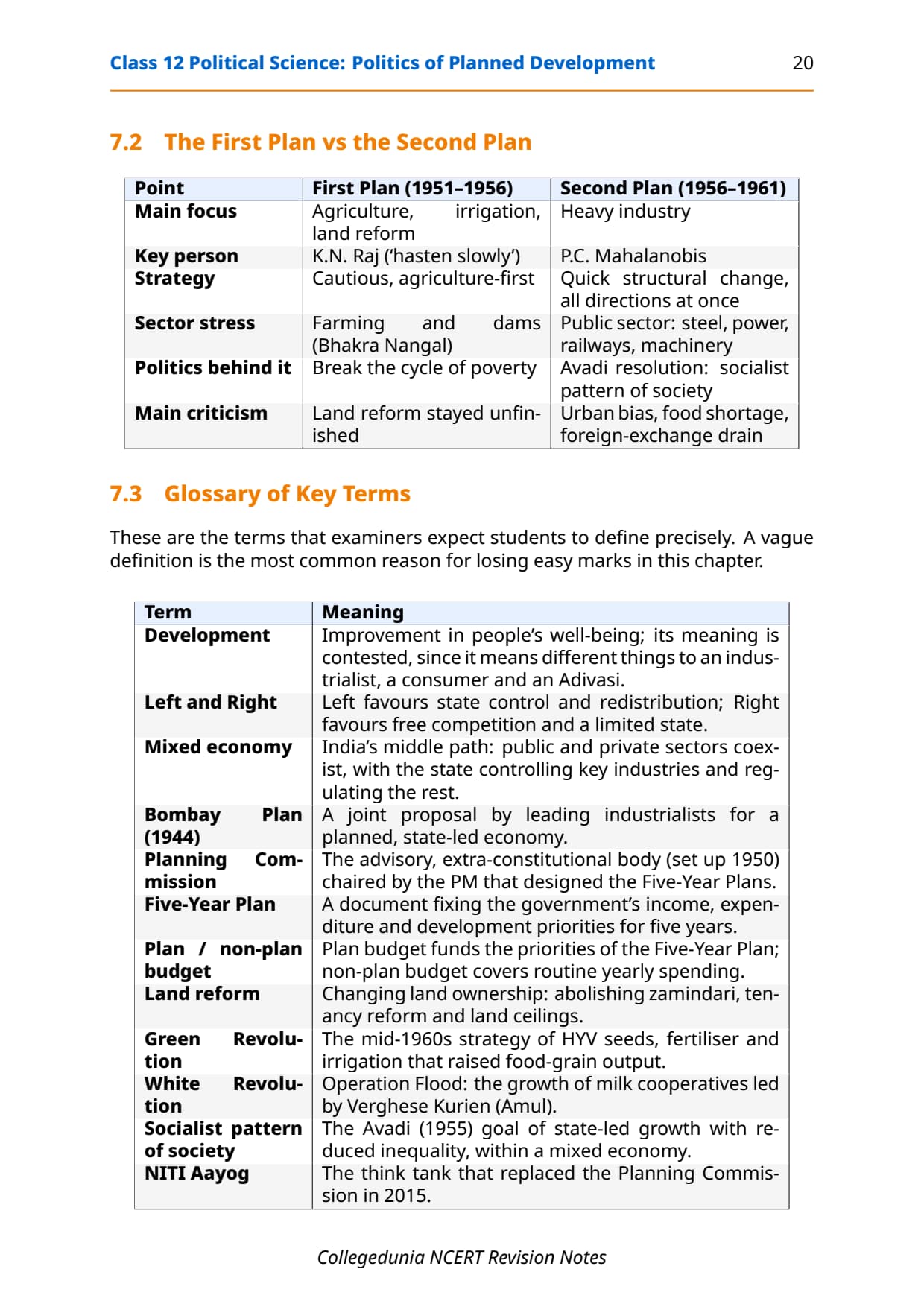
- Covers the two models, the Bombay Plan, the Planning Commission and the First and Second Plans in one place.
- This Class 12 Political Science chapter usually carries 5 to 6 marks in the board paper.
- Pairs with the NCERT Solutions, Handwritten Notes and Book PDF linked lower on this page.
These Politics of Planned Development Class 12 notes are written from the official NCERT Politics in India Since Independence textbook and checked against the last five years of CBSE board papers.
Student Feedback: In a Collegedunia poll of 8,410 Class 12 Political Science students taken before the 2026 boards, 71% of students said short, point-wise notes on the two Five Year Plans and the two models of development were the fastest way to revise this chapter. Most students kept the dates and key names on a single sheet for last-minute recall.
Source: 2026-27 Class 12 Political Science student poll. Sample of 8,410 students from CBSE schools across 12 states.
What the Politics of Planned Development Notes Cover
Politics of Planned Development is the third chapter of Politics in India Since Independence. It studies how India chose to grow its economy after 1947. The central idea is that development is a political choice, not just a technical one. Every choice helps some groups and hurts others, so it has to be argued out in public.
The easiest way to organise your revision is to split the chapter into three threads:
- The model: capitalist or socialist, and why India picked a mixed economy.
- The planning: the Bombay Plan, the Planning Commission and the Five Year Plans.
- The debates: industry versus agriculture, public versus private sector.
So these notes are really about the politics behind India's economic choices. If you sort each fact under model, planning or debate first, almost every question in Politics of Planned Development class 12 becomes easier to answer. Keep this three-part frame at the top of your revision sheet and slot each new detail into one of the boxes as you read.
Development as a Political Choice
The chapter opens with the Orissa-POSCO case, where a steel plant promised jobs but threatened tribal land and forests. For quick revision, learn the central idea as three short points so you can copy them straight onto the answer sheet.
- Who gains, who loses? A big project can bring jobs yet displace local people, so the choice is political.
- More than money: development means social justice too, not just a higher national income.
- Contestation: different groups push their own idea of development, so the State must balance them.
The point examiners test most is that development is about values, not just growth figures. Whenever a question asks "what does development mean", link economic growth with justice and show that the choice has winners and losers. Keep the Orissa example ready, because it is the chapter's own proof of this idea.
Two Models of Development: Capitalist and Socialist
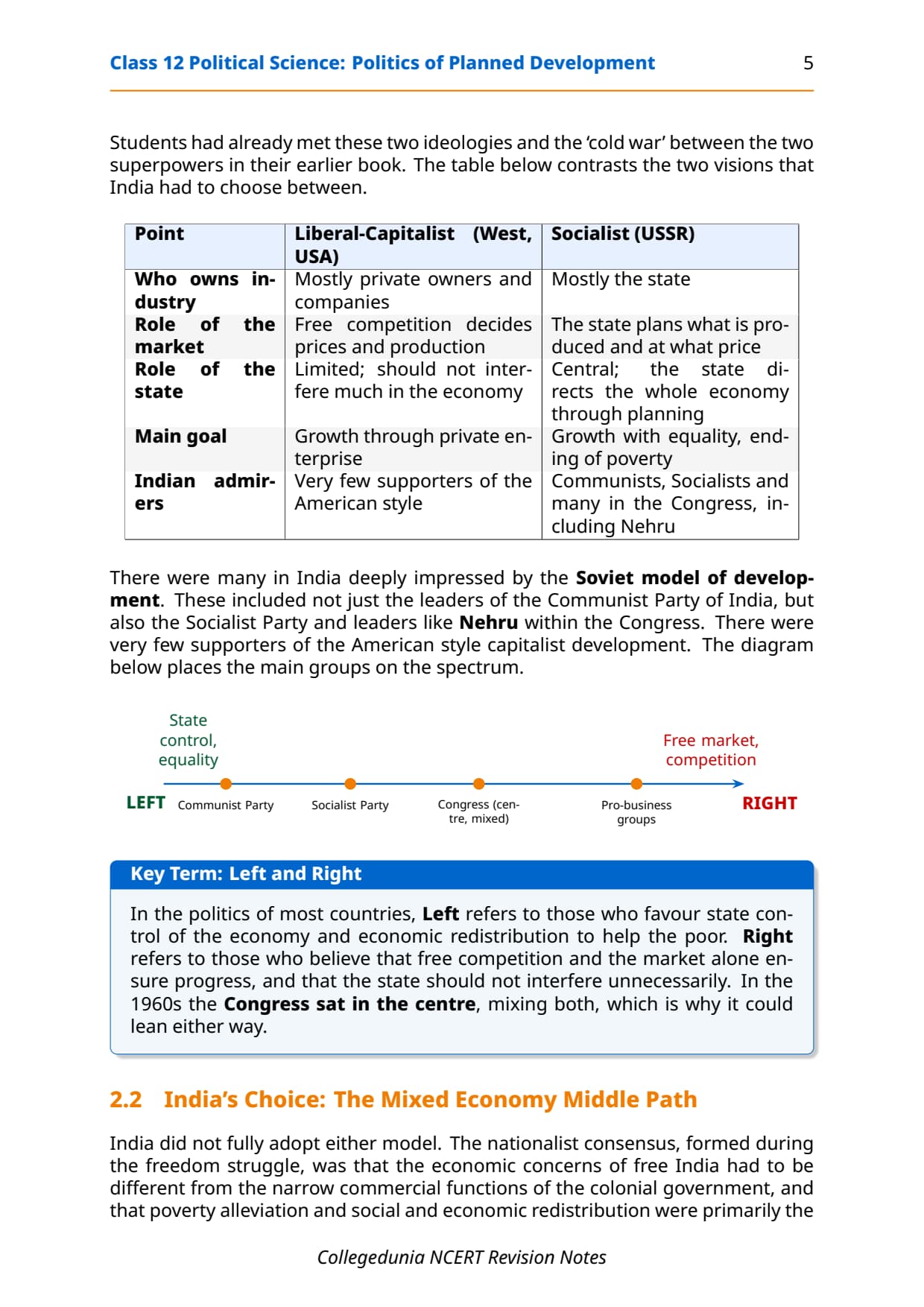
At Independence, India had two models of development to choose from. The differences are a long-answer favourite, so these notes keep them as a clear table rather than a story. Learn them as a comparison and you can answer any version of the question.
| Model | Key idea to recall |
|---|---|
| Capitalist (market-led) | Private enterprise and the market lead growth, as in Europe and the US; less direct State control. |
| Socialist (State-led) | The State owns and directs key sectors, as in the USSR; aims to curb inequality. |
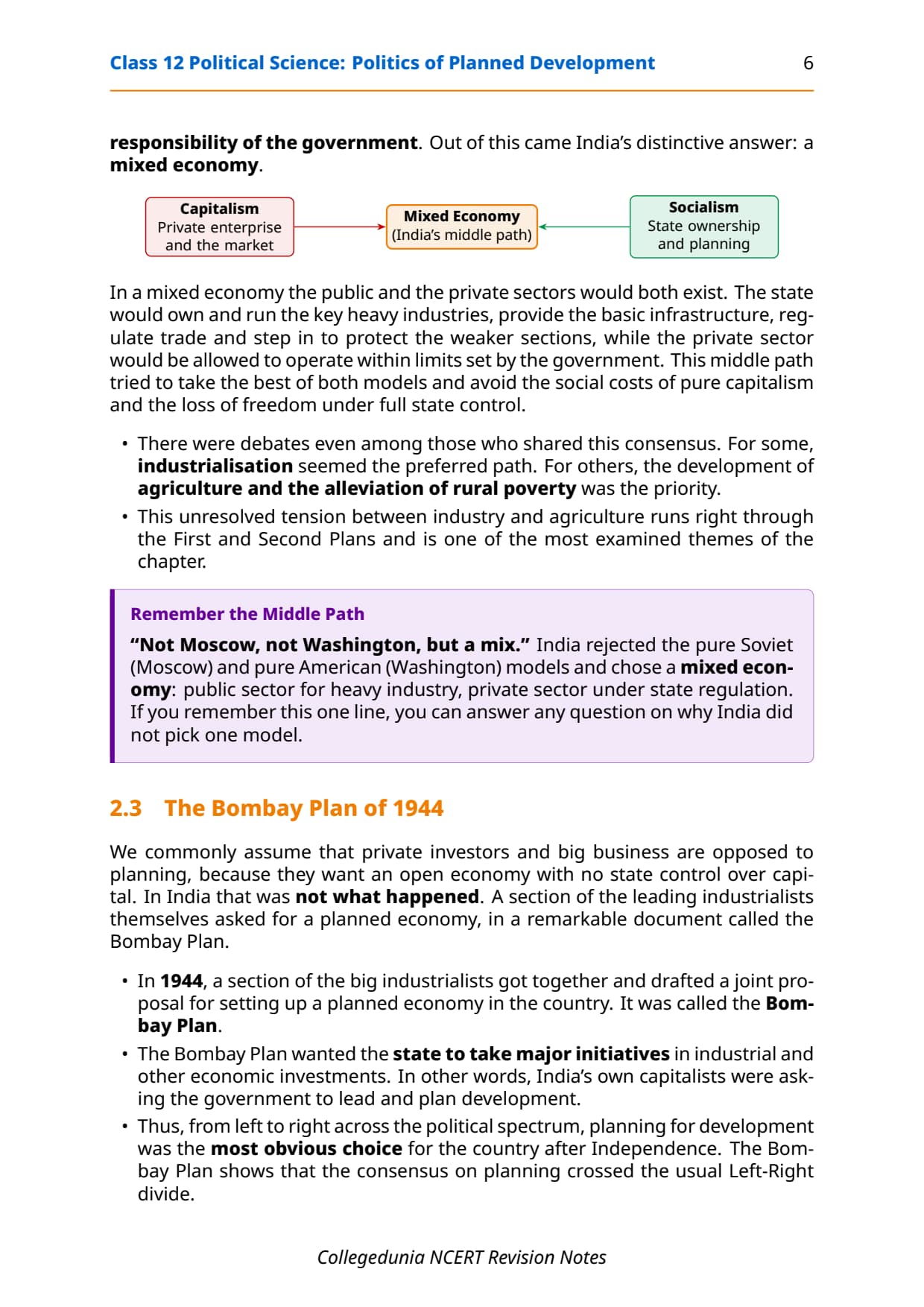
| India's choice | A middle path, the "mixed economy", combining the State and the private sector. |
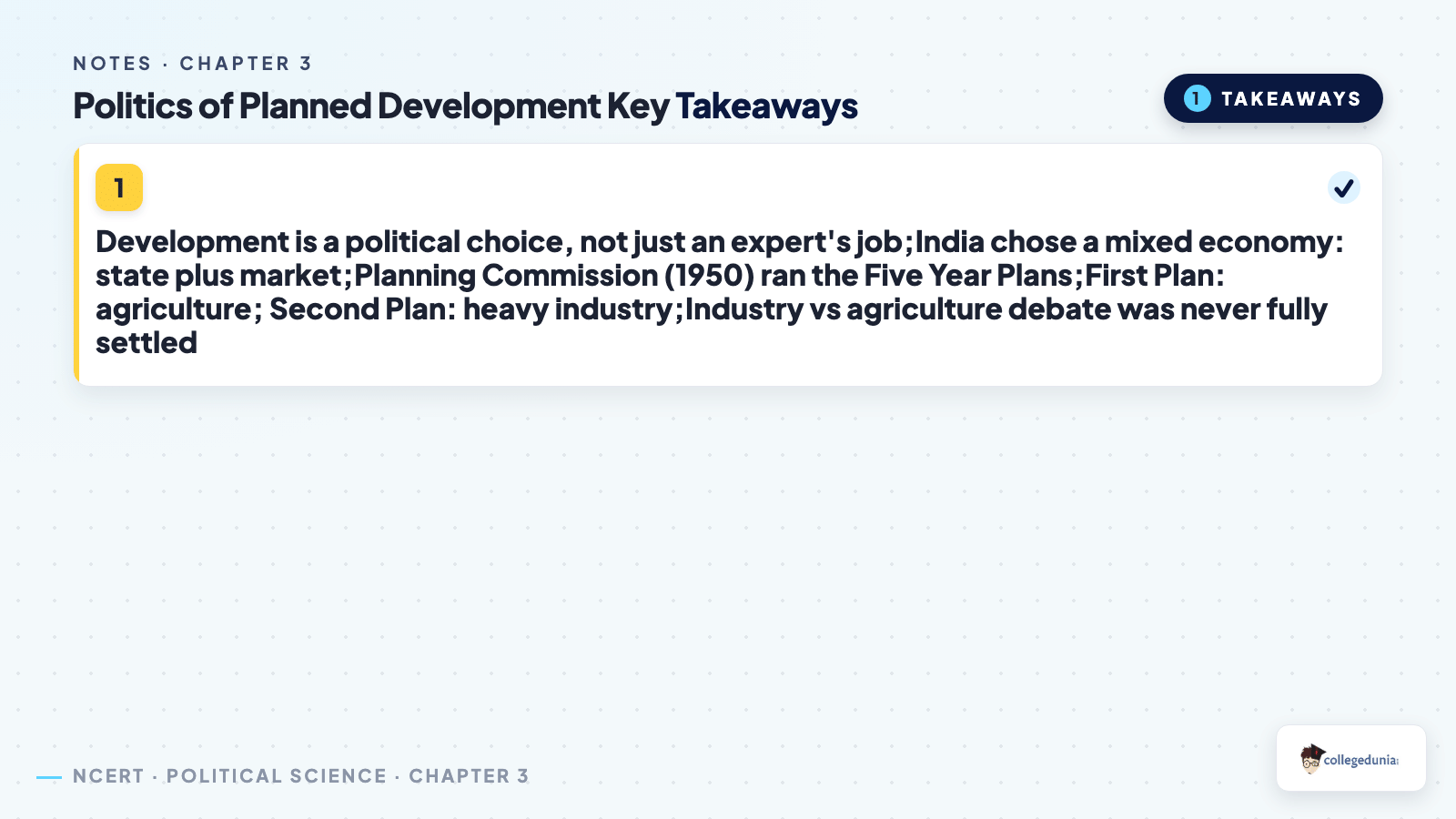
The one-line takeaway for your sheet is that India built a mixed economy, not a pure copy of either model. Many leaders, including Nehru, admired the Soviet model, but very few wanted full American-style capitalism. The State led big industry while the private sector ran much of agriculture and trade. Keep this compromise clear in your notes.
Bombay Plan and the Planning Commission
Two things set up planning in India: the Bombay Plan and the Planning Commission. These notes keep both side by side, because the dates and roles are popular MCQ points. Learn one line for each so you never confuse them.
- Bombay Plan (1944): a joint proposal by leading industrialists asking the State to lead industrial investment.
- Why it mattered: it proved even big business wanted a planning State, so support ran "from left to right".
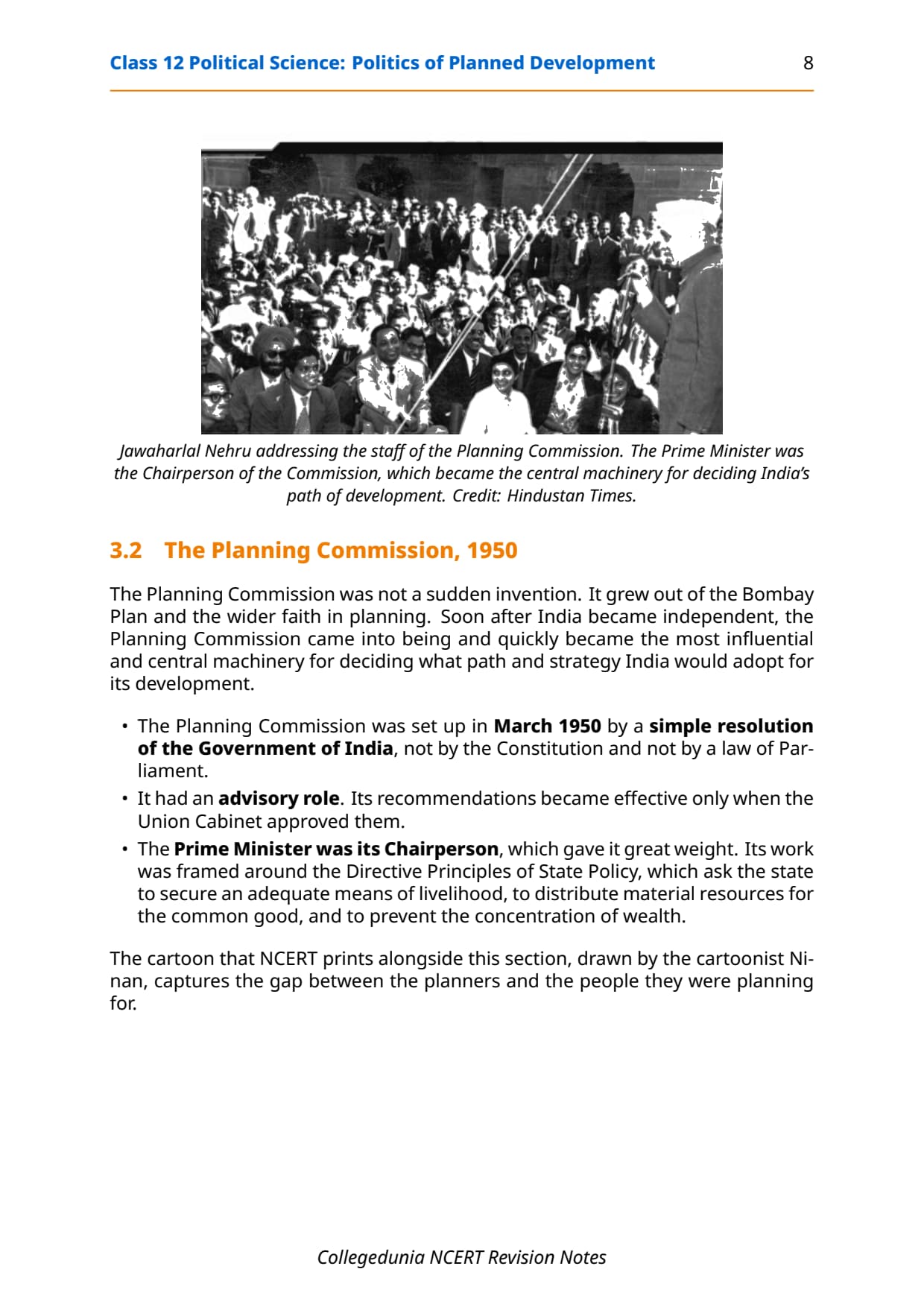
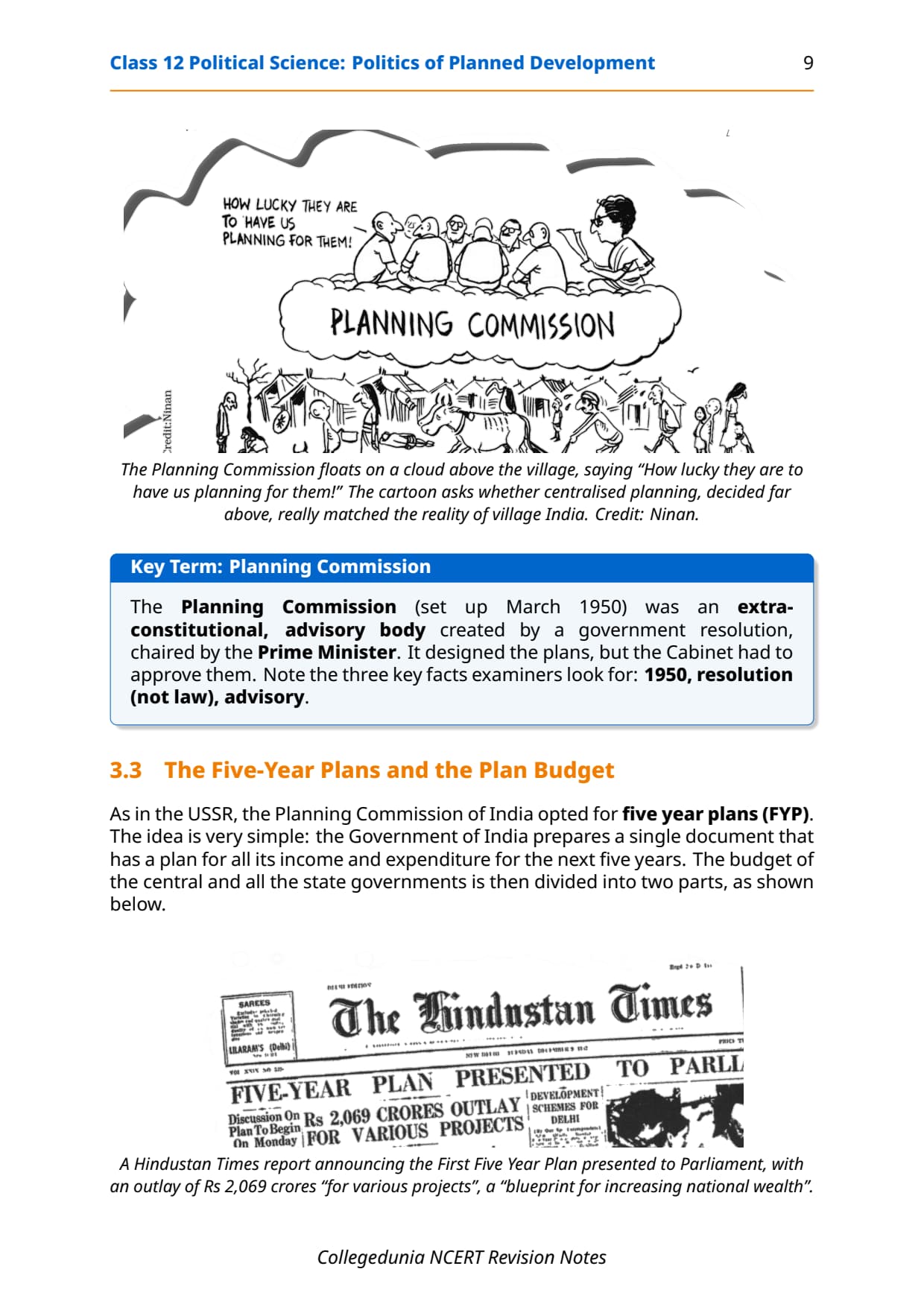
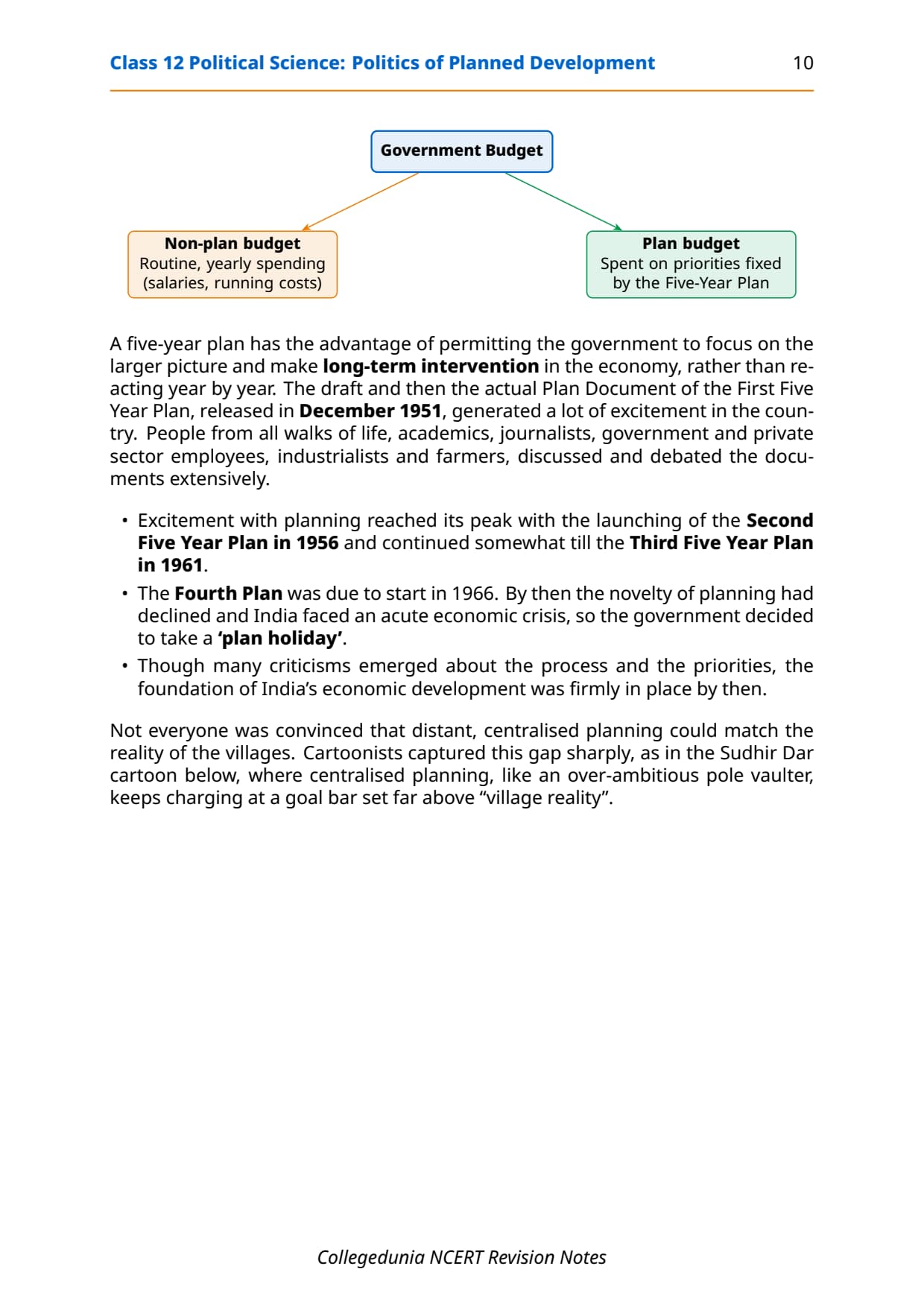
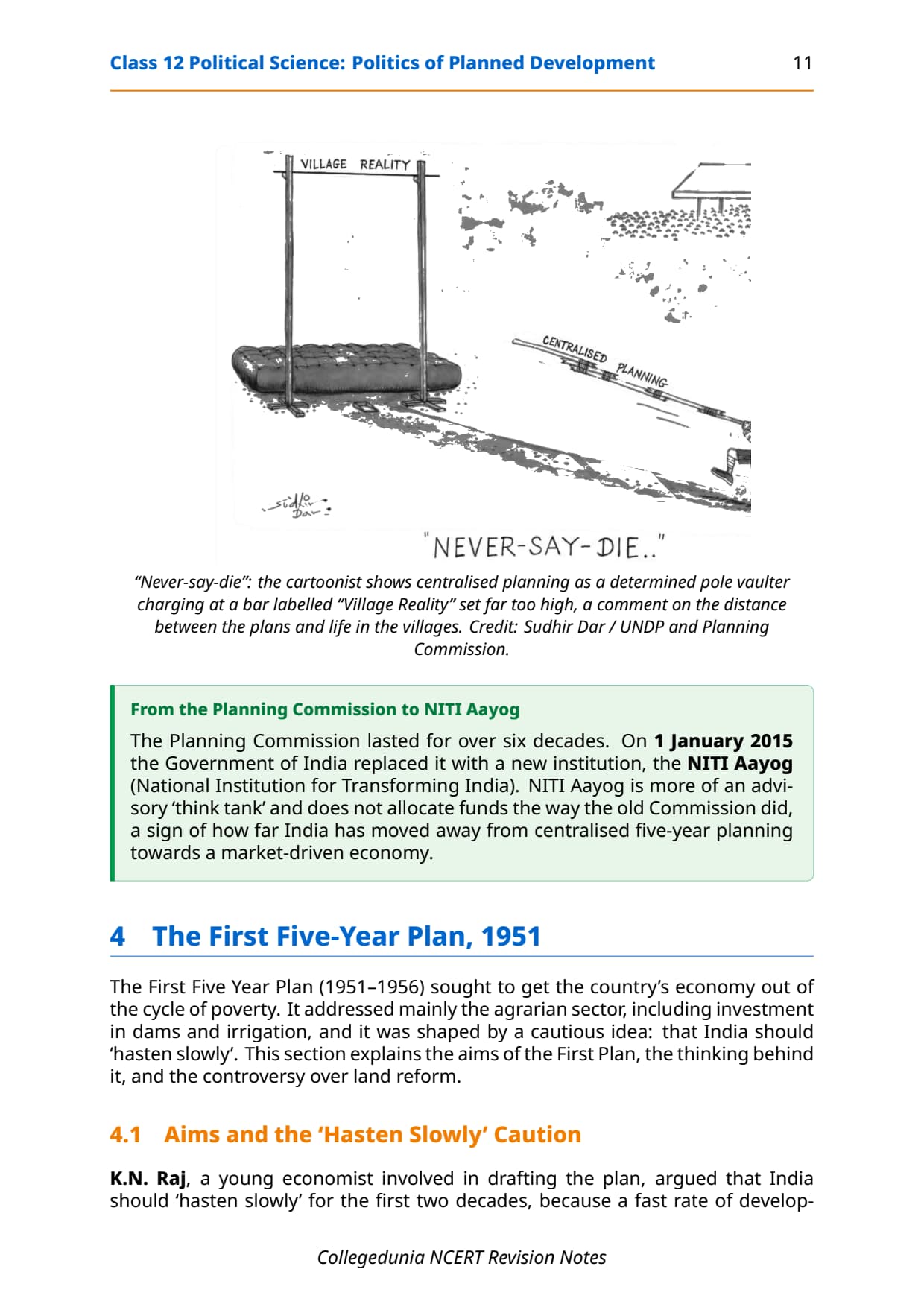
- Planning Commission (1950): set up in March 1950, with the Prime Minister as Chairperson, as an advisory body.
- Its tool: the Commission drew up the Five Year Plans to guide the whole economy.
The point to remember is that the Bombay Plan was a private suggestion, not the official blueprint. The MCQ traps students by calling it "a blueprint for India's economic future", which overstates its role. Box it as one influential input, made by industrialists, that backed both planning and a strong State.
First and Second Five Year Plans
The First Plan (1951 to 1956) and the Second Plan (1956 to 1961) had very different priorities. This contrast is the most-asked long answer, so these notes line the two plans up on the same points for fast revision.
| Point | First Plan (1951-56) | Second Plan (1956-61) |
|---|---|---|
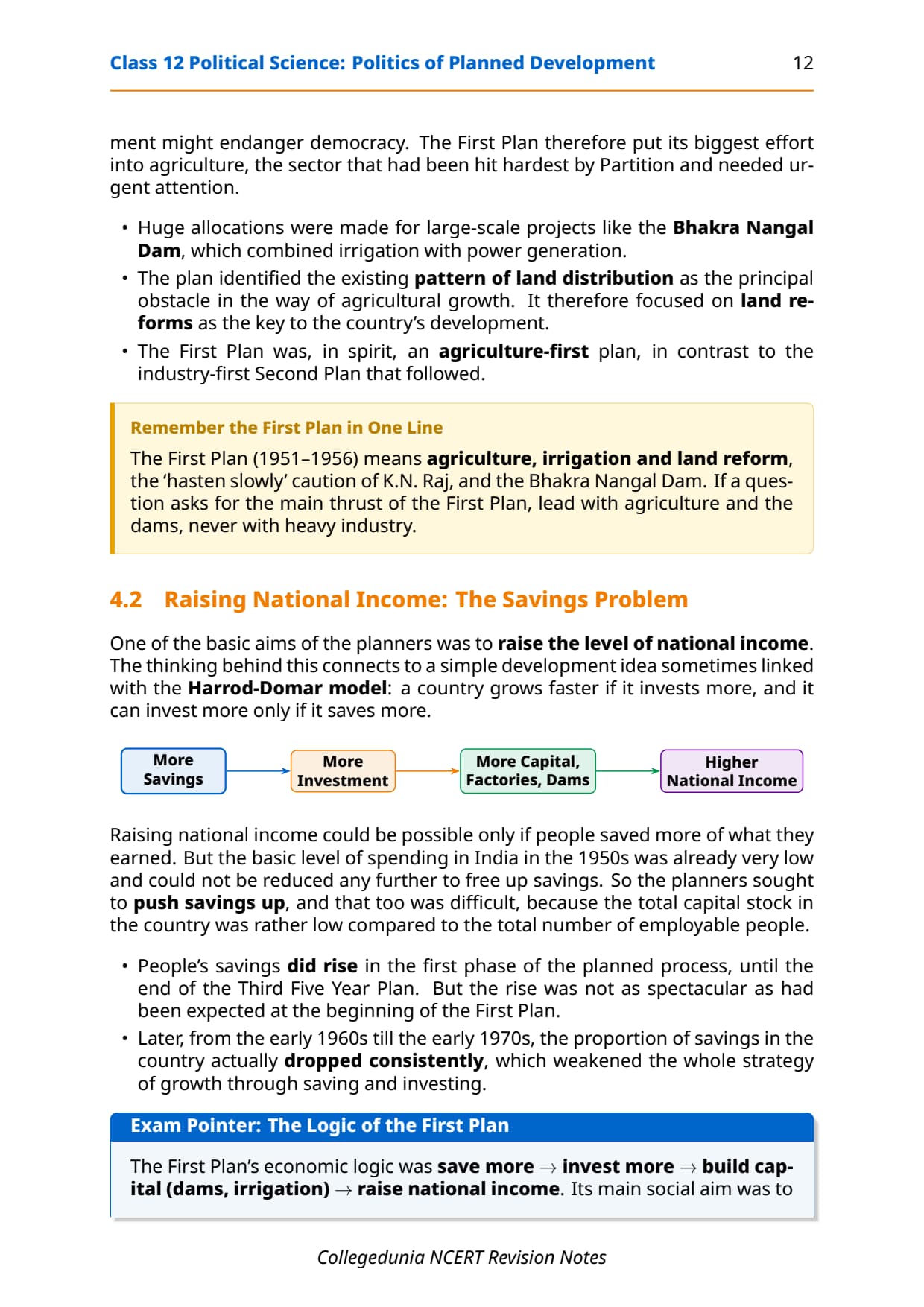
| Main thrust | Agriculture, dams and irrigation | Rapid heavy industry |
| Pace | Patient, "hasten slowly" (K.N. Raj) | Fast, simultaneous change |
| Architect | K.N. Raj's caution | P.C. Mahalanobis's drive |
| State role | Land reforms, savings | Bigger public sector, "socialist pattern" |
The simplest way to lock this in is with two anchor words: tag the First Plan "agriculture" and the Second Plan "industry". Every other difference flows from these two. The Second Plan also rode on the 1955 Avadi resolution that declared a "socialist pattern of society", which is why it counts as a real turning point.
Big Debates and Later Outcomes
The chapter ends with the debates India's planning never fully settled, and the outcomes they led to. These link the chapter to later events, so they appear in short and long answers. The table keeps the debates and outcomes together for revision.
| Debate or outcome | What to recall |
|---|---|
| Industry vs agriculture | Critics said the plans had an "urban bias" and neglected farmers. |
| Public vs private | Capitalists felt the public sector got too much; the justice camp felt the State did too little. |
| Green Revolution | Raised food output but widened gaps between rich and poor farmers. |
| Land reforms | Announced at the centre, but diluted by State leaders close to landlords. |
The sharp point for your notes is that India settled on a model but never settled the debate. The mixed economy was a compromise that pleased neither side fully, and the same tensions, growth versus justice and industry versus agriculture, still run through Indian politics. The Orissa case at the start is proof that this argument is still live.
Politics of Planned Development Important Questions and Exam Pointers
CBSE sets a steady mix of MCQ, short and long answers from this chapter. Knowing the pattern helps students decide how much to write and which topics to revise first. A focused list of Politics of Planned Development important questions saves a lot of time before the board exam.
- Long answer (5 to 6 marks): the First Plan versus the Second Plan, or the two models of development.
- Short answer (4 marks): the Bombay Plan, the Planning Commission, or what "development" means.
- Source-based: a passage on the Congress contradiction or planning, with sub-parts.
- Objective and MCQ: dates, the Avadi session, the Mahalanobis model, and the Green Revolution.
For quick recall, students often practise a short class 12 political science chapter 3 mcq drill and a list of Politics of Planned Development class 12 important questions. The most repeated items are the two-plan contrast and the capitalist-versus-socialist debate, so keep those answer points ready in your own words. Reading these notes once, then writing the key lists from memory, is the fastest way to lock the chapter in.
Common Mistakes Students Make in This Chapter
A few errors cost marks every year. Most come from swapping the two plans or mixing up names in the match question. Fixing these five points is the quickest way to lift a score, so add them to the end of your revision sheet.
- Swapping the plans - the First Plan stressed agriculture, the Second Plan stressed industry.
- Confusing Charan Singh (farmers) with Mahalanobis (industrialisation) in the match question.
- Calling the Bombay Plan the "official blueprint" - it was only a private 1944 industrialists' proposal.
- Treating liberalisation as an early-phase idea - it belongs to the post-1991 reforms.
- Saying the development debate was settled - India's mixed-economy compromise left it open.
Students who fix these five points usually move from average to high marks. The exam rewards a balanced view, so always show both the agriculture and the industry side before you judge India's choices. These notes flag each soft point so you can phrase it safely in the answer sheet.
How These Notes Pair with the Solutions and Book PDF
These revision notes summarise the chapter. To prepare fully, students should use them alongside the other resources for the same chapter, all linked in the table below. Read the notes first, then test yourself with the solutions, and open the book PDF whenever you need the original text and figures.
| Resource | Best used for |
|---|---|
| Politics of Planned Development NCERT Solutions | Step-by-step answers to all 7 back-exercise questions |
| Politics of Planned Development Handwritten Notes | Last-minute, one-shot revision in a scanned notebook style |
| Politics of Planned Development NCERT Book PDF | Reading the original NCERT chapter text and figures |
Tip: read these notes first, then attempt the solutions on your own, and only then check the model answers. That order builds memory faster than copying answers straight away.
All Class 12 Political Science Notes by Chapter
The table links the revision notes for every chapter in both Class 12 Political Science books, so students can move across the course in one click. Politics of Planned Development is highlighted.
| Chapter | Notes |
|---|---|
| Contemporary World Politics | |
| Chapter 1 | The End of Bipolarity |
| Chapter 2 | Contemporary Centres of Power |
| Chapter 3 | Contemporary South Asia |
| Chapter 4 | International Organisations |
| Chapter 5 | Security in the Contemporary World |
| Chapter 6 | Environment and Natural Resources |
| Chapter 7 | Globalisation |
| Politics in India Since Independence | |
| Chapter 1 | Challenges of Nation Building |
| Chapter 2 | Era of One-Party Dominance |
| Chapter 3 | Politics of Planned Development |
| Chapter 4 | India's External Relations |
| Chapter 5 | Challenges to and Restoration of the Congress System |
| Chapter 6 | The Crisis of Democratic Order |
| Chapter 7 | Regional Aspirations |
| Chapter 8 | Recent Developments in Indian Politics |
FAQs on Politics of Planned Development Class 12 Notes
Politics of Planned Development Class 12 Political Science Notes Common Questions
Ques. Where can I download the Politics of Planned Development Class 12 notes PDF?
Ans. You can download the Politics of Planned Development Class 12 Political Science notes PDF directly from this page. It is free, follows the 2026-27 NCERT, and covers the two models, the Bombay Plan, the Planning Commission and the two Five Year Plans in a short, point-wise format.
Ques. What does the Politics of Planned Development chapter cover for Class 12?
Ans. It covers development as a political choice, the capitalist and socialist models, the Bombay Plan (1944), the Planning Commission (1950), the First and Second Five Year Plans, and the debates over industry versus agriculture and the public versus private sector.
Ques. What is the difference between the First and Second Five Year Plans?
Ans. The First Plan stressed agriculture, dams, irrigation and land reforms and went slowly. The Second Plan, under P.C. Mahalanobis, shifted to rapid heavy industry, a bigger public sector and a declared "socialist pattern of society". Tag the First Plan "agriculture" and the Second Plan "industry".
Ques. Why is Politics of Planned Development important for the board exam?
Ans. Because it is a high-scoring chapter where the two-plan contrast, the two models of development and the Bombay Plan appear almost every year. Revising these notes well secures both MCQ and long-answer marks, especially the First Plan versus Second Plan question.
Ques. How should I use these notes to revise quickly?
Ans. Read the notes once under the model, planning and debate frame, keep all dates and key names on one sheet, then write the key lists from memory. Finish by attempting a short class 12 political science chapter 3 mcq drill to test the small facts.



Comments