



The NCERT Solutions for Class 7 Science Chapter 2 Exploring Substances: Acidic, Basic, and Neutral explain each textbook question in simple steps. The answers follow the 2026-27 NCERT Curiosity textbook. They cover natural indicators, colour changes, neutralisation, and safe ways to identify common substances.
- Chapter focus: acids, bases, neutral substances, indicators, and neutralisation.
- Activity focus: litmus, red rose extract, turmeric paper, and odour tests.
- Study tip: record the indicator, colour change, and conclusion in that order.
Chapter2ExploringSubstances:Acidic,Basic,andNeutralSolutions.pdf?page=1&dpi=150)
Chapter2ExploringSubstances:Acidic,Basic,andNeutralSolutions.pdf?page=2&dpi=150)
Chapter2ExploringSubstances:Acidic,Basic,andNeutralSolutions.pdf?page=3&dpi=150)
Chapter2ExploringSubstances:Acidic,Basic,andNeutralSolutions.pdf?page=4&dpi=150)
Chapter2ExploringSubstances:Acidic,Basic,andNeutralSolutions.pdf?page=5&dpi=150)
Chapter2ExploringSubstances:Acidic,Basic,andNeutralSolutions.pdf?page=6&dpi=150)
Chapter2ExploringSubstances:Acidic,Basic,andNeutralSolutions.pdf?page=7&dpi=150)
Chapter2ExploringSubstances:Acidic,Basic,andNeutralSolutions.pdf?page=8&dpi=150)
Chapter2ExploringSubstances:Acidic,Basic,andNeutralSolutions.pdf?page=9&dpi=150)
Chapter2ExploringSubstances:Acidic,Basic,andNeutralSolutions.pdf?page=10&dpi=150)
Chapter2ExploringSubstances:Acidic,Basic,andNeutralSolutions.pdf?page=11&dpi=150)
Chapter2ExploringSubstances:Acidic,Basic,andNeutralSolutions.pdf?page=12&dpi=150)
Chapter2ExploringSubstances:Acidic,Basic,andNeutralSolutions.pdf?page=13&dpi=150)
Chapter2ExploringSubstances:Acidic,Basic,andNeutralSolutions.pdf?page=14&dpi=150)
Chapter2ExploringSubstances:Acidic,Basic,andNeutralSolutions.pdf?page=15&dpi=150)
Chapter2ExploringSubstances:Acidic,Basic,andNeutralSolutions.pdf?page=16&dpi=150)
Chapter2ExploringSubstances:Acidic,Basic,andNeutralSolutions.pdf?page=17&dpi=150)
Chapter2ExploringSubstances:Acidic,Basic,andNeutralSolutions.pdf?page=18&dpi=150)
Chapter2ExploringSubstances:Acidic,Basic,andNeutralSolutions_flat_MobileCard.pdf?page=1&dpi=150)
Chapter2ExploringSubstances:Acidic,Basic,andNeutralSolutions_flat_MobileCard.pdf?page=2&dpi=150)
Chapter2ExploringSubstances:Acidic,Basic,andNeutralSolutions_flat_MobileCard.pdf?page=3&dpi=150)
Chapter2ExploringSubstances:Acidic,Basic,andNeutralSolutions_flat_MobileCard.pdf?page=4&dpi=150)
Chapter2ExploringSubstances:Acidic,Basic,andNeutralSolutions_flat_MobileCard.pdf?page=5&dpi=150)
Chapter2ExploringSubstances:Acidic,Basic,andNeutralSolutions_flat_MobileCard.pdf?page=6&dpi=150)
Chapter2ExploringSubstances:Acidic,Basic,andNeutralSolutions_flat_MobileCard.pdf?page=7&dpi=150)
Chapter2ExploringSubstances:Acidic,Basic,andNeutralSolutions_flat_MobileCard.pdf?page=8&dpi=150)
Chapter2ExploringSubstances:Acidic,Basic,andNeutralSolutions_flat_MobileCard.pdf?page=9&dpi=150)
Chapter2ExploringSubstances:Acidic,Basic,andNeutralSolutions_flat_MobileCard.pdf?page=10&dpi=150)
Chapter2ExploringSubstances:Acidic,Basic,andNeutralSolutions_flat_MobileCard.pdf?page=11&dpi=150)
Chapter2ExploringSubstances:Acidic,Basic,andNeutralSolutions_flat_MobileCard.pdf?page=12&dpi=150)
Chapter2ExploringSubstances:Acidic,Basic,andNeutralSolutions_flat_MobileCard.pdf?page=13&dpi=150)
Chapter2ExploringSubstances:Acidic,Basic,andNeutralSolutions_flat_MobileCard.pdf?page=14&dpi=150)
Chapter2ExploringSubstances:Acidic,Basic,andNeutralSolutions_flat_MobileCard.pdf?page=15&dpi=150)
Chapter2ExploringSubstances:Acidic,Basic,andNeutralSolutions_flat_MobileCard.pdf?page=16&dpi=150)
Chapter2ExploringSubstances:Acidic,Basic,andNeutralSolutions_flat_MobileCard.pdf?page=17&dpi=150)
Chapter2ExploringSubstances:Acidic,Basic,andNeutralSolutions_flat_MobileCard.pdf?page=18&dpi=150)
Chapter2ExploringSubstances:Acidic,Basic,andNeutralSolutions_flat_MobileCard.pdf?page=19&dpi=150)
Chapter2ExploringSubstances:Acidic,Basic,andNeutralSolutions_flat_MobileCard.pdf?page=20&dpi=150)
Chapter2ExploringSubstances:Acidic,Basic,andNeutralSolutions_flat_MobileCard.pdf?page=21&dpi=150)
Chapter2ExploringSubstances:Acidic,Basic,andNeutralSolutions_flat_MobileCard.pdf?page=22&dpi=150)
Chapter2ExploringSubstances:Acidic,Basic,andNeutralSolutions_flat_MobileCard.pdf?page=23&dpi=150)
Chapter2ExploringSubstances:Acidic,Basic,andNeutralSolutions_flat_MobileCard.pdf?page=24&dpi=150)
Chapter2ExploringSubstances:Acidic,Basic,andNeutralSolutions_flat_MobileCard.pdf?page=25&dpi=150)
Chapter2ExploringSubstances:Acidic,Basic,andNeutralSolutions_flat_MobileCard.pdf?page=26&dpi=150)
Chapter2ExploringSubstances:Acidic,Basic,andNeutralSolutions_flat_MobileCard.pdf?page=27&dpi=150)
Chapter2ExploringSubstances:Acidic,Basic,andNeutralSolutions_flat_MobileCard.pdf?page=28&dpi=150)
Chapter2ExploringSubstances:Acidic,Basic,andNeutralSolutions_flat_MobileCard.pdf?page=29&dpi=150)
Chapter2ExploringSubstances:Acidic,Basic,andNeutralSolutions_flat_MobileCard.pdf?page=30&dpi=150)
Chapter2ExploringSubstances:Acidic,Basic,andNeutralSolutions_flat_MobileCard.pdf?page=31&dpi=150)
Chapter2ExploringSubstances:Acidic,Basic,andNeutralSolutions_flat_MobileCard.pdf?page=32&dpi=150)
Each Collegedunia solution uses the 2026-27 NCERT Curiosity chapter and explains the scientific reason behind the answer.
Student Feedback
In a Collegedunia learning poll of 10,000+ middle-school students, most students found indicator questions easier after making a colour-change table. This page uses the same clear method.
Exploring Substances: Acidic, Basic, and Neutral Key Ideas
Indicators help students classify an unknown solution without tasting it. The chapter starts with litmus and then uses familiar plant materials. An acid-base indicator gives different results in acidic and basic solutions.
| Type of substance | Litmus result | Common examples |
|---|---|---|
| Acidic | Turns blue litmus red | Lemon juice, amla juice, tamarind water, vinegar |
| Basic | Turns red litmus blue | Soap solution, baking soda solution, lime water |
| Neutral | No change in red or blue litmus | Tap water, sugar solution, salt solution |
Never taste an unknown substance to test its nature. Use a safe indicator and follow the activity instructions instead.
Acids, Bases and Indicators Quick Revision
Source: Magnet Brains on YouTube
Natural Indicators in Exploring Substances and Their Colour Changes
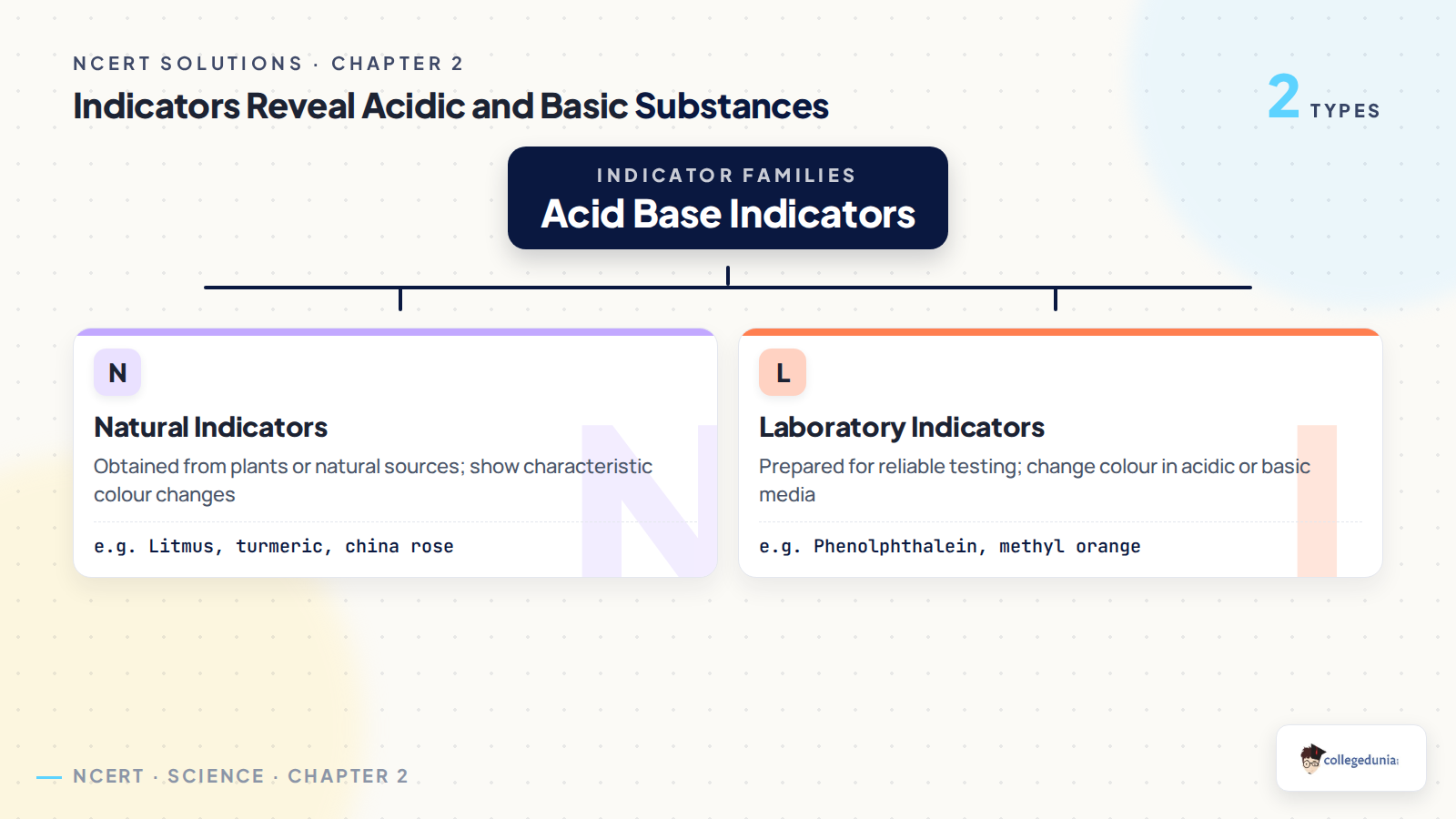
Litmus comes from lichens, while red rose and turmeric are plant-based indicators. Each indicator has a different colour pattern. The table below helps students match an observation with the correct conclusion.
| Indicator | Acidic substance | Basic substance | Neutral substance |
|---|---|---|---|
| Blue litmus | Turns red | No change | No change |
| Red litmus | No change | Turns blue | No change |
| Red rose extract | Gives a red shade | Gives a green shade | No clear change |
| Turmeric paper | Stays yellow | Turns red | Stays yellow |
Turmeric cannot separate an acid from a neutral solution. Both leave turmeric paper yellow. Another indicator is needed to tell them apart.
Neutralisation in Exploring Substances with Daily-Life Examples
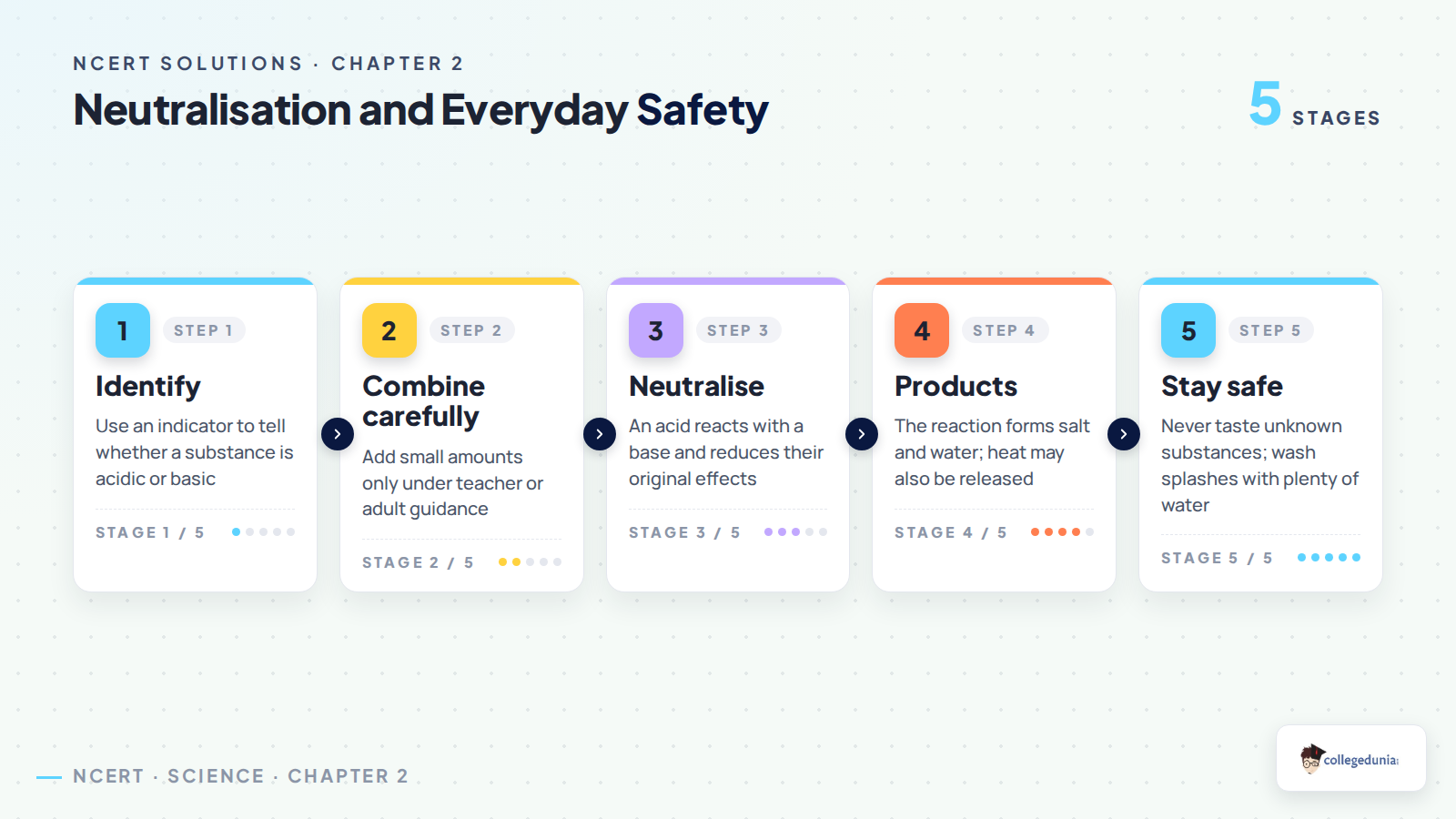
An acid and a base cancel each other's effect when mixed in suitable amounts. This process is called neutralisation. It forms salt and water and also releases heat.
- Ant bite: moist baking soda helps neutralise the acidic liquid from the bite.
- Acidic soil: farmers may add lime, which is basic.
- Basic soil: manure and compost release acids during decomposition.
- Factory waste: harmful acidic waste should be treated before entering a lake.
Neutralisation is useful only when the correct substance and amount are chosen. Safety rules and adult guidance still matter.
How Collegedunia's Class 7 Science Solutions Help with Indicator Questions
The solutions separate the observation from the conclusion. This makes activity-based questions easier to answer. It also helps students explain why an unknown sample is acidic, basic, or neutral.
- Identify the indicator named in the question.
- Note the original colour and the final colour.
- Match the change with the indicator table.
- Write the nature of the substance with one reason.
- For neutralisation, name both substances and their opposite nature.
This four-part method keeps answers complete: indicator, observation, nature, and reason.
Common Mistakes in Exploring Substances Class 7 Answers
Most errors come from reversing colour changes or treating taste as a safe test. Students should use the exact indicator result given in the question.
- Do not write that acids turn red litmus blue.
- Do not call every bitter substance basic.
- Do not use turmeric alone to separate acids from neutral substances.
- Do not forget that neutralisation releases heat.
Quick check: an acid changes blue litmus, while a base changes red litmus.
All Chapter 2 Questions with Step-by-Step Solutions
The question page brings every exercise answer into one place. Use the first tab for the direct solution and the expert tab for a fuller explanation.
Related Class 7 Science Resources for Exploring Substances
Use the textbook page for the original activities. Pair it with the notes or handwritten notes when you need a faster recap.
| Resource | Best used for |
|---|---|
| Exploring Substances Class 7 Notes | Definitions, colour changes, and quick revision |
| Exploring Substances NCERT Book PDF | Official activities, figures, and exercise questions |
| Exploring Substances Handwritten Notes | Last-minute indicator and neutralisation recap |
NCERT Solutions for Class 7 Science Curiosity: All Chapters
The chapter list helps students move through the complete 2026-27 Curiosity textbook in order.
Exploring Substances Class 7 Science NCERT Solutions FAQs
Ques. Where can I get the Exploring Substances Class 7 NCERT Solutions PDF?
Ans. The free PDF is available on this page. It covers all exercise questions from the 2026-27 NCERT Curiosity chapter.
Ques. How do acids and bases affect litmus paper?
Ans. Acids turn blue litmus red. Bases turn red litmus blue. Neutral substances do not change either litmus paper.
Ques. What colours does red rose extract show in acids and bases?
Ans. Red rose extract gives a red shade in acidic solutions and a green shade in basic solutions.
Ques. Can turmeric paper identify both acidic and neutral substances?
Ans. No. Turmeric stays yellow with both acidic and neutral substances. It mainly helps identify bases because it turns red.
Ques. What is neutralisation in Class 7 Science?
Ans. Neutralisation is the reaction between an acid and a base. It forms salt and water and releases heat.
Ques. Why is baking soda used on an ant bite?
Ans. An ant injects an acidic liquid. Moist baking soda is basic, so it helps neutralise the acid and reduce stinging.
Ques. Are these answers based on the 2026-27 NCERT Curiosity textbook?
Ans. Yes. The answers follow the Class 7 Science Curiosity textbook reprint for the 2026-27 session.



Comments