



Content Curator
Emphysema is a lung disease that results in shortness of breath. Emphysema causes damage to the air sacs in the lungs known as alveoli.
- Over time, the inner walls of the air sacs weaken and rupture, resulting in larger air spaces instead of many small ones.
- This lowers the surface area of the lungs, and hence the amount of oxygen that enters into the bloodstream.
- When you exhale, damaged alveoli fail to function effectively, trapping old air and preventing fresh, oxygen-rich air from entering.
- Most patients with emphysema have chronic bronchitis.
- Chronic bronchitis is an inflammation of the bronchial tubes that supply air to the lungs, resulting in a chronic cough.
- Chronic obstructive pulmonary disease (COPD) consists of two conditions: emphysema and chronic bronchitis.
- Smoking is the major cause of COPD. Treatment may reduce the progression of COPD, but it cannot reverse the harm.
| Table of Content |
Key Terms: Emphysema, Chronic bronchitis, COPD, Lungs, Alveoli, Tissue, Disease, Oxygen, carbon dioxide, Air pollution, Dyspnea
What is Emphysema?
[Click Here for Sample Questions]
Emphysema is a type of COPD i.e. Chronic Obstructive Pulmonary Disease.
- Emphysema causes lung tissue to lose flexibility, resulting in larger air sacs and alveoli.
- The walls of the air sacs are damaged or destroyed, narrowed, collapsed, stretched, or overinflated.
- This means that the lungs have a lower surface area to absorb oxygen and remove carbon dioxide from the body.
- This damage is permanent and unchangeable, although there are methods to manage the situation.

Emphysema
Also check:
| Related Concepts | ||
|---|---|---|
| Applications of Enzymes | Hormones in Animals | Hypothalamus |
| Insulin and Glucagon | Synapse | Cyanobacteria |
Causes of Emphysema
[Click Here for Sample Questions]
Emphysema is mostly caused by continuous exposure to airborne irritants, which include:
- Tobacco smoke
- Air pollution
- Marijuana smoke
- Chemical fumes and dust
Emphysema is rarely caused by a hereditary deficiency in a protein that defends the elastic structures in the lungs. It's known as alpha-1-antitrypsin deficiency emphysema.
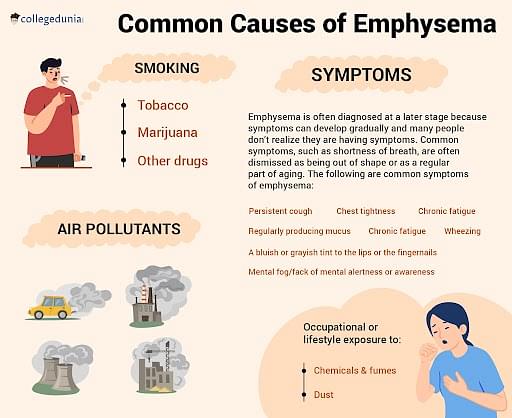
Causes and Symptoms of Emphysema
Symptoms of Emphysema
[Click Here for Sample Questions]
The main symptoms of emphysema are:
- Shortness of breath (dyspnea)
- a chronic cough that produces mucus
- wheezing, whistling, or squeaking during breathing
- Chest tightness.
Initially, a person might experience these symptoms when exercising. However, as the condition advances, they may begin to occur when resting. Emphysema and COPD develop over a period of years.
In the later stages, an individual may have:
- Frequent lung infections and flare-ups.
- Increasing symptoms, such as shortness of breath, mucous production, and wheezing.
- Losing weight and decreased appetite.
- Fatigue and loss of energy.
- Lack of oxygen causes blue-tinged lips, fingernail beds, or cyanosis.
- Anxiety and Depression.
- Sleep difficulties.
Types of Emphysema
[Click Here for Sample Questions]
Emphysema is a type of COPD, and it is classified into several categories based on which parts of the lungs it affects. These are
- Paraseptal Emphysema: Paraseptal emphysema usually affects the upper parts of your lung.
- Centrilobular Emphysema: It is a chronic obstructive lung disease that causes damage to the center of the lungs.
- Panlobular Emphysema: It affects both the paraseptal and centrilobular parts of the lungs.
A CT scan can be used to determine the type of emphysema present. type makes no difference in terms of perspective or treatment.
Treatment of Emphysema
[Click Here for Sample Questions]
Treatment cannot cure emphysema, but it can help:
- slow the progress of the condition
- prevent complications
- manage the symptoms
- boost a person’s overall health and well-being
A few specific treatment options are given below
Drug Therapies
Inhaled bronchodilators are the most often used treatments for emphysema, and they can help reduce symptoms. They relax and open the airways, making it easier for individuals to breathe.
Lifestyle Therapies
People can take measures that improve their symptoms, enhance their quality of life, and stop the growth of emphysema. The sooner a person follows these steps, the more effective they will be.
Oxygen Therapy
Breathing can become more difficult with time, and a person may require oxygen therapy on a temporary or regular basis. For example, some people take oxygen overnight.
Surgery
People suffering from severe emphysema may require surgery to remove damaged lung tissue and decrease the large spaces that form in the lungs as a result of the disease.
Also check:
| Related Concepts | ||
|---|---|---|
| Difference Between Nucleotide and Nucleoside | Microbiology | Galactose Formula |
| Metabolites | Biomolecules | Glycogen |
Things to Remember
- Emphysema is a type of chronic obstructive pulmonary disease.
- It is a lung disease that results in shortness of breath.
- It causes lung tissue to lose flexibility, resulting in larger air sacs and alveoli.
- Chronic obstructive pulmonary disease (COPD) consists of two conditions: emphysema and chronic bronchitis.
- Different types of Emphysema are Paraseptal, Centrilobular, and Panlobular.
- Treatment cannot cure emphysema.
Sample Questions
Ques. What are the signs of emphysema? (2 Marks)
Ans. Emphysema symptoms can take years to develop, but once they do, they usually involve shortness of breath, mucous coughing, wheezing, and chest tightness.
Ques. What are the 4 stages of emphysema? (2 Marks)
Ans. COPD has four different stages: mild, moderate, severe, and extremely severe.
Your doctor will identify your stage based on the results of a breathing test called spirometry, which evaluates lung function by measuring how much air you can breathe in and out, as well as how fast and easily you exhale.
Ques. What causes emphysema when you smoke a cigarette? (2 Marks)
Ans. It is a chronic respiratory disease characterized by the inflation of the alveolar sac. Cigarette smoking, or even inhalation of smoke, damages the septa between the alveoli over time, and the elastic tissue is replaced by connective tissue in the lungs. Emphysema is caused by a decrease in the respiratory surface.
Ques. What is the main cause of emphysema? (2 Marks)
Ans. Long-term exposure to airborne irritants such as air pollution, tobacco smoke, chemical fumes, marijuana smoke, and dust is the leading cause of emphysema. Emphysema can lead to serious complications, such as holes in the lungs if it is not treated (giant bullae). It's difficult for your lungs to expand because of these large holes. They can also become infected, resulting in a collapsed lung.
Ques. How long can a person live with emphysema? (2 Marks)
Ans. Emphysema is a type of COPD that cannot be cured. However, once diagnosed, treatments can help to relieve symptoms and slow the disease's progression. Because smoking is the primary cause of the disease, it can be avoided by simply giving up the idea of smoking cigarettes. Wearing a mask can be extremely beneficial in the case of polluted air in the workplace. Longevity can be increased by adopting a healthy lifestyle.
Ques. What are the two major issues with emphysema? (2 Marks)
Ans. The air sacs in the lungs (alveoli) are damaged in people with emphysema. The inner walls of the air sacs weaken and rupture over time, resulting in larger air spaces rather than many small ones. This reduces the surface area of the lungs and, as a result, the amount of ammonia produced.
Ques. Is emphysema or COPD a disability? (2 Marks)
Ans. If you have severe emphysema, you may be automatically approved for disability benefits if you meet the Social Security Administration's (SSA) listing requirements for COPD (chronic pulmonary insufficiency). The Social Security Administration (SSA) will administer a spirometry test to determine whether you meet the COPD criteria.
Ques. How can age and pollution be a risk factor for emphysema? (2 Marks)
Ans. Despite the fact that emphysema causes gradual lung damage, most people with tobacco-related emphysema begin to experience symptoms between the ages of 40 and 60.
Breathing outdoor pollutants, such as car exhaust, as well as indoor pollutants, such as heating fuel fumes, increases your risk of developing emphysema.
Ques. When should the person visit a doctor? (3 Marks)
Ans. If you've had unexplained shortness of breath for many months and it's getting hard or differing with your daily activities, see your doctor. Don't rationalize it away by telling yourself that it's because you're getting older or out of shape. If you're experiencing any of the following symptoms, seek medical help right away.
- You can't climb stairs because you are short of breath.
- When you exert yourself, your lips or fingernails turn blue or grey.
- You're not thinking clearly.
Ques. Name two complications of emphysema. (3 Marks)
Ans. Lung collapse (pneumothorax). Because the function of their lungs is already compromised, a collapsed lung can be life-threatening in people with severe emphysema. This is a rare circumstance, but when it does occur, it is severe.
Problems with the heart. Emphysema can cause the arteries that connect the heart and lungs to become more constricted. Cor pulmonale is a condition in which a section of the heart expands and weakens as a result of this.
For Latest Updates on Upcoming Board Exams, Click Here: https://t.me/class_10_12_board_updates
Also Read:



Comments