



Content Curator
Food Poisoning or Food-borne illness is defined as the illness that is caused by contaminated food containing microorganisms which develop on the food. Food gets spoiled when these microorganisms multiply and secrete poisonous substances, thus bringing about food contamination.
| Table of Content |
Key Takeaways: Food Preservation, Food Poisoning, Contamination of Food, Bacteria, Viruses, Parasites
Causes of Food Poisoning
[Click Here for Sample Questions]
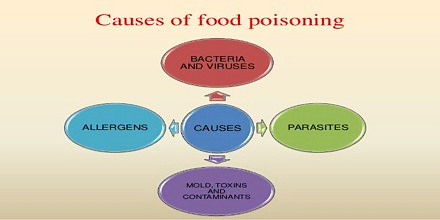
There are three microorganisms that are responsible for food poisoning to occur:
Bacteria - In major cases, Bacteria comes as a major agent that causes food poisoning. Salmonella is the major reason why food is poisoned in most places. The food is contaminated by bacteria, like Escherichia coli (E. coli), Campylobacter and Clostridium botulinum.
Fungi - Some fungi that contaminate food can also be harmful to human health. One of the chemical substances which is responsible for food poisoning is Mycotoxins which are produced by various fungi like aspergilli, penicillin, Rhizopus, and poisonous mushrooms (also called toadstools).
Causes of Food poisoning
Viruses - The second major cause responsible for food poisoning are the viruses which include norovirus, sapovirus, rotavirus, ebolavirus and astrovirus. It is less common but proves to be fatal. Hepatitis A virus is caused by Raw, ready-to-eat produce and contaminated water and beverages which can be transmitted by an infected food handler. The time when symptoms start for Hepatitis A is 28 days.
Parasites - Common cases of food poisoning also occur through parasites. Amoebic dysentery is an infection which is caused by a single cell parasite, Entamoeba histolytica is known for causing amoebic dysentery.

Entamoeba histolytica
Read Also:
Symptoms of Food Poisoning
[Click Here for Sample Questions]
Symptoms of food poisoning might start days or even weeks after. The sickness brought about by food contamination may last a couple of hours to a few days. The following symptoms occurs in food poisoning cases:
- Nausea
- Vomiting
- Watery or bloody diarrhea
- Abdominal pain and cramps
- Fever

Symptoms of Food Poisoning
Read Also:
Contaminants Causing Food Poisoning
[Click Here for Sample Questions]
Contaminants that causes food poisoning are listed in the table below.
| Contaminant | Incubation Period | Foods Affected | Mode of Transmission |
|---|---|---|---|
| Campylobacter | 2 to 5 days | Meat and poultry | Contamination occurs during processing if animal feces contact meat surfaces. Other sources include unpasteurized milk and contaminated water. |
| Clostridium botulinum | 12 to 72 hours | Home-canned foods with low acidity, improperly canned commercial foods, smoked or salted fish, potatoes baked in aluminium foil, and other foods kept at warm temperatures for too long. | |
| Clostridium perfringens | 8 to 16 hours | Meats, stews and gravies. | Commonly spread when serving dishes, don't keep food hot enough or food chilled too slowly. |
| Escherichia coli (E. coli) | 1 to 8 days | Beef contaminated with faeces during slaughter. | Spread mainly by undercooked ground beef. Other sources include unpasteurized milk and apple cider, alfalfa sprouts, and contaminated water. |
| Giardia lamblia | 1 to 2 weeks | Raw, ready-to-eat produce and contaminated water. | Can be spread by an infected food handler. |
| Hepatitis A | 28 days | Raw, ready-to-eat produce and shellfish from contaminated water. | Can be spread by an infected food handler. |
| Listeria | 9 to 48 hours | Hot dogs, luncheon meats, unpasteurized milk and cheeses, and unwashed raw produce. | Can be spread through contaminated soil and water. |
| Noroviruses (Norwalk-like viruses) | 12 to 48 hours | Raw, ready-to-eat produce and shellfish from contaminated water. | Can be spread by an infected food handler. |
| Rotavirus | 1 to 3 days | Raw, ready-to-eat produce. | Can be spread by an infected food handler. |
| Salmonella | 1 to 3 days | Raw or contaminated meat, poultry, milk, or egg yolks. | Survives inadequate cooking. Can be spread by knives, cutting surfaces or an infected food handler. |
| Shigella | 24 to 48 hours | Seafood and raw, ready-to-eat food. | Can be spread by an infected food handler. |
| Staphylococcus aureus | 1 to 6 hours | Meats and prepared salads, cream sauces, and cream-filled pastries. | Can be spread by hand contact, coughing and sneezing. |
| Vibrio vulnificus | 1 to 7 days | Raw oysters and raw or undercooked mussels, clams, and whole scallops. | Can be spread through contaminated seafoods. |
Prevention of Food Poisoning
[Click Here for Sample Questions]
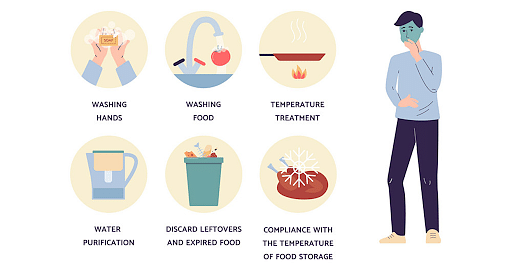
To prevent food poisoning at home:
- Clean up utensils and food surfaces frequently. Utilize hot, soapy water to wash utensils, cutting sheets and different surfaces you use.
- Keep raw food sources separate from food that is ready to eat. While shopping, planning food or storing away food, keep raw meat, poultry, fish and shellfish away from different food varieties. This forestalls cross-contamination.
- Cook food sources to a protected temperature. Ensure fish and shellfish are cooked completely.
- Refrigerate or freeze perishable food sources inside two hours of buying or setting them up.
- Defrost food safely. The safest way to unfreeze food is to defrost it in the refrigerator.
- Throw it out when in doubt. Food left at room temperature too long may contain bacteria or toxins that can’t be destroyed by cooking. Even if it looks and smells fine, it may not be safe to eat.
Prevention of Food Poisoning
Read Also:
Treatment of Food Poisoning
[Click Here for Sample Questions]
The person who is suffering from food poisoning should be treated as follows:
- Drink plenty of liquids to replace the lost electrolytes.
- Allow the ice cubes to melt in his mouth or he should sip small amounts of water even if vomiting persists.
- Start eating mild food items like cereals, toast, rice, banana, etc.
Read More:
Food Preservations
[Click Here for Sample Questions]
Food preservation is one of the strategies to shield food from undesirable microbial development. After the food is delivered, we store and safeguard it by covering it with rice and curry with lids to ward off flies and different bugs. By this, we are safeguarding it from any disease brought about by them. This is a momentary condition. Food preservation, then again, is done to preserve food for a very long time frame.

Food preservation
Advantages of Food Preservation
[Click Here for Sample Questions]
Food preservation has the following advantages:
- Food protection keeps the food from being ruined by the activity of microorganisms and enzymes.
- Food preservation reduces the long storage period of foodstuffs.
- It increases the availability of food which is not grown at a normal time of a season.
- It expands the accessibility of different foods even at far off places thereby making the transportation of the food materials easier.
- Food preservation compensates for the lack in the diet.
Read More:
Methods of Food Preservation
[Click Here for Sample Questions]
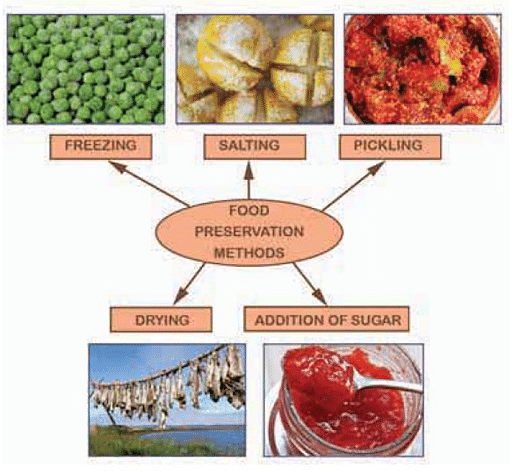
The different ways to preserve food are:
Chemical method - Sodium benzoate and sodium metabisulphite are common preservatives which are also used in jams and squashes.
Preservation by common salt and sugar - Normal salt has been utilized to protect meat and fish for a very long time. Sugar decreases the dampness content which represses the development of microscopic organisms which ruin food.
Food Preservation Methods
Preservation by oil and vinegar - Utilization of oil and vinegar prevents deterioration of pickles since microscopic organisms can’t live in such a climate.
Other than these pasteurization, storage and packing of food materials are also widely-used ways for preservation of food.
Read Also: Difference Between Bacteria and Virus
Things to Remember
[Click Here for Sample Questions]
- Food can also be contaminated during the harvesting and storage.
- The most common serious effect of food poisoning is dehydration- a severe loss of water and essential salts and minerals.
- The common symptoms of food poisoning include diarrhea, vomiting, abdominal pain, loss of appetite etc.
- Different methods like use of chemicals, common salt, sugar, storage and packing are used to preserve food for a longer time period.
Read More:
Sample Questions
Ques. What are the effects of food poisoning on infants and older people? (2 Marks)
Ans. Infants, older adults and people with suppressed immune systems or chronic illnesses may become severely dehydrated when they lose more fluids than they can replace. In that case, they may need to be hospitalized and receive intravenous fluids. In extreme cases, dehydration can be fatal.
Ques. What are some of the things to do when affected by Food Poisoning? (2 Marks)
Ans. Following measures should be taken while affected:
- Consult your doctor immediately.
- Keep yourself hydrated
- Adding ORS will help with inflammation in the stomach.
- Add lemon water without sugar. (Sugar delays the process of immunity).
Ques. What is Food Poisoning? (2 Marks)
Ans. Food Poisoning occurs when an individual consumes contaminated food or water. It is a gastrointestinal illness that affects the gastrointestinal tract. It is caused by toxic organisms, such as bacteria, in food products. Symptoms usually begin within several hours of eating contaminated food.
Ques. How to cure or prevent food poisoning? (3 Marks)
Ans. Treatment of food poisoning varies. Home treatment is typically adequate. Drink hydrating fluids and rest. Keep away from food until you feel good. At the point when you feel prepared to eat, consume only just dull food varieties, like wafers and broth. Stay away from liquor, juiced refreshments, and dairy and avoid spicy and fatty foods. In certain cases, antibiotics or anti parasite medication is necessary.
Food Poisoning is easily prevented by cooking food completely. Throw out food items left out at room temperature. If you are still doubtful about the safety of a food product or restaurant, just avoid it!
Ques. Why do you have to use a pressure canner for some foods and not for others? (2 Marks)
Ans. Higher temperatures are required to destroy botulism bacteria in low-acid foods like meats, fish, poultry and all vegetables except acidified tomatoes. The only safe way to can these foods is by using a pressure canner, which creates temperatures (240 F) higher than that of boiling water (212 F).
Ques. How much lemon juice or citric acid has to be added to tomatoes to preserve them using a water bath canner? (2 Marks)
Ans. To ensure safe acidity in whole crushed or juiced tomatoes, add two tablespoons of bottled lemon juice or ½ teaspoon of citric acid per quart of tomatoes. For pints, use one tablespoon bottled lemon juice or ¼ teaspoon citric acid.
Ques. How long is it safe to store canned food? (2 Marks)
Ans. For optimum quality, use home-canned food within one year. After one year, quality goes down but the food is still safe as long as it was processed correctly, and the seal is still intact and there are no signs of spoilage.
Ques. If a lid does not seal, can the food be processed? (2 Marks)
Ans. Yes, if done within 24 hours. Remove the contents of the jar and proceed as if the food were fresh. Check jar rim for nicks or cracks; use a new lid. The quality may not be as high when reprocessed.
Ques. What is pasteurization? Explain the process and how it helps in food preservation? (2 Marks)
Ans. The milk is heated to about 70°C for 15 to 30 seconds and then suddenly chilled and stored. By doing so, it prevents the growth of microbes. This process is called pasteurization as this process was discovered by Louis Pasteur.
Read Also:



Comments