



Content Curator
Soil pollution, Soil contamination, or land pollution are all forms of land degradation caused by the presence of xenobiotic (human-made) chemicals or other changes in the natural soil environment.
- It is most commonly caused by industrial activities, agricultural chemicals, or inappropriate waste disposal.
- Soil pollution is defined as the toxicity of soil with high concentrations of toxic substances.
- In simple terms, soil pollution is the alteration of natural soil caused by human activity.
- For example, exposure to benzene-rich soil can increase the risk of producing soil pollution diseases such as leukemia.
- All soils include compounds that are toxic to humans and other living species.
- However, the concentration of such compounds in unpolluted soil is so low that they do not cause harm to the environment.
- When the concentration of such harmful substances increases to a level that causes harm to living beings, the soil is said to be contaminated.
| Table of Content |
Key Terms: Soil pollution, Pollutants, Agrochemicals, Waste disposal, Agriculture, Carcinogens, Polycyclic Hydrocarbons, Solid waste disposal, Organic compound
What is Soil Pollution?
[Click Here for Sample Questions]
Soil pollution is defined as the presence of hazardous compounds (pollutants or contaminants) in the soil in sufficiently high quantities that harm human health and the ecosystem.
- Soil pollution is caused by the improper disposal of industrial waste into soil, which contains high levels of harmful pollutants.
- Industrial wastes include various amounts of harmful and dangerous compounds.
- When these compounds are deposited in soil, they affect the soil layer strength in the top soil, reducing soil fertility and biological activity.
- Also, a harmful consequence causes ecological imbalances, which affects agricultural productivity.
- Apart from that, it may create serious health problems for individuals who consume such foods, as the land and crops are contaminated with toxic compounds.
The main cause of soil pollution usually involves one of the following:
- Agriculture (excess/improper usage of pesticides)
- Excess industrial activity
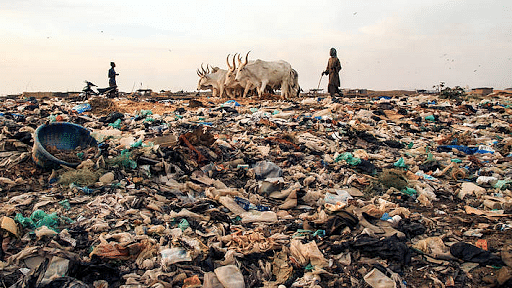
- Inefficient waste management or disposal
Also Read:
| Related Articles | ||
|---|---|---|
| Ecology and Environment | Soil Erosion | Difference between Deforestation and Afforestation |
| Reducing Agent (Reductant) | Productivity in Ecosystem | Critical temperature |
What are the Pollutants that Cause Soil Pollution?
[Click Here for Sample Questions]
Some of the most dangerous soil pollutants are xenobiotics, which are compounds that do not occur naturally in nature but are produced by humans. The term 'xenobiotic' has Greek roots: 'xenos' (foreigner) and 'bios' (life). Several xenobiotics are known to be carcinogens.
The different types of contaminants detected in polluted soil are
Polycyclic Aromatic Hydrocarbons
Polycyclic aromatic hydrocarbons (or PAHs) are chemical compounds that contain only carbon and hydrogen atoms. Their chemical structures include more than one aromatic ring.
- Common PAHs include naphthalene, anthracene, and phenalene.
- Polycyclic aromatic hydrocarbons can cause different types of cancer.
- These organic compounds can also cause cardiovascular disease in humans.
Heavy Metals
The presence of heavy metals (such as lead and mercury in excessively high quantities) in soils can make them highly toxic to humans. Some metals that can be categorized as pollutants in the soil are listed below. These metals can come from a variety of sources, including mining activities, agriculture, electronic waste (e-waste), and medical waste.
| Metals as Pollutants for Soil | |||||
|---|---|---|---|---|---|
| Arsenic | Lead | Mercury | Beryllium | Copper | Cadmium |
| Zinc | Selenium | Thallium | Antimony | Chromium | Nickel |
Industrial Waste
The release of industrial waste into soils can lead to soil pollution. Some common pollutants in the soil produced by industrial waste are mentioned below.
- Polychlorinated biphenyls (PCBs)
- Chlorinated industrial solvents
- Plasticizers/dispersants
- Dioxins
The petroleum industry produces a lot of petroleum hydrocarbon waste products. Some of these pollutants, like benzene and methylbenzene, are known to be carcinogenic.
Pesticides
Pesticides are substances (or combinations of substances) used to kill or prevent the growth of pests. Some important soil pollutants found in pesticides are mentioned below.
- Herbicides: Carbamates, Phenoxyalkyl acids, Triazines, Amides, and Aliphatic acids
- Insectides: Arsenic-containing compounds, Organophosphates, Chlorinated hydrocarbons, and Pyrethrum.
- Fungicides: Thiocarbamates, Mercury-containing compounds, and Copper sulfate
Processes that Cause Soil Pollution
[Click Here for Sample Questions]
Soil pollution is classified into two categories
- Naturally caused soil pollution
- Soil pollution caused by Human activity (Anthropogenic soil pollution)
Natural Pollution of Soil
Certain pollutants accumulate in soils naturally through extremely unusual processes. This can be caused by the atmosphere's uneven deposition of soil. This type of pollution of the soil can also arise when soil pollutants are transported with precipitation water.
- Natural soil pollution includes the formation of compounds containing the perchlorate anion (ClO4-) in some dry, arid ecosystems.
- It is essential to know that some pollutants can be naturally formed in soil as a result of specific environmental circumstances.
- During a thunderstorm, perchlorates can develop in soils containing chlorine and certain metals.
Anthropogenic Soil Pollution
Pollution of the soil is mostly caused by humans. Various human activities can pollute the soil. Some of these processes are given below.
- The destruction of old buildings can result in the contamination of nearby soil with asbestos.
- The use of lead-based paint during construction activities can also contaminate the soil.
- Petrol and diesel spillage during transportation can pollute soil with petroleum hydrocarbons.
- Metal casting factories commonly discharge metallic pollutants into the surrounding soils.
- Underground mining can contaminate soil with heavy metals.
- Improper disposal of highly toxic industrial/chemical waste can pollute the soil.
- Excessive and ineffective use of chemical pesticides can cause significant soil Pollution.
- Sewage from urban areas can also pollute the soil.
Negative Consequences of Soil Pollution
[Click Here for Sample Questions]
Soil pollution has a wide range of negative consequences for plants, animals, humans, and the ecosystem as a whole.
Effects on Human Beings
Soil pollutants can occur in all three phases: solid, liquid, and gas. As a result, these pollutants can enter the human body through a variety of paths, including direct contact with the skin and inhaling contaminated soil dust.
The short-term consequences of human exposure to polluted soil include:
- Headaches, nausea, and vomiting.
- Fatigue and weakness.
- Coughing, chest pain, and wheezing.
- Irritation to the skin and eyes.
Soil pollution can cause a number of long-term health issues. Some of these issues are listed below.
- High quantities of lead can cause permanent nerve damage. Children are more vulnerable to lead.
- Depression of the central nervous system (CNS).
- Damage to important organs such as the kidney and liver.
- Increased risk of cancer.
Effects on Plants and Animals
Plant life ceases to grow in polluted soils because the availability of nutrients can be reduced. Soils contaminated with inorganic aluminum can be harmful to plants. Also, this type of pollution commonly raises soil salinity, making it unsuitable for plant development.
- Plants grown in polluted soil can accumulate high quantities of soil pollutants through a process called bioaccumulation.
- When herbivores eat these plants, all of the toxins collect and go up the food chain.
- This can lead to the extinction of many important animal species.
- Also, these pollutants can find their way to the top of the food chain, resulting in diseases in humans.
Effects on the Ecosystem
Soil pollution can have a direct impact on air and water pollution because volatile compounds in soil can be carried away into the atmosphere by winds or sink into underground water reservoirs.
- It can also contribute to acid rain (by releasing large amounts of ammonia into the atmosphere).
- Acidic soils are harmful to many microorganisms that enhance soil texture and help in the breakdown of organic matter.
- Thus, the negative effects of pollution of the soil affect soil quality and texture.
- The production of crops is greatly affected by this type of pollution.
- According to research conducted by the China Dialogue, about 12 million tons of grain (worth around 2.6 billion USD) are unsafe for human consumption due to heavy metal contamination.
How Can Soil Pollution be Controlled?
[Click Here for Sample Questions]
Several technologies have been developed to deal with soil remediation. Some essential methods used to remediate polluted soil are given below.
- Polluted soils are excavated and then transported to remote, uninhabited regions.
- Pollutant extraction using thermal remediation involves increasing the temperature to force contaminants into the vapor phase, which can then be collected through vapor extraction.
- Bioremediation, also known as phytoremediation, is the use of microbes and plants to remove pollutants from soil.
- Mycoremediation includes the use of fungus to accumulate heavy metal pollutants.
Things to Remember
- Soil pollution is defined as the toxicity of soil with high concentrations of toxic substances.
- When the concentration of such harmful substances increases to a level that causes harm to living beings, the soil is said to be contaminated.
- The main cause of soil pollution involves Agriculture, Excessive industrial activity, and Inefficient waste management.
- The presence of heavy metals in soils can make them highly toxic to humans.
- Polycyclic aromatic hydrocarbons can cause different types of cancer.
- Soil pollution is classified into two categories Natural pollution of soil and Anthropogenic soil pollution.
Also Read:
Sample Questions
Ques. What is soil pollution? (1 Mark)
Ans. Soil pollution is defined as the presence of harmful compounds (pollutants or contaminants) in soil in concentrations high enough to endanger human health and/or the ecosystem.
Ques. What is bioaccumulation? (2 Marks)
Ans. Bioaccumulation is the slow accumulation of substances, such as pesticides or other toxins, in an organism. Pesticides may accumulate in the bodies of herbivores that are unable to flush off the poisons, resulting in bioaccumulation.
Ques. What are the major sources of soil pollution? (1 Mark)
Ans. Soil pollution is mostly caused by industrial activities, agriculture, chemical spills, and other natural factors.
Ques. What are the environmental remediation processes that can be employed to curb the negative effects of soil pollution? (2 Marks)
Ans. These processes include
- The contaminated soil can be dug and sent to a remote disposal location.
- Thermal treatment of polluted soil includes heating the soil to evaporate the volatile harmful contaminants.
- Soil decontamination via surfactant leaching.
Ques. What are the effects of soil pollution on human health? (3 Marks)
Ans. Contaminants present in polluted soil can enter the human body through a variety of pathways, including the nose, mouth, and skin. Headaches, coughing, chest pain, nausea, and skin/eye irritation are among the short-term health concerns that can arise from exposure to these soils. Prolonged exposure to polluted soil can depress the central nervous system and harm essential organs (such as the liver). Long-term exposure to contaminated soils has also been associated with cancer in people.
Ques. List some examples of the contaminants that pollute soils. (1 Mark)
Ans. Some examples of the pollutants that pollute soils are Lead, Copper, Arsenic, Nickel, Zinc, Polycyclic aromatic hydrocarbons, and Mercury.
Ques. Elucidate the use and after-effects of agrochemicals on the soil. (3 Marks)
Ans. Pesticides are a broad category of agrochemicals used to increase the productivity of crops. These can be herbicides, insecticides, bacterial or animal repellents, fungicides, and a variety of other chemicals. These mainly target to kill or destroy pests, insects, weeds, rodents, birds, or other mammals that could attack the crops during their growth or storage. Fertilizers on the other hand are added to facilitate faster growth of crops by enriching the soil with external nutrients. Better quality and quantity can be obtained. Despite these benefits, a major drawback of these agrochemicals is their effect on human health. Herbicides are mammal toxic and accumulate in the food chain. Birth defects in the offspring of frontline farmworkers who use these repeatedly have been observed. Also, insects, rodents, weeds, etc. are continuously developing resistance to these chemicals pushing manufacturers to further chemically modify them.
Ques. List some ways in which soil can get polluted. (3 Marks)
Ans. The following are a few ways in which soil pollution takes place:
- Industrial waste is discharged into water bodies or air causing accumulation of heavy metals in soil and mixing up of gaseous pollutants with soil.
- Excessive and repeated use of agrochemicals like pesticides and fertilizers.
- Improper maintenance of sewage facilities causes their seepage into the soil and further enters the food chain.
- Solid waste seepage from domestic and municipal areas causes leaching and piling up of harmful toxins like polycyclic hydrocarbons.
- Percolation of contaminated water into the soil and rupture of underground water tanks can create an imbalance in the soil composition.
Ques. What are the agricultural effects of soil pollution? (3 Marks)
Ans. Soil quality and capability to boost the growth of crops get hampered by an increase in soil pollution. Some prominent effects are as follows:
- Nutrient reduction
- Soil fertility reduction
- Increase in soil erosion
- Nitrogen fixation reduction
- Lower crop yields
- Imbalance in soil biodiversity
Ques. What are some measures that can be taken to prevent soil pollution? (3 Marks)
Ans. Soil pollution can be prevented by:
- Reducing, reusing, and recycling the use of plastics, cloth, and paper in domestic and industrial domains.
- Following proper disposal of solid wastes generated in urban areas
- Switching to using organic manures and bio-fertilizers for cultivation
- Maintaining sewage and underground tanks to avoid seepage.
- Proper treatment techniques can be used to remove the toxic pollutants based on their nature
- Reforestation by incorporating crop rotation or mixing of crops will ensure that soil fertility remains intact and the nutrients get replenished.
For Latest Updates on Upcoming Board Exams, Click Here: https://t.me/class_10_12_board_updates
Check-Out:



Comments