


(a) Name the various organs of human excretory system. Draw a labelled diagram of human excretory system. What is the function of excretory system in humans? ?(b) What is meant by dialysis? What type of patients are put on dialysis?

Collegedunia Team logo

Collegedunia Team

Content Curator

The Human Excretory System is composed of several organs and structures responsible for removing waste products from the body. These organs include the kidneys, ureters, bladder, and urethra. The kidneys filter waste from the blood and produce urine, which is carried to the bladder for storage until it is eliminated from the body through the urethra.

(a) The organs of the human excretory system are kidneys, ureters, bladder, and urethra.
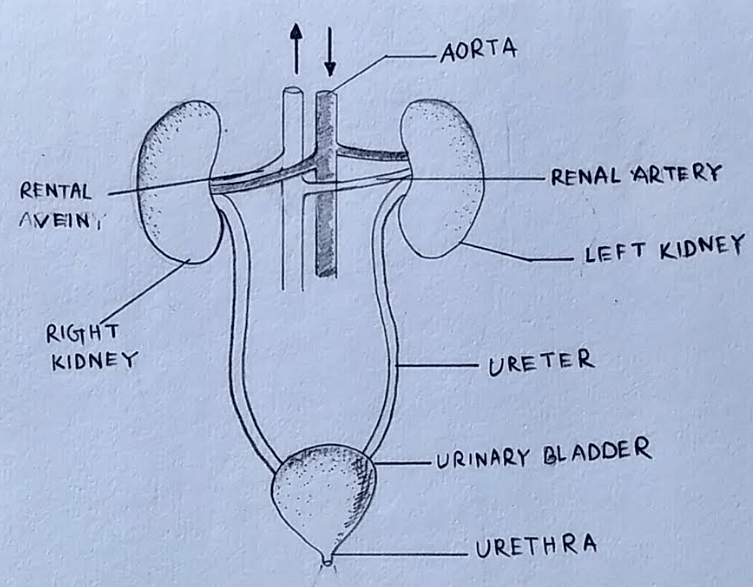
Labelled Diagram of Human Excretory System

Labelled Diagram of Human Excretory System

Functions of Human Excretory System

The human excretory system helps remove waste products from the body and maintain homeostasis. Its main functions include:

  1. Filtering waste products such as urea and creatinine from the blood and removing them as urine.
  2. Regulating fluid and electrolyte balance.
  3. Regulating blood pressure.
  4. Maintaining pH balance.
  5. Excretion of waste products like carbon dioxide through the lungs.
  6. Elimination of waste products produced during metabolism through the skin in the form of sweat.

(b) Dialysis is a medical treatment used to filter waste and excess fluids from the blood of people with kidney failure. It uses a machine to artificially filter the blood and remove waste and fluids, which helps to keep the body in balance and prevent complications from kidney failure. Dialysis is a medical treatment for patients with kidney failure, who are unable to remove waste and excess fluid from their bodies efficiently.

Dialysis

Dialysis

Also check:

CBSE CLASS XII Related Questions

  • 1.
    Draw the structure of an antibody molecule and label any four of its parts.


      • 2.
        Differentiate between active and passive immunity. Write any three differences.


          • 3.
            Briefly explain the events of fertilisation and implantation in an adult human female.


              • 4.
                Explain the different organizational levels of biodiversity at the genetic, species, and ecological levels, providing a suitable example for each category.


                  • 5.
                    (I) Write the scientific names of the two species of filarial worms causing filariasis.
                    (II) How do they affect the body of infected persons ?
                    (III) How does the disease spread ?


                      • 6.
                        Name the phenomenon that leads to situations like ‘XO’ abnormality in humans. Also name this genetic disorder. How are individuals with an XO chromosomal abnormality affected ? Write its symptoms as well as karyotype.

                          CBSE CLASS XII Previous Year Papers

                          Comments


                          No Comments To Show
