



Content Curator
Scientists and their inventions have helped create most machines we use today. An invention refers to anything that is created through a process of experimentation. Discovery on the other hand refers to identifying things that have already existed. That is the extent to which we are dependent on the various discoveries of science.
Read Also: Newton's Second Law Formula
| Table of Contents |
Key Terms: Photoelectric Effect, Special Relativity, Coulomb, Atoms, Rutherford Model, Charge-to-mass Ratio, Electrolysis, Compton Wavelength
Scientific Discoveries and Inventions
[Click Here for Sample Questions]
All scientific inventions and discoveries to date have contributed tremendously to revolutionizing each and every aspect of our life. From the way we live to the way we think, everything is impacted by these inventions. They helped us in finding answers to the questions that till a few years ago remained a mystery.
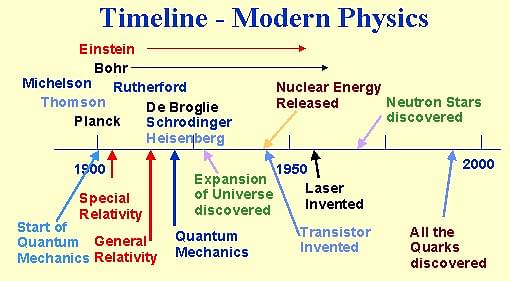
Timeline of Physics Inventions
From the smallest of the atom to the wide secrets of the mysterious universe, science and technology help us explore all of it. This discipline of science was not discovered just one day, in fact, it took more than even a decade or a century for science and technology to evolve to the state as they are in today.
The video below explains this:
Physics Scientists and Their Inventions Detailed Video Explanation:
Read More:
Physics Scientists
[Click Here for Sample Questions]
Scientists are people who take interest in and explore the nature and working of the universe. An investigator however is someone who attempts to create products or devices that are useful for us. There are a few people that have performed both these roles and led to exemplary results. Though all the inventions had their own impact, herein we will have a look at the most famous scientist and their inventions or discoveries:
Albert Einstein
Albert Einstein proposed the concept of photons. He states that a photon, which is also referred to as light quantum, is a small packet of electromagnetic radiation. Einstein also proposed an explanation for the photoelectric effect. He stated that specific packets of energy exist when the transmission of light takes place.
Albert Einstein is the most famous for his general theory of relativity. He also devised the concept of mass-energy equivalence and gave the most famous formula E = mc2. Even today, his work continues to aid astronomers in their study of the theory of relativity and gravitational waves.

Albert Einstein
He was also working on the Theory of Everything, at the time of his death. In that theory, he was trying to unify all the forces existing in the universe into a single theory. The major discoveries of Einstein are as given below:
- Photoelectric Effect
- Theory of special relativity
- Unified field theory
- Theory of general relativity
| Ques. What is Photoelectric Effect? Ans. Photoelectric Effect can be expressed as a phenomenon wherein a stream of light strikes a metallic surface, resulting in the emission of electrons from the latter. The electrons emitted from the surface are called Photoelectrons. |
Ernest Rutherford
Ernest Rutherford was a New Zealand chemist. He is fairly regarded as the 'father of nuclear physics.’ He is also recognized for the discovery of the protons in the nucleus and he hypothesized or assumed the existence of a neutral particle called the neutron.
He was the first person to propose that an atom has a small nucleus that is charged and the nucleus is surrounded by empty space. He further stated that the atom is circled by the small electrons present in it. This is famously regarded now as the Rutherford model.

Ernest Rutherford and his structure of the atom
Read more: Alpha-particle Scattering and Rutherford’s Nuclear Model of Atom
Charles-Augustin de Coulomb
The famous Coulomb's law that deals with the electrostatic attraction and repulsion forces were given by Charles Augustin de Coulomb. He proposed this law in order to further study and explore the law of electrostatic repulsion that was given by Joseph Priestley, an English scientist.

Charles-Augustin de Coulomb
His work is also extensively seen in the friction of machinery. He also worked on the elasticity of silk fibers and metal. The SI unit of charge i.e. Coulomb is named after Augustin Coulomb. In honour of his contribution, the SI unit of charge was named after Charles-Augustin de Coulomb.
Read more: Coulomb’s Law
Thomas Edison
Thomas Edison contributed a lot to science through many discoveries and inventions. Due to his multiple achievements in the field of science, Edison is popularly regarded as "America's greatest inventor". Some of his noteworthy achievements are as follows:
- He discovered Thermionic Emission.
- He invented the fluorescent electric lamp.
- He devised the motion picture camera.
- The invention of the carbon rheostat was done by him.
- He also discovered the incandescent light

Thomas Edison
Many devices in the field of science were discovered by him such as electric power generation and mass communication. He was one of the active pioneers who applied teamwork and scientific organized principles to the invention processes as he worked with many employees and researchers.
Heinrich Rudolf Hertz
Heinrich worked extensively on electromagnetism. While working on the same, he also discovered an important phenomenon which is known as the photoelectric effect. He observed that the ultraviolet rays that are produced by the metal lose their charges quickly.
He published his findings in Annalen der Physik which was a journal. However, he did not carry out further research on this process. It was only in 1905 when Albert Einstein developed the theory and proposed that light is in specific packets of energy which are called photons. This discovery eventually led to the development of the field of Quantum mechanics.
Enrico Fermi
The world's first nuclear reactor was created by the Italian American physicist, Enrico Fermi. He was awarded a Nobel prize in physics for his extensive work in the field of induced reactivity through the bombardment of neutrons.

Enrico Fermi and the concept of nuclear fission
He is popularly regarded as the "architect of the atomic bomb' and hence the "architect of the nuclear age". His significant contribution can also be seen by his work in the field of statistical mechanics, quantum theory, and particle and nuclear physics.
Read more: Mass-Energy and Nuclear Binding Energy
Wilhelm Conrad Röntgen
Wilhelm Conrad Röntgen was a German physicist who systematically detected and produced electromagnetic radiation in a range of wavelengths, which is referred to as the X-rays or the Roentgen rays.
The discovery of these rays earned him a Nobel Prize in Physics as it brought a great revolution in the field of medicine. He is also popular for his work in the field of electricity, heat, and mechanics.
Max Planck
The German physicist Max Planck is popular as he proposed the quantum theory of energy. This theory earned him a Nobel Prize. He made a significant contribution through his work to the subatomic and atomic processes.
| Ques. What is Planck’ Constant? Ans. The value of Planck's Constant (h) is equivalent to 6.63 x 10⁻³⁴ J.s. |
J.J Thomson
J.J Thomson, an English physicist with a Nobel prize in physics was responsible for the discovery of the electron. Electrons were the first subatomic particles to ever be discovered. He also found the first-ever evidence for the existence of isotopes for various stable elements.
He managed to exhibit that the cathode rays are formed of the electrons that were negatively charged particles that were previously unknown. He also inferred that electrons are composed of bodies smaller than atoms and have a substantial charge-to-mass ratio.
Isaac Newton
The discoveries by Isaac Newton were a kind of launchpad for the future discoveries of science. He did many noteworthy works, some of his innovations are as given below:
- Isaac Newton discovered the gravitational force which further provided us with the ability to predict the movement of various heavenly bodies in space.
- Newton also gave the three laws of motion which set the basic foundation for the field of modern classical mechanics.
- He was also credited with the discovery of calculus. This is a potent tool of mathematics that helps in the specific analytical treatment of the world (physical) around us.
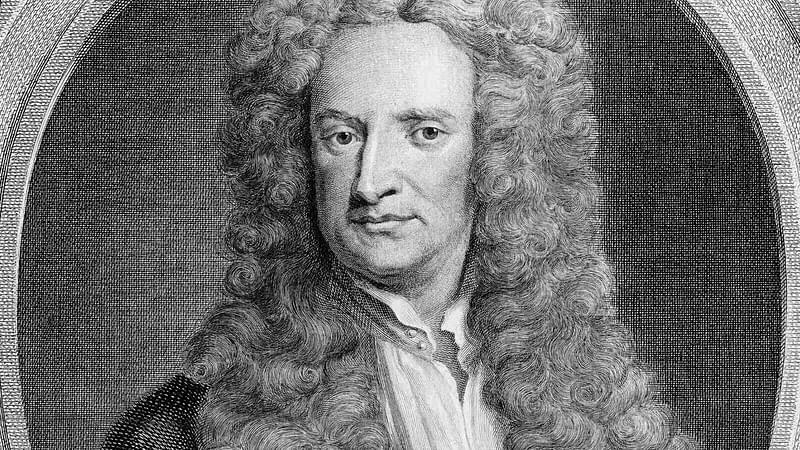
Isaac Newton and his achievements in the field of science
Isaac Newton is one of the greatest physicists and mathematicians of all time. His discoveries and inventions were very useful and thus widened the scope of human thoughts. Some of his notable contributions are:
- Newton is most popular for devising the concept of gravity.
- He contributed to developing an altogether new branch of mathematics known as calculus.
- In 1668, Newton invented a reflecting telescope where he made use of mirrors in order to form an image through the reflection of light
James Chadwick
James Chadwick was a British physicist who was credited with the discovery of neutrons. He also was awarded a Nobel prize in 1935 for his significant discovery. He demonstrated that bombarding various elements with neutrons can lead to the penetration and eventually the splitting of the nuclei. This generated a huge amount of energy. His discoveries were therefore vital for the discovery of nuclear fission and ultimately to the development and discovery of the atomic bomb.
John Dalton
The major contribution by John Dalton in the field of science was his theory of atoms that have five parts which are as discussed below
- Atoms are indestructible and indivisible.
- Atoms are further made of tiny particles called atoms.
- For a given element, all its atoms are similar in mass, size, and chemical properties.
- Atoms in a chemical reaction separate, combine and then get rearranged.
Based on these observations, John Dalton made a lot of inventions and discoveries.

John Dalton and Dalton’s Atomic Theory
Read more: Dalton’s atomic theory
Michael Faraday
Michael Faraday was entirely devoted to discoveries through the use of experimentation. He was relentless in his pursuit of ideas that were generated as a result of scientific intuition. He kept on experimenting when he thought of an idea until he got the result he was expecting. Some of his noteworthy discoveries are as given below:
- He discovered benzene.
- He discovered magneto-optical effects.
- He was the first person to liquefy chlorine.
- He devised Faraday's laws of electrolysis.
- He also developed the concept of gas liquefaction and refrigeration.
- He developed the laws of electromagnetic induction, thereby laying the foundation for the construction of transformers, dynamos, and electric motors.
- He is known as the father of electrical engineering. In honour of his contributions, the SI unit of electrical capacitance that is Farad is named after him.
Also Check: Hydraulic Machines
Marie Skodowska Curie
Marie Sklodowska Curie was a chemist. She conducted research in the field of radioactivity. Due to her work, she was the first-ever woman to win a Nobel Prize. One of her notable contributions is the discovery of the two elements, Radium and Polonium.
Georg Simon Ohm
Georg Simon Ohm was the German physicist who discovered the "Ohm's Law" which was named after him. The law stated that the current that flows in a conductor is directly proportional to the voltage of the conductor and inversely proportional to the resistance.

Georg Simon Ohm and Ohm’s Law
Read more: Ohm’s Law And its Limitations
Neils Bohr & Rutherford
Rutherford stated that an atom consists of a positive centre mass which in turn is surrounded by the electrons that orbit it. Neils Bohr further suspected that electrons revolve around the atom in quantized orbits. Bohr worked with this suspicion on Rutherford's model and eventually proved that the particles of an atom can not just occupy any energy level.
Henri Becquerel
Henri Becquerel, a French physicist, was best known for his work related to radioactivity. He also won a Nobel prize for his significant contribution. As a result of this, the SI unit of radioactivity was named after him which is Becquerel.
Things to Remember
- A scientist refers to a person who takes interest in and explores the nature and working of the universe.
- Albert Einstein proposed the concept of photons and electromagnetic radiation.
- Many devices in the field of science were discovered by Thomas Edison such as electric power generation and mass communication.
- Newton is most popular for devising the concept of gravity
- Georg Simon Ohm was the German physicist who discovered the "Ohm's Law".
- James Chadwick demonstrated that bombarding various elements with neutrons can lead to the penetration and eventually the splitting of the nuclei.
- Michael Faraday developed the laws of electromagnetic induction, thereby laying the foundation for the construction of transformers, dynamos, and electric motors.
Sample Questions
Ques. Name some inventions that are vital for our survival and existence along with the name of their inventors. (5 marks)
Ans. Some such notable inventions are:
- Telephone by Alexander Graham Bell, Antonio Meucci, Amos Dolbear, John Peirce, and Charles A. Cheever.
- Printing Press by Johannes Gutenberg.
- Personal Computer by John Blankenbaker of Kenbak Corporation.
- The clock by Peter Henlein.
- Automobile by Karl Benz
- Airplane by Wright Brothers
- Vaccines by Edward Jenner
- Light bulb by Thomas Edison.
Ques. What are Newton’s laws of motion? (3 marks)
Ans. Newton developed three laws of motion which are:
- An object which is at rest will remain at rest and an object that’s in motion remains so at a constant speed until they are acted upon by an unbalanced force.
- Any object’s acceleration depends upon the mass of the object and the force applied to it.
- When an object exerts a force on another, the second object will exert an equal and opposite force on the first object.
Ques. Give a summary of the notable discoveries of physics. (5 marks)
Ans.. The notable discoveries of physics are as tabulated below:
| Year | Discovery | Name of the Scientist |
|---|---|---|
| 1687 | Laws of Motion | Isaac Newton |
| 1779 | Coulomb | Charles-Augustin de Coulomb |
| 1897 | Electron | J.J. Thomson |
| 1905 | Photon | Albert Einstein |
| 1808 | Atom | John Dalton |
| 1919 | Proton | Ernest Rutherford |
| 1932 | Neutron | James Chadwick |
| 1827 | Ohm’s Law | Georg Simon Ohm |
| 1880 | Thermionic Emission | Thomas Edison |
| 1831 | Electromagnetic Induction | Michael Faraday |
| 1942 | Nuclear Reactor | Enrico Fermi |
| 1913 | Atomic Structure | Neils Bohr & Rutherford |
| 1905 | Relativity | Albert Einstein |
| 1895 | X-Ray | Rontgen |
| 1905 | Photoelectric Effect | Heinrich Rudolf Hertz |
| 1900 | Quantum Theory | Max Planck |
| 1896 | Radioactivity | Henri Becquerel |
| 1898 | Radium | Marie Curie |
Ques. Describe in brief the scientific contributions of Thomas Edison. (5 marks)
Ans. Thomas Edison contributed a lot to science through many discoveries and inventions.
- He discovered the Thermionic Emission.
- He invented the fluorescent electric lamp.
- He devised the motion picture camera.
- The invention of the carbon rheostat was done by him.
- He also discovered the incandescent light
- Many devices in the field of science were discovered by him such as electric power generation and mass communication.
Ques. Describe the development of the atomic structure model. (5 marks)
Ans. Ernest Rutherford is recognized for the discovery of the protons in the nucleus and he hypothesized or assumed the existence of a neutral particle called the neutron. He was the first person to propose that an atom has a small nucleus that is charged and the nucleus is surrounded by empty space. He further stated that the atom is circled by the small electrons present in it. This is famously regarded now as the Rutherford model. Neils Bohr further suspected that electrons revolve around the atom in quantized orbits. Bohr worked with this suspicion on Rutherford's model and eventually proved that the particles of an atom can not just occupy any energy level.
Ques. State the Coulomb’s law. (2 marks)
Ans. Charles-Augustin de Coulomb devised Coulomb’s law which states that the force of attraction or repulsion between any two charged bodies is inversely proportional to the square of the distance between any two charges and directly proportional to their product.
Ques. What is Ohm’s law? (2 marks)
Ans. Ohm’s law states that the current flowing through a conductor between any two points is directly proportional to the voltage that exists across those two points.
Ques. State the important discoveries of the following scientists. (5 marks)
(1) Isaac Newton
(2) Thomas Edison
(3) Michael Faraday
(4) Albert Einstein
(5) John Dalton
Ans. All these scientists contributed immensely to the field of science. Some of their important discoveries and inventions are:
- Isaac Newton: Isaac Newton discovered the gravitational force which further provided us with the ability to predict the movement of various heavenly bodies in space. Newton also gave the three laws of motion which set the basic foundation for the field of modern classical mechanics. He was also credited with the discovery of calculus. This is a potent tool of mathematics that helps in the specific analytical treatment of the world (physical) around us.
- Thomas Edison: Thomas Edison contributed a lot to science through many discoveries and inventions. He discovered Thermionic Emission. He invented the fluorescent electric lamp and the motion picture camera. The invention of the carbon rheostat was done by him. Many devices in the field of science were discovered by him such as electric power generation and mass communication.
- Michael Faraday: Michael Faraday was entirely devoted to discoveries through the use of experimentation. He kept on experimenting when he thought of an idea until he got the result he was expecting. He discovered isolated benzene and magneto-optical effects. He was the first person to liquefy chlorine. He devised Faraday's laws of electrolysis. He developed the laws of electromagnetic induction, thereby laying the foundation for the construction of transformers, dynamos, and electric motors
- Albert Einstein: Albert Einstein proposed the concept of photons. He states that a photon, which is also referred to as light quantum, is a small packet of electromagnetic radiation. Einstein also proposed an explanation for the photoelectric effect. He stated that specific packets of energy exist when the transmission of light takes place. The major discoveries of Einstein are the Photoelectric Effect, the theory of special relativity, Unified field theory, and the theory of general relativity
- John Dalton: The major contribution by John Dalton in the field of science was his theory of atoms which stated that atoms are indestructible and indivisible, atoms are further made of tiny particles called atoms. He said that for a given element, all its atoms are similar in mass, size, and chemical properties. He further deduced that atoms in a chemical reaction separate, combine, and then get rearranged. Based on these observations, John Dalton made a lot of inventions and discoveries.
Also read:



Comments