



Content Curator
Vitamin D is a class of fat-soluble secosteroids that increases intestinal absorption of calcium, magnesium, and phosphate, among other things.
- Vitamins serve as essential nutrients that our body requires in small amounts in order to function properly.
- Vitamin D is a complex vitamin that our bodies require for growth and development.
- Vitamin D comes in two varieties: vitamin D2 and vitamin D3.
The main difference between vitamin D and vitamin D3 is that
- Vitamin D is a fat-soluble vitamin that controls calcium and phosphorus levels in the body and
- Vitamin D3 is the natural form of vitamin D created by the body from sunlight.
| Table of Content |
Key Terms: Vitamins, Vitamin D, Vitamin D3, Types of Vitamins, Minerals, Nutrients, Sources of vitamin D, Deficiency of vitamin D, Sunlight, Gene regulation, Calcium
Vitamin D
[Click Here for Sample Questions]
Vitamin D is a vital vitamin that is obtained by exposure to sunlight.
- It is necessary for healthy bones and helps the body to use calcium from the diet.
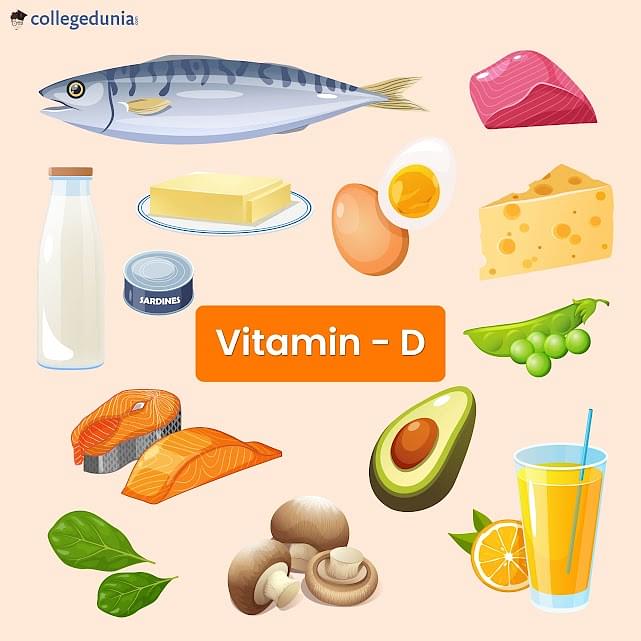
- It is found naturally in fish, fish liver oils, egg yolk, and other foods.
- Low vitamin D levels may cause cancer, heart disease, severe asthma in children, and other diseases.
- Vitamin D is also known as calciferol.
The following are the functions of Vitamin D in the body
- Bone growth
- Bone remodeling
- Regulation of muscle contractions
- Conversion of blood glucose (sugar) into energy.
Also check:
| Related Concepts | ||
|---|---|---|
| Vitamins and Minerals | Vitamin B | Functions of Vitamin A, B, C, D, and E |
| Scientific Names for Vitamins | MCQ on Vitamins | Vitamin B12 Deficiency |
Vitamin D3
[Click Here for Sample Questions]
More than 2000 genes in the body can be affected by vitamin D3.
- Low vitamin D3 levels can have serious consequences for human health.
- It is responsible for gene regulation.
- It has a major effect on bone health, insulin regulation, low blood pressure, cancer prevention, and other aspects.
- When exposed to UVB light, an organic compound in the skin known as 7-dehydrocholesterol activates and begins producing vitamin D3.
- Vitamin D3 is mostly used as a vitamin D dietary supplement.
- It promotes calcium absorption and may aid in the prevention of osteoporosis and osteomalacia.
- Vitamin D helps manage insulin levels and maintains the immune system.
- It also maintains energy levels.
- Vitamin D is an important immune system-strengthening nutrient that can help prevent colds and flu.
Difference Between Vitamin D and Vitamin D3
[Click Here for Sample Questions]
The primary difference between vitamin D3 and vitamin D is that vitamin D3 is a subset of vitamin D that is created by skin exposure to sunlight. Other differences are tabulated below:
| Vitamin D | Vitamin D3 |
|---|---|
| It is produced by both plants and animals. | Produced particularly in animals and found on animal skin |
| Vitamin D comes in five different forms: D1, D2, D3, D4, and D5. | Cholecalciferol is a form of vitamin D3. |
| It is not always healthy for the body. Vitamin D2 may be harmful to health. | Vitamin D3 is beneficial to the human body. |
| It is a micronutrient that is required for calcium, magnesium, and phosphate absorption. | It is a vitamin D subtype that is generated by the skin. |
| Vitamin D is found in fortified foods such as milk and cereals, as well as in plants such as wild mushrooms. | Vitamin D3 is mostly found in animal products such as fish oil, fatty fish, liver, and egg yolks. |
| Vitamin D can be found in fortified foods | Vitamin D3 is available in all forms over-the-counter. |
| In all of its forms, vitamin D is not useful. | Vitamin D3 is beneficial to the human body. |
Also check:
| Biology Related Concepts | ||
|---|---|---|
| Difference between Catabolism and Anabolism | Blastocyst | Menstrual Cycle |
| Human Bacterial Diseases | Vitamin B types | Primary Wall |
Things to Remember
- Vitamins are organic substances that are generally classified as either fat-soluble or water-soluble.
- Vitamin D is a necessary component that contributes to healthier bones and teeth.
- Exposure to sunlight causes our body to produce vitamin D.
- Vitamin D can be found in fish, fish liver oils, egg yolk, and other foods.
- Vitamin D3 is a subset of vitamin D that is created by skin exposure to sunlight
- Vitamin D3 is mostly found in animal products such as fish oil, fatty fish, liver, and egg yolks.
Sample Questions
Ques. What is called vitamin? (2 Marks)
Ans. Vitamins are substances that our bodies require for proper growth and function. Vitamins A, C, D, E, and K, as well as choline and the B vitamins (thiamin, riboflavin, niacin, pantothenic acid, biotin, vitamin B6, vitamin B12, and folate/folic acid) are among them.
Ques. Which food is rich in vitamin D? (2 Marks)
Ans. Several foods and supplements, such as dairy products and cereals, are vitamin D enriched.
- Fish liver oil
- Salmon
- Tuna fish
- Sardines
- Swordfish
- Orange juice fortified with vitamin D
- Dairy and plant milks fortified with vitamin D
Ques. What is vitamin D important for? (2 Marks)
Ans. Vitamin D is an essential nutrient for good health. It helps in the absorption of calcium, which is one of the primary building blocks for healthy bones. Together with calcium, vitamin D helps protect against osteoporosis, a condition that thins and weakens the bones, making them more prone to fracture.
Ques. What is vitamin D3 and what does it do? (2 Marks)
Ans. Vitamin D3 (cholecalciferol) is a vitamin D supplement offered in a variety of dosages. Oral pills and capsules, as well as oral and sublingual solutions, are available. Animal sources of vitamin D3 include fish oil, fatty fish, liver, and egg yolks. Vitamin D3 is a fat-soluble vitamin that aids in the absorption of calcium and phosphorus by the body.
Ques. What is vitamin D2 (sometimes known as D3)? (3 Marks)
Ans. Vitamin D (D2—ergocalciferol) is a prescription vitamin D supplement. Oral tablets and capsules, as well as an oral solution, are available. Vitamin D2 is the most prevalent form of vitamin D found in fortified foods, and it derives from plant sources. The two most common forms of vitamin D are D2 and D3. Vitamin D2 is found in plants and yeast, and D3 is obtained from animals. Vitamin D is required for a variety of body activities, including bone, muscle, and immunological functions.
Ques. Are vitamin D and vitamin D3 the same thing? (3 Marks)
Ans. When we talk about vitamin D, we're referring to vitamin D2. Both vitamin D2 and vitamin D3 are frequently used vitamin D supplements, although they are not interchangeable. Ergocalciferol is a plant-derived form of vitamin D.
Cholecalciferol is a form of vitamin D that comes from animal sources. Both supplements are converted to 25-hydroxyvitamin D in the body by the liver, while vitamin D3 is thought to provide larger quantities of 25D. Some vitamin D2 formulations require a prescription, whereas all vitamin D3 formulations are available over-the-counter.
Ques. Is it better to take vitamin D or vitamin D3? (2 Marks)
Ans. The liver converts vitamin D and D3 to 25-hydroxyvitamin D2 and 25-hydroxyvitamin D3, respectively, throughout the body. Vitamin D3 supplementation has been demonstrated to increase 25D levels, resulting in a greater contribution to the body's vitamin D reserves. Vitamin D3 supplements have been found in studies to be more effective at increasing the body's vitamin D reserves.
Ques. Is vitamin D3 a source of energy for you? (2 Marks)
Ans. Vitamin D supplementation is claimed to boost energy levels. A clinical trial was conducted to look at the levels of fatigue in patients who were found to be vitamin D deficient. Vitamin D3 supplementation was given to these patients to raise vitamin D levels in their blood, and the results revealed a considerable reduction in weariness. Scientists believe this is due to vitamin D's effect on mitochondrial oxidative phosphorylation in skeletal muscle at the cellular level. Muscle fatigue is reduced as a result of this.
Ques. Is Vitamin D3 Better Than Vitamin D? (2 Marks)
Ans. The liver converts vitamin D and vitamin D3 into 25-hydroxyvitamin D2 and 25-hydroxyvitamin D3, respectively, throughout the body. Several studies have demonstrated that supplementing with vitamin D3 causes larger levels of 25D, which leads to a greater contribution to the body's vitamin D reserves.
Ques. What are the symptoms and indicators of a vitamin D deficiency? (3 Marks)
Ans. Vitamin D deficiency causes muscle weakness, pain, fatigue, and sadness. Eat certain meals, take supplements, and get lots of sun to get enough D.
The following are possible signs and symptoms:
- Fatigue
- Bone ache
- Muscle weakness, pains, or cramping are all symptoms of muscle weakness
- Mood swings, such as depression
For Latest Updates on Upcoming Board Exams, Click Here: https://t.me/class_10_12_board_updates
Also Read:



Comments