



Content Curator
Deficiency diseases are health conditions that result from a lack of essential nutrients in the diet. These nutrients are required for proper growth, development, and functioning of the body. Examples of deficiency diseases include scurvy (vitamin C), rickets (vitamin D), anemia (iron), pellagra (niacin), and beriberi (thiamin). Deficiency diseases can be prevented by consuming a balanced diet that includes all essential nutrients.
Deficiency diseases and the associated nutrients:
- Scurvy (Vitamin C): Scurvy is a deficiency disease caused by a lack of vitamin C. Symptoms include fatigue, weakness, muscle pain, joint and muscle stiffness, gum bleeding, and skin bruises. Vitamin C is essential for the synthesis of collagen, which is required for the formation of connective tissues and skin. It also acts as an antioxidant, protecting cells from damage by free radicals.
- Rickets (Vitamin D): Rickets is a deficiency disease that results from a lack of vitamin D. It causes softening and weakening of bones, leading to deformities and pain. Vitamin D is essential for proper bone health, as it helps the body absorb and use calcium, which is necessary for strong bones. A lack of vitamin D can be caused by inadequate exposure to sunlight, a poor diet, and certain medical conditions.
- Beriberi (Vitamin B1): Beriberi is a deficiency disease caused by a lack of thiamine (Vitamin B1) in the diet. Symptoms include weakness, numbness, tingling, and loss of appetite. Beriberi can lead to serious health problems such as heart failure if left untreated. It is commonly found in people who consume a lot of polished white rice as a staple food, as the process of polishing removes the thiamine-rich outer layer of the grain.
- Pellagra (Vitamin B3): Pellagra is a deficiency disease caused by a lack of Vitamin B3, also known as Niacin. Symptoms of pellagra include skin lesions, diarrhea, and dementia. It is commonly found in people who consume a diet that is primarily maize-based, which is poor in Vitamin B3. The disease can be treated by consuming more Vitamin B3 through food or supplements.
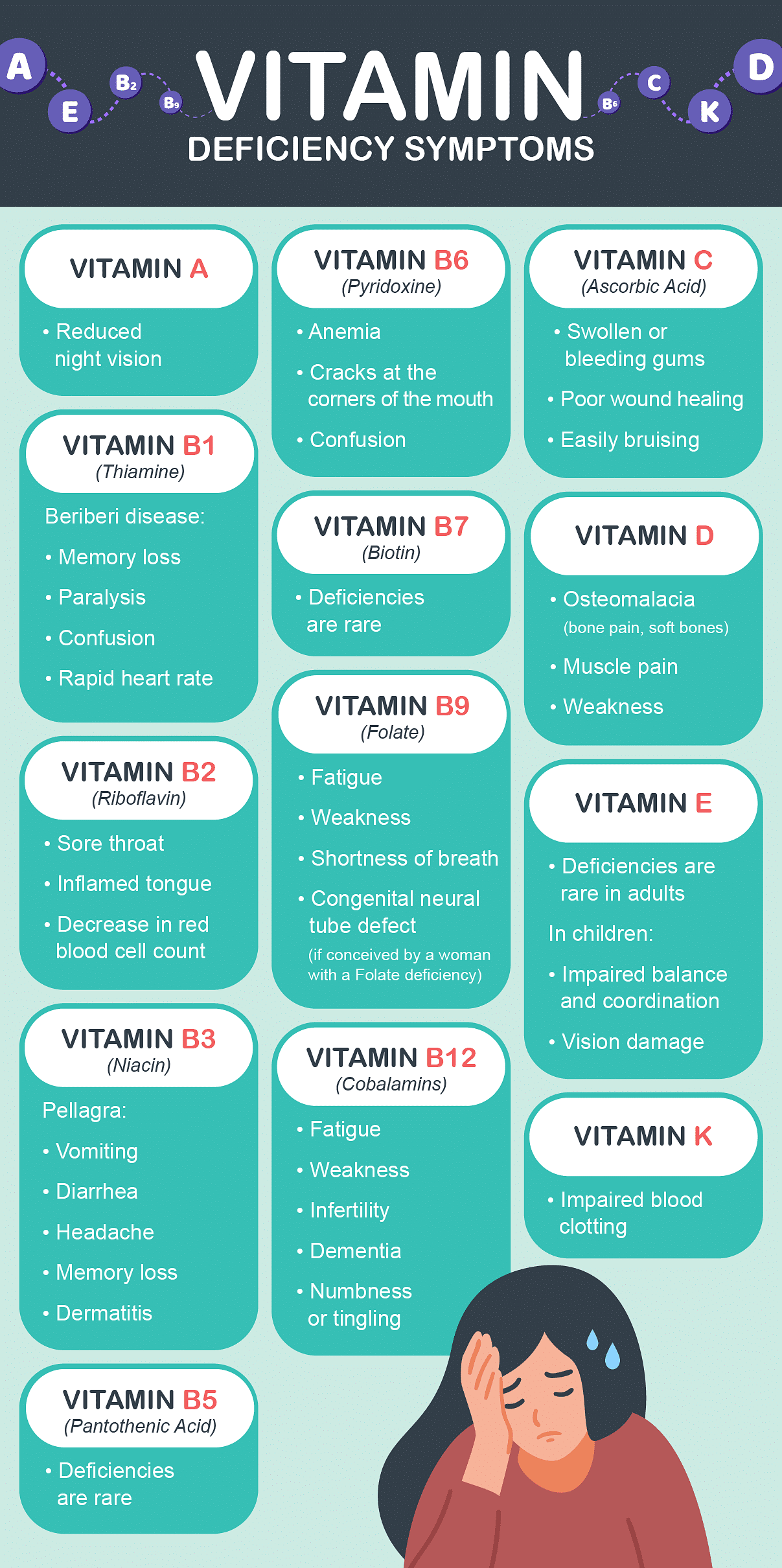
Vitamin Deficiency Diseases
Previous Years Questions
- The RBC deficiency is deficiency disease of :[NEET 2021]
- Night blindness is caused by the deficiency of:
- The disease that occurs in mature adult human being due to deficiency of calciferol is
- Which of the following is not a water soluble vitamin?
- The RBCdeficiency is deficiency disease of :[NEET 2021]
- Night blindness is caused by the deficiency of:
- Which of the following is not a water soluble vitamin?
- The disease that occurs in mature adult human being due to deficiency of calciferol is
- The chemical name of vitamin
- The metal present in vitamin
Check out:



Comments