




Class 7 Social Science Part 1 Chapter 11 From Barter to Money traces how exchange changed. These class 7 social science handwritten notes chapter 11 From Barter to Money follow the 2026-27 NCERT and cover barter, its limits, and the evolution of money.
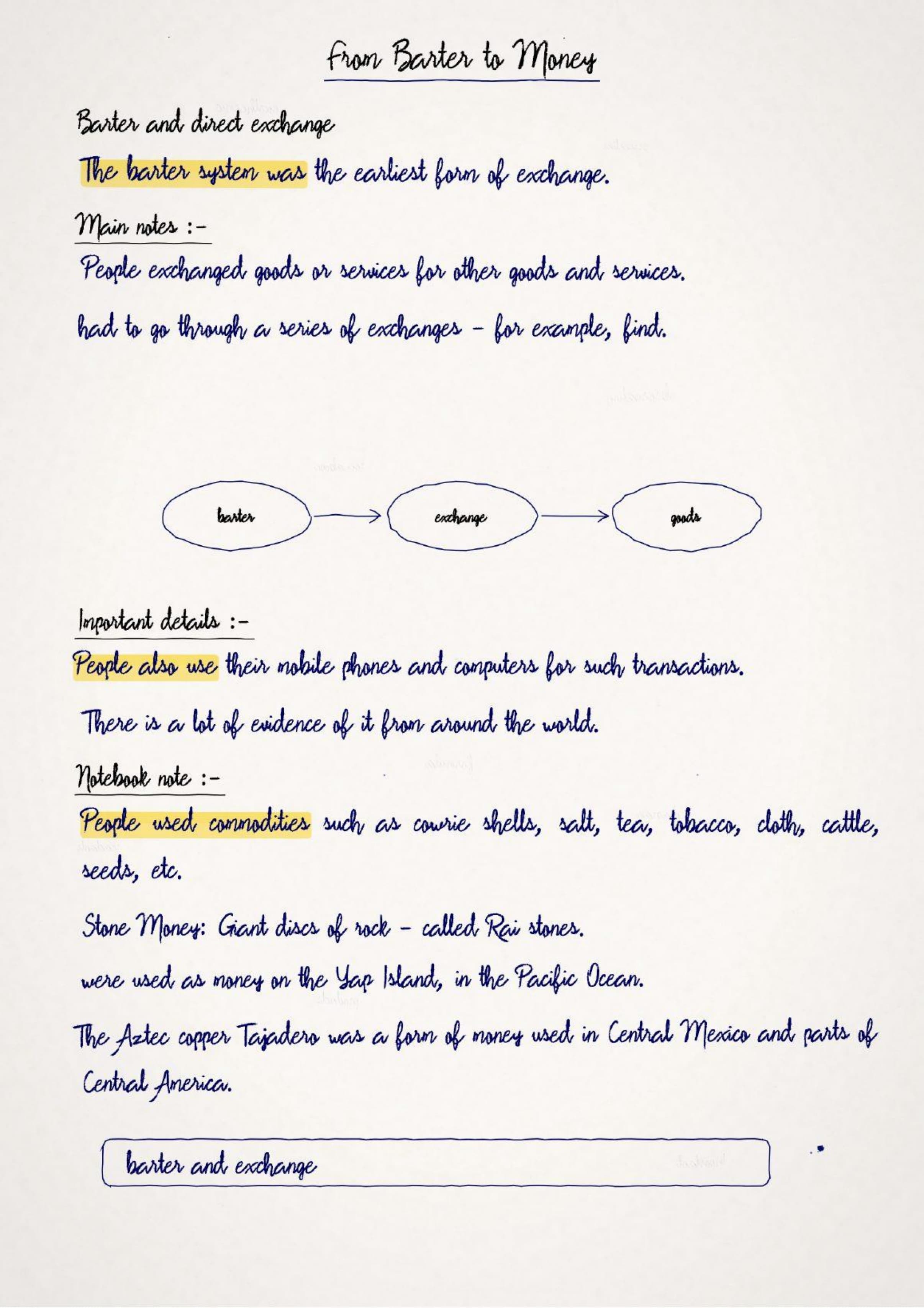
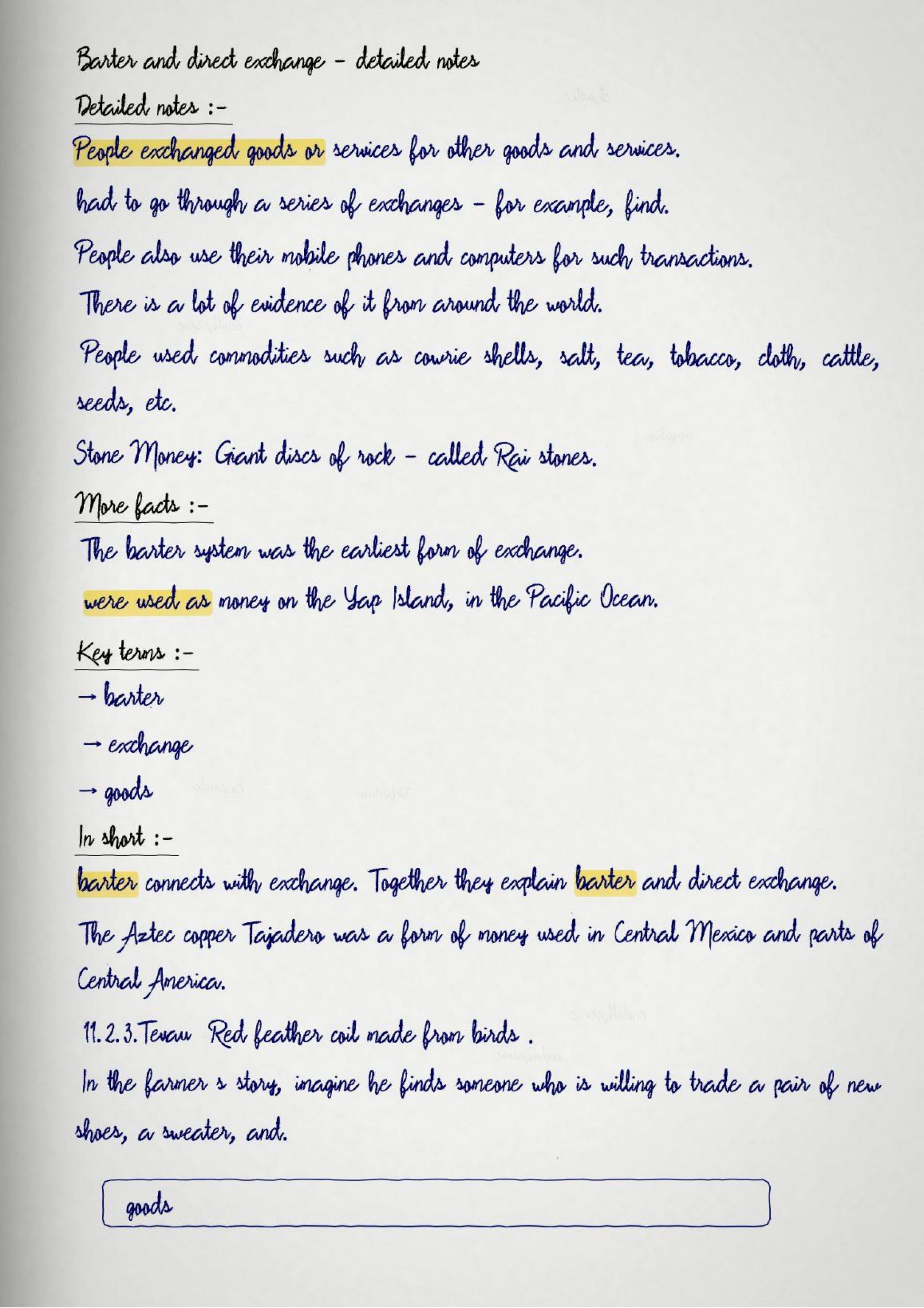
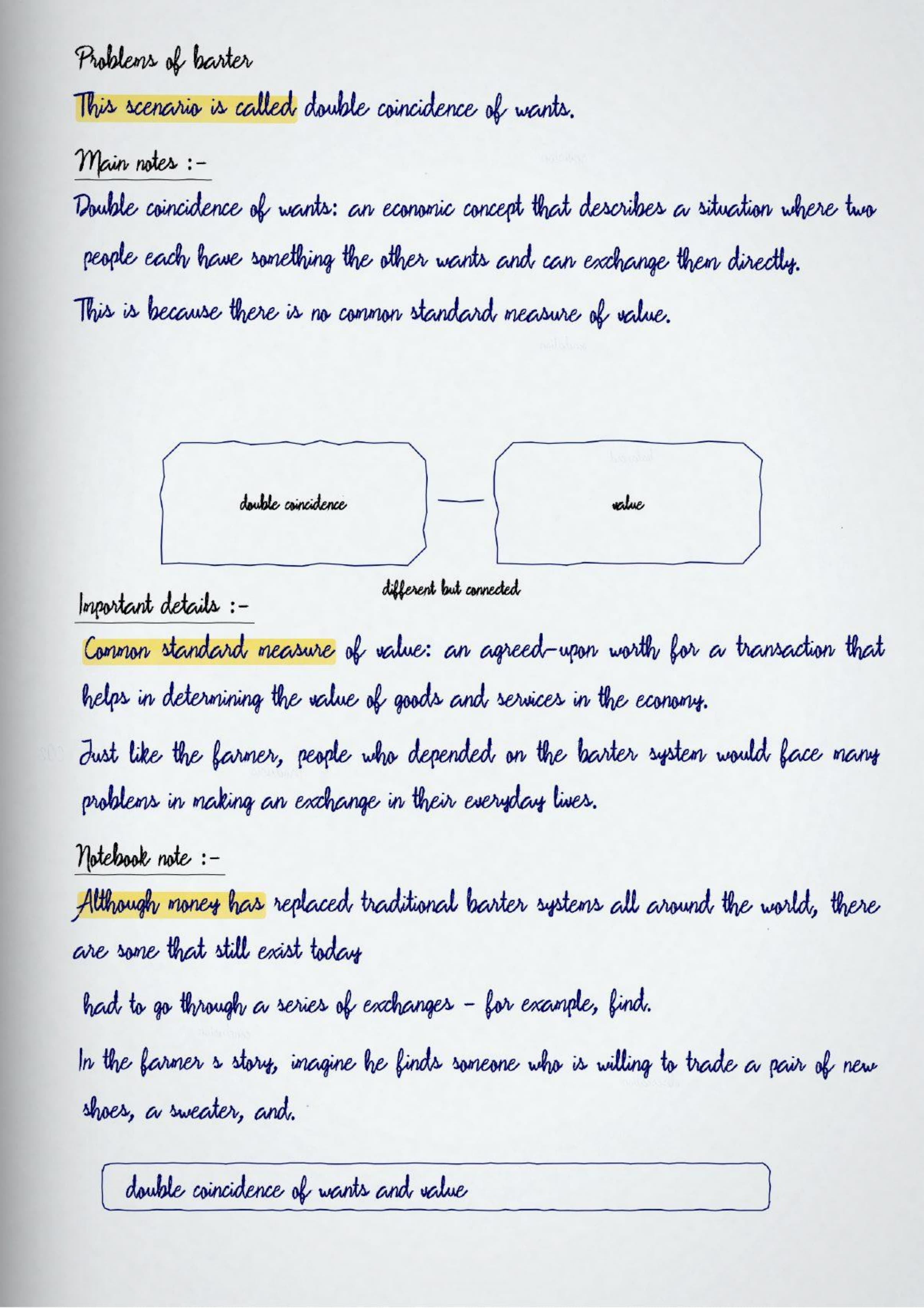
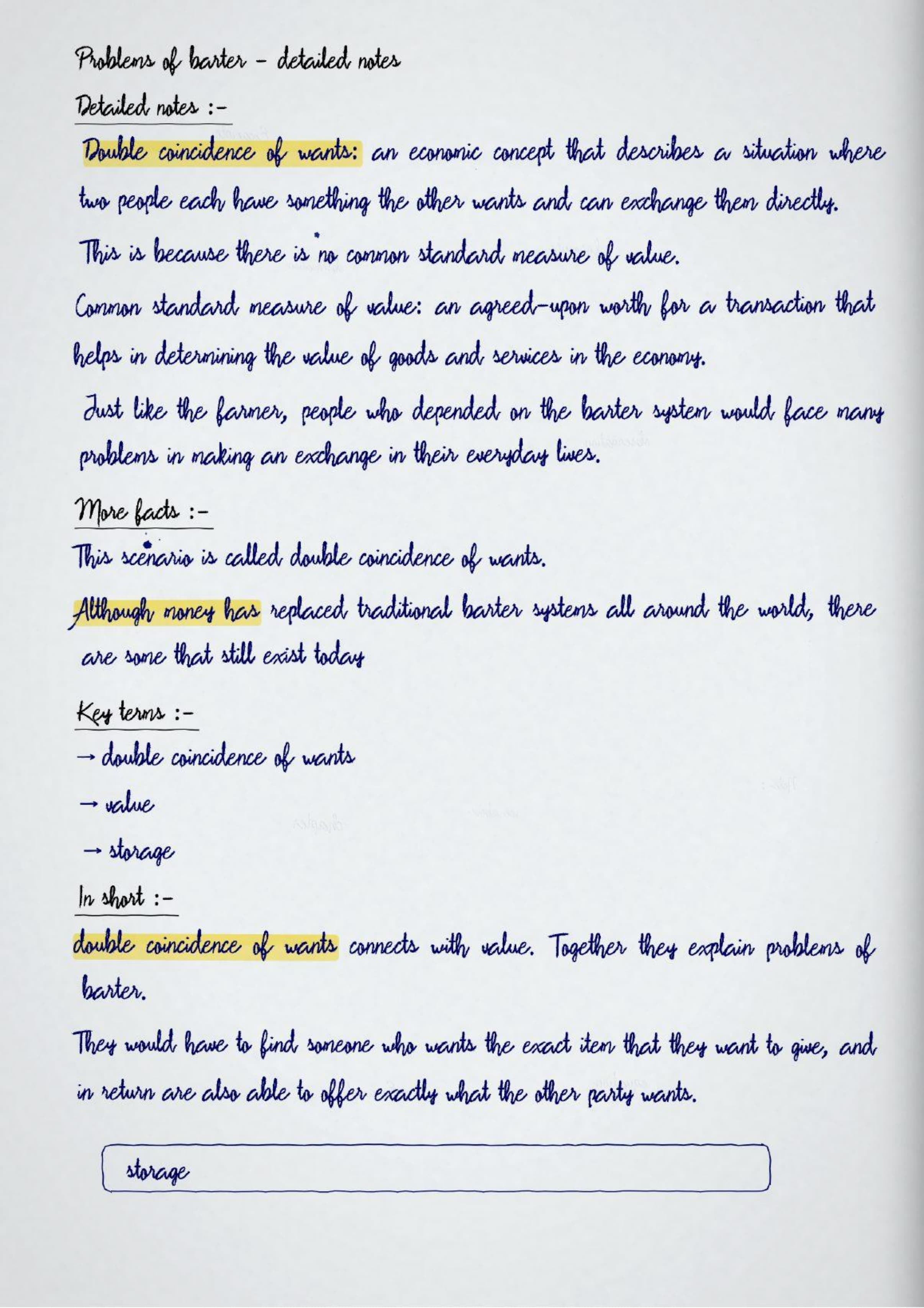
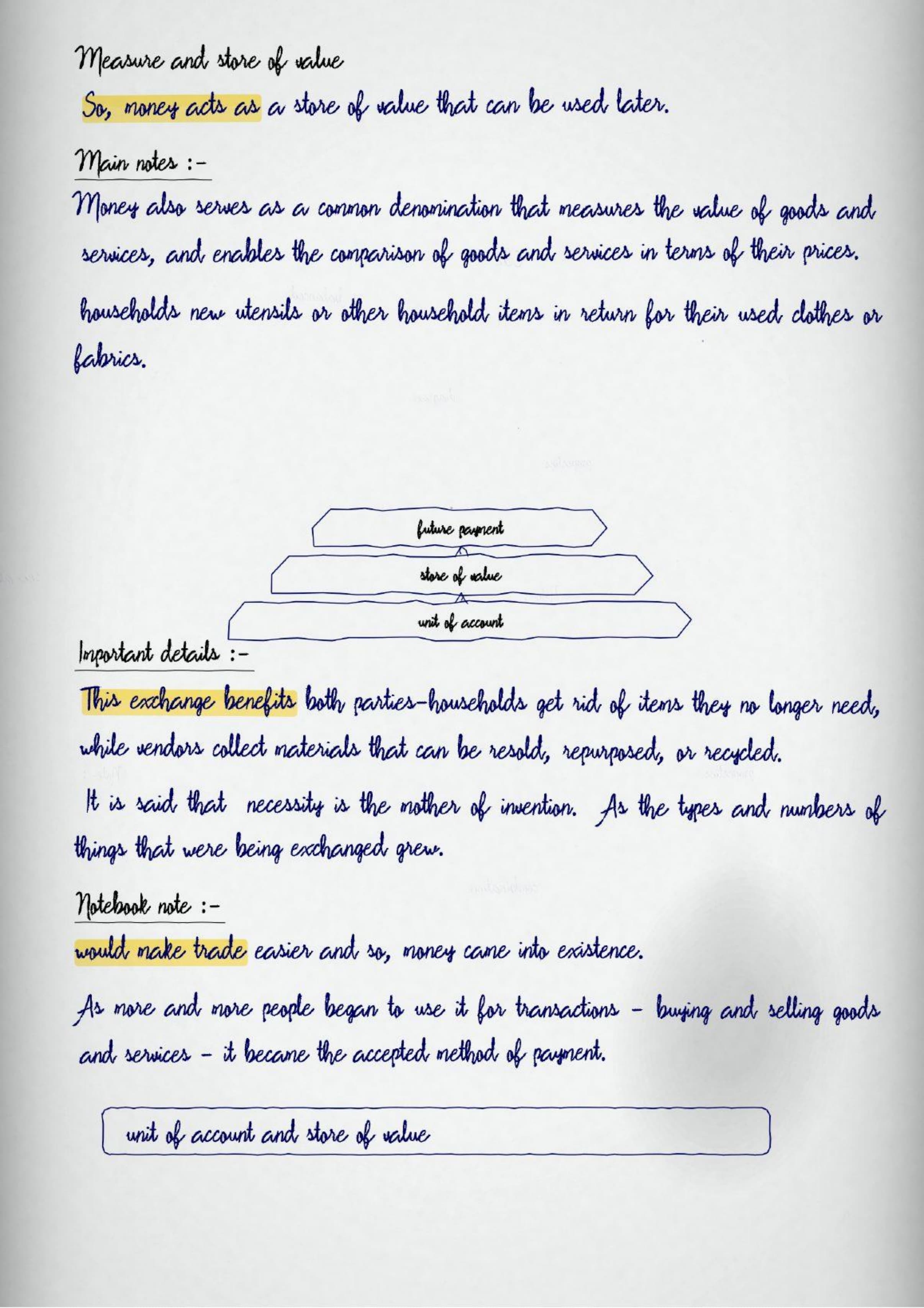
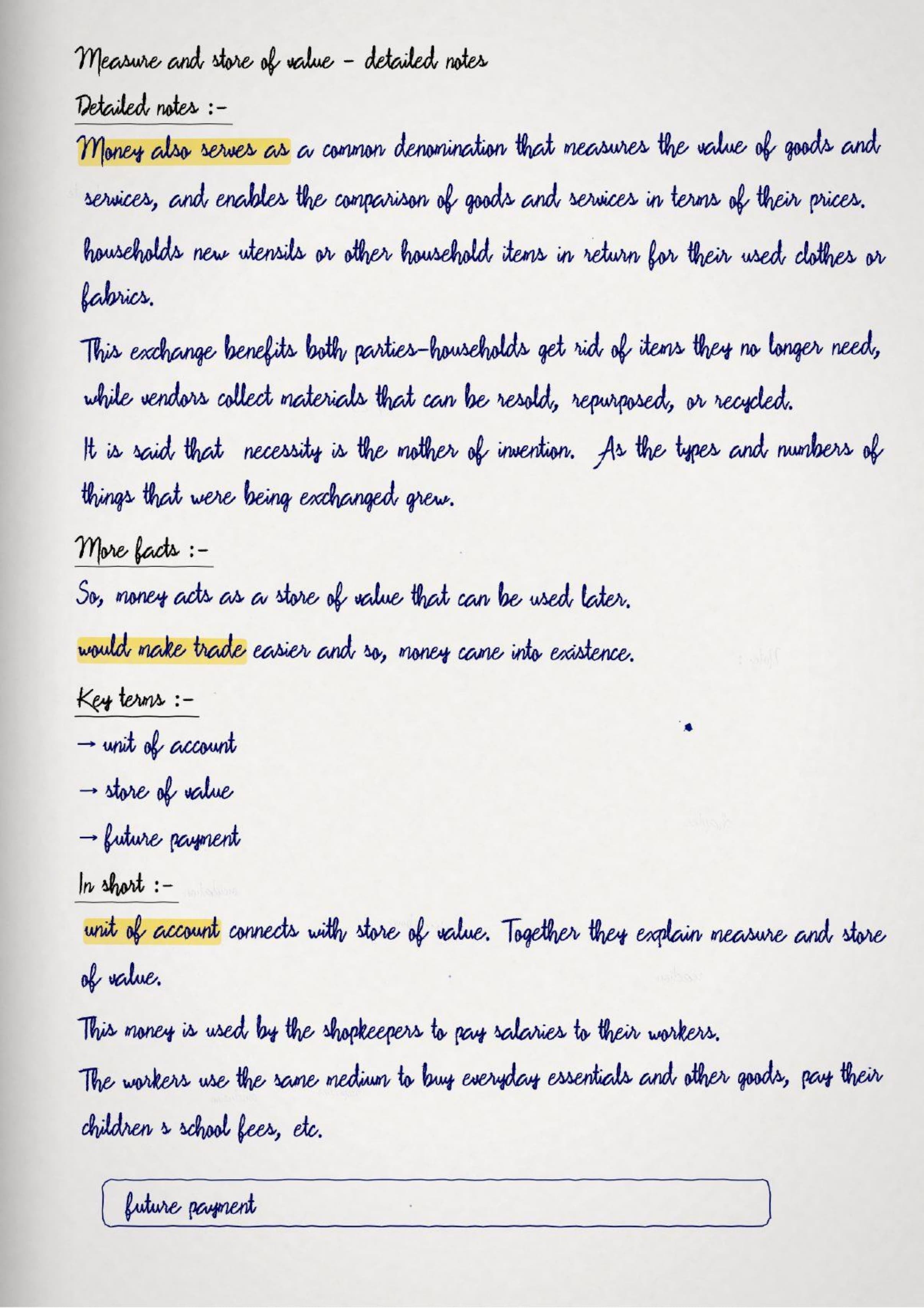
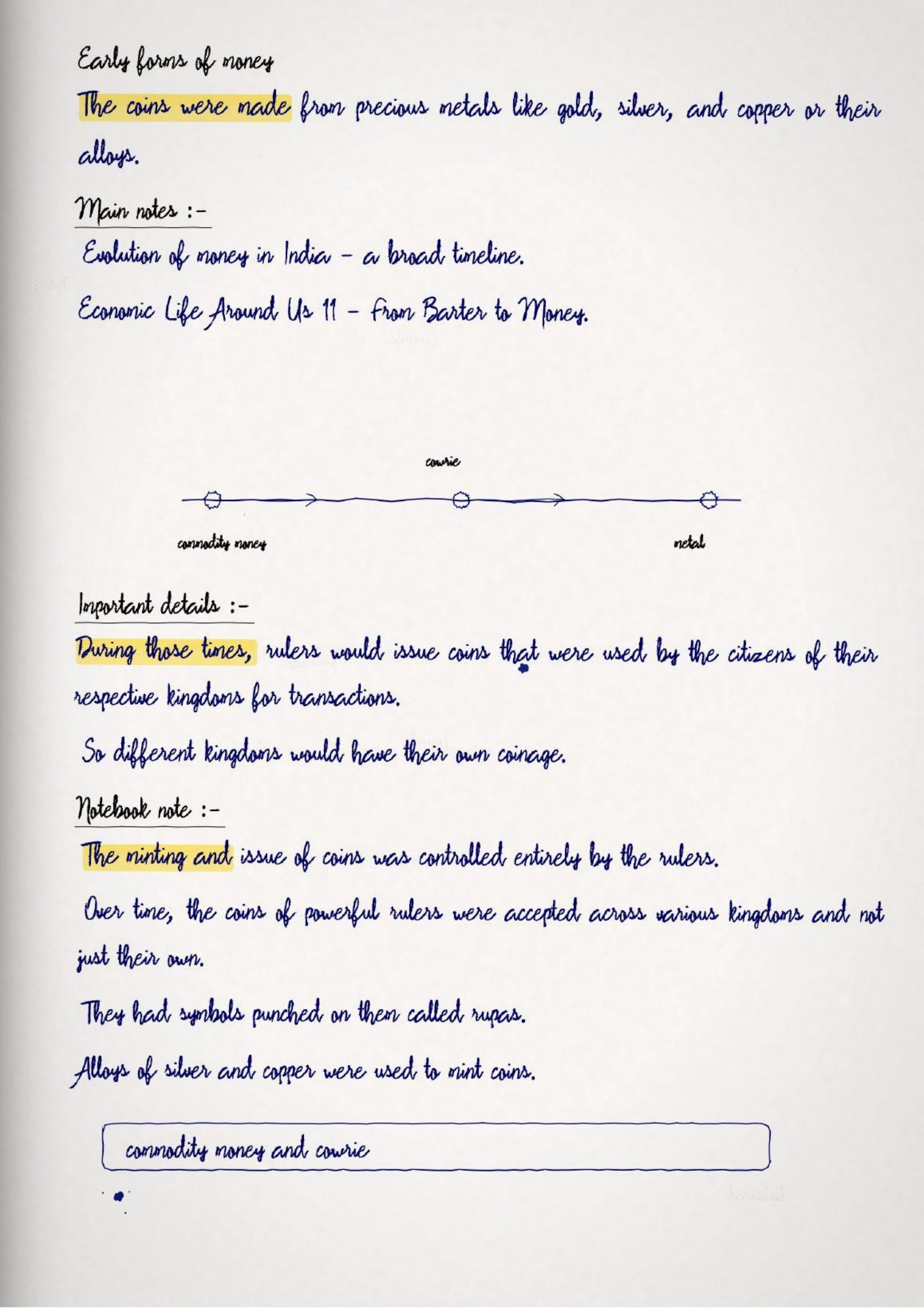
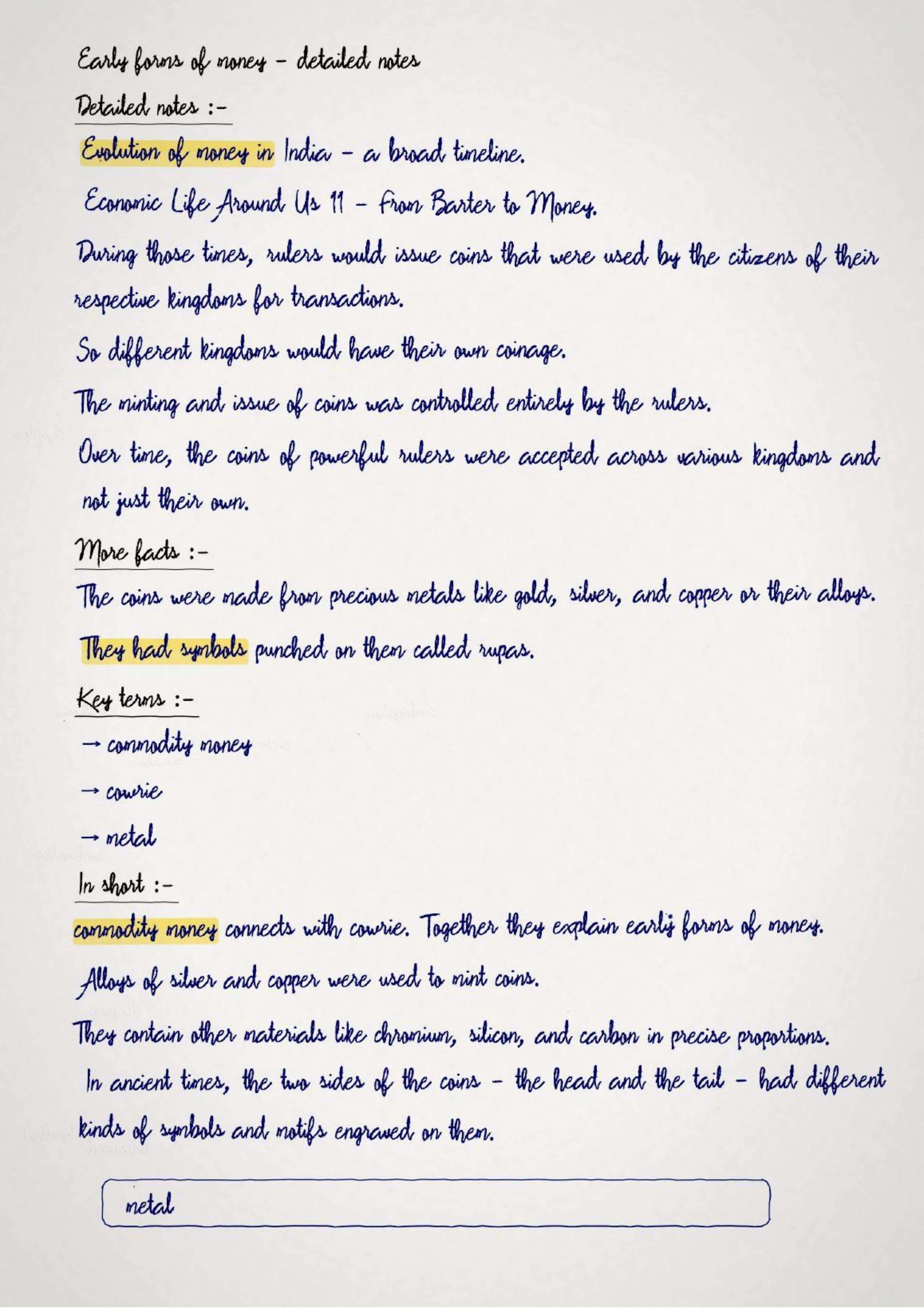
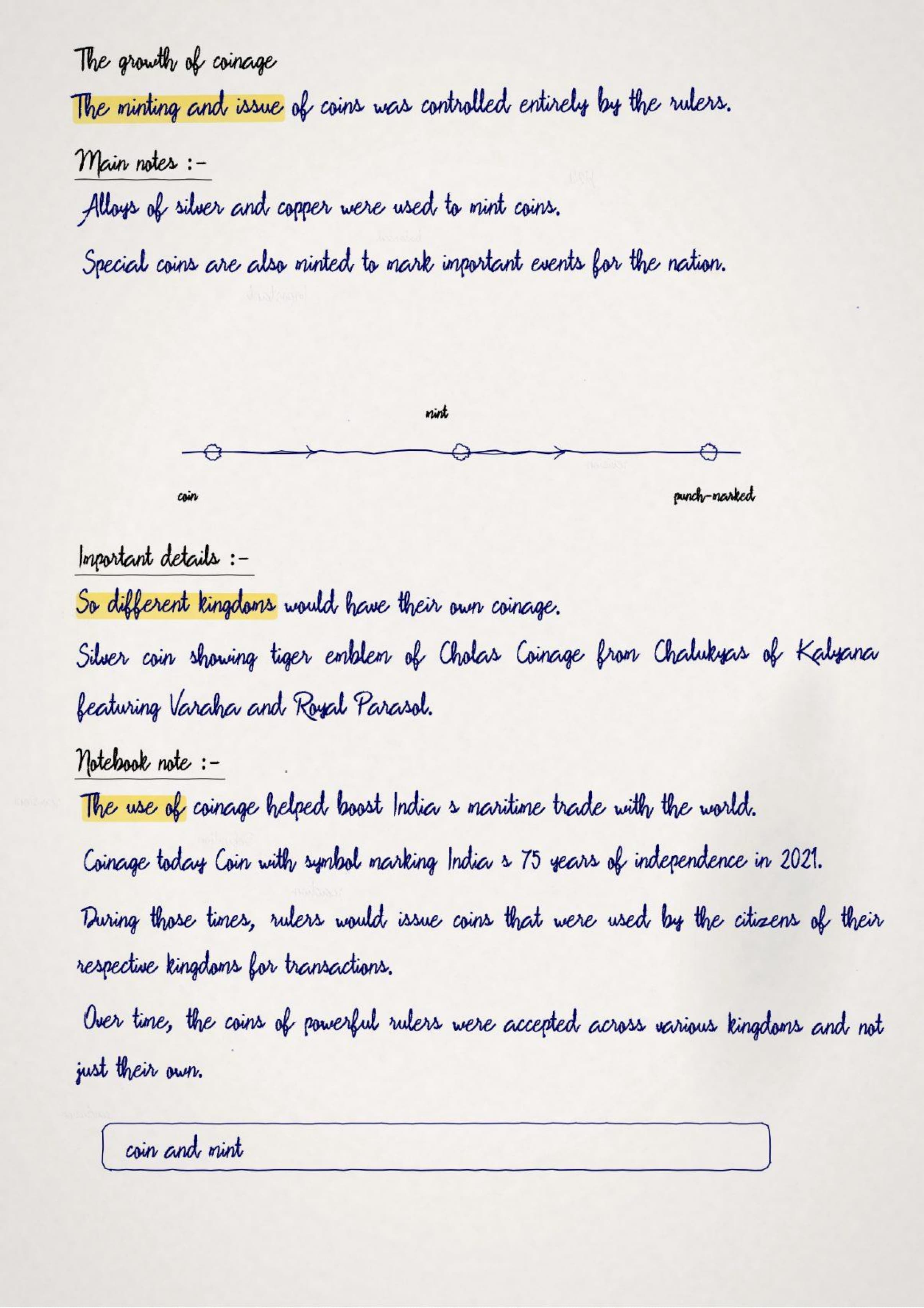
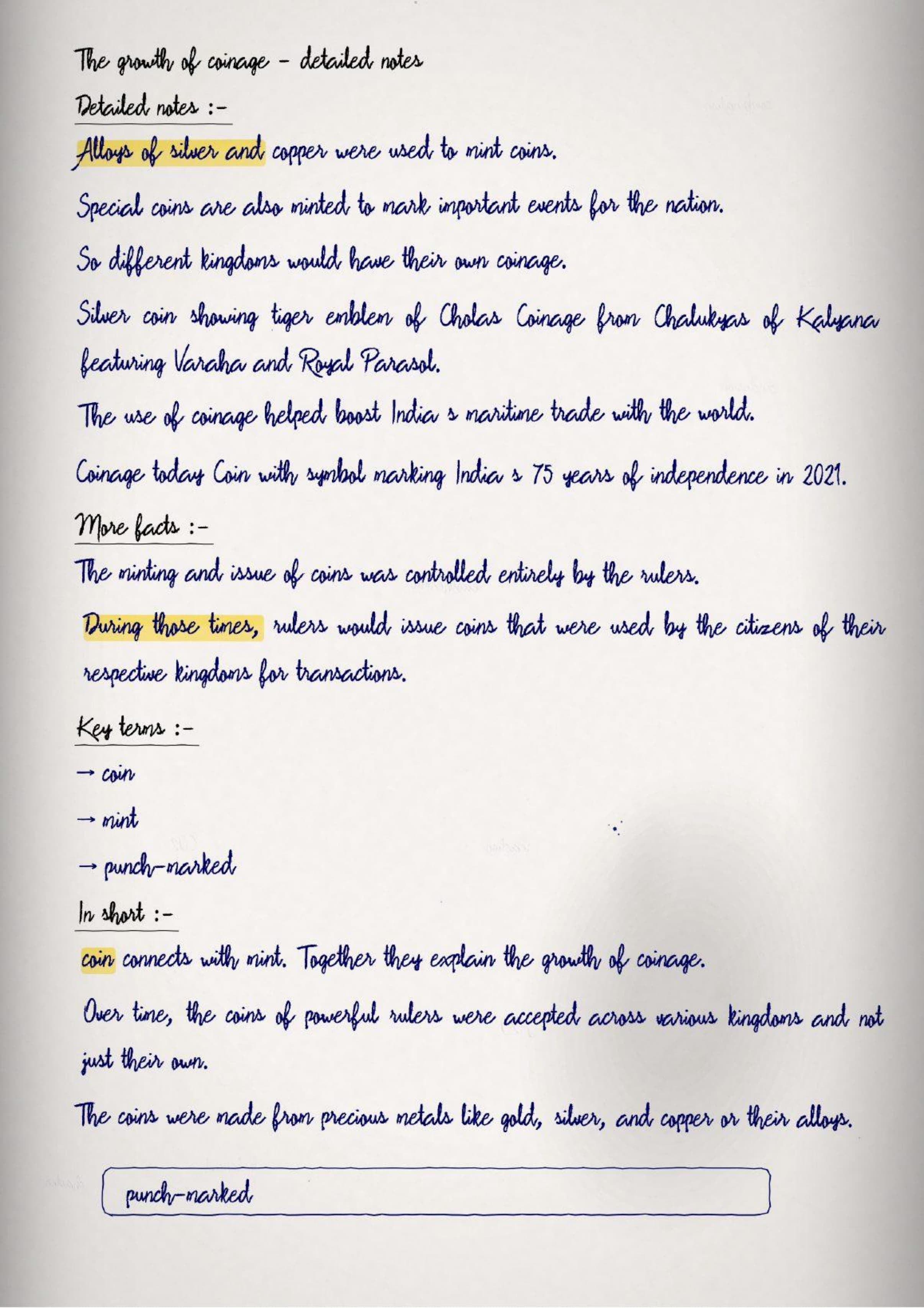
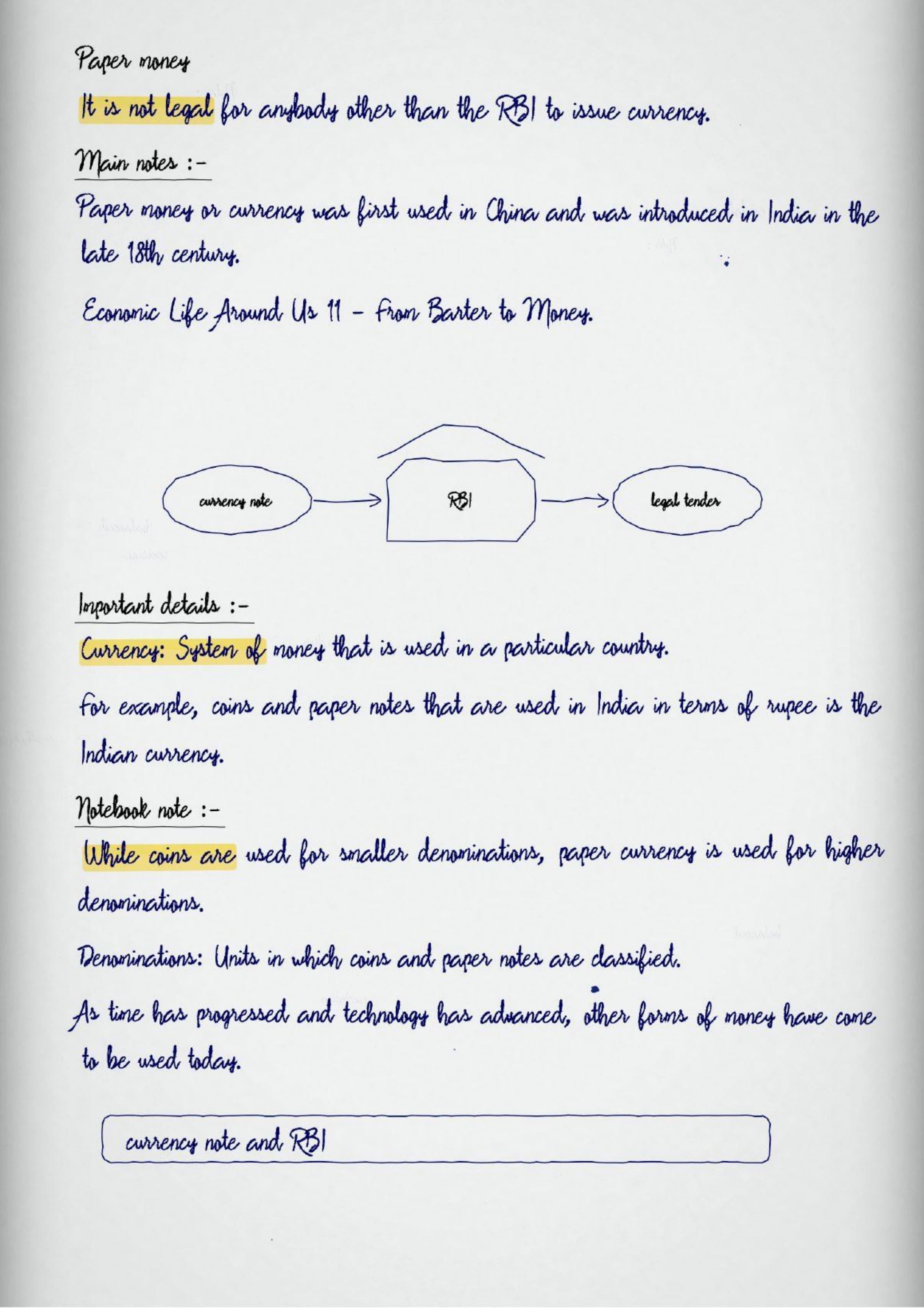
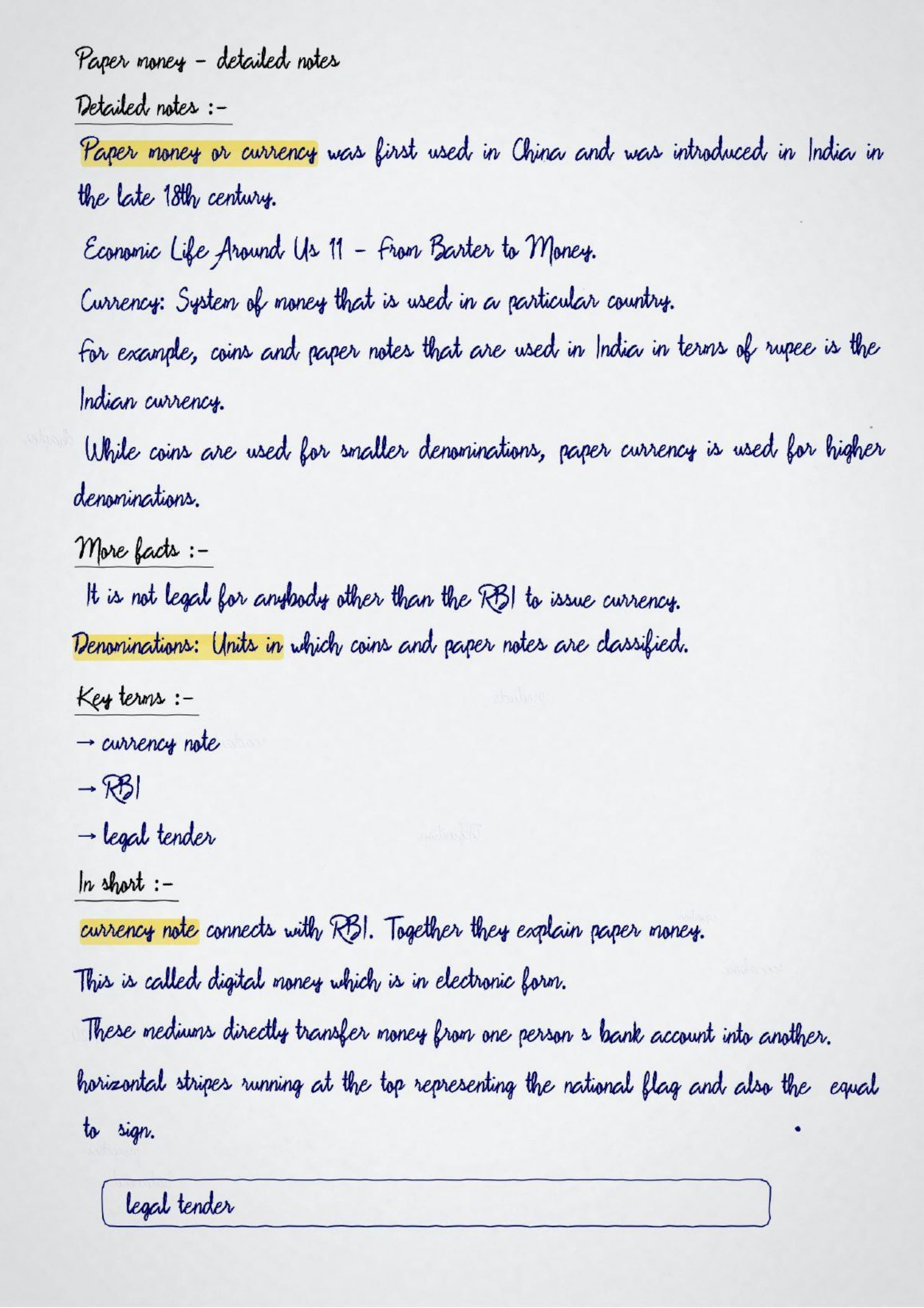
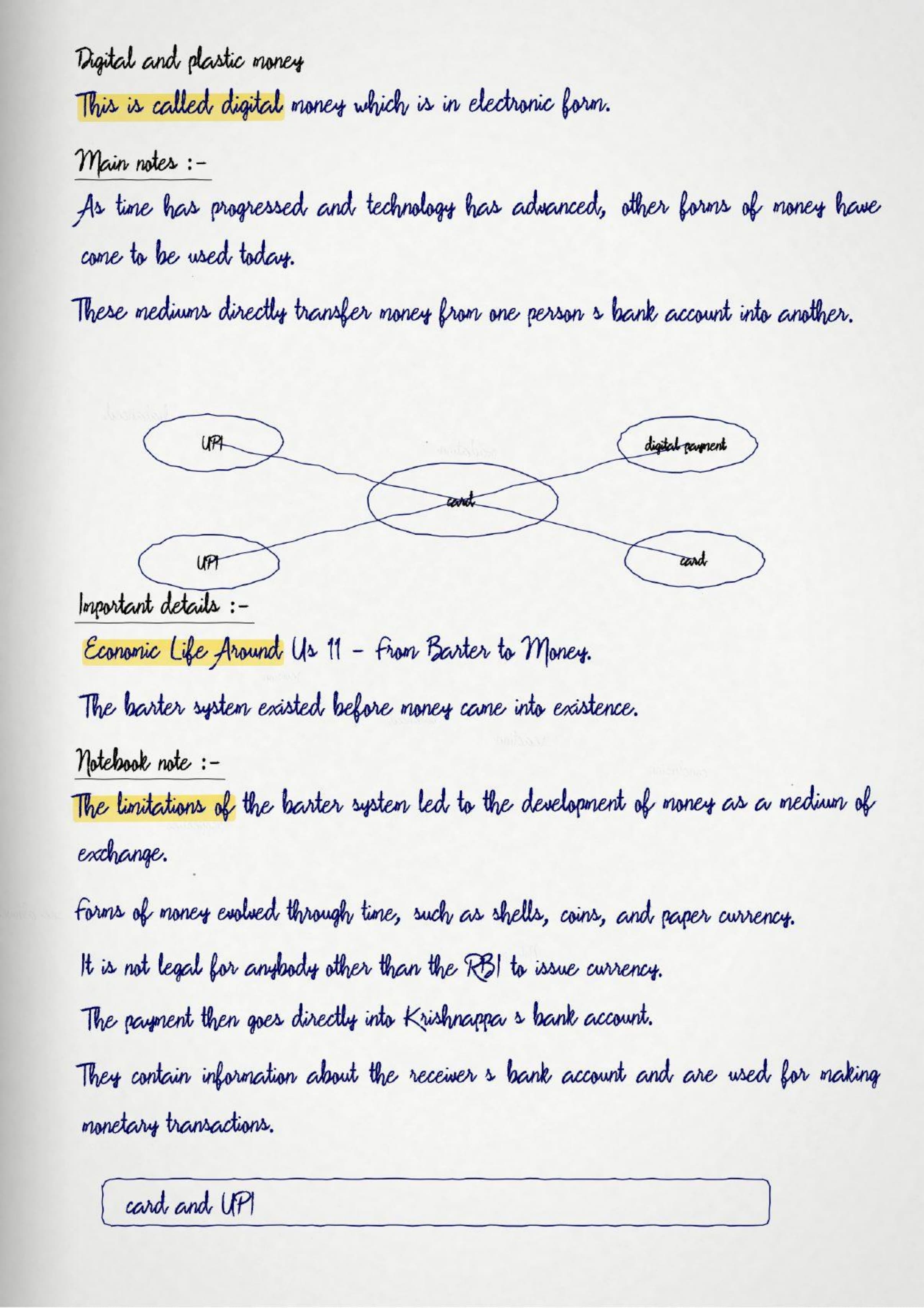
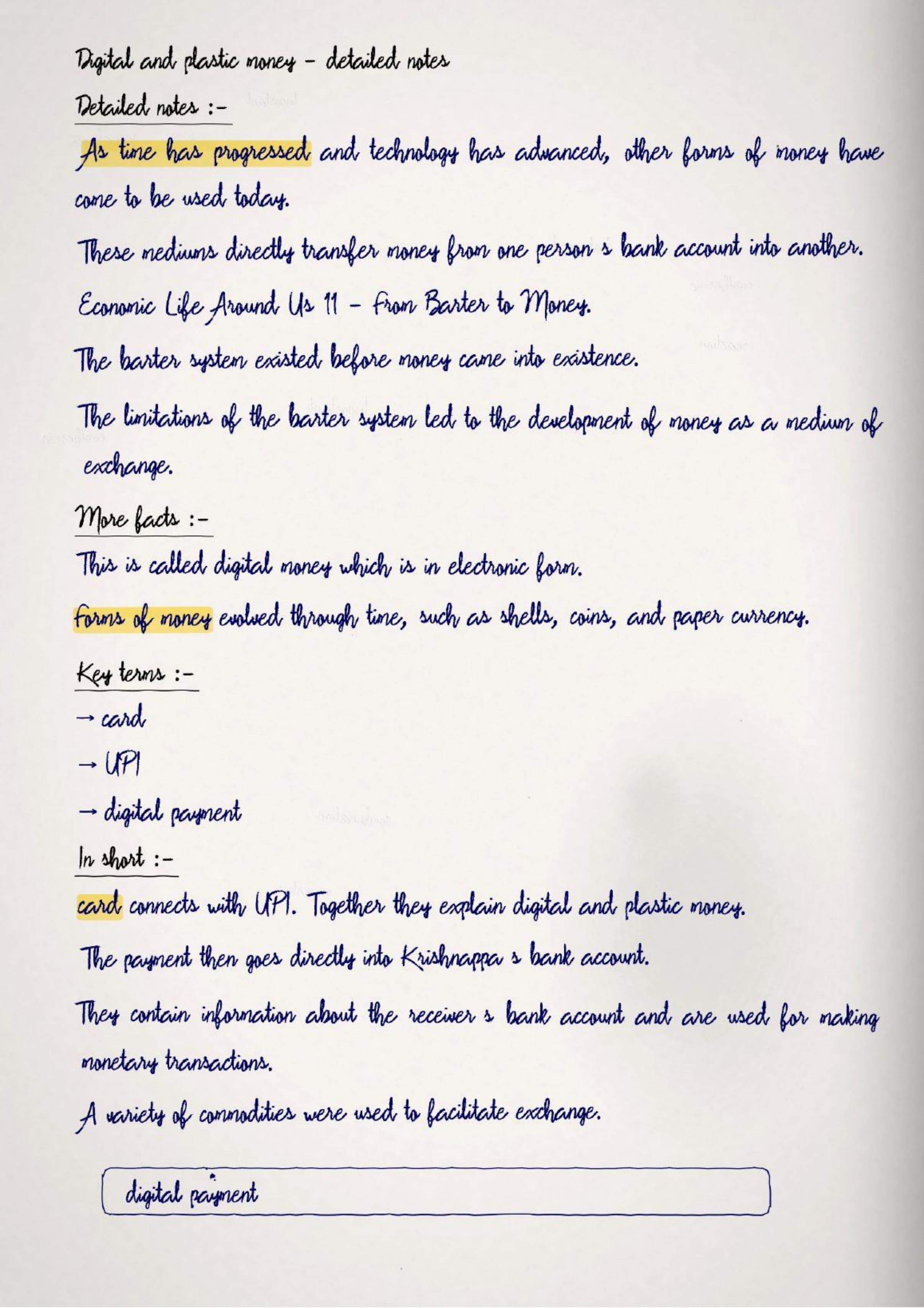
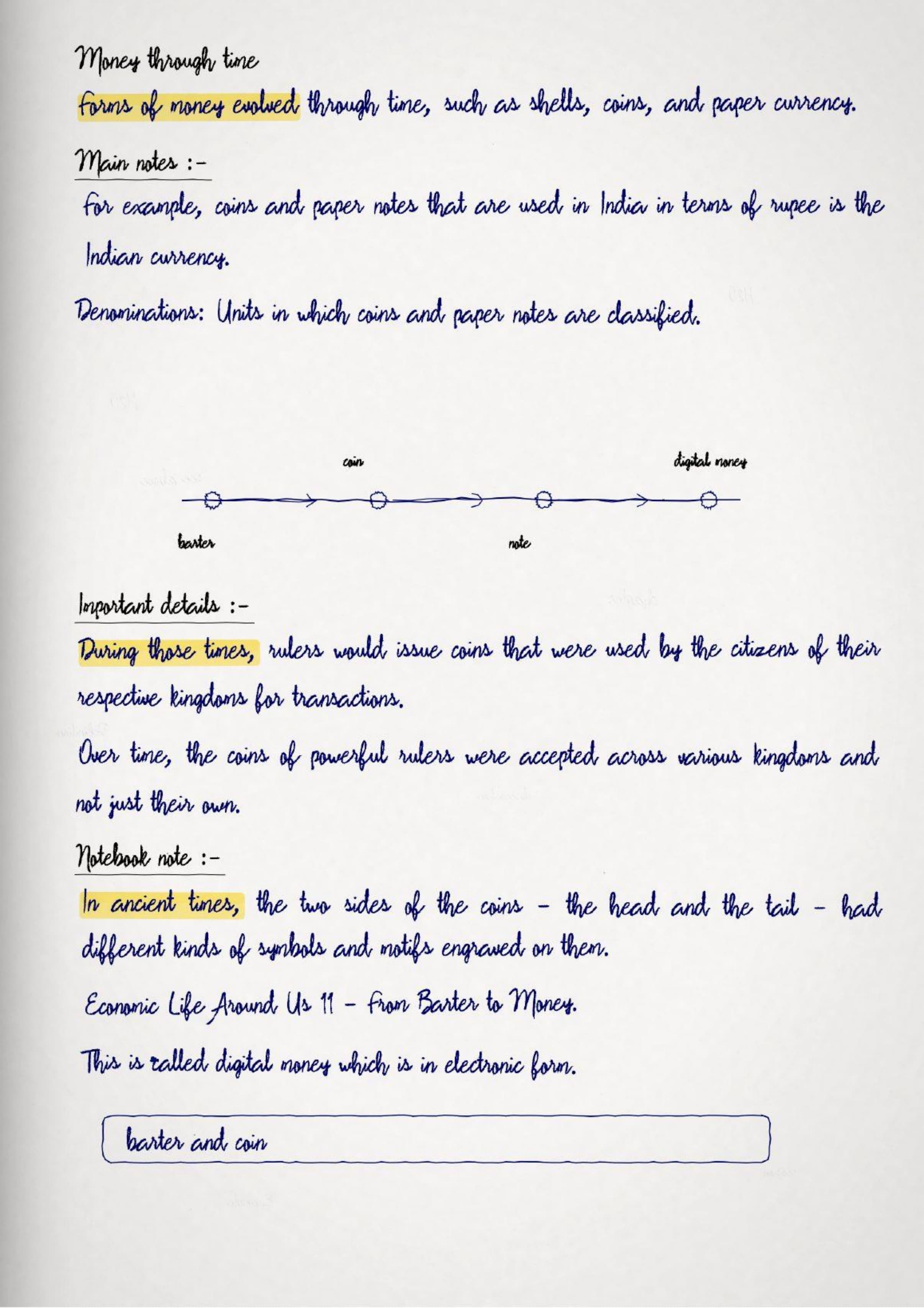
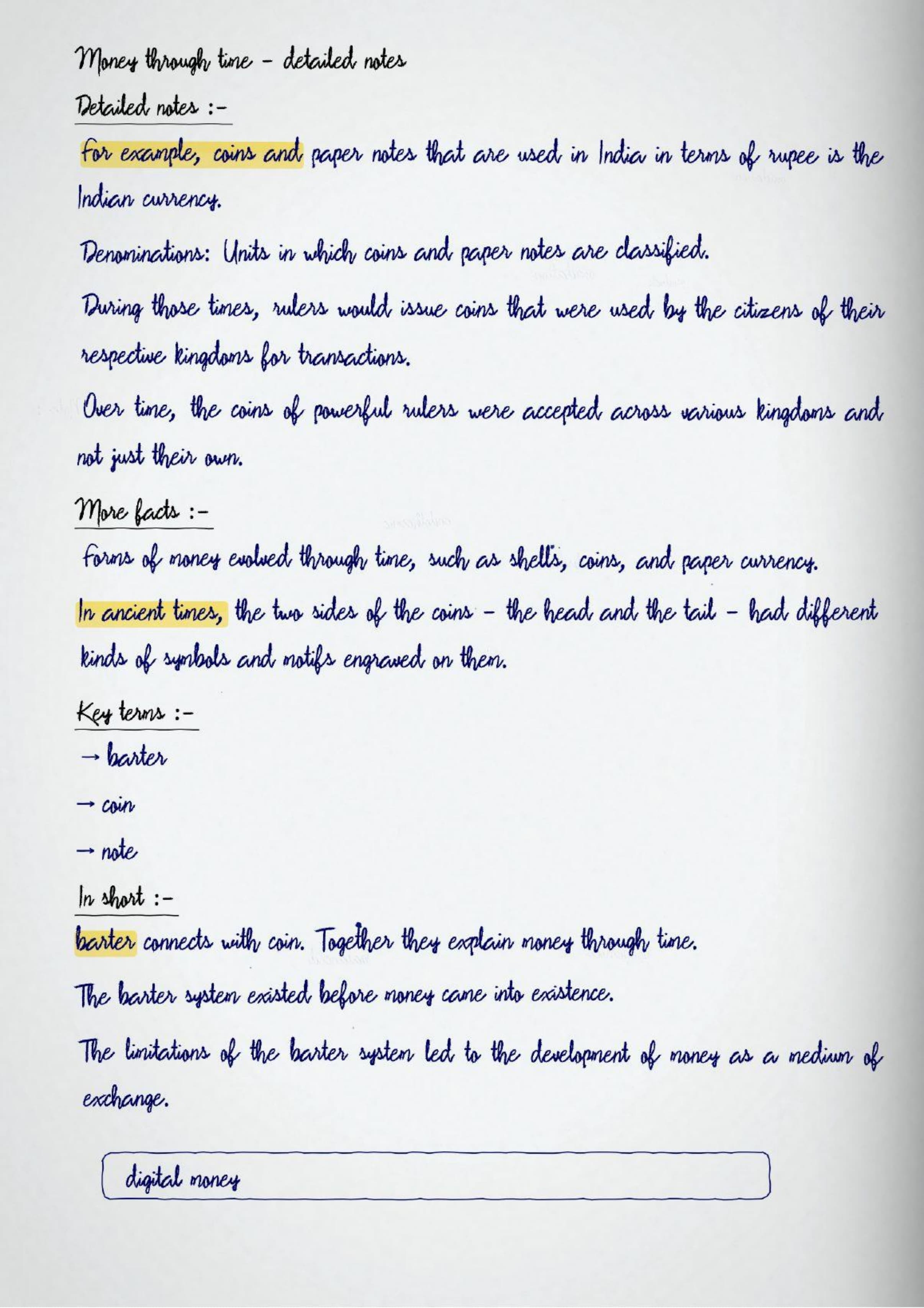
- Money timeline boxed: from barter through shells and coins to paper currency and QR codes
- What the notes cover: the barter system, why it failed, the rise of money, and how payment keeps changing
- Best for: the limitations-of-barter question, asked in almost every paper
Everything described here is in the class 7 social science handwritten notes PDF for From Barter to Money, linked below.
These handwritten notes are written by Social Science teachers, mapped to the 2026-27 NCERT Exploring Society book, and checked against Class 7 school question papers.
Section-by-Section Map of the From Barter to Money Notes
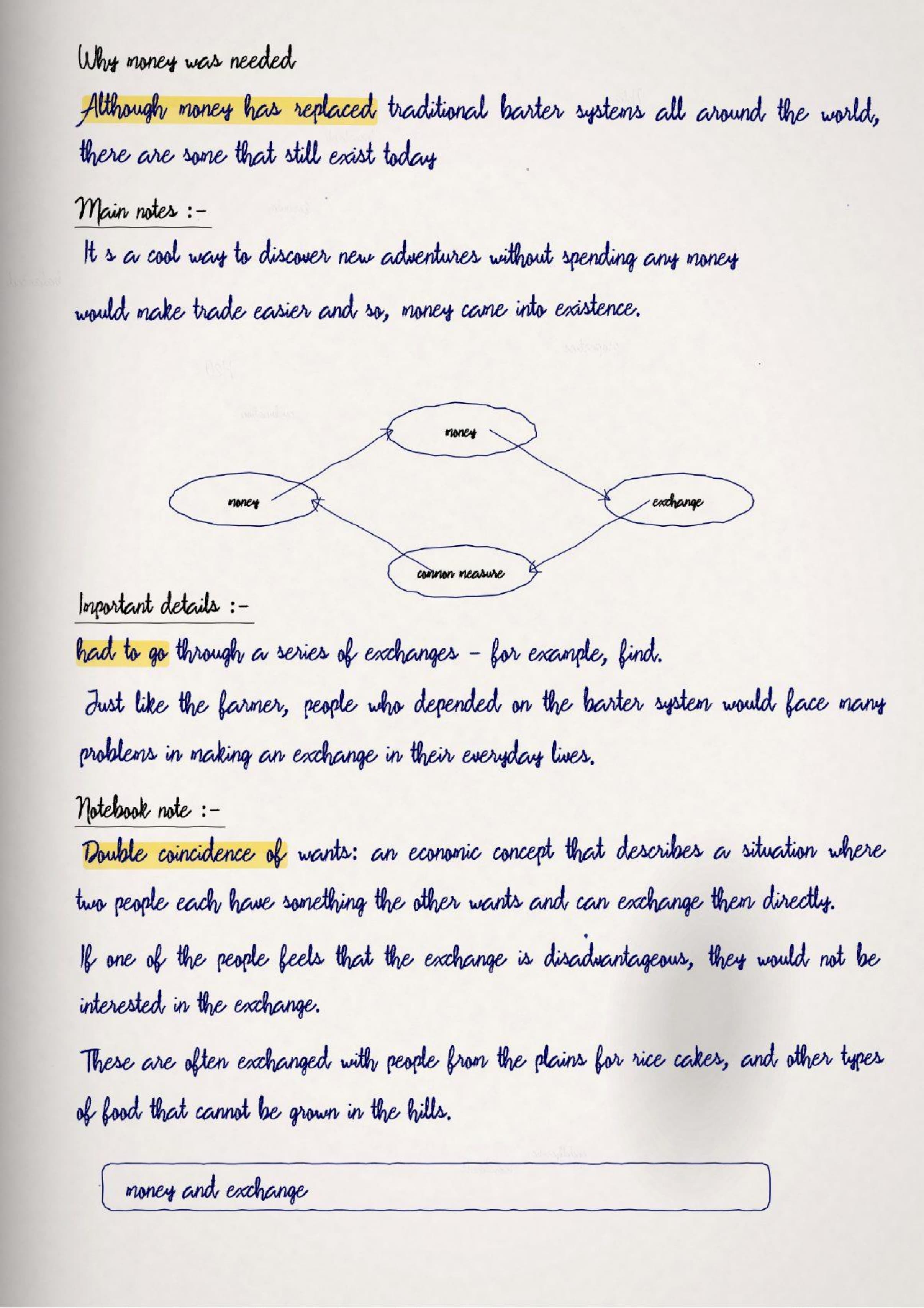
Before money there was barter, where goods were swapped directly. The chapter shows why that became impossible as trade grew.
- The barter system before money
- Commodities used in exchange
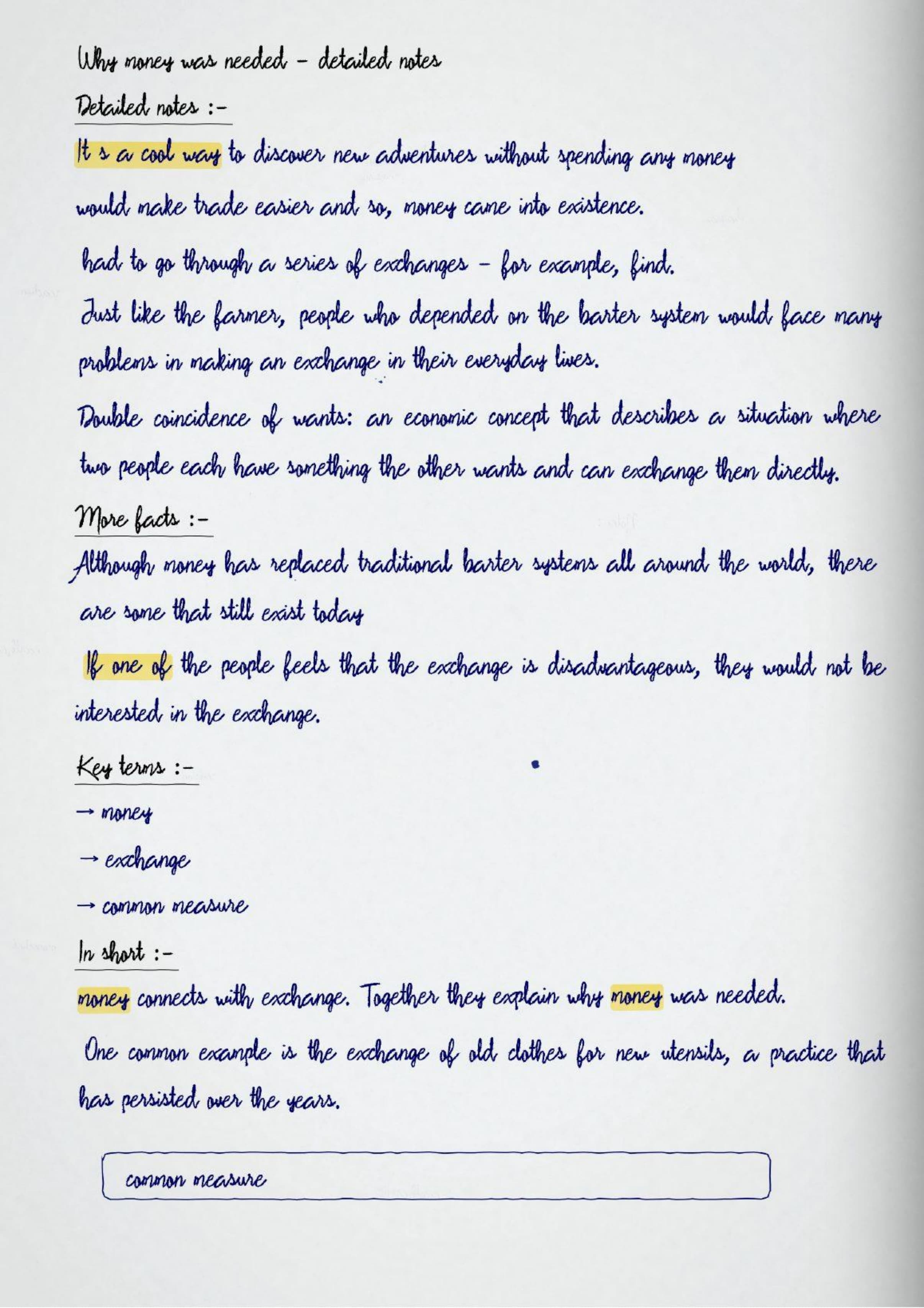
- The limitations of barter
- The double coincidence of wants
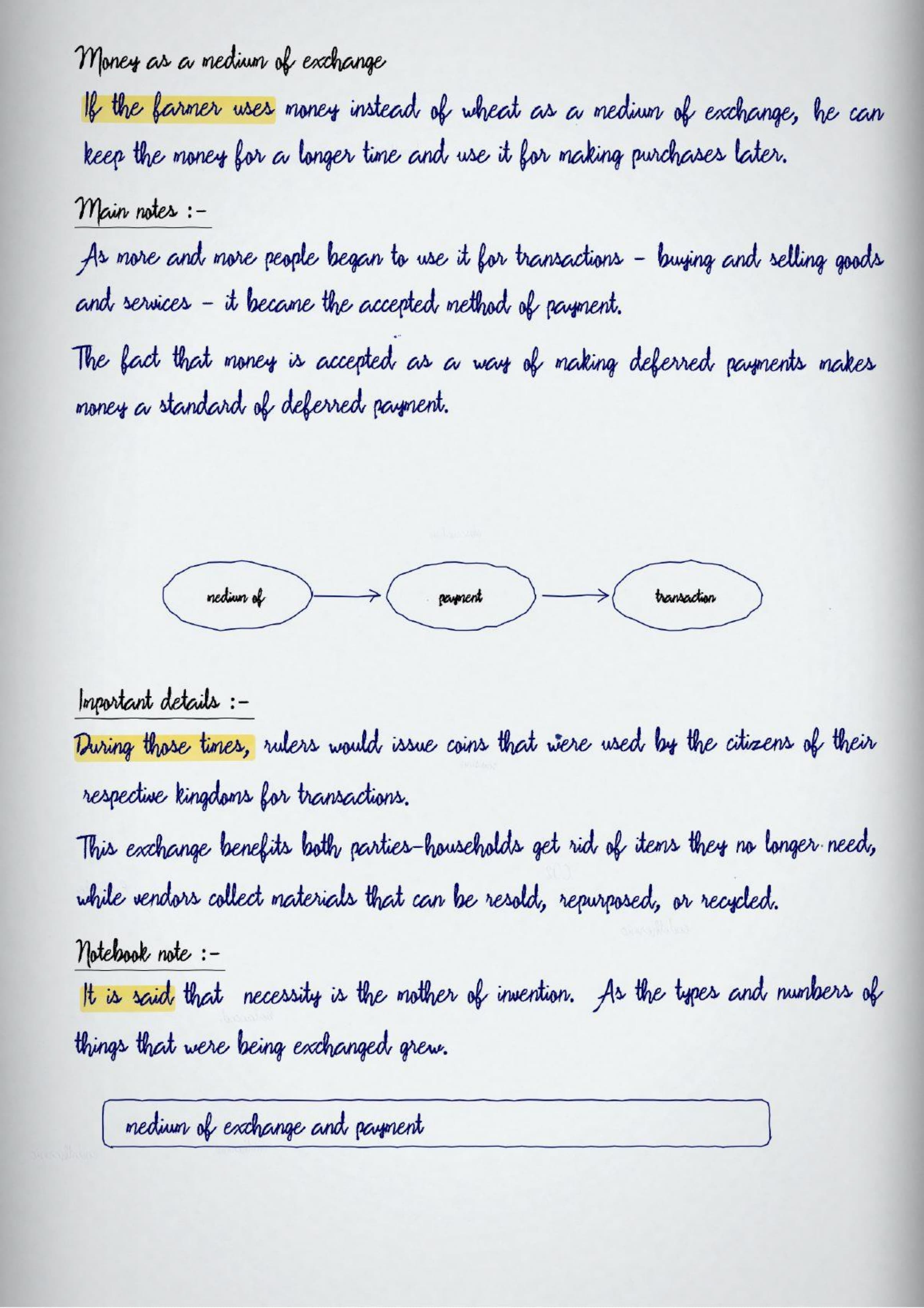
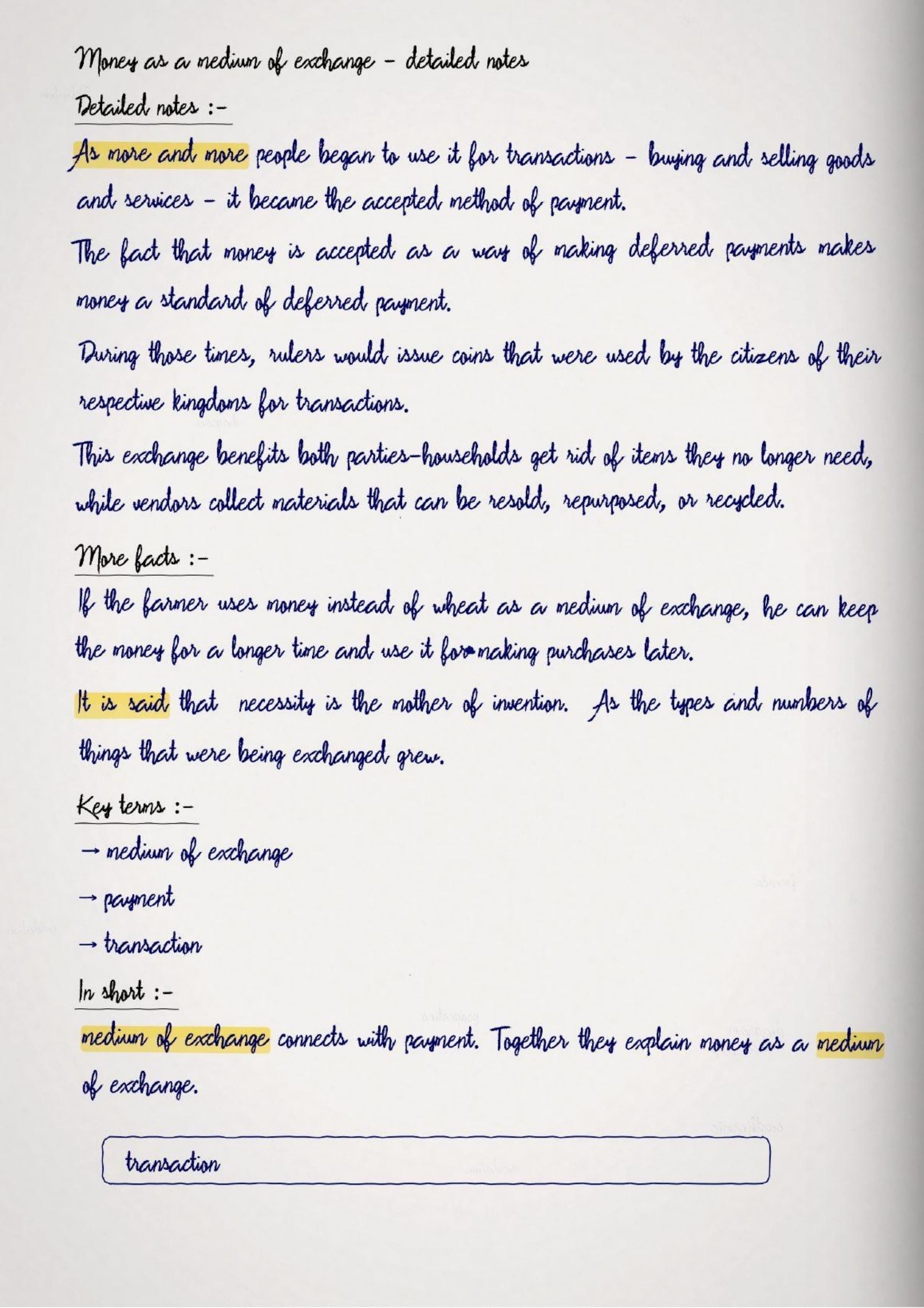
- Money as a medium of exchange
- Shells and early forms of money
- The coming of coins
- Paper currency
- Digital payments and the QR code
How Collegedunia Wrote These From Barter to Money Notes
The stages of money run along one timeline, so the progression is visible in one look. Collegedunia checks every page of these class 7 social science handwritten notes against the textbook.
- Money timeline: barter, shells, coins, paper and digital on one line
- Barter problem panel: the double coincidence of wants shown with an example
- Forms of money sketches: shells, coins, notes and a QR code drawn
- Colour-coded sub-headings: sub-topics in red so each stage is easy to find
How CBSE Class 7 Social Science Splits Marks Across From Barter to Money
The limitations of barter and the stages of money carry the marks.
| Sub-topic | Weightage | How often asked |
|---|---|---|
| Limitations of the barter system | High | asked often |
| Money as a medium of exchange | High | asked often |
| Forms of money through time | High | asked often |
| The barter system itself | Medium | asked sometimes |
| Digital payments today | Medium | asked sometimes |
| Commodities used in early exchange | Low | asked rarely |
The From Barter to Money Vocabulary CBSE Class 7 Social Science Expects
Economics answers need the exact term, especially in this chapter.
| Term / Idea | What it means |
|---|---|
| Barter | the direct exchange of goods or services without money |
| Medium of exchange | something widely accepted in return for goods and services |
| Double coincidence of wants | the need for each person to want what the other offers |
| Currency | the money in use in a country |
| Commodity | a good that can be bought and sold |
| Coin | a piece of metal used as money |
| Digital payment | a payment made electronically, without cash |
From Barter to Money Practice Questions with Answers
Five questions on money. Tap each one to check.
Barter means exchanging
(a) goods for money (b) goods directly for other goods (c) coins for notes (d) nothing
Answer: (b) goods directly for other goods
The main problem with barter is
(a) too much money (b) the double coincidence of wants (c) too many coins (d) no goods
Answer: (b) the double coincidence of wants
Which of these came first as a form of money?
(a) paper currency (b) shells (c) QR codes (d) plastic cards
Answer: (b) shells
Money works mainly as a
(a) decoration (b) medium of exchange (c) type of food (d) building material
Answer: (b) medium of exchange
A QR code is used for
(a) barter (b) digital payment (c) making coins (d) printing notes
Answer: (b) digital payment
Why From Barter to Money Matters Beyond Class 7
This chapter starts the economics strand, and the next chapter on markets assumes you know it.
- The limitations of barter is a guaranteed question
- The stages of money make a timeline answer
- The double coincidence of wants is a one-mark definition
- Chapter 12 on markets builds directly on this
One-Page Recall Card for From Barter to Money
The card for the economics section.
- Barter is direct exchange of goods without money
- Barter needs a double coincidence of wants
- Money is a medium of exchange and removes that problem
- Order: barter, shells, coins, paper currency, digital payments
- The QR code is the newest stage in that evolution
What the From Barter to Money Notes Draw Out for You
A single timeline carries most of this chapter.
| Figure drawn by hand | What it shows |
|---|---|
| Money timeline | barter, shells, coins, paper and digital payments in order |
| Barter problem panel | two traders who each want what the other does not have |
| Coin sketches | early coins drawn with their markings |
| Currency note panel | a note with its main features labelled |
| QR code sketch | a payment being made by scanning |
Fitting the From Barter to Money Notes Into Your Revision Week
Learn the timeline in order. Every question in this chapter sits somewhere on it. Treat the class 7 social science handwritten notes as a revision tool, not as a first-time textbook.
- Draw the money timeline from barter to digital payment
- Explain the double coincidence of wants with your own example
- List three limitations of the barter system
- Before the test, revise the timeline and the barter problem panel
Pair the From Barter to Money Notes With These
Read the notes with the solved questions and the Exploring Society chapter itself.
- Class 7 Social Science NCERT Solutions
- Class 7 Social Science Revision Notes
- Class 7 Exploring Society Book PDF
Class 7 Social Science Handwritten Notes Chapter List
The class 7 social science handwritten notes for all chapters are listed below. Exploring Society Part 1 has twelve chapters and Part 2 has eight.
From Barter to Money Class 7 Social Science Handwritten Notes FAQs
Ques. Where can I download the From Barter to Money Class 7 Handwritten Notes PDF?
Ans. The PDF is free on this page in both the normal and the HD version.
Ques. What is the barter system?
Ans. The direct exchange of goods or services for other goods or services, without using money. It was how people traded before money existed.
Ques. How many pages is the Part 1 Chapter 11 handwritten notes PDF?
Ans. It runs 20 pages, with the money timeline, the barter problem panel and a quiz.
Ques. What were the limitations of barter?
Ans. The main one is the double coincidence of wants: each person had to want exactly what the other was offering. Barter also made it hard to store value or to compare the worth of very different goods.
Ques. How has money evolved over time?
Ans. From commodities such as shells, to metal coins, to paper currency, and now to digital payments made through methods such as scanning a QR code.



Comments