




Class 7 Social Science Part 1 Chapter 10 The Constitution of India: An Introduction explains our rulebook. These class 7 social science handwritten notes chapter 10 The Constitution of India: An Introduction follow the 2026-27 NCERT and cover its sources, key features and fundamental duties.
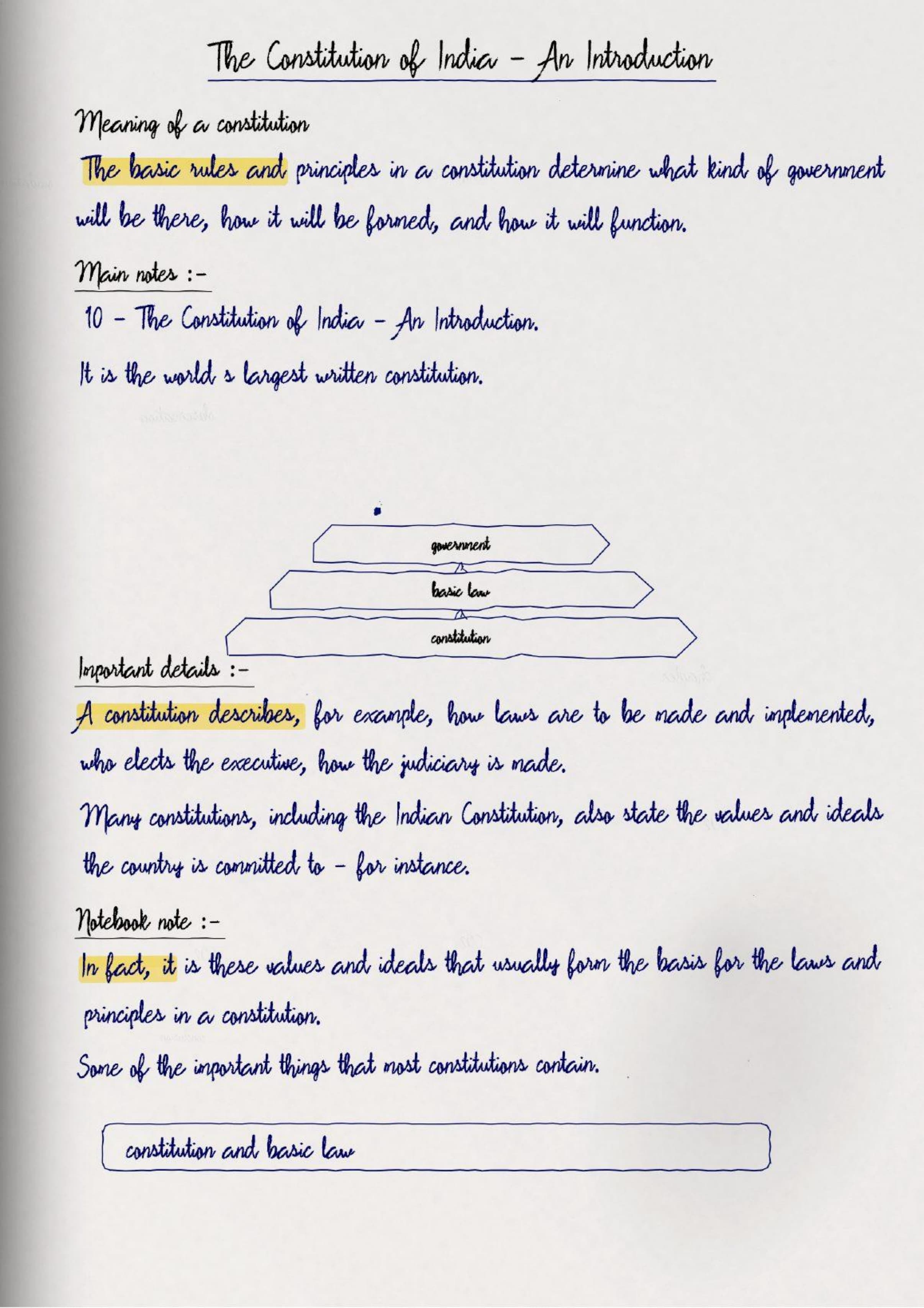
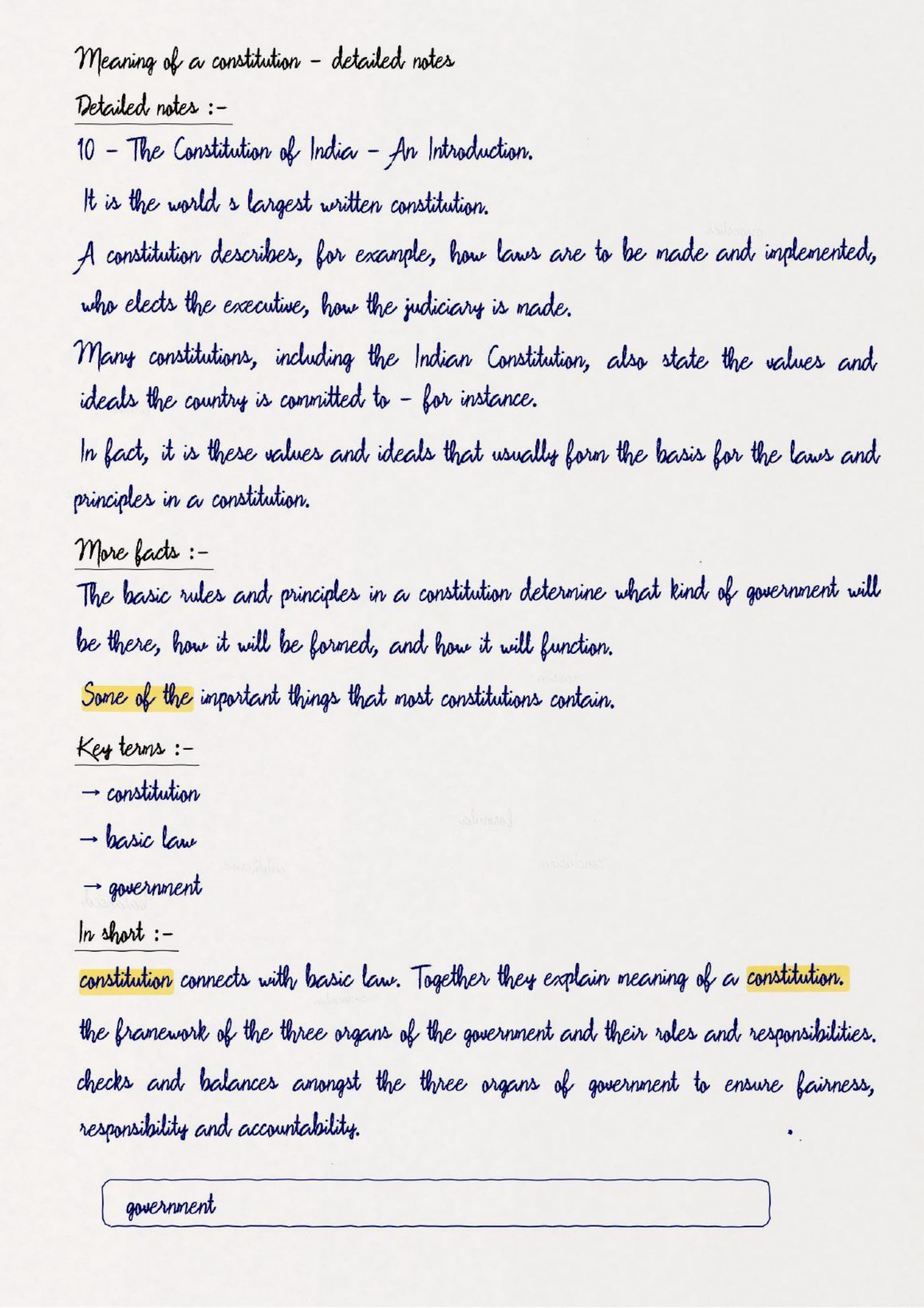
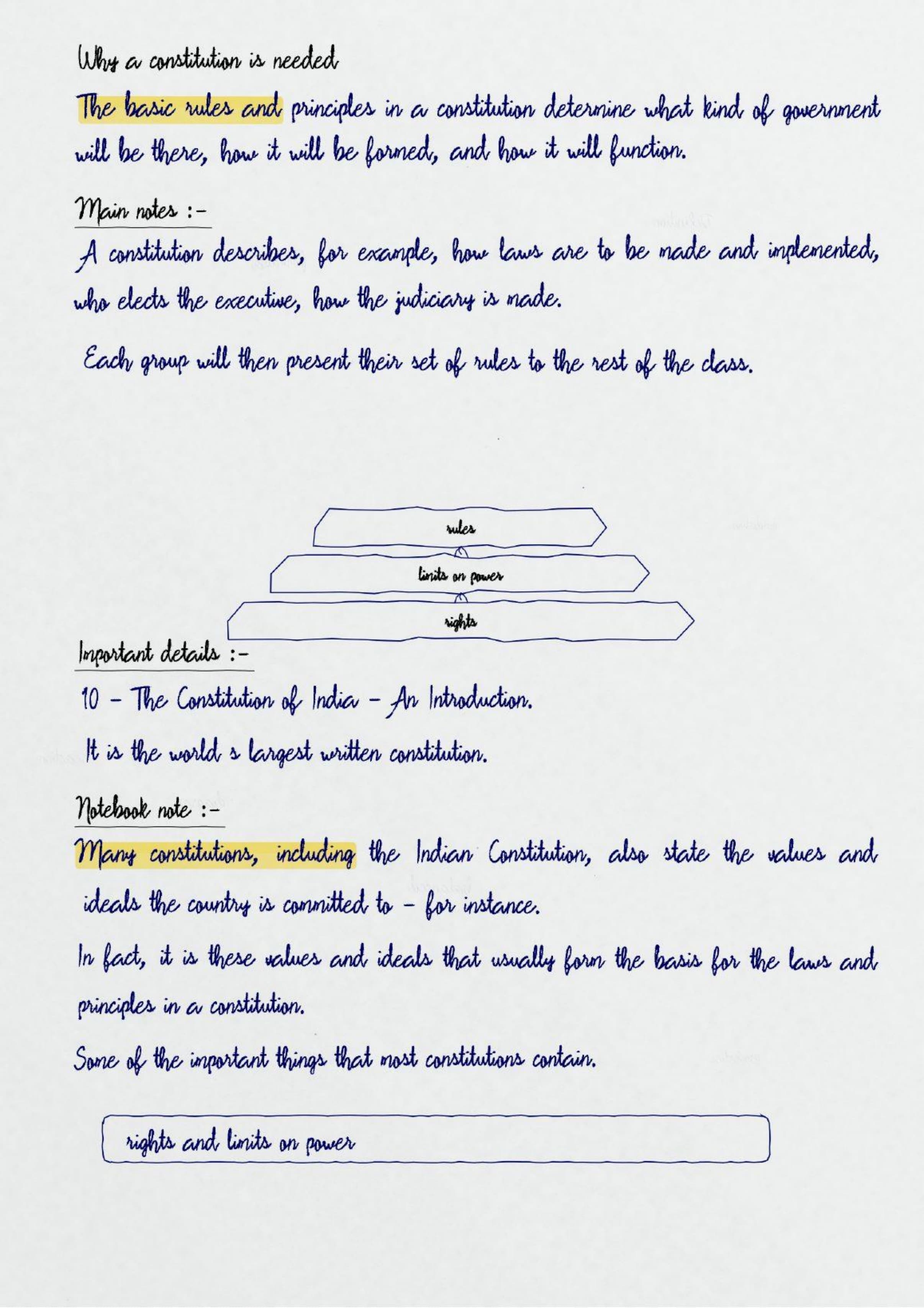
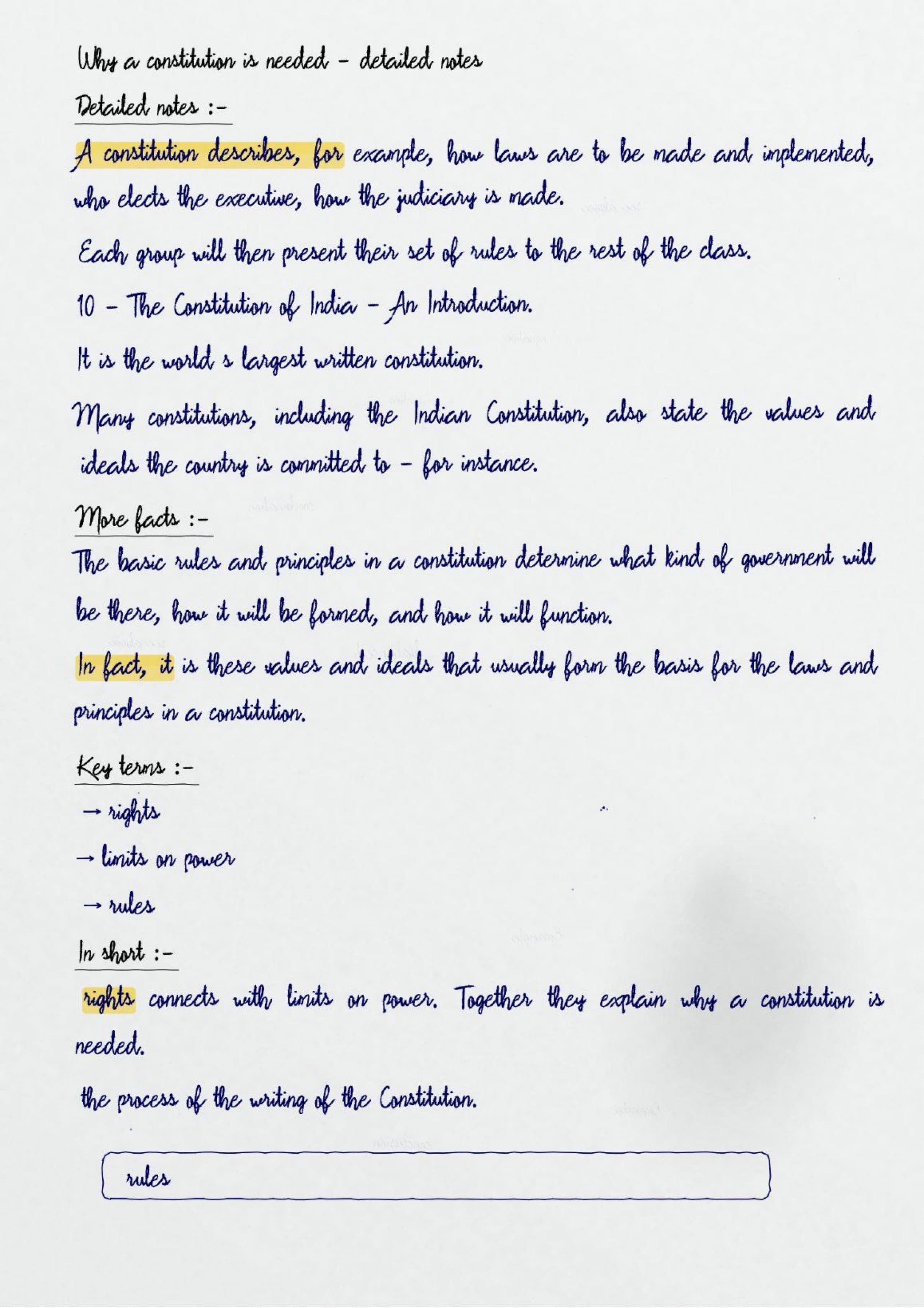
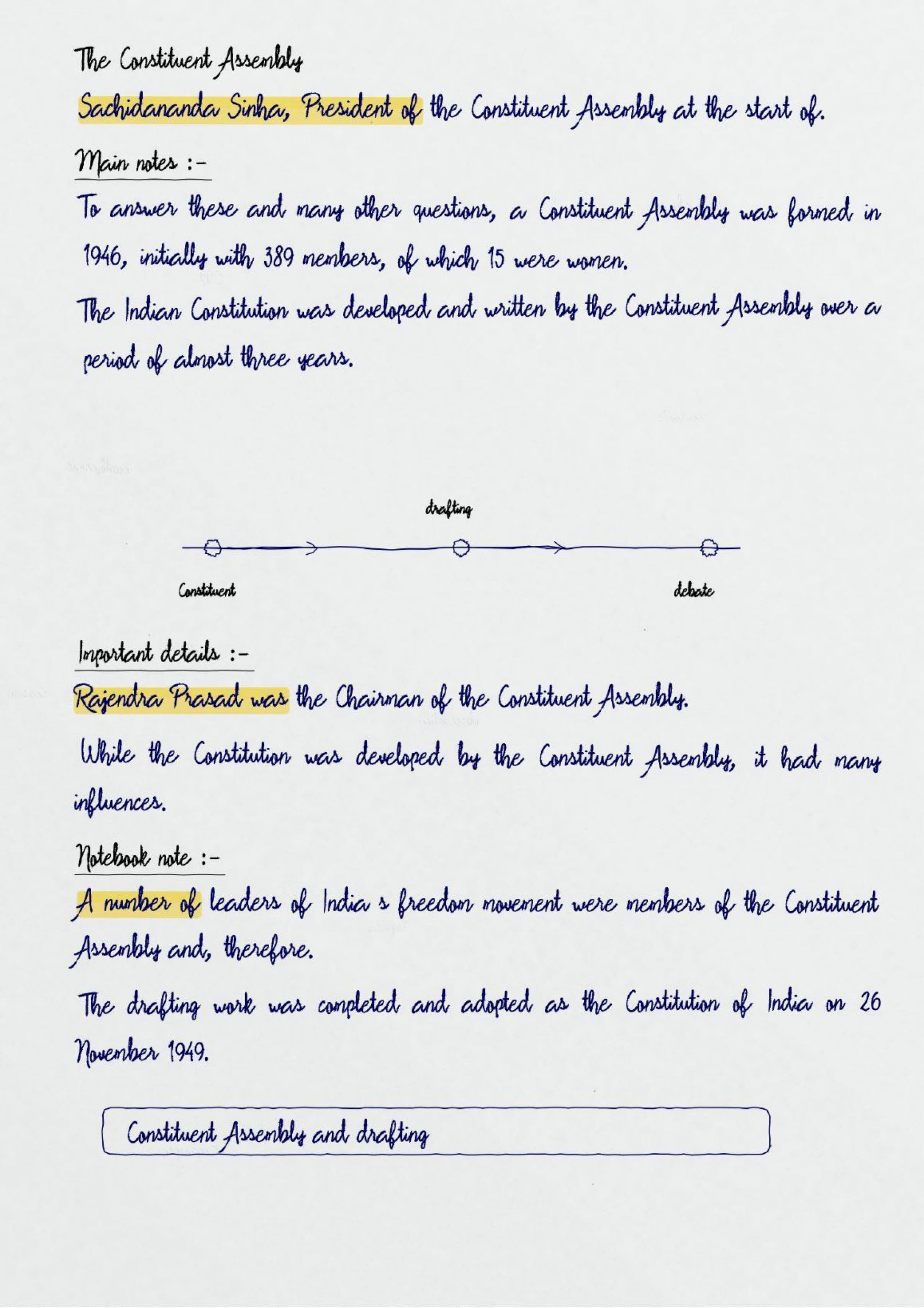
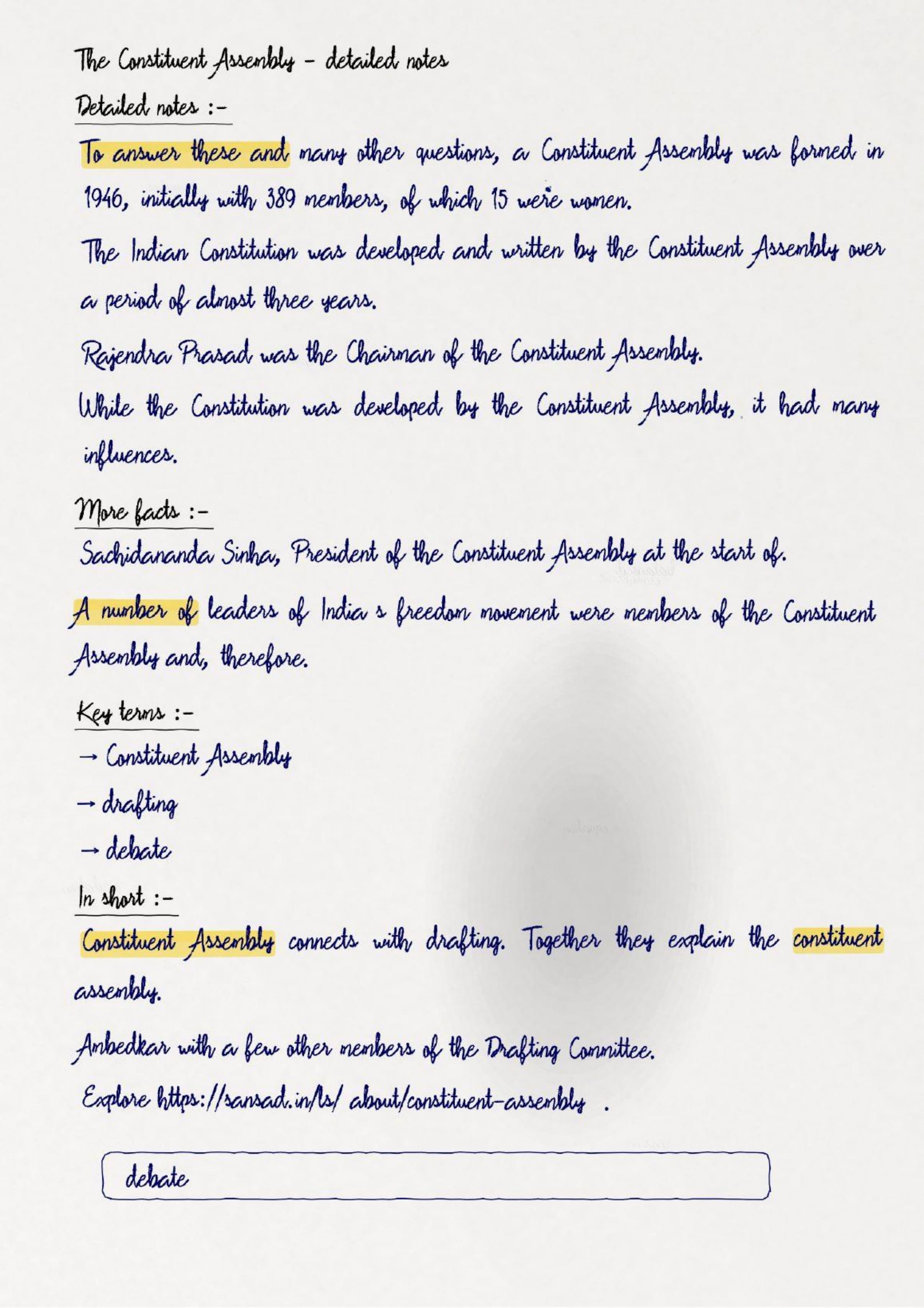
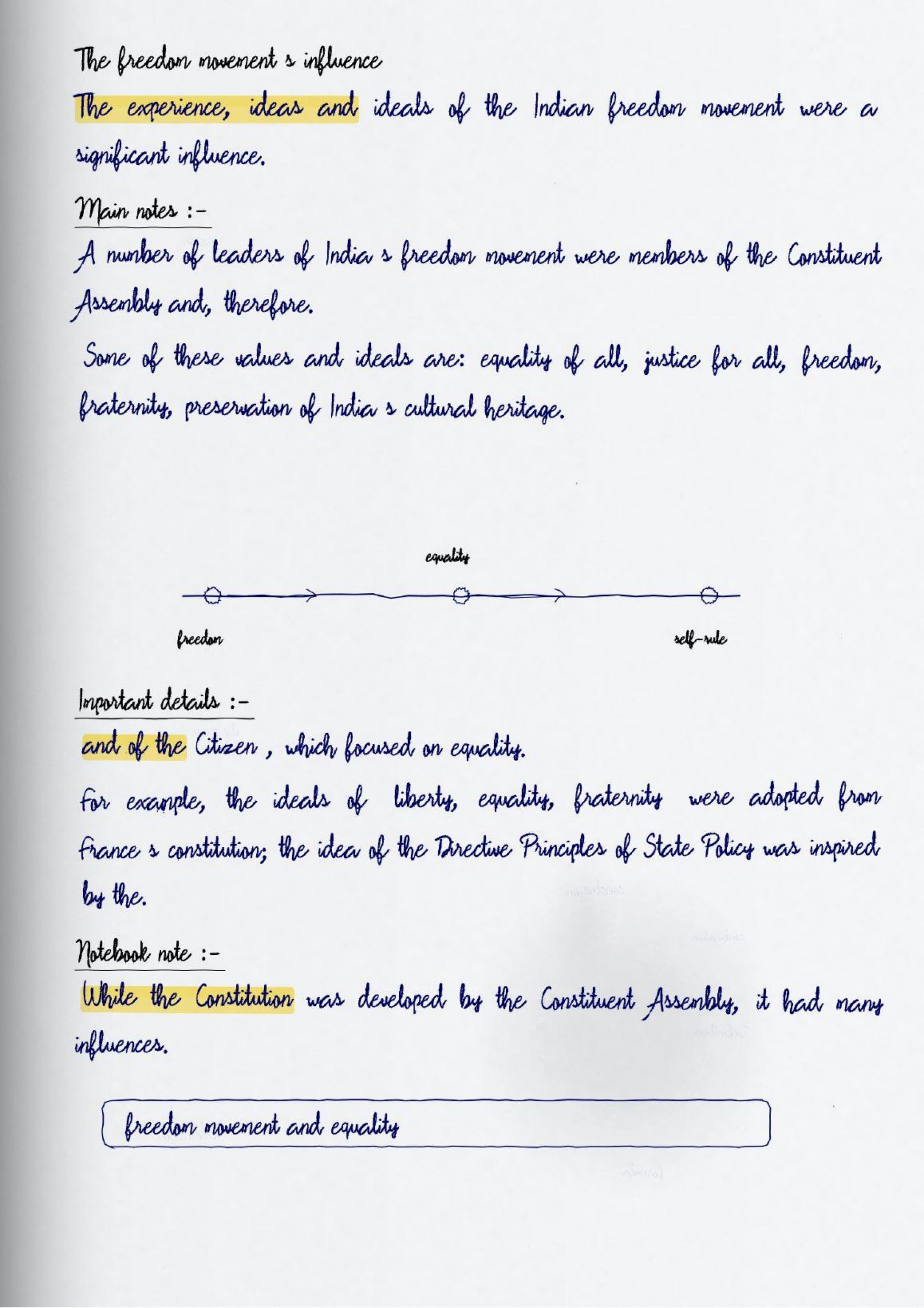
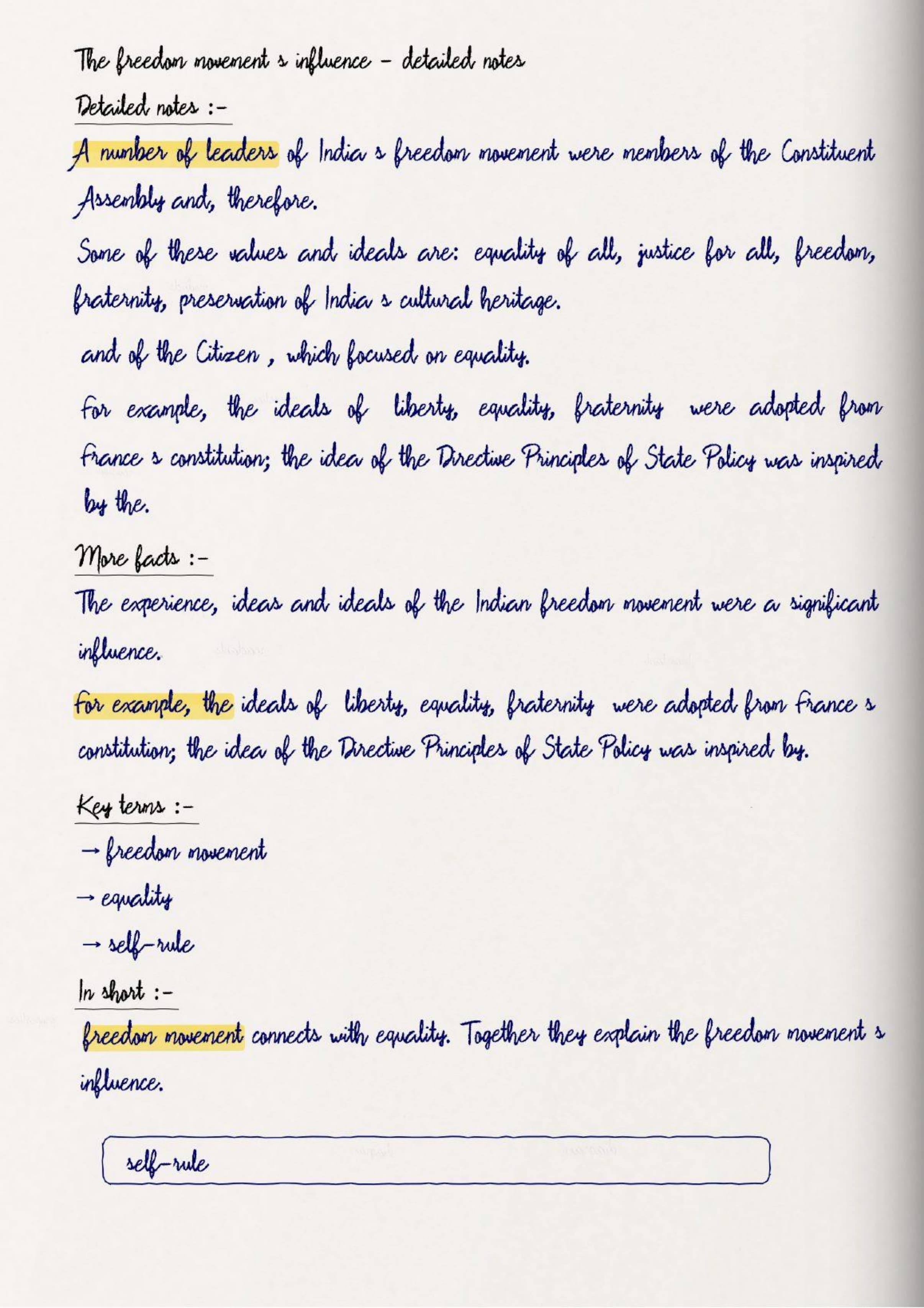
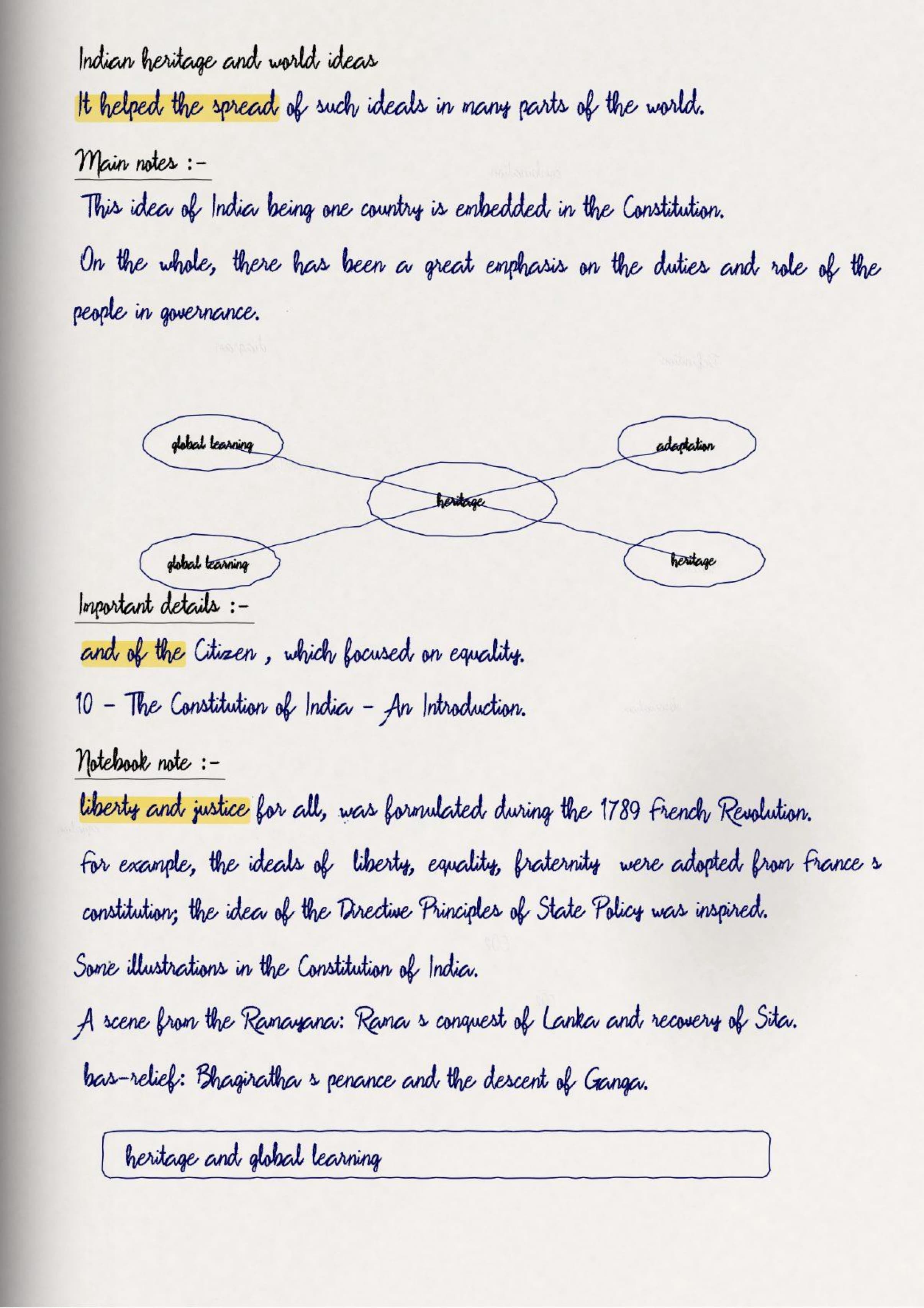
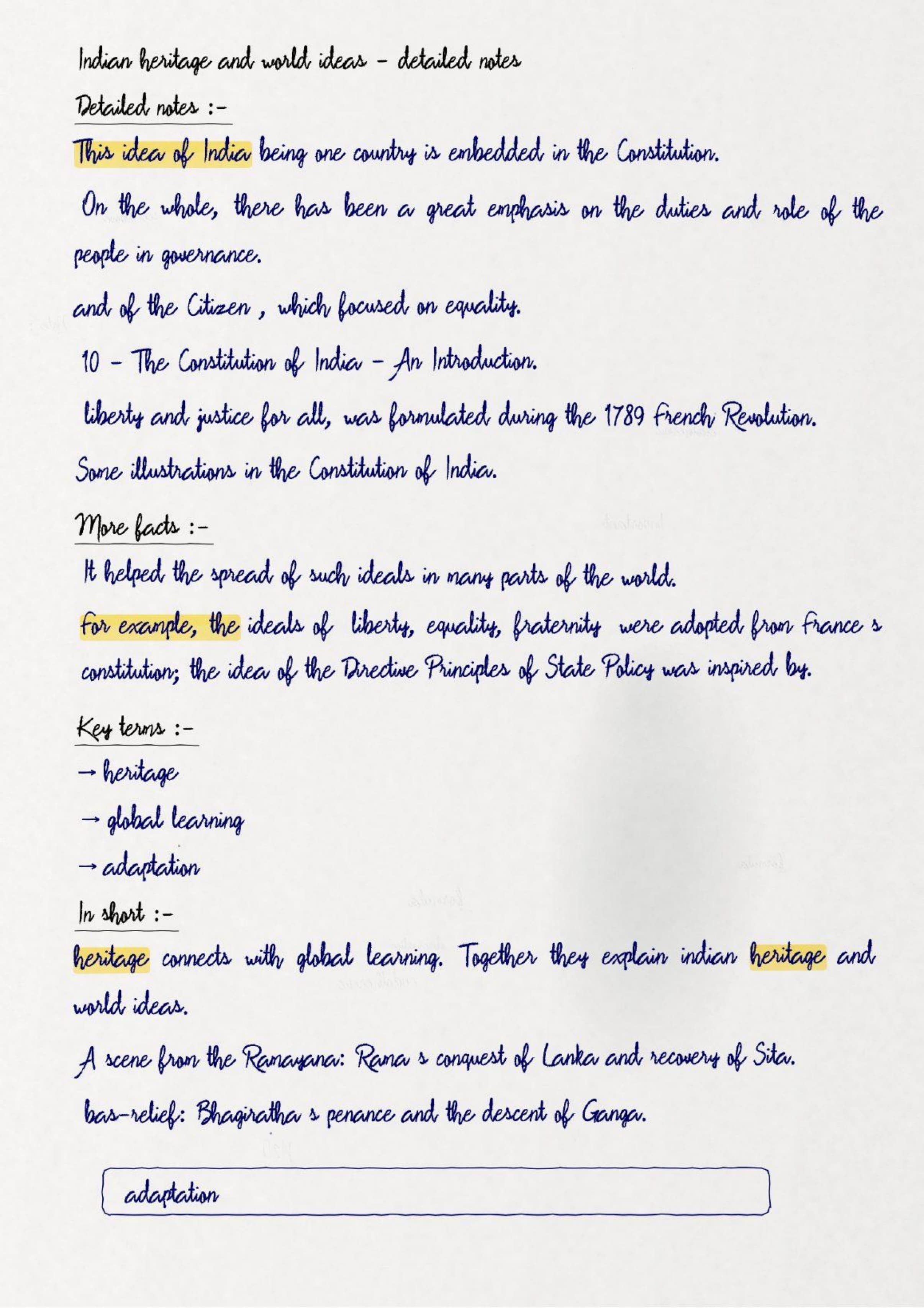
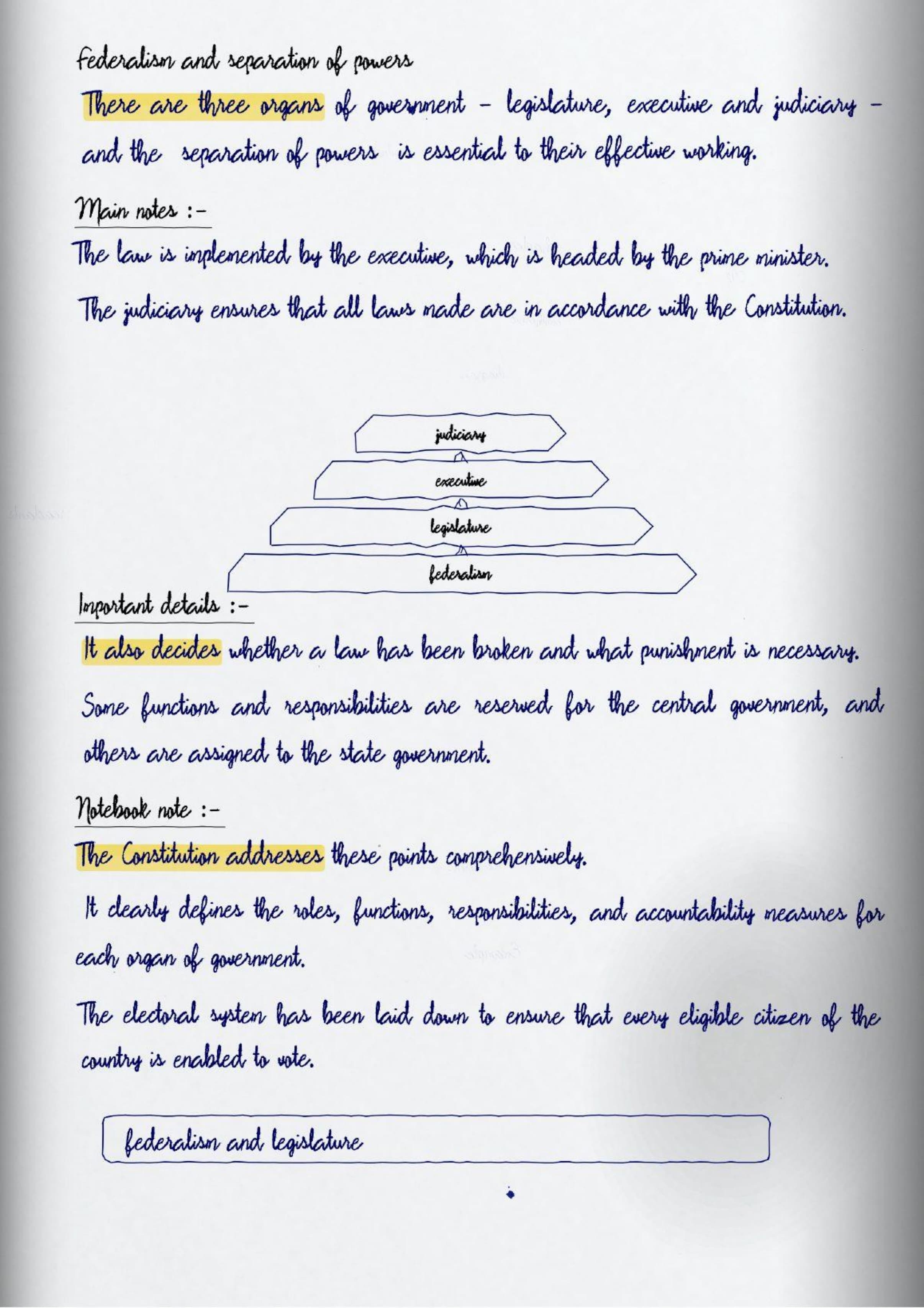
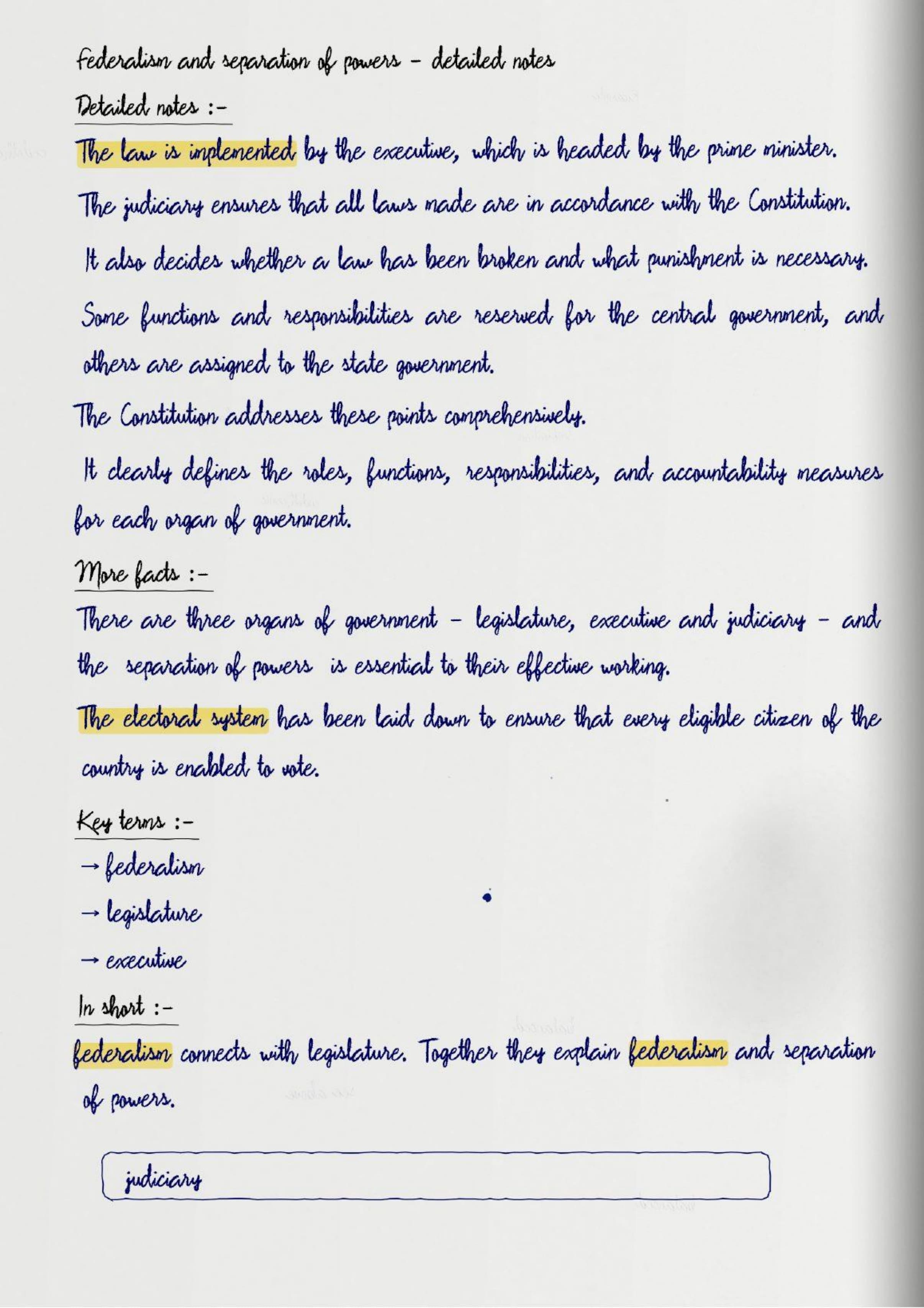
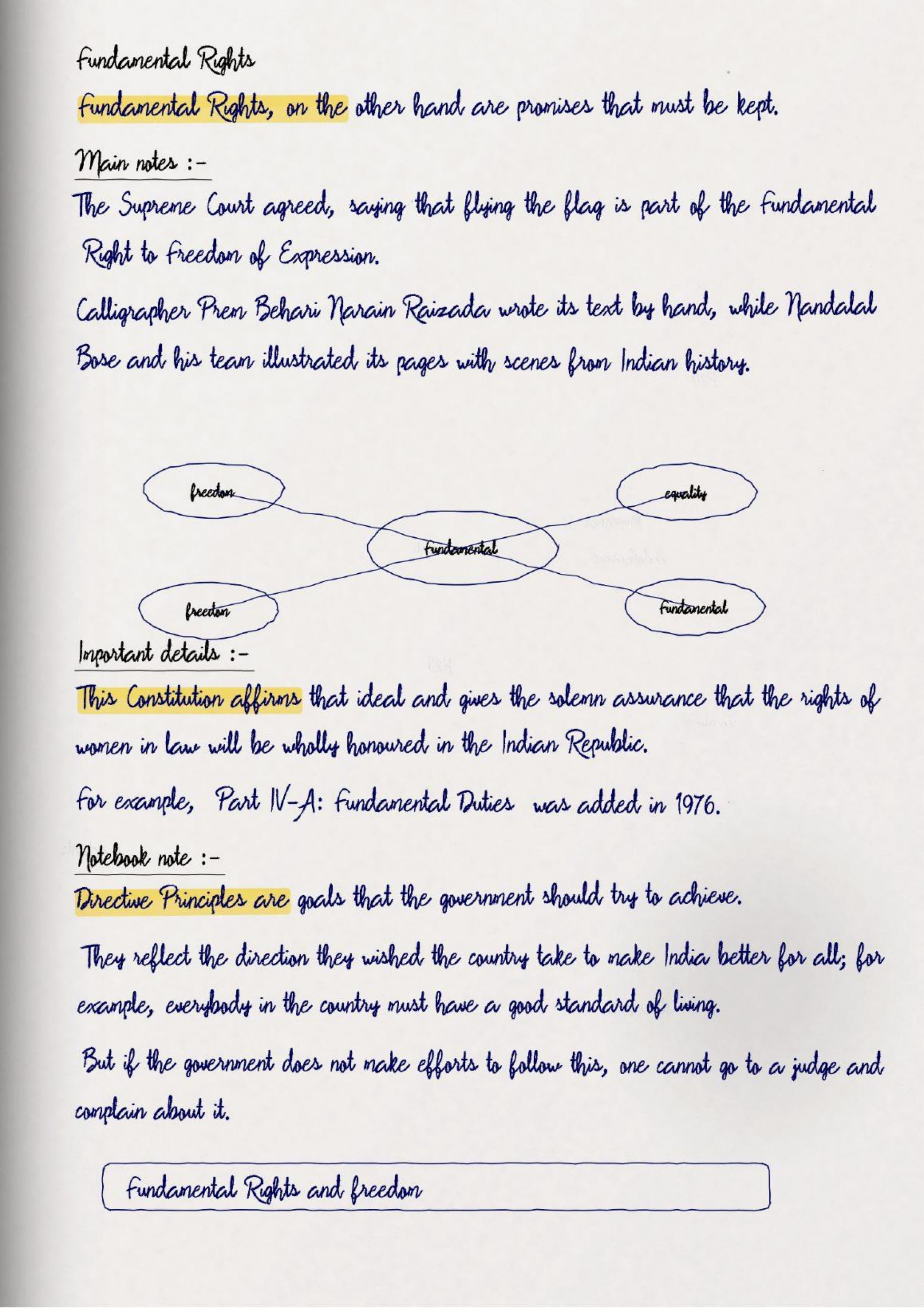
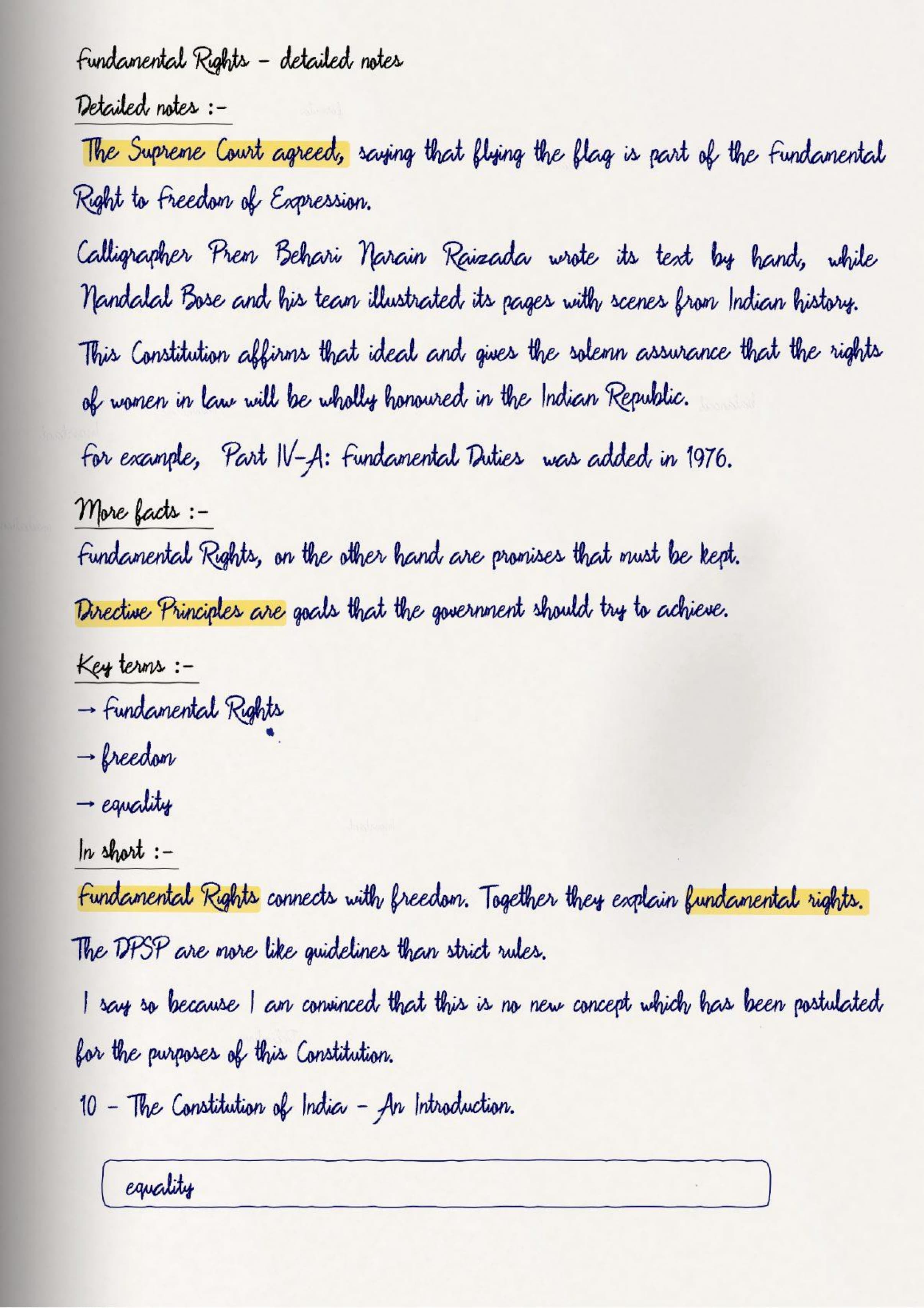
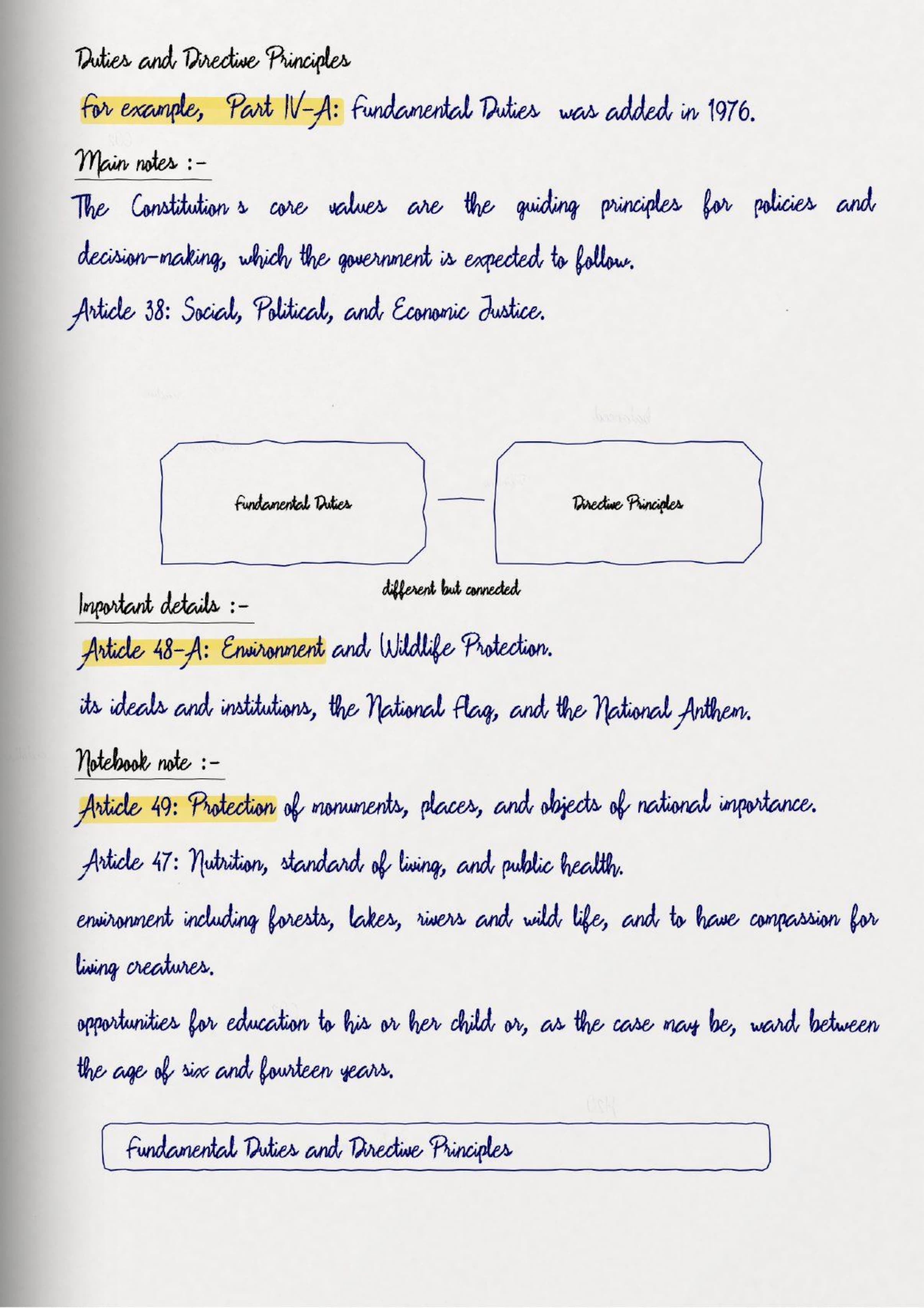
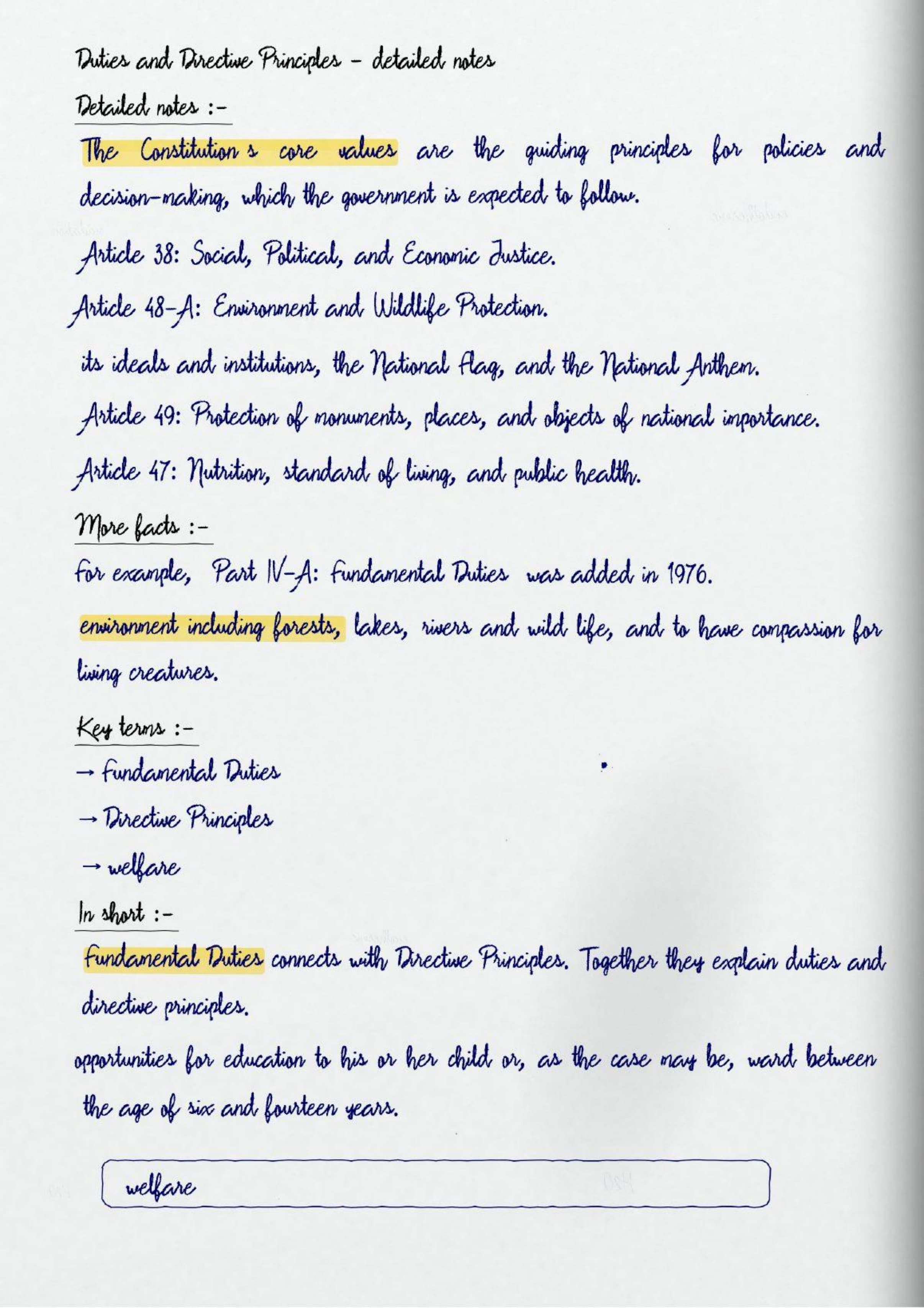
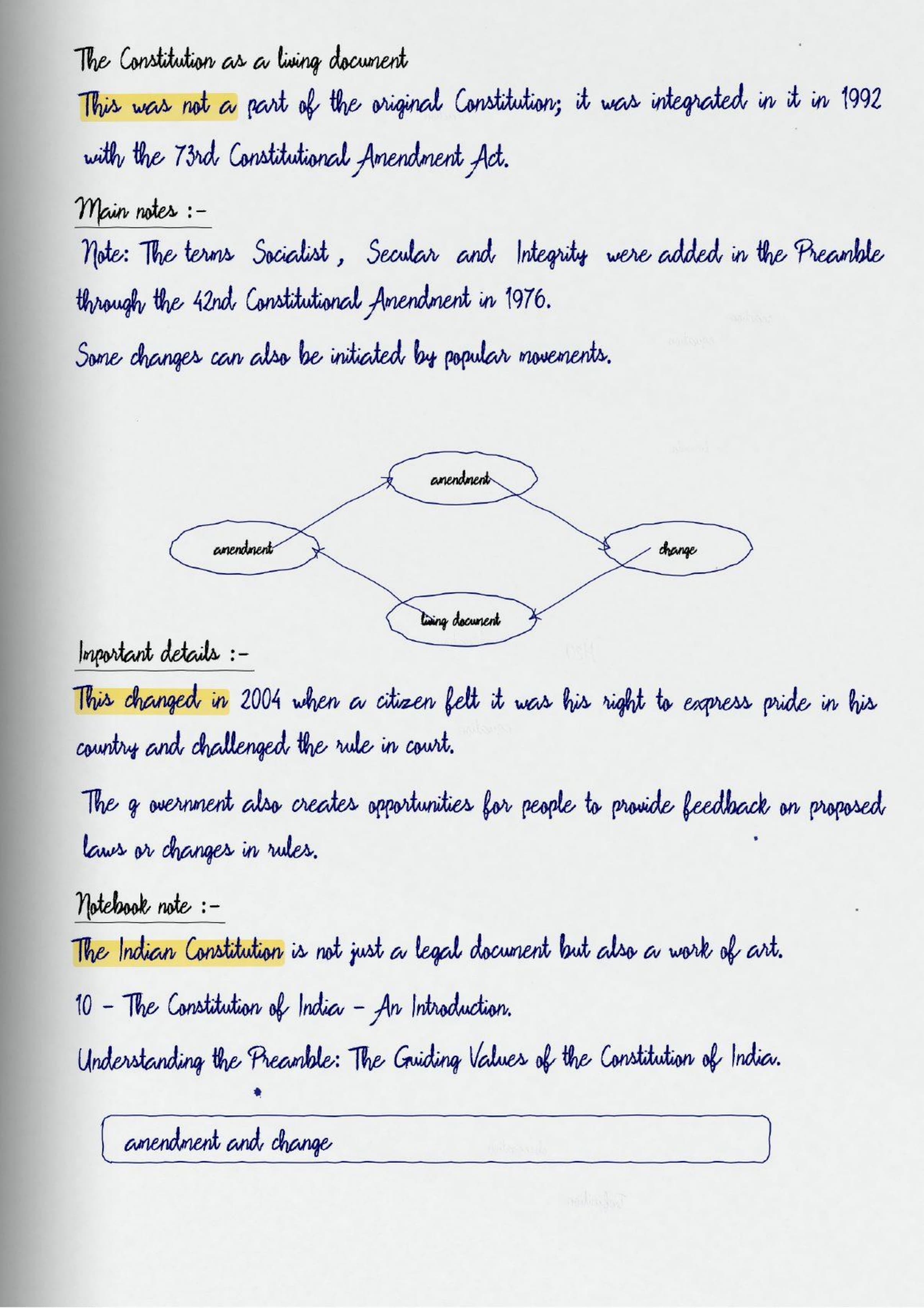
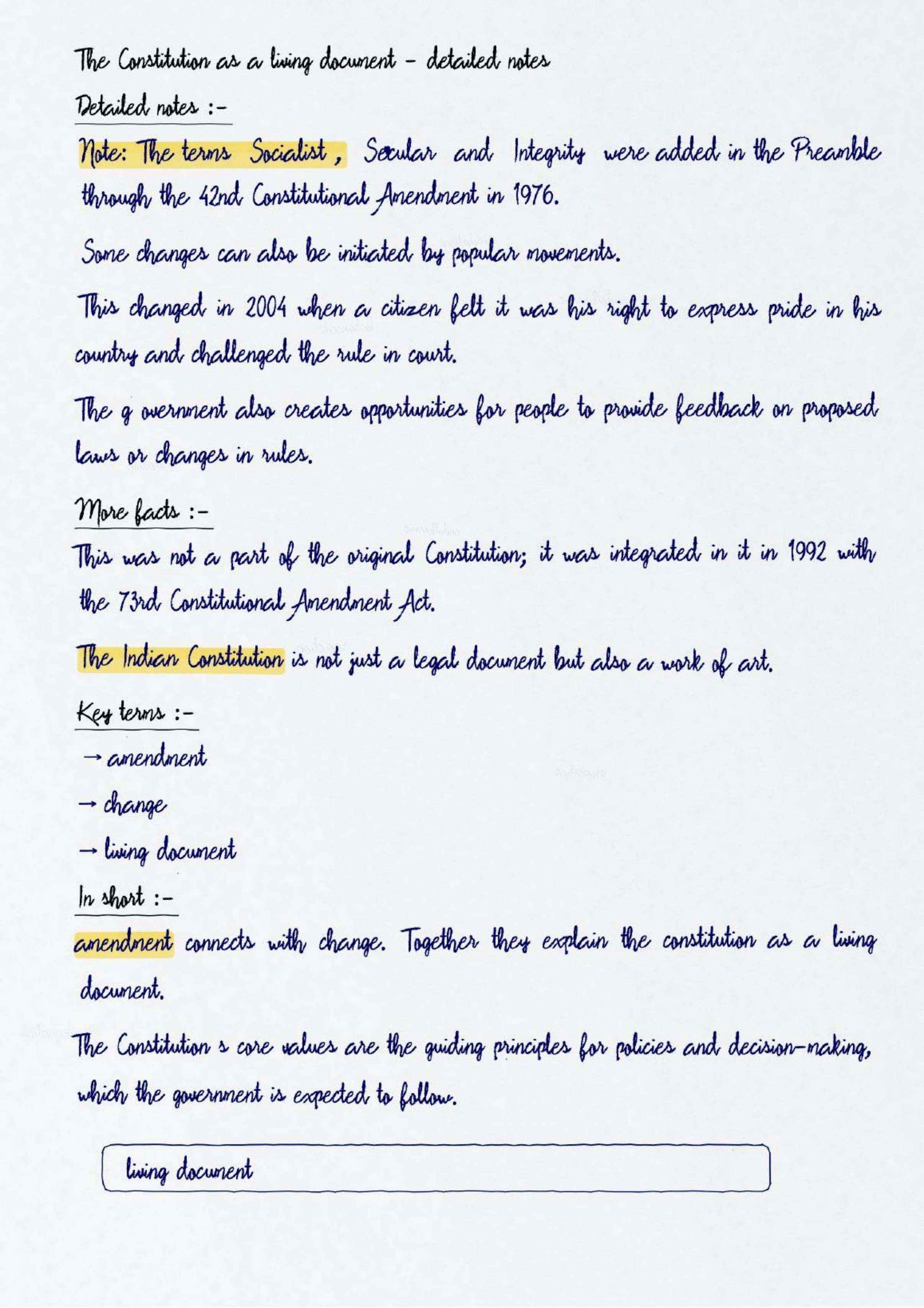
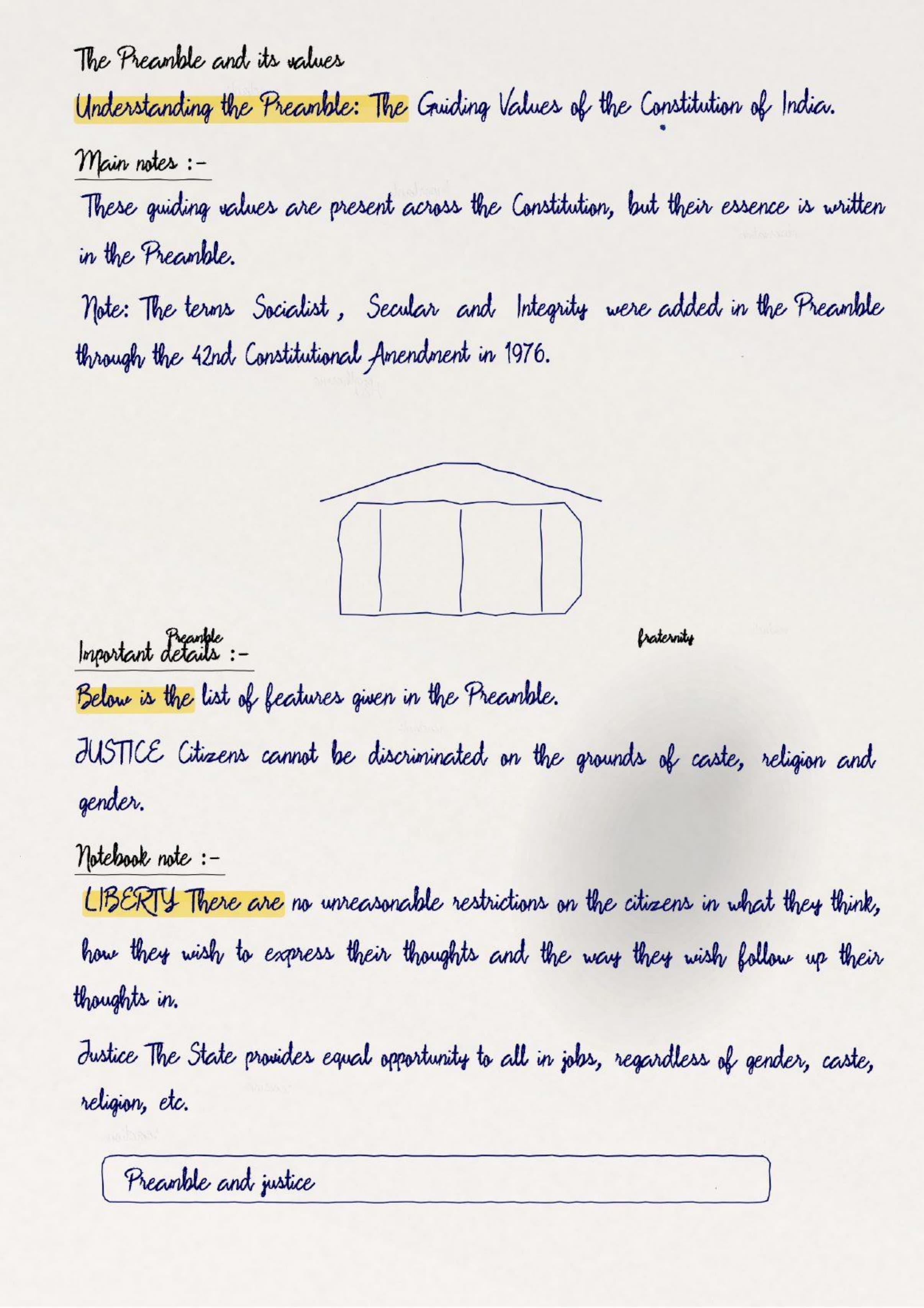
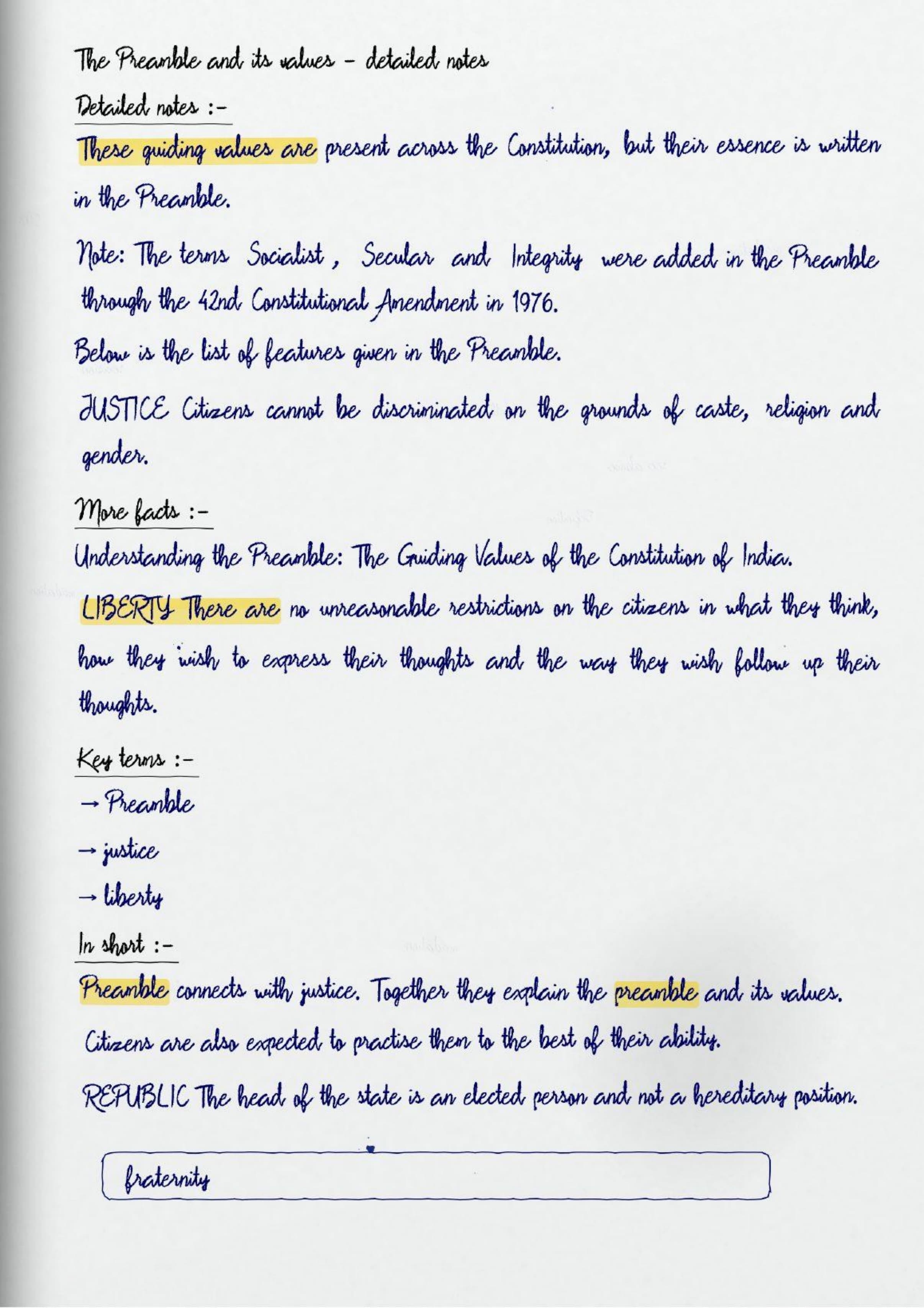
- Key features boxed: the features that define India's social, economic and political structure
- What the notes cover: what a constitution is, its building blocks, its key features, and the duties of citizens
- Best for: the key-features question and the fundamental-duties answer
You can read the complete class 7 social science handwritten notes for The Constitution of India: An Introduction, with boxed definitions and quick recall points, in the PDF below.
These handwritten notes are written by Social Science teachers, mapped to the 2026-27 NCERT Exploring Society book, and checked against Class 7 school question papers.
How Collegedunia's Handwritten Notes Help You Revise The Constitution of India: An Introduction
Collegedunia writes its class 7 social science handwritten notes as one clean pass through the chapter. The features and the duties are two separate lists on facing halves of a page.
- Feature list: the key features of the Constitution numbered
- Duties list: the fundamental duties written out
- Sources panel: the three sources drawn as three streams feeding one book
- Colour-coded sub-headings: sub-topics in red so features and duties stay apart
What the The Constitution of India: An Introduction Handwritten Notes Cover
The Constitution is described in the chapter as a guiding book, a rulebook that protects the rights of every citizen and asks something of them in return.
- What a constitution is
- The Constitution as a rulebook protecting rights
- India's civilisational heritage as a source
- The freedom struggle as a source
- Good practices borrowed from other constitutions
- Key features of the Indian Constitution
- The parliamentary form of government
- Fundamental duties of citizens
- The Constitution as a living document
The Constitution of India: An Introduction Topic-wise Weightage for CBSE Class 7 Social Science
Key features and fundamental duties are the two big scorers here.
| Sub-topic | Weightage | How often asked |
|---|---|---|
| Key features of the Constitution | High | asked often |
| Fundamental duties of citizens | High | asked often |
| Sources of the Indian Constitution | Medium | asked sometimes |
| The Constitution as a living document | Medium | asked sometimes |
| Parliamentary form of government | Medium | asked sometimes |
| Rights protected by the Constitution | Medium | asked sometimes |
Why The Constitution of India: An Introduction Is Worth Revising Carefully
This is the most examined civics chapter of Class 7, and its answers are short and factual.
- The key features question appears in nearly every test
- Fundamental duties is a direct list answer
- The three sources make a three-mark question
- The living document idea is a common short answer
Last 24-Hour Revision Card for The Constitution of India: An Introduction
The card for the Constitution question.
- The Constitution is the rulebook that protects citizens' rights
- Three sources: civilisational heritage, the freedom struggle, other constitutions
- It sets the social, economic and political structure of India
- India has a parliamentary form of government
- Citizens must follow the fundamental duties
- It is a living document and can be amended
The Constitution of India: An Introduction Self-Assessment Quiz
Five questions on the Constitution. Tap each to check.
The Constitution of India is best described as
(a) a history book (b) a rulebook protecting citizens' rights (c) a map (d) a dictionary
Answer: (b) a rulebook protecting citizens' rights
Which of these was a source of the Indian Constitution?
(a) the freedom struggle (b) foreign conquest (c) trade treaties (d) none of these
Answer: (a) the freedom struggle
A living document means one that
(a) can never be changed (b) can be improved as needs change (c) is written by hand (d) expires yearly
Answer: (b) can be improved as needs change
Citizens are expected to follow the
(a) fundamental duties (b) foreign laws (c) no rules (d) only local customs
Answer: (a) fundamental duties
India's form of government under the Constitution is
(a) monarchy (b) parliamentary (c) presidential (d) theocratic
Answer: (b) parliamentary
Key Terms and Ideas in The Constitution of India: An Introduction
Civics vocabulary is examined directly, so learn these word for word.
| Term / Idea | What it means |
|---|---|
| Constitution | the document setting out how a country is governed and what rights citizens have |
| Citizen | a recognised member of a country with rights and duties |
| Rights | the freedoms and protections guaranteed to citizens |
| Fundamental duties | the responsibilities the Constitution expects of citizens |
| Amendment | a formal change made to the Constitution |
| Living document | a document that can be changed as needs change |
| Parliamentary government | a system where the executive is drawn from the legislature |
Diagrams Drawn by Hand in the The Constitution of India: An Introduction Notes
The notes turn the lists into panels so they can be scanned quickly.
| Figure drawn by hand | What it shows |
|---|---|
| Sources panel | three streams feeding into one book |
| Feature list | the key features numbered in a bordered box |
| Duties list | the fundamental duties in a facing box |
| Structure sketch | the parliamentary form of government drawn simply |
| Living document panel | amendments shown as pages added over time |
How to Use These Handwritten Notes for Social Science Revision
Use these class 7 social science handwritten notes in two passes. Learn the features as a numbered list, not as a paragraph. The marking follows the list.
- Write the key features of the Constitution as a numbered list
- List the fundamental duties of a citizen
- Name the three sources of the Constitution
- Before the test, revise the feature list and the duties list
Other Social Science Resources for The Constitution of India: An Introduction
Read the notes with the solved questions and the Exploring Society chapter itself.
- Class 7 Social Science NCERT Solutions
- Class 7 Social Science Revision Notes
- Class 7 Exploring Society Book PDF
Class 7 Social Science Handwritten Notes for All Chapters
Exploring Society Part 1 has twelve chapters and Part 2 has eight. The table below links the class 7 social science handwritten notes for every chapter.
The Constitution of India: An Introduction Class 7 Social Science Handwritten Notes FAQs
Ques. Where can I download The Constitution of India Class 7 Handwritten Notes PDF?
Ans. The PDF is on this page, free, in both the normal and the HD version.
Ques. What is the Constitution of India?
Ans. It is the guiding book or rulebook of the country. It protects the rights of all citizens, sets out how the country is governed, and lists the duties expected of citizens.
Ques. How many pages is the Part 1 Chapter 10 handwritten notes PDF?
Ans. It runs 20 pages, with the feature list, the duties list and a quiz.
Ques. What were the building blocks of the Indian Constitution?
Ans. The rich civilisational heritage of India, the experience of the freedom struggle, and good practices taken from the constitutions of other countries.
Ques. Why is the Constitution called a living document?
Ans. Because it can be improved and amended as the needs of the country change, rather than staying fixed for all time.



Comments