




Class 7 Social Science Part 1 Chapter 2 Understanding the Weather explains what weather is made of. These class 7 social science handwritten notes chapter 2 Understanding the Weather follow the 2026-27 NCERT and cover temperature, humidity, precipitation, wind and pressure.
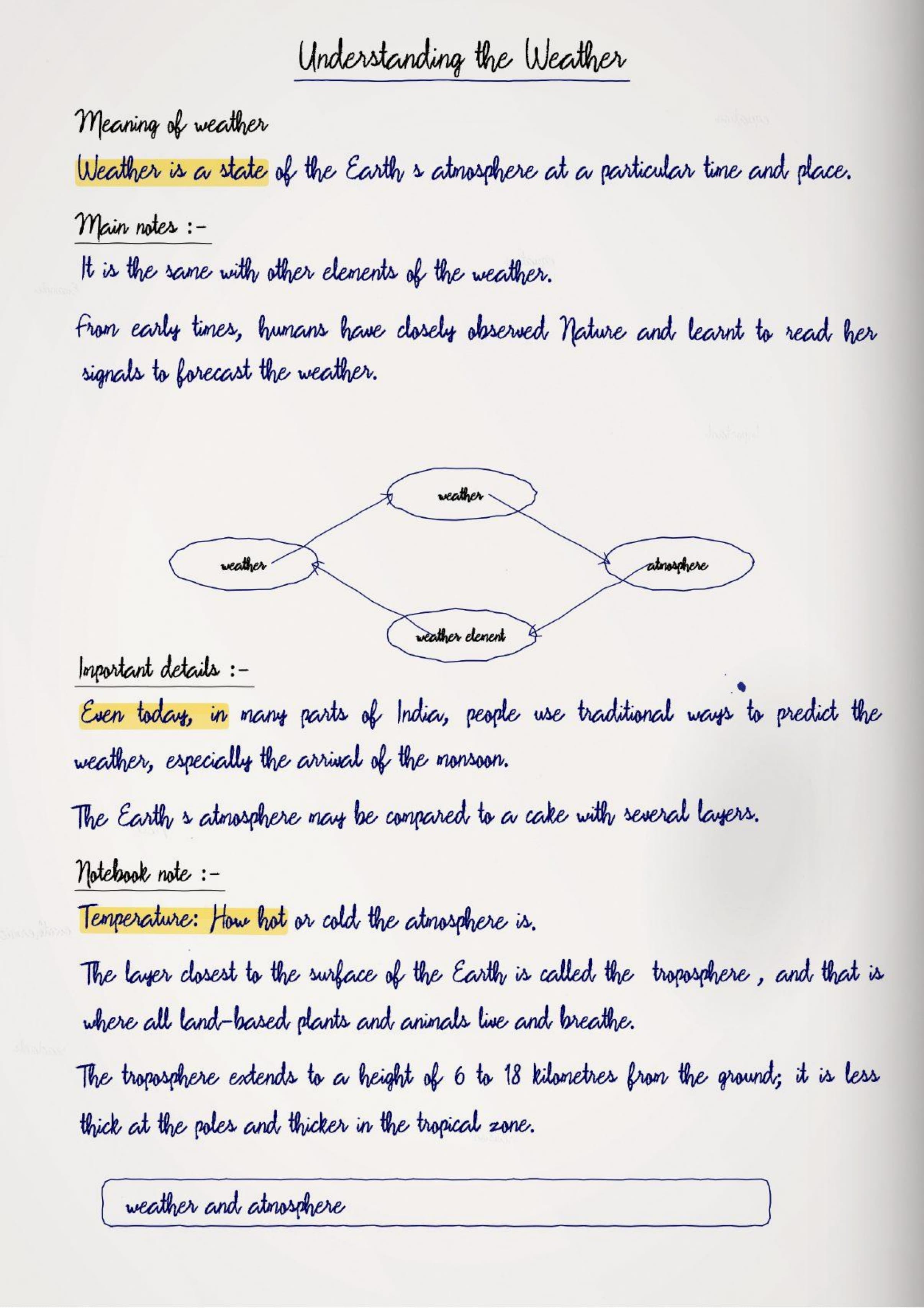
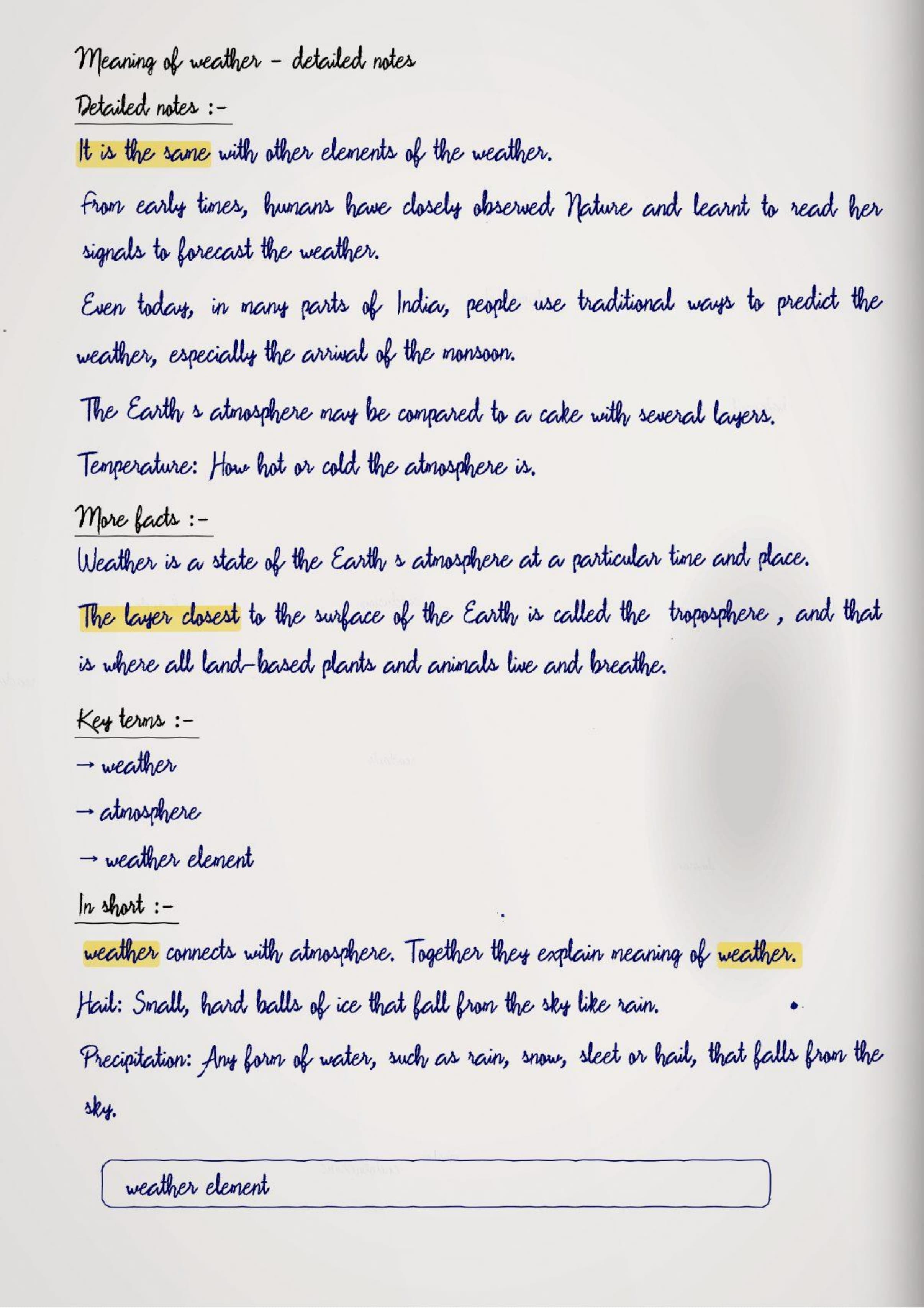
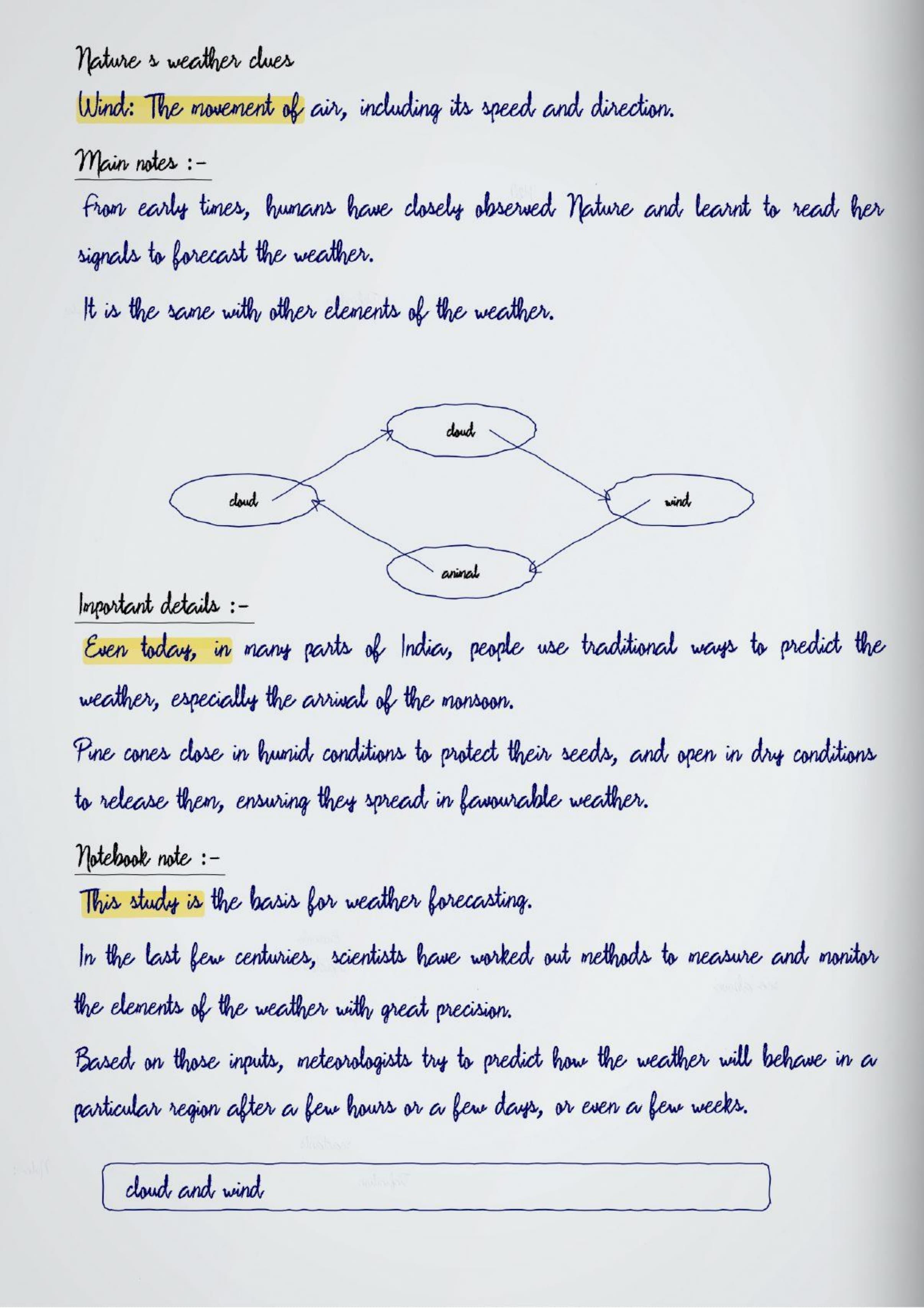
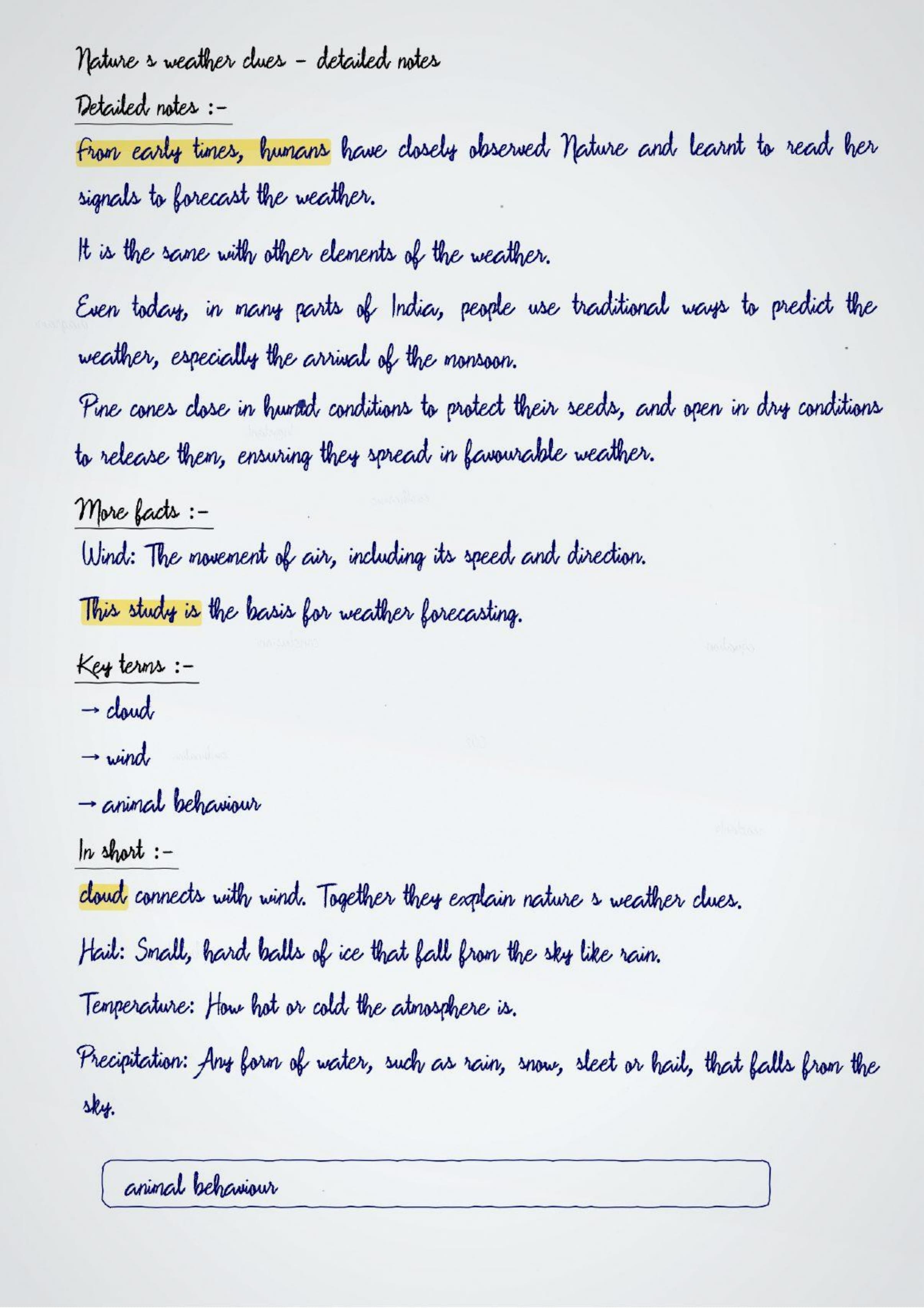
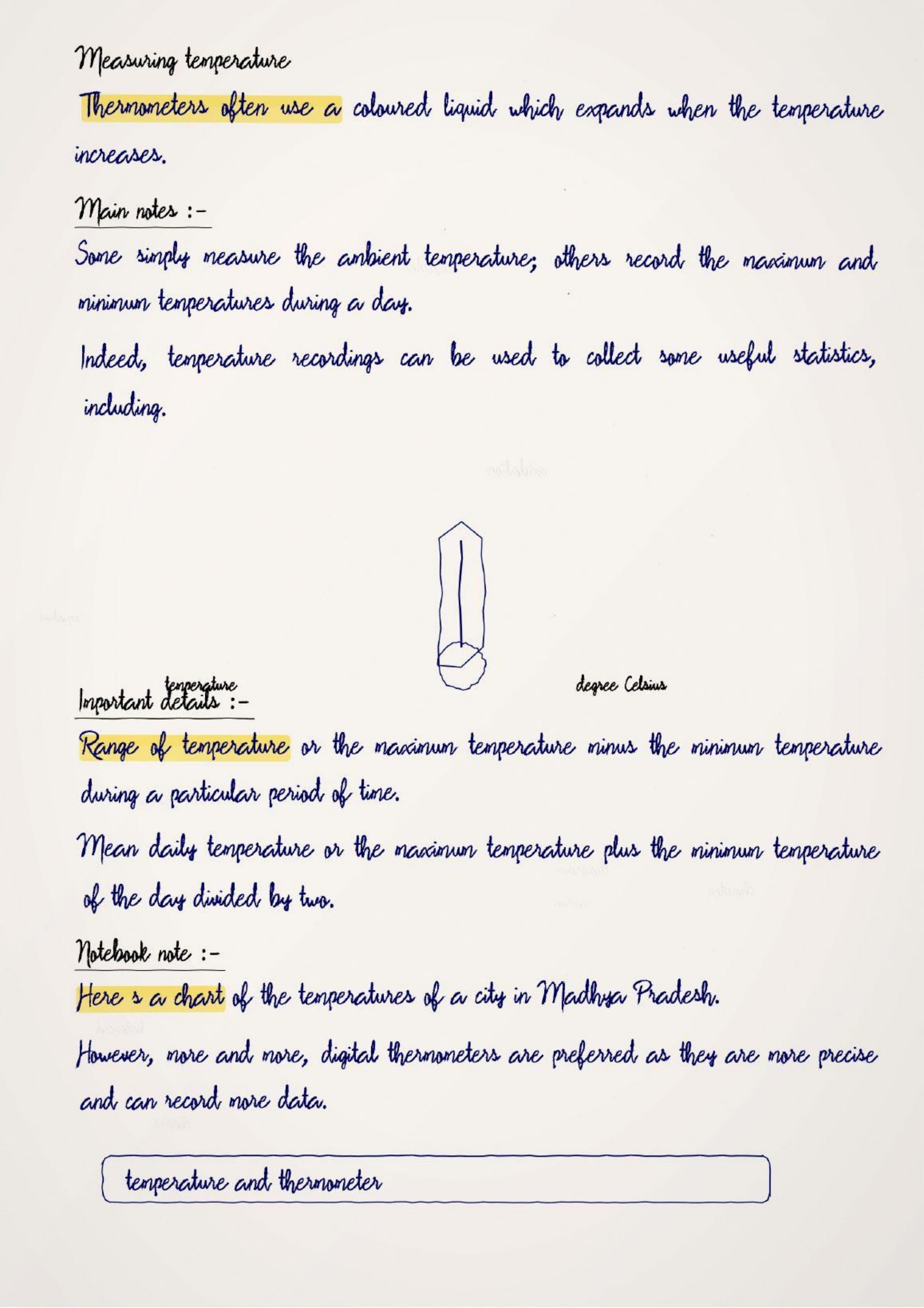
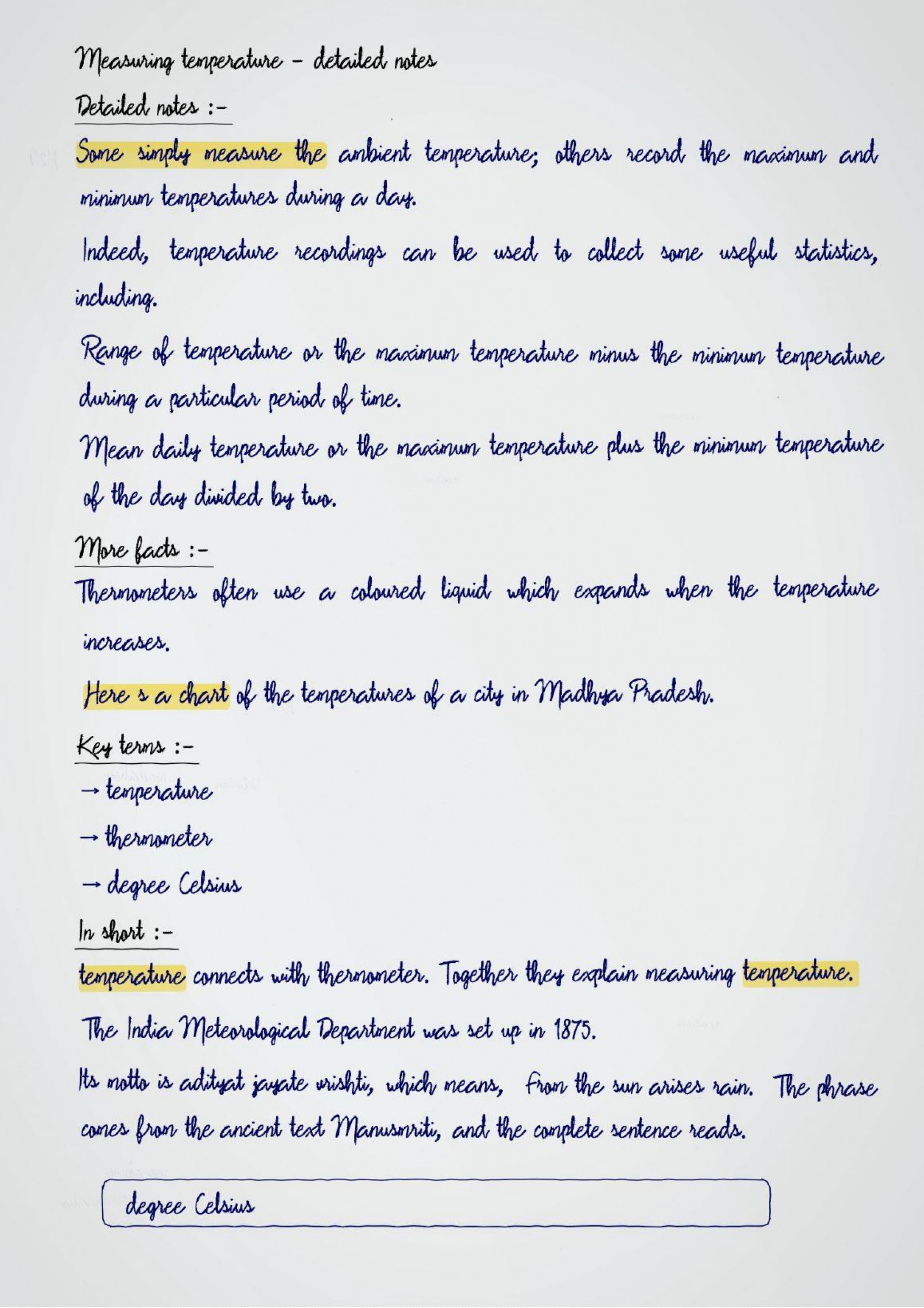
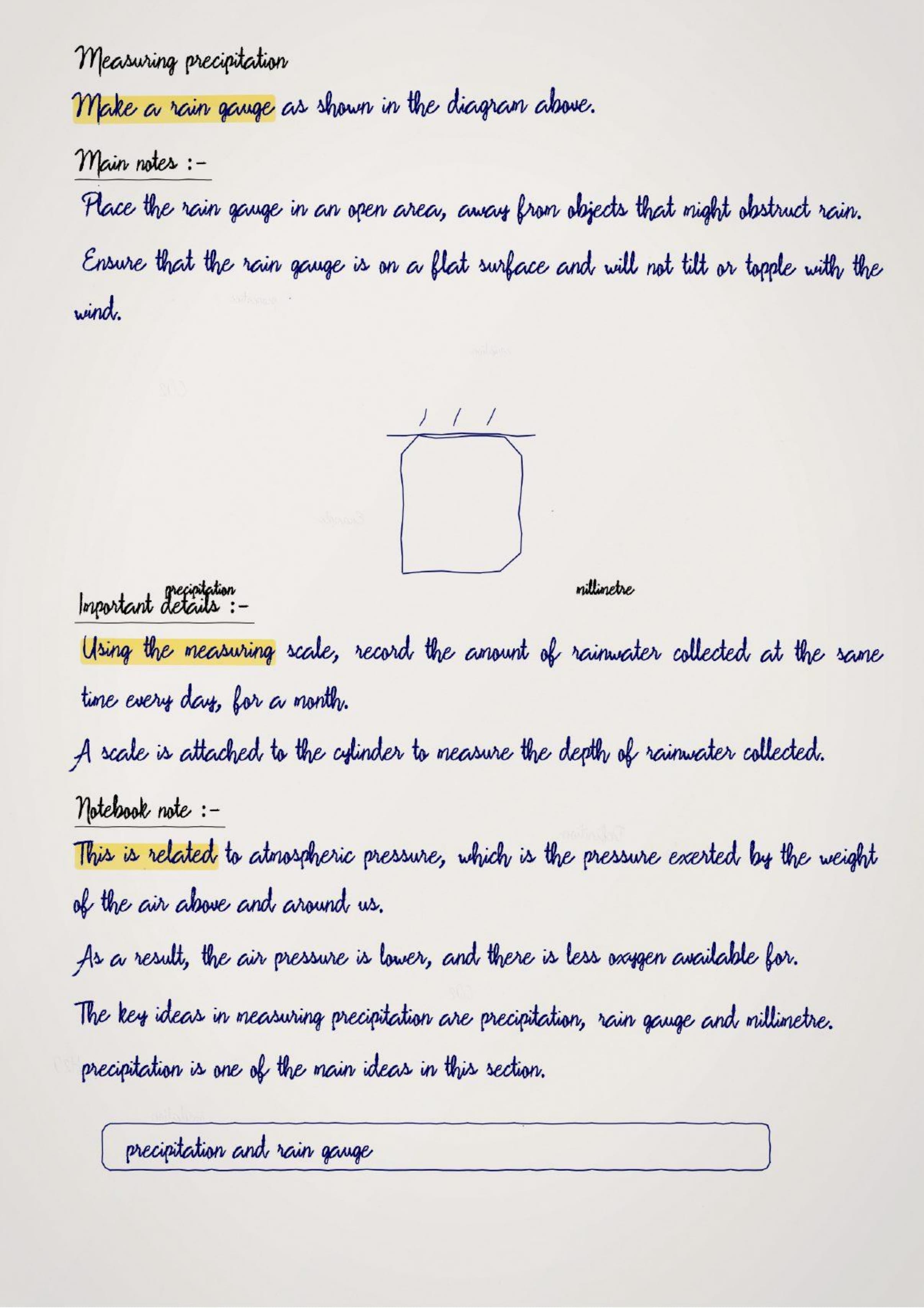
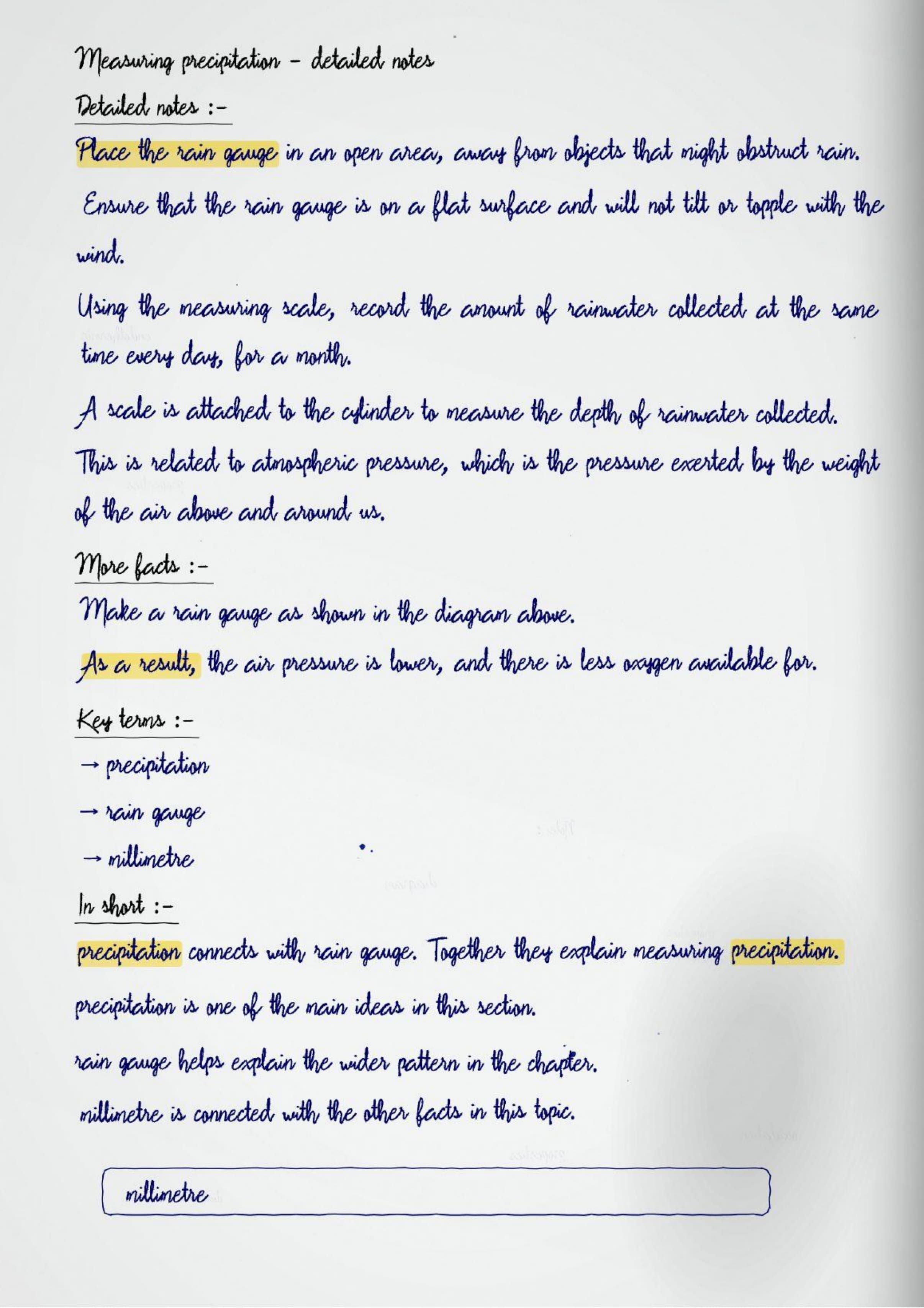
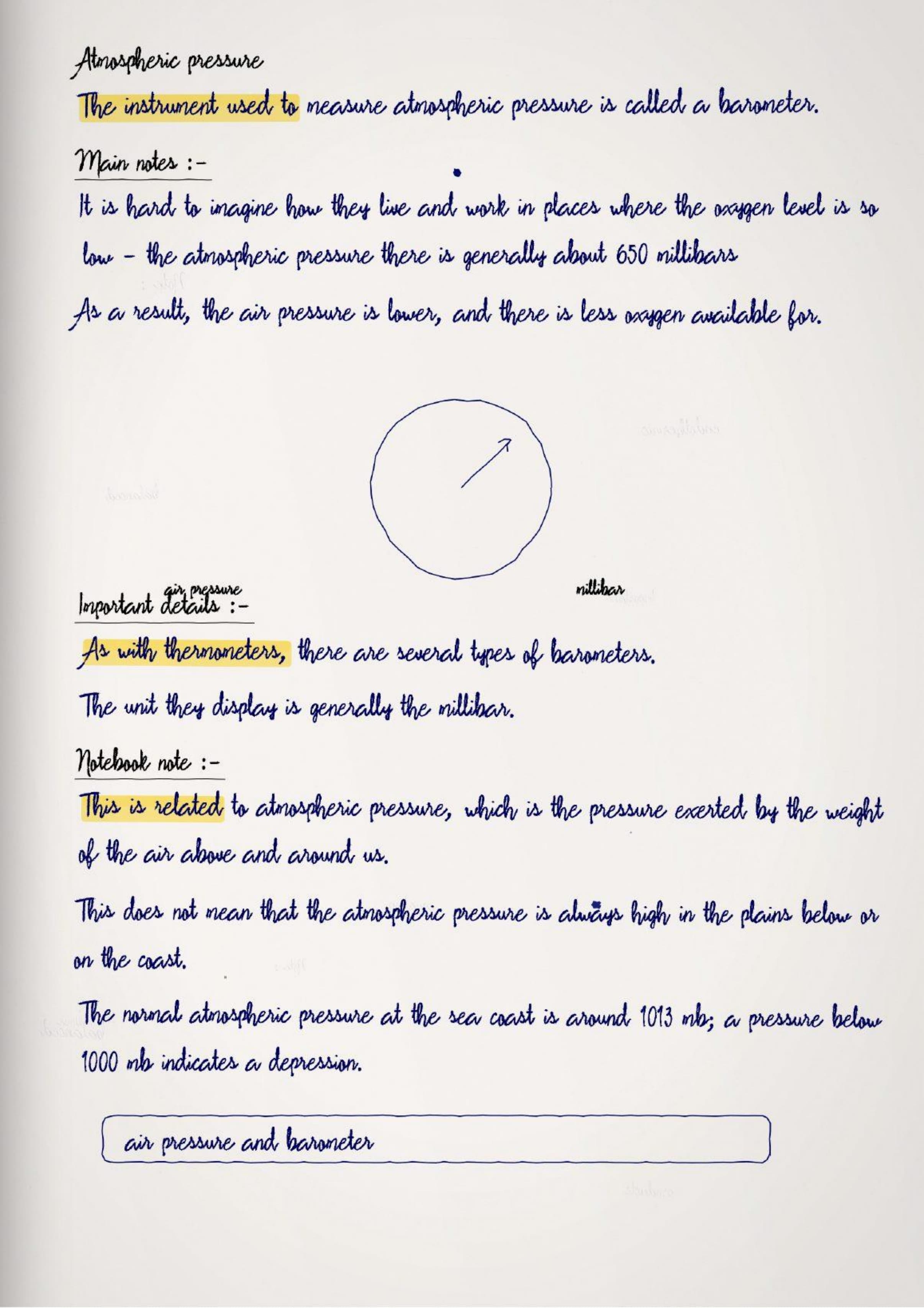
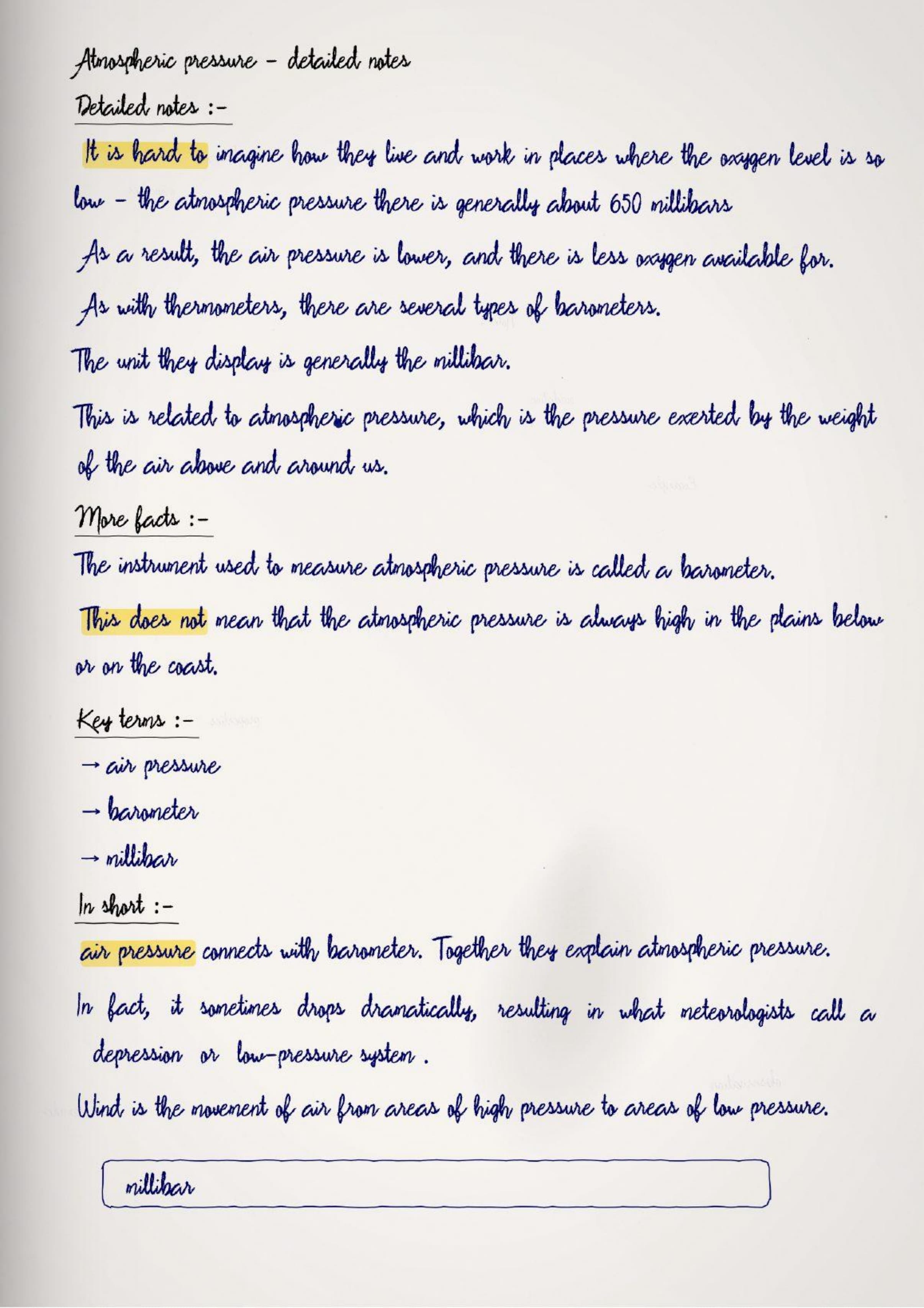
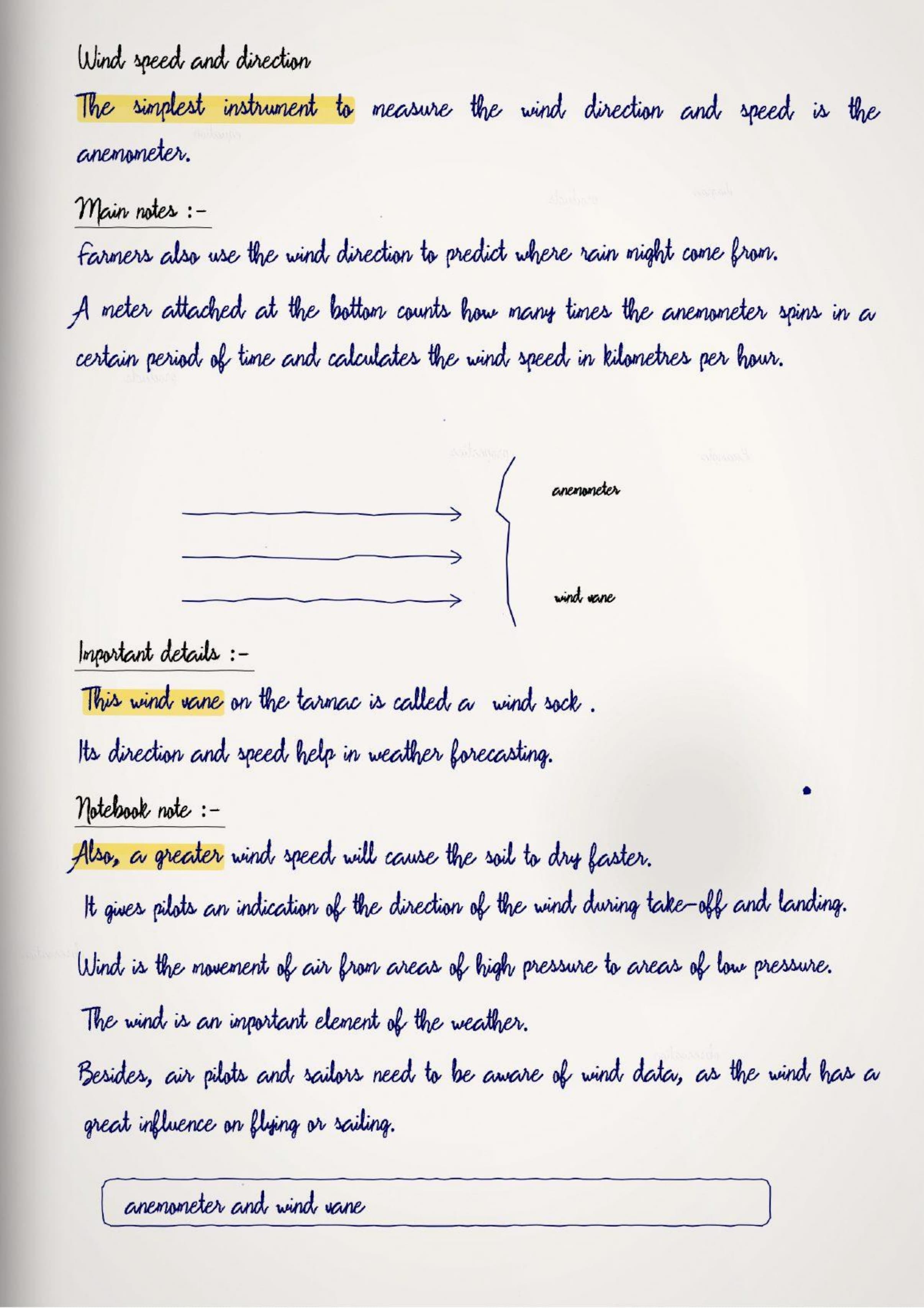
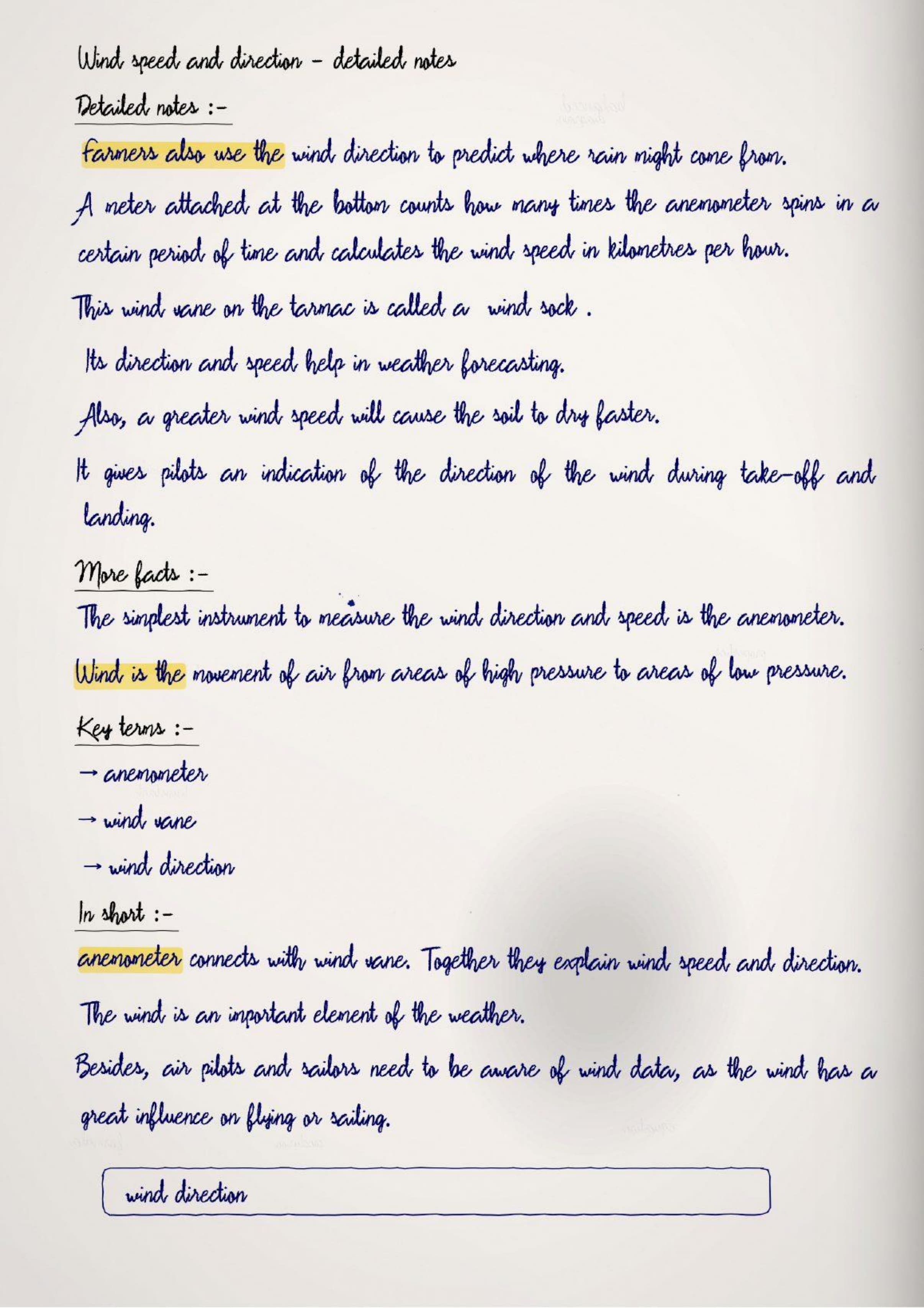
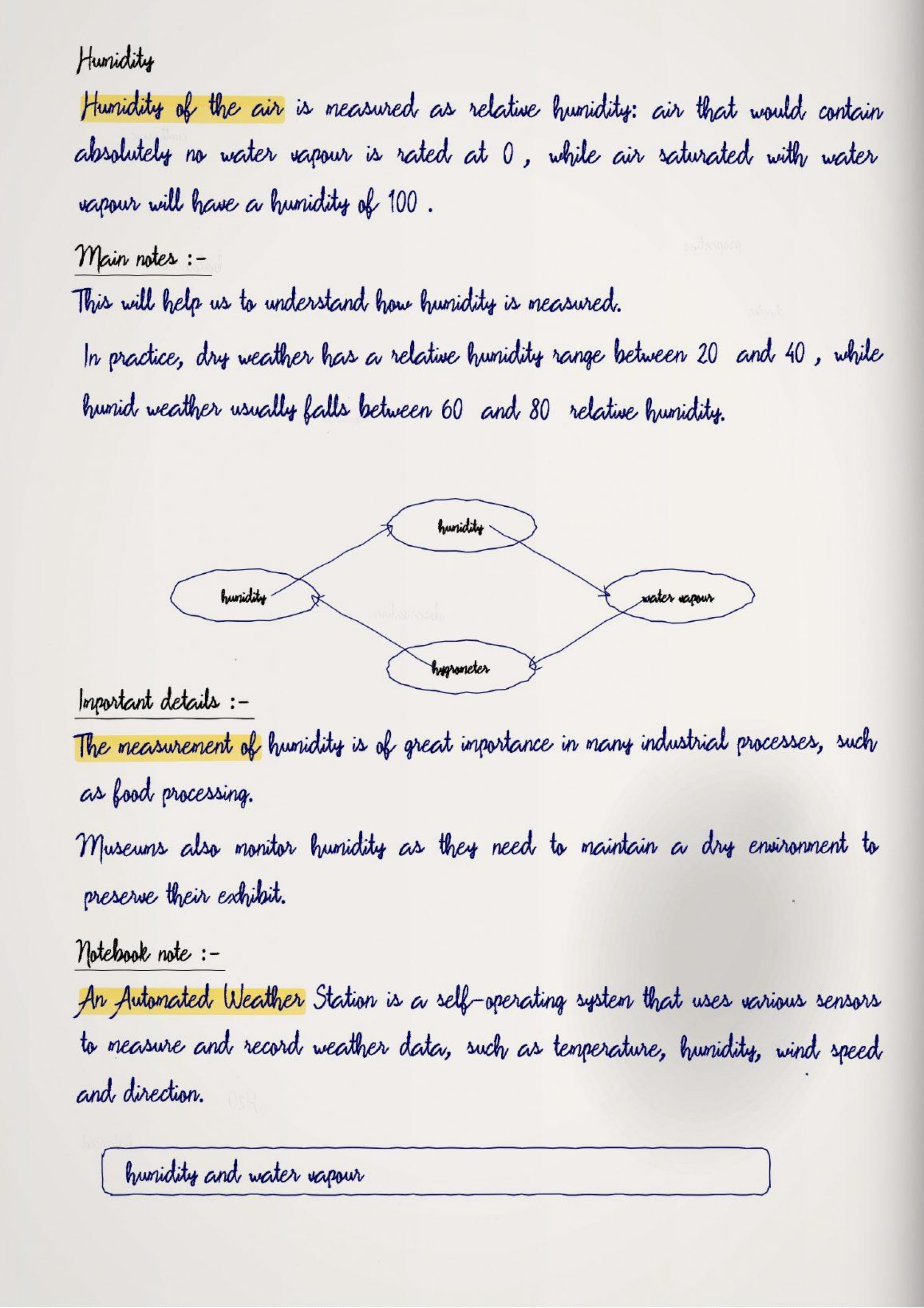
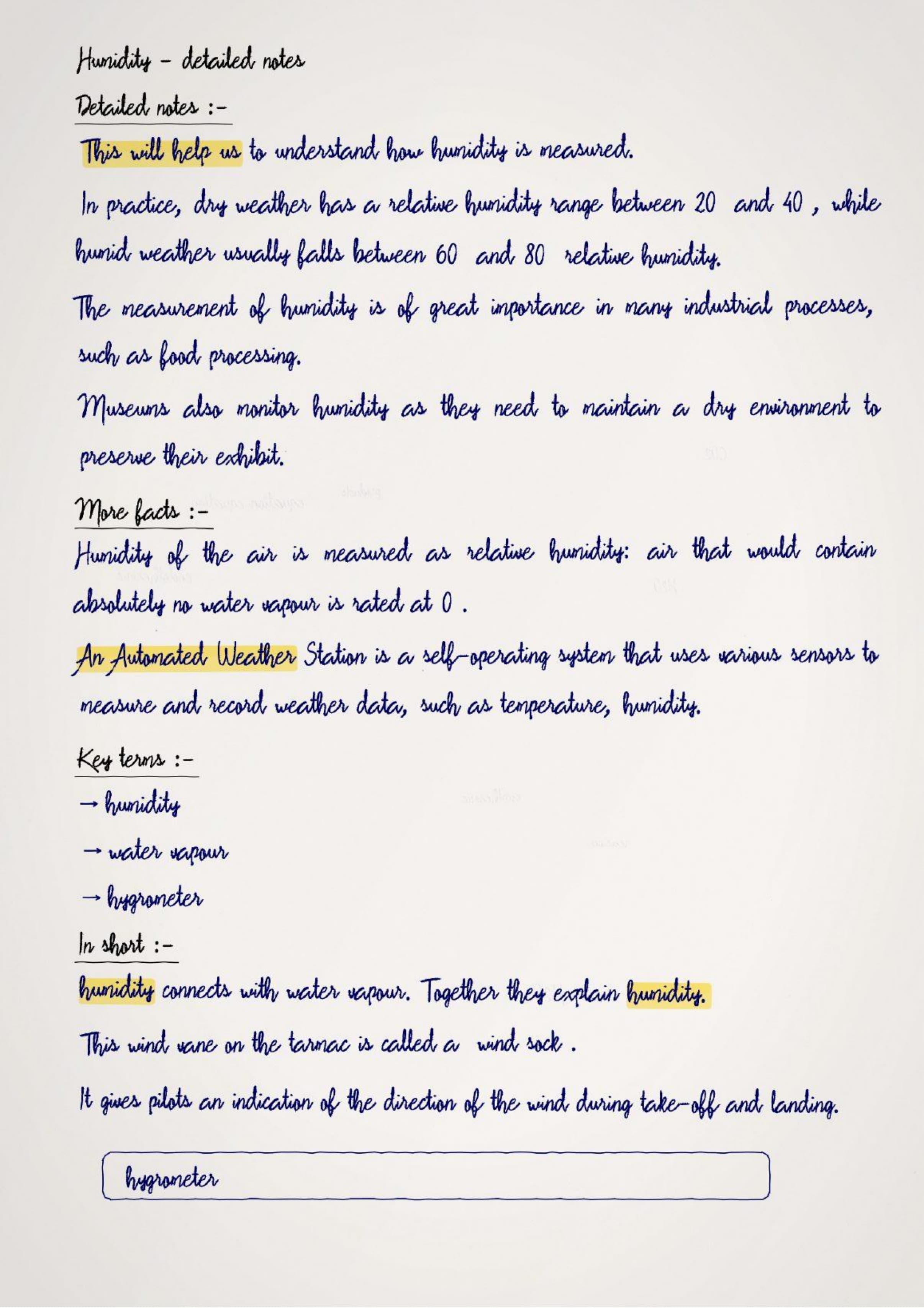
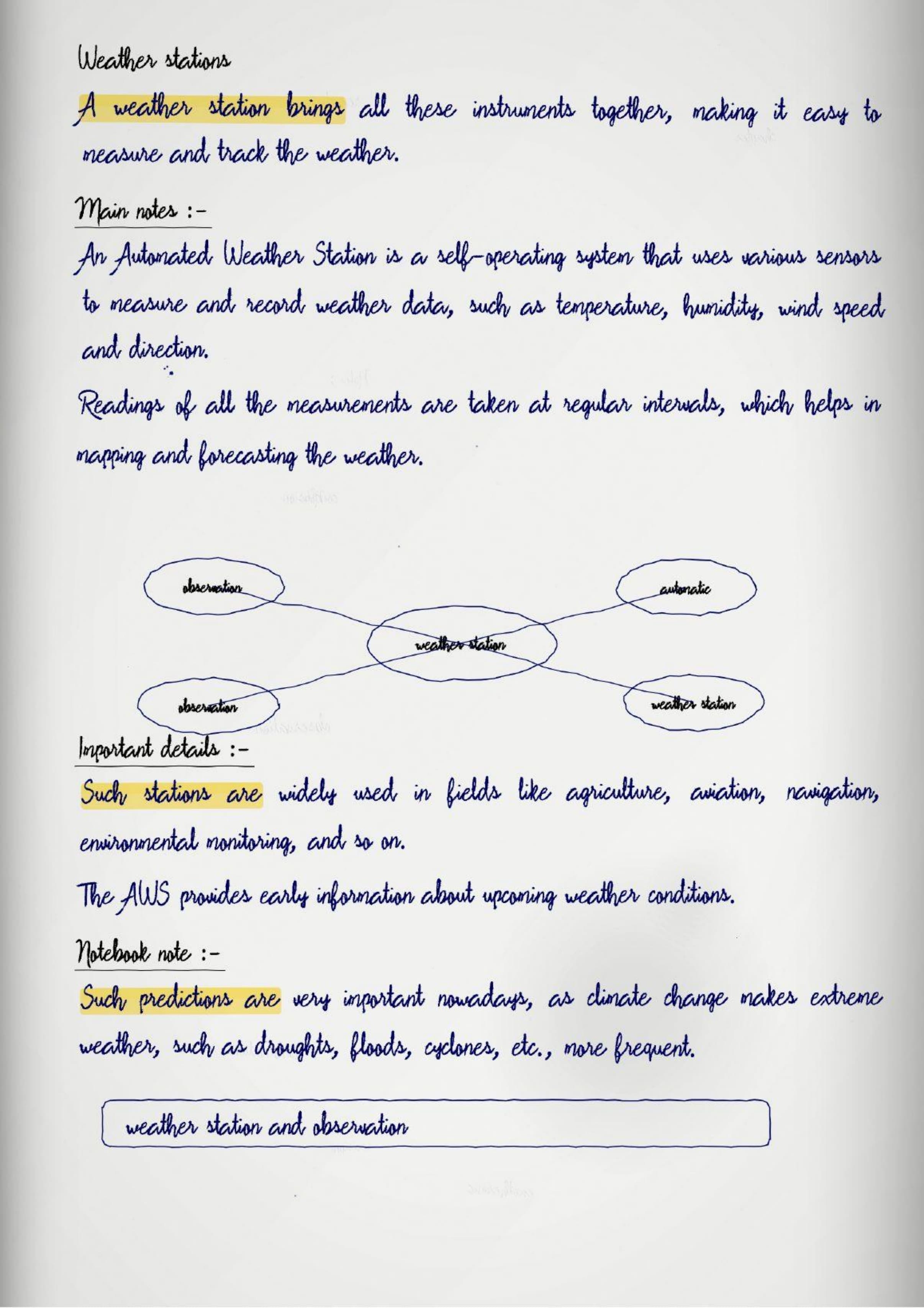
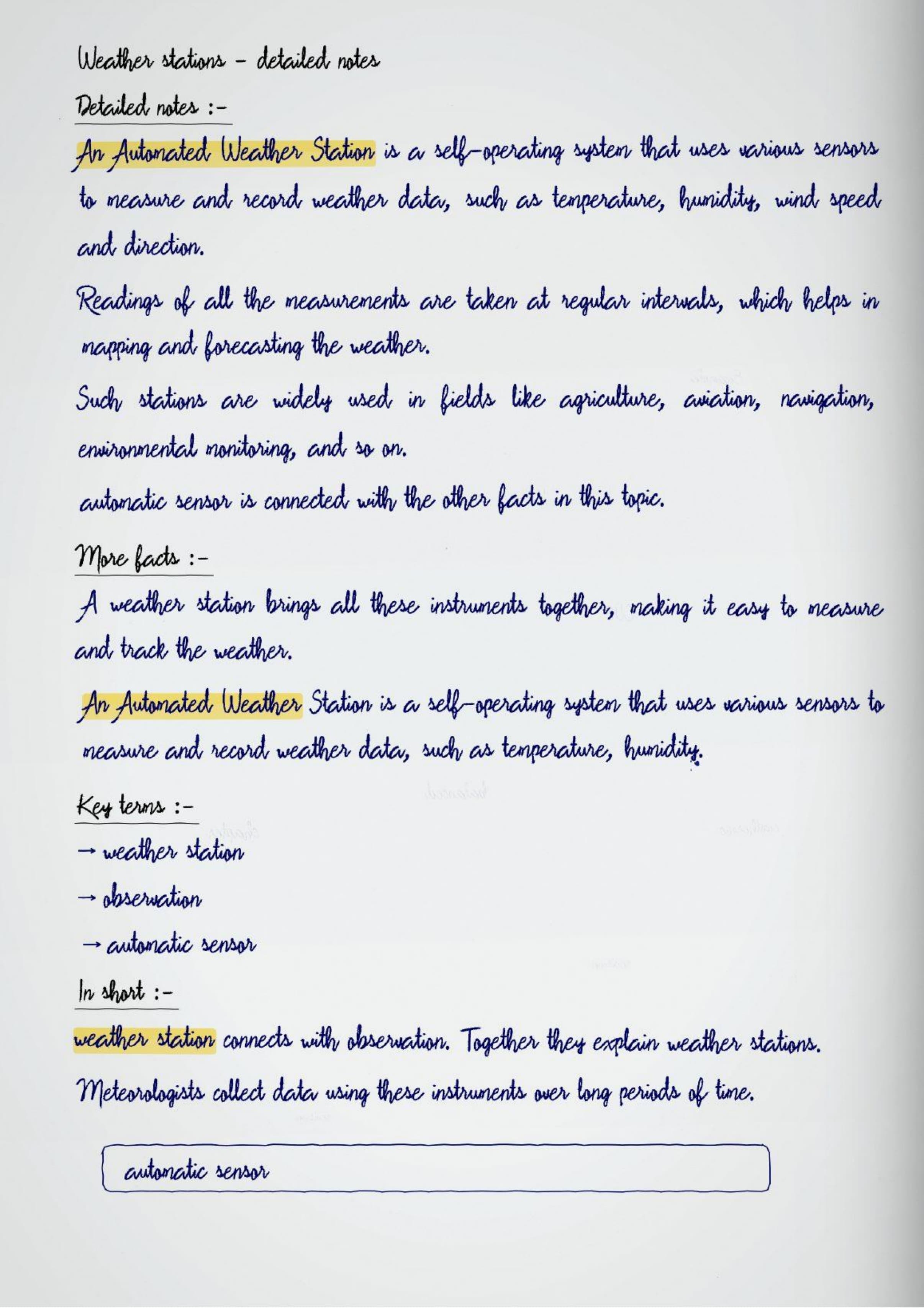
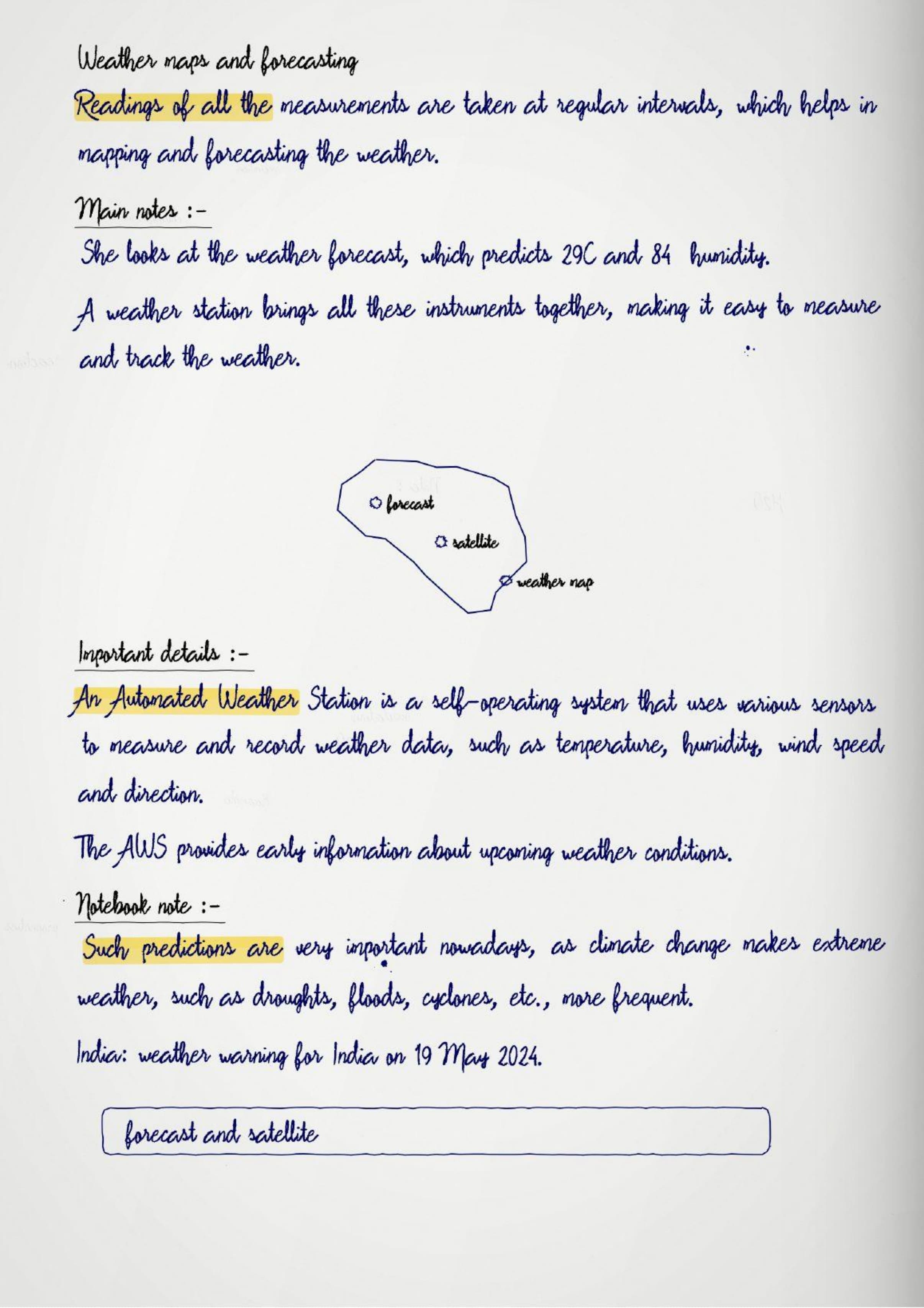
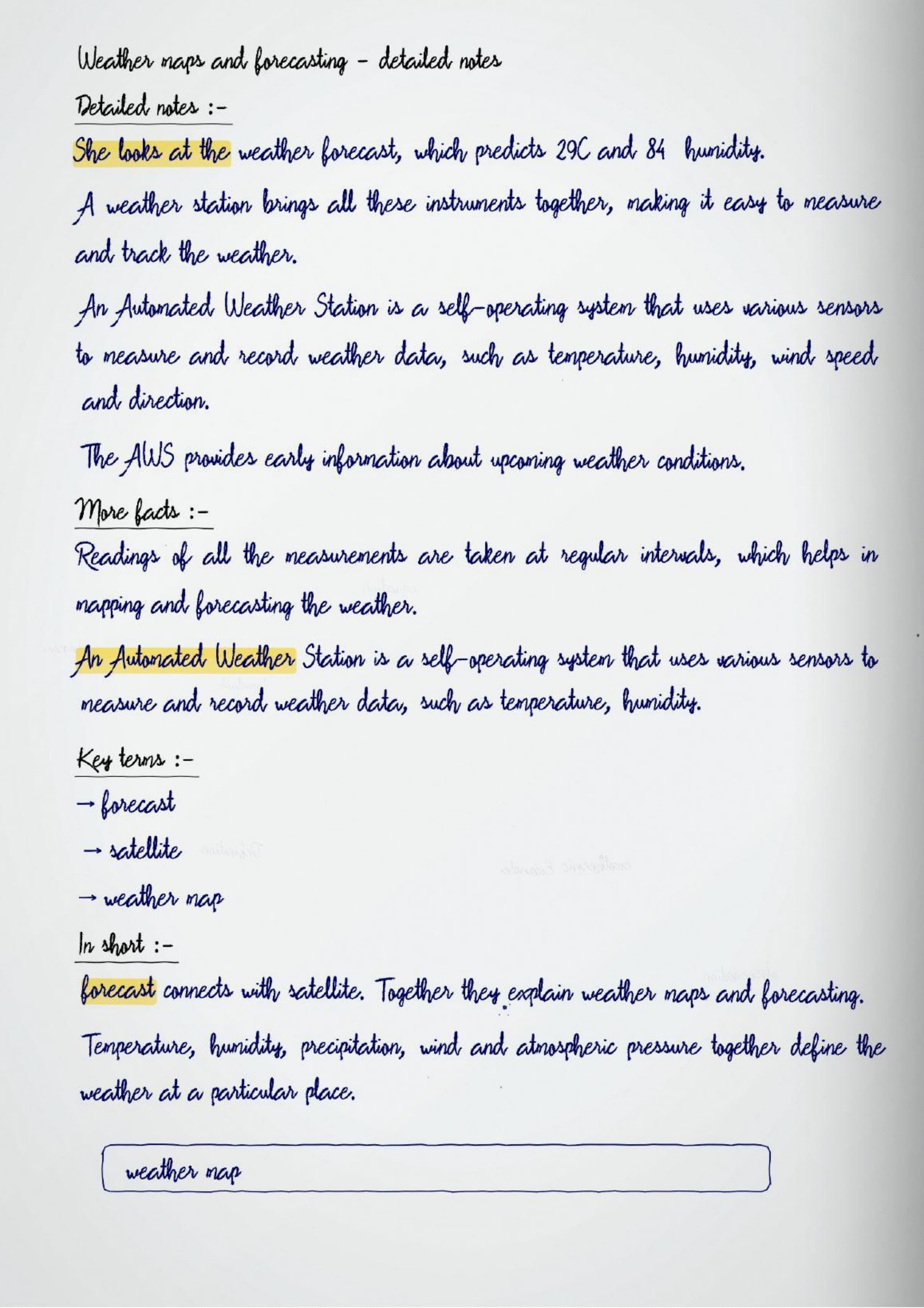
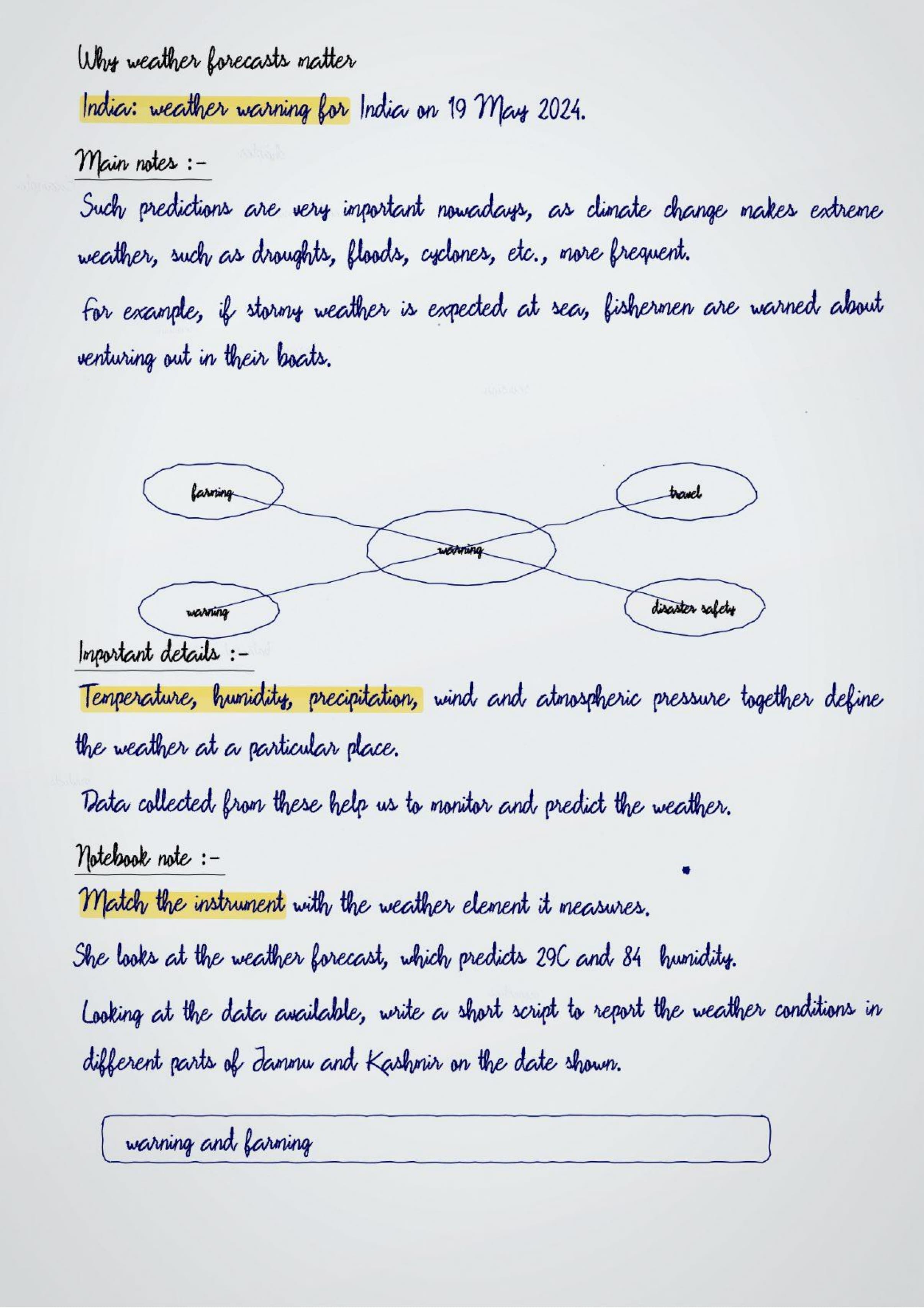
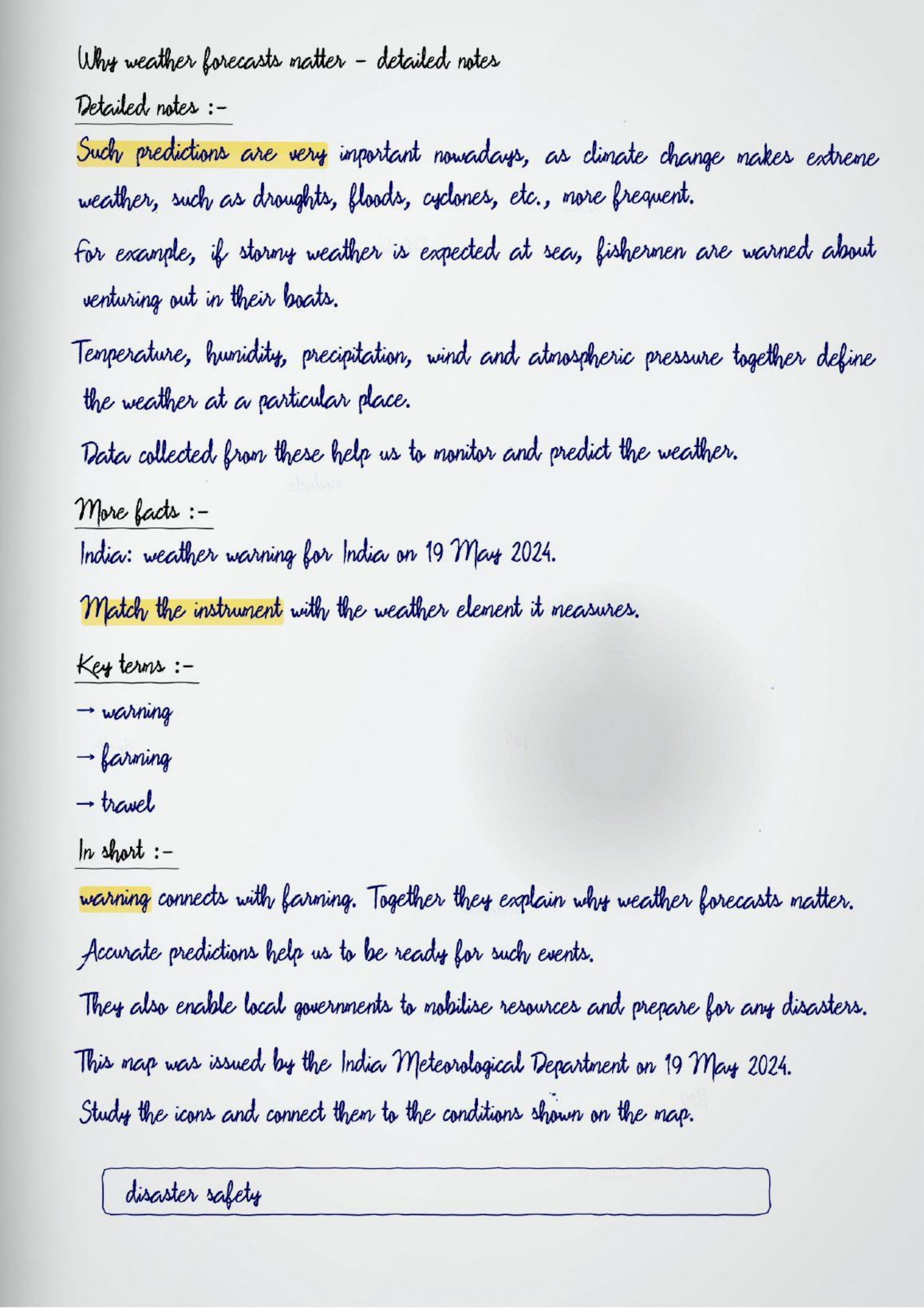
- Five elements boxed: temperature, humidity, precipitation, wind and atmospheric pressure
- What the notes cover: the elements of weather, the instruments that measure them, and how forecasts are made
- Best for: the name-the-instrument question and the elements-of-weather answer
The full class 7 social science handwritten notes for Understanding the Weather sit in the PDF below, with every box and figure included.
These handwritten notes are written by Social Science teachers, mapped to the 2026-27 NCERT Exploring Society book, and checked against Class 7 school question papers.
Which Understanding the Weather Topics CBSE Class 7 Social Science Asks Most
Naming the elements and matching them to instruments is where the marks sit.
| Sub-topic | Weightage | How often asked |
|---|---|---|
| The five elements of weather | High | asked often |
| Instruments and what they measure | High | asked often |
| Reading and recording weather data | Medium | asked sometimes |
| Which element is strongest in a season | Medium | asked sometimes |
| How forecasts are made | Medium | asked sometimes |
| Weather and climate compared | Low | asked rarely |
Inside the Understanding the Weather Handwritten Notes PDF
Weather is not one thing. It is five elements acting together, and each one can be measured with its own instrument.
- What weather means
- Temperature and how it varies
- Humidity in the air
- Precipitation: rain, snow and hail
- Wind and its direction
- Atmospheric pressure
- Instruments used to measure each element
- Collecting and recording weather data
- How weather is monitored and predicted
What Collegedunia's Understanding the Weather Handwritten Notes Give You
Each element sits beside its instrument, so the pairing is learned in one reading. That is the standard Collegedunia holds these class 7 social science handwritten notes to.
- Element and instrument grid: each of the five elements paired with its instrument
- Instrument sketches: thermometer, barometer, rain gauge and wind vane drawn
- Weather record table: a sample daily record filled in
- Colour-coded sub-headings: sub-topics in red so each element stands apart
Quick Check on Understanding the Weather
Five questions on weather. Tap each one to check.
Which instrument measures atmospheric pressure?
(a) thermometer (b) barometer (c) rain gauge (d) wind vane
Answer: (b) barometer
Humidity means the amount of
(a) heat in the air (b) water vapour in the air (c) dust in the air (d) wind speed
Answer: (b) water vapour in the air
Rain, snow and hail are all forms of
(a) humidity (b) pressure (c) precipitation (d) temperature
Answer: (c) precipitation
The loo is a
(a) cold wind (b) hot, dusty summer wind in north India (c) type of rain (d) kind of cloud
Answer: (b) hot, dusty summer wind in north India
Weather describes the atmosphere
(a) over many decades (b) at a place at a particular time (c) only in summer (d) only in cities
Answer: (b) at a place at a particular time
Night-Before Revision Card: Understanding the Weather
Read this if the test is minutes away.
- Five elements: temperature, humidity, precipitation, wind, atmospheric pressure
- Thermometer for temperature, barometer for pressure, rain gauge for rainfall
- Precipitation covers rain, snow and hail
- Weather is short-term; climate is long-term
- The loo is a hot, dusty summer wind in north India
What Makes Understanding the Weather a Scoring Chapter
This chapter feeds straight into the climate chapter, and the instrument names come up again in later classes.
- The five elements are a direct list question
- Instruments and their uses are a match-the-pair question
- Reading a weather table appears as a data question
- Chapter 3 on climate depends entirely on these terms
Understanding the Weather Terms You Must Be Able to Define
Each of these words is asked with a one-line definition.
| Term / Idea | What it means |
|---|---|
| Weather | the state of the atmosphere at a place at a particular time |
| Temperature | how hot or cold the air is |
| Humidity | the amount of water vapour in the air |
| Precipitation | water falling from clouds as rain, snow or hail |
| Atmospheric pressure | the weight of the air pressing down on a place |
| Thermometer | the instrument that measures temperature |
| Barometer | the instrument that measures atmospheric pressure |
| Rain gauge | the instrument that measures rainfall |
Understanding the Weather Figures You Will Find in the Notes
The instruments need to be recognised, so the notes draw each one.
| Figure drawn by hand | What it shows |
|---|---|
| Element and instrument grid | five elements paired with their instruments |
| Thermometer sketch | the scale marked in degrees Celsius |
| Rain gauge | the funnel and measuring cylinder labelled |
| Wind vane | the arrow and the direction letters marked |
| Weather record table | a filled seven-day record |
A Two-Pass Plan for the Understanding the Weather Handwritten Notes
Keep a weather record for a week. Nothing fixes these terms faster. Read the class 7 social science handwritten notes the same way twice, once slowly and once fast.
- List the five elements of weather from memory
- Match each element to its measuring instrument
- Record the weather at your home for seven days
- Before the test, revise the element and instrument grid
More Social Science Study Material for Understanding the Weather
Read the notes with the solved questions and the Exploring Society chapter itself.
- Class 7 Social Science NCERT Solutions
- Class 7 Social Science Revision Notes
- Class 7 Exploring Society Book PDF
All Chapters: Class 7 Social Science Handwritten Notes
Every chapter has its own class 7 social science handwritten notes. Exploring Society Part 1 has twelve chapters and Part 2 has eight.
Understanding the Weather Class 7 Social Science Handwritten Notes FAQs
Ques. Where can I download the Understanding the Weather Class 7 Handwritten Notes PDF?
Ans. The PDF is free on this page in both the normal and the HD version.
Ques. What are the elements of weather?
Ans. Temperature, humidity, precipitation, wind and atmospheric pressure. Together these five define the weather at a place at a given time.
Ques. How many pages is the Part 1 Chapter 2 handwritten notes PDF?
Ans. It runs 20 pages, with the element and instrument grid, instrument sketches and a quiz.
Ques. Which instruments measure the weather?
Ans. A thermometer measures temperature, a barometer measures atmospheric pressure, a rain gauge measures rainfall, and a wind vane shows wind direction.
Ques. What is the difference between weather and climate?
Ans. Weather is the state of the atmosphere at a place right now or on a given day. Climate is the long-term pattern of weather at that place, measured over decades.



Comments