




The Class 9 Social Science Handwritten Notes Chapter 9 The Price Puzzle What Drives the Market are a topper's own neat revision of the chapter from the new Understanding Society book. Demand, supply, the two laws, market equilibrium, and the role of government are all written by hand, with each rule boxed in the margin.
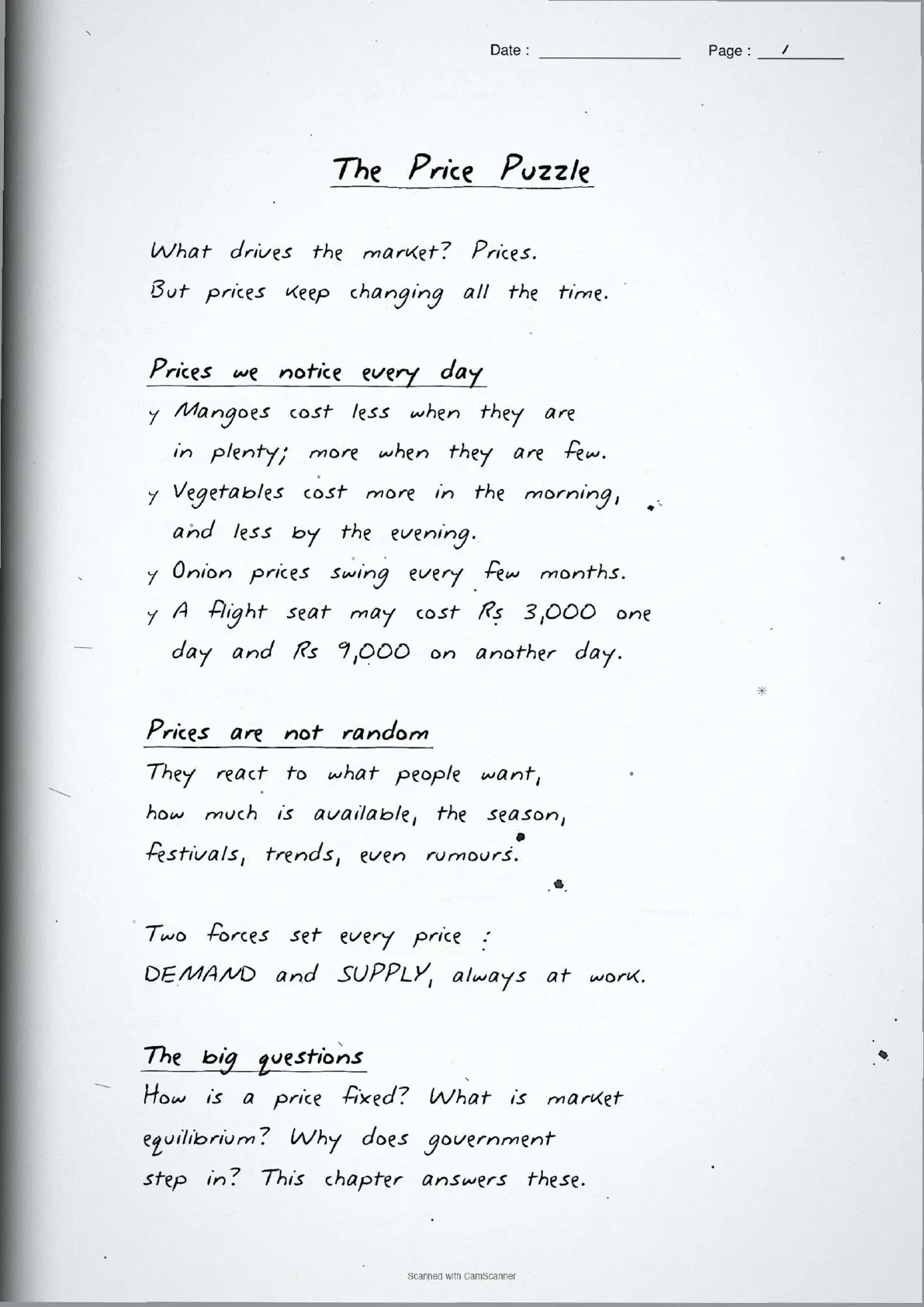
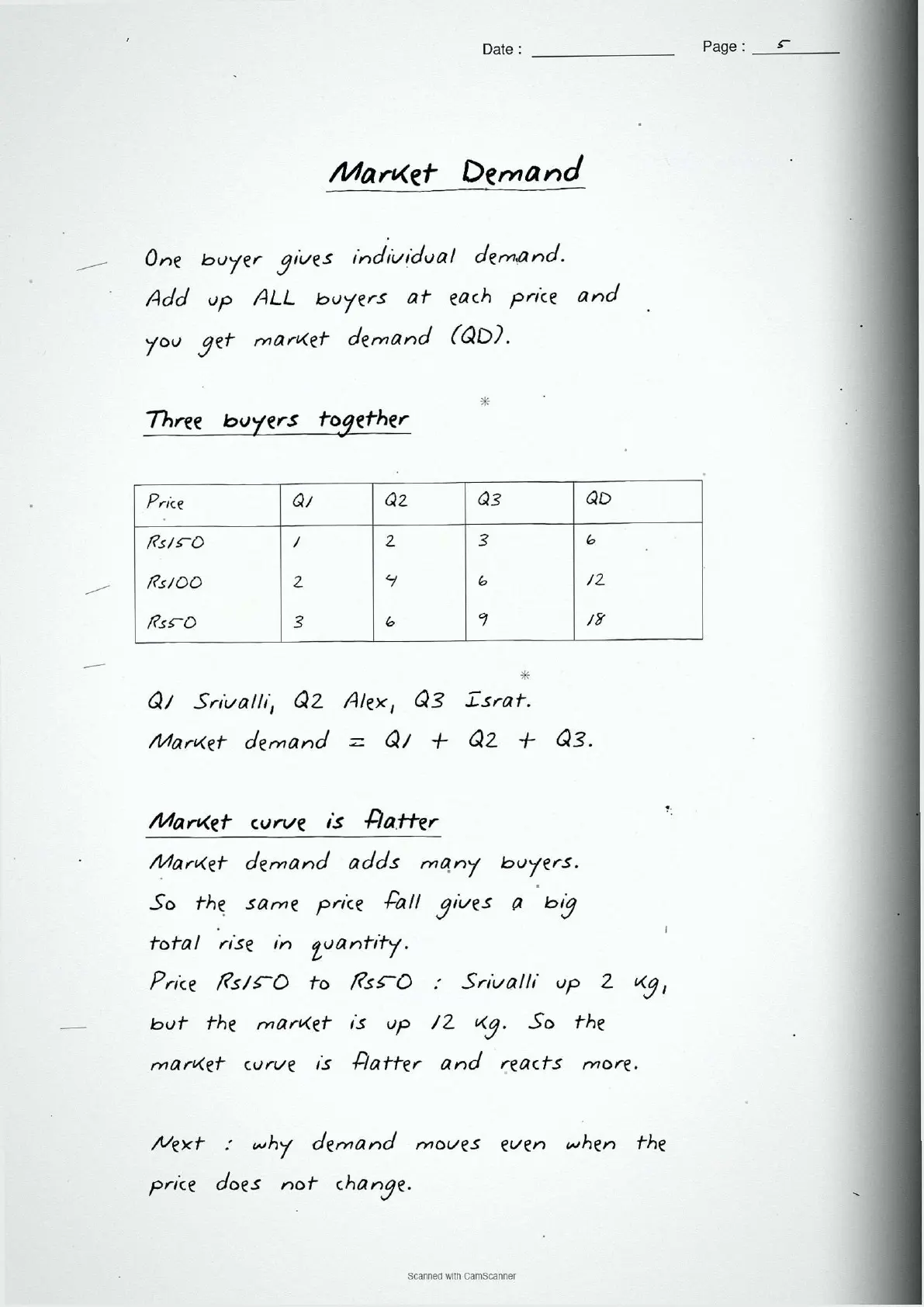
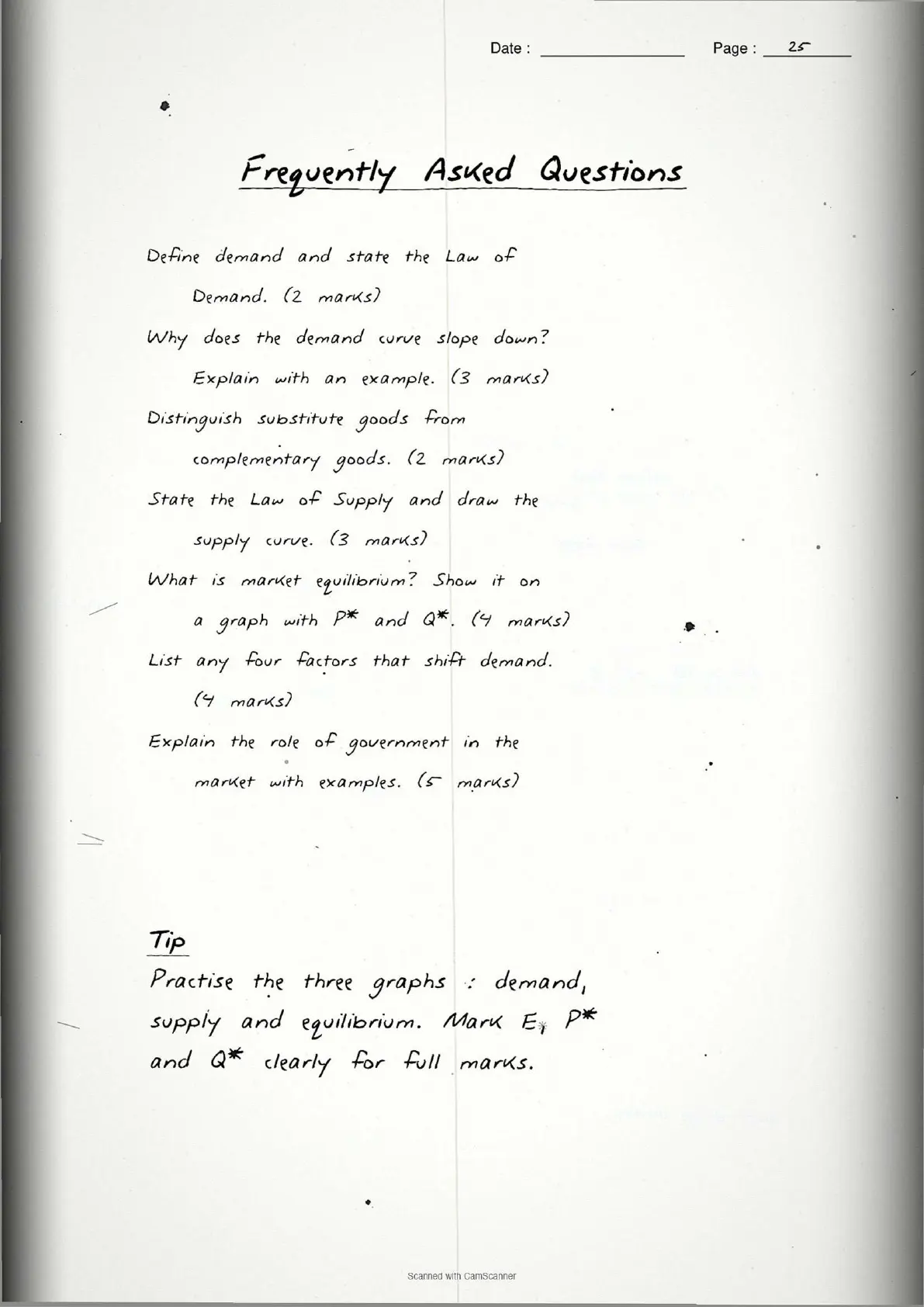
Prepared by a verified Collegedunia Class 9 topper and checked against the 2026-27 syllabus.
- What you get: demand and supply, the Law of Demand and Law of Supply, market equilibrium, and the role of government, all in clear handwriting.
- Colour-coded: new sub-topics in red, each definition and law in a hand-drawn box, and worked schedules in blue.
- Why by hand: writing each curve and schedule by hand helps you recall the method fast in the exam.
Student Feedback
In a Collegedunia study of 1,180 Class 9 students, 81% said hand-written pages of the demand and supply curves were easier to recall than typed notes. About 4 out of 5 rated the boxed definitions and the red-marked mistakes as most useful before a test.
Source: Collegedunia Class 9 Notes Feedback Survey, 2025.
Why Use Handwritten Notes for Class 9 Social Science Chapter 9 The Price Puzzle
This chapter mixes short definitions with two laws, several schedules, and a set of curves, so a clean hand-written page saves real time. The Class 9 Social Science Handwritten Notes Chapter 9 The Price Puzzle What Drives the Market keep one idea per line, with a small diagram beside it.
- Each definition, like demand or market equilibrium, sits in its own hand-drawn box.
- A quick curve or arrow diagram is drawn next to the idea it explains.
- Red sub-headings split the chapter into short, easy parts.
What Is Inside The Price Puzzle Handwritten Notes
The pages move from what drives prices, to demand and supply, their two laws, the factors that shift each one, market equilibrium, and the role of government. The colour code below tells you what every mark means.
- Red: new sub-topic headings, such as Law of Demand, Substitute Goods, or Price Ceiling.
- Boxes: each definition and each law drawn by hand.
- Blue: worked demand and supply schedules and the numbers behind each curve.
Demand and the Law of Demand in The Price Puzzle Notes
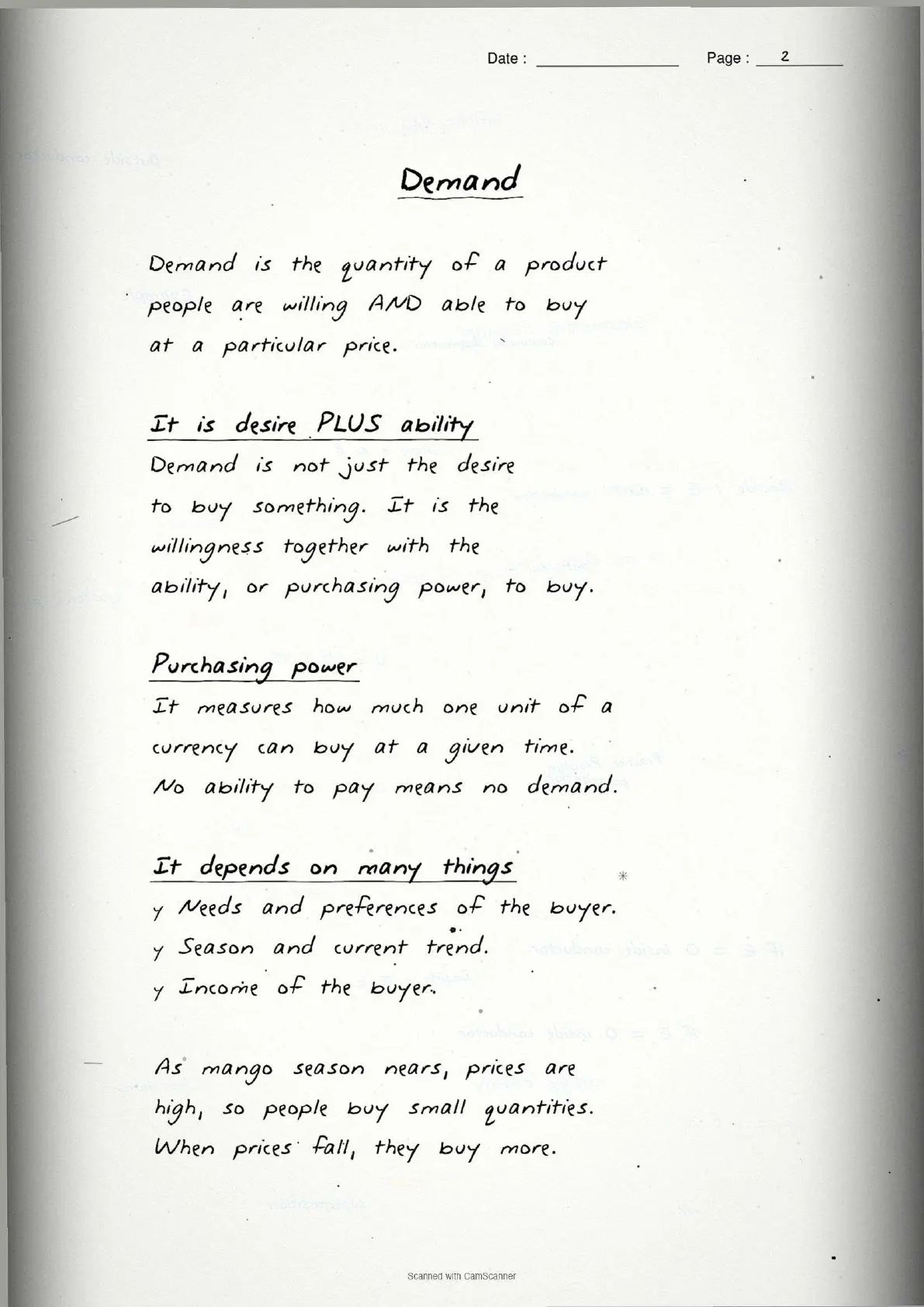
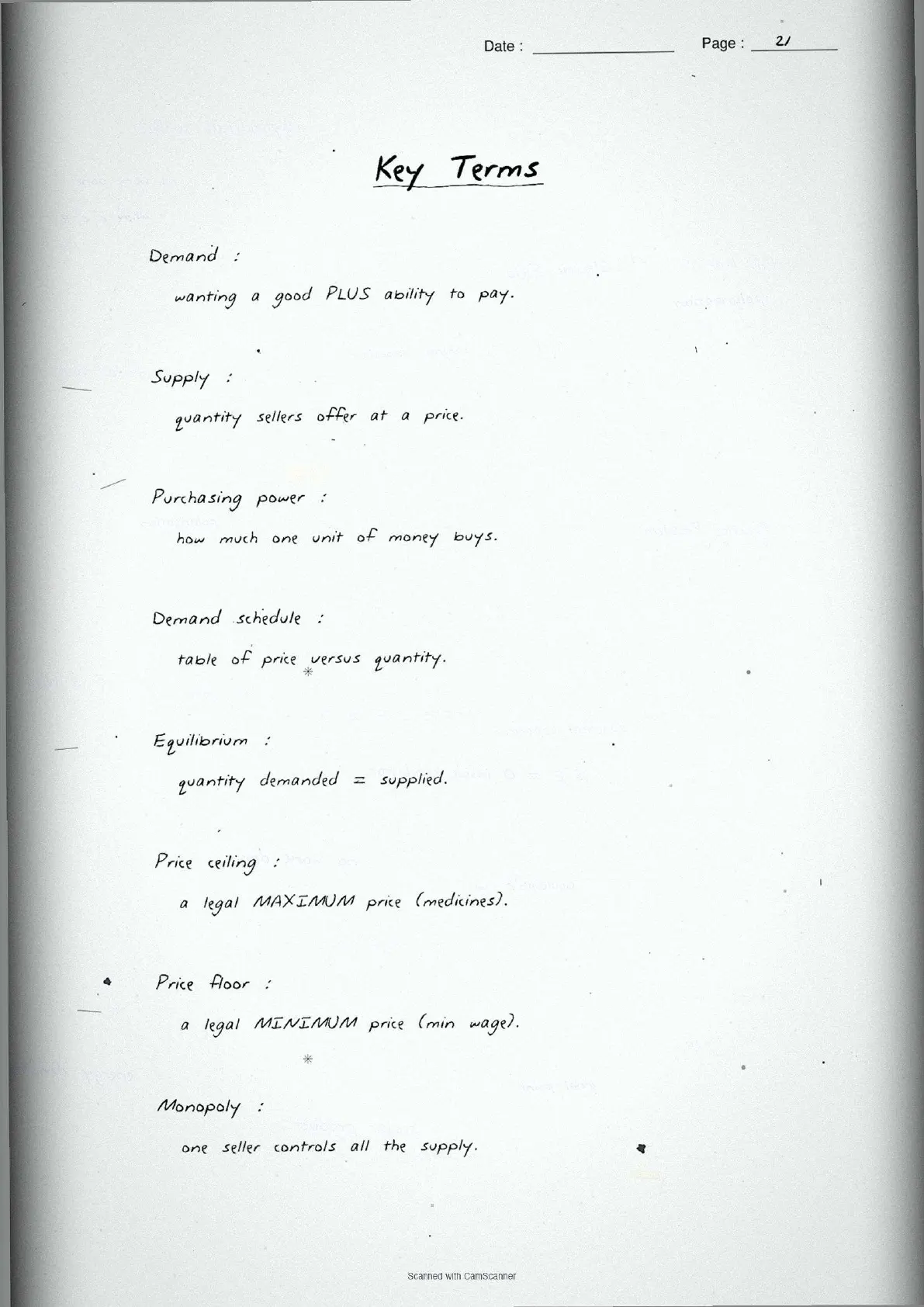
Demand is the buyer's side of the market. The notes box its meaning first, then draw the law and a demand curve. Demand needs purchasing power, the ability to pay, not just a wish to buy.
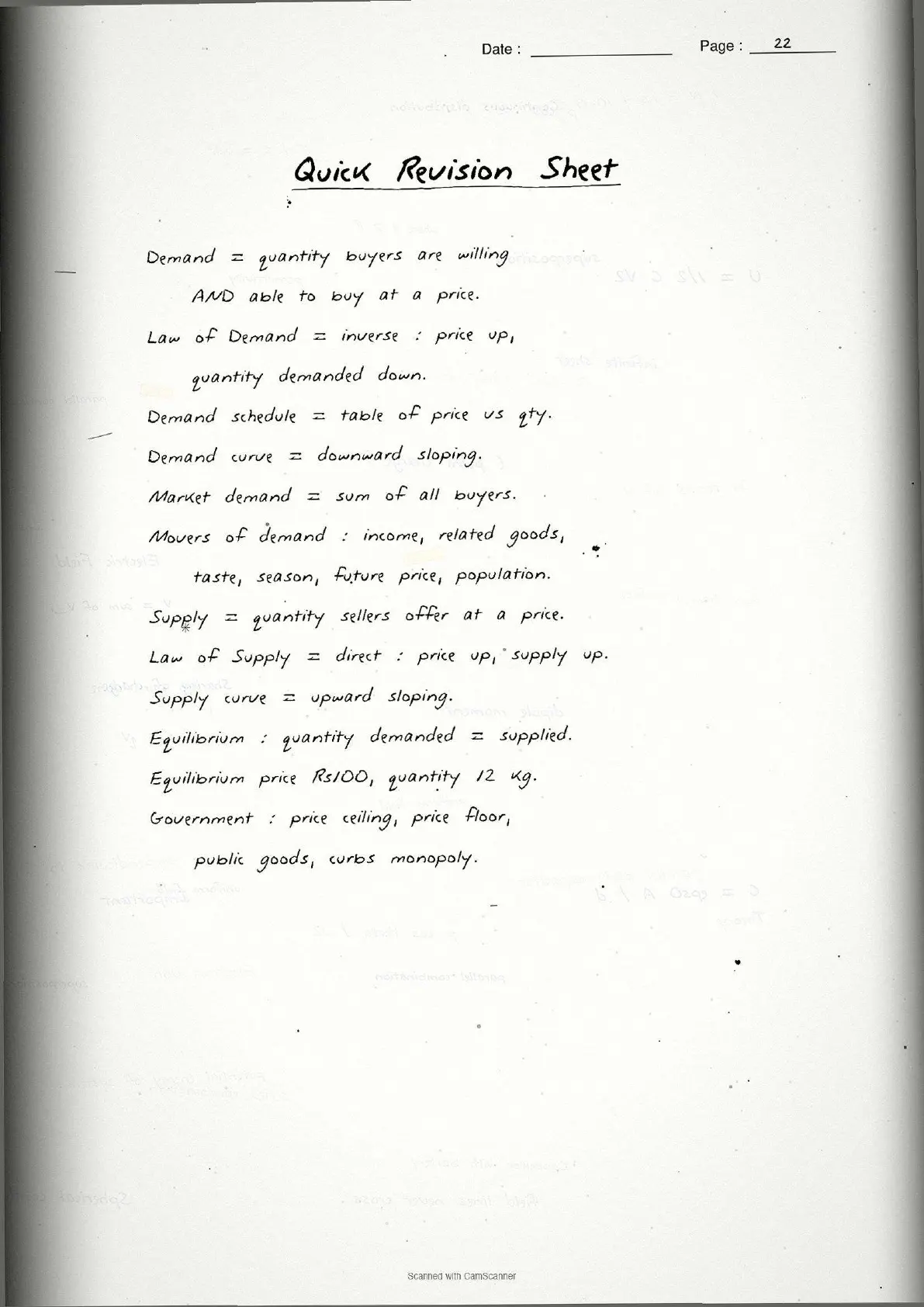
- Demand: the quantity people are willing and able to buy at a given price.
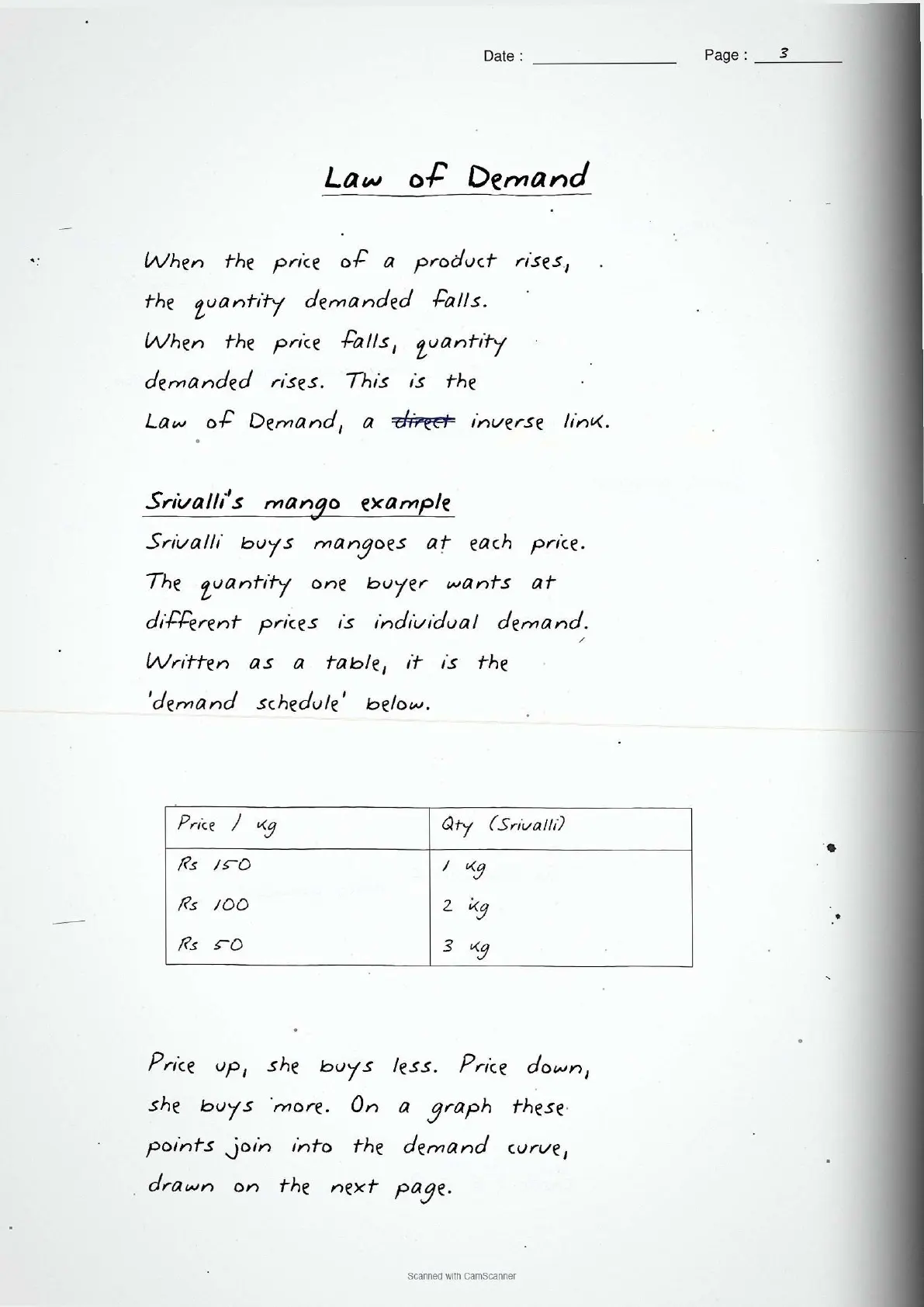
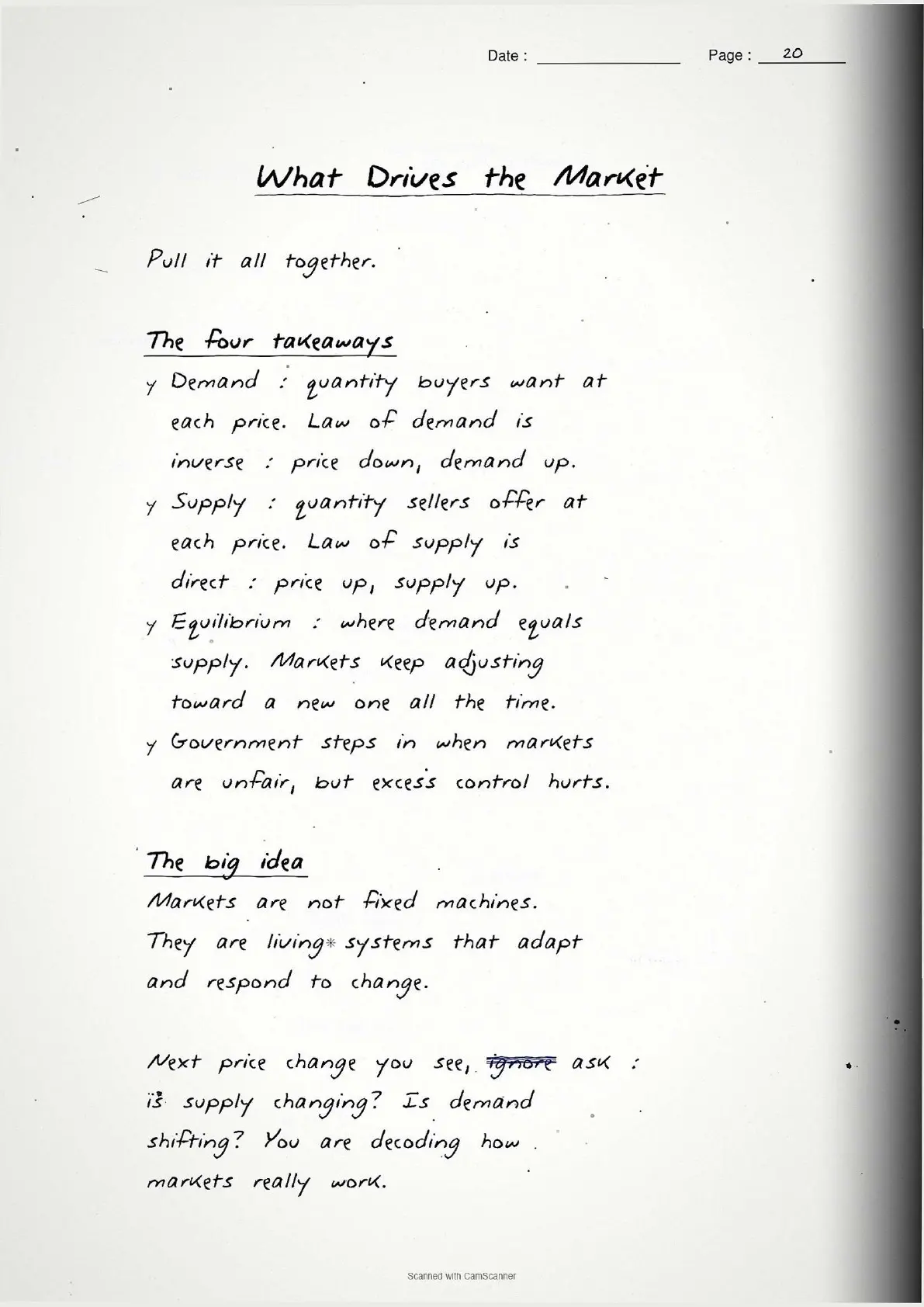
- Law of Demand: price rises, quantity demanded falls; price falls, quantity demanded rises. An inverse link.
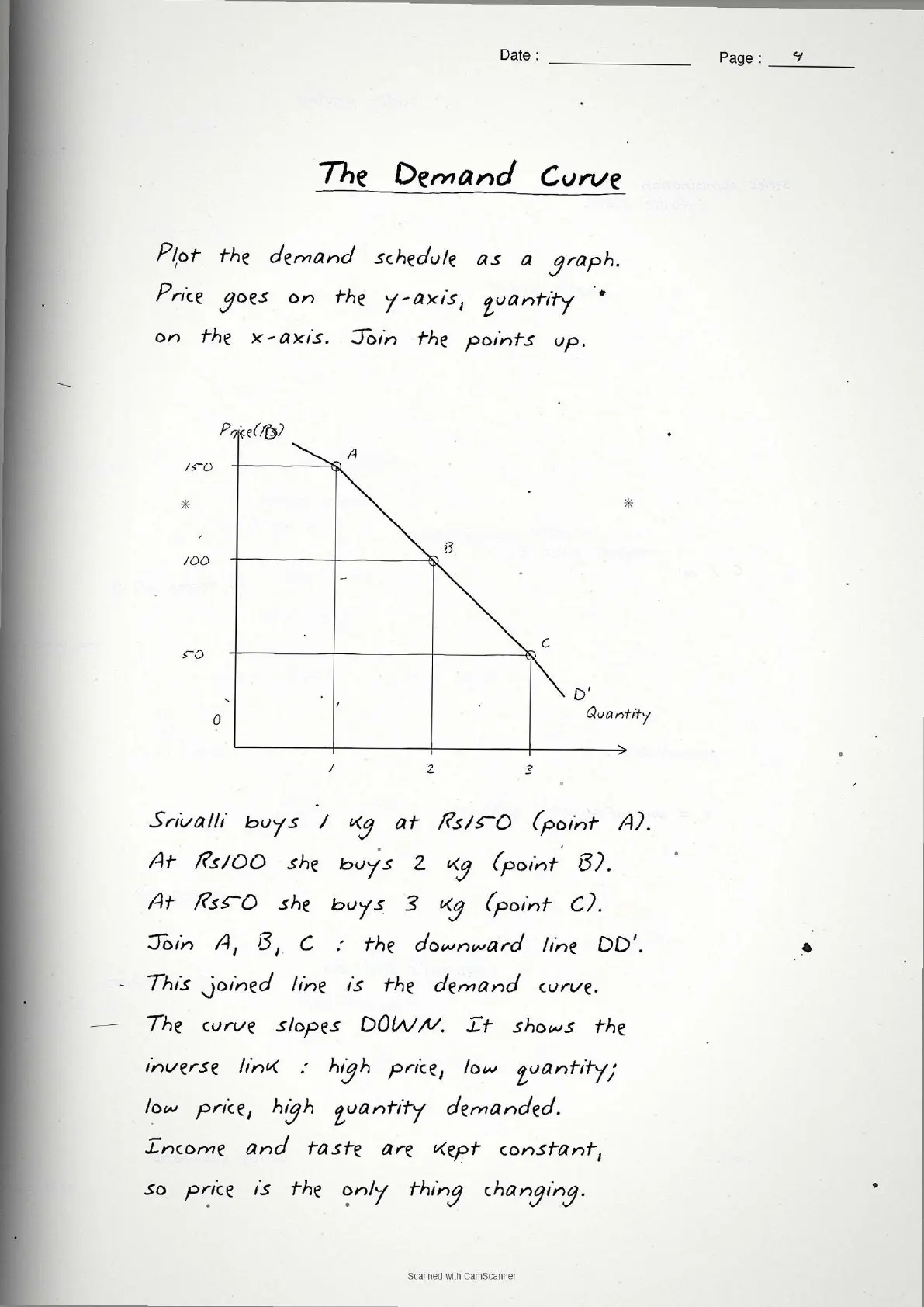
- Demand curve: price on the y-axis, quantity on the x-axis; it slopes down from left to right.
Supply and the Law of Supply Drawn by Hand
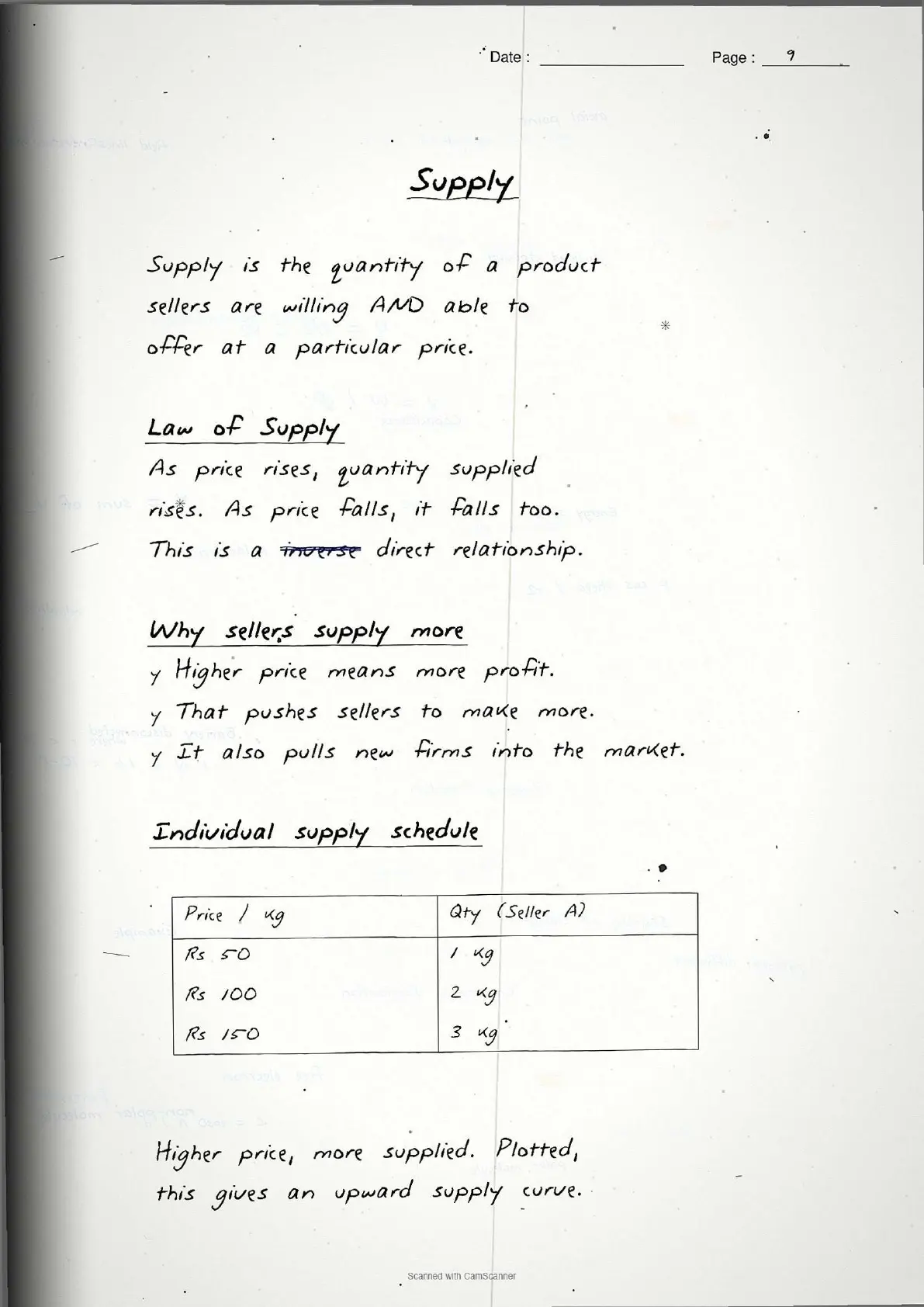
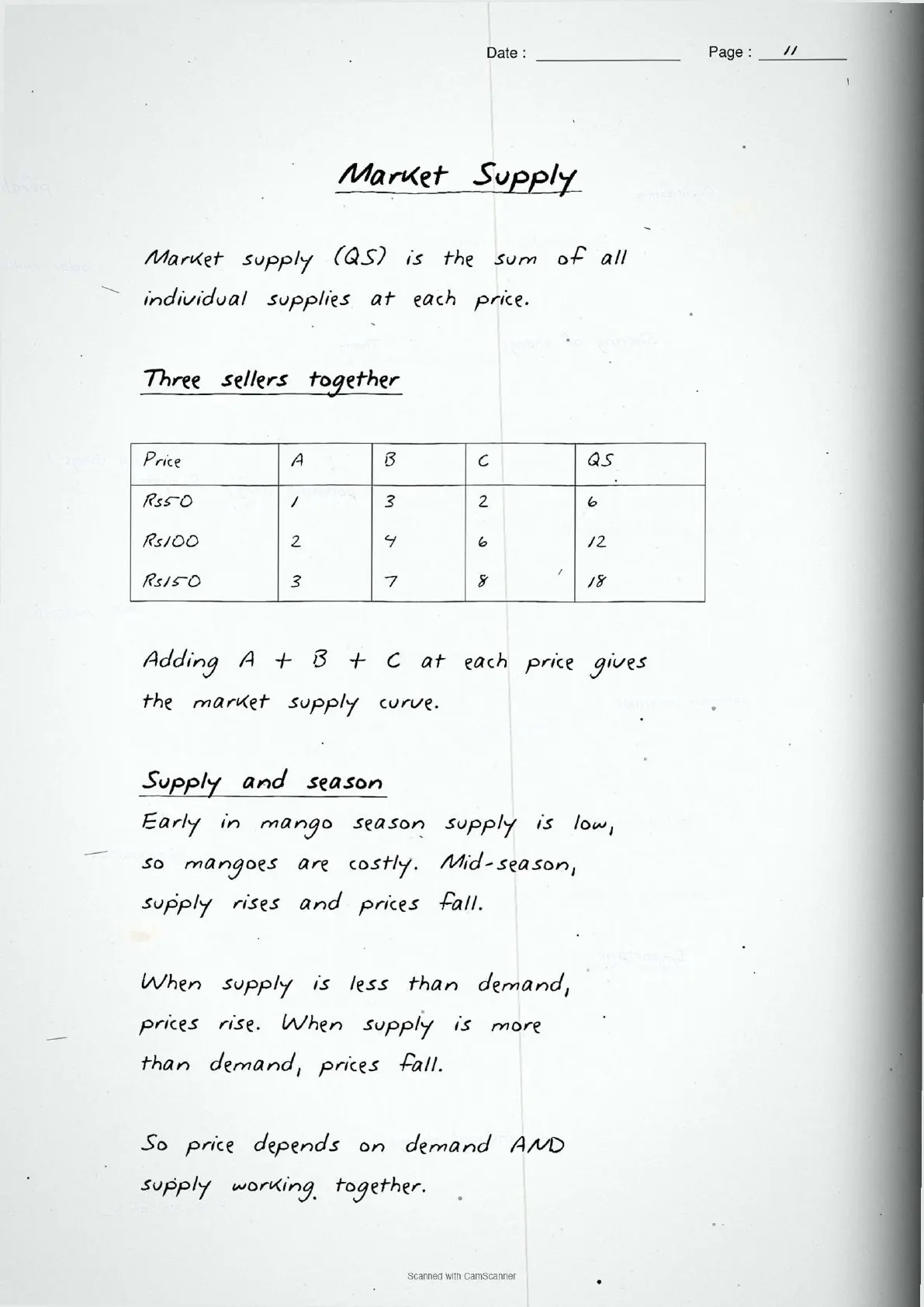
Supply is the seller's side of the market. The notes box its meaning next to an upward curve, so you never mix it with demand.
- Supply: the quantity a seller is willing and able to offer at a given price.
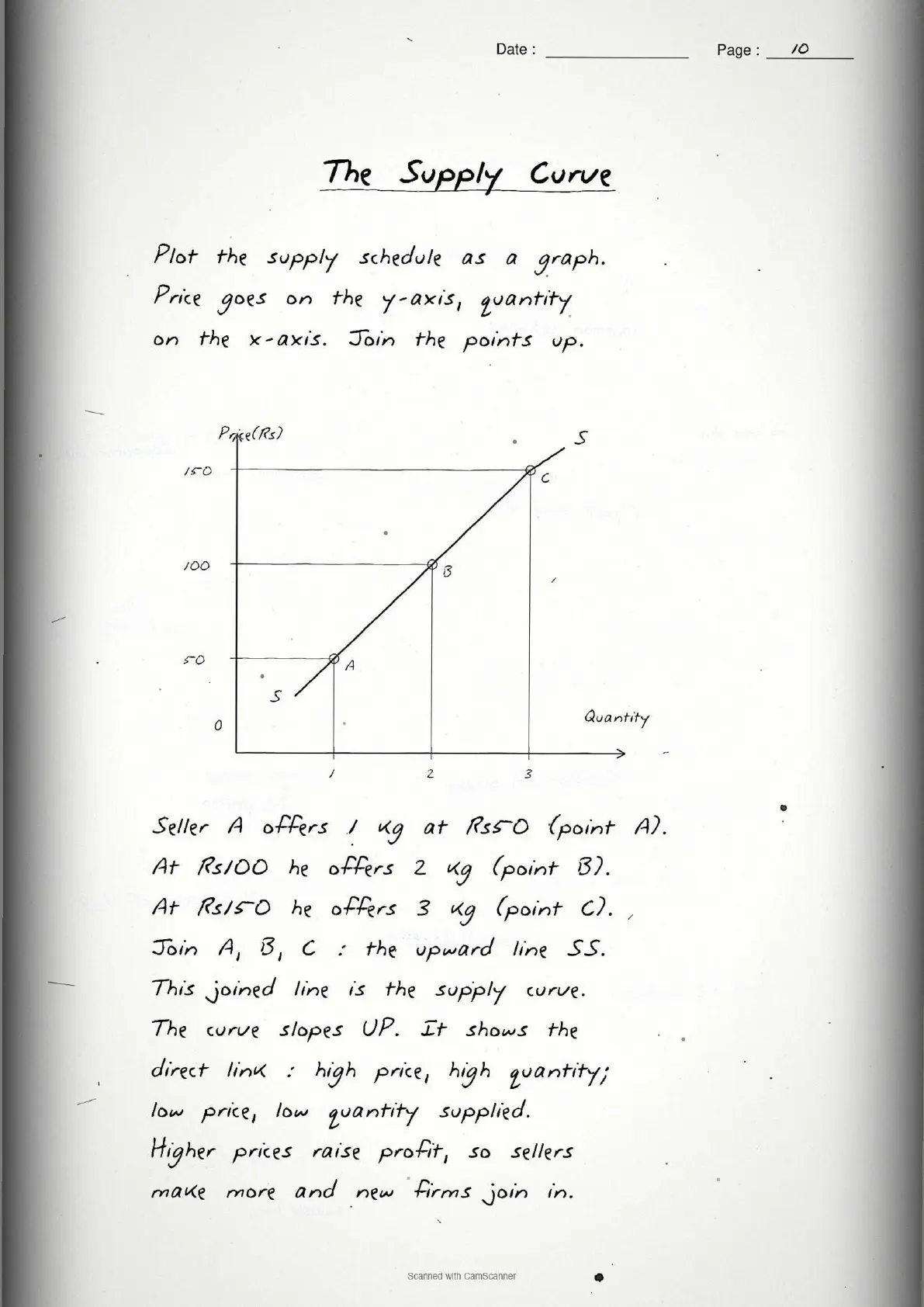
- Law of Supply: price rises, quantity supplied rises; price falls, quantity supplied falls. A direct link.
- Supply curve: it slopes up from left to right, the opposite of the demand curve.
Factors That Shift Demand and Supply in The Price Puzzle
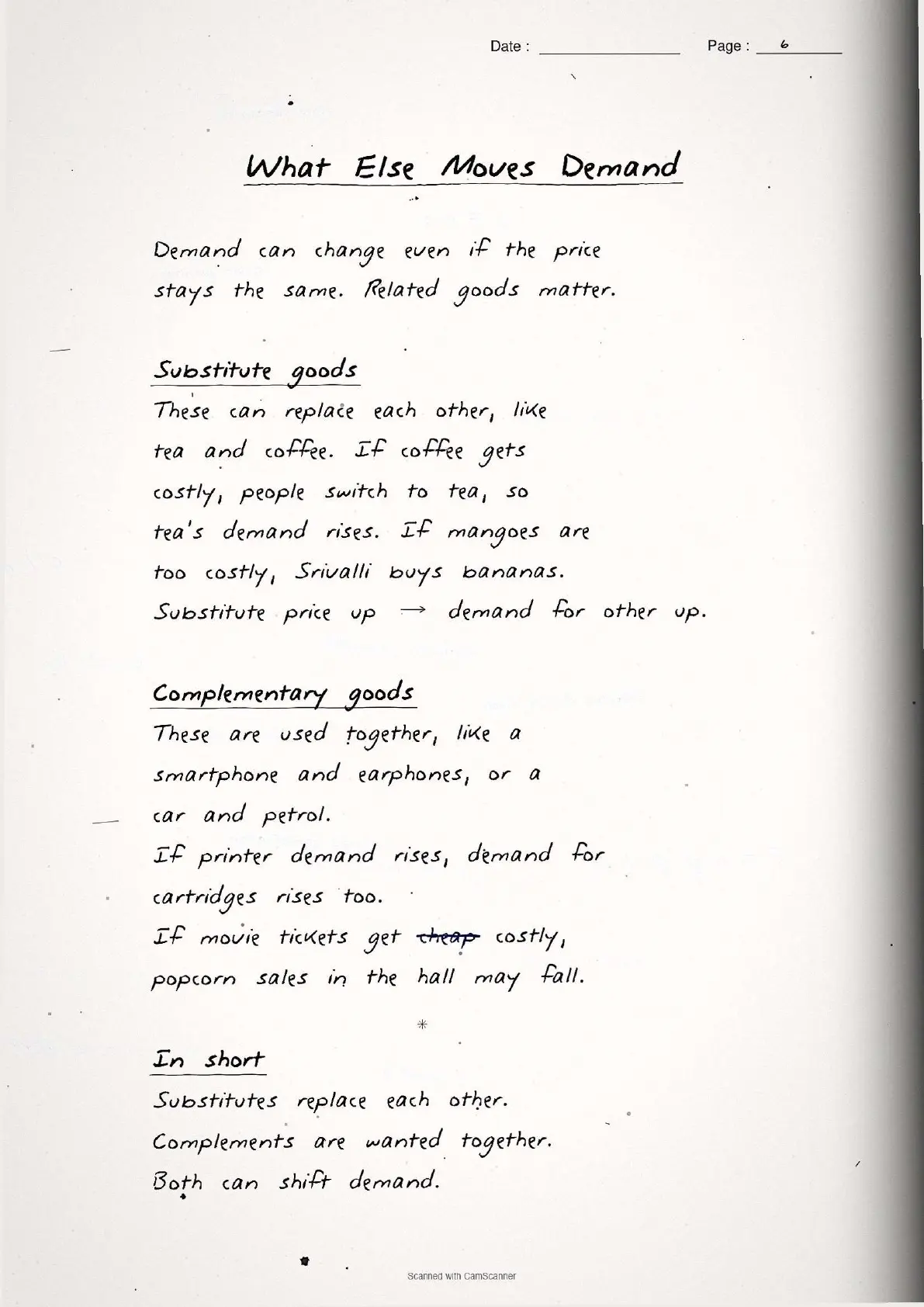
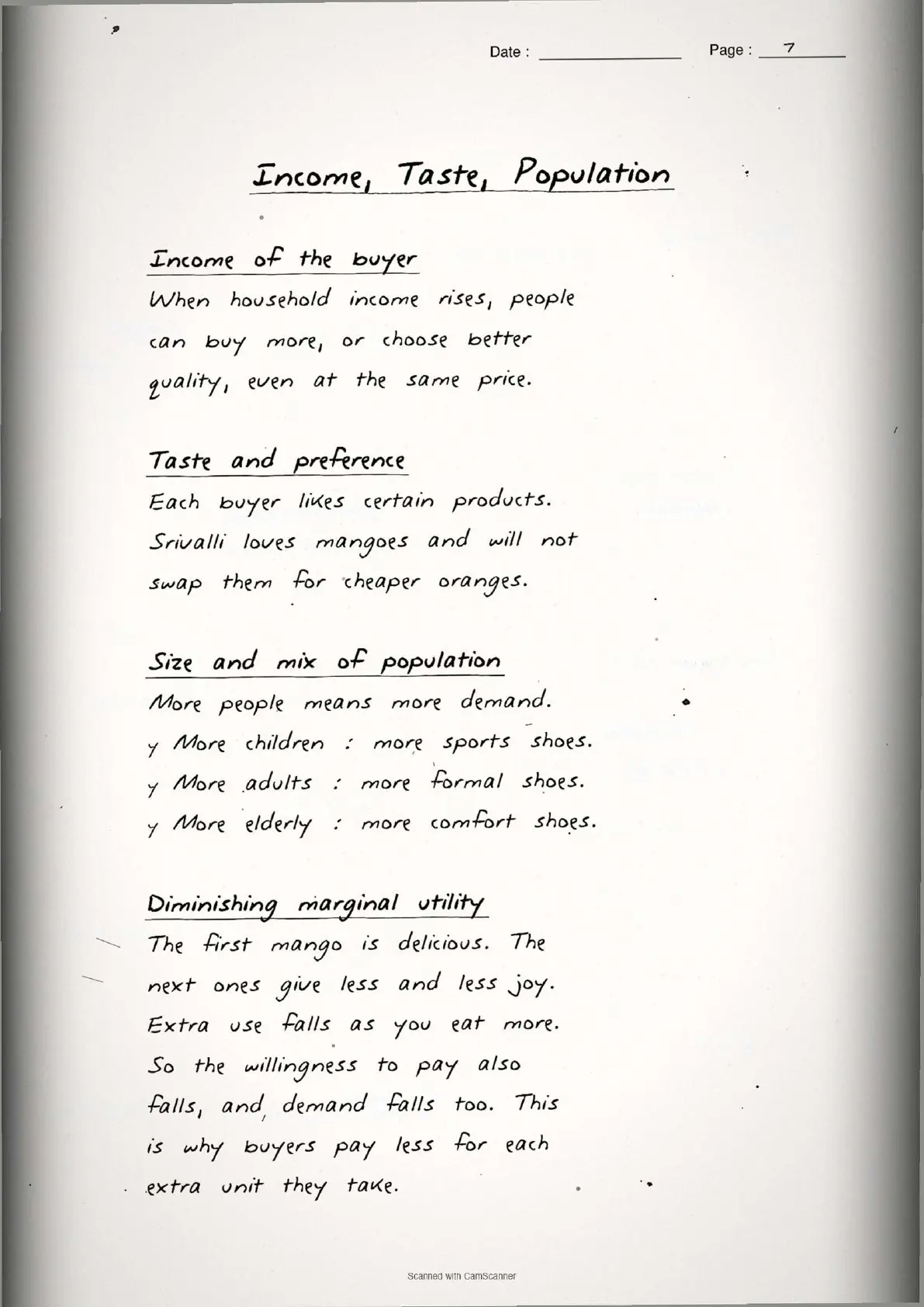
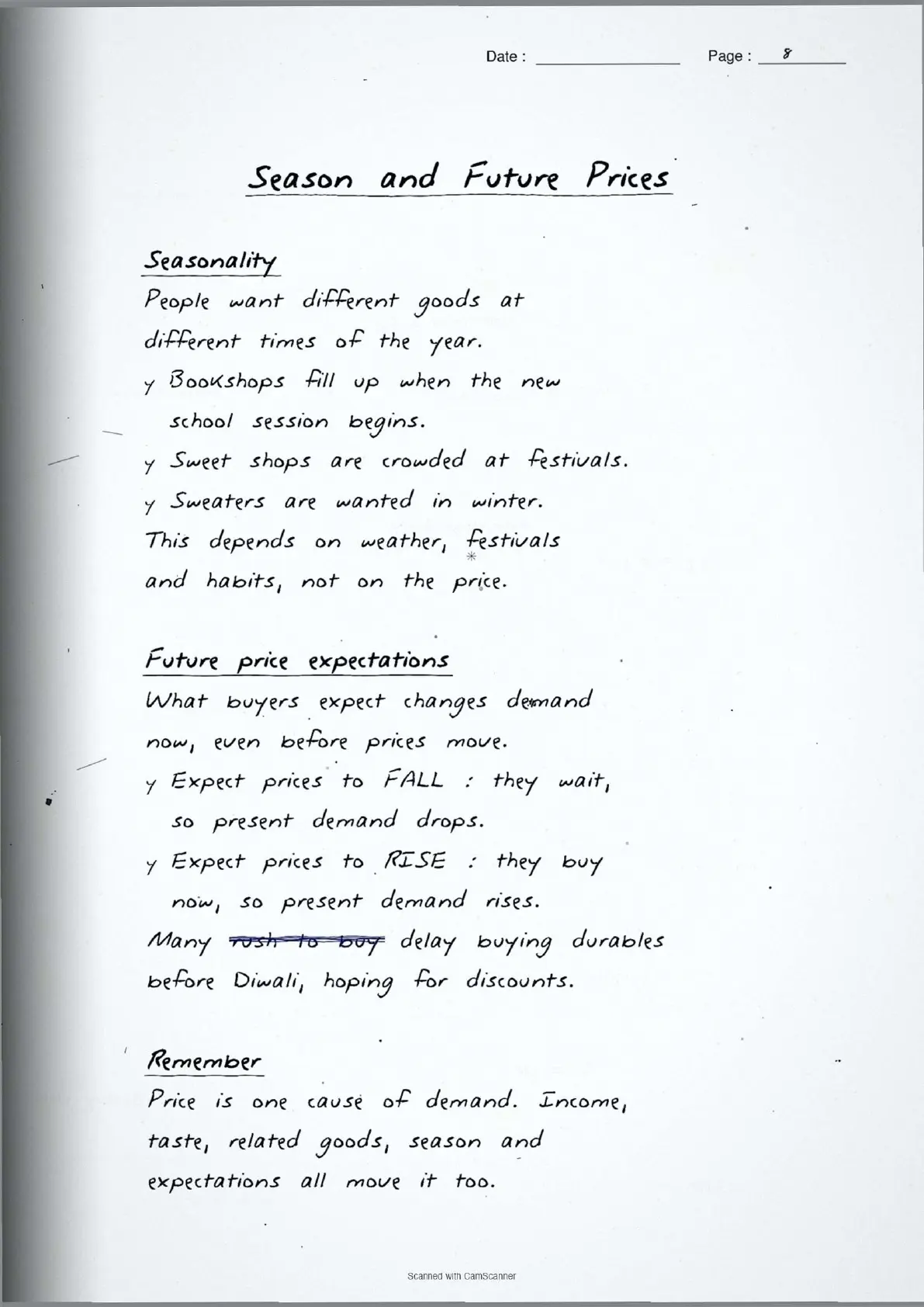
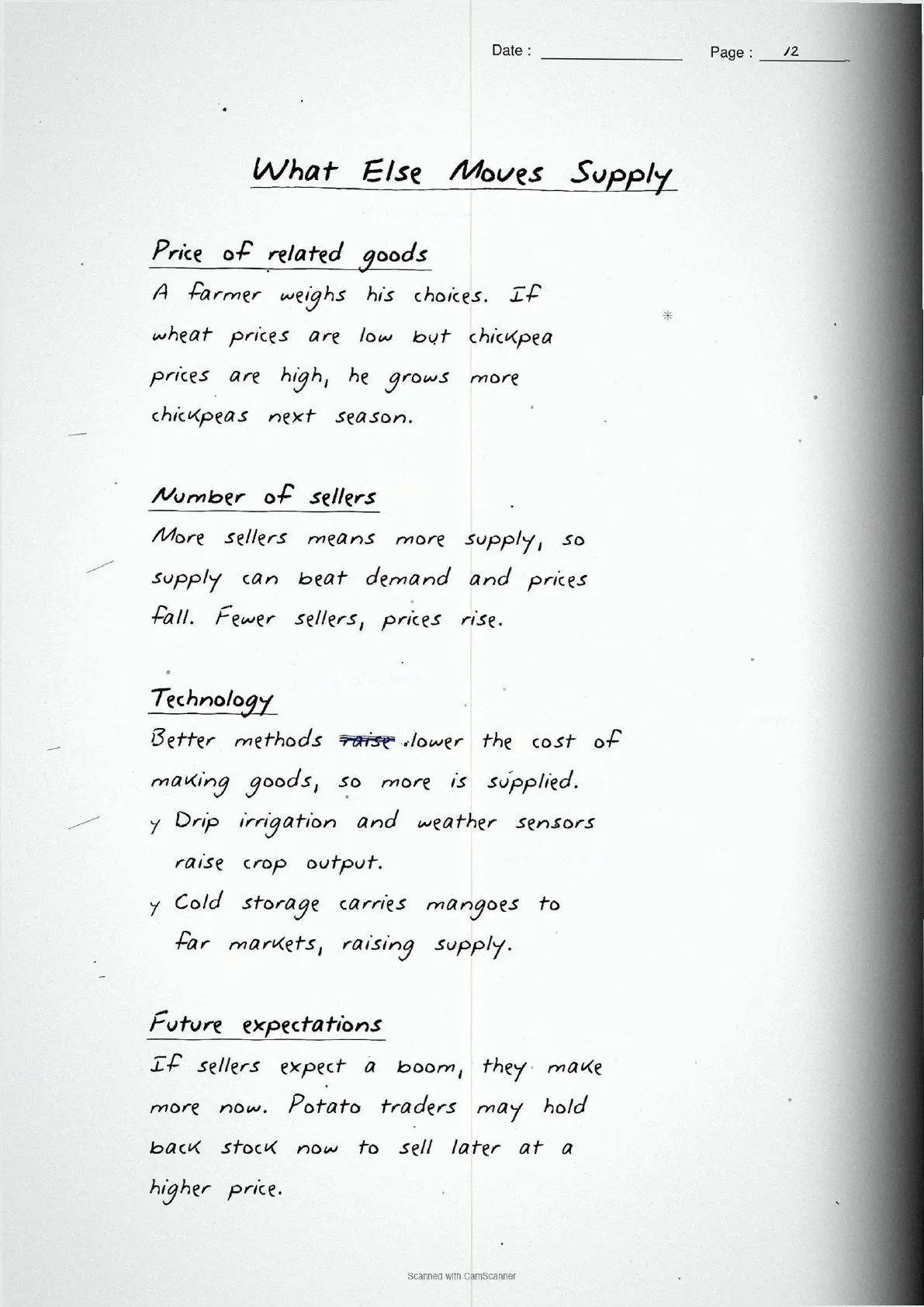
Price is not the only thing that moves a market. Other factors change how much people buy or sellers offer, even when the price stays the same. The notes list them as two mind maps, summarised below.
| Shifts demand | Shifts supply |
|---|---|
| Price of related goods (substitutes and complements) | Price of related goods |
| Income of the buyer | Number of sellers |
| Taste and preference | Technology |
| Population size | Input costs |
| Season, festivals, future expectations | Future price expectations |
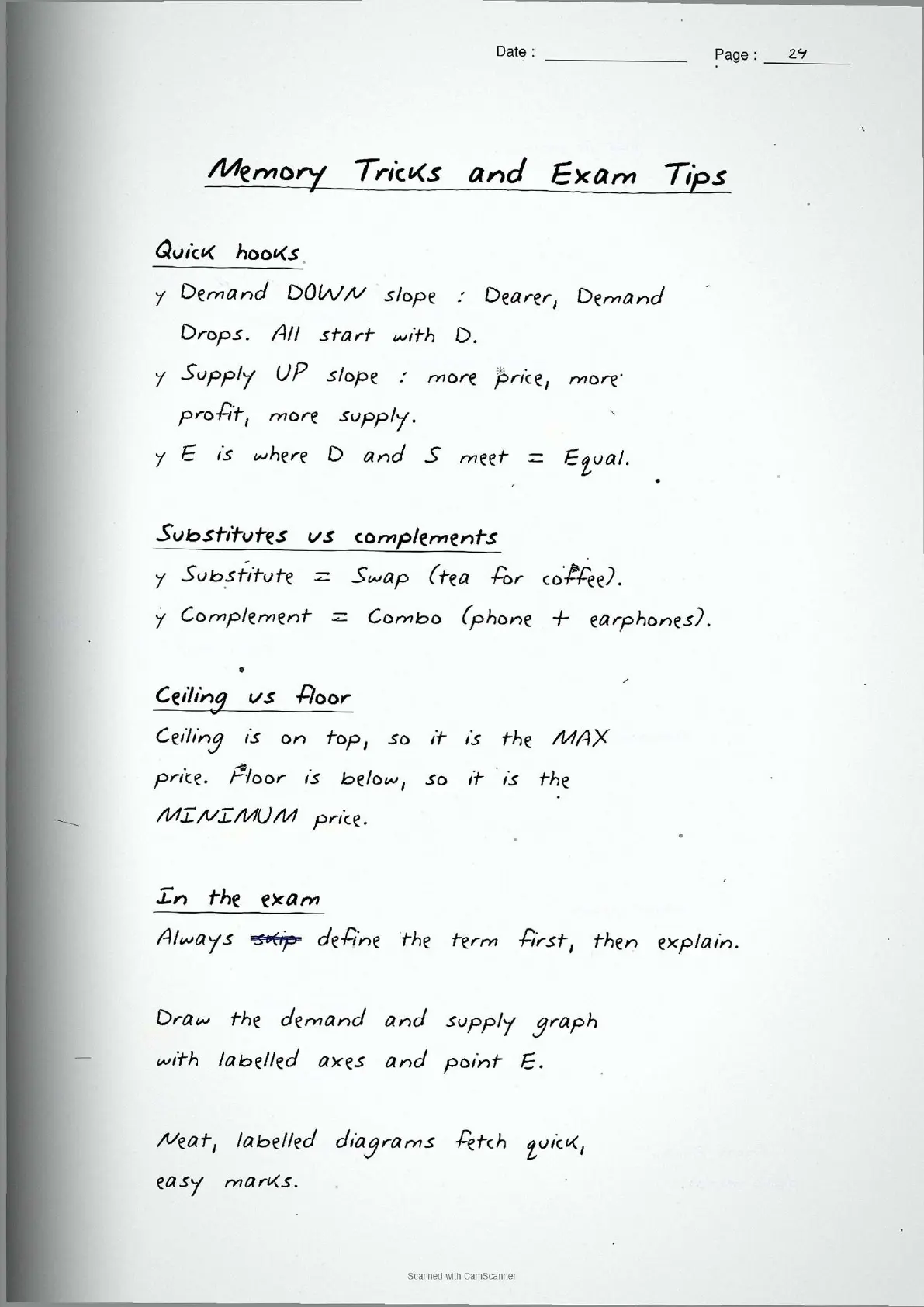
The notes explain related goods in red. Substitutes replace each other, like tea and coffee. Complements are used together, like cars and petrol.
Market Equilibrium in The Price Puzzle What Drives the Market Notes
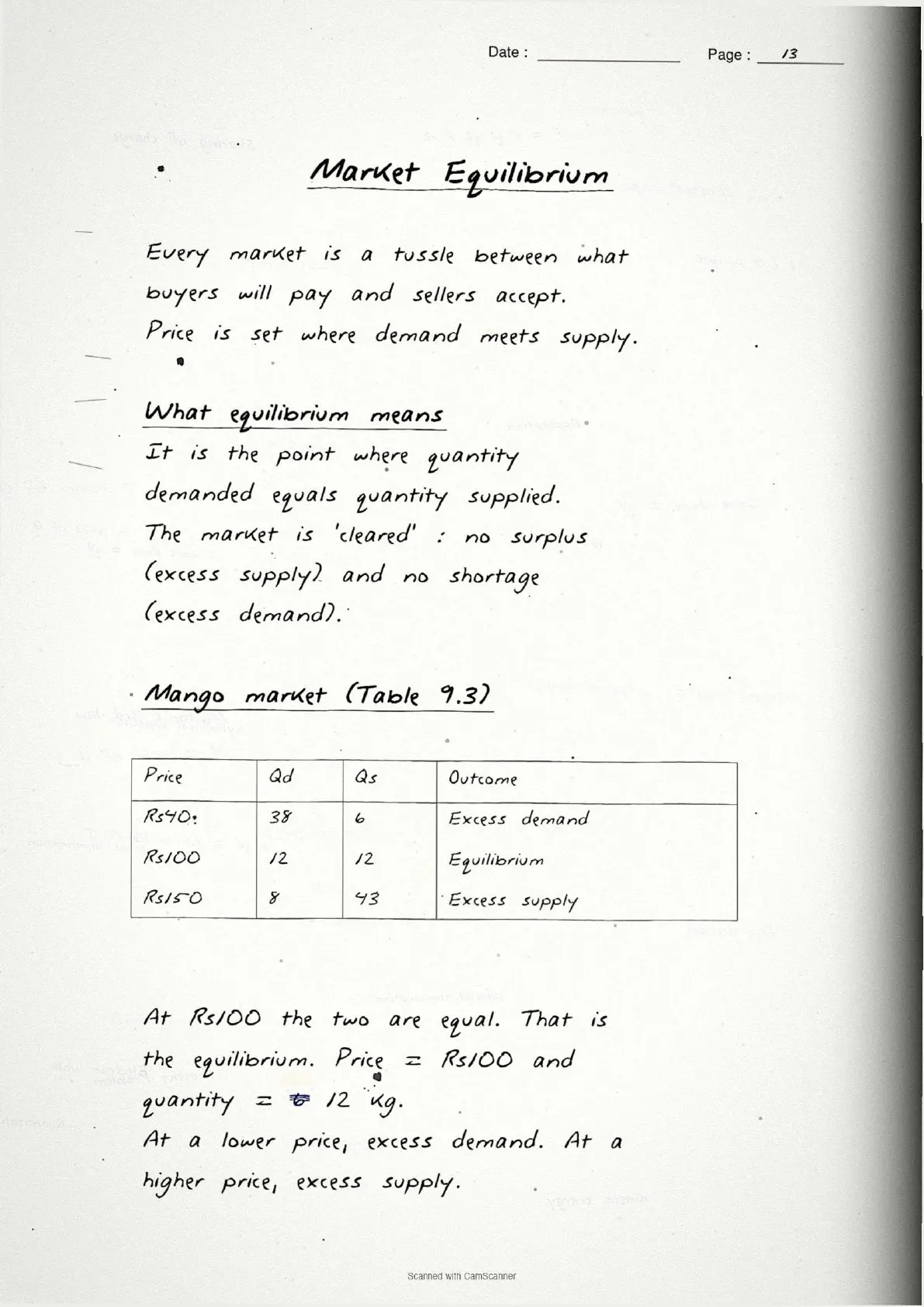
Demand and supply meet in the market, and the Class 9 Social Science Handwritten Notes Chapter 9 The Price Puzzle What Drives the Market box the meeting point clearly. Market equilibrium is where quantity demanded equals quantity supplied, with no surplus and no shortage.
| Price (Rs) | Quantity demanded | Quantity supplied | Outcome |
|---|---|---|---|
| 40 | 38 kg | 6 kg | Excess demand (shortage) |
| 100 | 12 kg | 12 kg | Equilibrium |
| 150 | 8 kg | 43 kg | Excess supply (surplus) |
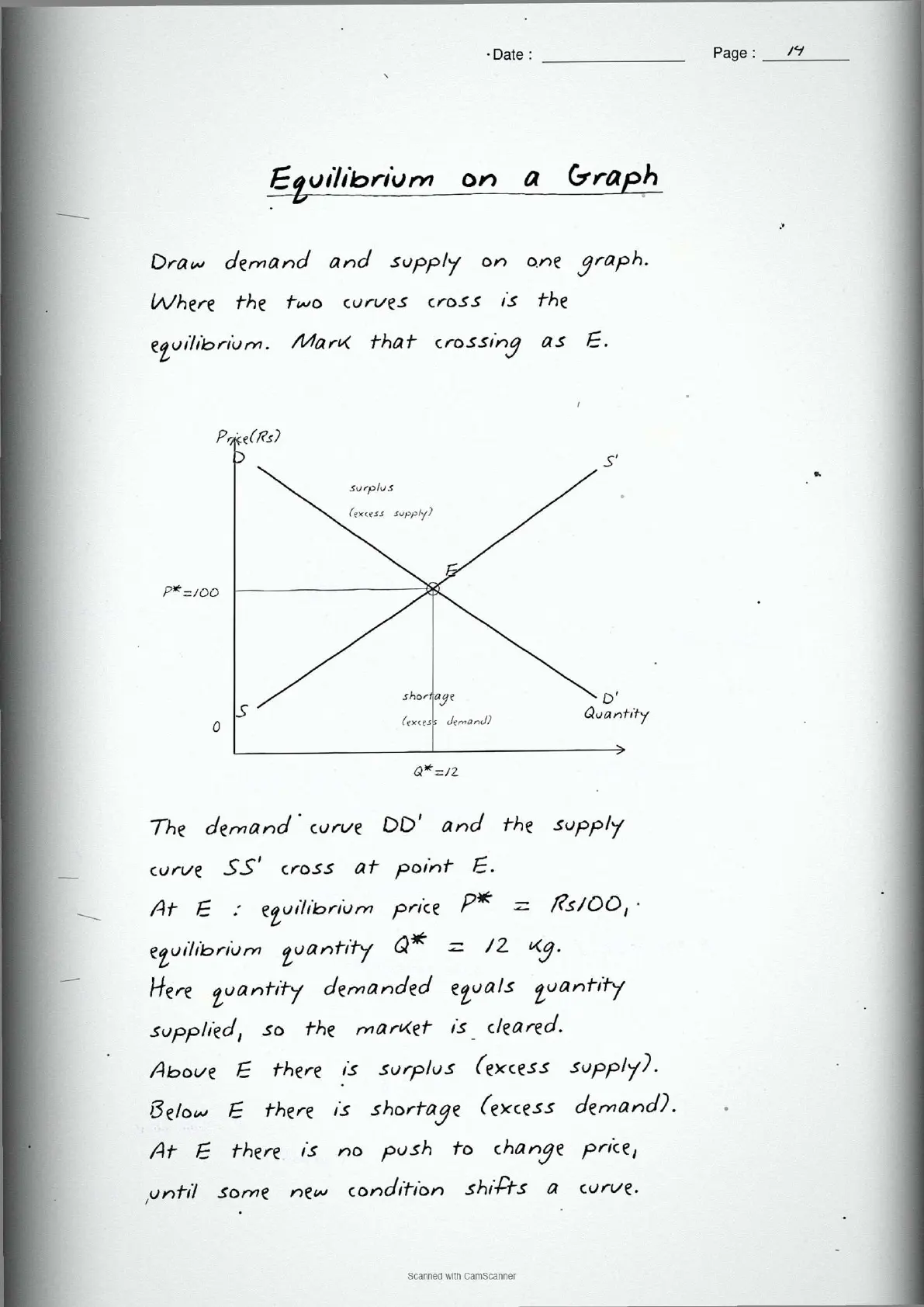
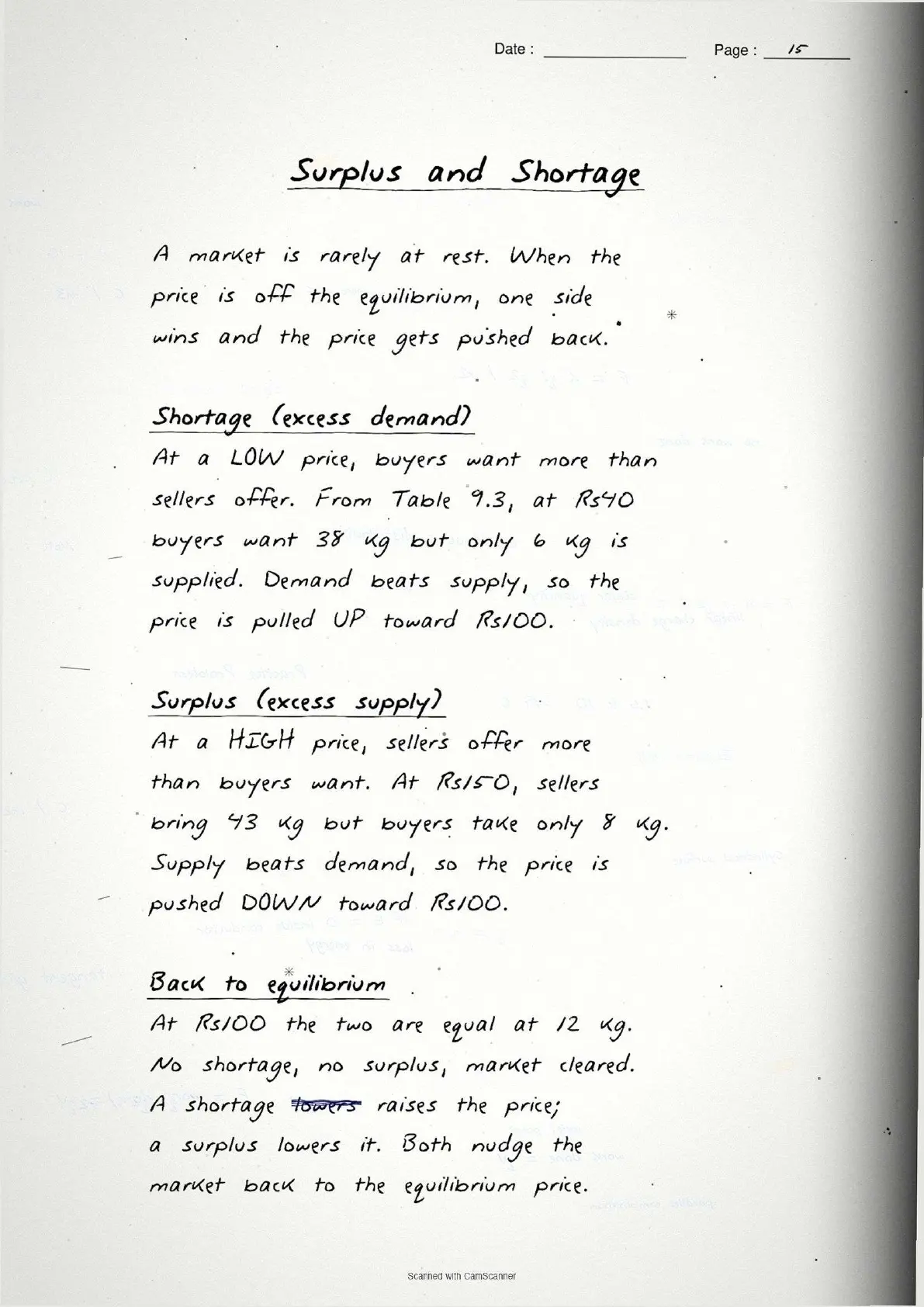
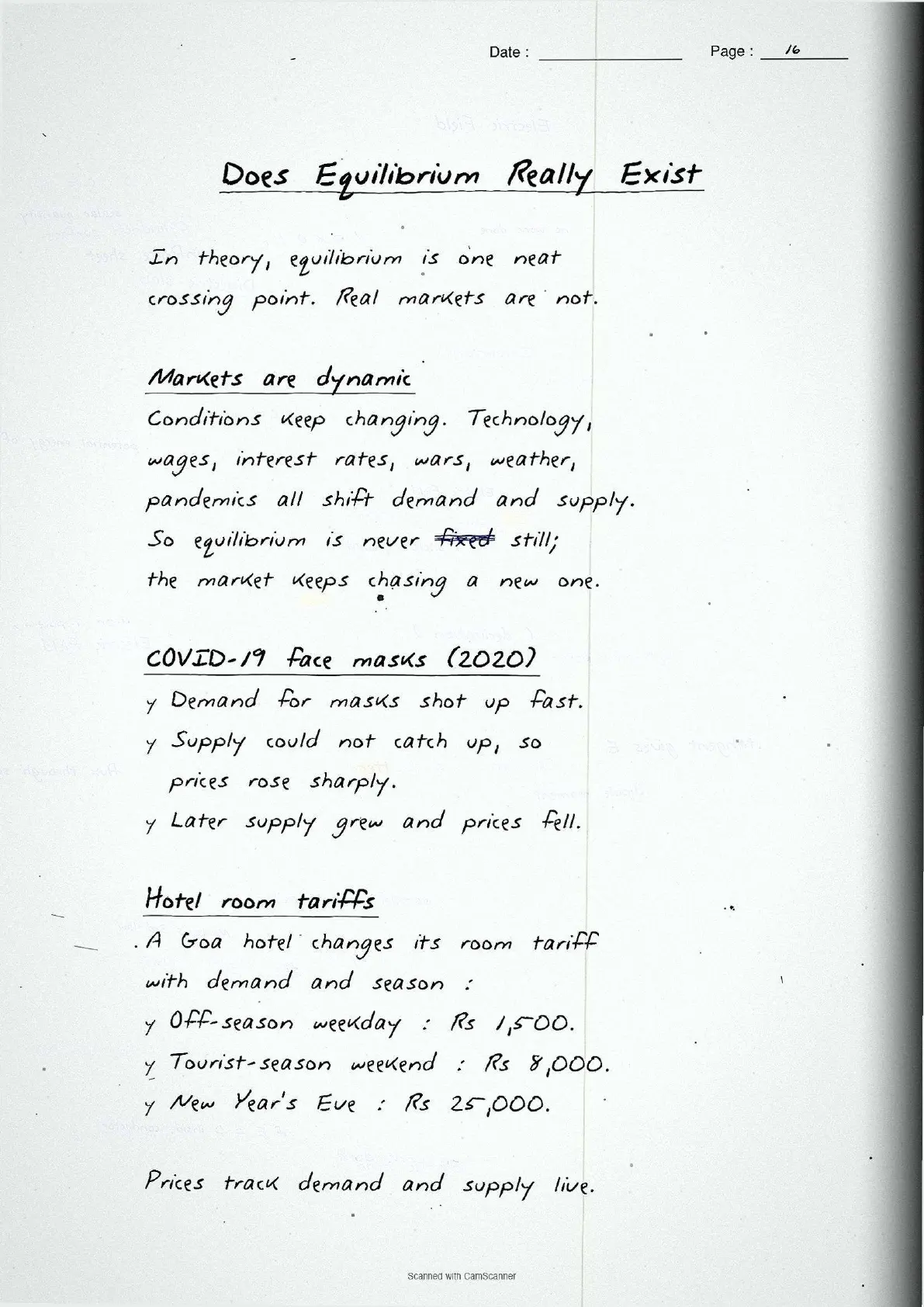
On a graph, equilibrium is where the two curves cross. A low price gives excess demand, so prices rise; a high price gives excess supply, so prices fall. In real life, markets keep moving toward a new equilibrium and never fully settle.
Role of Government Marked in the Margins of The Price Puzzle Notes
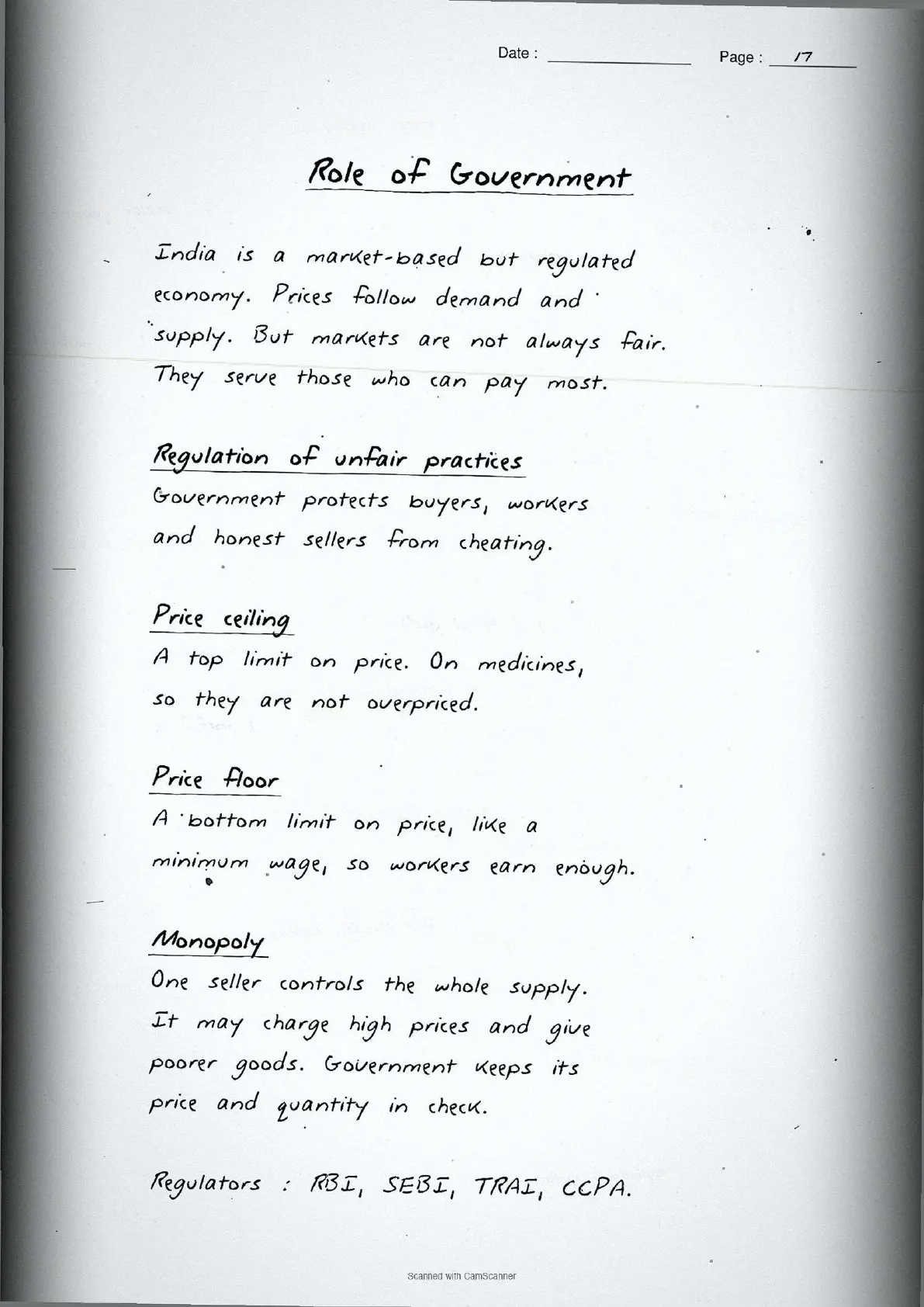
Markets set prices through demand and supply, but they do not always work fairly. When essentials get too costly for the poor, the government steps in. The notes pin this in the margins with a small chart.
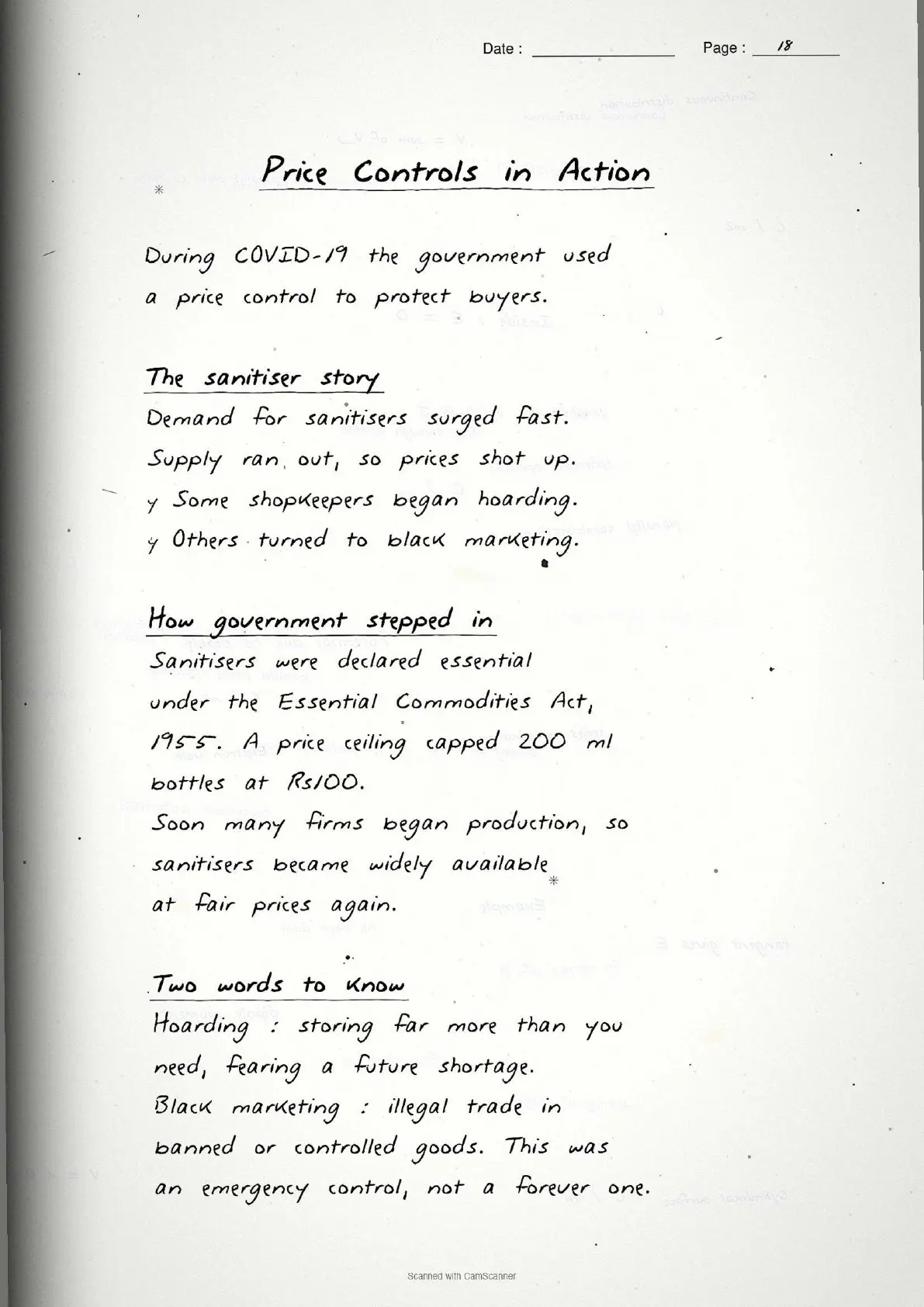
- Price ceiling: a legal maximum price that protects buyers, such as the cap on sanitisers during COVID-19.
- Price floor: a legal minimum price that protects sellers or workers, such as a minimum wage.
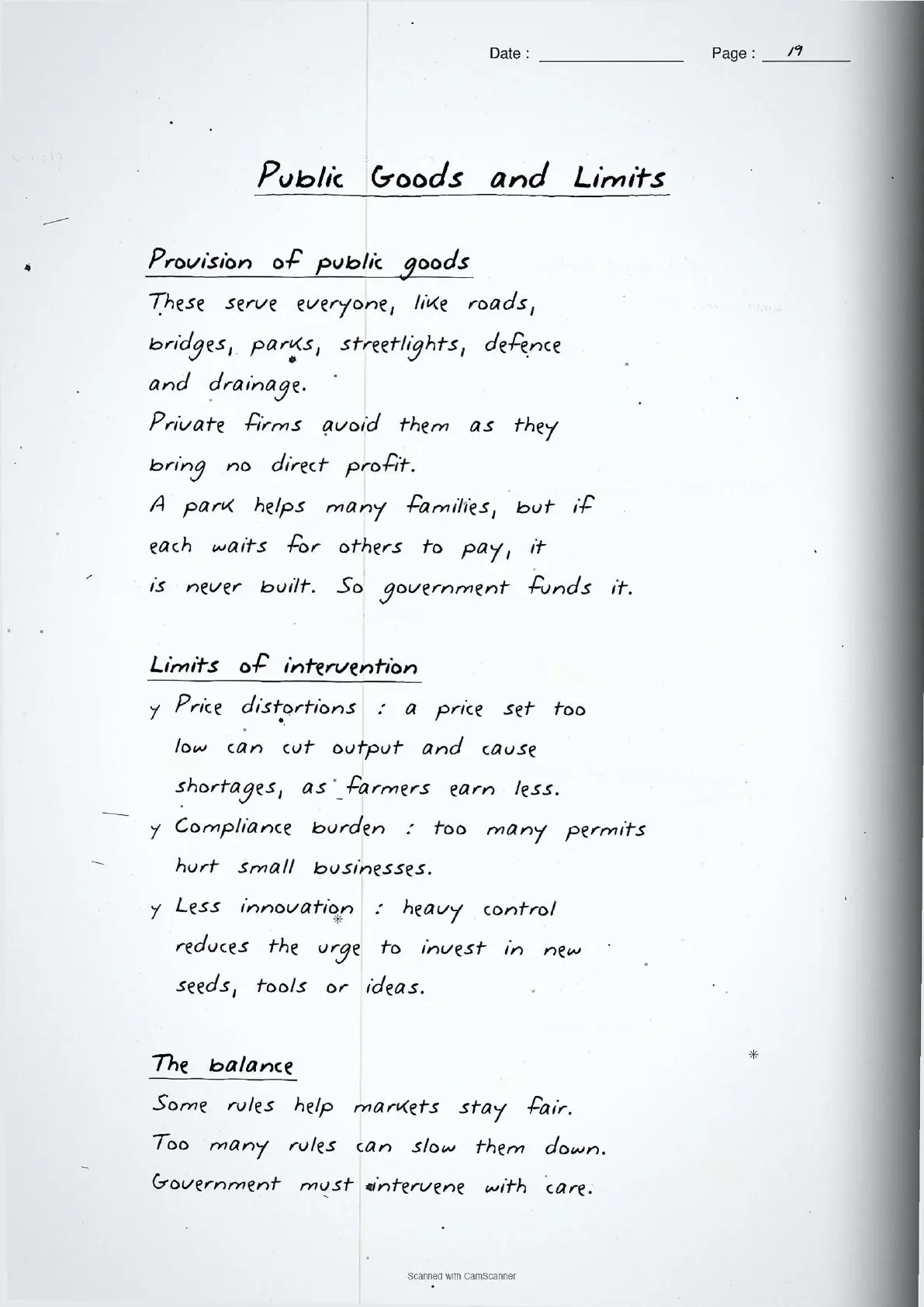
- Checks monopolies and unfair practices, and provides public goods like roads and streetlights.
- Regulators: the RBI for banking, SEBI for securities, and TRAI for telecom.
Common Mistakes Flagged in Red in The Price Puzzle Notes
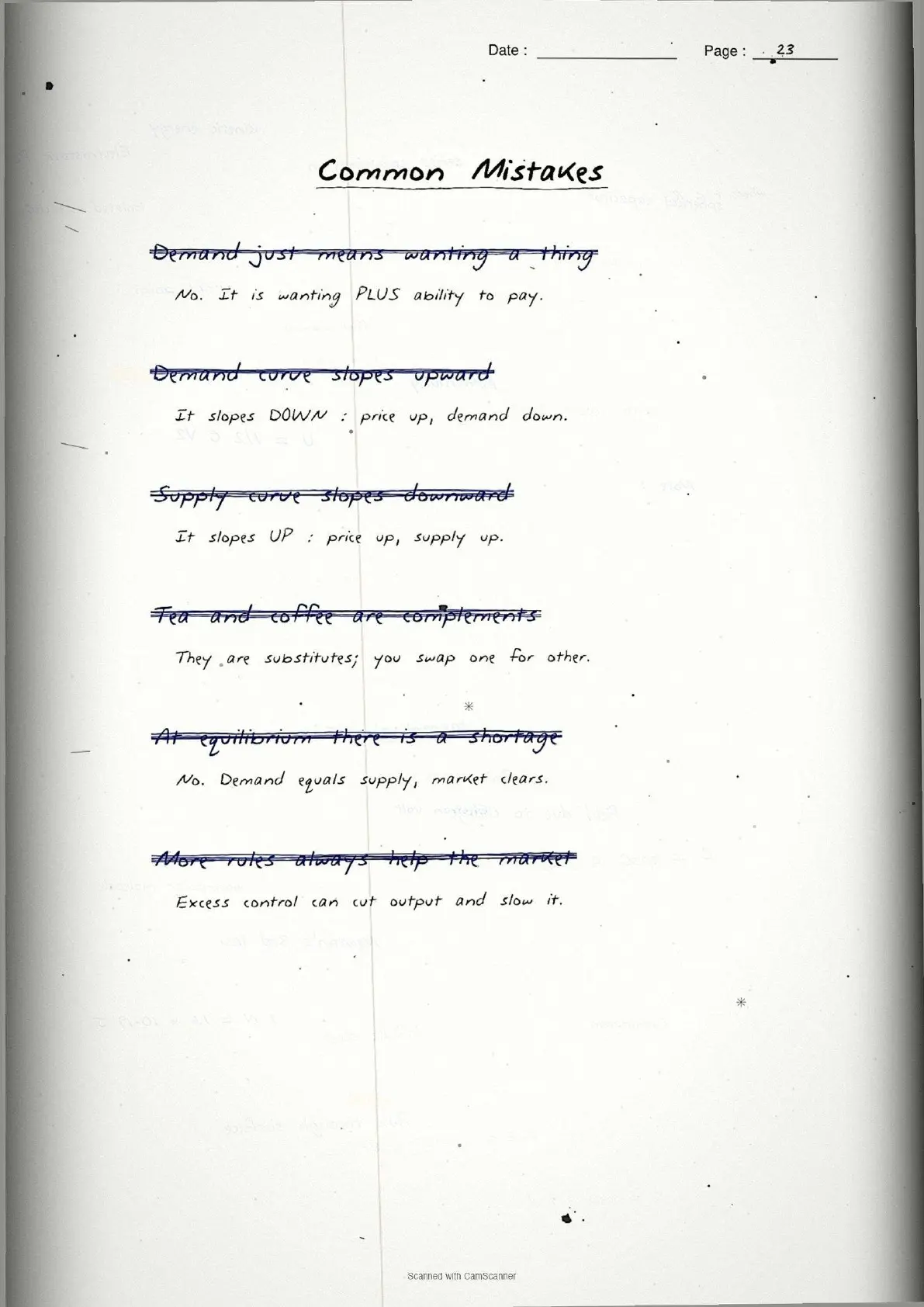
Most lost marks here come from small slips, not hard ideas. The handwritten notes circle these in red.
- Mixing the two laws; demand is inverse, supply is direct.
- Swapping excess demand (shortage) with excess supply (surplus).
- Confusing a price ceiling (a maximum) with a price floor (a minimum).
- Drawing the demand curve sloping up instead of down.
Last-Minute Revision with The Price Puzzle Handwritten Notes
The night before your exam, the Class 9 Social Science Handwritten Notes Chapter 9 The Price Puzzle What Drives the Market work as a quick skim. Every boxed definition and red heading is a checkpoint.
- Define demand and supply, and tie demand to purchasing power.
- State the Law of Demand and the Law of Supply in one line each.
- Draw a demand curve, a supply curve, and mark the equilibrium point.
- List the factors that shift demand and supply.
- Explain a price ceiling, a price floor, and one role of a regulator.
More The Price Puzzle Class 9 Social Science Resources
Use the table below to open the other Collegedunia resources for this chapter of the new Class 9 Social Science Understanding Society book.
| Resource | Open |
|---|---|
| Handwritten Notes | The Price Puzzle What Drives the Market Class 9 Social Science Handwritten Notes |
| NCERT Solutions | The Price Puzzle What Drives the Market Class 9 Social Science NCERT Solutions |
| Revision Notes | The Price Puzzle What Drives the Market Class 9 Social Science Notes |
| NCERT Book PDF | The Price Puzzle What Drives the Market Class 9 Social Science NCERT Book PDF |
NCERT Handwritten Notes for Class 9 Social Science: All Chapters
Use the table below to open the handwritten notes for any other chapter of the new Class 9 Social Science Understanding Society book.
| Chapter | Handwritten Notes |
|---|---|
| Chapter 1 | Understanding Social Science |
| Chapter 2 | Shaping of the Earth's Surface |
| Chapter 3 | Atmosphere and Climate |
| Chapter 4 | Early Humans and Beginning of Civilisation |
| Chapter 5 | State and Society up to 1000 CE |
| Chapter 6 | Democracy |
| Chapter 7 | Elections |
| Chapter 8 | Building Blocks in Economics: The Problem of Choice |
The Price Puzzle What Drives the Market Class 9 Social Science Handwritten Notes FAQs
Ques. How many topics do the Class 9 Social Science Chapter 9 handwritten notes cover?
Ans. They cover the full chapter: what drives prices, demand and the Law of Demand, supply and the Law of Supply, the factors that shift each one, market equilibrium, and the role of government, with a worked schedule after each idea.
Ques. Are these real handwritten notes?
Ans. Yes. They are a topper's own clear handwritten revision notes, with each definition boxed, demand and supply curves drawn by hand, and sub-headings colour-coded in red.
Ques. What is market equilibrium in the notes?
Ans. Market equilibrium is the price where quantity demanded equals quantity supplied, with no shortage and no surplus. In the mango example, it is 100 rupees, where both demand and supply are 12 kg.
Ques. Is The Price Puzzle part of the new Class 9 Social Science book?
Ans. Yes. The Price Puzzle What Drives the Market is Chapter 9 of the new integrated Understanding Society textbook for the 2026-27 syllabus, and it builds on Chapter 8 on the problem of choice.



Comments