




The class 11 biology NCERT solutions chapter 8 Cell The Unit of Life cover every back-exercise question, according to the latest 2026-27 CBSE syllabus, and help students prepare for the CBSE Boards, NEET and CUET. Each answer is worked step by step, from the four scientists behind cell theory to the split between prokaryotic and eukaryotic cells, the fluid mosaic membrane, and every organelle from the mitochondrion to the chromosome.
This is the opening chapter of the Cell unit, and the vocabulary of organelles and membranes you learn here runs through biomolecules and cell division as well.
- CBSE Weightage: part of the Cell: Structure and Functions unit worth 15 marks, with this chapter typically carrying 4 to 5 marks.
- Topics covered: cell theory, prokaryotic and eukaryotic cells, the plasma membrane and transport, cell wall, endomembrane system, mitochondria and plastids, ribosomes, the nucleus and the chromosome.
- Exercise count: 14 back-exercise questions, a mix of MCQs, a matching question and descriptive answers that ask for labelled diagrams.
These class 11 biology NCERT solutions chapter 8 Cell The Unit of Life are curated by subject experts, based on the 2026-27 NCERT textbook, and checked against the last five years of CBSE Board and NEET papers.
Why Cell The Unit of Life Matters and What the Chapter Covers
Every living body, from a single bacterium to a human of roughly forty trillion cells, is built from cells, so this chapter answers the question the whole Cell unit rests on: what is the smallest thing that can be called alive? The answer is the cell, and once students accept it, the rest of the unit becomes a tour of the parts inside.
- Foundational role: the cell is the fundamental structural and functional unit of all living organisms, so nothing in physiology makes sense without it.
- Core skill: telling a prokaryotic cell from a eukaryotic one, and naming each organelle by its structure and job.
- Why it is high-yield: the organelle table, the fluid mosaic model and cell theory are among the most repeated topics in NEET.
NEET asks at least one direct question on cell structure almost every year, which makes this the single most rewarding chapter to master early. That is why students who learn the organelles here find biomolecules and cell division far lighter. The class 11 biology NCERT solutions chapter 8 Cell The Unit of Life below follow the same order as the NCERT textbook so students can check their working line by line.
The History of the Cell and Cell Theory
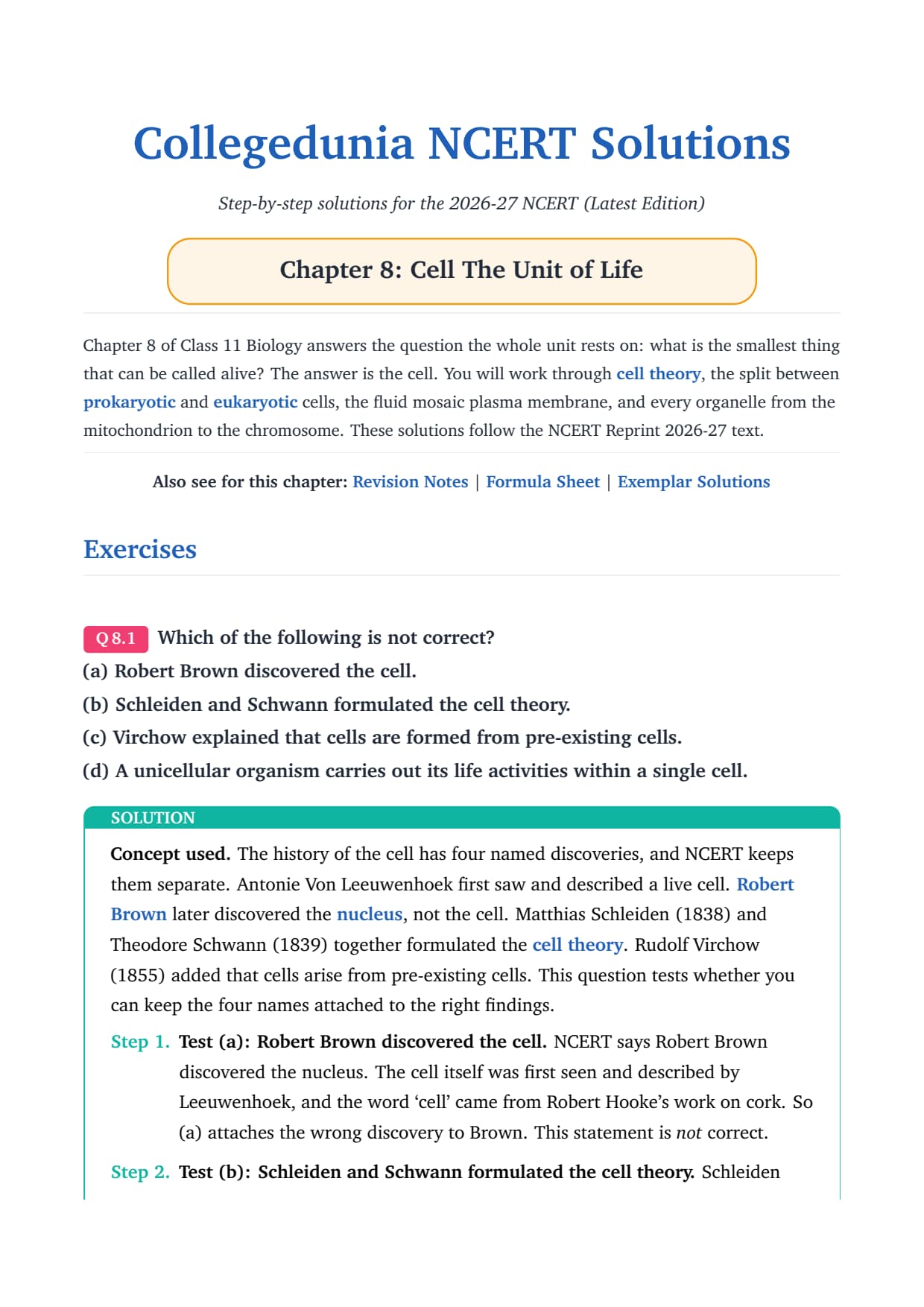
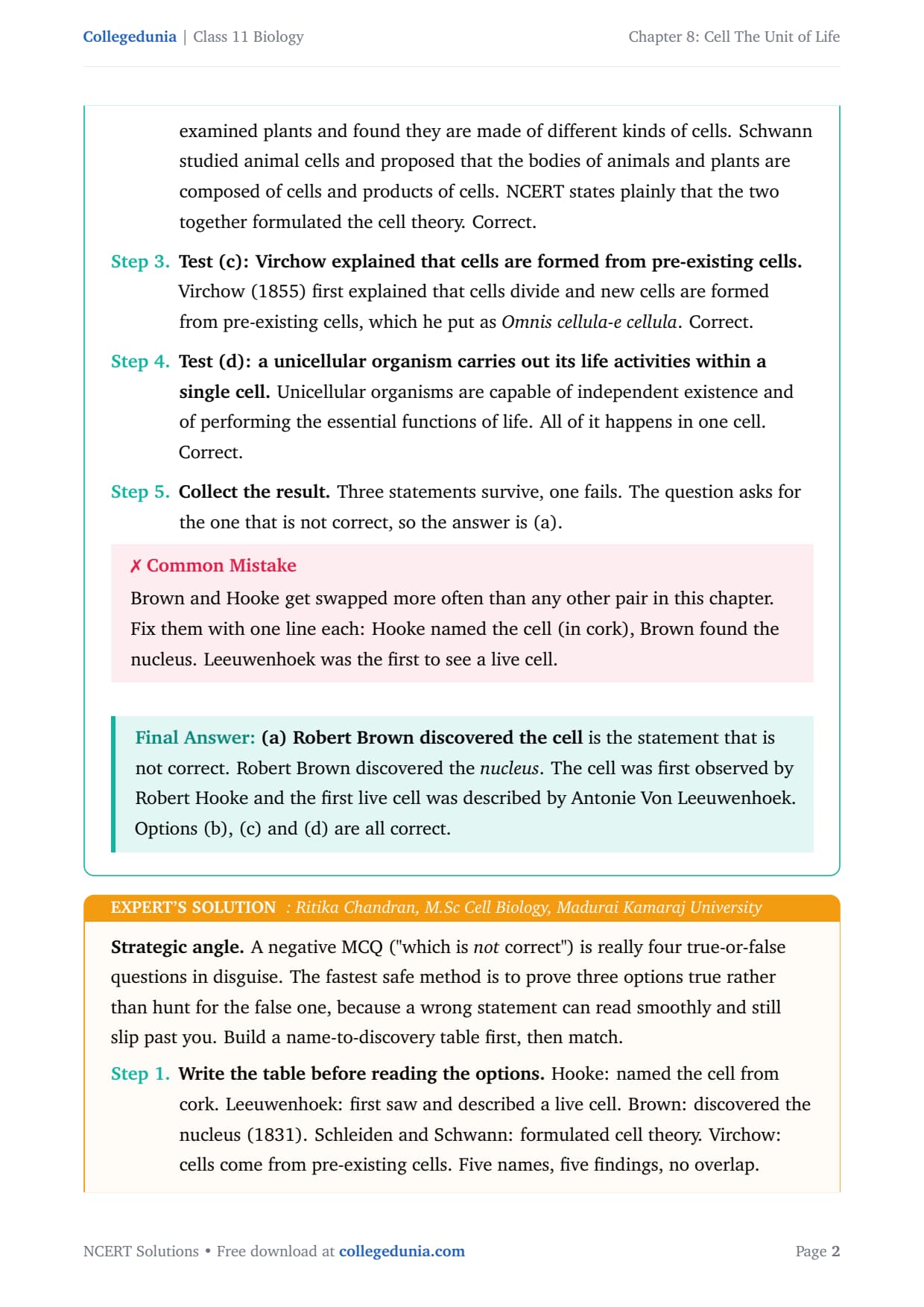
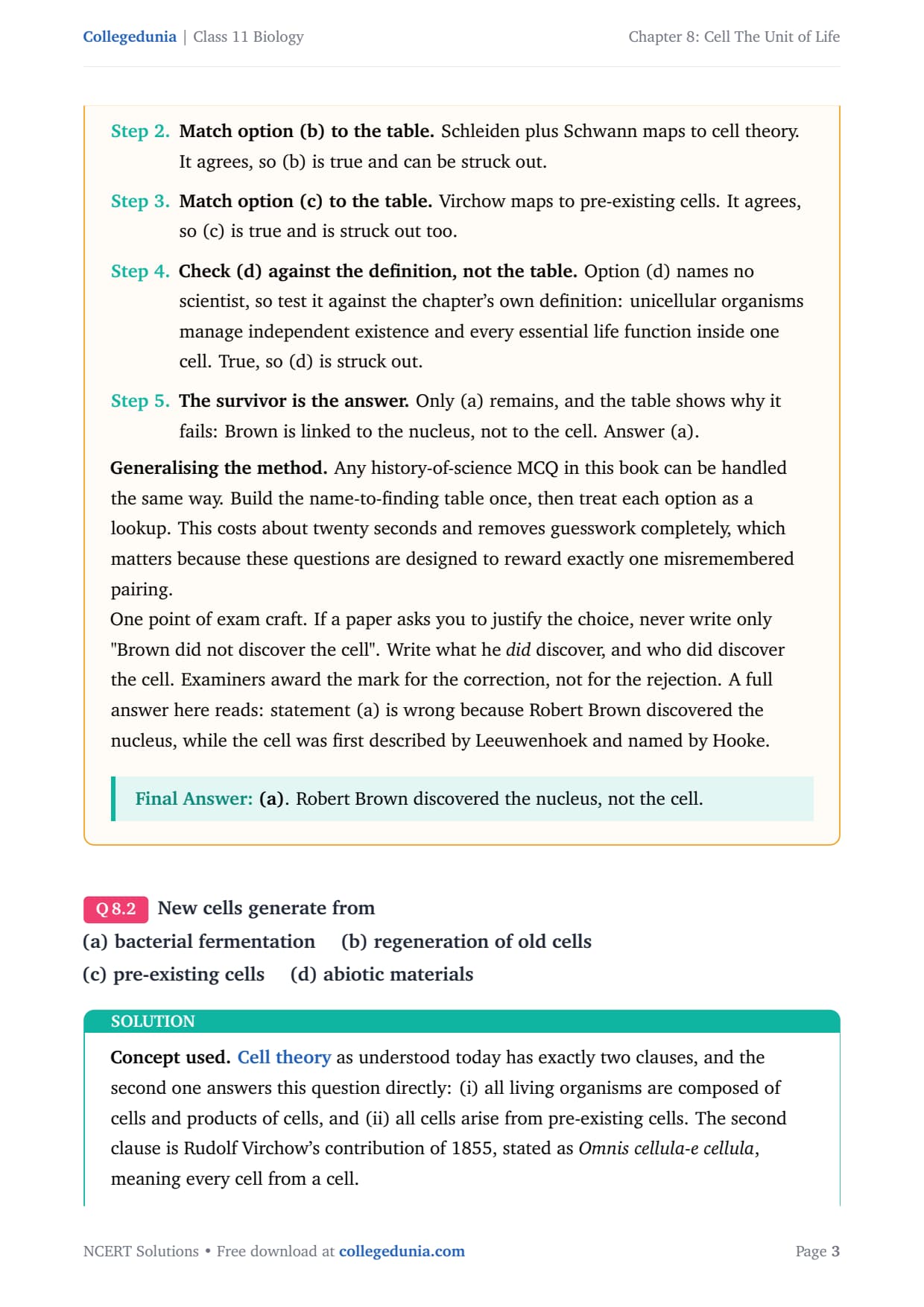
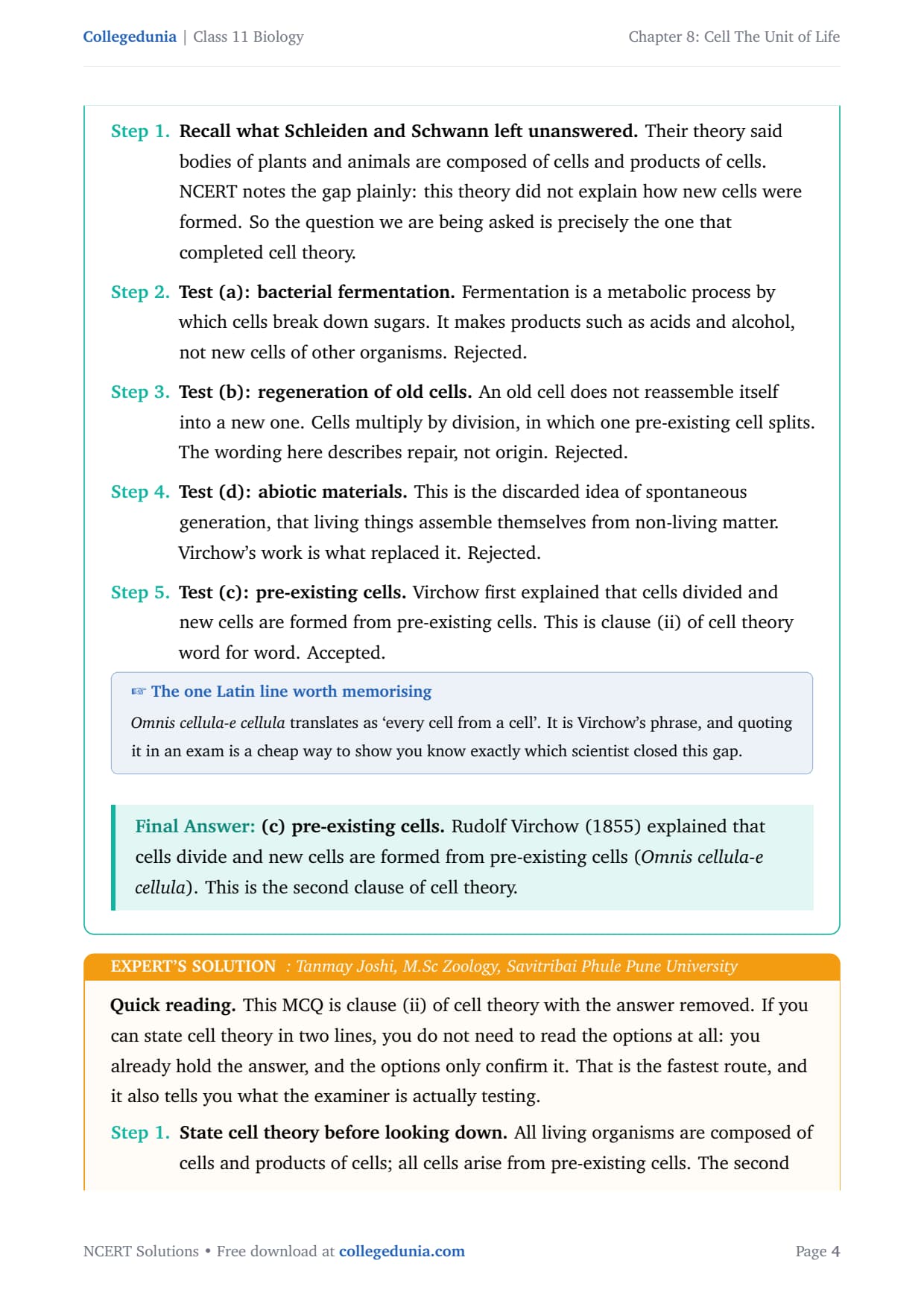
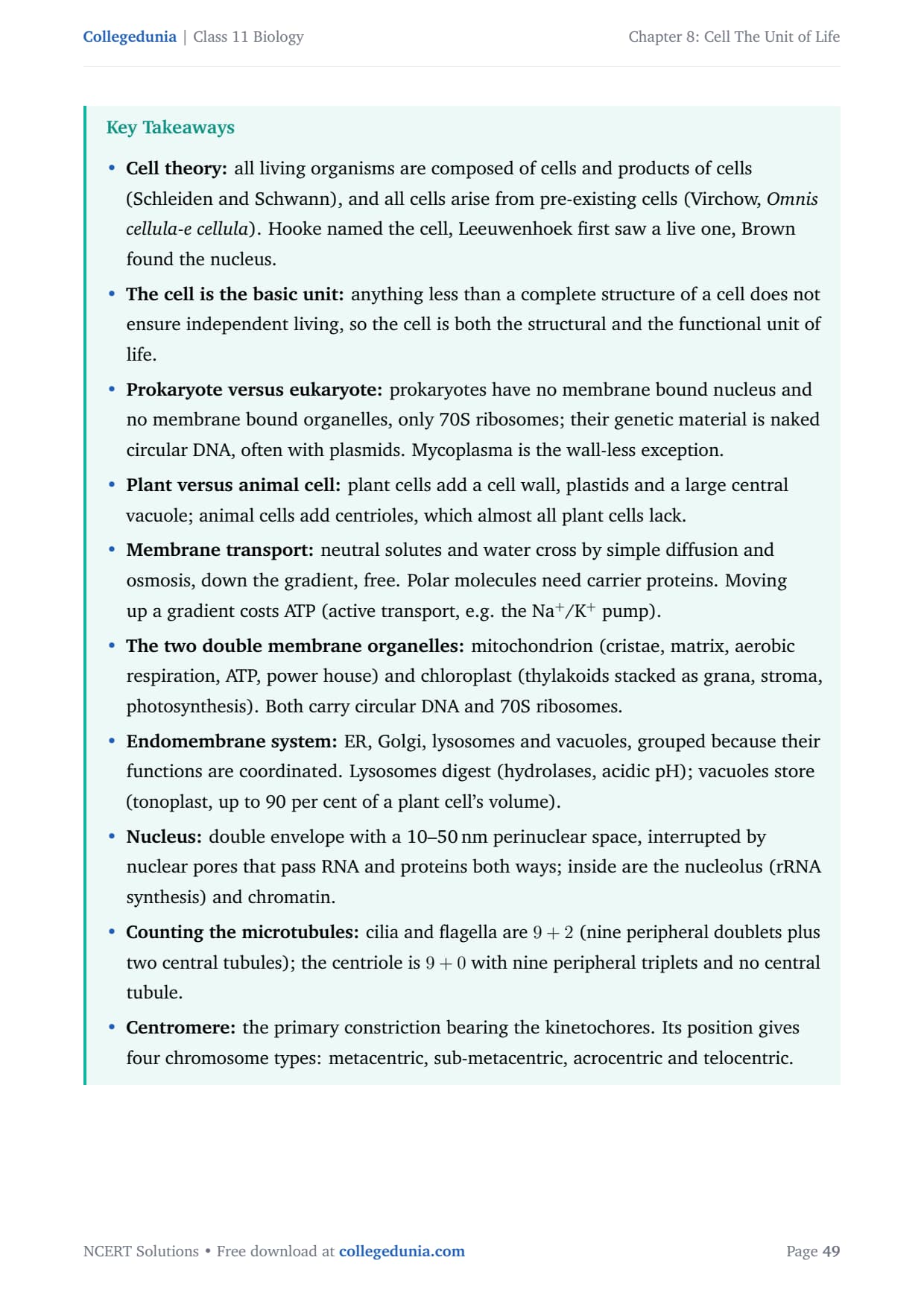
The first two exercise questions test the history of the cell, and both reward students who keep four discoveries attached to the right names. Cell theory as understood today has two clauses: all living organisms are composed of cells and products of cells, and all cells arise from pre-existing cells. The second clause is the one the exercise asks about directly.
| Scientist | Discovery |
|---|---|
| Robert Hooke | Named the cell after observing dead cork under a microscope. |
| Antonie van Leeuwenhoek | First saw and described a live cell. |
| Robert Brown | Discovered the nucleus (1831). |
| Schleiden and Schwann | Together formulated the cell theory. |
| Rudolf Virchow | Explained that cells arise from pre-existing cells (Omnis cellula-e cellula). |
Robert Brown discovered the nucleus, not the cell, which is why the statement "Robert Brown discovered the cell" is the one that is not correct in Question 1. Schleiden and Schwann formulated the theory but did not explain how new cells form, and Virchow closed that gap in 1855. So the answer to Question 2, new cells generate from pre-existing cells, is simply clause two of cell theory. Work through Exercise Q1 and Q2 for the full reasoning behind each option.
Prokaryotic and Eukaryotic Cells: The Core Divide
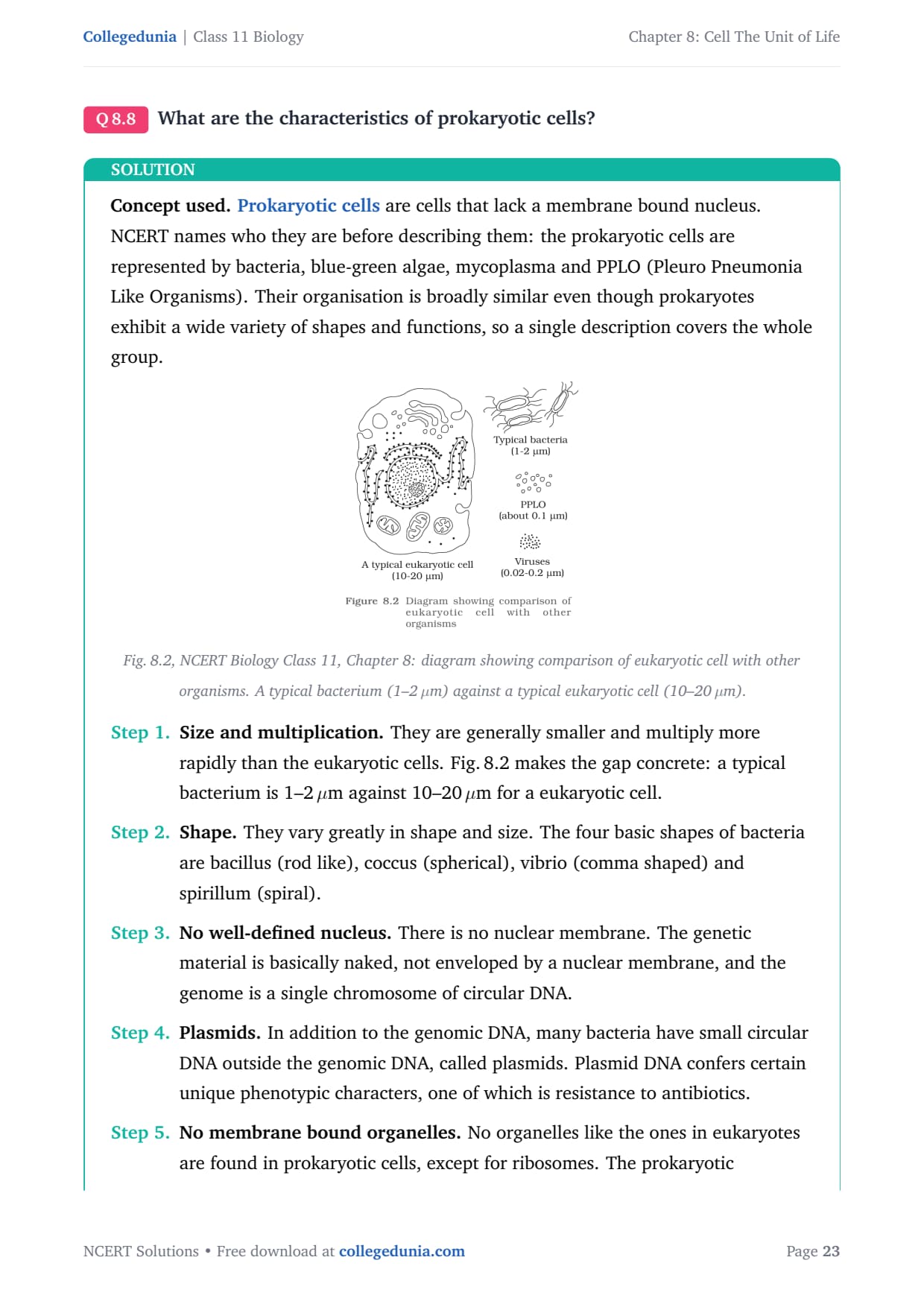
Question 4 asks which of four statements is correct, and the answer, that prokaryotes have no membrane bound organelles, sits on the single biggest divide in the chapter. Eukaryotic cells have a membrane bound nucleus, while prokaryotic cells lack one, and that one difference drives almost every other contrast between them.
| Feature | Prokaryotic cell | Eukaryotic cell |
|---|---|---|
| Nucleus | No nuclear membrane; naked circular DNA | True membrane bound nucleus |
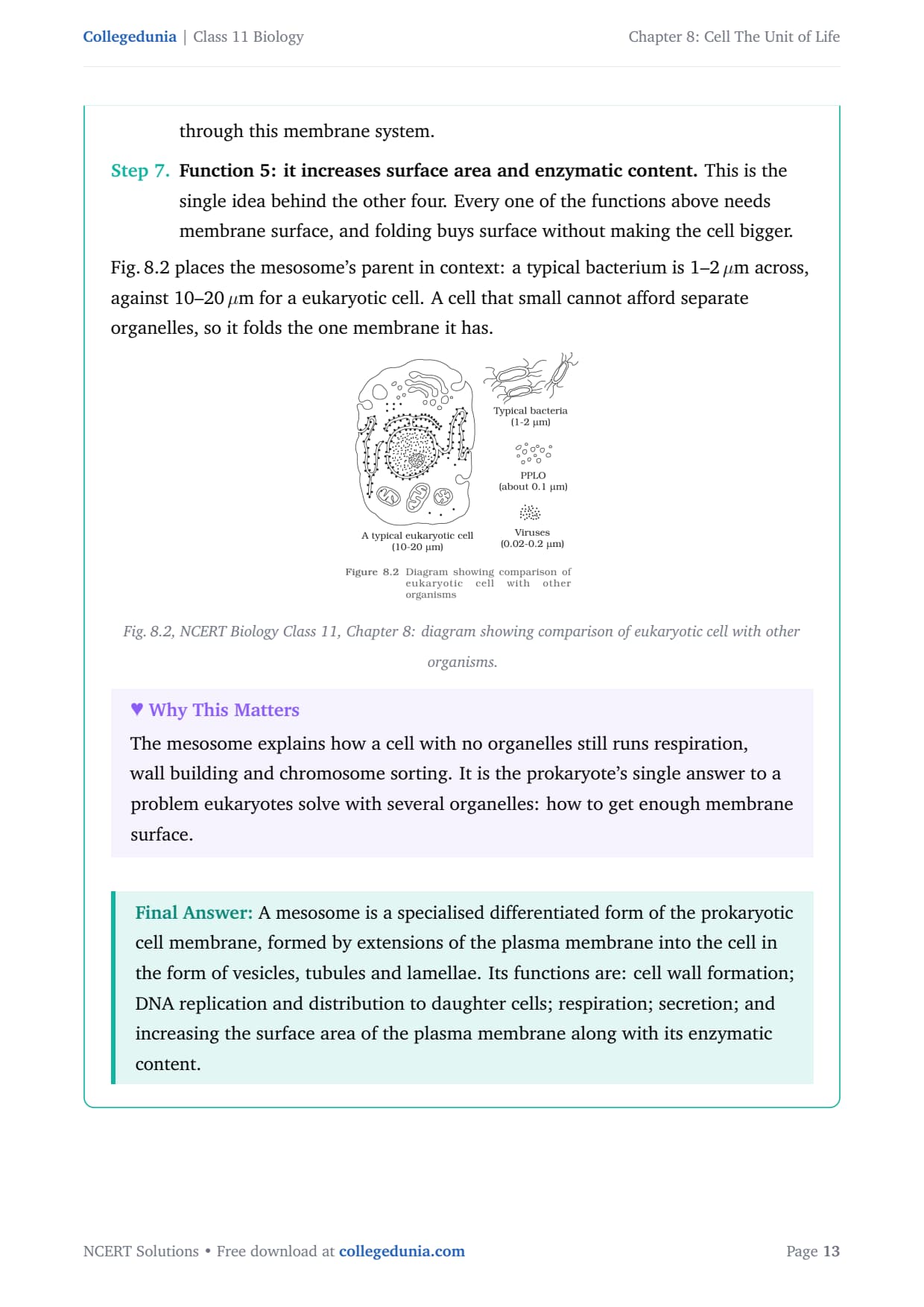
| Size | 1 to 2 µm | 10 to 20 µm |
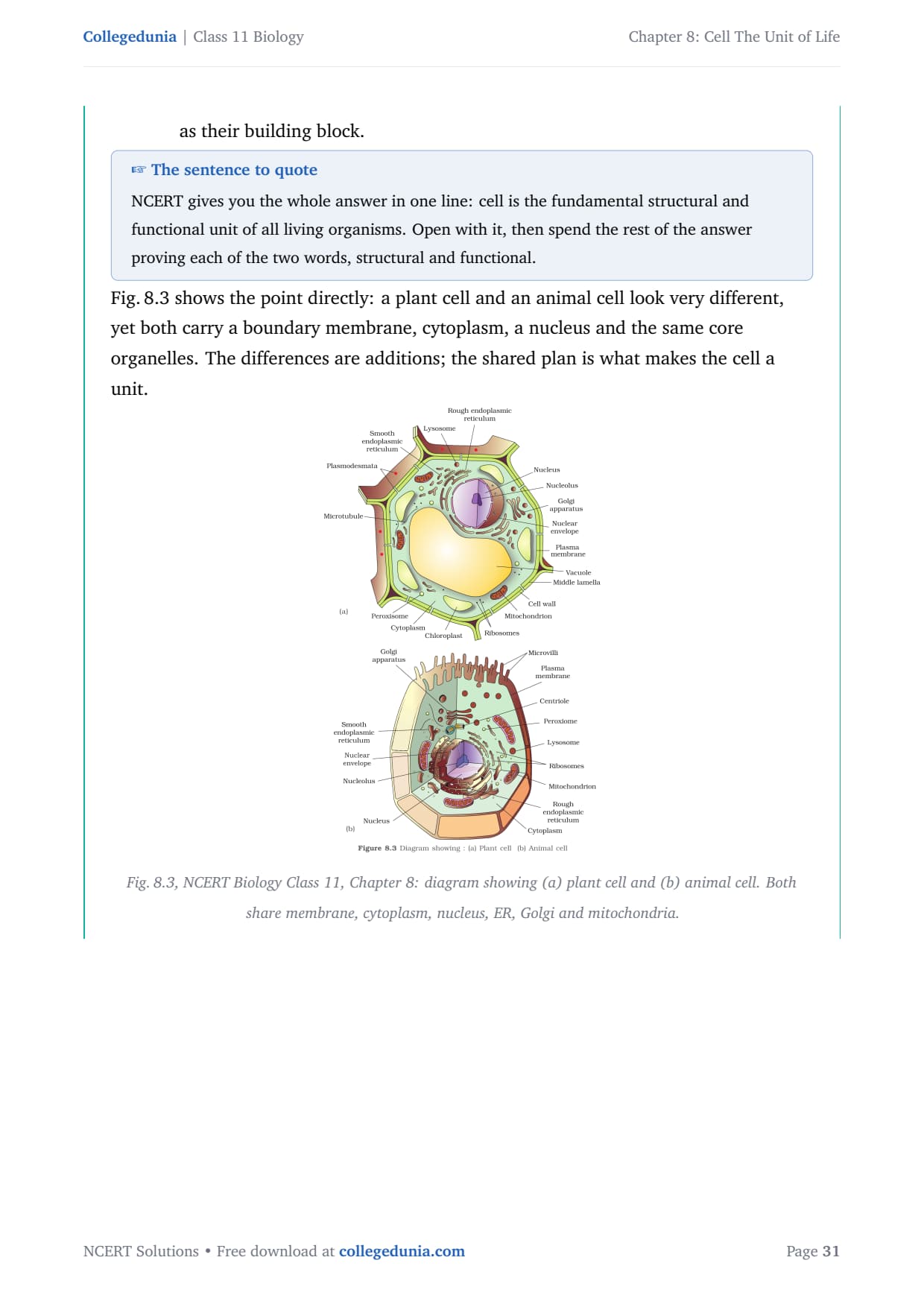
| Membrane bound organelles | Absent | Present (ER, Golgi, mitochondria) |
| Ribosomes | 70S | 80S in cytoplasm, 70S in organelles |
| Cell wall | Present, except in mycoplasma | Present in plants and fungi only |
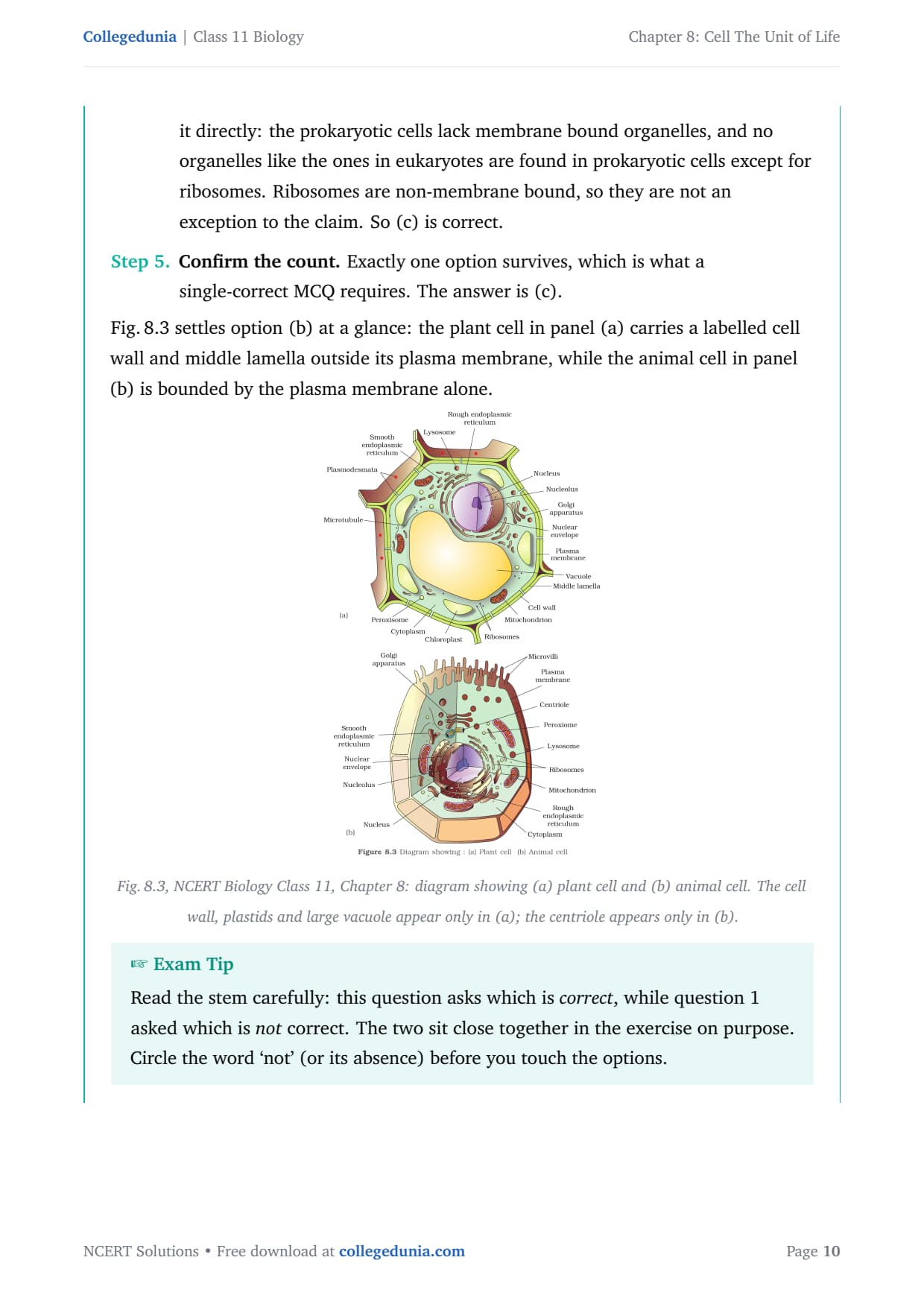
The only organelle prokaryotes carry is the ribosome, and ribosomes are not membrane bound, so option (c) of Question 4 holds true. The distractors fail on absolute wording: not all cells have a nucleus, because mature mammalian red blood cells and sieve tube cells lose theirs, and the cell wall is a plant and fungal feature, absent in animal cells. Cells never form de novo from abiotic materials, since all cells arise from pre-existing cells. Read the stem carefully, because Question 1 asks which is not correct while Question 4 asks which is.
Characteristics of Prokaryotic Cells and the Mesosome
Question 8 asks students to list the characteristics of prokaryotic cells, and Question 5 zooms in on one of them, the mesosome. Prokaryotic cells are represented by bacteria, blue-green algae, mycoplasma and PPLO, and although they vary in shape, their organisation is broadly similar, so one description covers the whole group.
- Genetic material: naked circular DNA with no nuclear membrane, often accompanied by small circular plasmids that carry traits such as antibiotic resistance.
- Cell envelope: a three-layered structure of glycocalyx, cell wall and plasma membrane, with mycoplasma the wall-less exception; the Gram stain splits bacteria into Gram positive and Gram negative.
- Other parts: 70S ribosomes, membrane-free inclusion bodies for storage, and surface appendages, flagella for motility and pili and fimbriae for attachment.
The mesosome in Question 5 is a specialised differentiated form of the plasma membrane, formed by infoldings into the cell as vesicles, tubules and lamellae. It helps in cell wall formation, DNA replication and its distribution to daughter cells, respiration, secretion, and it increases the surface area of the plasma membrane and its enzymatic content. The single idea behind every function is surface: a cell only 1 to 2 µm across cannot afford separate organelles, so it folds the one membrane it has. The four basic bacterial shapes, worth memorising, are bacillus (rod), coccus (spherical), vibrio (comma) and spirillum (spiral).
The Plasma Membrane and How Substances Move Across It
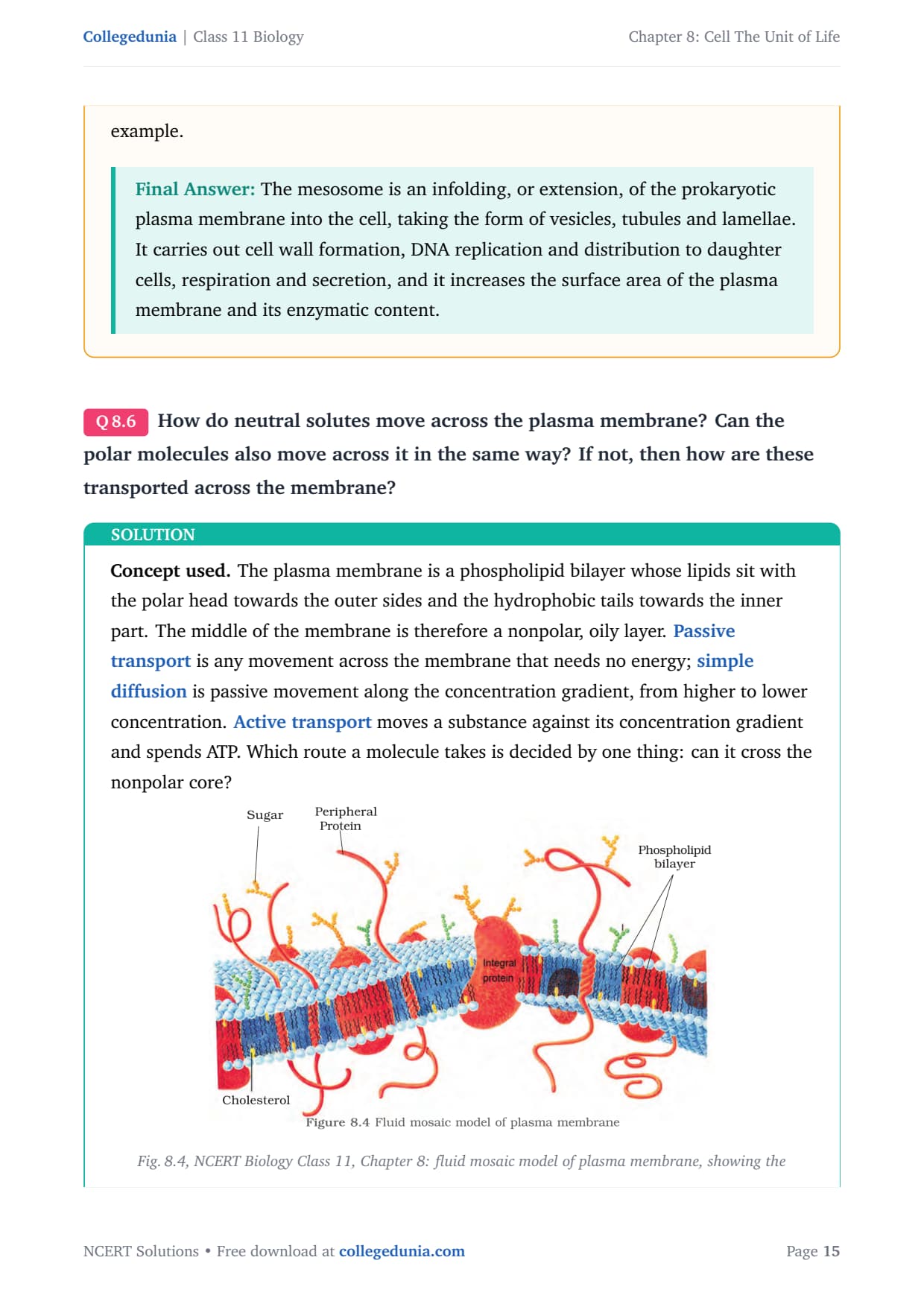
Question 6 is a three-part transport question, and the plasma membrane's own structure supplies every answer. In the fluid mosaic model the membrane is a phospholipid bilayer whose polar heads face the watery outside and whose hydrophobic tails point inward, so the middle of the membrane is a nonpolar, oily core. Whether a molecule can cross unaided depends on one thing: can it pass through that core?
- Neutral solutes: carry no charge, so they slip through the lipid core by simple diffusion, moving down the concentration gradient with no energy spent. Water does the same by osmosis.
- Polar molecules: carry partial charges and cannot pass the nonpolar core, so they need a carrier protein that binds them on one side and releases them on the other.
- Active transport: moves a few ions against the gradient, from lower to higher concentration, and this costs ATP, as in the Na+/K+ pump.
Two variables settle every transport question in this chapter: polarity decides whether a protein is needed, and gradient direction decides whether ATP is needed. Students who memorise this rule instead of a list of transport names never lose marks when a paper names an unfamiliar molecule. The question is joined by "If not, then how", so its marking scheme has three parts, and answering them as three clearly separated statements scores more than one flowing paragraph.
Double Membrane Bound Organelles: Mitochondria and Chloroplasts
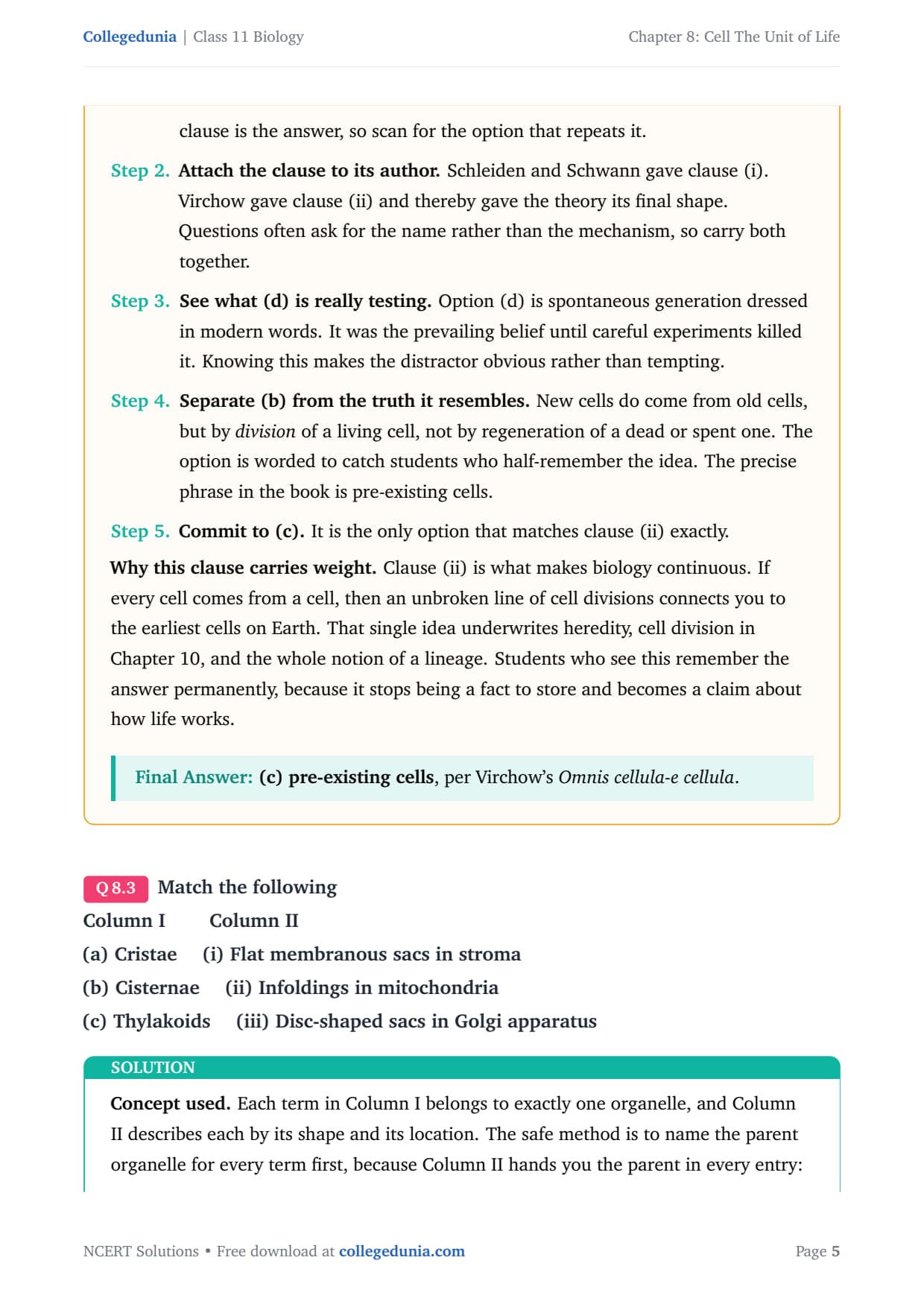
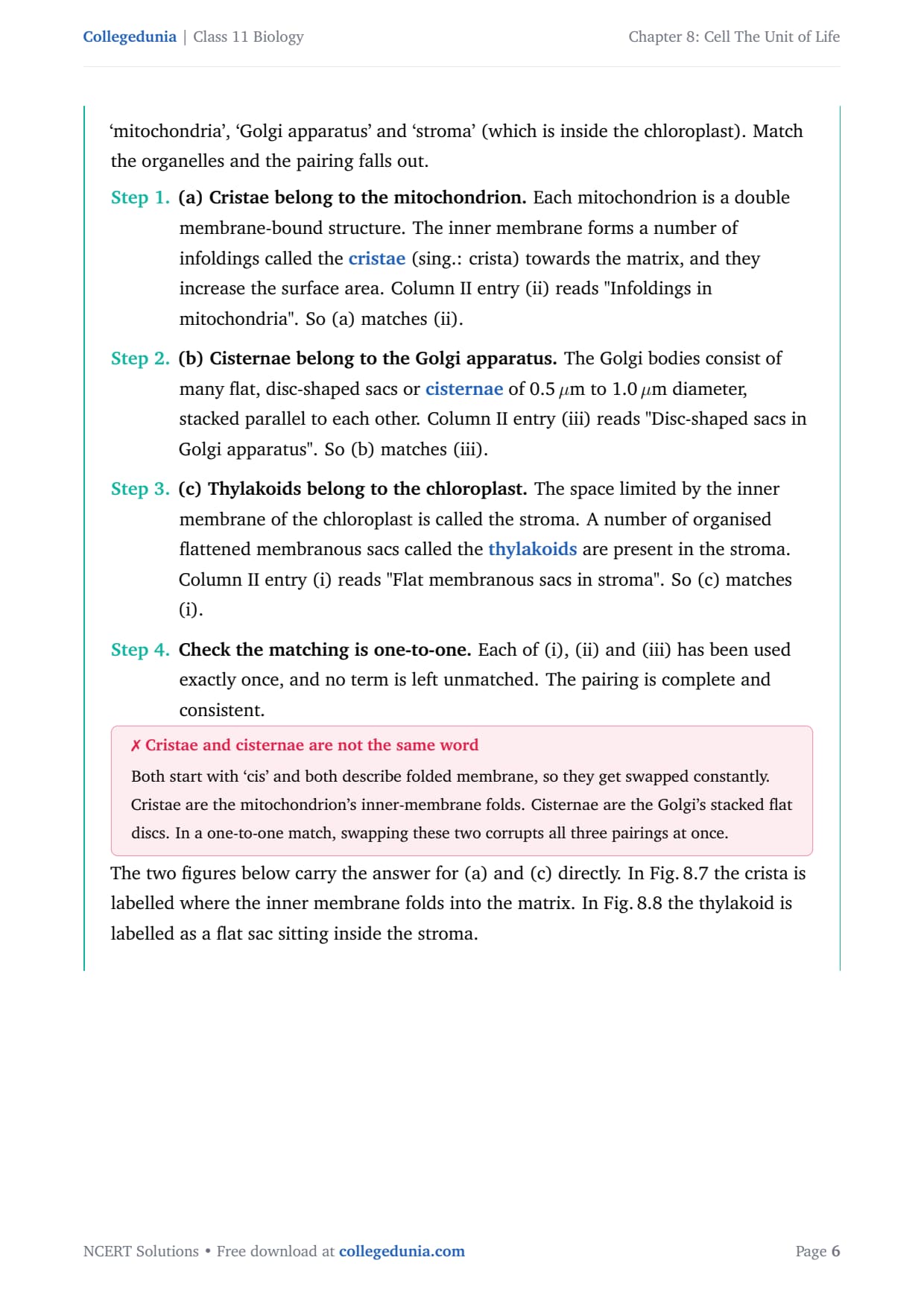
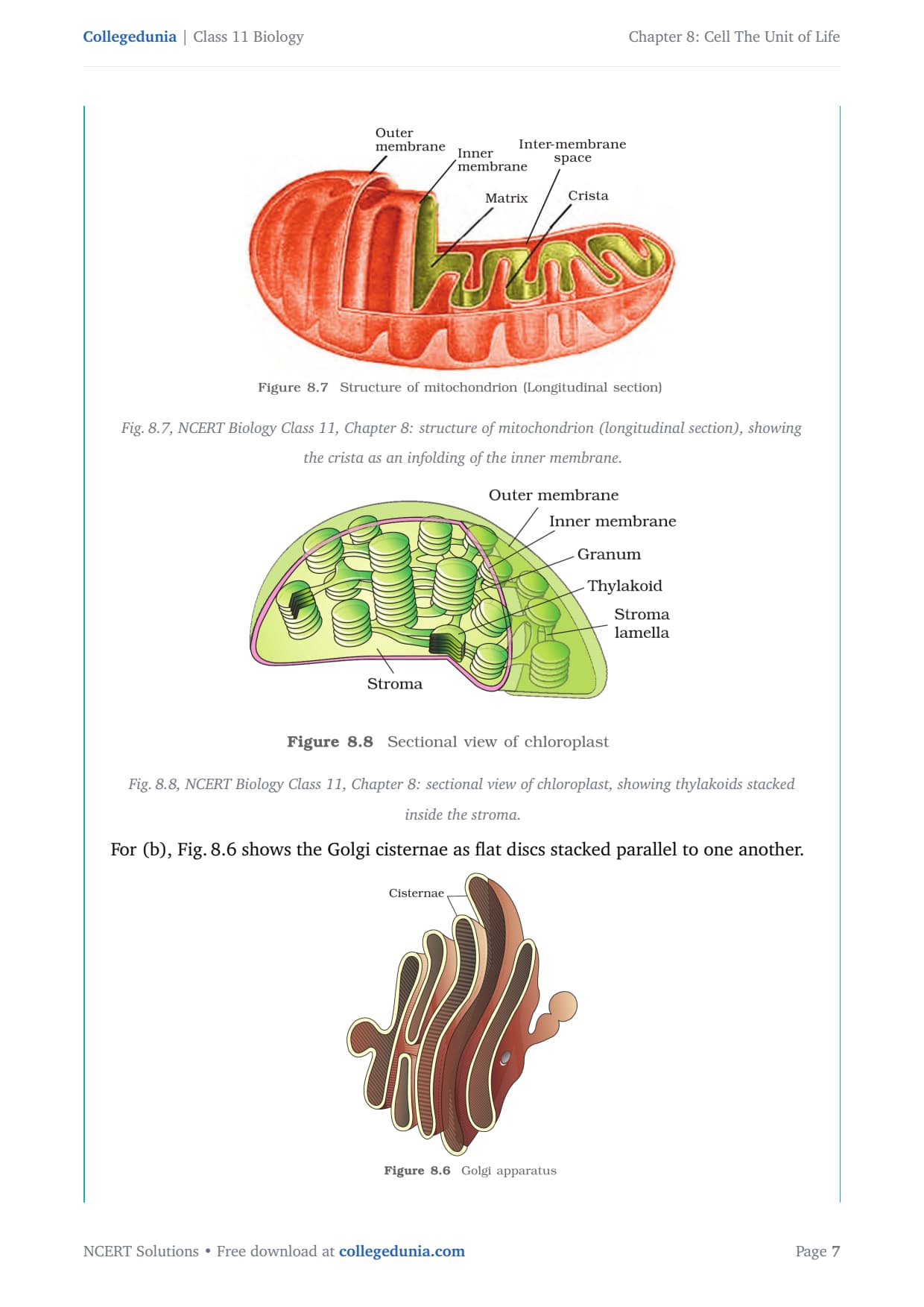
Question 7 asks students to name two double membrane bound organelles, describe them, state their functions and draw labelled diagrams, while Question 3 matches cristae, cisternae and thylakoids to their homes. The two double membrane organelles among the cell organelles here are the mitochondrion and the plastid, with the chloroplast its best studied type.
| Feature | Mitochondrion | Chloroplast |
|---|---|---|
| Shape and size | Sausage shaped, 0.2 to 1.0 µm wide | Lens shaped, 5 to 10 µm long |
| Inner membrane fold | Cristae, into the matrix | Thylakoids stacked into grana |
| Own genome | Circular DNA and 70S ribosomes | Circular DNA and 70S ribosomes |
| Function | Aerobic respiration; makes ATP | Traps light energy for photosynthesis |
Both organelles fold their inner membrane to gain surface and both keep their own circular DNA and 70S ribosomes, the semi-autonomy point most students omit and examiners reward. One releases energy and the other captures it. For the matching in Question 3, cristae are infoldings in the mitochondrion, cisternae are the disc-shaped sacs of the Golgi apparatus, and thylakoids are the flat membranous sacs in the stroma, so the pairing is (a) with (ii), (b) with (iii) and (c) with (i). Cristae and cisternae both start with the same letters, so swapping them corrupts all three pairings at once.
The Endomembrane System: Lysosomes and Vacuoles
Question 12 points out that lysosomes and vacuoles are both endomembrane structures yet differ in function, and asks students to comment. The endomembrane system includes the endoplasmic reticulum, Golgi complex, lysosomes and vacuoles, grouped together because their functions are coordinated. So lysosomes and vacuoles share an address, not a job.
- Shared features: both are single membrane bound structures that belong to the endomembrane system, so their activities are coordinated with the ER and Golgi.
- Lysosome: a vesicle formed by packaging in the Golgi apparatus, rich in hydrolytic enzymes that digest carbohydrates, proteins, lipids and nucleic acids, so its role is intracellular digestion.
- Vacuole: a membrane-bound space bounded by a single membrane called the tonoplast, used for storage of water, sap, excretory products and other materials, and in plant cells it can occupy up to 90 per cent of the volume.
The lysosome breaks material down while the vacuole stores it, so the same architecture serves opposite functions. The tonoplast facilitates the transport of a number of ions and other materials against concentration gradients into the vacuole, so their concentration is higher there than in the cytoplasm. In many single-celled organisms, specialised vacuoles also play roles in expelling excess water and in ingestion, which is why the endomembrane grouping tracks coordination rather than a single shared task.
The Nucleus, Nuclear Pores and the Centromere
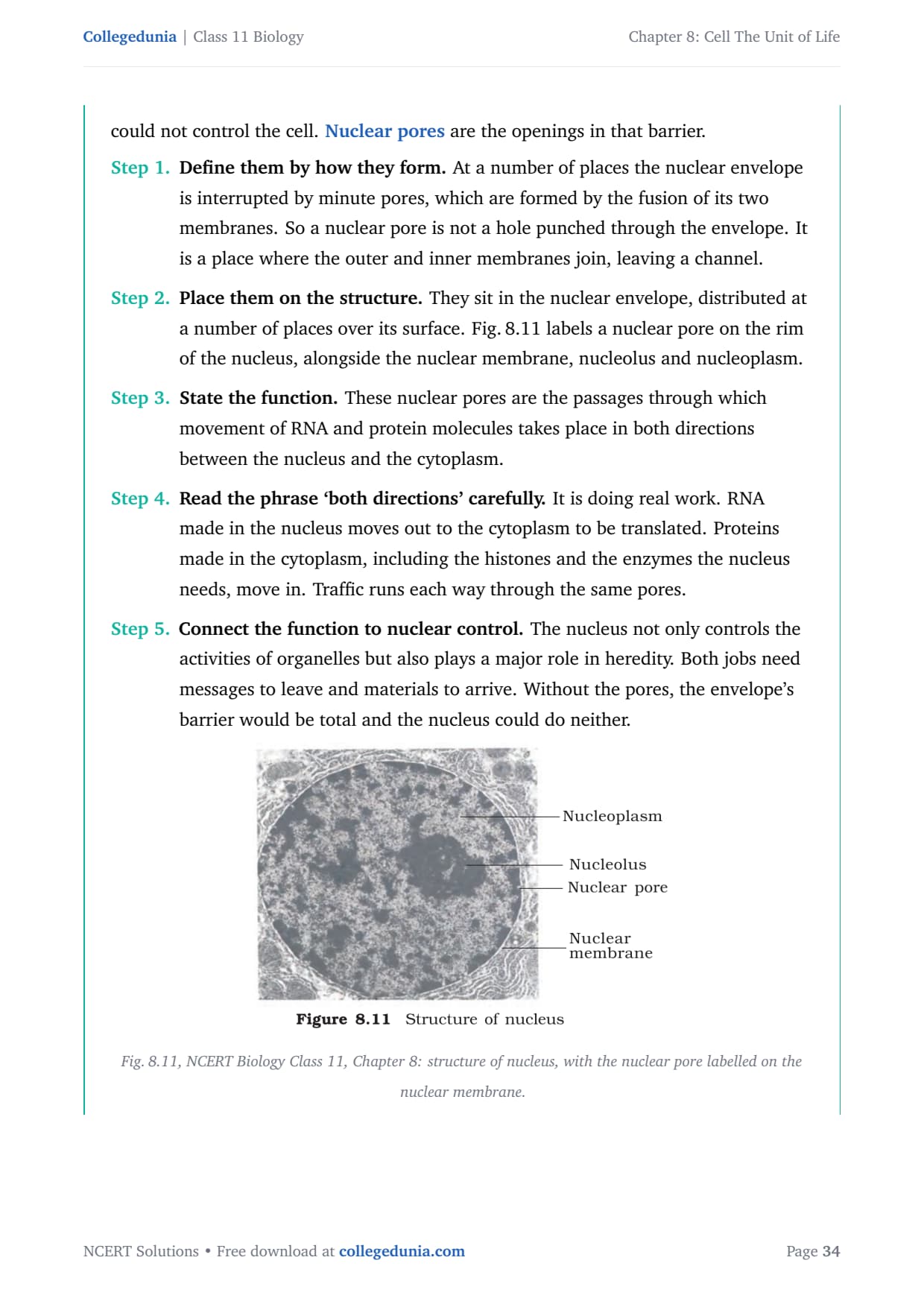
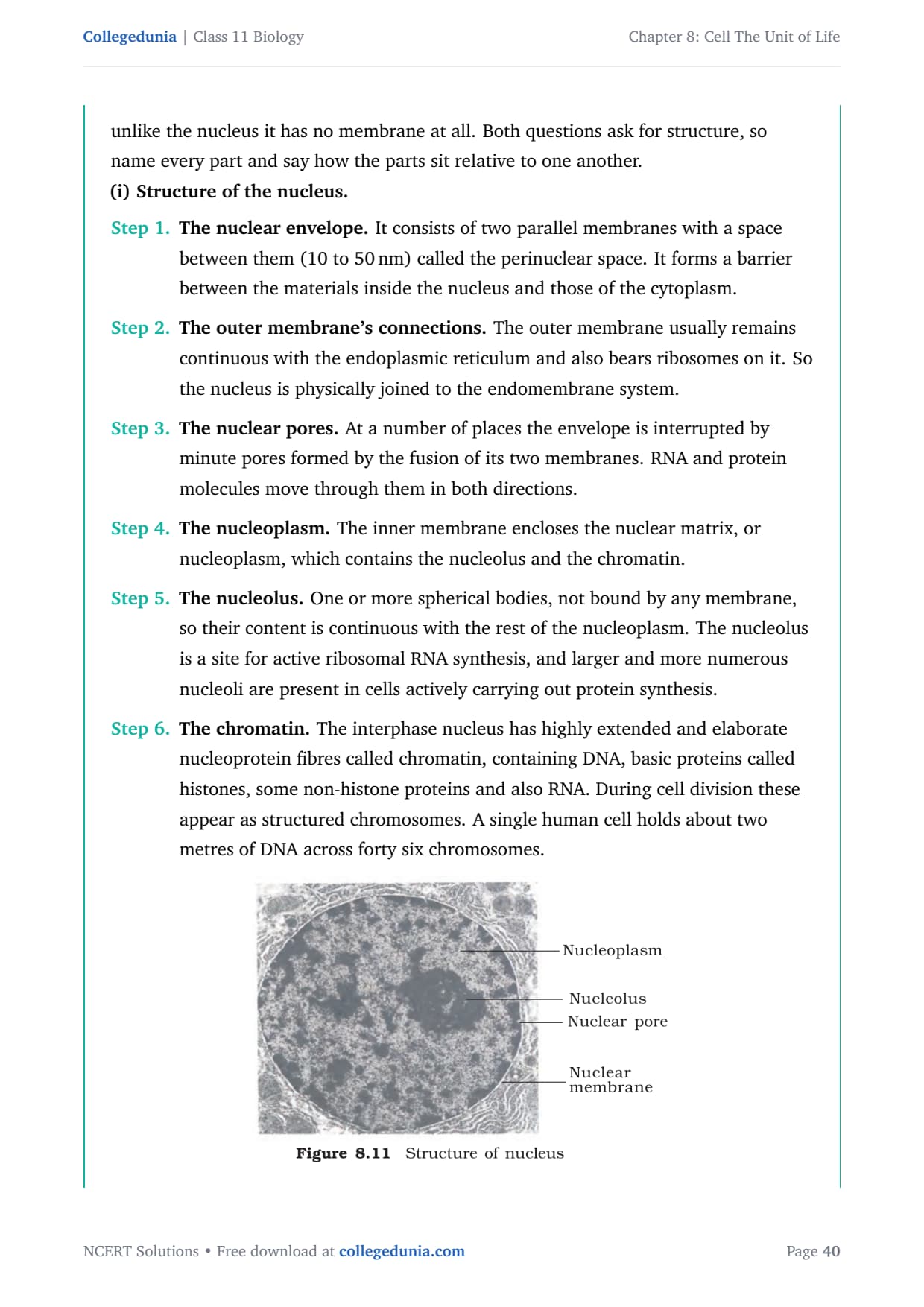
Three questions cluster on the nucleus and chromosome. Question 11 asks about nuclear pores, Question 13 asks for the labelled structure of the nucleus and centrosome, and Question 14 asks about the centromere. The nuclear envelope is two parallel membranes with a perinuclear space of 10 to 50 nm between them, and it separates the contents of the nucleus from the cytoplasm.
- Nuclear pores: minute openings formed by the fusion of the two membranes of the envelope; they are the passages through which RNA and protein molecules move in both directions between the nucleus and cytoplasm.
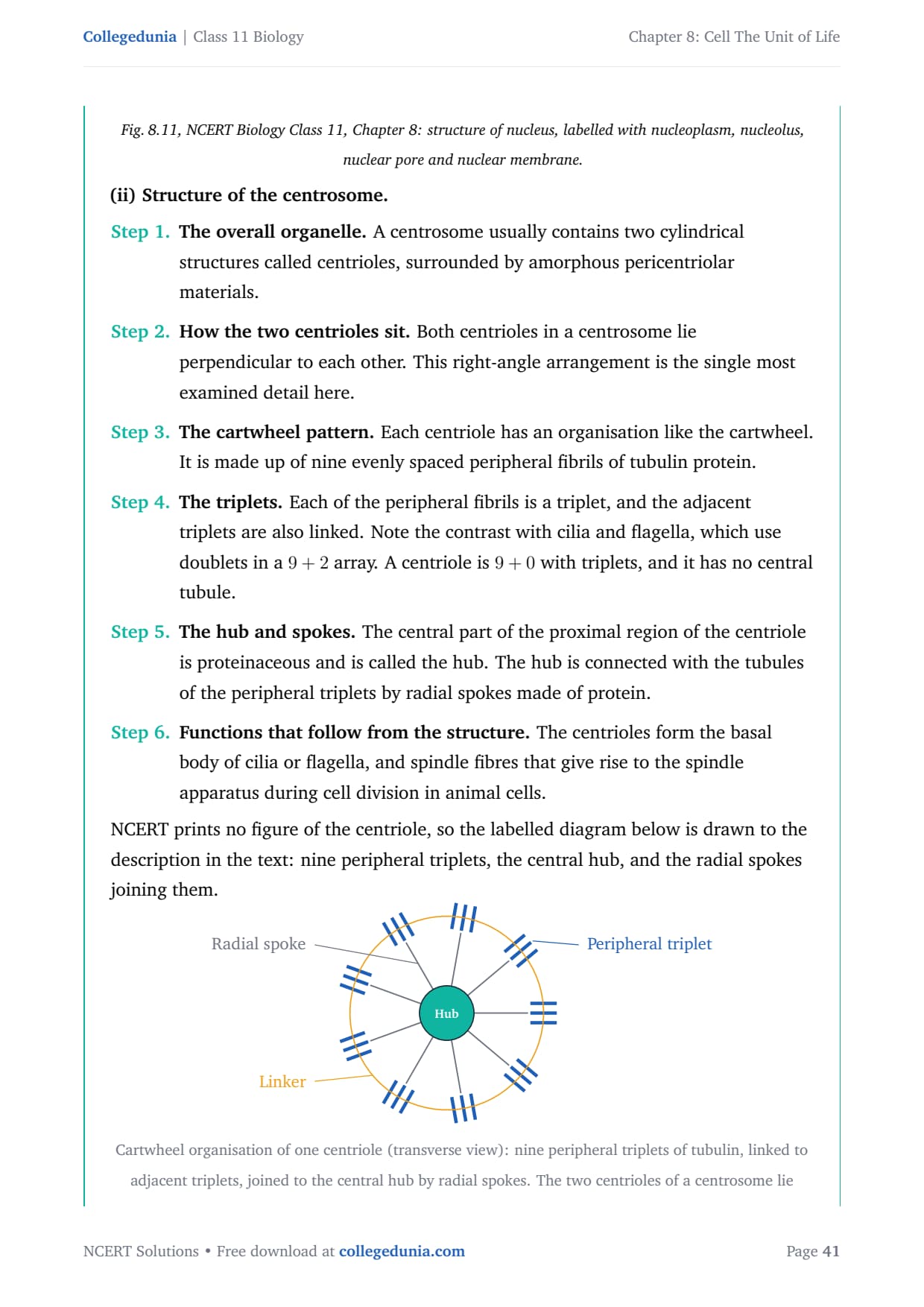
- Centrosome: an organelle with two cylindrical centrioles that has no membrane at all; each centriole shows a 9+0 arrangement of nine peripheral triplets and no central tubule, and it forms the spindle during division.
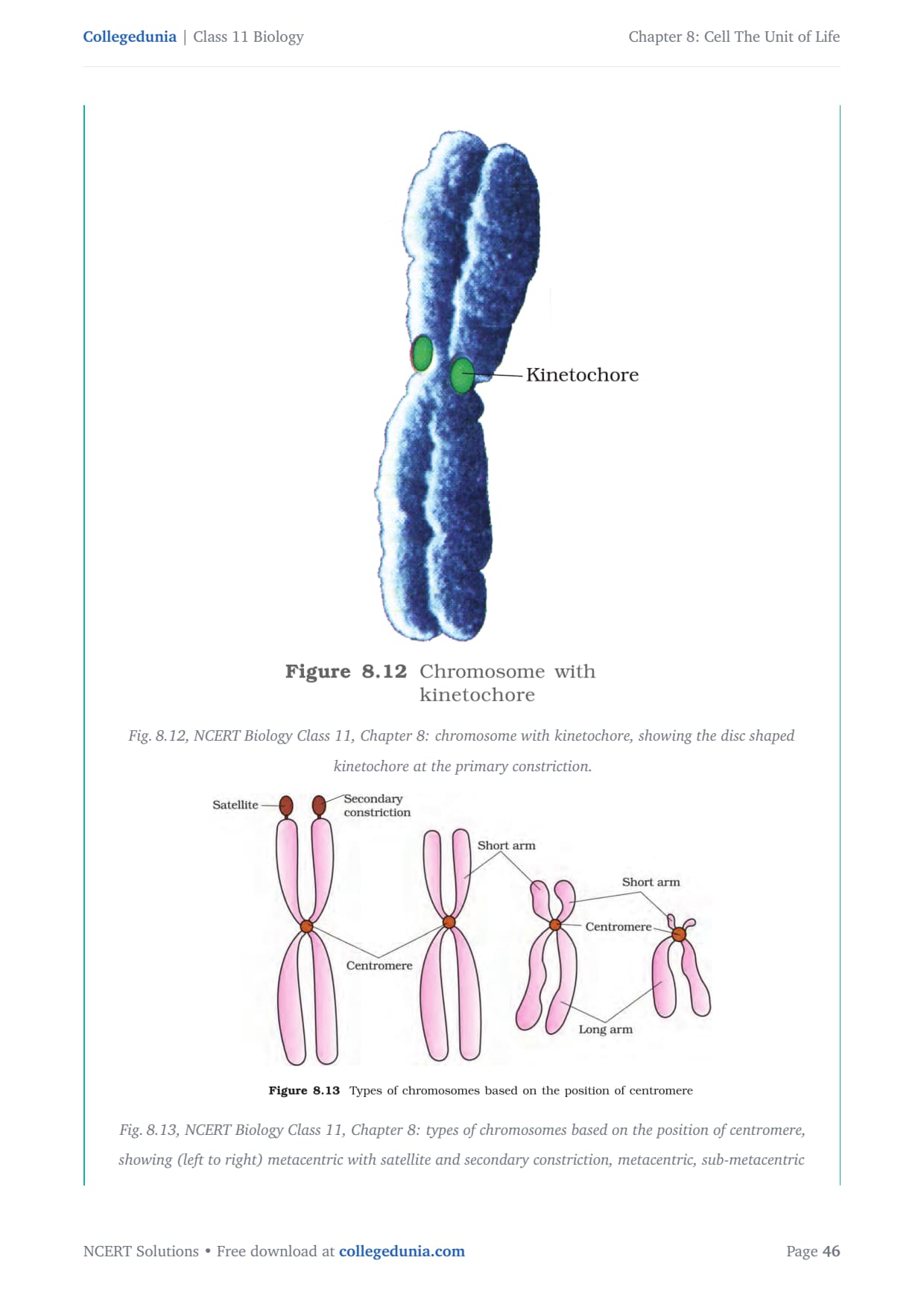
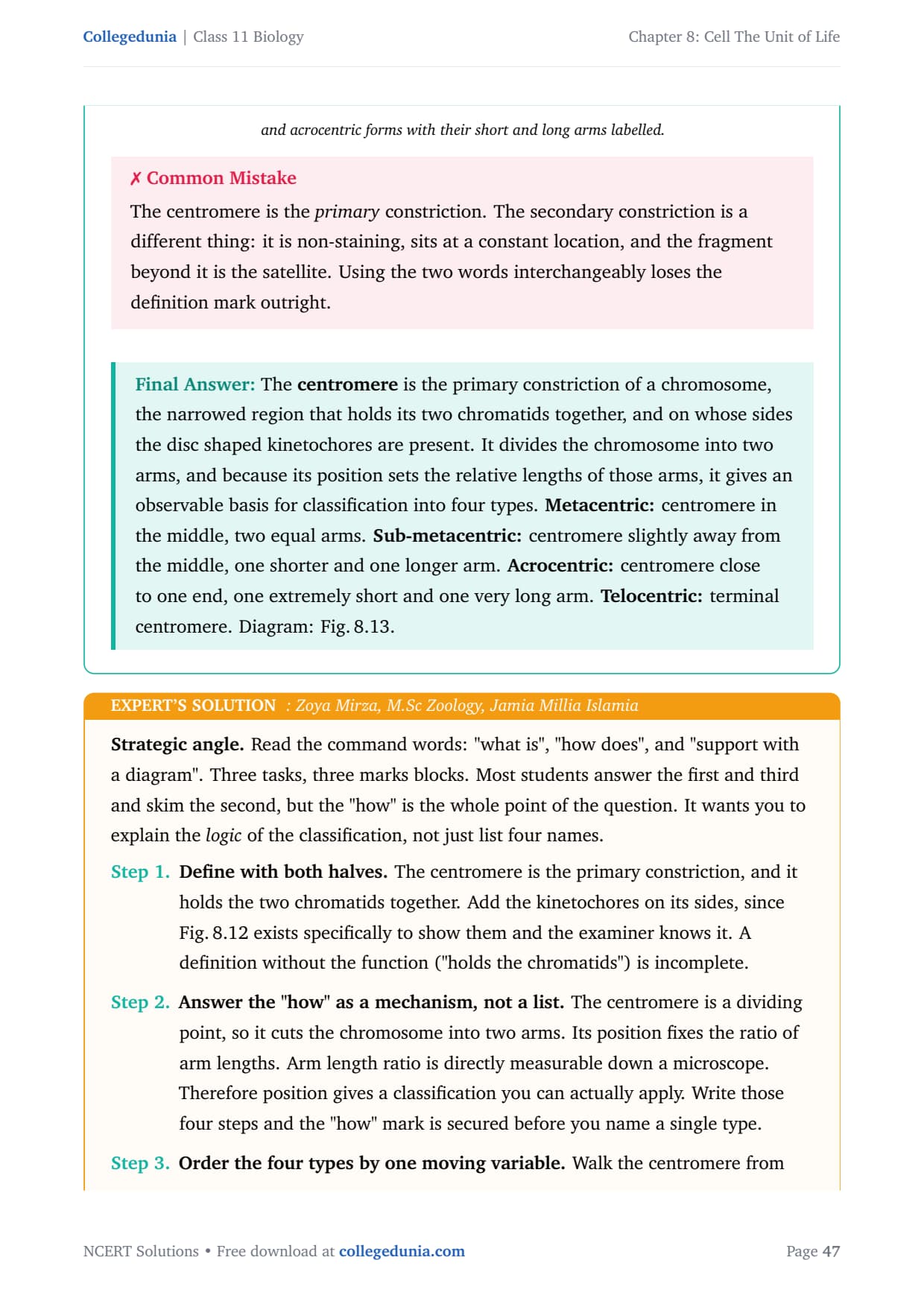
- Centromere: the primary constriction of a chromosome, bearing disc-shaped kinetochores on its sides, that holds the two chromatids together and divides the chromosome into two arms.
The position of the centromere classifies chromosomes into four types: metacentric, sub-metacentric, acrocentric and telocentric. A metacentric centromere lies in the middle, giving two equal arms; a sub-metacentric one lies slightly off centre; an acrocentric one lies near one end; and a telocentric one lies at the very tip. The nuclear pore is why having a nucleus costs a eukaryote nothing in control: the envelope protects the chromatin while the pores keep the nucleus in conversation with the rest of the cell.
Division of Labour and the Cell as the Basic Unit of Life
Questions 9 and 10 close the exercise on the ideas the chapter opened with. Question 9 asks students to explain division of labour in multicellular organisms, and Question 10 asks them to discuss why the cell is the basic unit of life. Both turn on the same contrast: a unicellular organism does every job in one cell, while a multicellular body can share the work out.
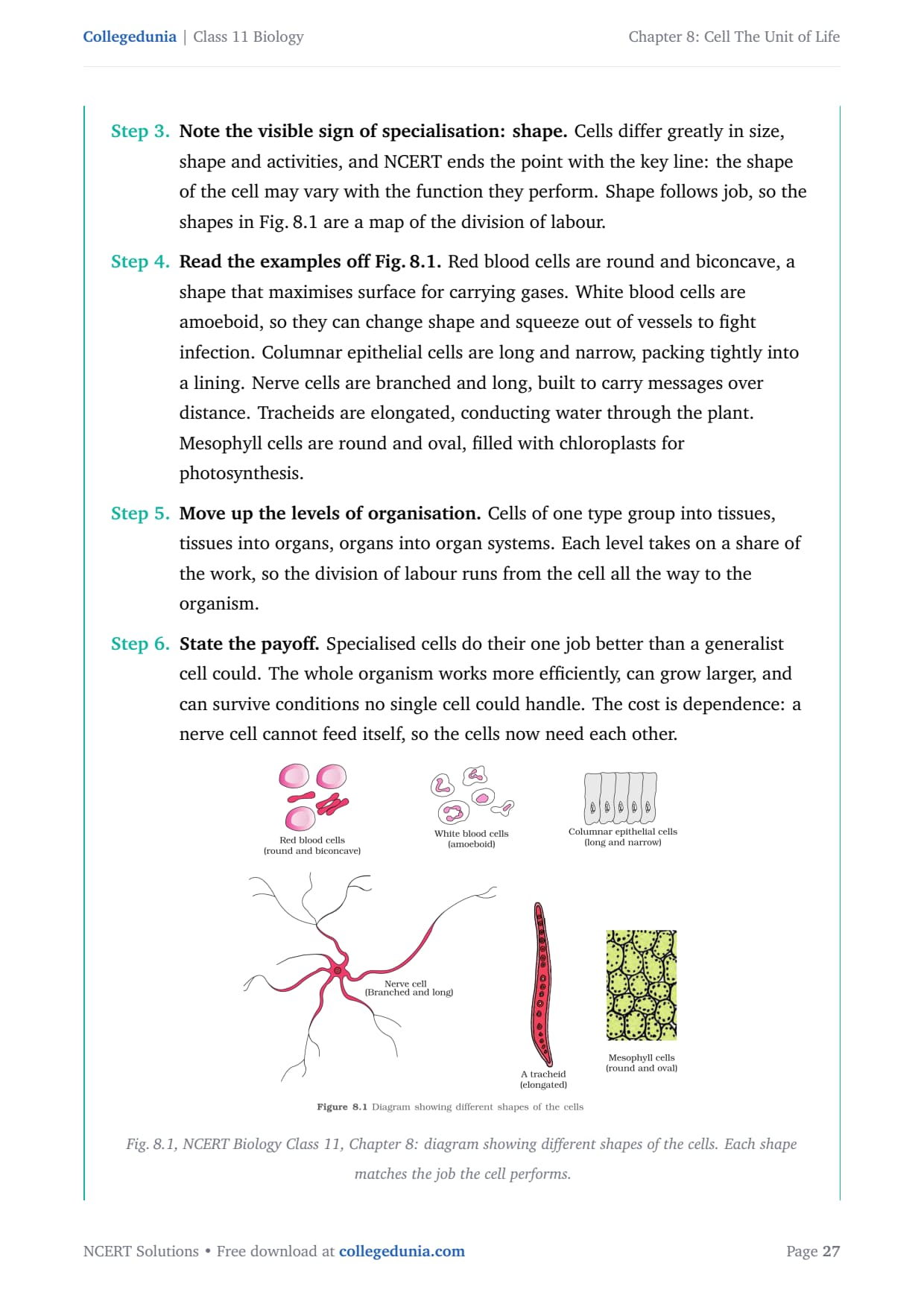
- Division of labour: in a many-celled body each cell can specialise in one function because other cells cover the rest, and the visible sign of specialisation is shape, since the shape of a cell varies with the function it performs.
- Shape follows job: red blood cells are biconcave for carrying gases, white blood cells are amoeboid to fight infection, nerve cells are long and branched to carry messages, and mesophyll cells are packed with chloroplasts for photosynthesis.
- The cell as basic unit: it is both the structural unit, since every body is built from cells, and the functional unit, since every life process happens inside cells.
Nothing less than a complete cell can live independently, so an isolated nucleus or mitochondrion is not alive, which is exactly what makes the cell basic. Cells group into tissues, tissues into organs and organs into organ systems, so the division of labour runs from the cell all the way up to the organism. And because all cells arise from pre-existing cells, the cell is also the unit of continuity, linking every organism today to the earliest cells on Earth.
Cell The Unit of Life Exercise-wise Breakdown
The NCERT back exercise has 14 questions that mix MCQs, a matching question and descriptive answers, several of which ask for labelled diagrams. The table below maps the question blocks to their topics so students can plan their practice and revise by theme.
| Question block | What it tests |
|---|---|
| Q 1 to Q 2 | History of the cell and the two clauses of cell theory. |
| Q 3 to Q 4 | Matching organelle parts to their homes, and the prokaryote versus eukaryote divide. |
| Q 5 to Q 6 | The mesosome, and how neutral and polar molecules cross the plasma membrane. |
| Q 7 to Q 8 | Double membrane organelles with diagrams, and the characteristics of prokaryotic cells. |
| Q 9 to Q 10 | Division of labour, and why the cell is the basic unit of life. |
| Q 11 to Q 14 | Nuclear pores, the nucleus and centrosome, lysosomes versus vacuoles, and the centromere. |
Because so many answers ask for labelled diagrams, the marks here sit in neat drawings and correct labels as much as in prose. Draw the mitochondrion, chloroplast, nucleus and the four chromosome types until the labels come automatically. Every question in the class 11 biology NCERT solutions chapter 8 Cell The Unit of Life PDF is solved with each step of reasoning shown, so students can compare their answers against the model working.
Practice the solved questions: Work through the full question bank with step-by-step answers and expert tips.
Common Mistakes Students Make in Cell The Unit of Life
Most marks in this chapter are lost on swapped names and missed qualifiers, not on hard ideas. Each mistake below costs 1 to 2 marks, so watch for it at the exact step.
Mistake 1: Crediting Robert Brown with discovering the cell. Brown discovered the nucleus; the cell was first seen by Leeuwenhoek and named by Hooke from cork.
Mistake 2: Calling the mesosome an organelle. Prokaryotes lack membrane bound organelles, so describe it as a specialised differentiated form of the plasma membrane instead.
Mistake 3: Swapping cristae and cisternae. Cristae are the mitochondrion's inner-membrane folds; cisternae are the Golgi's stacked flat discs.
Mistake 4: Saying polar molecules diffuse straight through the membrane. They cannot cross the nonpolar core and need a carrier protein, while neutral solutes diffuse freely.
Student Feedback on Cell The Unit of Life Solutions
What 13,240 students told us about their Cell The Unit of Life preparation:
- 64% of students said membrane transport, telling simple diffusion from active transport, was the trickiest part of the chapter.
- Most-skipped detail: the 70S ribosomes and circular DNA that make mitochondria and chloroplasts semi-autonomous, missed by about 4 in 10 students.
- Students who practised the labelled diagrams of the mitochondrion, chloroplast and nucleus first said the descriptive questions became automatic.
Source: 2026-27 Class 11 Biology student poll. Sample of 13,240 students from CBSE schools across 15 states, conducted before the 2026 boards.
Other Cell The Unit of Life Class 11 Biology Resources
Pair these solutions with the revision notes, formula sheet and NCERT textbook PDF for the same chapter.
| Resource | Link |
|---|---|
| NCERT Notes | Cell The Unit of Life Class 11 Notes |
| Formula Sheet | Cell The Unit of Life Class 11 Formula Sheet |
| NCERT Book PDF | Cell The Unit of Life Class 11 Book PDF |
NCERT Solutions for Class 11 Biology: All Chapters
Jump to the step-by-step solutions for any other Class 11 Biology chapter below.
| Chapter | NCERT Solutions |
|---|---|
| Chapter 1 | The Living World |
| Chapter 2 | Biological Classification |
| Chapter 3 | Plant Kingdom |
| Chapter 4 | Animal Kingdom |
| Chapter 5 | Morphology of Flowering Plants |
| Chapter 6 | Anatomy of Flowering Plants |
| Chapter 7 | Structural Organisation in Animals |
| Chapter 8 | Cell: The Unit of Life |
| Chapter 9 | Biomolecules |
| Chapter 10 | Cell Cycle and Cell Division |
| Chapter 11 | Photosynthesis in Higher Plants |
| Chapter 12 | Respiration in Plants |
| Chapter 13 | Plant Growth and Development |
| Chapter 14 | Breathing and Exchange of Gases |
| Chapter 15 | Body Fluids and Circulation |
| Chapter 16 | Excretory Products and their Elimination |
| Chapter 17 | Locomotion and Movement |
| Chapter 18 | Neural Control and Coordination |
| Chapter 19 | Chemical Coordination and Integration |
FAQs on Cell The Unit of Life Class 11 NCERT Solutions
Cell the Unit of Life NCERT Solutions - Frequently Asked Questions
Ques. What do the class 11 biology NCERT solutions chapter 8 Cell The Unit of Life cover?
Ans. These solutions cover all 14 back-exercise questions, including the history of the cell and cell theory, the prokaryote versus eukaryote divide, the mesosome, membrane transport, double membrane organelles with labelled diagrams, the characteristics of prokaryotic cells, division of labour, nuclear pores, the nucleus and centrosome, lysosomes versus vacuoles, and the centromere. Every question is solved step by step.
Ques. Why is the statement "Robert Brown discovered the cell" not correct?
Ans. Robert Brown discovered the nucleus in 1831. The cell itself was first seen and described as a live cell by Antonie van Leeuwenhoek, and the word cell came from Robert Hooke's work on cork. So attaching the discovery of the cell to Brown is the statement that is not correct in Question 1.
Ques. How do neutral and polar molecules cross the plasma membrane?
Ans. Neutral solutes have no charge, so they diffuse straight through the nonpolar lipid core by simple diffusion, down the concentration gradient, with no energy spent. Polar molecules cannot pass the nonpolar core, so they need a carrier protein. Movement against the gradient uses active transport, which spends ATP, as in the Na+/K+ pump.
Ques. Which two cell organelles are double membrane bound?
Ans. The two double membrane bound organelles are the mitochondrion and the plastid, of which the chloroplast is the best studied. Both fold the inner membrane to gain surface, as cristae in the mitochondrion and thylakoids stacked into grana in the chloroplast, and both carry their own circular DNA and 70S ribosomes. The mitochondrion carries out aerobic respiration and makes ATP, while the chloroplast traps light energy for photosynthesis.
Ques. What is the function of nuclear pores?
Ans. Nuclear pores are minute openings in the nuclear envelope, formed at a number of places by the fusion of its two membranes. They serve as the passages through which RNA and protein molecules move in both directions between the nucleus and the cytoplasm, which is what allows the nucleus to control the activities of the cell.
Ques. How is Cell The Unit of Life weighted in CBSE Class 11 Biology?
Ans. Cell The Unit of Life sits in the Cell: Structure and Functions unit, which carries 15 marks in the CBSE Class 11 Biology paper, and the chapter itself usually contributes 4 to 5 marks through diagrams, matching and short-answer questions. It is also one of the highest-yield chapters for NEET, where cell structure is asked almost every year.



Comments