




The class 11 biology NCERT solutions chapter 16 Excretory Products and their Elimination answer every back-exercise question, according to the latest 2026-27 CBSE syllabus, and help students prepare for the CBSE Boards, NEET and CUET. Each answer is worked step by step, from why terrestrial animals switch from ammonia to urea and uric acid, to how a single nephron filters plasma and how the counter current mechanism concentrates the urine four times over.
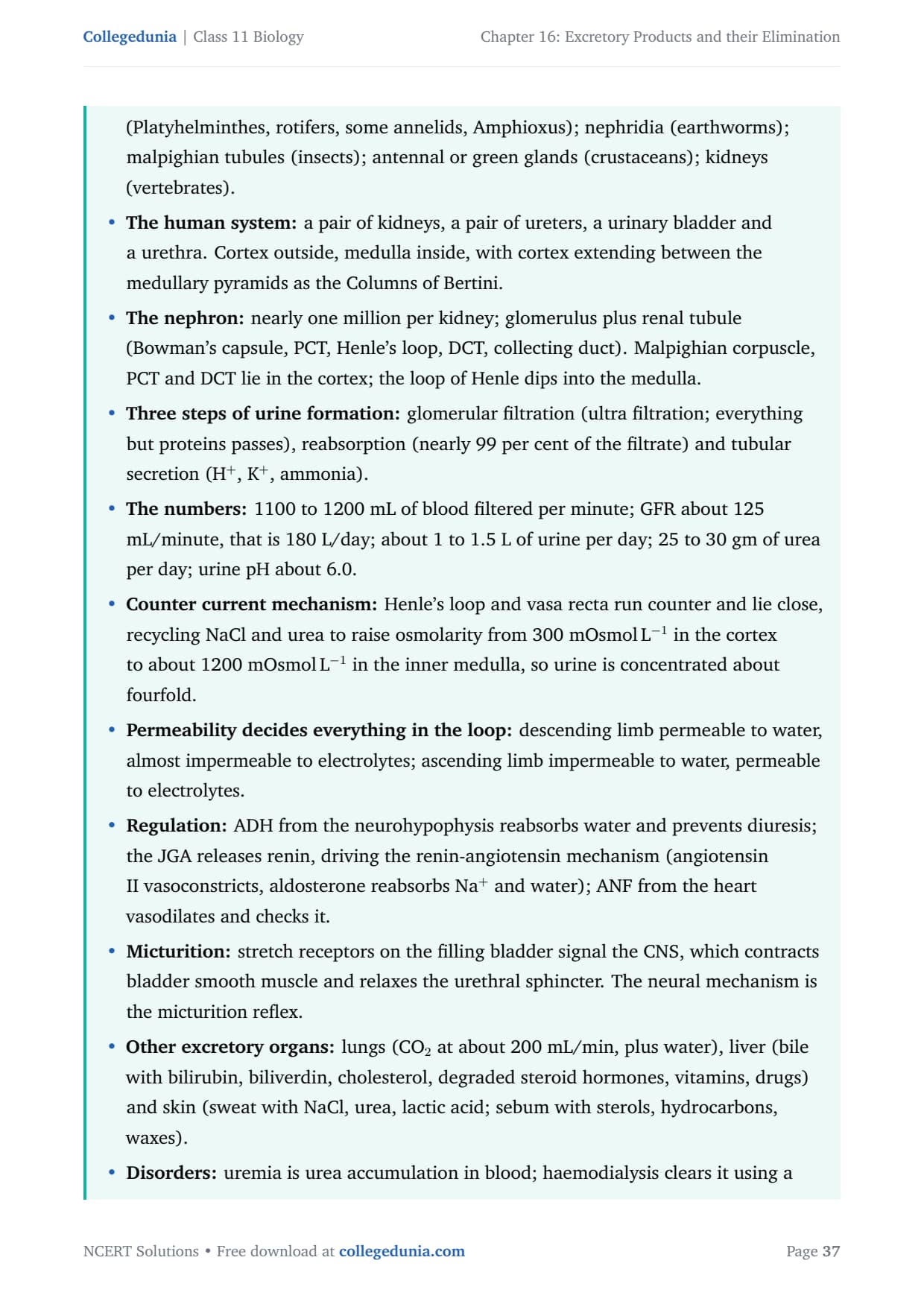
This chapter sits in the Human Physiology unit, and the excretory route you trace here connects directly to the circulation and osmoregulation ideas of the neighbouring chapters.
- CBSE Weightage: 2 to 3 marks, part of the high-value Human Physiology unit that carries the largest share of the Class 11 Biology paper.
- Topics covered: modes of excretion, nitrogenous wastes, human excretory system, the nephron, urine formation, the counter current mechanism, regulation of kidney function, micturition, the role of other organs, and disorders including dialysis.
- Exercise count: 12 back-exercise questions mixing definitions, a true or false set, two matching questions, a fill-in-the-gaps question and several descriptive answers.
These class 11 biology NCERT solutions chapter 16 Excretory Products and their Elimination are curated by subject experts, based on the 2026-27 NCERT textbook, and checked against the last five years of CBSE Board and NEET papers.
Why Excretory Products and their Elimination Matters and What the Chapter Covers
Every cell in the body produces waste as it works, and ammonia, urea, uric acid, carbon dioxide, water and ions all have to leave before they build up to harmful levels. This chapter follows those wastes from the cell that makes them to the moment they leave the body, and it makes the human kidney the centre of the story. Understanding it well is worth doing, because Human Physiology is the highest-scoring unit in both the Boards and NEET.
- Everyday role: the kidneys screen the entire blood plasma many times a day, keeping the salt, water and waste content of the body within the narrow range that cells can tolerate.
- Core skill: reading a nephron diagram and knowing which segment filters, which reabsorbs, which secretes and which concentrates.
- Why it connects: the same blood pressure and osmoregulation ideas run through Body Fluids and Circulation before it and the hormone chapters after it.
The kidney forms 180 litres of filtrate a day but sends out barely 1.5 litres of urine, and almost every question in this chapter turns on that contrast. The class 11 biology NCERT solutions chapter 16 Excretory Products and their Elimination below follow the same order as the NCERT textbook, so students can check their working line by line.
Nitrogenous Wastes and Why Land Animals Avoid Ammonia
The chapter opens with the rule that decides an animal's excretory strategy. Ammonia, urea and uric acid are the three major nitrogenous wastes, and they are ranked in the same order by two properties: toxicity and the water each needs to leave the body. That single pairing answers both the descriptive question on terrestrial animals and half of the matching question.
| Waste | Toxicity and water cost | Excreted by |
|---|---|---|
| Ammonia (ammonotelism) | Most toxic, needs a large volume of water | Many bony fishes, aquatic amphibians, aquatic insects |
| Urea (ureotelism) | Much less toxic, needs moderate water | Mammals, many terrestrial amphibians, marine fishes |
| Uric acid (uricotelism) | Least toxic, leaves as a pellet or paste with minimum water | Reptiles, birds, land snails, insects |
Terrestrial animals are ureotelic or uricotelic, not ammonotelic, because ammonia has to be flushed out in a large volume of water that land animals cannot spare. Ammonia is readily soluble and is generally excreted by diffusion across body or gill surfaces as ammonium ions, which only works when water surrounds the animal. Terrestrial adaptation therefore necessitated the production of less toxic wastes for conservation of water. In ureotelic animals, ammonia is converted into urea in the liver, released into the blood and filtered out by the kidneys. Marine fishes are ureotelic too, because salty sea water pulls water out of them and leaves them effectively short of it. Work through Exercise Q9 and Q7 for the full reasoning and the matched animal groups.
The Nephron and Glomerular Filtration Rate (GFR)
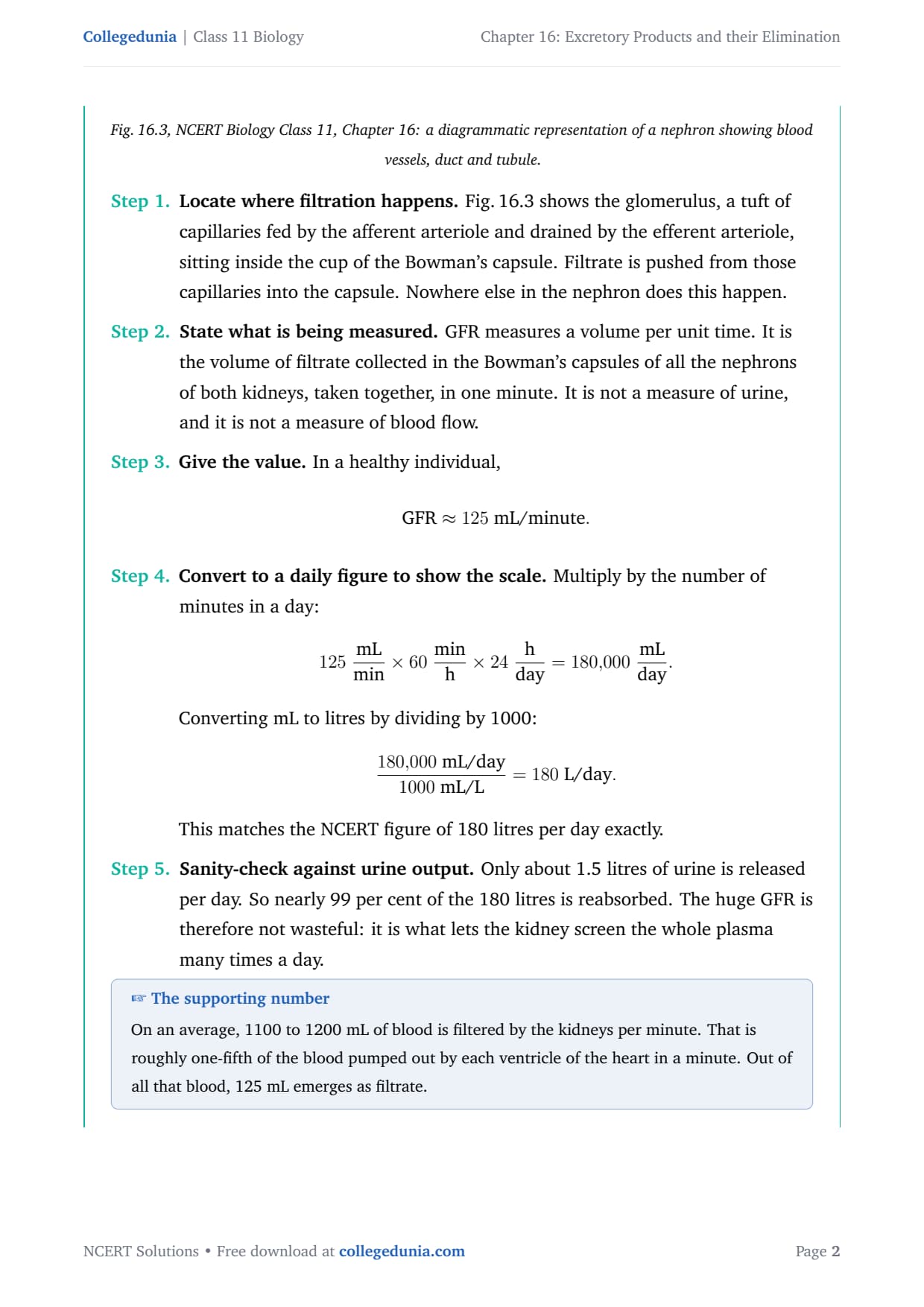
Urine formation begins with glomerular filtration, in which blood is filtered so finely through the three layers of the glomerulus and Bowman's capsule that almost all plasma constituents except the proteins pass into the capsule. This is why the step is called ultra filtration, and its rate is measured by the Glomerular Filtration Rate, one of the most asked definitions in the chapter.
- Definition: GFR is the amount of filtrate formed by the kidneys, meaning all the nephrons of both kidneys together, per minute.
- Value: in a healthy individual GFR is approximately 125 mL/minute, which works out to 180 litres per day.
- Do not confuse it with blood flow: about 1100 to 1200 mL of blood reaches the kidneys each minute, and only about 125 mL of it becomes filtrate.
The arithmetic is worth writing out in the exam, because it proves the 180 is derived and not memorised: 125 mL/minute × 1440 minutes/day = 180,000 mL/day = 180 litres/day. Set that against the roughly 1.5 litres of urine released daily and it follows that nearly 99 per cent of the filtrate is reabsorbed by the renal tubules. GFR is measured at the capsule, before reabsorption and secretion act, so defining it as urine formed per minute loses the mark outright. A precise definition, the value, and the daily figure together carry the full marks.
Autoregulation of GFR and the Juxta Glomerular Apparatus
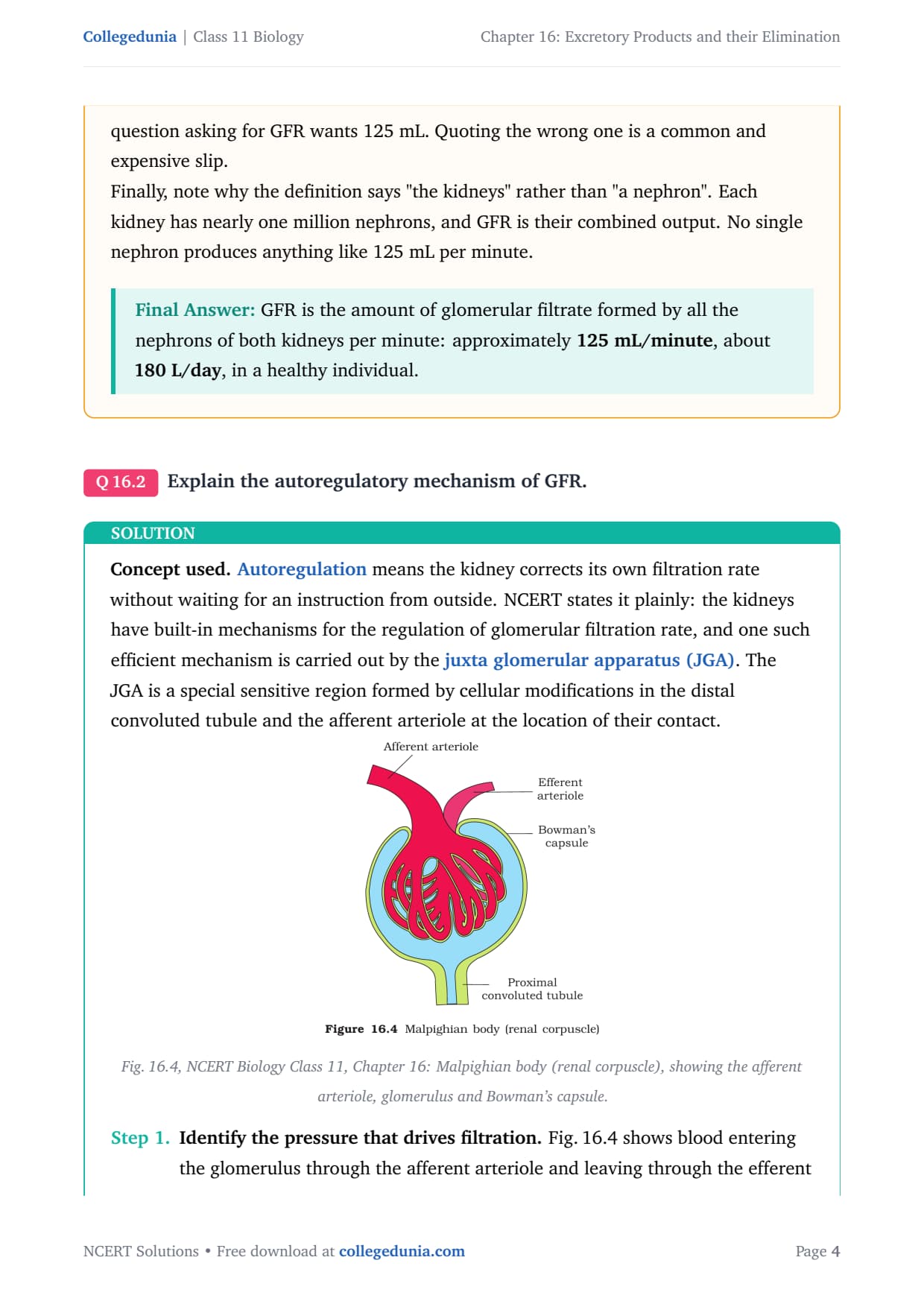
The kidney corrects its own filtration rate without waiting for an outside instruction, and the machinery that does this is the juxta glomerular apparatus (JGA). It is a sensitive region formed by cellular modifications in the distal convoluted tubule and the afferent arteriole at the point where the two touch. That position lets one small region sense the tubule while sitting on the vessel that feeds the glomerulus.
- The sensor: a fall in glomerular blood flow, blood pressure or GFR activates the JG cells.
- The signal: activated JG cells release the enzyme renin, which converts angiotensinogen to angiotensin I and then to angiotensin II.
- The effect: angiotensin II is a powerful vasoconstrictor that raises glomerular blood pressure and restores GFR, and it also triggers aldosterone from the adrenal cortex, which reabsorbs Na+ and water from the distal tubule.
The whole loop is the Renin-Angiotensin mechanism, and it is held in check by the Atrial Natriuretic Factor (ANF): a rise in blood flow to the atria releases ANF, which causes vasodilation and lowers blood pressure so the correction does not overshoot. Naming the four parts, a sensor, a signal, an effector and a brake, is often worth more than reciting the cascade. Two spelling and scope traps are worth avoiding: renin is the kidney enzyme, not rennin the milk-curdling stomach enzyme, and ADH raises GFR from outside the kidney, so it is not part of this autoregulatory loop. The significance question about the JGA wants the same machinery listed as achievements, so answer it as numbered points of what the JGA accomplishes.
The Counter Current Mechanism and How Urine Is Concentrated
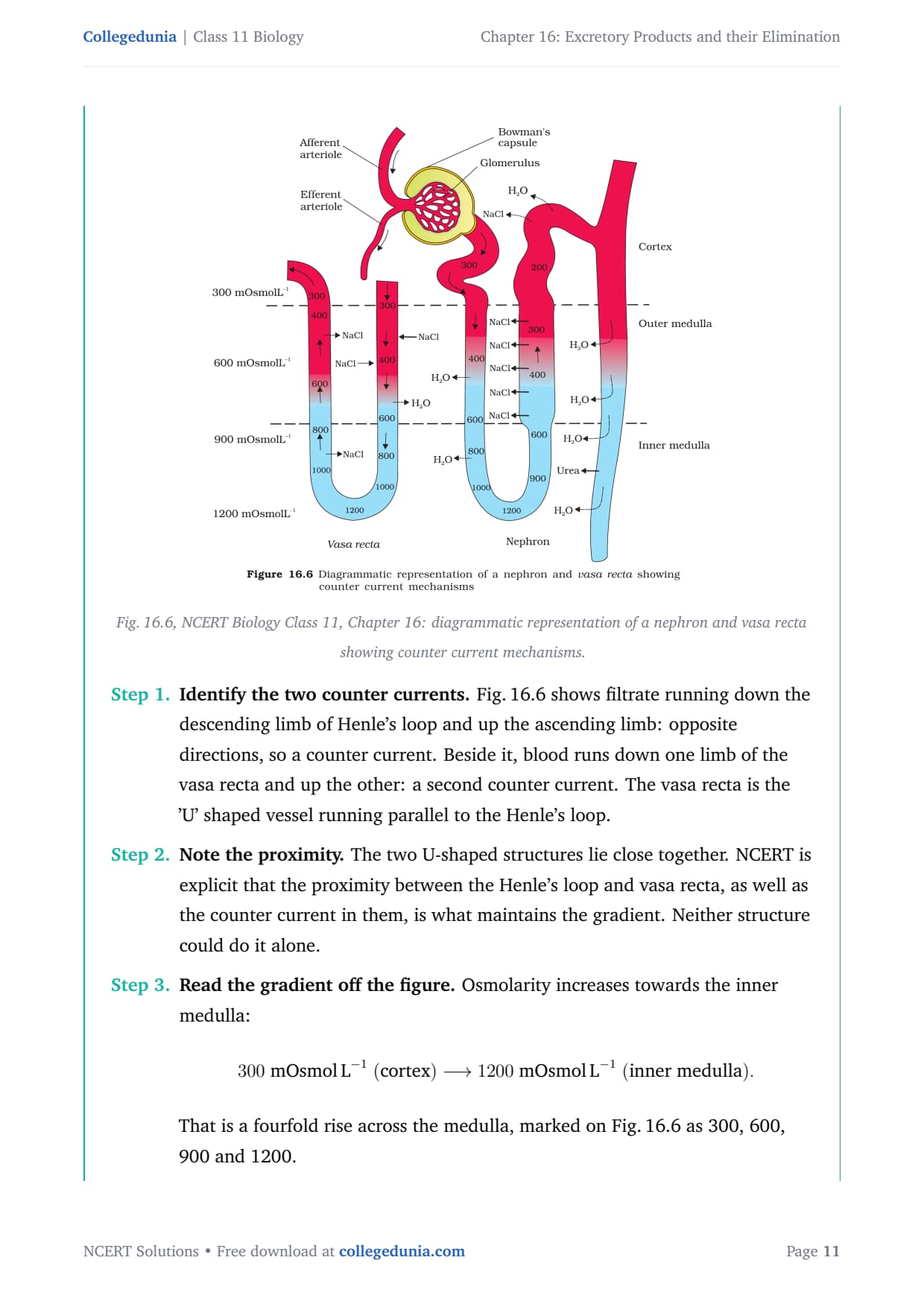
The kidney's ability to make urine far more concentrated than blood rests on the counter current mechanism, the transport of substances made possible by the special arrangement of the Henle's loop and the vasa recta. Both are U-shaped, both carry their two streams in opposite directions, and both lie close and parallel, which is exactly what maintains the gradient.
| Feature | Detail from NCERT |
|---|---|
| The two counter currents | Filtrate runs down and up the two limbs of Henle's loop; blood runs down and up the two limbs of the vasa recta. |
| The gradient | Osmolarity rises from 300 mOsmol L-1 in the cortex to about 1200 mOsmol L-1 in the inner medulla, a fourfold rise. |
| Cause of the gradient | Mainly NaCl and urea, each recycled rather than washed out. |
| Limb permeability | Descending limb is permeable to water; ascending limb is impermeable to water but transports electrolytes. |
NaCl passed out by the ascending limb of Henle's loop is exchanged with the descending limb of the vasa recta and returned to the interstitium by the ascending vasa recta, while urea entering the thin ascending limb is returned by the collecting tubule. Both solutes are trapped in the medulla instead of being flushed away. If both streams flowed the same way the gradient would collapse into one average value, so the opposite flow is what keeps a small difference in place at every level. This interstitial gradient draws water out of the collecting duct, letting human kidneys produce urine nearly four times as concentrated as the initial filtrate. The mechanism is largely a juxta medullary affair, since the vasa recta is absent or highly reduced in cortical nephrons.
Reabsorption, Secretion and the True or False Facts
After filtration, the tubule reworks the filtrate by reabsorption and tubular secretion, and the true or false question tests one fact from each segment. Reading the verb and the adjective of each statement, rather than judging it as a whole, is the fastest way to find the false one.
- Micturition is carried out by a reflex: True, NCERT names the micturition reflex by that term.
- ADH helps in water elimination, making urine hypotonic: False, ADH facilitates water reabsorption and prevents diuresis, so the urine becomes concentrated, that is hypertonic.
- Protein-free fluid is filtered into the Bowman's capsule: True, this is exactly why the step is called ultra filtration.
- Henle's loop plays an important role in concentrating urine: True, it maintains the high medullary osmolarity that later pulls water from the collecting duct.
- Glucose is actively reabsorbed in the PCT: True, glucose, amino acids and Na+ are reabsorbed actively in the proximal convoluted tubule.
Statement (b) is the trap: students see ADH and water paired and mark it True, but the hormone is antidiuretic, so it does reabsorption and gives hypertonic urine, two swapped words in one short sentence. The PCT is lined by a brush border epithelium that increases the surface area for reabsorption, and it handles nearly all of the essential nutrients. Statement (e) is True specifically because it names glucose, one of the actively handled substances; had it said urea, the same sentence would have been false, since nitrogenous wastes are absorbed passively.
Micturition and the Composition of Urine
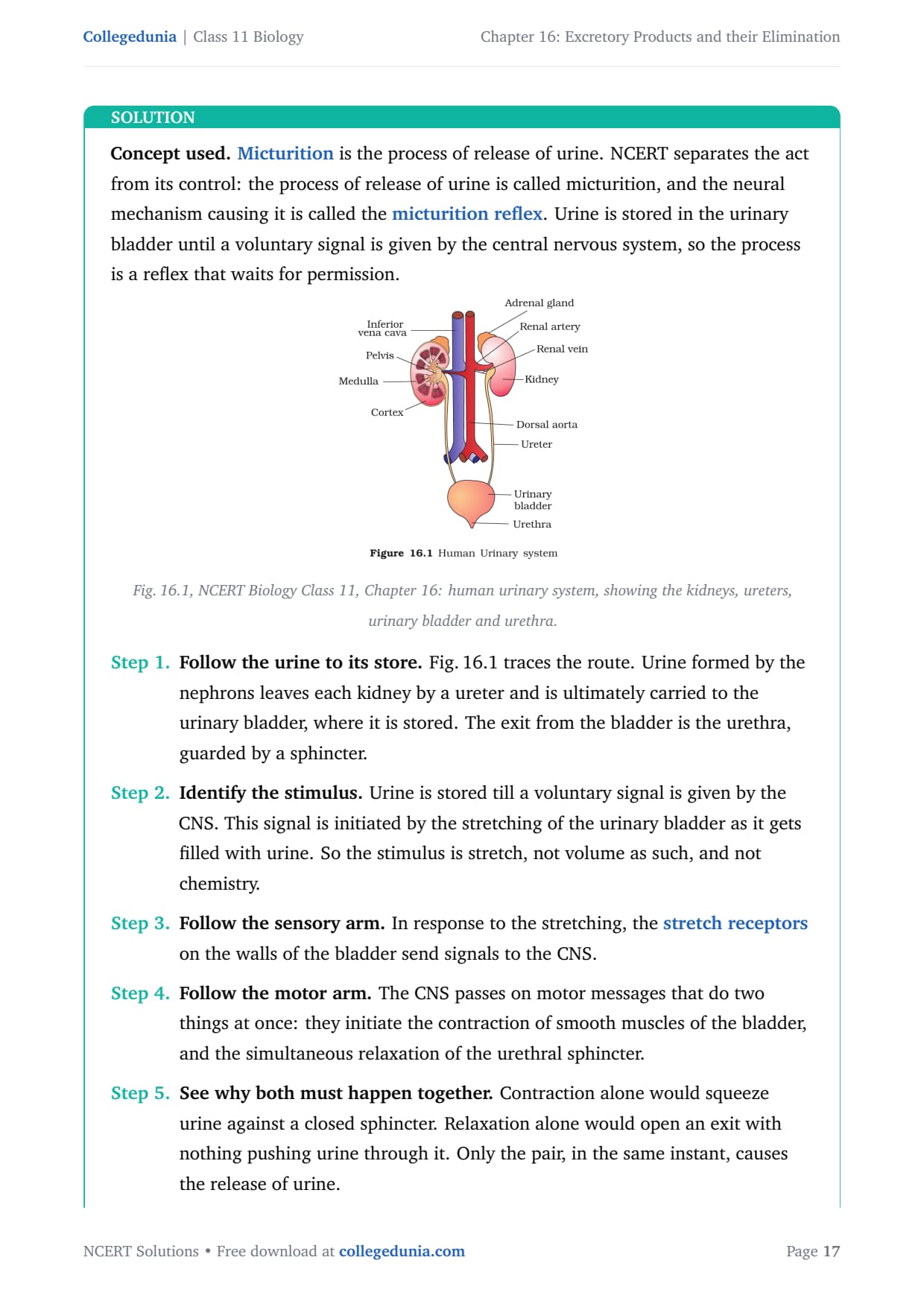
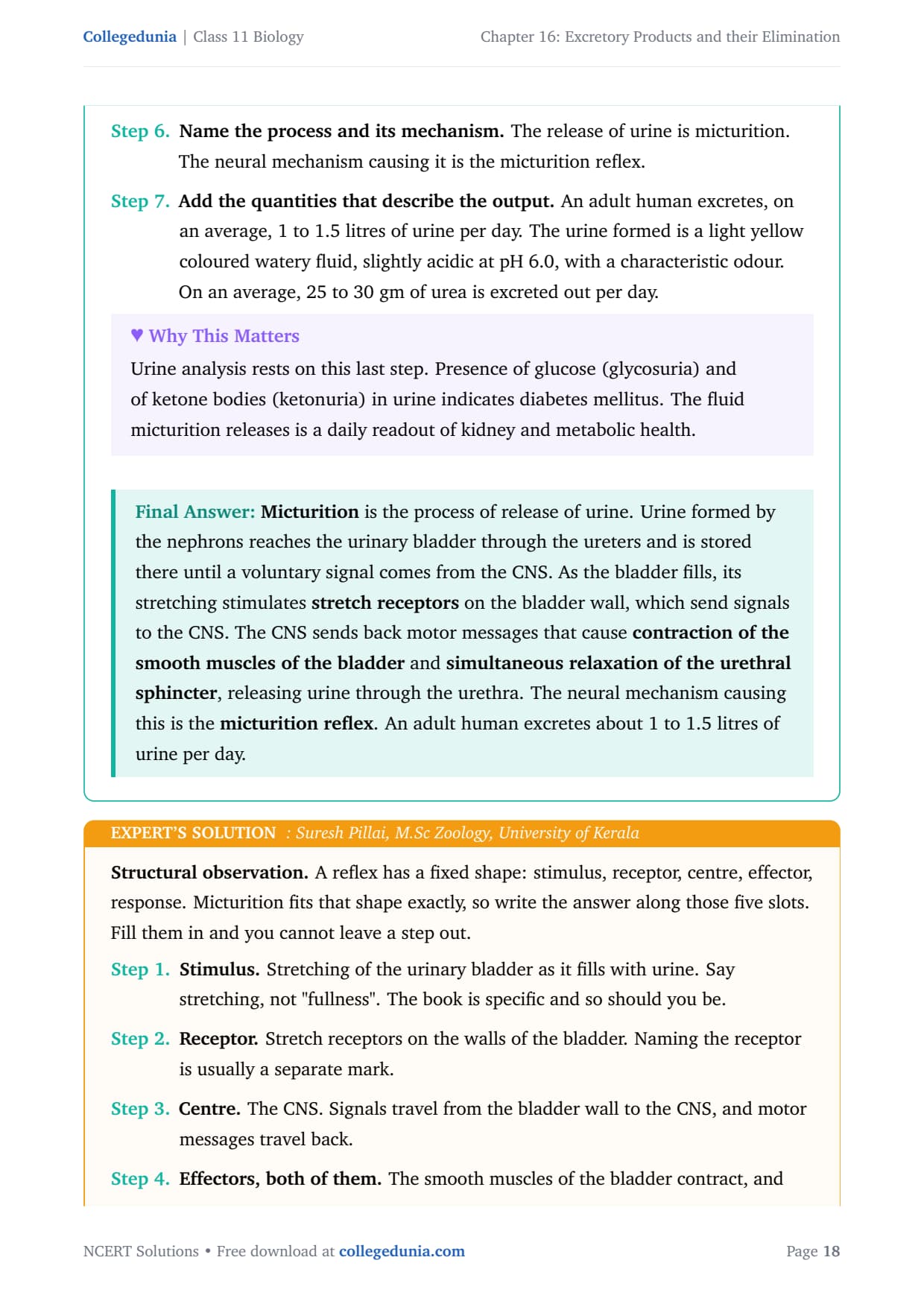
Micturition is the process of release of urine, and the neural mechanism causing it is the micturition reflex. Urine formed by the nephrons reaches the urinary bladder through the ureters and is stored there until a voluntary signal comes from the central nervous system, so the process is a reflex that waits for permission. Writing it along the fixed shape of a reflex keeps every step in place.
- Stimulus: stretching of the urinary bladder as it fills with urine.
- Receptor and centre: stretch receptors on the bladder wall signal the CNS, which sends motor messages back.
- Effectors: the smooth muscles of the bladder contract while the urethral sphincter relaxes, both at the same instant, releasing urine through the urethra.
Both effectors must act together: contraction alone would squeeze urine against a closed sphincter, and relaxation alone would open an exit with nothing pushing urine through it. The word voluntary is the detail worth understanding, since the stretch receptors report readiness but the CNS decides when to permit the motor messages, which is why an adult can hold urine and an infant cannot. The output is worth learning as a set: an adult excretes about 1 to 1.5 litres of urine per day, light yellow, slightly acidic at pH 6.0, with roughly 25 to 30 gm of urea excreted daily. Urine analysis rests on this, since glucose (glycosuria) and ketone bodies (ketonuria) in urine indicate diabetes mellitus.
Osmoregulation and the Role of Other Excretory Organs
Osmoregulation is the regulation of the osmotic concentration of the body fluids, that is the maintenance of a constant ionic concentration and fluid volume. NCERT introduces the word for protonephridia, which are primarily concerned with ionic and fluid volume regulation. It is distinct from excretion: excretion removes waste, osmoregulation maintains a balance, even though the same organ and the same act of passing urine often serve both.
| Organ | What it eliminates |
|---|---|
| Lungs | Large amounts of CO2 (about 200 mL/minute) and significant water daily. |
| Liver | Bile with bilirubin, biliverdin, cholesterol, degraded steroid hormones, vitamins and drugs, which leave with digestive wastes; also converts ammonia to urea for the kidneys. |
| Skin (sweat glands) | A watery fluid of NaCl, small amounts of urea and lactic acid; its main role is cooling. |
| Skin (sebaceous glands) | Sterols, hydrocarbons and waxes through sebum, which protects the skin. |
In humans, osmoregulation is carried out mainly by the kidneys, under osmoreceptors that respond to changes in blood volume, body fluid volume and ionic concentration, acting through ADH for water and aldosterone for Na+ and water. Simpler animals use protonephridia or flame cells, nephridia of earthworms, malpighian tubules of insects, and antennal or green glands of crustaceans. When answering the excretion question, give each organ its own block and name the actual substances, because a general statement such as the liver removes wastes earns little while a named substance list earns the mark. Small amounts of nitrogenous waste can also leave through saliva.
Kidney Anatomy, Dialysis and Naming the Structures
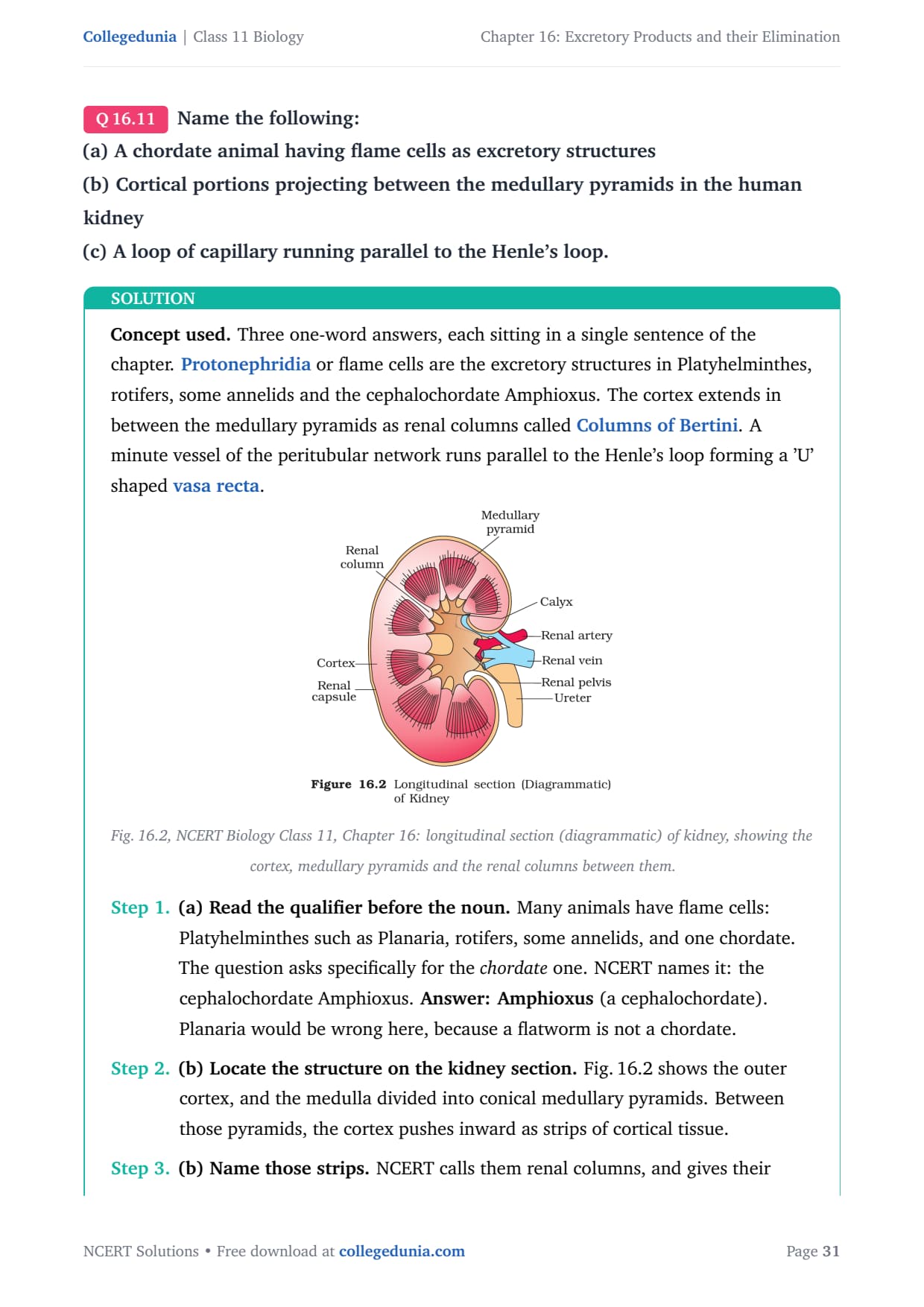
The name-the-following and fill-in-the-gaps questions test small labelled facts drawn from the kidney section, so a clear picture of the organ answers most of them at once. The cortex, the medullary pyramids, the renal columns between them, and the U-shaped vasa recta beside the loop all appear on the kidney diagram, and each carries a one-word answer.
- Flame cells in a chordate: Amphioxus, the cephalochordate whose protonephridia are its excretory structures. Planaria is wrong because a flatworm is not a chordate.
- Cortex projecting between the pyramids: the Columns of Bertini, also called renal columns.
- A capillary loop parallel to Henle's loop: the vasa recta, a minute vessel of the peritubular network.
Kidney failure lets urea build up in the blood, a condition called uremia, and haemodialysis clears it. Blood is pumped through a coiled cellophane tube surrounded by a dialysing fluid that has the same composition as plasma except the nitrogenous wastes, so those wastes move out along a concentration gradient while glucose and ions stay in. An anticoagulant such as heparin is added before the blood enters the unit, and the cleared blood is returned through a vein. The dialysing fluid matches plasma everywhere except the wastes precisely so that only the wastes are removed. The fill-in-the-gaps answers follow from the mechanism: the ascending limb is impermeable and the descending limb permeable to water, water reabsorption from distal tubules is facilitated by ADH, and a healthy adult excretes 25 to 30 gm of urea per day.
Excretory Products and their Elimination Exercise-wise Breakdown
The NCERT back exercise has 12 questions covering definitions, a true or false set, two matching questions and several descriptive answers. The table below maps the question blocks to their topics so students can revise by theme.
| Question block | What it tests |
|---|---|
| Q1 to Q2 | Defining GFR with its value, and the autoregulatory mechanism of GFR. |
| Q3 | True or false on micturition, ADH, ultra filtration, Henle's loop and PCT reabsorption. |
| Q4 to Q6 | The counter current mechanism, the role of liver, lungs and skin, and micturition. |
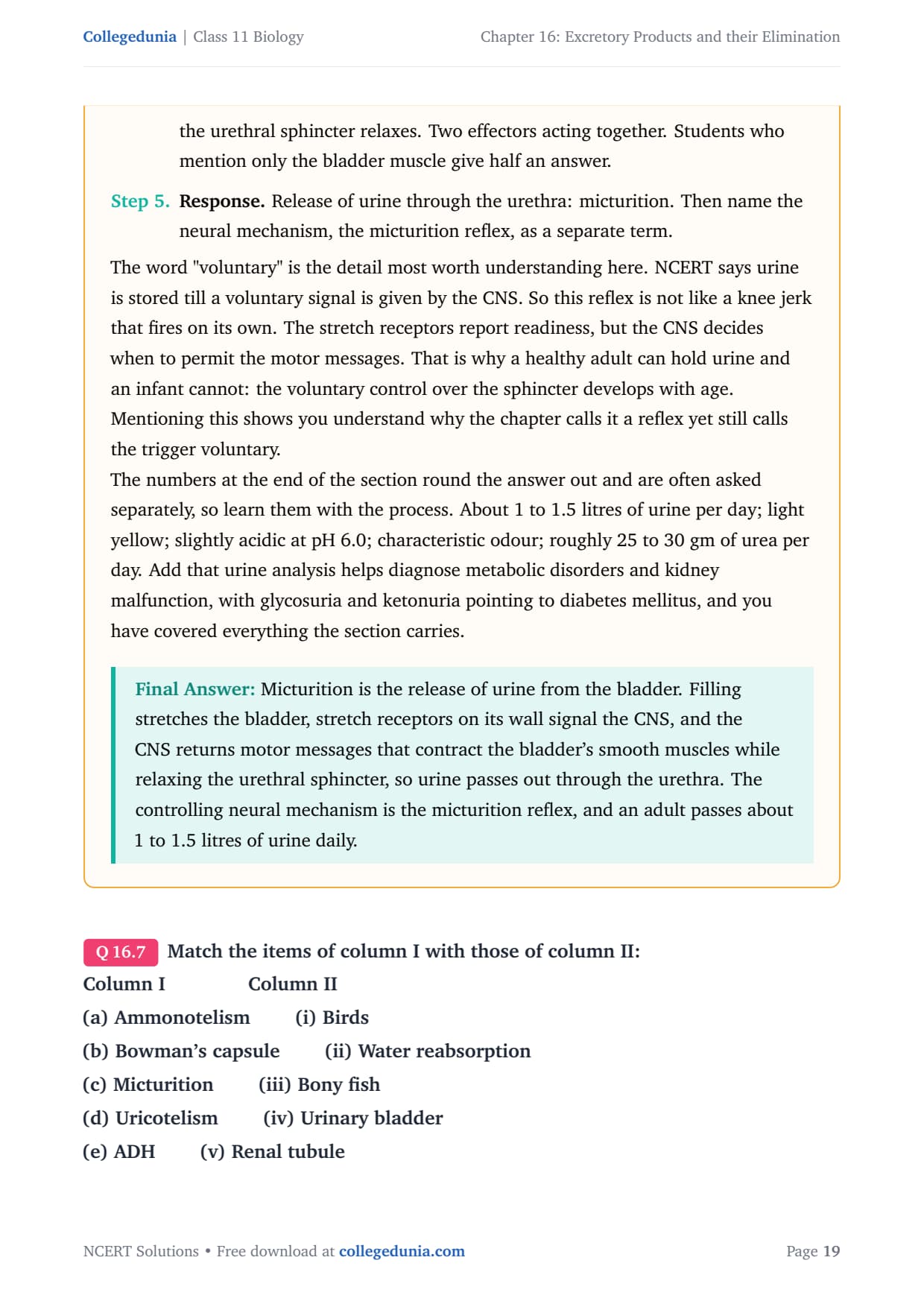
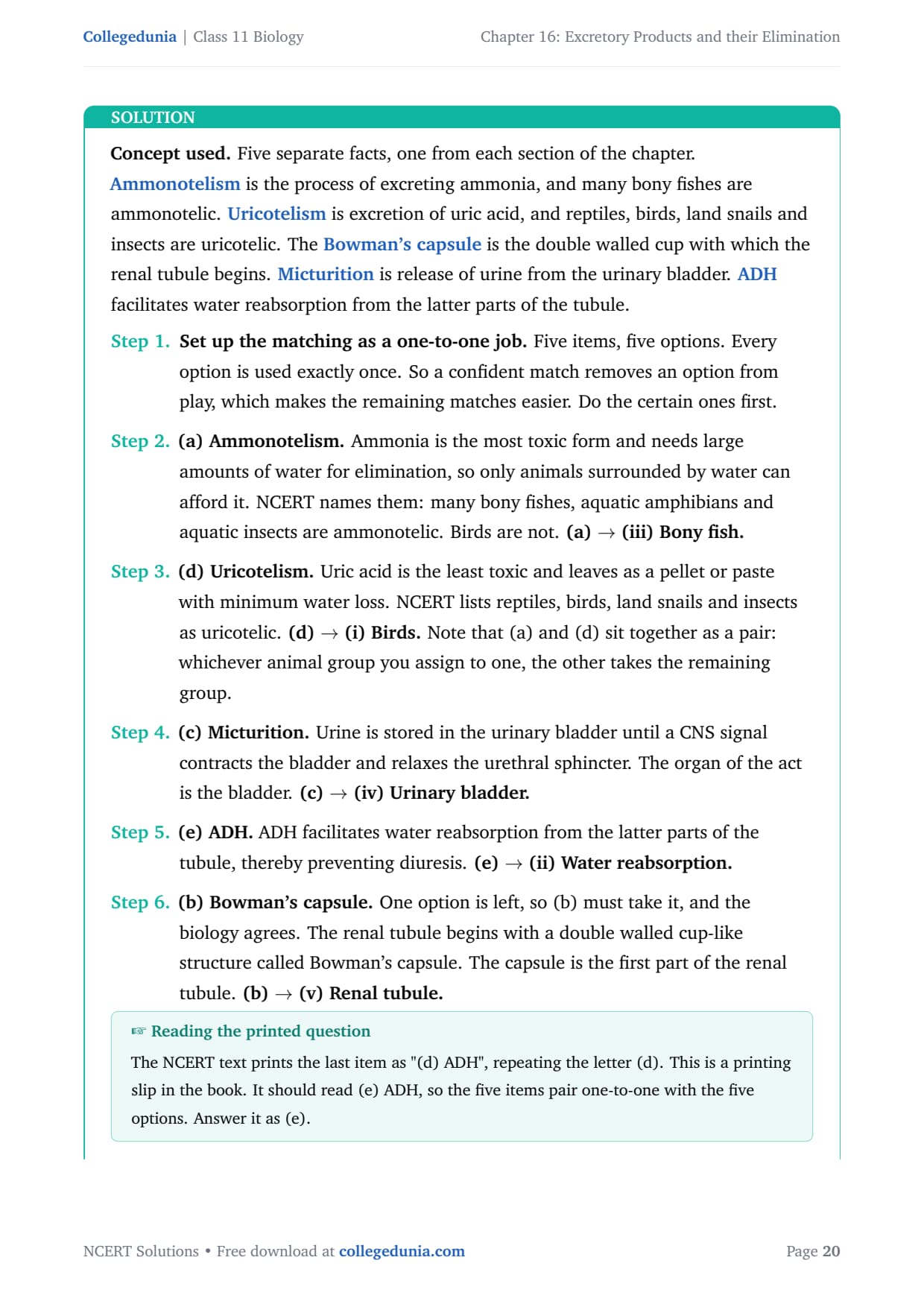
| Q7 to Q8 | Matching the telism terms and structures, and the meaning of osmoregulation. |
| Q9 to Q10 | Why terrestrial animals avoid ammonia, and the significance of the JGA. |
| Q11 to Q12 | Naming kidney structures, and filling gaps on limb permeability, ADH, dialysis and daily urea. |
The marks in this chapter sit in exact numbers and named structures, not in vague description. Learn the three key figures together, 125 mL/minute GFR, 180 litres of filtrate and 25 to 30 gm of urea a day, and attach a labelled nephron to them. Every question in the class 11 biology NCERT solutions chapter 16 Excretory Products and their Elimination PDF is solved with each step of reasoning shown, so students can compare their working against the model answer.
Practice the solved questions: Work through the full question bank with step-by-step answers and expert tips.
Excretory Products and their Elimination Class 11 Solved Practice Questions
Common Mistakes Students Make in the Excretory Products Chapter
Most marks in this chapter are lost on swapped words and confused numbers, not on hard ideas. Each mistake below costs 1 to 2 marks, so watch for it at the exact step.
Mistake 1: Defining GFR as urine formed per minute. GFR is measured at the Bowman's capsule before reabsorption, so it is filtrate per minute, about 125 mL/minute.
Mistake 2: Marking the ADH statement True. ADH does water reabsorption and gives hypertonic urine, not elimination and hypotonic urine.
Mistake 3: Answering only that ammonia is toxic. The full reason pairs toxicity with water: ammonia needs a large volume of water that land animals cannot spare.
Mistake 4: Reversing the Henle's loop permeabilities. The ascending limb is impermeable to water and the descending limb is permeable to it.
Student Feedback on Excretory Products and their Elimination Solutions
What 12,540 students told us about their Excretory Products preparation:
- 61% of students said the counter current mechanism was the hardest topic until they drew the two U-shaped structures with the osmolarity numbers marked on them.
- Most-mixed-up pair: renin the kidney enzyme versus rennin the stomach enzyme, confused by about 3 in 10 students.
- Students who learned the three daily figures as a set said the GFR, micturition and dialysis questions became quick to answer.
Source: 2026-27 Class 11 Biology student poll. Sample of 12,540 students from CBSE schools across 16 states, conducted before the 2026 boards.
Other Excretory Products and their Elimination Class 11 Biology Resources
Pair these solutions with the revision notes, formula sheet and NCERT textbook PDF for the same chapter.
| Resource | Link |
|---|---|
| NCERT Notes | Excretory Products and their Elimination Class 11 Notes |
| Formula Sheet | Excretory Products and their Elimination Class 11 Formula Sheet |
| Exemplar Solutions | Excretory Products and their Elimination Class 11 Exemplar Solutions |
| NCERT Book PDF | Excretory Products and their Elimination Class 11 Book PDF |
NCERT Solutions for Class 11 Biology: All Chapters
Jump to the step-by-step solutions for any other Class 11 Biology chapter below.
| Chapter | NCERT Solutions |
|---|---|
| Chapter 1 | The Living World |
| Chapter 2 | Biological Classification |
| Chapter 3 | Plant Kingdom |
| Chapter 4 | Animal Kingdom |
| Chapter 5 | Morphology of Flowering Plants |
| Chapter 6 | Anatomy of Flowering Plants |
| Chapter 7 | Structural Organisation in Animals |
| Chapter 8 | Cell: The Unit of Life |
| Chapter 9 | Biomolecules |
| Chapter 10 | Cell Cycle and Cell Division |
| Chapter 11 | Photosynthesis in Higher Plants |
| Chapter 12 | Respiration in Plants |
| Chapter 13 | Plant Growth and Development |
| Chapter 14 | Breathing and Exchange of Gases |
| Chapter 15 | Body Fluids and Circulation |
| Chapter 16 | Excretory Products and their Elimination |
| Chapter 17 | Locomotion and Movement |
| Chapter 18 | Neural Control and Coordination |
| Chapter 19 | Chemical Coordination and Integration |
FAQs on Excretory Products and their Elimination Class 11 NCERT Solutions
Excretory Products and Their Elimination NCERT Solutions - Frequently Asked Questions
Ques. What do the class 11 biology NCERT solutions chapter 16 Excretory Products and their Elimination cover?
Ans. These solutions cover every exercise question, including the definition of GFR, the autoregulatory mechanism of GFR, the counter current mechanism, the role of liver, lungs and skin, micturition, osmoregulation, why terrestrial animals are ureotelic or uricotelic, the significance of the JGA, the two matching questions and the fill-in-the-gaps question. Every answer is solved step by step.
Ques. What is Glomerular Filtration Rate (GFR) in Class 11 Biology?
Ans. GFR is the volume of filtrate formed by the kidneys, meaning all nephrons of both kidneys together, in one minute. In a healthy individual it is approximately 125 mL/minute, which equals 180 litres per day. It is measured at the Bowman's capsule before reabsorption, so it is not the same as urine formed per minute or as renal blood flow.
Ques. Why are terrestrial animals ureotelic or uricotelic and not ammonotelic?
Ans. Ammonia is the most toxic nitrogenous waste and must be excreted in a large volume of water, generally by diffusion across body or gill surfaces, which only aquatic animals can afford. Terrestrial adaptation forced the production of less toxic wastes that conserve water: urea in mammals and many terrestrial amphibians, and uric acid, the least toxic, excreted as a near-dry pellet or paste by reptiles, birds, land snails and insects.
Ques. What is the counter current mechanism in the kidney?
Ans. Filtrate flows in opposite directions in the two limbs of Henle's loop, and blood flows in opposite directions in the two limbs of the vasa recta, which lie close and parallel. NaCl and urea are recycled between them and trapped in the medulla, raising osmolarity from 300 mOsmol L-1 in the cortex to about 1200 mOsmol L-1 in the inner medulla. This gradient draws water out of the collecting duct and concentrates urine about fourfold.
Ques. How does ADH regulate urine concentration?
Ans. Antidiuretic hormone (ADH), also called vasopressin, facilitates reabsorption of water from the latter parts of the tubule, thereby preventing diuresis. Less water leaves the body, so the urine becomes concentrated, that is hypertonic. ADH is released from the neurohypophysis in response to osmoreceptors that detect a rise in osmolarity or a fall in body fluid volume.
Ques. What is the weightage of Excretory Products and their Elimination in CBSE Class 11 Biology?
Ans. Excretory Products and their Elimination carries about 2 to 3 marks in the CBSE Class 11 Biology paper, within the Human Physiology unit that holds the largest share of the paper. It is also important for NEET, where the nephron, GFR, the counter current mechanism and the modes of excretion are asked regularly.



Comments