




The class 11 biology NCERT solutions chapter 2 Biological Classification cover every back-exercise question, according to the latest 2026-27 CBSE syllabus, and help students prepare for the CBSE Boards, NEET and CUET. Each answer is worked step by step, from why classification systems changed over time to the five kingdoms of Whittaker and the odd cases (viruses, viroids, prions and lichens) that fit no kingdom at all.
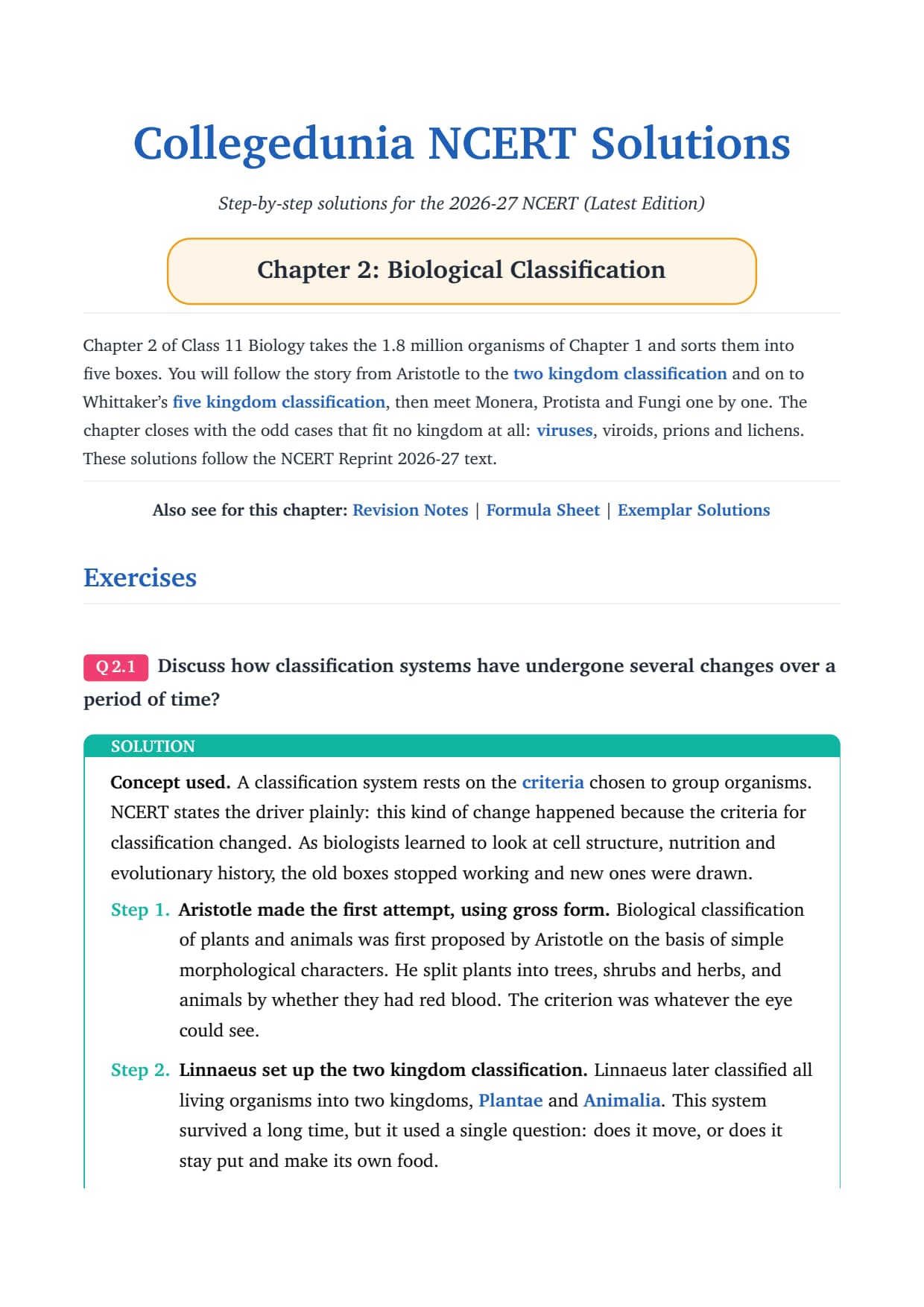
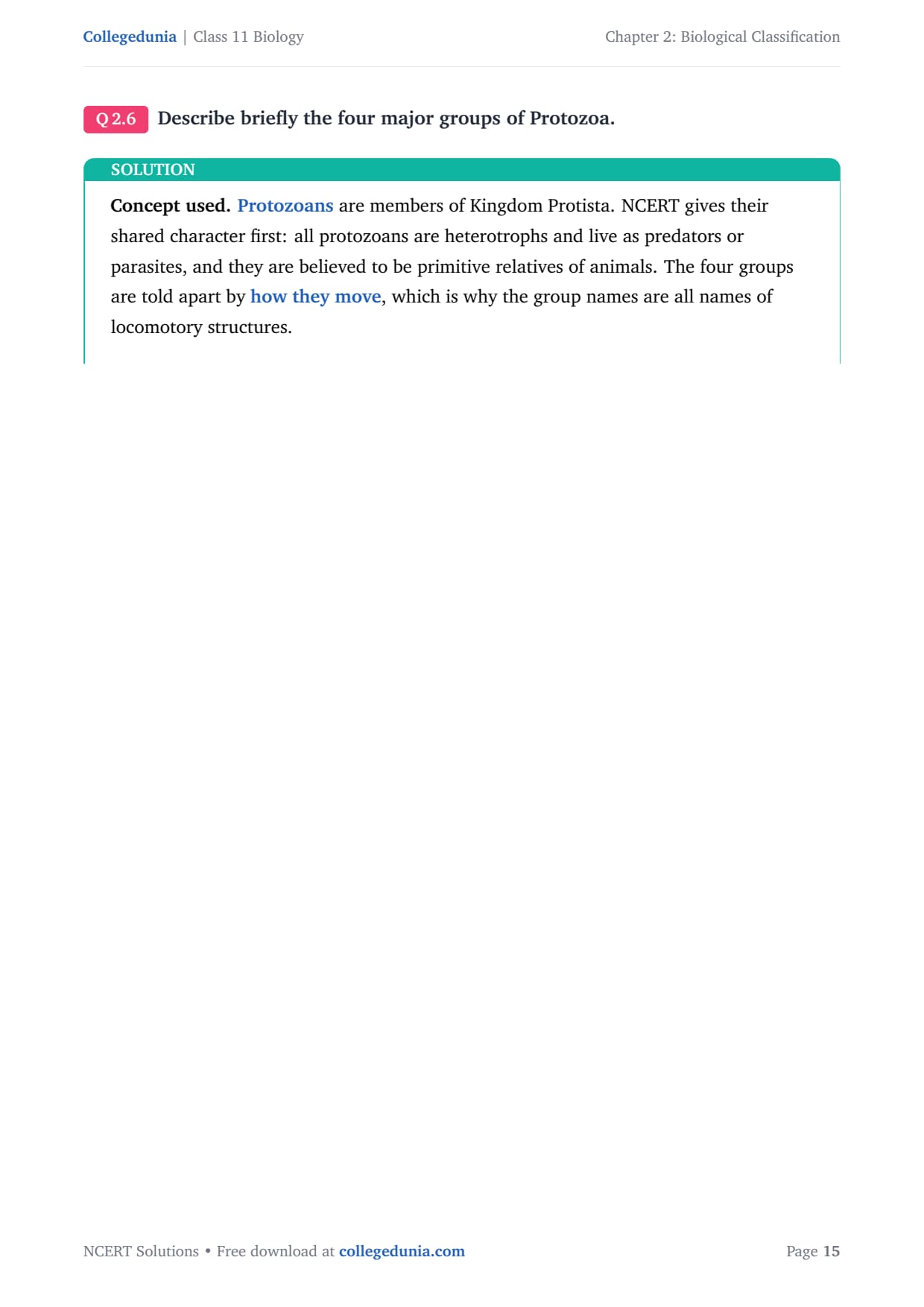
This is the second chapter of the NCERT textbook, and it takes the 1.8 million organisms named in Chapter 1 and sorts them into five kingdoms you will use for the rest of the year.
- CBSE Weightage: 3 to 4 marks, part of the Diversity of Living Organisms unit that opens the Class 11 course.
- Topics covered: two-kingdom to five-kingdom classification, Monera, Protista, Fungi and Plantae, the four protozoan groups, and viruses, viroids, prions and lichens.
- Exercise count: 12 back-exercise questions, all descriptive, testing definitions, comparisons and reasoning rather than calculation.
These class 11 biology NCERT solutions chapter 2 Biological Classification are curated by subject experts, based on the 2026-27 NCERT textbook, and checked against the last five years of CBSE Board and NEET papers.
Why Biological Classification Matters and What the Chapter Covers
Chapter 1 gave students the language of taxonomy. This chapter puts that language to work, sorting every living thing into one of five kingdoms proposed by R.H. Whittaker: Monera, Protista, Fungi, Plantae and Animalia. Almost every question in the exercise is really a test of one idea, that the boxes we sort organisms into depend on the criteria we choose, and better criteria force better boxes.
- Everyday role: the five-kingdom map is how a microbiologist places a new bacterium, how a doctor names a fungal infection, and how a farmer identifies a crop parasite.
- Core skill: using cell structure, mode of nutrition and body organisation to place any organism in the correct kingdom.
- Why it is second: the ideas of prokaryote versus eukaryote and autotroph versus heterotroph introduced here run through every later chapter of Class 11 Biology.
This chapter is one of the most heavily tested in NEET, because a single organism can be asked about from many angles. Diatoms, euglenoids and the fungal classes appear year after year. The class 11 biology NCERT solutions chapter 2 Biological Classification below follow the same order as the NCERT textbook so students can check their working line by line.
How Classification Systems Changed from Two Kingdoms to Five
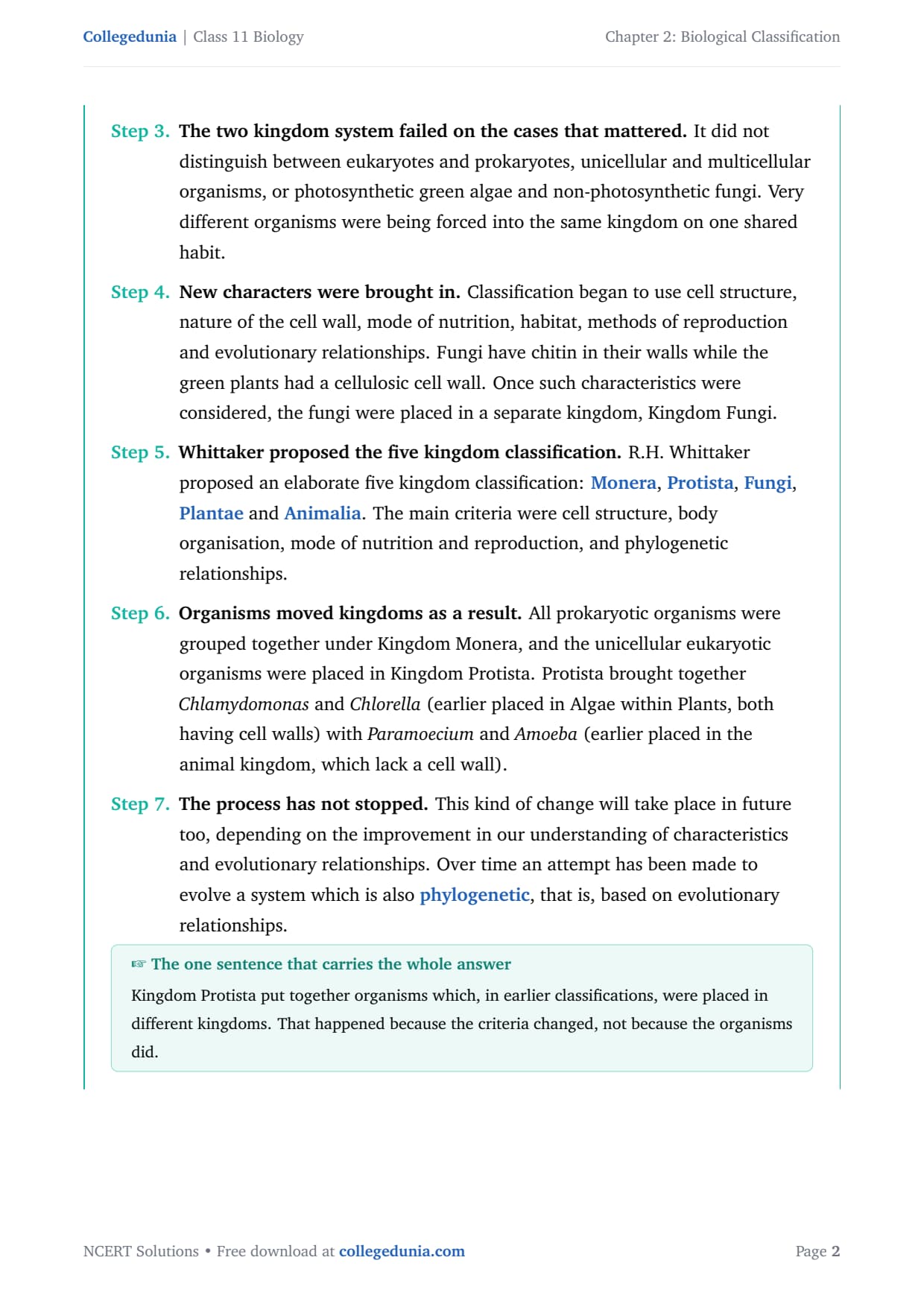
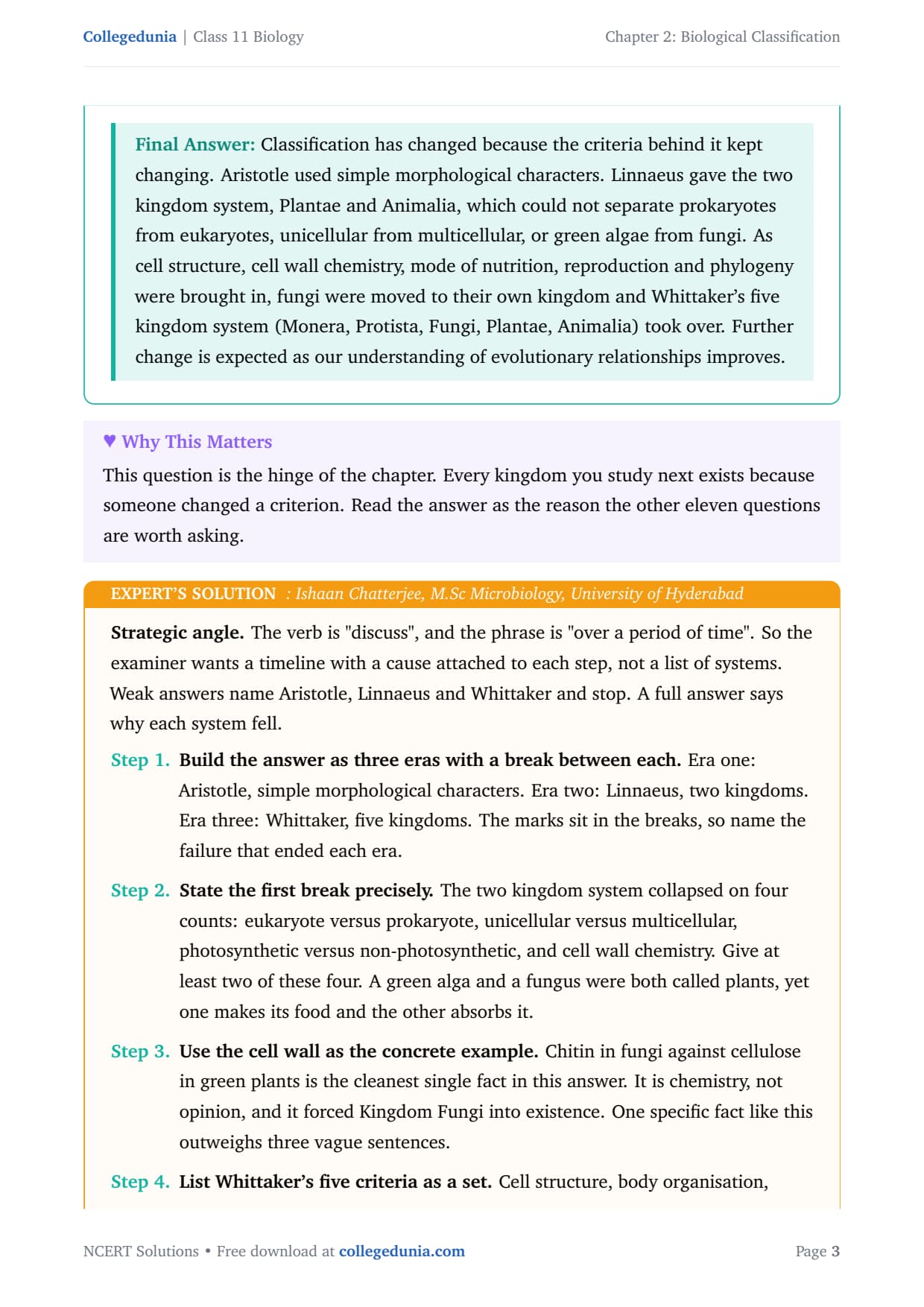
The opening question asks students to discuss how classification systems have changed over time, and the answer is the hinge of the whole chapter. Classification changed because the criteria behind it kept changing. As biologists learned to look at cell structure, cell wall chemistry and mode of nutrition, the old boxes stopped working and new ones had to be drawn. The story runs through three eras, and the marks sit in naming why each one ended.
| System | Proposed by | Why it changed |
|---|---|---|
| Morphological grouping | Aristotle | Used only simple visible characters: plants as trees, shrubs and herbs; animals by presence or absence of red blood. |
| Two kingdom system | Linnaeus | Plantae and Animalia could not separate prokaryotes from eukaryotes, unicellular from multicellular, or green algae from fungi. |
| Five kingdom system | R.H. Whittaker | Added cell structure, body organisation, nutrition, reproduction and phylogeny, so organisms could move kingdoms. |
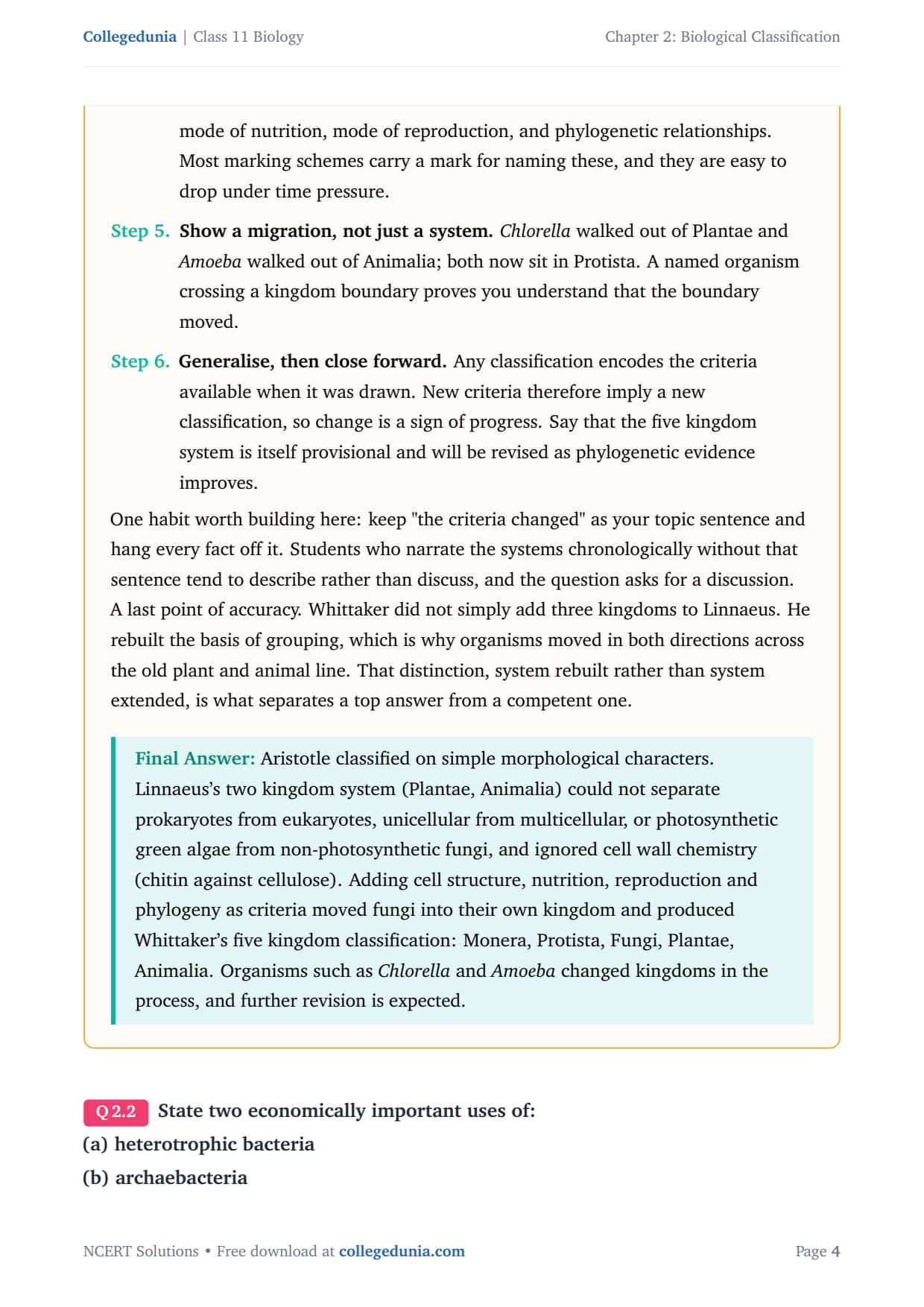
The cleanest single fact in this answer is cell wall chemistry: fungi have chitin in their walls while green plants have a cellulosic wall, which forced Kingdom Fungi into existence. Whittaker did not simply add three kingdoms to Linnaeus; he rebuilt the basis of grouping, which is why organisms moved in both directions across the old plant and animal line. Chlorella left Plantae and Amoeba left Animalia, and both now sit in Protista. Change here is a sign of progress, not failure, and the system is expected to be revised again as phylogenetic evidence improves.
Kingdom Monera and the Economic Uses of Bacteria
Kingdom Monera holds the bacteria, the sole prokaryotes, with the most extensive metabolic diversity of any group. They come in four shapes: coccus, bacillus, vibrium and spirillum. The exercise asks students for two economically important uses each of heterotrophic bacteria and archaebacteria, and the safest answers are the ones NCERT names outright and pairs with a named organism.
- Heterotrophic bacteria, curd: Lactobacillus ferments the lactose of milk into lactic acid, which clots milk protein into curd, the base of the dairy fermentation industry.
- Heterotrophic bacteria, antibiotics: soil bacteria such as Streptomyces yield streptomycin and tetracycline; they also fix nitrogen in legume roots (Rhizobium) and act as decomposers.
- Archaebacteria, biogas and sewage: methanogens in the gut of cows and buffaloes produce methane (gobar gas) from cattle dung, and the same methanogens treat sewage sludge while recovering methane.
The pattern worth carrying is that we do not use bacteria, we use their metabolism, since every use here is a chemical reaction a bacterium performs cheaply and we cannot. Archaebacteria are not simply bacteria in odd places; their different cell wall structure is what lets them survive salty flats, hot springs and animal guts. One caution costs marks every year: a disease is not an economic use, so do not list cholera or typhoid here. Refer to Exercise Q2 for the fully worked answer.
Kingdom Protista: Diatoms, Dinoflagellates and Euglenoids
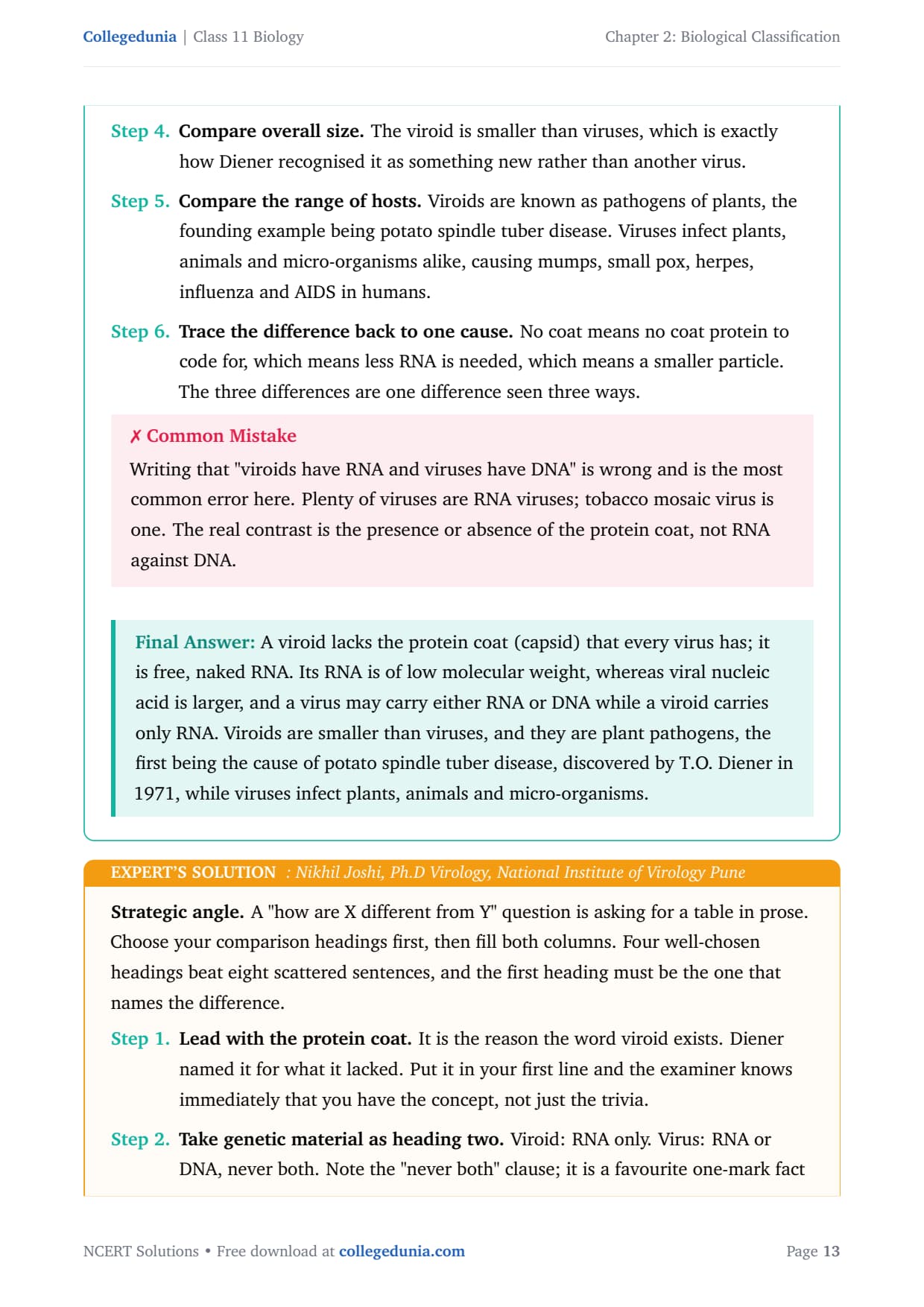
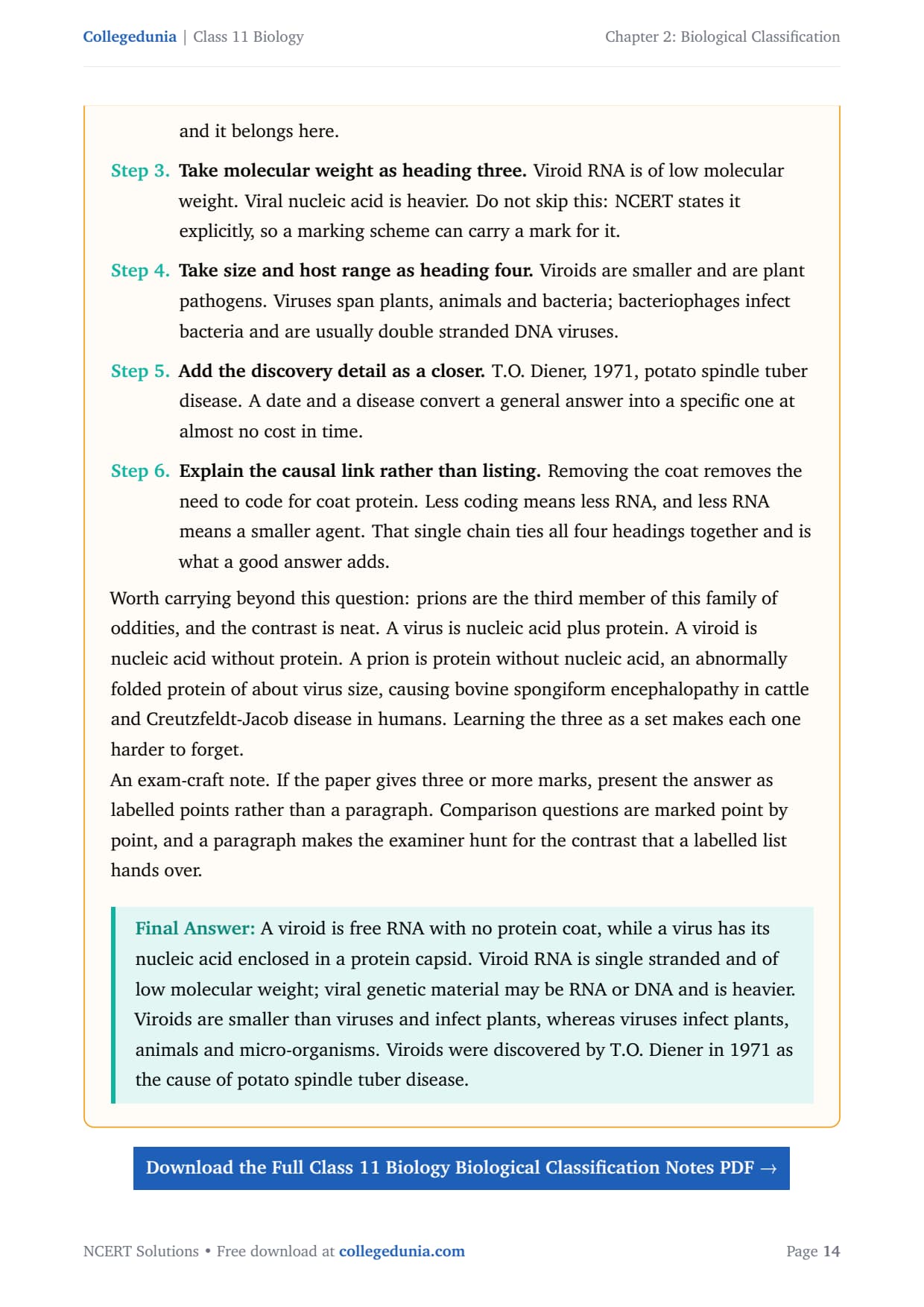
Kingdom Protista holds the single-celled eukaryotes, and three of its groups are tested directly in the exercise. The recurring theme is that the cell wall is the diagnostic character: diatoms have silica in overlapping shells, dinoflagellates have stiff cellulose plates, and euglenoids have no wall at all but a protein-rich pellicle instead. Learn the three walls and you can tell the three groups apart in any question that describes one without naming it.
| Group | Key features |
|---|---|
| Diatoms (Chrysophytes) | Cell wall of two thin overlapping shells fitting like a soap box (the frustule), embedded with silica, so indestructible; deposits form diatomaceous earth, used in polishing and in filtering oils and syrups. |
| Dinoflagellates | Marine, mostly photosynthetic; red forms such as Gonyaulax multiply so fast they turn the sea red (a red tide), whose toxins may kill fishes. |
| Euglenoids | Fresh-water, no cell wall but a flexible pellicle, two unequal flagella; photosynthetic in light but heterotrophic in the dark (mixotrophic); pigments identical to those of higher plants; example Euglena. |
The same idea also explains algal bloom and red tide, which the exercise pairs as a single vocabulary question. An algal bloom is the rapid, excessive multiplication of algae, chiefly cyanobacteria, in a polluted water body, which discolours the surface and deoxygenates the water on decay. A red tide is a special marine case of an algal bloom, caused by red dinoflagellates, so every red tide is a bloom but not every bloom is a red tide. Note that cyanobacteria are bacteria of Kingdom Monera despite the name blue-green algae, and euglenoids, with plant pigments and animal-like feeding, are the single clearest reason the two-kingdom system had to go.
The Four Major Groups of Protozoa
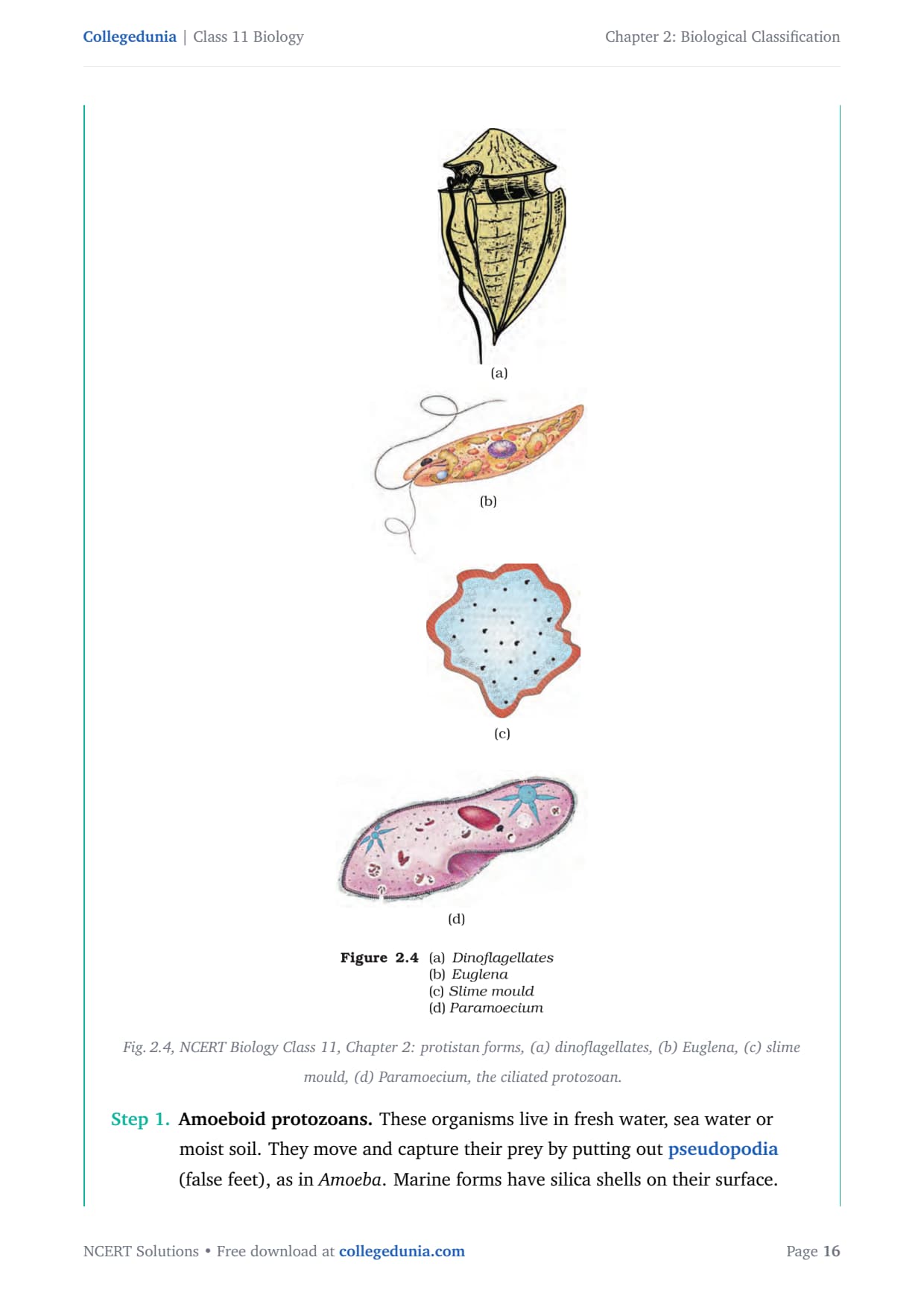
Protozoans are members of Kingdom Protista, all heterotrophs living as predators or parasites, and believed to be primitive relatives of animals. The exercise asks students to describe their four groups briefly, and the organising thread is how each group moves, which is why three of the four group names are names of locomotory structures.
- Amoeboid protozoans: move and capture prey by pseudopodia in fresh water, sea water or moist soil; marine forms bear silica shells; Amoeba, and the parasite Entamoeba that causes amoebic dysentery.
- Flagellated protozoans: free-living or parasitic, move by flagella; parasitic forms cause sleeping sickness; Trypanosoma.
- Ciliated protozoans: aquatic, with thousands of cilia and a gullet into which coordinated ciliary rows steer food-laden water; Paramoecium.
- Sporozoans: have an infectious spore-like stage in the life cycle; Plasmodium, the malarial parasite.
A four-word memory hook holds the whole answer: pseudopodia, flagella, cilia, spore, attached to Amoeba, Trypanosoma, Paramoecium and Plasmodium. The sporozoans break the locomotion pattern deliberately, because as parasites they are carried rather than swimming, so their defining feature is the spore-like stage, not a locomotory organelle. In a single-celled predator, how you move is how you eat, which is exactly why the protozoans are split by locomotion in the first place.
Kingdom Fungi and Its Four Classes
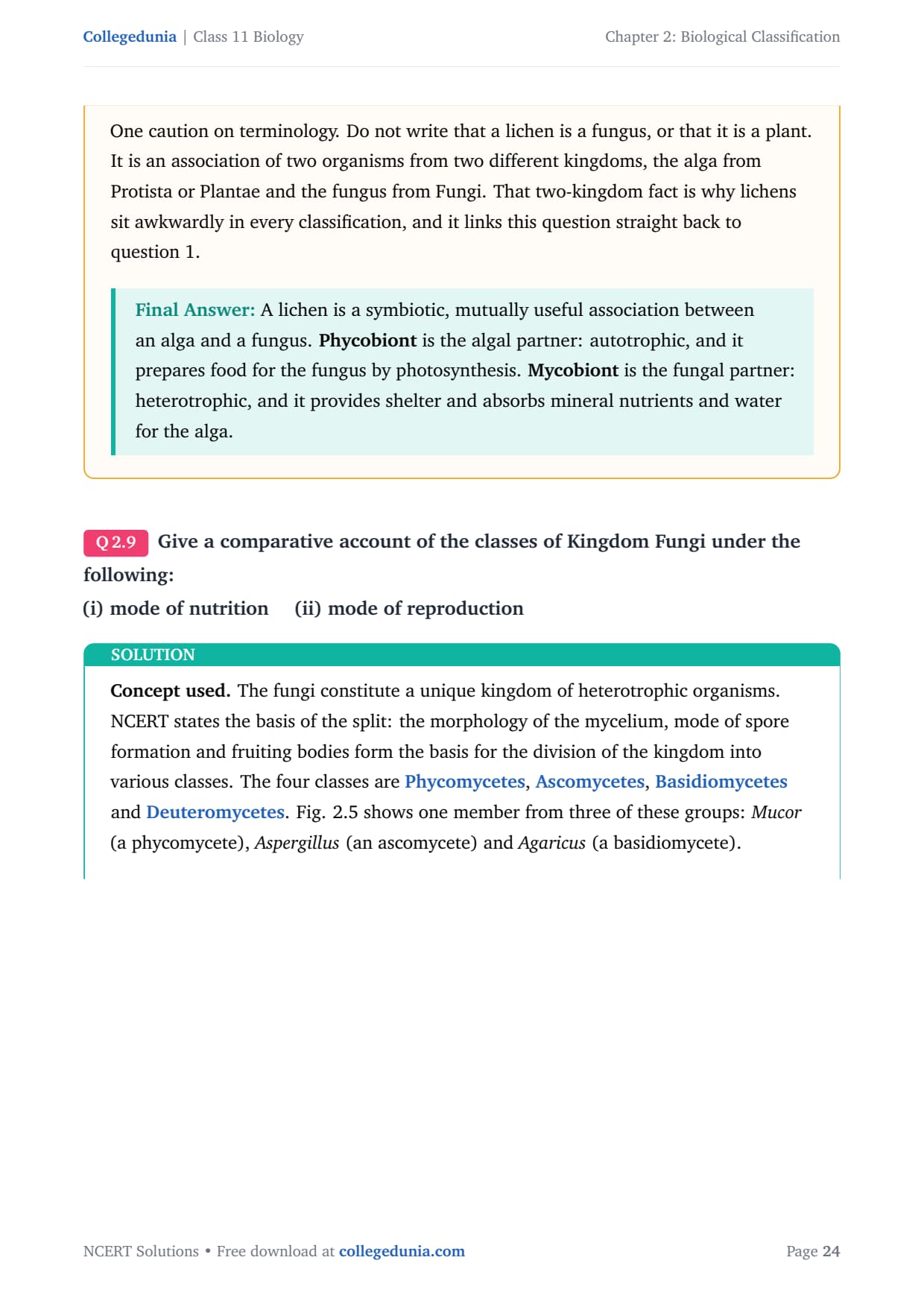
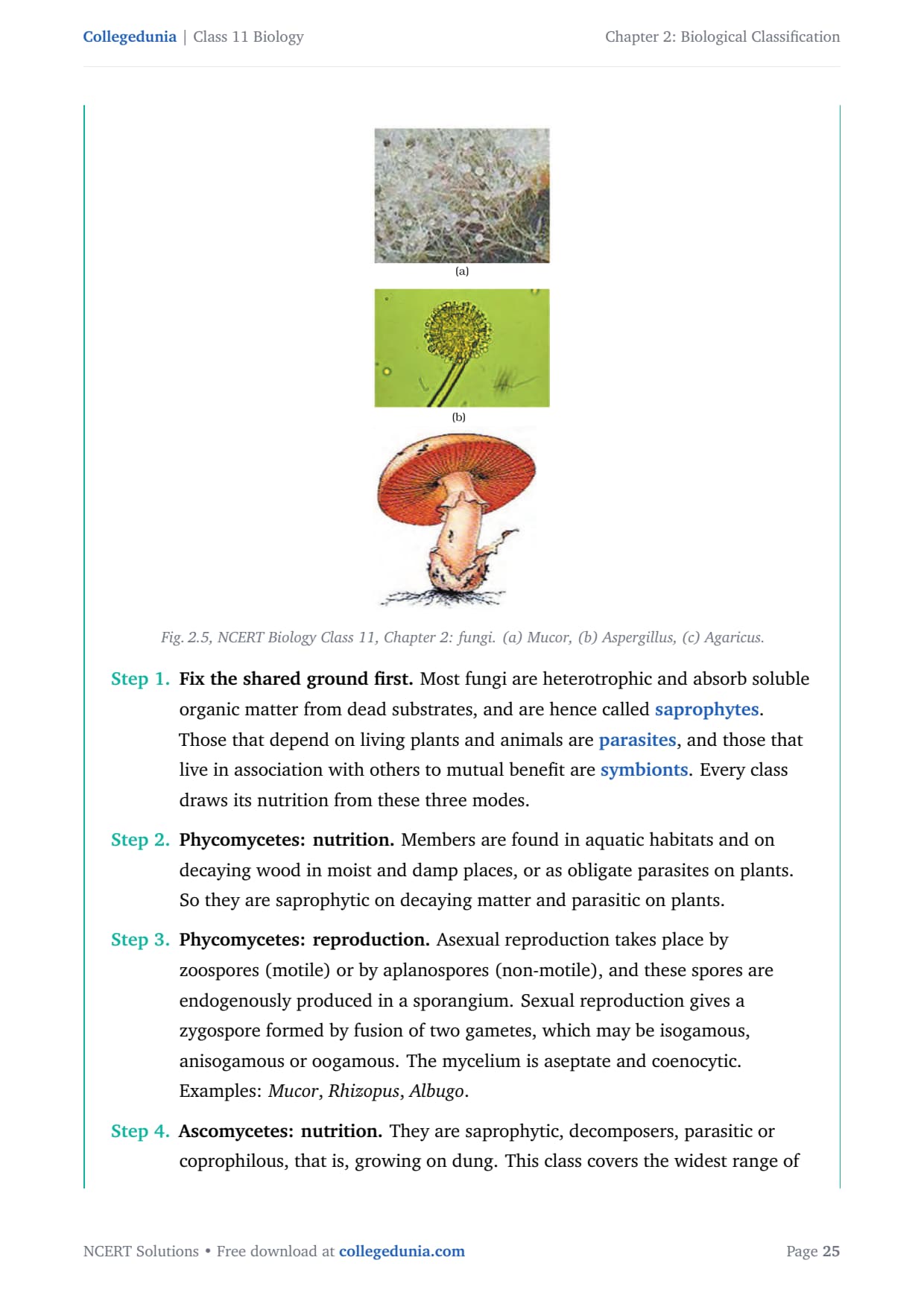
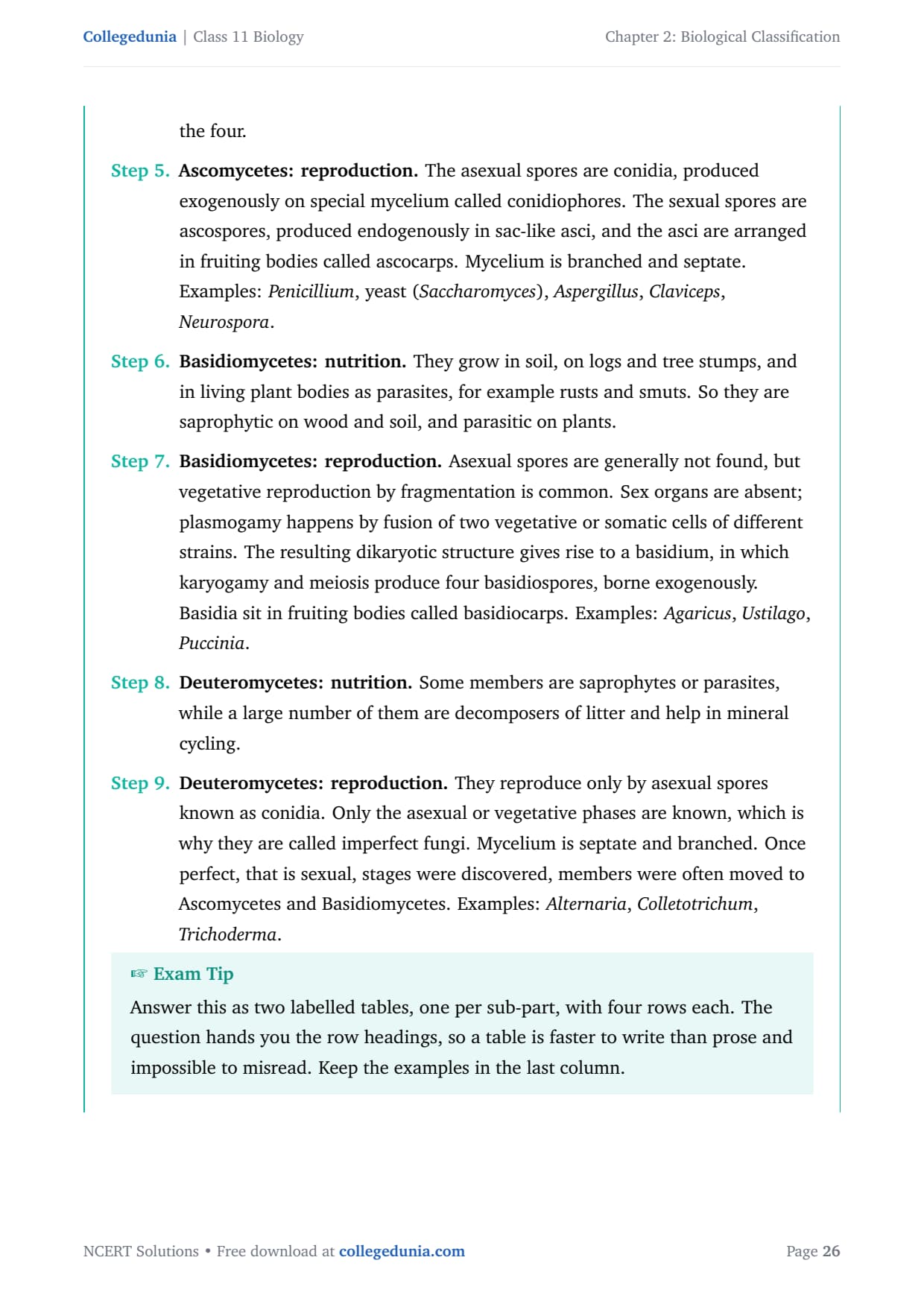
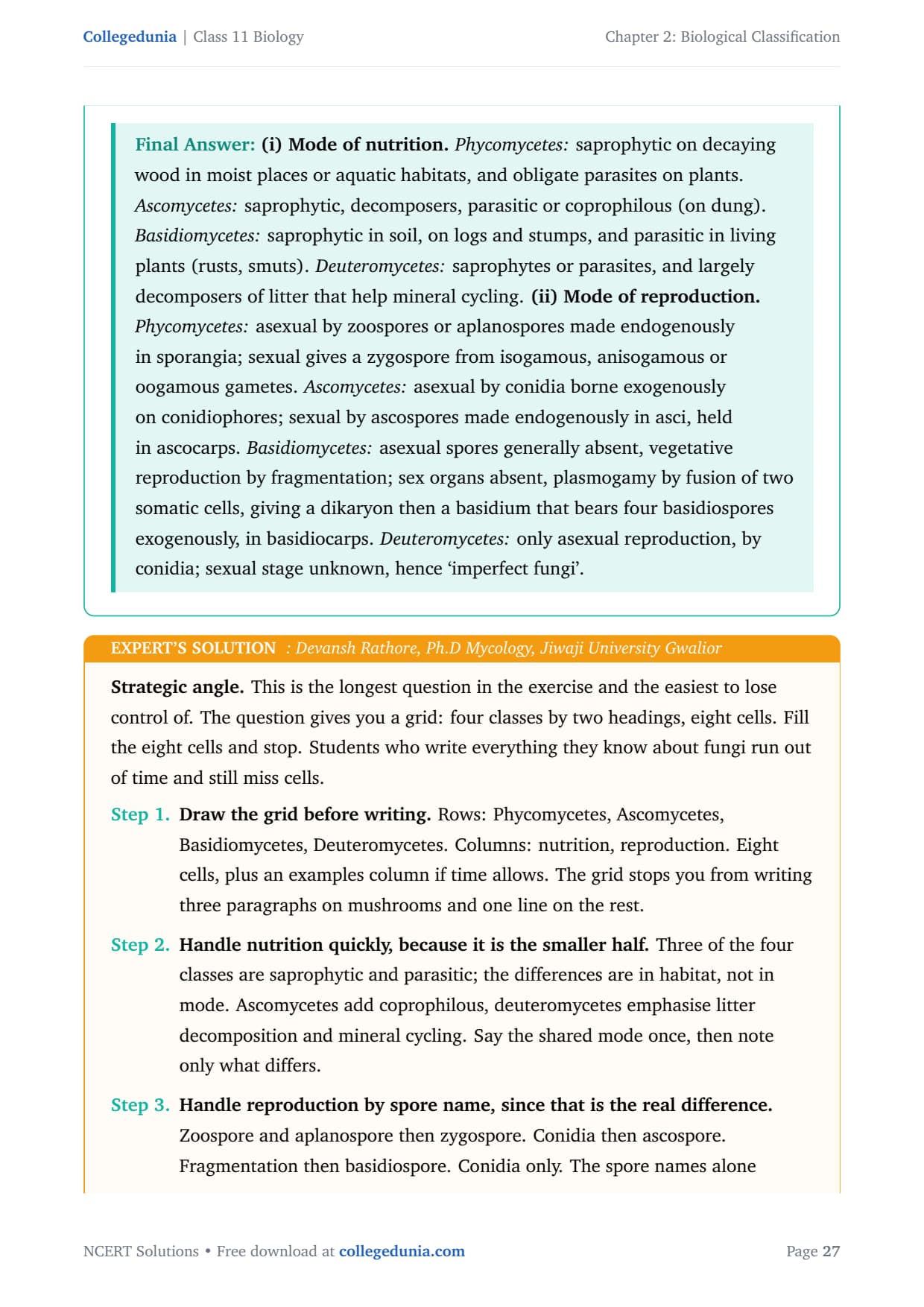
The fungi form a unique kingdom of heterotrophic organisms with walls of chitin and bodies of hyphae forming a mycelium. The longest question in the exercise asks for a comparative account of the four classes under mode of nutrition and mode of reproduction. The trick is to treat it as a grid of eight cells, four classes by two headings, and fill each cell rather than writing everything known about fungi.
| Class | Nutrition | Reproduction (sexual spore) |
|---|---|---|
| Phycomycetes | Saprophytic on decaying wood in damp places, or obligate plant parasites | Zygospore; asexual by zoospores or aplanospores in sporangia (Mucor, Rhizopus) |
| Ascomycetes | Saprophytic, decomposers, parasitic or coprophilous (on dung) | Ascospore made endogenously in asci within ascocarps; asexual by conidia (Penicillium, yeast, Aspergillus) |
| Basidiomycetes | Saprophytic in soil and on logs, parasitic in plants (rusts, smuts) | Four basidiospores borne exogenously on a basidium within basidiocarps; sex organs absent (Agaricus, Puccinia) |
| Deuteromycetes | Saprophytes, parasites and above all litter decomposers aiding mineral cycling | Only asexual, by conidia; sexual stage unknown, hence imperfect fungi (Alternaria, Trichoderma) |
The classification of fungi is really a classification of sexual spores, so the class names are the spore names and remembering the spore rebuilds the class. Two accuracy points protect marks: ascospores are endogenous inside asci while basidiospores are exogenous on the basidium, a favourite one-mark contrast; and Basidiomycetes lack sex organs yet still reproduce sexually, because plasmogamy happens by fusion of two ordinary somatic cells of different strains instead of by gametes. The Deuteromycetes are a holding bay, since once a sexual stage is found the fungus is moved to Ascomycetes or Basidiomycetes.
Partially Heterotrophic Plants and the Lichen Partners
Two short questions test the boundary of Kingdom Plantae. The first asks whether any plants are partially heterotrophic, and the answer is yes, in two ways. These plants keep their chlorophyll and keep photosynthesising, so partially is the key word: they are part autotroph and part heterotroph, never fully one or the other.
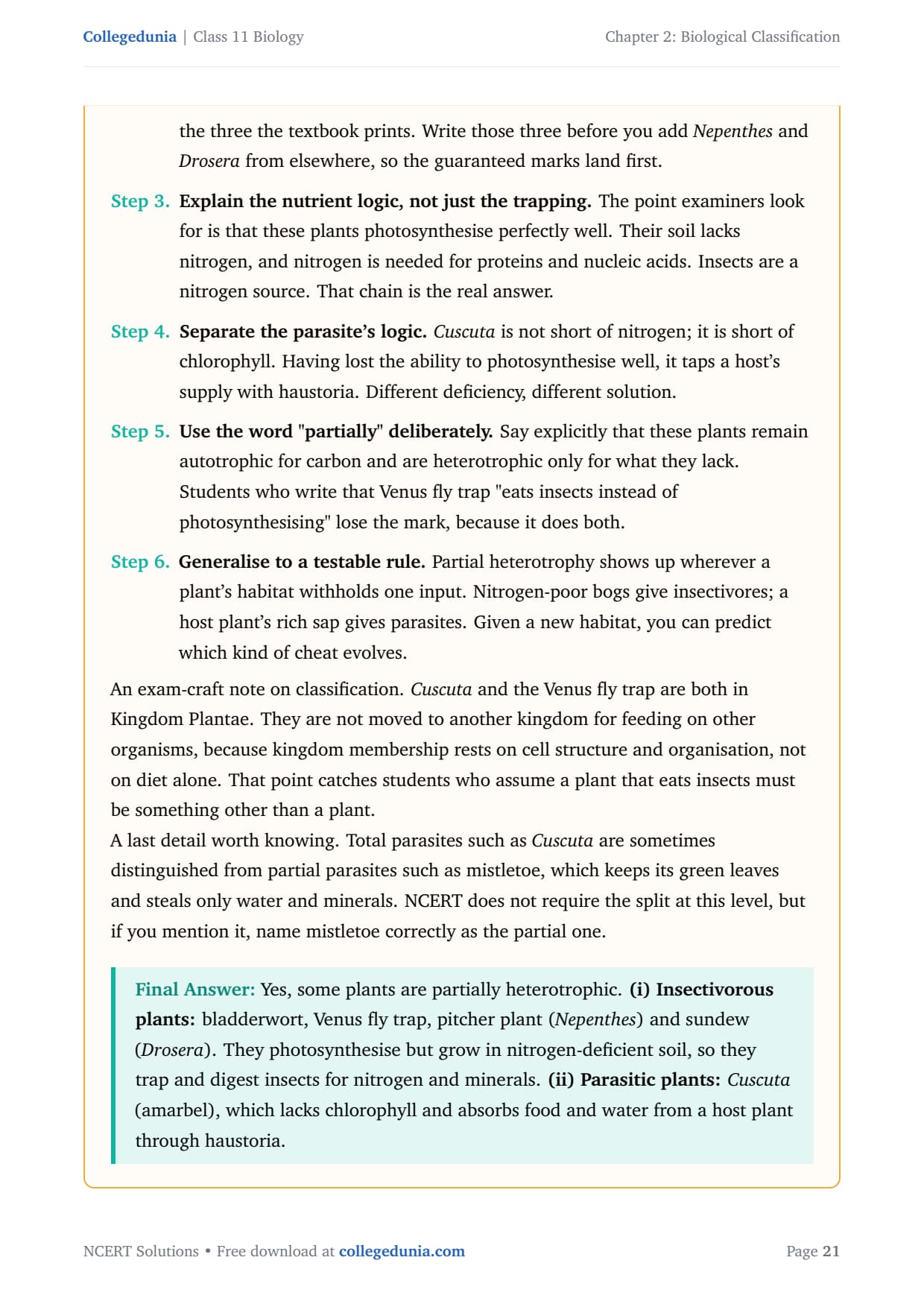
- Insectivorous plants: bladderwort and Venus fly trap (NCERT's own examples), plus the pitcher plant (Nepenthes) and sundew (Drosera); they grow in nitrogen-poor soil, so they trap and digest insects for nitrogen and minerals.
- Parasitic plants: Cuscuta (amarbel) has almost no chlorophyll and draws food and water from a host plant through haustoria.
- Still plants: both remain in Kingdom Plantae, because kingdom membership rests on cell structure and organisation, not on diet.
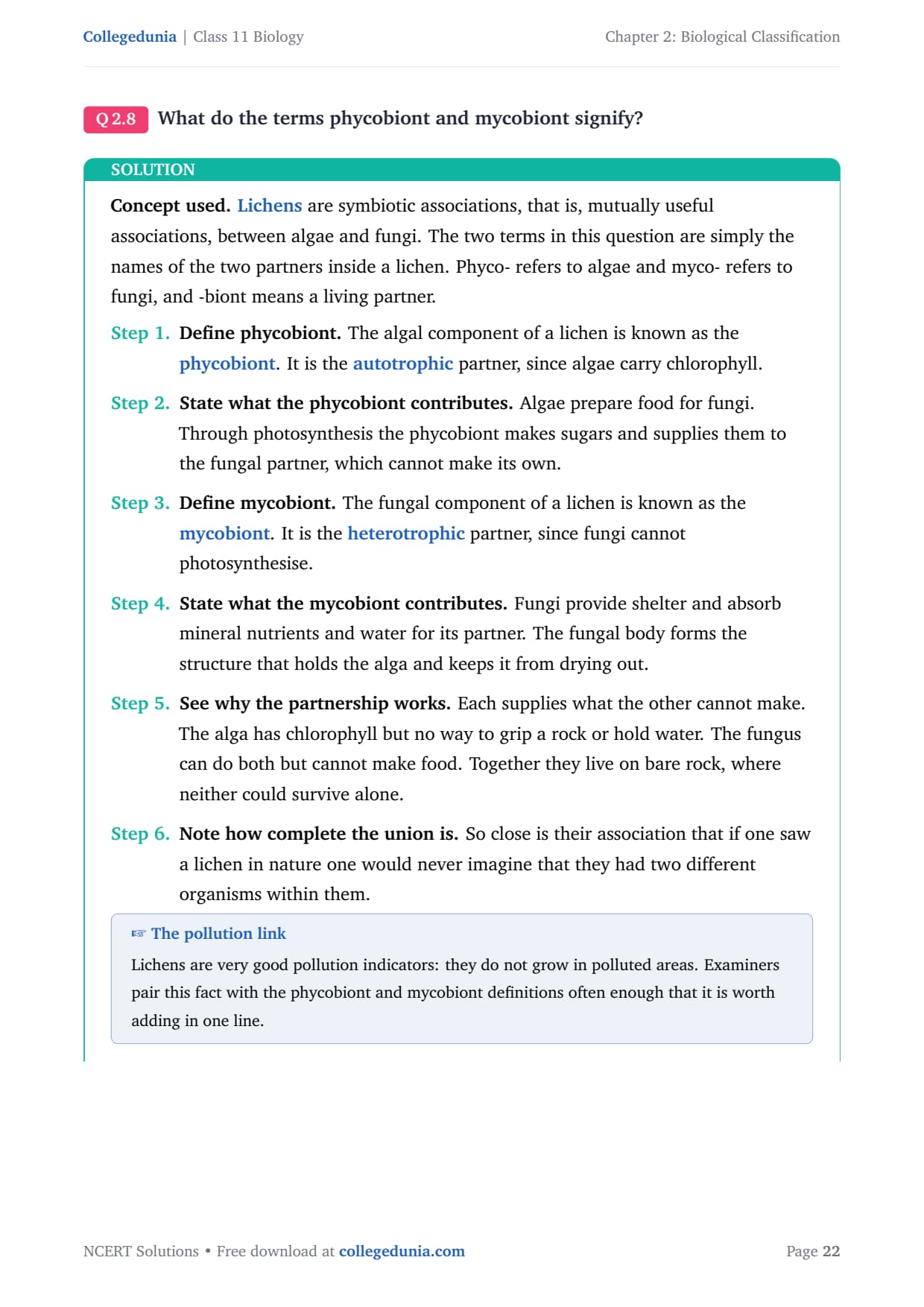
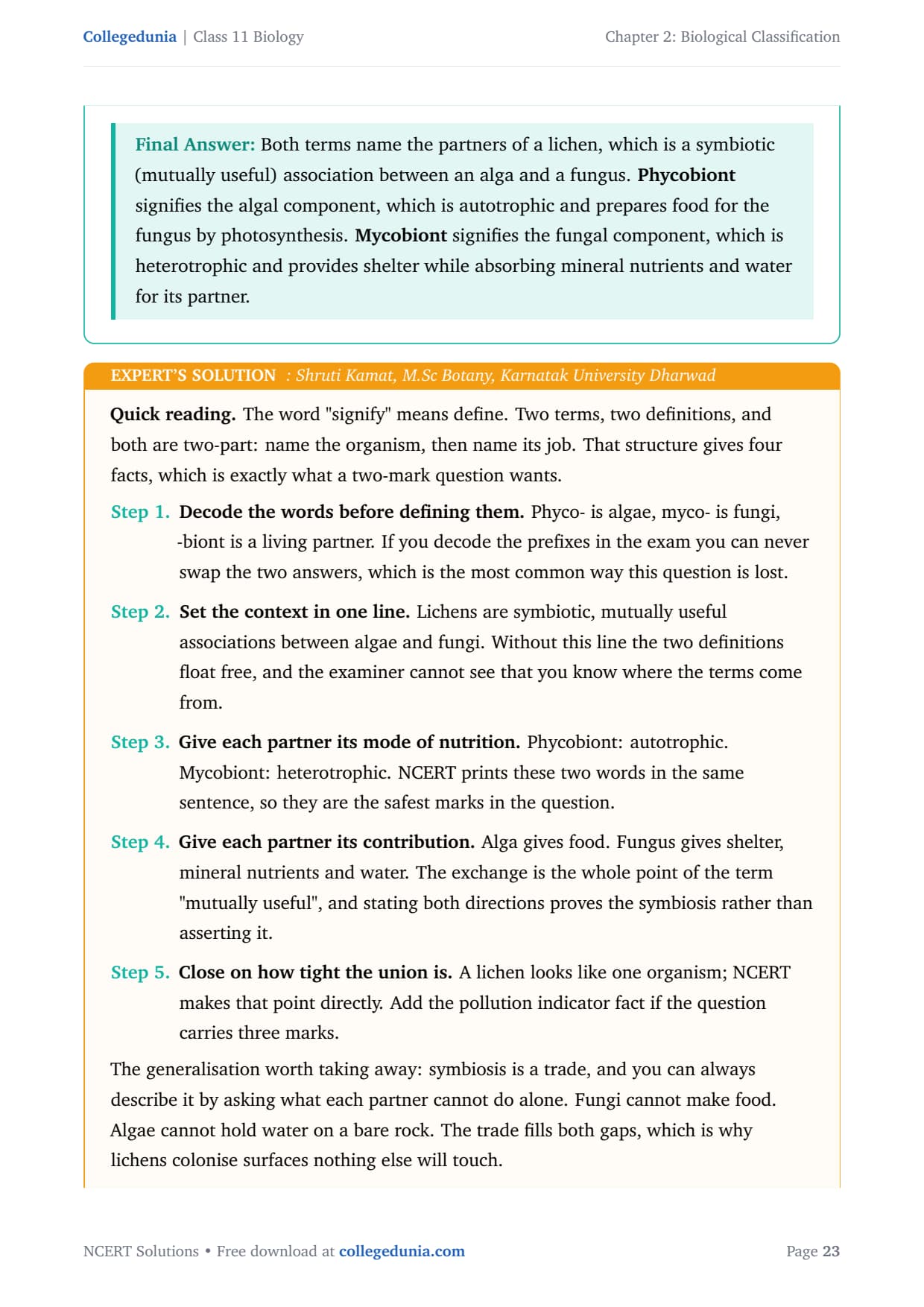
The second question asks what phycobiont and mycobiont signify, and both name the partners of a lichen, a symbiotic and mutually useful association between an alga and a fungus. The phycobiont is the algal partner: autotrophic, and it prepares food by photosynthesis. The mycobiont is the fungal partner: heterotrophic, and it provides shelter while absorbing mineral nutrients and water. Symbiosis is a trade, so describe it by asking what each partner cannot do alone: the fungus cannot make food, the alga cannot hold water on bare rock, and together they colonise surfaces nothing else will touch. Lichens are also very good pollution indicators, since they do not grow in polluted areas.
Viruses, Viroids and Whether Viruses Are Living
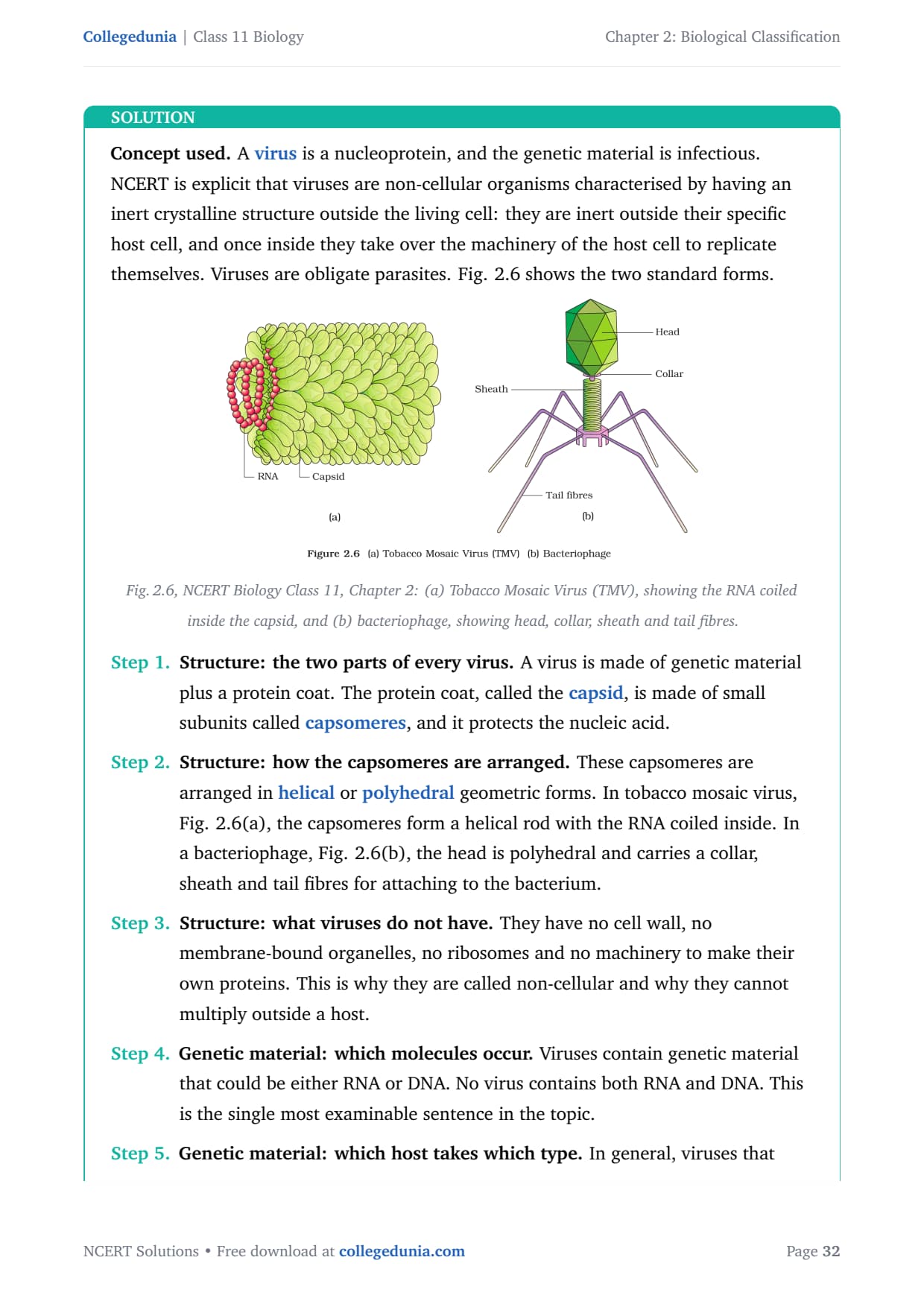
The chapter closes on the organisms that fit no kingdom of the five-kingdom system, and three exercise questions cover them. A virus is a non-cellular nucleoprotein: genetic material enclosed in a protein coat called the capsid, built of subunits called capsomeres arranged in helical (as in tobacco mosaic virus) or polyhedral (as in the bacteriophage head) geometric forms. Its genetic material is either RNA or DNA, never both in one virus, which is the single most examinable sentence in the topic.
| Agent | Structure and genetic material |
|---|---|
| Virus | Nucleic acid (RNA or DNA) inside a protein capsid; plant viruses usually single-stranded RNA, animal viruses single or double-stranded RNA or double-stranded DNA, bacteriophages usually double-stranded DNA; causes mumps, small pox, herpes, influenza. |
| Viroid | Free RNA with no protein coat, of low molecular weight; smaller than viruses; a plant pathogen causing potato spindle tuber disease (T.O. Diener, 1971). |
| Prion | An abnormally folded protein with no nucleic acid, about virus size; causes bovine spongiform encephalopathy and Creutzfeldt-Jacob disease. |
A viroid is not different from a virus because one has RNA and the other DNA; the real contrast is the presence or absence of the protein coat, since plenty of viruses are RNA viruses. A virus is nucleic acid plus protein, a viroid is nucleic acid without protein, and a prion is protein without nucleic acid, so learning the three as a set makes each harder to forget. The final discussion question, whether viruses are living or non-living, resolves once students see that the non-living evidence (crystalline outside a host, no metabolism) describes the virus outside a cell, while the living evidence (infectious genetic material, reproduction, mutation) describes it inside one. Viruses are best treated as obligate intracellular parasites on the borderline of life, which is why the five-kingdom system, built for cellular organisms, gives them no kingdom.
Biological Classification Exercise-wise Breakdown
The NCERT back exercise has 12 questions, and all of them are descriptive rather than numerical. The table below maps the question blocks to their topics so students can plan their practice and revise kingdom by kingdom.
| Question block | What it tests |
|---|---|
| Q 1 | How and why classification systems changed from Aristotle to Whittaker's five kingdoms. |
| Q 2 | Economic uses of heterotrophic bacteria and archaebacteria in Kingdom Monera. |
| Q 3, Q 4, Q 10 | Protista: diatom cell walls, algal bloom and red tides, and the features of euglenoids. |
| Q 6 | The four major groups of Protozoa, described by locomotion and example. |
| Q 7, Q 8 | Partially heterotrophic plants, and the phycobiont and mycobiont of a lichen. |
| Q 9 | Comparative account of the four fungal classes by nutrition and reproduction. |
| Q 5, Q 11, Q 12 | Viroids versus viruses, virus structure and genetic material, and the living or non-living debate. |
Because every question is descriptive, the marks sit in clean definitions, named examples and sharp comparisons rather than in calculation. Learn the diagnostic character of each kingdom and attach one named organism to it. Every question in the class 11 biology NCERT solutions chapter 2 Biological Classification PDF is solved with each step of reasoning shown, so students can compare their answers against the model working.
Practice the solved questions: Work through the full question bank with step-by-step answers and expert tips.
Biological Classification Class 11 Solved Practice Questions
Common Mistakes Students Make in Biological Classification
Most marks in this chapter are lost on small slips of fact and wording, not on hard ideas. Each mistake below costs 1 to 2 marks, so watch for it at the exact step.
Mistake 1: Writing that viroids have RNA and viruses have DNA. The real difference is the protein coat, present in a virus and absent in a viroid; many viruses are RNA viruses.
Mistake 2: Calling metabolism, growth and reproduction all defining features, or listing growth as evidence that viruses are living. Viruses are assembled from host-made parts and do not grow.
Mistake 3: Separating red and brown algae, or an algal bloom and a red tide, by colour alone. The marks are in the pigments, the organism and the mechanism, not the adjective.
Mistake 4: Writing that Basidiomycetes have no sexual reproduction because they lack sex organs. They reproduce sexually by plasmogamy between two somatic cells of different strains.
Student Feedback on Biological Classification Solutions
What 12,540 students told us about their Biological Classification preparation:
- 61% of students said the comparative account of the four fungal classes was the hardest question to keep organised under time pressure.
- Most-confused pair: viroids and viruses, mixed up by about 4 in 10 students who wrote RNA versus DNA instead of coat versus no coat.
- Students who learned the diagnostic wall of each protist group (silica, cellulose plates, pellicle) said the Protista questions became automatic.
Source: 2026-27 Class 11 Biology student poll. Sample of 12,540 students from CBSE schools across 16 states, conducted before the 2026 boards.
Other Biological Classification Class 11 Biology Resources
Pair these solutions with the revision notes, formula sheet and NCERT textbook PDF for the same chapter.
| Resource | Link |
|---|---|
| NCERT Notes | Biological Classification Class 11 Notes |
| Formula Sheet | Biological Classification Class 11 Formula Sheet |
| Exemplar Solutions | Biological Classification Class 11 Exemplar Solutions |
| NCERT Book PDF | Biological Classification Class 11 Book PDF |
NCERT Solutions for Class 11 Biology: All Chapters
Jump to the step-by-step solutions for any other Class 11 Biology chapter below.
| Chapter | NCERT Solutions |
|---|---|
| Chapter 1 | The Living World |
| Chapter 2 | Biological Classification |
| Chapter 3 | Plant Kingdom |
| Chapter 4 | Animal Kingdom |
| Chapter 5 | Morphology of Flowering Plants |
| Chapter 6 | Anatomy of Flowering Plants |
| Chapter 7 | Structural Organisation in Animals |
| Chapter 8 | Cell: The Unit of Life |
| Chapter 9 | Biomolecules |
| Chapter 10 | Cell Cycle and Cell Division |
| Chapter 11 | Photosynthesis in Higher Plants |
| Chapter 12 | Respiration in Plants |
| Chapter 13 | Plant Growth and Development |
| Chapter 14 | Breathing and Exchange of Gases |
| Chapter 15 | Body Fluids and Circulation |
| Chapter 16 | Excretory Products and their Elimination |
| Chapter 17 | Locomotion and Movement |
| Chapter 18 | Neural Control and Coordination |
| Chapter 19 | Chemical Coordination and Integration |
FAQs on Biological Classification Class 11 NCERT Solutions
Biological Classification NCERT Solutions - Frequently Asked Questions
Ques. What do the class 11 biology NCERT solutions chapter 2 Biological Classification cover?
Ans. These solutions cover every back-exercise question, including how classification systems changed, the economic uses of bacteria and archaebacteria, diatom cell walls, algal bloom and red tides, the four protozoan groups, partially heterotrophic plants, the phycobiont and mycobiont, the four fungal classes, euglenoids, virus structure, viroids, and whether viruses are living. Every question is solved step by step.
Ques. What are the five kingdoms in Whittaker's classification?
Ans. R.H. Whittaker proposed the five kingdoms Monera, Protista, Fungi, Plantae and Animalia, using cell structure, body organisation, mode of nutrition and reproduction, and phylogenetic relationships as criteria. Monera holds the prokaryotic bacteria, Protista the single-celled eukaryotes, and Fungi the chitin-walled heterotrophs.
Ques. How are viroids different from viruses?
Ans. A viroid lacks the protein coat that every virus has, so it is naked RNA of low molecular weight, and it is smaller than a virus. A virus may carry RNA or DNA, never both, inside a capsid. Viroids infect plants, the first being the cause of potato spindle tuber disease, discovered by T.O. Diener in 1971.
Ques. What is the nature of the cell wall in diatoms?
Ans. In diatoms the cell wall forms two thin overlapping shells that fit together like a soap box, the two halves making a frustule. The walls are embedded with silica, which makes them indestructible, so their undecayed walls pile up over billions of years as diatomaceous earth, used in polishing and in filtering oils and syrups.
Ques. Are viruses living or non-living?
Ans. Outside a host viruses are inert, crystalline, non-cellular and show no metabolism, so they seem non-living. Inside a host they carry infectious genetic material, reproduce, mutate and evolve, so they seem living. Since each set of facts describes a different state, viruses are best treated as obligate intracellular parasites on the boundary of life, and they belong to no kingdom of the five-kingdom system.
Ques. What is the weightage of Biological Classification in CBSE Class 11 Biology?
Ans. Biological Classification carries about 3 to 4 marks in the CBSE Class 11 Biology paper, usually through short-answer and comparison questions on the kingdoms, the fungal classes and the acellular agents. It is also one of the most heavily tested chapters in NEET, where diatoms, euglenoids, the protozoan groups and viruses appear regularly.



Comments