




The NCERT Class 11 English Woven Words Chapter 12 The World is Too Much With Us PDF gives students the official Wordsworth poem, glossary and NCERT exercise for the 2026-27 session. Use it before writing answers on nature, materialism and the sonnet form.
- Core focus: nature, industrial life, Greek myth and loss of feeling.
- Best use: read the poem aloud once before solving NCERT questions.
- Exam value: questions often ask about tone, imagery and Wordsworth's criticism.
NCERTBookChapter12TheWorldisTooMuchWithUs.pdf?page=1&dpi=150)
NCERTBookChapter12TheWorldisTooMuchWithUs.pdf?page=2&dpi=150)
This official NCERT PDF should be used as the source text before writing answers on Wordsworth's sonnet, nature imagery and criticism of material life.
Student Feedback: In a Collegedunia check of 7,280 Class 11 English students, most students said the poem became clearer after they separated Wordsworth's complaint against material life from his wish to reconnect with nature.
What The World is Too Much With Us NCERT Book PDF Covers
NCERT prints The World is Too Much With Us in the poetry section of Woven Words. The poem shows Wordsworth's anger at a society busy with getting and spending. He says people have become cut off from nature and from their own deeper feelings.
The PDF includes the poem, short meanings for mythological names and NCERT questions. Students should keep the glossary beside the poem because Proteus and Triton are important for the final four lines.
- Poem section: the speaker's complaint against material life.
- Glossary section: Pagan, Proteus and Triton explained in simple terms.
- Exercise section: NCERT questions on theme, tone and imagery.
The World is Too Much With Us Explained in Simple Language
Source: Magnet Brains
Nature and Materialism in The World is Too Much With Us
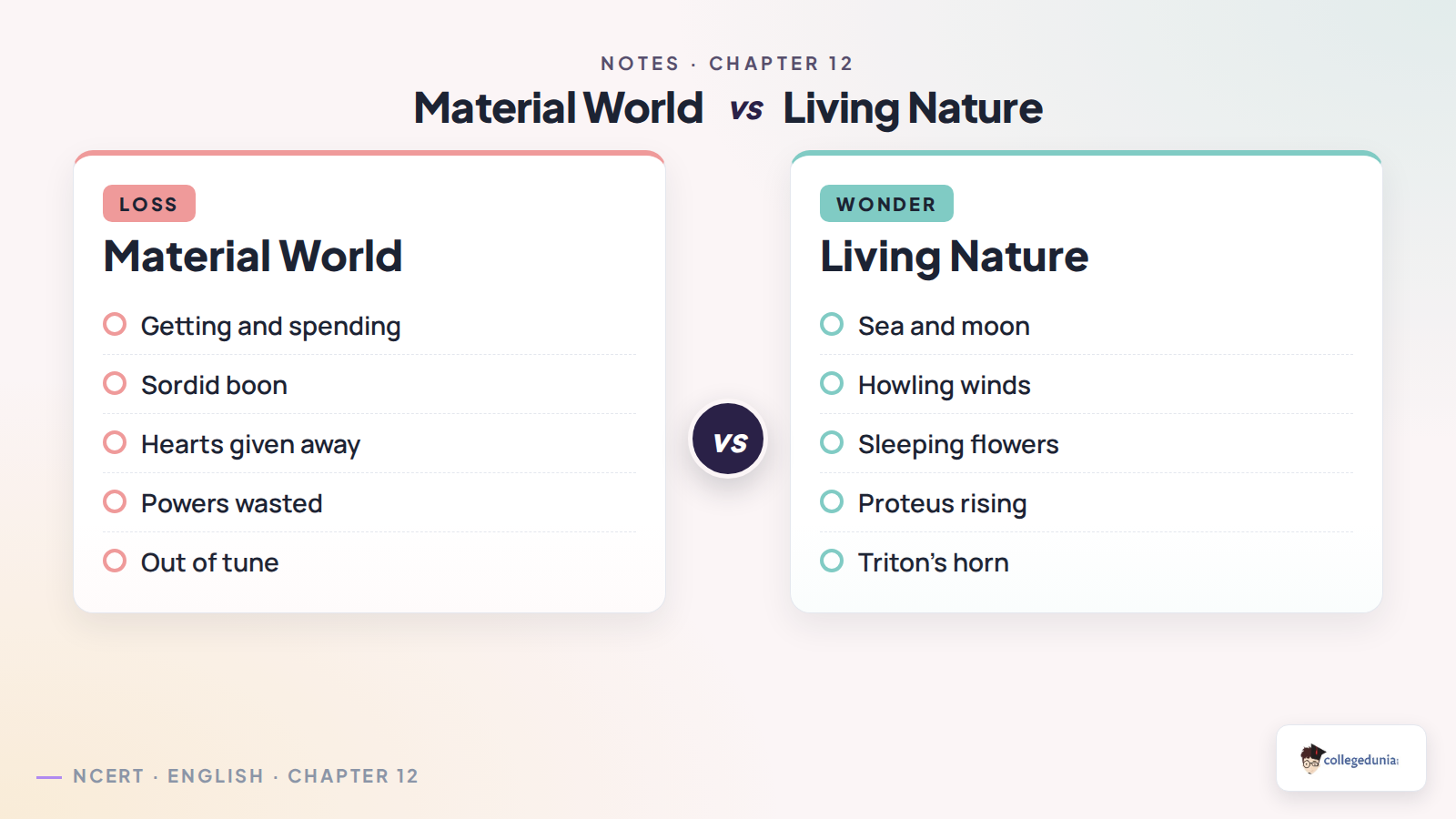
Wordsworth contrasts human greed with nature's beauty. The sea, moon and winds are alive in the poem, but human beings do not respond to them. This creates the main tension of the sonnet.
The key answer point is alienation. The speaker feels that modern life has taken away people's emotional connection with nature. The phrase "we lay waste our powers" is the clearest line for this idea.
- Getting and spending: people are trapped in buying, earning and owning.
- Nature images: the sea and winds show a living natural world.
- Speaker's pain: he feels out of tune with the age around him.
Sonnet Form and Myth Images in the Poem
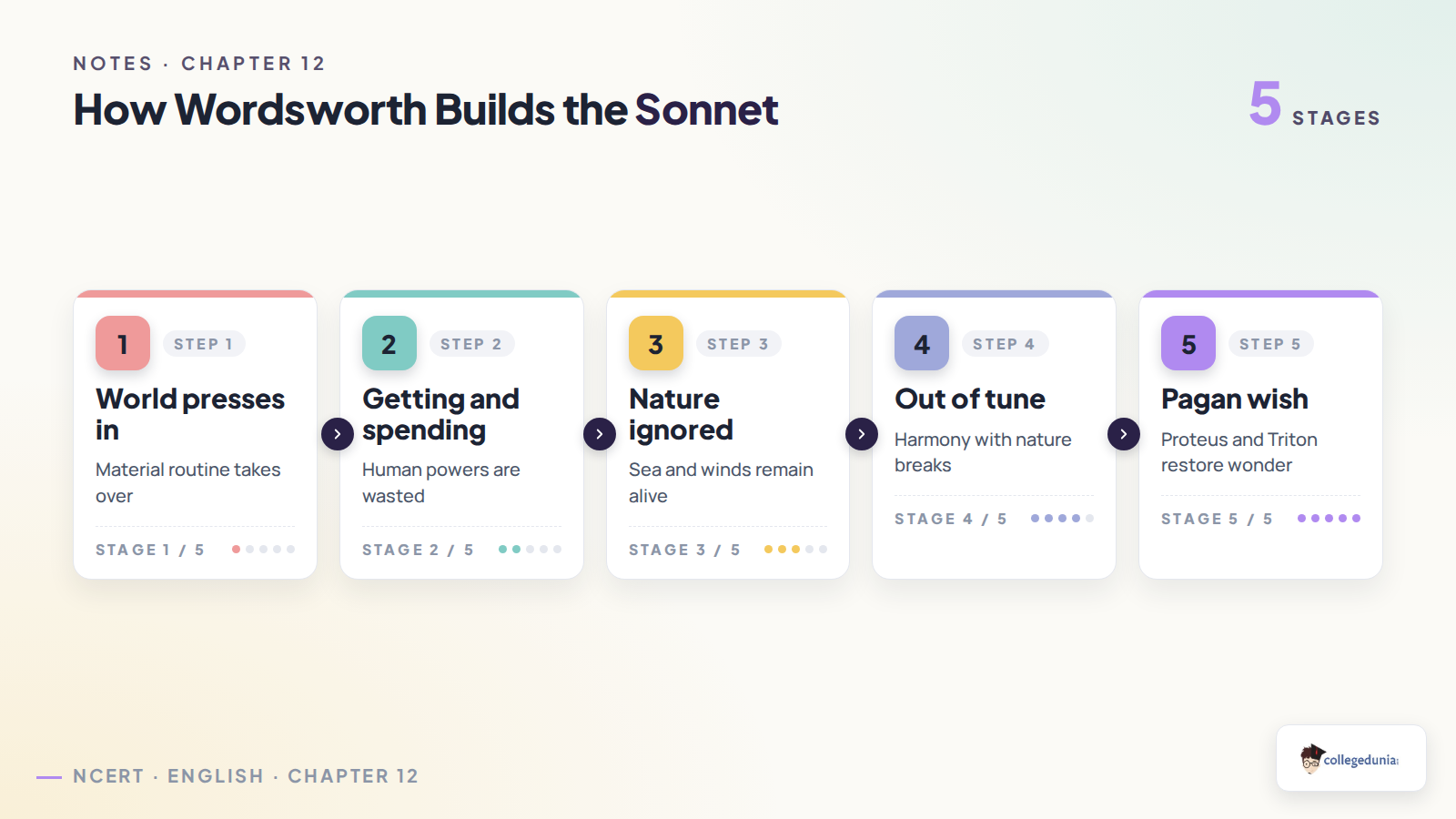
The poem is a sonnet, so the argument moves in a tight pattern. First, the speaker states the problem. Then he explains how people have lost touch with nature. In the final lines, he says he would rather see ancient mythic figures than remain spiritually empty.
Proteus and Triton are not random names. They show the speaker's wish for a world where nature still feels sacred. Good answers should connect the myth images with Wordsworth's longing.
| Poem element | What it shows | Answer cue |
|---|---|---|
| Sea and moon | Nature has beauty and power | Use for imagery answers. |
| Getting and spending | Material life controls people | Use for theme answers. |
| Proteus and Triton | Old myths make nature sacred | Use for the final lines. |
How to Use the Chapter 12 Book PDF for Revision
Use the PDF in three rounds. First, read the poem without stopping. Second, mark nature images in one colour and material-life phrases in another. Third, answer each NCERT question with one direct phrase from the poem.
- For theme answers: connect materialism with loss of emotional power.
- For tone answers: use words like angry, disappointed and longing.
- For imagery answers: explain sea, moon, winds, Proteus and Triton.
- For form answers: mention that the sonnet builds one focused argument.
The World is Too Much With Us Class 11 Related Resources
| Resource | Best use | Link |
|---|---|---|
| NCERT Solutions | Use for textbook answers and poetry appreciation questions. | The World is Too Much With Us Solutions |
| Handwritten Notes | Use for quick visual revision before class tests. | The World is Too Much With Us Handwritten Notes |
All Class 11 English Woven Words NCERT Book Chapters
| Chapter | NCERT Book PDF |
|---|---|
| 1 | The Lament |
| 2 | A Pair of Mustachios |
| 3 | The Rocking-horse Winner |
| 4 | The Adventure of the Three Garridebs |
| 5 | Pappachi's Moth |
| 6 | The Third and Final Continent |
| 7 | Glory at Twilight |
| 8 | The Luncheon |
| 9 | Let Me Not to the Marriage of True Minds |
| 10 | Coming |
| 11 | Telephone Conversation |
| 12 | The World is Too Much With Us |
The World is Too Much With Us Class 11 English NCERT Book FAQs
Ques. What is included in the Class 11 English Woven Words Chapter 12 NCERT PDF?
Ans. It includes the official NCERT poem The World is Too Much With Us by William Wordsworth, glossary notes and NCERT exercise questions.
Ques. Who wrote The World is Too Much With Us?
Ans. The poem was written by William Wordsworth. It appears in the poetry section of Class 11 Woven Words.
Ques. What is the main theme of the poem?
Ans. The poem criticises materialism and shows how people lose their connection with nature.
Ques. Why are Proteus and Triton mentioned?
Ans. They are mythological sea figures. Wordsworth uses them to show his longing for a world where nature still feels sacred.
Ques. How should students use this PDF for 2026-27 revision?
Ans. Students should read the poem, mark nature images and practise answers on materialism, tone, sonnet form and myth references.



Comments