



Content Curator
Karyokinesis and Cytokinesis are the two stages of cell division.
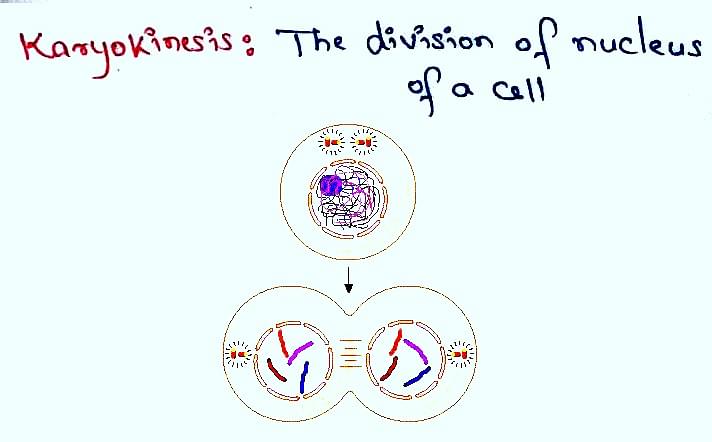
Karyokinesis is the division of the nucleus during the M phase of the cell cycle.
- This first step in the M Phase equally divides the genetic material and does not depend on the cytokinesis.
- Two daughter nuclei get separated from a daughter chromosome.
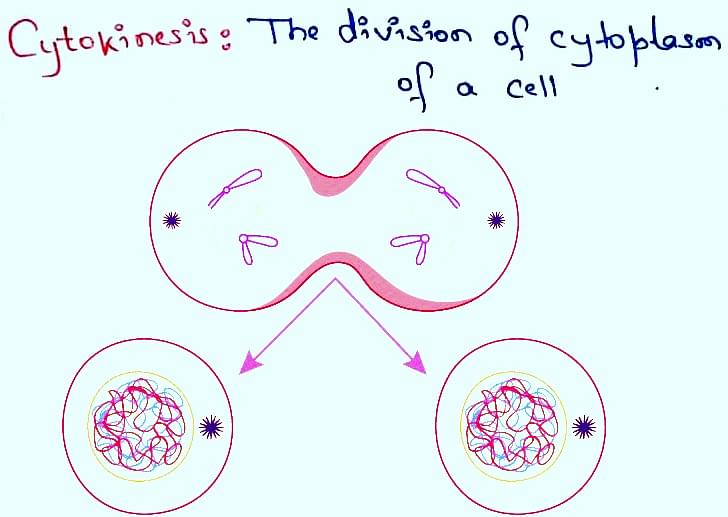
Cytokinesis is the division of the cytoplasm during the M phase of the cell cycle.
- This second step in the M phase can not take place without karyokinesis getting involved.
- As this is the final stage of mitosis, we can observe the cell organelles and cytoplasm being divided between the 2 daughter cells.
| Table of Content |
Key Terms: Karyokinesis, Cytokinesis, Cell division, Cell cycle, Cell organelles, Cytoplasm, M phase, Anaphase, Membranes, Multicellular organisms
Karyokinesis
[Click Here for Sample Questions]
Karyokinesis is the process in which a parent cell nucleus gets partitioned to get two daughter nuclei and they happen to be genetically identical.
- The parent cell will be ready to divide its cytoplasm (two cells).
- The chromosomal matter and the DNA condense into two halves when the nucleus of the cell divides and this process is eventually followed by cytokinesis.
- The four stages of Karyokinesis are Telophase, metaphase, anaphase, and prophase.
| Related Concepts | ||
|---|---|---|
| Difference Between Xylem And Phloem | Squamous | DNA Genetic Material |
| Connective tissues | Difference between RBC and WBC | DNA Cloning |
Cytokinesis
[Click Here for Sample Questions]
Cytokinesis is the final stage of mitosis, we can observe the cell organelles and cytoplasm being divided between the 2 daughter cells.
- “Cytoplasmic division” is the exact meaning of cytokinesis.
- The cytoplasmic division takes place only when the karyokinesis happens to the cell where the nucleus gets divided into two.
- During the M phase of the cell cycle, the division of the cytoplasm is defined as cytokinesis.
- This second step in the M phase can not take place without karyokinesis getting involved.
- The M phase is also known as the animal cell cycle where cytokinesis and mitosis constitute together.
- The process of cytokinesis extends till telophase but starts in the division phase which is also known as anaphase.
Difference Between Karyokinesis and Cytokinesis
[Click Here for Sample Questions]
| Karyokinesis | Cytokinesis |
|---|---|
| The process of division of the nucleus is known as karyokinesis | Cytokinesis is known as the process of division of cytoplasm |
| Two daughter nuclei get divided from a nucleus. | The daughter cells equally receive the divided nuclei, cell organelles, and cytoplasm |
| Does not depend on the cytokinesis. | Can not take place without karyokinesis getting involved |
| For the process to initiate, the M Phase is the first step. | The M Phase is the second step for the cytokinesis to start the process. |
| Karyokinesis takes place before cytokinesis and the nucleus gets divided before the cytoplasm. | Cytokinesis takes place after Karyokinesis and the nucleus gets divided after the cytoplasm. |
Cytoplasm
[Click Here for Sample Questions]
Inside a plasma membrane, we can see a fluid content, it is known as cytoplasm.
- There are many cell organelles present inside this cytoplasm that perform a unique/specific function for the cell.
- The best example of Cytoplasm is, we can identify stains from the cell membrane which are found on the human cheek cell or the mount of onion peels.
- These are called the cytoplasm.
- The example of viruses can be used to illustrate the significance of membranes.
- Viruses will not show any characteristics of life until they enter a living body because it lack any membranes.
- For Viruses to multiply, they use their cell machinery.
Read More: Chromosomes and genes
Cell Organelles
[Click Here for Sample Questions]
The membrane around a cell helps it to separate and keep its contents from any kind of external environment.
- A lot of chemical activities are required by multicellular organisms to support their functions and structures.
- A membrane-bound little structure otherwise known as organelles is used by these cells within themselves to keep all these different activities separate from each other.
- Some of the important organelles cells are the Golgi apparatus, mitochondria, reticulum, lysosomes, and plastids.
Read More:
Things to Remember
- Cytokinesis is known as the process of division of cytoplasm.
- Karyokinesis is the process of division of the nucleus.
- The cytoplasmic division takes place only when the karyokinesis happens to the cell where the nucleus gets divided into two.
- Karyokinesis does not depend on Cytokinesis whereas Cytokinesis cannot happen without Karyokinesis.
- An organelle is a subcellular structure that, like an organ, has one or more different functions to do in the cell.
Sample Questions
Ques. Define karyokinesis. (1 Mark)
Ans. Karyokinesis is the process by which the nucleus separates to produce two daughter nuclei during cell division. It is usually followed by cytokinesis.
Ques. Which process occurs first: karyokinesis or cytokinesis? (1 Mark)
Ans. Karyokinesis takes place before cytokinesis. The nucleus splits first, followed by the cytoplasm.
Ques. What happens when the karyokinesis process takes place? (2 Marks)
Ans. This is the process in which a parent cell nucleus gets partitioned to get two daughter nuclei and they happen to be genetically identical. The parent cell will be ready to divide its cytoplasm (two cells). The chromosomal matter and the DNA condense into two halves when the nucleus of the cell divides and this process is eventually followed by cytokinesis.
Ques. Where does meiosis occur? (2 Marks)
Ans. During gametogenesis, meiosis occurs. It happens in reproductive and germ cells. It happens in germ cells because they need to expand and build complicated organ structures from their parents, which leads to cell division.
Ques. Does meiosis occur in a variety of plant and animal tissues? (2 Marks)
Ans. Yes, both plants and animals undergo meiosis. In animals and plants, meiosis occurs in the sex cells or germ cells of female and male reproductive organs, leading to the creation of female and male gametes for sexual reproduction.
Ques. What are the different stages of Karyokinesis and when cytokinesis starts? (2 Marks)
Ans. The four stages of Karyokinesis are Telophase, metaphase, anaphase, and prophase. The process of cytokinesis extends till telophase but starts in the division phase which is also known as anaphase. For the Karyokinesis process to initiate, the M Phase is the first step. The M Phase is the second step for the cytokinesis to start the process.
Ques. Explain the events occurring during telophase. (2 Marks)
Ans. The chromosomes reach the poles during telophase. The nuclear membrane and nucleolus reappear. It produces two daughter cells, each with a solitary nucleus.
Ques. What is the definition of cytokinesis? (2 Marks)
Ans. This is the final stage of mitosis, we can observe the cell organelles and cytoplasm being divided between the 2 daughter cells. “Cytoplasmic division” is the exact meaning of cytokinesis. The cytoplasmic division takes place only when the karyokinesis happens to the cell where the nucleus gets divided into two. The M phase is also known as the animal cell cycle where cytokinesis and mitosis constitute together.
Ques. What is the Basic difference between Karyokinesis and Cytokinesis? (3 Marks)
Ans. The process of division of the nucleus is known as karyokinesis and the Process of a division of cytoplasm is known as cytokinesis. Karyokinesis does not depend on cytokinesis whereas cytokinesis can not take place without karyokinesis getting involved. For the Karyokinesis process to initiate, the M Phase is the first step. The M Phase is the second step for the cytokinesis to start the process.
Ques. What are cytoplasm and Cell Organelles? (3 Marks)
Ans. Inside a plasma membrane, we can see a fluid content, it is known as cytoplasm. The best example of Cytoplasm is, we can identify stains from the cell membrane which are found on the human cheek cell or the mount of onion peels. These are called the cytoplasm.
The membrane around a cell helps it to separate and keep its contents from any kind of external environment. A lot of chemical activities are required by multicellular organisms to support their functions and structures. A membrane-bound little structure otherwise known as organelles is used by these cells within themselves to keep all these different activities separate from each other.
For Latest Updates on Upcoming Board Exams, Click Here: https://t.me/class_10_12_board_updates
Also Read:



Comments