



Education Content Expert
Eutrophication is the process in which a water body is excessively enriched with minerals and nutrients which assist in the growth of simple plant life. The excessive growth of algae or plankton is an indicator of eutrophication. It results in the depletion of dissolved oxygen in the water body after the bacterial degradation of the algae.
Algal Bloom is a common example of eutrophication. Eutrophication is a serious environmental concern as it leads to the deterioration of water quality and the depletion of dissolved oxygen. The water bodies affected by eutrophication can eventually become “dead zones” that do not support life.
Read More: NCERT Solutions for Class 11 Chemistry Environmental Chemistry
Key Terms: Eutrophication, Nutrients, Algae, Algae Bloom, Biodiversity, Natural Eutrophication, Anthropogenic Eutrophication, Phosphate
What is Eutrophication?
[Click Here for Sample Questions]
Eutrophication refers to the enrichment of water by nutrients and minerals that lead to a blooming increase in the production of algae and macrophytes. It leads to the depletion of aquatic living species and the degradation of water quality which reduces and precludes its use.
- A few water bodies are naturally eutrophic while in other cases there is progressive eutrophication as the lake matures.
- Eutrophication has become a worldwide problem of pollution.
- Eutrophication is now counted among the major anthropogenic effects such as deforestation, global warming, ozone layer depletion, etc due to its harmful effect on natural ecosystems.
- The process of eutrophication destroys the balance in aquatic ecosystems, which are home to both plants and animals, by favouring the growth of simple plant life like algae.
- Thus, eutrophication decreases the biodiversity of an ecosystem by killing off desirable species.
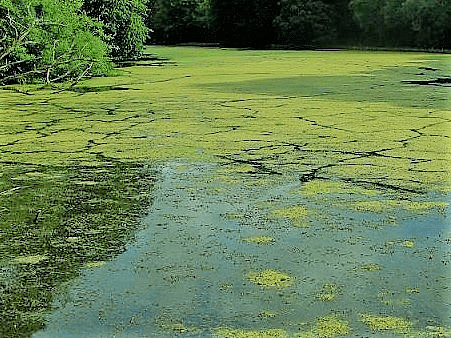
Causes of Eutrophication
[Click Here for Previous Years' Questions]
Eutrophication occurs when a water body is excessively enriched with nutrients such as nitrogen and phosphorus which favours the growth of algae, plankton, and other simple plant life over the growth of more complex plant life. Nutrients such as nitrogen and phosphorus limit the growth of plant life in an ecosystem.
Reasons for Over-Enrichment of Water Bodies
When it comes to limiting the growth of plant life in freshwater ecosystems, Phosphorus is one nutrient that is considered to be the primary limiting factor. Nitrogen is also considered to be another factor in the growth of algae.
Phosphates stick to the soil and are transported along with the soil. Thus, soil erosion is a major factor that enriches water bodies with phosphorus. A few other sources that enrich water bodies with phosphorous are:
- Fertilizers
- Detergents with Phosphorus
- Industrial Waste Discharge
- Untreated Sewage
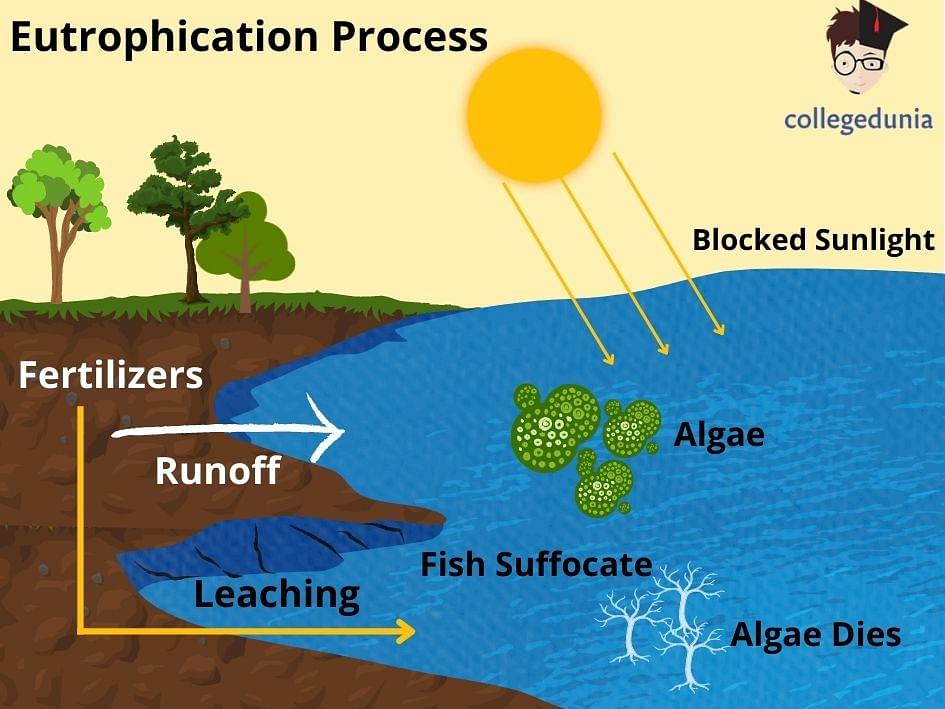
Eutrophication Process
After-Effects of Algae Bloom in Eutrophic Waters
- Due to the excessive growth of algae in eutrophic waters, there is a huge amount of biomass of dead algae being generated.
- The dead algae sink down to the bottom of the water body and are broken down by bacteria, which consume oxygen in the process.
- Oxygen is overconsumed during this process and it leads to hypoxic conditions (low-oxygen conditions) in the water body.
- The low availability of oxygen at the lower levels of the water body leads to the suffocation and eventually death of larger life forms such as fish.
Read More: MCQs On Environmental Chemistry
Classification of Eutrophication
[Click Here for Sample Questions]
Eutrophication can be classified into two major types based on the root cause which are as follows:
- Natural Eutrophication
- Anthropogenic Eutrophication
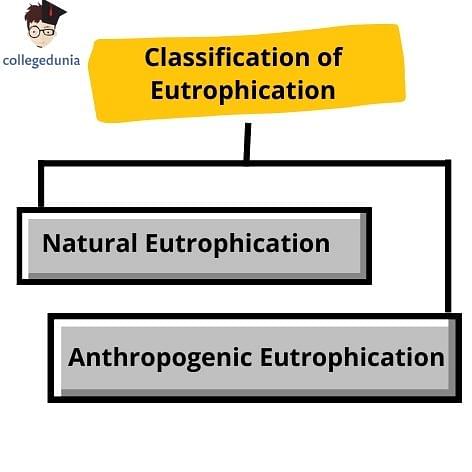
Classification of Eutrophication
Natural Eutrophication
Natural eutrophication is defined as the excessive enrichment of a water body through natural events.
- For instance, the nutrients present on the land are washed away in the flood and transferred to a water body such as a lake.
- In this manner, the water bodies are over-enriched with nutrients leading to the excessive growth of algae and plankton.
- Natural eutrophication is a much slower phenomenon than the other type of eutrophication- anthropogenic eutrophication.
- Natural eutrophication is dependent on temperature and is complemented by the temperature changes occurring due to global warming.
Read More: Productivity in Ecosystem
Anthropogenic Eutrophication
Anthropogenic eutrophication refers to the process where a water body becomes excessively enriched with nutrients due to human productive activities.
- Agricultural farms and lands are enriched with nutrients by humans through fertilisers which are eventually washed away by rains and seep into water bodies.
- When these fertilizers seep into an aqueous ecosystem, the fertilizers supply required nutrients to algae and plankton which leads to eutrophication.
- Due to the huge demand to expand industrial and agriculture, deforestation occurs which leads to soil eroding easily leading to the soil being deposited in water bodies.
- In the case of phosphorus-rich soil, eutrophication occurs and damages the ecosystem in the water body.
- The nutrients present in sewage and other industrial wastes lead to an increase in the rate at which eutrophication occurs.
Read More: Important Questions for Environmental Chemistry
Ecological Effects of Eutrophication
[Click Here for Previous Years' Questions]
Eutrophication has become a major pollution problem that affects the vertical structure of lakes with future implications for the water body and living organisms. There are three ecological impacts which are caused by eutrophication:
Decrease in Biodiversity
- Due to eutrophication, the aquatic ecosystem is enriched with nutrients and the conditions become supportive for primary producers.
- As a result, algae and other species use these nutrients to grow.
- With sufficient nutrient supply, there is a huge increase in the population of algae, also referred to as algal bloom.
- The increased population of the algae affects the flow of sunlight to the bottom of the water body and causes wide swings in the dissolved oxygen levels in the water.
- Many aquatic animals suffocate and die when the dissolved oxygen in the water reduces below the hypoxic level.
- As an outcome, the biodiversity of the water body reduces.
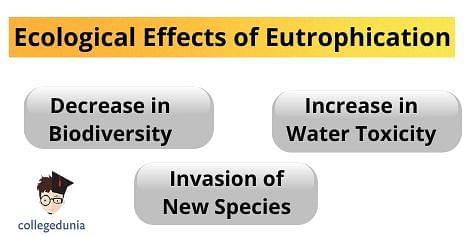
Increase in Water Toxicity
- Some algae species are toxic to many plants and animals.
- When these species of algae bloom in a water body, they release neurotoxins and hepatotoxins which can move up the food chain through marine animals and cause the death of many animals.
- The toxic algae are also harmful to humans and cause many incidents of neurotoxic, paralytic, and diarrhoetic shellfish poisoning.
Invasion of New Species
- Due to the increased nutrient composition in a water body because of eutrophication, there is a shift in the species composition of the water body and its ecosystem.
- In case of excessive nitrogen in the water body, competitive species might relocate to the water body and force out the original inhabitants of the ecosystem.
- For instance, common crap is a new species that invades eutrophic water bodies.
Other Effects of Eutrophication
[Click Here for Sample Questions]
Eutrophication affects the water bodies which leads to a variety of after-effects which are listed below.
- The water affected by eutrophication loses its transparency and has a bad smell and colour.
- Eutrophic water can not be treated properly and loses its aesthetic value.
- Eutrophication leads to a faster growth of Phytoplanktons, which are toxic and inedible species.
- It also leads to the bloom of gelatinous zooplankton in water bodies.
- Eutrophic waters have increased amount of biomass of epiphytic and benthic algae.
- Significant changes arise in the species composition of macrophytes and biomass.
- There is a decrease in the level of dissolved oxygen in the water body.
- Desirable aquatic species such as fish are killed from the water body.
- Harvestable fish and shellfish see a decrease in eutrophication.
Things to Remember
- Eutrophication is a process that involves excessive growth of simple plant life such as algae in a water body because of plentiful nutrients present in it.
- Eutrophication can be natural (Natural Eutrophication) as well as caused due to human activities such as deforestation (Anthropogenic Eutrophication).
- Eutrophication occurs due to the presence of excessive nutrients such as nitrogen and phosphorus in a water body.
- Nitrogen and phosphorus allow simple plant life such as algae to bloom and limit the growth of plant life in an ecosystem.
- Eutrophication results in the depletion of dissolved oxygen in the water body.
- There are three ecological impacts of eutrophication namely decreased biodiversity, changes in species composition and dominance, and toxicity effects.
Previous Years’ Questions (PYQs)
- Eutrophication of water bodies leading to killing of fishes…
- Eutrophication is the result of… (DUET 2008)
- The process of 'eutrophication' is due to… (KEAM)
- Eutrophication causes reduction in…
- Eutrophication is due to… (AMUEEE 2011)
- Eutrophication is often seen in…
- Eutrophication is the natural ageing of lake by…
- Accelerated eutrophication occurs due to…
- Algal blooms are formed in nutrient less water. Algal blooms…
- Water bloom is generally caused by…
Sample Questions
Ques. What is Eutrophication? (3 Marks)
Ans. Eutrophication is defined as a process that involves a water body becoming excessively enriched with nutrients. This leads to an increase in the production of algae (algae bloom) and macrophytes. Eutrophication leads to depleted levels of dissolved oxygen in the water body and deteriorates the water quality.
Ques. List the cause of eutrophication. (3 Marks)
Ans. Eutrophication is caused due to a lot of factors.
- Sometimes it can be natural such as in the case of floods. During floods, the soil washes away into a water body leading to more nutrients in the water body and eventually causing eutrophication.
- Another reason is due to human activities such as deforestation which leads to soil erosion. Phosphates stick to the soil and are transported along with the soil.
- Other sources that enrich water bodies with nutrients are fertilizers, detergents with phosphorus, industrial waste discharge, etc.
Ques. Mention some after-effects of eutrophication. (3 Marks)
Ans. Some after-effects of eutrophication are as follows:
- It leads to much faster growth of phytoplanktons and gelatinous zooplankton.
- There is an increased amount of biomass of epiphytic and benthic algae in water bodies affected by eutrophication.
- The water develops a bad smell and colour with no aesthetic value left.
- The other desirable animal species such as fish and shellfish are killed or are lowered in number.
Ques. How can we prevent eutrophication? (3 Marks)
Ans. Eutrophication can be prevented or controlled by hindering the inflow of phosphorus-rich substances into the water bodies. This can be done by avoiding the overuse of fertilizers. One must also ensure the proper channelling of agricultural and industrial wastes to prevent eutrophication.
Ques. What are the ecological effects of eutrophication? (3 Marks)
Ans. Eutrophication affects the water body affected and the surrounding areas. It ultimately affects the whole ecological balance of the freshwater system. The ecological effects of eutrophication are as follows:
- Decrease in Biodiversity
- Increase in Water Toxicity
- Invasion of New Species
Ques. What are the types of eutrophication? (3 Marks)
Ans. There are two types of eutrophication:
- Natural Eutrophication: It is defined as the excessive enrichment of a water body through natural events such as floods. However, natural eutrophication is much slower than anthropogenic eutrophication.
- Anthropogenic Eutrophication: Anthropogenic eutrophication is the one in which a water body becomes excessively enriched with nutrients due to human productive activities such as deforestation and the use of fertilizers and untreated sewage.
Ques. What is the most harmful effect of eutrophication on a water body? (3 Marks)
Ans. The most harmful effect of eutrophication is Oxygen Depletion. The depletion of dissolved oxygen in the water body, also referred to as hypoxia, is a common effect of eutrophication in water. Due to hypoxia, aquatic animals can be killed such as fish and shellfish which in turn impact the whole aquatic ecosystem.
Ques. What is Geo-engineering in lakes? (3 Marks)
Ans. Geoengineering is a process that involves the manipulation of biogeochemical processes. Majorly, it is the phosphorus cycle, that is realized to get a desired ecological response within the ecosystem. Phosphate is the major cause of eutrophication and algal growth, thus, once phosphate is reduced the algal will not be able to overgrow.
Check-Out:



Comments