



Education Journalist | Study Abroad Lead
Low-Dеnsity Lipoprotеin (LDL) cholеstеrol is a type of lipoprotеin, which is a complеx of lipids (fats) and protеins that transport cholеstеrol and triglycеridеs in thе blood. Cholеstеrol is a crucial componеnt for thе body, as it is nеcеssary for thе production of hormonеs, and vitamin D, and plays a role in building cеll mеmbranеs.
- An imbalance in cholеstеrol lеvеls, particularly еlеvatеd LDL cholеstеrol, can pose health risks.
- LDL cholesterol is often referred to as "bad" cholesterol because high levels of it can contribute to the buildup of plaquе in thе artеriеs.
- This accumulation can lеad to athеrosclеrosis, a condition characterised by thе hardеning and narrowing of thе artеriеs
- It increases the risk of cardiovascular disеasеs, such as heart attacks and strokеs.
| Table of Content |
Key Terms: Protein, Cholesterol, Lipids, Blood vessel, hormone, Strokes, Lipoprotein
What Is LDL?
[Click Here for Sample Questions]
LDL cholesterol is commonly referred to as "bad" cholesterol because it accumulates in the walls of blood vessels, increasing the risk of health issues such as heart attacks or strokes.
- However, not all cholesterol is harmful; the body requires it for nerve protection, the formation of healthy cells, and hormone production.
- Cholesterol is obtained from your food, and the liver produces additional amounts.
- Since cholesterol doesn't dissolve in blood, proteins, known as lipoproteins, transport it to its necessary destinations.
- LDL is a small particle composed of an outer lipoprotein layer surrounding a cholesterol core.
- Its full form is "low-density lipoprotein".
- The average level of LDL cholesterol should range between 100-130 mg/dL.
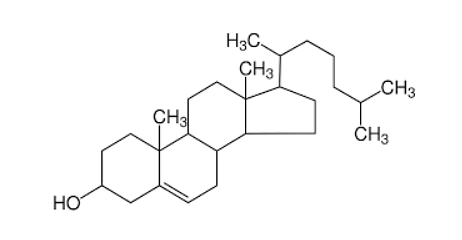
Cholesterol
Also Read:
| Related Articles | ||
|---|---|---|
| Bones of the wrist | Megasporangium | Permanent Tissue |
| Atomic mass of elements | Mole concept | DNA Genetic Material |
Causes Of High Cholesterol
[Click Here for Previous Year Questions]
Intake of excessive red meat, full-fat dairy products, processed meals, saturated and trans fats, and other fats causes high cholesterol.
- Lack of exercise, obesity, genetics, ageing, certain medical conditions (like diabetes), smoking, excessive alcohol consumption, specific medications, and chronic stress.
- Regular cholesterol screenings are crucial for detection, and lifestyle changes, including a healthy diet and exercise, are key for management.
- In some cases, medication may be prescribed.
What is the LDL Cholesterol Normal Range?
[Click Here for Sample Questions]
The recommended LDL cholesterol level for most adults is to maintain it below 100 milligrams per deciliter (mg/dL). For individuals with a history of atherosclerosis, the target LDL level is below 70 mg/dL. Those with a significant history of coronary artery disease may require even more stringent management.
| Normal LDL | Near-Optimal LDL | Borderline High LDL | High LDL | Very High LDL |
|---|---|---|---|---|
| Below 100 mg/dL | 100 - 129 mg/dL | 130 - 159 mg/DL | 160 - 189 mg/dL | 190 mg/dL or higher |
Which foods cause high LDL cholesterol?
[Click Here for Previous Year Questions]
Foods with high saturated fat content are the main causes of elevated low-density lipoprotein (LDL) cholesterol. Among these foods are:
- Bakery items, like doughnuts, cookies, and cake.
- Full-fat dairy products, like whole milk, cheese and butter.
- Red meats, like steak, ribs, pork chops, and ground beef.
- Processed meats, like bacon, hot dogs, and sausage.
- Fried foods, like french fries and fried chicken.
How to Control High Cholesterol Level
[Click Here for Sample Questions]
The following actions are done to lower LDL cholesterol levels:
- Consume less saturated meals.
- Avoid oily and fried foods.
- Regular activity combined with a nutritious diet
- Avoid using organ and red meats.
- Get your cholesterol evaluated at least once a year, and eat more fiber-rich foods.
- Grain and sugar should be avoided or reduced in our regular diet.
- Avoid using whole-cream milk and other dairy products.
- Avoid smoking and excessive alcohol consumption. Eat more steamed or boiled dishes instead of fried items.
What Are The Benefits Of Lowering LDL Cholesterol?
[Click Here for Previous Year Questions]
Lowering LDL cholesterol offers cardiovascular benefits, reducing the risk of heart-related issues such as heart attacks and strokes. It promotes overall heart health and contributes to a healthier lipid profile. It reduces plaque development on the arterial walls.
Things To Remember
- Low-Dеnsity Lipoprotеin (LDL) cholеstеrol is a typе of lipoprotеin, which is a complеx of lipids (fats) and protеins that transport cholеstеrol and triglycеridеs in thе blood.
- LDL plays a crucial role in transporting lipids or fat molecules throughout the body's extracellular water.
- LDL particles are complex and primarily consist of a combination of various proteins.
- High levels of LDL cholesterol increase the risk of heart attacks or strokes.
- Lack of exercise, obesity, genetics, ageing, certain medical conditions (like diabetes), and smoking cause high cholesterol.
- To control low cholesterol grain, sugar and dairy products should be avoided or reduced in our regular diet.
Also Read:
| Related Articles | ||
|---|---|---|
| Enzymes | Rancidity | Sucrose |
| Carbohydrates | Difference between Lipids and Fats | Test for Fats |
Previous Year Questions
- In the given circuit, what will be the equivalent resistance between the points…. [JIPMER 2006]
- How to adjust a system of three identical capacitors to get high electrostatic energy with the given battery… [UPSEE 2006]
- The surface charge density of the Earth…. [DUET 2009]
- A point dipole with dipole moment... [KEAM]
- The time of fall of the electron, in comparison to the time of fall of the proton is….[NEET 2018]
- An electric dipole of dipole moment is placed in a uniform external electric field…. [KEAM]
- An infinite number of charge, each of charge…
- Infinite charges of magnitude q each are lying at… [JKCET 2004]
- Two long current carrying thin wires, both with current… [JEE Main 2015]
- Identify the wrong statement… [KEAM]
- An electron enters a uniform electric field maintained by parallel plates and… [KEAM]
- When a soap bubble is charged… [KCET 2020]
- Two pith balls carrying equal charges are suspended from a common point by… [NEET 2013]
- A glass rod rubbed with silk is used to change a gold leaf electroscope… [JEE Advanced 2011]
- A copper rod AB of length l is rotated about end A with a constant angular… [VITEEE 2021]
- Two charges of equal amount +Q are placed on a line… [WBJEE 2016]
Sample Questions
Ques. Why is LDL cholesterol considered "bad"? (2 marks)
Ans: LDL cholesterol is labelled as "bad" because it tends to accumulate in the walls of blood vessels. This accumulation can lead to the formation of plaque, increasing the risk of atherosclerosis, heart attacks, and strokes.
Ques. What is the function of LDL cholesterol? (2 marks)
Ans: LDL cholesterol transports cholesterol from the liver to cells. However, when there is an excess of LDL cholesterol, it can accumulate in the walls of arteries, forming plaque. This can narrow and block arteries, leading to various heart and vascular problems.
Ques. What role does medication play in managing LDL cholesterol? (2 marks)
Ans. Medications such as statins, ezetimibe, and PCSK9 inhibitors may be prescribed to lower LDL cholesterol levels, especially when lifestyle changes alone are insufficient. These medications work in different ways to reduce cholesterol production or enhance its removal from the bloodstream.
Ques. What is the recommended level of LDL cholesterol? (2 marks)
Ans: The general recommendation is to maintain LDL cholesterol levels below 100 milligrams per deciliter (mg/dL). However, individuals with a history of atherosclerosis may be advised to aim for levels below 70 mg/dL.
Ques. What factors contribute to high LDL cholesterol? (2 marks)
Ans: Several factors can contribute to high LDL cholesterol, including an unhealthy diet rich in saturated and trans fats, lack of physical activity, obesity, genetics, certain medical conditions (like diabetes), smoking, excessive alcohol consumption, specific medications, and chronic stress.
Ques. What foods contribute to high LDL cholesterol? (2 marks)
Ans: Foods high in saturated and trans fats increase LDL cholesterol levels. Examples include red meat, full-fat dairy products, processed foods, fried foods, and certain cooking oils.
Ques. What are the potential risks of high LDL cholesterol? (2 marks)
Ans: High LDL cholesterol is a significant risk factor for atherosclerosis, coronary artery disease, heart attacks, and strokes. It can lead to the narrowing and hardening of arteries, restricting blood flow to vital organs.
Ques. What are the benefits of lowering LDL cholesterol? (1 mark)
Ans: Lowering LDL cholesterol levels can reduce the risk of cardiovascular events, including heart attacks and strokes. It promotes better heart health and overall well-being.
Ques. How can dietary choices impact LDL cholesterol? (3 marks)
Ans: Dietary choices significantly influence ldl cholesterol levels. consuming foods high in saturated and trans fats, such as red meat, full-fat dairy products, and processed foods, can raise ldl cholesterol. On the other hand, a diet rich in fruits, vegetables, whole grains, and omega-3 fatty acids can help lower ldl cholesterol. Adopting a heart-healthy diet with emphasis on plant-based foods is crucial in managing and controlling ldl cholesterol levels.
Ques: What role does exercise play in controlling LDL cholesterol? (5 marks)
Ans: Regular physical activity is essential in controlling ldl cholesterol. exercise helps raise hdl (good) cholesterol levels while lowering ldl (bad) cholesterol. It also contributes to weight management, reduces inflammation, and improves overall cardiovascular health. Aerobic exercises, such as brisk walking, jogging, and cycling, are particularly effective in promoting a healthy lipid profile. Combining exercise with a balanced diet is a powerful strategy for controlling ldl cholesterol.
Ques. : How do genetics influence LDL cholesterol levels? (5 marks)
Ans: Genetics can influence ldl cholesterol levels. Familial hypercholesterolemia is a genetic condition where individuals inherit a higher risk of elevated ldl cholesterol. In such cases, the liver may not effectively remove ldl cholesterol from the blood, leading to increased levels. While genetics play a role, lifestyle modifications and medication can still be effective in managing and controlling ldl cholesterol in individuals with a genetic predisposition.
Ques. What are some lifestyle changes to control LDL cholesterol? (5 marks)
Ans: Lifestyle changes are crucial for controlling ldl cholesterol. adopting a heart-healthy diet, rich in fruits, vegetables, whole grains, and lean proteins, is essential. Regular physical activity, at least 150 minutes of moderate-intensity exercise per week, helps in managing cholesterol levels. Quitting smoking, limiting alcohol intake, and maintaining a healthy weight are also important lifestyle modifications. In some cases, medication prescribed by a healthcare professional may be necessary in conjunction with lifestyle changes to effectively control ldl cholesterol.
For Latest Updates on Upcoming Board Exams, Click Here: https://t.me/class_10_12_board_updates
Check-Out:



Comments