



Education Content Expert
Sinusitis is an inflammation or swelling of the sinus tissue. Sinusitis occurs when the tissue lining the sinuses swells or becomes inflamed. It emerges due to an inflammatory response or an infection with a virus, bacteria, or fungus. Sinuses are hollow spaces in the bones of the forehead, cheekbones, and the area between the eyes. They secrete mucus, which keeps the interior of the nose moist and helps to protect against pollutants, dust, and allergens. The symptoms of sinusitis include pressure in the area around the sinuses, blocked or stuffy nose, loss of smell, discharge of sputum, etc. Sinusitis can be treated through sinus flushes, steam inhalation, or we can use saline sprays to keep the nose clean.
| Table of Content |
Key Terms: Sinusitis, Symptoms of Sinusitis, Sinuses, Nasal Cavity, Mucus, Bacteria, Bacterial Sinusitis, Chronic Sinusitis, Allergy
What is Sinusitis?
[Click Here for Sample Questions]
A sinus is a cavity in the human body. Among the many different types of sinuses are the paranasal sinuses, which are the spaces behind the face that connect to the nasal cavity. The lining of these sinuses is made of the same materials as the lining of the nose. The sinuses produce a slimy secretion known as mucus. This mucus also collects dust and bacteria and keeps the nasal passages moist.
- Sinusitis causes the tissue lining the sinuses to become inflamed or swollen.
- Narrow channels connect them.
- The nasal passages allow thin mucus produced by the sinuses to escape.
- This drainage keeps the nose germ-free and clean by flushing out the mucus.
- Sinuses, which are typically filled with air, can become clogged and filled with fluid.
- Bacteria could then grow and cause infection; if this occurs, it is called Bacterial Sinusitis.

Sinusitis
Read More:
| Relevant Concepts | ||
|---|---|---|
| Human Bacterial Diseases | Infectious Diseases | Difference between Bacteria And Virus |
| What are Antibiotics? | Human Health and Diseases | Antimicrobial Resistance |
Types of Sinusitis
[Click Here for Sample Questions]
There are different types of sinusitis which are as follows:
- Acute Bacterial Sinusitis: It is characterized by a sudden onset of cold symptoms such as a runny nose, stuffy nose, and facial pain. A cold or a seasonal allergy can cause temporary acute sinusitis. Symptoms usually go away in 7 to 10 days, but they can sometimes last up to 4 weeks.
- Chronic Sinusitis: Chronic sinusitis is a symptom that lasts more than a year or returns three times. Chronic sinusitis lasts at least 12 weeks and is distinguished by nasal congestion, drainage, facial pain or pressure, and a loss of smell.
- Subacute Sinusitis: It is a condition that occurs when symptoms last four to twelve weeks.
- Recurrent Sinusitis: Recurrent acute sinusitis occurs when acute sinusitis symptoms return four or more times a year and last less than two weeks.
Causes of Sinusitis
[Click Here for Sample Questions]
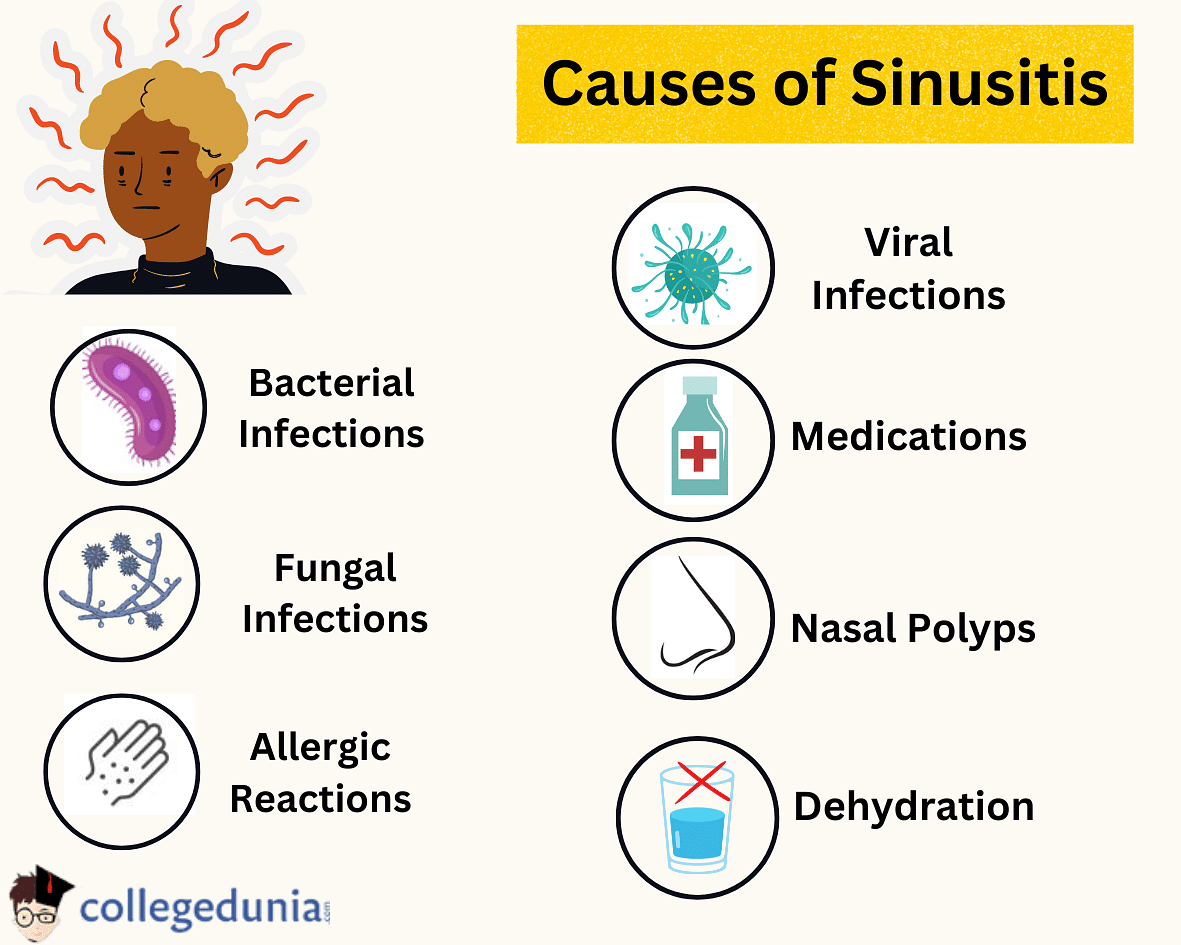
Sinusitis can be caused by a virus, bacteria, or fungus that inflames and obstructs the sinuses. Among the specific causes are
- Common cold.
- Seasonal allergies, nasal allergies, and mold allergies are all familiar.
- Polyps (growths).
- A shifted septum.
- An immune system that has been weakened by disease or medication.
- Infants and young children who spend time in daycares, use pacifiers or drink from bottles while lying down may be more susceptible to sinusitis.
- Adult smokers are more prone to sinus infections.
Causes of Sinusitis
Read More: Human Respiratory System
Symptoms of Sinusitis
[Click Here for Sample Questions]
Sinusitis symptoms emerge when bacteria, viruses, or specific chemicals affect the sinus cavities. The sinuses become inflamed and produce an excessive amount of mucus as a result of these elements. Sinusitis symptoms include
Acute Sinusitis Symptoms
The primary symptoms are as follows:
- Facial pain or pressure
- "Stuff-up" in the nose
- Nose blockage
- Loss of smell,
- Congestion,
- Coughing
One may have acute sinusitis if you have two or more symptoms and thick, green, or yellow nasal discharge.
Chronic Sinusitis Symptoms
These symptoms could last for up to 12 weeks. The following symptoms characterize chronic sinusitis:
- Irritation of the nose
- The nose discharges in a thick, colored stream (runny nose)
- Drainage from the back of the throat
- You have difficulty breathing through your nose because it's blocked or congested.
- The area around your eyes, cheeks, nose, or forehead may be painful, tender, or swollen.
- Reduced sense of taste and smell
Other Sinusitis Symptoms
- Pressure in the sinuses
- Blocked or congested nose
- Loss of taste and smell
- Cough
- Expulsion of sputum
- Headaches
- Congestion
Read More: Acute and Chronic Diseases
Risk Factors of Sinusitis
[Click Here for Sample Questions]
Sinusitis frequently results when something, like mucus, blocks the openings of your sinuses. Your risk could be increased by a few medical conditions and risk factors, though. The risk factors are:
- Colds and other viral, bacterial, or fungal-caused upper respiratory tract infections.
- Tiny, benign growths called nasal polyps can develop in the nose.
- Intolerance of substances like pollen, dust, and animal hair.
- Weakened immune system.
- Characterized by a twisted septum.
- Being exposed to mold.
- Using tobacco.
- Dental illness.
Complications of Sinusitis
[Click Here for Sample Questions]
Serious complications from acute sinusitis are uncommon, as are acute sinusitis complications. If they do, complications could consist of:
- Chronic Sinusitis: A chronic condition known as chronic sinusitis may flare up occasionally and cause acute sinusitis. Chronic sinusitis persists for more than a month.
- Meningitis: Your brain and spinal cord's membranes and surrounding fluid become inflamed as a result of this infection.
- Other Infections: Rarely, an infection may spread to the skin or bones (osteomyelitis) (cellulitis).
- Vision Problems: You may experience permanent blindness or reduced vision if the infection spreads to your eye socket.
Read More: Antihistamine
Prevention of Sinusitis
[Click Here for Sample Questions]
Some natural sinusitis remedies may also help to prevent sinusitis. These include using medications prescribed by your doctors, such as steroid nasal sprays or allergy medications, and washing your nose with salt water.
- There is no foolproof method for preventing sinusitis. However, a few things might be helpful.
- Avoid smoking and the smoke of others.
- Avoid touching your face and wash your hands frequently, especially during the cold and flu season.
- Avoid substances to which you are allergic. Speak with your doctor to determine whether you require prescription medications, allergy shots, or other types of immunotherapy.
- If your sinus problems persist, consult your doctor about the benefits and drawbacks of sinus surgery to clean and drain your sinuses.
Treating Sinusitis at Home
Vaccination
According to a study, giving intravenous immunoglobulin to chronic sinusitis patients who responded poorly to Pneumovax as a test for specific antibody deficiency could result in overdosing.
Pneumovax (pneumococcal vaccine polyvalent) has recently discovered a new use in addition to its traditional use to prevent pneumonia and other infections as a tool to screen patients with chronic rhinosinusitis (CRS) for specific antibody deficiency (SAD), a type of immune deficiency.
Diagnosis of Sinusitis
[Click Here for Sample Questions]
A series of questions are asked by the doctor to understand the symptoms and compile a thorough medical history.
- A few physical examinations will also be performed.
- During the test, the doctor will check your throat, nose, and ears for obstructions, drainage, and edema.
- It might be necessary to look inside the nose using an endoscope, a tiny lighted/optical instrument.
- An ENT specialist, or ear, nose, and throat, may, on occasion, be recommended to you.
- If the doctor determines you need an imaging test, they will set up a computed tomography (CT) scan for you.
Read More:
| Related Topics | ||
|---|---|---|
| Urine Infection | Respiratory System Disorders | Typhoid |
| Viral Diseases | Colon Cancer | Chronic Disease and Poor Health |
Treatment of Sinusitis
[Click Here for Sample Questions]
Viral infections are the most common cause of sinusitis, for which treatment may not always be necessary. However, over-the-counter (OTC) drugs and home remedies might be able to reduce your symptoms.
Nasal Clogging
- One of the most prevalent signs and symptoms of sinusitis is nasal congestion.
- Apply a warm, damp cloth to your face and forehead several times per day to help ease sinus pressure pain.
- To help clear the thick, sticky mucus from your nose, perform a nasal saline rinse.
- Use an over-the-counter nasal corticosteroid spray.
- Decongestants are sold over the counter, but you might want to talk to your doctor before using one.
Taking Painkillers
- Occasionally, sinusitis can cause pressure in your forehead and cheeks or a sinus headache.
- OTC drugs like acetaminophen (Tylenol) and ibuprofen (Advil, Motrin) can help if you're in pain.
Antibiotics
- You should visit a doctor if your symptoms don't disappear in a few weeks because you probably have a bacterial infection.
- If your symptoms do not get better, you might need antibiotic treatment.
- Depending on the doctor's instructions, you must take an antibiotic for at least 10 to 14 days after receiving it.
Surgery
- If medication and rest do not alleviate your chronic sinusitis, you may need surgery.
- The surgery is done to clear the sinuses, straighten the septum, and remove polyps.
Read More: Antibiotics Classification
Home Remedies for Sinusitis
[Click Here for Sample Questions]
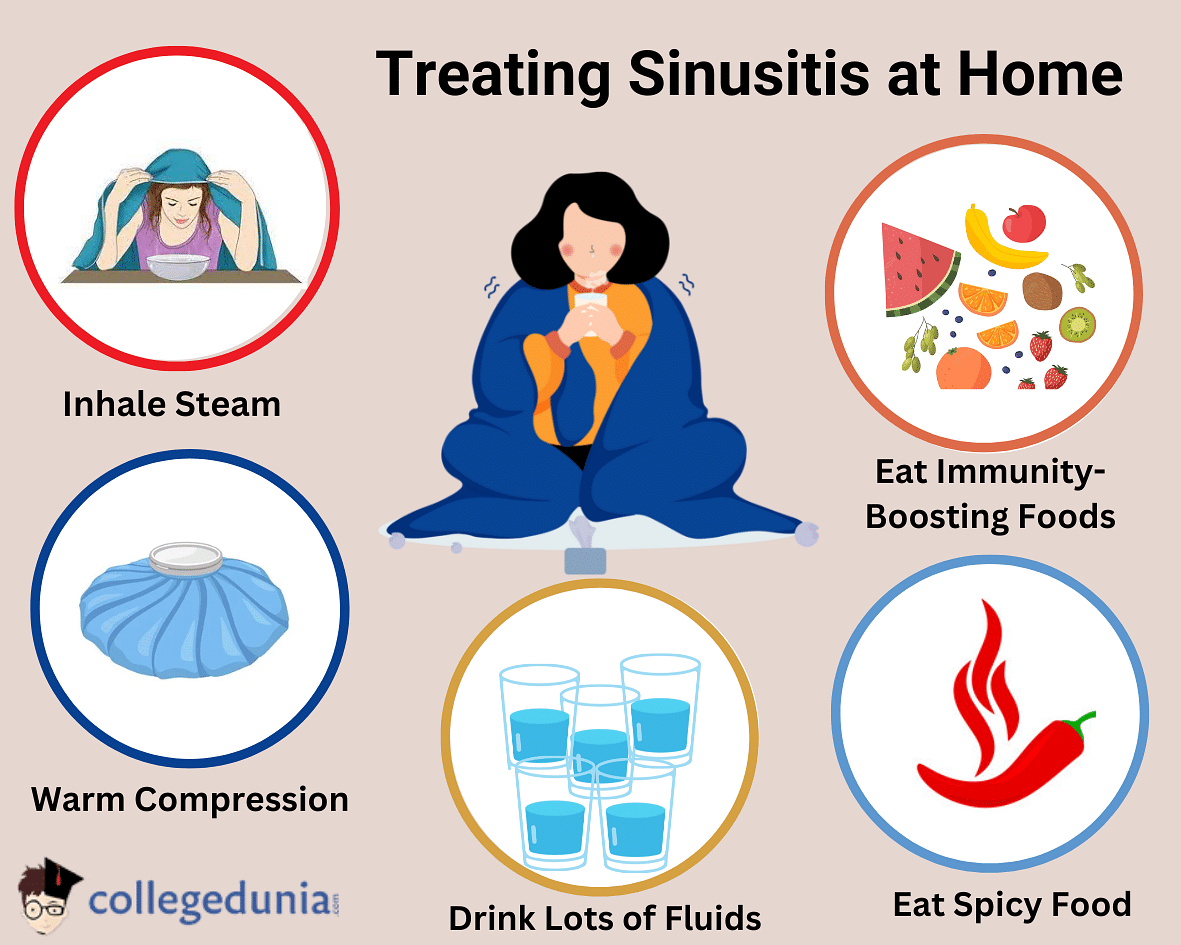
While medications can be useful, many sinusitis cases resolve on their own without the need for any sort of medical attention. Many of these same methods will assist you in preventing the condition if you frequently get it.
- Humidify: Use a humidifier in areas where you spend a lot of time. Follow the guidelines for routine cleaning.
- Breathe in the Steam Vapors: Inhale steam from a bowl of warm (but not too hot) water, or turn on the shower and sit in the bathroom. The steam vapors help nasal passages that are clogged and swollen.
- Use Warm Heat: Apply a hot, damp towel to your face. Some of the pressure may be relieved.
- Try a Nasal Saline Solution: They can keep your nasal passages moist even though they don't contain medicine (saline is salt water).
- Sinuses should be Cleaned: You can keep your sinuses moist and clear out mucus (and other debris) by nasal irrigation with salt water.
- Drink a lot of Liquids/Fluids: They'll assist in thinning the mucus, which lessens sinus blockage. Reduce your alcohol intake because it exacerbates the swelling.
- Rest: You should be more cautious than usual if you have a sinus infection. Give your body time to rest by getting lots of sleep.
Read More: Throat Cancer Symptoms
Things to Remember
- Sinusitis causes the tissue lining the sinuses to become inflamed or swollen.
- Symptoms of sinusitis emerge when bacteria, viruses, or specific chemicals affect the sinus cavities.
- Sinusitis can be of various types such as Acute Bacterial Sinusitis, Chronic Sinusitis, Subacute Sinusitis, and Recurrent Sinusitis.
- Colds and other viral, bacterial, or fungal-caused upper respiratory tract infections are the risk factors of Sinusitis.
- One must avoid smoking and the smoke of others to prevent Sinusitis.
- Medicines like antibiotics, painkillers, and vaccines should be taken to treat Sinusitis on doctor’s prescription.
Sample Questions
Ques. Who are affected by Sinusitis? (3 Marks)
Ans. Sinus infections can affect anyone. Sinusitis, on the other hand, is more likely to affect people who have nasal allergies, nasal polyps, asthma, or abnormal nasal structures. Furthermore, smoking can increase the occurrence of sinus infections. Sinusitis causes
- Swelling in the nose, similar to that caused by frozen drain pipes.
- Structural changes that cause those ducts to be smaller nose growths.
- Immune system dysfunction or immunosuppressive medication use.
Ques. What can cause Sinusitis in Children? (3 Marks)
Ans. The following things can cause sinusitis in children:
- Allergies Children's contagious diseases at daycare or school.
- Pacifiers.
- While lying on one's back, taking a bottle.
- There is smoke in the air.
- Sinusitis is more common in adults who smoke and have infections.
Ques. Give an example of a basic diet that should be followed during Sinusitis. (5 Marks)
Ans. The basic that must be followed when affected by Sinusitis is as follows:
- Water: Sinuses need a lot of fresh, clean, filtered water to stay healthy. By consuming a lot of fresh, purified water, you can reduce the majority of the minor symptoms of chronic sinus infections.
- Pineapple: Antioxidants found in pineapple are abundant, protecting the vulnerable mucous membranes from harm. Additionally, the enzymes in pineapple reduce inflammation by dissolving debris that accumulates in the sinuses.
- Peppers: The ability of hot peppers to clear sinuses is well known. After eating something hot and spicy, you might experience a softening or loosening of nasal discharge or obstruction.
- Antioxidants-rich food: Damage from oxidation may be a factor in chronic sinusitis. The mucous membranes are shielded from damage by free radicals through antioxidants.
- Coconut Oil: In addition to killing a lot of bacteria, viruses, and fungi, coconut oil is very effective at reducing inflammation. Your sinuses will clear up if you try oil pulling with a spoonful of coconut oil.
Ques. Which medications are effective for sinusitis? (2 Marks)
Ans. Such over-the-counter medications (such as Sudafed) are available in liquids, tablets, and nasal sprays. Drugs that alleviate pain Acetaminophen (Tylenol, for example) or ibuprofen can relieve pain caused by sinus pressure buildup (Advil, Motrin IB, others).
Ques. What is the duration of a sinus infection? (1 Mark)
Ans. Sinuses can swell and are commonly affected by an infection. It is common and usually goes away after 2 to 3 weeks.
Ques. How can Garlic and Ginger help to treat Sinusitis? (3 Marks)
Ans. Garlic and its relative, the onion, activate many of the same pathways that peppers do to reduce inflammation and pain. When garlic is chopped or crushed, a sulfur compound called allicin is created that has antibacterial, antifungal, and even virus-killing properties. Garlic's potent anti-inflammatory and antioxidant properties make it a fantastic addition to any dish.
Ginger has natural anti-inflammatories, natural antihistamines, and antioxidants that promote faster healing, lessen pain and lessen swelling and congestion all over the body. It relieves discomfort from allergies, sinus pain, and nausea.
Ques. Which medication should be taken for Sinusitis? (5 Marks)
Ans. The following medications can help in Sinusitis:
- Antibiotics: Your doctor might advise antibiotics if they believe a bacterial infection is to blame. If you have acute sinusitis, you typically take them for 10 to 14 days. It could take longer if the sinusitis is chronic.
- Painkillers: OTC pain relievers like ibuprofen or acetaminophen are frequently used by people with sinusitis to reduce discomfort.
- Decongestants: These drugs reduce sinus mucus production. A few are offered as nasal sprays and some are pills. Decongestant nasal sprays make you more congested if used for longer than three days.
- Allergy Medicines: Unmanaged allergies are a common cause of sinusitis. It might be worthwhile to get tested for allergies if you've never had them to find out if you do. If so, medication (such as antihistamines) and staying away from your triggers will be beneficial.
- Steroids: Doctors may occasionally recommend inhaled steroids to reduce sinus membrane swelling. You might need to take oral steroids if you have a severe case of chronic sinusitis.
- Surgery: Occasionally, an operation may be the best option if you have acute or chronic sinusitis that keeps relapsing. The sinus passages can be widened and blocked obstructions removed by the surgeon, which facilitates sinus drainage.
Ques. Is sinusitis curable? (1 Mark)
Ans. Without antibiotics, approximately 70% of sinus infections clear up in two weeks.
Ques. Can stress cause sinusitis? (1 Mark)
Ans. According to Murray Ramanathan's research, chronic sinusitis may be caused by oxidative stress.
Ques. Does coffee relieve sinusitis? (1 Mark)
Ans. The steam from a cup of coffee can help open your sinuses and relieve inflammation. Caffeine, a vasoconstrictor, can also reduce blood vessel swelling in and around your nasal passages.
Ques. Which juice is best for the sinuses? (1 Mark)
Ans. Ginger juice is also one of the best juices for treating sinus infections.
Ques. Which sleeping position promotes sinus drainage? (1 Mark)
Ans. Sleeping with your head elevated can help with sinus pressure and mucus drainage. Use a second pillow to support your head as you recline on your back.
Ques. How do you know if your sinusitis is bacterial or viral? (1 Mark)
Ans. A viral sinus infection usually improves after five to seven days. A bacterial sinus infection typically lasts seven to ten days or longer and may worsen after seven days.
Ques. Is lemon beneficial for sinusitis? (1 Mark)
Ans. A glass of honey and lemon juice, both natural antiseptics and sources of vitamin C, can aid in treating sinusitis.
Ques. Foods that can be used to treat sinus infections? (1 Mark)
Ans. Berries, kiwis, pumpkins, papayas, sweet potatoes, and pineapple are a few colorful fruits and vegetables that are high in antioxidants, vitamins, and minerals.
Check-More:



Comments