Who is the father of mathematics?

Jasmine Grover logo

Jasmine Grover

Education Journalist | Study Abroad Lead

Archimedes, the Greek mathematician is known as the Father of Mathematics. He significantly contributed significantly to the development of mathematics. In different eras, different mathematicians contributed to form mathematics as it is today.

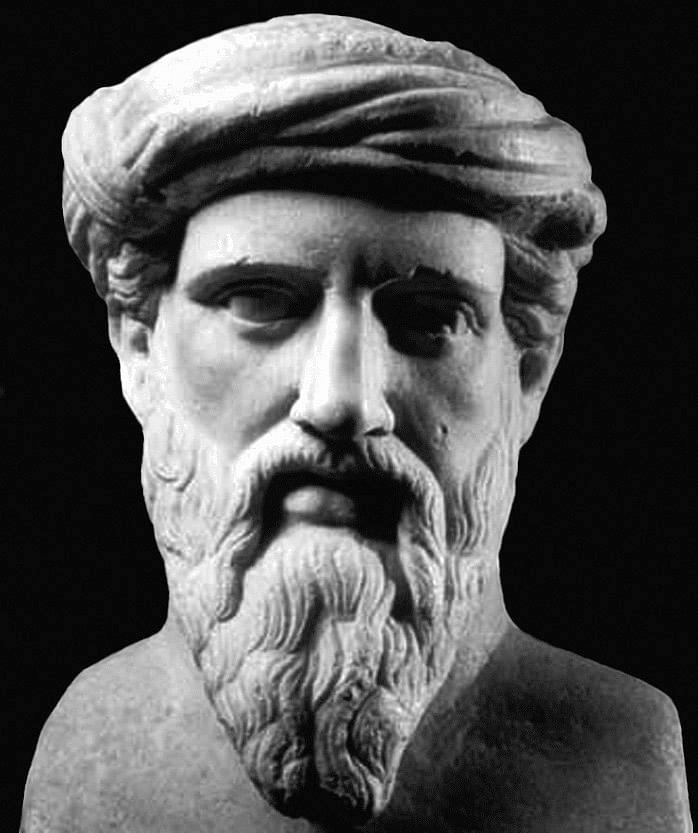
The earliest known mathematician known is Pythagoras. He developed the popular Pythagoras theorem

Pythagoras

Pythagoras

Afterward came, Archimedes who is most popularly regarded as the ‘father of mathematics’. He developed the famous Archimedes principle.
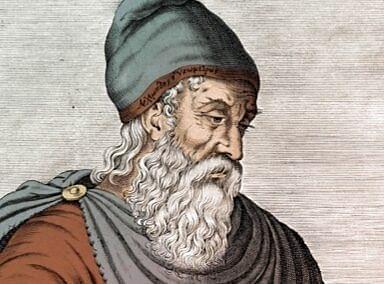
Archimedes

Archimedes

Next came Aryabhata, who is widely regarded as the ‘father of mathematics in India’. He developed the number zero.
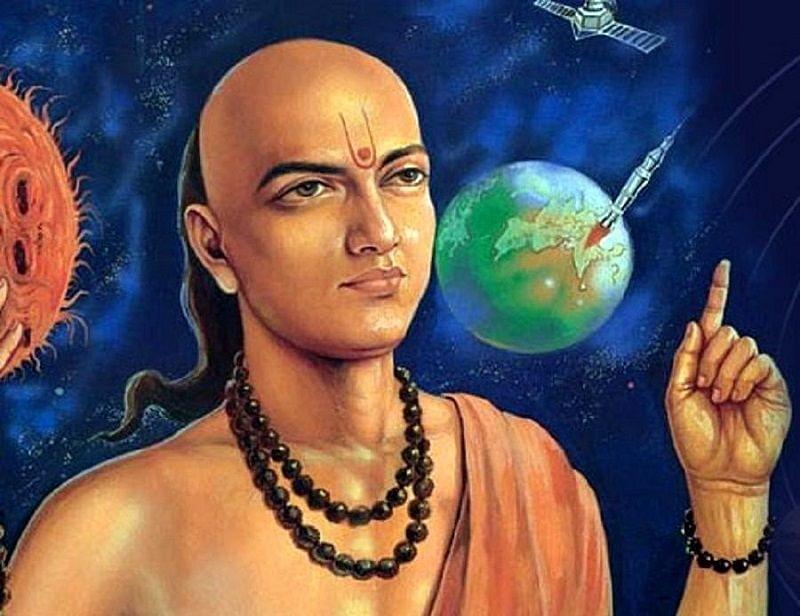
Aryabhata

Notable Contributions of Archimedes 

Archimedes’ contributions to the fields of maths, astronomy, physics, and philosophy have been notable. With a long trail of discoveries and inventions under his name, Archimedes is rightly regarded as the “Father of Maths.”


Read More:

CBSE CLASS XII Related Questions

  • 1.

    A carpenter needs to design a wooden box in the shape of a cuboid such that the sum of its length and breadth is 3 cm more than its height. Twice of its length, thrice of its breadth and its height add up to 10 cm. Its breadth added to 7 times its height is 1 cm less than 3 times its length. 


      • 2.
        Which of the following equations is NOT a Linear Differential Equation?

          • \((1 + x^2) \, dy + 2xy \, dx = \cot x \, dx\)
          • \(y + \frac{d}{dx}(xy) = x(\sin x + \log x)\)
          • \(x(1 + y^2) \, dx - y(1 + x^2) \, dy = 0\)
          • \(y \, dx - (x + 3y^2) \, dy = 0\)

        • 3.

          Find:
          Let \(A=[a_{ij}]\) be a \(2\times2\) matrix whose elements are given by \[ a_{ij}=\frac{(2i-j)^2}{3} \] Find the transpose matrix \(A'\).

            • \(\begin{bmatrix} \frac{1}{3} & 3 \\ 0 & \frac{4}{3} \end{bmatrix}\)
            • \(\begin{bmatrix} \frac{1}{3} & 0 \\ 3 & \frac{4}{3} \end{bmatrix}\)
            • \(\begin{bmatrix} \frac{4}{3} & 3 \\ 1 & 0 \end{bmatrix}\)
            • \(\begin{bmatrix} \frac{4}{3} & 0 1 & \frac{3}{3} \end{bmatrix}\)

          • 4.
            Find the vector and cartesian equations of the line passing through the point of intersection of the lines \( \vec{r} = (\hat{i} + \hat{j} - \hat{k}) + \lambda(3\hat{i} - \hat{j}) \) and \( \vec{r} = (4\hat{i} - \hat{k}) + \mu(2\hat{i} + 3\hat{k}) \) and parallel to the line \( \frac{x - 1}{-2} = \frac{7 - y}{-3} = z \).


              • 5.

                At a birthday party, children are being served orange juice in conical cups, as shown in the figure. 


                Each cup is 15 cm deep and has a radius 5 cm. The juice is being poured into this cup at a rate of 0·1 cm3/s.
                On the basis of the above information, answer the following questions :


                  • 6.
                    Find:

                    If the function \[ f(x)= \begin{cases} \frac{\sin x}{x}+\cos x, & x\neq0\\ k, & x=0 \end{cases} \] is continuous at \(x=0\), then find the value of \(k\).

                      • \(0\)
                      • \(-2\)
                      • \(-1\)
                      • \(2\)
                    CBSE CLASS XII Previous Year Papers

                    Comments


                    No Comments To Show