



Senior Content Writer | Updated On - Aug 16, 2026
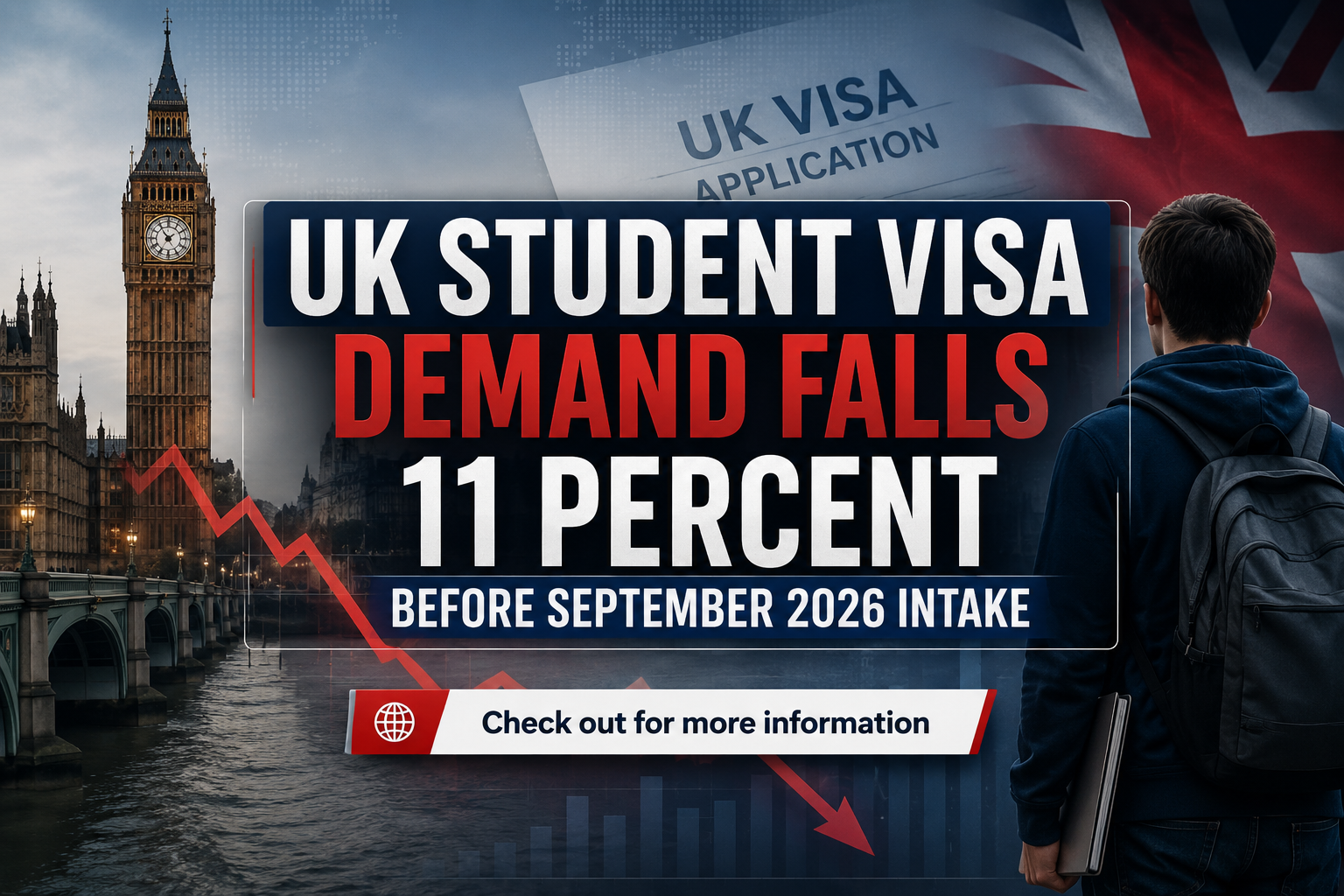
The UK Home Office reported that sponsored study visa applications fell by 11% in July 2026 compared with July 2025. The drop hits Indian applicants finalising plans for the September 2026 intake. Home Office monthly visa data, released this month, also shows student dependant applications down 6% to 19,200. The decline extends a slide that began after the 2024 dependant ban and this January’s Immigration White Paper.
- Indian PG applicants are the hardest-hit cohort. Master’s visa grants fell 35% in Q1 2026, per Home Office quarterly figures.
- UK sponsored study applications totalled 72,900 in H1 2026, down 30% on H1 2025. Rejection rates doubled to 13% in Q1.
- Universities enter the peak recruitment window with the weakest pipeline in eight years. Many rely on Indian tuition to balance budgets.
The July release is the final major data point before September enrolment closes. It confirms the trend that took hold after the January White Paper is not easing. For Indian applicants still holding a CAS or waiting on a decision, timing now matters more than choice of city.
Also Read: UK Student Visa 2026 Requirements, Fees and Application Process
What the July 2026 Home Office Data Shows
The Home Office monthly monitoring release confirms the fall. Sponsored study applications dropped 11% year-on-year in July 2026. Student dependant applications sat at 19,200, still 87% below December 2023 levels. That December marked the pre-ban peak before January 2024 restrictions took hold.
July normally sits at the tail end of the visa surge. Applicants file after receiving CAS letters in June. A weaker July signals a weaker September intake across UK universities.
| Metric | Latest Figure | Change vs Prior Year |
|---|---|---|
| Sponsored study applications, July 2026 | Down 11% | vs July 2025 |
| H1 2026 main applications | 72,900 | Down 30% vs H1 2025 |
| Q1 2026 rejection rate | 13% | Doubled from 2025 |
| Q1 2026 master’s grants | 21,700 | Down 35% vs Q1 2025 |
| July 2026 dependent applications | 19,200 | Down 6% vs July 2025 |
Key Insight: The 11% July fall is milder than the 30% H1 slide. That suggests the sharpest drop hit early 2026, and the market is settling at a lower baseline, not rebounding to 2023 highs.
What Is Driving the UK Visa Slide
Three policy shifts converged. First, the January 2024 dependant ban blocked partners and children of taught PG students from joining them. Second, the January 2026 Immigration White Paper flagged tighter Graduate Route rules. Third, the Skilled Worker salary threshold rose in April 2026, cutting the post-study earning path many students banked on.
Indian PG applicants read those signals early. Many switched to Canada, Ireland, or Germany for a smoother career path. Recruitment agents told Navitas that students are now applying to more destinations outside the traditional big four markets.
How the Drop Affects Indian Students Heading to UK
Indian applicants sit at the centre of the fall. India was the UK’s largest sponsored-study source until 2024. The dependant ban stripped that lead. The trend now runs on two tracks.
Applicants who already hold a CAS face longer decision waits as UKVI applies stricter checks. Applicants still deciding face lower confidence that a Graduate Route job will land them Skilled Worker status. Both pressures push Indian students to widen their destination shortlist, a shift already visible in the fall in Indian students going abroad across 2024 and 2025.
What it means for Indian Students: A smaller applicant pool does not mean easier approvals. The rejection rate doubled to 13% in Q1 2026, so a weaker cohort is being screened harder, not lighter. Your documentation and financial evidence matter more, not less.
Which UK Programmes Are Losing Applicants Fastest
Taught master’s programmes bore the brunt. Q1 2026 saw 21,700 visa grants for master’s applicants, down 35% from 33,300 in Q1 2025. One-year MSc courses had been the classic Indian PG choice. The dependant ban hit married applicants hardest, and Skilled Worker changes cut the payback appeal.
Undergraduate and PhD flows held up better. Research-route PG students can still bring dependants. UCAS reported international UG applications ticked up to 53,740 for the 2026 cycle, from 52,640 the year before.
How Do Indian Applicants Prepare Before September?
The September 2026 intake still has capacity in Clearing. Universities scrambling to fill seats are relaxing offer conditions, not visa conditions. That distinction matters. Your visa file must be watertight even if your offer feels easy.
Check three things before submitting: financial evidence covers the 28-day rule, your CAS matches your passport spelling exactly, and your intended course start date fits inside the six-month pre-arrival window.
Action Plan for September 2026 Applicants
- Confirm CAS accuracy. Cross-check name, date of birth, course code, sponsor licence number and fee balance against your passport before you file.
- Hold 28 days of maintenance funds. Bank statement must show £1,483 (INR 1.90 Lakh) per month in London or £1,136 (INR 1.46 Lakh) outside London, held unbroken.
- Book biometrics early. VFS Global slots in Indian metro cities tighten from mid-August through September.
- Prepare credibility interview answers. UKVI is running more genuine-student calls this cycle. Rehearse course, funding, and post-study plans.
- Line up a backup intake. January 2027 offers still exist at most UK universities if your September file slips.
The July slide leaves Indian applicants a narrow window. The September 2026 intake closes enrolment in late September, and UKVI processing times are stretching under review pressure. File clean, file early, and keep a January 2027 backup ready.
Also read: UCAS Clearing 2026 Opens Late UK Admission Route for Indian Students
Keep an Eye On: The Home Office publishes full Q2 2026 immigration statistics in late August 2026, which will confirm whether the July slide extended into August application volumes. UK universities finalise September intake enrolment numbers by mid-October 2026.



Comments