



Education Journalist | Study Abroad Lead | Updated On - Jul 22, 2026
UCAS confirmed a record 124,830 international applications for UK undergraduate courses in the 2026 cycle. The tally is 5.1% higher than 2025, and Indian applicants held the second-largest slot at 8,880. The figures cover the 14 January equal-consideration deadline for autumn 2026 entry. India sits behind China’s 34,390 but ahead of every other overseas market on the UCAS ledger.
- Indian applicants rose 1.5%, from 8,760 in 2025 to 8,880 in the 2026 cycle. That keeps India as UCAS’s second-biggest source country after China.
- Total international demand jumped by over 6,000 applicants in one cycle. The 5.1% rise is the sharpest post-pandemic uptick UCAS has reported.
- China grew by 10.37%, adding 3,230 applicants to reach 34,390. Chinese growth outpaced Indian growth by nearly seven times this cycle.
The surge lands as the UK confirms a higher Student Visa fee from April 2026 and a tighter Red-Amber-Green university compliance regime from June 2026. Both reshape how Indian applicants budget, choose and secure their offers.
Also Read: UK Student Visa 2026
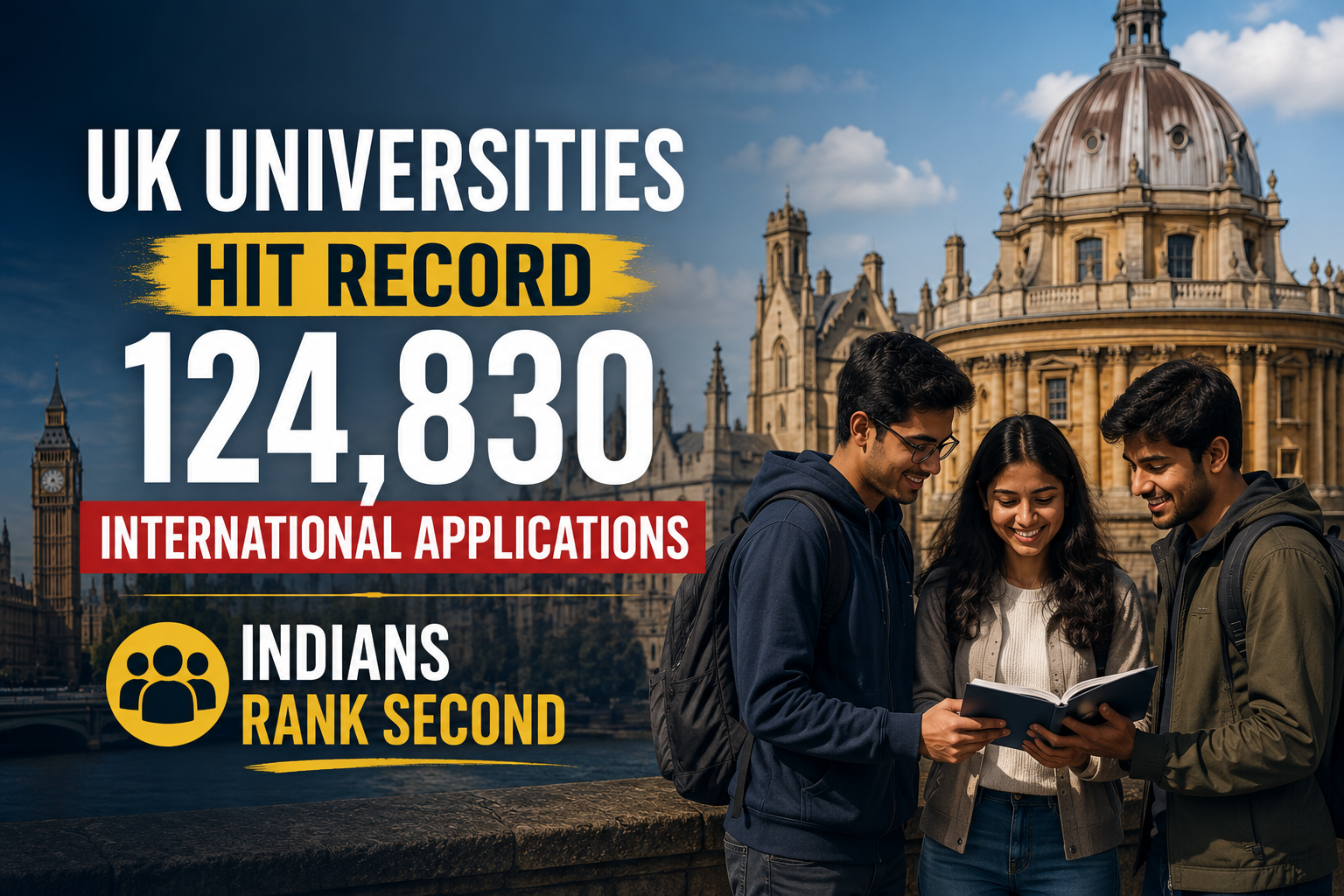
What UCAS’s 2026 Cycle Numbers Show for India
UCAS released the 14 January deadline figures for the 2026 admissions cycle. Indian applicants totalled 8,880 across UK undergraduate programmes. The prior cycle closed at 8,760 for the same window. That is a rise of 120 applicants, or 1.5% year on year. India remains the second-largest overseas market on UCAS.
The 14 January date is the equal-consideration deadline. Universities treat every application received by it on equal footing. Late applications drop to the discretion of individual admissions offices. Most UK institutions still consider late international bids until 30 June. After that, only Clearing remains open for autumn entry.
| Country | 2025 Applicants | 2026 Applicants | Change |
|---|---|---|---|
| China | 31,160 | 34,390 | +10.37% |
| India | 8,760 | 8,880 | +1.5% |
| All International | 118,800 | 124,830 | +5.1% |
Key Insight: India’s 1.5% growth is dwarfed by China’s 10.37% jump. Chinese applicants added nearly 27 times more bodies to the queue than India this cycle. That reshapes the shortlist competition Indian students face at popular Russell Group departments.
How Indian Applicants Stack Up Against Other Top Markets
Behind India sits a long tail of smaller feeder countries. Nigeria, Pakistan, Hong Kong, the United States and Turkey make up the next band. None crossed the 8,000 mark on the 14 January count. That gap places India firmly in the top-two structural role UCAS has tracked since 2020.
The Indian growth curve is also flattening. UCAS reported double-digit Indian rises in 2022 and 2023 as post-pandemic demand peaked. The 2025 and 2026 cycles slowed to low single-digit gains. The plateau reflects tighter household budgets, higher UK visa costs, and competition from Ireland, Germany and the Gulf for the same Indian undergraduate pool that once flowed straight to UK universities.
What the April 2026 UK Student Visa Fee Hike Adds
From April 8, 2026 the UK Student Visa fee rose from £524 to £558 for applications made outside the UK. At ₹107 per pound (July 2026), that is roughly ₹59,700 per applicant. The Immigration Health Surcharge stays at £776 per year of study, or about ₹83,000 annually.
A three-year undergraduate degree therefore carries a minimum non-tuition Home Office bill of over ₹3 lakh. That sits on top of maintenance funds proof of £1,529 a month in London or £1,171 a month elsewhere. Getting a UCAS offer is only the first cheque; the visa file is the second.
What it means for Indian Students: Record demand means universities can afford to be picky on offer conversion. Applicants who receive a conditional offer should budget the full ₹35 to ₹45 lakh first-year cost before A-Level or Class 12 results, not after.
How Does the RAG Compliance System Change University Choice?
The UK Home Office replaces its current compliance framework with a Red-Amber-Green rating from June 2026. Visa refusal thresholds tighten from 10% to 5% of a university’s international intake. Enrolment thresholds move from 90% to 95%. Universities falling into the red band risk losing their sponsor licence.
Indian students should treat RAG bands as a shortlist filter, alongside league tables and course fit. Details on how the bands map to named sponsors sit in the UK RAG Visa Compliance System breakdown. A red-rated sponsor may see its Confirmation of Acceptance for Studies revoked mid-cycle. That is the single biggest disruption risk for the 2026 record cohort still awaiting visa decisions.
What Should Indian Applicants Do for the Rest of 2026 and 2027?
The 30 June 2026 deadline has closed. UCAS Clearing 2026 opened on 5 July 2026 and runs until 21 October 2026. Indian students still targeting a September 2026 UK start can only enter through Clearing. Places are concentrated in modern universities and less-oversubscribed subjects.
For the 2027 cycle, UCAS opens applications on 16 September 2026. The equal-consideration deadline for autumn 2027 entry falls on 14 January 2027. Oxford, Cambridge and most medicine, dentistry and veterinary courses close earlier on 15 October 2026. Course-by-course timelines for the September 2027 Intake in the UK follow the same UCAS calendar.
Action Plan for Indian Applicants
- If chasing a 2026 start, register on the UCAS Clearing portal before 1 September 2026.
- Rearrange financial proof to reflect the £1,529 or £1,171 monthly bar, plus one year of tuition.
- Confirm your target university’s RAG rating before paying the CAS-linked deposit.
- For the 2027 cycle, lock IELTS or PTE scores by December 2026 to file before 14 January.
- Budget the visa fee at ₹59,700 and IHS at ₹83,000 per year in your loan application.
The UCAS record confirms UK undergraduate demand from India is intact but no longer racing. Indian applicants should treat rising fees, tighter visa compliance and a competitive Clearing round as the new baseline. The next official UCAS release lands after the 14 January 2027 deadline.
When the Next UCAS Data Drops: UCAS opens the 2027 cycle on 16 September 2026. The next headline count follows the 14 January 2027 equal-consideration deadline, with cycle-level applicant figures out in early February 2027.



Comments