




These Class 12 Sociology Chapter 3 Social Institutions Continuity and Change Handwritten Notes give a handwritten revision of the whole chapter, set to the 2026-27 CBSE syllabus. Written by hand, they cover the caste system, the tribe and the family in the order students need them for the board exam.
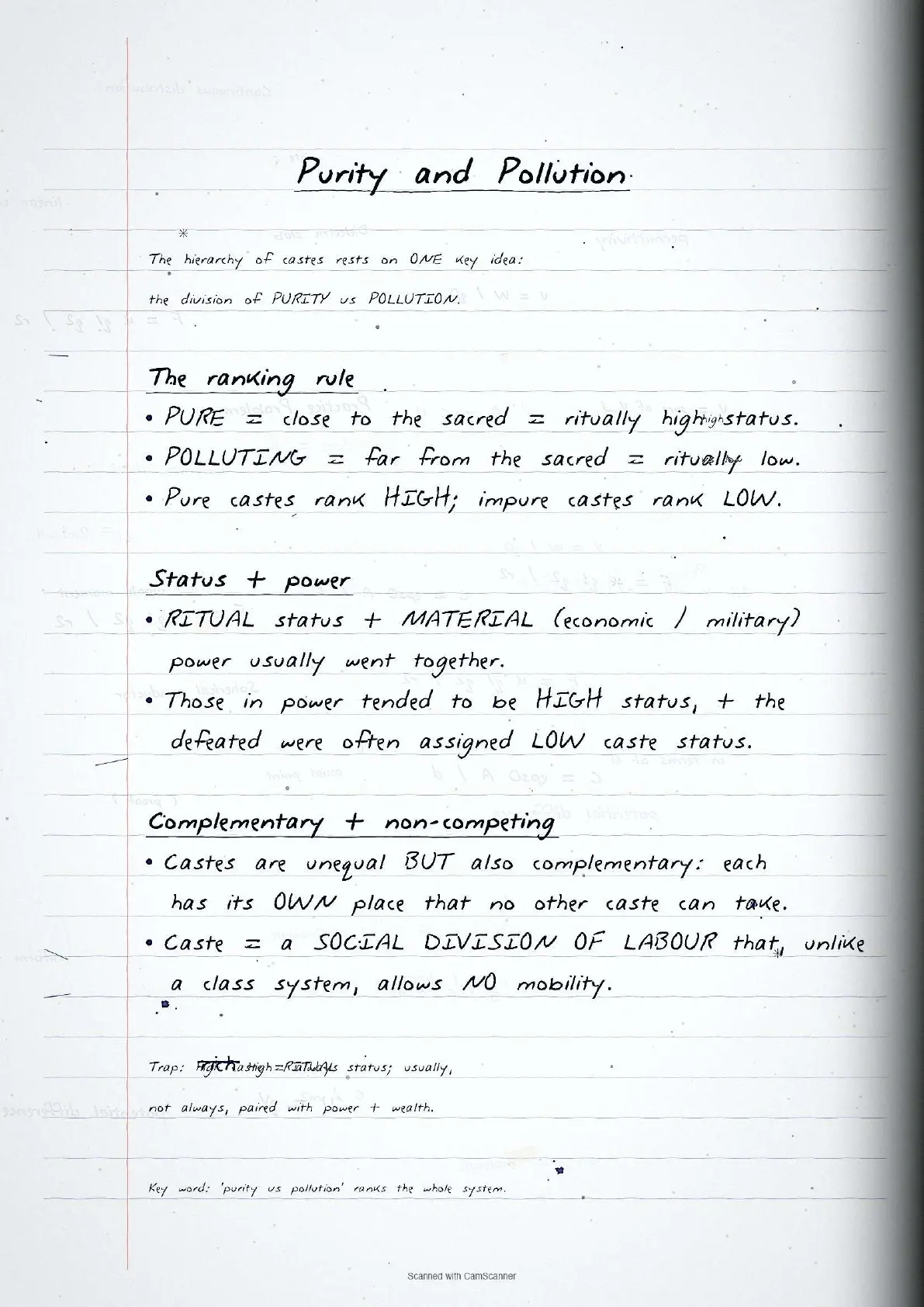
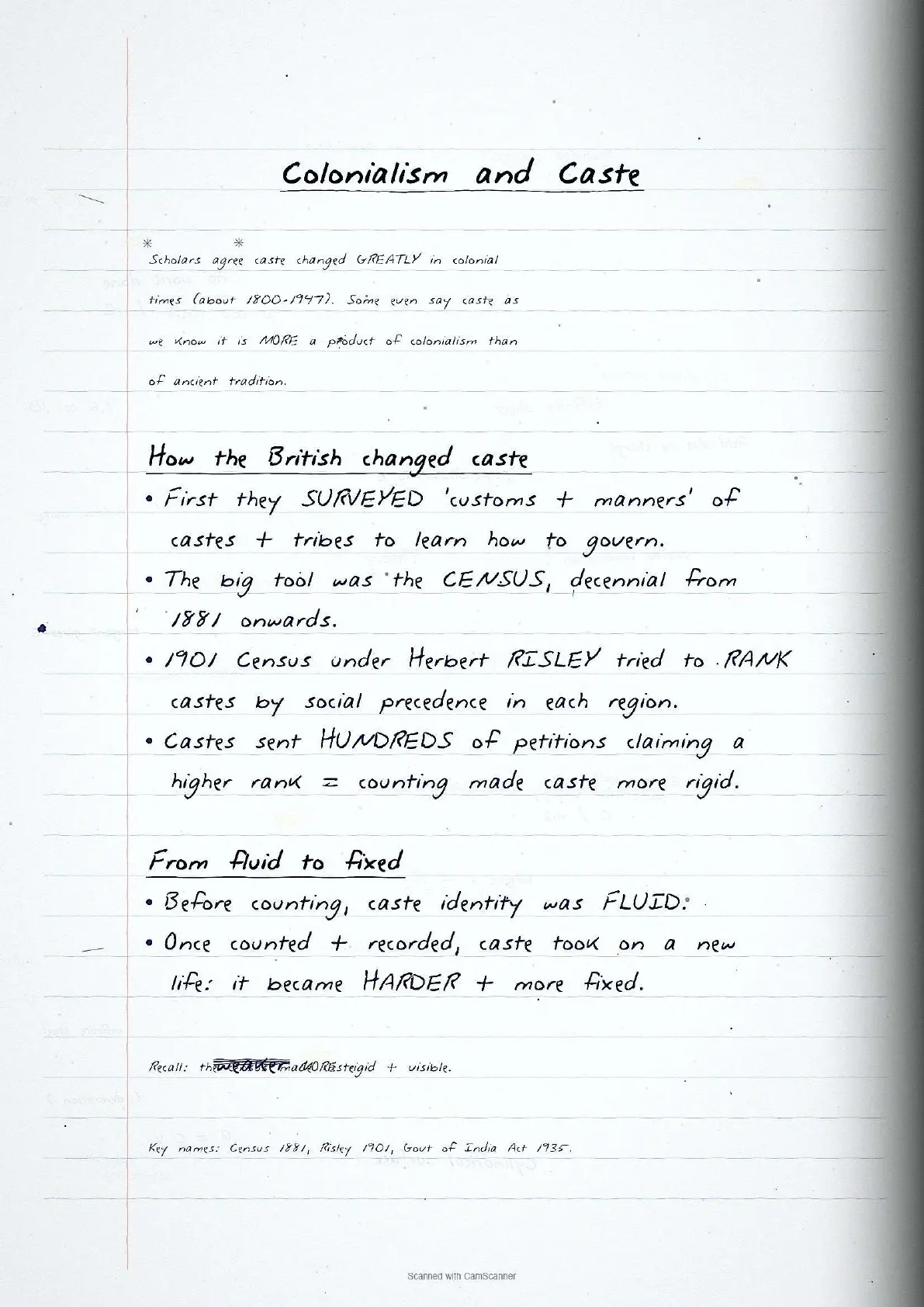
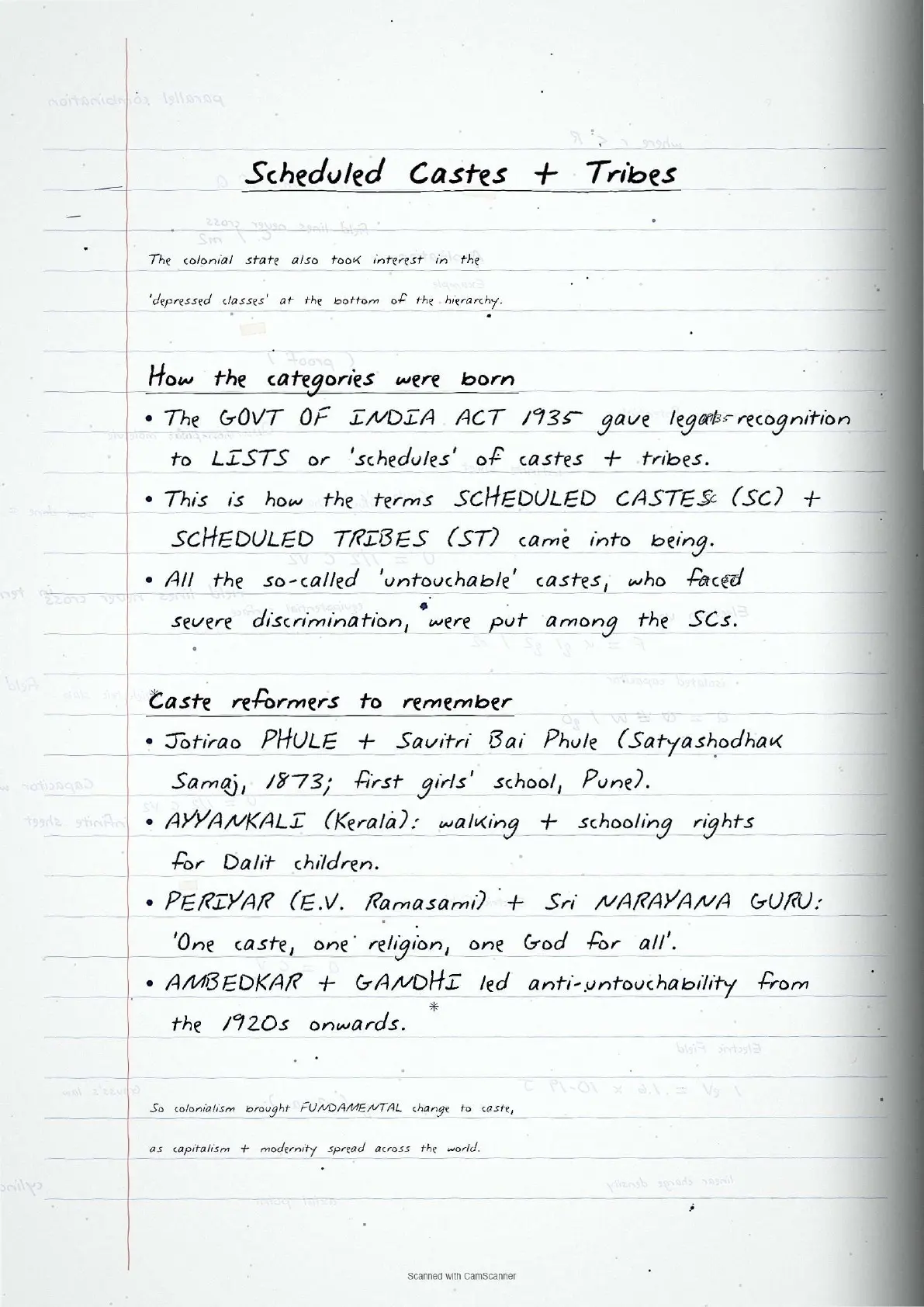
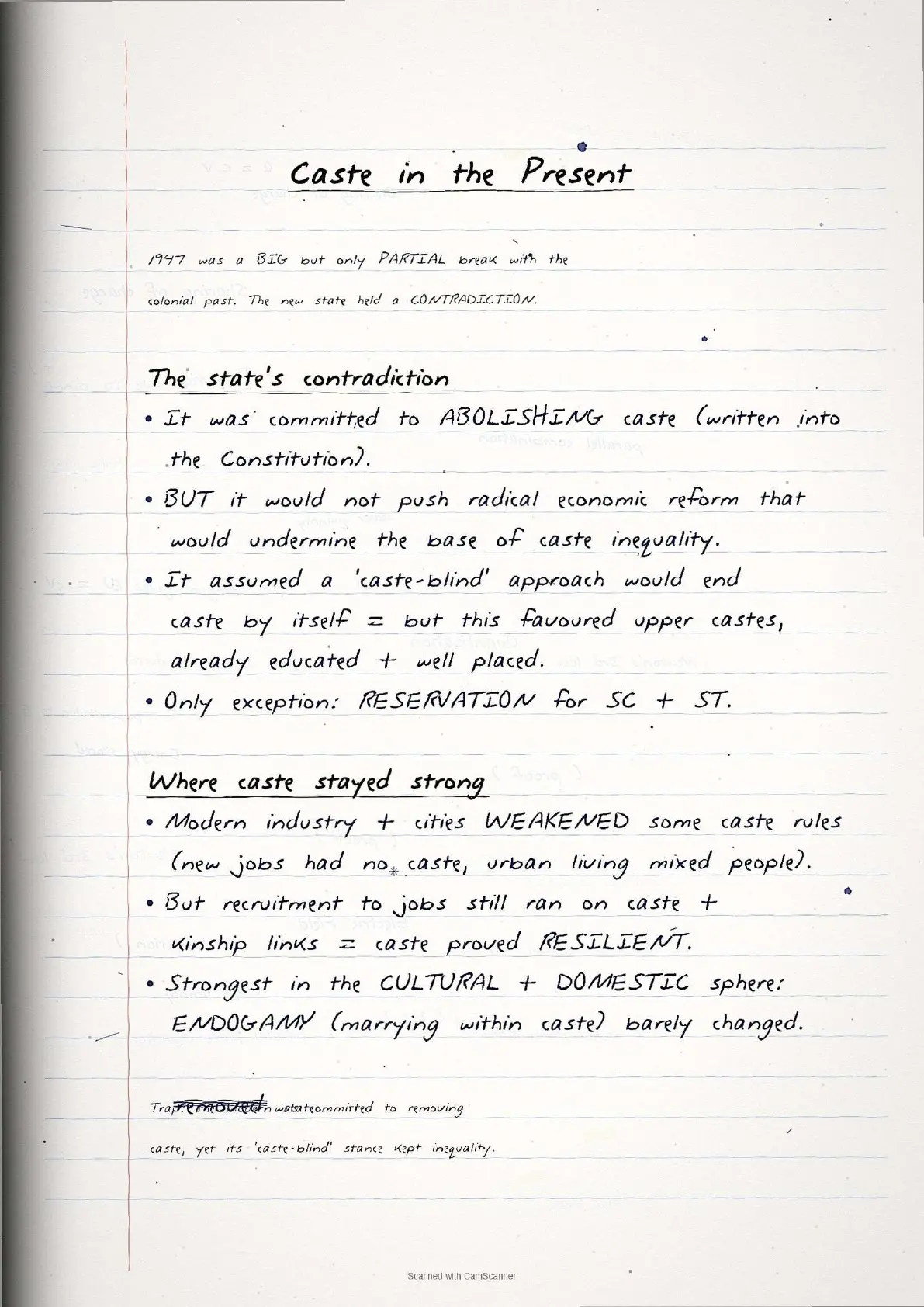
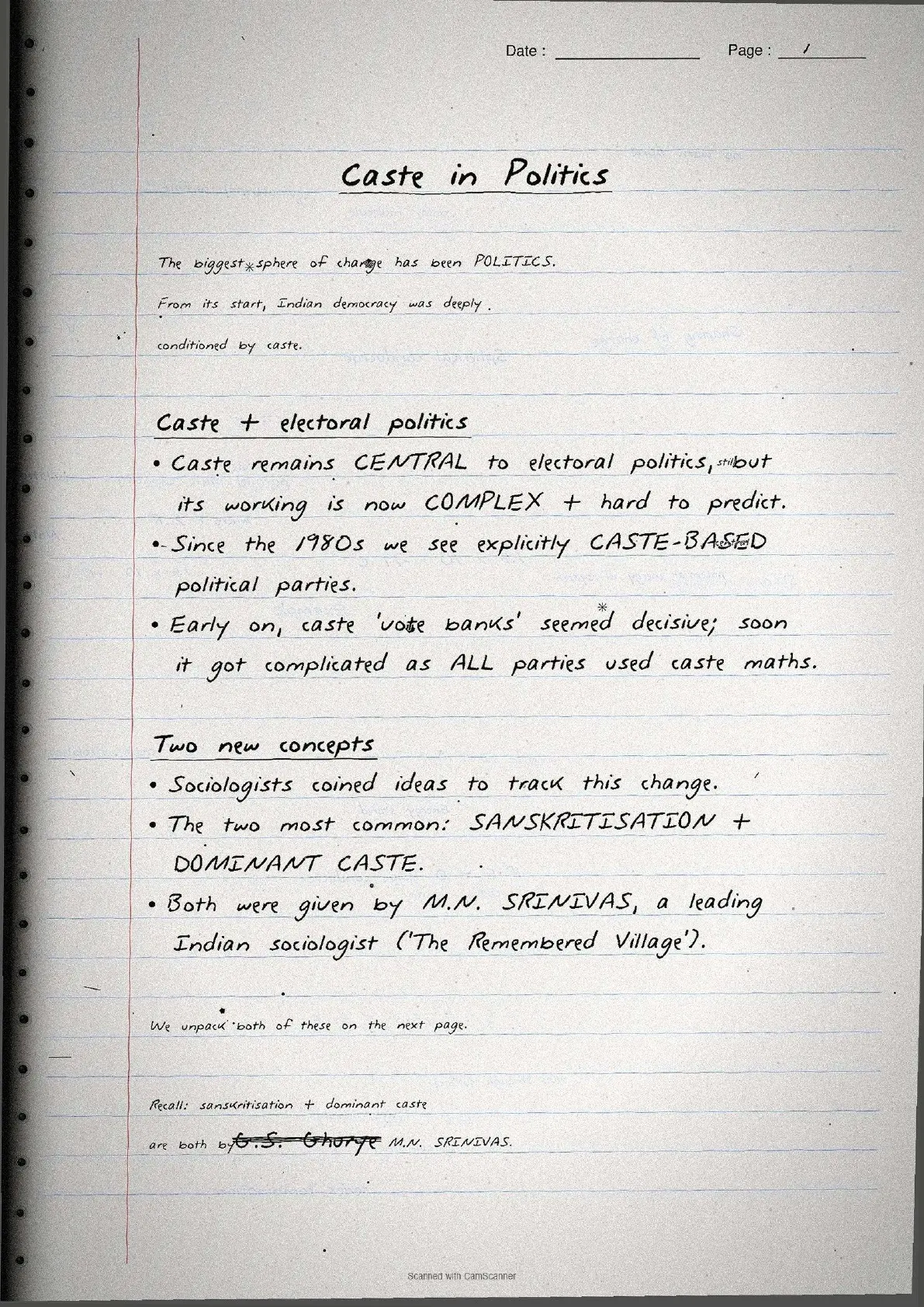
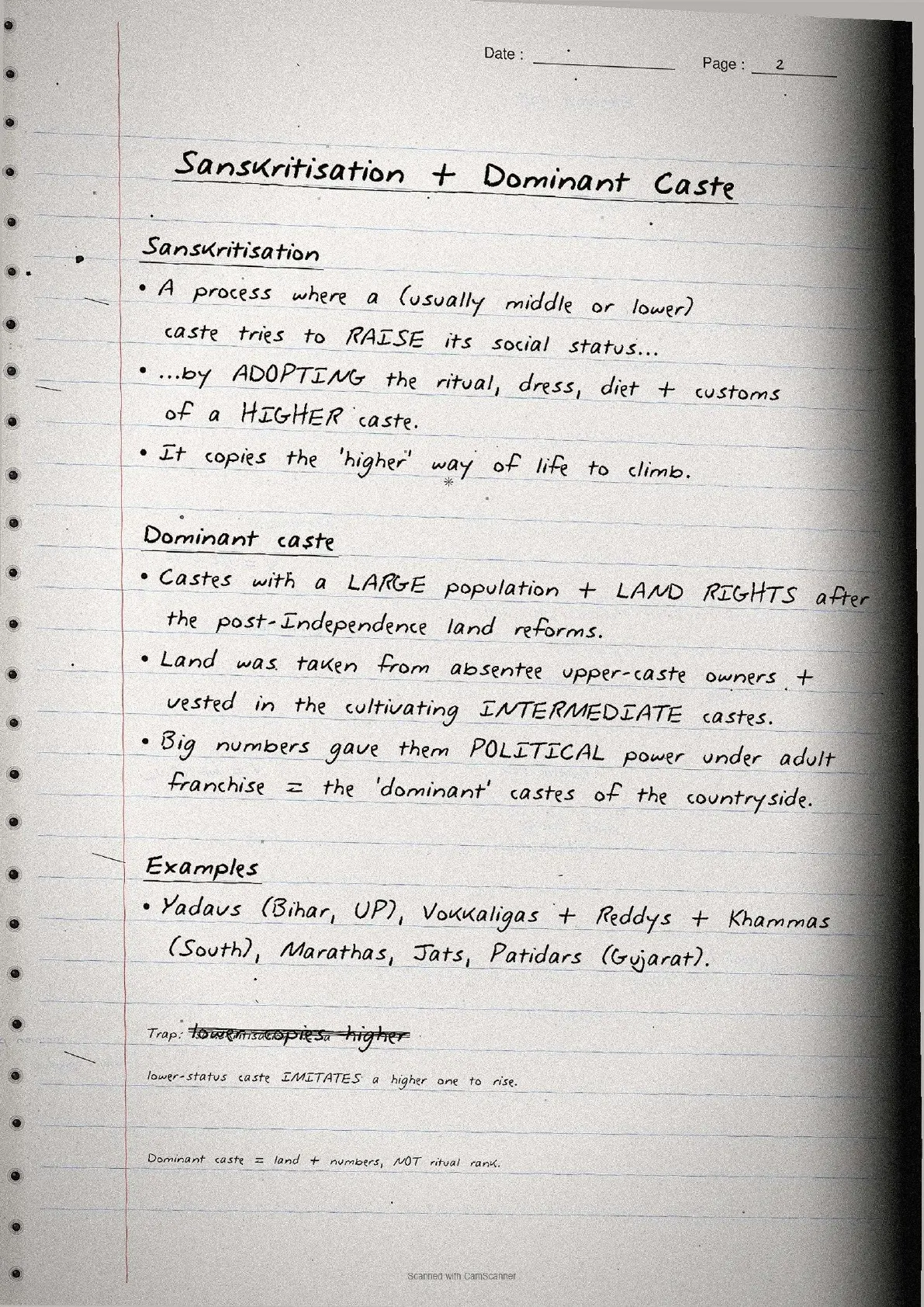
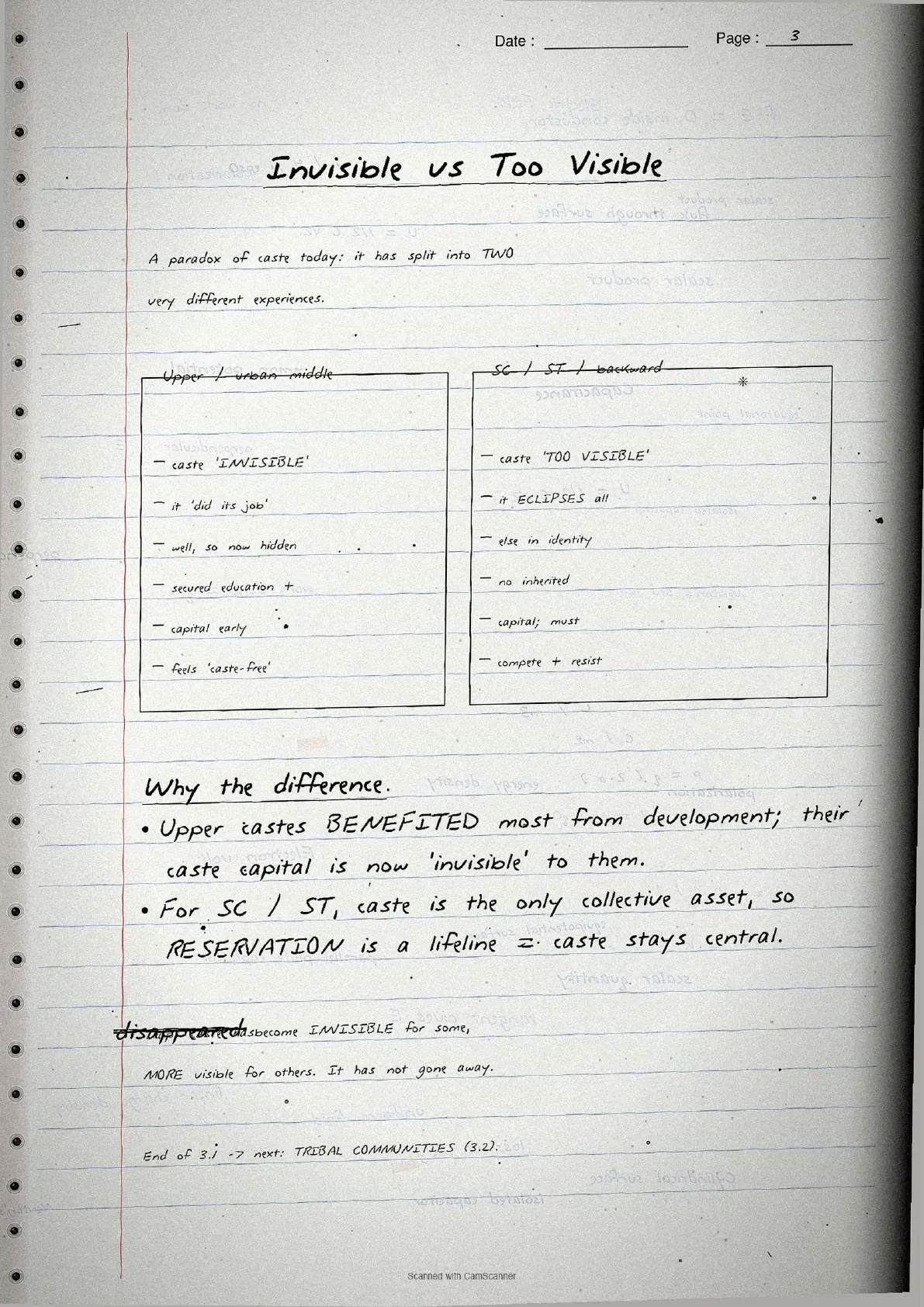
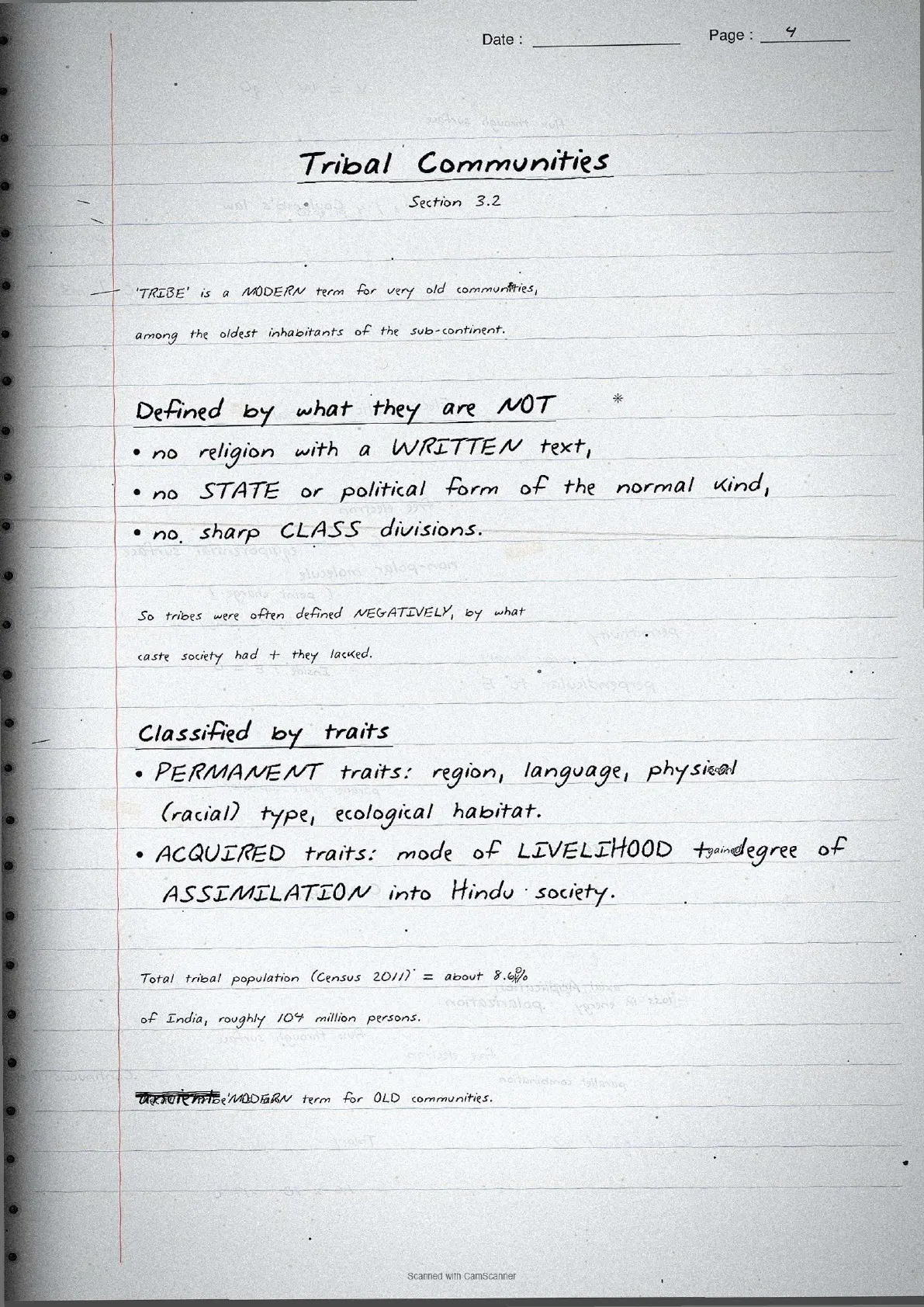
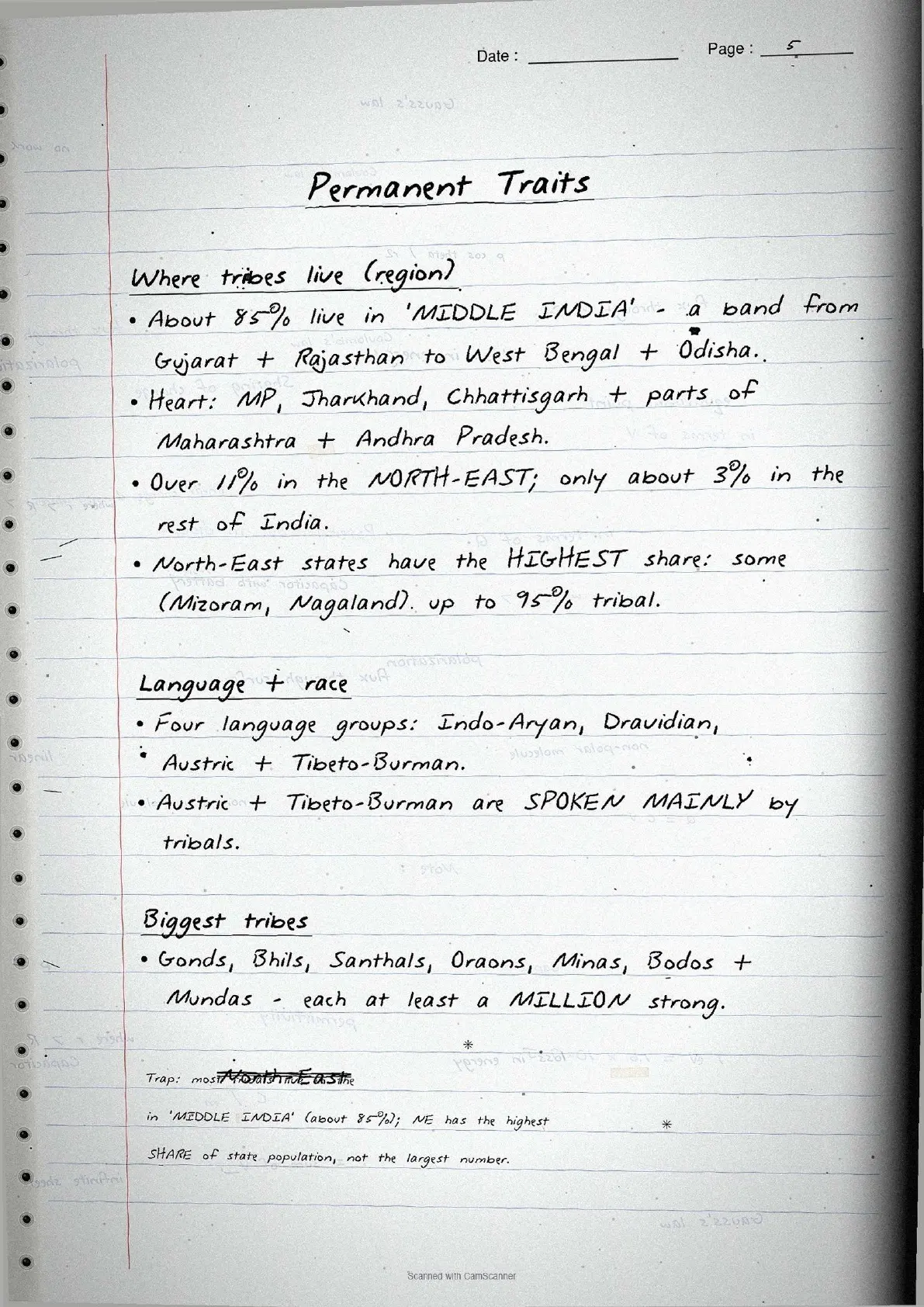
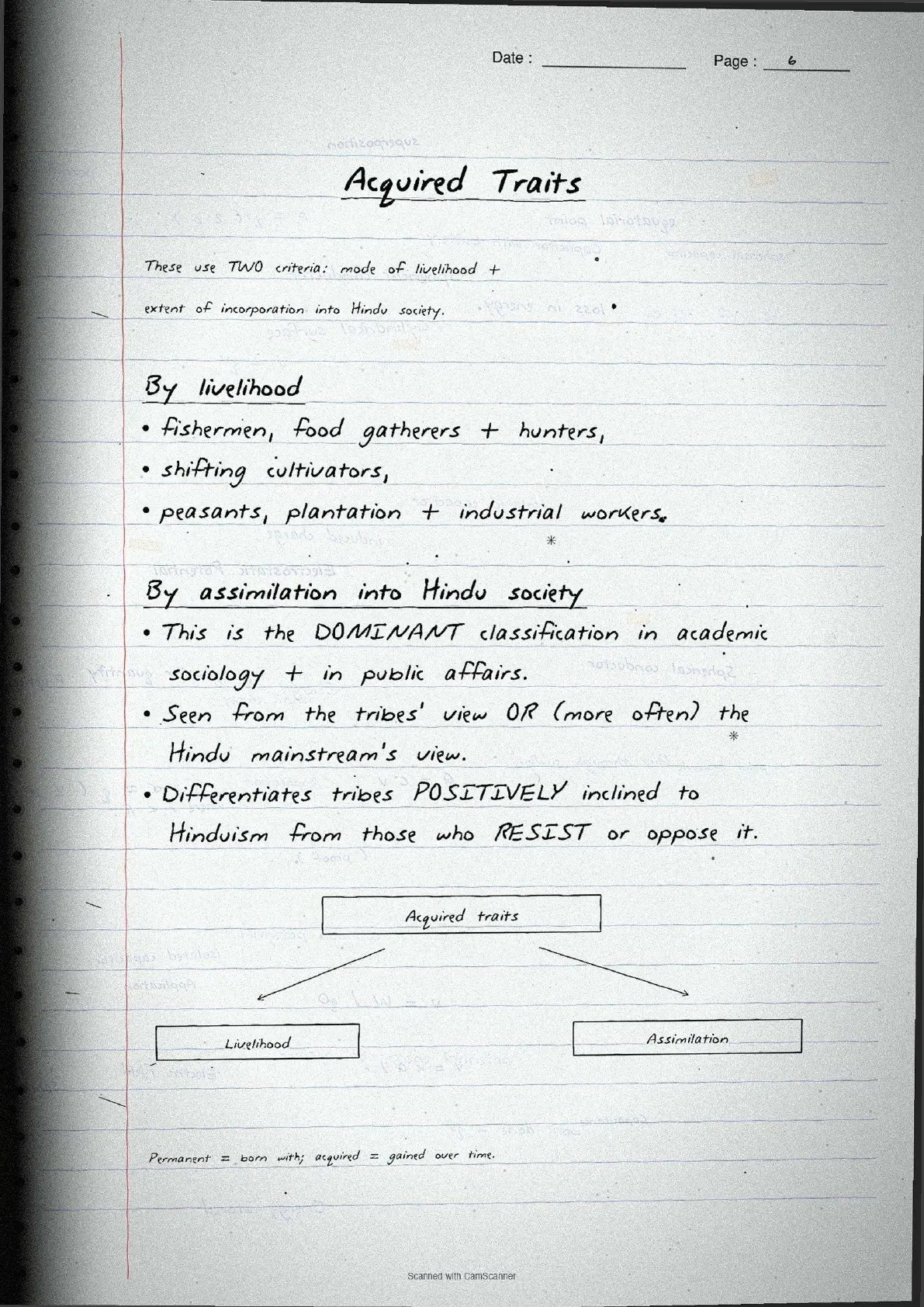
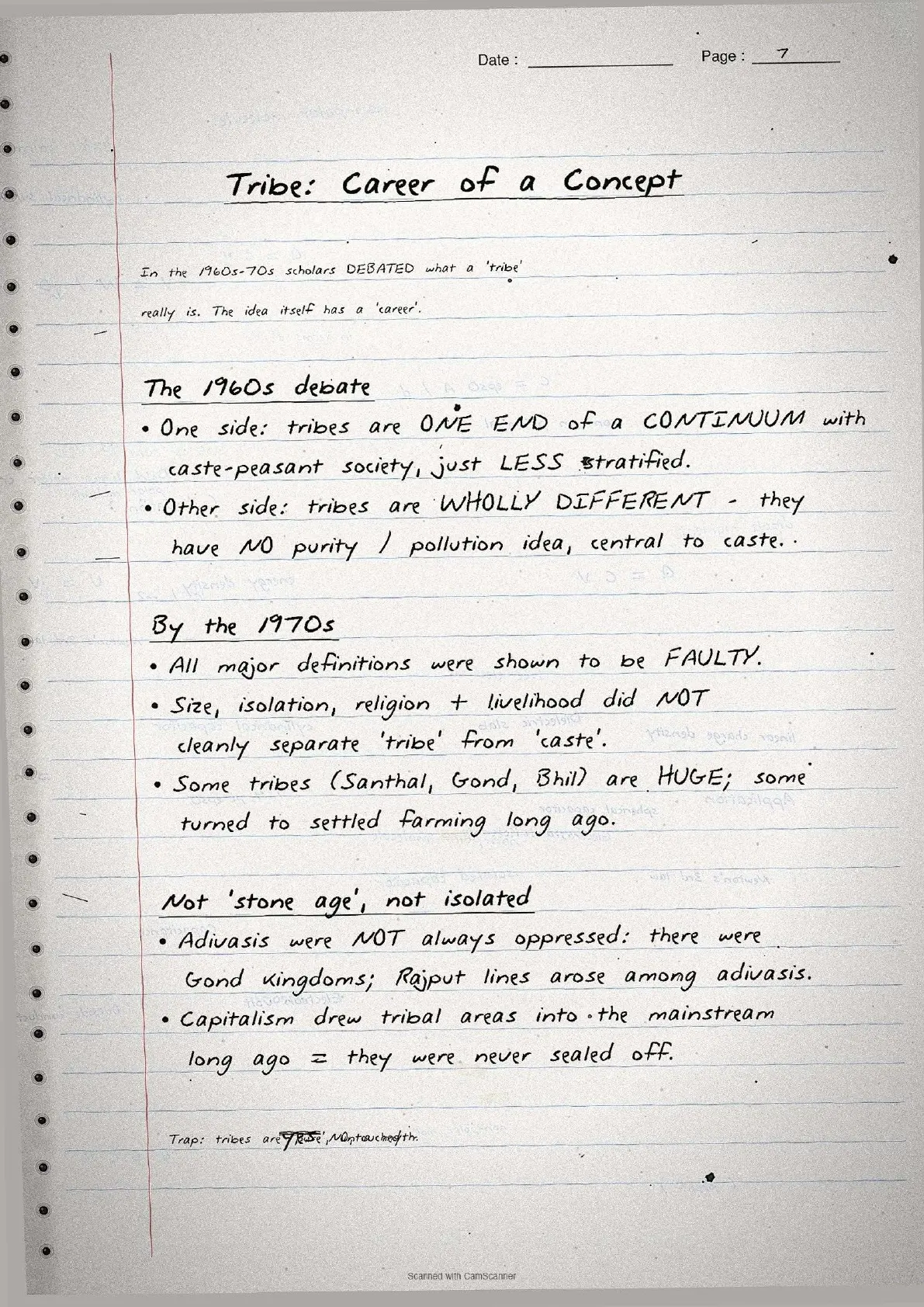
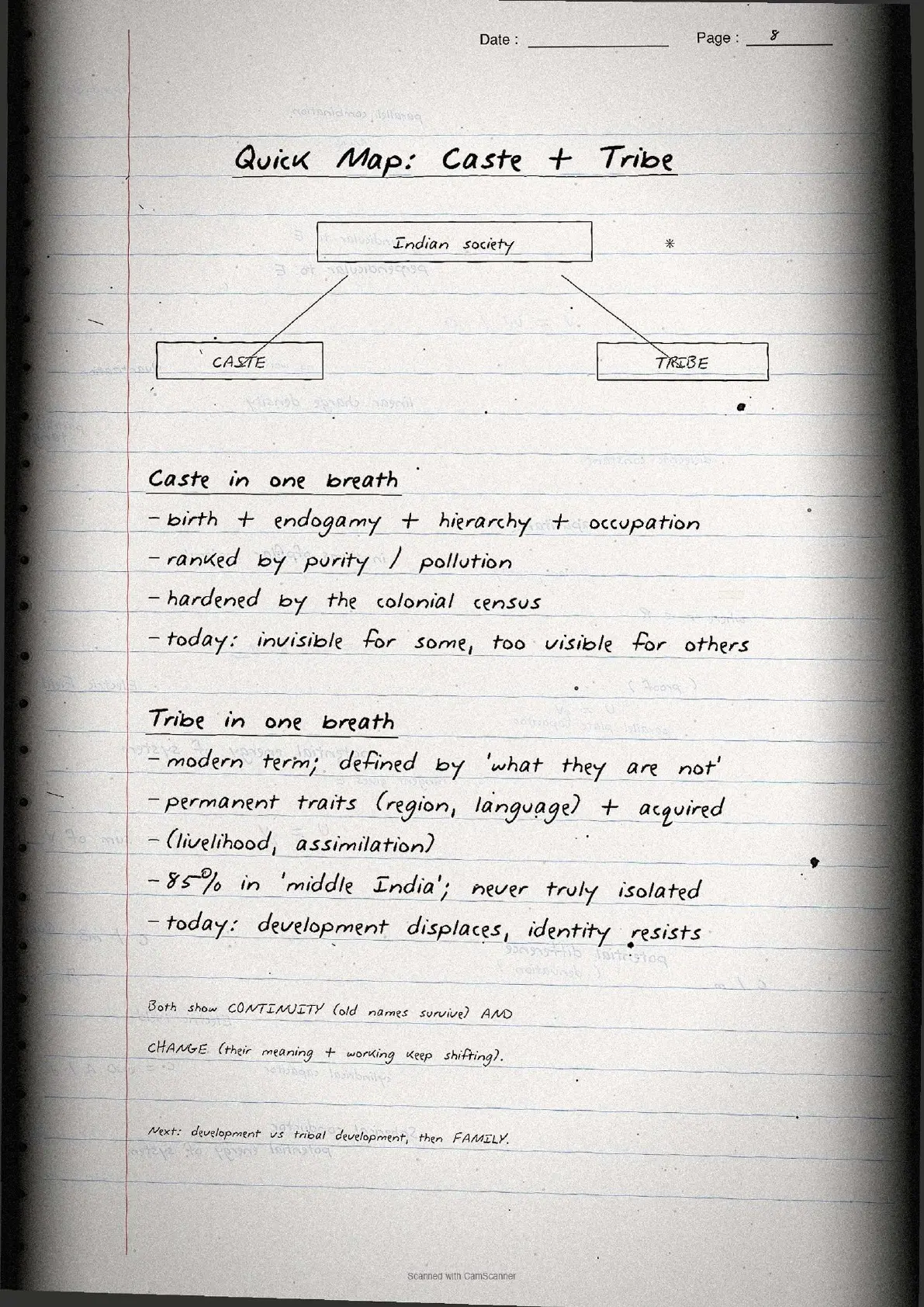
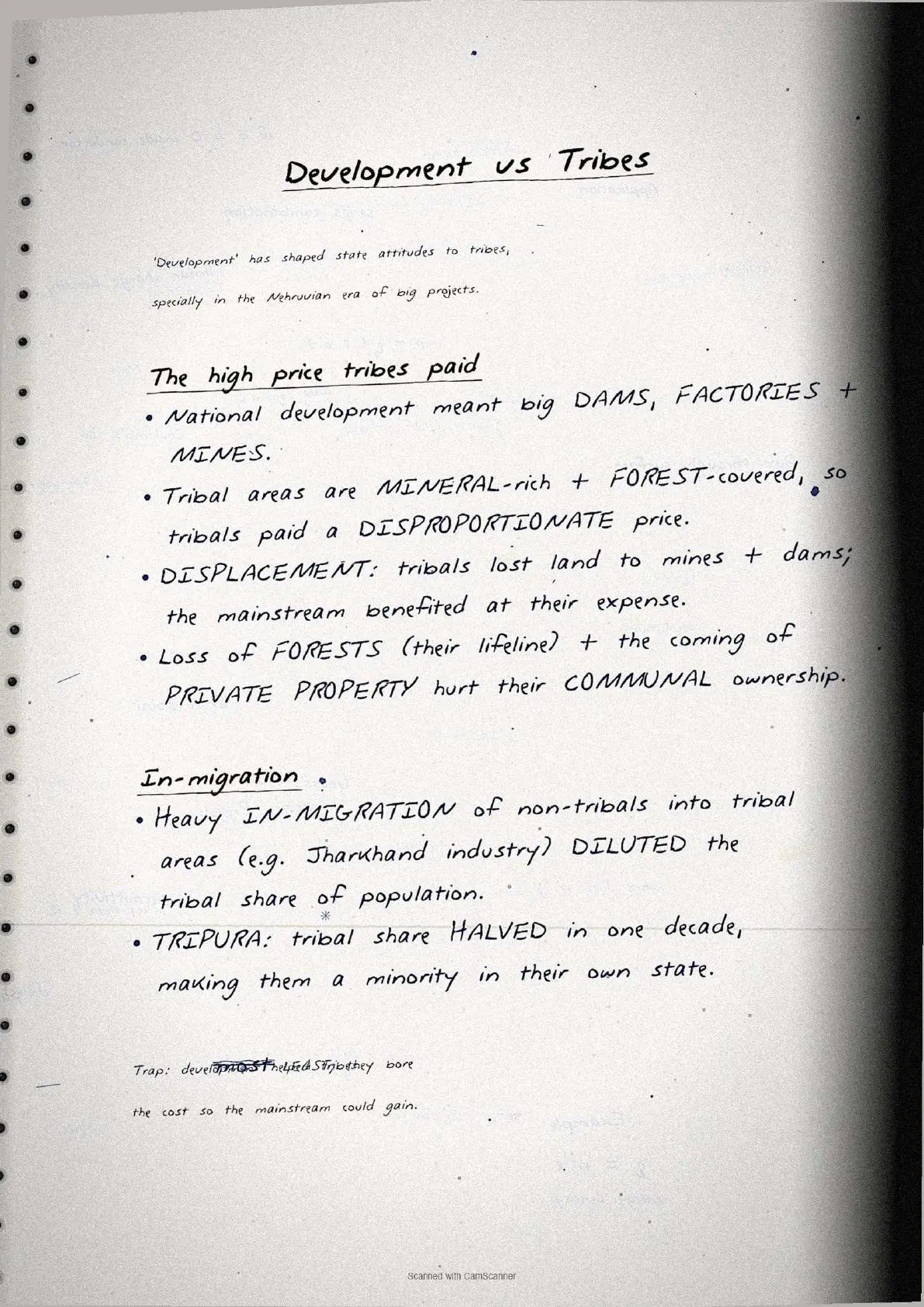
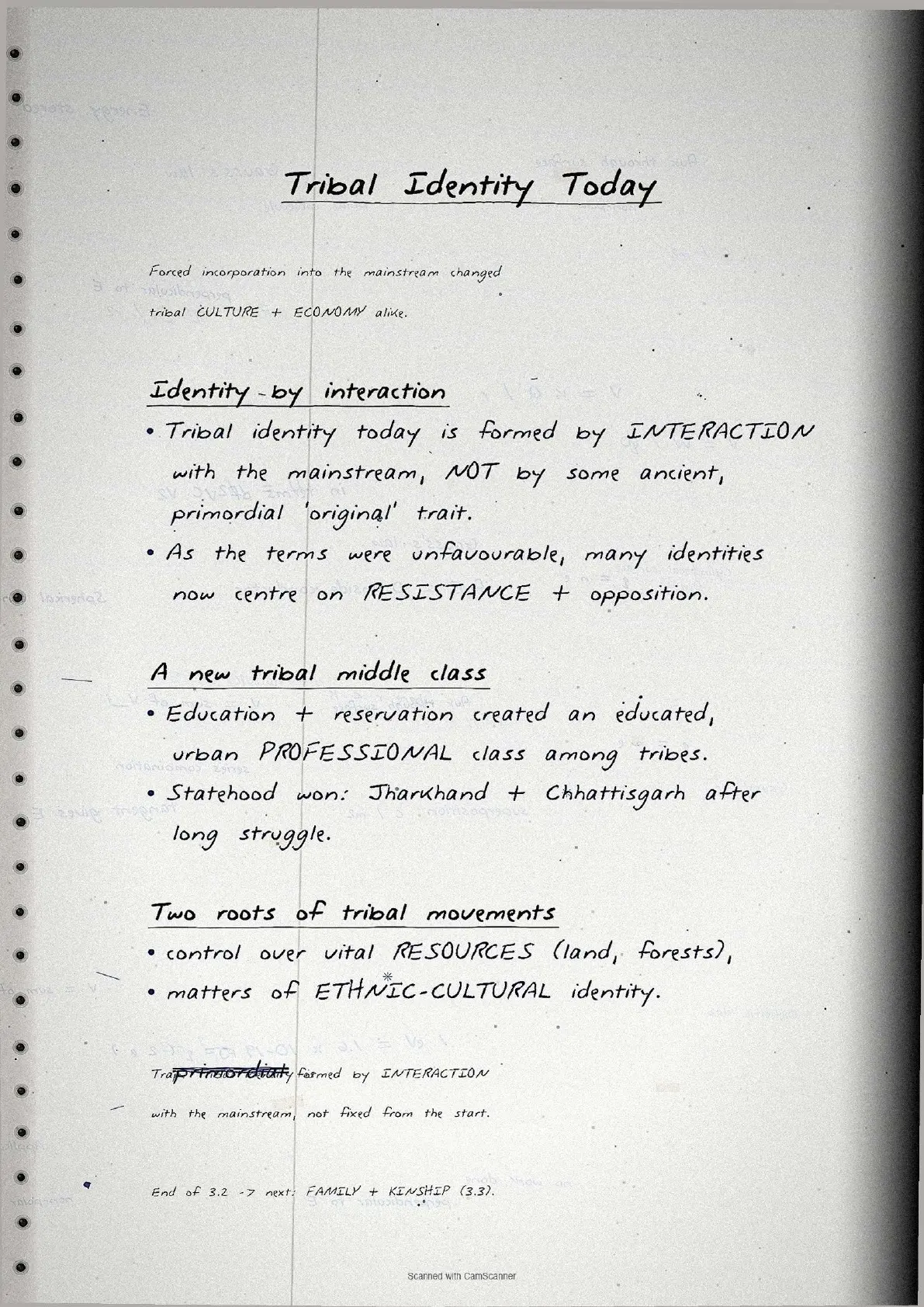
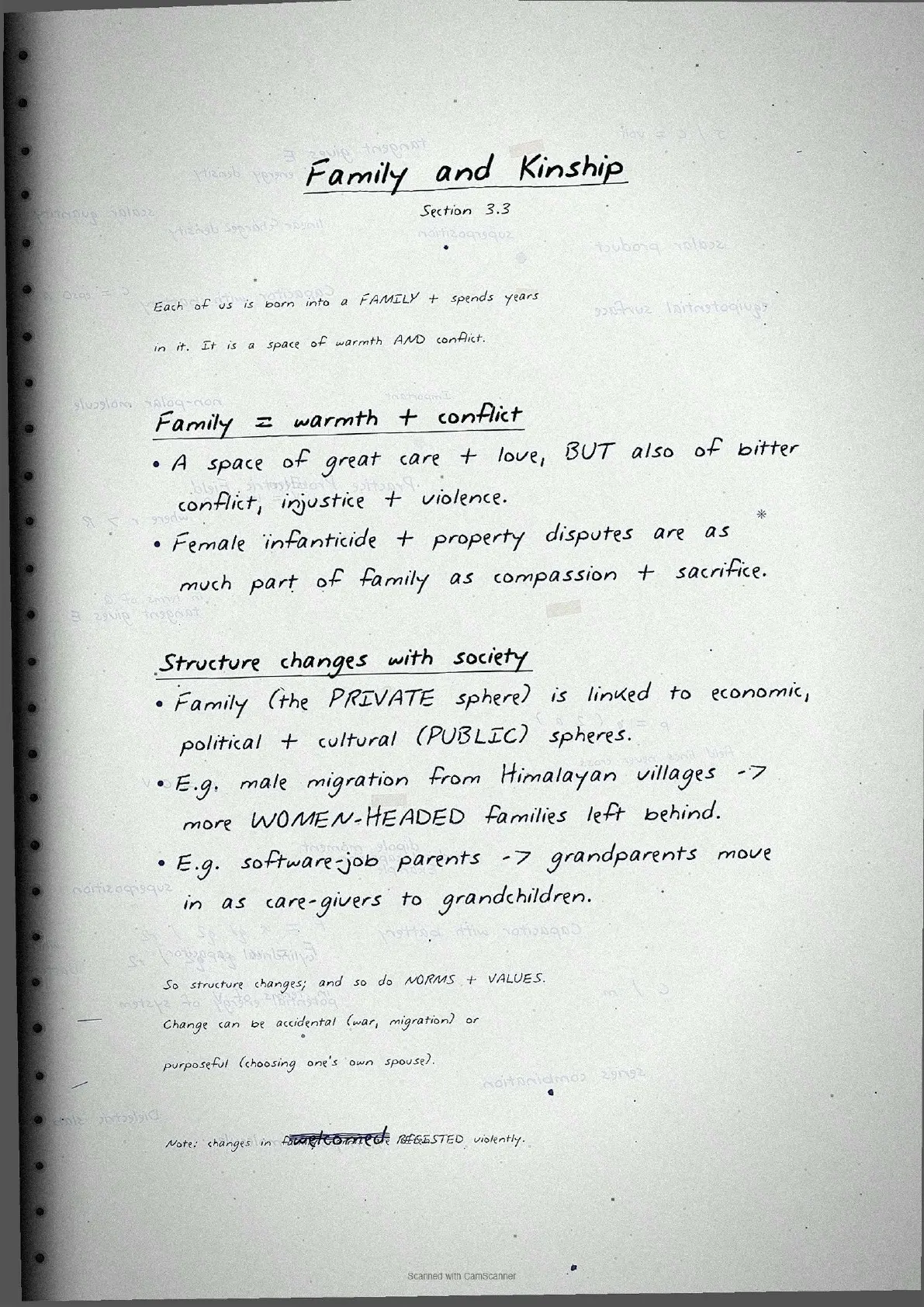
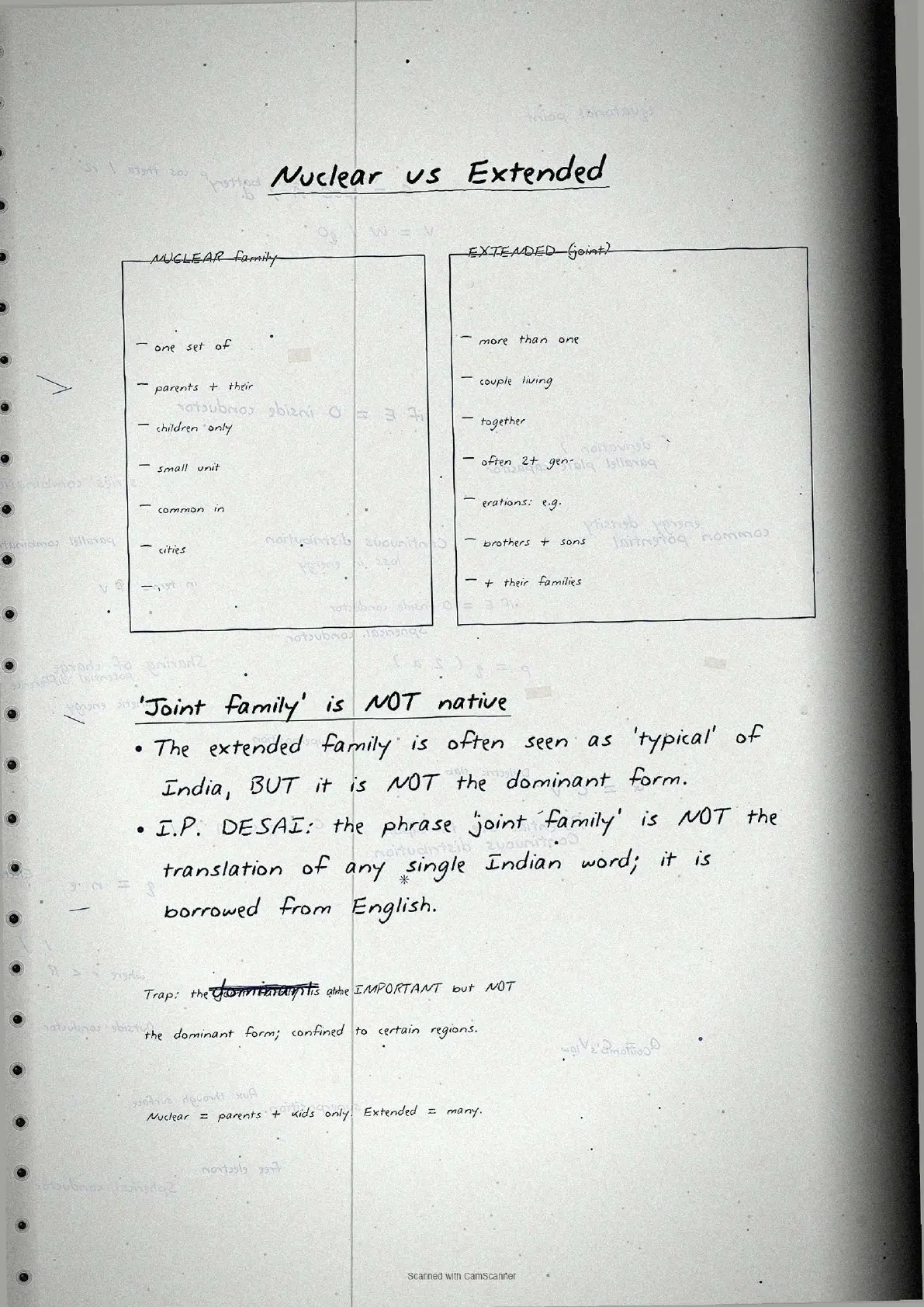
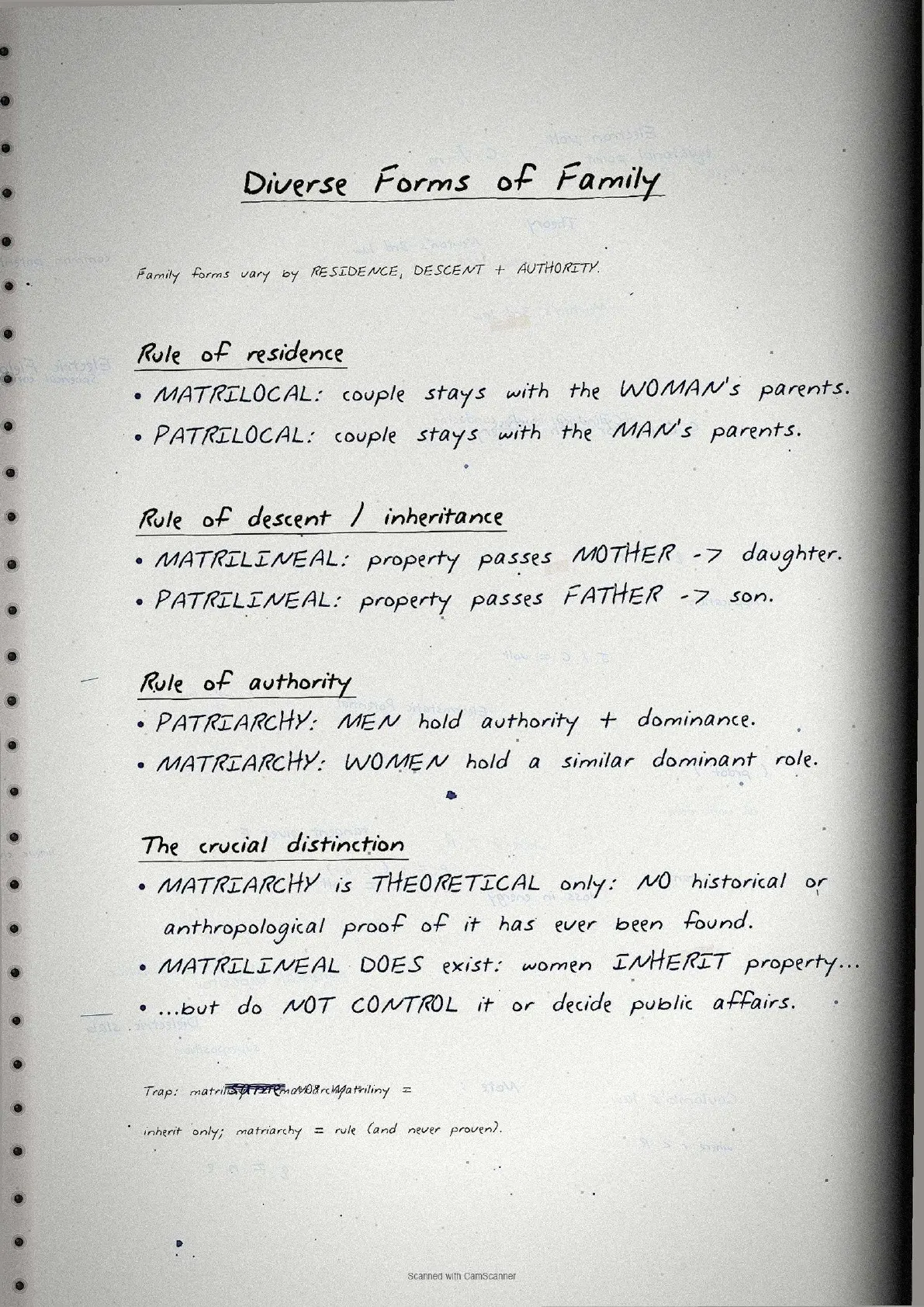
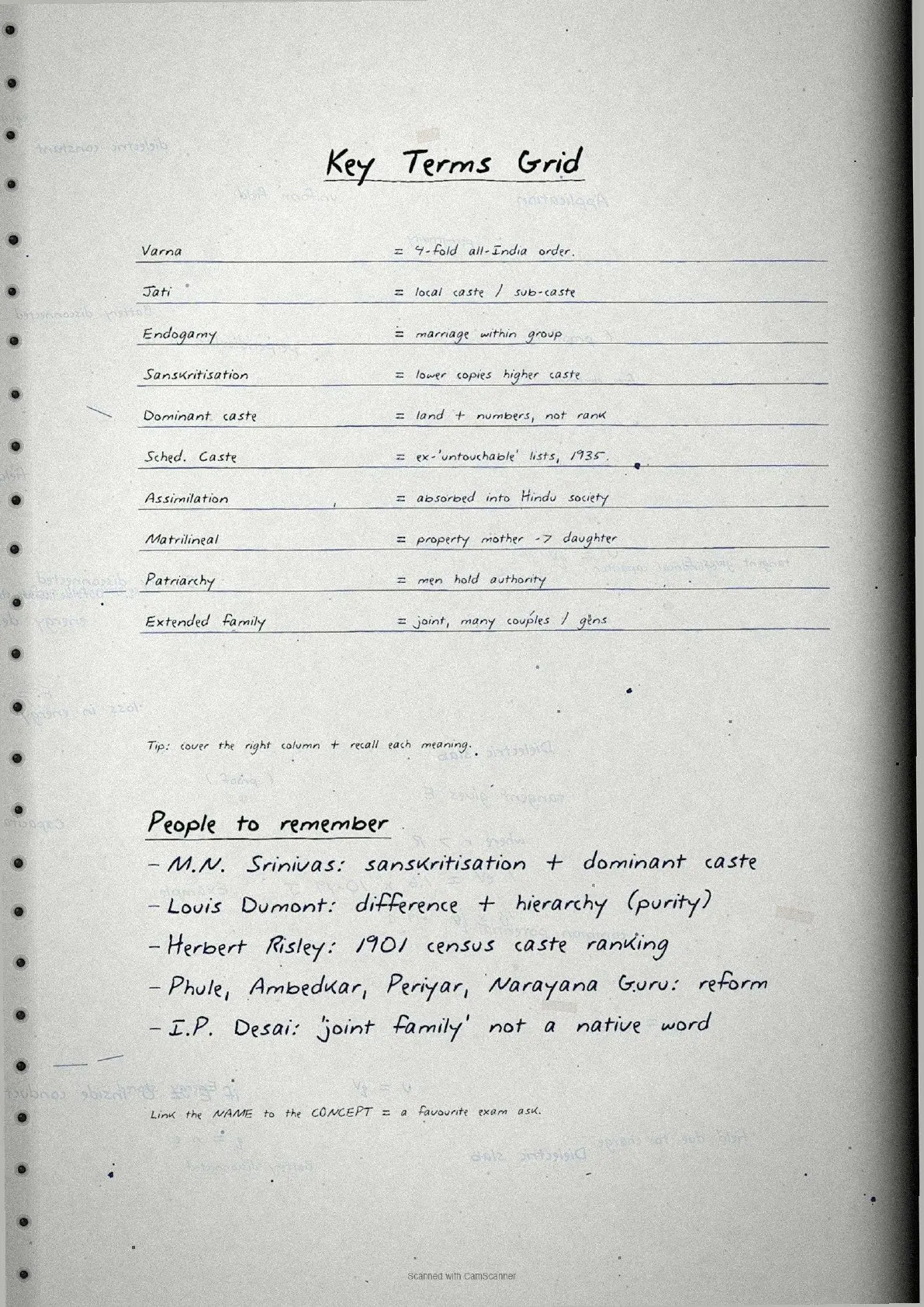
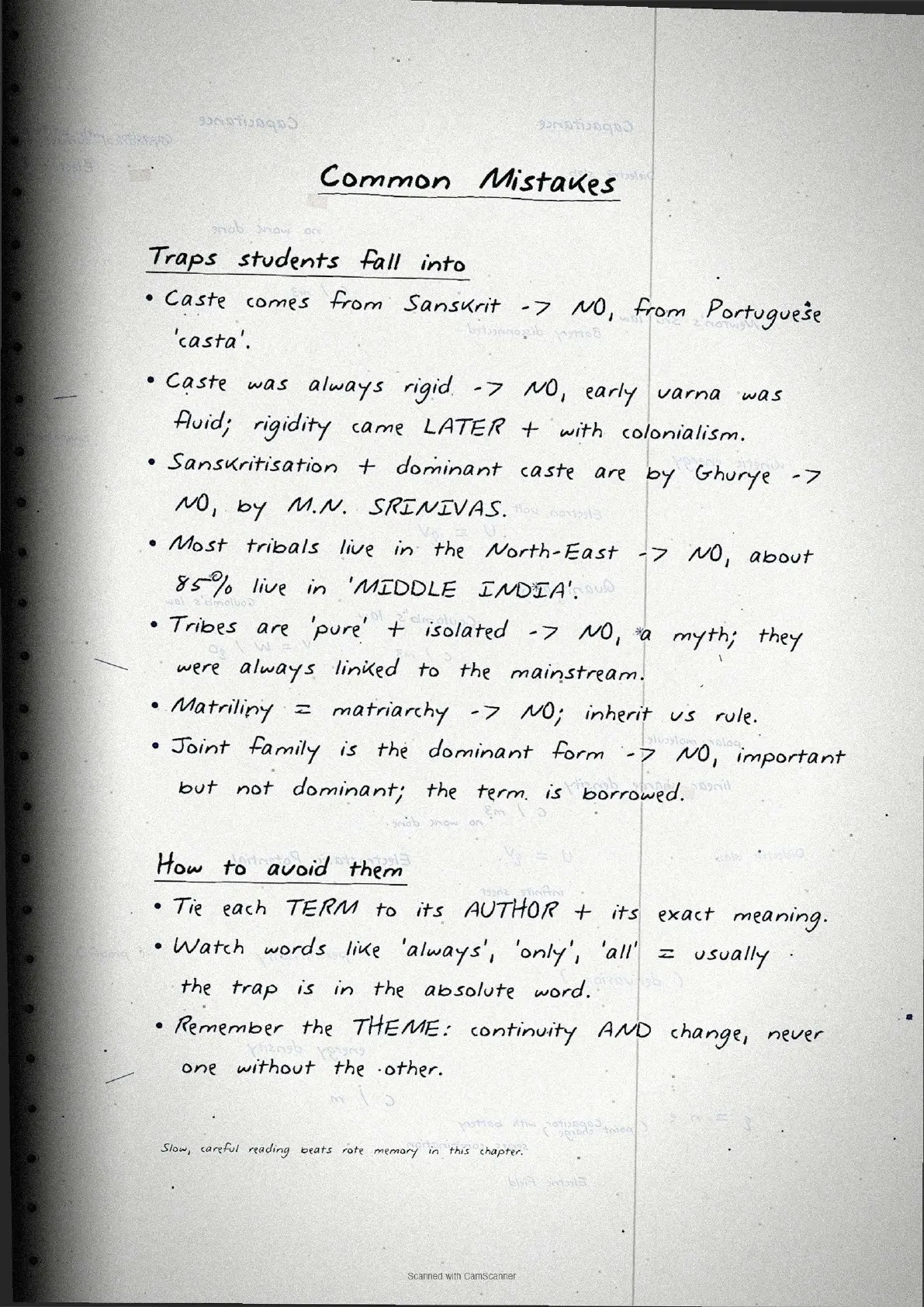
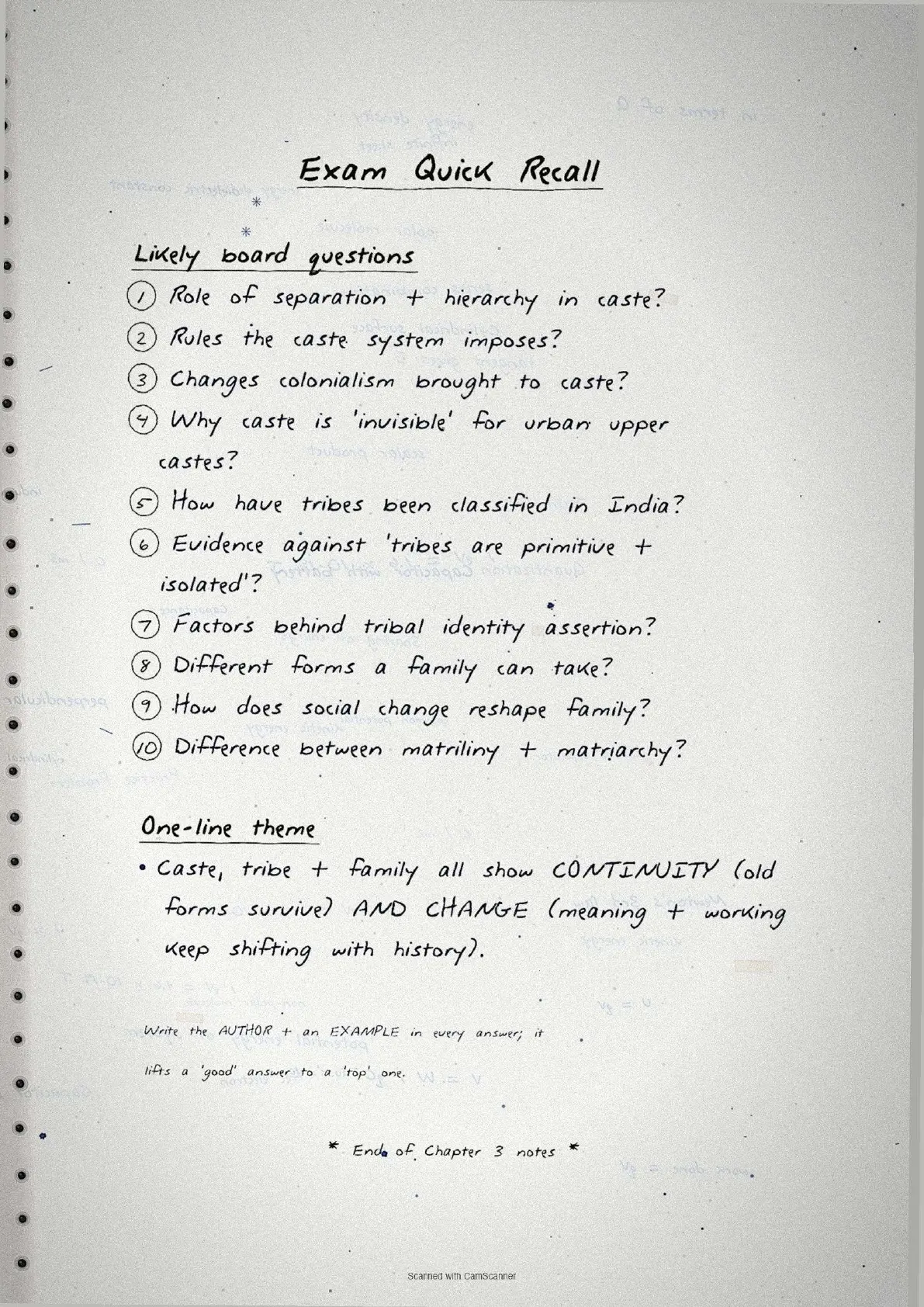
- Handwritten, one-shot revision of caste, tribe and family for the last night before the exam.
- This Class 12 Sociology chapter usually carries 5 to 6 marks per board paper.
- Pairs with the NCERT Solutions, Notes and NCERT Book PDF linked lower on this page.
These Social Institutions Continuity and Change handwritten notes are prepared from the official NCERT Indian Society textbook and checked against the last five years of CBSE board papers.
Student Feedback: In a Collegedunia poll of 8,140 Class 12 Sociology students before the 2026 boards, 73% of students said handwritten notes felt faster to revise from than printed text for this chapter. Most students used the boxed caste-change timeline to recall how colonialism reshaped caste.
Source: 2026-27 Class 12 Sociology student poll. Sample of 8,140 students from CBSE schools across 12 states.
What These Social Institutions Handwritten Notes Cover
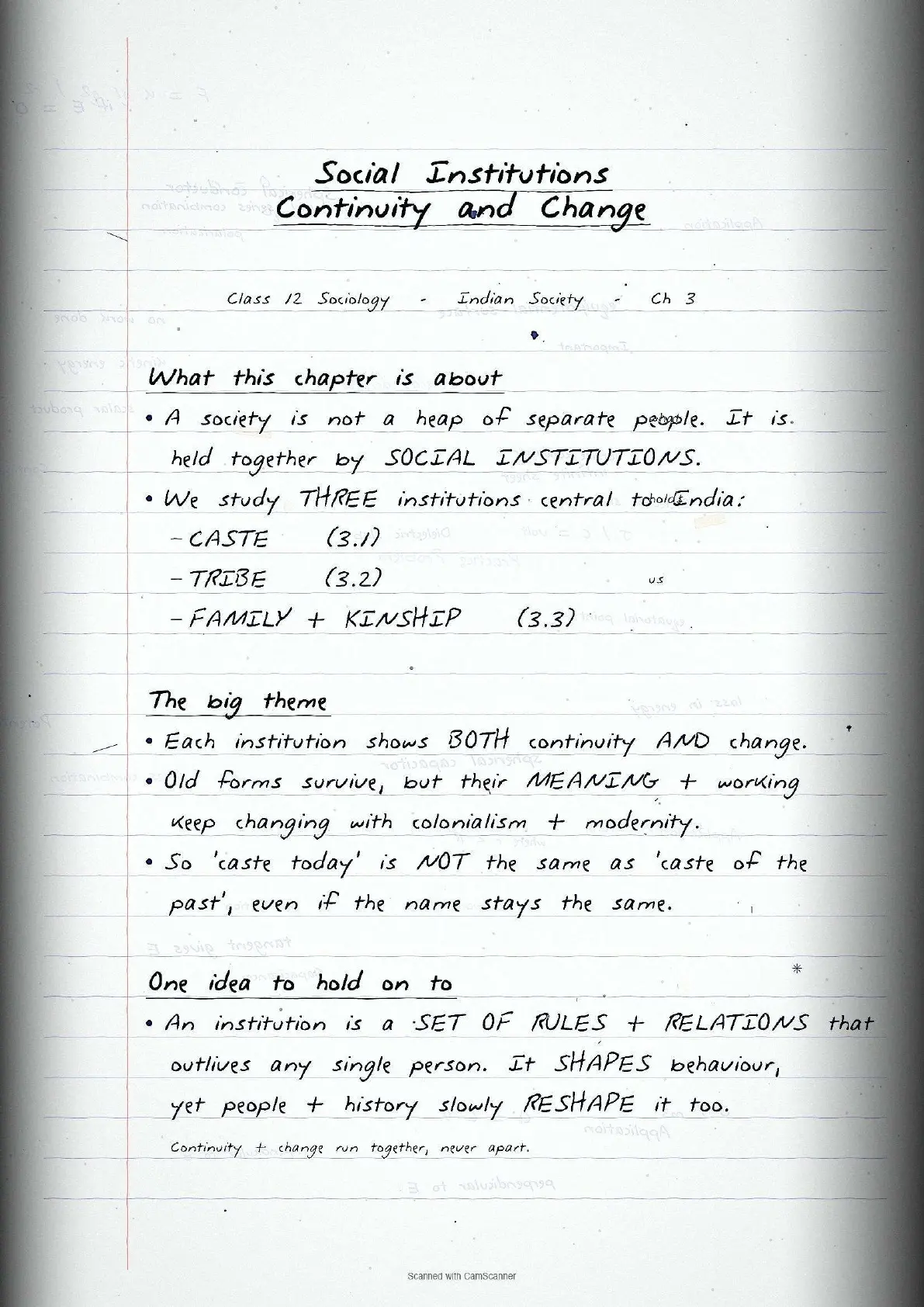
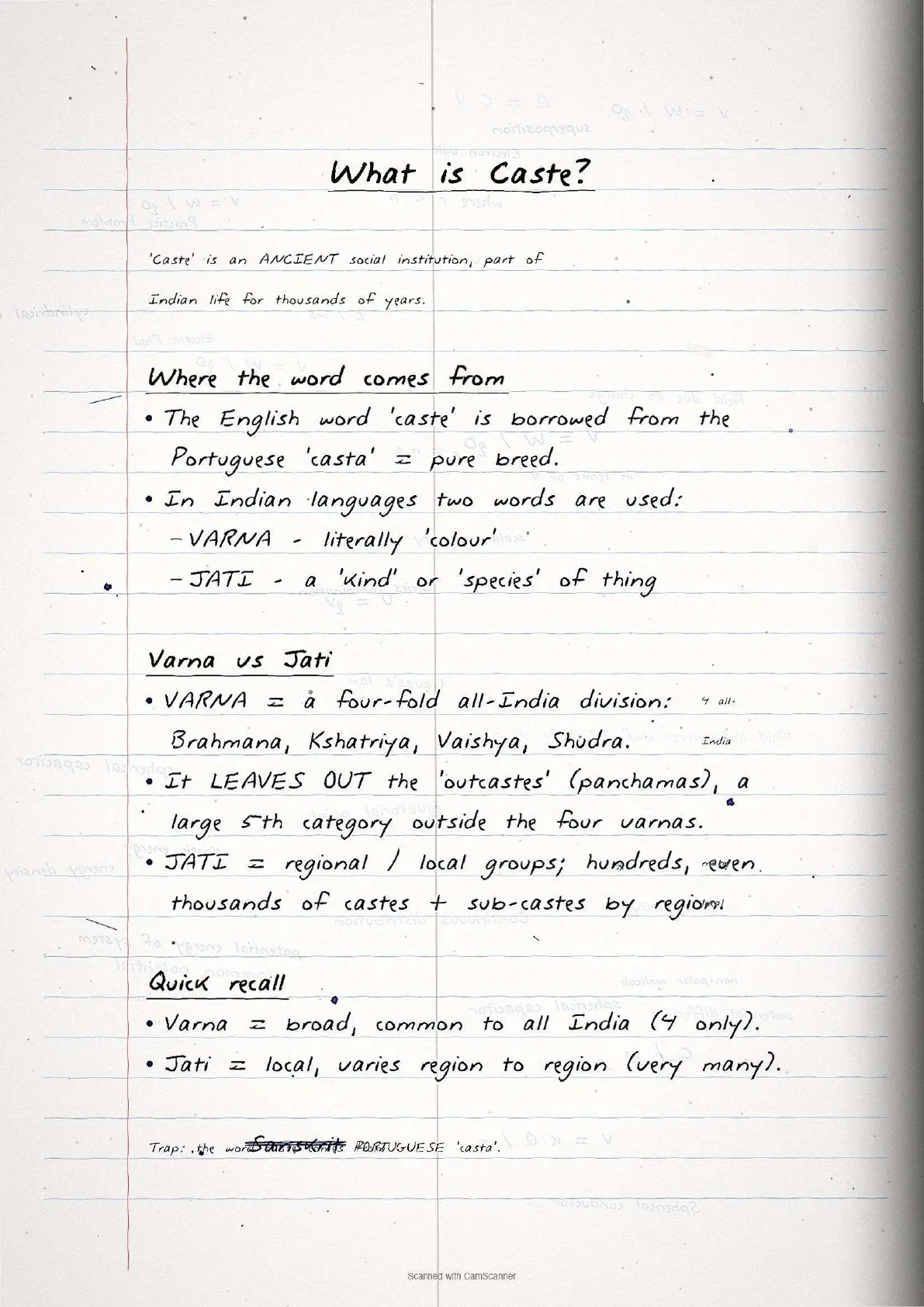
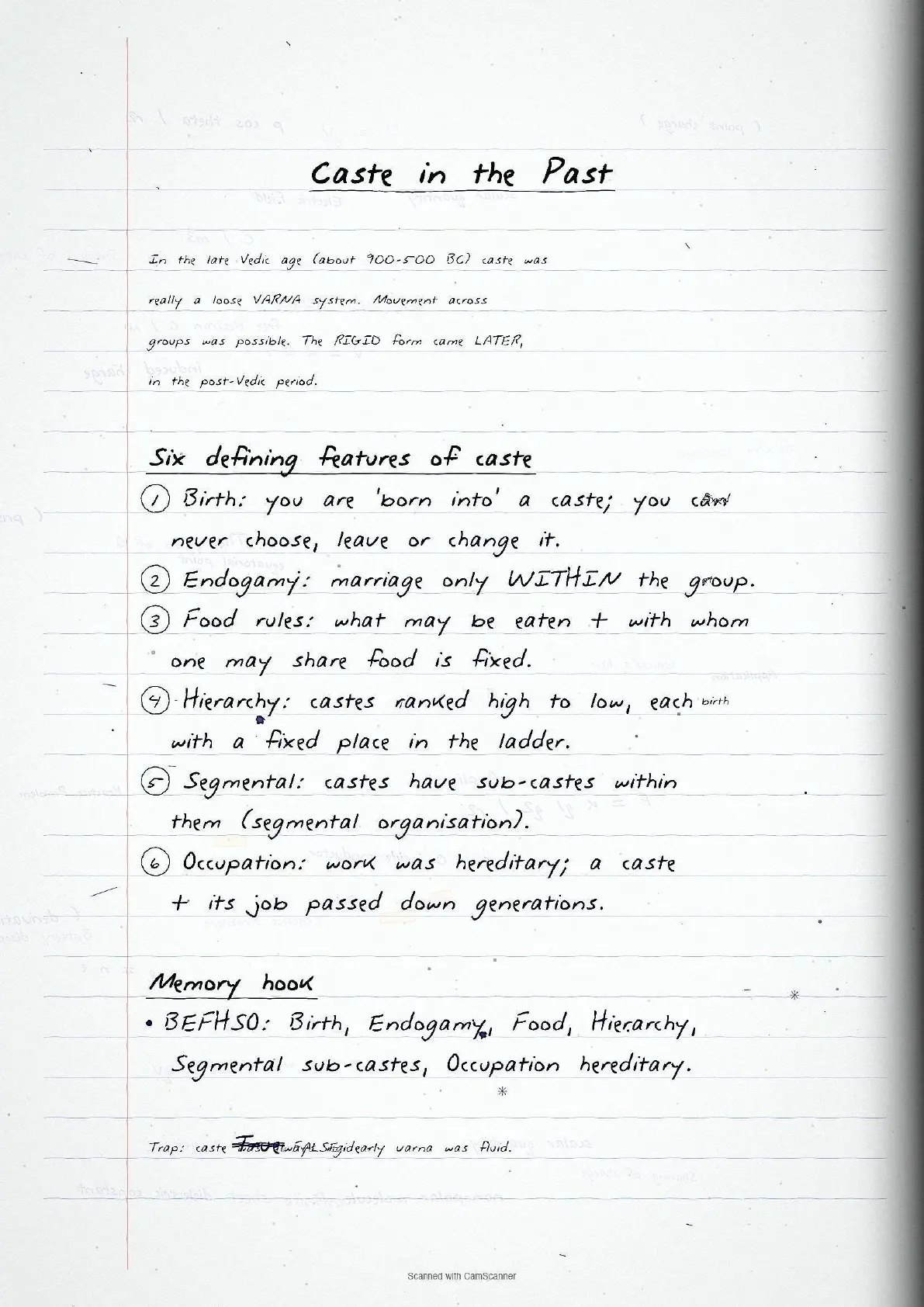
These handwritten notes walk through the chapter the way a topper writes it in a notebook: short headings, boxed terms and arrows linking cause to effect. They cover the three institutions of the chapter, each built around continuity and change.
The pages are ordered so a student can revise from start to finish in one go:
- Caste pages: separation, hierarchy and the colonial and urban changes.
- Tribe pages: the classification of tribes and why identity is asserted today.
- Family pages: the forms of the family and the matriliny versus matriarchy difference.
Because the notes are handwritten, the key terms stand out in boxes and the links between ideas are drawn as arrows. That makes them ideal for a quick scan when there is no time to read full paragraphs.
Caste in the Handwritten Notes: Separation and Hierarchy
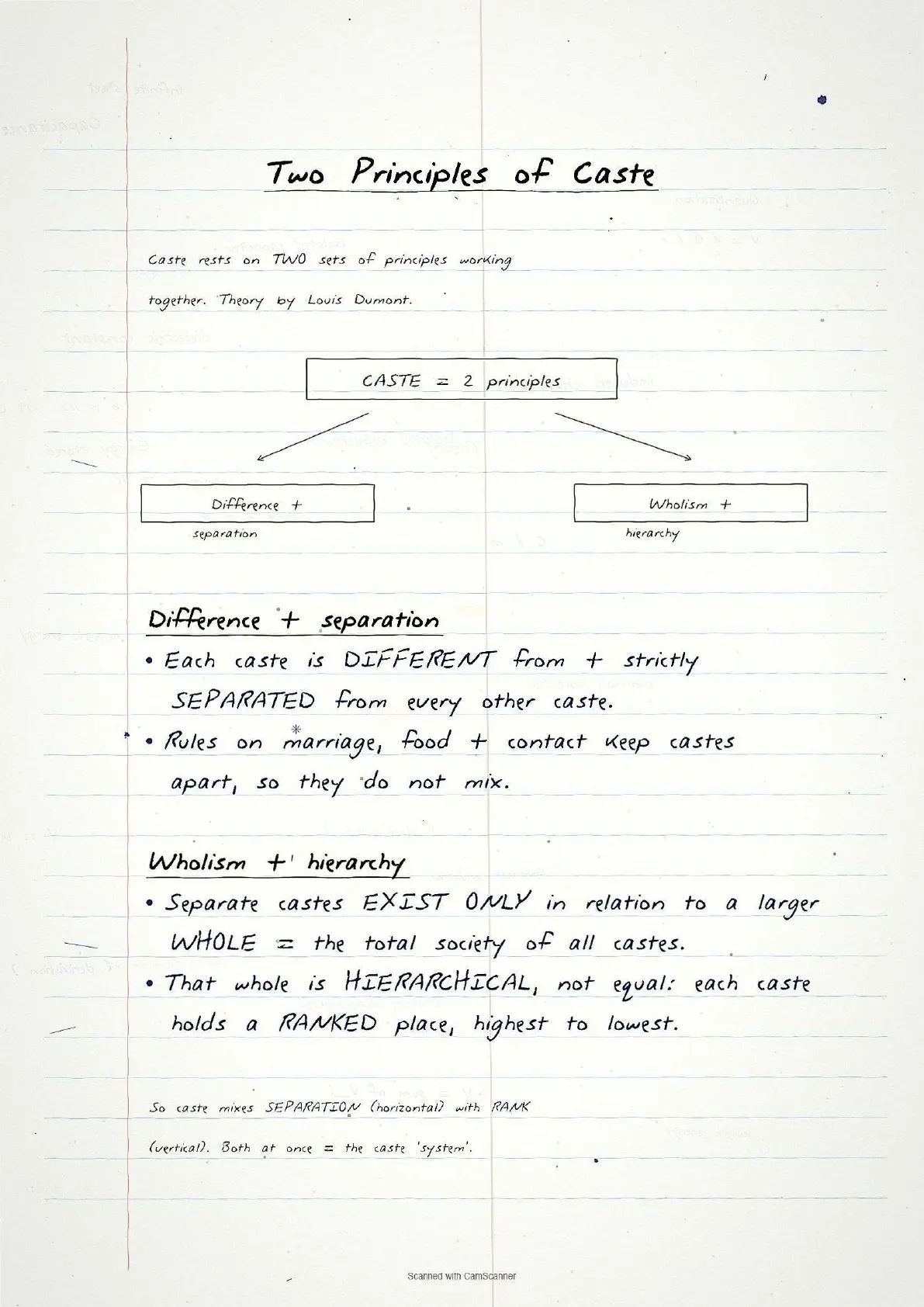
The caste pages open the notes because caste is the most asked institution. They are built around two boxed words that the rest of the section hangs off.
- Separation: boxed at the top, with the marriage, food and contact rules listed below.
- Hierarchy: drawn as a ladder from pure to impure, fixed by birth.
- Change arrows: one arrow to the 1901 census (made caste more rigid), one to the city (caste turns invisible for the upper castes).
The single takeaway the pages stress is that caste combines separation with hierarchy, and it changed form rather than vanishing. A student who copies this layout into their own notebook will recall the caste answer almost without trying.
Tribe and Family Pages at a Glance
The middle and closing pages handle tribes and the family. Each is drawn as a short branching note so the two halves of every question sit side by side.
| Topic | What the page shows |
|---|---|
| Tribe classification | Branches for region, language, livelihood and size, drawn as a small tree. |
| Tribal identity | Boxed reasons: land and forest rights, education, and being left out of development. |
| Family forms | Nuclear, joint, matrilineal and patrilineal written as four quick boxes. |
| Matriliny vs matriarchy | A two-line box: matriliny is real descent through women; matriarchy is rule by women and unproven. |
The point the family page underlines is that matriliny is not matriarchy. Drawing the two in one box, side by side, fixes the difference far better than reading it as a sentence.
How Caste Changed Over Time in One Picture
One full page of the notes is a timeline of how caste changed, because dates and stages are easy to mix up. The timeline runs from pre-colonial caste to the urban present in clear steps.
- Pre-colonial: caste tied to land, ritual rank and a fixed local occupation.
- Colonial: the 1901 census counted and ranked castes, hardening identities.
- After Independence: reservation and politics turned caste into a political force.
- Urban present: caste grows invisible for the upper castes but still shapes networks.
Seeing the change as a line, rather than a list, helps students recall the order under exam pressure. The timeline image below mirrors the handwritten page.
How to Revise from These Handwritten Notes
Handwritten notes work best as the final layer of revision, once the chapter is already understood. A simple routine gets the most out of them.
- Read the Notes first to grasp the chapter, then switch to these handwritten pages for recall.
- Cover the boxed answers and try to rewrite each one from memory.
- Use the caste timeline and the matriliny box as your last two checks before the exam.
Students who copy this layout into their own notebook usually remember the chapter longer, because writing by hand fixes the structure better than reading does.
How These Handwritten Notes Pair with Other Resources
These handwritten notes are the quick-recall layer. To revise the full chapter, use them with the other resources for the same chapter, all linked in the table below.
| Resource | Best used for |
|---|---|
| Social Institutions Continuity and Change NCERT Solutions | Full point-wise answers to all 10 exercise questions |
| Social Institutions Continuity and Change Class 12 Notes | A clear typed summary of caste, tribe and family |
| Social Institutions Continuity and Change NCERT Book PDF | Reading the original NCERT chapter text |
Tip: keep these handwritten pages for the night before the exam, after you have already worked through the Notes and the Solutions.
All Handwritten Notes for Class 12 Sociology
The table links the Handwritten Notes for every chapter in both Class 12 Sociology books, so students can revise the whole course in one style. Social Institutions Continuity and Change is highlighted.
| Chapter | Handwritten Notes |
|---|---|
| Indian Society | |
| Chapter 1 | Introducing Indian Society |
| Chapter 2 | The Demographic Structure of the Indian Society |
| Chapter 3 | Social Institutions - Continuity and Change |
| Chapter 4 | The Market as a Social Institution |
| Chapter 5 | Patterns of Social Inequality and Exclusion |
| Chapter 6 | The Challenges of Cultural Diversity |
| Social Change and Development in India | |
| Chapter 1 | Structural Change |
| Chapter 2 | Cultural Change |
| Chapter 3 | The Constitution and Social Change |
| Chapter 4 | Change and Development in Rural Society |
| Chapter 5 | Change and Development in Industrial Society |
| Chapter 6 | Globalisation and Social Change |
| Chapter 7 | Mass Media and Communications |
| Chapter 8 | Social Movements |
FAQs on Social Institutions Continuity and Change Class 12 Handwritten Notes
Social Institutions Continuity and Change Class 12 Handwritten Notes Common Questions
Ques. Where can I download the class 12 sociology chapter 3 Handwritten Notes PDF?
Ans. You can download the Social Institutions Continuity and Change Class 12 Sociology Handwritten Notes PDF directly from this page. It is free, follows the 2026-27 NCERT, and gives a handwritten revision of caste, tribe and family.
Ques. Are handwritten notes good enough for revision of this chapter?
Ans. Yes, for the final layer of revision. They put each idea in a box with arrows, which makes recall fast. For first study and full answers, pair them with the typed Notes and the NCERT Solutions for the same chapter.
Ques. What are the two ideas that hold the caste system together?
Ans. Caste rests on separation and hierarchy. Separation keeps castes apart through rules on marriage, food and contact, while hierarchy ranks them from pure to impure by birth. The notes box both words at the top of the caste page.
Ques. How do the notes explain matriliny and matriarchy?
Ans. The family page draws a two-line box: matriliny means descent and property pass through the mother, as among the Khasi and Garo, while matriarchy means women actually rule and has never truly existed. Seeing both in one box fixes the difference.
Ques. How many pages do these handwritten notes cover?
Ans. The notes run across the full chapter in a multi-page handwritten PDF, with separate pages for caste, tribe and family plus a timeline of how caste changed. They are sized for a one-sitting revision before the board exam.



Comments