




These Class 12 Sociology Chapter 6 The Challenges of Cultural Diversity Handwritten Notes give a handwritten revision of the whole chapter, set to the 2026-27 CBSE syllabus. Written by hand, they cover cultural diversity, community identity, regionalism, communalism and secularism in the order students need them for the board exam.
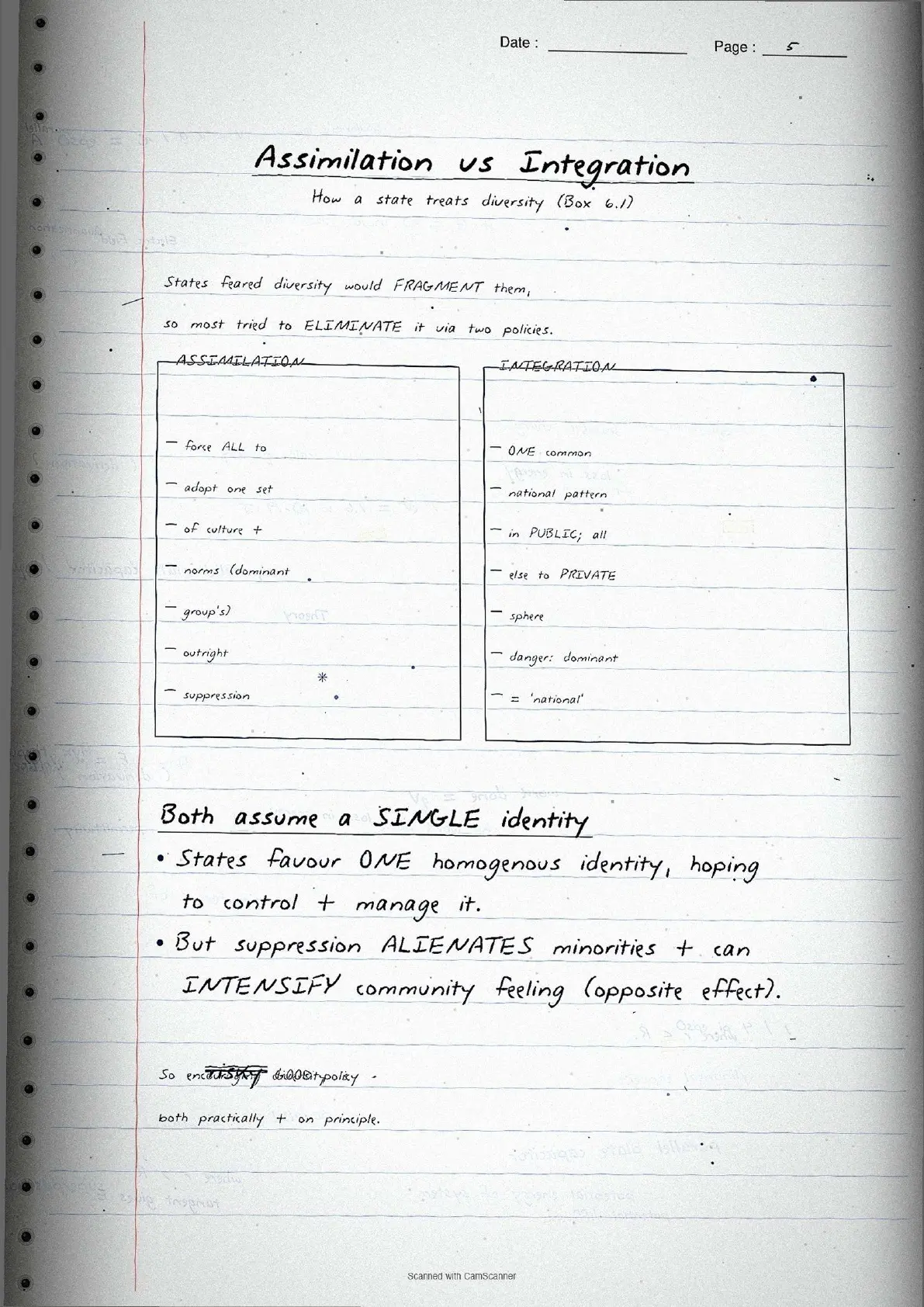
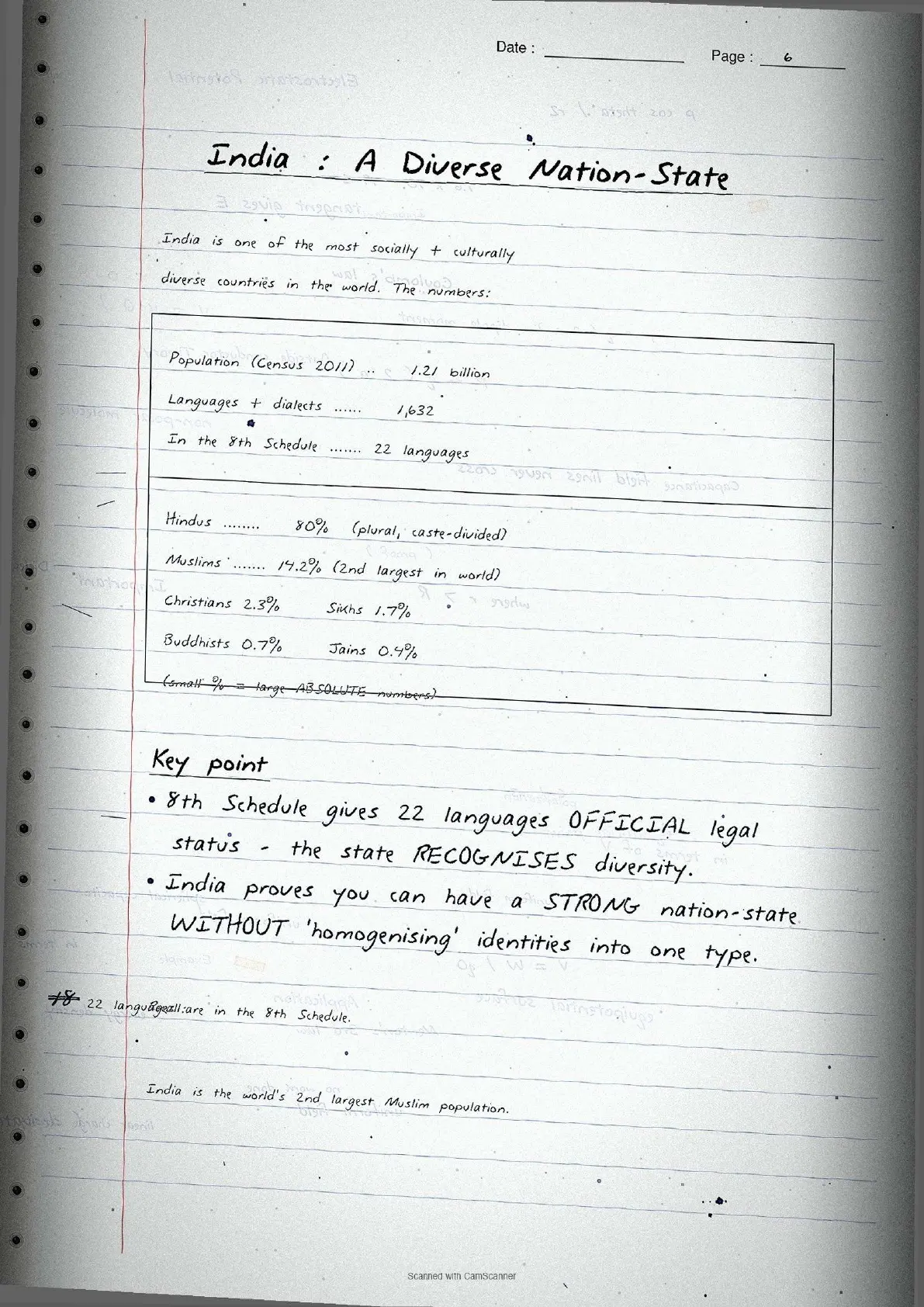
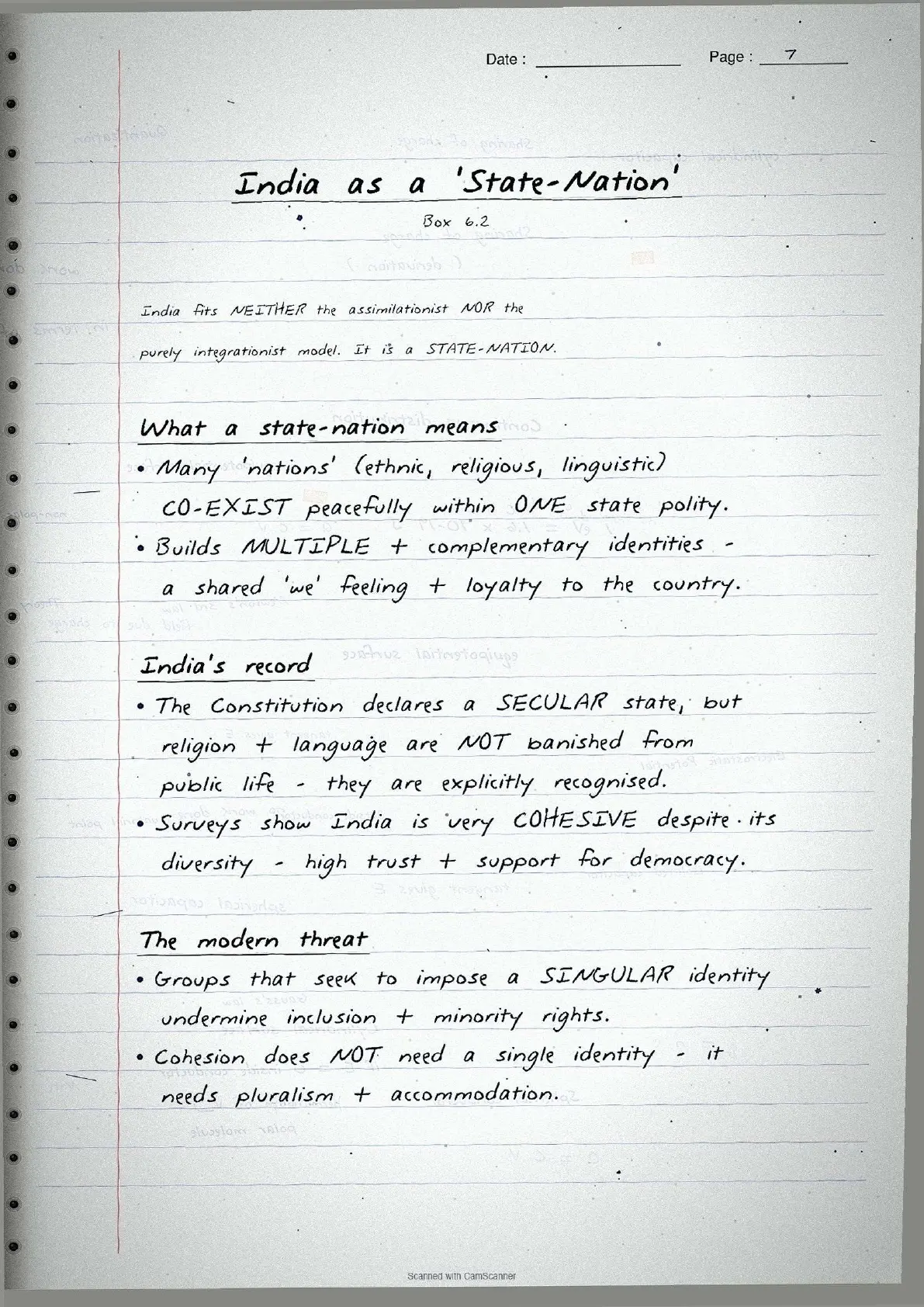
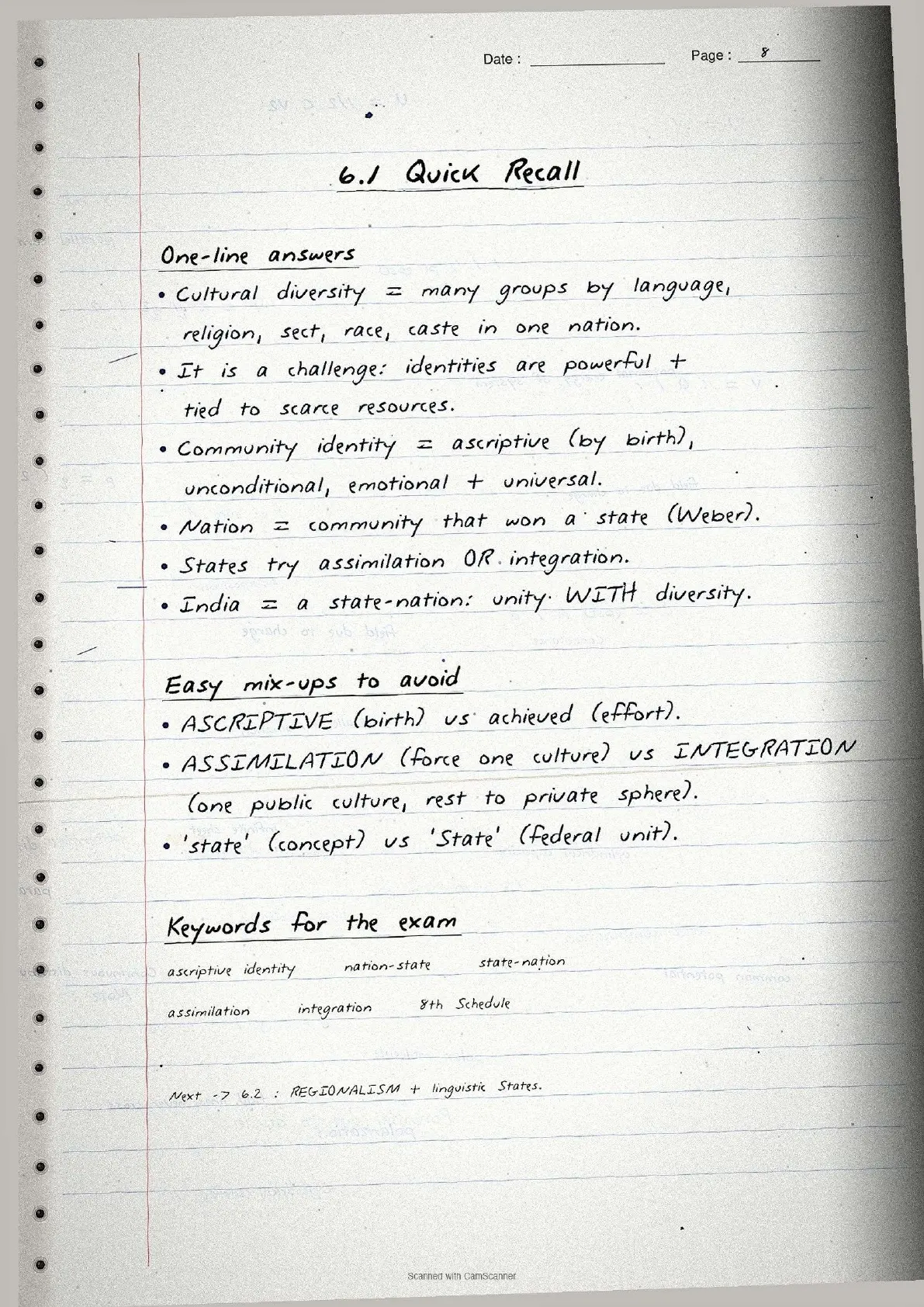
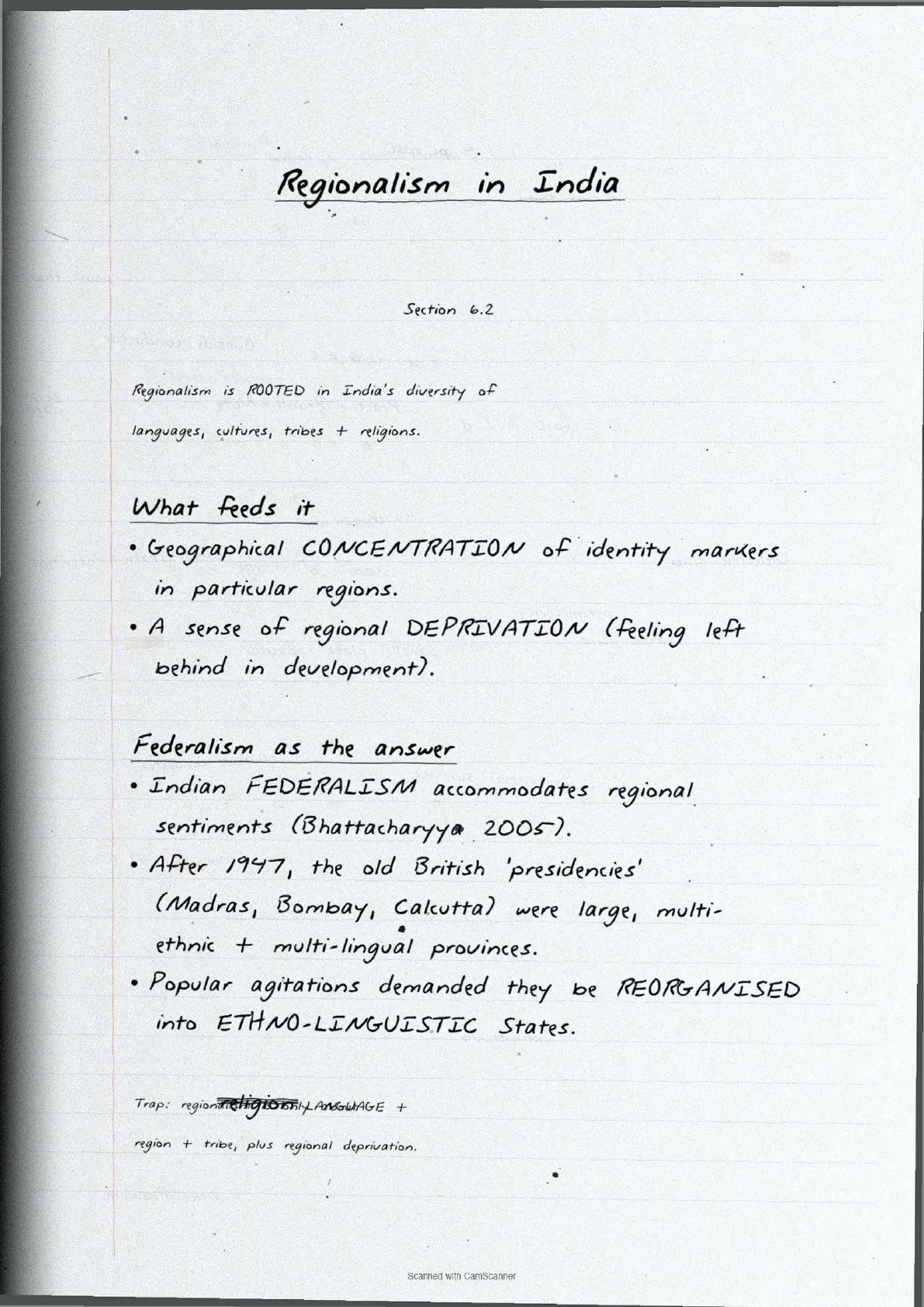
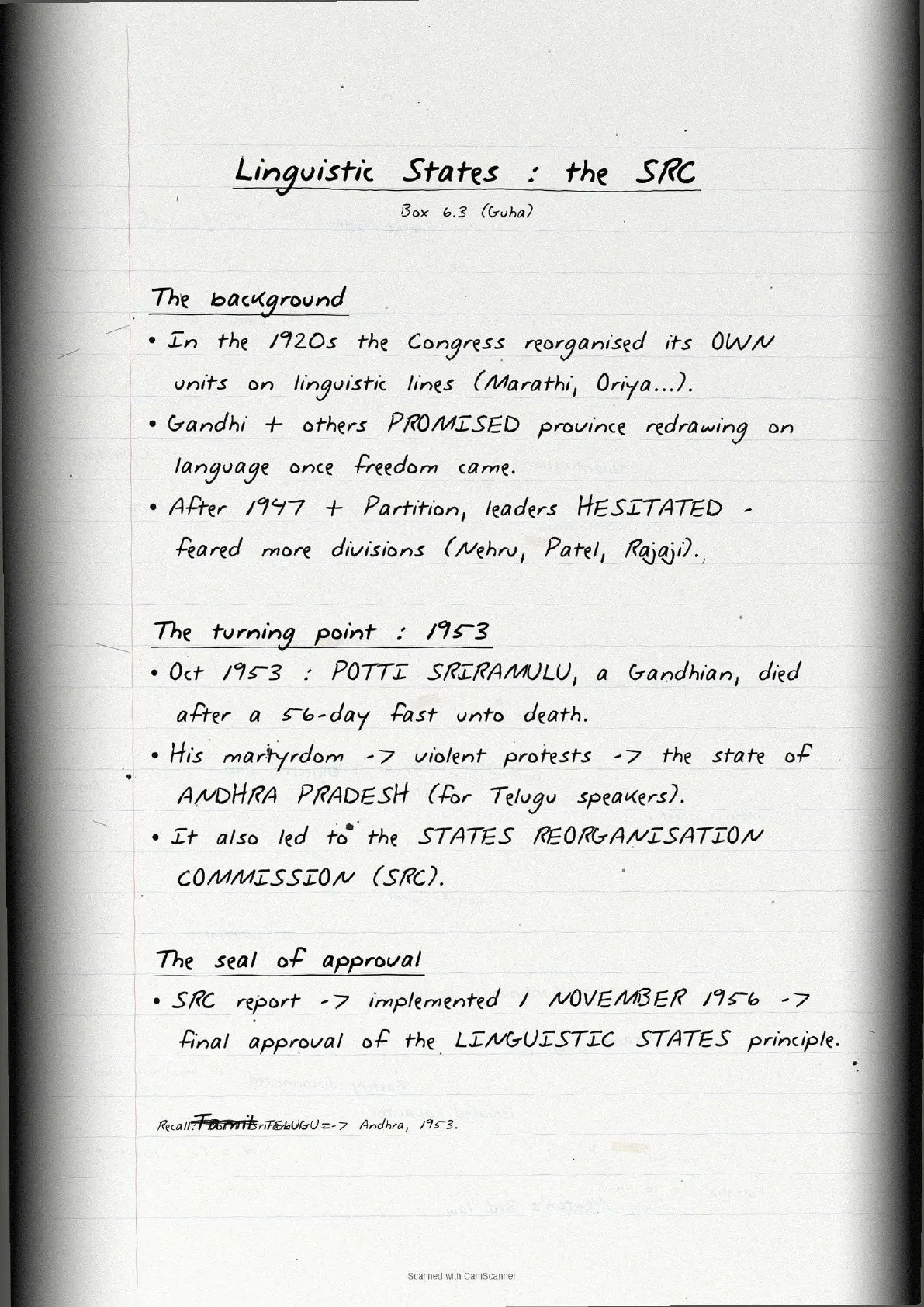
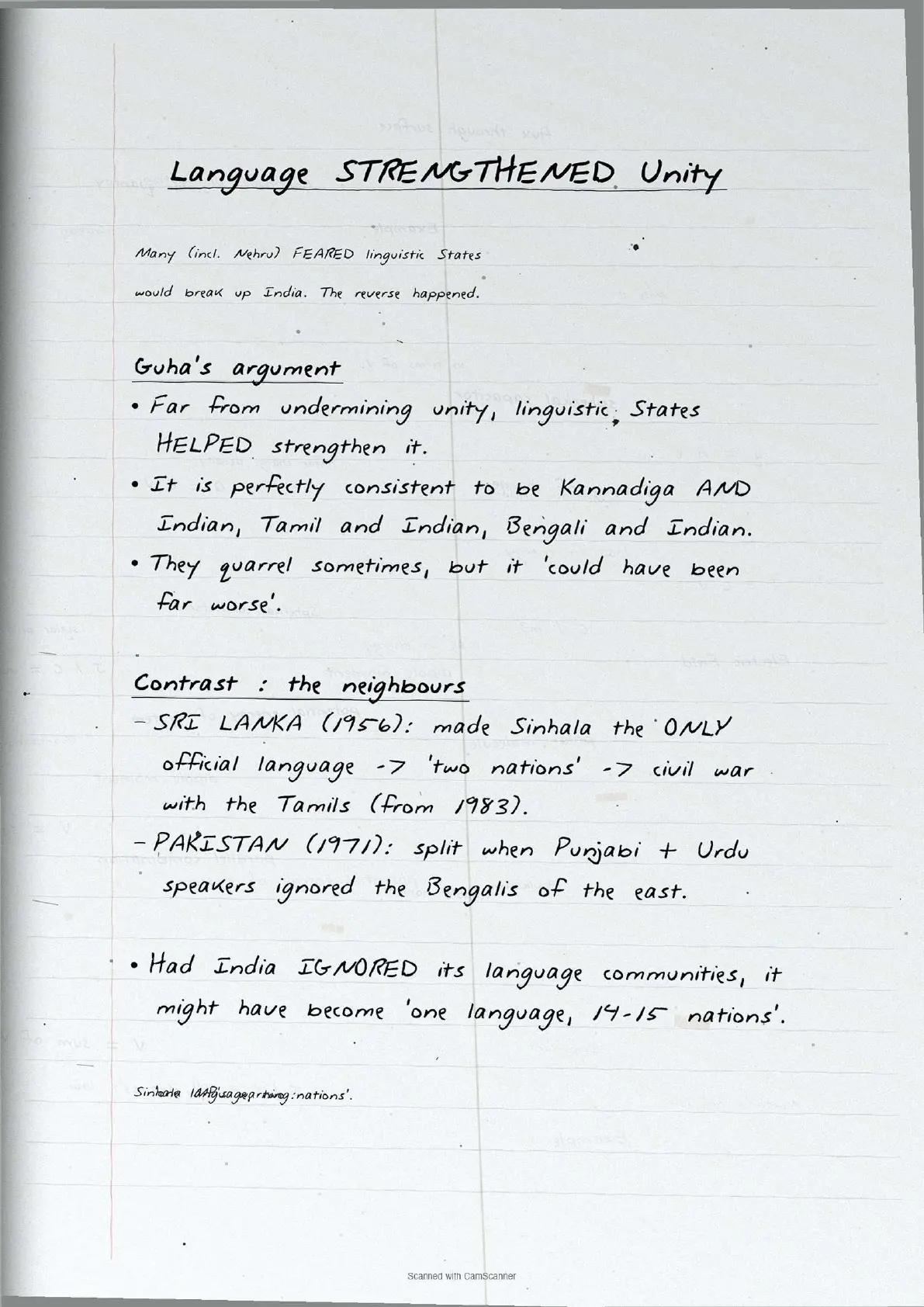
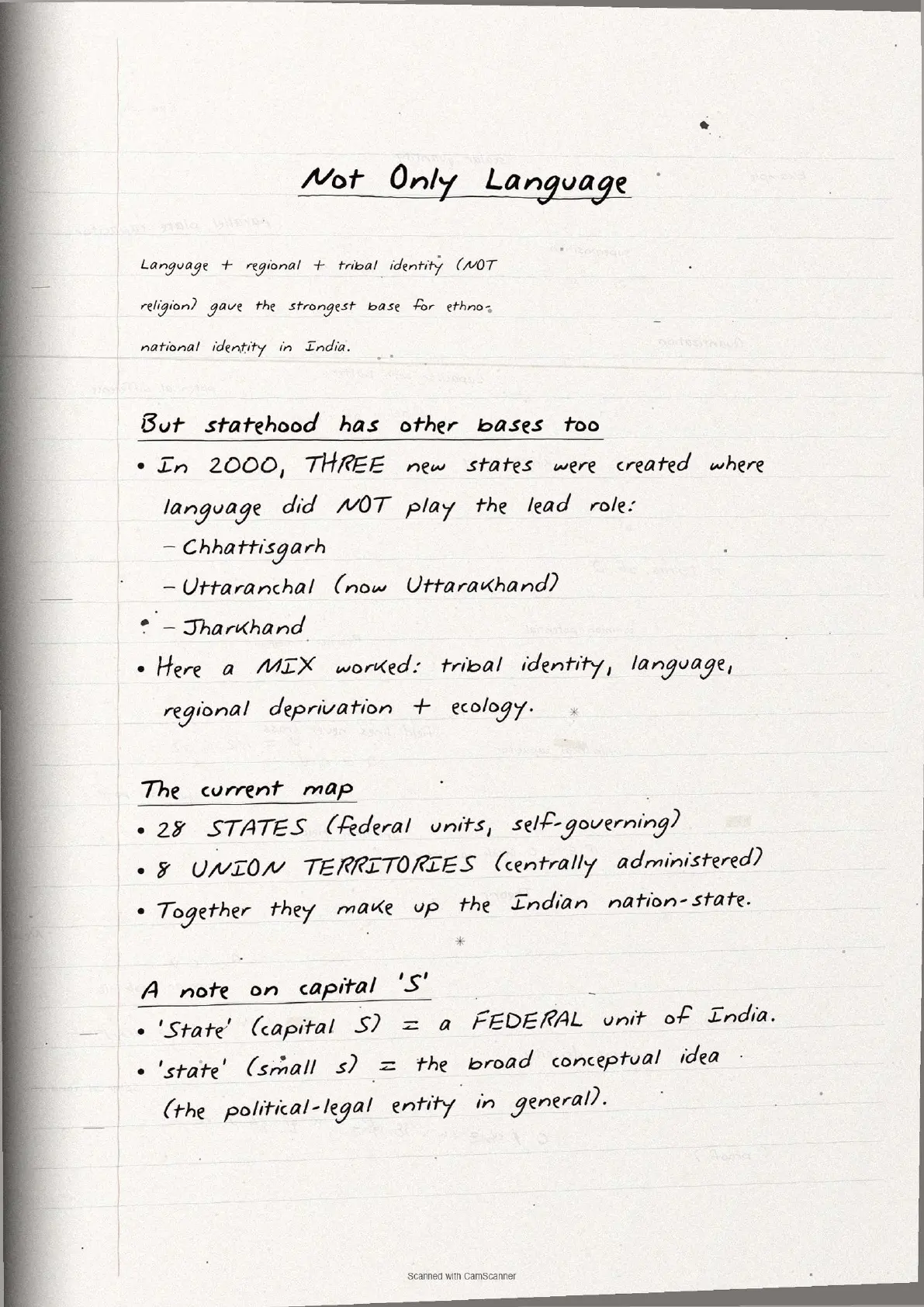
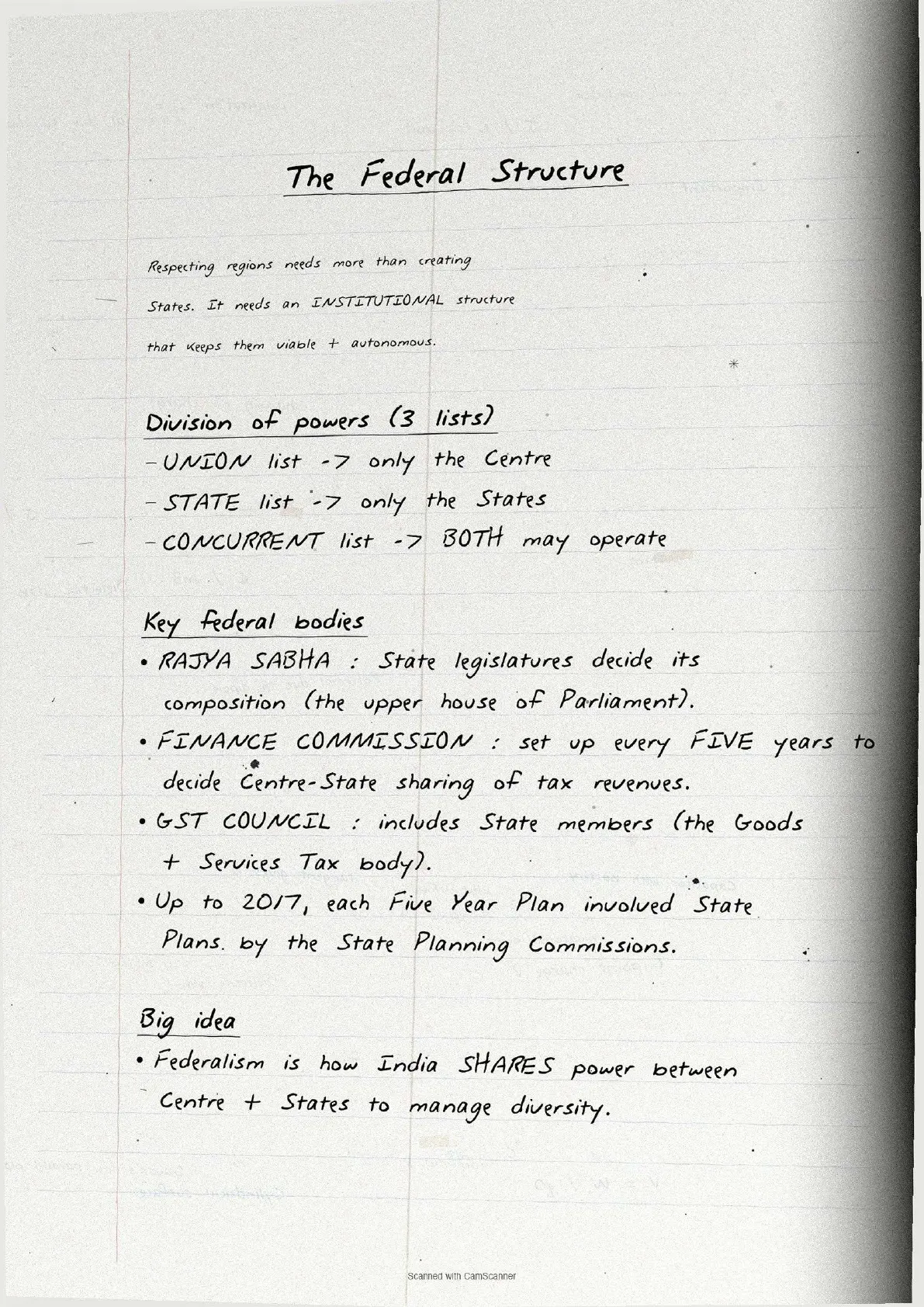
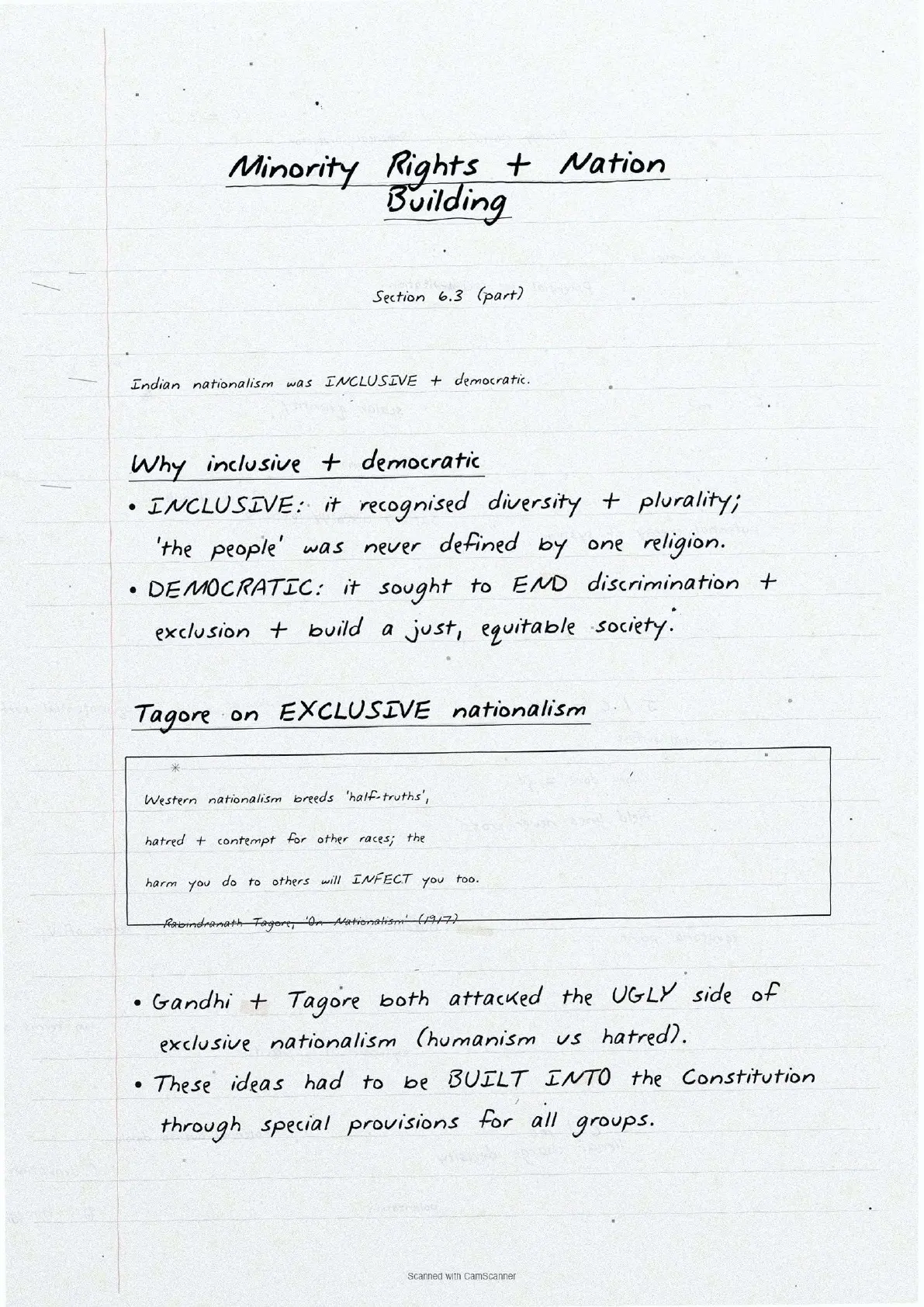
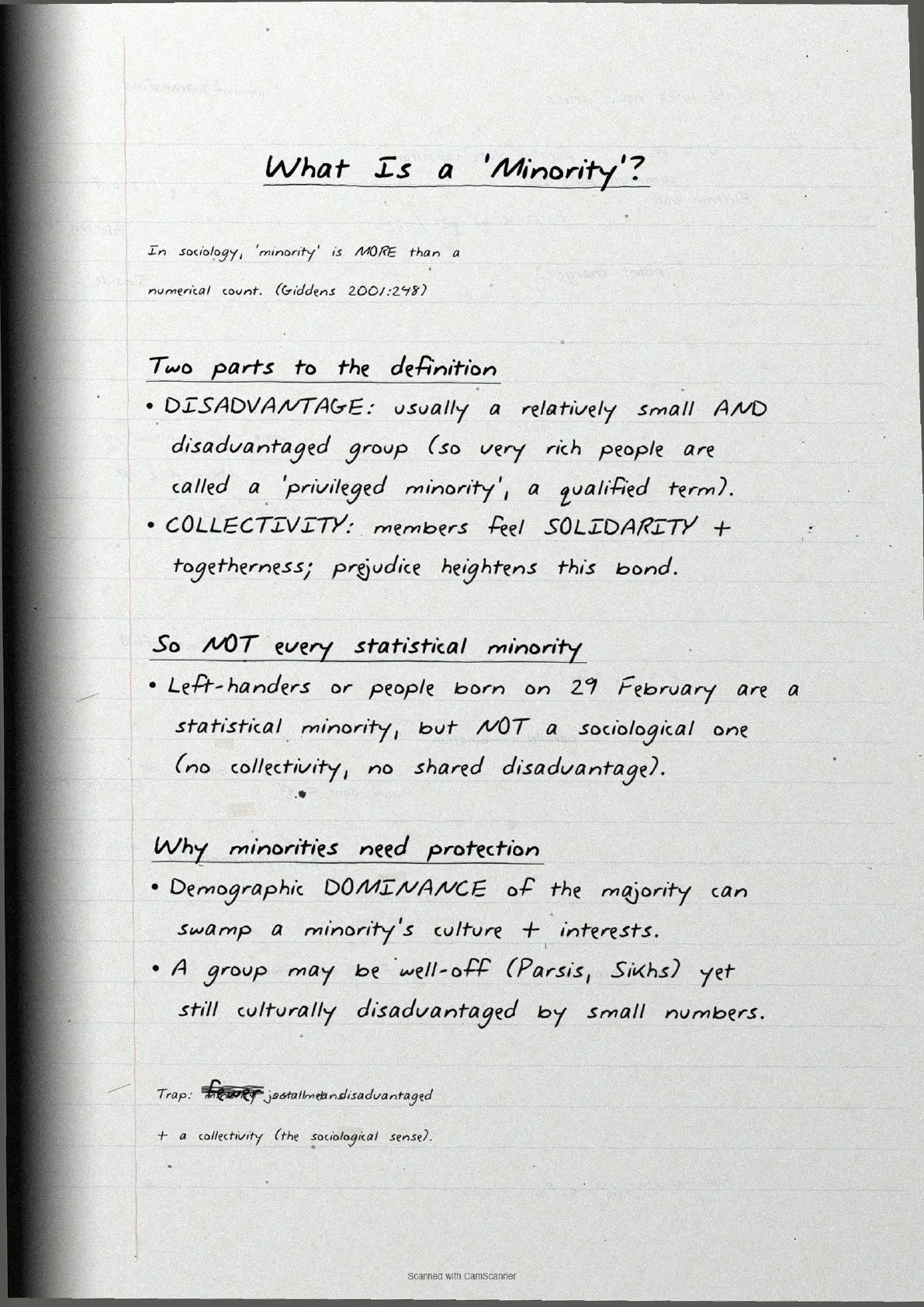
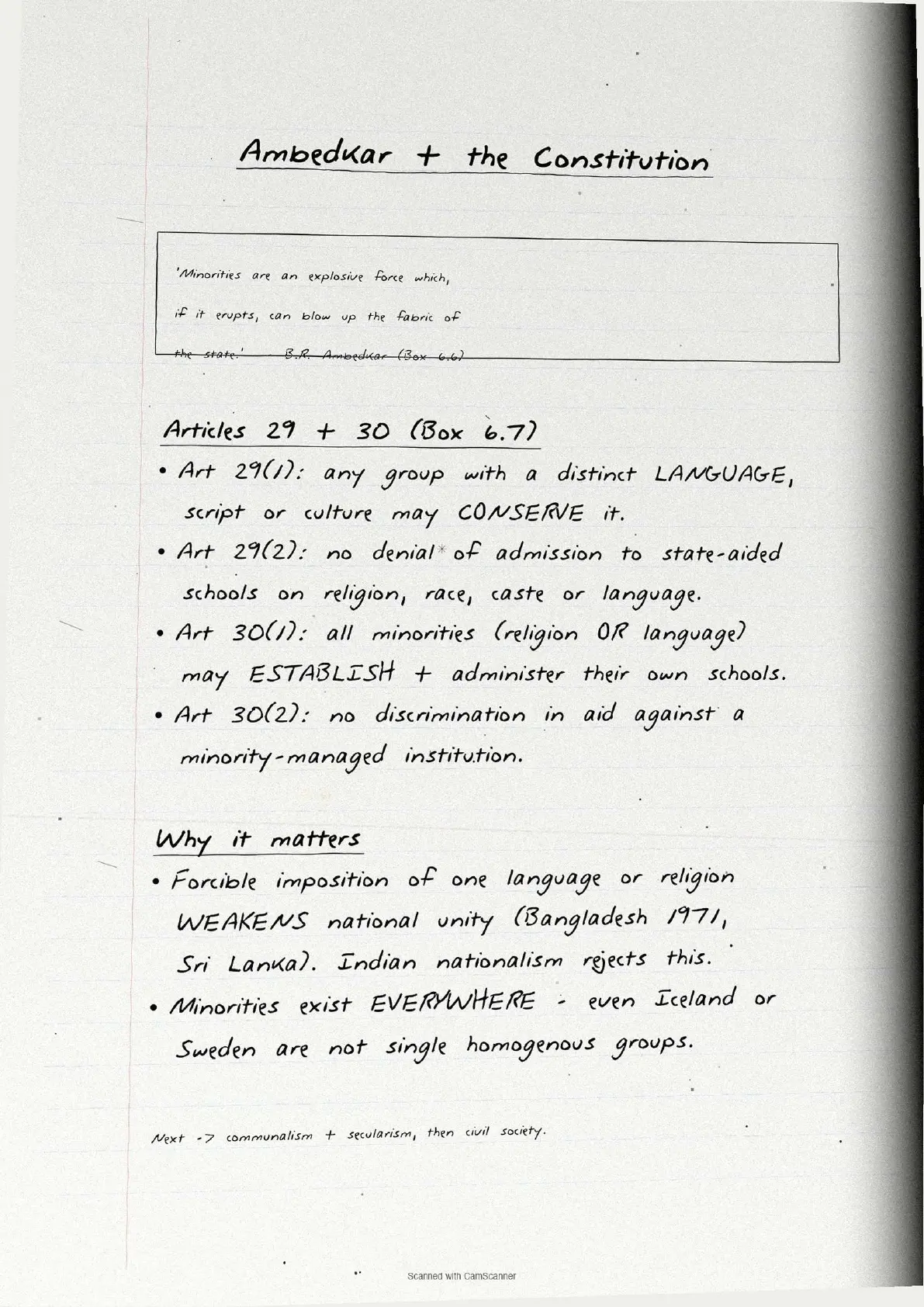
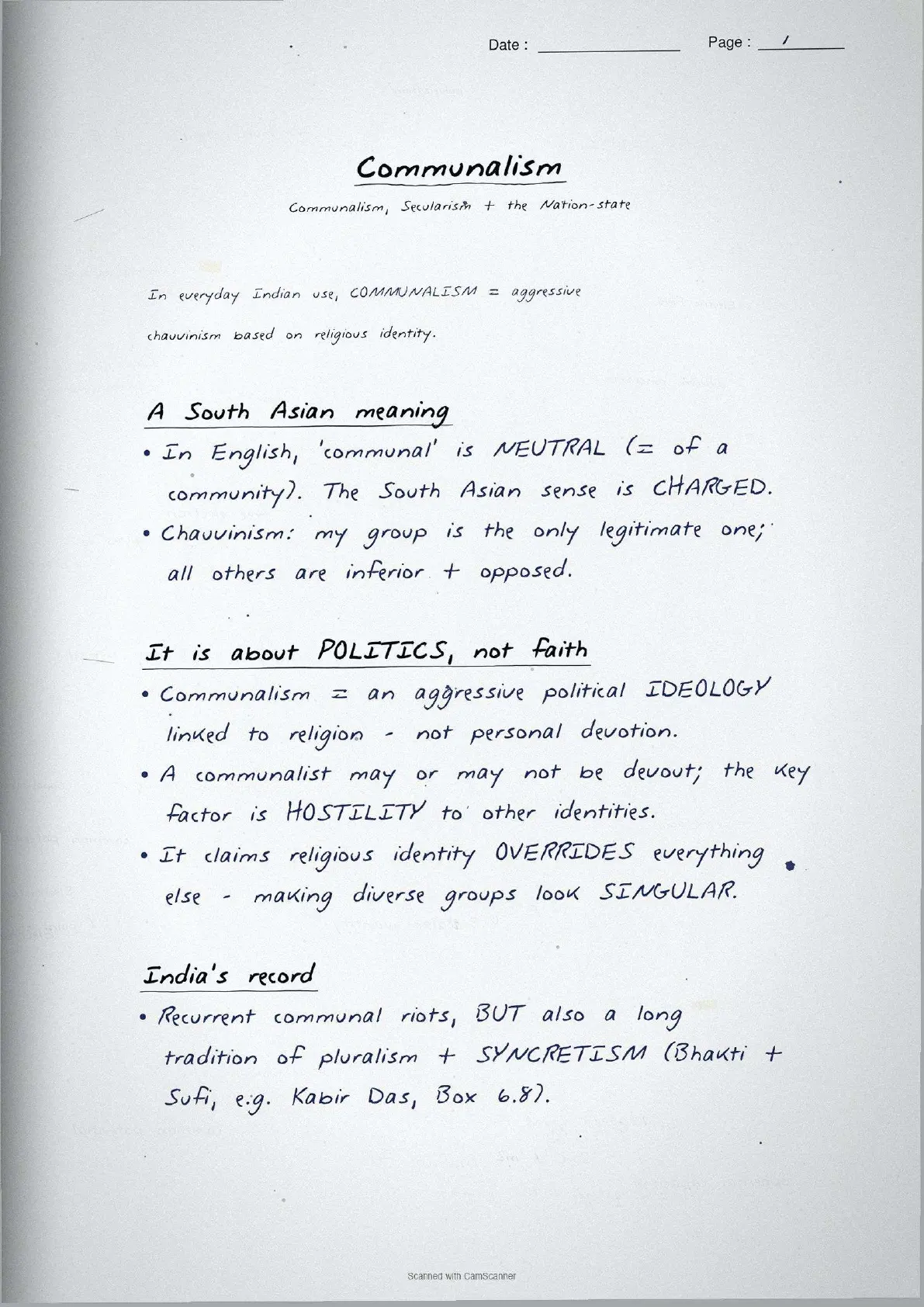
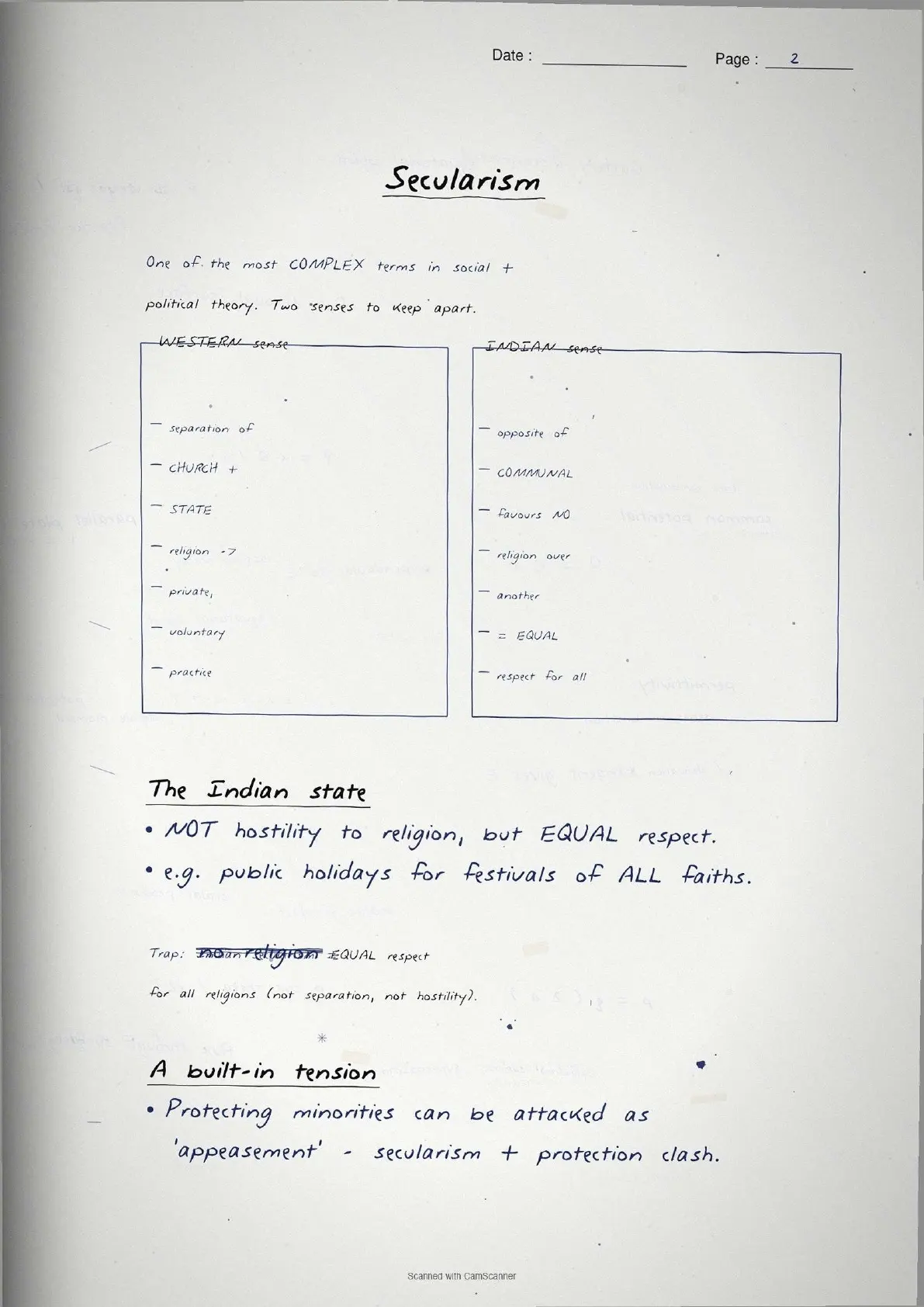
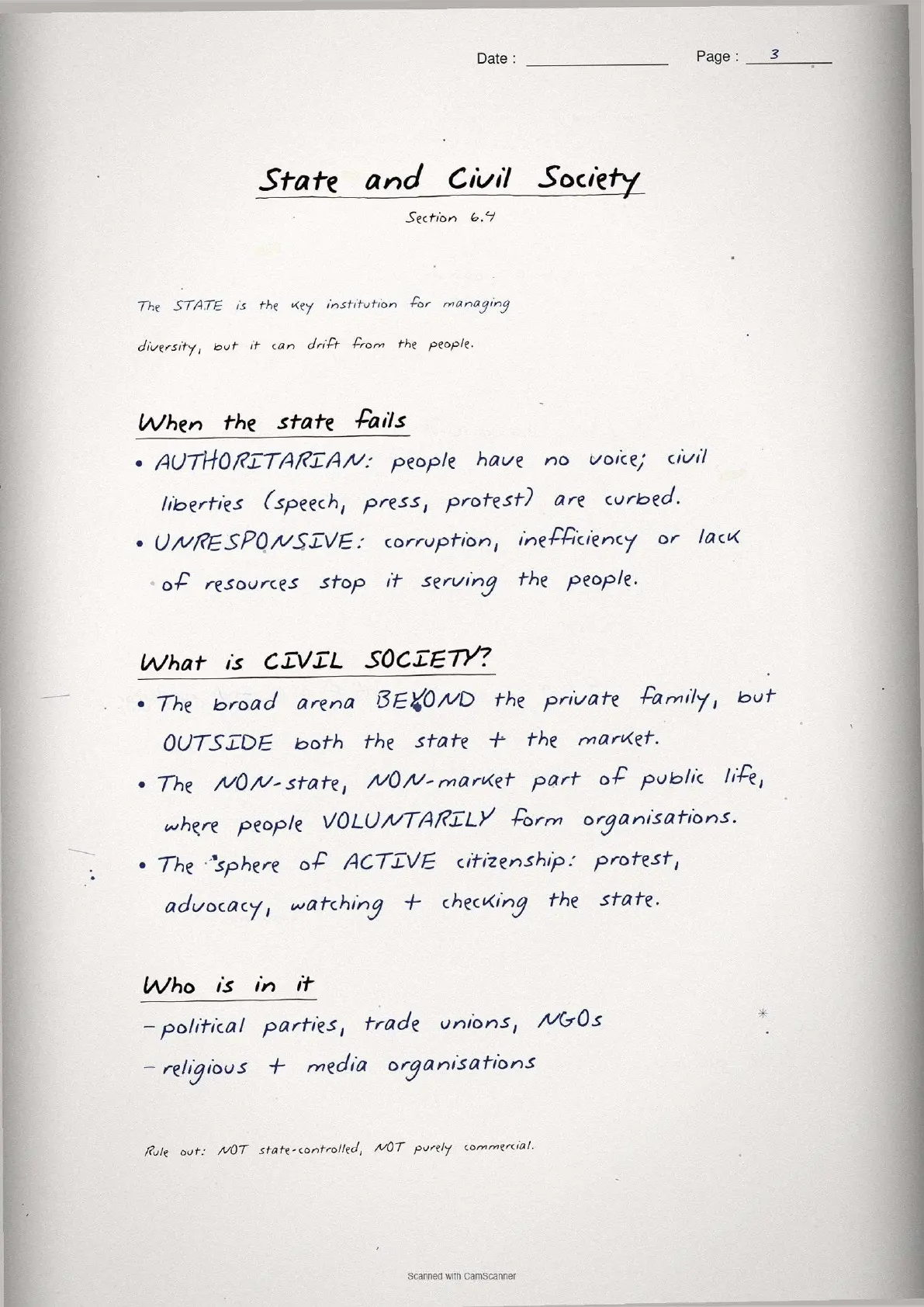
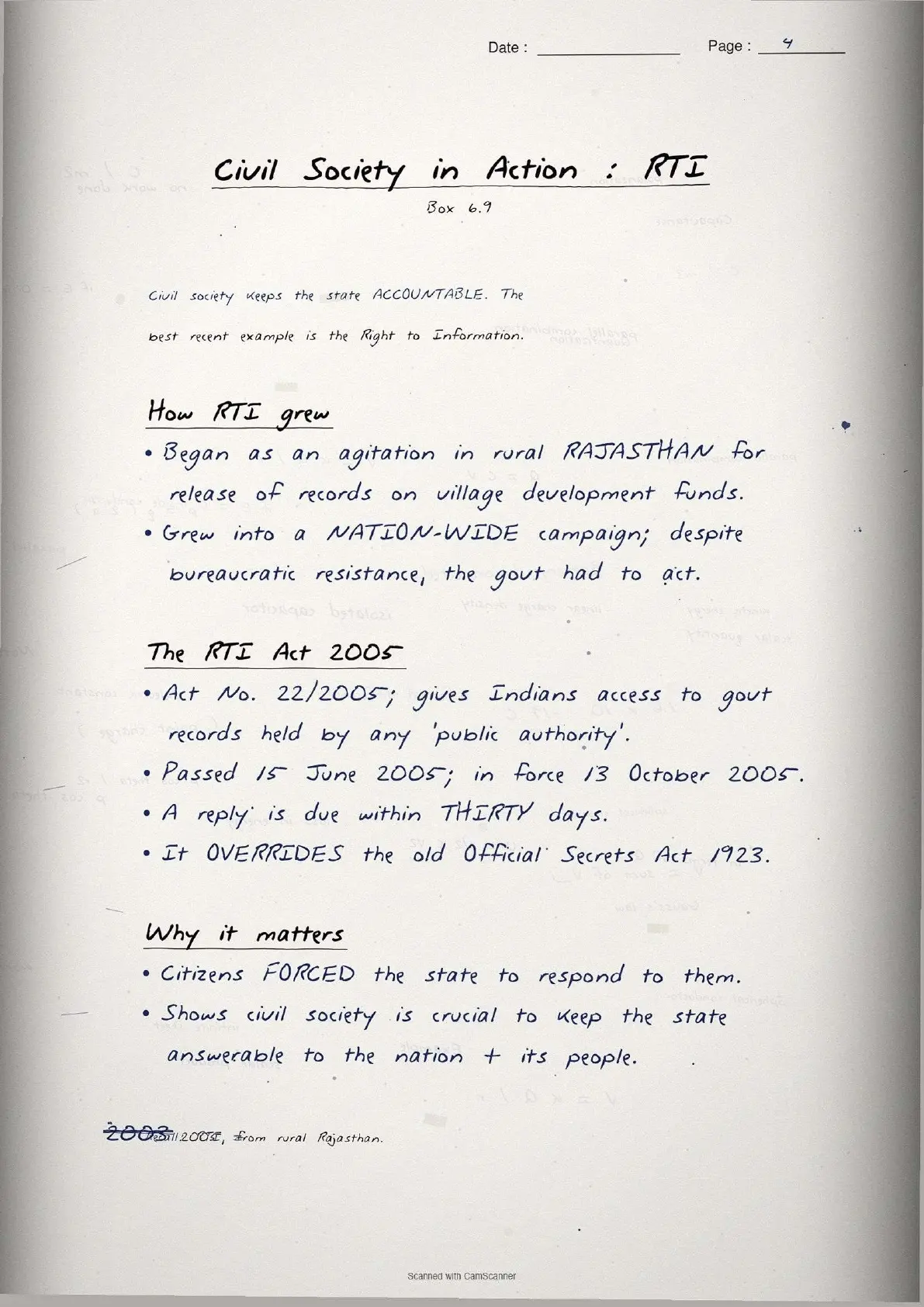
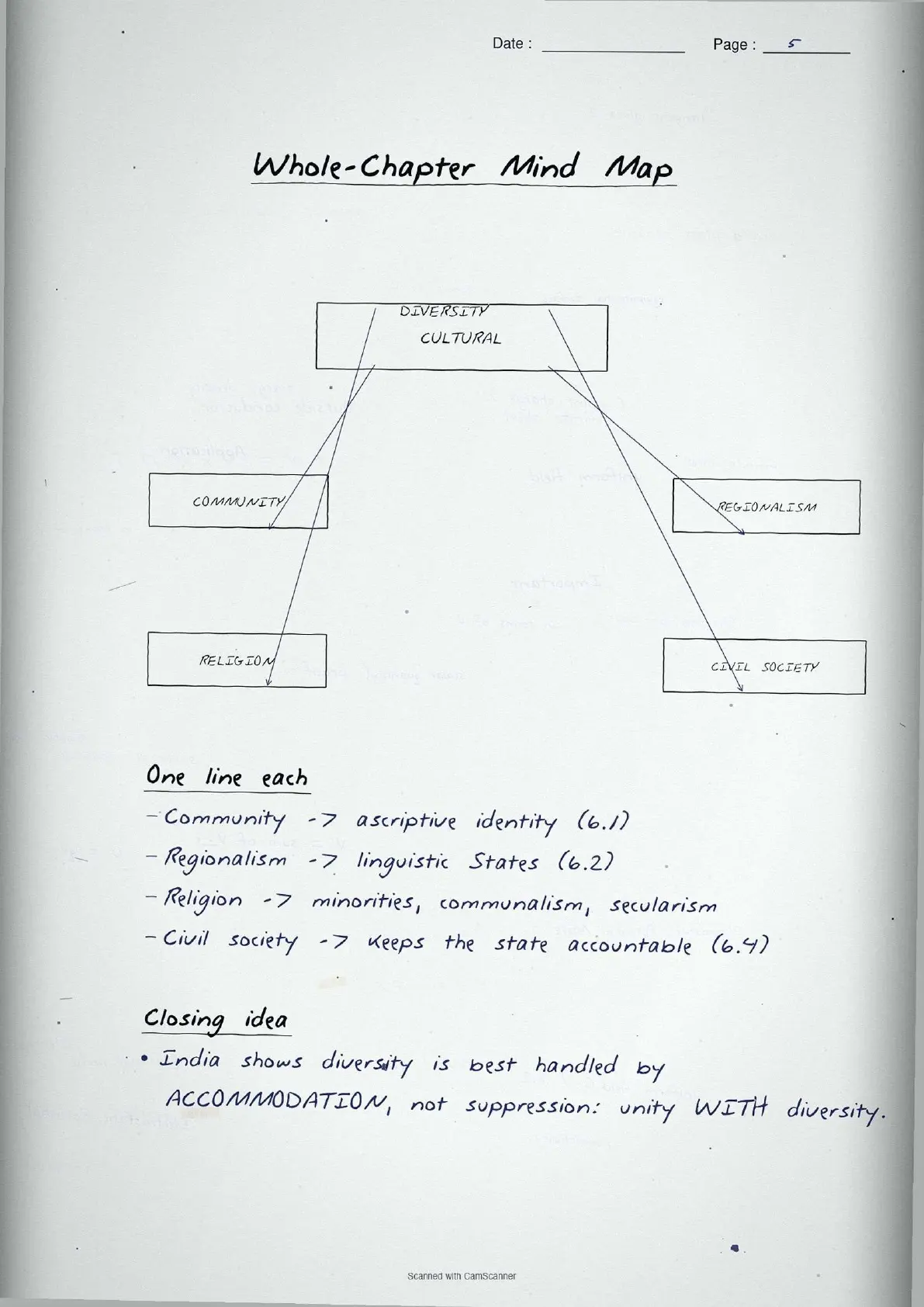
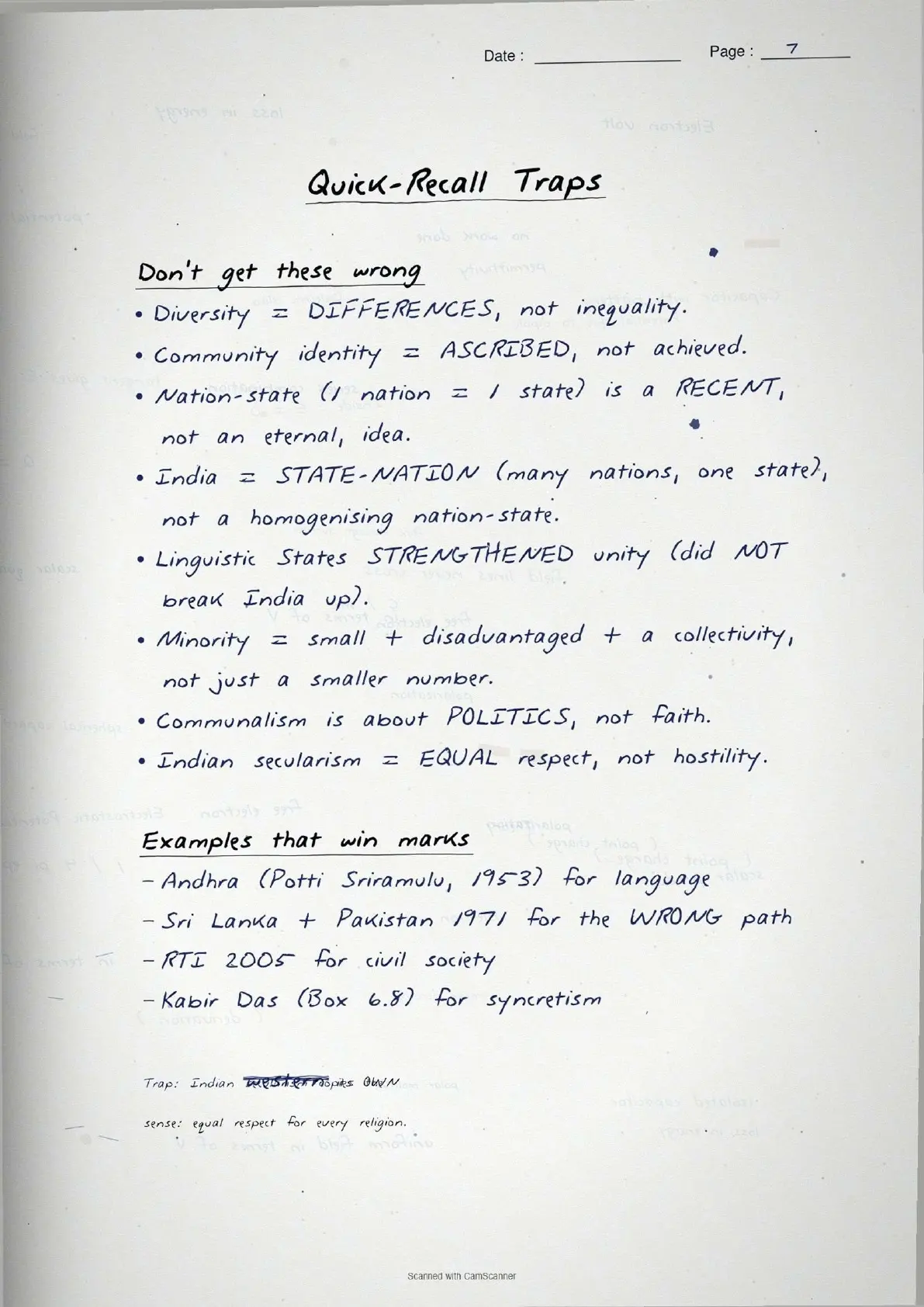
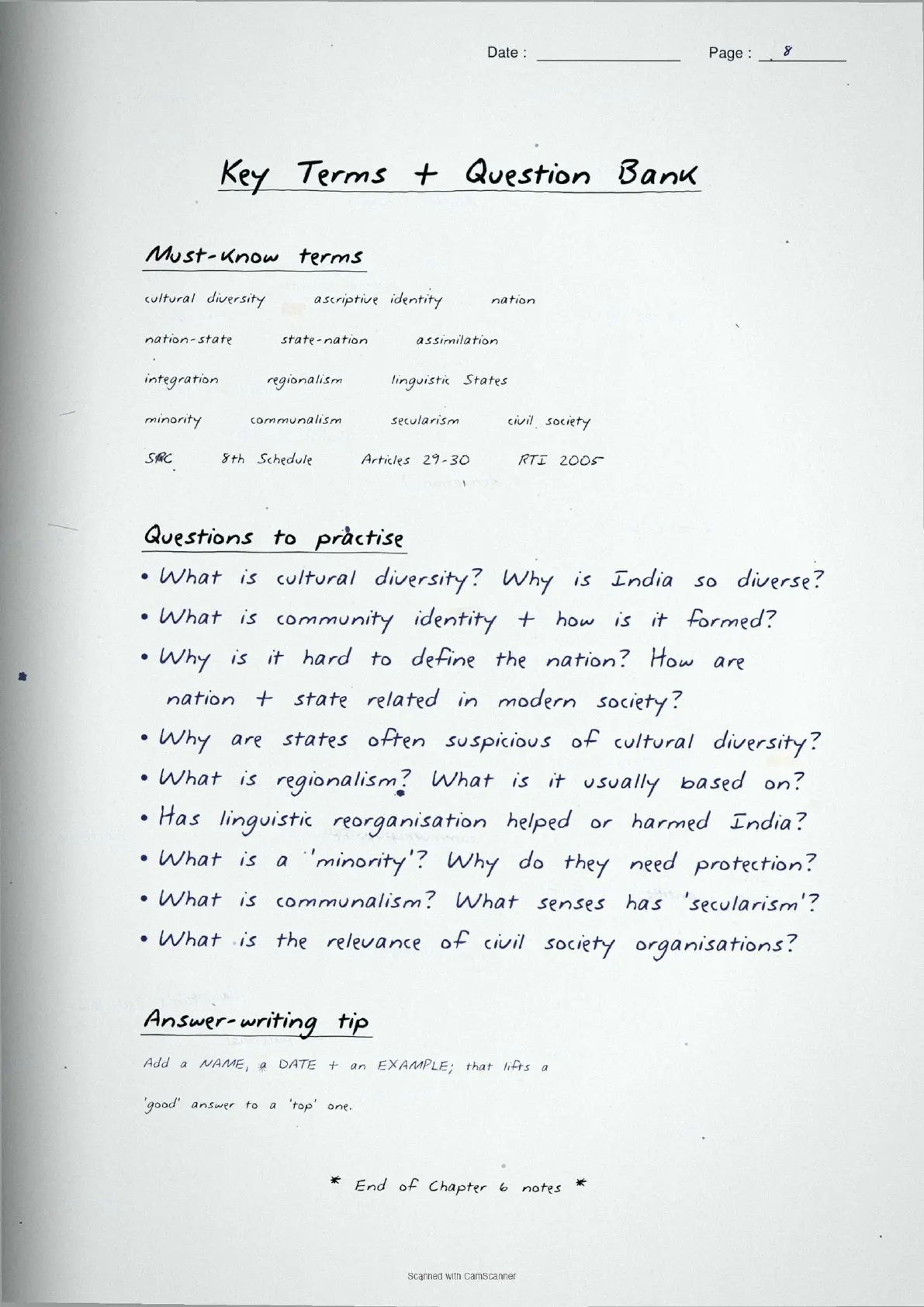
- Handwritten, one-shot revision of diversity, regionalism, communalism and secularism for the last night before the exam.
- This Class 12 Sociology chapter usually carries 6 to 8 marks per board paper.
- Pairs with the NCERT Solutions, Notes and NCERT Book PDF linked lower on this page.
These The Challenges of Cultural Diversity handwritten notes are prepared from the official NCERT Indian Society textbook and checked against the last five years of CBSE board papers.
Student Feedback: In a Collegedunia poll of 8,140 Class 12 Sociology students before the 2026 boards, 73% of students said handwritten notes felt faster to revise from than printed text for this chapter. Most students used the boxed communalism versus secularism page to keep the two terms apart.
Source: 2026-27 Class 12 Sociology student poll. Sample of 8,140 students from CBSE schools across 12 states.
What These Cultural Diversity Handwritten Notes Cover
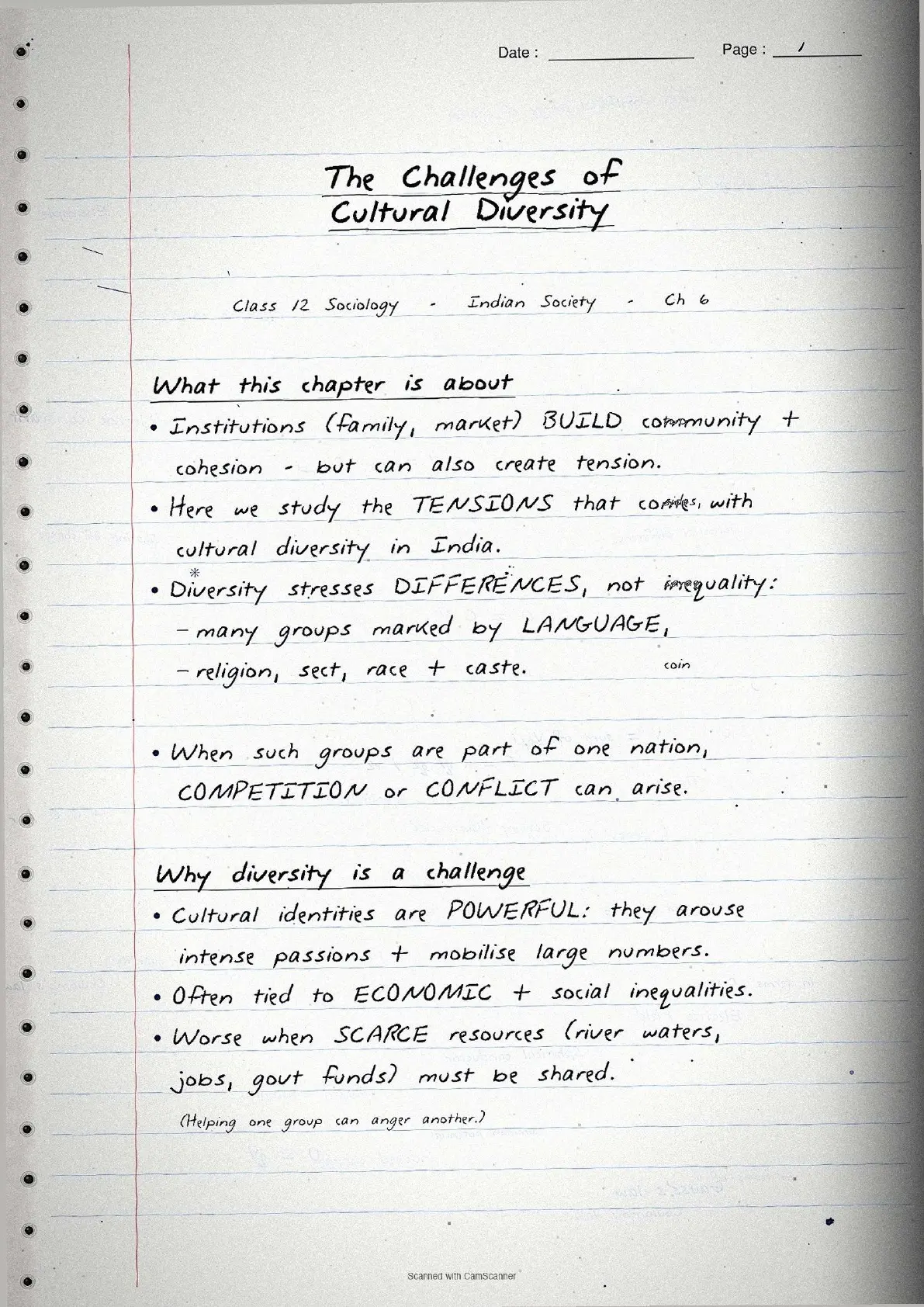
These handwritten notes walk through the chapter the way a topper writes it in a notebook: short headings, boxed terms and arrows linking cause to effect. They cover the diversity of India and the challenges and responses that follow, built around difference, not inequality.
The pages are ordered so a student can revise from start to finish in one go:
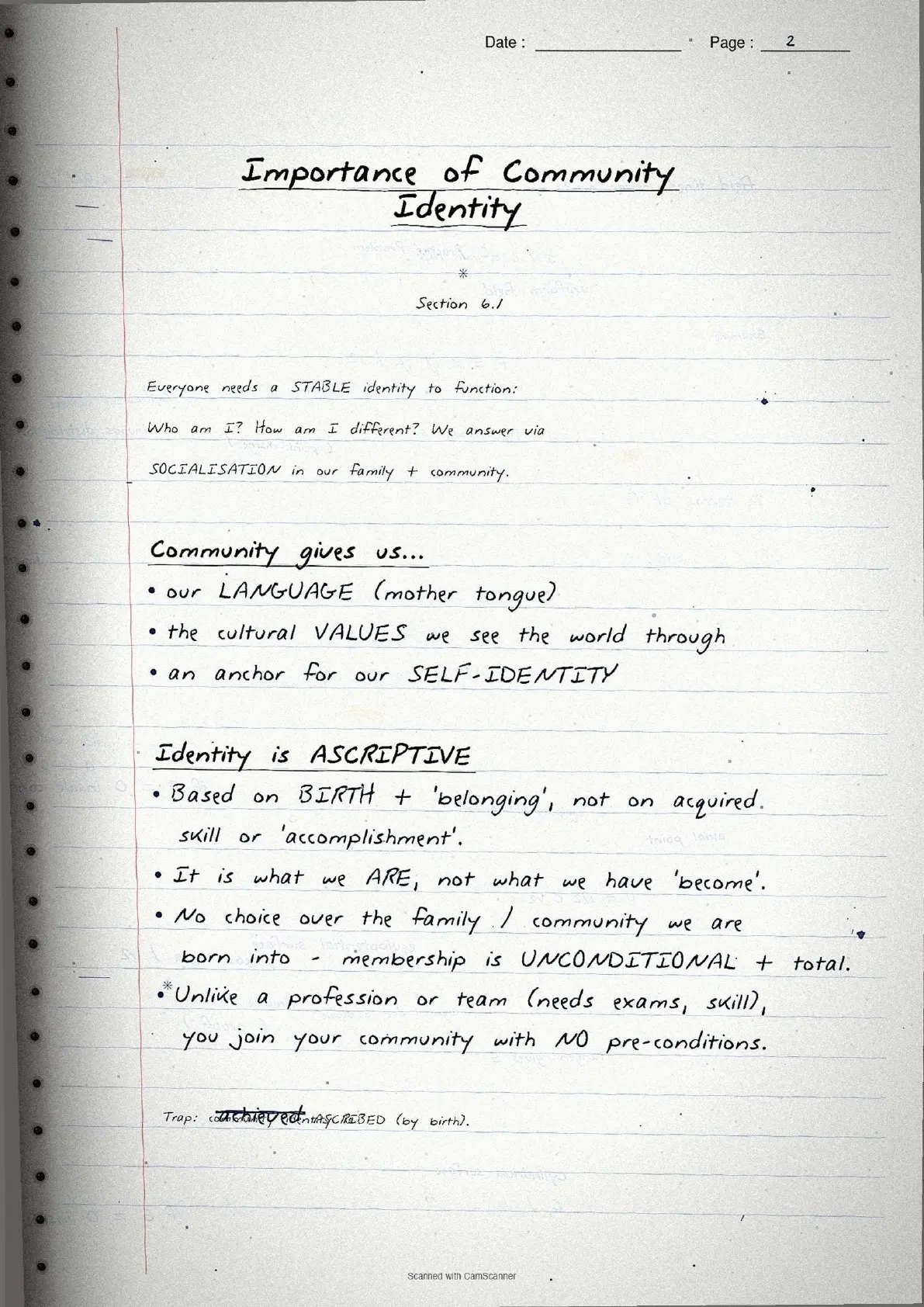
- Diversity pages: the cultural markers, the language and religion figures, and ascriptive identity.
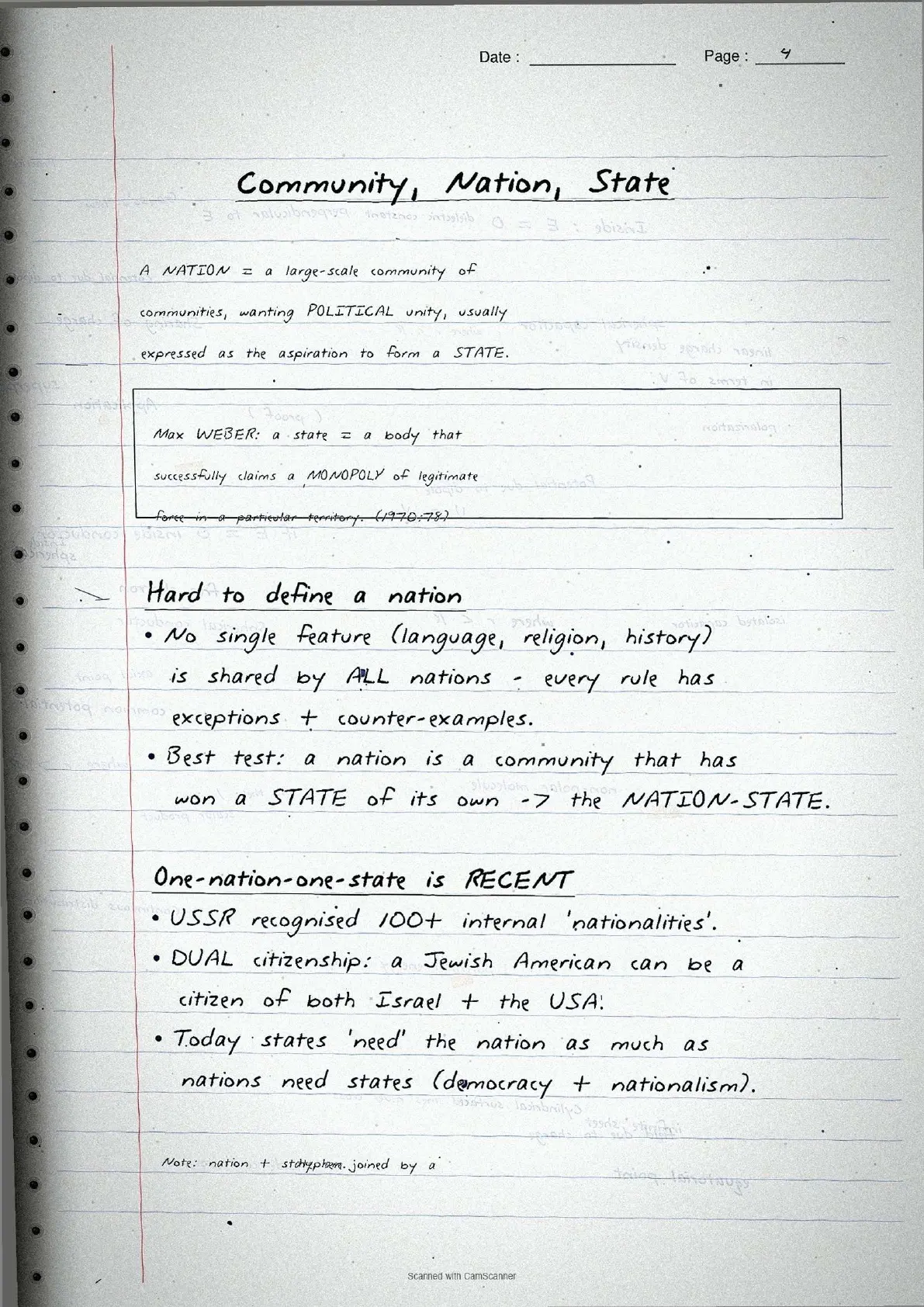
- Challenge pages: regionalism, the nation versus state, minorities and communalism.
- Response pages: linguistic states, the two senses of secularism, and civil society.
Because the notes are handwritten, the key terms stand out in boxes and the links between ideas are drawn as arrows. That makes them ideal for a quick scan when there is no time to read full paragraphs.
Diversity and Identity in the Handwritten Notes
The opening pages set up the chapter, because every later section builds on them. They are built around two boxed ideas that the rest of the notes hang off.
- Cultural markers: boxed at the top, with language, religion, sect, race and caste listed below.
- Diversity figures: the 1,632 languages and the religious percentages written as a quick fact strip.
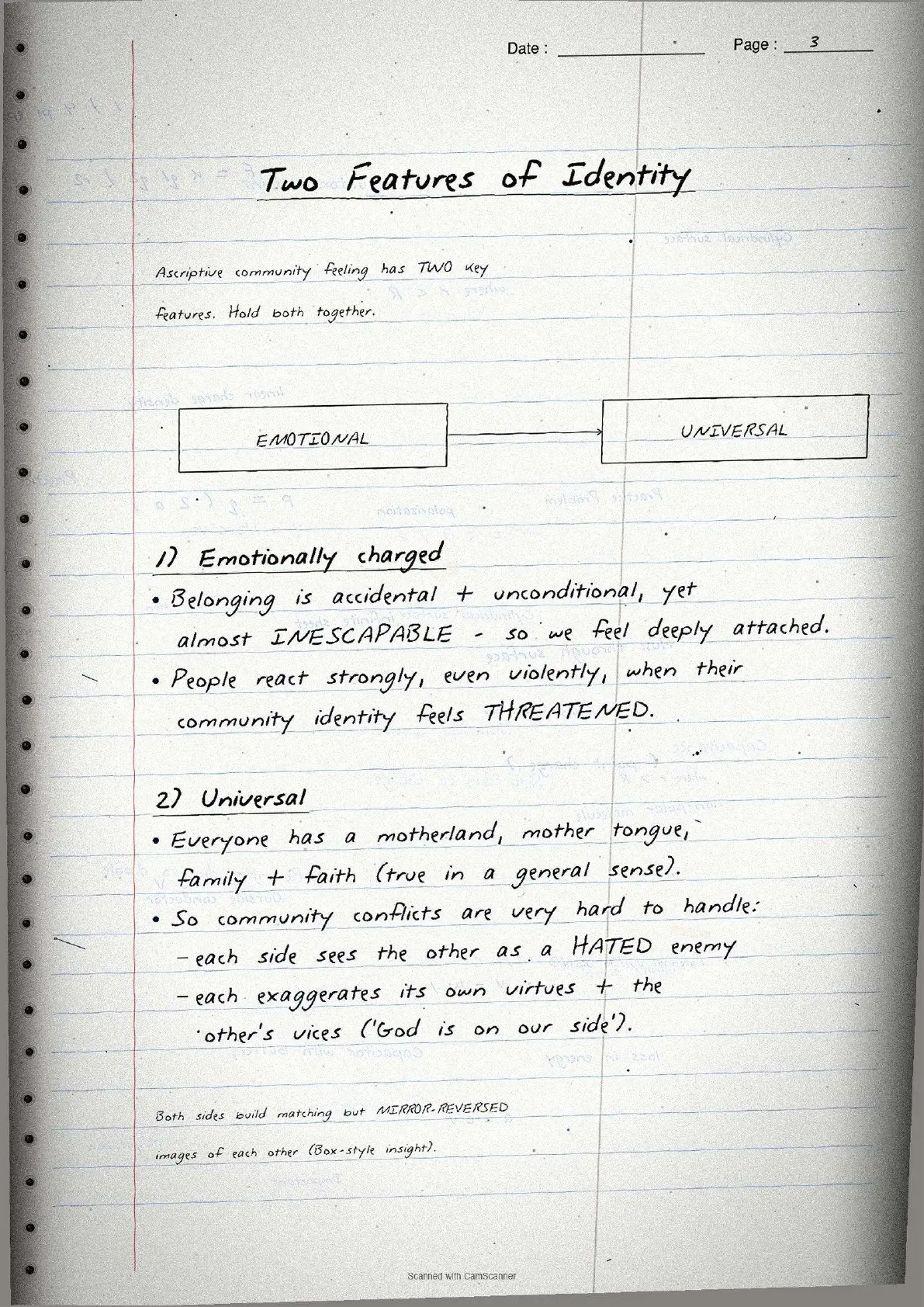
- Ascriptive identity: drawn with an arrow from birth to belonging, marked "no choice".
The single takeaway the pages stress is that diversity is difference, and identity is given at birth. A student who copies this layout into their own notebook will recall the opening answers almost without trying.
Challenge and Response Pages at a Glance
The middle and closing pages handle the challenges and India's responses. Each is drawn as a short branching note so the problem and its answer sit side by side.
| Topic | What the page shows |
|---|---|
| Regionalism | Boxed factors: language first, then tribe, ecology and a sense of being left behind. |
| Minorities | A box noting a small, disadvantaged group that needs state protection. |
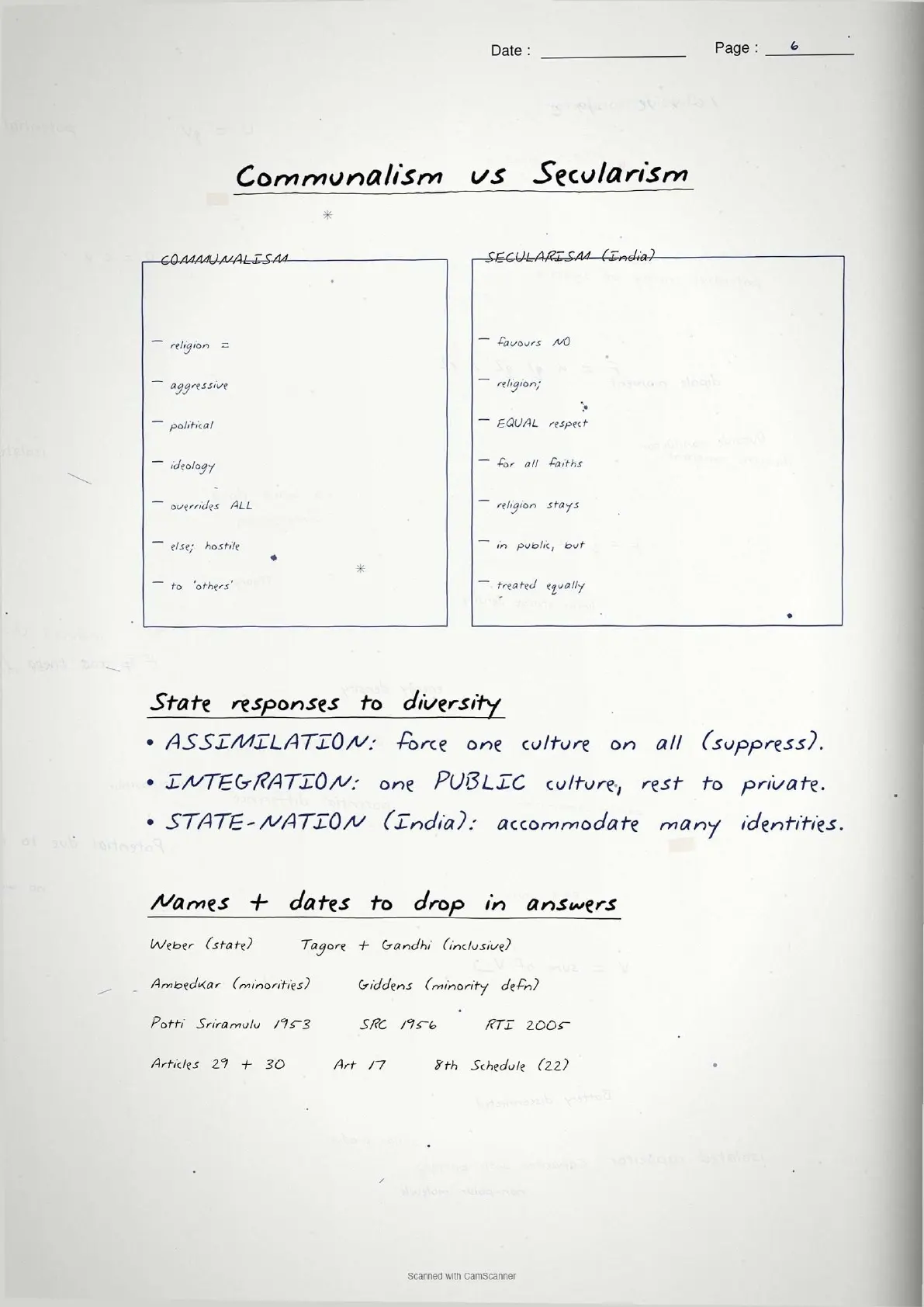
| Communalism vs secularism | A two-column box: communalism as aggressive politics, secularism as principled distance. |
| Linguistic states | An arrow to 1956, marked "regional and national at once". |
The point the pages underline is that communalism is about politics, while secularism keeps the state fair. Drawing the two in one box, side by side, fixes the difference far better than reading it as a sentence.
Communalism and Secularism in One Picture
One full page of the notes contrasts communalism and secularism, because students mix them up most. The page splits into two columns so the difference is instant.
- Communalism: aggressive ideology, one religion seen as the only legitimate one, about politics not faith.
- Secularism (West): strict separation of state and religion.
- Secularism (India): a principled distance from all faiths, treating each equally, even reforming injustice.
- The line to recall: communalism weaponises religion; secularism keeps the state fair to all.
Seeing the contrast as two columns, rather than a list, helps students recall it under exam pressure. The comparison image below mirrors the handwritten page.
How to Revise from These Handwritten Notes
Handwritten notes work best as the final layer of revision, once the chapter is already understood. A simple routine gets the most out of them.
- Read the Notes first to grasp the chapter, then switch to these handwritten pages for recall.
- Cover the boxed answers and try to rewrite each one from memory.
- Use the communalism versus secularism page and the diversity fact strip as your last two checks before the exam.
Students who copy this layout into their own notebook usually remember the chapter longer, because writing by hand fixes the structure better than reading does.
How These Handwritten Notes Pair with Other Resources
These handwritten notes are the quick-recall layer. To revise the full chapter, use them with the other resources for the same chapter, all linked in the table below.
| Resource | Best used for |
|---|---|
| The Challenges of Cultural Diversity NCERT Solutions | Full point-wise answers to all 10 exercise questions |
| The Challenges of Cultural Diversity Class 12 Notes | A clear typed summary of diversity, communalism and secularism |
| The Challenges of Cultural Diversity NCERT Book PDF | Reading the original NCERT chapter text |
Tip: keep these handwritten pages for the night before the exam, after you have already worked through the Notes and the Solutions.
All Handwritten Notes for Class 12 Sociology
The table links the Handwritten Notes for every chapter in both Class 12 Sociology books, so students can revise the whole course in one style. The Challenges of Cultural Diversity is highlighted.
| Chapter | Handwritten Notes |
|---|---|
| Indian Society | |
| Chapter 1 | Introducing Indian Society |
| Chapter 2 | The Demographic Structure of the Indian Society |
| Chapter 3 | Social Institutions - Continuity and Change |
| Chapter 4 | The Market as a Social Institution |
| Chapter 5 | Patterns of Social Inequality and Exclusion |
| Chapter 6 | The Challenges of Cultural Diversity |
| Social Change and Development in India | |
| Chapter 1 | Structural Change |
| Chapter 2 | Cultural Change |
| Chapter 3 | The Constitution and Social Change |
| Chapter 4 | Change and Development in Rural Society |
| Chapter 5 | Change and Development in Industrial Society |
| Chapter 6 | Globalisation and Social Change |
| Chapter 7 | Mass Media and Communications |
| Chapter 8 | Social Movements |
FAQs on The Challenges of Cultural Diversity Class 12 Handwritten Notes
The Challenges of Cultural Diversity Class 12 Handwritten Notes Common Questions
Ques. Where can I download the class 12 sociology chapter 6 Handwritten Notes PDF?
Ans. You can download the The Challenges of Cultural Diversity Class 12 Sociology Handwritten Notes PDF directly from this page. It is free, follows the 2026-27 NCERT, and gives a handwritten revision of diversity, communalism and secularism.
Ques. Are handwritten notes good enough for revision of this chapter?
Ans. Yes, for the final layer of revision. They put each idea in a box with arrows, which makes recall fast. For first study and full answers, pair them with the typed Notes and the NCERT Solutions for the same chapter.
Ques. How do the notes keep communalism and secularism apart?
Ans. The notes draw a two-column box: communalism as an aggressive political ideology that treats one religion as the only legitimate one, and secularism as the state keeping a principled distance from all faiths. Seeing both columns side by side fixes the difference.
Ques. What is ascriptive identity in this chapter?
Ans. Ascriptive identity is one given at birth, with no choice, such as family, caste, region or religion. The notes draw an arrow from birth to belonging, marked "no choice", to show why community identity feels so powerful.
Ques. How many pages do these handwritten notes cover?
Ans. The notes run across the full chapter in a multi-page handwritten PDF, with separate pages for diversity and identity, the challenges, and India's responses, plus a communalism versus secularism page. They are sized for a one-sitting revision before the board exam.



Comments