




These Class 12 Sociology Chapter 1 Introducing Indian Society Handwritten Notes turn the opening chapter into clean, handwritten pages on what makes sociology distinct, self-reflexivity, the sociological imagination, common sense, and how colonialism gave rise to nationalism, set to the 2026-27 CBSE syllabus. The boxed terms and underlined points make them ideal for a last, fast revision.
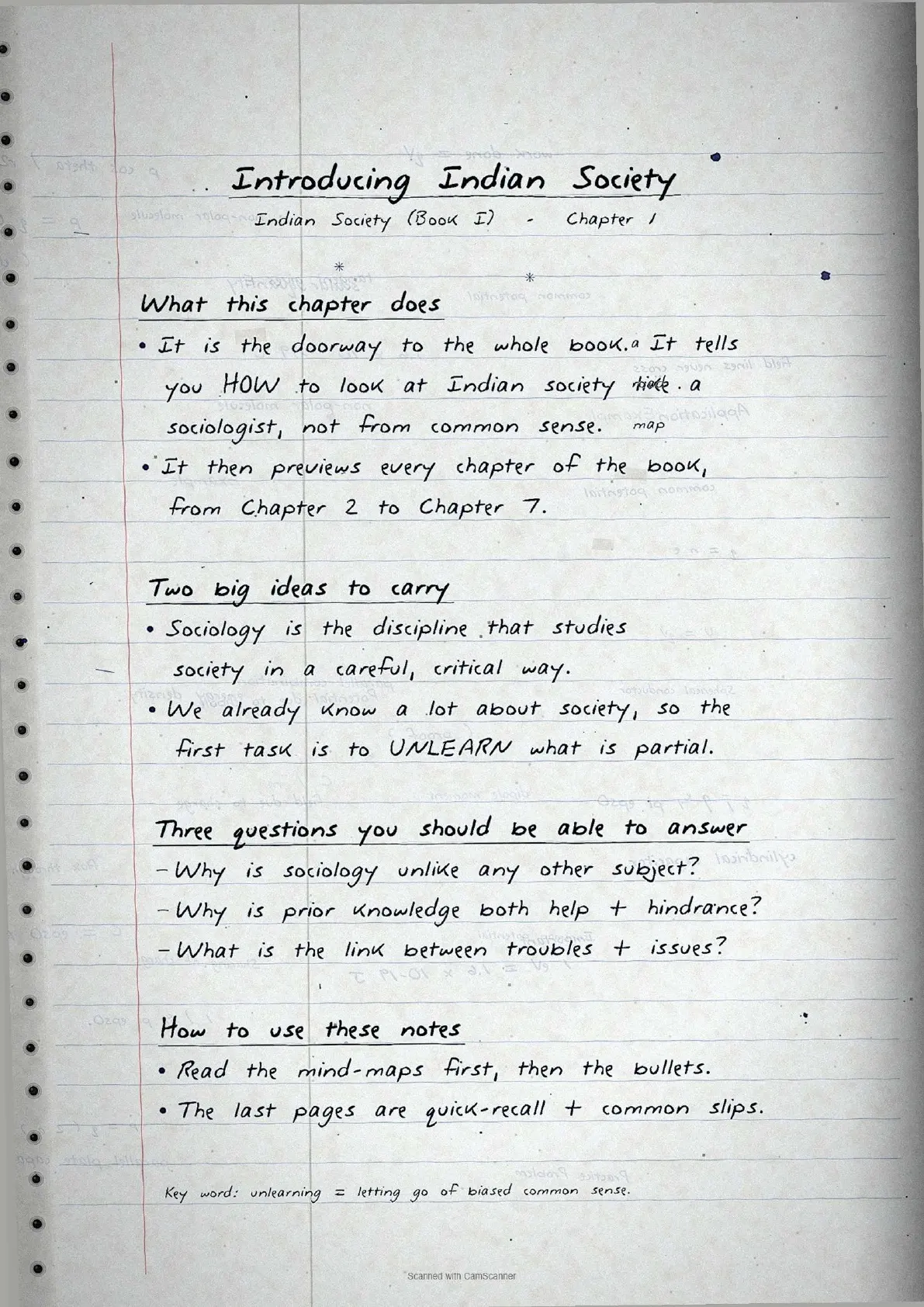
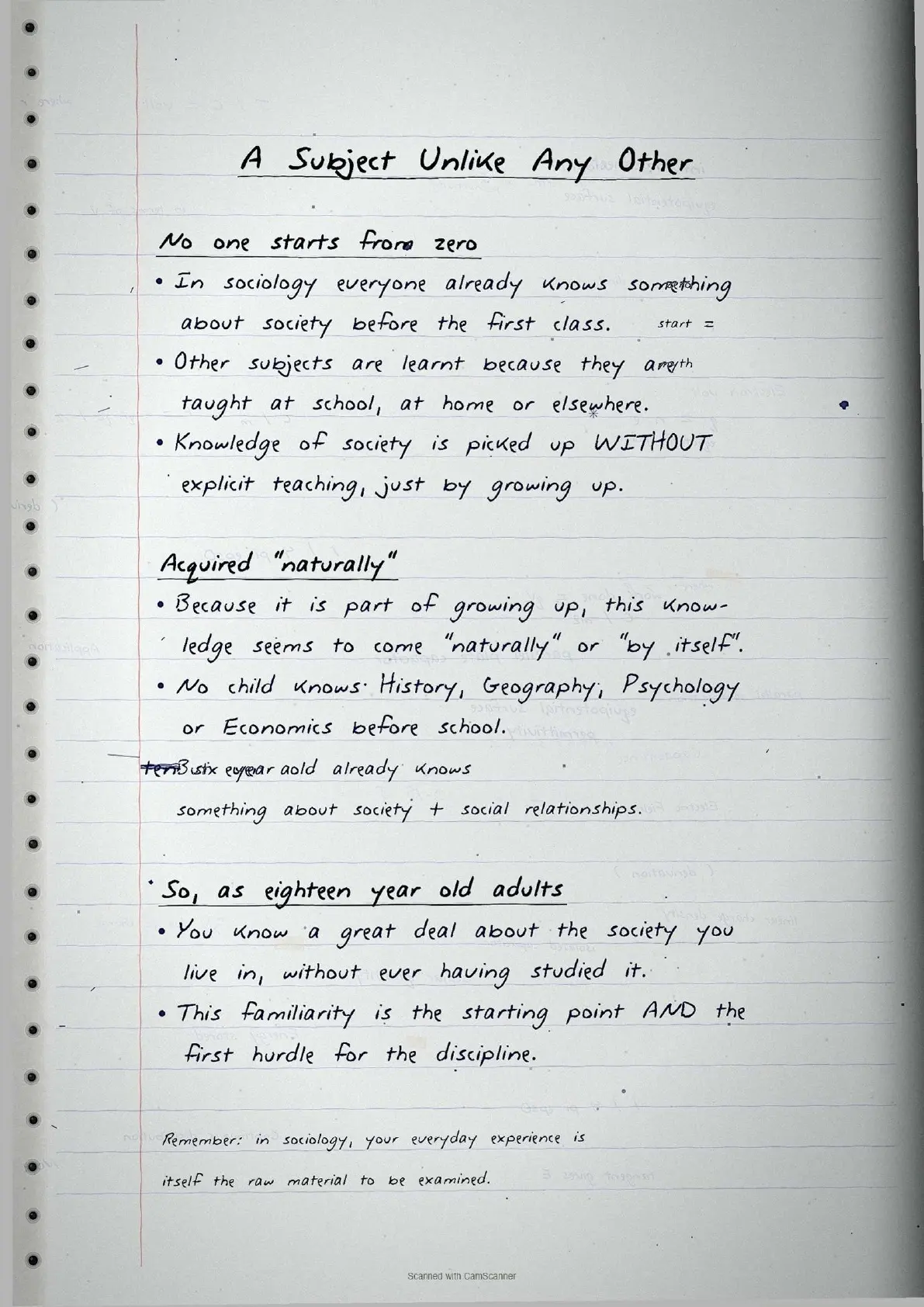
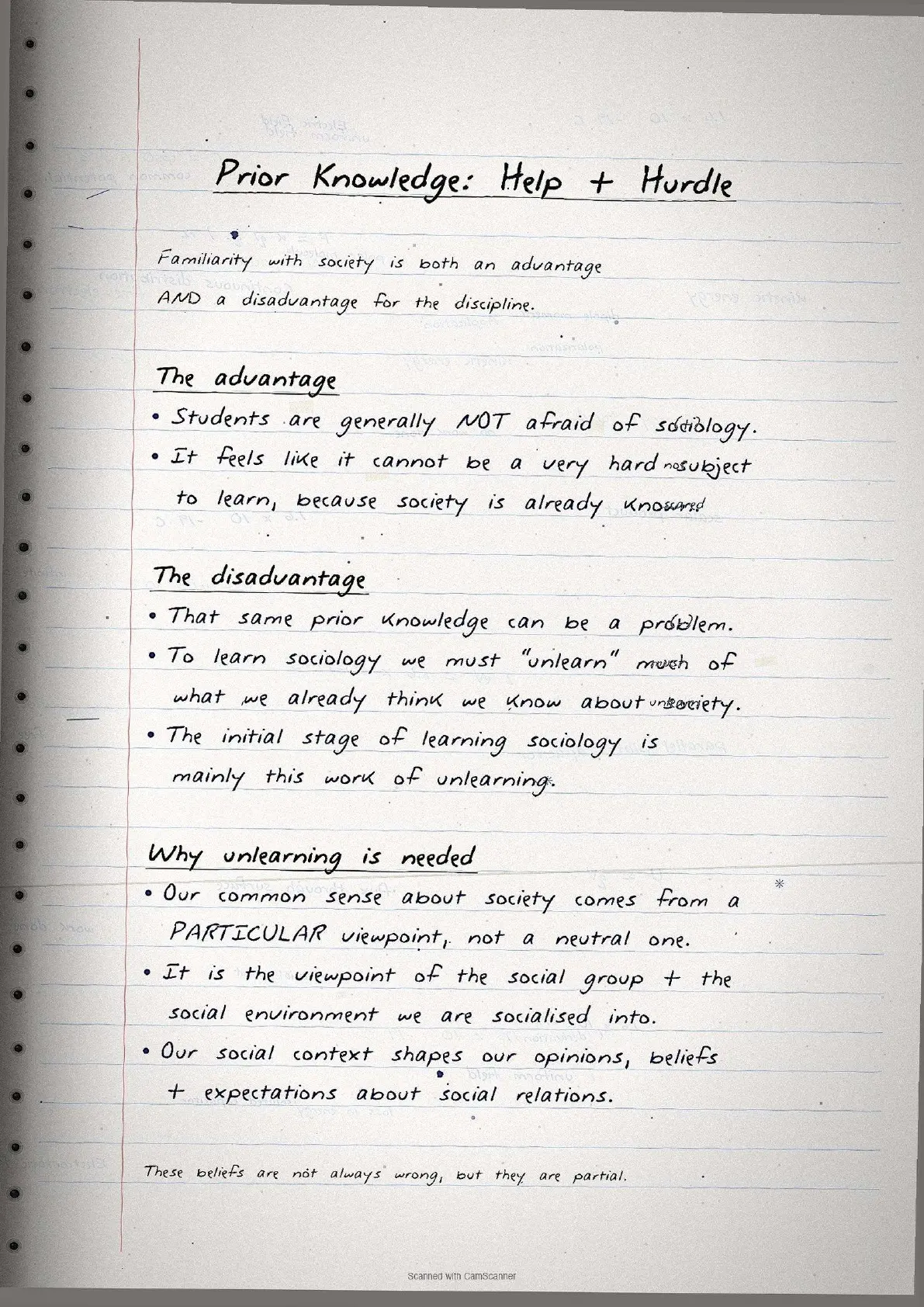
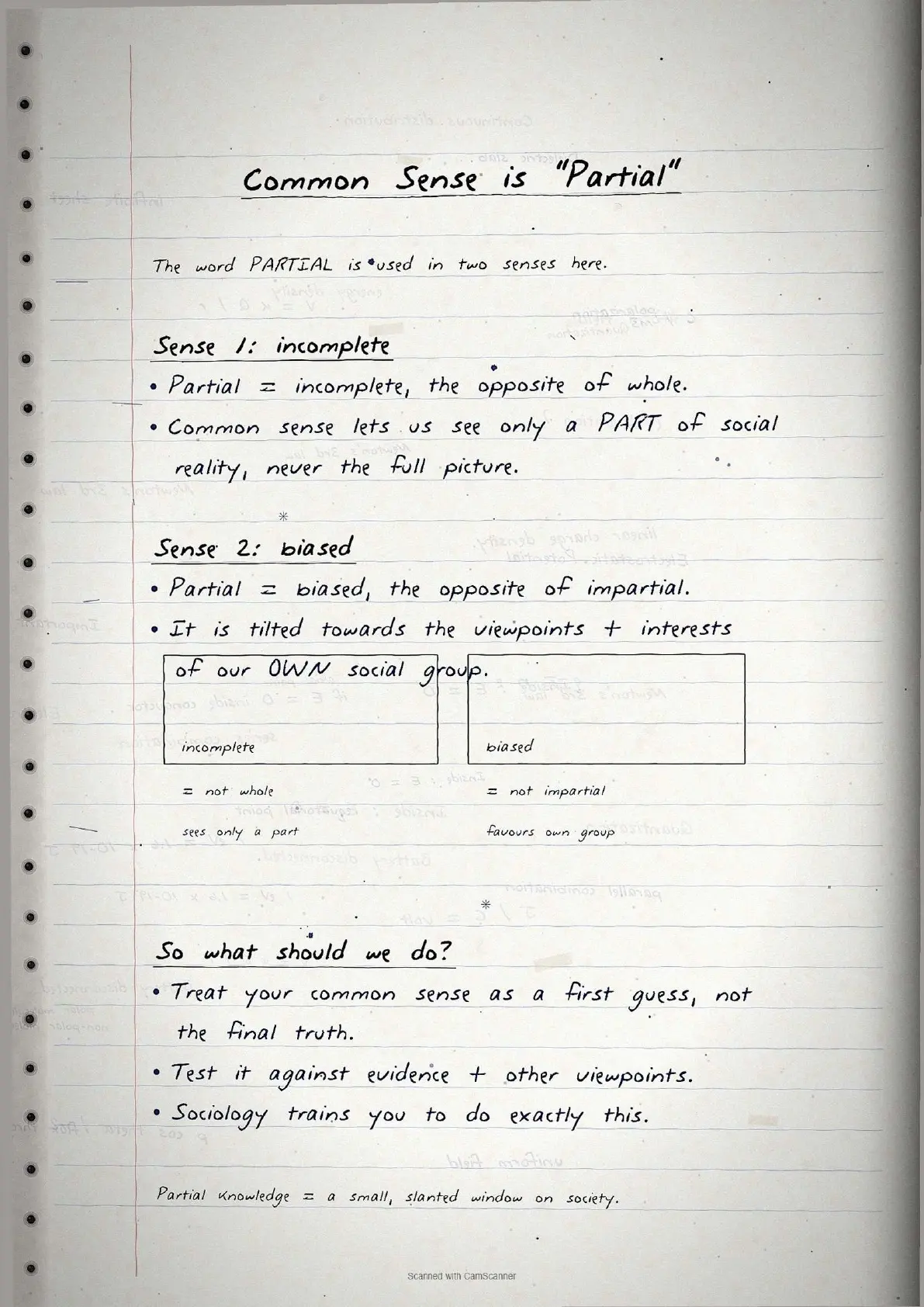
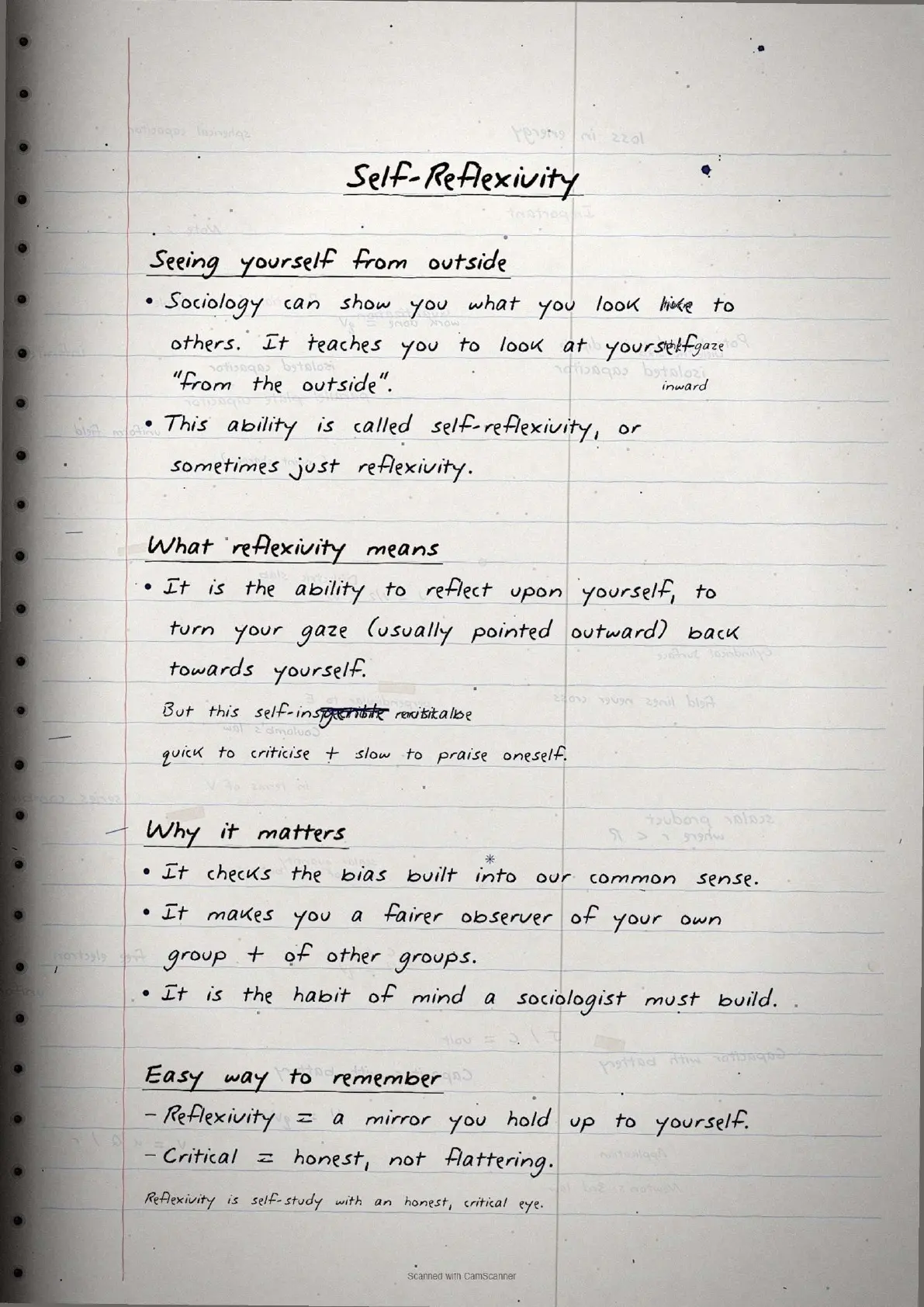
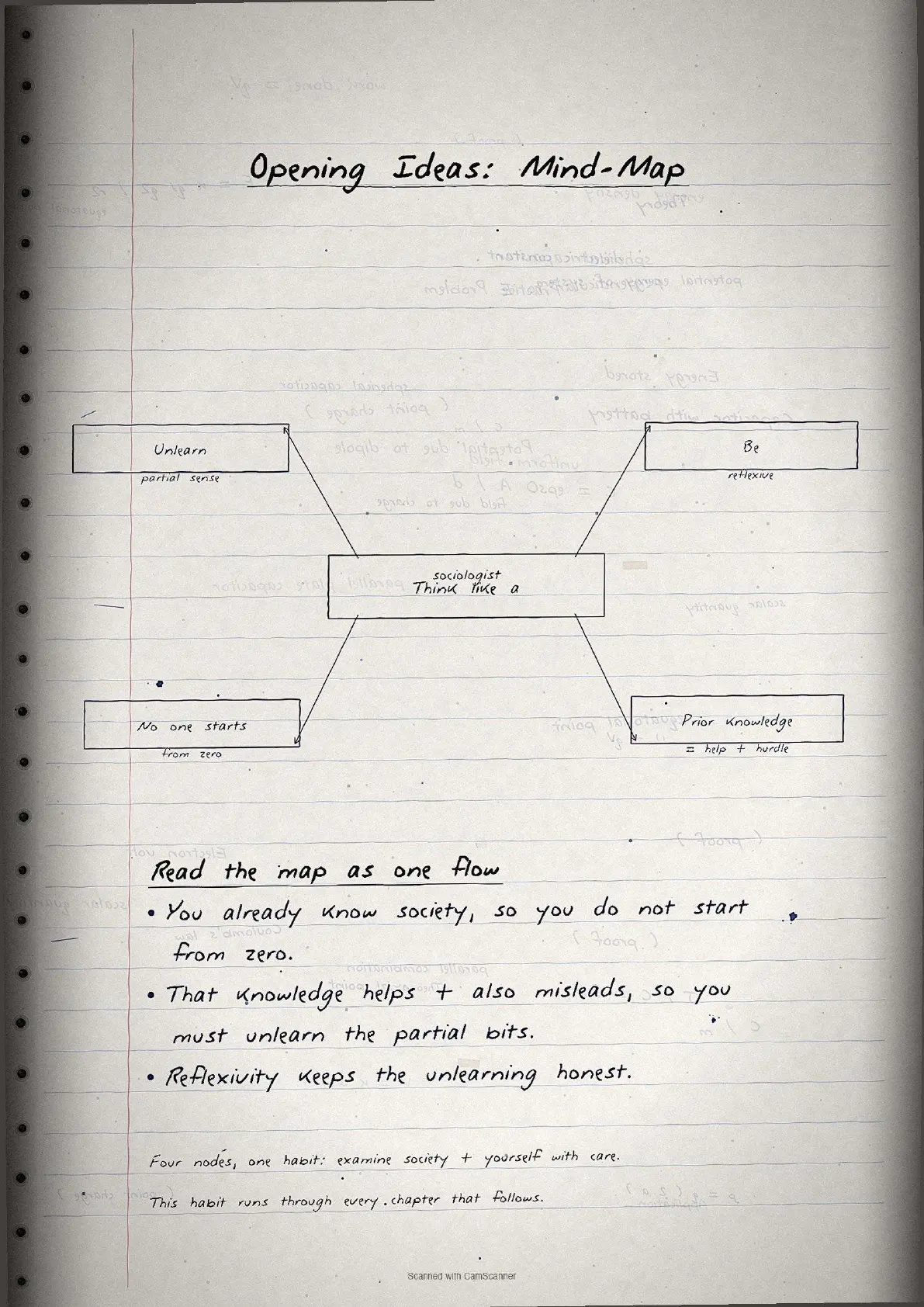
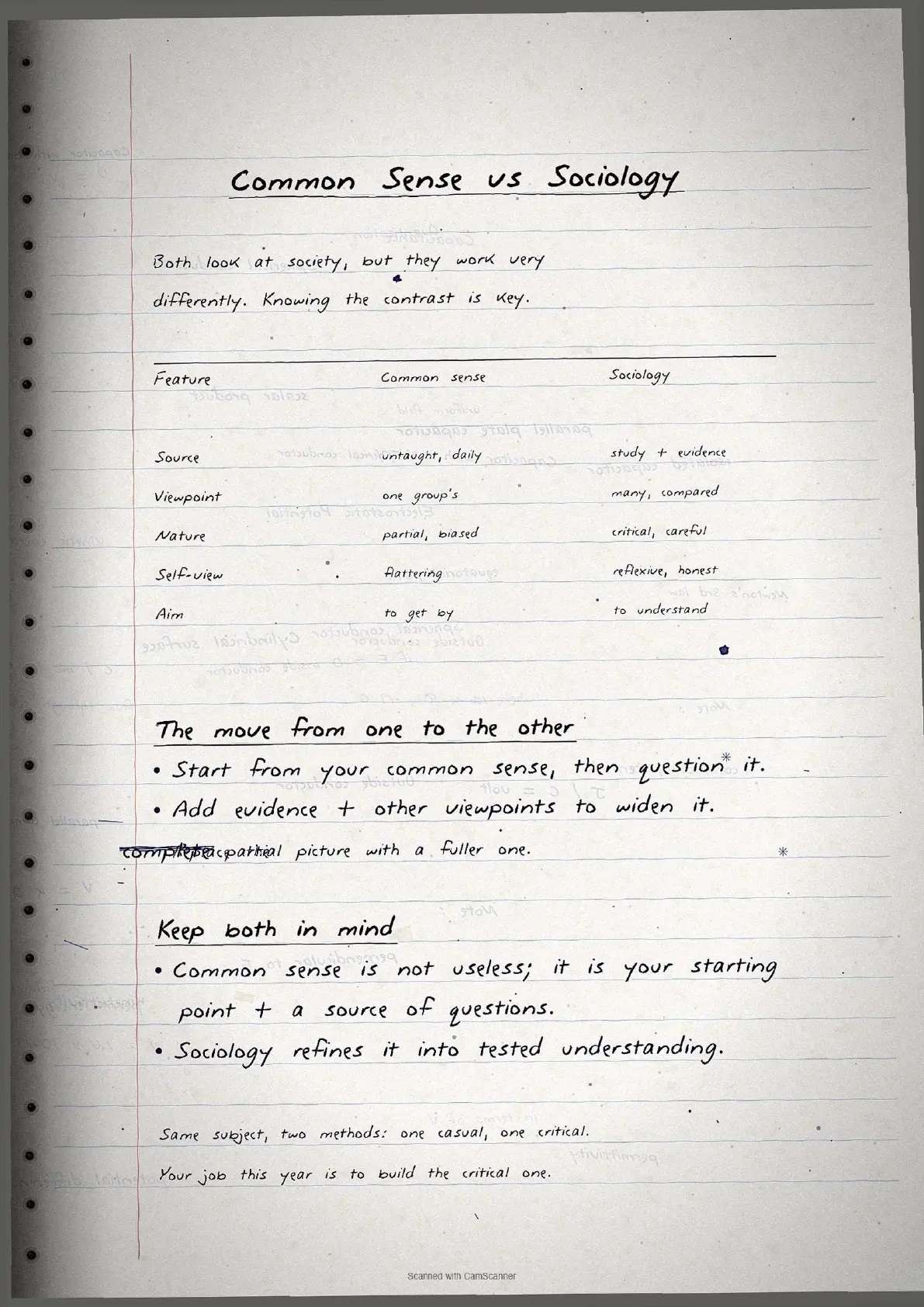
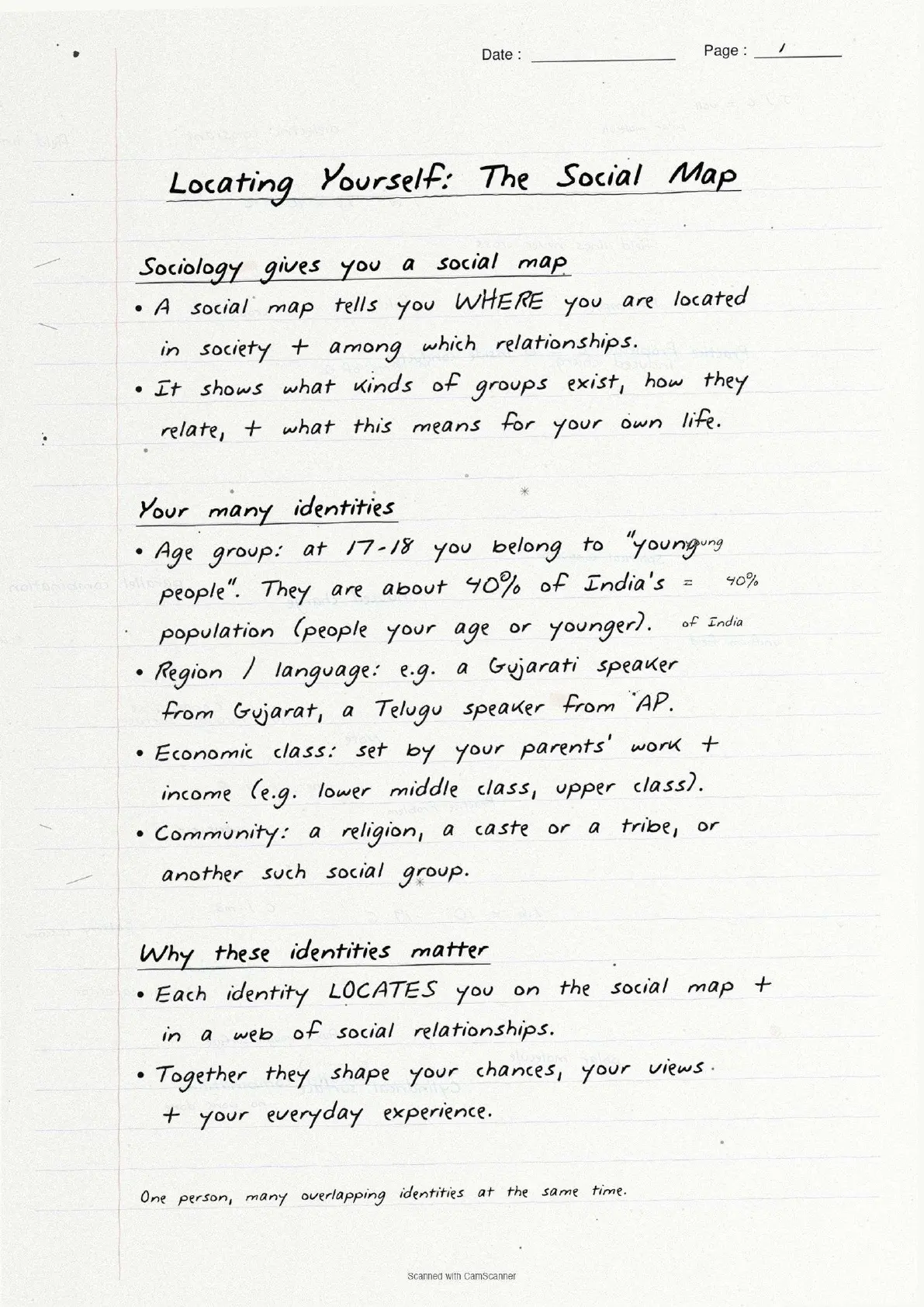
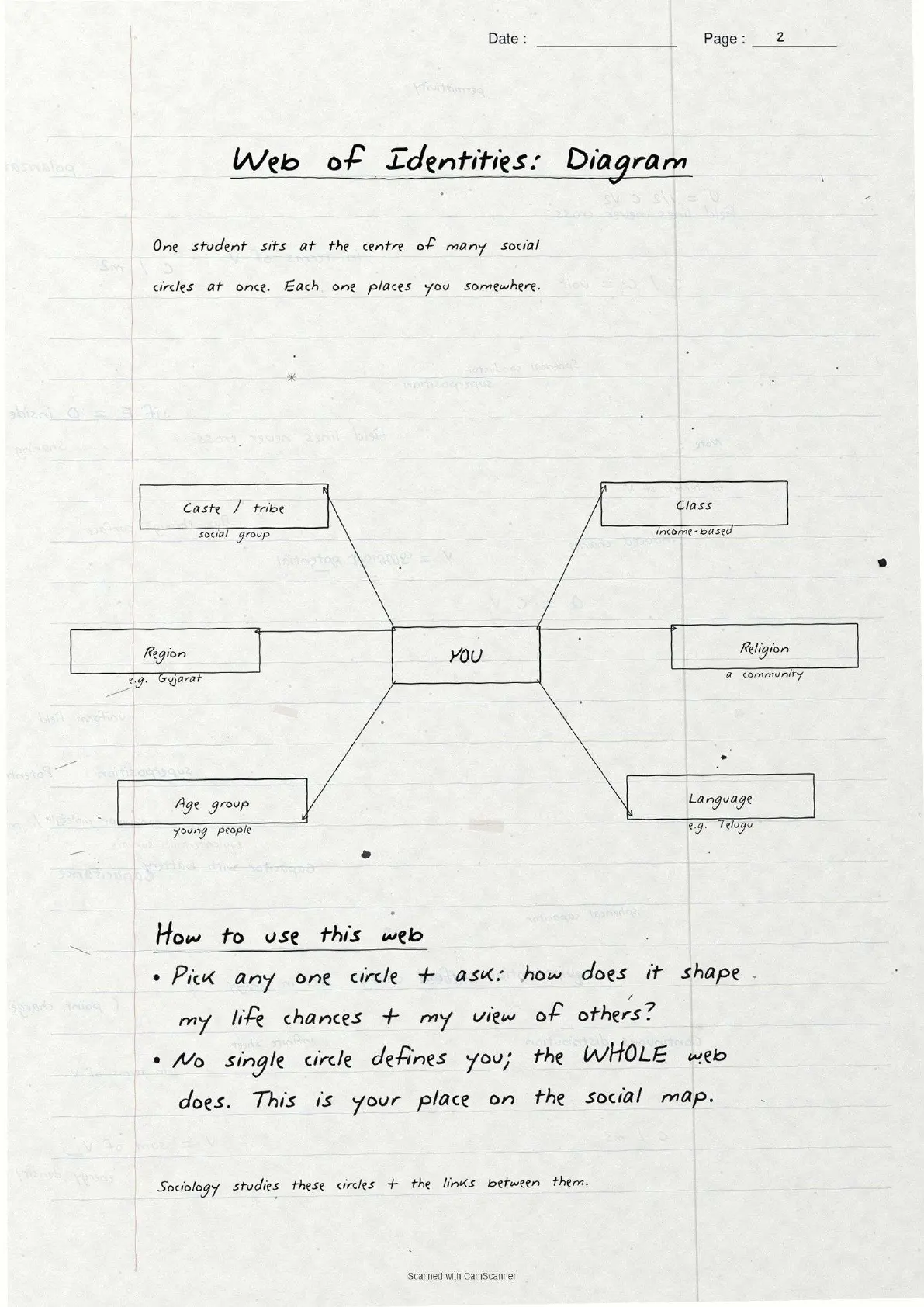
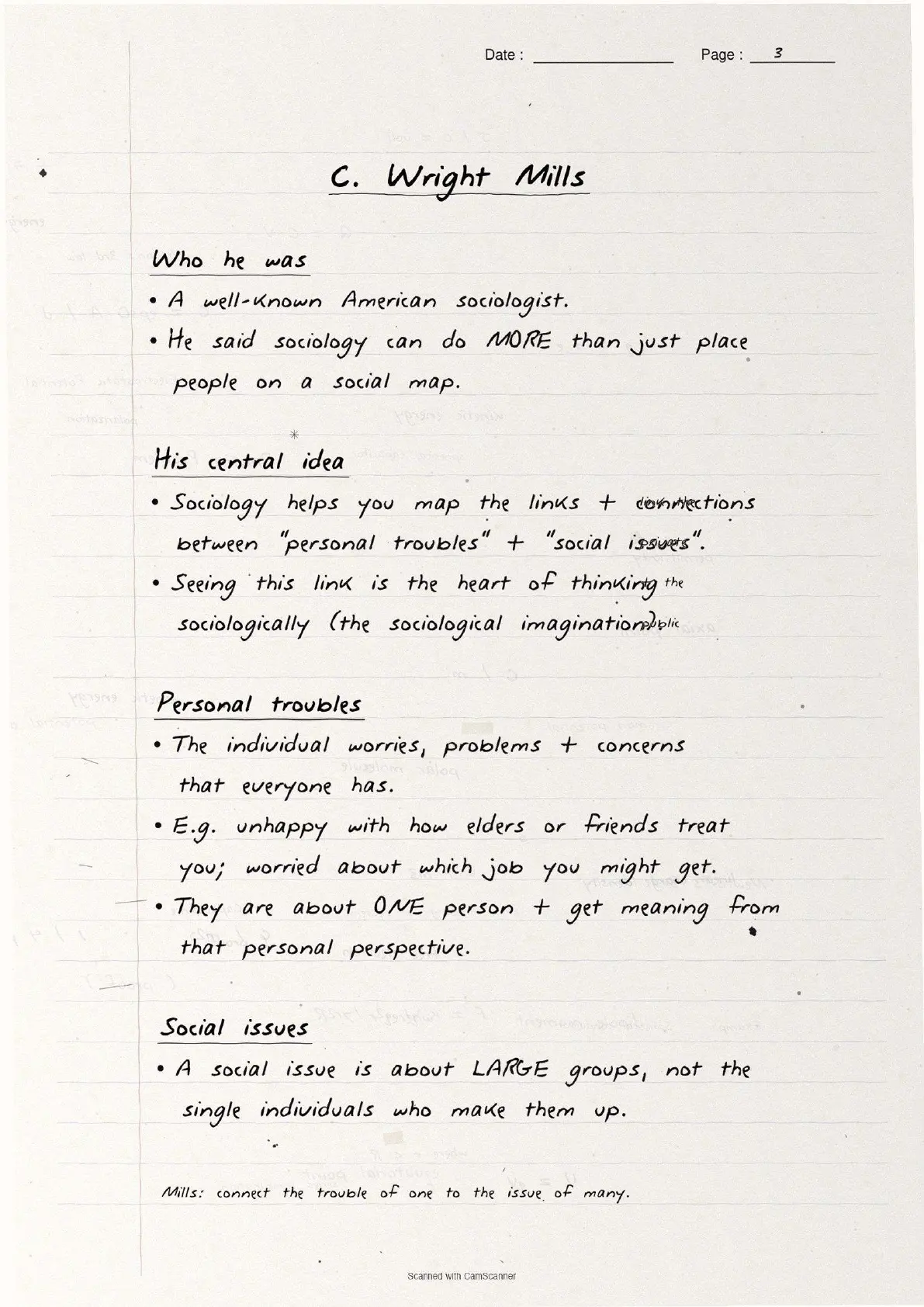
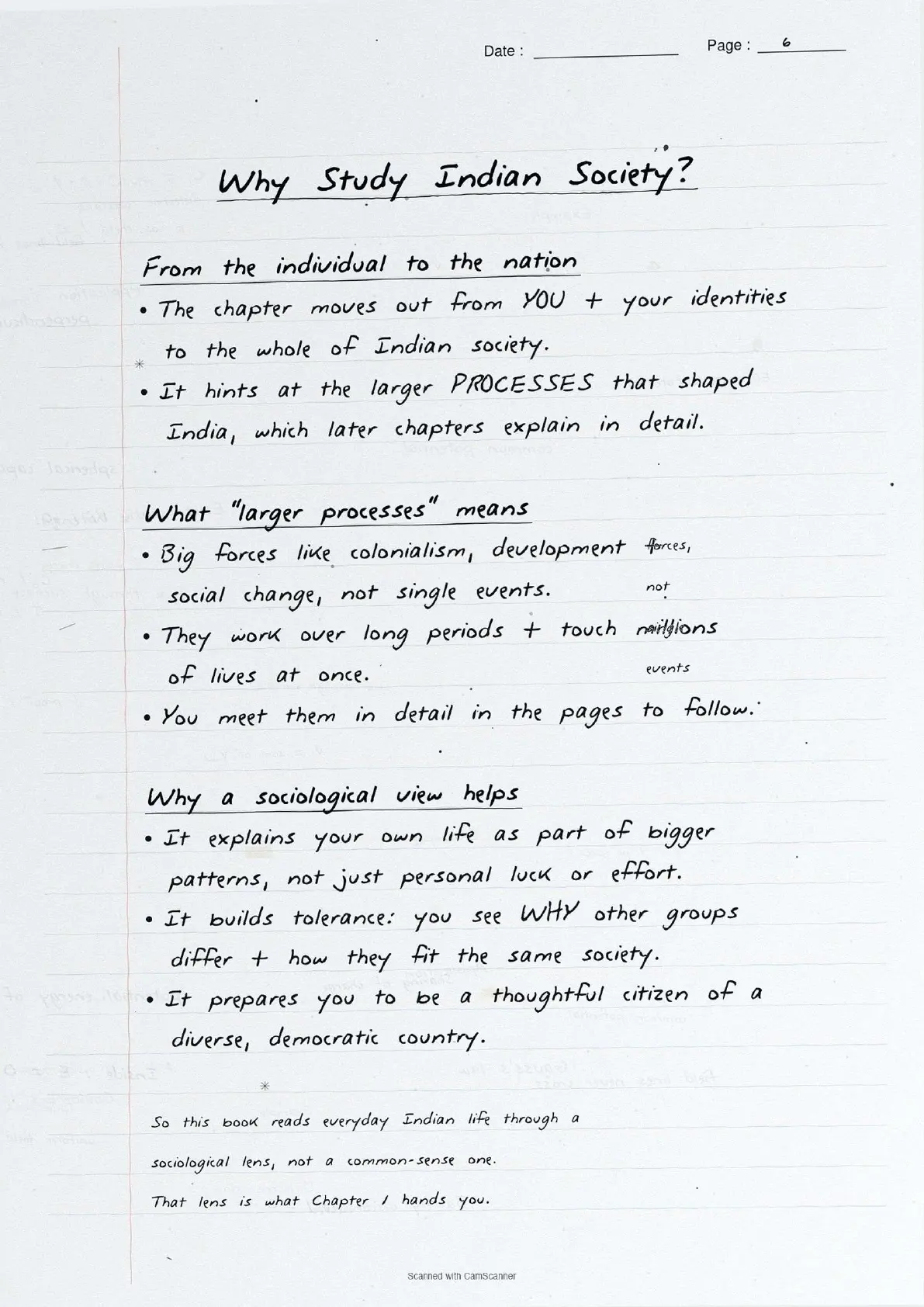
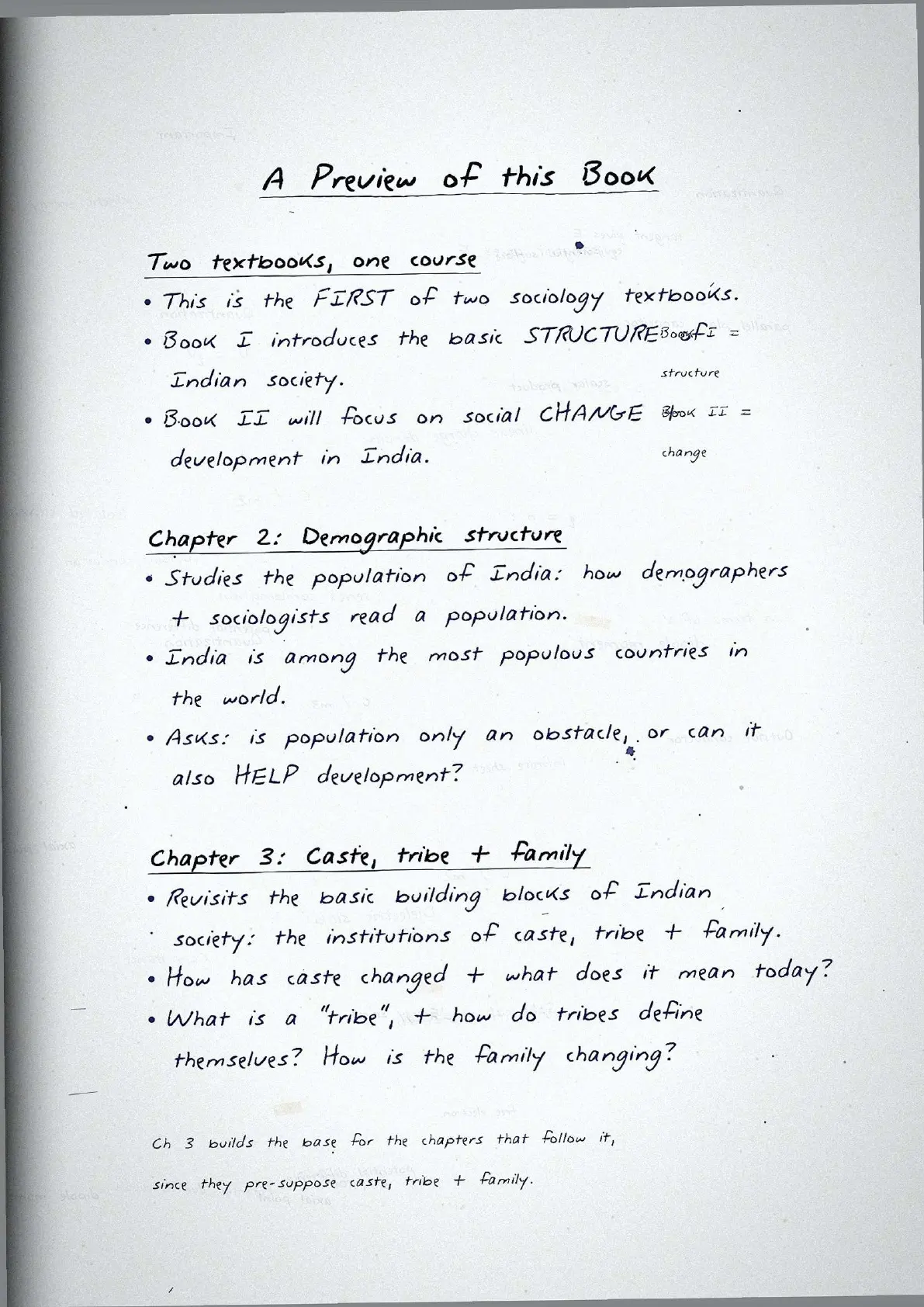
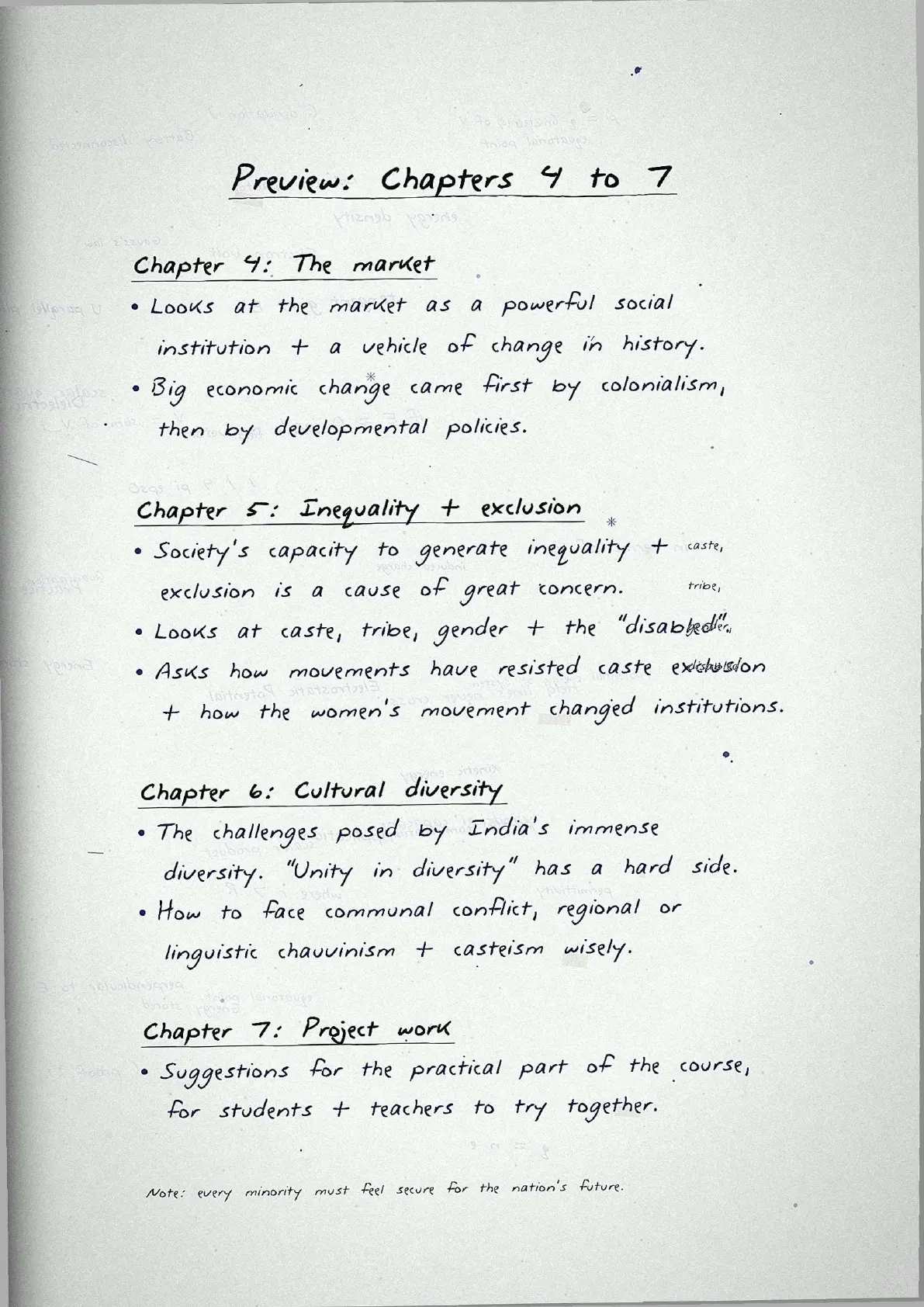
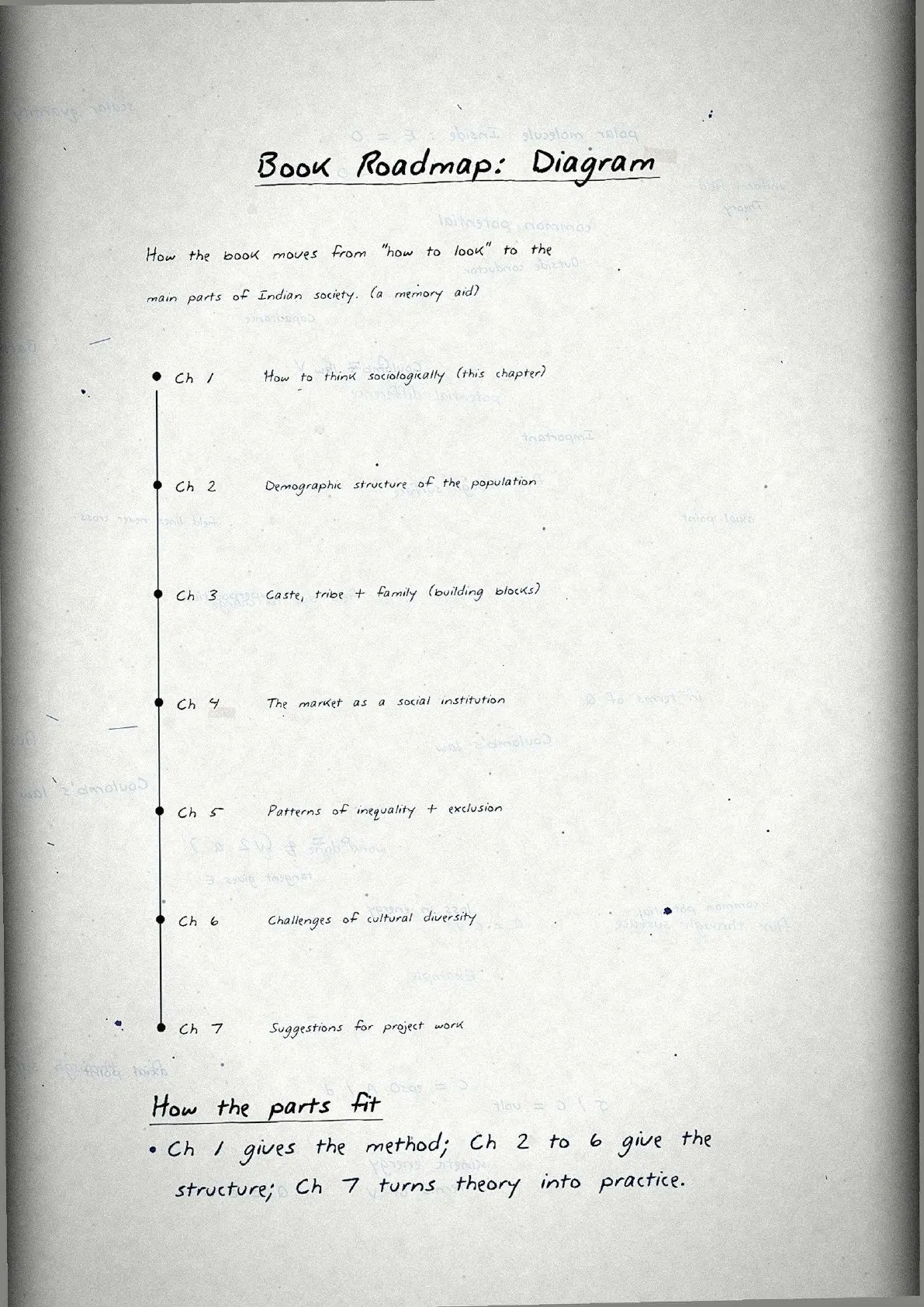
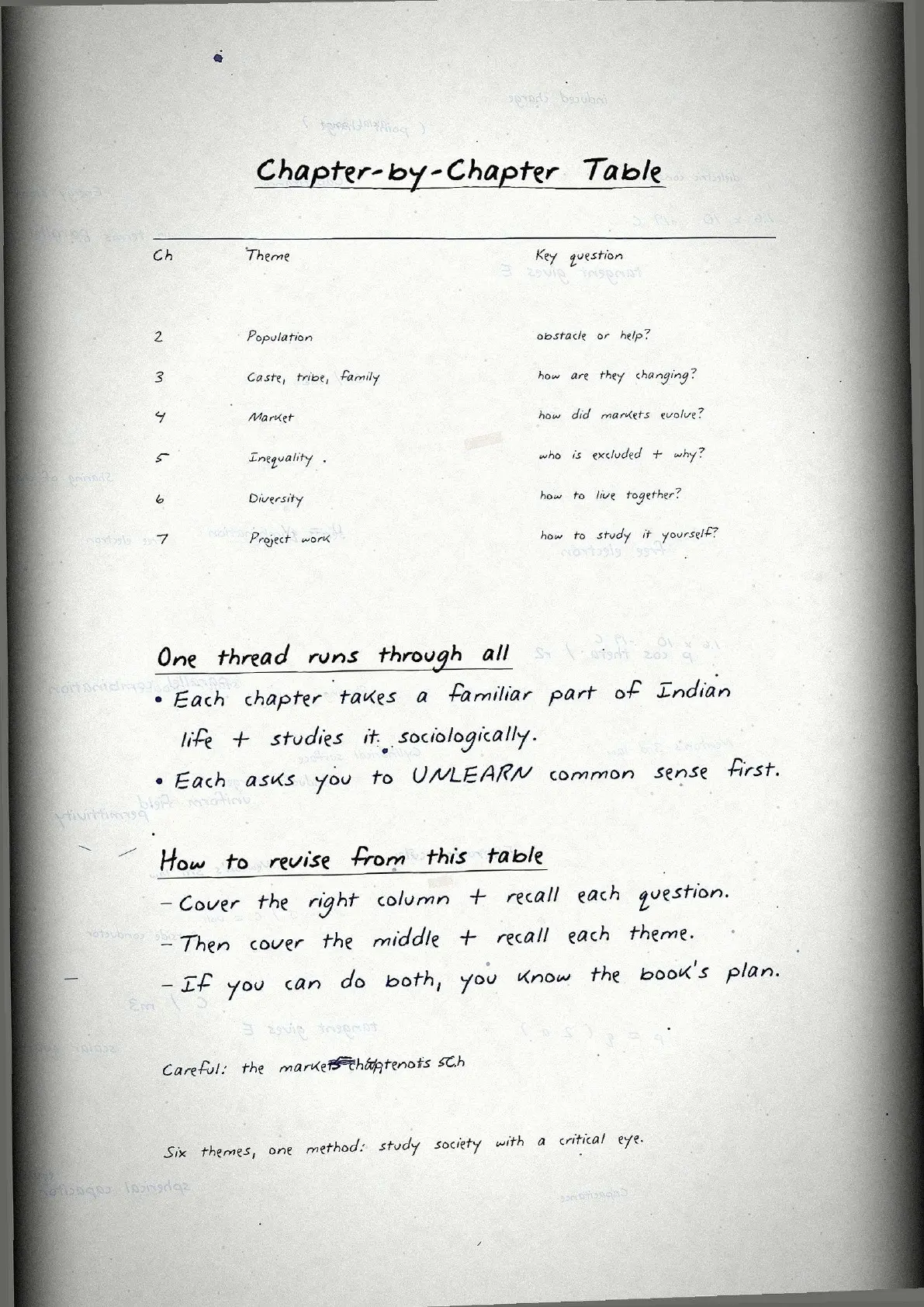
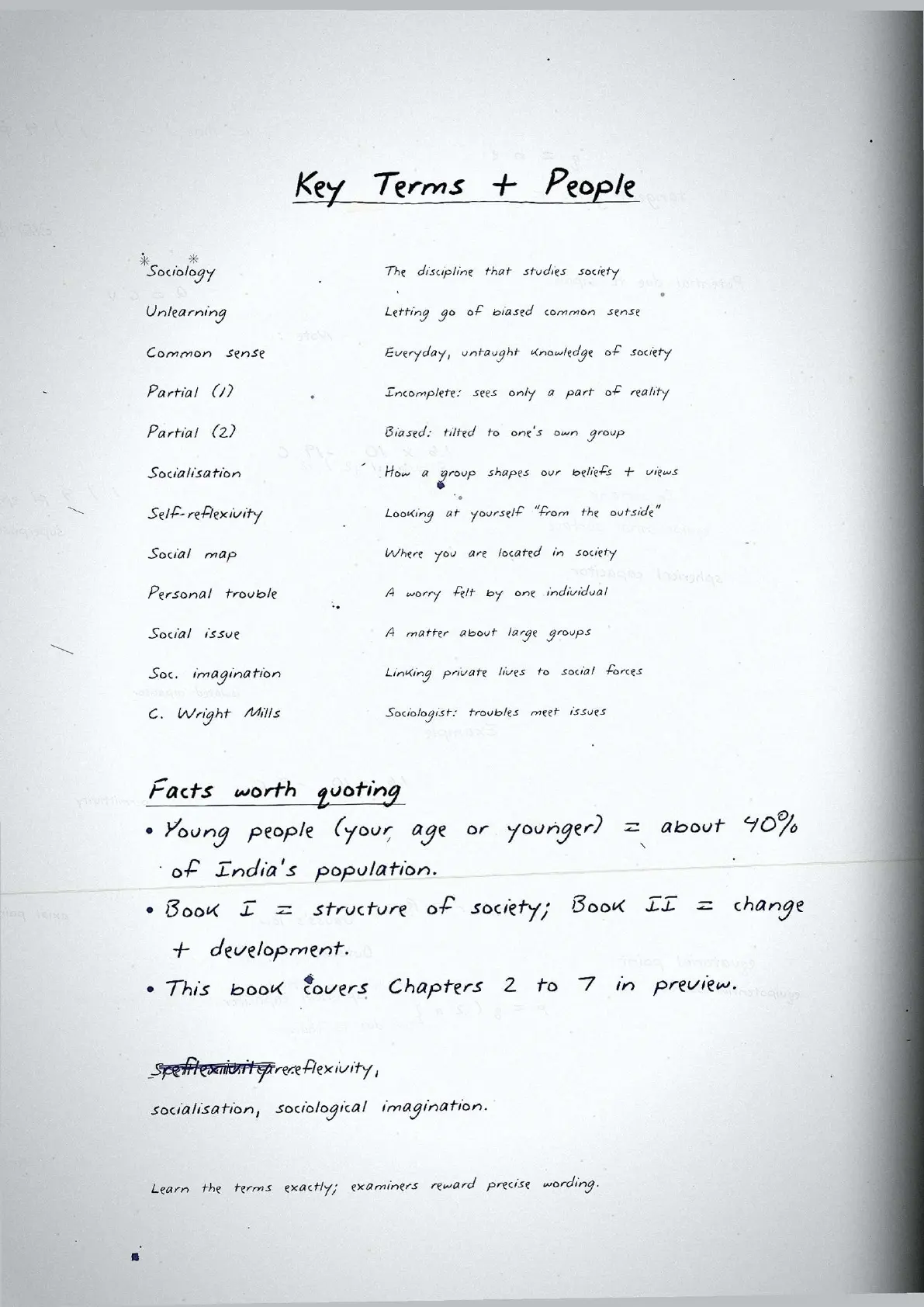
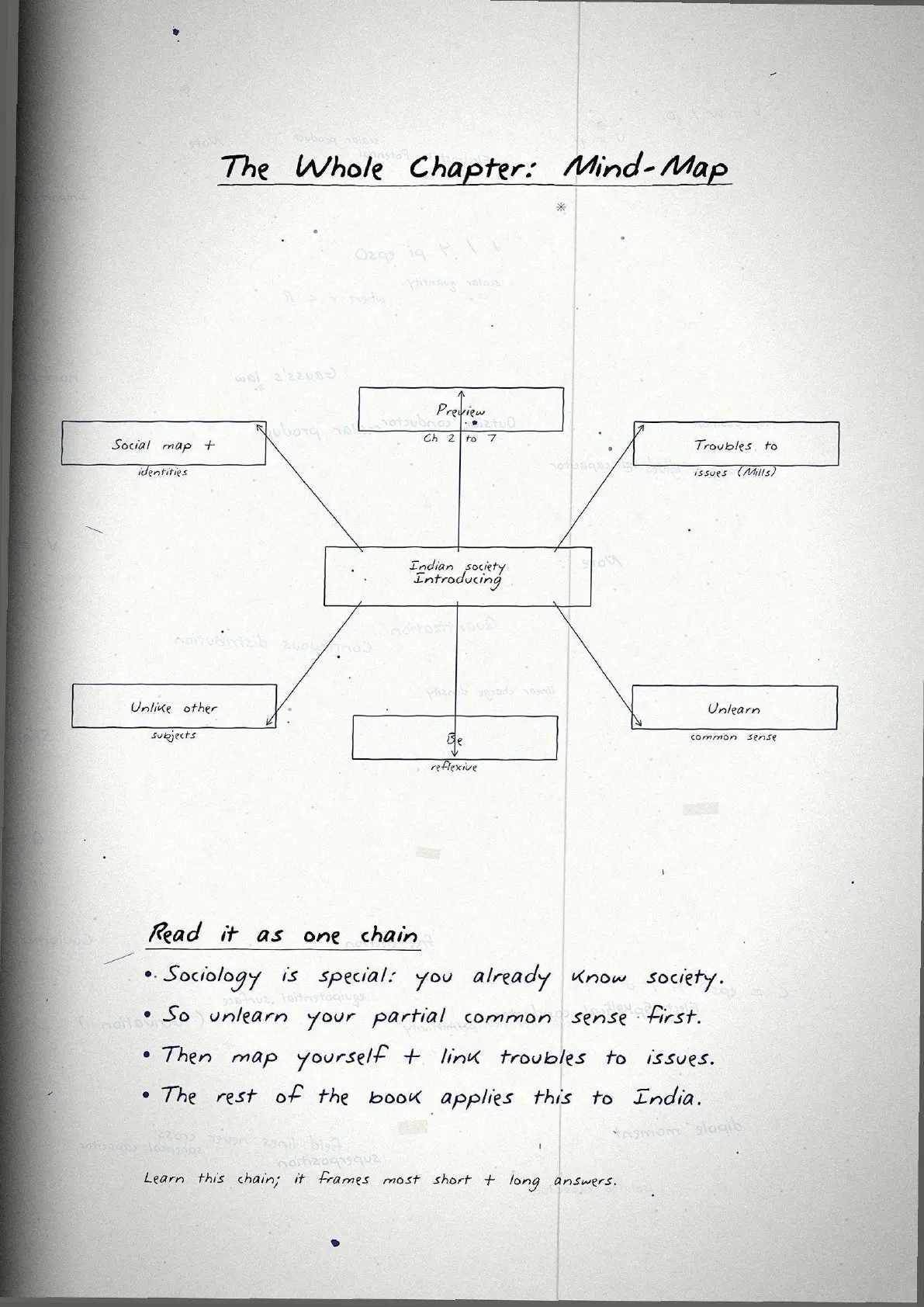
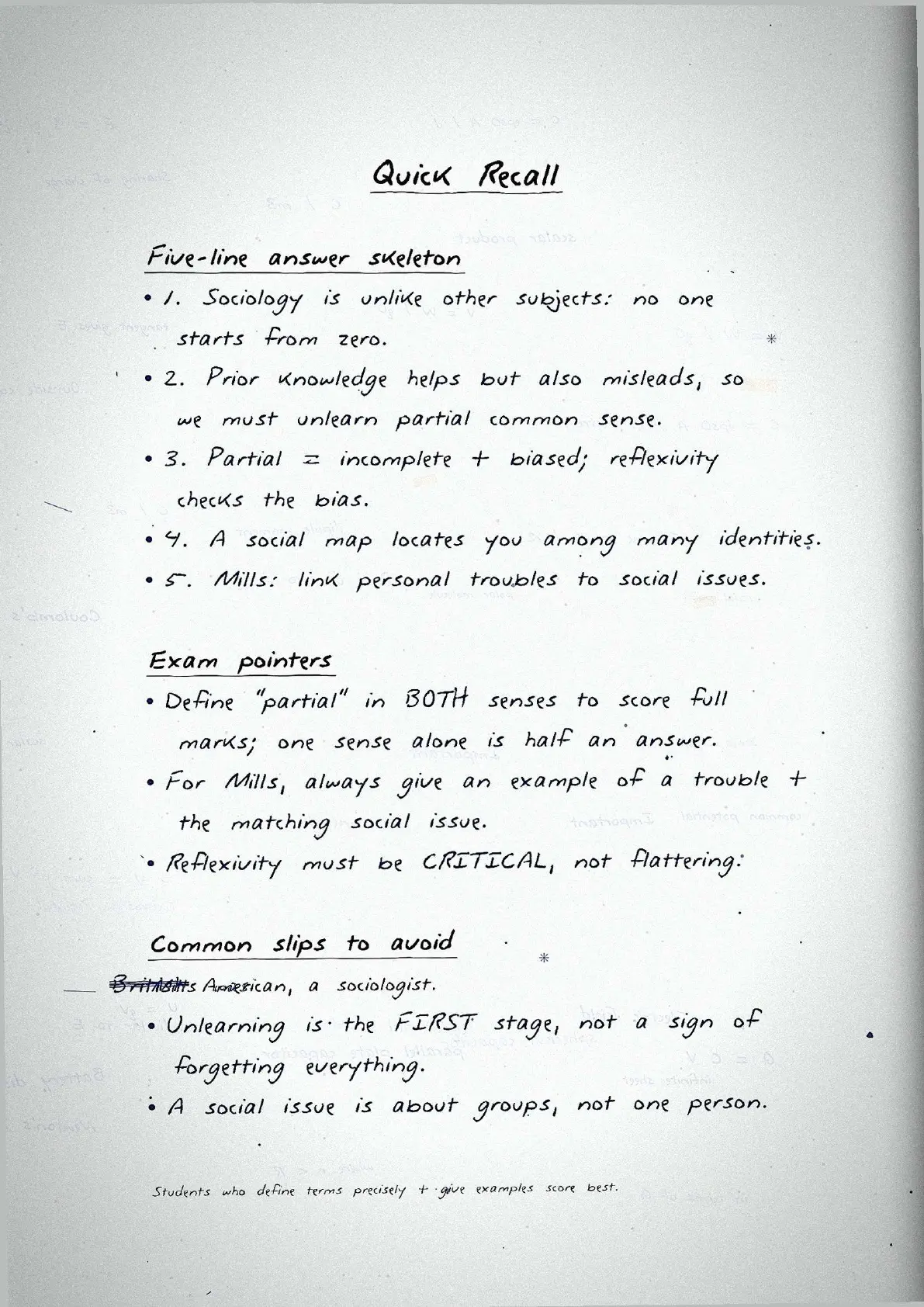
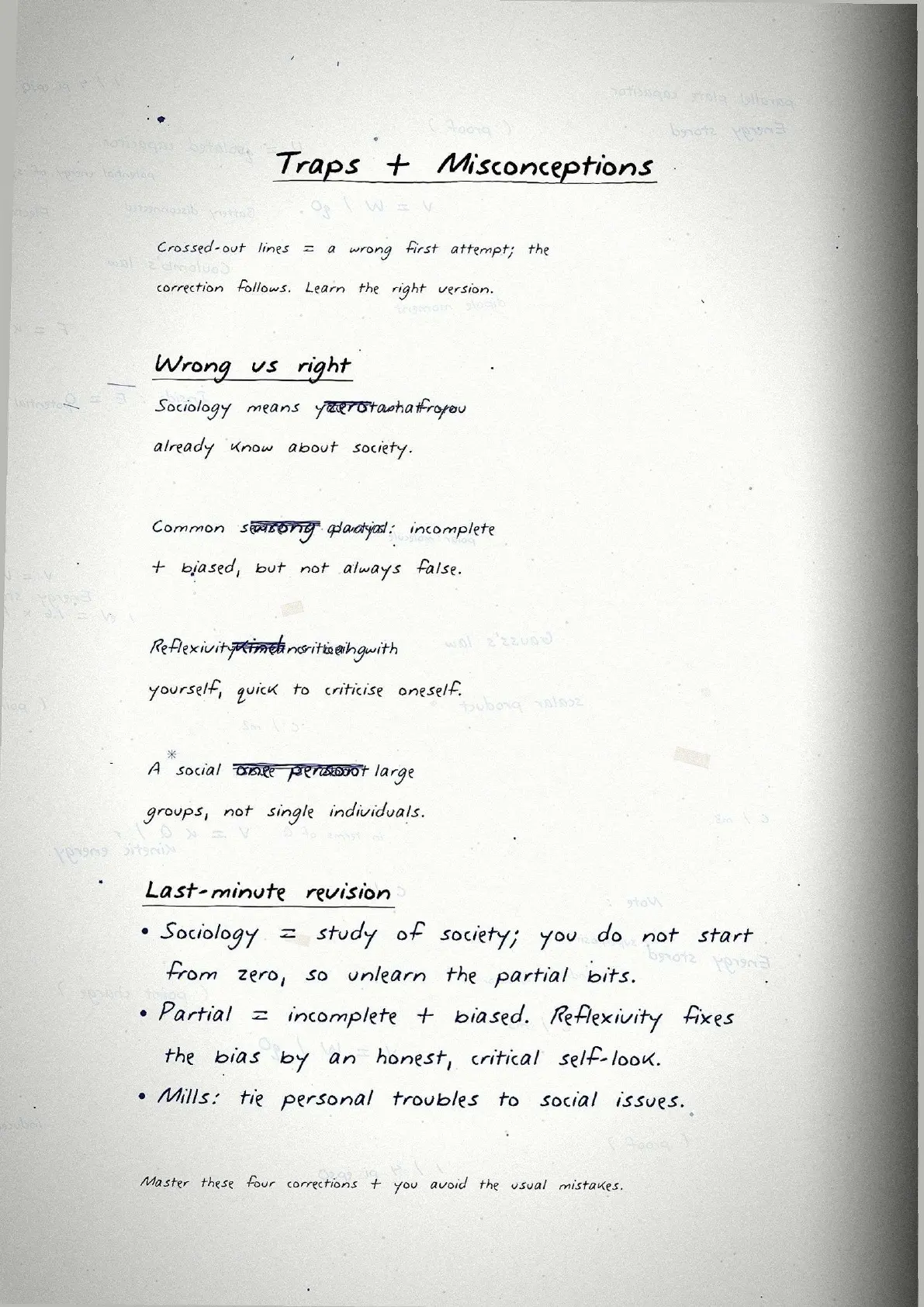
- Boxed key terms and underlined ideas across handwritten pages for the sociological point of view.
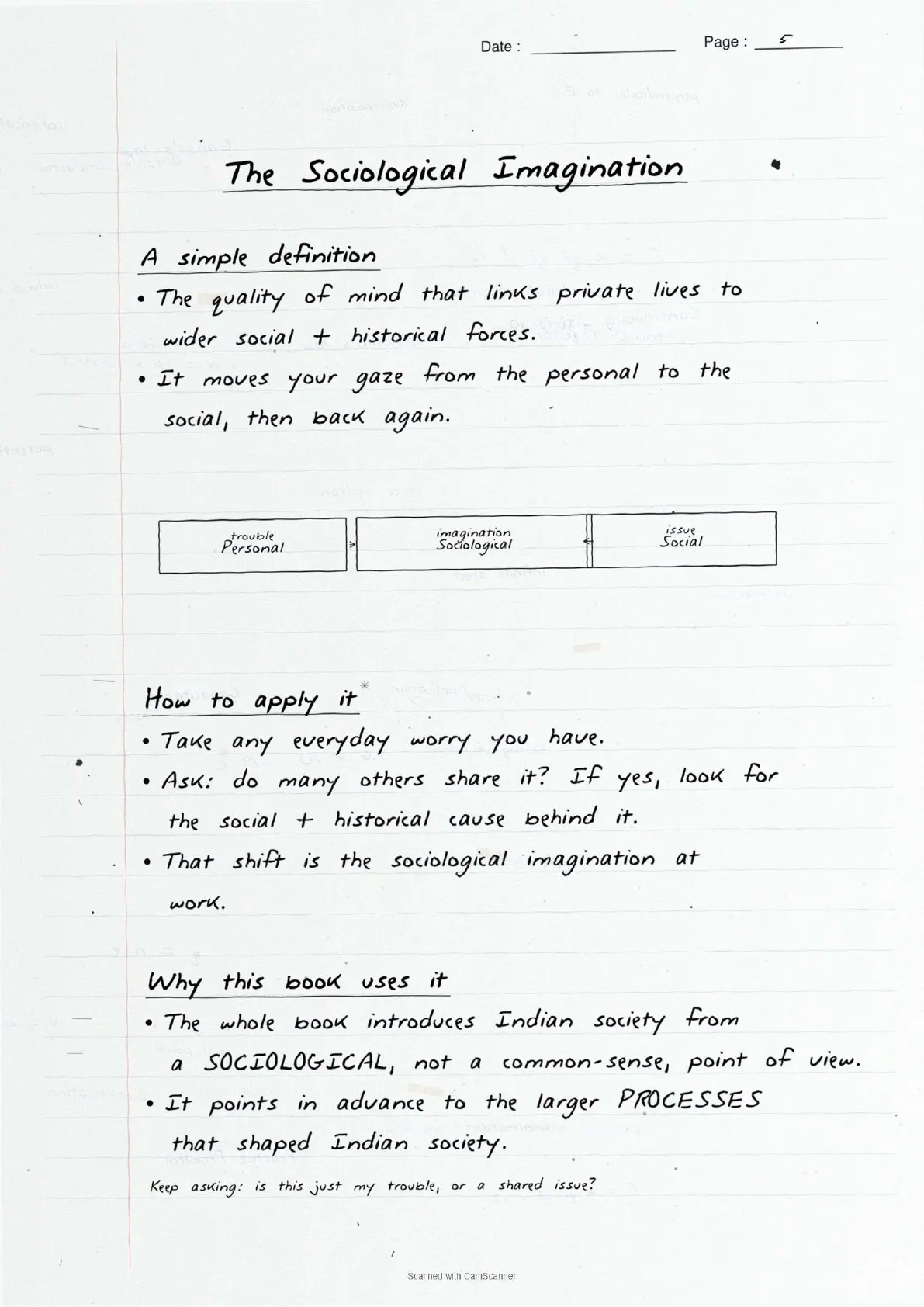
- Hand-drawn arrows that link a personal trouble to its wider social issue.
- Pairs with the NCERT Solutions, Notes and Book PDF linked lower on this page.
These Introducing Indian Society handwritten notes are prepared from the official NCERT Indian Society textbook and matched to the 2026-27 CBSE syllabus.
Student Feedback: In a Collegedunia poll of 7,640 Class 12 Sociology students before the 2026 boards, 71% of students said handwritten notes felt faster to revise from than printed text for this chapter. Most students used the boxed troubles-versus-issues arrow to recall the sociological imagination in the exam.
Source: 2026-27 Class 12 Sociology student poll. Sample of 7,640 students from CBSE schools across 12 states.
What These Handwritten Notes Include
Introducing Indian Society is the first chapter of Indian Society, and it is written without summary boxes, asking students to think for themselves. These handwritten notes do that work for you, condensing the sociological point of view into pages you can read in one sitting.
Every page is built around the four threads of the chapter:
- Discipline pages cover why sociology is a distinct subject.
- Method pages cover self-reflexivity, unlearning and common sense.
- Imagination pages cover personal troubles and social issues.
- History pages cover colonialism and the rise of nationalism.
Because the notes are handwritten, the key terms sit in boxes and the important ideas are underlined, so the eye jumps straight to them. This makes the Introducing Indian Society handwritten notes ideal for a last revision when there is no time to read full paragraphs. Sort each idea under discipline, method, imagination or history, and the whole chapter falls into place.
Why Sociology Is Distinct Pages
The first pages start with the discipline itself. The notes keep the key features as a boxed list so students can copy them straight onto the answer sheet. Each feature is underlined so it stands out at a glance.
- Studies society: the whole web of social relationships, not one slice of life.
- Observer is inside: the sociologist studies a society they already belong to.
- Self-reflexive: it keeps questioning its own ideas and biases.
- Links lives: it ties private troubles to public social issues.
The notes box the most useful point in red ink: sociology studies us, by us. A small arrow links this to self-reflexivity, so students recall why questioning our own view is a core skill, not an extra. This makes the "why distinct" question easy to write from memory.
Method Pages: Common Sense and Unlearning
The method pages carry one of the chapter's most-asked ideas. The notes set common sense against the sociological view as a boxed contrast, so students can recall both sides fast. The list below mirrors what the pages box for quick revision.
- Common sense: taken for granted, untested, often blames the individual.
- Sociological view: built on method, explains by social structures.
- Partial: common sense is a useful start but an incomplete answer.
- Unlearn first: set aside ready-made ideas before you study society.
The pages box the single sharpest point in the margin: common sense is partial, not simply wrong. A hand-drawn arrow links it to "unlearning", showing why students must drop ready-made opinions first. This both-sides framing is what turns an average answer into a full-marks one.
Imagination Pages: Troubles and Issues
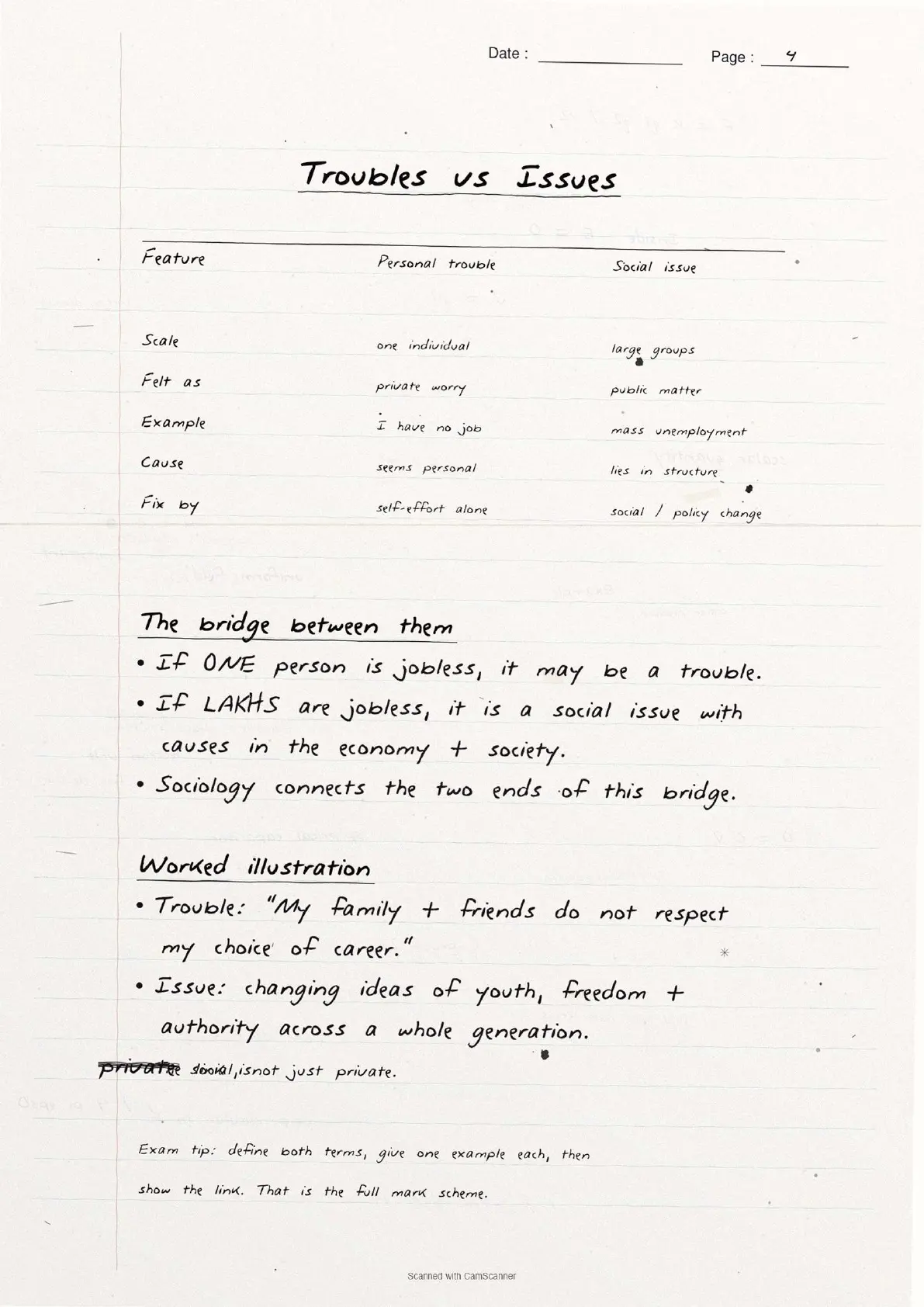
These pages keep the most-tested idea of the chapter clear, because students often blur the two halves. The notes give one example that links them so you never confuse them, and add a small arrow from the personal to the social.
- Personal troubles: private matters felt by one person, like one lost job.
- Social issues: public matters affecting large groups, like mass unemployment.
- The bridge: the sociological imagination links the two.
- Test: ask how many others share the same private problem.
The margin note underlines the honest line: the same fact can be a trouble for one and an issue for society. The boxed arrow shows one jobless worker becoming, at scale, a social issue rooted in the economy. Keeping personal and social clearly apart is what makes the long answer easy to write.
History Pages: Colonialism and Nationalism
The last set of pages covers how modern India took shape. The notes give the changes colonialism brought and the response it provoked, in order, with a hand-drawn arrow from change to nationalism. A small sketch of a railway line helps students recall the new forces.
- Economy: colonial rule tied India to world markets.
- New forces: railways, cities, a press and Western education.
- Inequality: the gains went to the colonial power, breeding resentment.
- Nationalism: a shared struggle united diverse people into one nation.
The pages box the verdict clearly: nationalism grew out of the very forces colonialism set in motion. A linking arrow ties the new communications and shared injustice to the idea of one nation. Redrawing this arrow once from memory fixes the colonialism-to-nationalism link for good.
How to Use These Handwritten Notes
Handwritten notes work best as a final layer of revision, not as your first read. The plan below helps students get the most out of the Introducing Indian Society handwritten notes before the board exam. Follow it once a week in the run-up to the test.
- First pass: read the notes once, following the discipline, method, imagination and history order.
- Active recall: cover the boxed terms and try to write each list from memory.
- Link practice: redraw the troubles-to-issues arrow with your own example.
- Self-test: attempt a short class 12 sociology chapter 1 mcq drill to check the small facts.
Because the notes come as a downloadable PDF, students can save them on a phone and revise offline on the way to the exam centre. Many students search for class 12 sociology chapter 1 notes on their phone the night before a test, so a saved PDF means revision is always at hand. Pair these pages with the full solutions to check your written answers against model points.
Common Mistakes These Notes Help You Avoid
A few errors cost marks in this chapter every year. Most come from treating sociology as just facts or blurring the troubles-versus-issues link. The notes flag each soft point in the margin so students phrase it safely on the answer sheet.
- Defining sociology as a list of facts, not a critical way of looking at society.
- Explaining a personal trouble as a social issue without the linking example.
- Calling common sense simply "wrong" - it is partial, a useful but incomplete start.
- Forgetting self-reflexivity, the habit of questioning our own biases.
- Writing about colonialism with no mention of how it gave rise to nationalism.
Students who fix these five points usually move from average to high marks. The exam rewards a balanced view, so always tie a private fact back to society, especially on the troubles-versus-issues link. The handwritten margin notes nudge you to keep that link in the right places.
How These Notes Pair with the Solutions and Book PDF
These handwritten notes are a revision layer. To prepare fully, students should use them with the other resources for the same chapter, all linked in the table below. Read the notes, then test yourself with the solutions, and open the book PDF for the original text.
| Resource | Best used for |
|---|---|
| Introducing Indian Society NCERT Solutions | Point-wise answers to all 13 back-exercise questions |
| Introducing Indian Society Class 12 Notes | Quick chapter summary with all key terms and ideas in one place |
| Introducing Indian Society NCERT Book PDF | Reading the original NCERT chapter text and its preview of the book |
Tip: use the handwritten arrow to memorise the troubles-to-issues link, then write the full answer in your own words. Drawing that arrow once from memory fixes the idea for good.
All Class 12 Sociology Handwritten Notes by Chapter
The table links the handwritten notes for every chapter in both Class 12 Sociology books, so students can move across the course in one click. Introducing Indian Society is highlighted.
| Chapter | Handwritten Notes |
|---|---|
| Indian Society | |
| Chapter 1 | Introducing Indian Society |
| Chapter 2 | The Demographic Structure of the Indian Society |
| Chapter 3 | Social Institutions - Continuity and Change |
| Chapter 4 | The Market as a Social Institution |
| Chapter 5 | Patterns of Social Inequality and Exclusion |
| Chapter 6 | The Challenges of Cultural Diversity |
| Social Change and Development in India | |
| Chapter 1 | Structural Change |
| Chapter 2 | Cultural Change |
| Chapter 3 | The Constitution and Social Change |
| Chapter 4 | Change and Development in Rural Society |
| Chapter 5 | Change and Development in Industrial Society |
| Chapter 6 | Globalisation and Social Change |
| Chapter 7 | Mass Media and Communications |
| Chapter 8 | Social Movements |
FAQs on Introducing Indian Society Handwritten Notes
Introducing Indian Society Class 12 Sociology Handwritten Notes Common Questions
Ques. Are these class 12 sociology chapter 1 handwritten notes free to download?
Ans. Yes. The Introducing Indian Society handwritten notes are free to download as a PDF from this page. They follow the 2026-27 NCERT and cover the full chapter in handwritten, boxed-term pages for quick revision.
Ques. What do the handwritten notes cover in this chapter?
Ans. They cover why sociology is a distinct subject, self-reflexivity, the sociological imagination linking personal troubles to social issues, common sense versus the sociological view, and how colonialism gave rise to nationalism, all in boxed, underlined pages.
Ques. How are handwritten notes better than printed notes for revision?
Ans. Handwritten pages box the key terms and underline the important ideas, so the eye jumps straight to them. Most students find handwritten notes faster to revise from in the last days before the exam than reading full printed paragraphs.
Ques. What is the easiest way to remember the sociological imagination?
Ans. Draw the arrow from a personal trouble to a social issue with one example, like one person losing a job becoming mass unemployment. The notes use this single arrow so students recall that many private troubles are really public issues in disguise.
Ques. Are these notes enough for the class 12 sociology chapter 1 board exam?
Ans. They are a strong final revision layer. For full preparation, pair them with the NCERT Solutions linked on this page so you can write out complete answers to all 13 exercise questions and check them against model points.



Comments