




These Class 12 Sociology Chapter 4 Change and Development in Rural Society Handwritten Notes turn the chapter into clean, handwritten pages on agrarian structure, land reforms, the Green Revolution and the circulation of labour, set to the 2026-27 CBSE syllabus. The boxed terms and underlined points make them ideal for a last, fast revision.
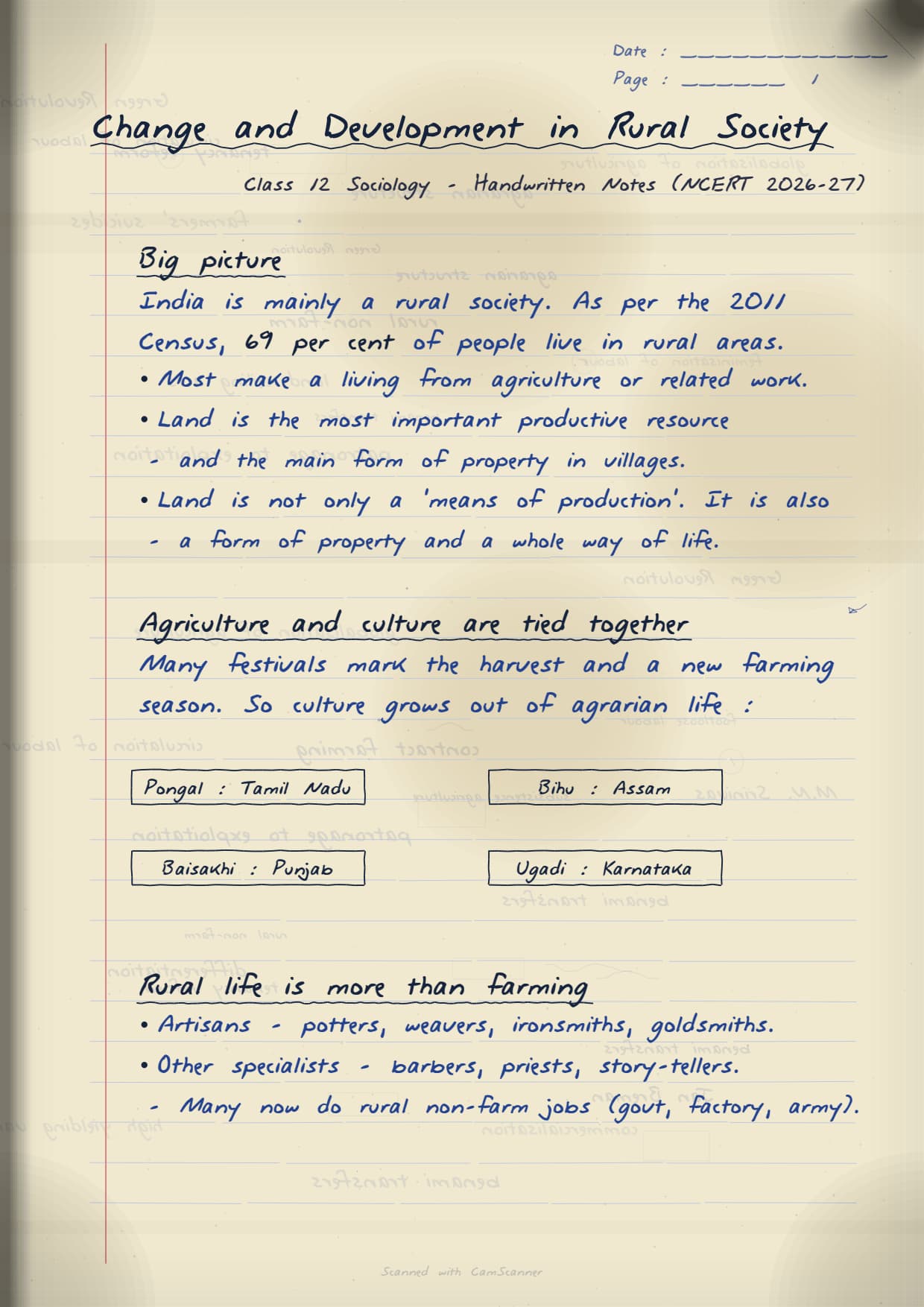
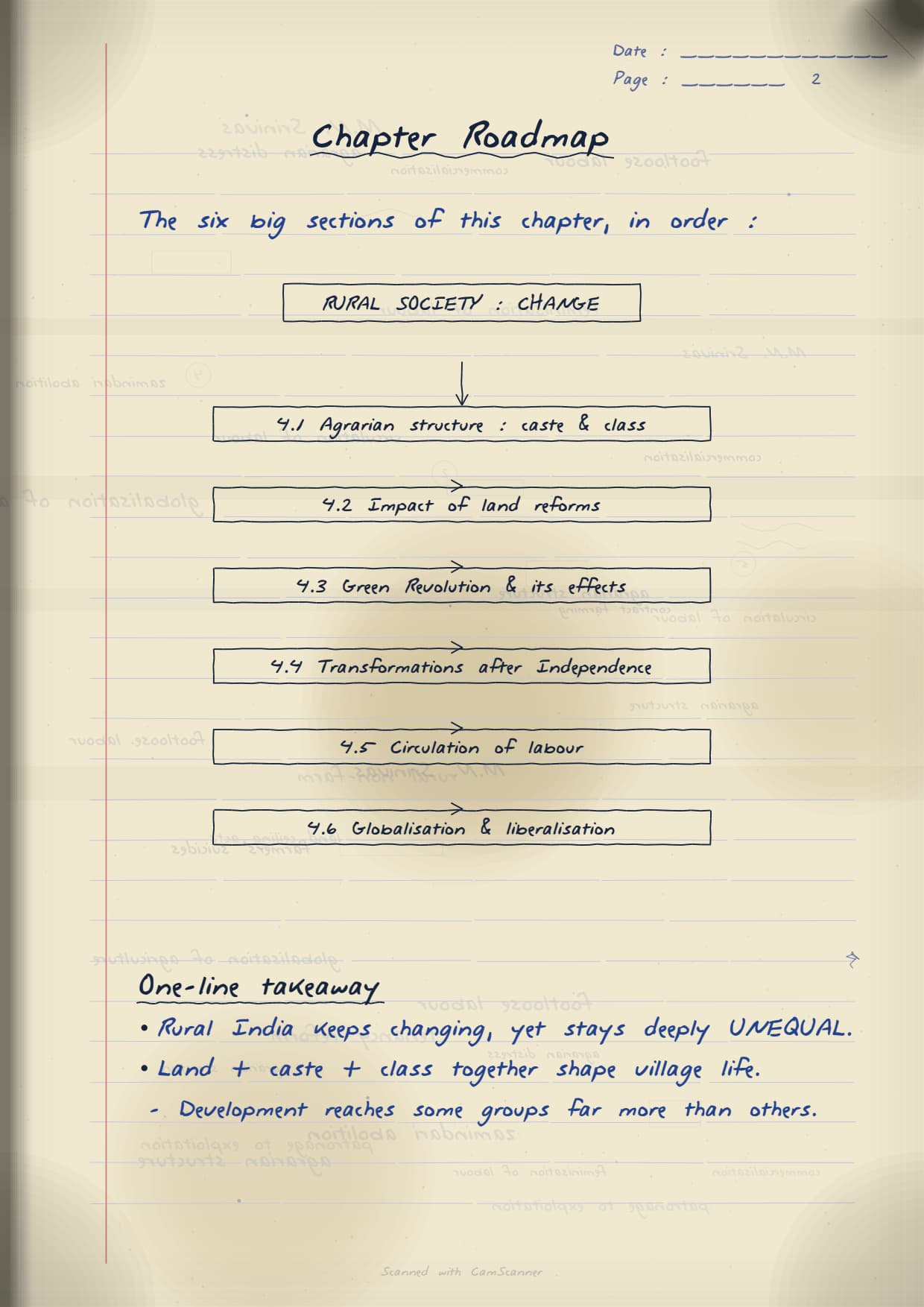
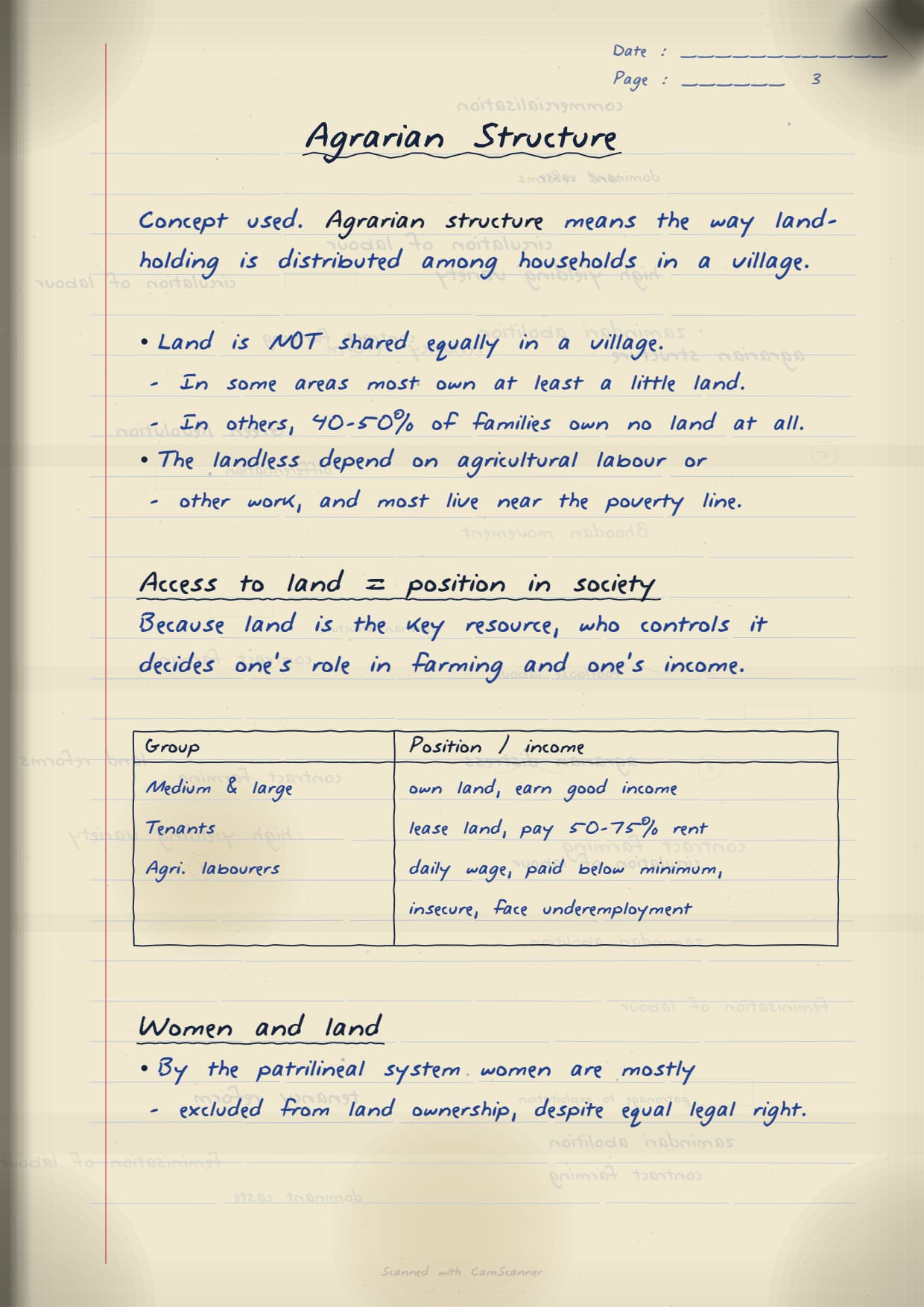
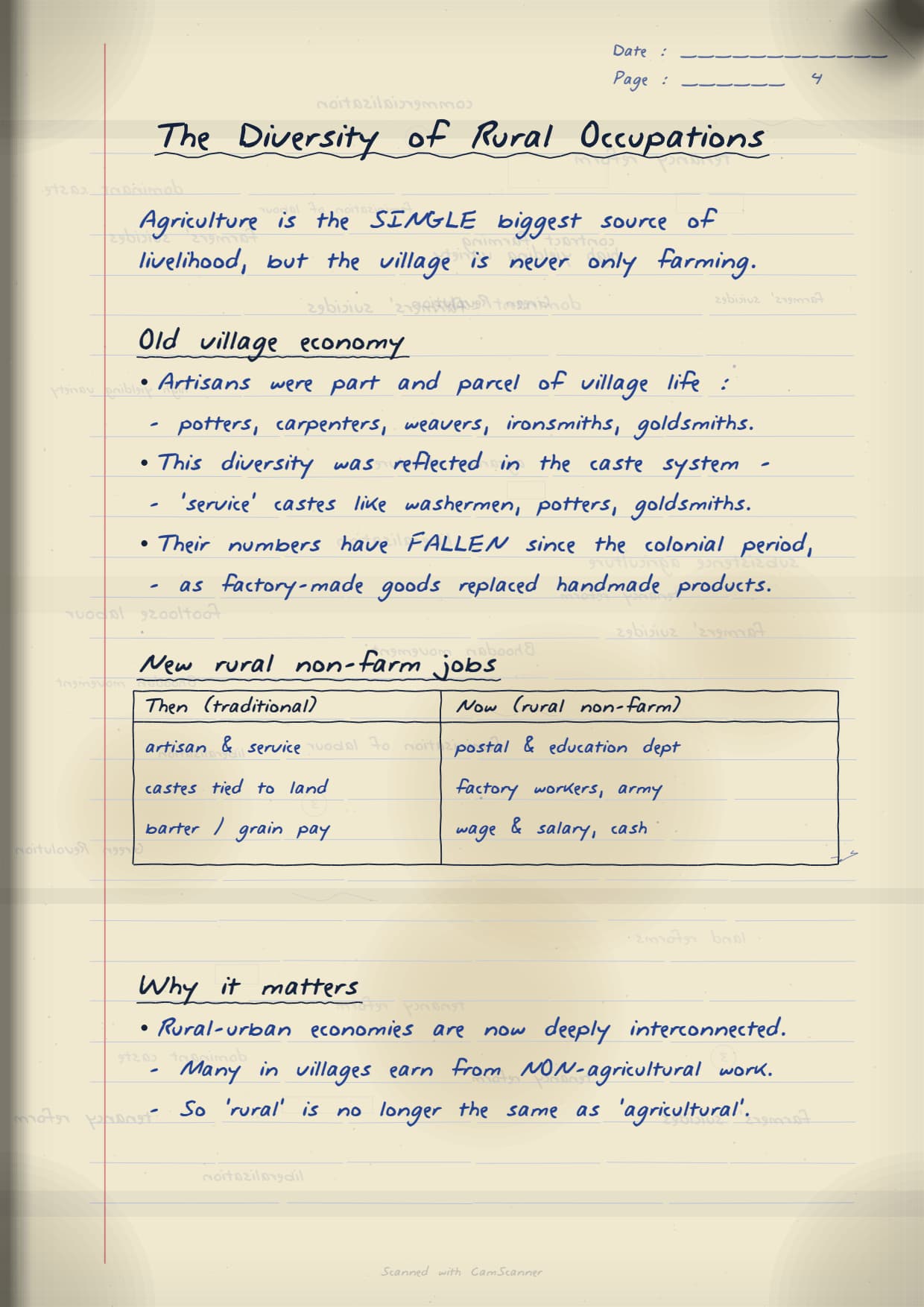
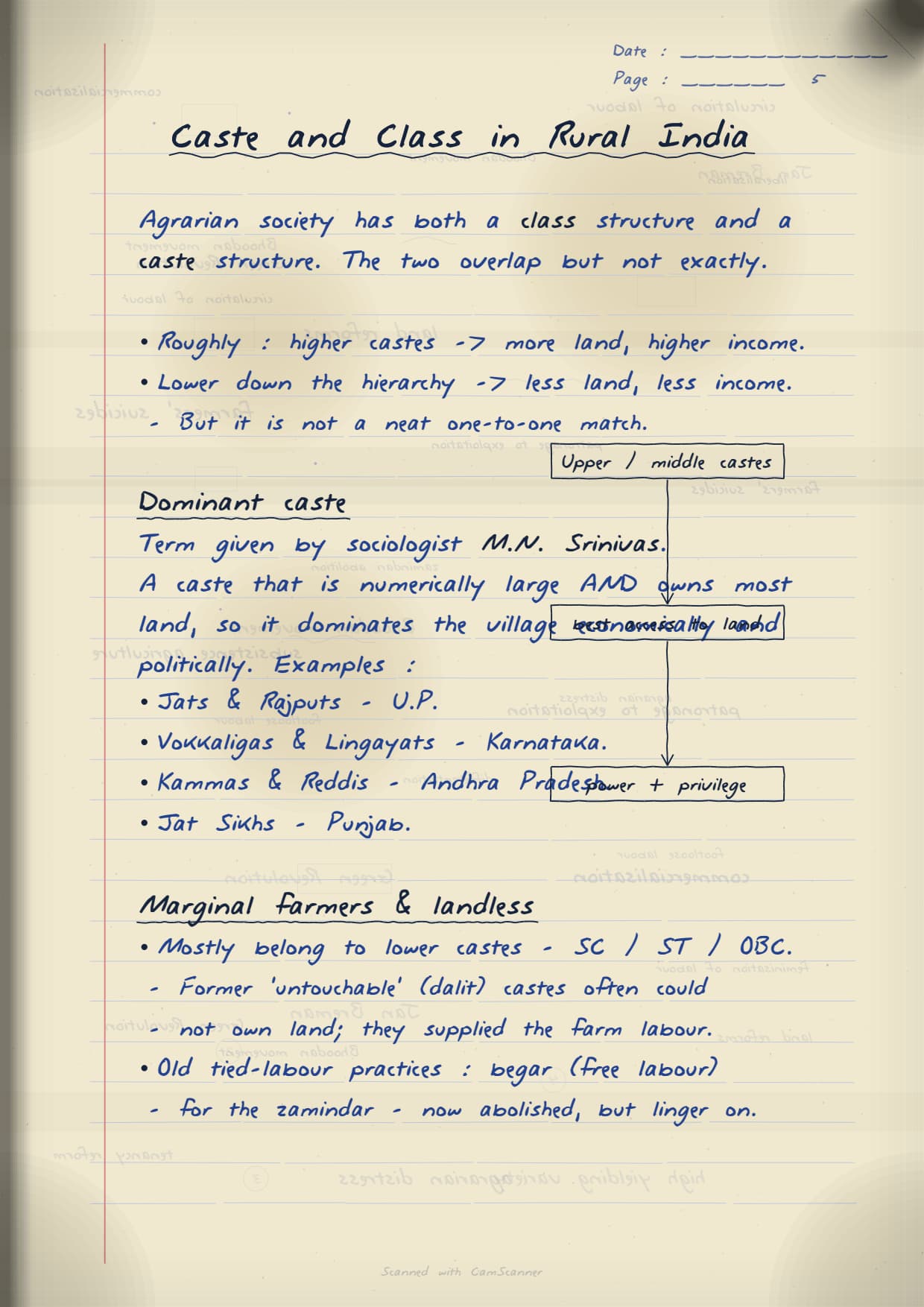
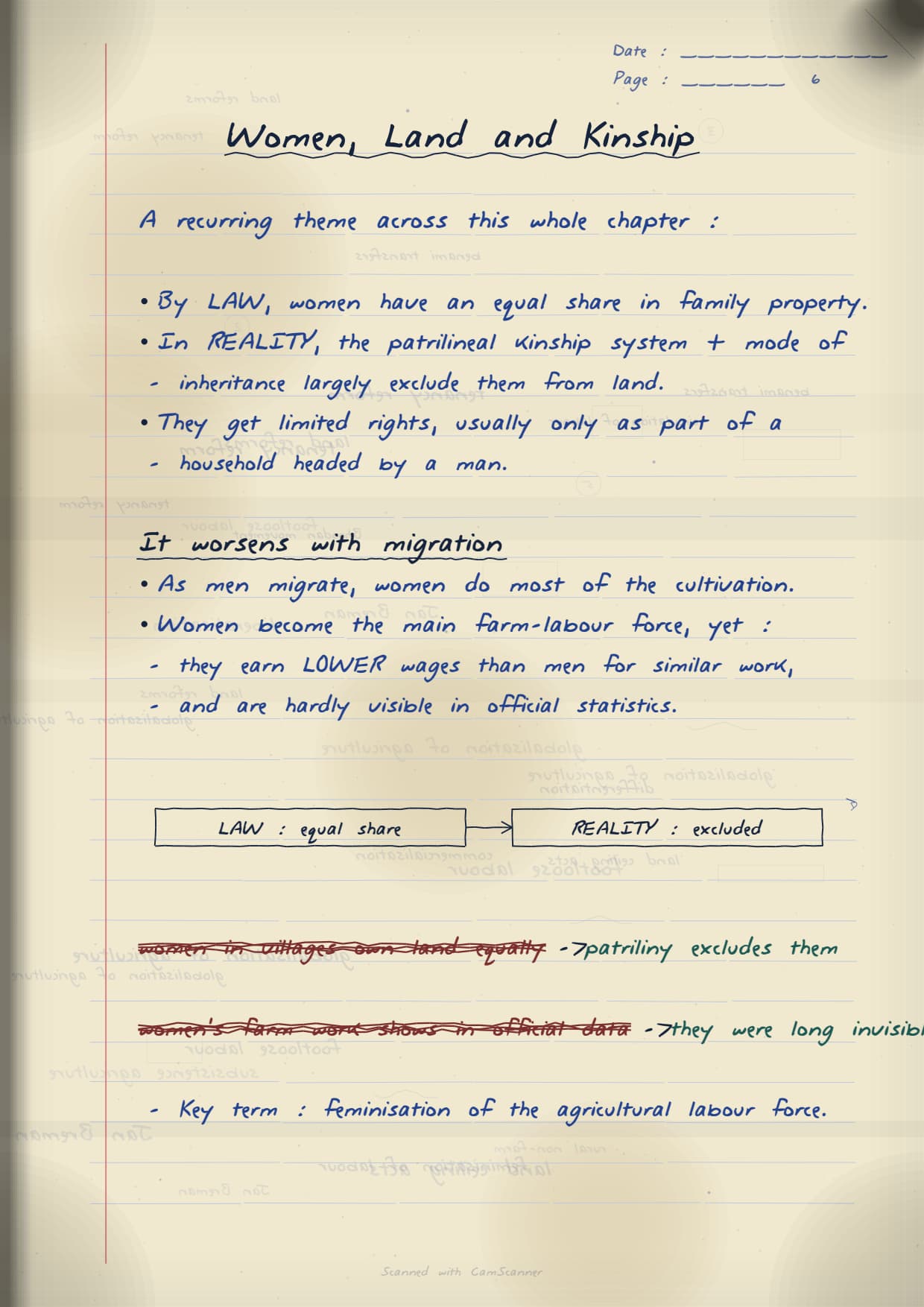
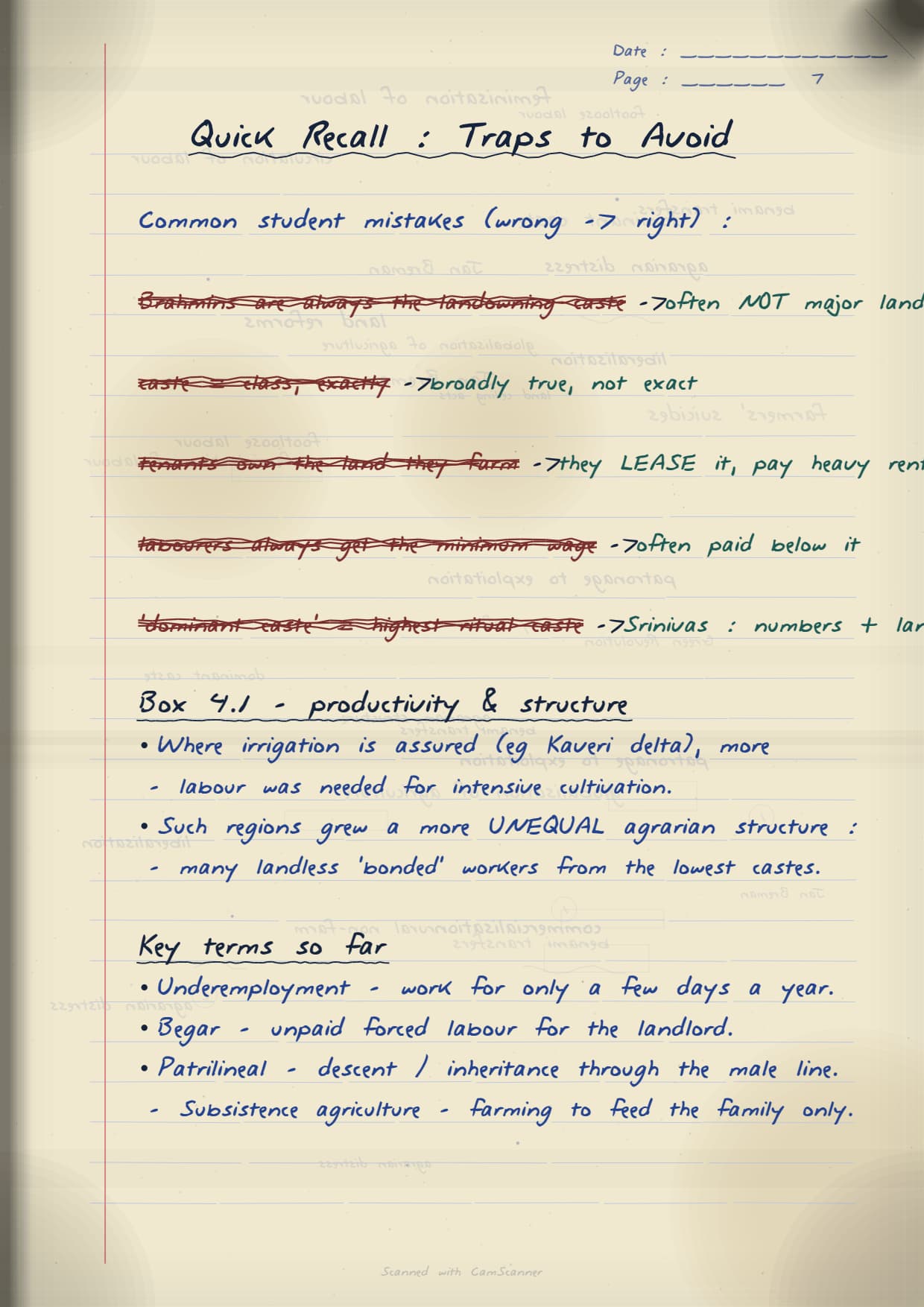
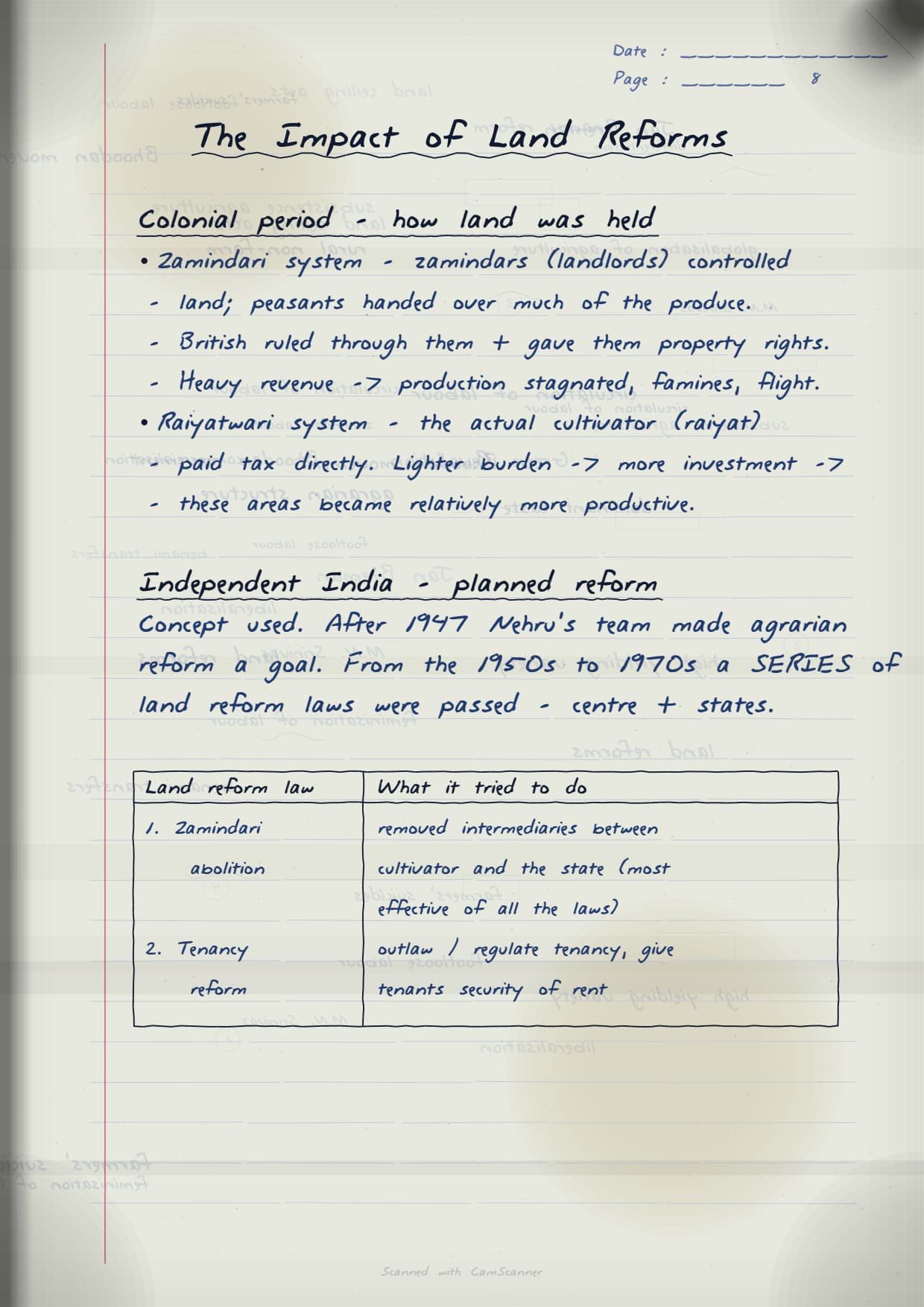
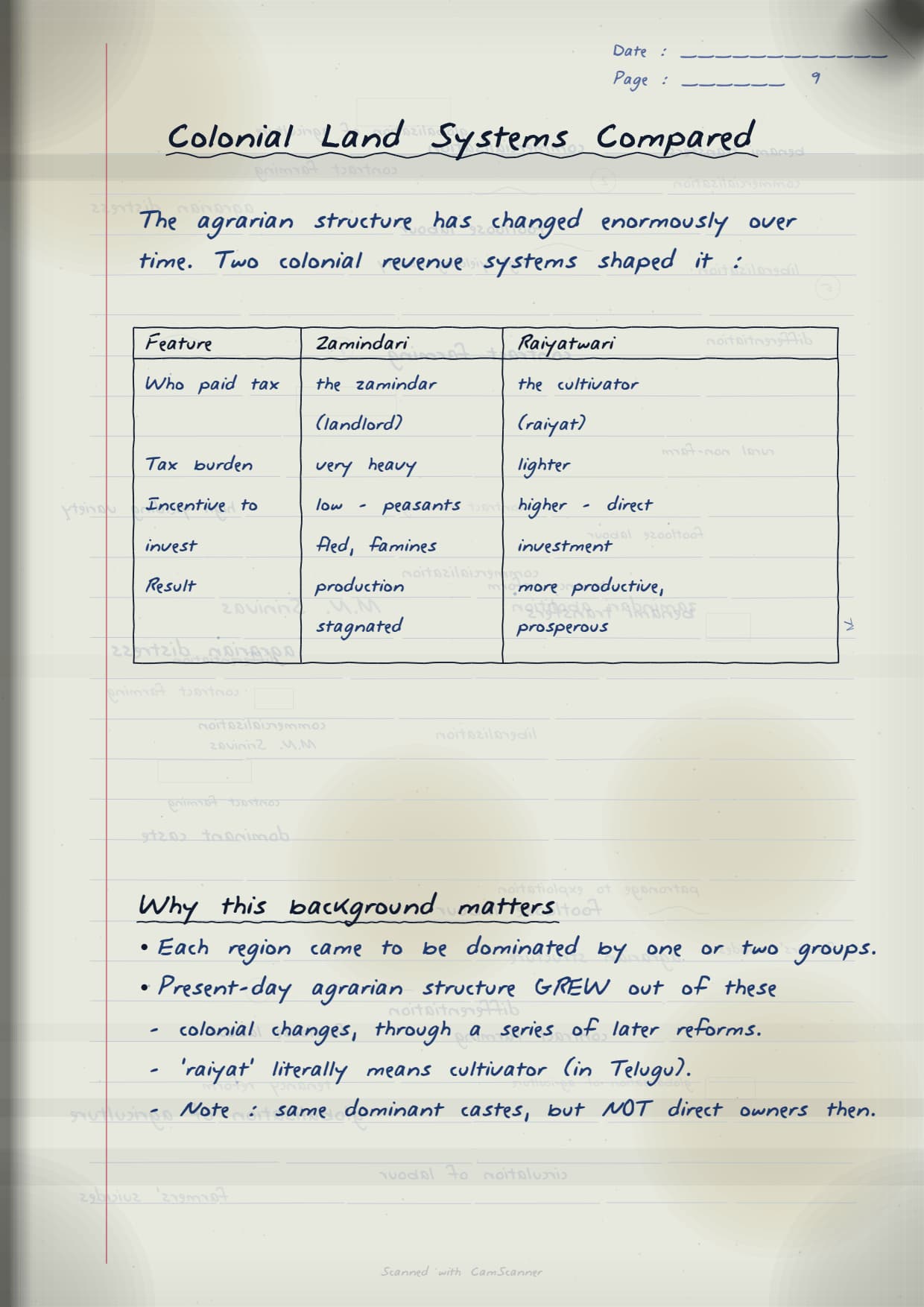
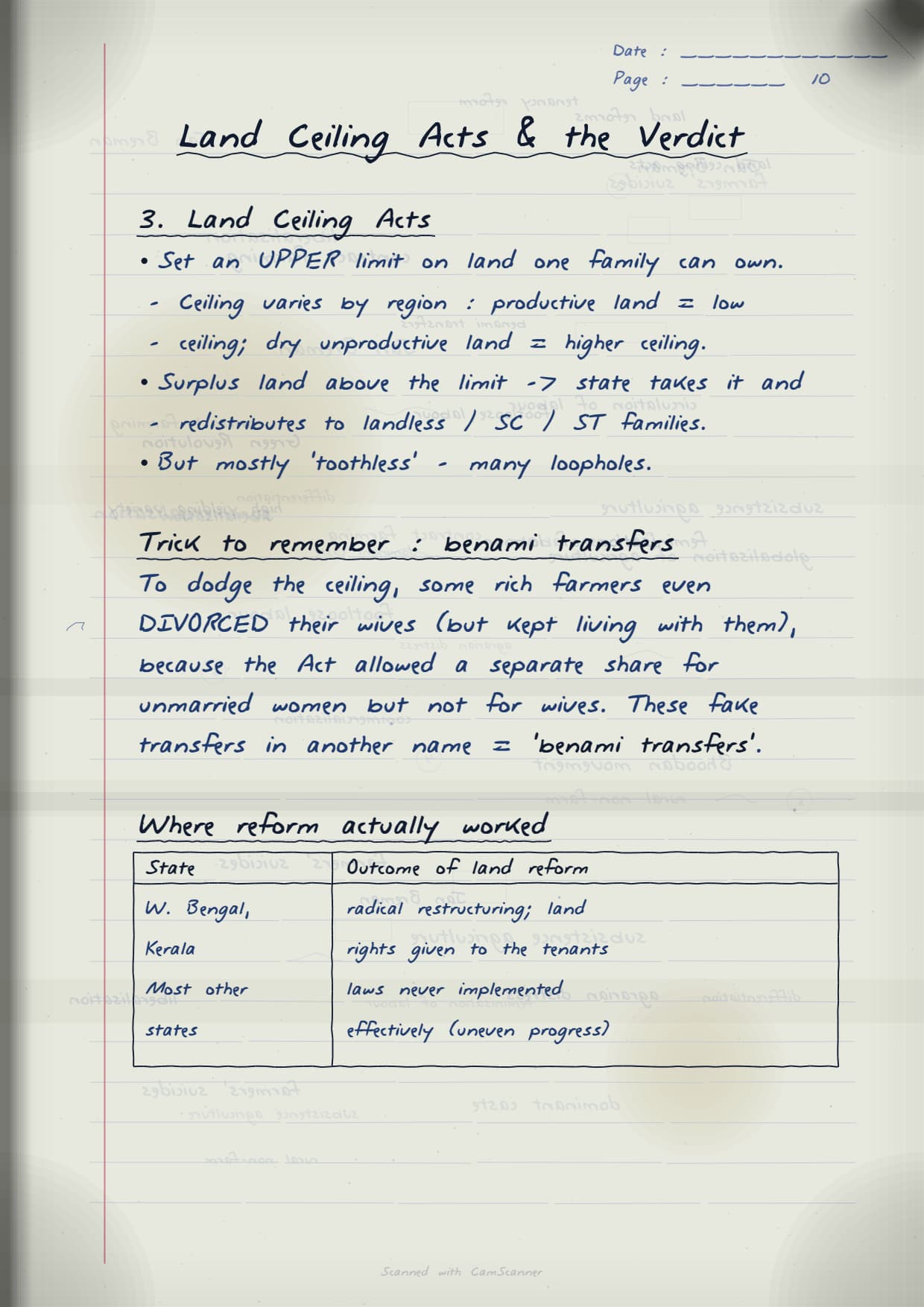
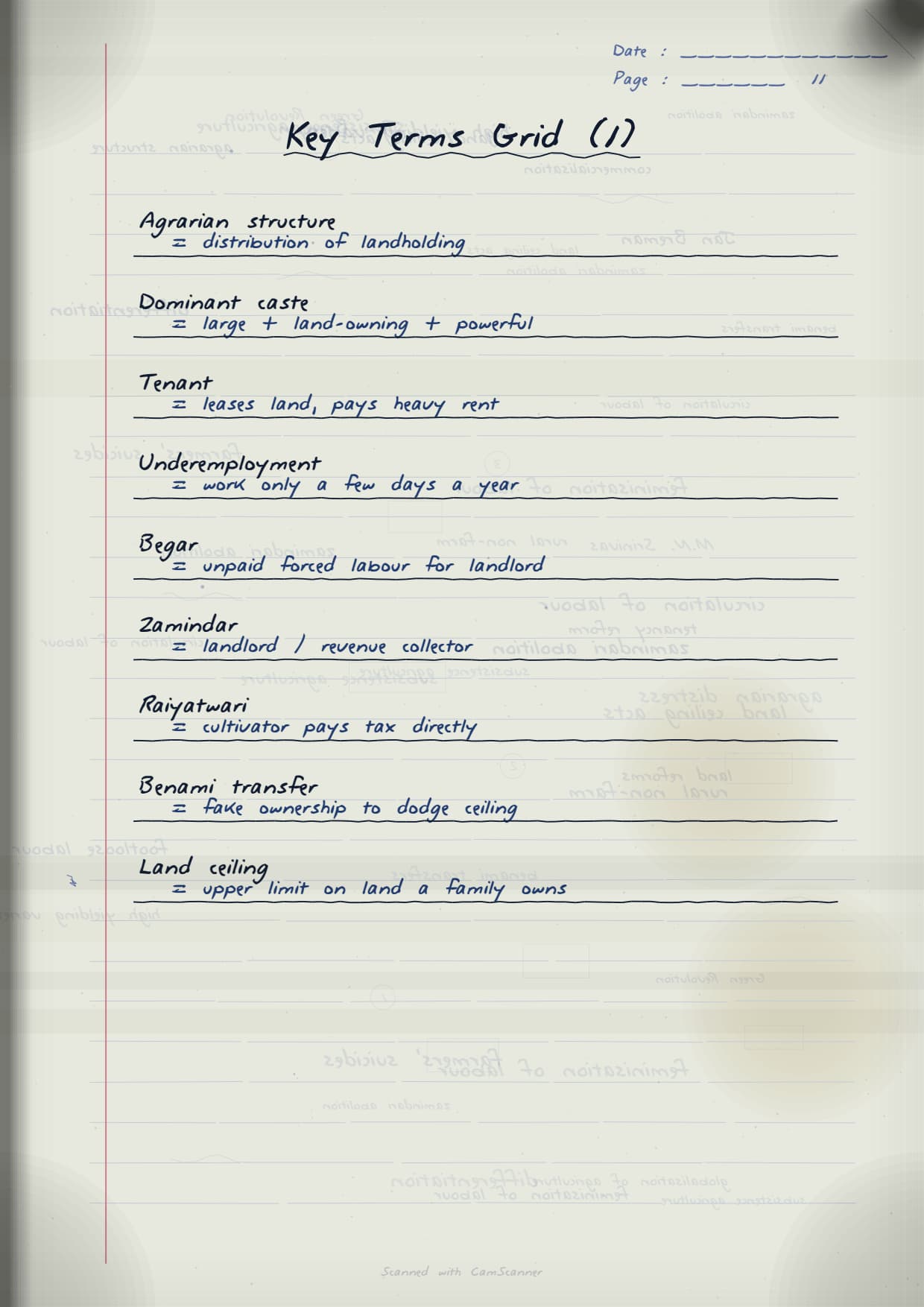
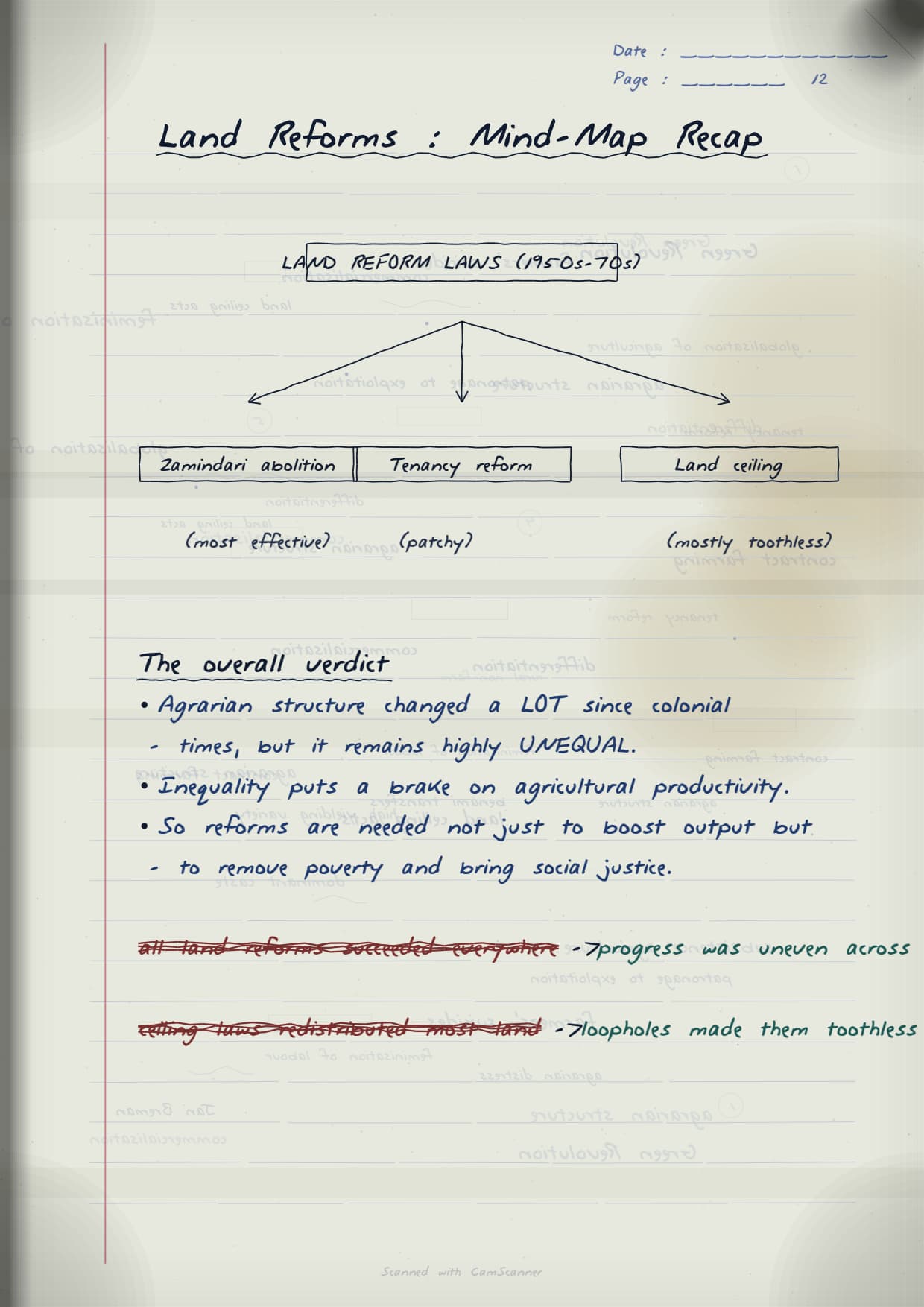
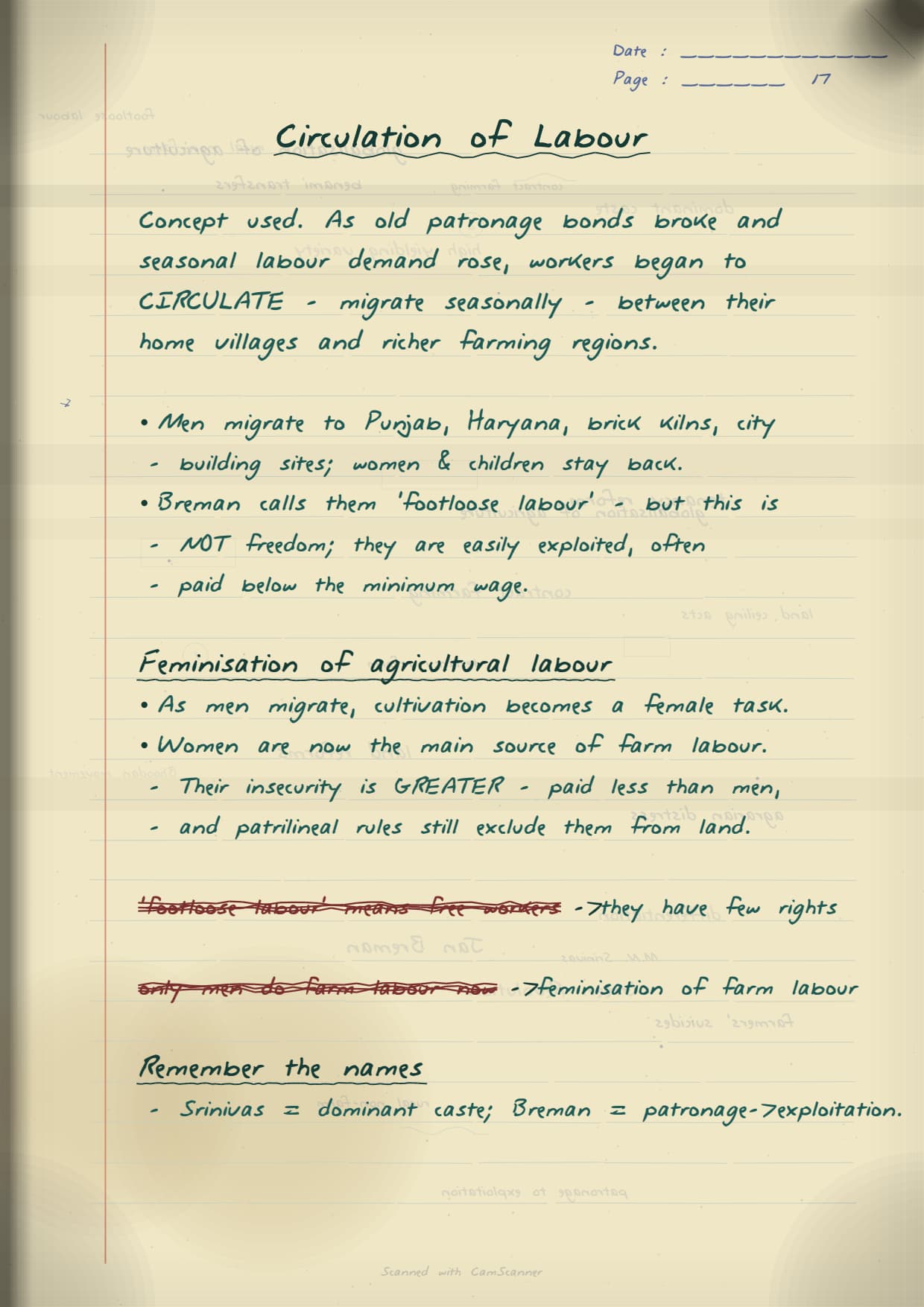
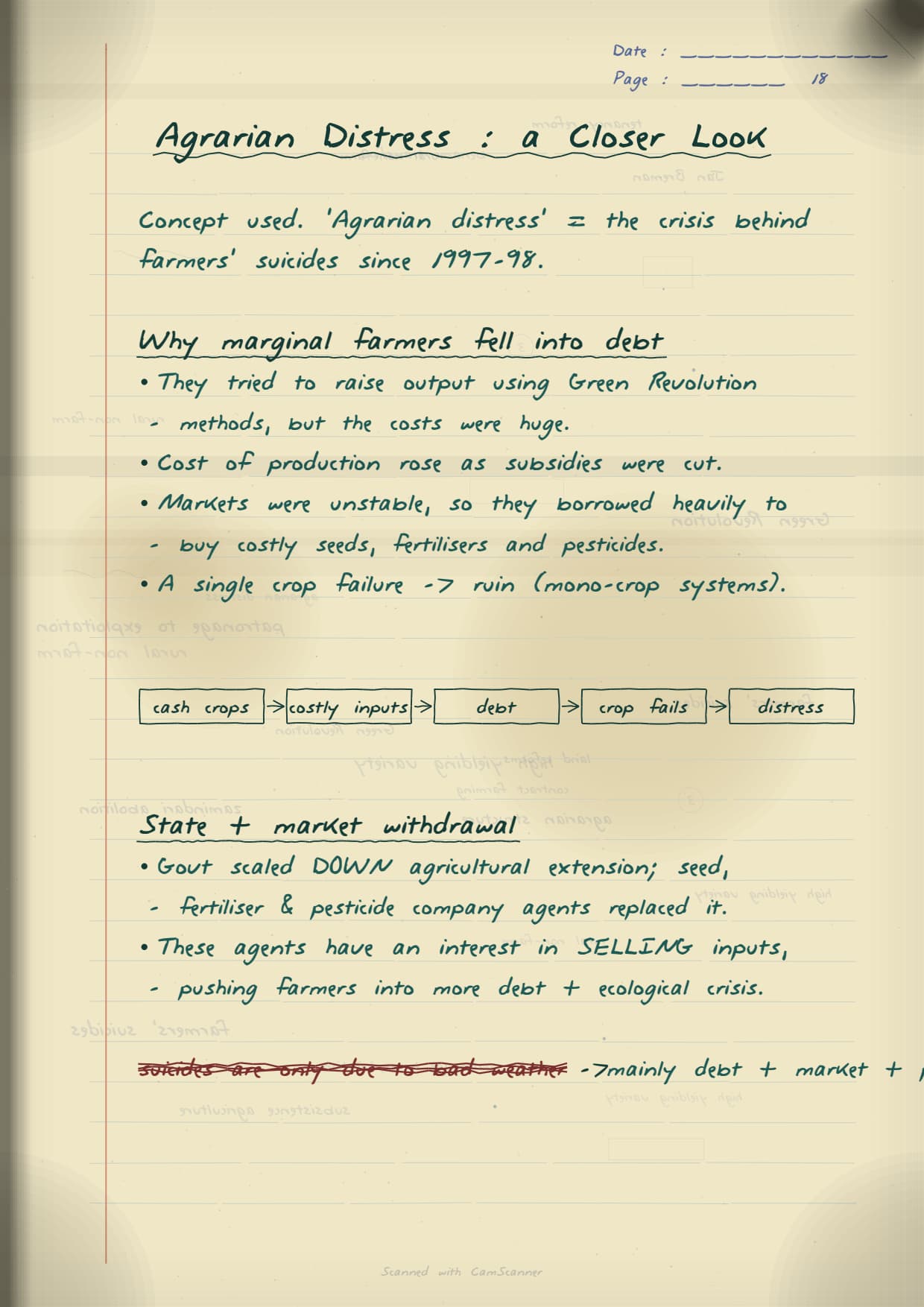
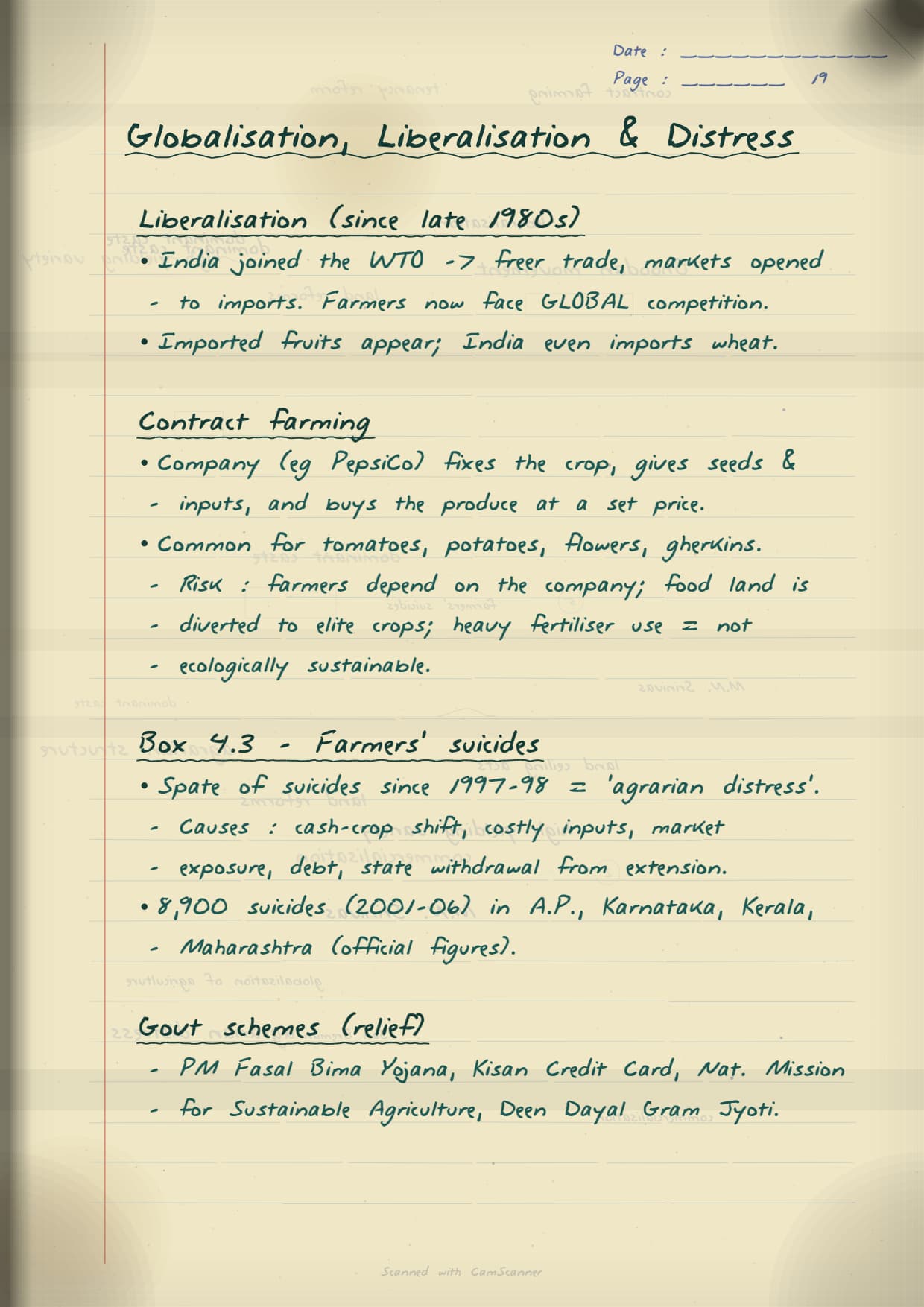
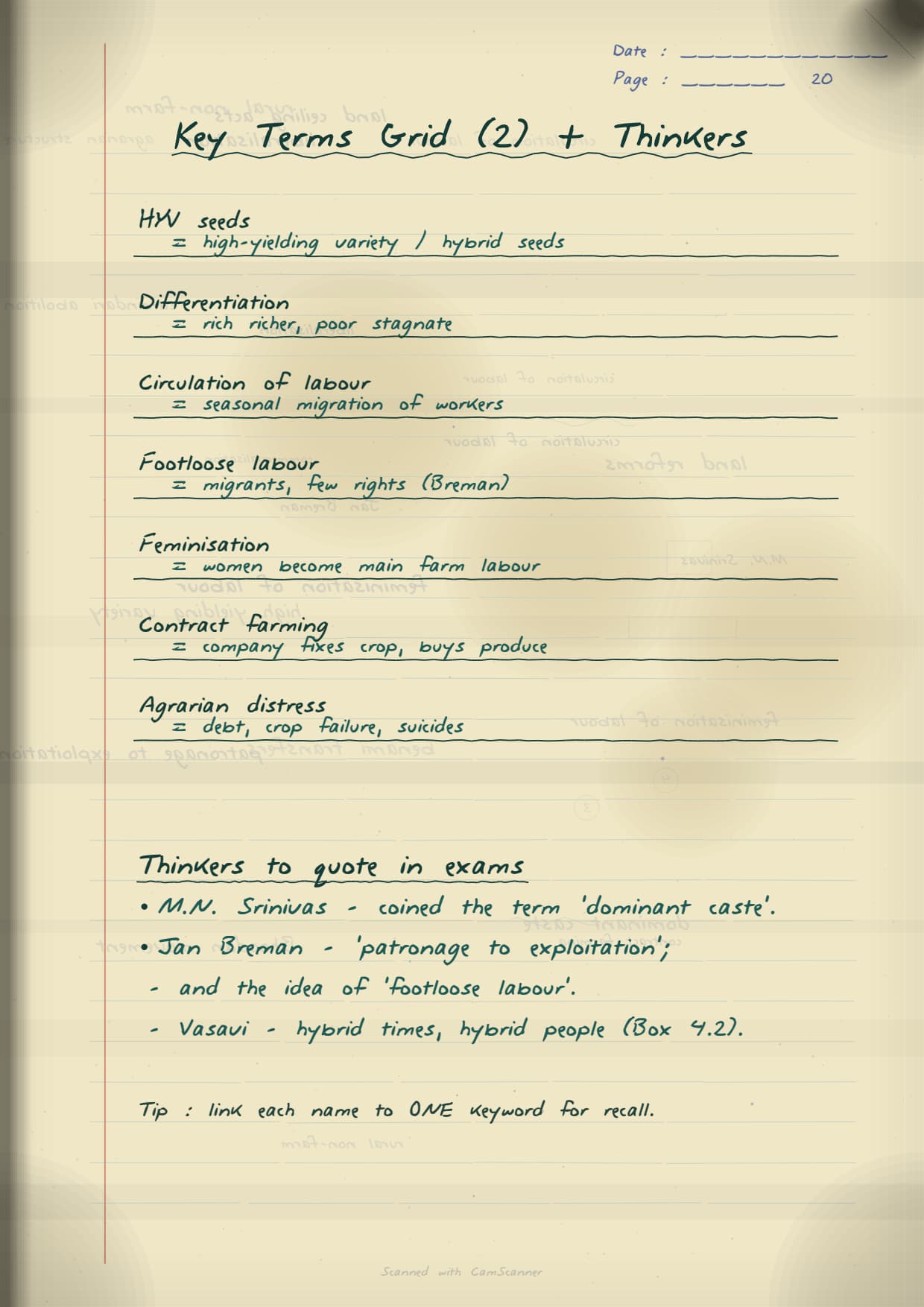
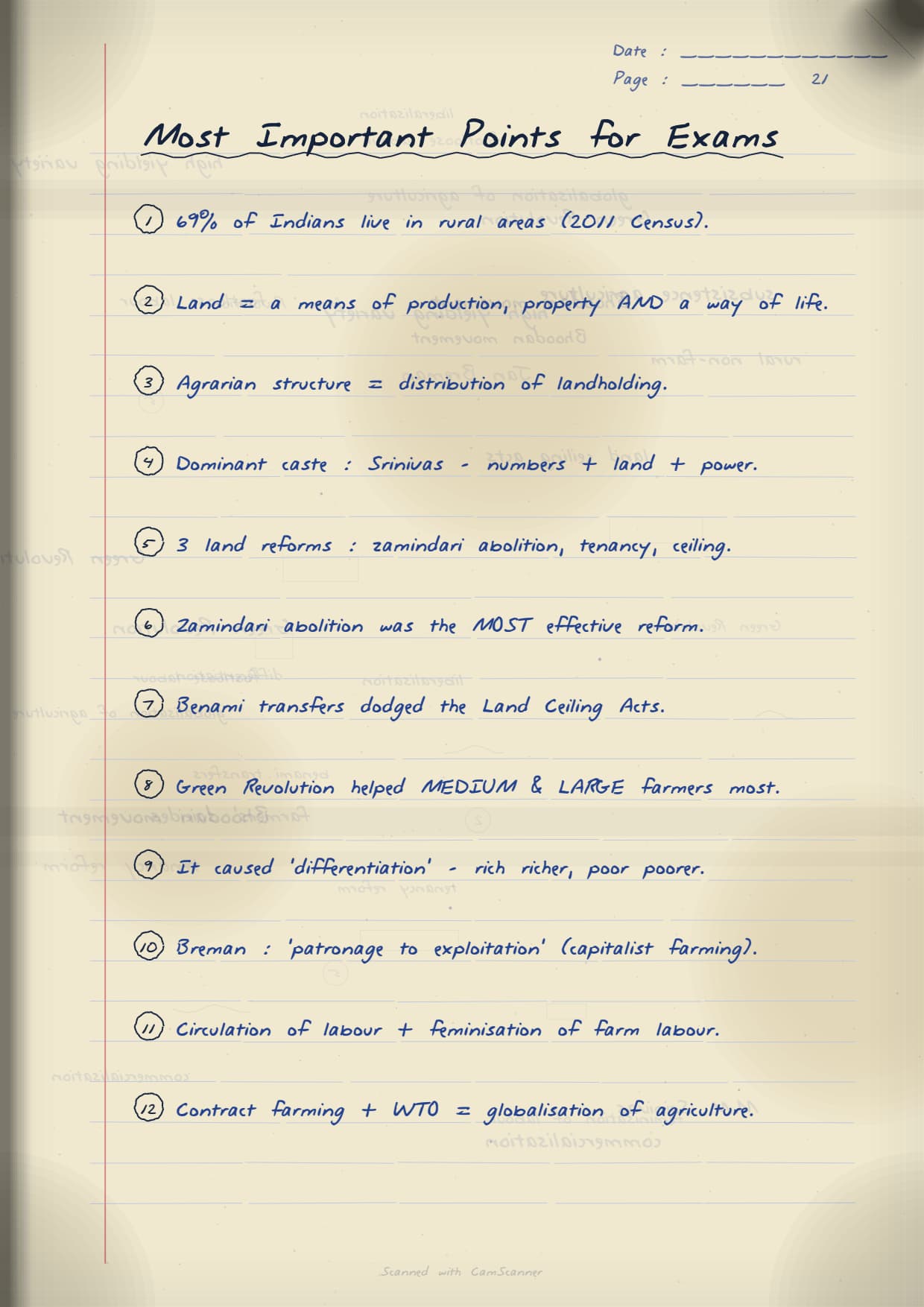
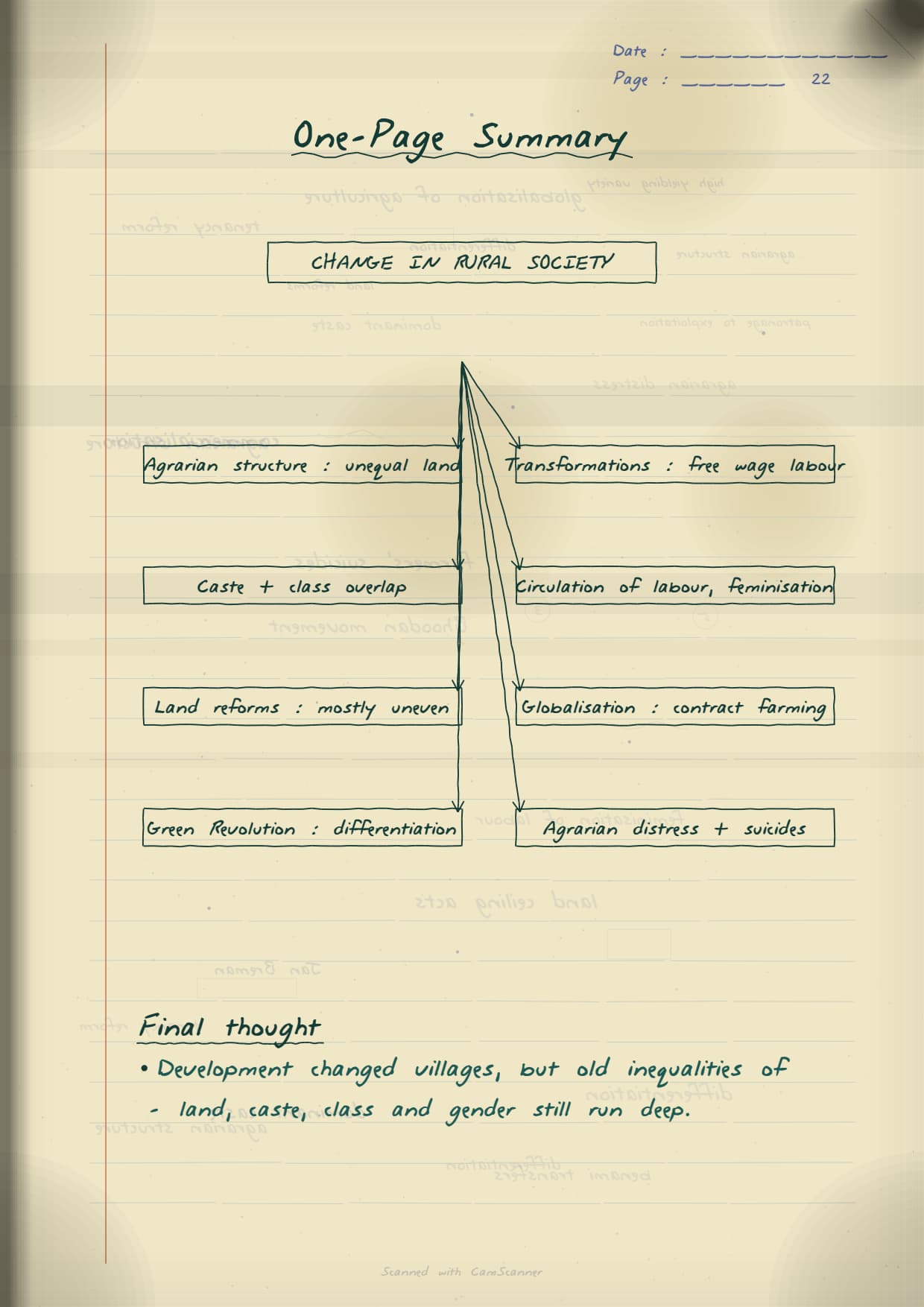
- Boxed key terms and underlined ideas across handwritten pages for rural social change.
- Hand-drawn arrows that link agrarian structure to land reforms and the Green Revolution.
- Pairs with the NCERT Solutions, Notes and Book PDF linked lower on this page.
These Change and Development in Rural Society handwritten notes are prepared from the official NCERT Social Change and Development in India textbook and matched to the 2026-27 CBSE syllabus.
Student Feedback: In a Collegedunia poll of 7,210 Class 12 Sociology students before the 2026 boards, 72% of students said handwritten notes felt faster to revise from than printed text for this chapter. Most students used the boxed agrarian-class chart to recall the structure in the exam.
Source: 2026-27 Class 12 Sociology student poll. Sample of 7,210 students from CBSE schools across 12 states.
What These Change and Development in Rural Society Handwritten Notes Include
These change and development in rural society class 12 handwritten notes cover the whole chapter in a handwritten style. They are built for the student who learns better from handwriting than from printed text, with each idea boxed or underlined for fast recall.
The notes are organised page by page, in the same order as the chapter:
- Agrarian structure pages: land, caste and class drawn as one linked diagram.
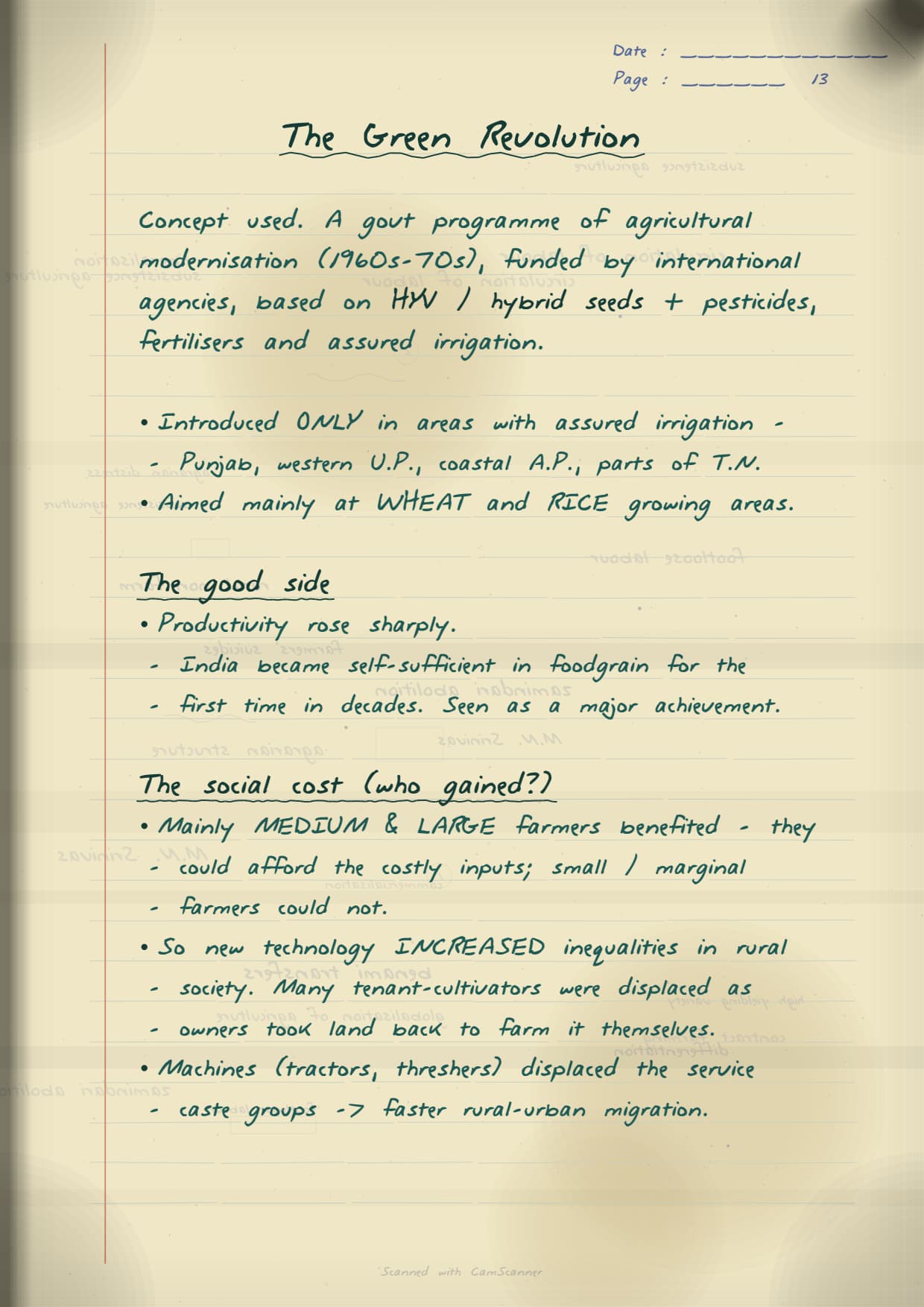
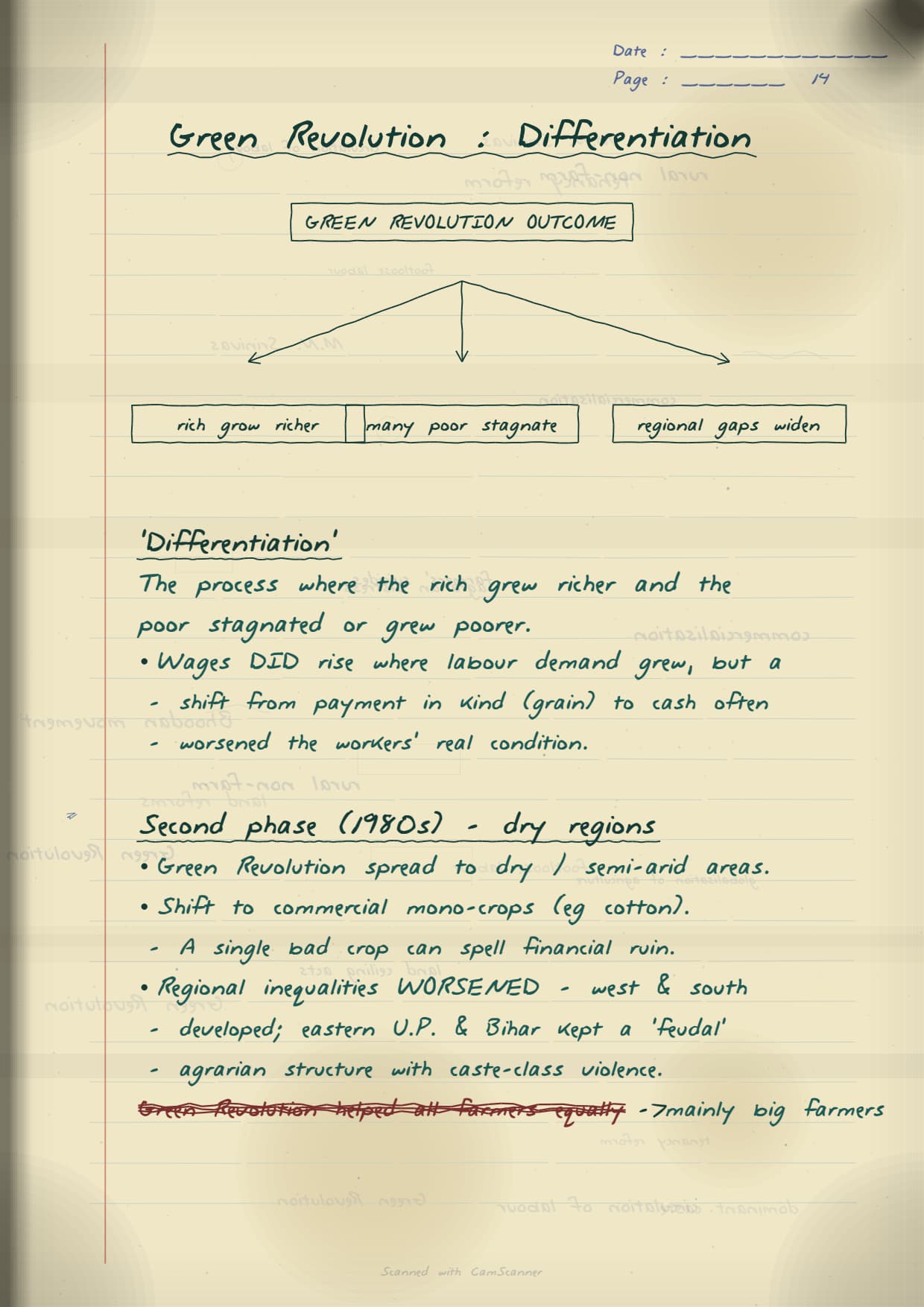
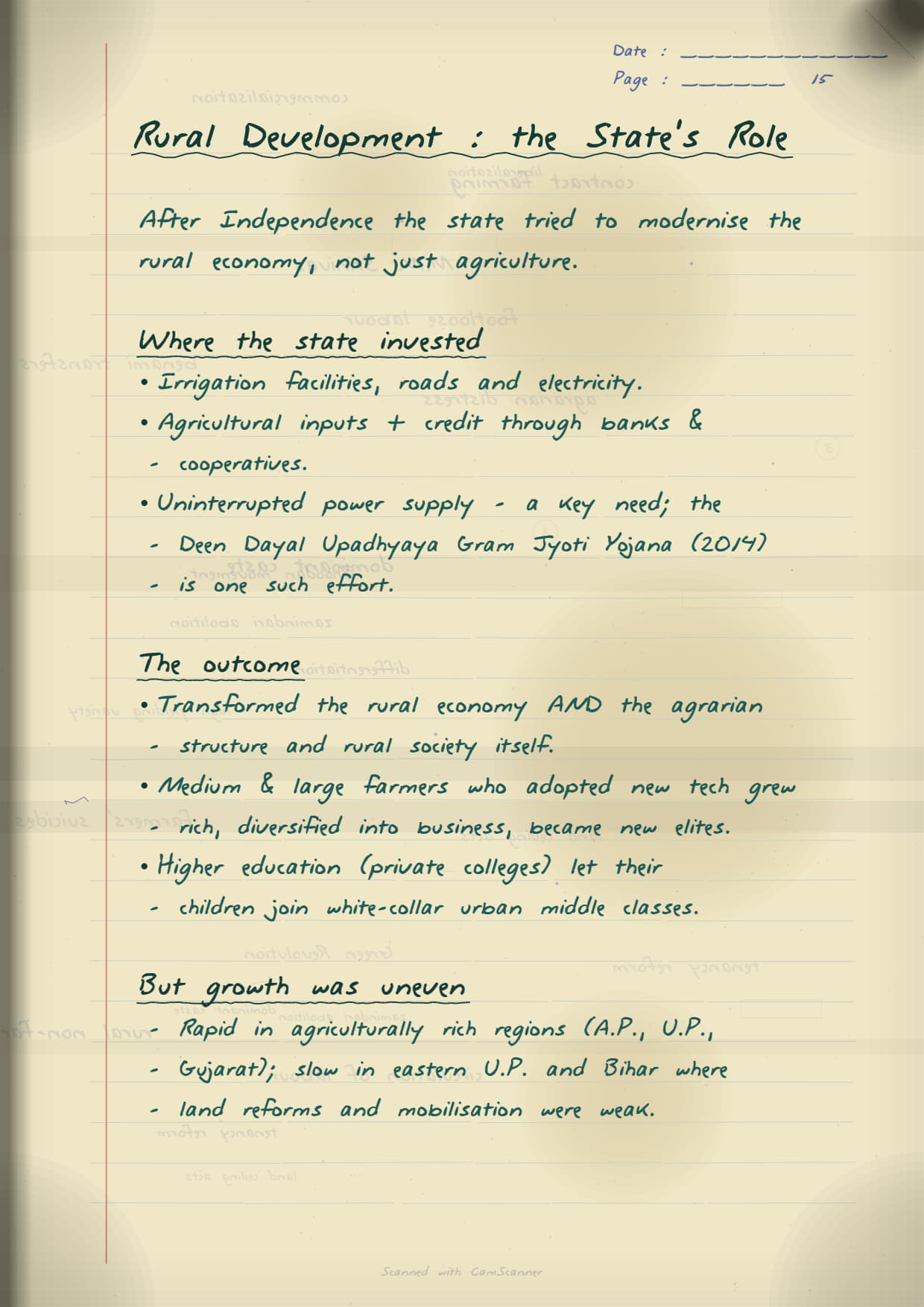
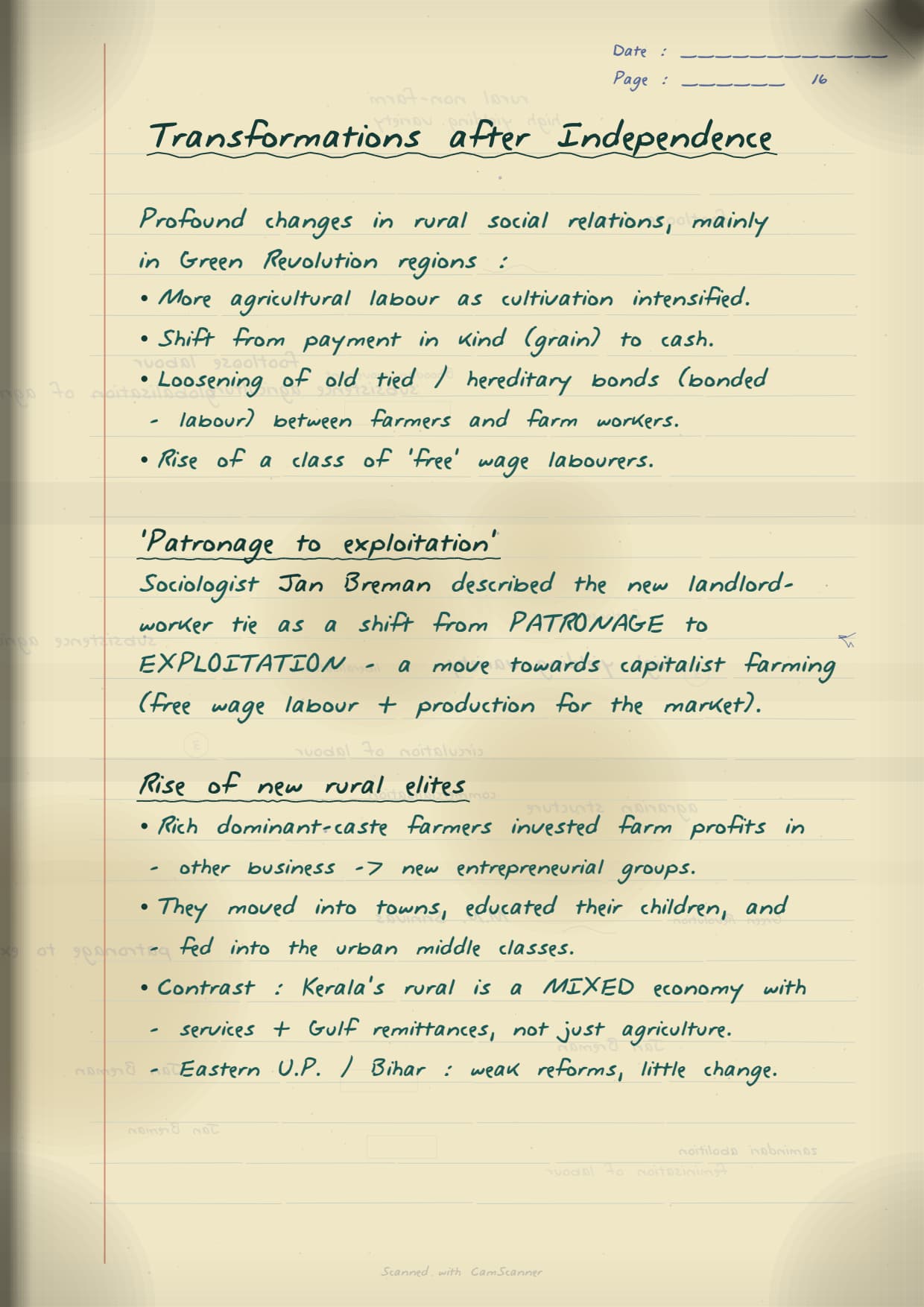
- Change pages: land reforms and the Green Revolution with their gains and limits.
- People pages: new dominant classes at the top and migrant labour at the bottom.
Each page keeps the key term boxed in the margin, so a student can flip through and revise the chapter in minutes. This is why Change and Development in Rural Society class 12 feels far smaller once it is on handwritten pages.
Agrarian Structure Pages: Land, Caste and Class
The first set of pages draws the agrarian structure as a single picture. The handwritten layout puts the landowners at the top and the labourers at the bottom, with caste written alongside class, so the overlap is clear at a glance.
- Boxed term: agrarian structure is boxed and defined in one line in the margin.
- Arrow link: a hand-drawn arrow shows land leading to power and status.
- Side note: the dominant caste is circled where it meets the big landowners.
- Bottom row: agricultural labourers are underlined as the most vulnerable group.
The handwritten chart makes one idea stick: caste and class line up in the village. A student who pictures this drawing in the exam can answer the structure question without losing the link between land, caste and power.
Change Pages: Land Reforms and the Green Revolution
The next pages handle the two big forces of change. Each one is drawn with its gain on the left and its limit on the right, so the balance the exam wants is built into the page.
| Page | What the handwritten page shows |
|---|---|
| Land reforms page | Abolition of intermediaries, ceilings and tenancy laws, with a note that ceilings were often dodged. |
| Green Revolution page | New seeds, fertilisers and irrigation, with an arrow to higher output but a note on uneven gains. |
| New classes page | Old landed castes turning into rural entrepreneurs, drawn as a rising arrow. |
The pages keep one rule in view: write the gain and the limit together. Because each handwritten page already pairs them, a student copies that balance straight into the answer sheet, which is exactly what the long answers reward.
People Pages: Migrant Labour and Globalisation
The last content pages show what change did to people. They draw the circulation of labour as a loop and add the new market links that globalisation brought to the village.
- Loop diagram: a hand-drawn loop shows workers moving to the city and back.
- Boxed term: circulation of labour and mukadam are boxed in the margin.
- Market note: imported fruit and contract farming are written as new risks.
- Movement note: farmers' movements are underlined as the response to that risk.
The key handwritten point is that change brought both new chances and new risks. The loop and the market note sit side by side, so a student remembers to give both the opportunity and the cost in the answer.
How to Use These Change and Development in Rural Society Handwritten Notes
Handwritten notes work best with a clear method. Used in the right order, they fix the chapter faster than reading the textbook again. Follow these steps for the last week before the exam.
- First read: go through every page once to see the whole chapter in handwriting.
- Box test: cover the page and recall each boxed term from memory.
- Draw it: redraw the agrarian-structure chart and the labour loop yourself.
- Last scan: flip through the boxed terms the night before, then the morning of, the exam.
This method turns passive reading into active recall, which is what raises marks. Students who redraw the two main diagrams by hand rarely forget the structure or the labour loop under exam pressure.
Common Mistakes These Notes Help You Avoid
The handwritten pages are designed to block the errors that cost marks in this chapter. Keeping these in view as you revise is the fastest way to lift a score.
- Saying the Green Revolution helped everyone - the page notes it mostly helped large farmers and irrigated regions.
- Splitting caste and class - the chart circles where the dominant caste and big landowners are the same group.
- Calling migration a one-way move - the loop diagram shows it is a circulation of labour.
- Forgetting that land ceilings were often dodged, so little land was freed.
- Writing that globalisation only helped farmers - the market note adds the price risk and debt.
Because every common error is answered on the page, a student who revises from these notes carries the correction into the exam. That balanced view is what moves an answer from average to high marks.
How These Notes Pair with the Solutions and Book PDF
These handwritten notes are for fast revision. To prepare fully, students should use them with the other resources for the same chapter, all linked in the table below.
| Resource | Best used for |
|---|---|
| Change and Development in Rural Society NCERT Solutions | Point-wise model answers to all 8 back-exercise questions |
| Change and Development in Rural Society Class 12 Notes | A typed, one-page summary with tables and key terms |
| Change and Development in Rural Society NCERT Book PDF | Reading the original NCERT chapter text and examples |
Tip: revise from these handwritten pages first, then check your recall against the typed Notes, and finally attempt the Solutions on your own. That order builds memory faster than reading straight through.
All Class 12 Sociology Handwritten Notes by Chapter
The table links the Handwritten Notes for every chapter in both Class 12 Sociology books, so students can move across the course in one click. Change and Development in Rural Society is highlighted.
| Chapter | Handwritten Notes |
|---|---|
| Indian Society | |
| Chapter 1 | Introducing Indian Society |
| Chapter 2 | The Demographic Structure of the Indian Society |
| Chapter 3 | Social Institutions - Continuity and Change |
| Chapter 4 | The Market as a Social Institution |
| Chapter 5 | Patterns of Social Inequality and Exclusion |
| Chapter 6 | The Challenges of Cultural Diversity |
| Social Change and Development in India | |
| Chapter 1 | Structural Change |
| Chapter 2 | Cultural Change |
| Chapter 3 | The Constitution and Social Change |
| Chapter 4 | Change and Development in Rural Society |
| Chapter 5 | Change and Development in Industrial Society |
| Chapter 6 | Globalisation and Social Change |
| Chapter 7 | Mass Media and Communications |
| Chapter 8 | Social Movements |
FAQs on Change and Development in Rural Society Handwritten Notes
Change and Development in Rural Society Class 12 Handwritten Notes Common Questions
Ques. Where can I download the class 12 sociology chapter 4 handwritten notes PDF?
Ans. You can download the Change and Development in Rural Society Class 12 handwritten notes PDF directly from this page. They are free, follow the 2026-27 CBSE syllabus and present the whole chapter as clean, handwritten pages.
Ques. Are handwritten notes good for revising Change and Development in Rural Society?
Ans. Yes. Handwritten notes box each key term and draw the agrarian structure and the labour loop, which makes them quick to scan. Most students find them faster to revise from than printed text in the last days before the exam.
Ques. What topics do these handwritten notes cover?
Ans. They cover the agrarian structure, land reforms, the Green Revolution, the rise of new dominant classes, the circulation of migrant labour and the globalisation of farming, each drawn page by page with boxed terms and arrows.
Ques. How should I use these notes with the NCERT Solutions?
Ans. Revise from the handwritten pages first to fix the ideas, then attempt the 8 back-exercise questions in the NCERT Solutions on your own. Using both together builds both recall and writing practice for the board paper.
Ques. Are these handwritten notes enough to score well in the board exam?
Ans. They are strong for fast revision and recall, since they box every key term and draw the main diagrams. For full marks, pair them with the typed Notes and the NCERT Solutions on this page to practise writing complete answers.



Comments