




These Class 12 Sociology Chapter 8 Social Movements Handwritten Notes turn the chapter into clean, handwritten pages on the features and types of social movements, the old and new movements, and the ecological, class, caste, tribal and women's movements, set to the 2026-27 CBSE syllabus. The boxed terms and underlined points make them ideal for a last, fast revision.
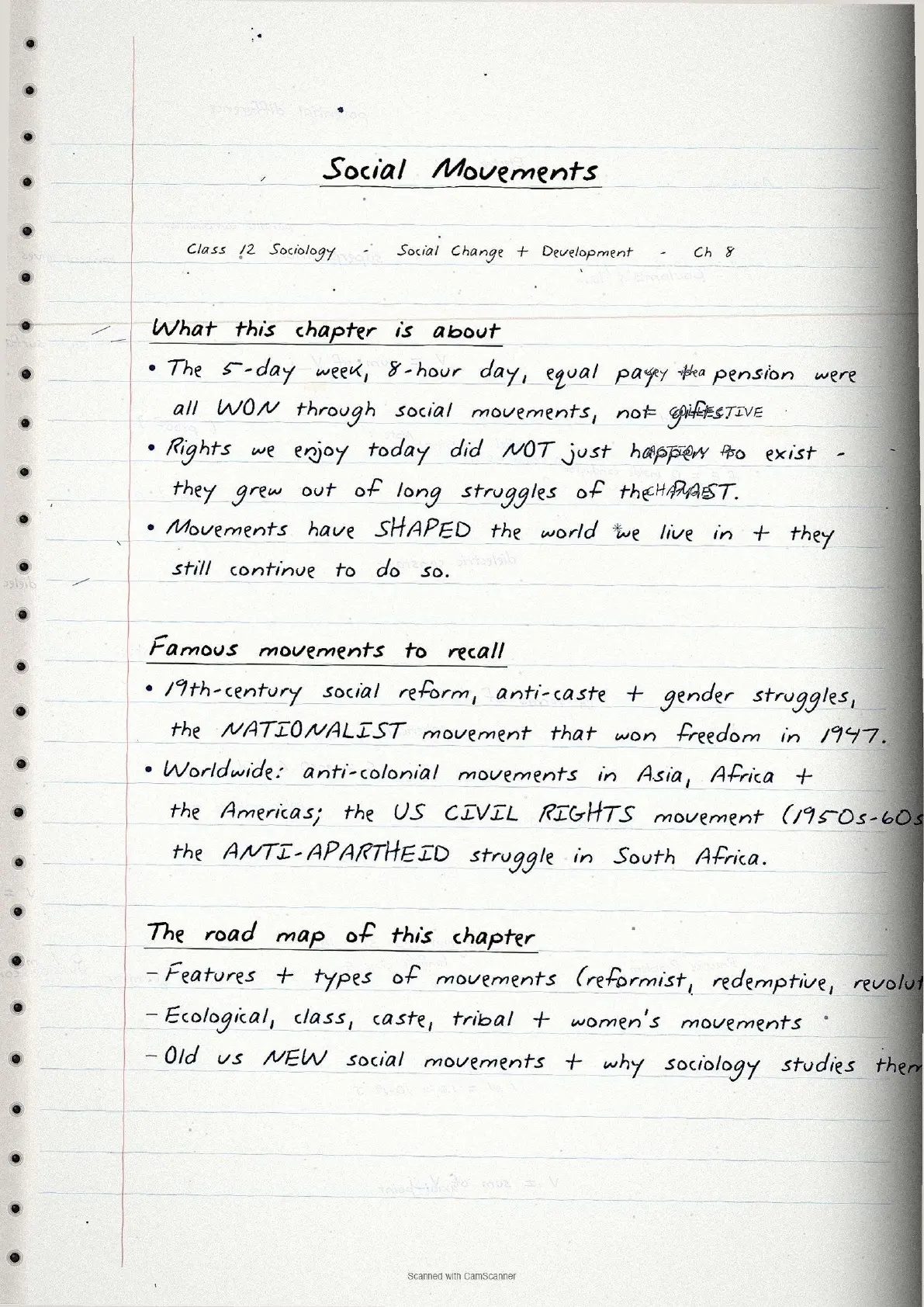
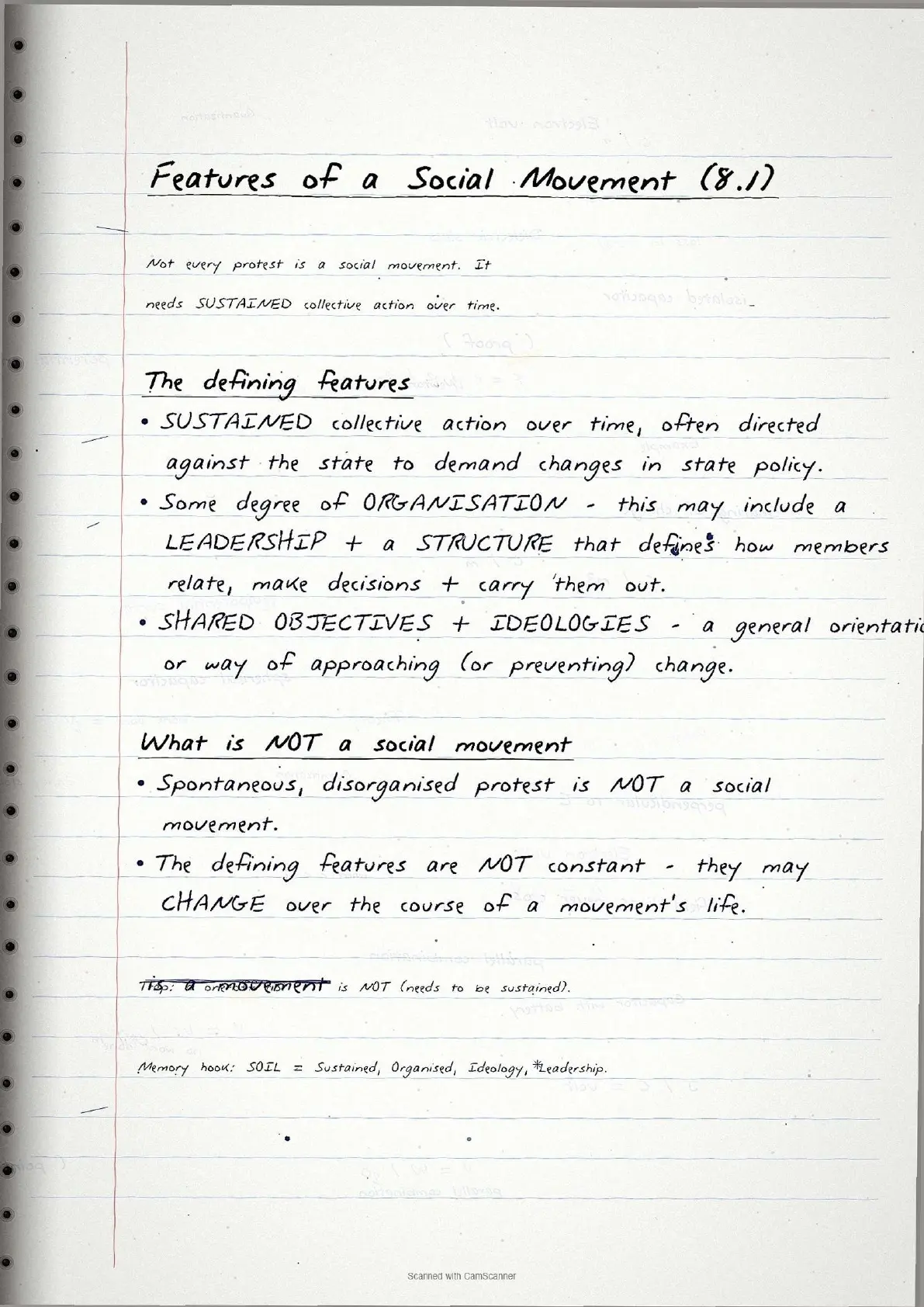
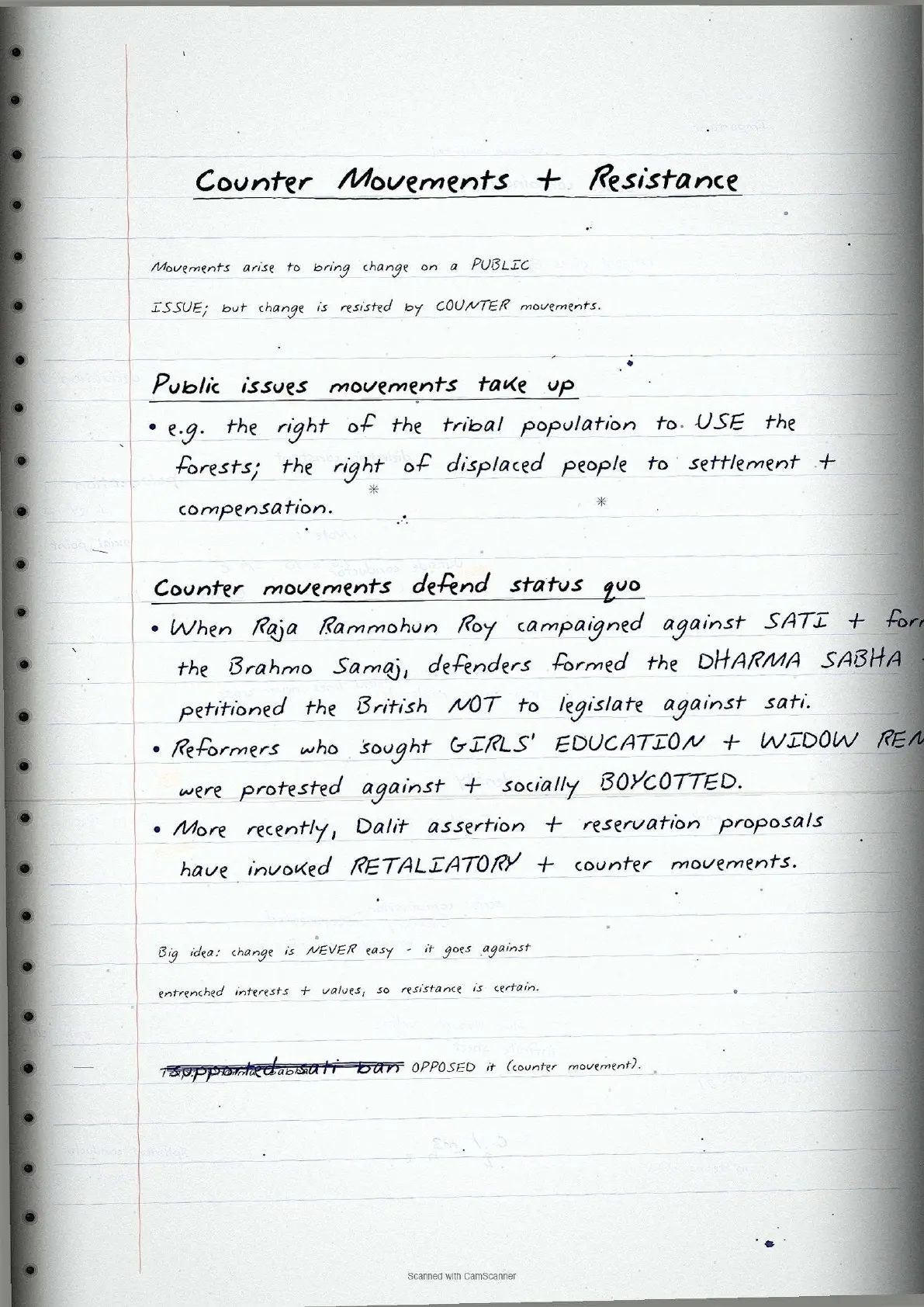
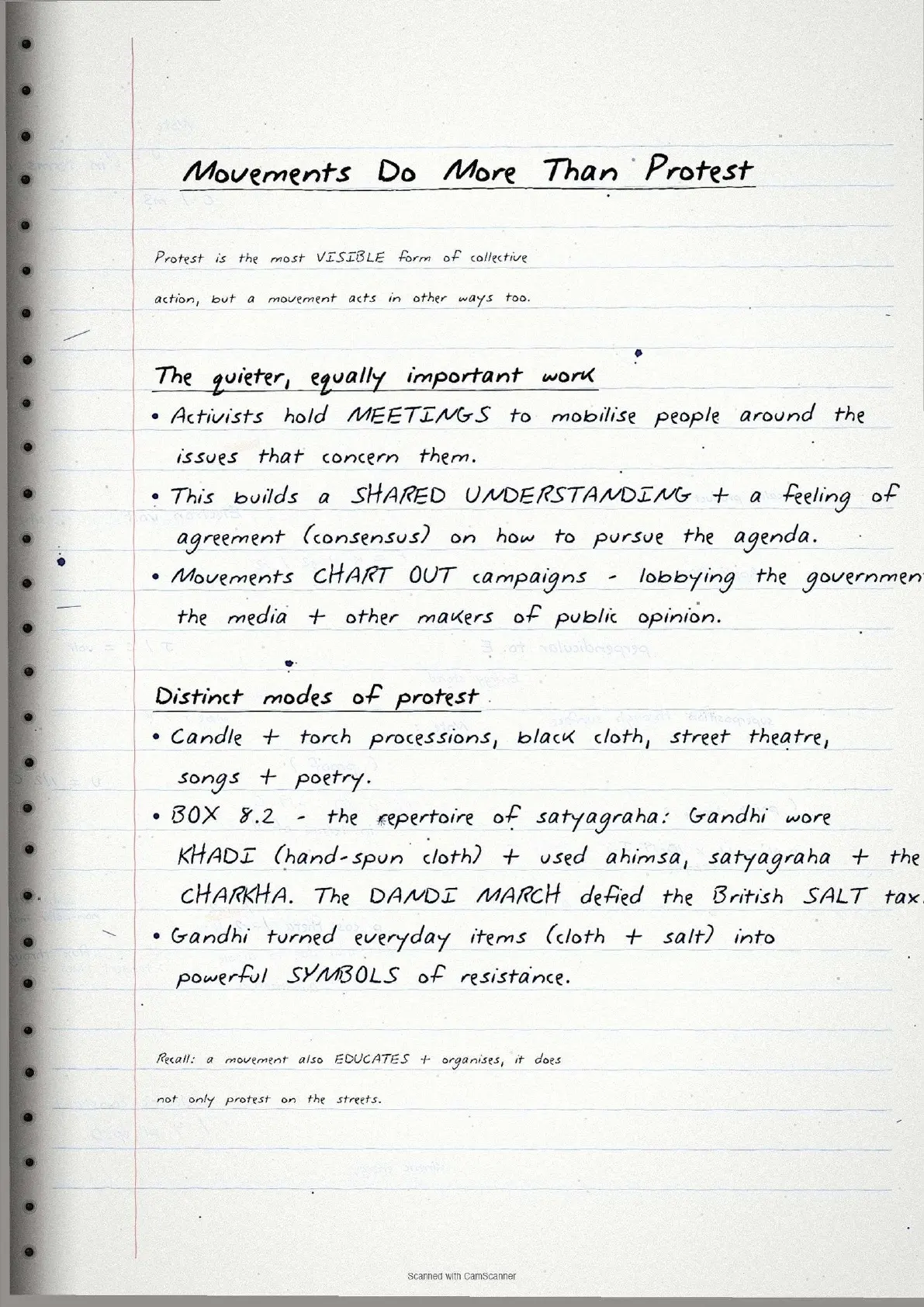
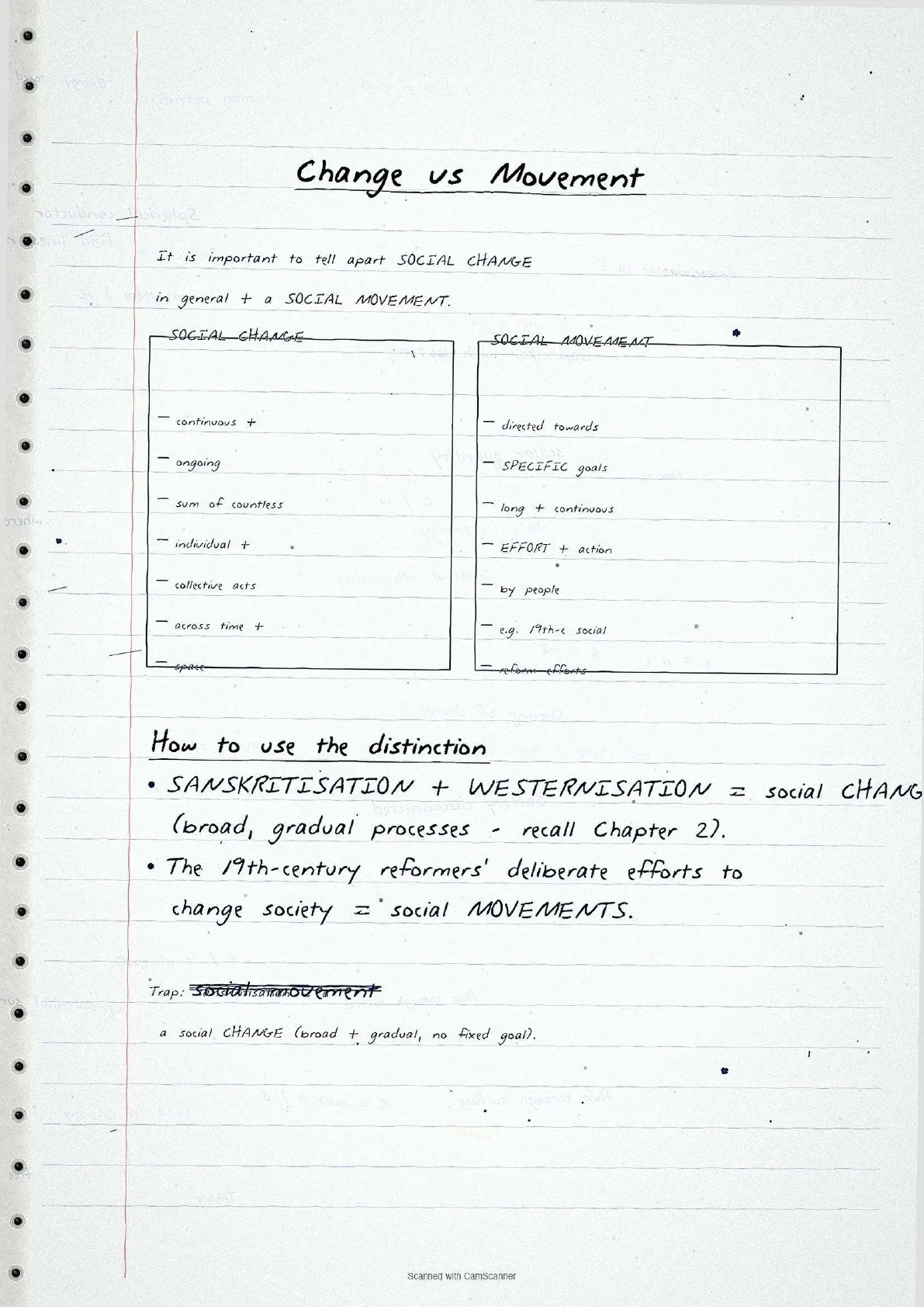
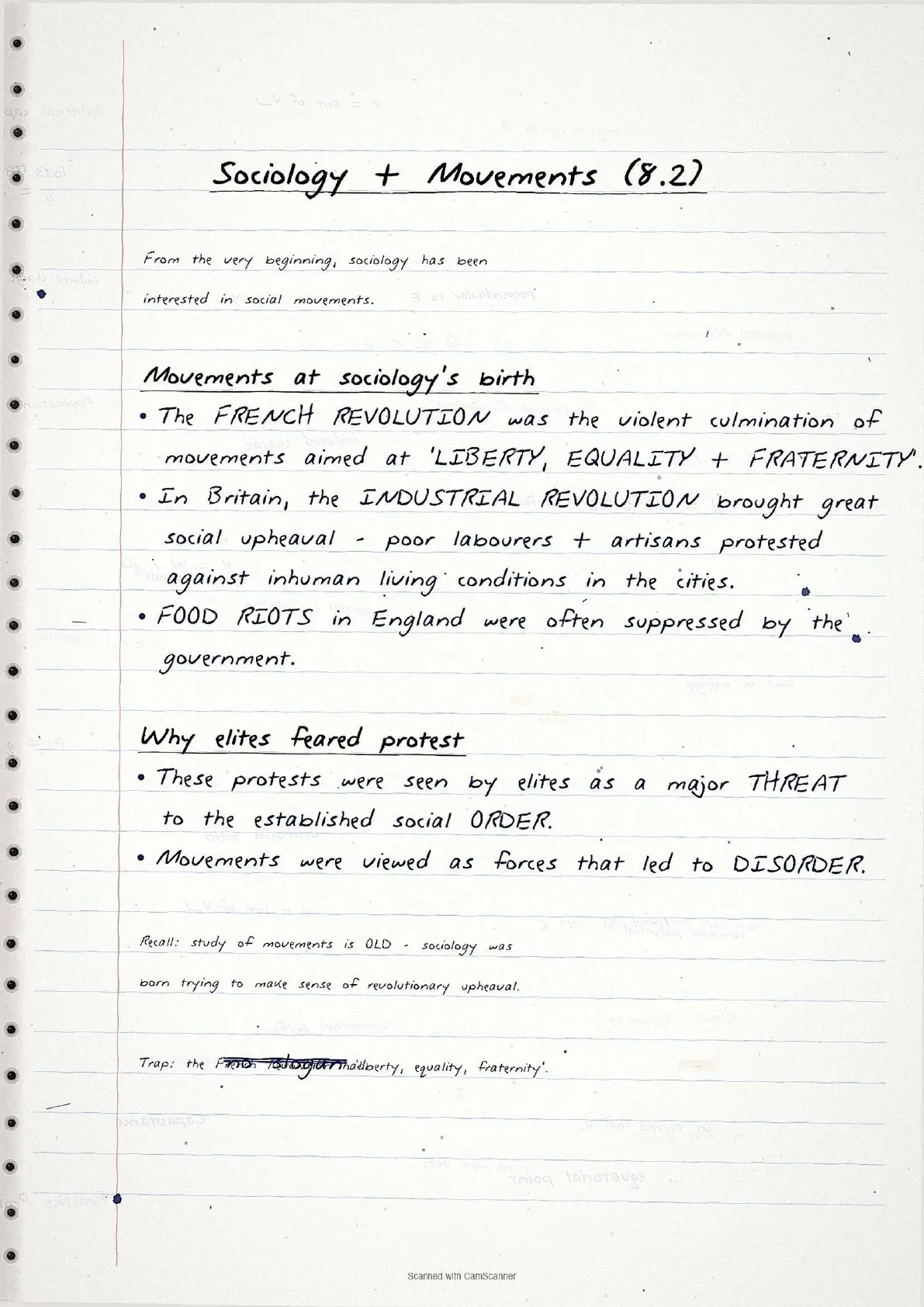
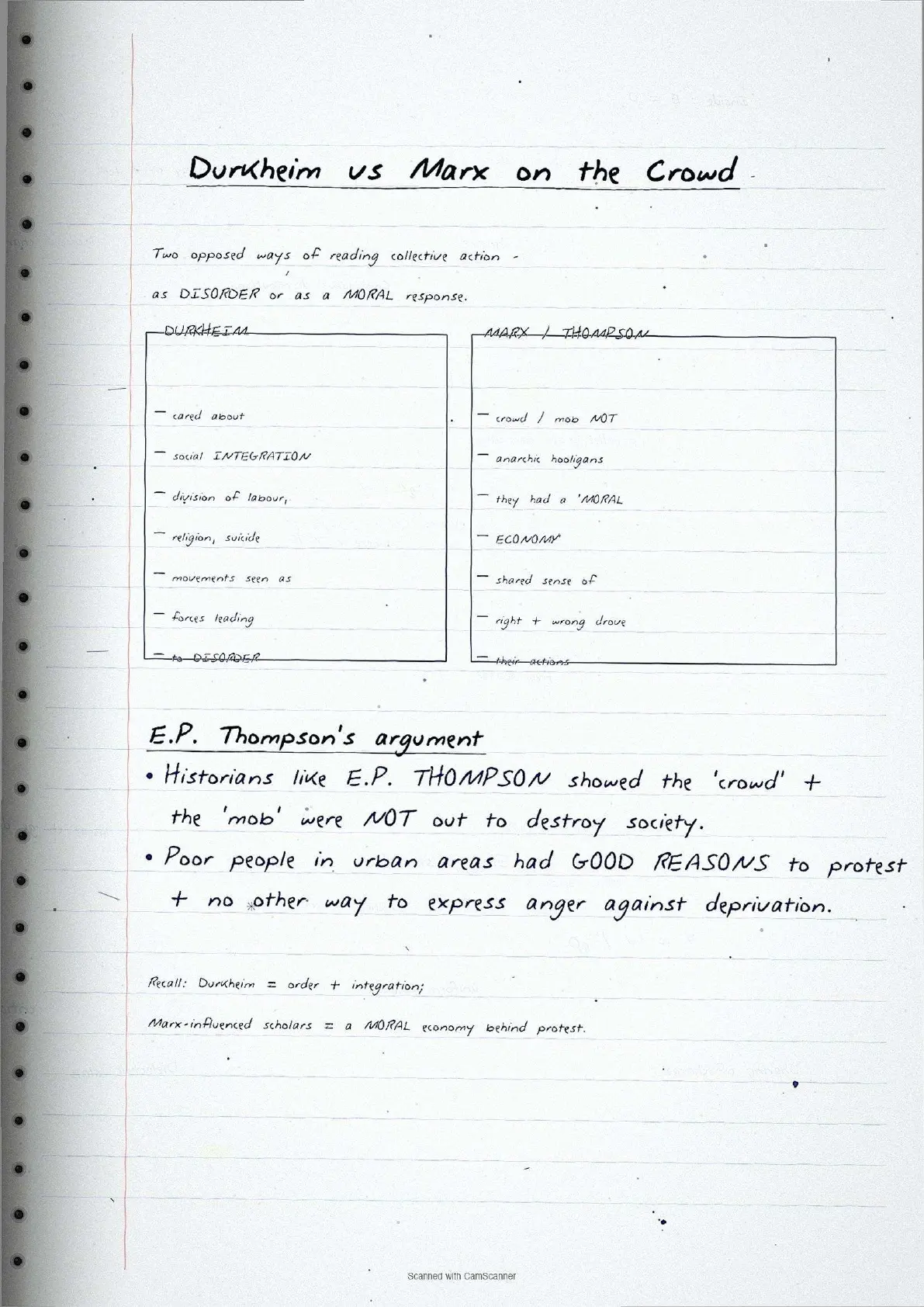
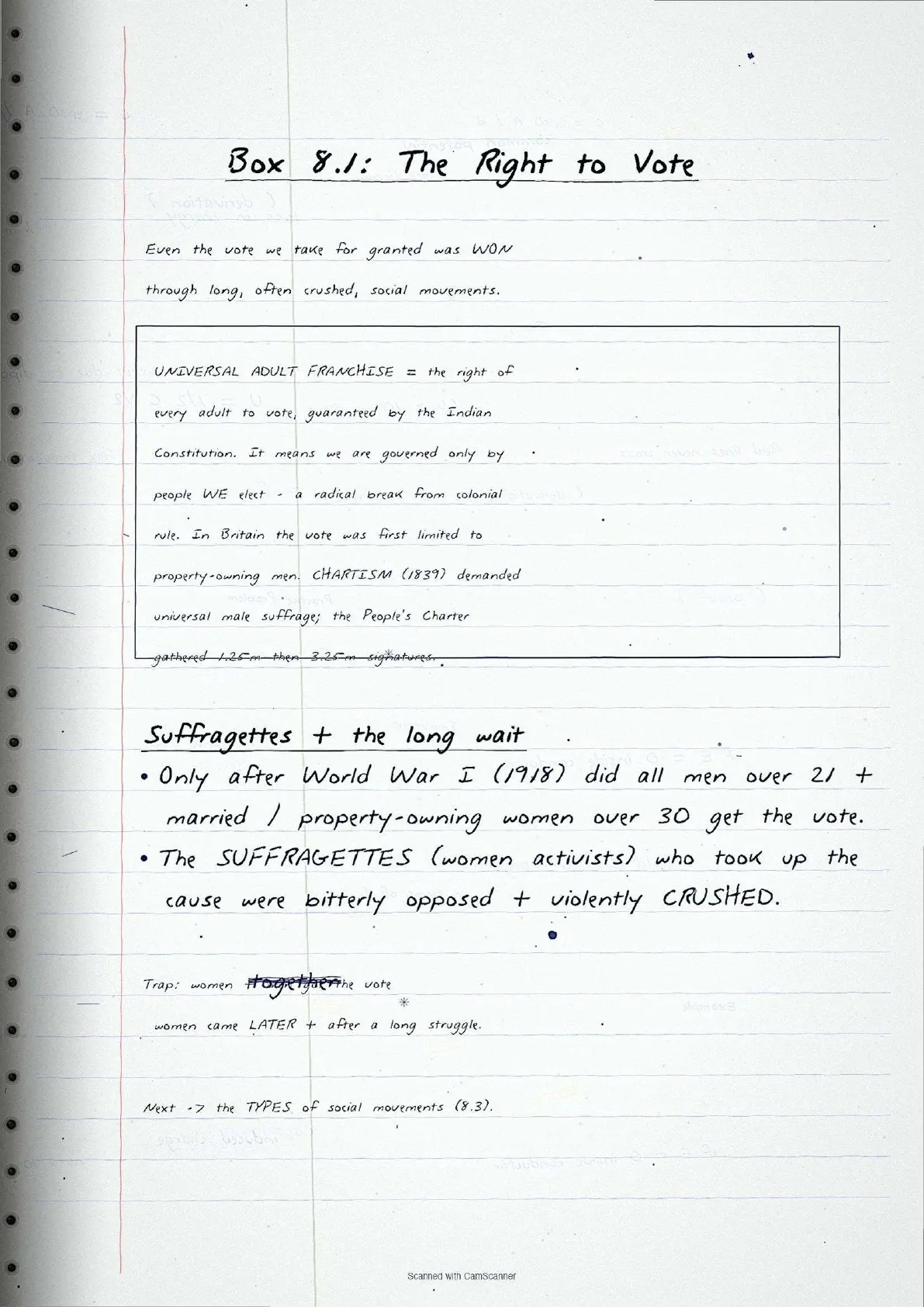
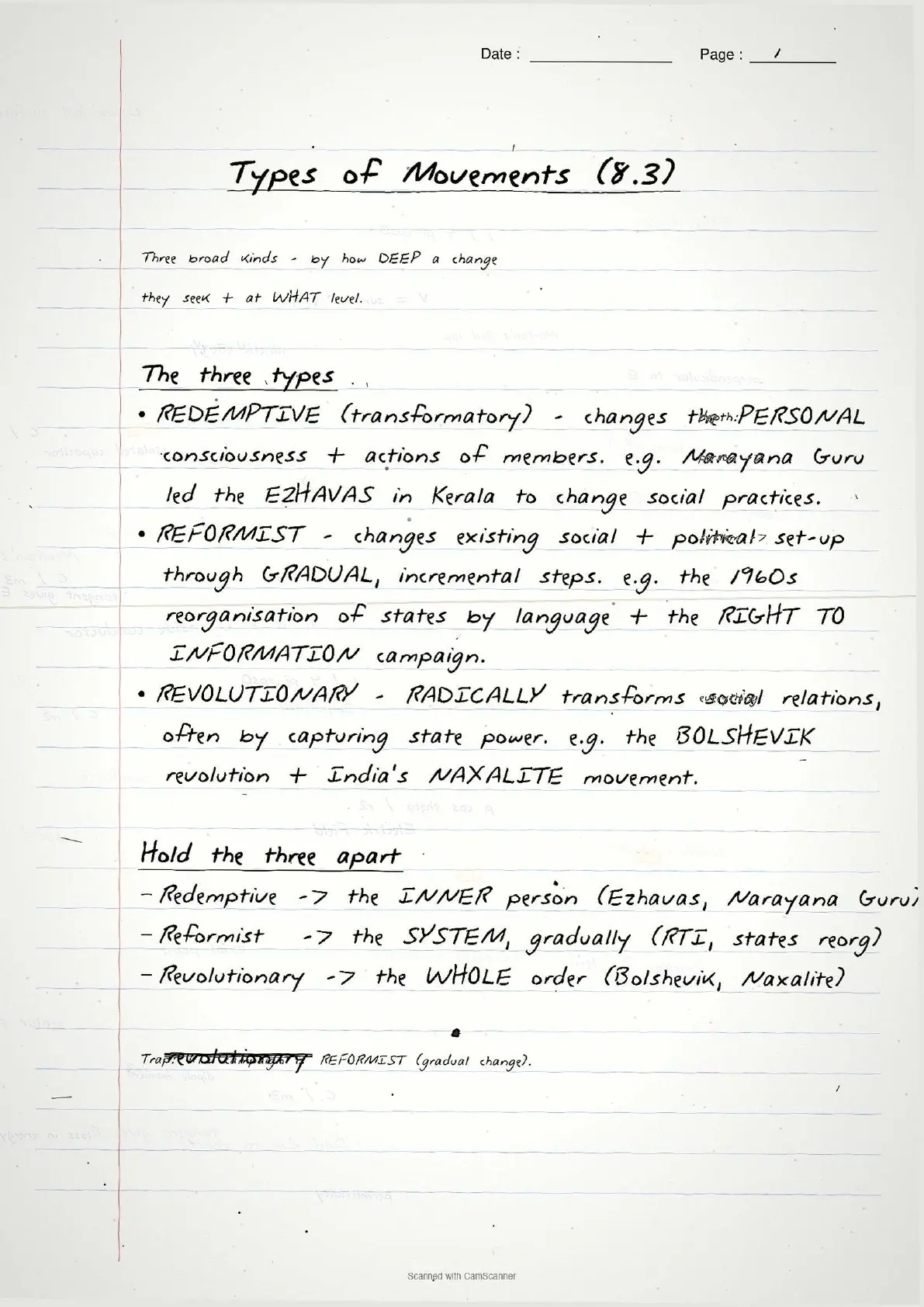
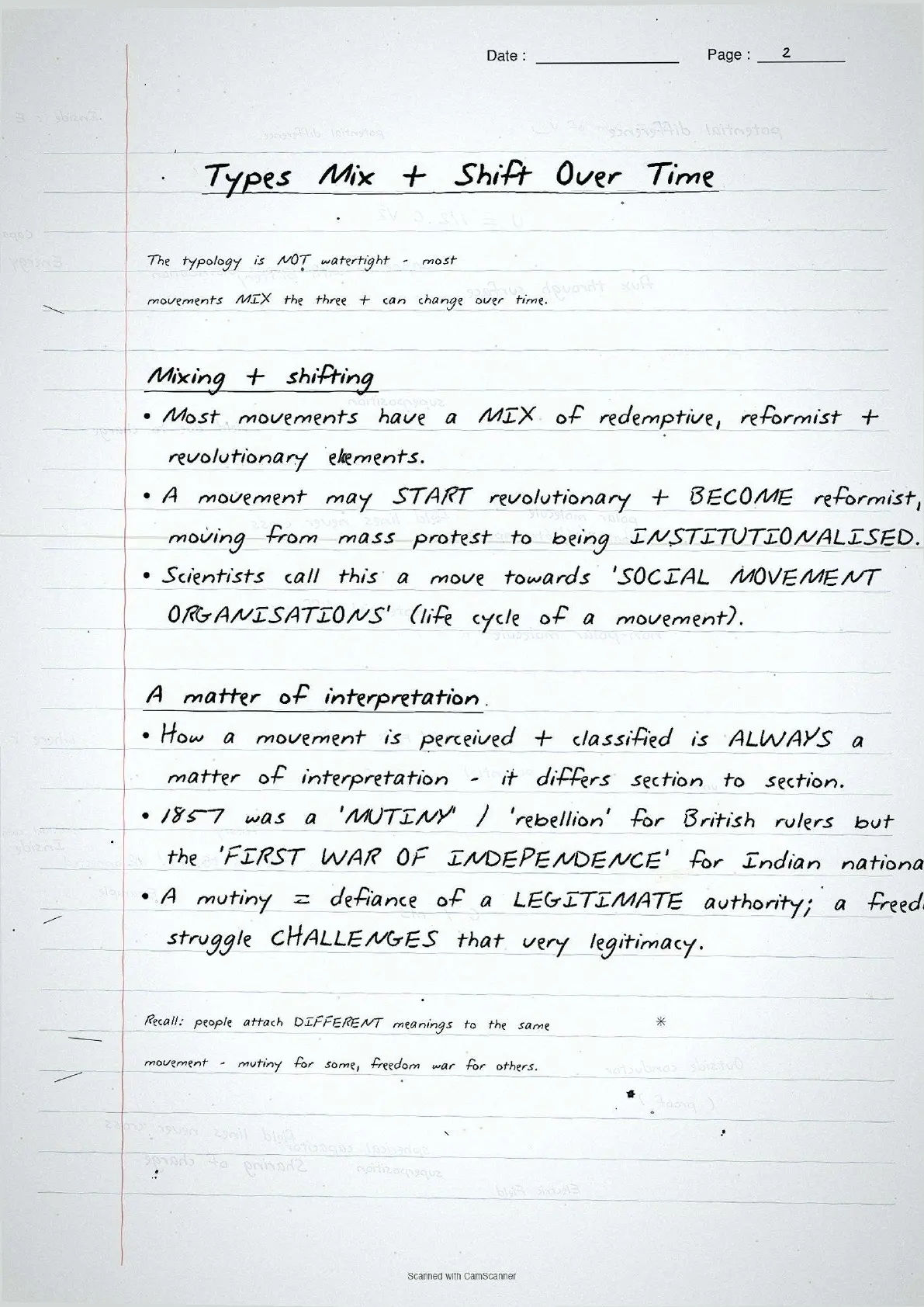
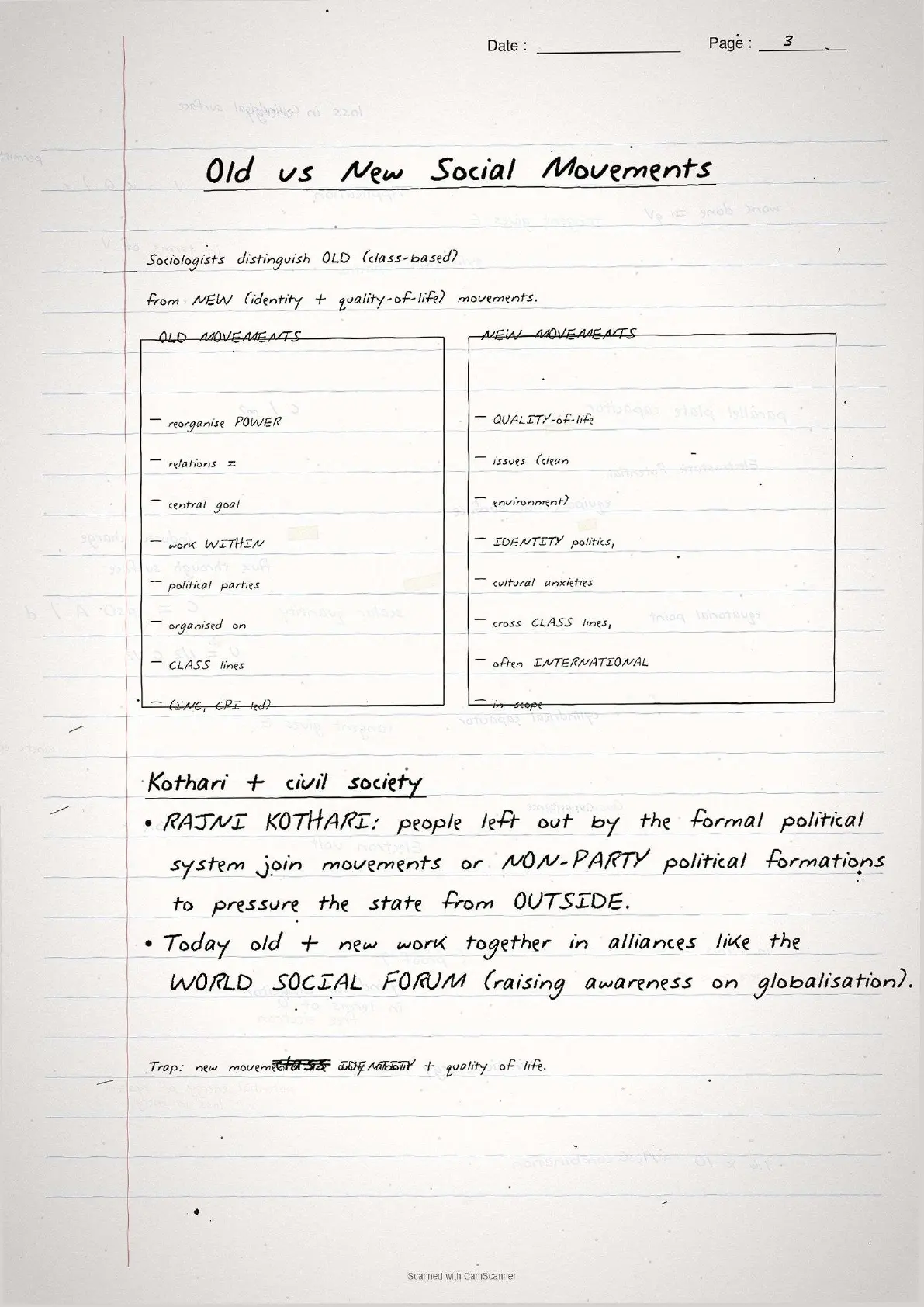
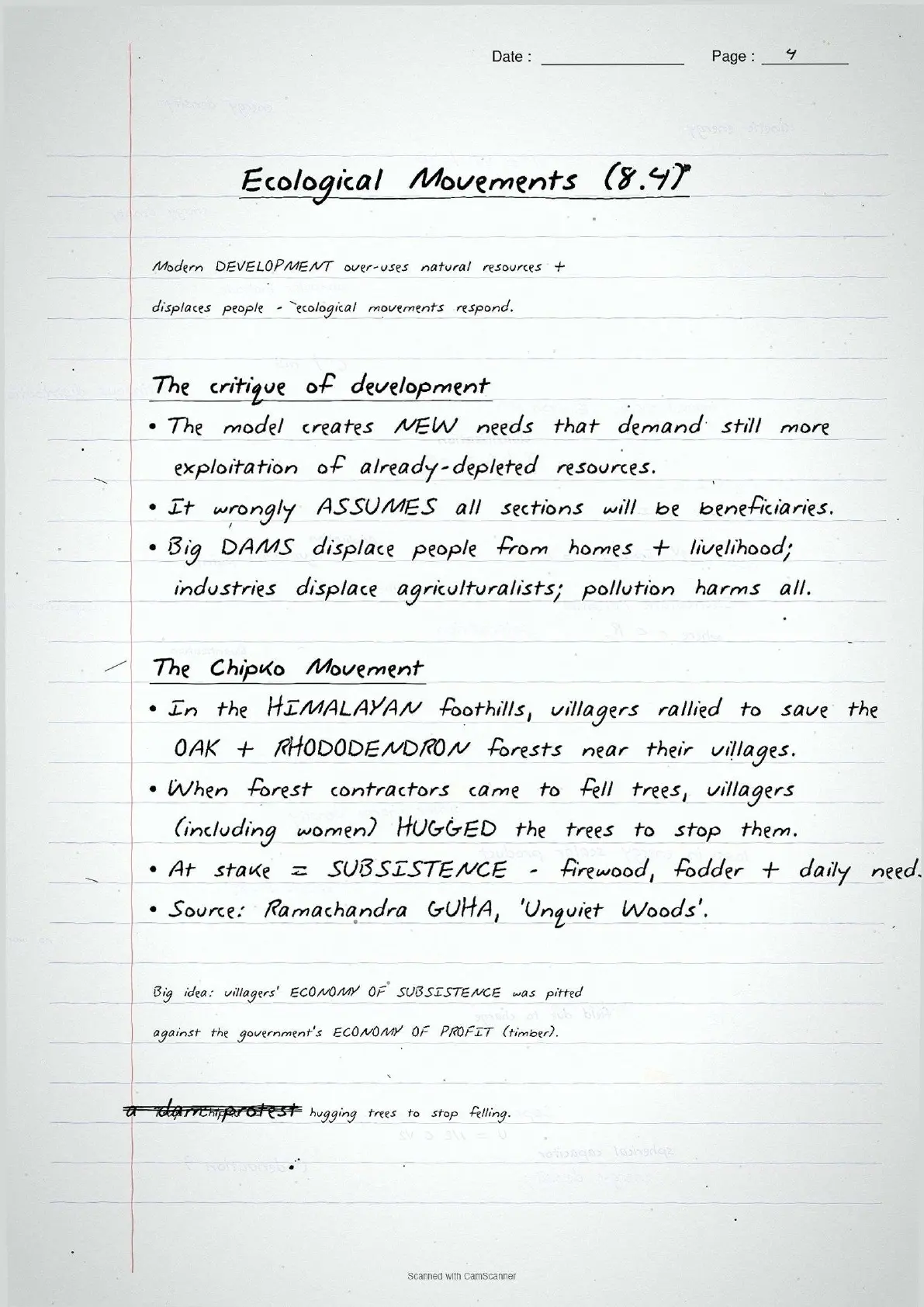
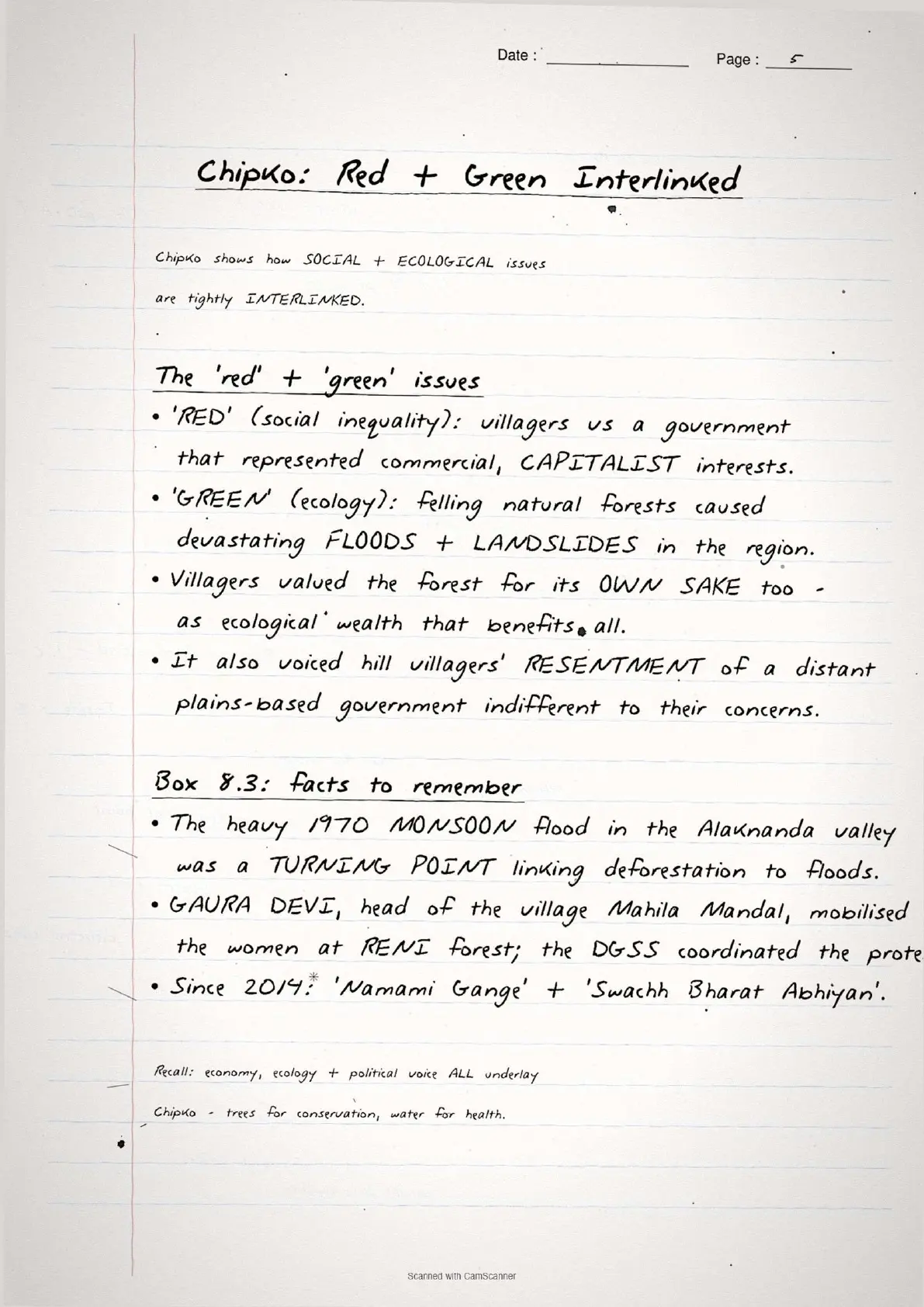
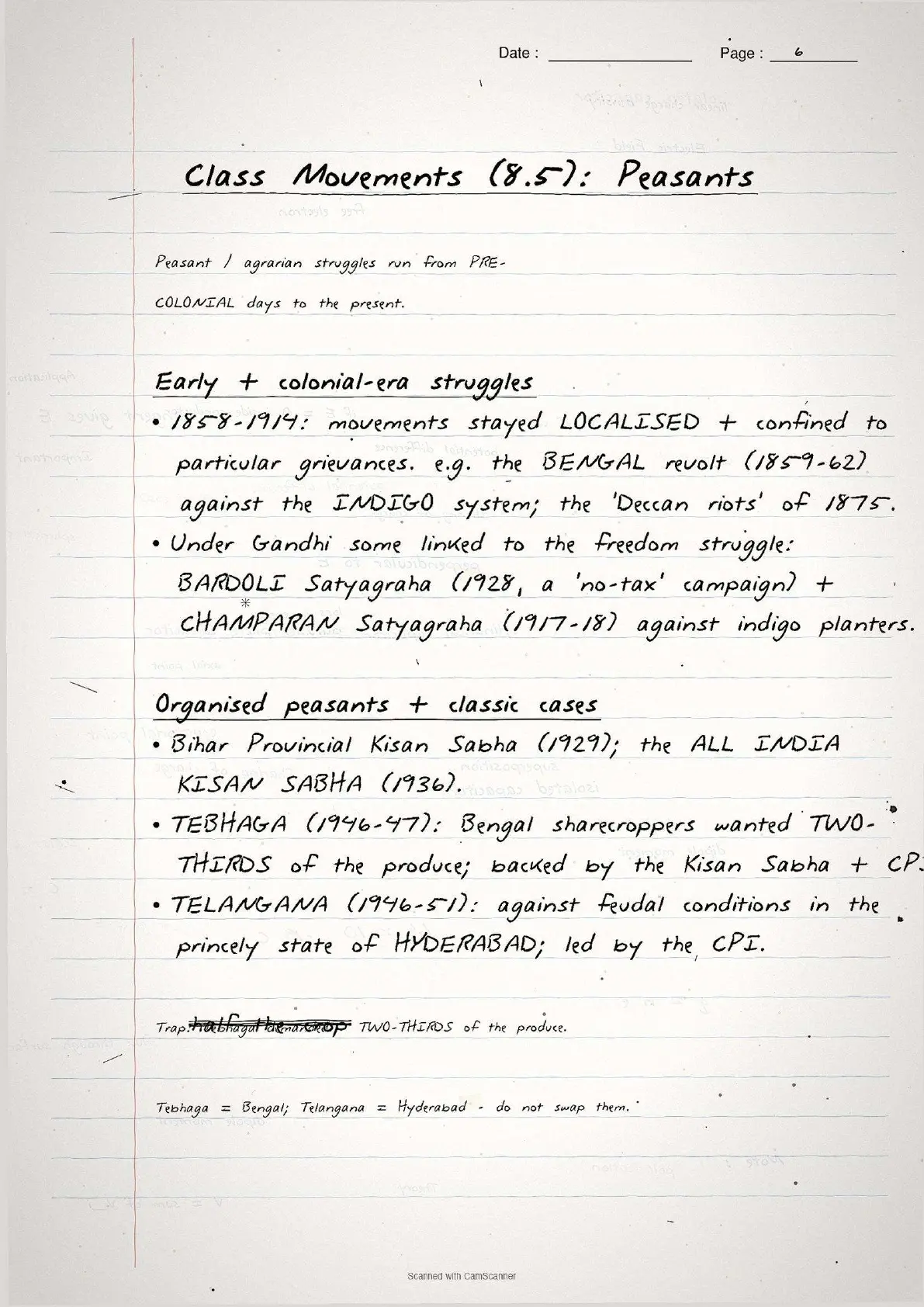
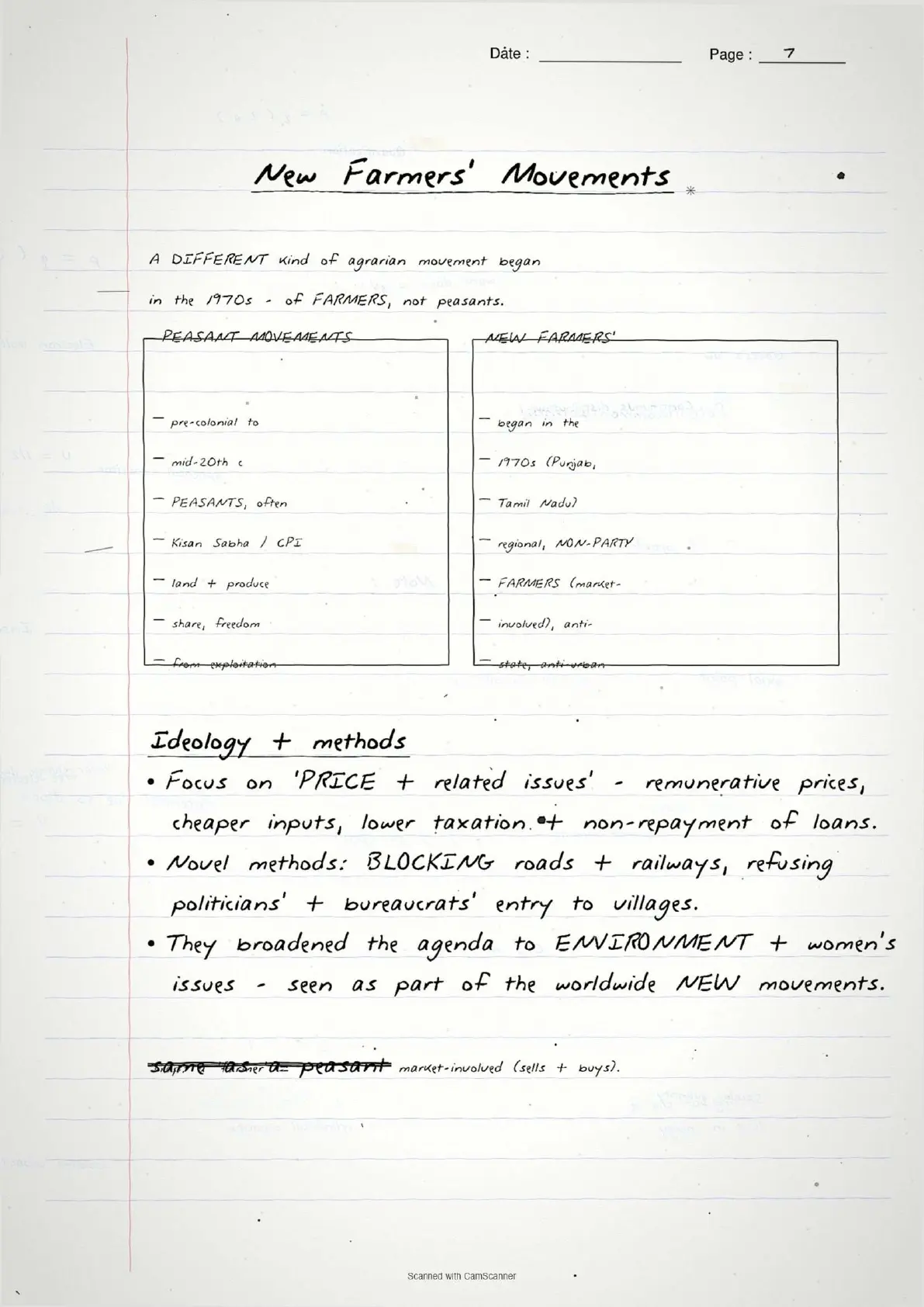
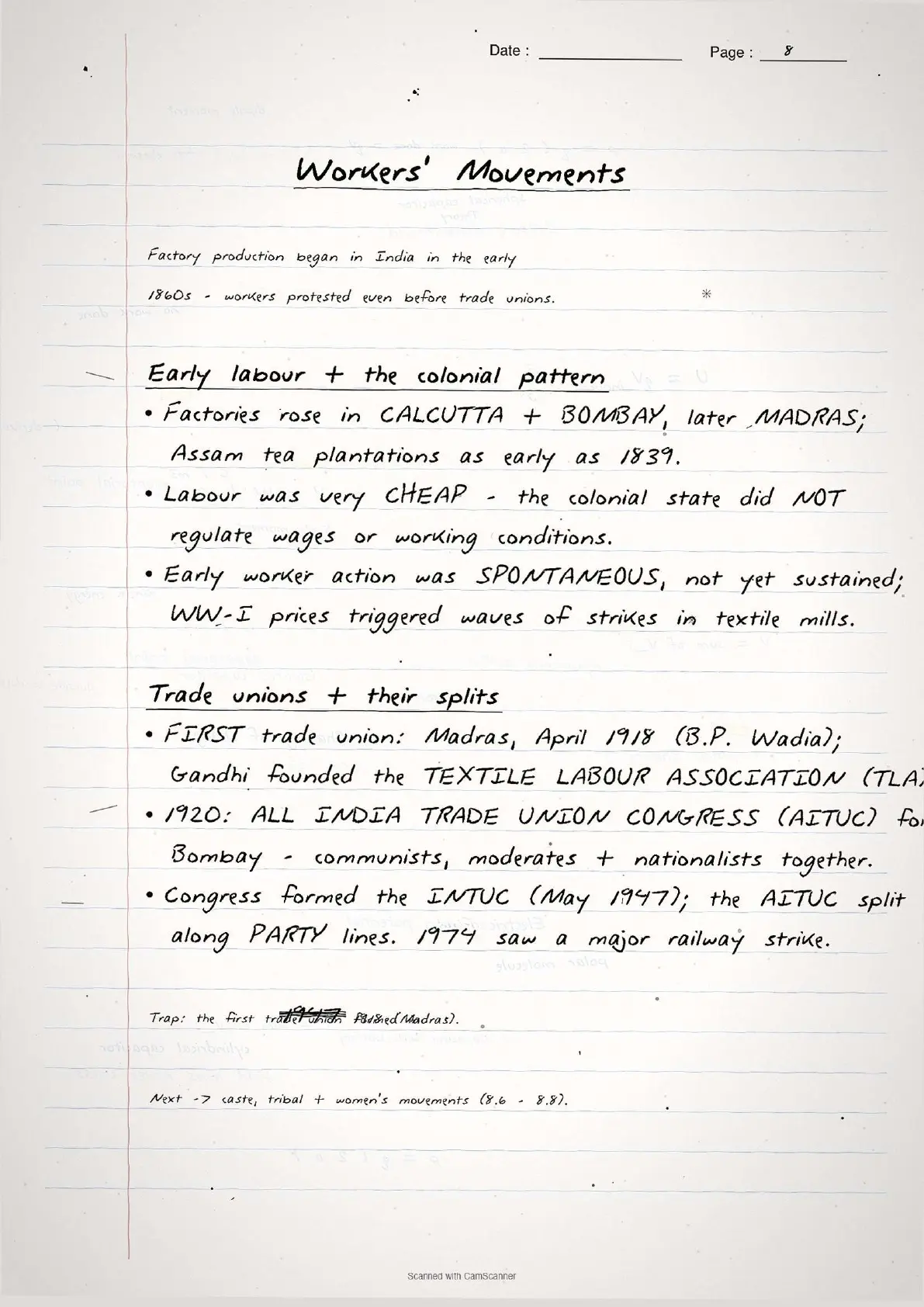
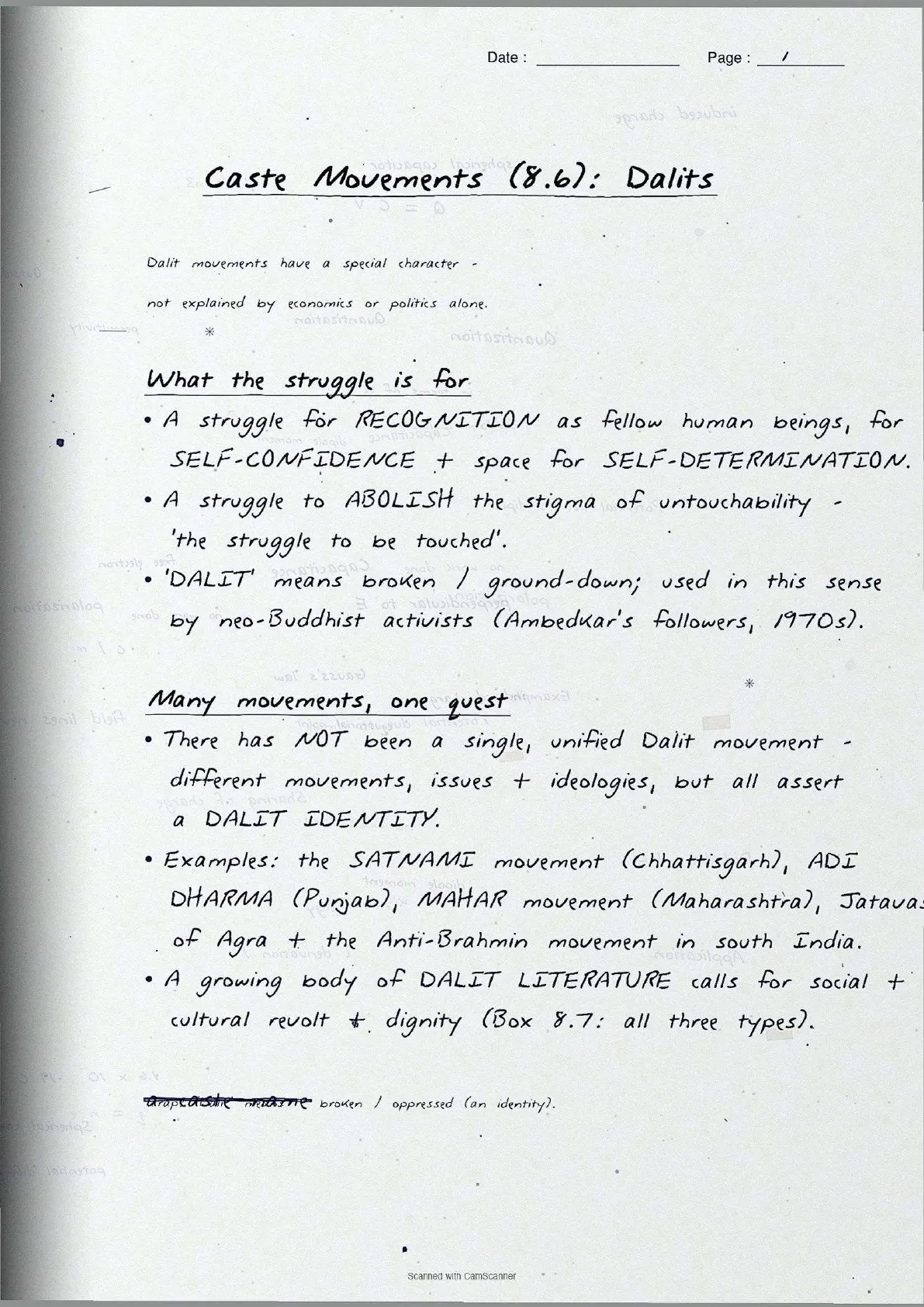
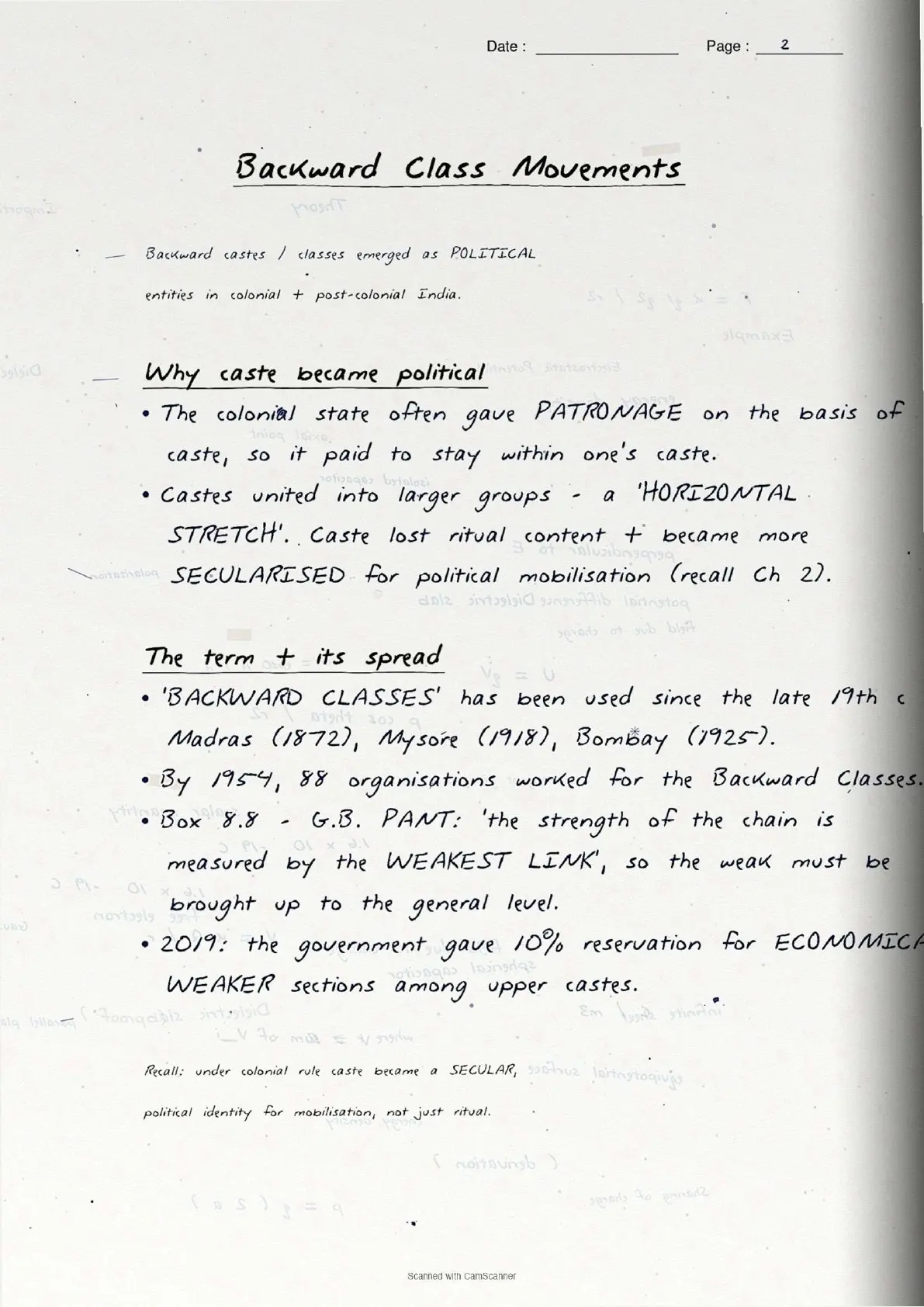
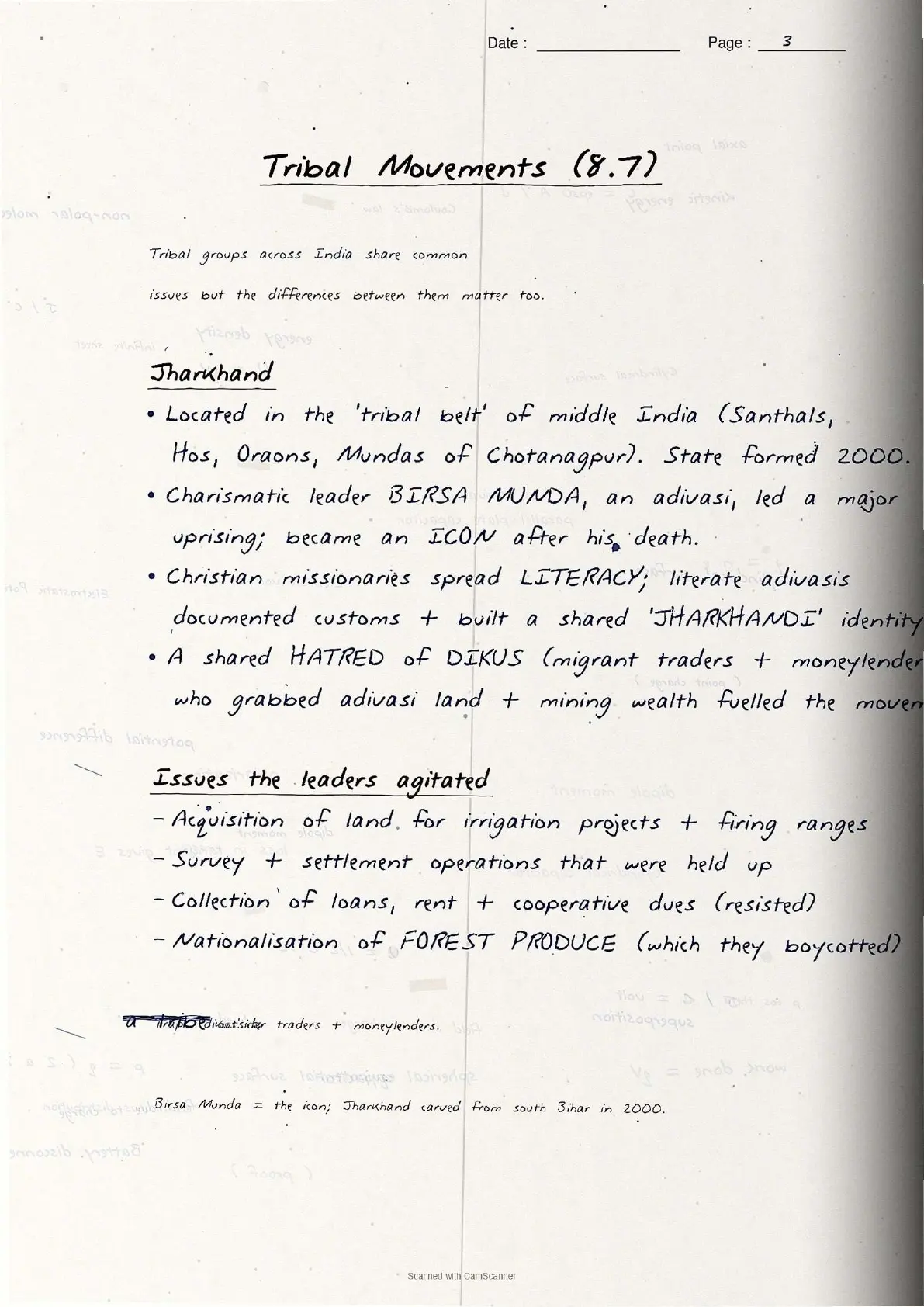
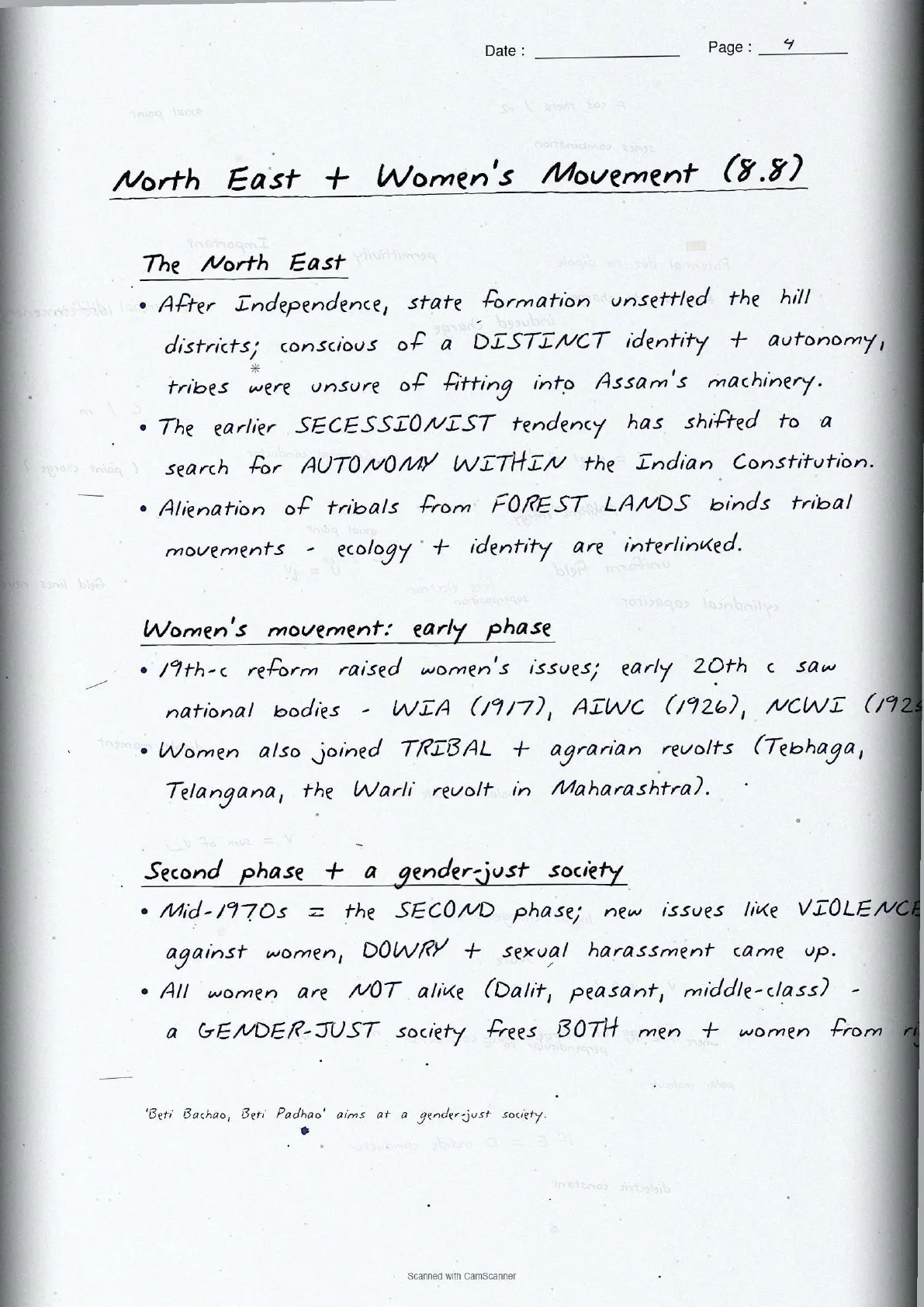
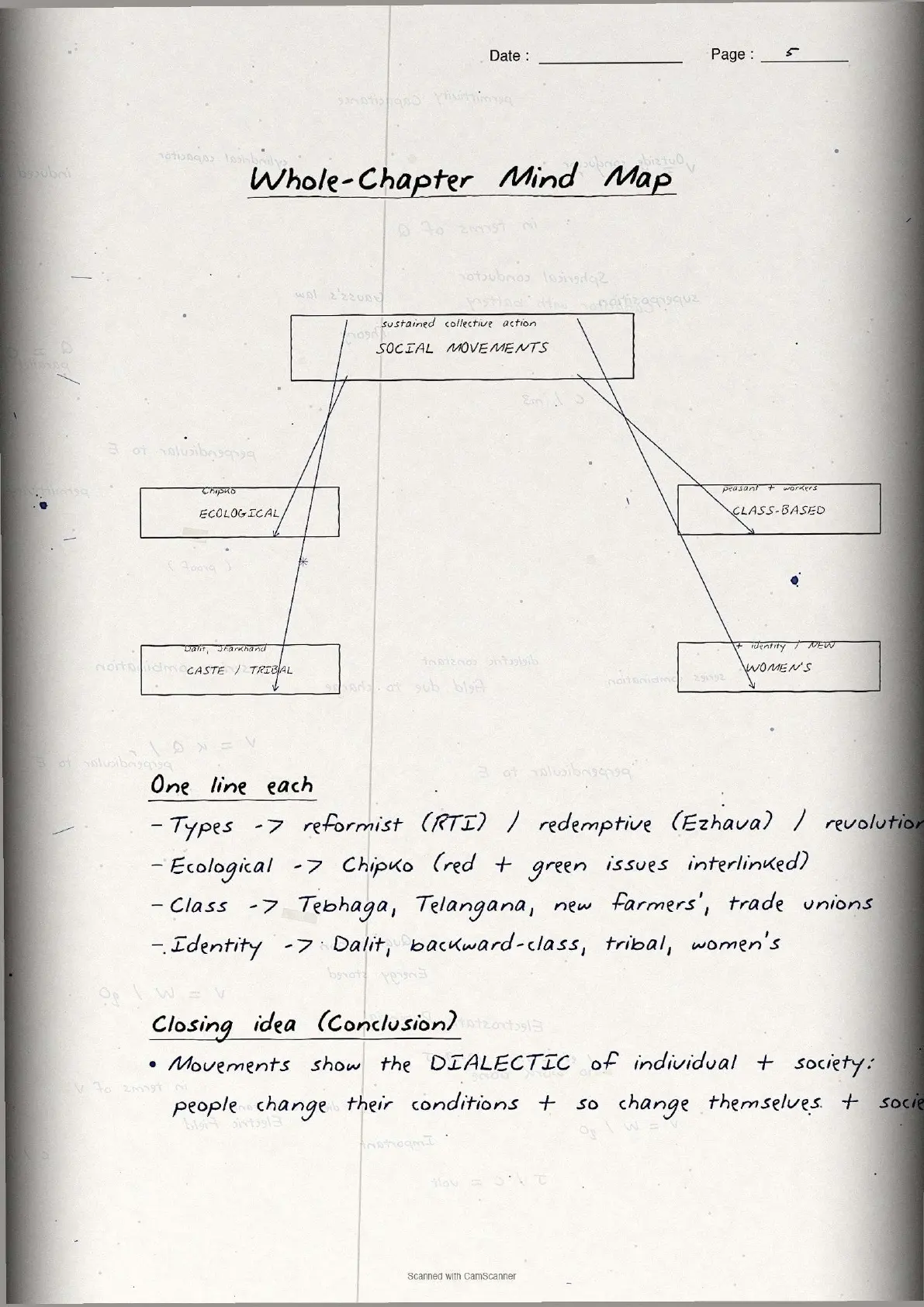
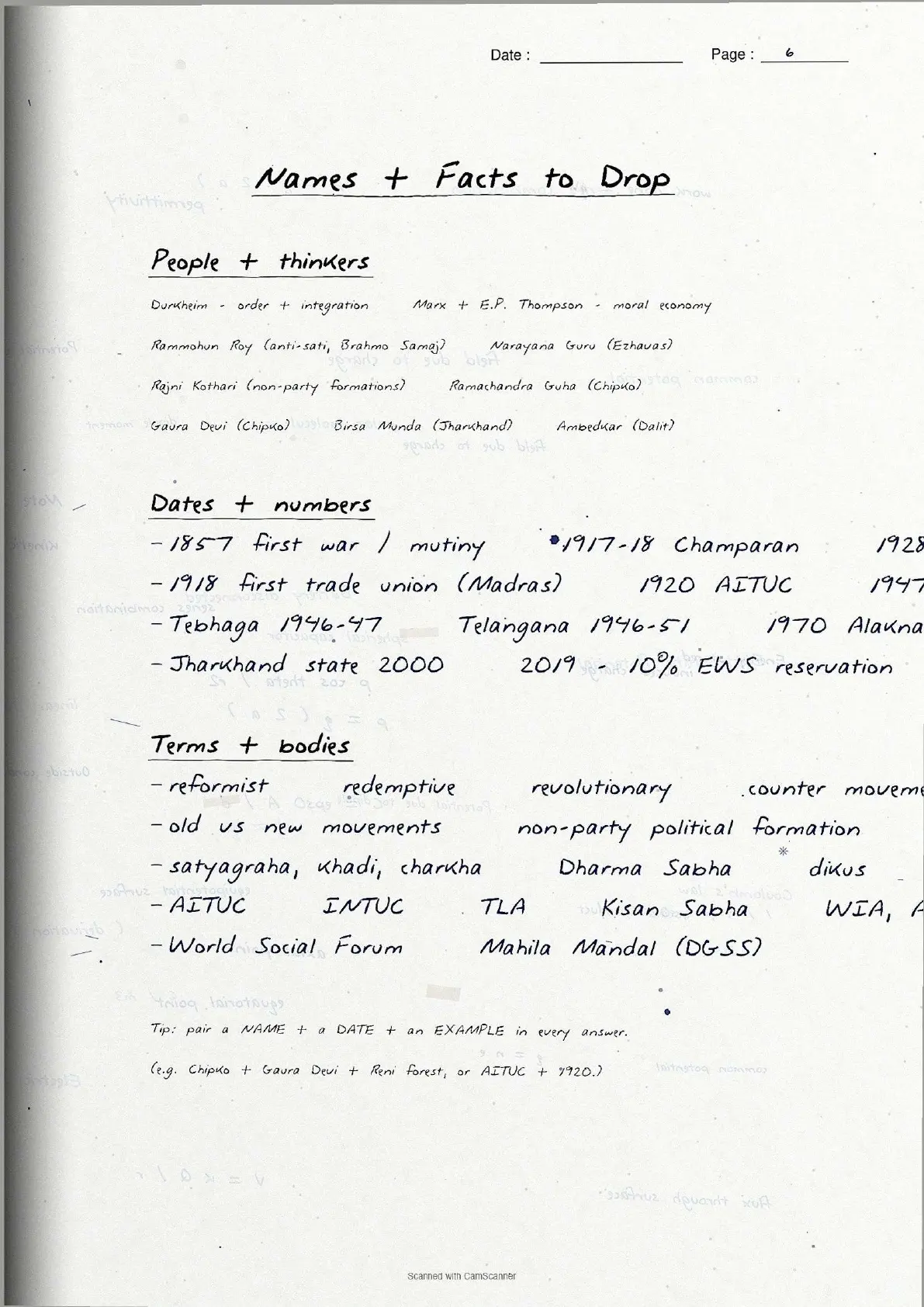
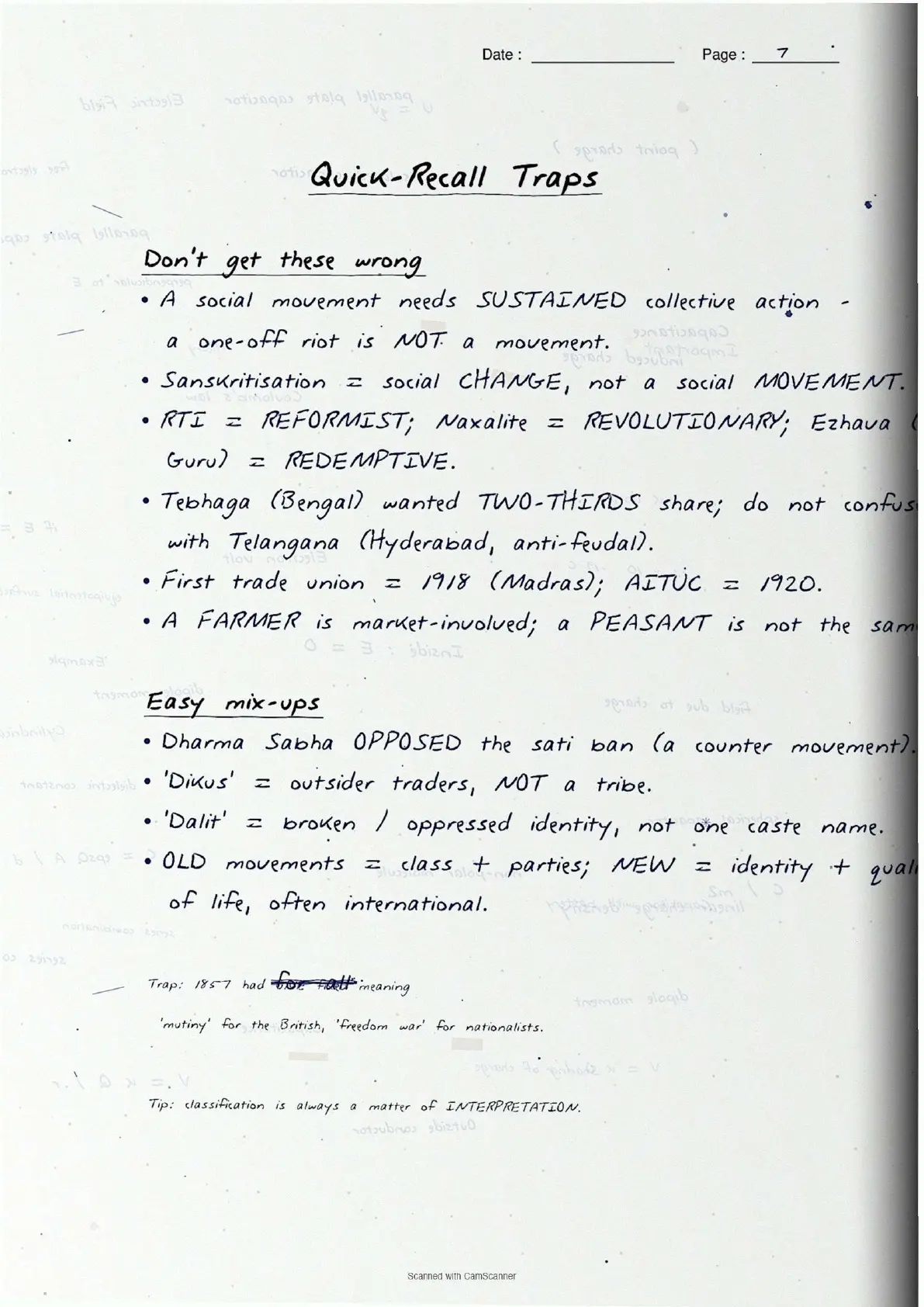
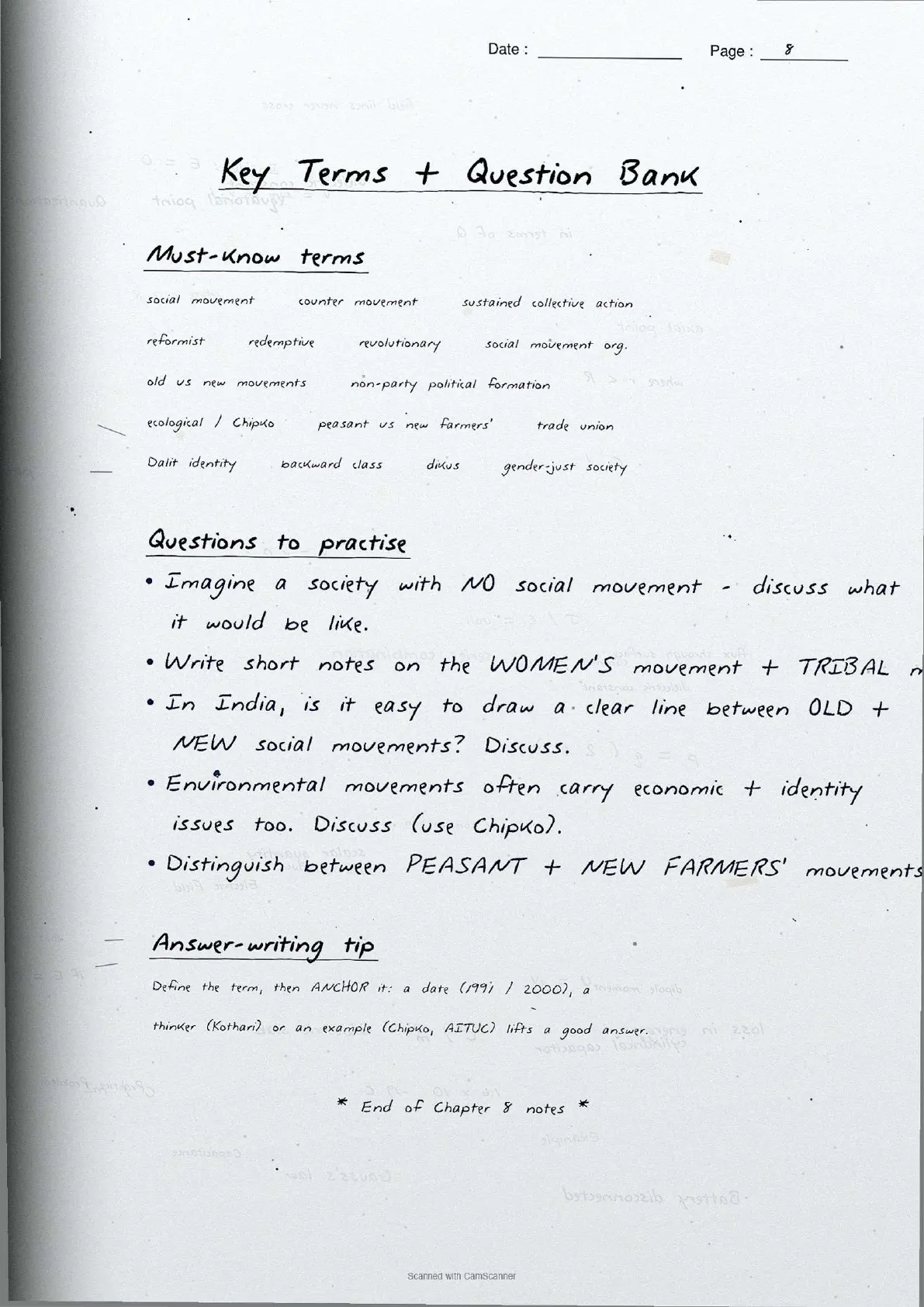
- Boxed key terms and underlined ideas across handwritten pages for social movements.
- Hand-drawn arrows that link the reformist, redemptive and revolutionary types to their Indian examples.
- Pairs with the NCERT Solutions, Notes and Book PDF linked lower on this page.
These Social Movements handwritten notes are prepared from the official NCERT Social Change and Development in India textbook and matched to the 2026-27 CBSE syllabus.
Student Feedback: In a Collegedunia poll of 7,290 Class 12 Sociology students before the 2026 boards, 71% of students said handwritten notes felt faster to revise from than printed text for this chapter. Most students used the boxed type-to-example arrows to recall the reformist, redemptive and revolutionary split in the exam.
Source: 2026-27 Class 12 Sociology student poll. Sample of 7,290 students from CBSE schools across 12 states.
What These Handwritten Notes Include
These pages cover the whole of Social Movements in a handwritten style. The handwriting, boxes and arrows are built for quick recall, not for first reading. The list below shows what is on the pages.
- Definition box: the four features of a social movement in one boxed panel.
- Type-to-example arrows: reformist, redemptive and revolutionary linked to their Indian cases.
- Margin tips: short exam pointers next to the main points.
- Movement cards: Chipko, peasant, Dalit, tribal and women's movements in quick cards.
Students should treat these pages as a fast recap once they have read the chapter. The boxed terms are the ones examiners reward, so glance at those first.
Features and Types Pages
The first set of pages handles the definition and the three types, since those are the most-tested ideas. The notes box each type and link it to an example with an arrow.
- Features: sustained collective action, organisation, shared aims, distinct modes of protest.
- Reformist: gradual change, like state reorganisation and the Right to Information campaign.
- Redemptive: changes consciousness, like Narayana Guru's reform of the Ezhavas.
- Revolutionary: radical change, like the Naxalite movement.
The page links each type to its case with a single arrow, so students see that most real movements mix all three types. The image below collects the same three types in one glance.
Old, New and Indian Movement Pages
The next pages handle the old-new distinction and the main Indian movements. The notes box the two columns and show how class and identity issues overlap.
- Old movements: class based, party led, aimed at reorganising power.
- New movements: identity based, non-party led, focused on quality of life.
- Chipko: the ecological movement that linked economy, ecology and politics.
- Peasant, Dalit, tribal, women's: one boxed card each for fast recall.
The page sets old and new in two boxes so students can compare them fast. The key point is that in India the old and new categories overlap. The image below shows the same comparison.
How to Use These Handwritten Notes
These notes work best as a revision tool, not a first read. A simple routine gets the most out of them. The steps below show how.
- Read the chapter first in the NCERT Book PDF, then open these pages.
- Cover the boxes and try to recall each feature and type before you peek.
- Trace the arrows to fix the links, such as each type leading to its Indian example.
- Test yourself against the five exercise questions in the NCERT Solutions.
Used this way, the notes turn a long chapter into a five-minute recall. Keep them on your phone for a quick scan the night before the board exam.
Common Mistakes These Notes Help You Avoid
A few errors cost marks every year in this chapter. The boxed pages are built to stop them. The list below names the main ones.
- Calling any protest a social movement - the box reminds you it must be sustained and organised.
- Treating the three types as separate - the arrows show they usually mix.
- Drawing a clean old-versus-new line in India - the two-box page shows they overlap.
- Forgetting the three Chipko strands - the card boxes economy, ecology and politics.
Students who use the boxes to fix these points usually lift their long-answer marks. The notes are designed so the most-tested ideas stand out at a glance.
How These Notes Pair with the Solutions and Book PDF
These handwritten pages give the fast recall. To revise the full chapter, students should use them alongside the other resources for the same chapter, all linked in the table below.
| Resource | Best used for |
|---|---|
| Social Movements NCERT Solutions | Full point-wise answers to all 5 exercise questions |
| Social Movements Class 12 Notes | Typed one-page summary with all key terms |
| Social Movements NCERT Book PDF | Reading the original NCERT chapter text |
Tip: read the typed Notes for the full summary, then use these handwritten pages for the final recall in the last hour before the exam.
All Class 12 Sociology Handwritten Notes by Chapter
The table links the Handwritten Notes for every chapter in both Class 12 Sociology books, so students can move across the course in one click. Social Movements is highlighted.
| Chapter | Handwritten Notes |
|---|---|
| Indian Society | |
| Chapter 1 | Introducing Indian Society |
| Chapter 2 | The Demographic Structure of the Indian Society |
| Chapter 3 | Social Institutions - Continuity and Change |
| Chapter 4 | The Market as a Social Institution |
| Chapter 5 | Patterns of Social Inequality and Exclusion |
| Chapter 6 | The Challenges of Cultural Diversity |
| Social Change and Development in India | |
| Chapter 1 | Structural Change |
| Chapter 2 | Cultural Change |
| Chapter 3 | The Constitution and Social Change |
| Chapter 4 | Change and Development in Rural Society |
| Chapter 5 | Change and Development in Industrial Society |
| Chapter 6 | Globalisation and Social Change |
| Chapter 7 | Mass Media and Communications |
| Chapter 8 | Social Movements |
FAQs on Social Movements Handwritten Notes
Social Movements Class 12 Handwritten Notes Common Questions
Ques. Where can I download the class 12 sociology chapter 8 handwritten notes PDF?
Ans. You can download the Social Movements Class 12 Sociology handwritten notes PDF directly from this page. It is free, follows the 2026-27 NCERT, and presents the whole chapter as handwritten pages.
Ques. Are handwritten notes good for last-minute revision?
Ans. Yes. The boxed terms and hand-drawn arrows make the main points stand out, so students can recall the features, the three types and the main Indian movements in a quick scan. They are best used after reading the chapter once.
Ques. What key terms do these notes box?
Ans. The notes box social movement, counter movement, the reformist, redemptive and revolutionary types, old and new social movements, the Chipko movement and dikus. These are the terms that carry most of the marks in this chapter.
Ques. Do these handwritten notes cover the whole chapter?
Ans. Yes. They cover the features and types of social movements, the old-new distinction, and the ecological, class, caste, tribal and women's movements, so they map the full NCERT chapter in a handwritten format.
Ques. Should I use these instead of the typed Notes?
Ans. Use both. The typed Notes give the full summary and the key terms, while these handwritten pages are best for the final recall in the last hour before the exam. Together they cover reading and revision.



Comments