




These Class 12 Sociology Chapter 7 Mass Media and Communications Handwritten Notes give a handwritten revision of the whole chapter, set to the 2026-27 CBSE syllabus. Written by hand, they cover mass media, the role of the State, liberalisation, the print, radio and television story, and the Indian language press, in the order students need them for the board exam.
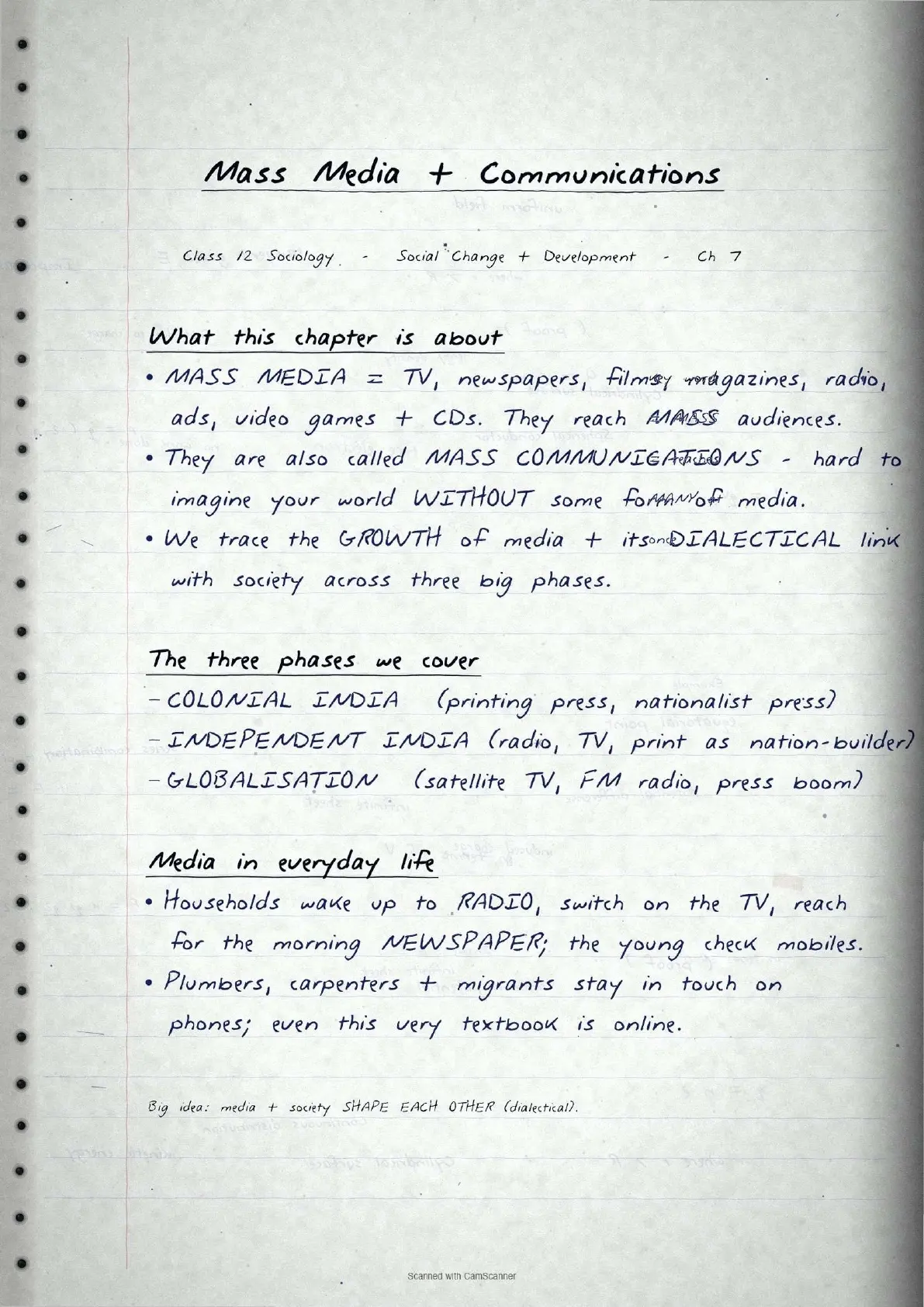
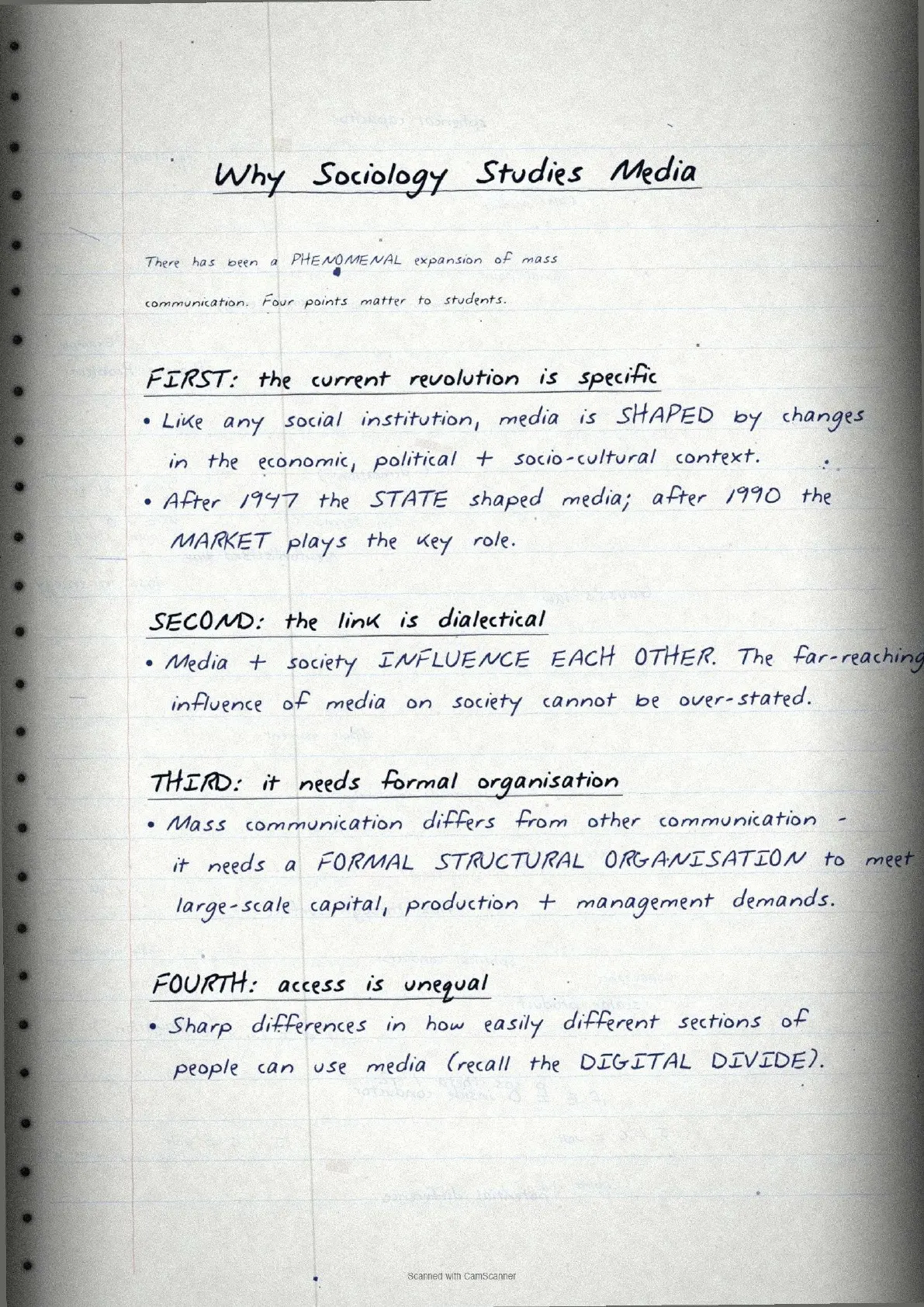
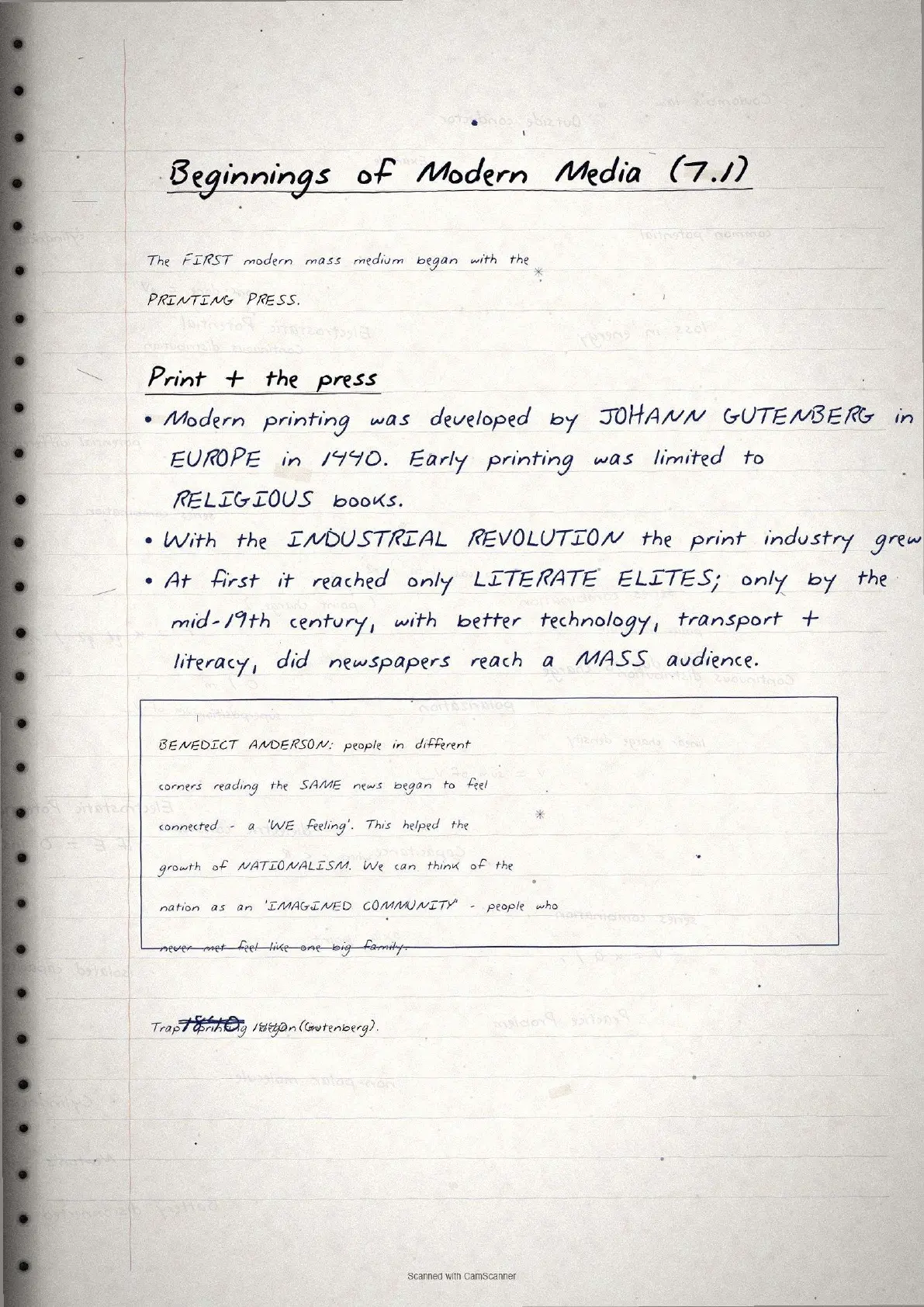
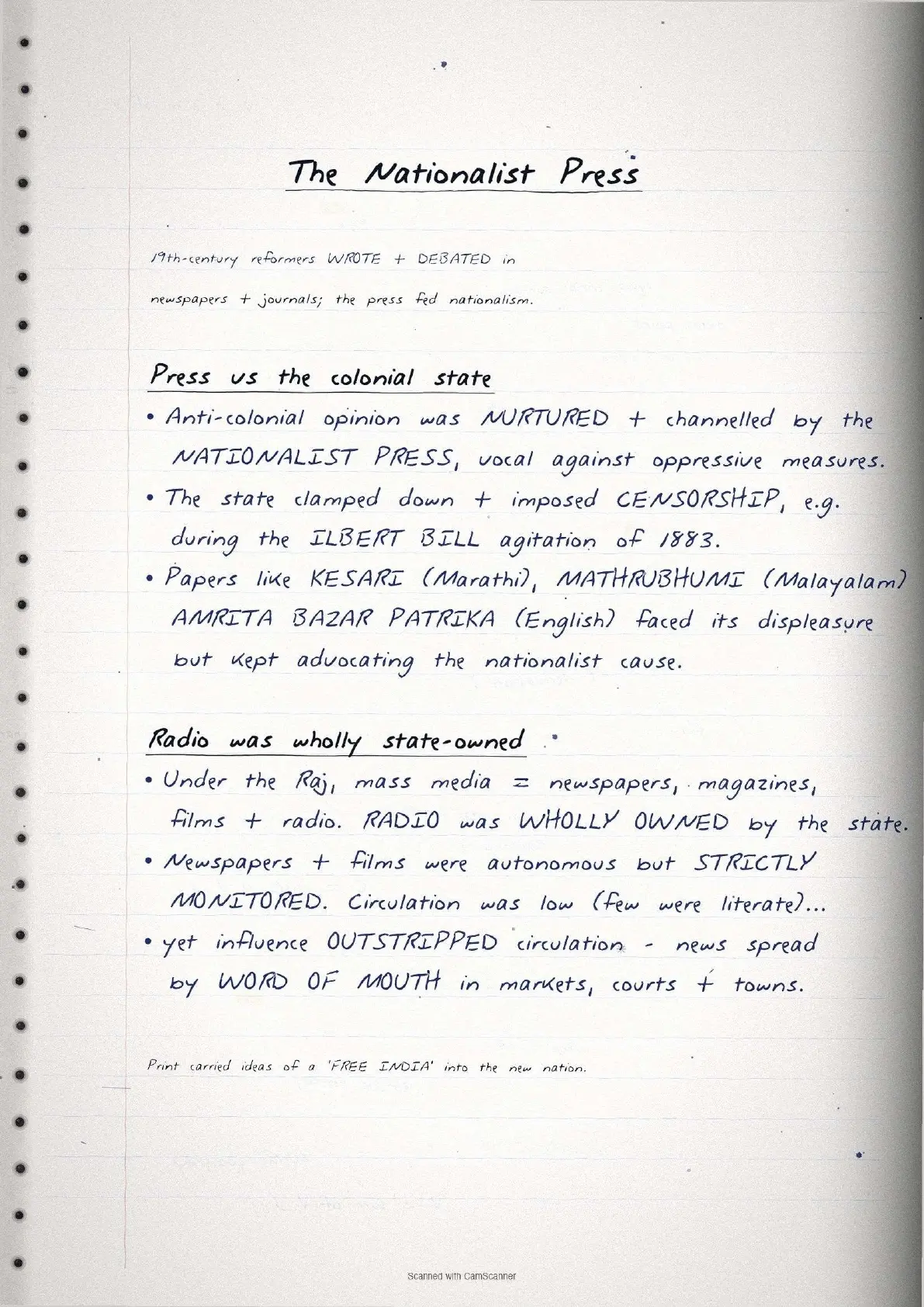
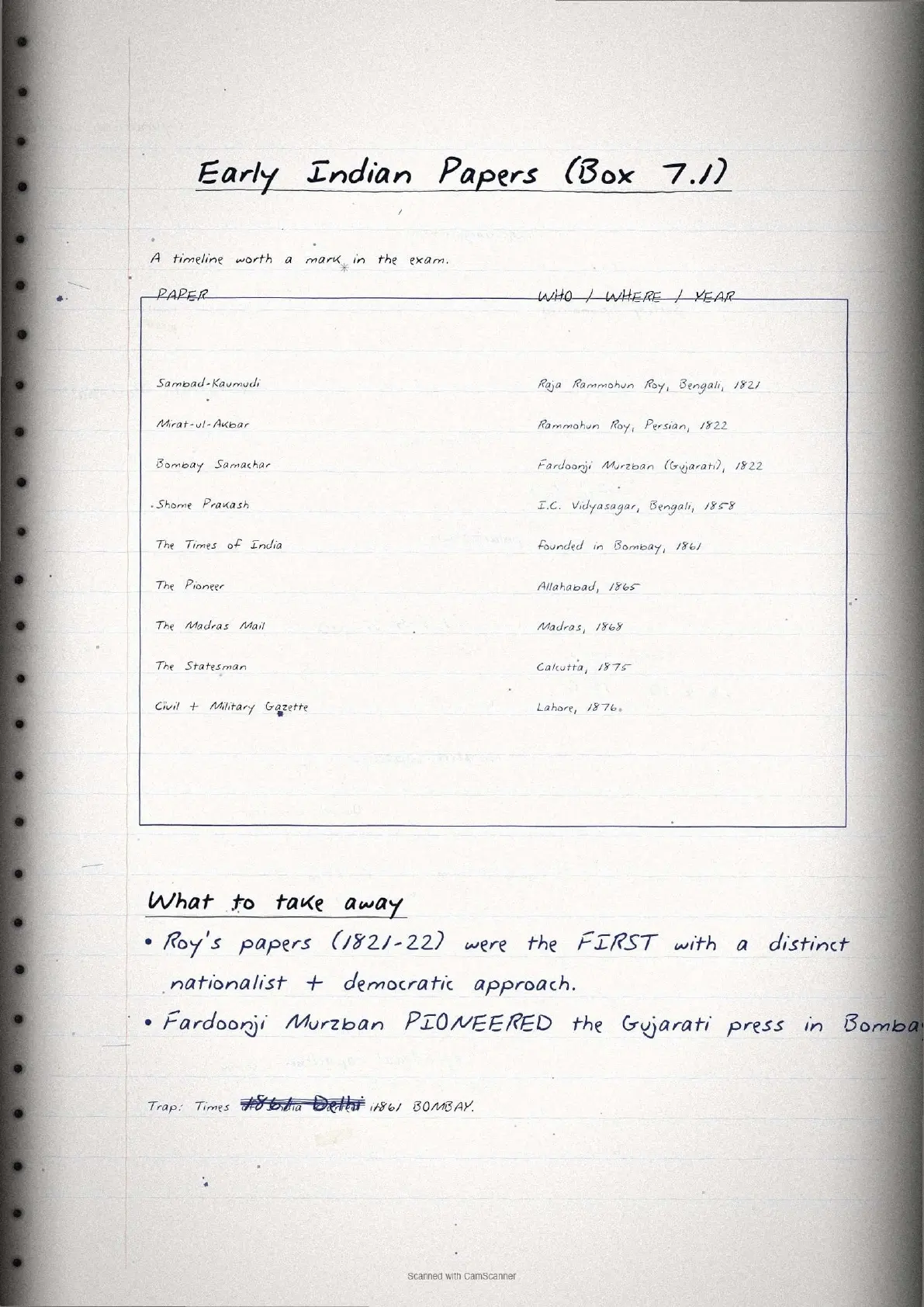
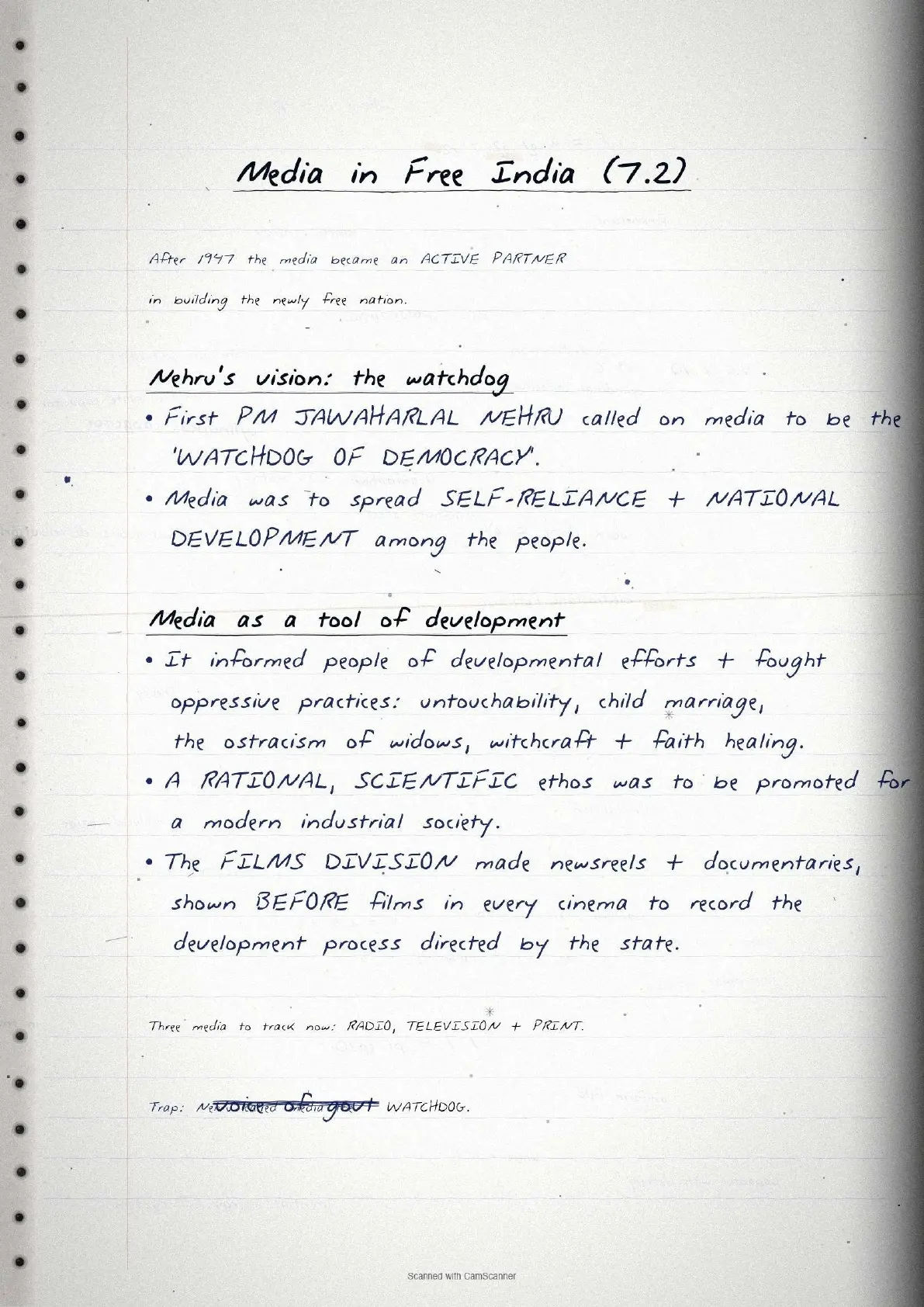
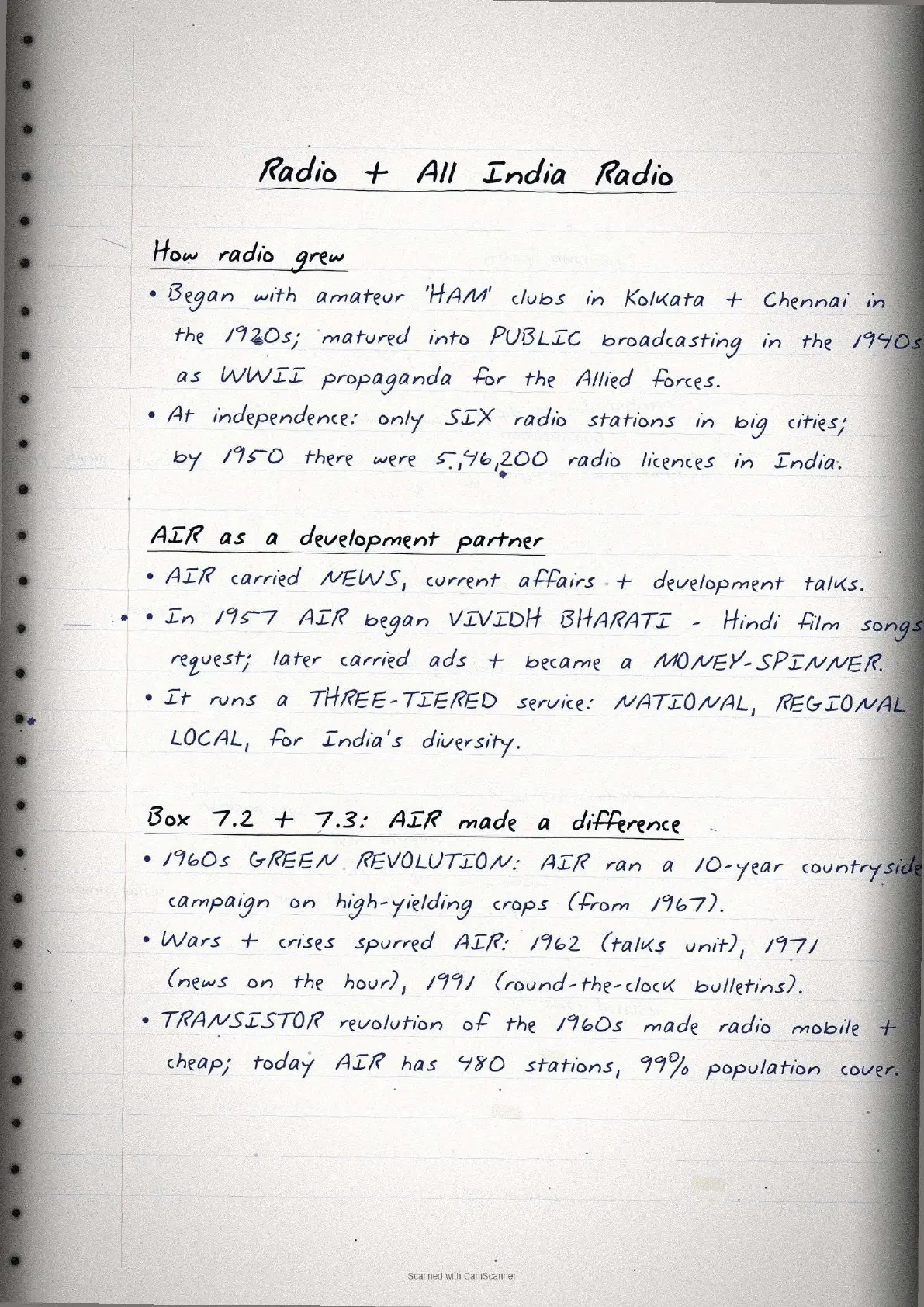
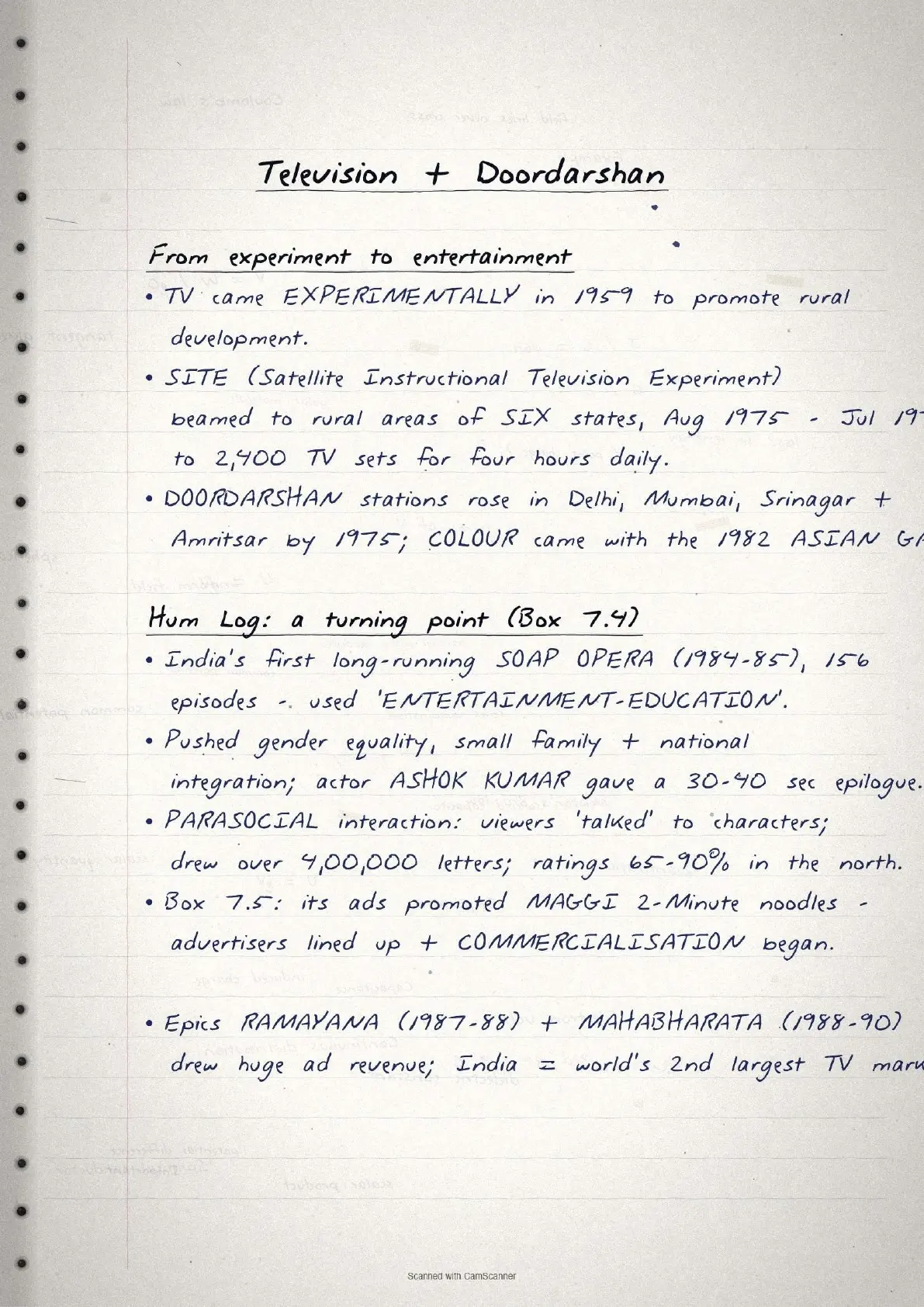
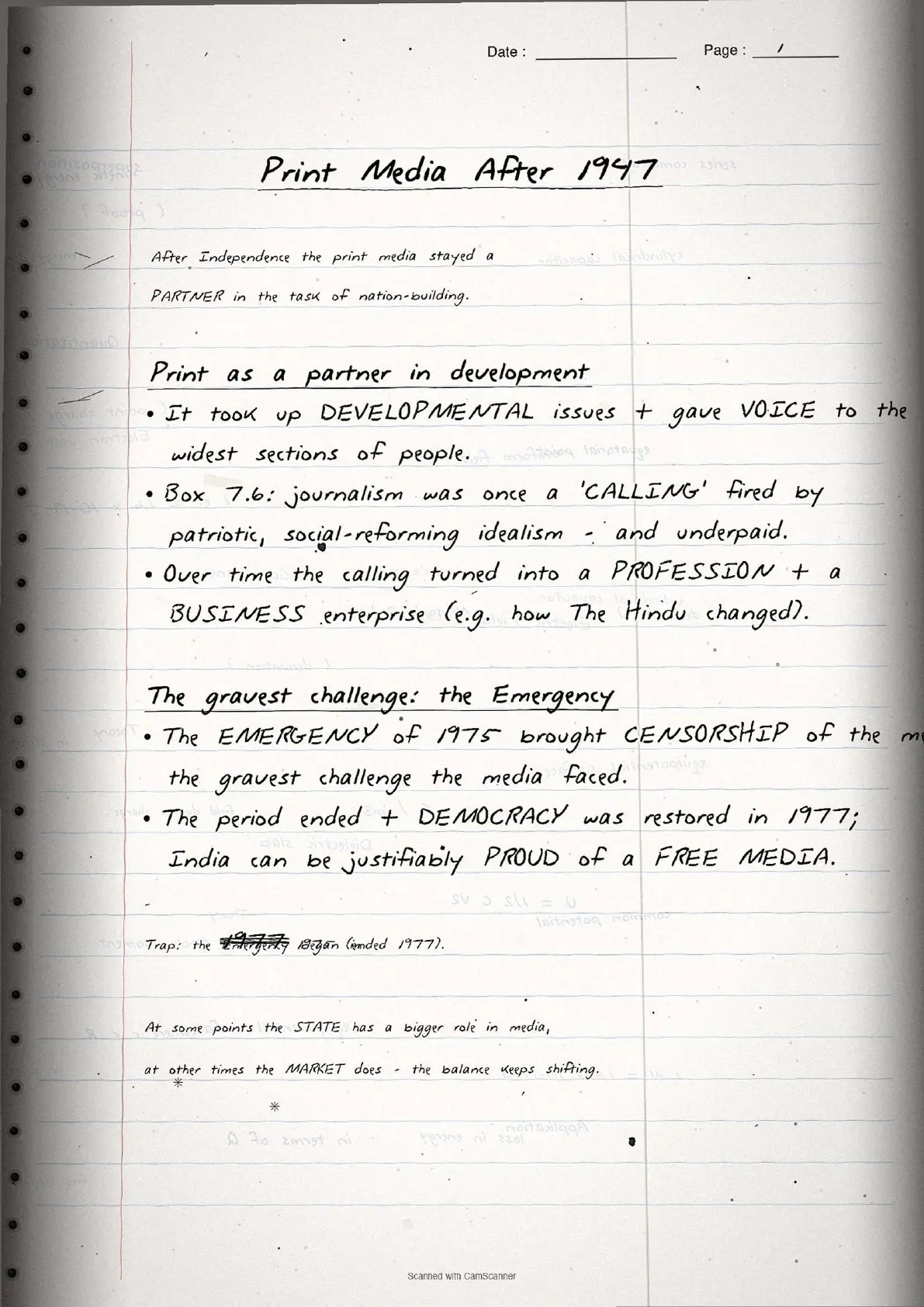
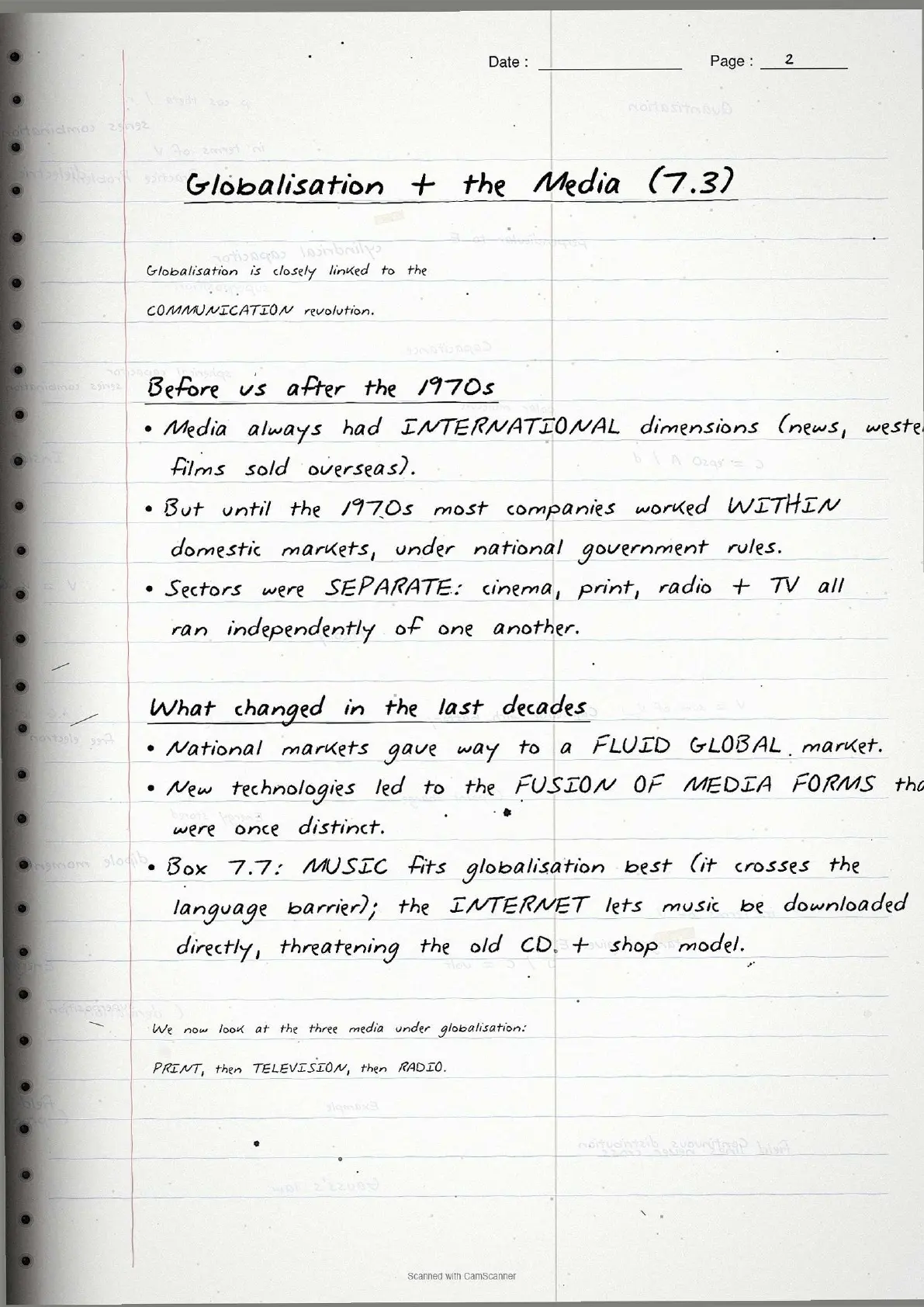
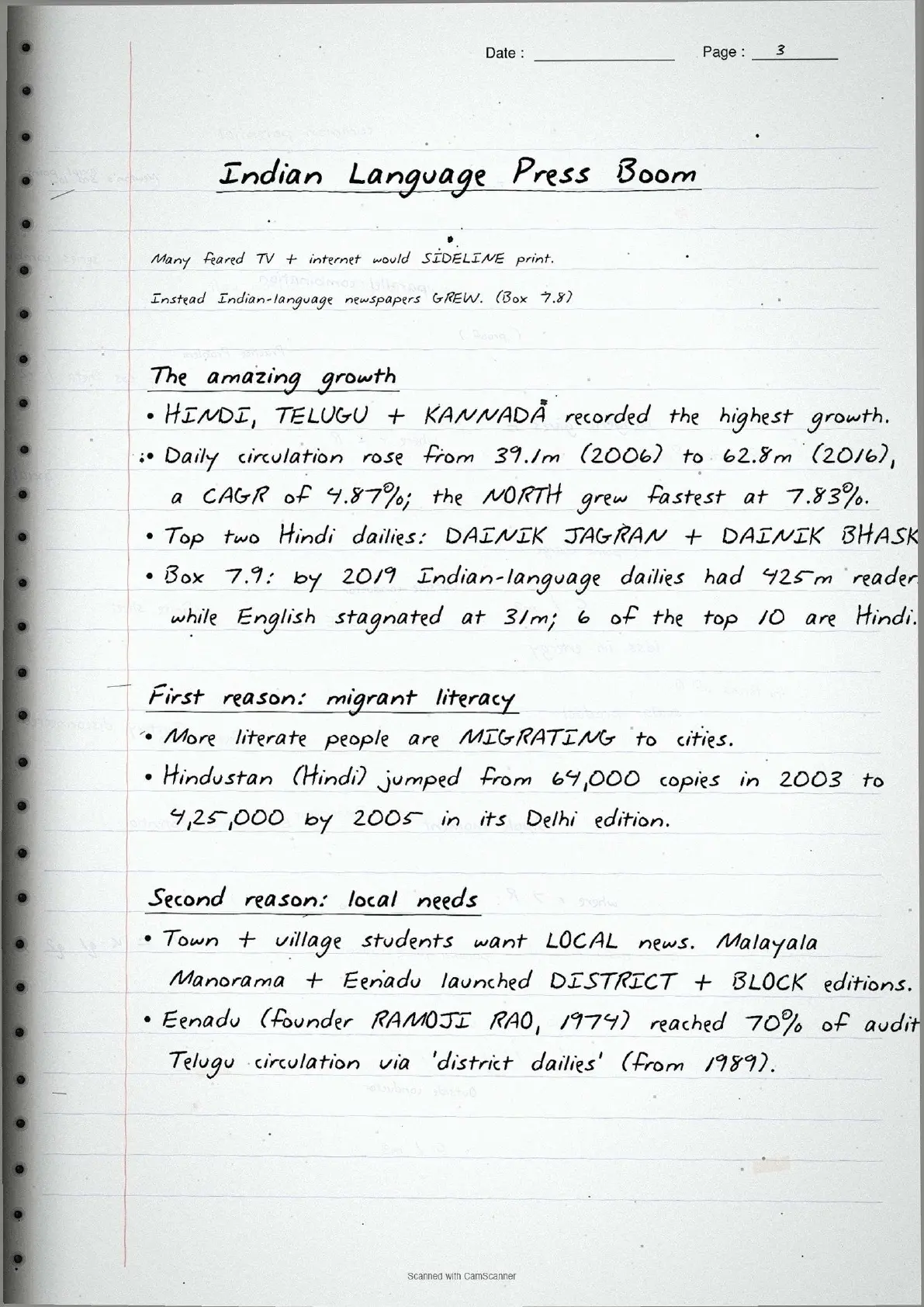
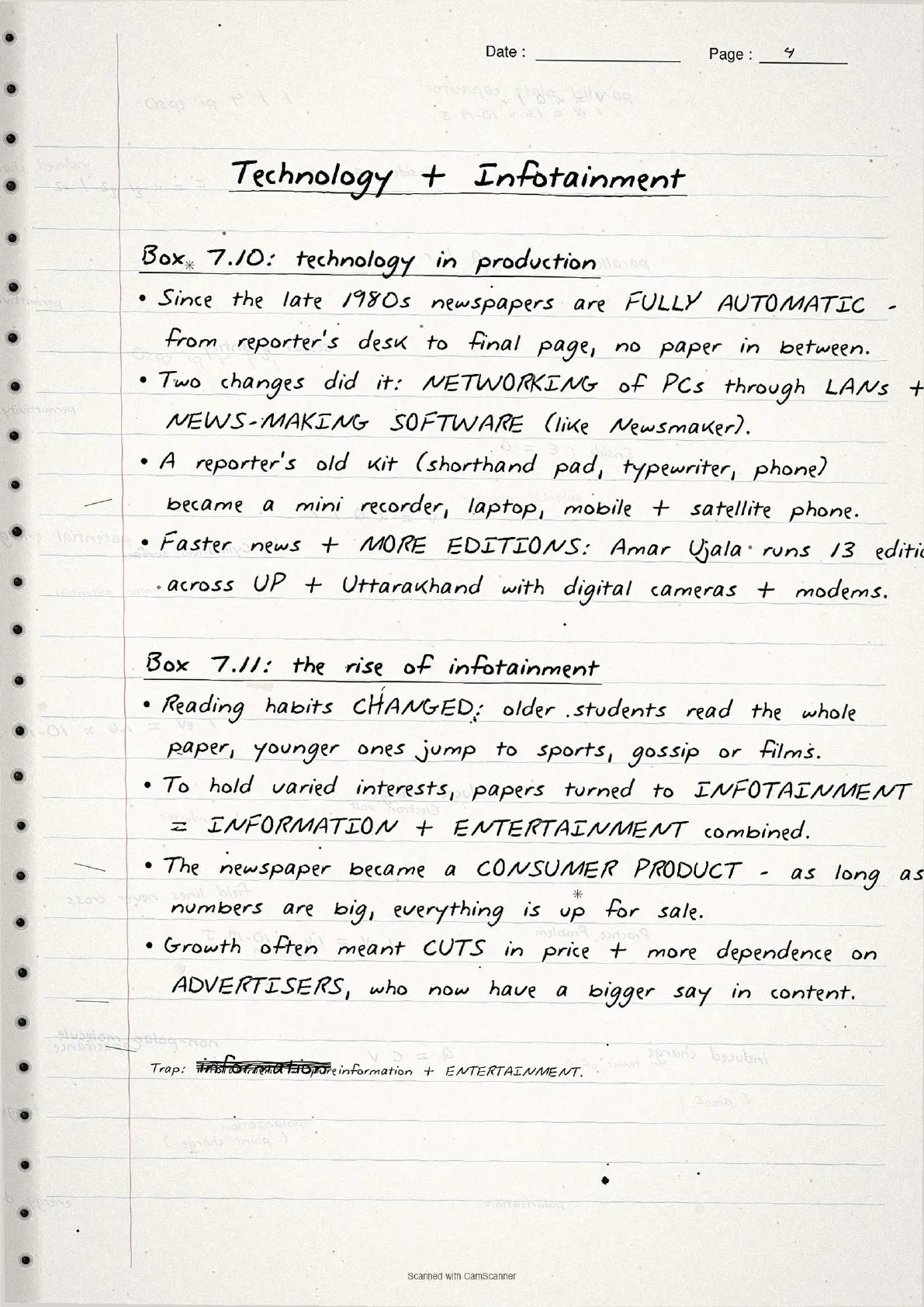
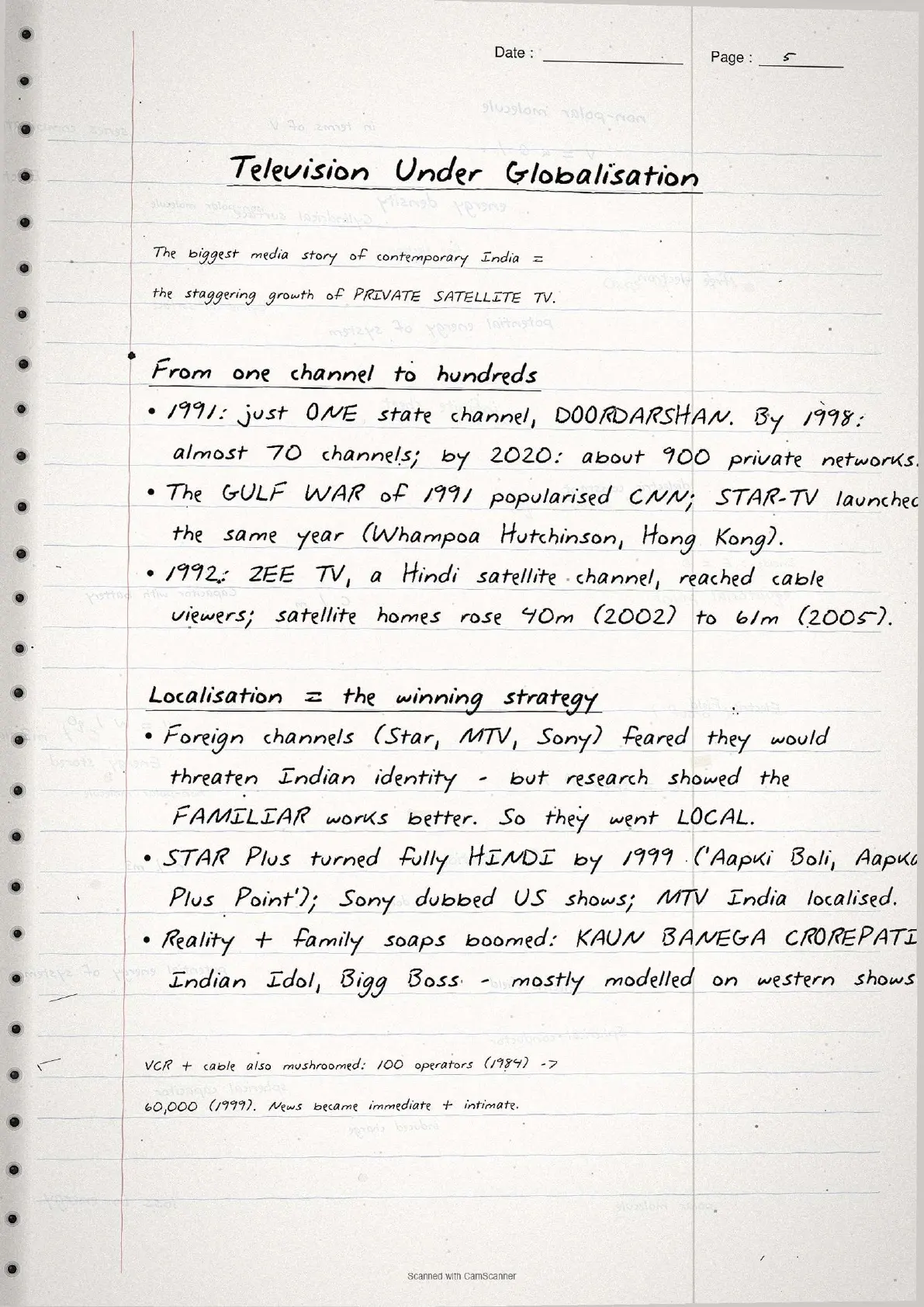
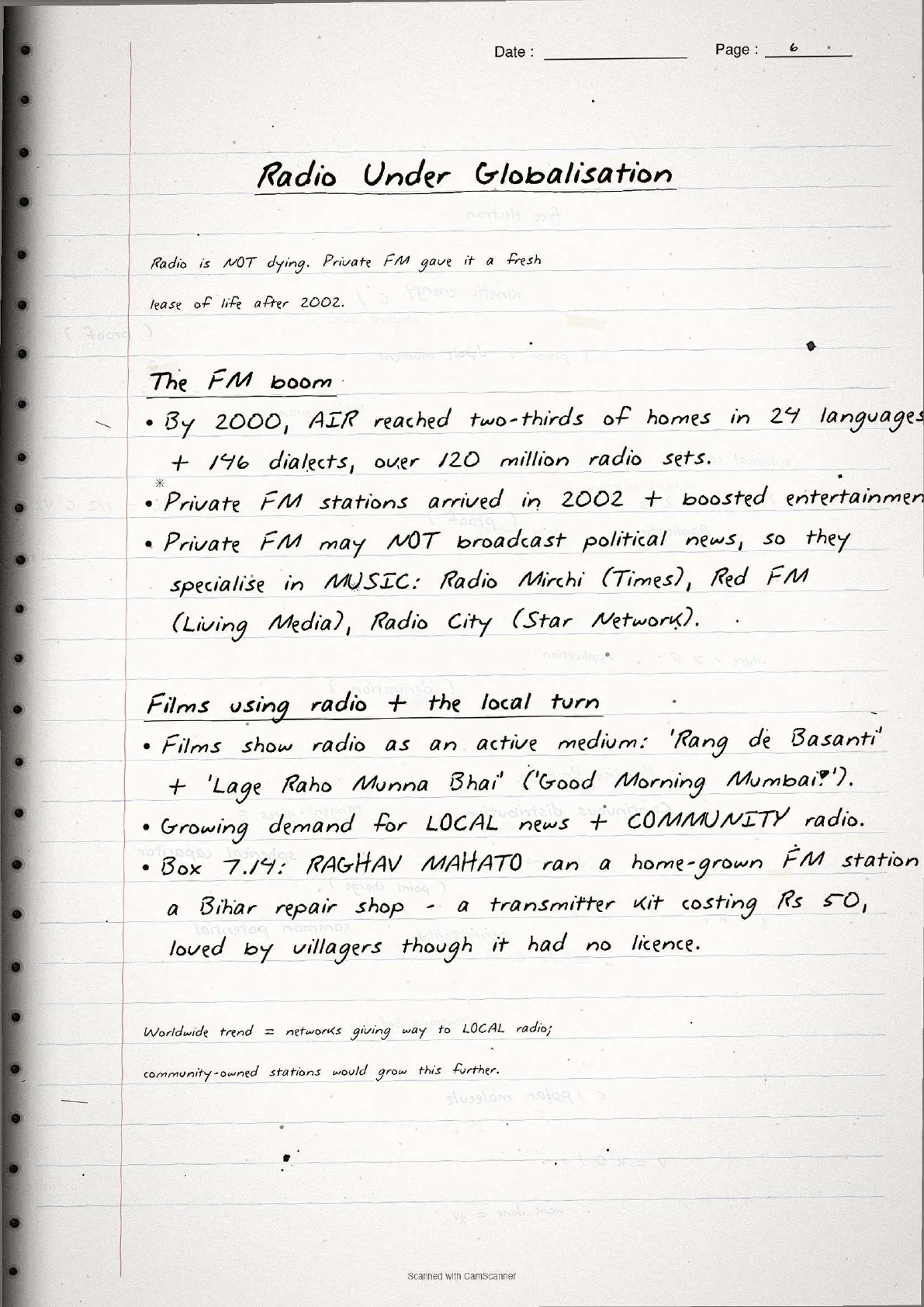
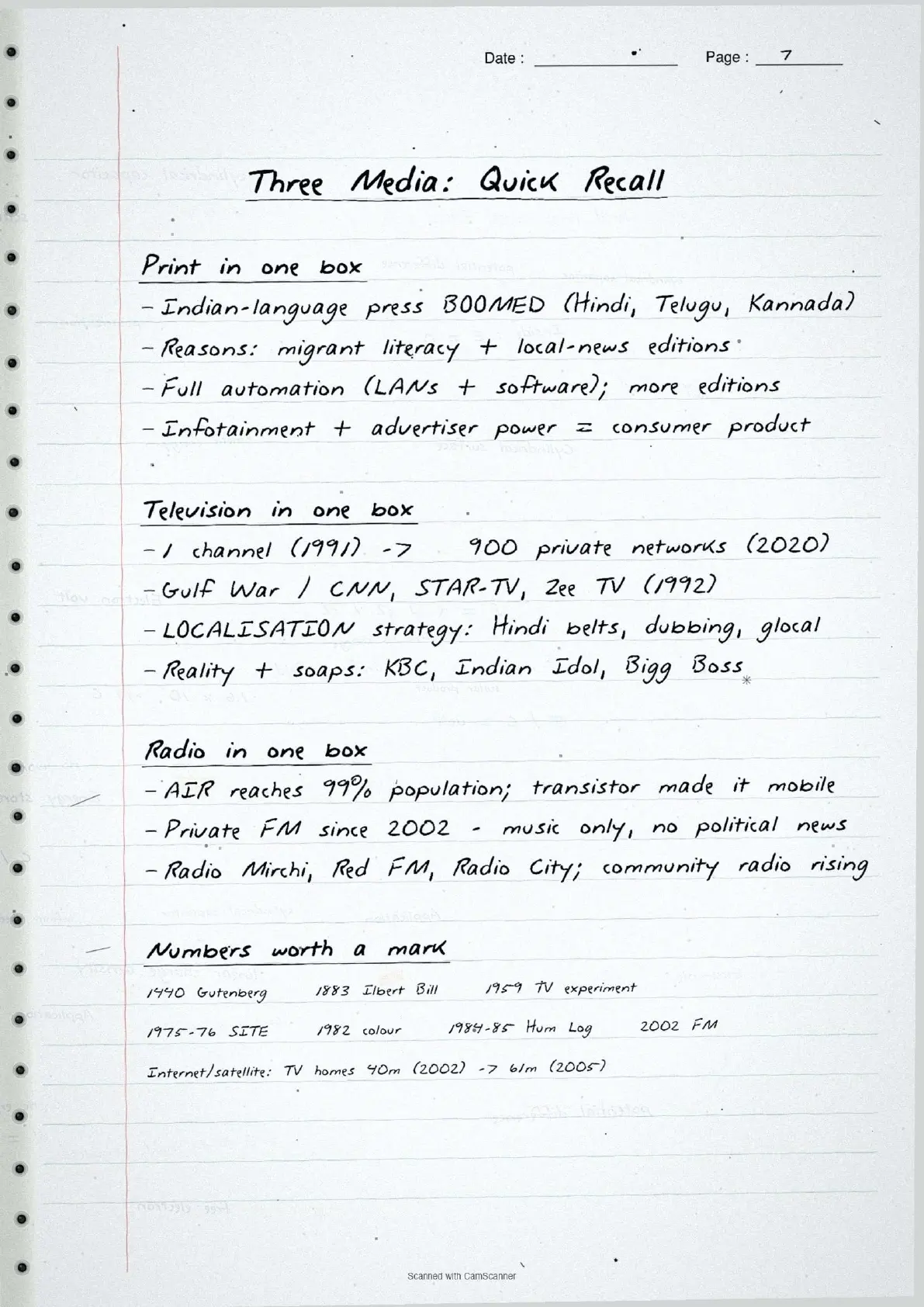
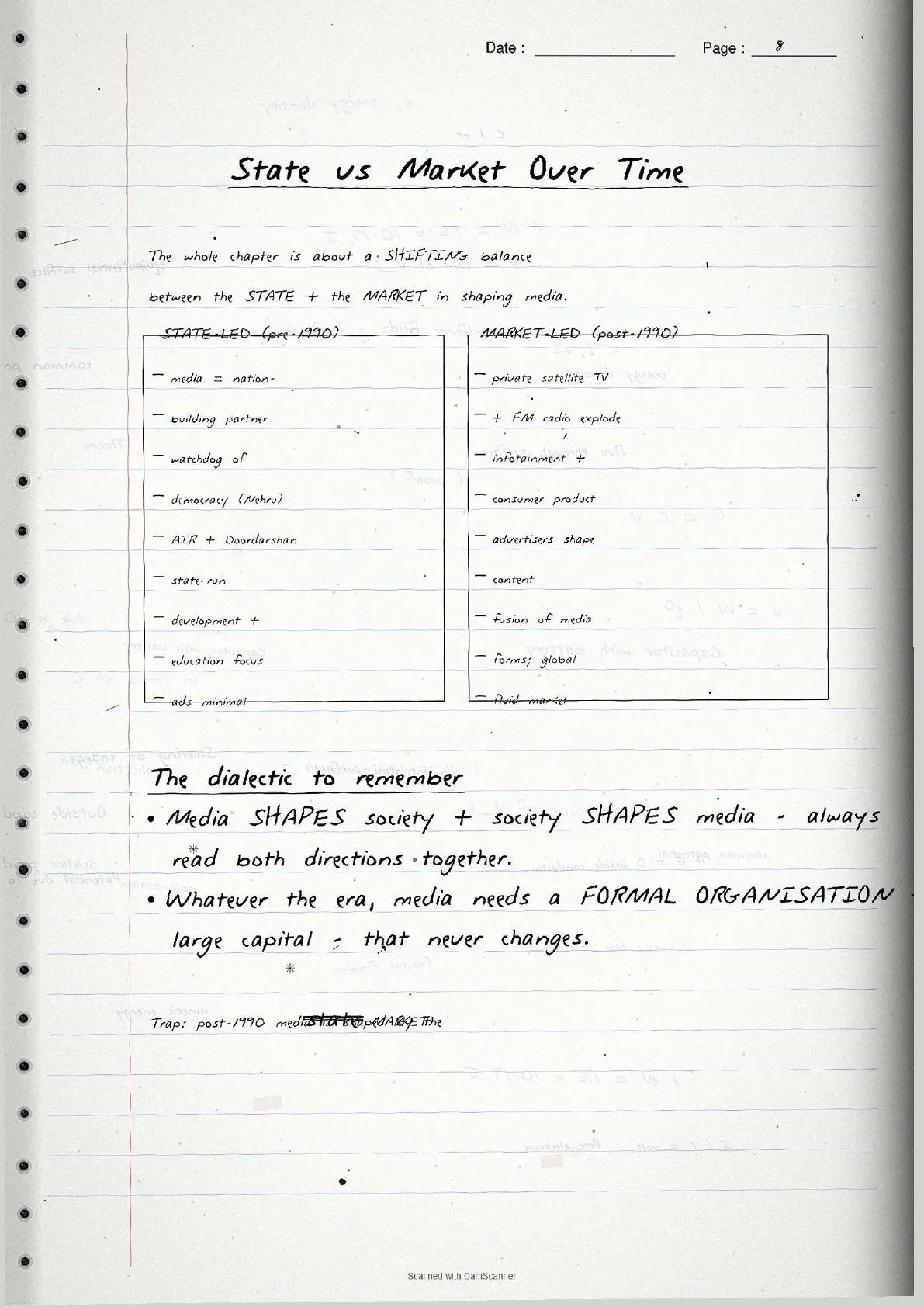
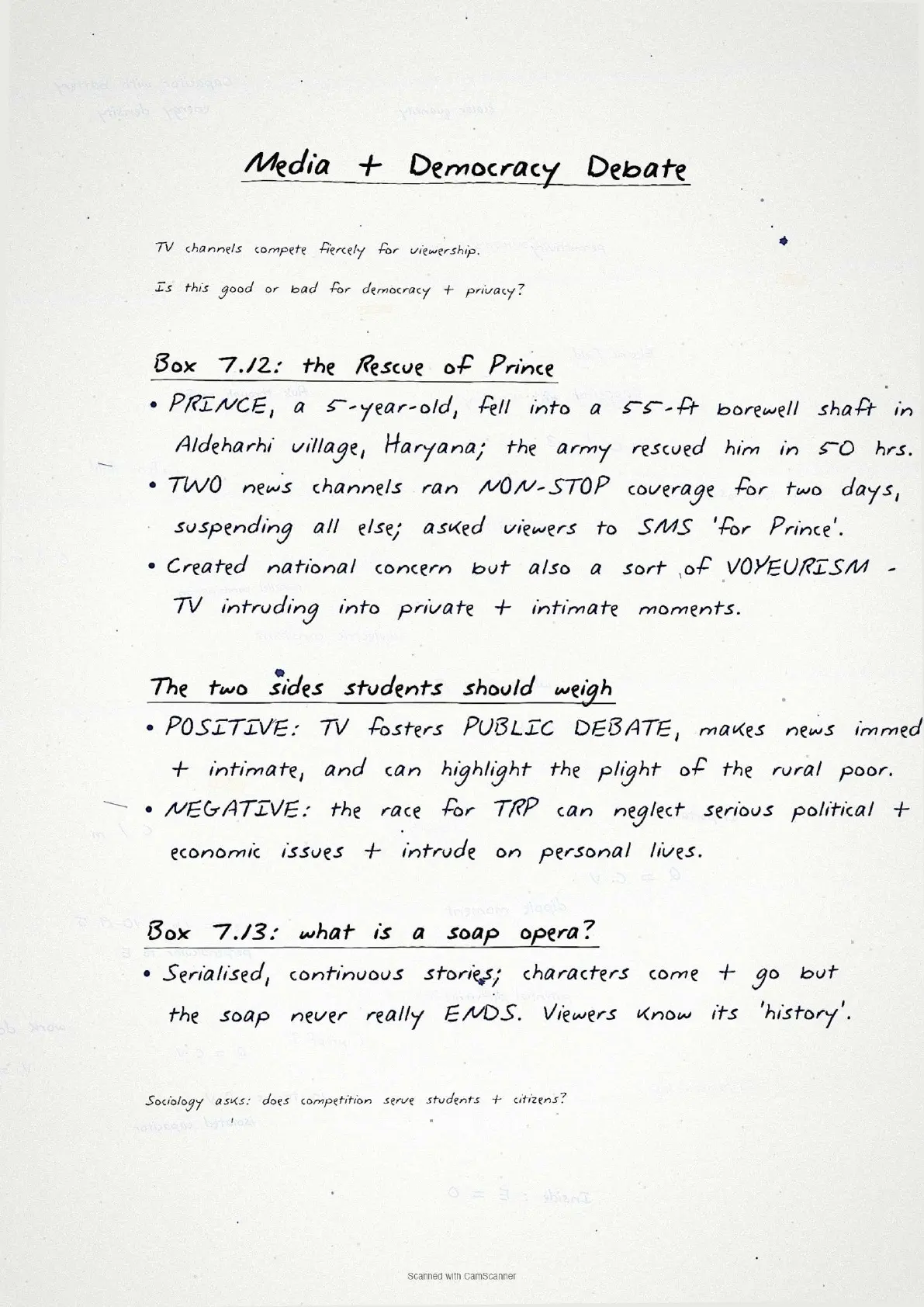
- Handwritten, one-shot revision of print, radio and television change for the last night before the exam.
- This Class 12 Sociology chapter usually carries 5 to 6 marks per board paper.
- Pairs with the NCERT Solutions, Notes and NCERT Book PDF linked lower on this page.
These Mass Media and Communications handwritten notes are prepared from the official NCERT Social Change and Development in India textbook and checked against the last five years of CBSE board papers.
Student Feedback: In a Collegedunia poll of 7,920 Class 12 Sociology students before the 2026 boards, 72% of students said handwritten notes felt faster to revise from than printed text for this chapter. Most students used the boxed media-forms page to keep print, radio and television apart.
Source: 2026-27 Class 12 Sociology student poll. Sample of 7,920 students from CBSE schools across 12 states.
What These Mass Media and Communications Handwritten Notes Cover
These handwritten notes walk through Chapter 7 of Social Change and Development in India the way a student would write it in a notebook. The chapter is about the channels that reach millions of people at once, and how each one changed in India. The notes keep three threads clear.
- The idea of mass media: tools that carry one message to a huge, scattered public.
- The role of the State: radio and television served development after 1947, before liberalisation opened the field.
- The three media stories: the rise of the Indian language press, the survival of radio, and the spread of private television.
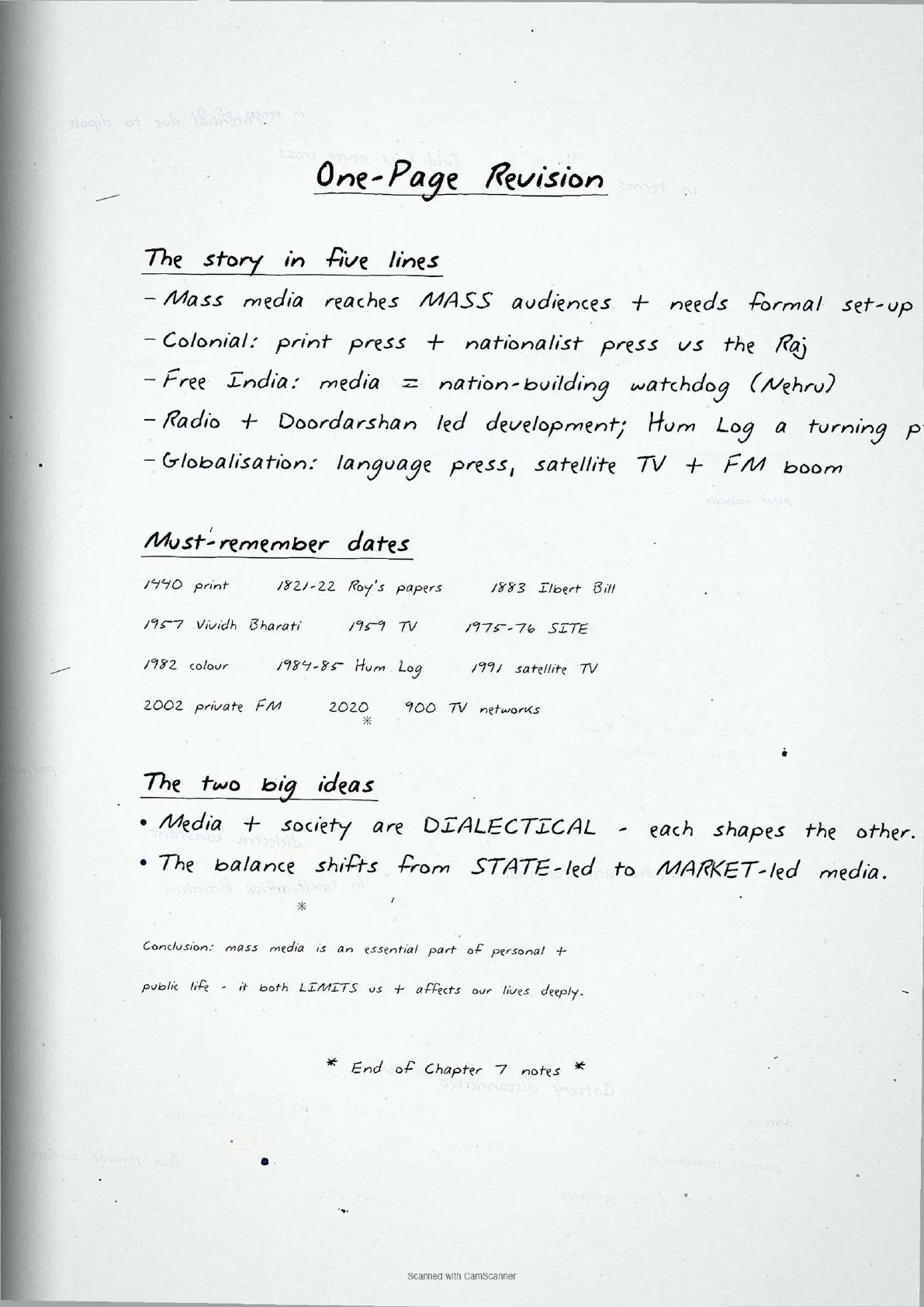
Writing the chapter out by hand fixes the State-to-market shift in memory, which is the spine of every answer in mass media and communications class 12.
Mass Media as One Idea: A Handwritten Concept Card
The first notebook page sets the core idea before any detail. Students should be able to define mass media and list its features in their own words. The card below captures that page.
- Reaches a mass, anonymous public: the same message goes to very many people at once.
- One-way flow: mostly from a sender to many, with little direct reply.
- Needs technology and money: printing presses, transmitters and advertising keep it running.
- Shapes opinion and taste: it influences how people think, shop and spend their day.
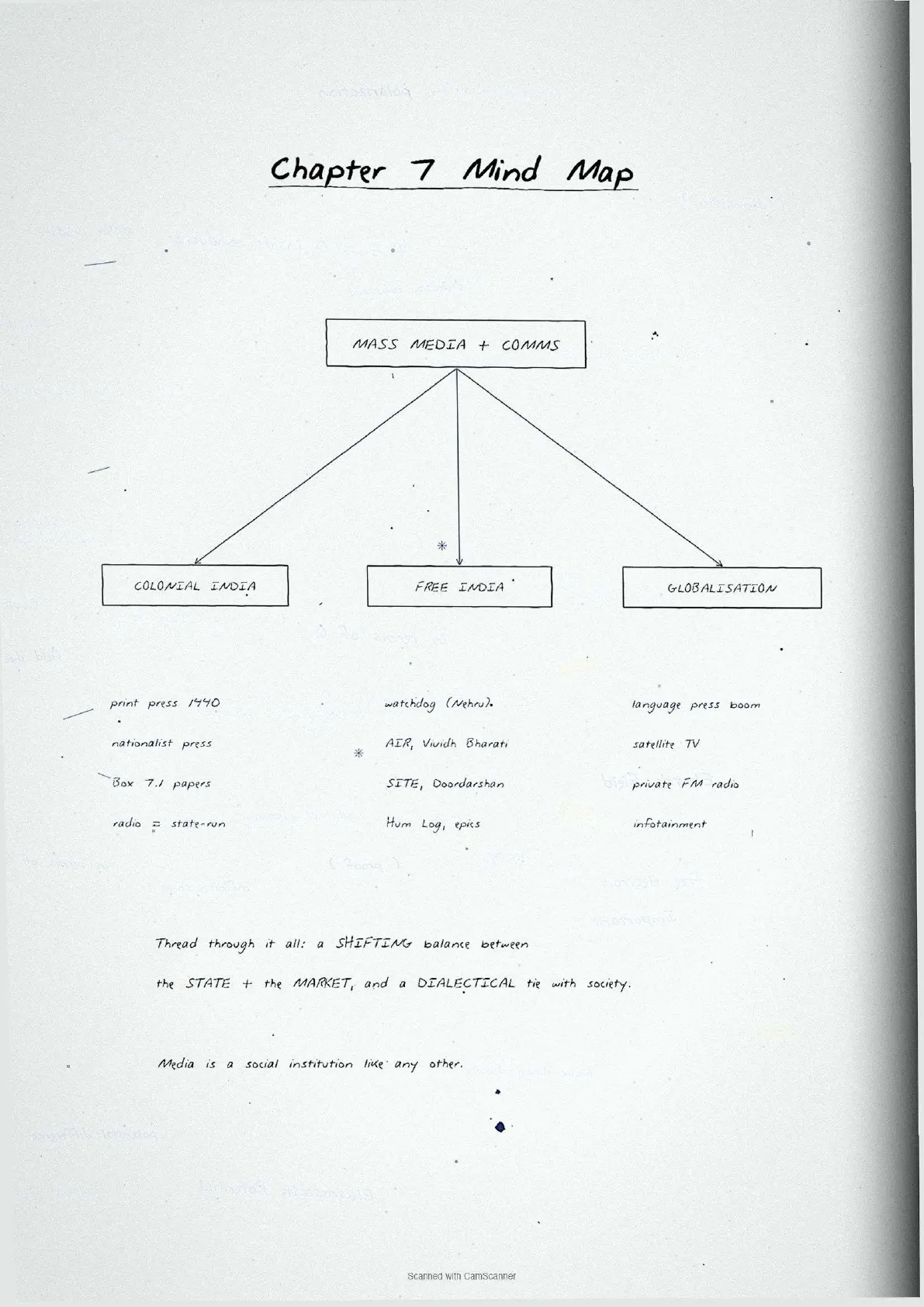
The point to underline in the notebook is that in India the State first used mass media for development, and only after 1991 did private and global players reshape the whole field. The handwritten card below holds this in one view.
The Forms of Mass Media in India
The next notebook page sorts the media into branches, because the exercise questions go medium by medium. Drawing this as a small tree makes the chapter easy to recall.
- Print: newspapers and magazines, with the vernacular press leading the growth.
- Radio: All India Radio, private FM and grassroots community radio.
- Television: Doordarshan and a flood of private satellite channels after 1991.
- Cinema and new media: films plus the internet and social media that blur old boundaries.
The handwritten tip on this page is to answer each medium in its own paragraph, never mixing radio points into a television answer. The hand-drawn tree below shows the branches.
Key Terms to Box in Your Notebook
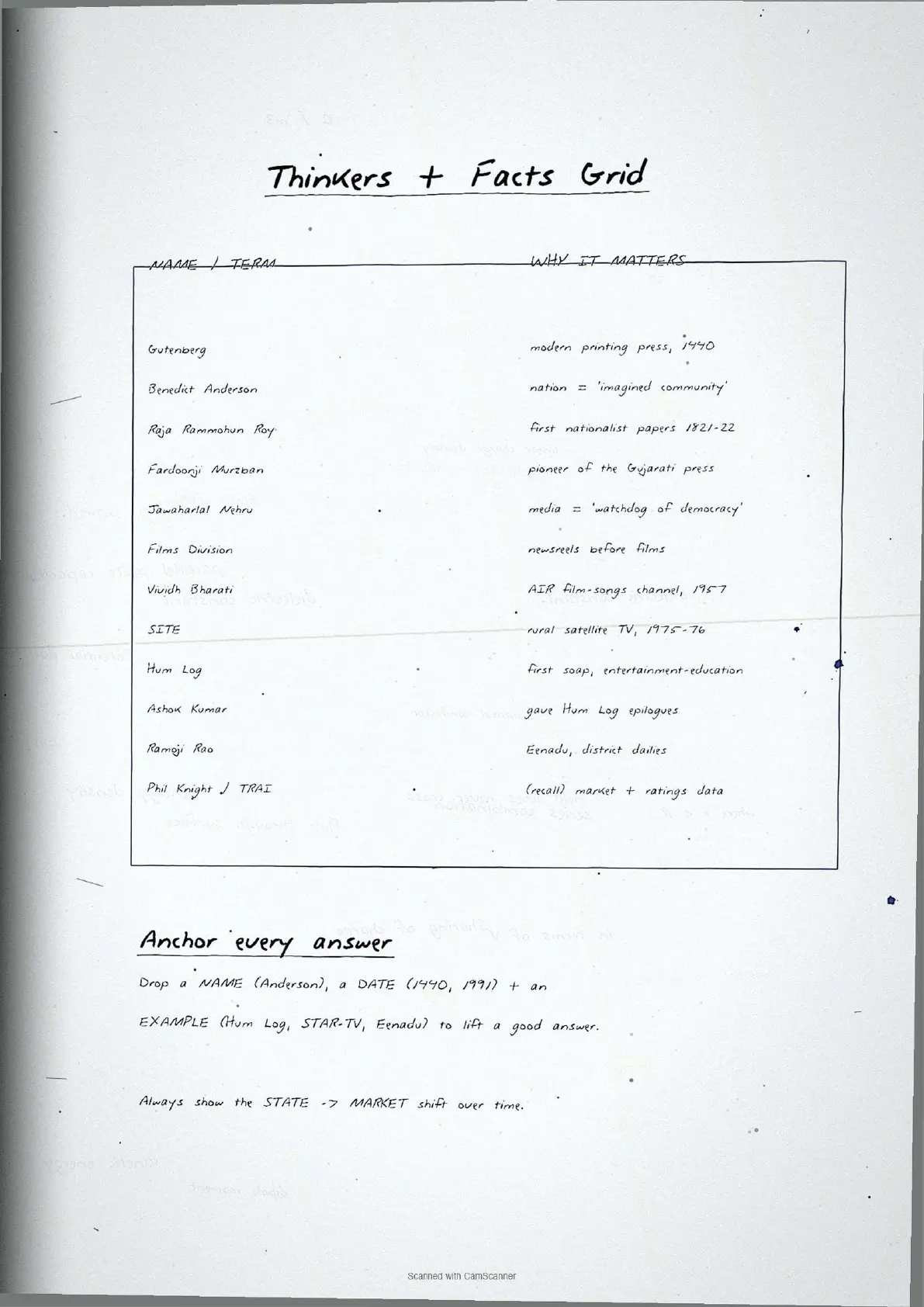
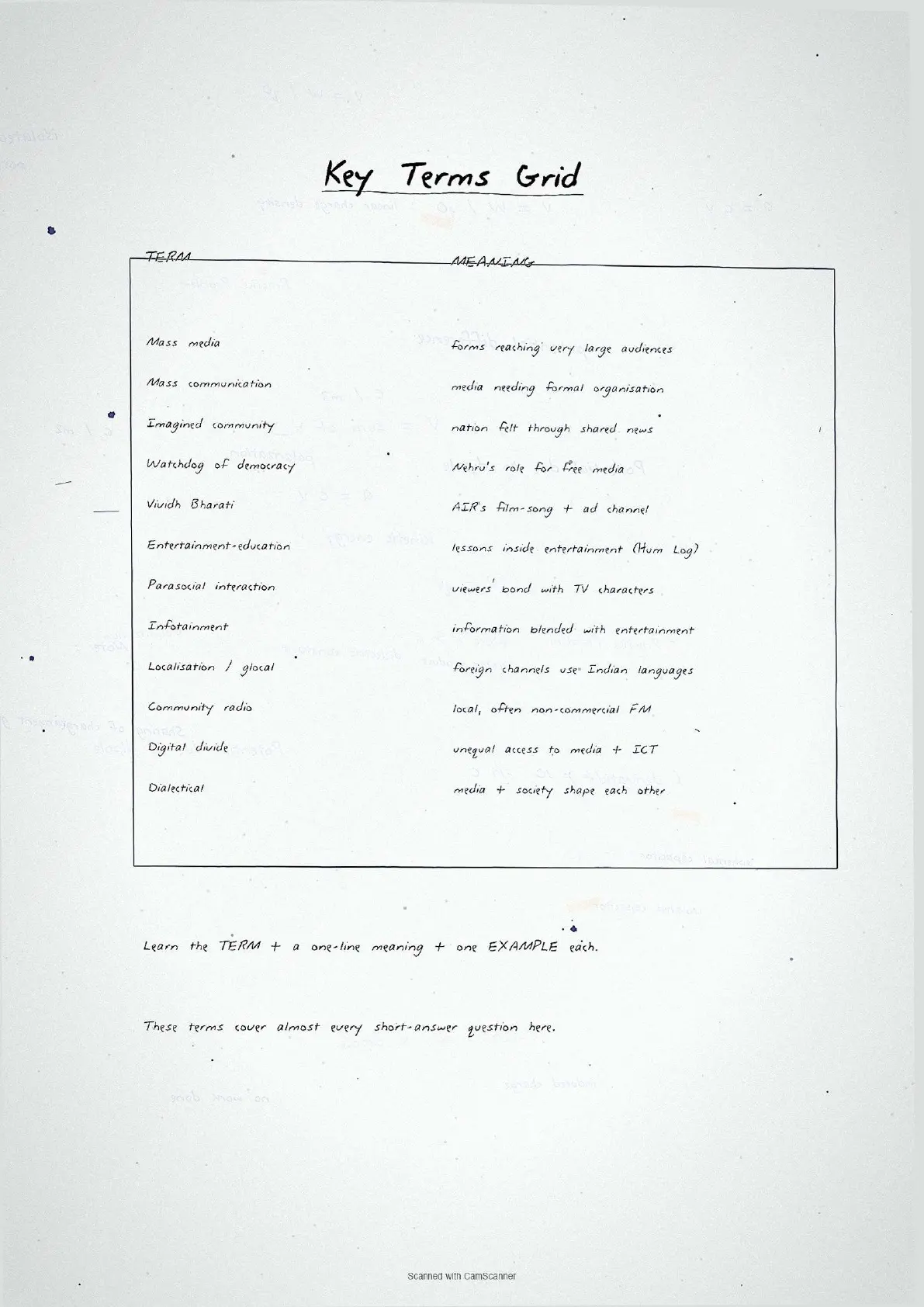
A few words must be boxed and learnt word for word, because a clean definition often earns the first mark. The notebook keeps them on one ruled page.
- Mass media: forms like TV, newspapers, radio and the internet that reach a mass public at once.
- Liberalisation: the 1990s policy that opened Indian media to private and foreign players.
- Infotainment: a mix of information and entertainment used to keep people watching and reading.
- Community radio: a small local station run by and for a community.
Writing each term in a box, with one example beside it, is the fastest way to make these stick for a last-minute revision.
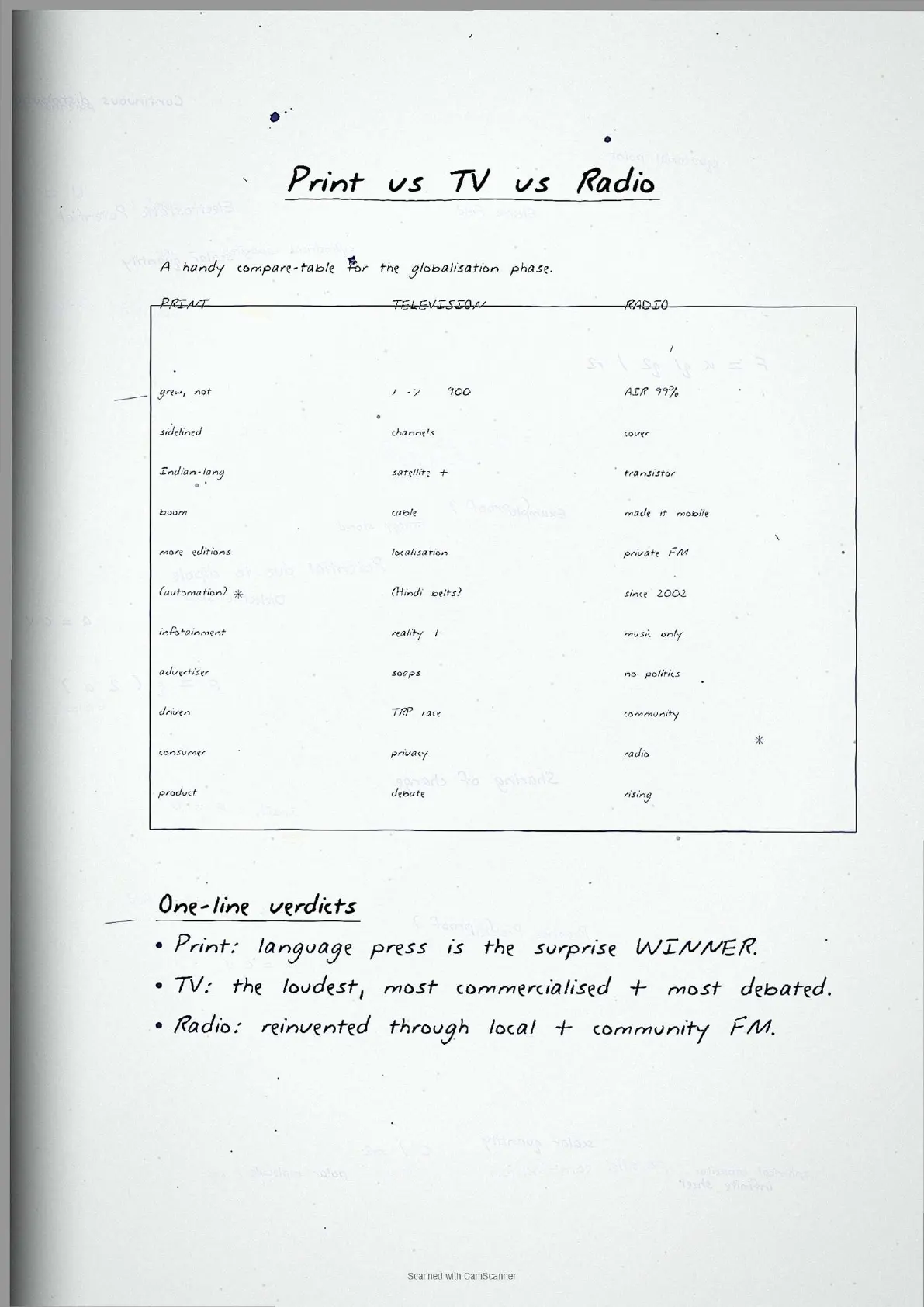
The India Snapshot: Print, Radio and Television
The closing notebook page is a one-glance snapshot of how each medium changed. Students can copy this table to revise the whole chapter in under a minute.
| Medium | Main change after liberalisation |
|---|---|
| Vernacular press boomed with local editions and newly literate people in small towns | |
| Radio | Private FM and community radio gave an old medium a fresh life |
| Television | Doordarshan joined by many private satellite channels in several languages |
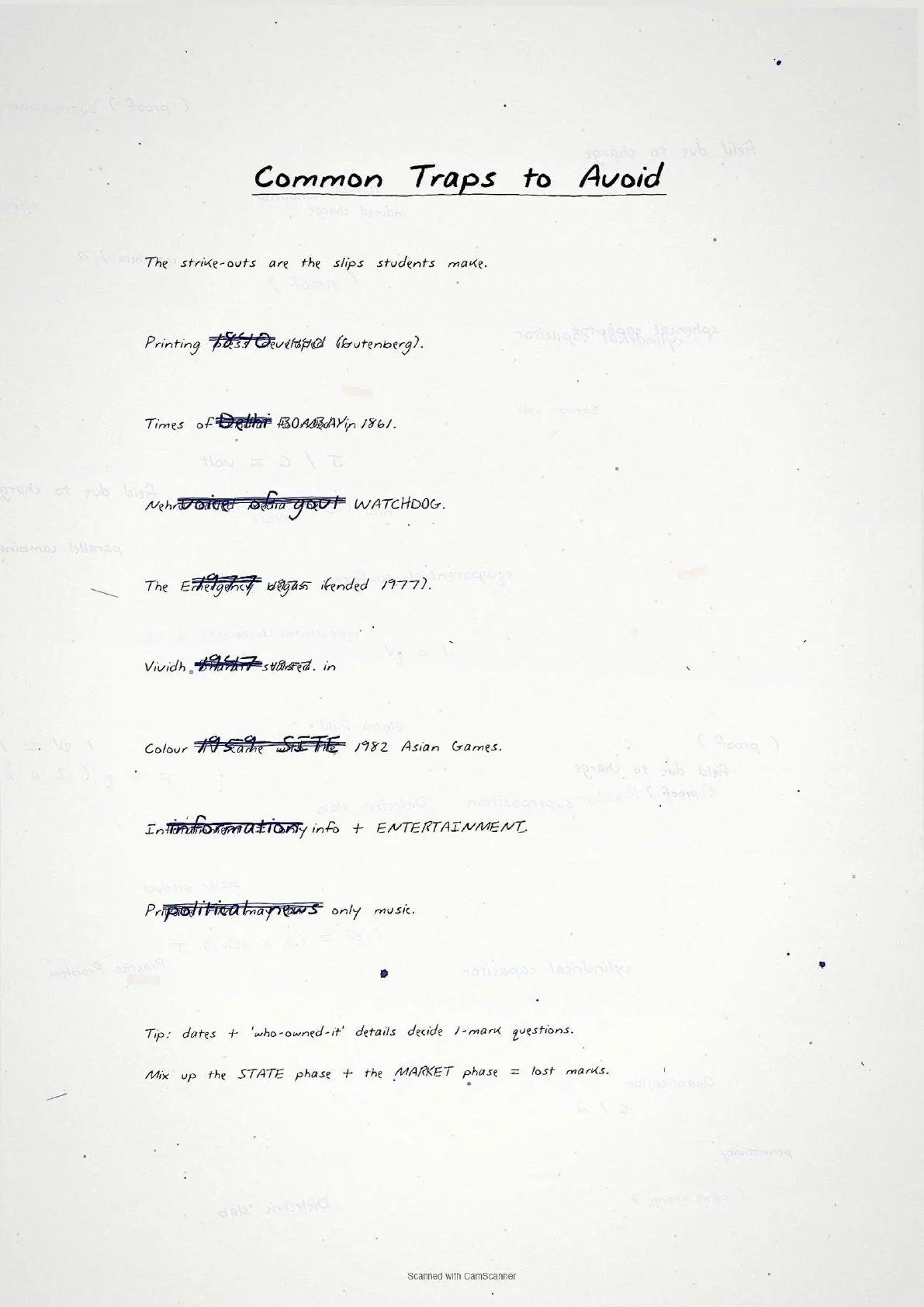
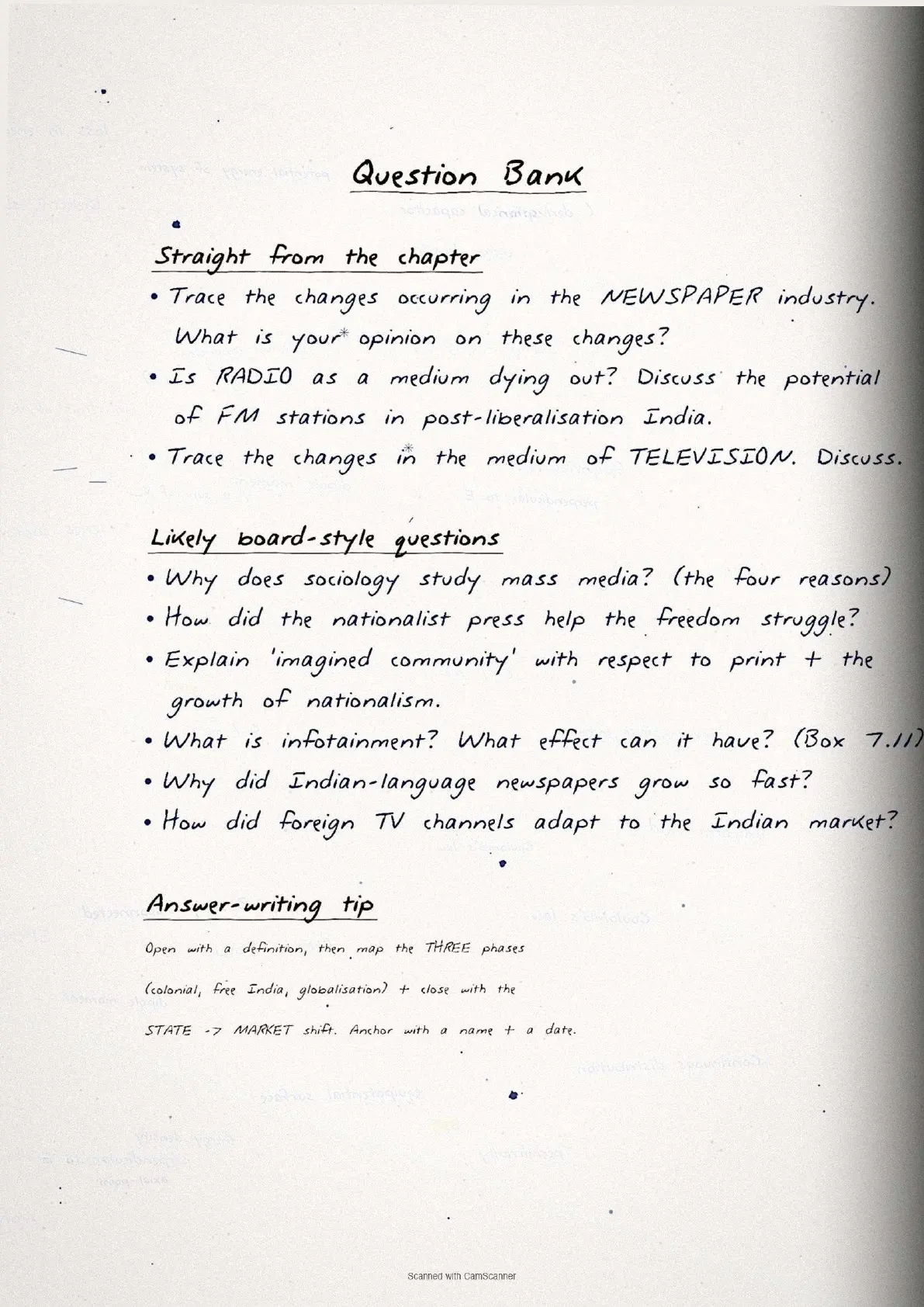
Handwritten tip: for any "trace the changes" question, write the change, add one named example, then close with a short opinion. That order matches exactly what the NCERT questions ask for.
How These Handwritten Notes Pair with the Solutions and Book PDF
These notes are for fast recall. To master the chapter, students should use them with the other resources for the same chapter, all linked in the table below.
| Resource | Best used for |
|---|---|
| Mass Media and Communications Class 12 NCERT Solutions | Full point-wise answers to all 3 exercise questions |
| Mass Media and Communications Class 12 Notes | Quick chapter summary with all key terms in one place |
| Mass Media and Communications NCERT Book PDF | Reading the original NCERT chapter text |
Tip: revise from these handwritten notes first, then attempt the NCERT Solutions, and use the Book PDF to confirm any fact you are unsure of.
All Class 12 Sociology Handwritten Notes
The table links the Handwritten Notes for every chapter in both Class 12 Sociology books, so students can move across the course in one click. Mass Media and Communications is highlighted.
| Chapter | Handwritten Notes |
|---|---|
| Indian Society | |
| Chapter 1 | Introducing Indian Society |
| Chapter 2 | The Demographic Structure of the Indian Society |
| Chapter 3 | Social Institutions - Continuity and Change |
| Chapter 4 | The Market as a Social Institution |
| Chapter 5 | Patterns of Social Inequality and Exclusion |
| Chapter 6 | The Challenges of Cultural Diversity |
| Social Change and Development in India | |
| Chapter 1 | Structural Change |
| Chapter 2 | Cultural Change |
| Chapter 3 | The Constitution and Social Change |
| Chapter 4 | Change and Development in Rural Society |
| Chapter 5 | Change and Development in Industrial Society |
| Chapter 6 | Globalisation and Social Change |
| Chapter 7 | Mass Media and Communications |
| Chapter 8 | Social Movements |
FAQs on Mass Media and Communications Class 12 Handwritten Notes
Mass Media and Communications Class 12 Sociology Common Questions
Ques. Where can I download the Mass Media and Communications Class 12 Handwritten Notes PDF?
Ans. You can download the Mass Media and Communications Class 12 Sociology Handwritten Notes PDF directly from this page. It is free, follows the 2026-27 NCERT, and gives a handwritten revision of the full chapter.
Ques. Are handwritten notes good for last-minute revision of this chapter?
Ans. Yes. The boxed terms and the media-forms tree let students revise print, radio and television in a few minutes, which is why many prefer them the night before the exam.
Ques. What are the main forms of mass media in this chapter?
Ans. The chapter covers print, radio and television in detail, with cinema and new media as wider examples. The print story centres on the Indian language newspaper revolution, while radio and television change most after liberalisation.
Ques. How do these notes help in writing board answers?
Ans. They train students to write each medium in its own paragraph, add one named example, and close with a short opinion. That structure matches exactly what the NCERT "trace the changes" questions ask for.
Ques. Are these handwritten notes enough on their own?
Ans. They are best for revision. For full preparation, students should pair them with the NCERT Solutions, which answer all 3 exercise questions point by point.



Comments