



Class 7 Social Science Part 1 Chapter 8 How the Land Becomes Sacred looks at sacred places across India. These class 7 social science handwritten notes chapter 8 How the Land Becomes Sacred follow the 2026-27 NCERT and cover pilgrimage, sacred geography and protecting heritage.
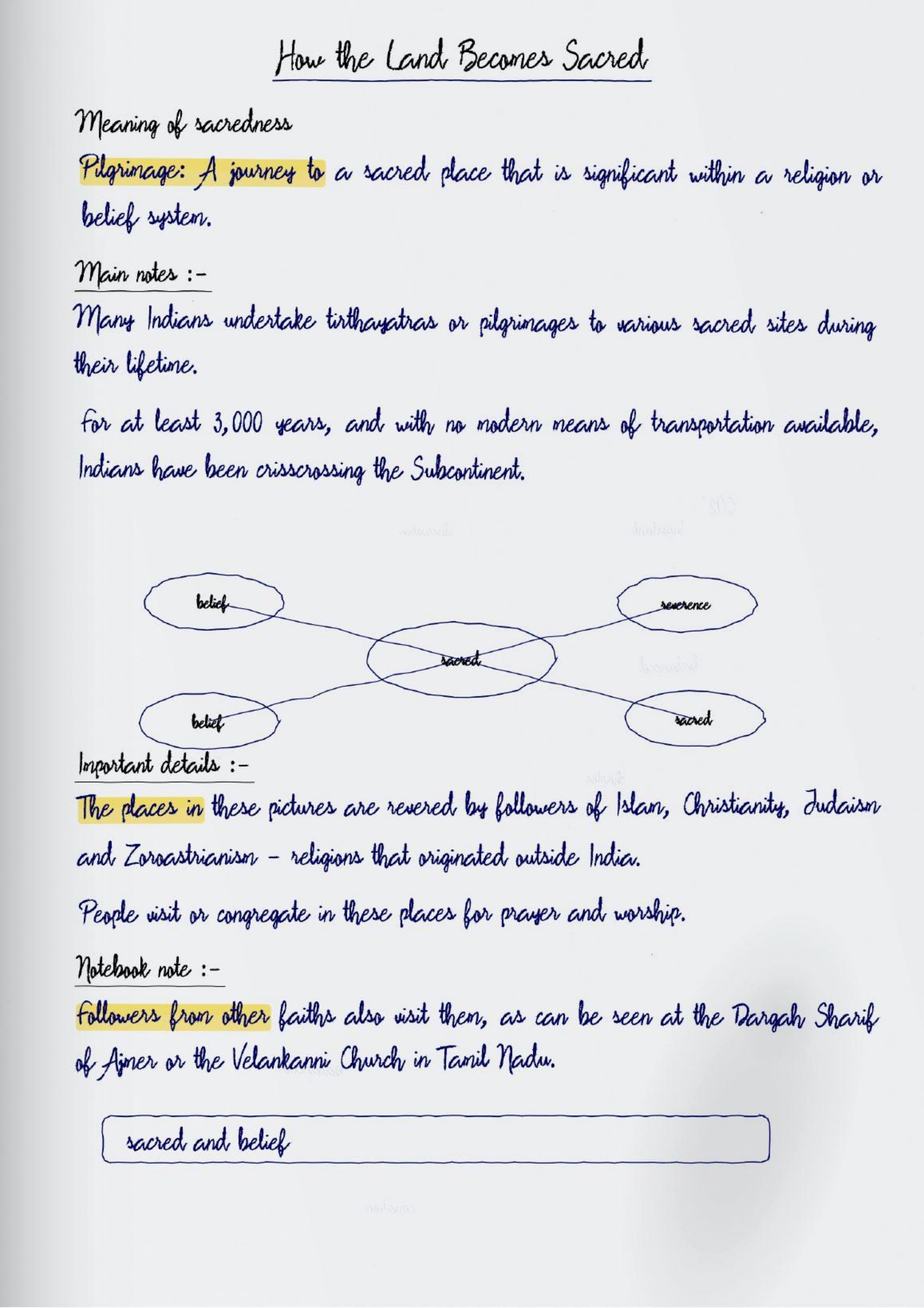
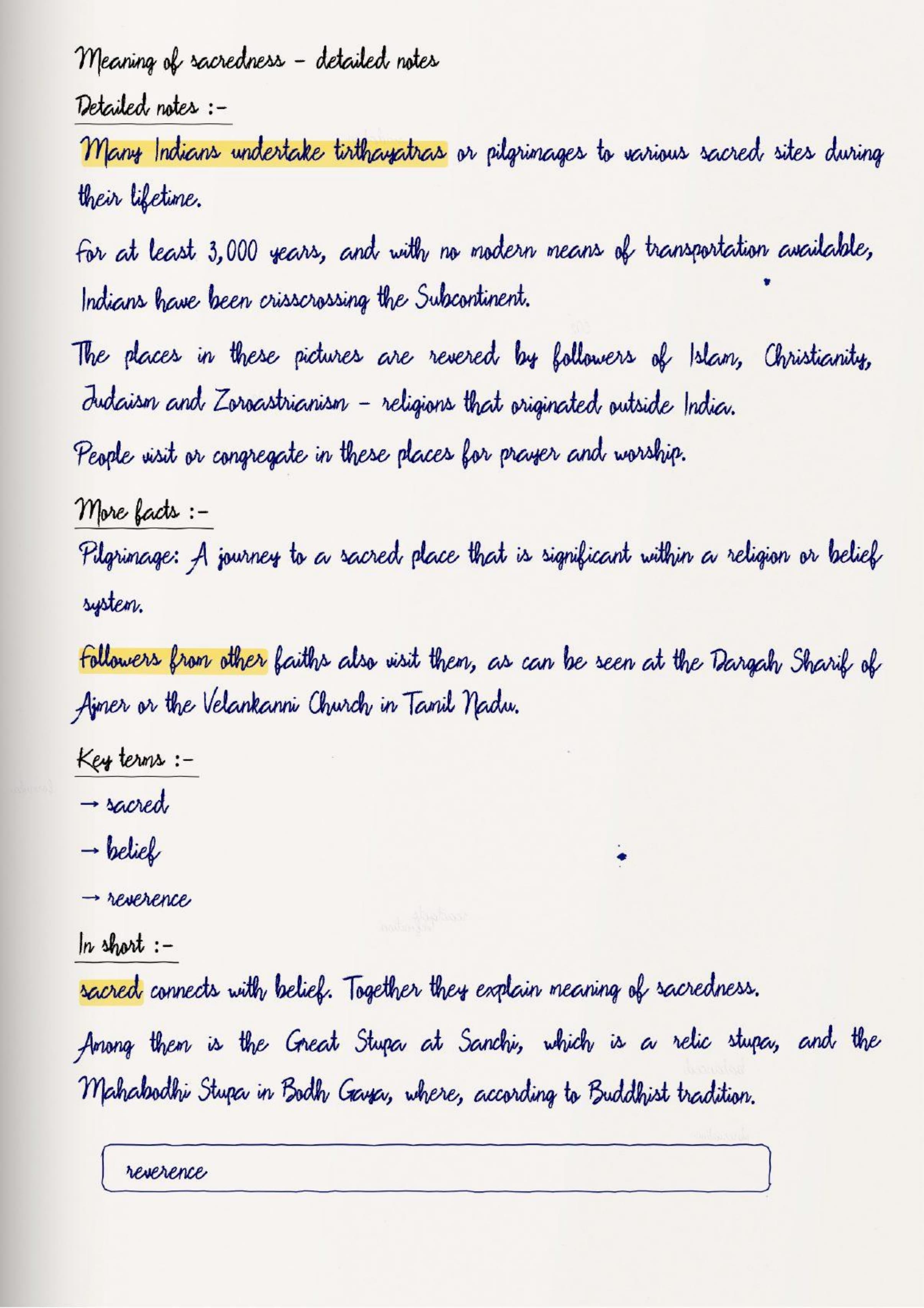
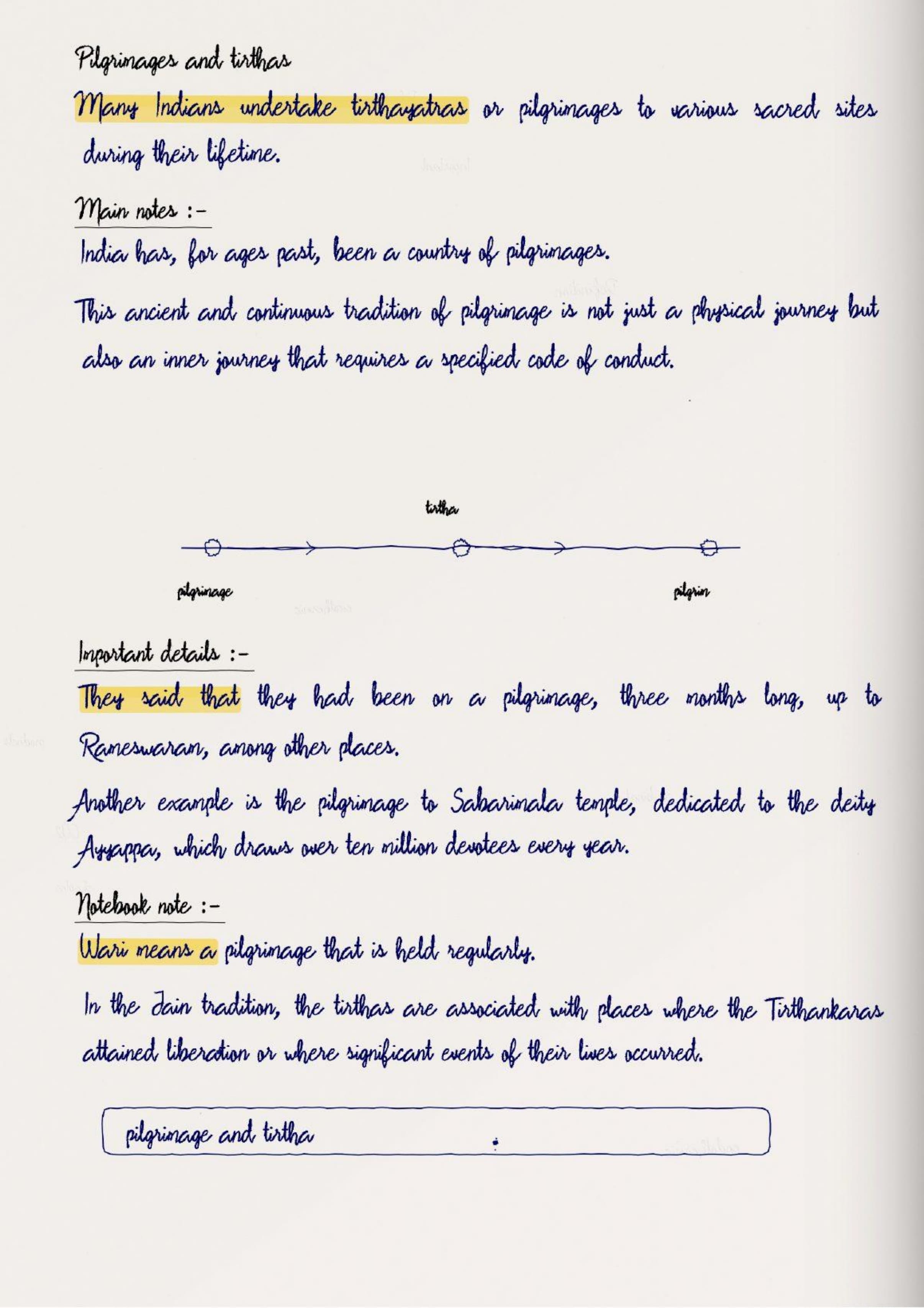
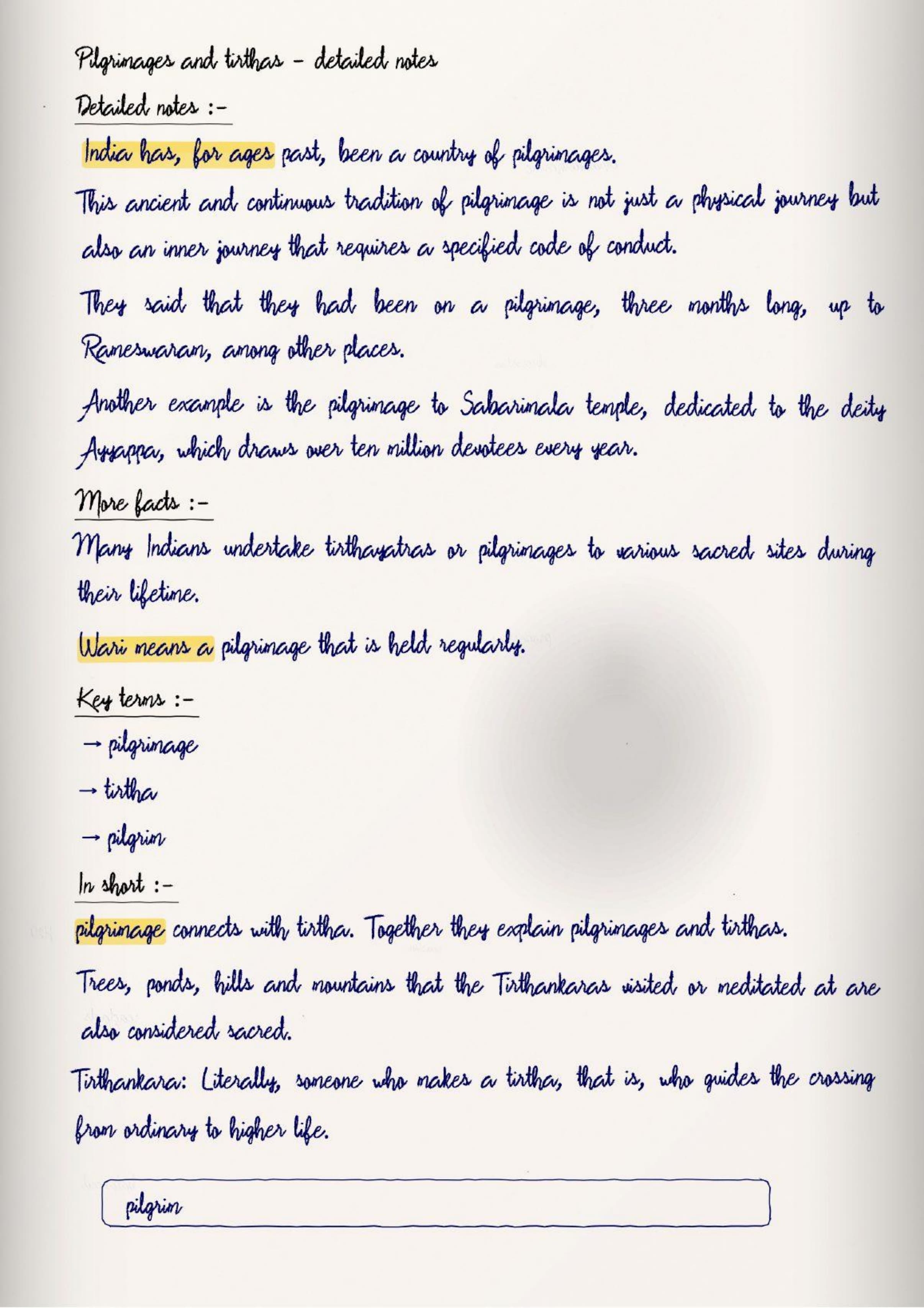
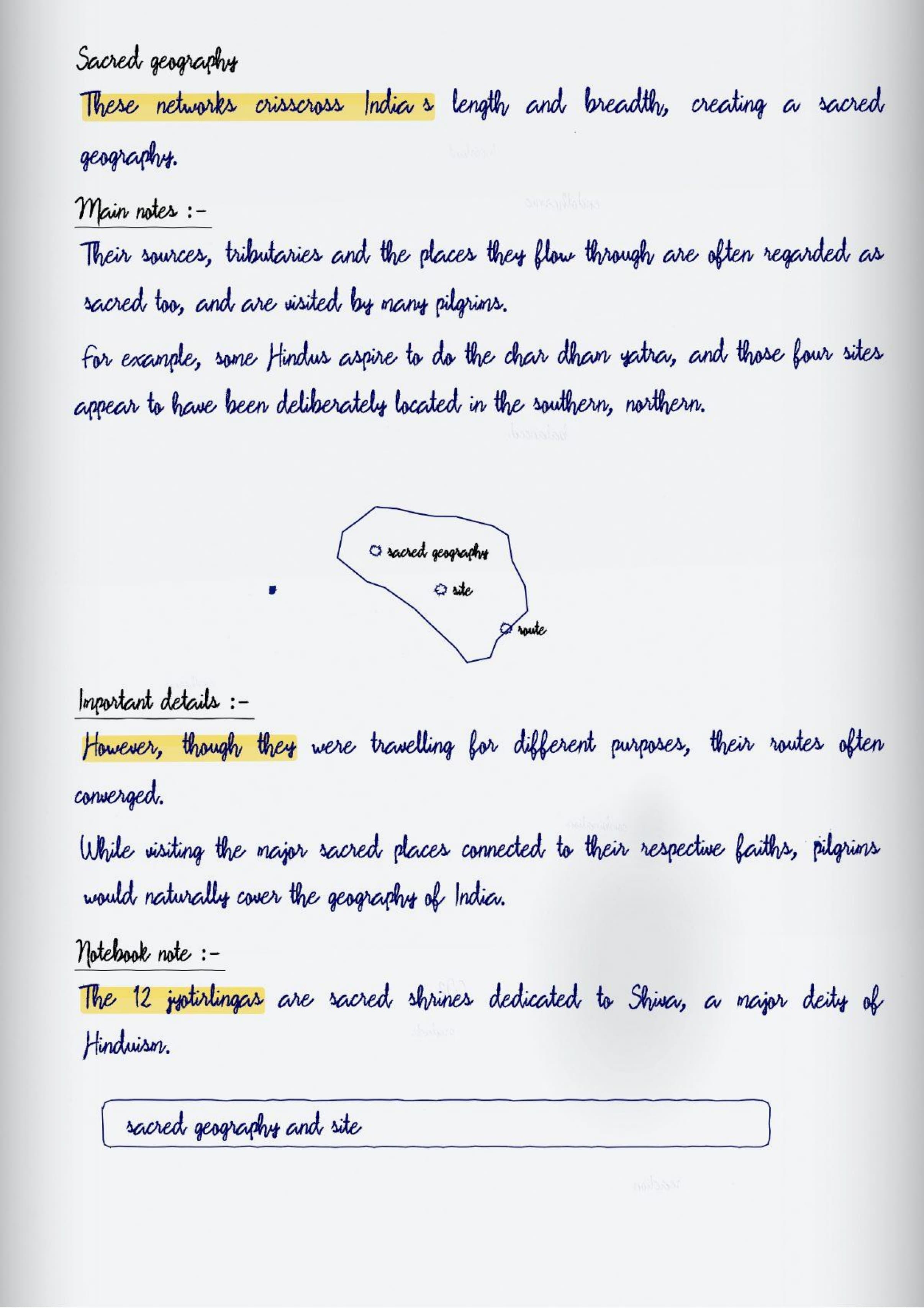
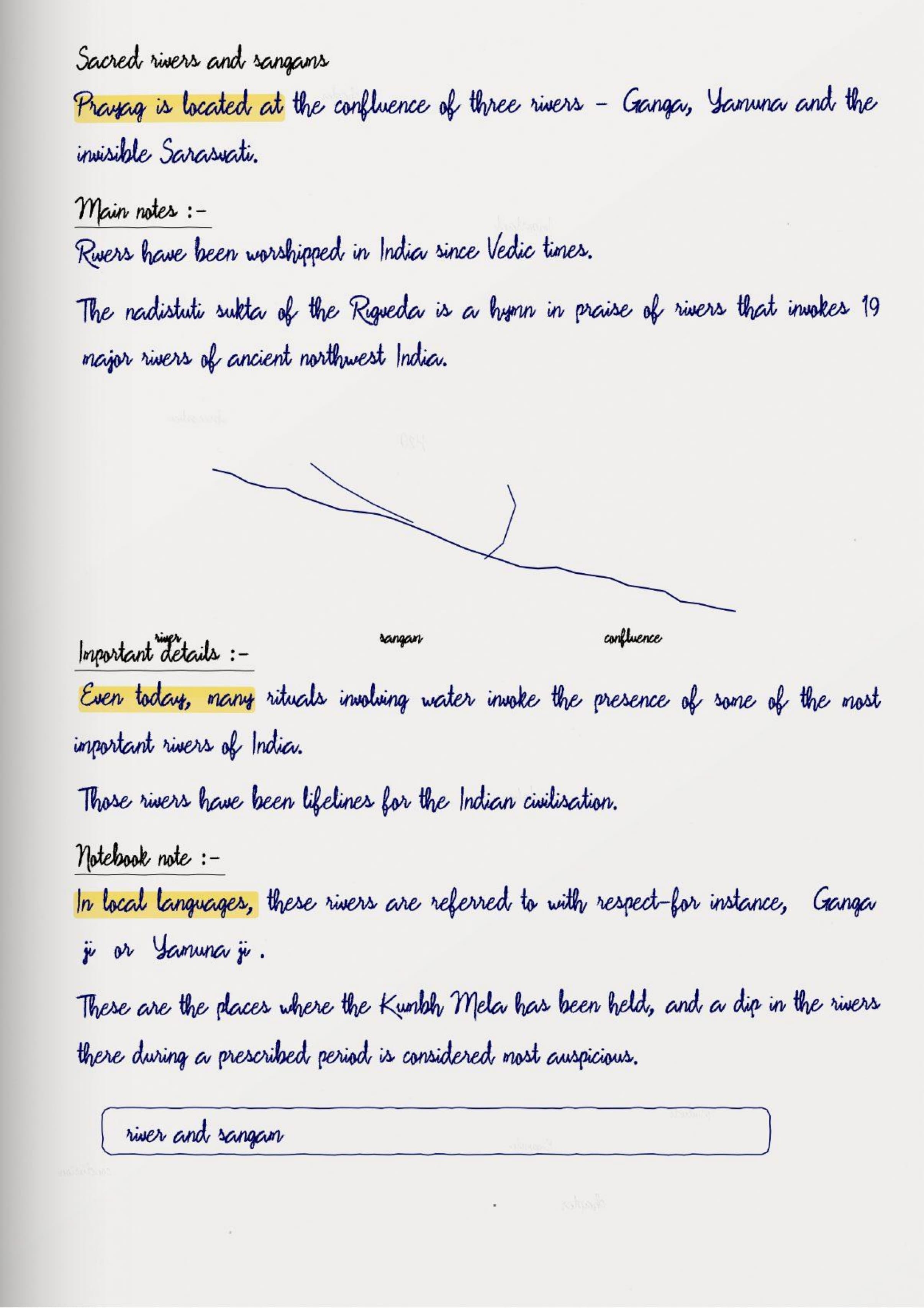
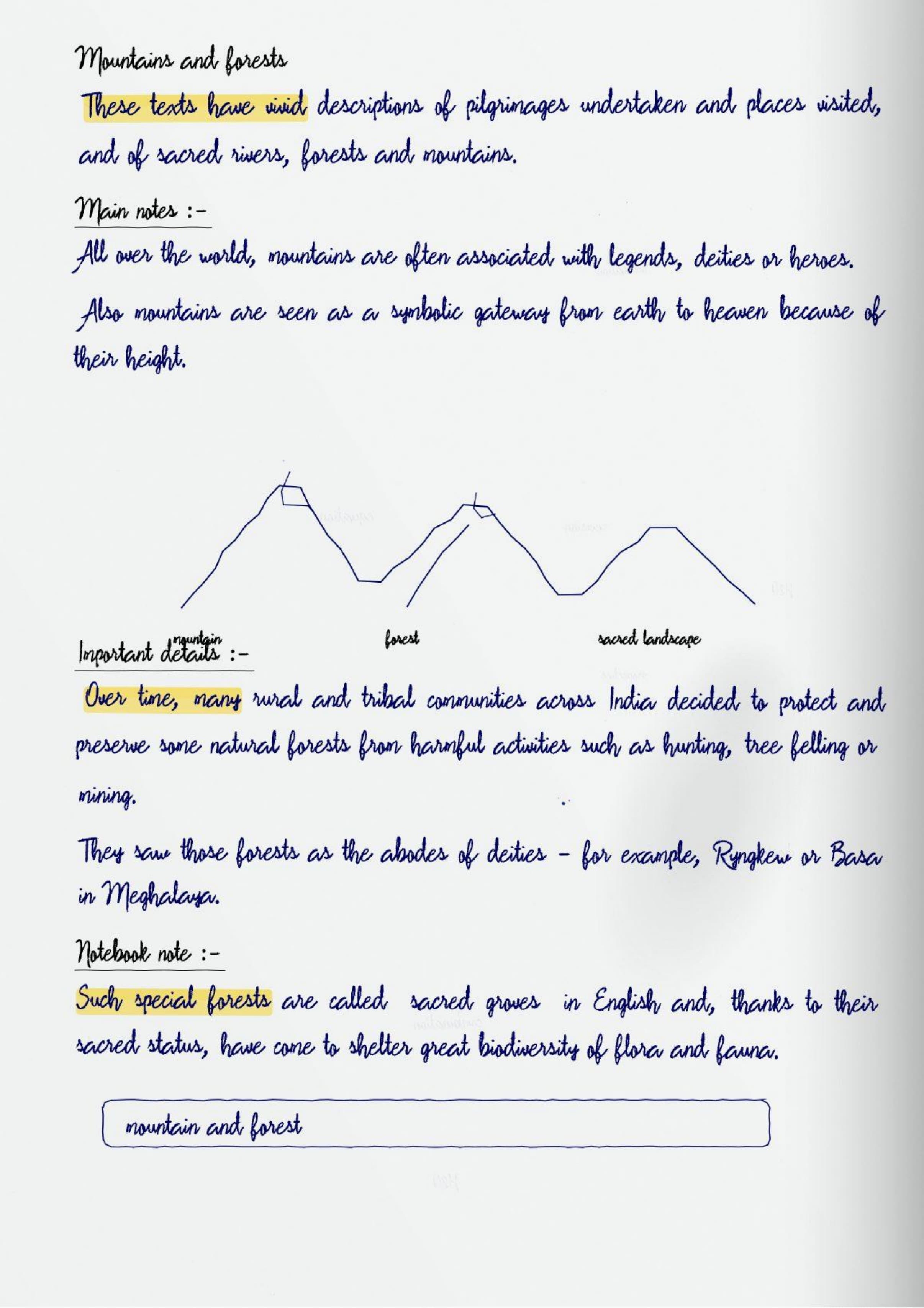
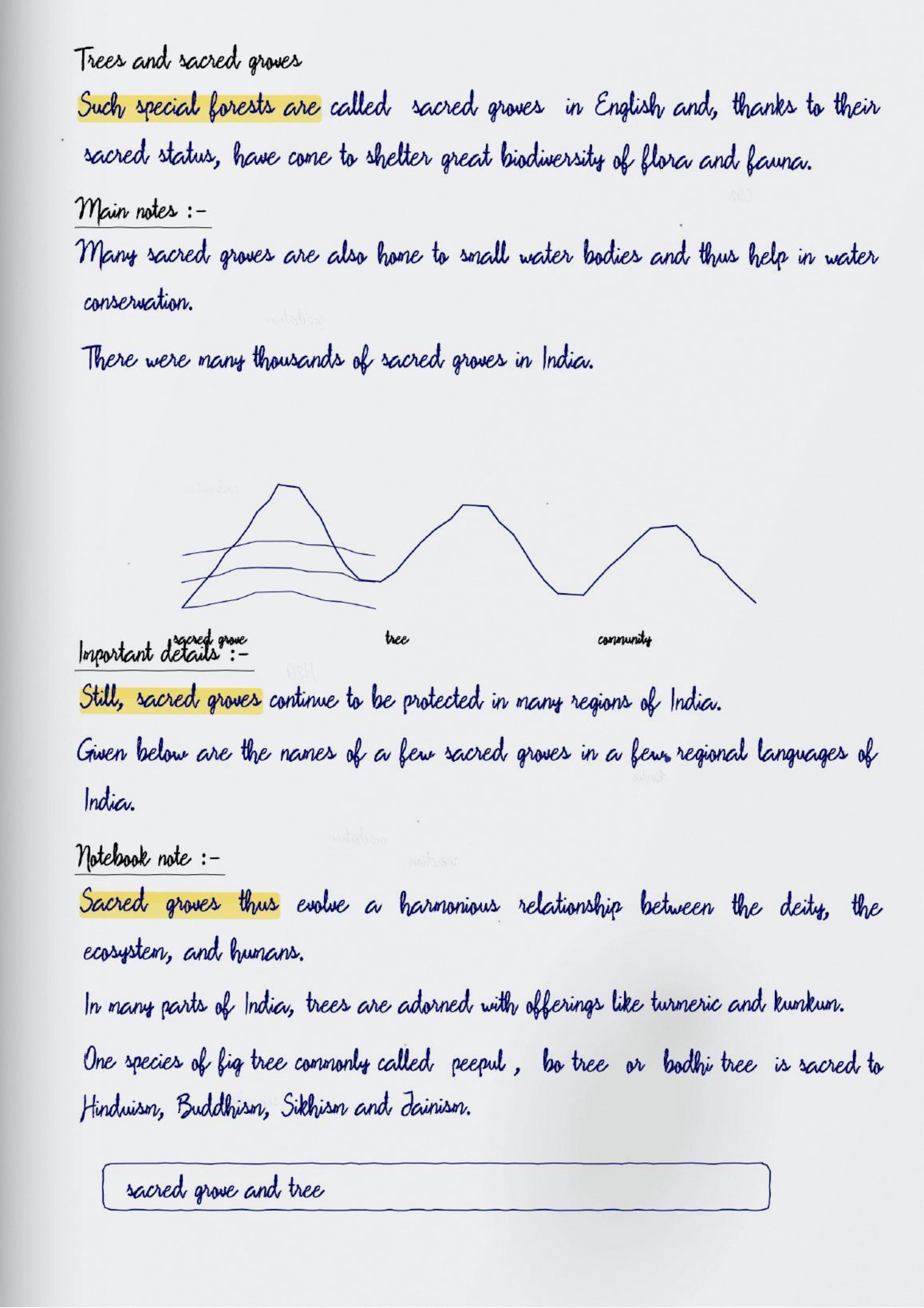
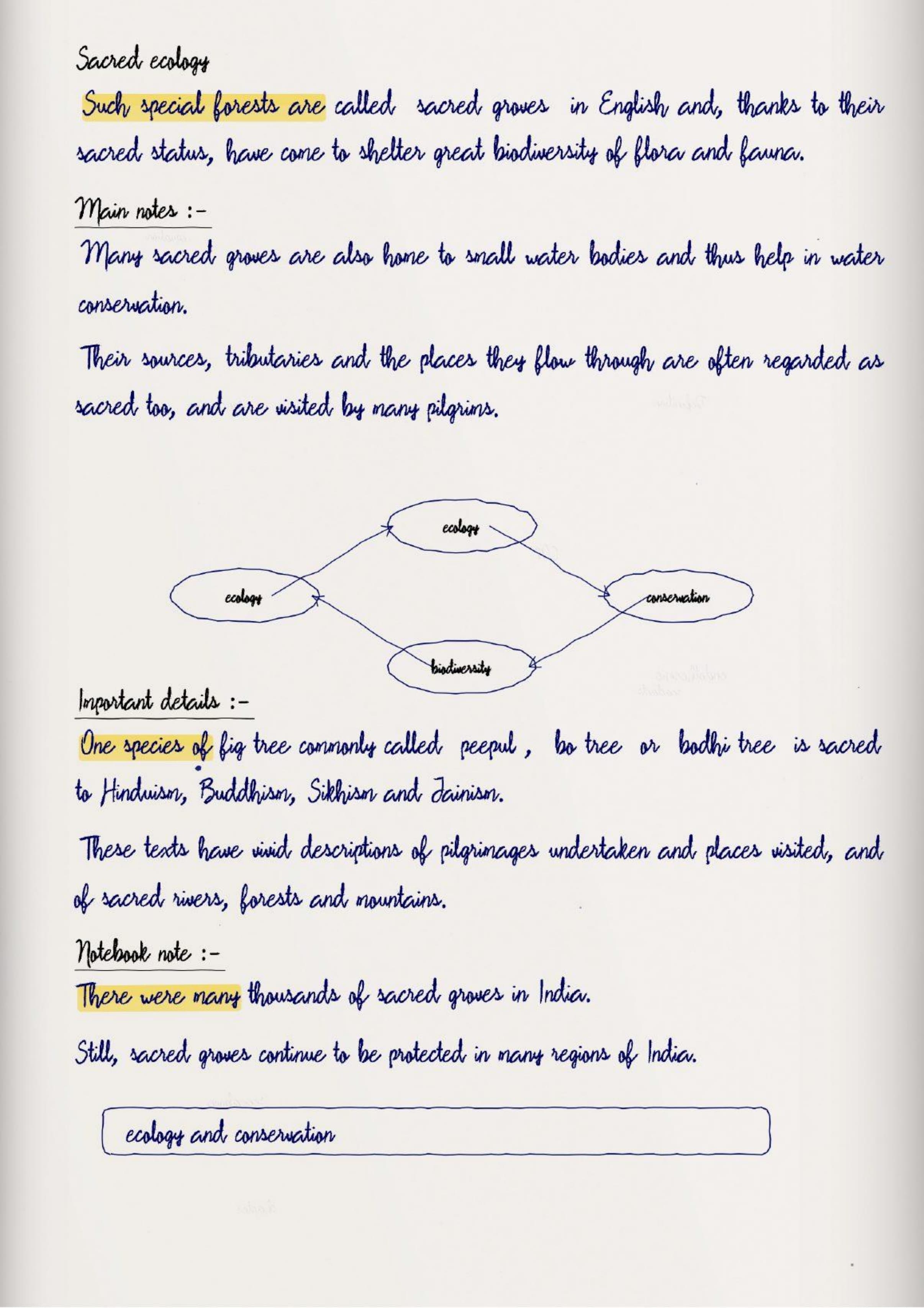
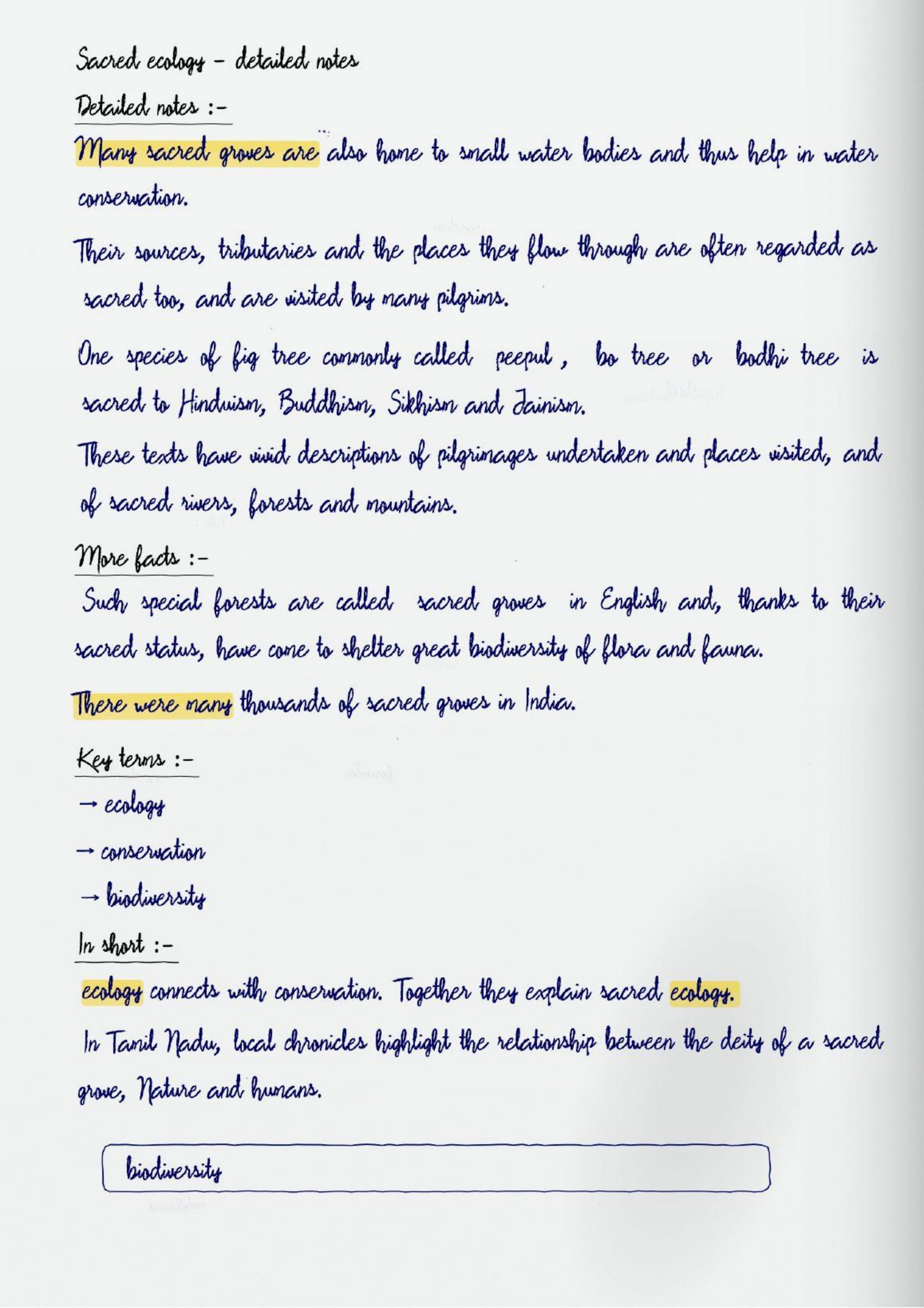
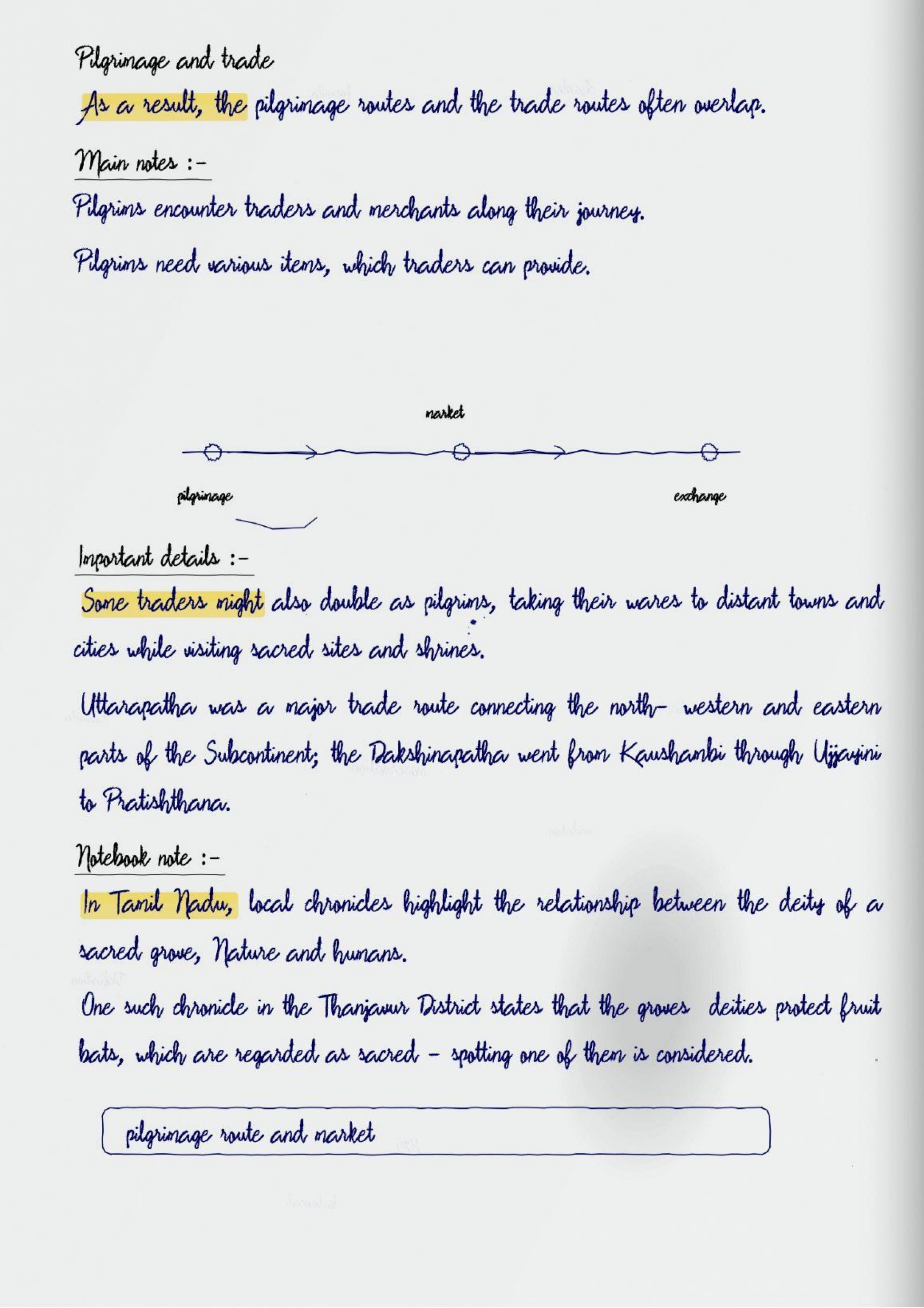
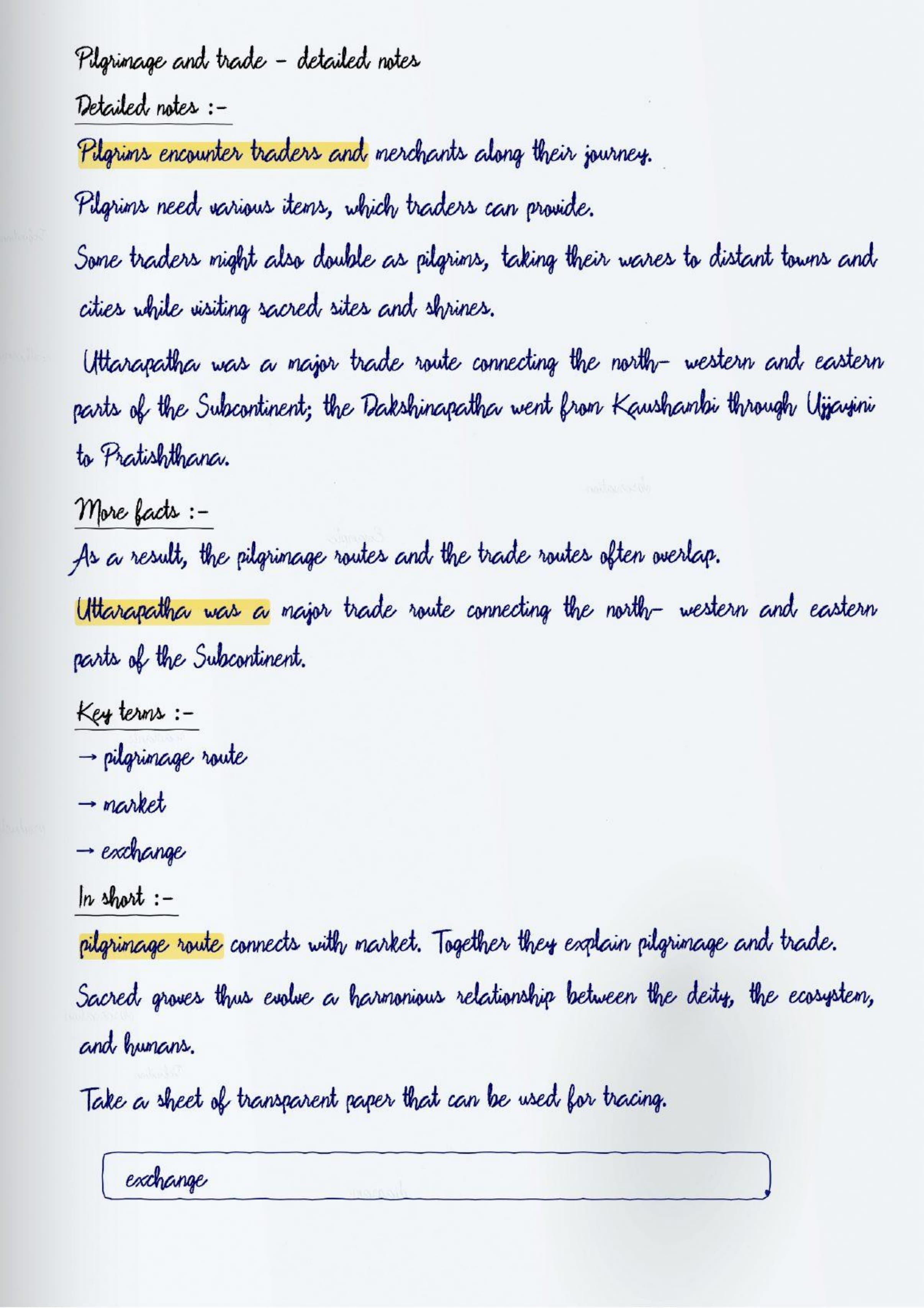
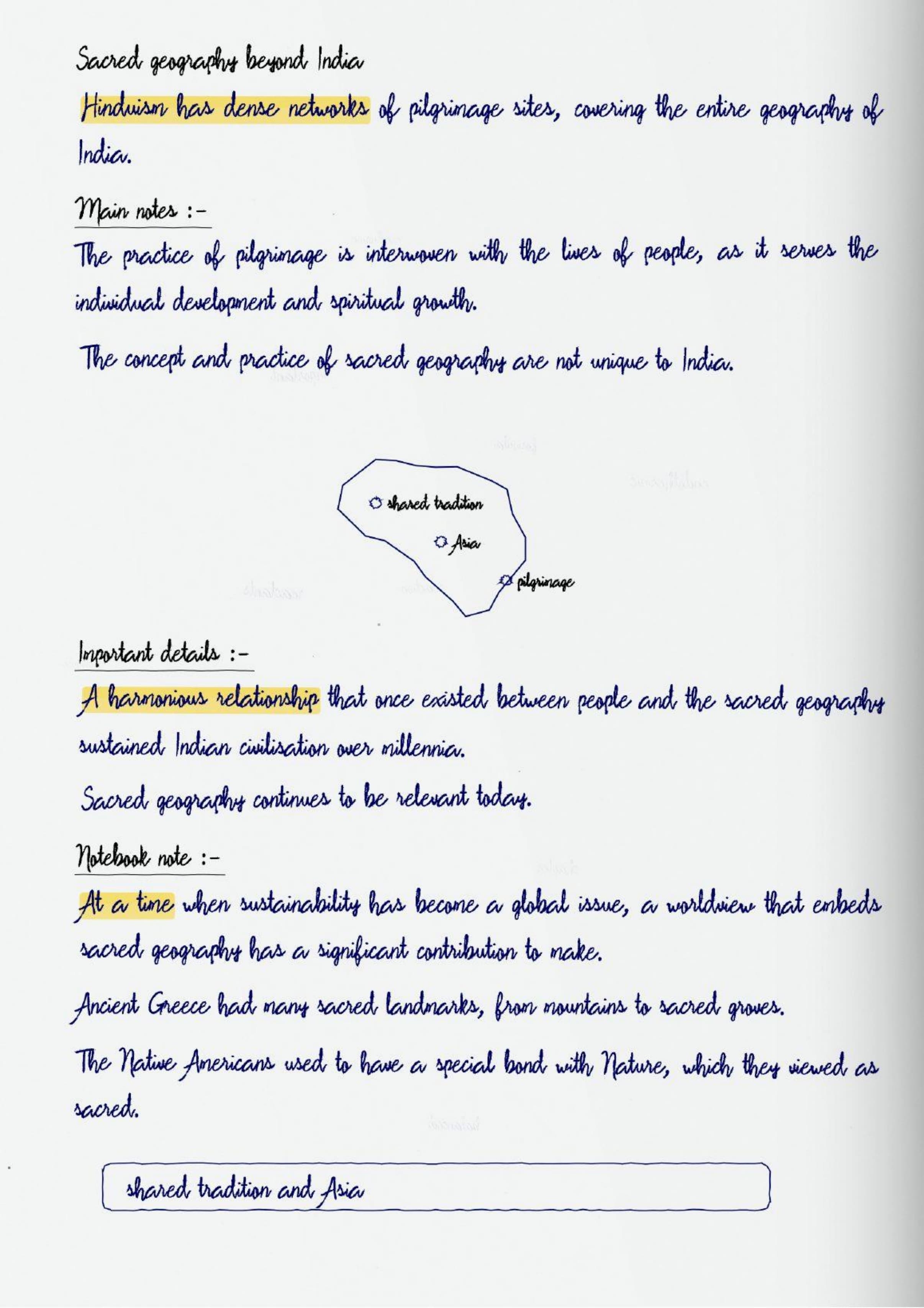
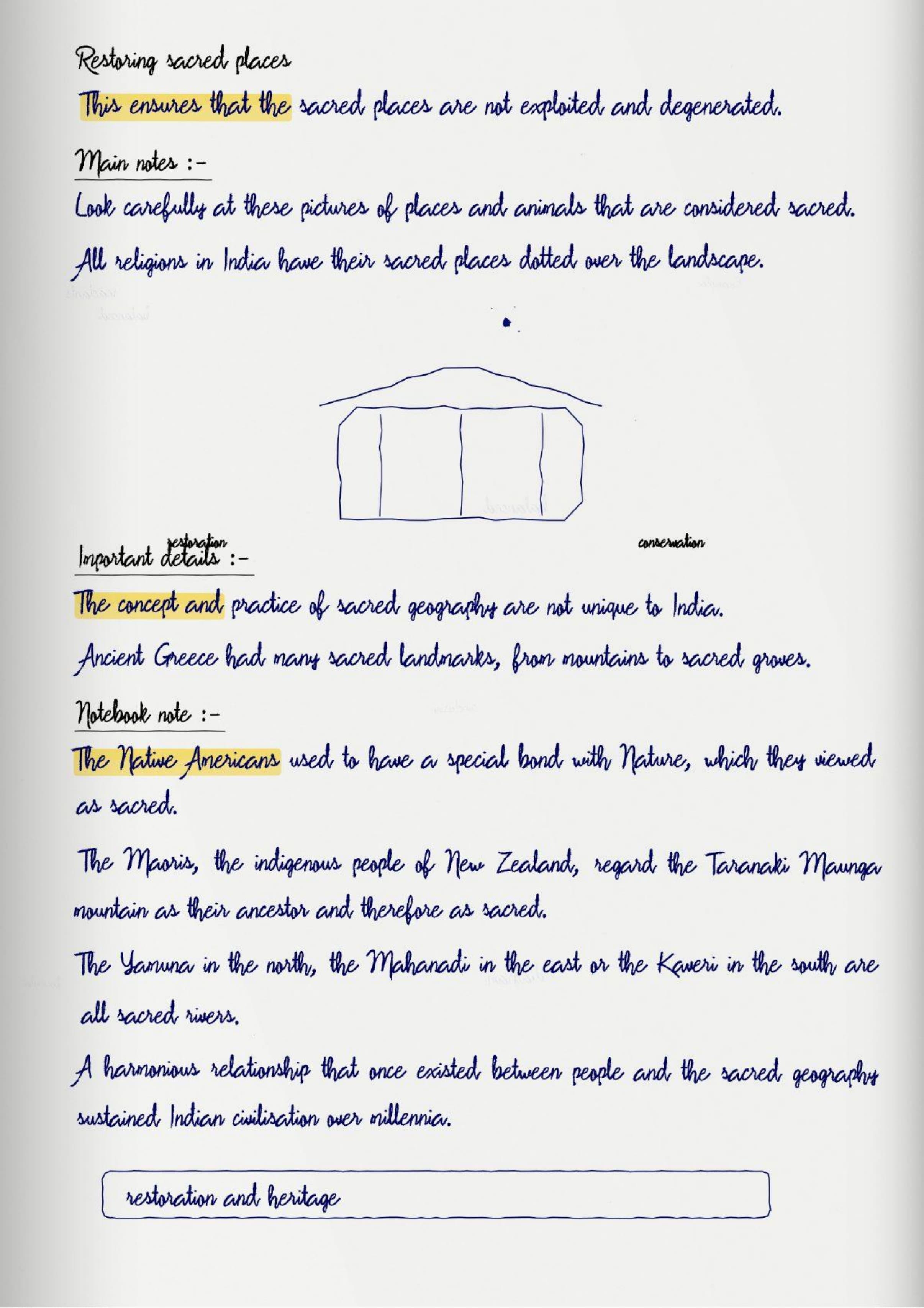
- Pilgrimage map boxed: the main sacred sites drawn across an outline of India
- What the notes cover: sacred places in different traditions, pilgrimage networks, land as sacred, and heritage protection
- Best for: the pilgrimage question and the duty-to-protect-heritage answer
The full class 7 social science handwritten notes for How the Land Becomes Sacred sit in the PDF below, with every box and figure included.
These handwritten notes are written by Social Science teachers, mapped to the 2026-27 NCERT Exploring Society book, and checked against Class 7 school question papers.
Which How the Land Becomes Sacred Topics CBSE Class 7 Social Science Asks Most
The two purposes of pilgrimage and the duty to protect heritage take most of the marks.
| Sub-topic | Weightage | How often asked |
|---|---|---|
| Purposes served by pilgrimage | High | asked often |
| Sacred sites across traditions | High | asked often |
| Duty to protect heritage | High | asked often |
| Land seen as sacred | Medium | asked sometimes |
| Pollution and neglect of sacred places | Medium | asked sometimes |
| Map of pilgrimage sites | Medium | asked sometimes |
Inside the How the Land Becomes Sacred Handwritten Notes PDF
Every religion in India has sacred places, and they are spread over the whole landscape. The chapter asks what pilgrimage does for people and for the country.
- Sacred places in Buddhism, Jainism and Sikhism
- Places linked to great figures in each tradition
- Dense networks of Hindu pilgrimage sites
- How pilgrimage covers the geography of India
- Pilgrimage and individual spiritual growth
- Pilgrimage, trade and cultural integration
- Land itself seen as sacred in tribal and folk traditions
- Pollution and neglect of sacred places
- The constitutional duty to protect heritage
What Collegedunia's How the Land Becomes Sacred Handwritten Notes Give You
The sites are marked on one map of India, so the spread across the country is obvious. That is the standard Collegedunia holds these class 7 social science handwritten notes to.
- Sacred sites map: the main sites of each tradition marked on one outline map
- Purpose box: the spiritual and the socio-economic purposes side by side
- Heritage panel: the threats to sacred places and our duty to protect them
- Colour-coded sub-headings: sub-topics in red so each tradition is easy to find
Quick Check on How the Land Becomes Sacred
Five questions on sacred geography. Tap each to check.
Pilgrimage serves the individual and also helps
(a) trade and cultural integration (b) military conquest (c) tax collection (d) nothing else
Answer: (a) trade and cultural integration
In Buddhism, Jainism and Sikhism, sacred places are usually linked to
(a) rivers only (b) great figures in those belief systems (c) markets (d) forts
Answer: (b) great figures in those belief systems
In many tribal and folk traditions, what is treated as sacred?
(a) only buildings (b) the land itself (c) only books (d) only cities
Answer: (b) the land itself
Protecting our national heritage is
(a) only the government's job (b) reminded to us by the Constitution (c) not important (d) optional for citizens
Answer: (b) reminded to us by the Constitution
A journey made to a sacred place is called a
(a) migration (b) pilgrimage (c) campaign (d) trade route
Answer: (b) pilgrimage
Night-Before Revision Card: How the Land Becomes Sacred
The card to read before the exam.
- Every Indian tradition has sacred places across the landscape
- Hindu pilgrimage networks cover the whole geography of India
- Pilgrimage serves spiritual growth and cultural integration
- In tribal and folk traditions the land itself is sacred
- The Constitution reminds citizens to protect heritage
What Makes How the Land Becomes Sacred a Scoring Chapter
This chapter carries a value-based question about protecting heritage, which usually appears in the long-answer section.
- The two purposes of pilgrimage is a standard two-mark answer
- The duty to protect heritage is a value-based long answer
- Locating sacred sites on a map is a common map-work question
- The chapter connects to the Constitution chapter that follows
How the Land Becomes Sacred Terms You Must Be Able to Define
These terms are used in the answer wording, so keep them precise.
| Term / Idea | What it means |
|---|---|
| Sacred | regarded as holy and deserving of respect |
| Pilgrimage | a journey made to a sacred place |
| Pilgrim | a person who makes such a journey |
| Heritage | what is inherited from the past and passed on |
| Integration | the joining of separate parts into a whole |
| Tradition | a belief or custom passed down over generations |
| Fundamental duty | a responsibility of citizens listed in the Constitution |
How the Land Becomes Sacred Figures You Will Find in the Notes
A single map does most of the teaching in this chapter.
| Figure drawn by hand | What it shows |
|---|---|
| Sacred sites map | sites of different traditions marked across India |
| Purpose box | spiritual growth and socio-economic purposes side by side |
| Pilgrimage route sketch | a route linking several sites |
| Sacred landscape panel | hills and rivers treated as sacred |
| Heritage panel | threats to sacred places and our duties |
A Two-Pass Plan for the How the Land Becomes Sacred Handwritten Notes
Mark the sites on a map first. The pattern across the country is the answer to most questions here. Read the class 7 social science handwritten notes the same way twice, once slowly and once fast.
- Mark eight sacred sites on an outline map of India
- Write the two purposes pilgrimage serves
- List three ways sacred places are being harmed today
- Before the test, revise the sacred sites map and the purpose box
More Social Science Study Material for How the Land Becomes Sacred
Read the notes with the solved questions and the Exploring Society chapter itself.
- Class 7 Social Science NCERT Solutions
- Class 7 Social Science Revision Notes
- Class 7 Exploring Society Book PDF
All Chapters: Class 7 Social Science Handwritten Notes
Every chapter has its own class 7 social science handwritten notes. Exploring Society Part 1 has twelve chapters and Part 2 has eight.
How the Land Becomes Sacred Class 7 Social Science Handwritten Notes FAQs
Ques. Where can I download the How the Land Becomes Sacred Class 7 Handwritten Notes PDF?
Ans. The PDF is free on this page in both the normal and the HD version.
Ques. What purposes does pilgrimage serve?
Ans. It serves individual development and spiritual growth, and at the same time it expands trade and helps knit different regions of India together culturally.
Ques. How many pages is the Part 1 Chapter 8 handwritten notes PDF?
Ans. It runs 20 pages, with the sacred sites map, the purpose box and a quiz.
Ques. How is land itself seen as sacred?
Ans. In many Hindu, tribal and folk traditions, features of the landscape such as hills, rivers and groves are treated as sacred in themselves, not only the buildings on them.
Ques. Why must we protect sacred places?
Ans. Many are being polluted through neglect and lack of concern. They are part of our national heritage, and the Constitution reminds citizens that protecting that heritage is their duty.



Comments