




These Class 12 Sociology Chapter 4 Change and Development in Rural Society Notes give a clear, quick-revision summary of agrarian structure, land reforms, the Green Revolution, the circulation of labour and the globalisation of farming, set to the 2026-27 CBSE syllabus. The notes turn an idea-heavy chapter into short points, tables and definitions that students can revise in one sitting.
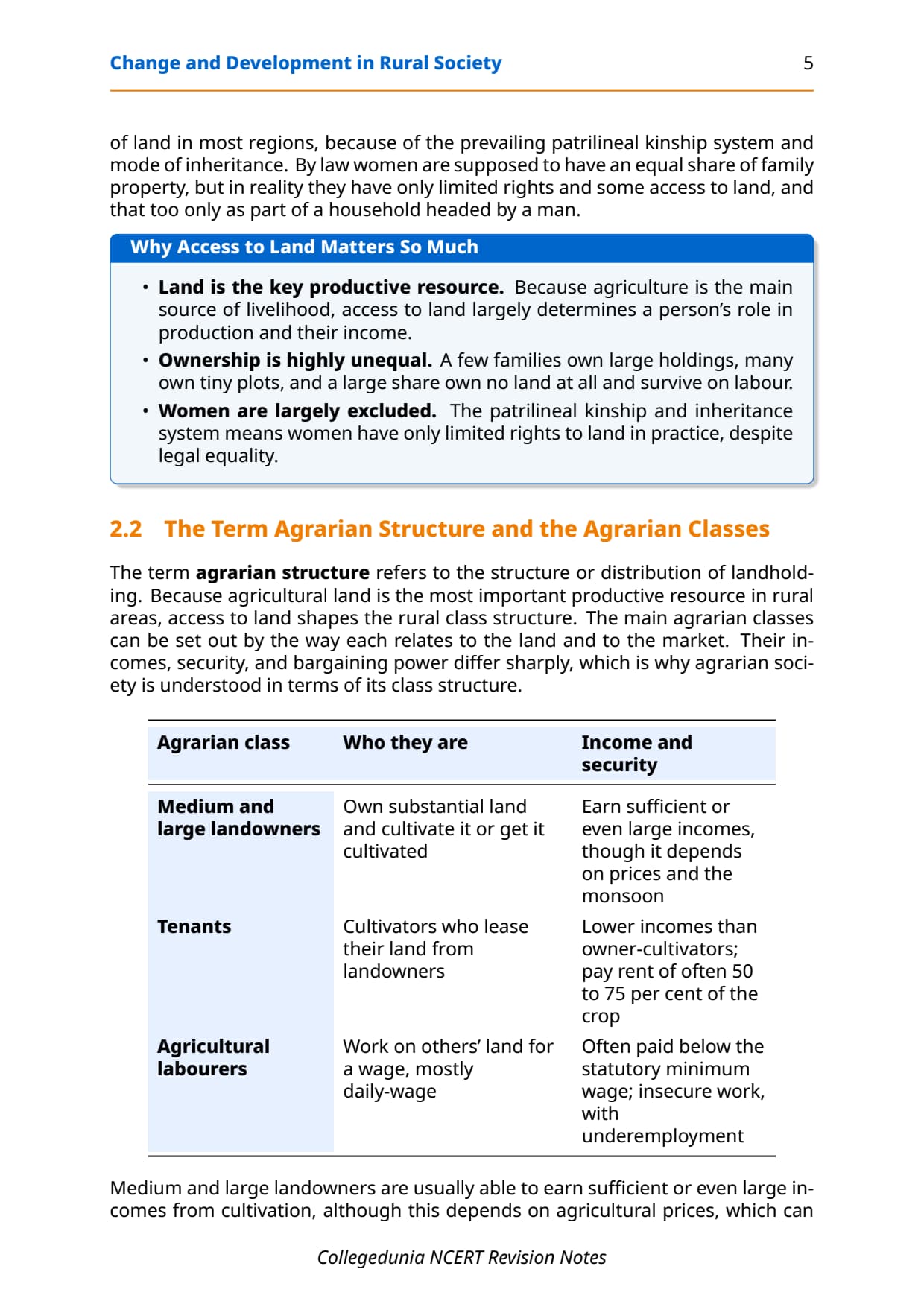
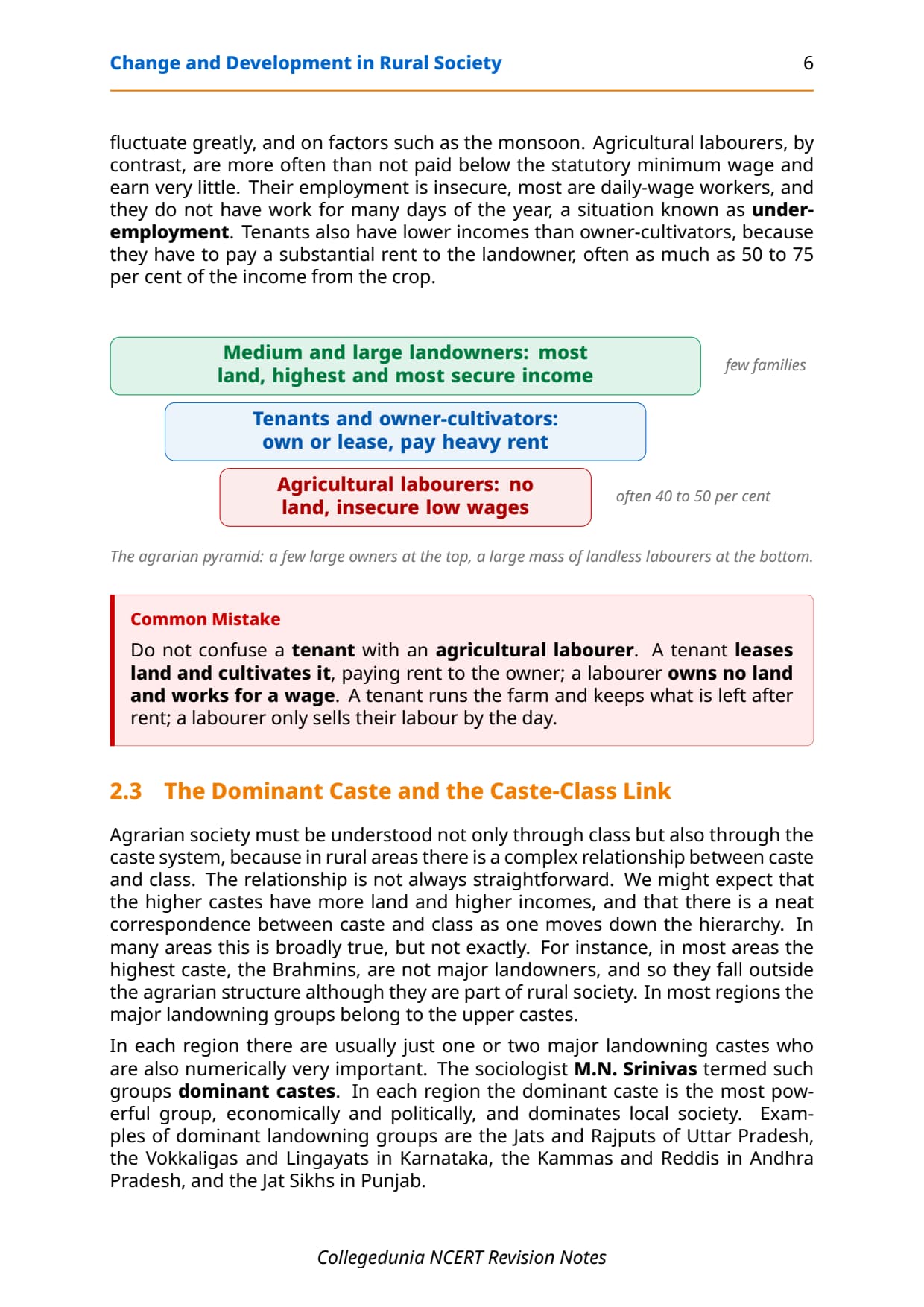
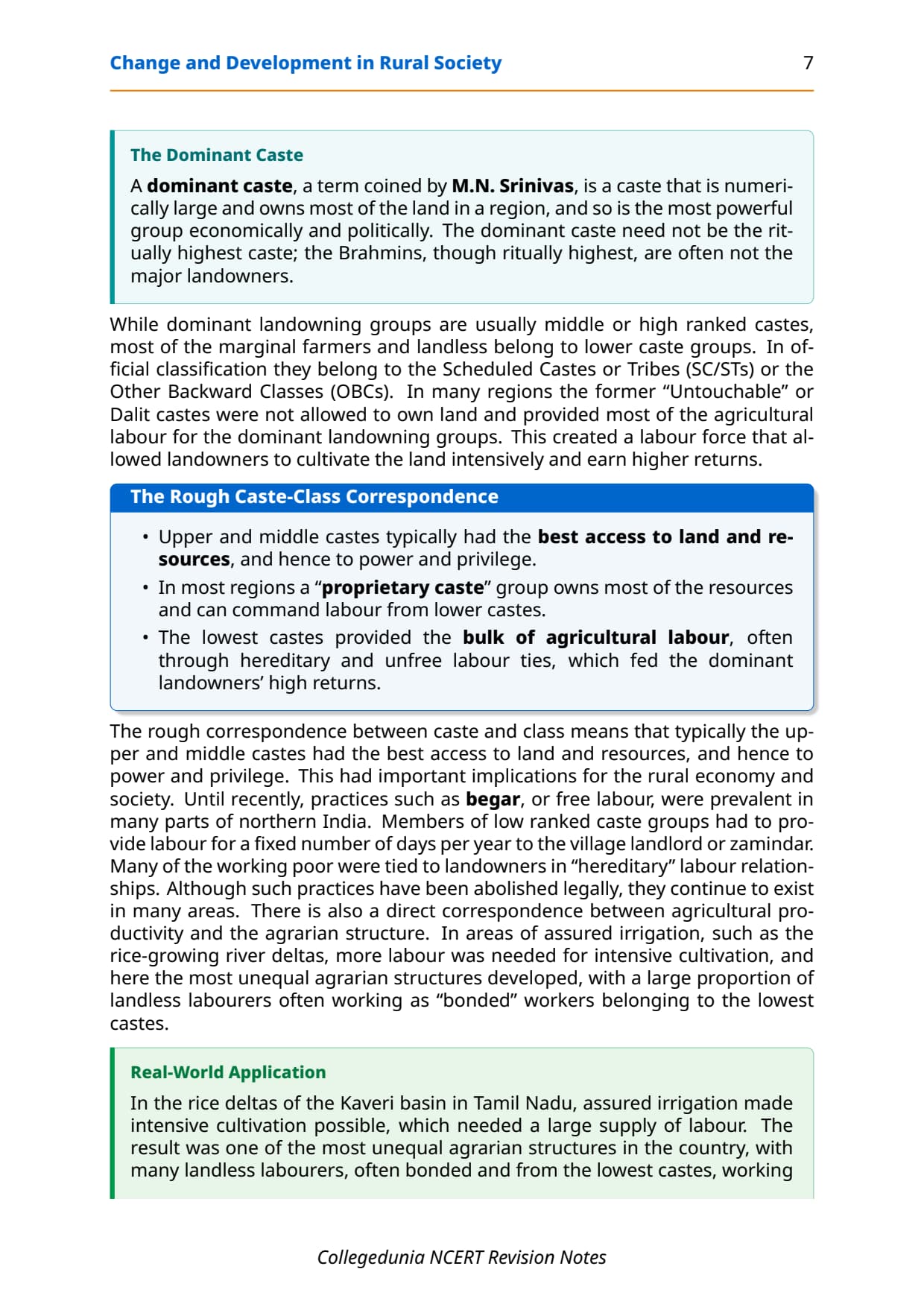
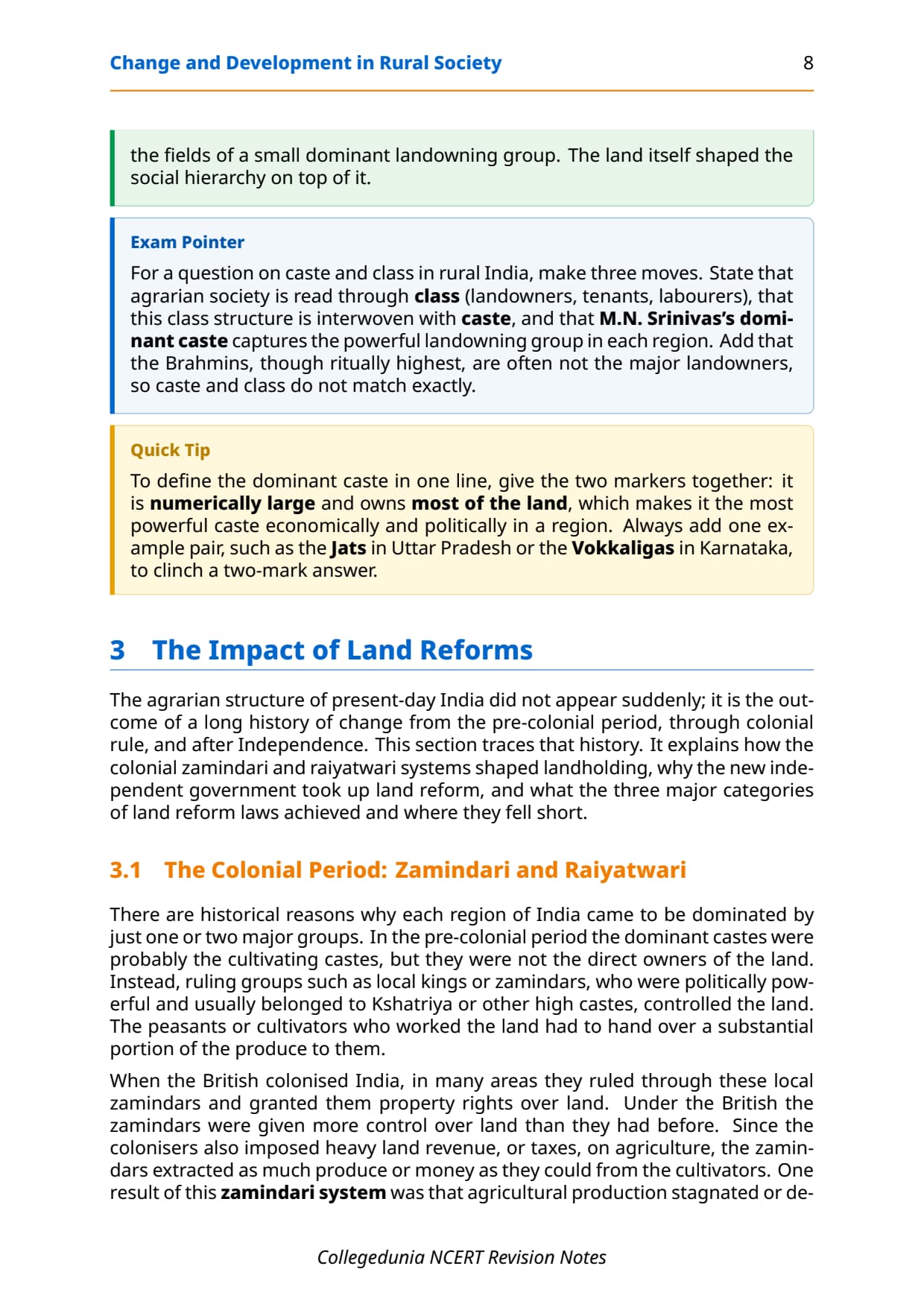
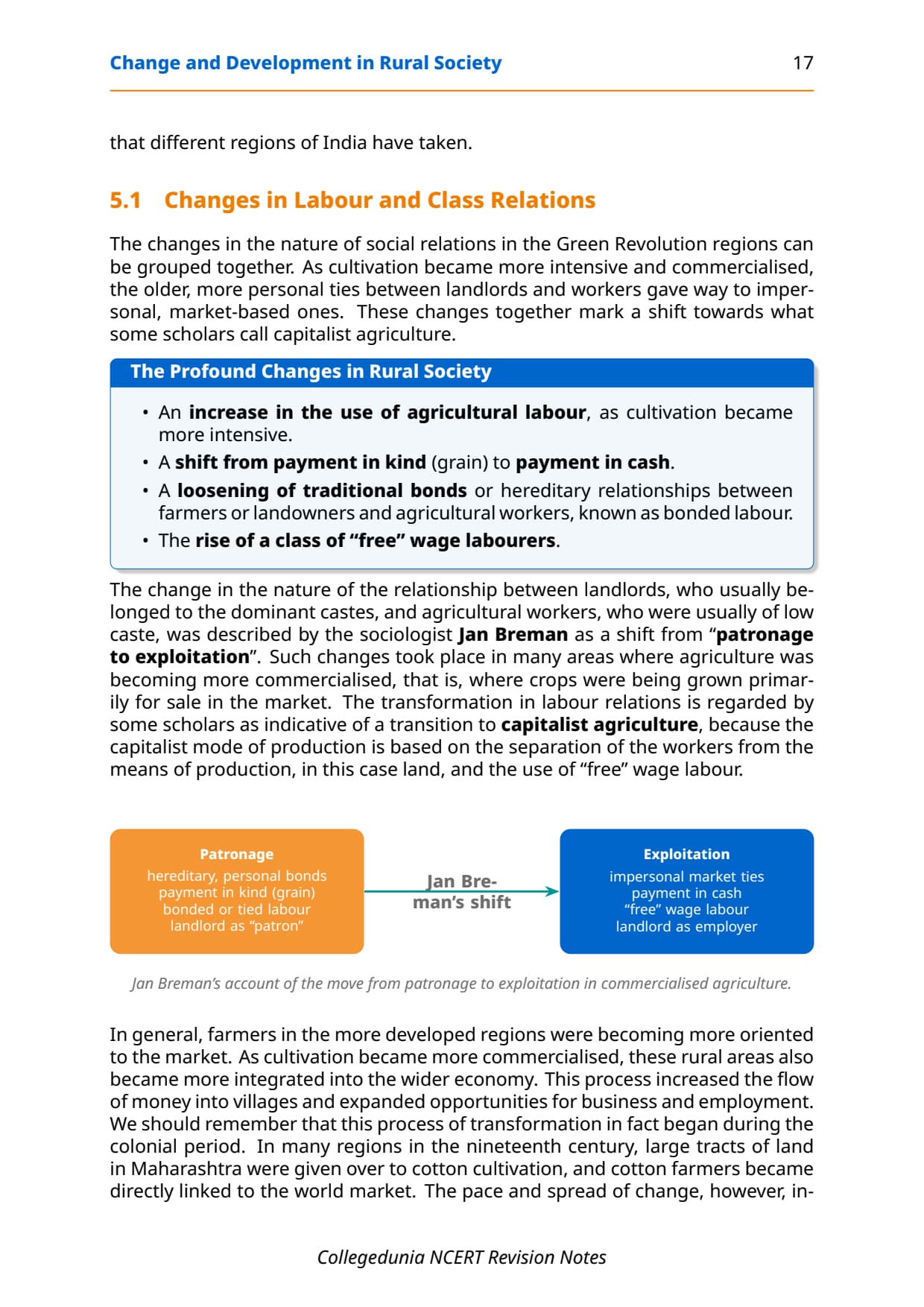
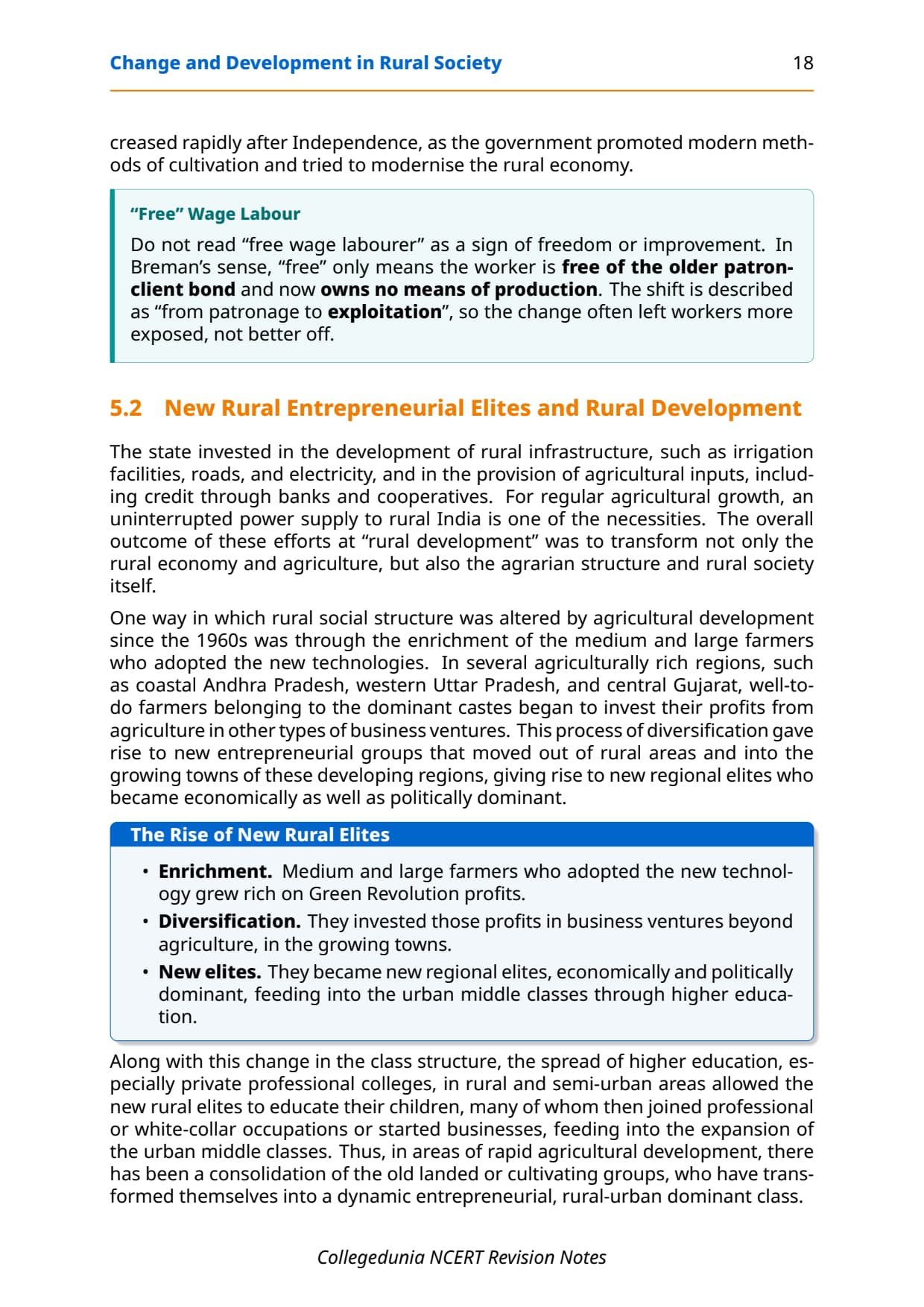
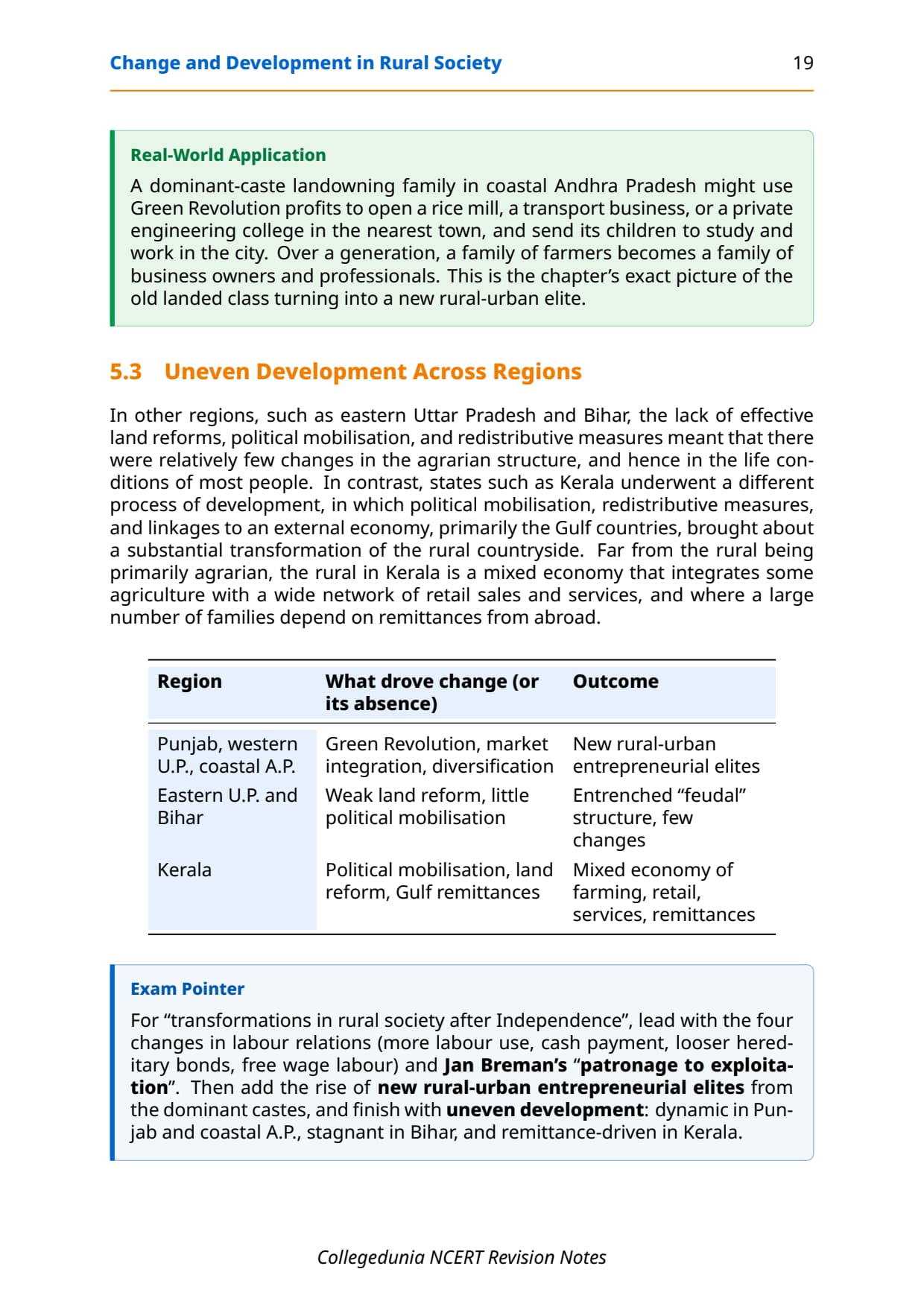
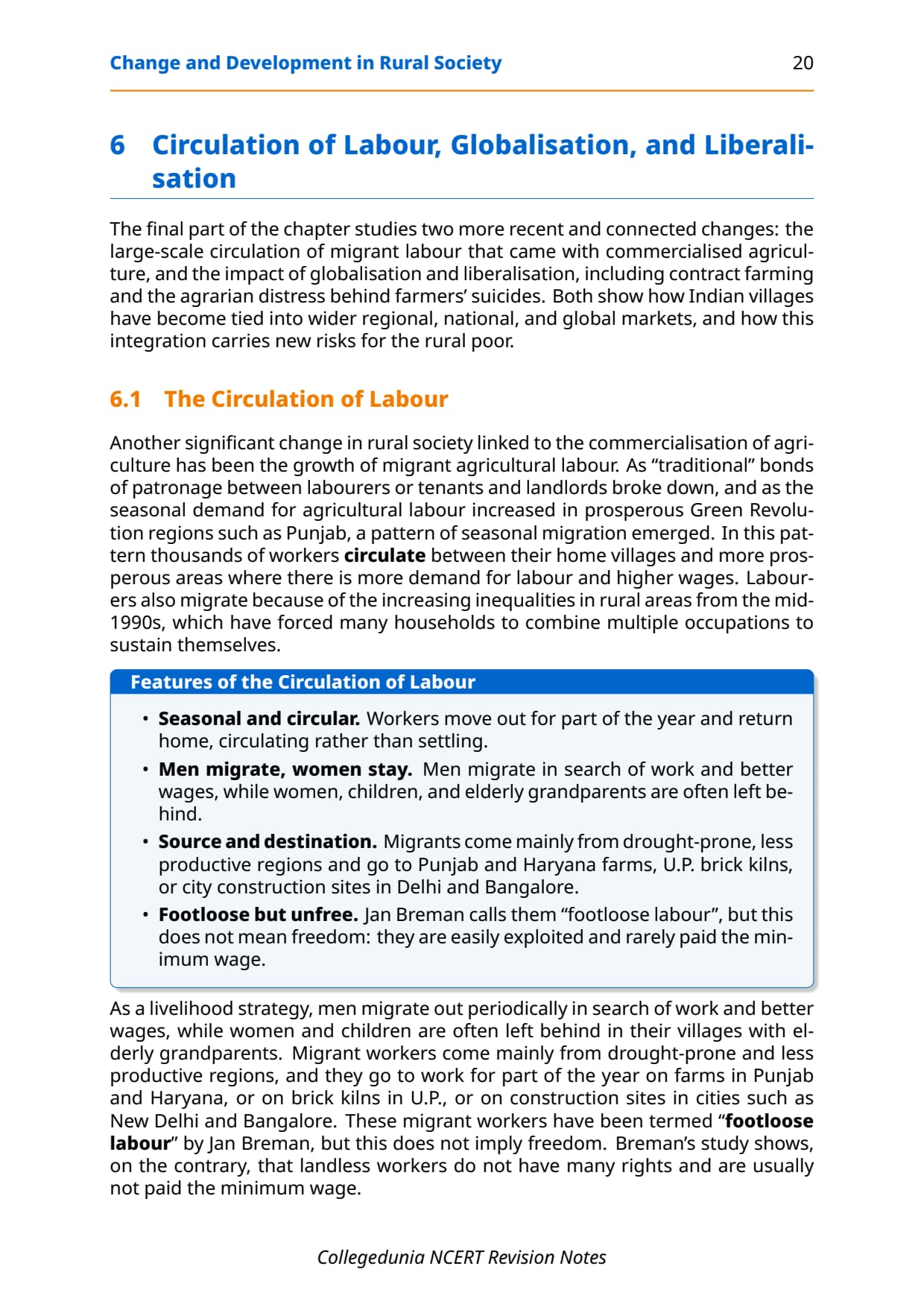
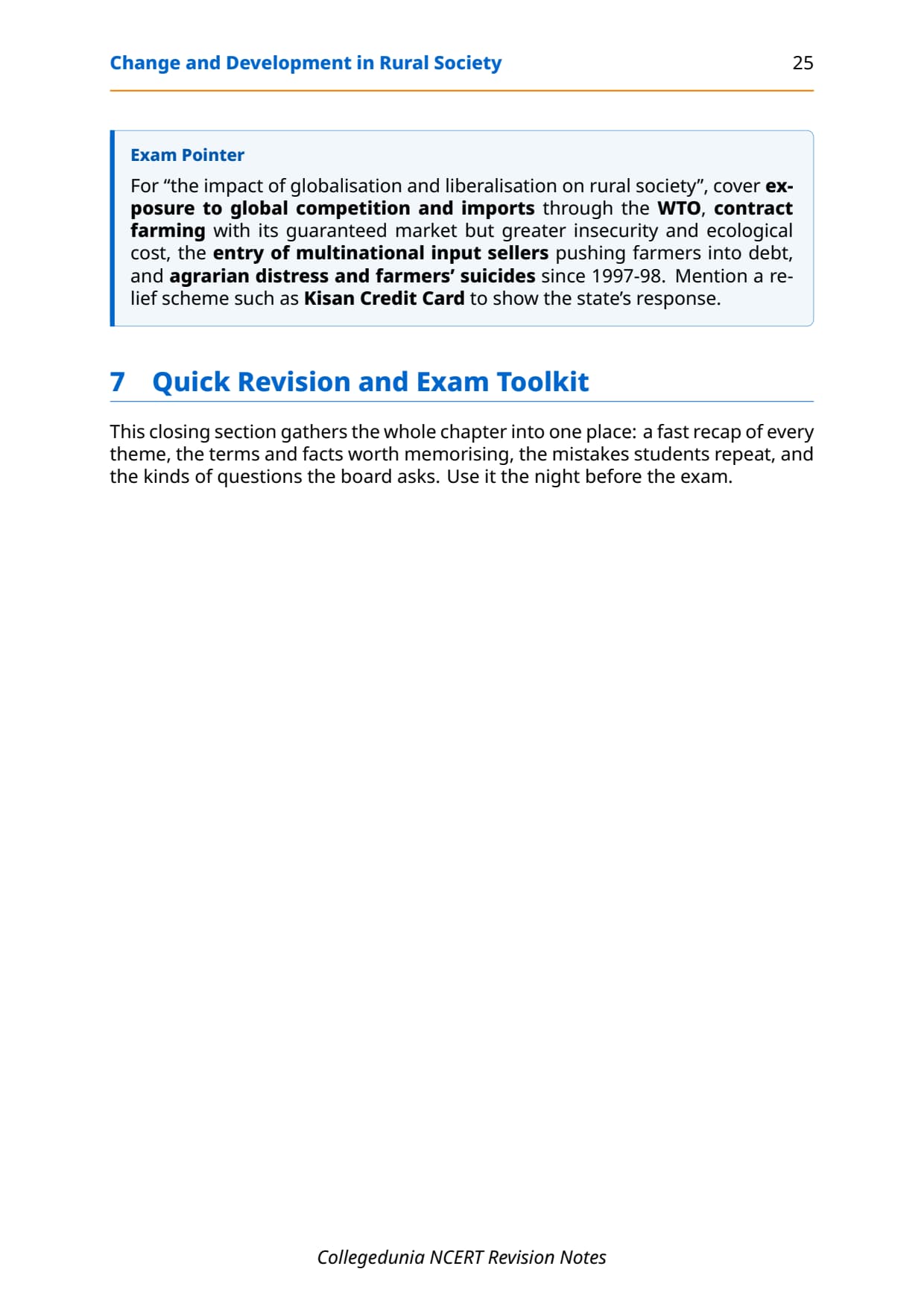
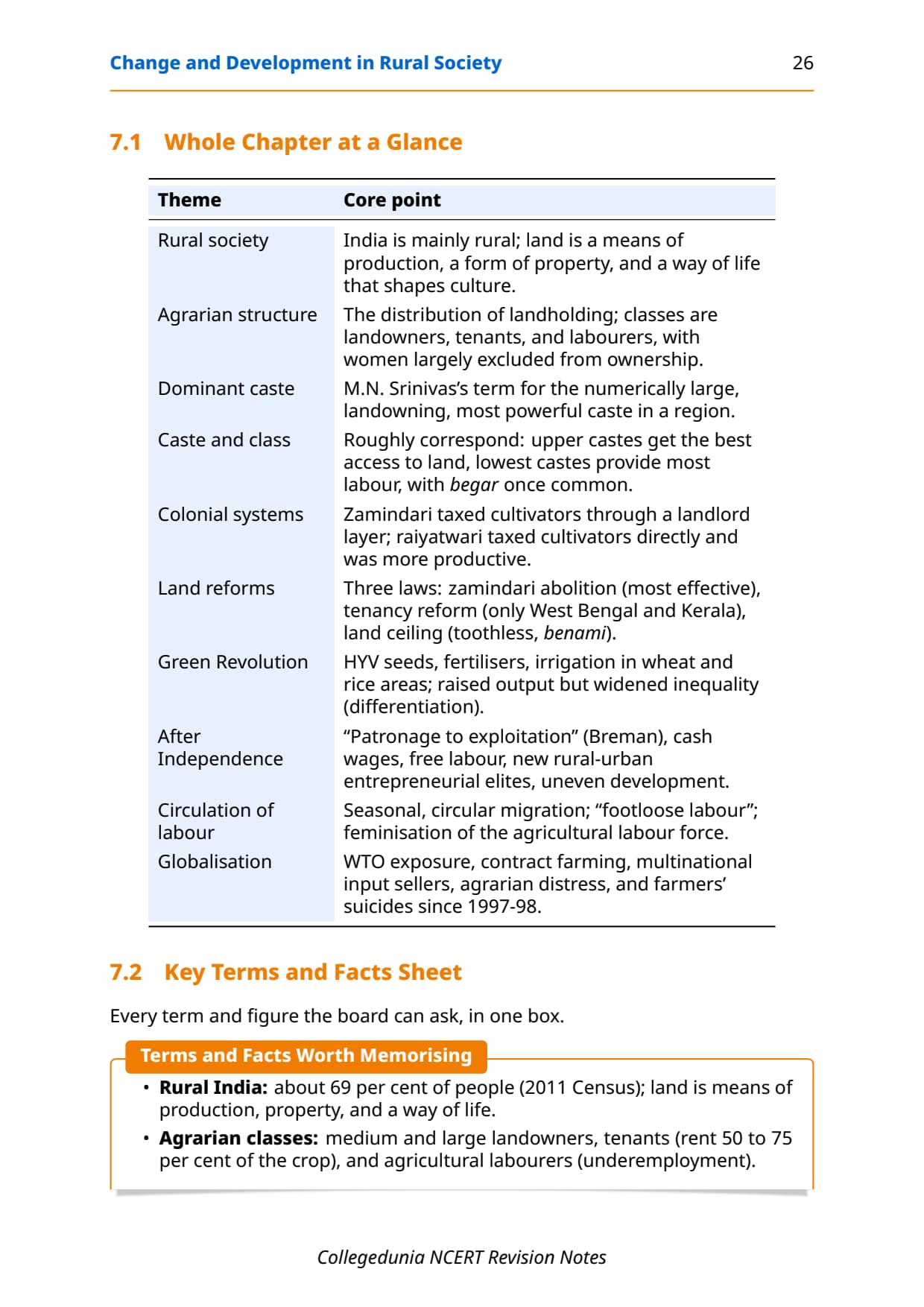
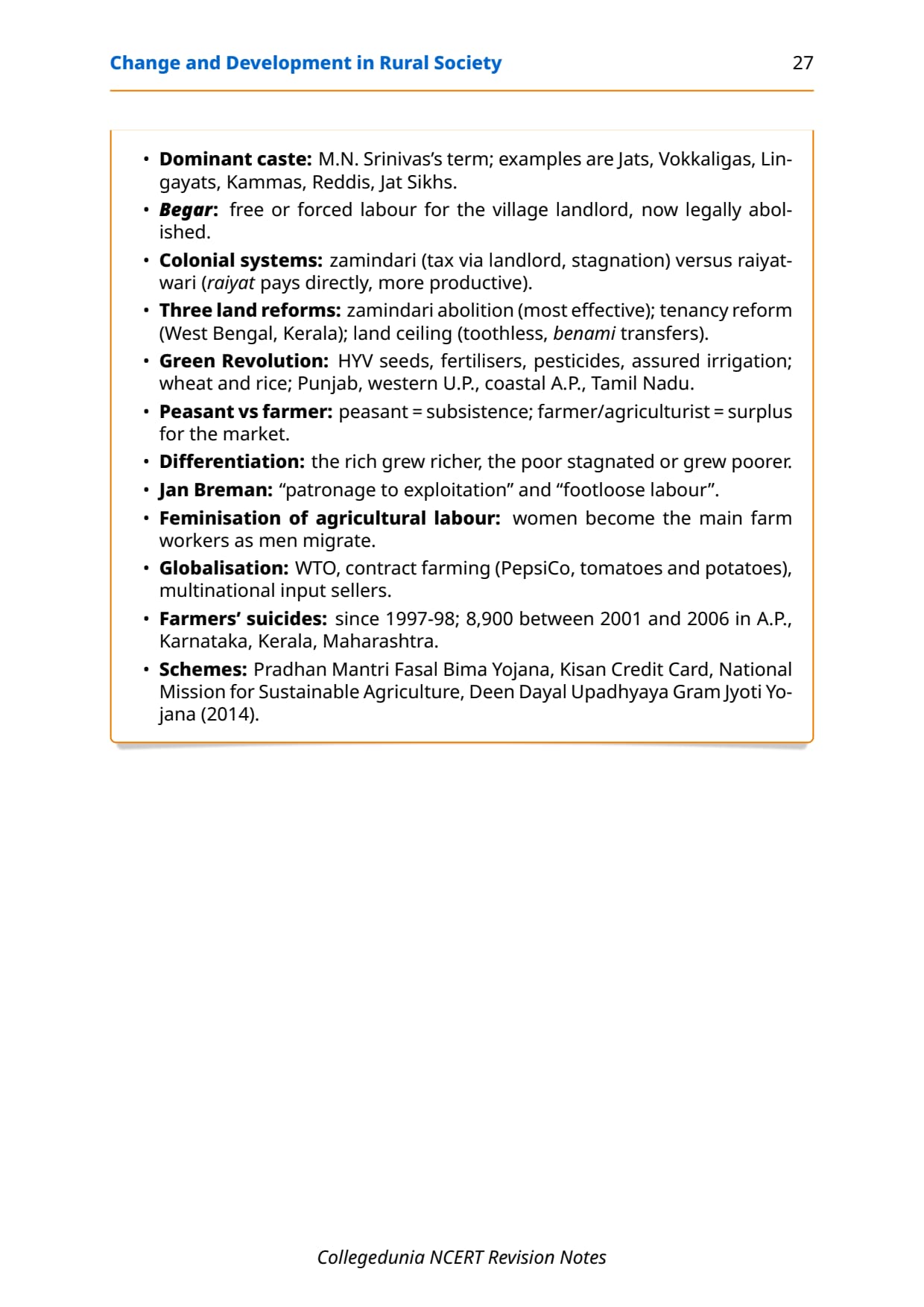
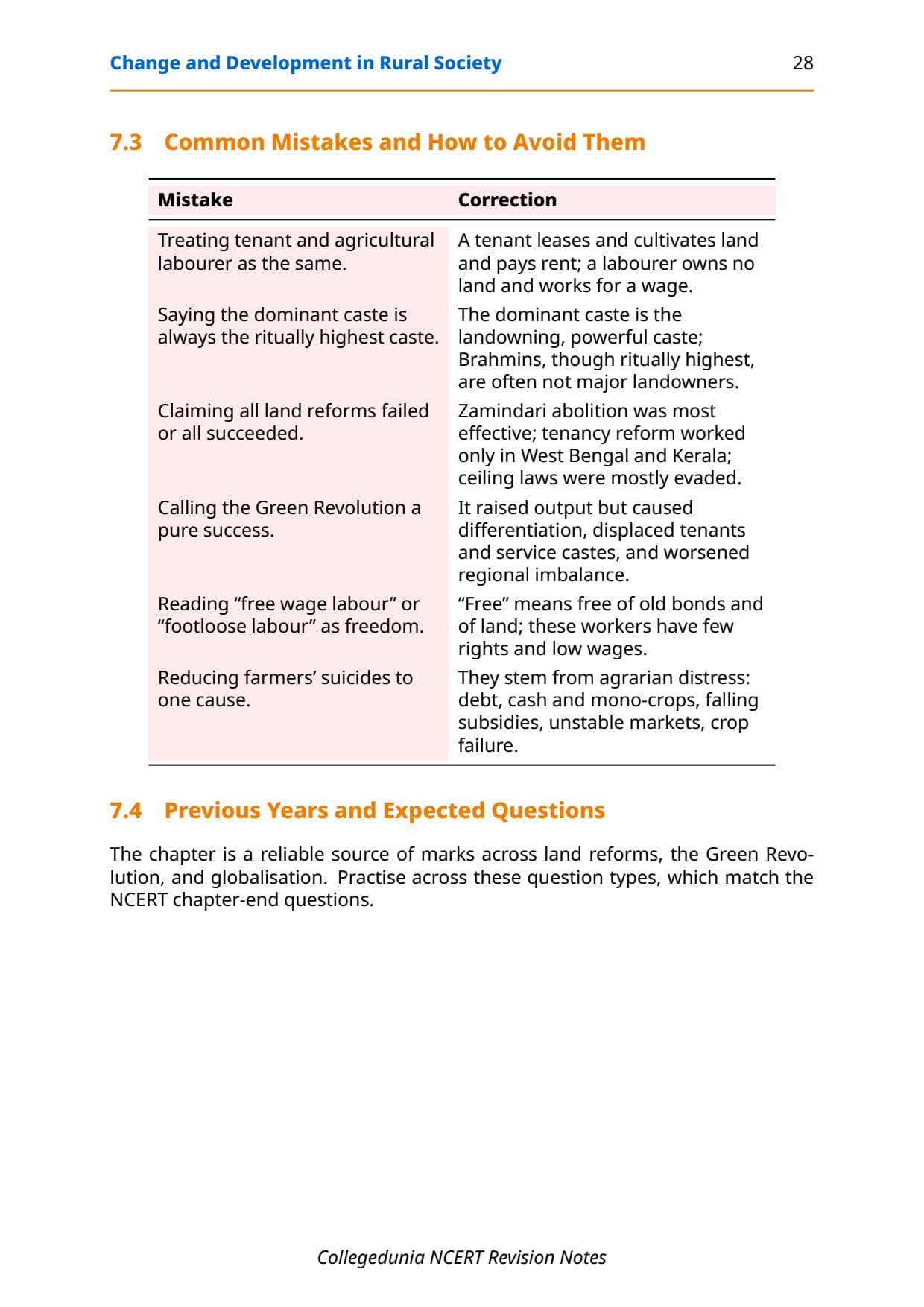
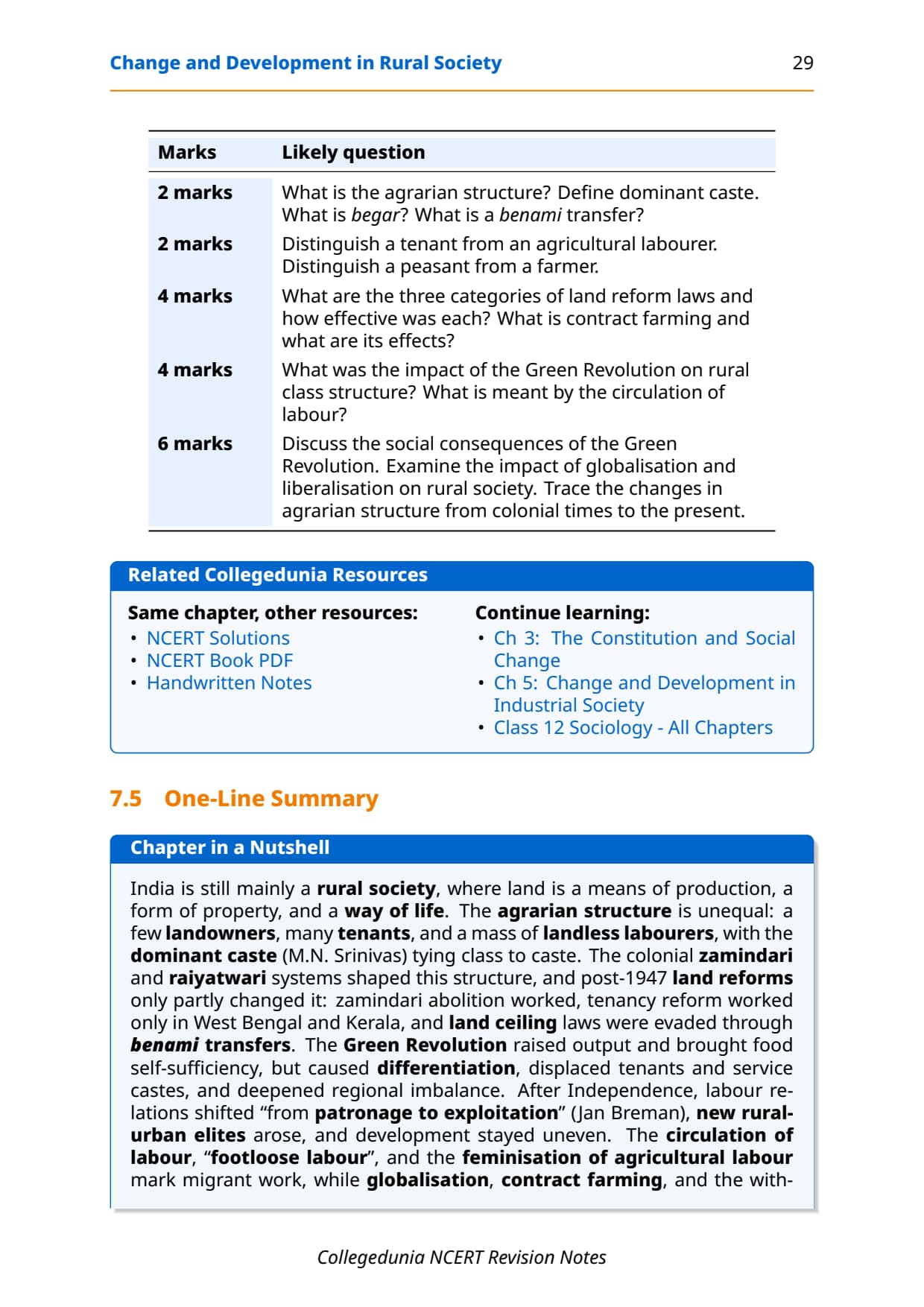

- One-page summary of rural social change plus every key term you need to write full answers.
- A quick map of the chapter: agrarian structure, land reforms and the Green Revolution.
- Pairs with the NCERT Solutions, Handwritten Notes and Book PDF linked lower on this page.
These Class 12 Sociology Chapter 4 Change and Development in Rural Society revision notes are prepared by subject experts from the official NCERT Social Change and Development in India textbook and matched to the 2026-27 CBSE syllabus.
Student Feedback: In a Collegedunia poll of 7,210 Class 12 Sociology students, 70% of students said a one-page map of the chapter, agrarian structure, land reforms and the Green Revolution, was the single most useful revision tool. Most students revised these notes the night before the exam.
Source: 2026-27 Class 12 Sociology student poll. Sample of 7,210 students from CBSE schools across 12 states.
Change and Development in Rural Society Class 12 Notes Overview
Change and Development in Rural Society is the fourth chapter of Social Change and Development in India, the second Class 12 Sociology book. It studies how Indian villages have changed since Independence, and who gained or lost from that change. These change and development in rural society class 12 notes break the chapter into the parts students must remember.
The chapter has three clear blocks, and your revision should follow the same order:
- Agrarian structure: how land, caste and class line up in the village.
- Forces of change: land reforms, the Green Revolution and the globalisation of farming.
- Effects on people: new dominant classes at the top and migrant labour at the bottom.
Keeping these three blocks separate makes the chapter feel small. A student who can name the blocks in order will rarely get lost in Change and Development in Rural Society class 12, because every exam point sits inside one of them.
Key Terms and Definitions for Quick Revision
This chapter is full of terms that examiners reward when used correctly. Learn these first, because a precise word can earn a mark on its own. The list keeps each term short and exam-ready.
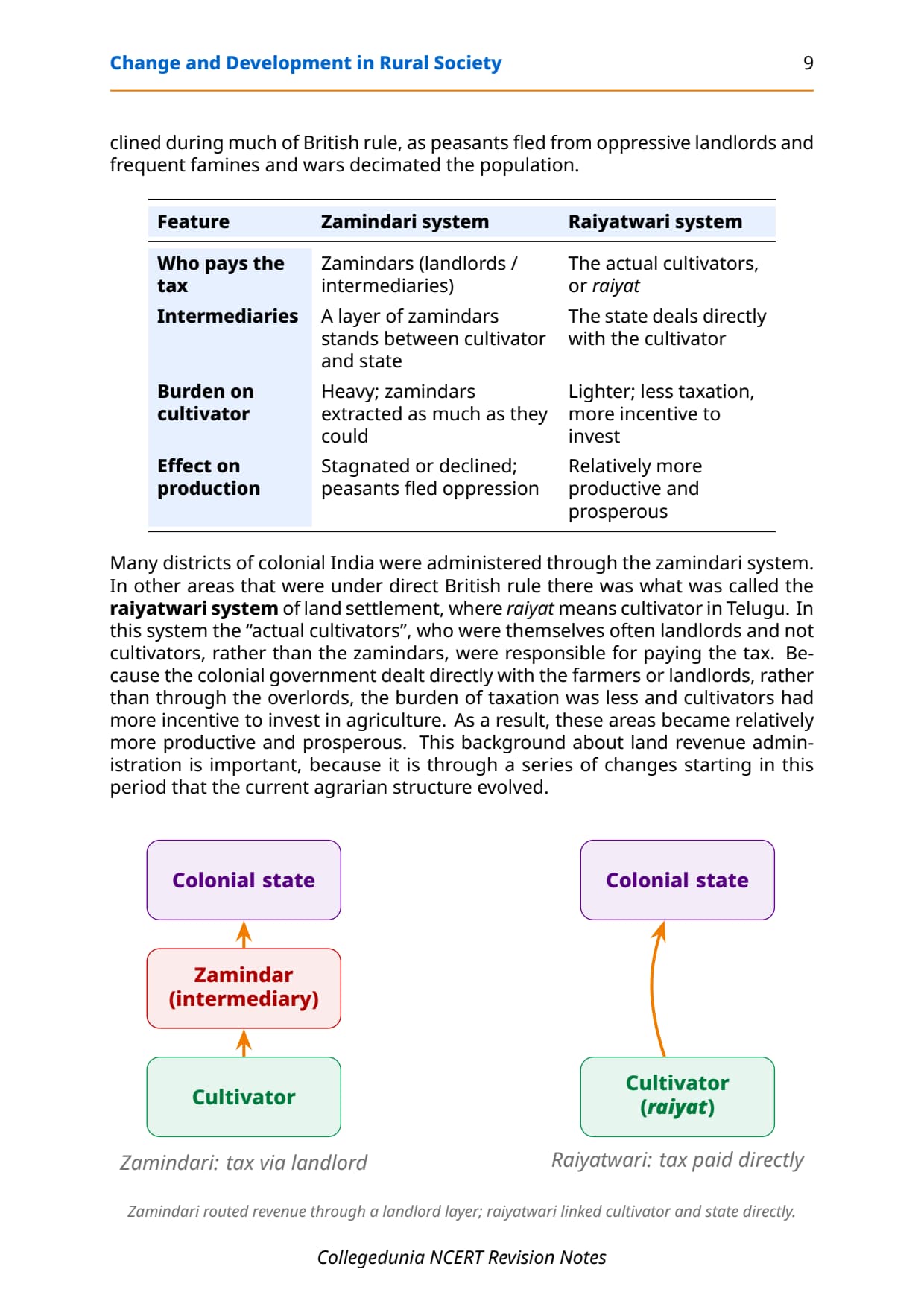
- Agrarian structure: the pattern of land ownership and the relations between owners, tenants and labourers.
- Dominant caste: a landowning caste with the numbers and power to control village life.
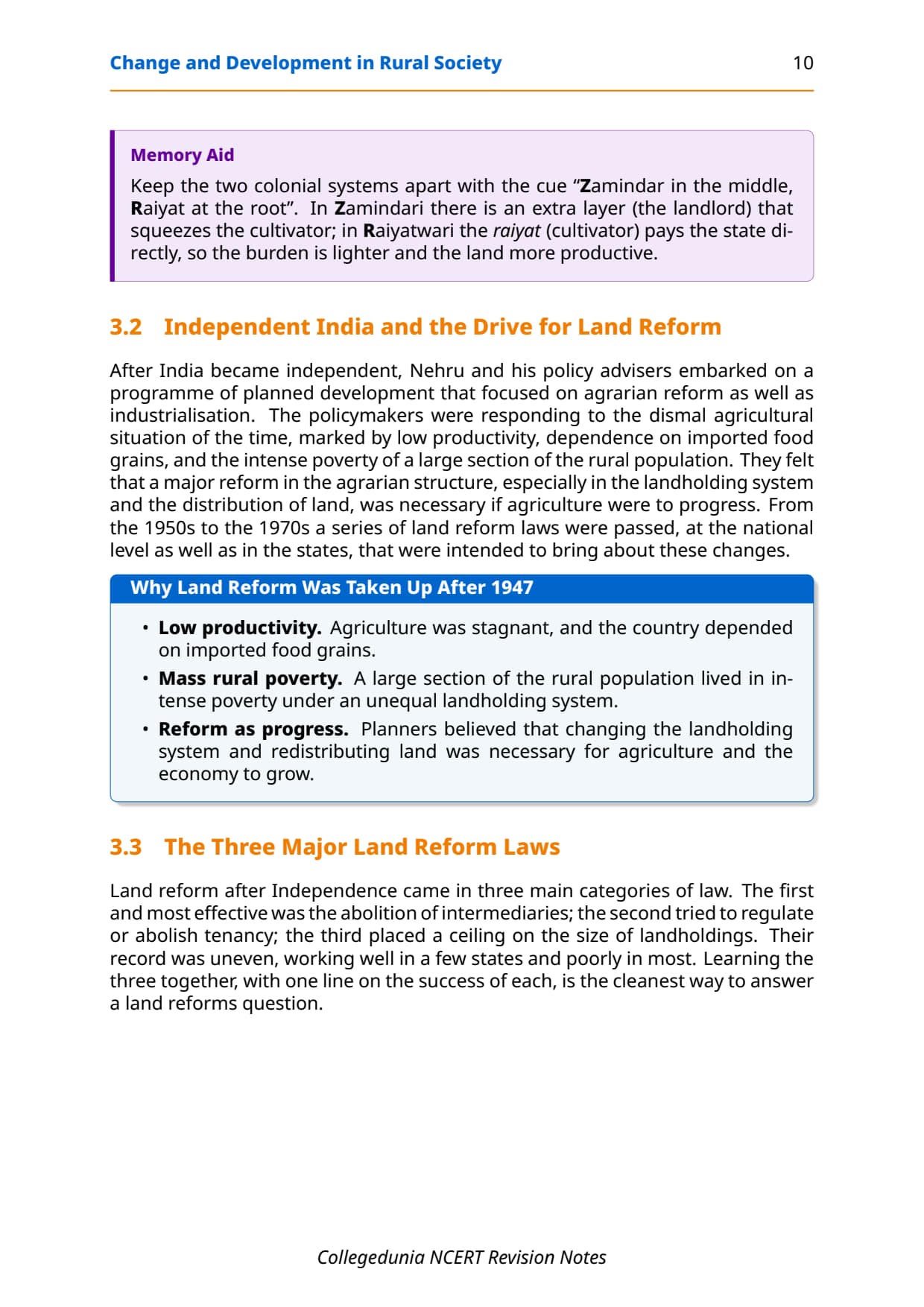
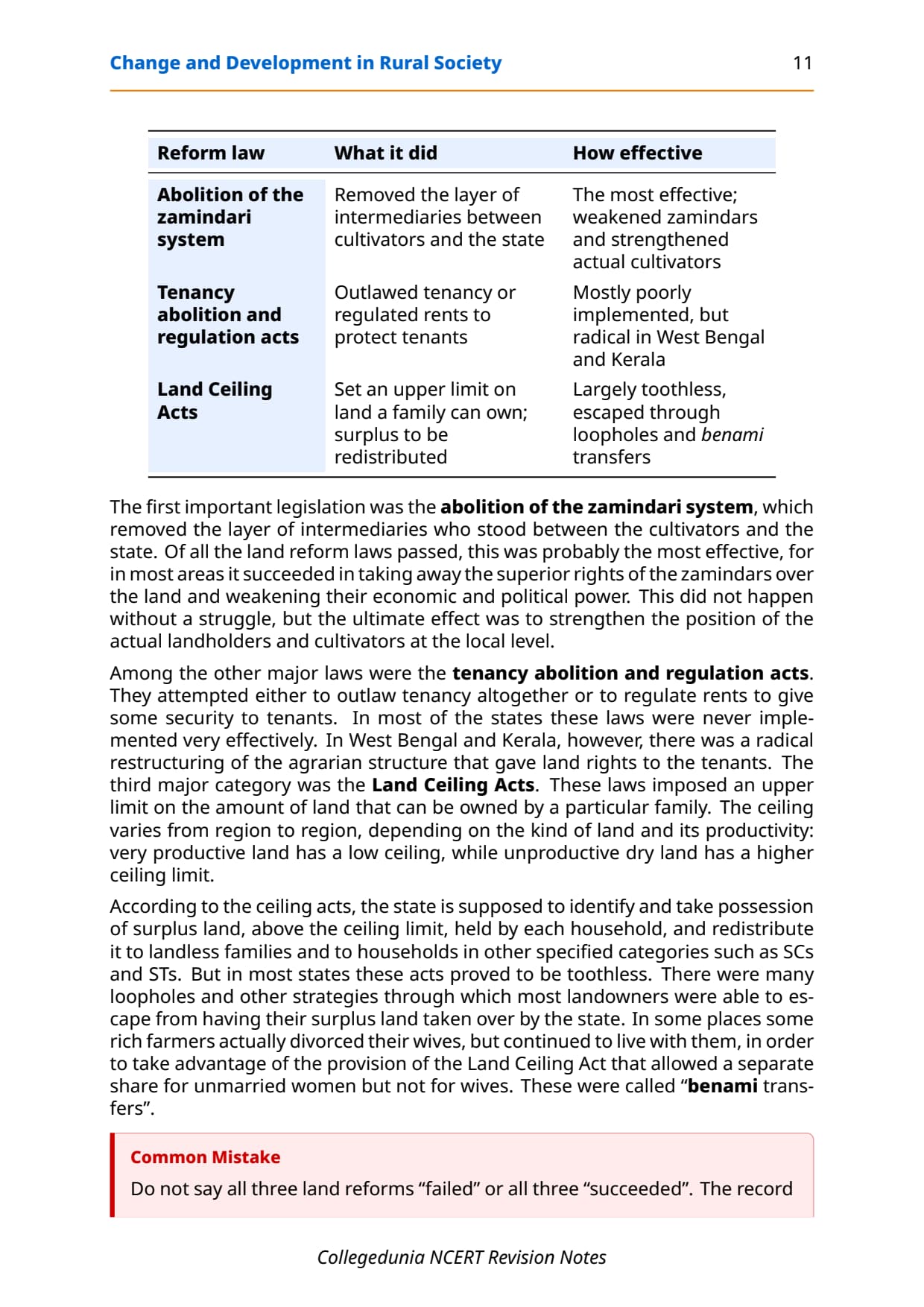
- Land reforms: laws to abolish intermediaries, cap landholdings and protect tenants.
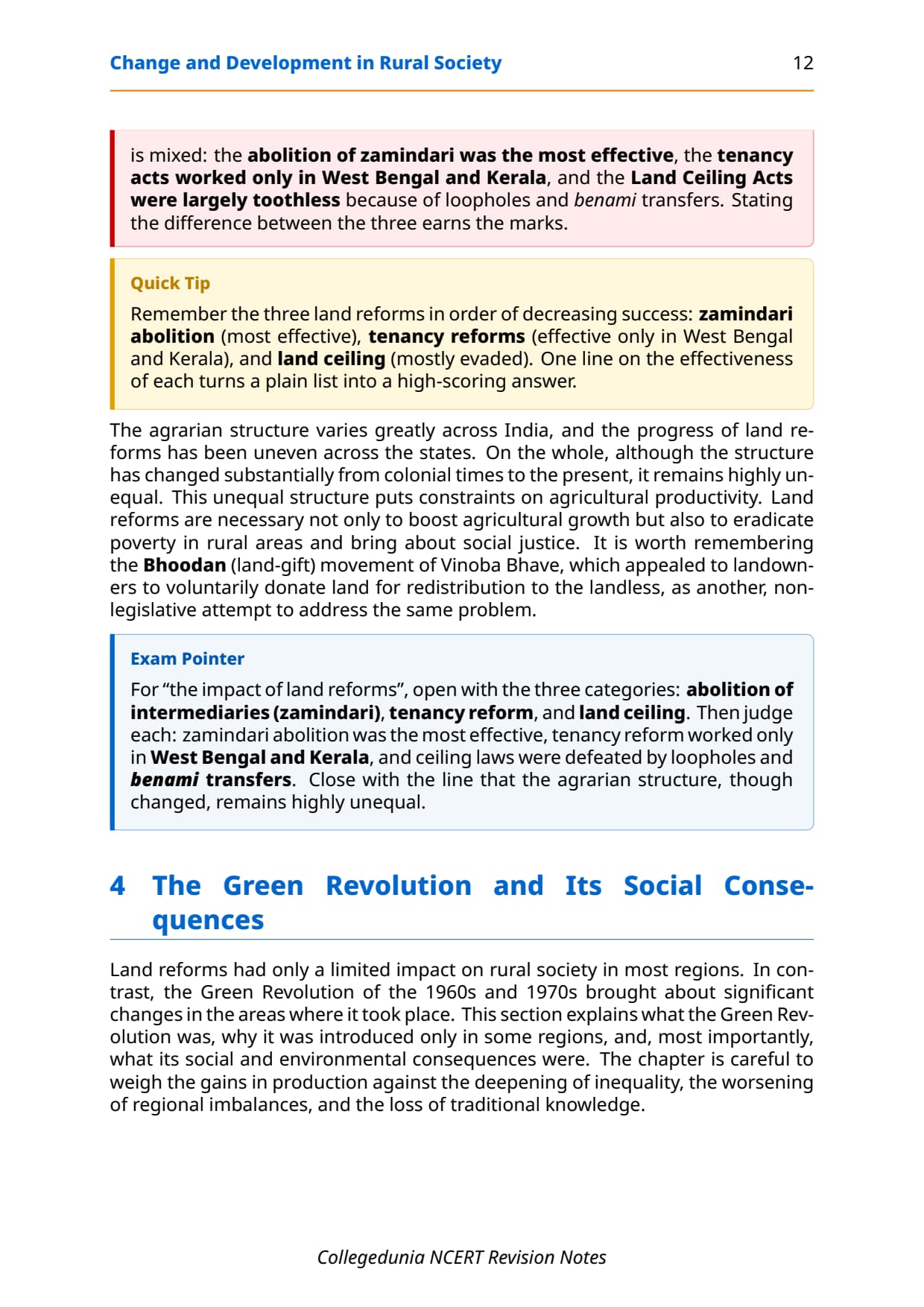
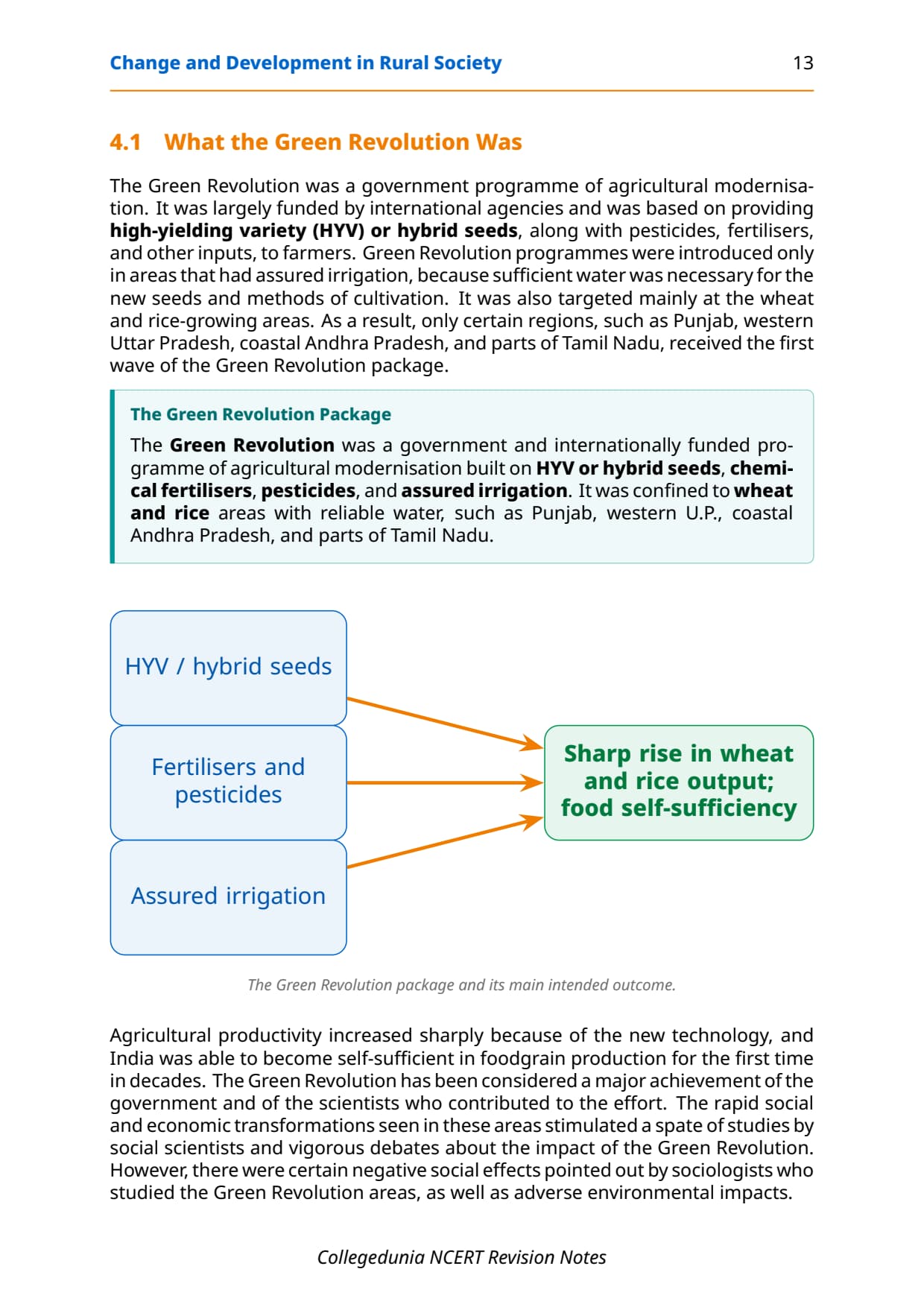
- Green Revolution: the shift to high-yielding seeds, fertilisers and irrigation from the 1960s.
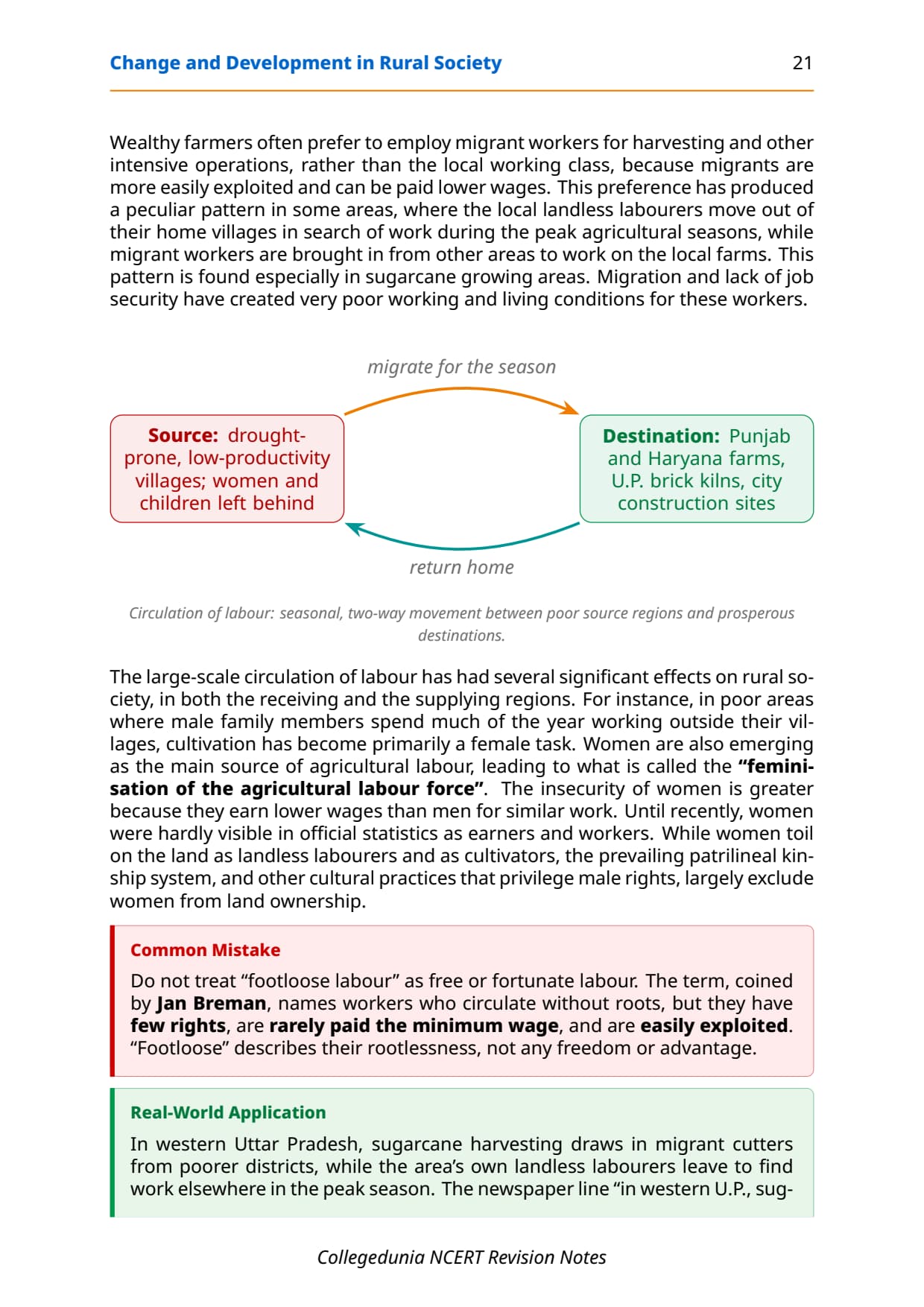
- Circulation of labour: the seasonal movement of rural workers to other areas and back.
- Mukadam: a labour contractor who recruits migrant workers from villages.
A good habit is to write each term with a one-line example. For instance, circulation of labour is best remembered with the brickyard worker who leaves the village after the harvest and returns before the next sowing. Examples make the term stick and lift your answers.
Agrarian Structure: Land, Caste and Class in Short
The heart of the chapter is the agrarian structure, where land, caste and class overlap. For revision, hold one idea firmly: land is both an economic asset and the basis of social status. The points below sort the main groups.
- Large landowners: own most of the land and often form the dominant caste.
- Medium and small farmers: cultivate their own land with a limited surplus.
- Tenants and sharecroppers: rent land and pay in cash or a share of the crop.
- Agricultural labourers: own little or no land and work for daily wages.
The single most useful idea is that caste and class line up in the village. The big landowners are usually the dominant caste, so they control both the economy and the social life. Marks come from naming this overlap before you list the groups.
Land Reforms and the Green Revolution: The Core Change
Two big forces changed the village after 1947: land reforms from the state, and the Green Revolution in farming. Both are exam favourites, so keep what each did and how far it worked in a single table.
| Force | What it did | Its limit |
|---|---|---|
| Land reforms | Abolished intermediaries, set ceilings, protected tenants. | Ceilings were often dodged, so little land was freed. |
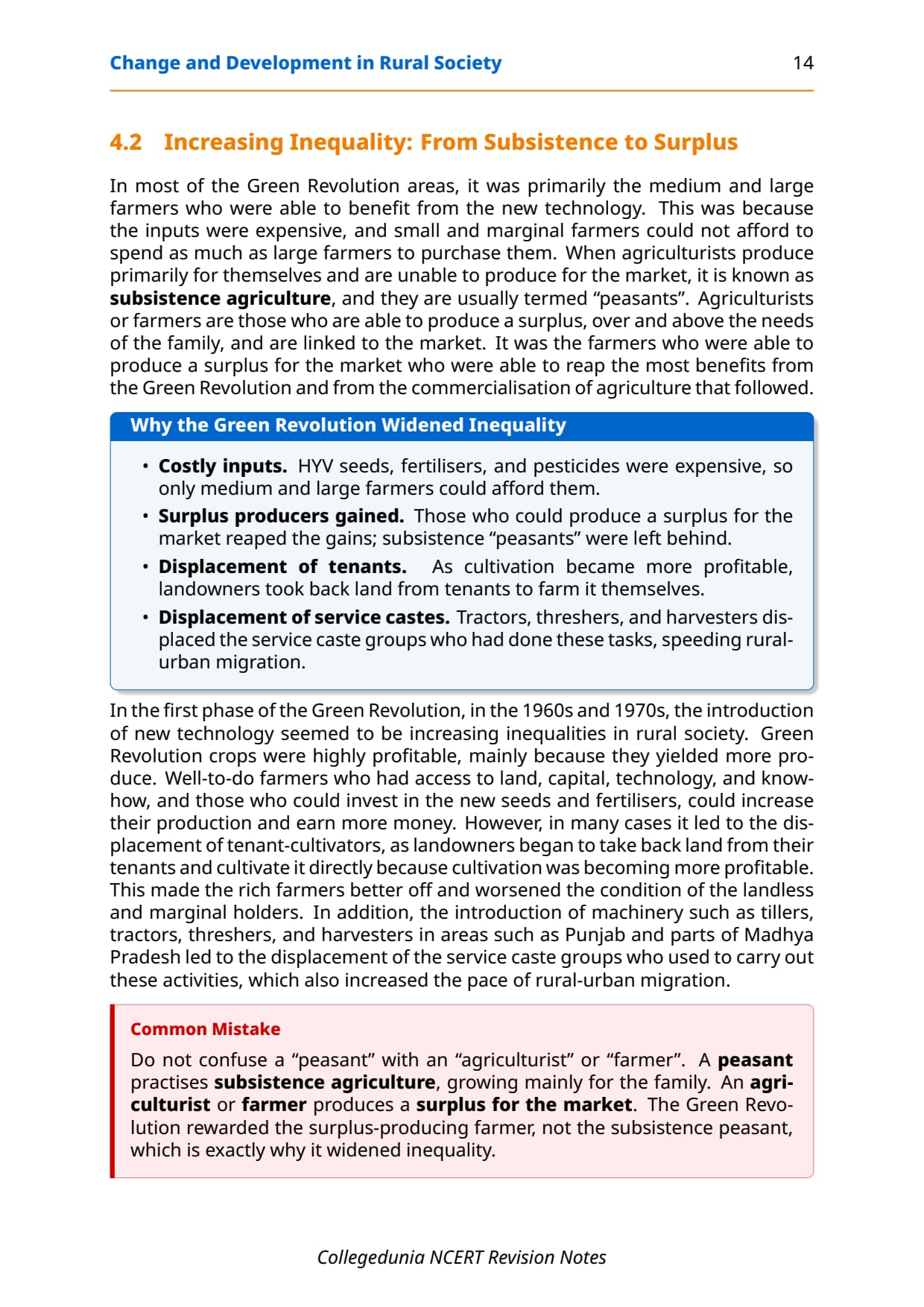
| Green Revolution | Raised output with new seeds, fertilisers and irrigation. | Mostly helped well-irrigated regions and large farmers. |
| Commercialisation | Pushed farmers to grow cash crops for the market. | Brought price risk and dependence on inputs. |
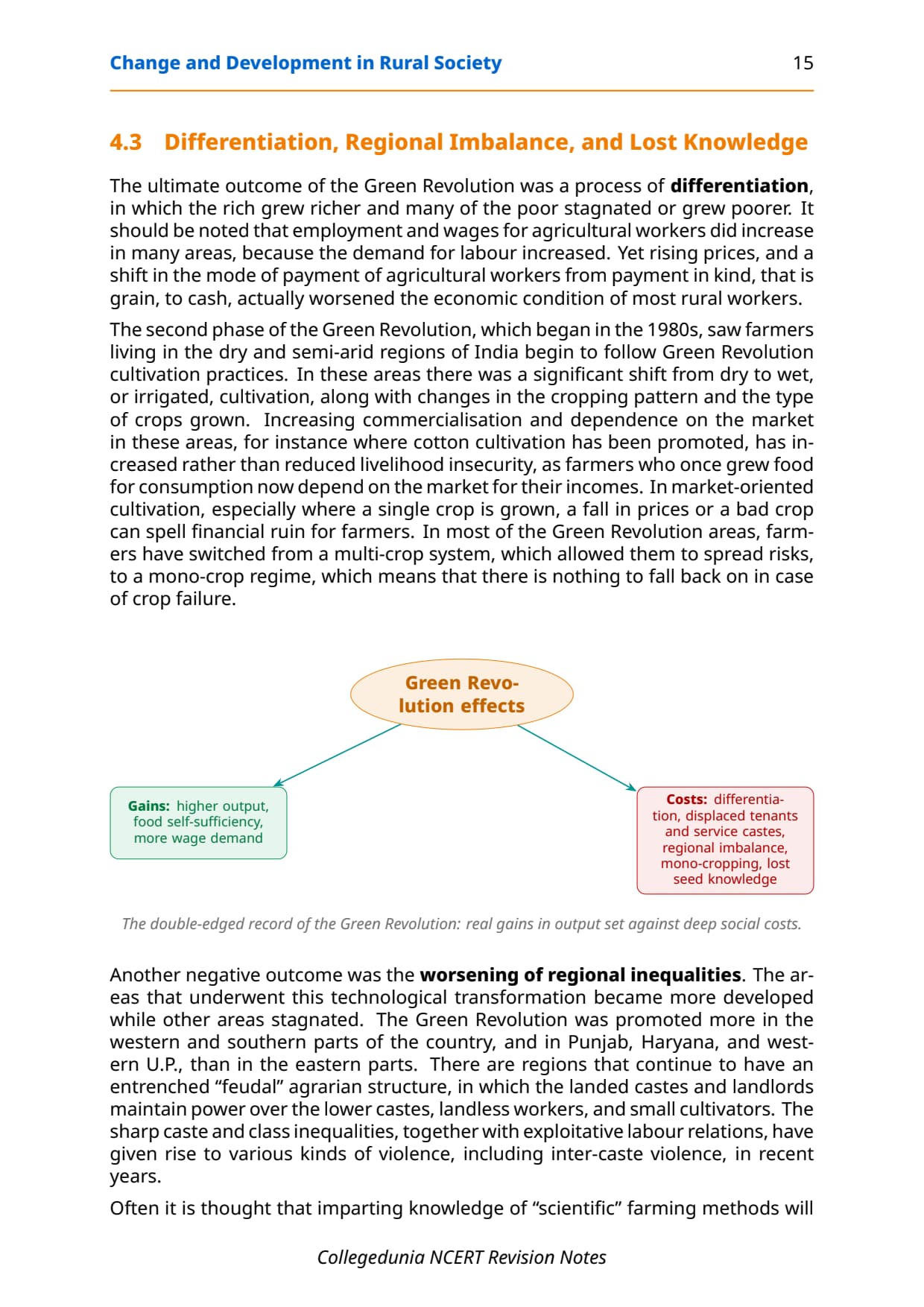
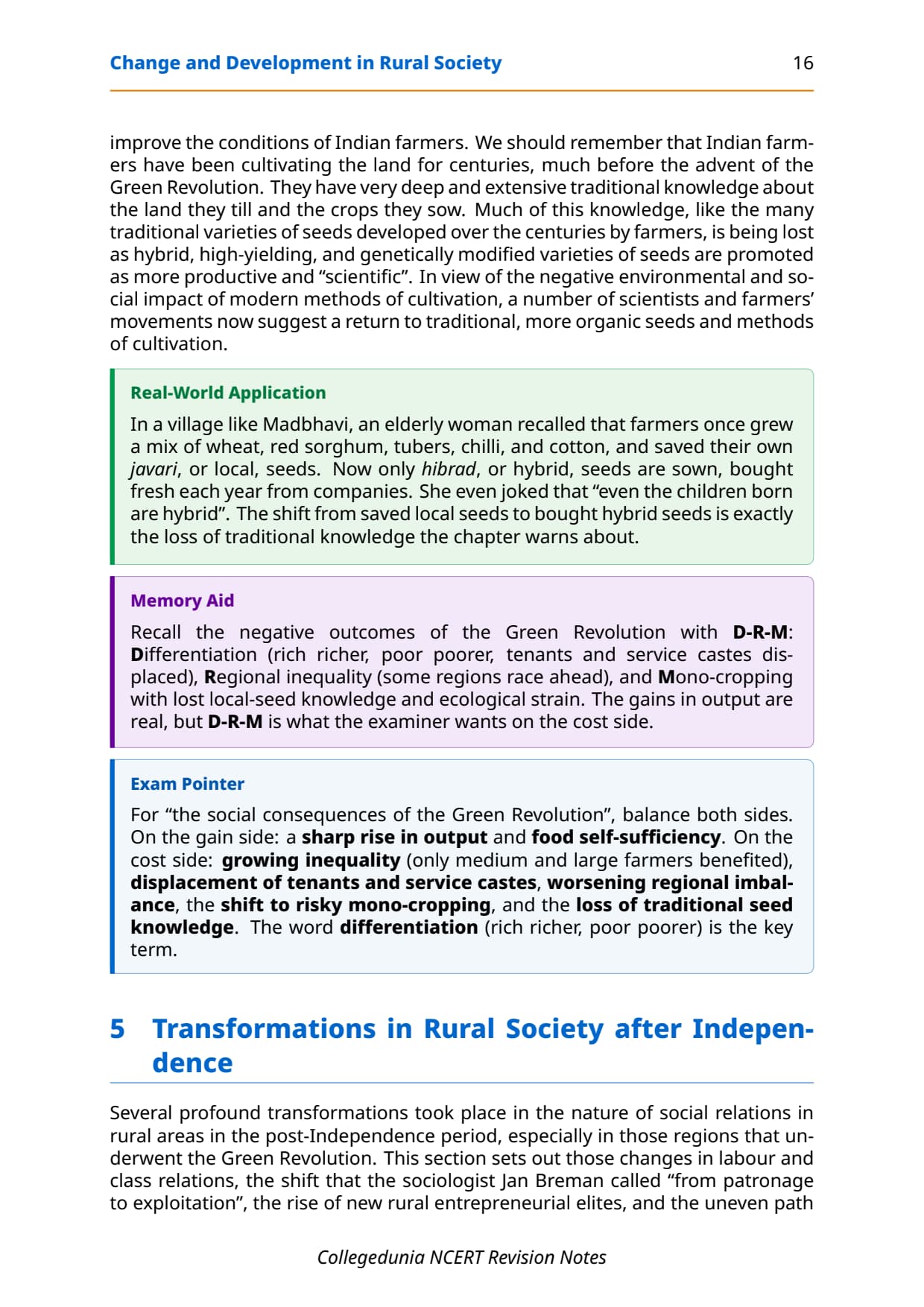
The point to remember is that change was real but uneven. Output rose, but the gap between rich and poor farmers, and between regions, grew wider. A good answer names both the gain and this uneven effect, which is exactly the balance the exam rewards.
Migrant Labour and the Globalisation of Farming
The same change that lifted some groups pushed many workers to move for work, and later opened the village to world markets. For revision, link these two together as the human and economic side of change.
- Circulation of labour: landless workers move to farms and cities, then return to the village.
- Recruited by a mukadam: a contractor takes them to building sites and brickyards on low wages.
- Globalisation: imported goods, cash crops and contract farming reach the village.
- Farmers' movements: farmers organise to demand fair prices and protection from market risk.
The key revision point is that change brought both new chances and new risks. Globalisation opened markets to sell crops, but it also brought price shocks and debt, while migrant workers stayed at the bottom. Hold both sides together for a full-marks answer.
Change and Development in Rural Society Revision Table
This one table pulls the whole chapter together for a last-minute scan. Read it top to bottom the night before the exam to fix the main ideas in order.
| Theme | What to remember |
|---|---|
| Agrarian structure | Land, caste and class overlap; the dominant caste owns most land. |
| Land reforms | Abolition of intermediaries, ceilings and tenancy laws, often dodged. |
| Green Revolution | Raised output but helped rich farmers and irrigated regions most. |
| New dominant classes | Old landed castes turned into rural entrepreneurs with surplus and power. |
| Circulation of labour | Migrant workers move and return; recruited by a mukadam, paid low wages. |
| Globalisation | Cash crops, imports and contract farming bring chances and price risk. |
Students who can recall this table in order can answer almost any question on Change and Development in Rural Society class 12 notes. Use it as your final scan, then write the term plus one example for each row to test yourself.
How These Notes Pair with the Solutions and Book PDF
These notes summarise the chapter. To prepare fully, students should use them with the other resources for the same chapter, all linked in the table below.
| Resource | Best used for |
|---|---|
| Change and Development in Rural Society NCERT Solutions | Point-wise model answers to all 8 back-exercise questions |
| Change and Development in Rural Society Handwritten Notes | Last-minute, one-shot revision in a scanned notebook style |
| Change and Development in Rural Society NCERT Book PDF | Reading the original NCERT chapter text and examples |
Tip: revise from these notes first, then attempt the Solutions on your own, and only then read the original chapter in the Book PDF. That order builds memory faster than reading the text straight through.
All NCERT Notes for Class 12 Sociology
The table links the NCERT Notes for every chapter in both Class 12 Sociology books, so students can move across the course in one click. Change and Development in Rural Society is highlighted.
| Chapter | NCERT Notes |
|---|---|
| Indian Society | |
| Chapter 1 | Introducing Indian Society |
| Chapter 2 | The Demographic Structure of the Indian Society |
| Chapter 3 | Social Institutions - Continuity and Change |
| Chapter 4 | The Market as a Social Institution |
| Chapter 5 | Patterns of Social Inequality and Exclusion |
| Chapter 6 | The Challenges of Cultural Diversity |
| Social Change and Development in India | |
| Chapter 1 | Structural Change |
| Chapter 2 | Cultural Change |
| Chapter 3 | The Constitution and Social Change |
| Chapter 4 | Change and Development in Rural Society |
| Chapter 5 | Change and Development in Industrial Society |
| Chapter 6 | Globalisation and Social Change |
| Chapter 7 | Mass Media and Communications |
| Chapter 8 | Social Movements |
FAQs on Change and Development in Rural Society Class 12 Notes
Change and Development in Rural Society Class 12 Sociology Notes Common Questions
Ques. Where can I download the class 12 sociology chapter 4 notes PDF?
Ans. You can download the Change and Development in Rural Society Class 12 Sociology Notes PDF directly from this page. The notes are free, follow the 2026-27 CBSE syllabus and cover the whole chapter in short points and tables.
Ques. What are the main topics in Change and Development in Rural Society class 12 notes?
Ans. The main topics are the agrarian structure, land reforms, the Green Revolution, the rise of new dominant classes, the circulation of migrant labour and the globalisation of farming. The notes sort each into short points for quick revision.
Ques. What is the agrarian structure in this chapter?
Ans. The agrarian structure is the pattern of land ownership and the relations it creates between landowners, tenants and labourers. Because caste and class overlap in the village, the dominant caste usually owns most land and controls village life.
Ques. How do these notes help in last-minute revision?
Ans. The notes give a one-page map, a key-terms list and a single revision table that pulls the whole chapter together. Students can scan them the night before the exam, then test themselves by writing each term with one example.
Ques. Are these notes enough to score well in class 12 sociology chapter 4?
Ans. The notes cover every key idea and term, so they are strong for revision. For full marks, use them with the NCERT Solutions on this page to practise writing the 8 back-exercise answers in your own words.



Comments