




These Mass Media and Communications Class 12 Notes give a clean, exam-ready summary of Chapter 7 of Social Change and Development in India, set to the 2026-27 CBSE syllabus. The notes explain what mass media is, how the State guided radio and television after 1947, how liberalisation opened the field after 1991, and how print, radio and television each changed. Students can revise the whole chapter in minutes.
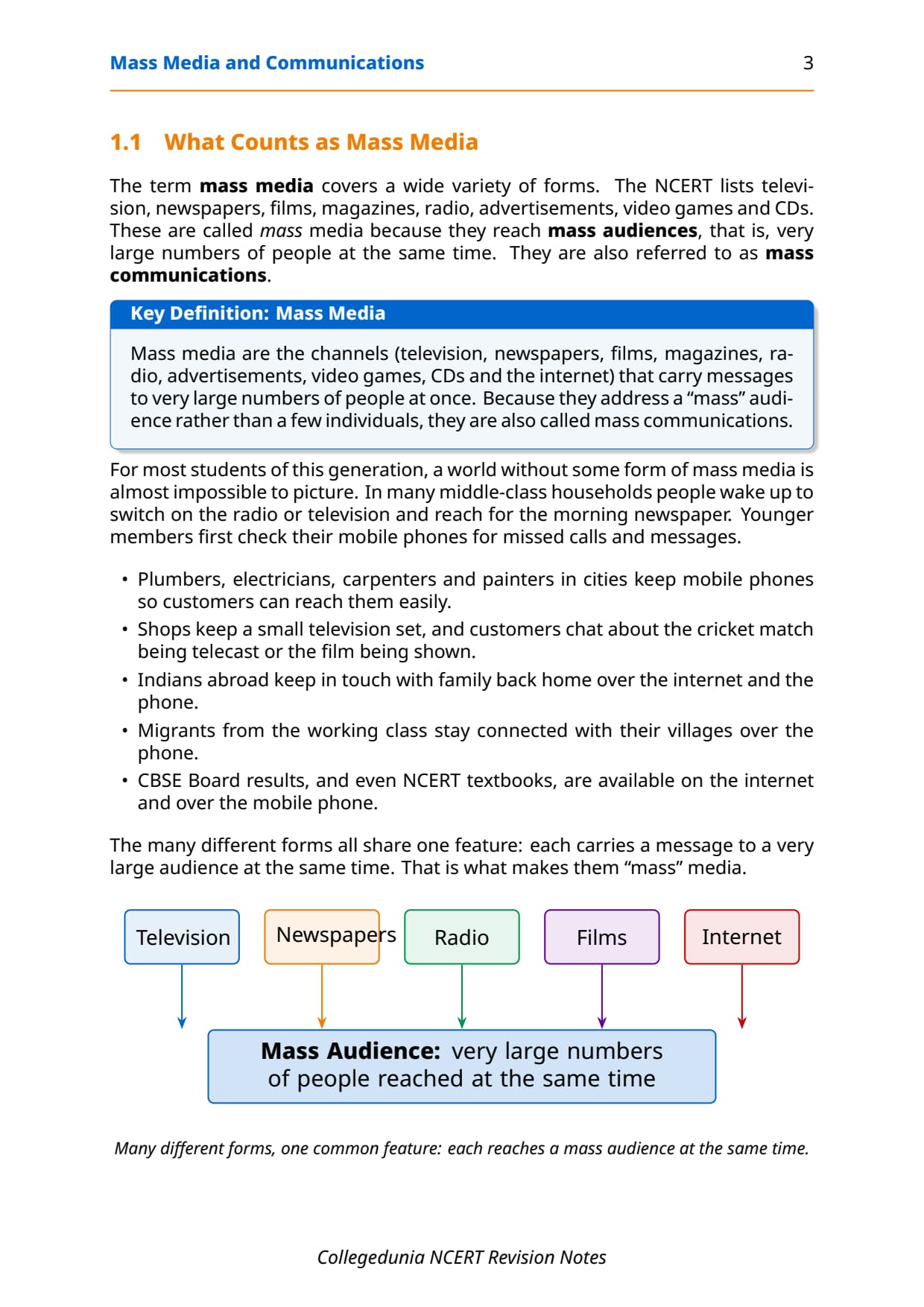
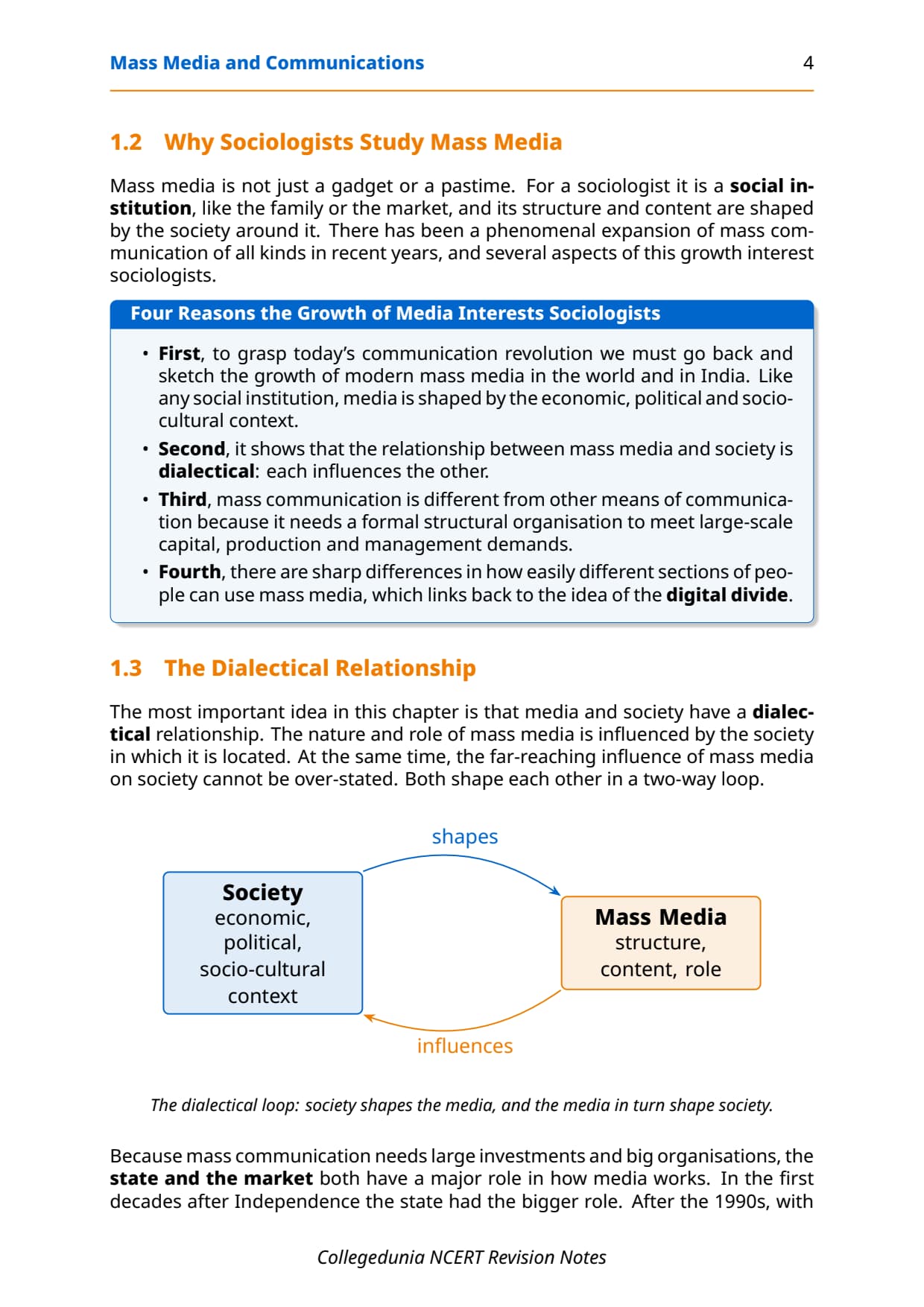
- Covers print, radio and television change in one short, point-wise summary.
- This Class 12 Sociology chapter usually carries 5 to 6 marks per board paper.
- Pairs with the NCERT Solutions, Handwritten Notes and Book PDF linked lower on this page.
Student Feedback: In a Collegedunia poll of 7,920 Class 12 Sociology students taken before the 2026 boards, 69% of students said a single timeline of Indian media, from the first newspaper to private satellite TV, was the fastest way to fix the chapter in memory. Most students wanted the State-to-market shift in one clear line.
Source: 2026-27 Class 12 Sociology student poll. Sample of 7,920 students from CBSE schools across 12 states.
These Class 12 Sociology Chapter 7 Notes are prepared by subject experts from the official NCERT Social Change and Development in India textbook, in line with the 2026-27 CBSE pattern.
Mass Media and Communications Class 12 Notes Overview
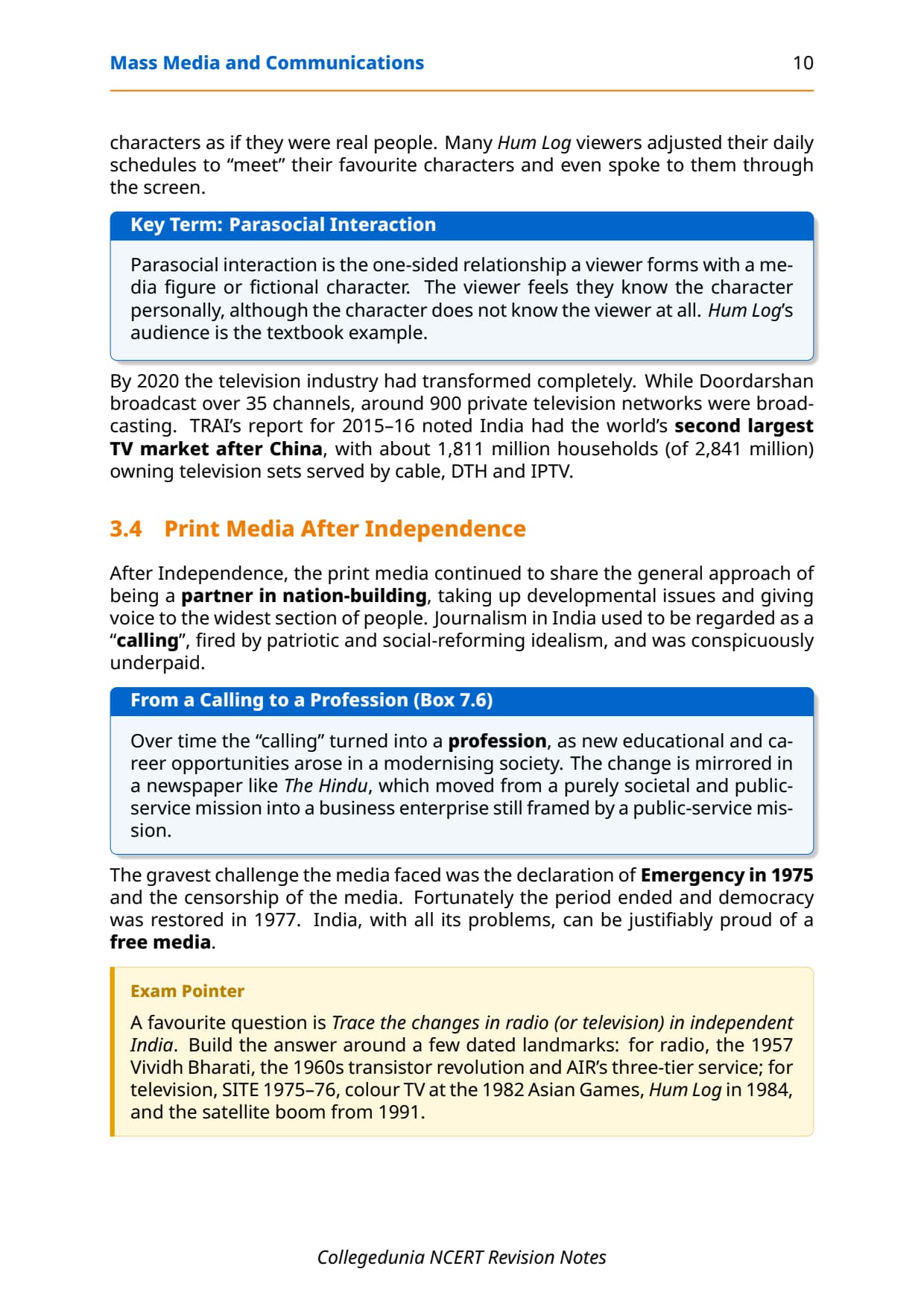
Mass Media and Communications is the seventh chapter of Social Change and Development in India. The chapter studies the channels that reach millions of people at once, mainly print, radio and television, and how each one grew in India. The simplest way to hold the chapter is to keep three ideas in view.
- What mass media is: tools that carry one message to a huge, scattered public.
- Who shaped it: the State led media for development after 1947, then liberalisation after 1991 brought in private and global players.
- How each medium changed: print rose through the Indian language press, radio survived through FM, and television exploded into many private channels.
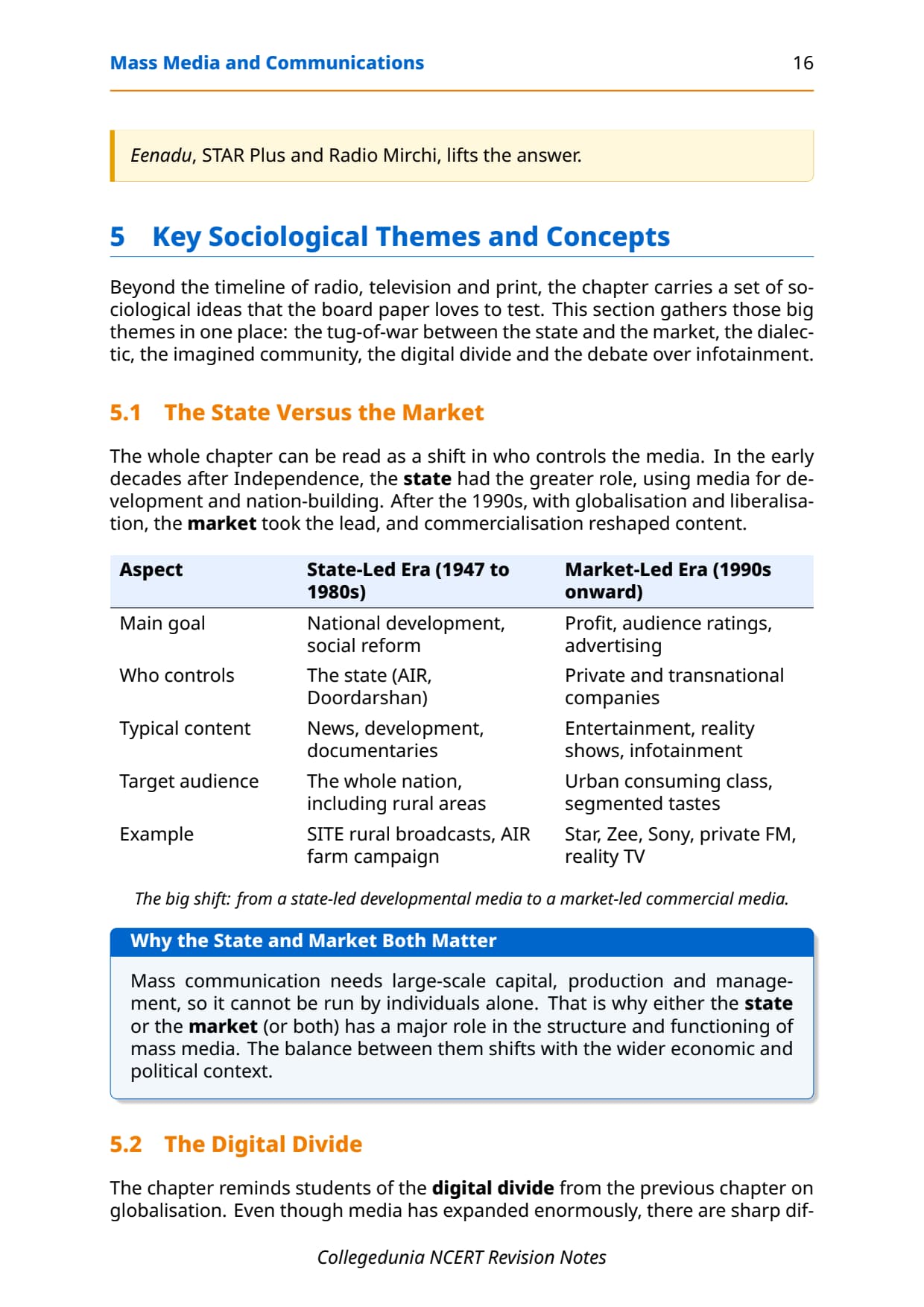
So the whole chapter is a story of the move from a state-guided media to a market-driven one. A student who keeps print, radio and television in separate boxes can recall almost any point in mass media and communications class 12 quickly.
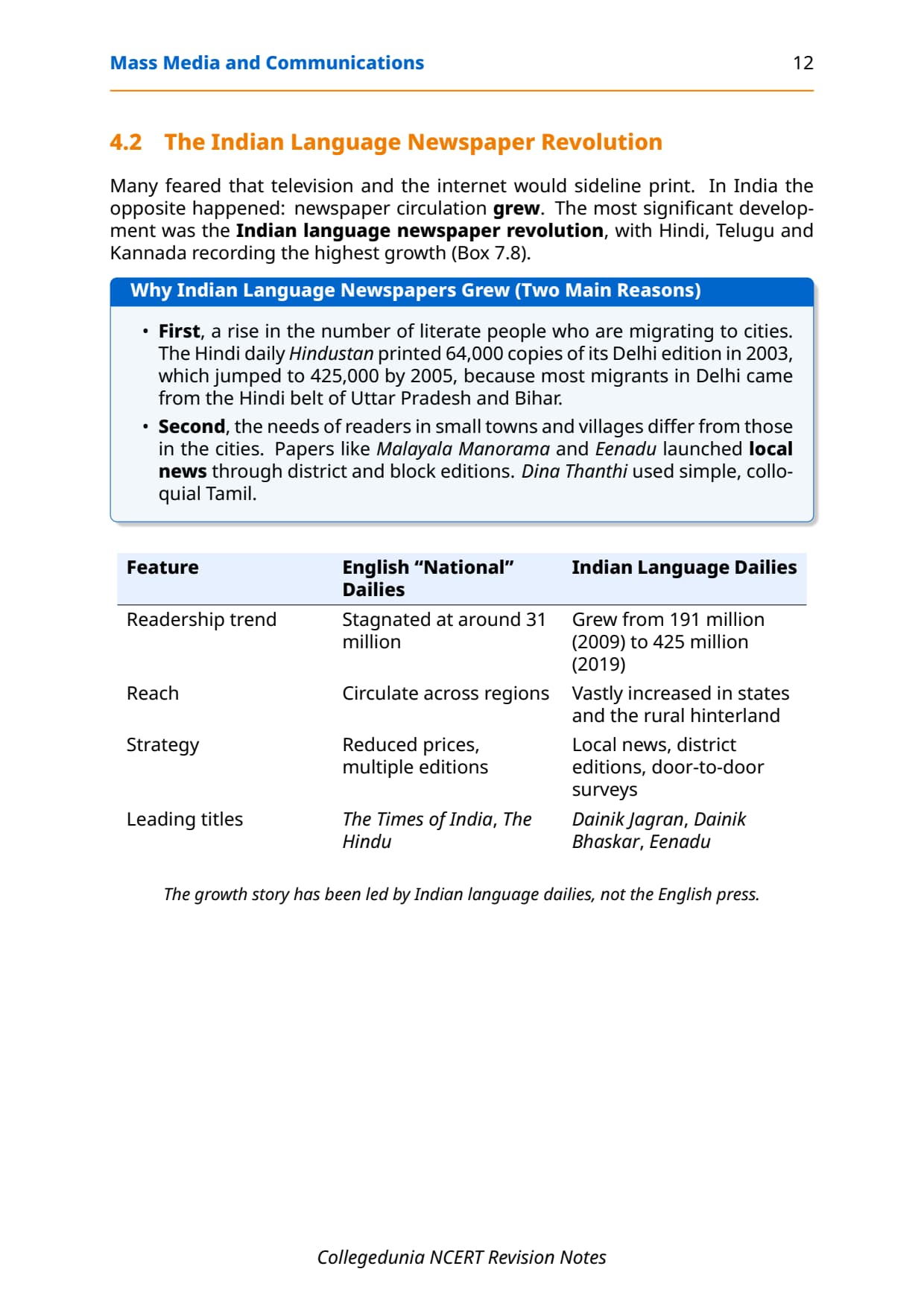
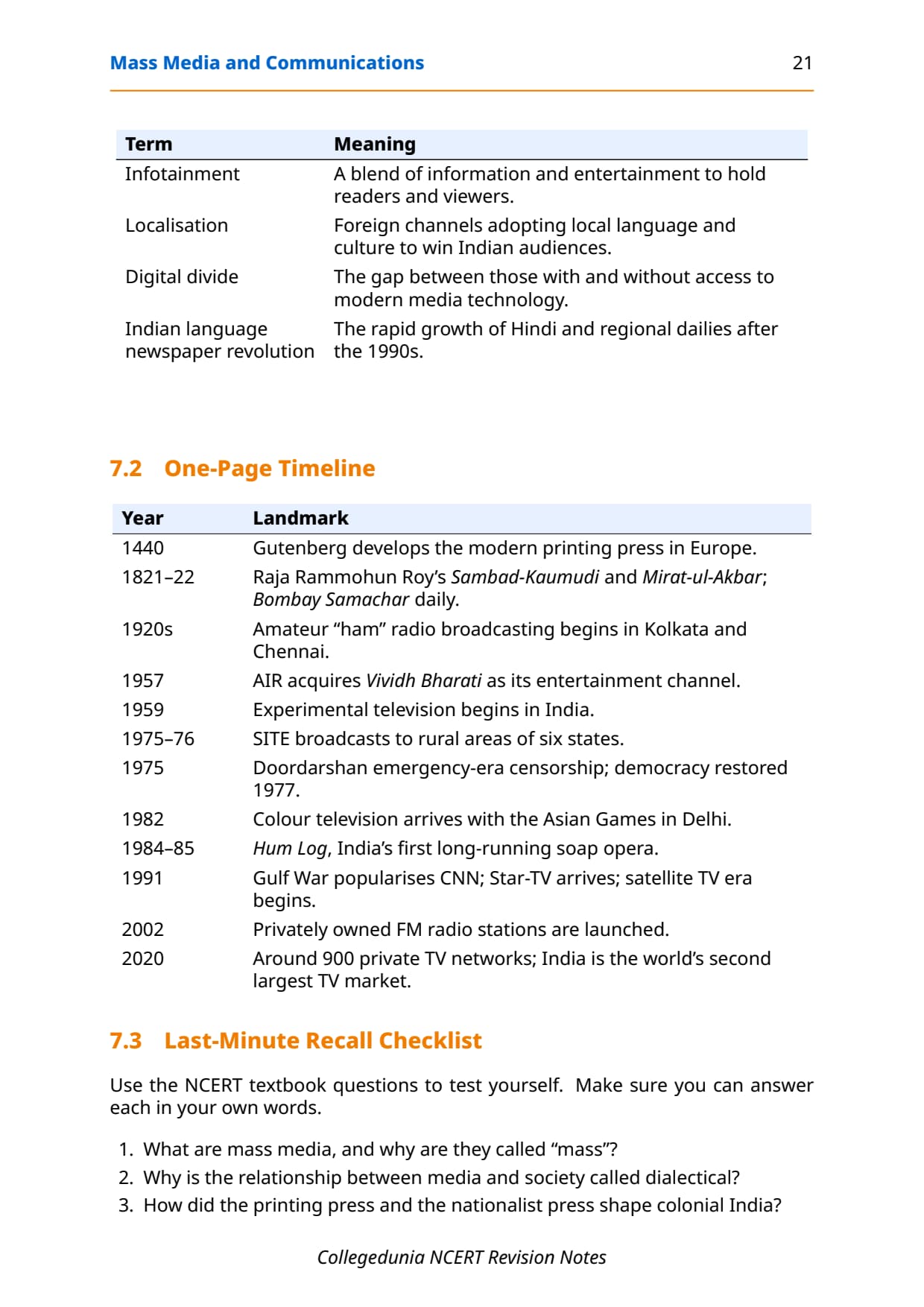
Key Terms in Mass Media and Communications
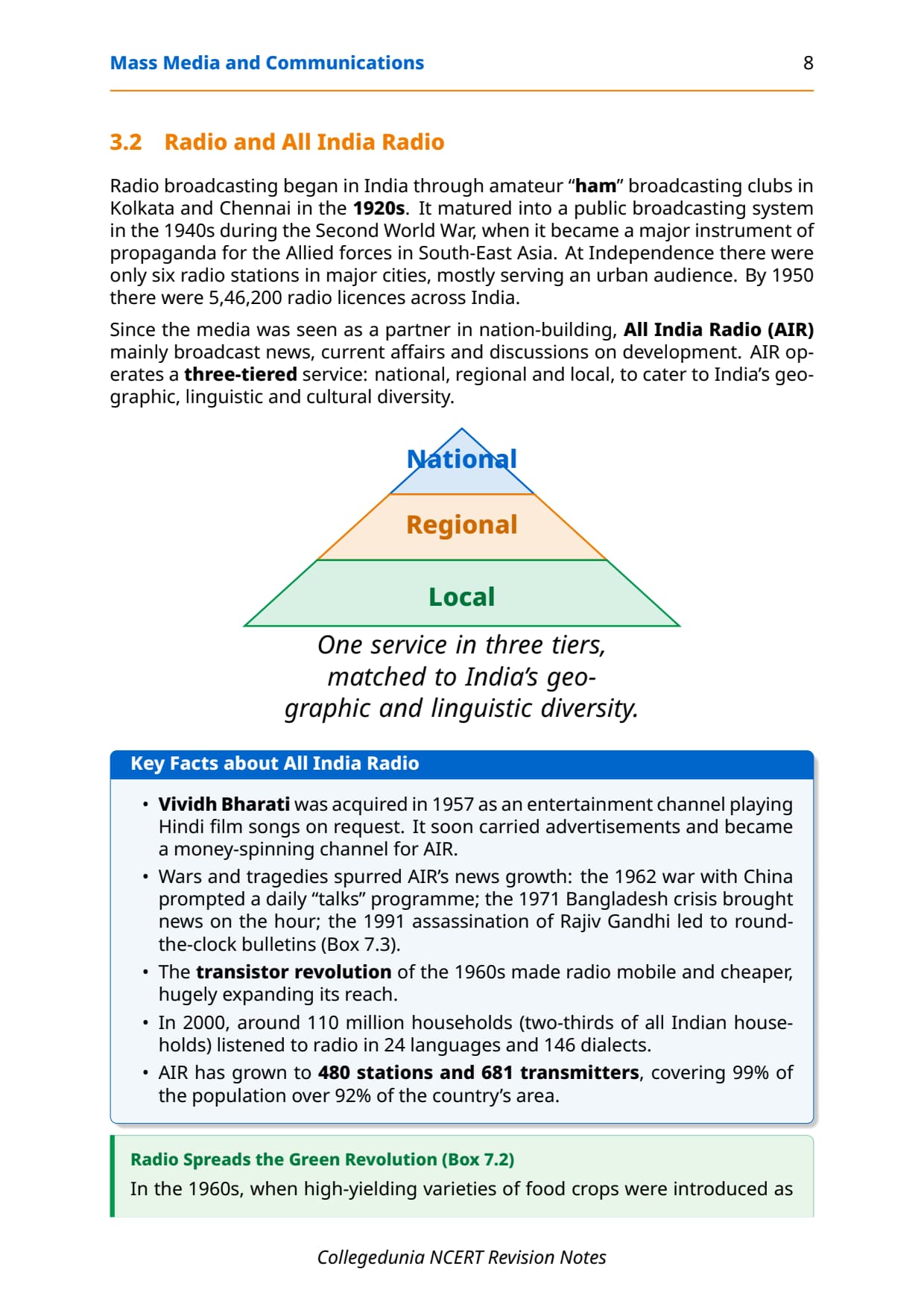
The chapter leans on a few core words. Students should fix them first, because a clear definition often earns the opening mark in a board answer. The glossary card below keeps them in one place.
- Mass media: channels like TV, newspapers, radio and the internet that reach a mass public at once.
- Liberalisation: the 1990s policy that opened Indian media to private and foreign players.
- Doordarshan: India's public television service, started in 1959.
- Community radio: a small local station run by and for a community.
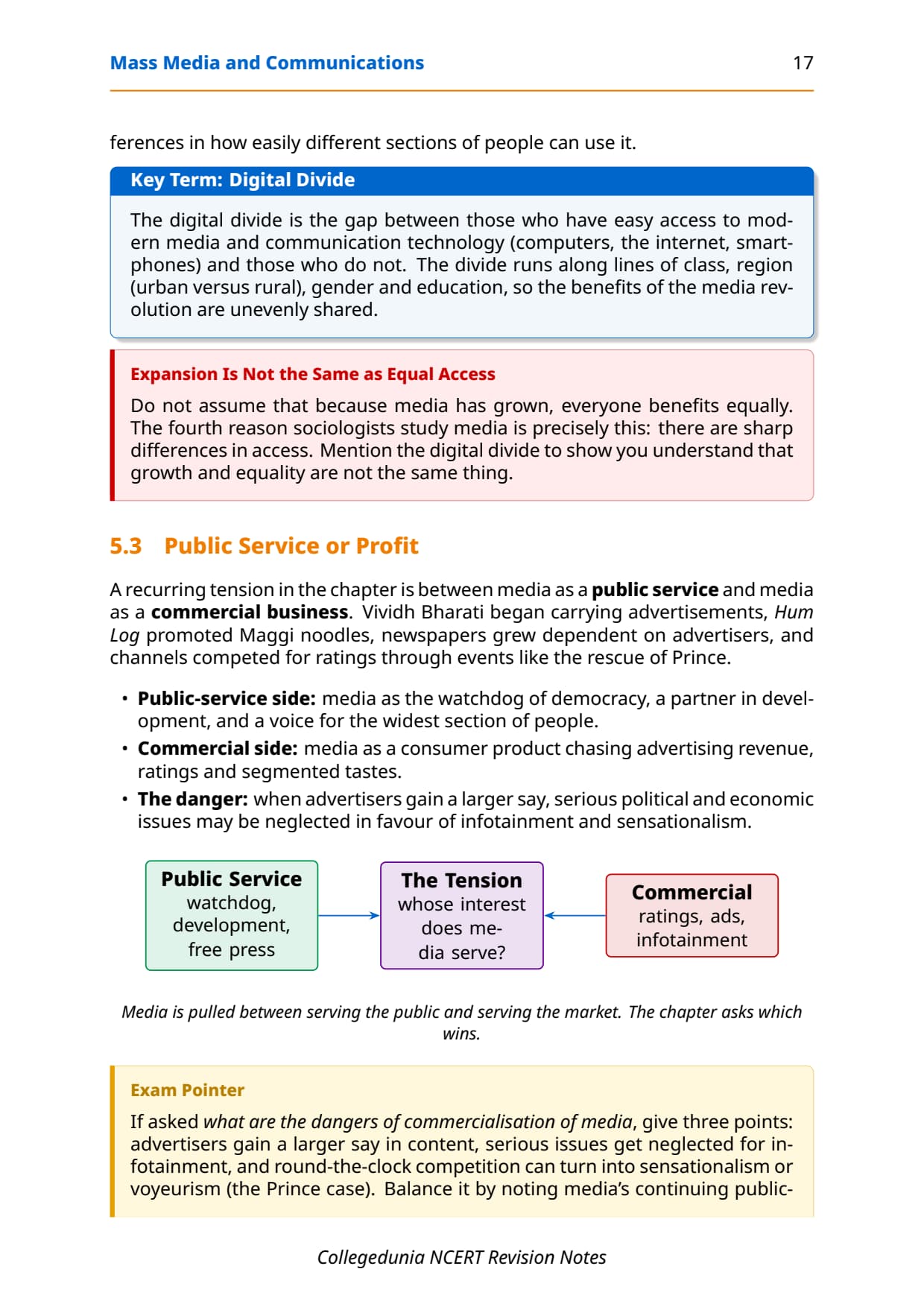
The key link to remember is that every term points back to the same shift, from State control to a private, advertising-funded market. The image below sorts the terms for fast revision.
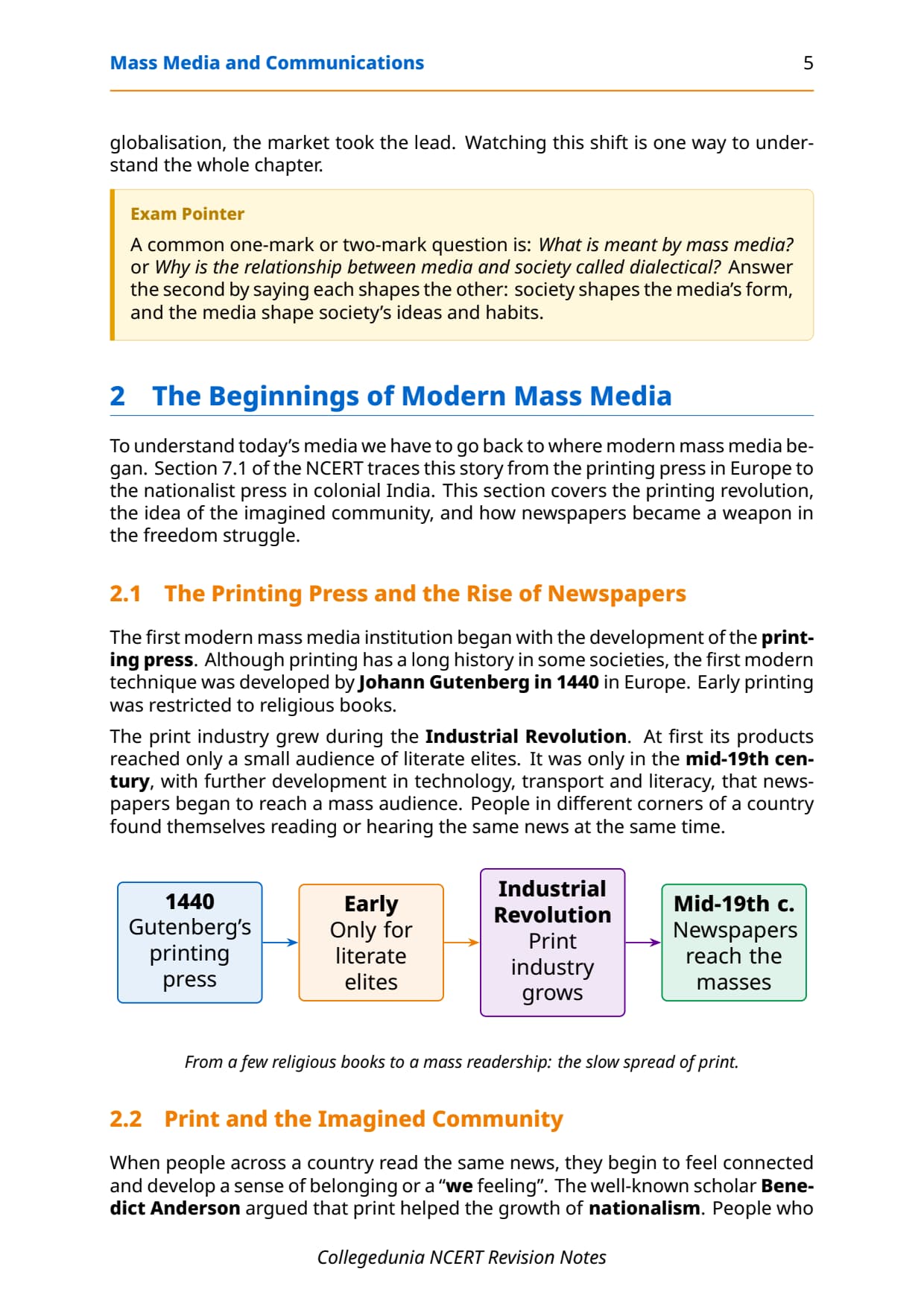
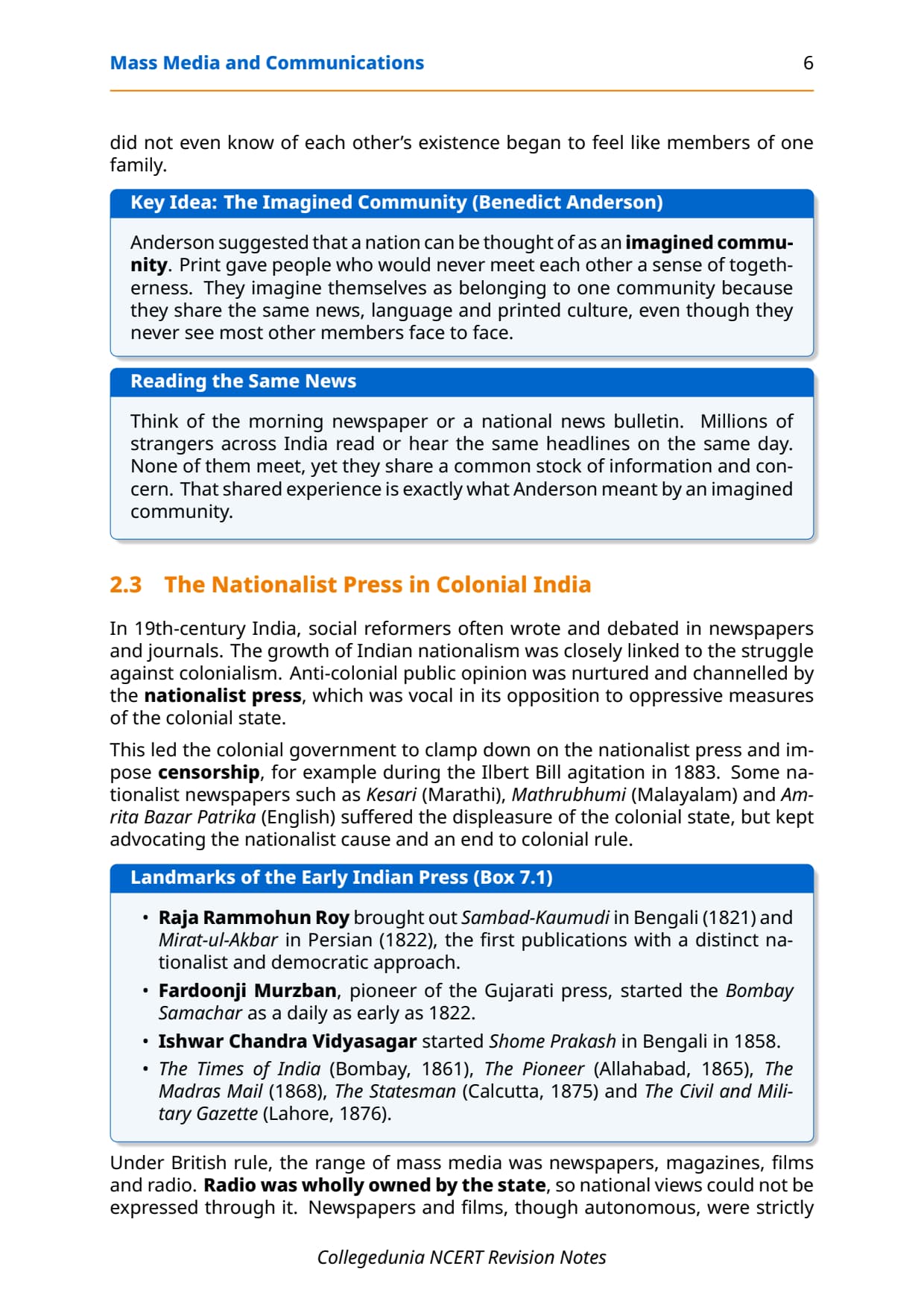
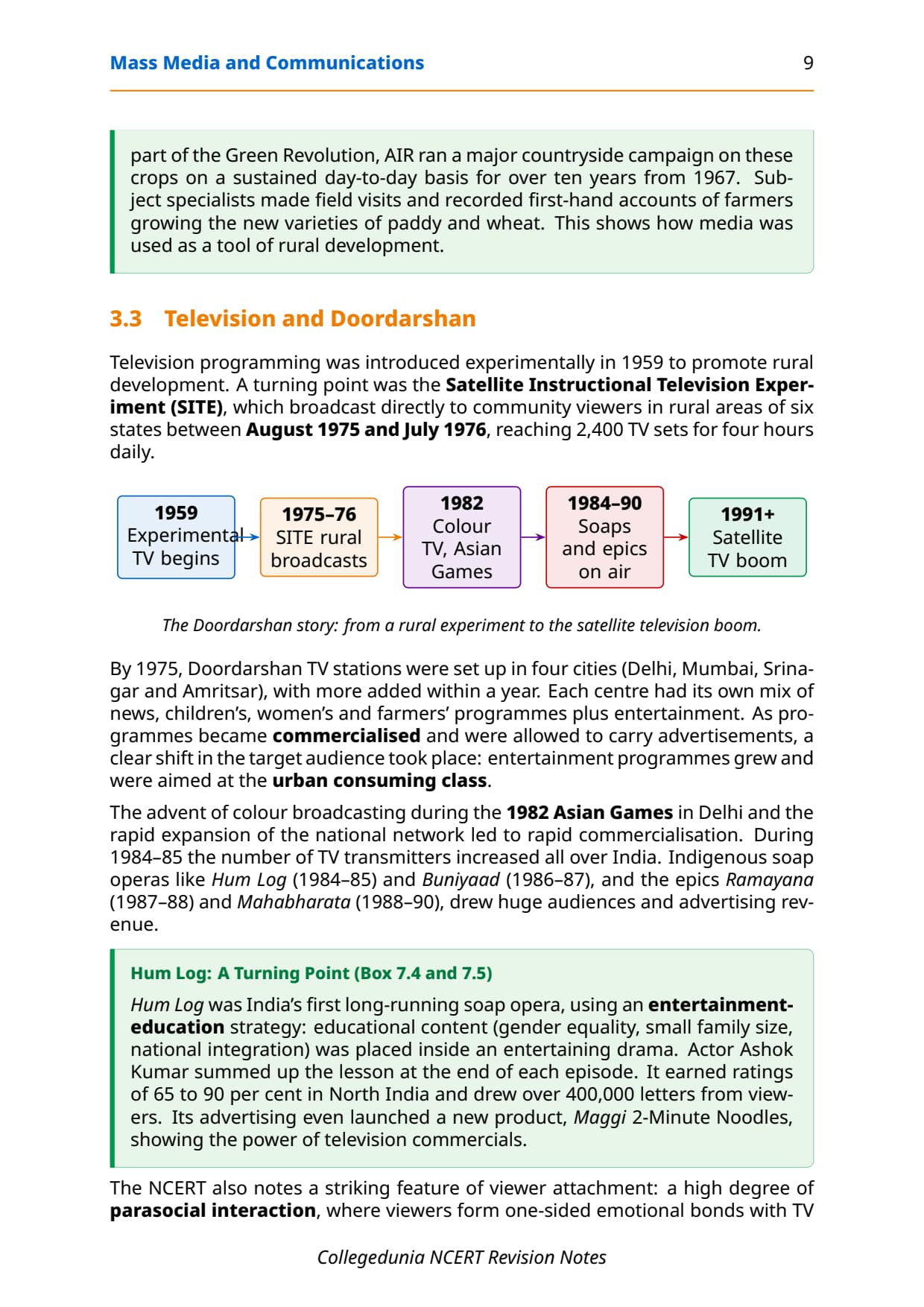
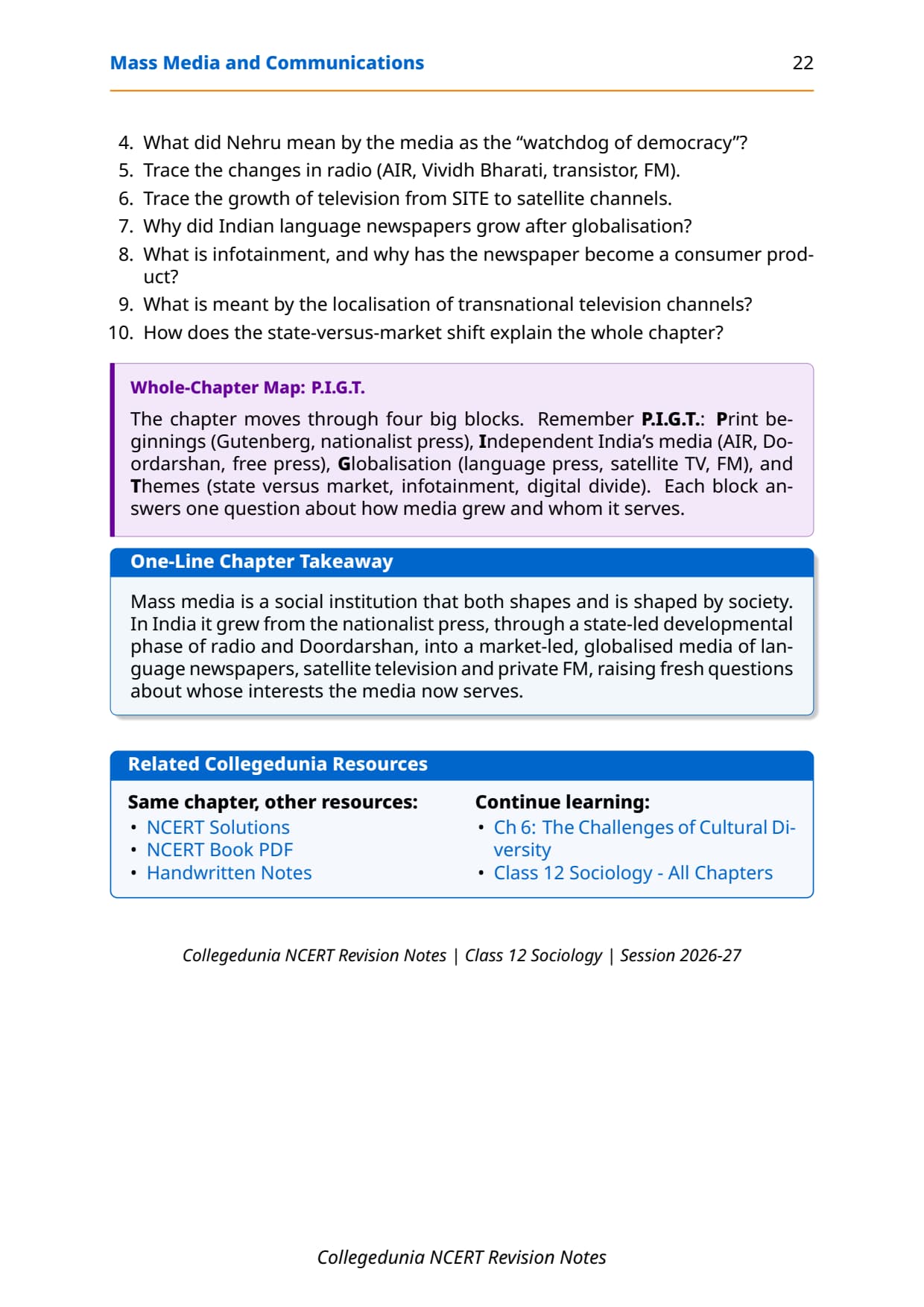
How Mass Media Grew in India: A Quick Timeline
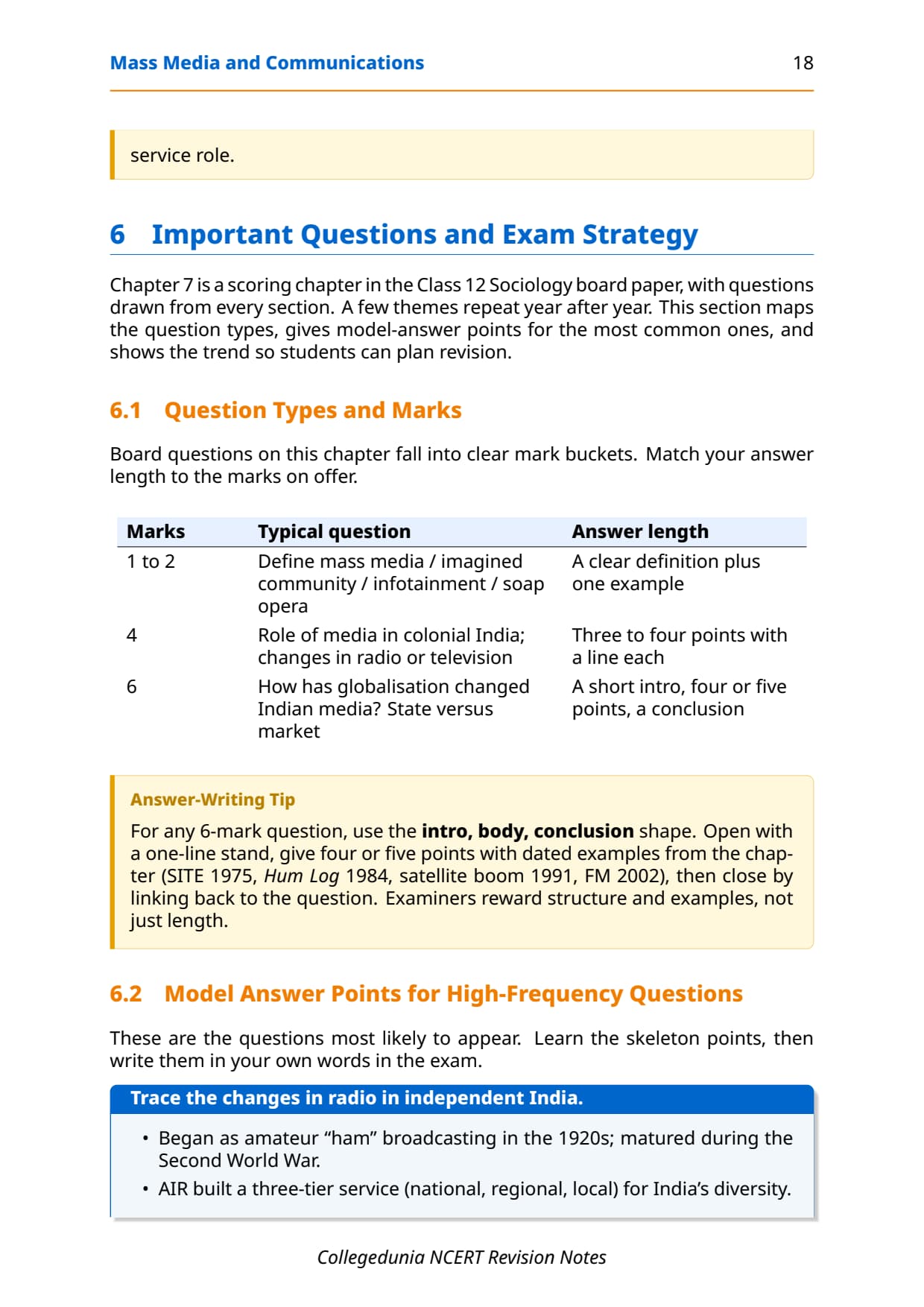
Examiners often ask students to trace changes, so a timeline is the most useful revision tool here. The notes below pin each medium to a turning point, so students can rebuild the story under exam pressure.
- 1780: the first newspaper, Hicky's Bengal Gazette, begins in colonial India.
- 1920s to 1936: radio broadcasting starts and All India Radio is formed.
- 1959: television arrives in India through Doordarshan.
- 1991: liberalisation opens the door to private satellite television.
- 2000s: the Indian language press and FM radio boom across the country.
The honest revision point is that Indian media did not move in a straight line; print rose even as television spread. Keeping the dates in order makes a "trace the changes" answer easy to write. The image below lays the timeline out visually.
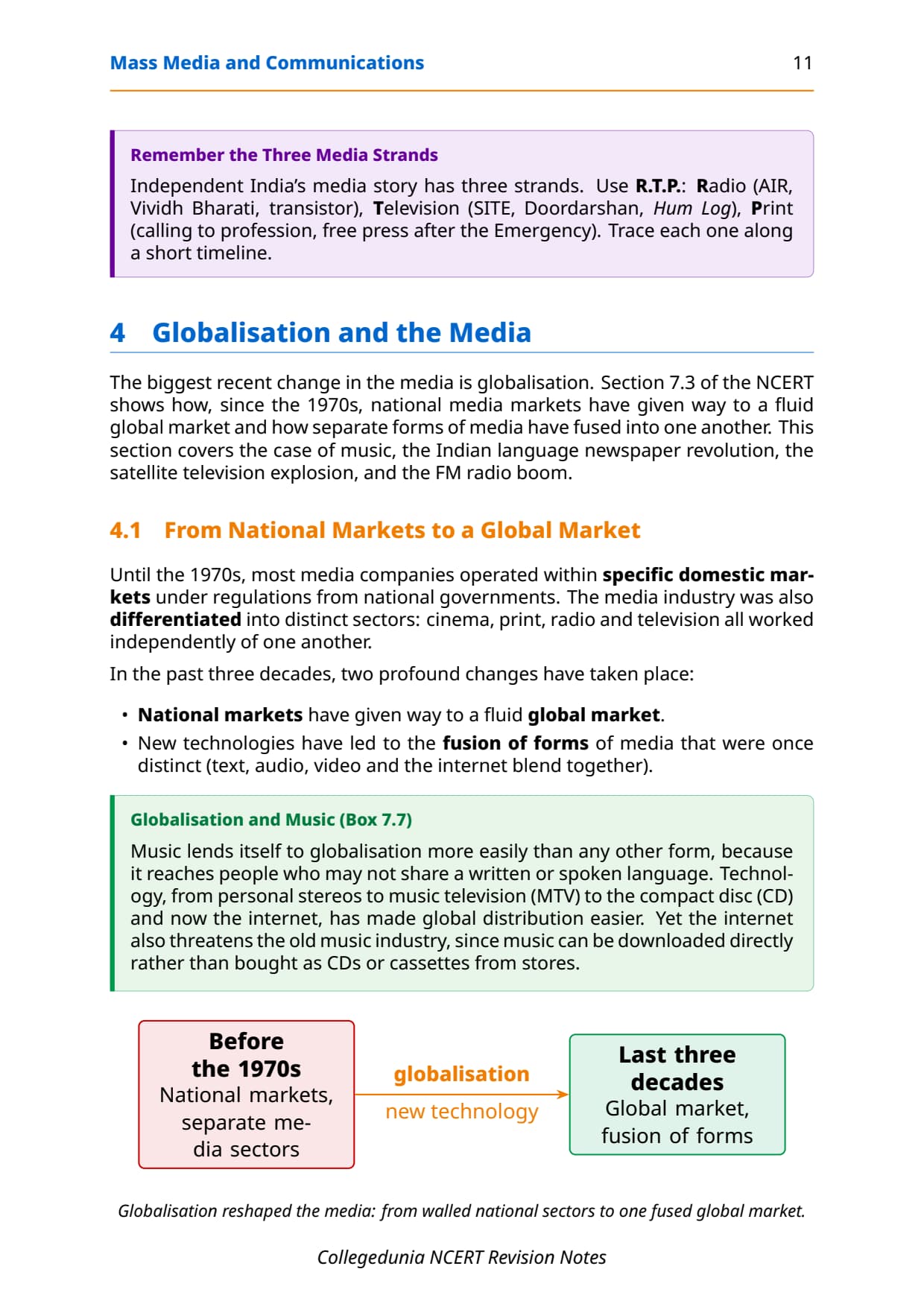
Print Media and the Indian Language Newspaper Revolution
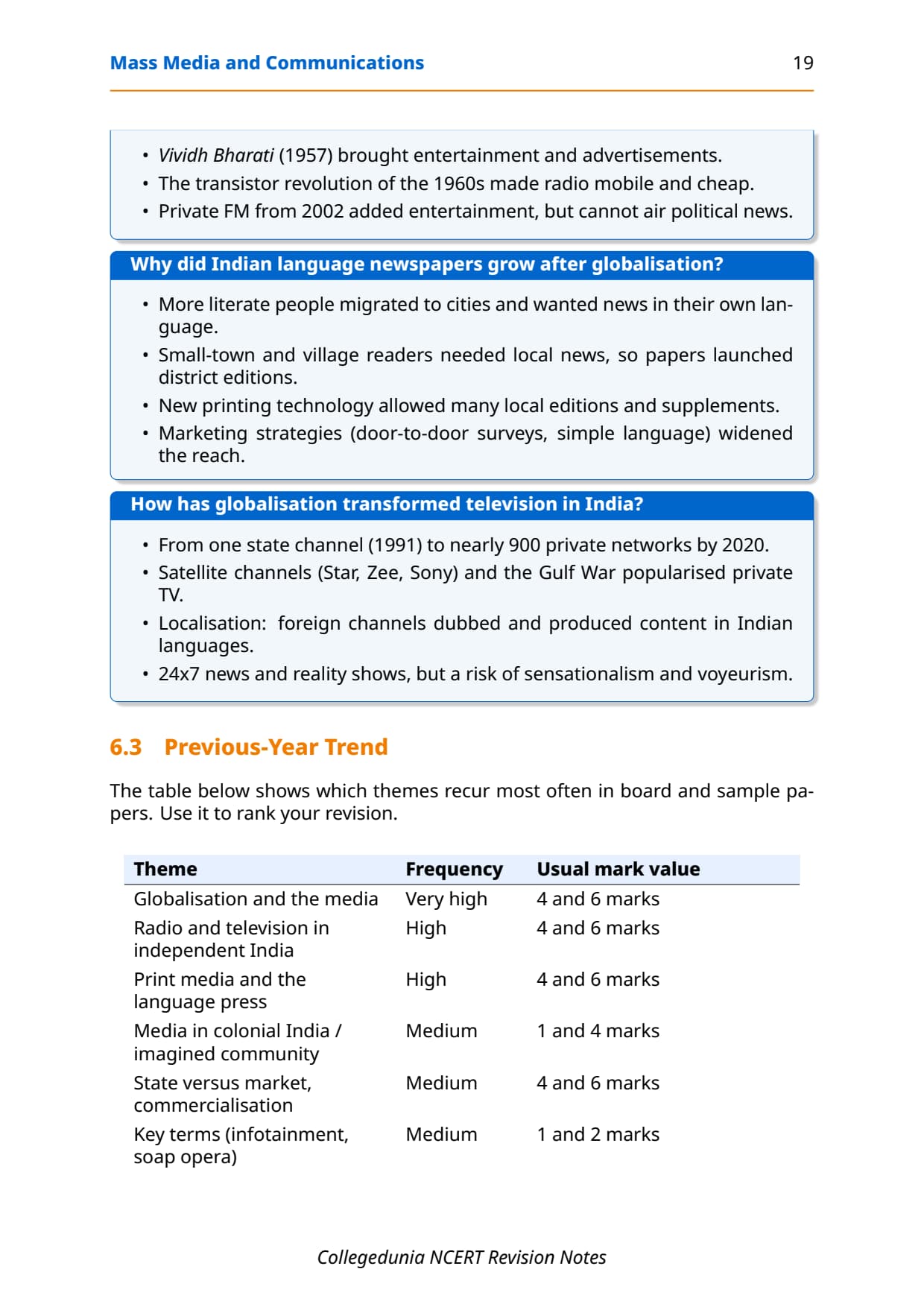
Print is the part of this chapter most likely to appear in a long answer. The notes below summarise why Indian language newspapers grew when many expected print to shrink.
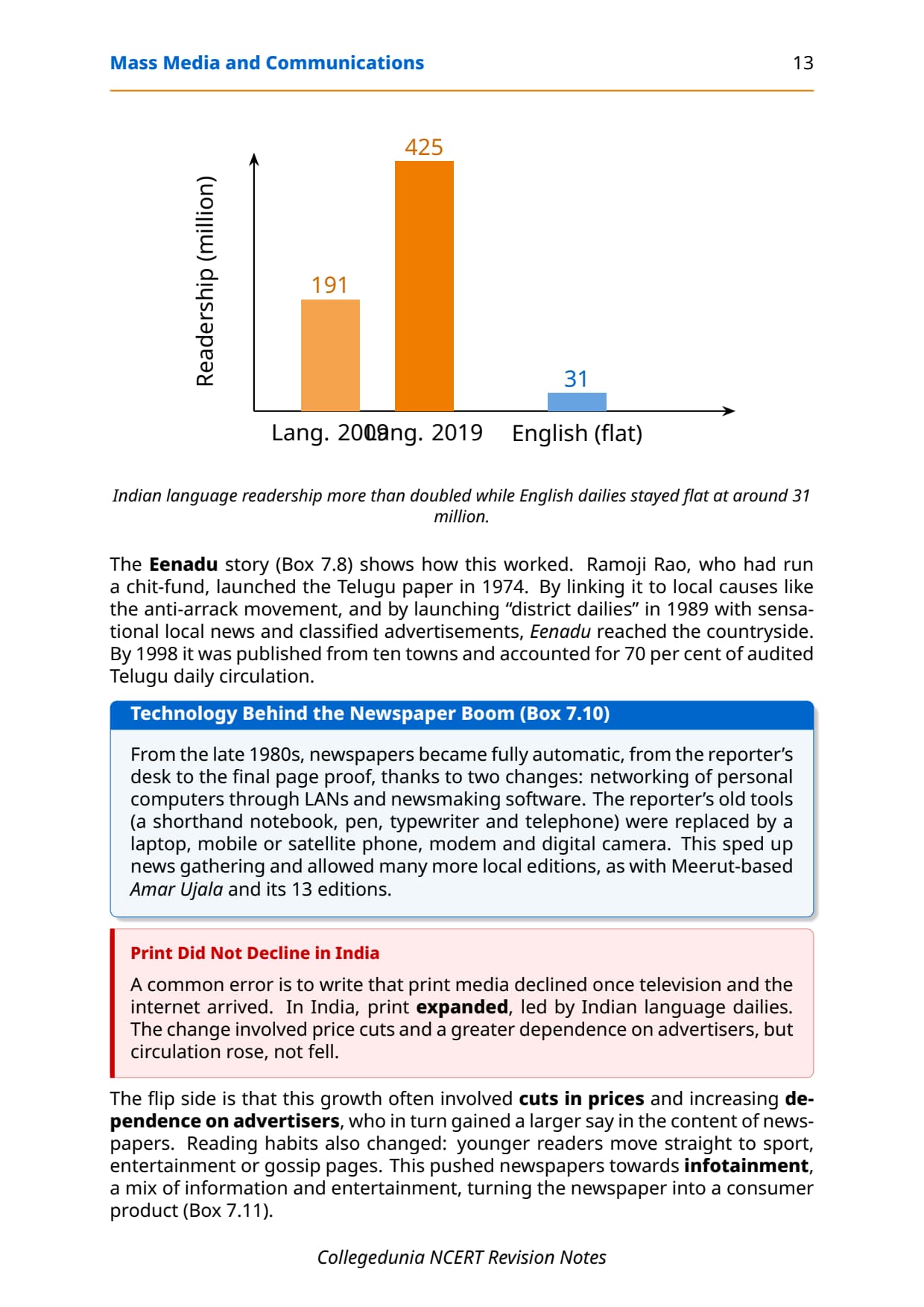
- Circulation grew: instead of falling in the TV age, newspaper sales rose.
- Vernacular press led: Indian language papers grew fastest by reaching new literate towns and villages.
- Local editions: district and block editions met needs that English city papers ignored.
- New technology and advertising: cheaper printing and advertiser money fuelled the boom but also brought infotainment.
The exam-safe summary is that the Indian language newspaper revolution is the textbook's best proof that an old medium can thrive in a new media age. Students should keep one named paper or region ready as an example.
Radio and Television After Liberalisation
Radio and television form the second half of the chapter. The notes below keep their key changes short and separate so students do not mix them up.
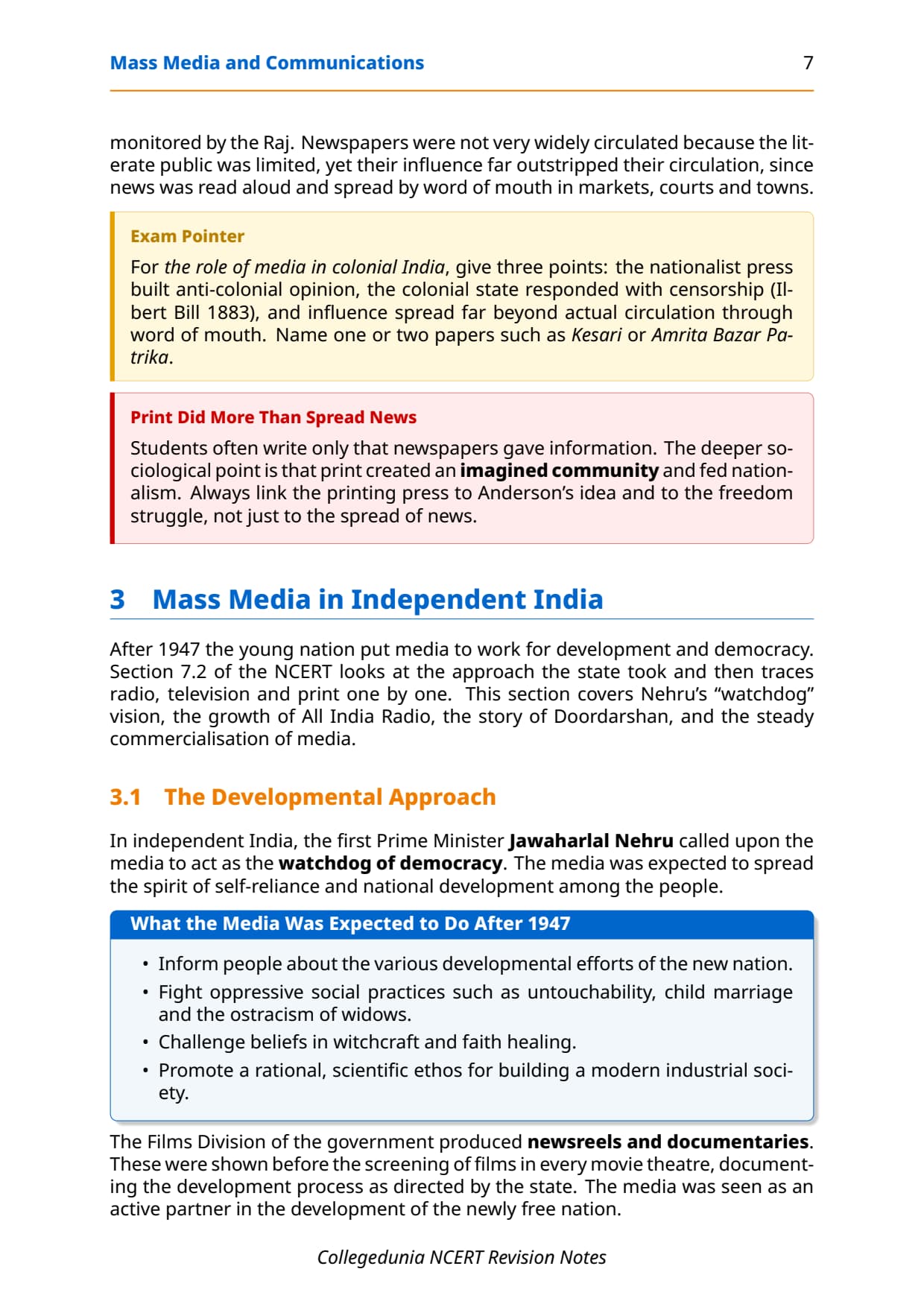
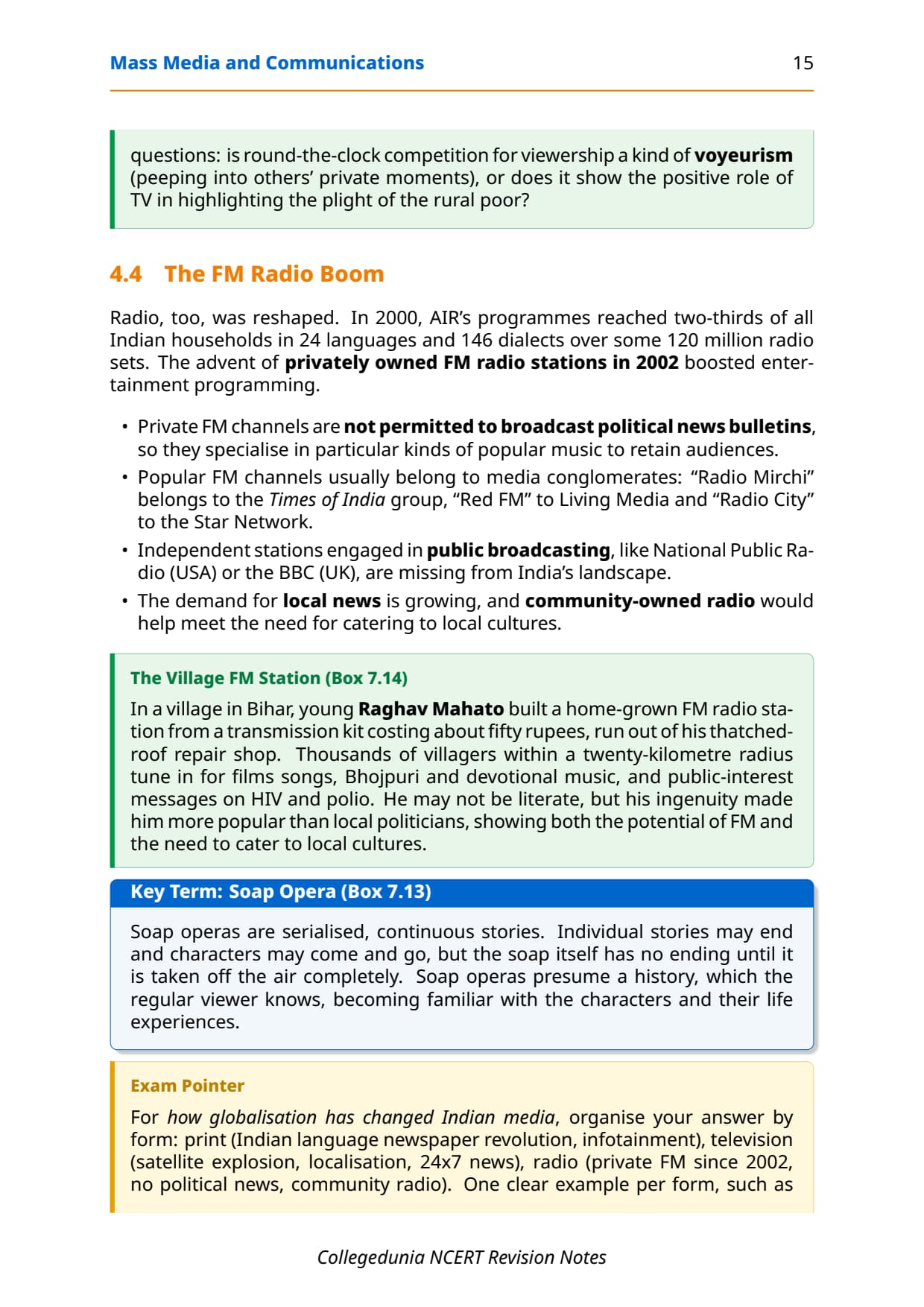
- Radio is not dead: All India Radio still reaches almost the whole country, and private FM gave it a fresh boost.
- Community radio: small grassroots stations serve local needs in their own language.
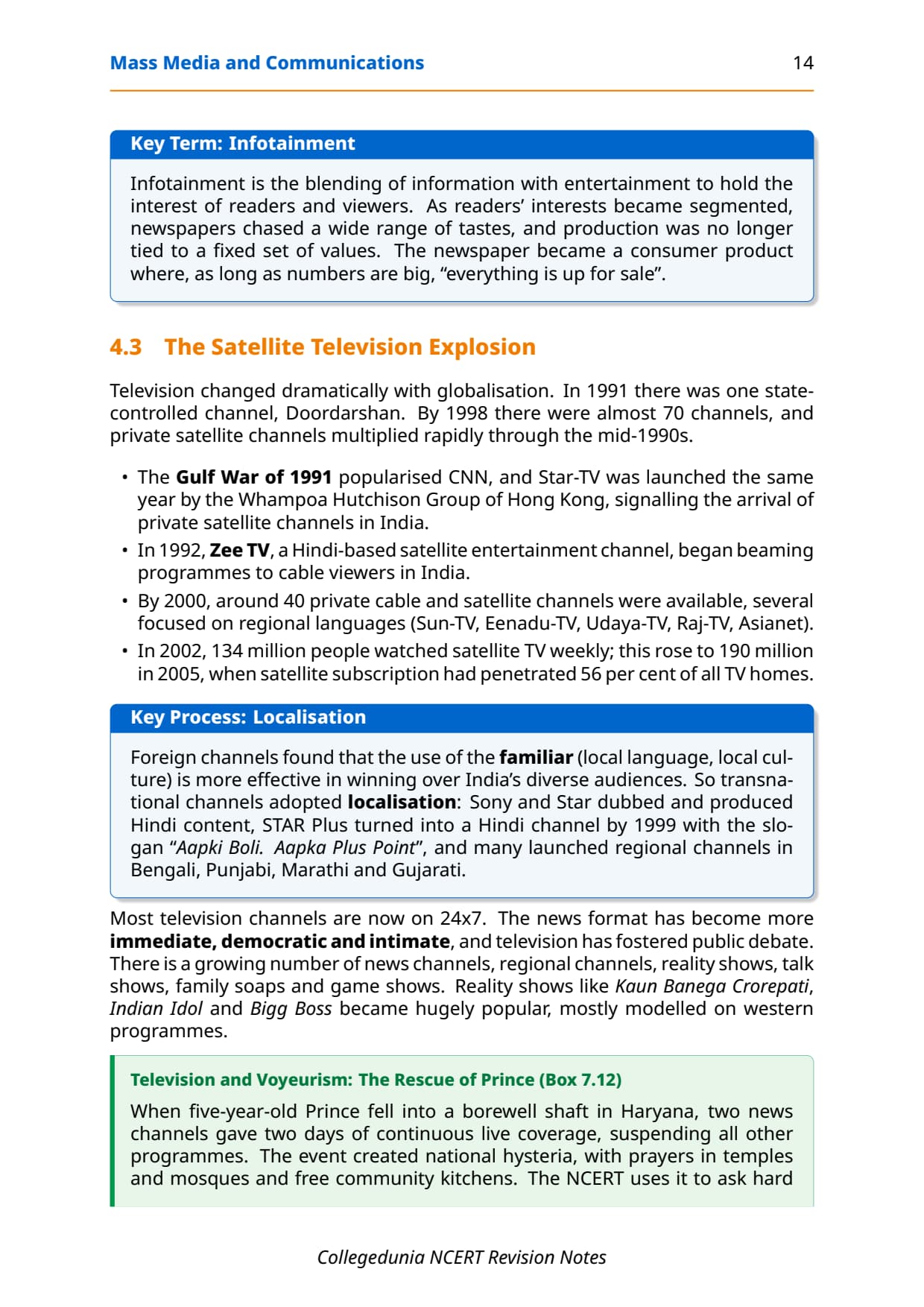
- Television opened up: after 1991, Doordarshan was joined by many private satellite channels.
- Regional growth: channels in many Indian languages followed the same logic as the vernacular press.
The point worth marks is that liberalisation did not kill old media; it gave radio and television new private, regional and global lives. A short example for each, like FM music or a regional news channel, lifts the answer.
Quick Revision Points for the Board Exam
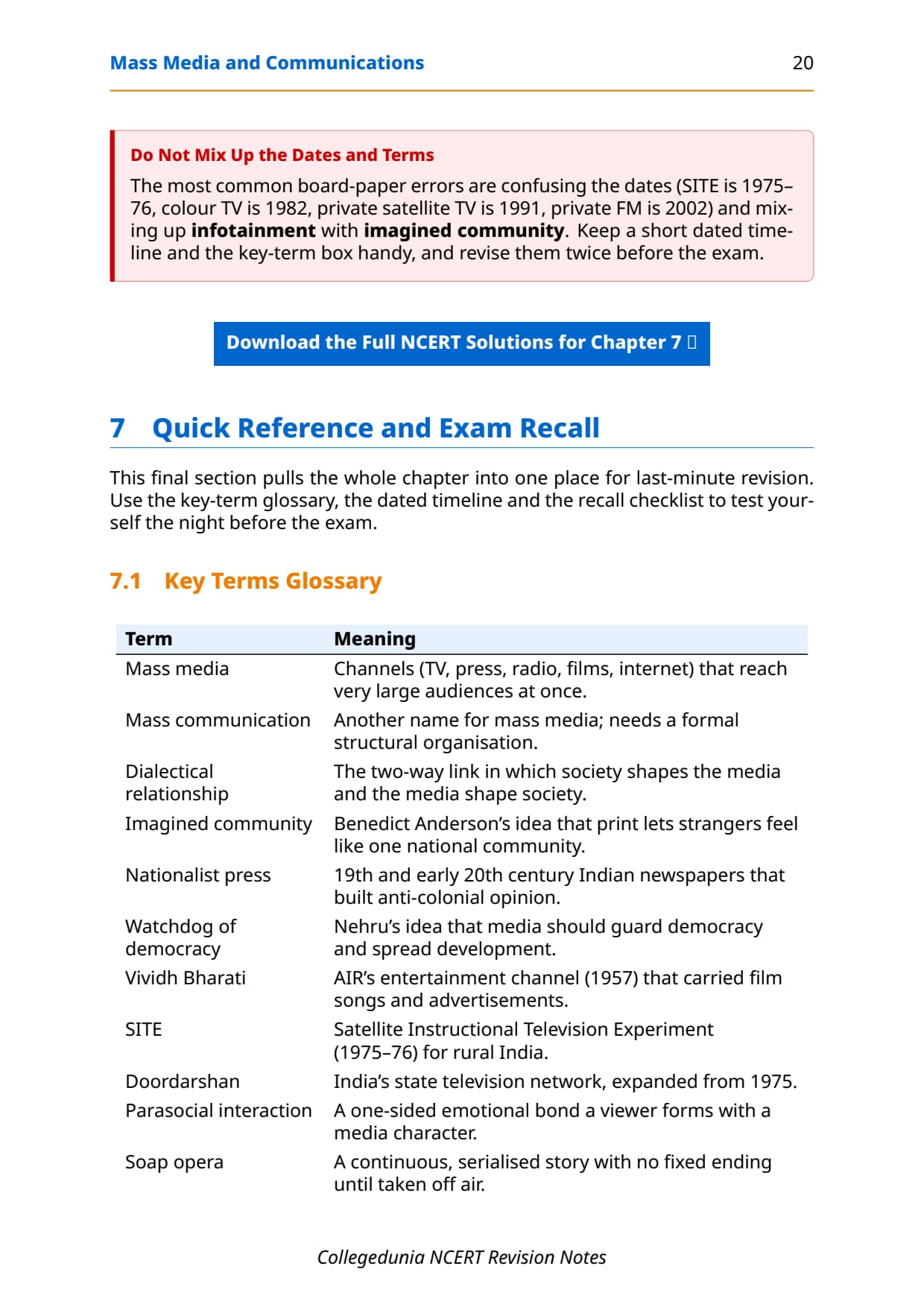
For last-minute study, students should be able to recall the chapter as a short checklist. The points below are the ones examiners reward most.
- State first, market later: media served development after 1947, then went private after 1991.
- Print rose, did not fall: the vernacular press drove the biggest growth.
- Radio found new life: FM and community radio kept it alive.
- Television multiplied: one state channel became many private channels.
If students can write four clear points on each medium, they are ready for any board question on this chapter. Pair these notes with the solved exercise for full practice.
How These Notes Pair with the Solutions and Book PDF
These Notes give the summary. To master the chapter, students should use them alongside the other resources for the same chapter, all linked in the table below.
| Resource | Best used for |
|---|---|
| Mass Media and Communications Class 12 NCERT Solutions | Full point-wise answers to all 3 exercise questions |
| Mass Media and Communications Handwritten Notes | Last-minute, one-shot revision in a scanned notebook style |
| Mass Media and Communications NCERT Book PDF | Reading the original NCERT chapter text |
Tip: read these Notes first, then attempt the NCERT Solutions on your own, and finally check the model answers. That order builds memory faster than reading answers straight away.
All Class 12 Sociology Notes
The table links the Notes for every chapter in both Class 12 Sociology books, so students can move across the course in one click. Mass Media and Communications is highlighted.
| Chapter | Notes |
|---|---|
| Indian Society | |
| Chapter 1 | Introducing Indian Society |
| Chapter 2 | The Demographic Structure of the Indian Society |
| Chapter 3 | Social Institutions - Continuity and Change |
| Chapter 4 | The Market as a Social Institution |
| Chapter 5 | Patterns of Social Inequality and Exclusion |
| Chapter 6 | The Challenges of Cultural Diversity |
| Social Change and Development in India | |
| Chapter 1 | Structural Change |
| Chapter 2 | Cultural Change |
| Chapter 3 | The Constitution and Social Change |
| Chapter 4 | Change and Development in Rural Society |
| Chapter 5 | Change and Development in Industrial Society |
| Chapter 6 | Globalisation and Social Change |
| Chapter 7 | Mass Media and Communications |
| Chapter 8 | Social Movements |
FAQs on Mass Media and Communications Class 12 Notes
Mass Media and Communications Class 12 Sociology Common Questions
Ques. Where can I download the Mass Media and Communications Class 12 Notes PDF?
Ans. You can download the Mass Media and Communications Class 12 Sociology Notes PDF directly from this page. It is free, follows the 2026-27 NCERT, and summarises print, radio and television change in one short read.
Ques. What is mass media in Class 12 Sociology?
Ans. Mass media are the channels like newspapers, radio, television and the internet that carry one message to a huge, scattered public at the same time. The chapter studies how each of these grew and changed in India.
Ques. How did the State shape Indian media after 1947?
Ans. After independence, the State ran radio through All India Radio and television through Doordarshan, mainly for nation building and development. Private and global players entered only after liberalisation in the 1990s.
Ques. Why is the Indian language newspaper revolution important?
Ans. The vernacular press grew fastest by reaching newly literate towns and villages with local editions in Indian languages. It is the chapter's best example of print rising even as television spread, so it is a favourite long-answer topic.
Ques. Are these Notes enough for the board exam?
Ans. These Notes cover the full chapter for quick revision. For complete preparation, students should pair them with the NCERT Solutions, which answer all 3 exercise questions point by point.



Comments