




The NCERT Class 11 Business Studies Chapter 8 Sources of Business Finance PDF brings together every funding method that the 2026-27 textbook explains. It covers owners' funds, borrowed funds, retained earnings, shares, debentures, deposits, trade credit and institutional finance.
- Core focus: classifying finance by period, ownership and source.
- Exam focus: merits, limits and suitability of each funding option.
- Best use: read the official PDF and build a source-comparison chart.
This guide follows the 2026-27 NCERT Business Studies textbook and keeps each explanation tied to the official chapter.
Student Feedback: In a Collegedunia poll of 8,640 students, most students said a comparison chart made finance sources easier to revise.
|
Table of Contents |
Topics Covered in the Sources of Business Finance NCERT PDF
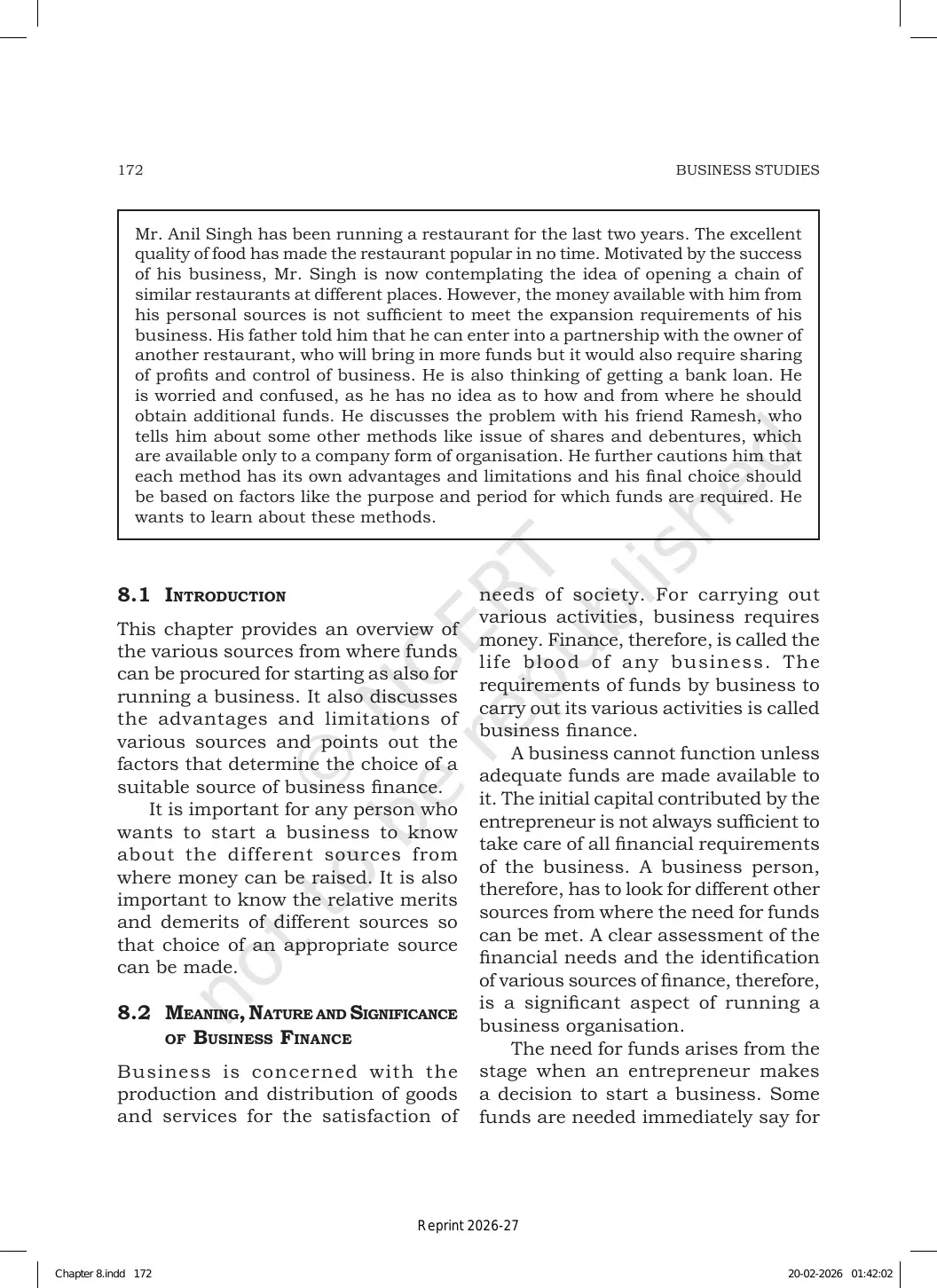
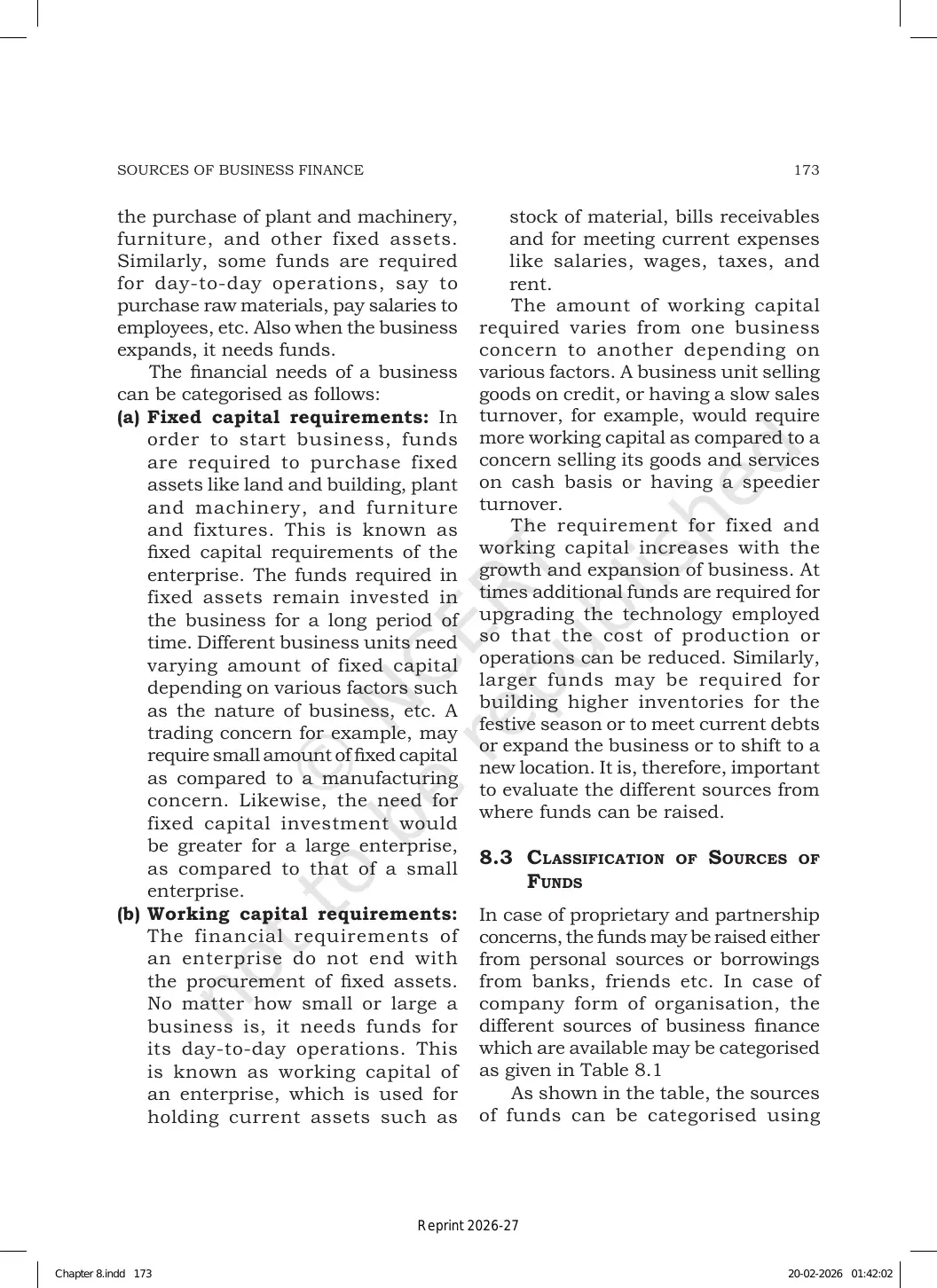
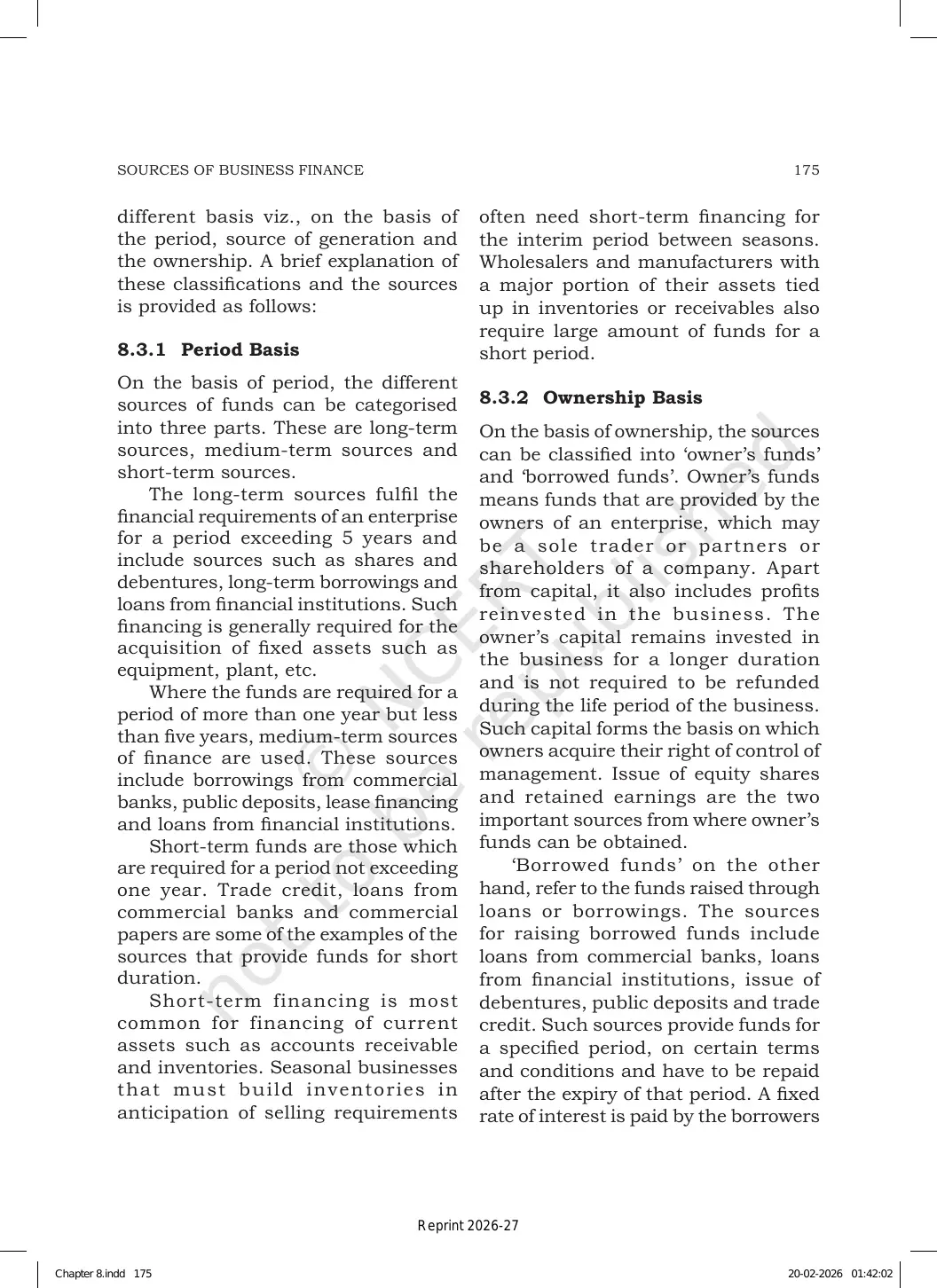
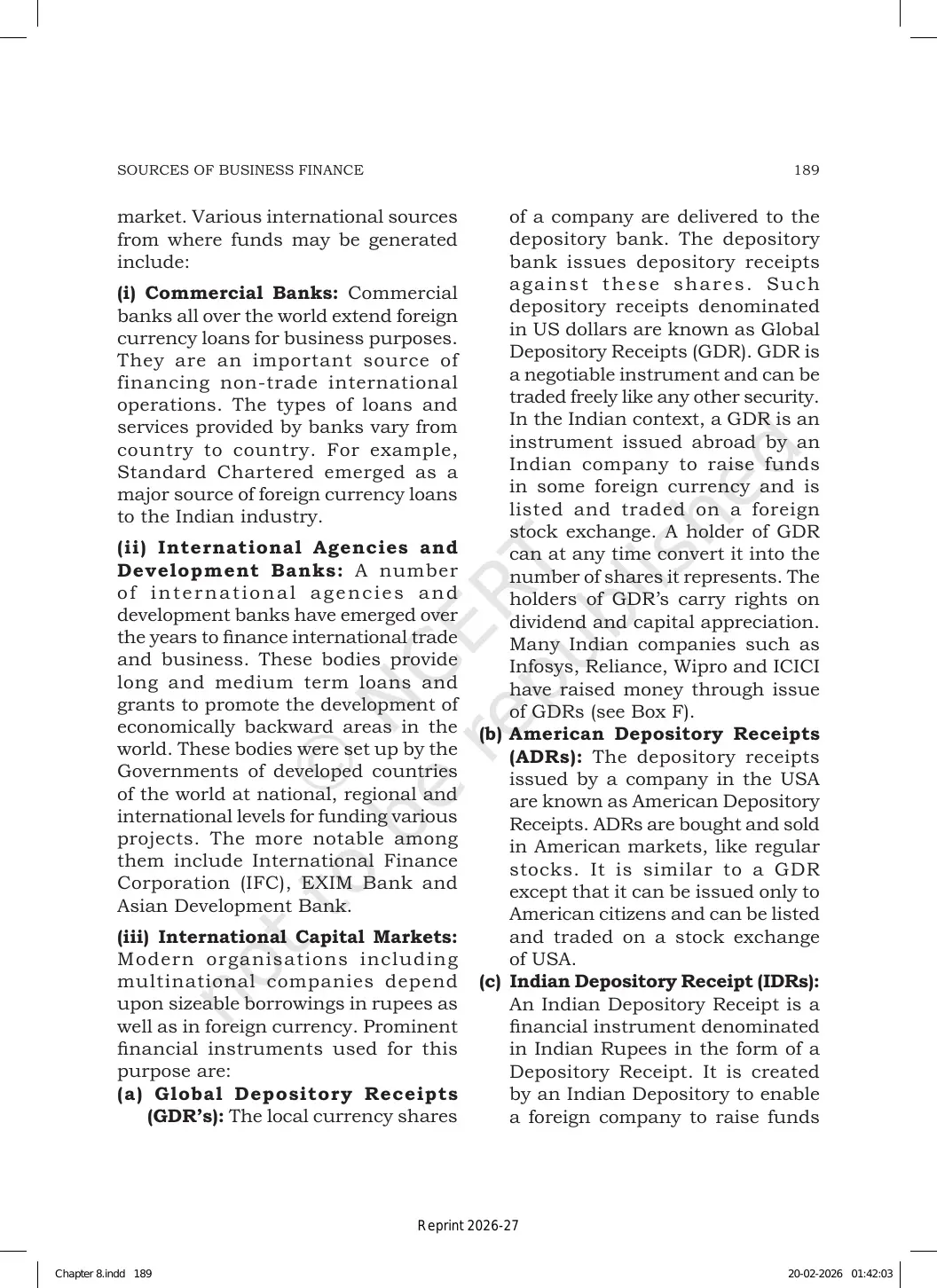
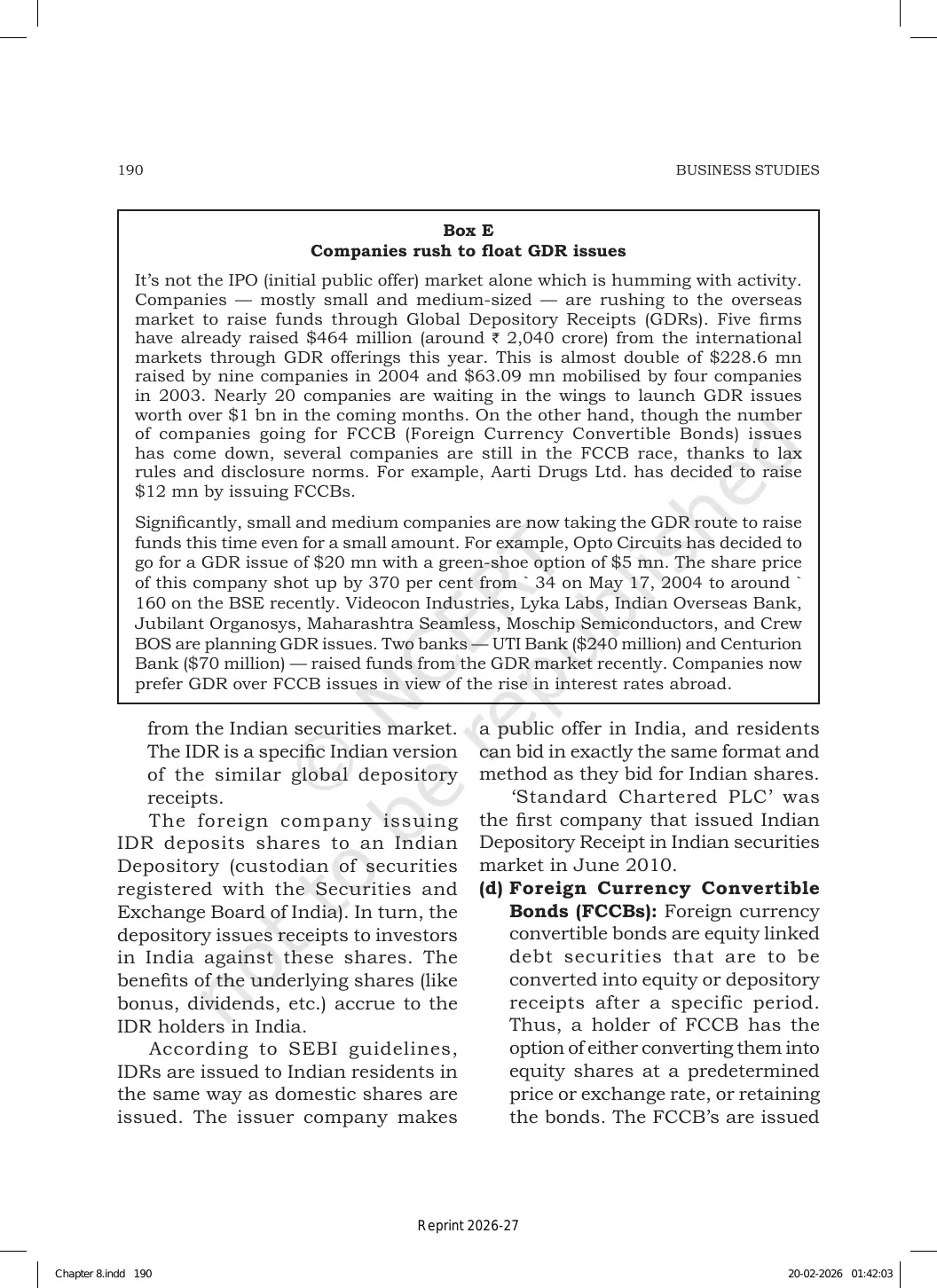
Business finance means the money required to start, run and expand an enterprise. A firm needs finance to buy fixed assets, meet daily expenses and fund growth. The chapter groups sources by time period, ownership and where the money originates.
- Meaning, nature and importance of business finance
- Short-term, medium-term and long-term funds
- Owners' funds and borrowed funds
- Retained earnings, shares, debentures and deposits
- Trade credit, factoring, bank credit and institutional finance
Sources of Business Finance Video Recap
Source: Magnet Brains on YouTube
How Business Finance Sources Are Classified
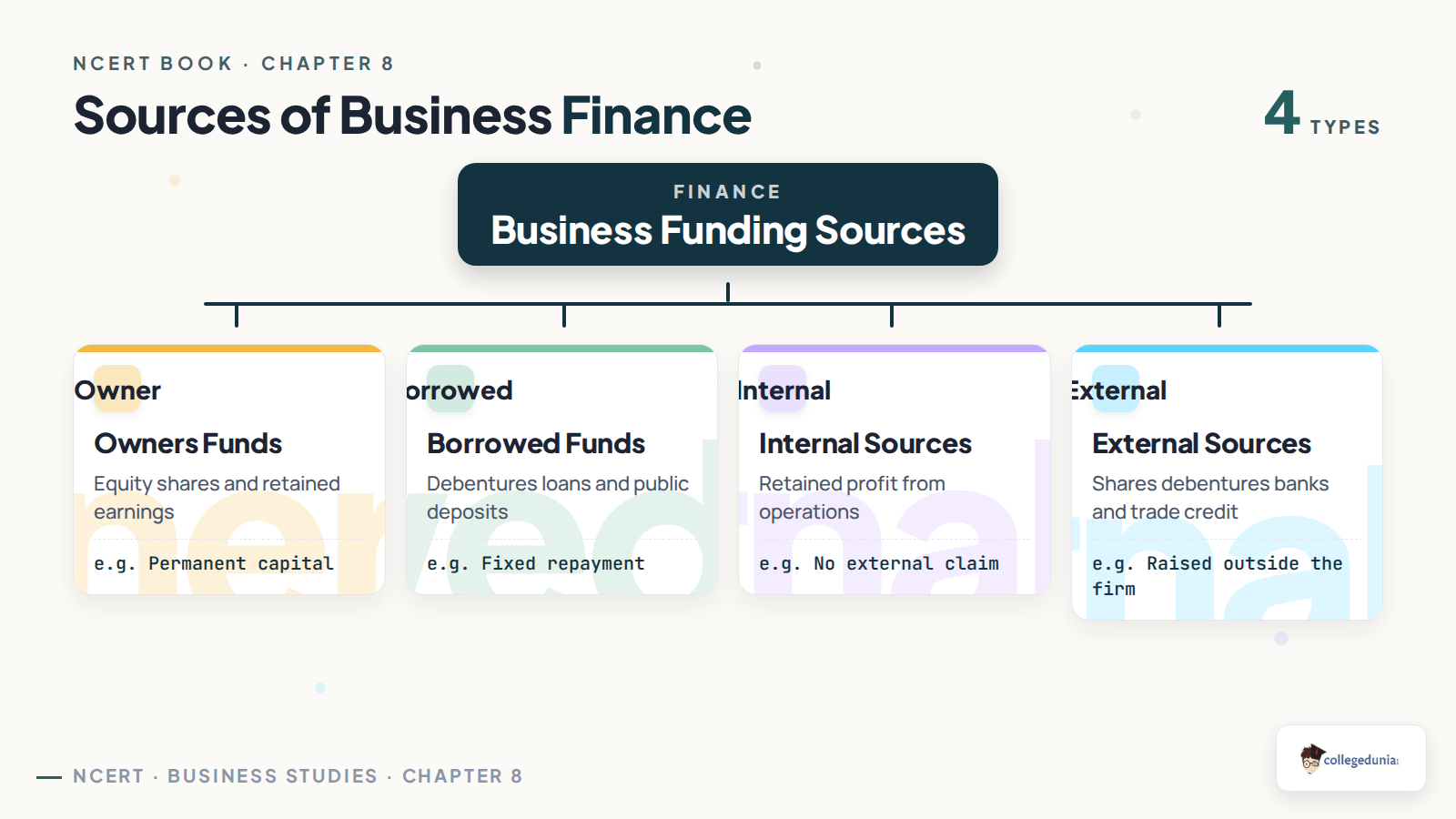
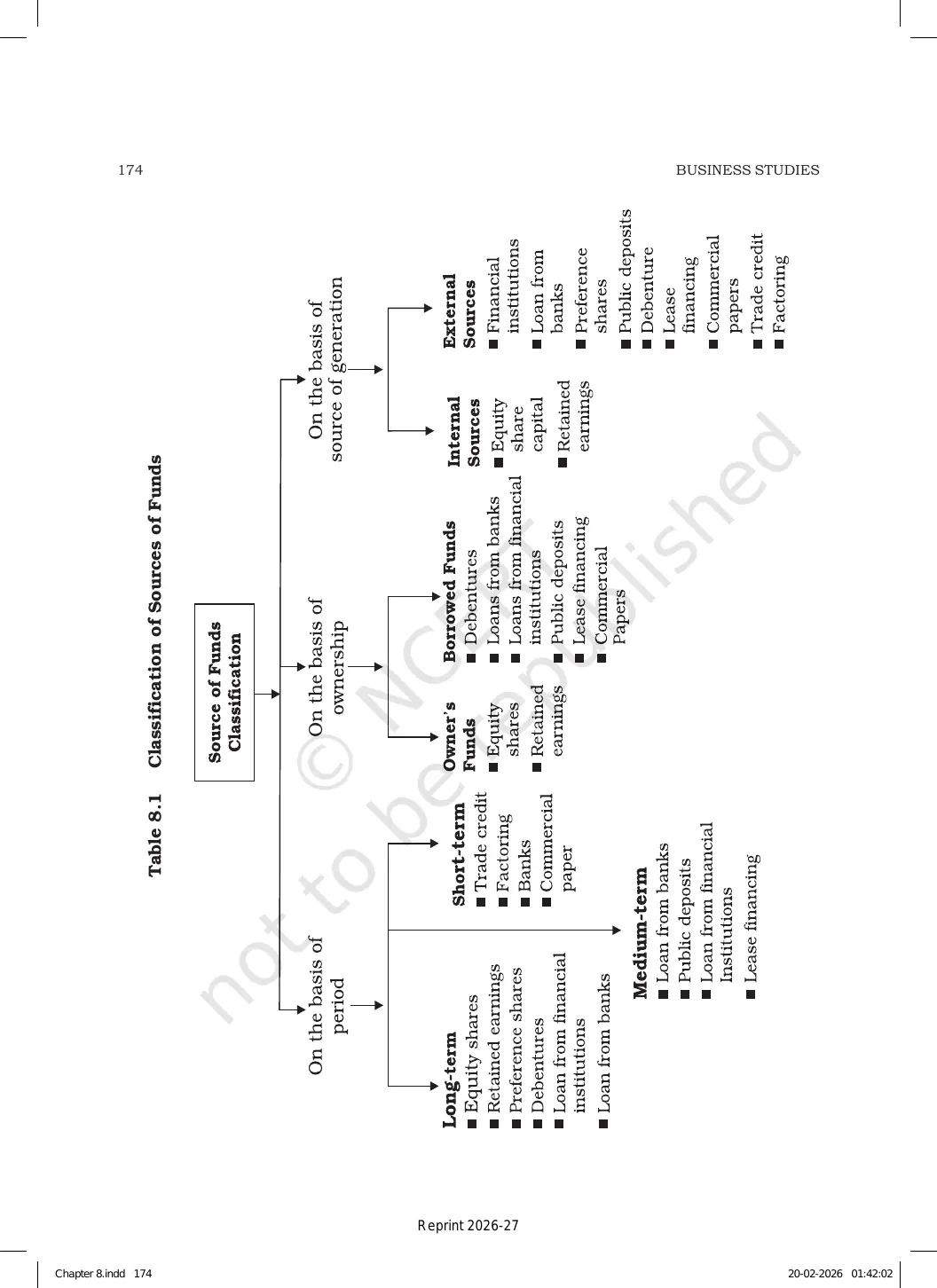
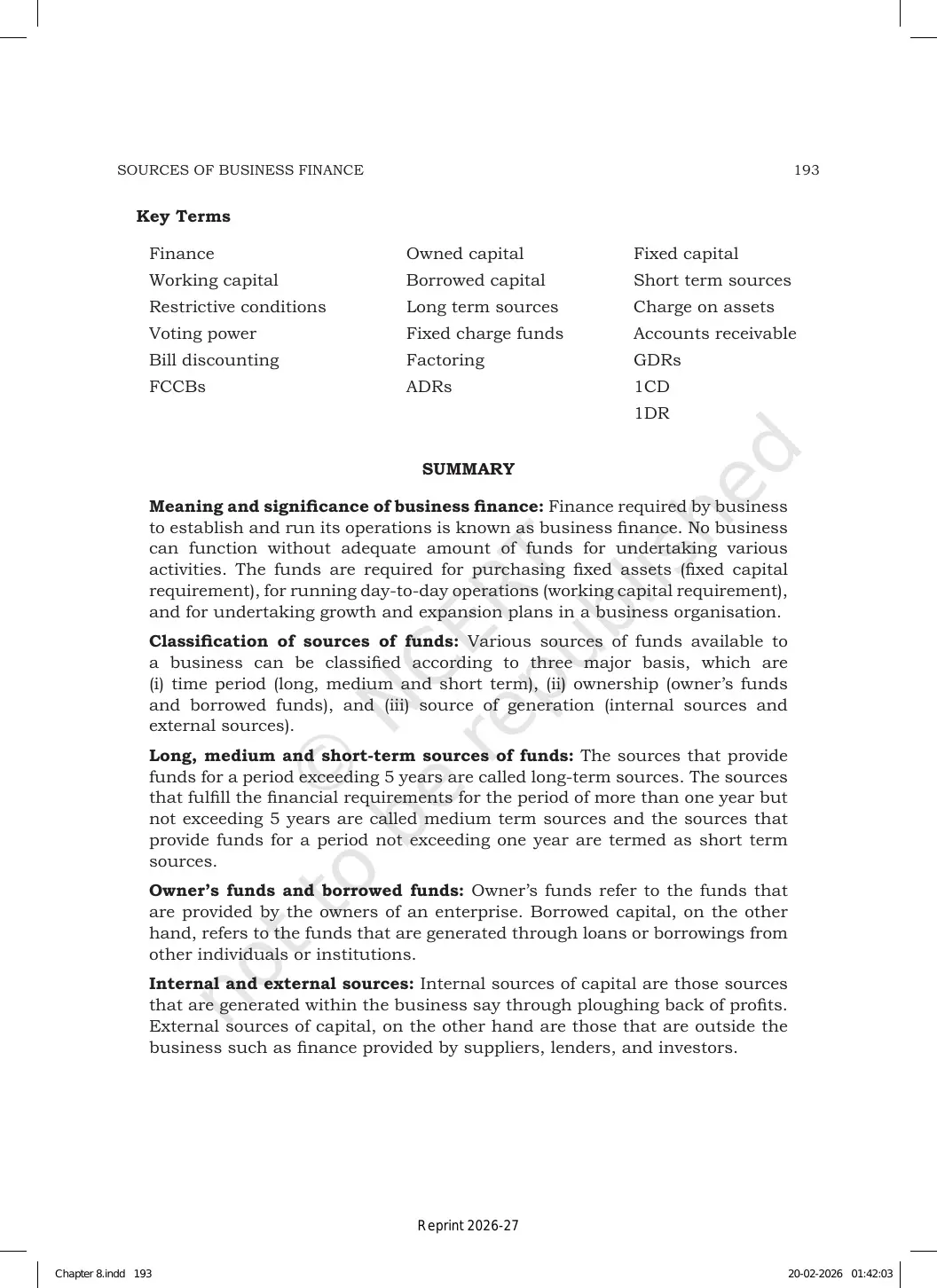
NCERT uses three bases of classification. By period, funds may be short term, medium term or long term. By ownership, they are owners' funds or borrowed funds. By generation, they are internal or external sources.
The same source can appear in more than one classification. Equity shares are long-term, owners' and external funds. Retained earnings are long-term, owners' and internal funds.
Owners' Funds and Borrowed Funds
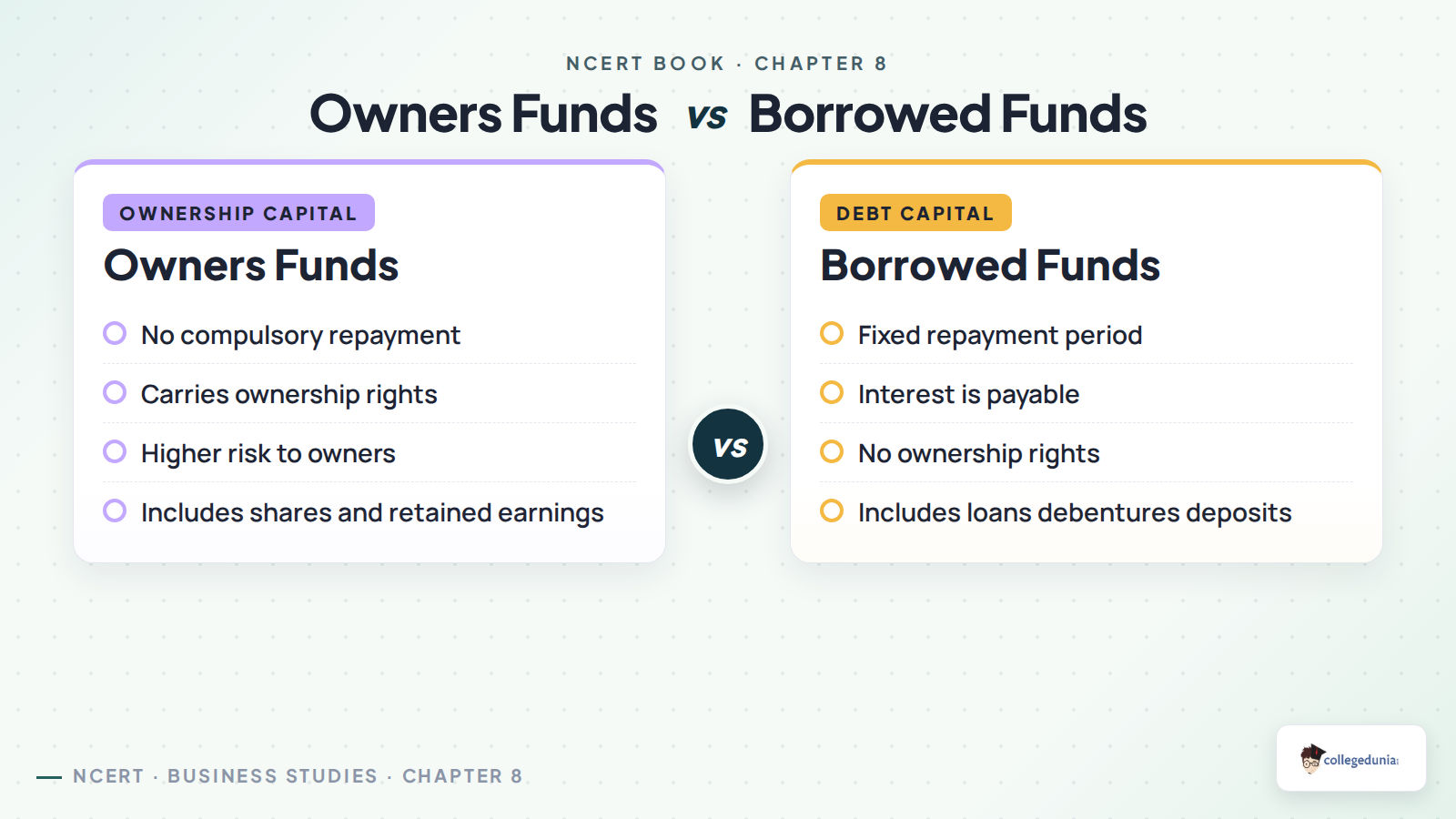
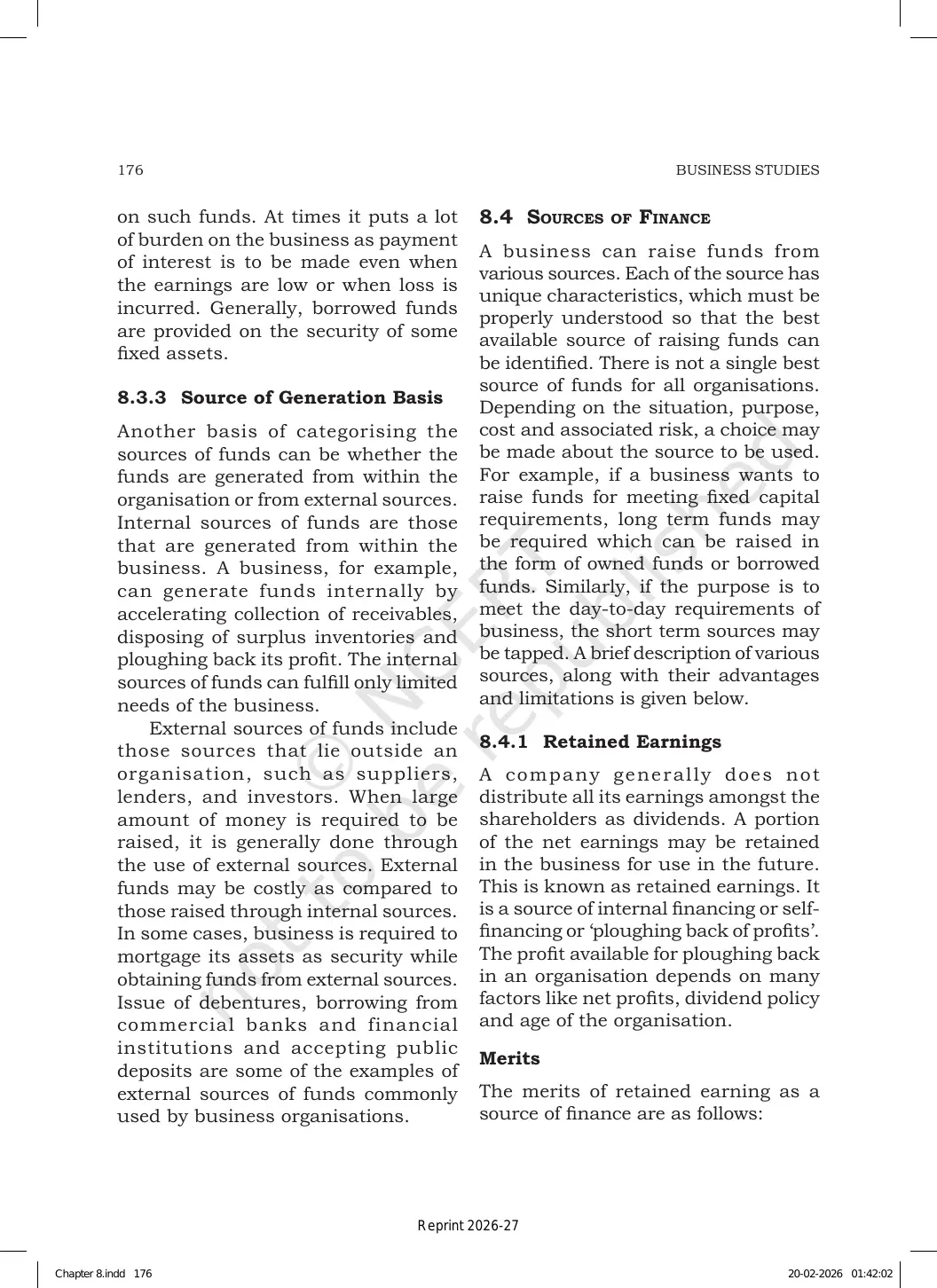
Owners' funds remain invested in the business and carry ownership rights. Equity shares, preference shares and retained earnings fall in this group. They create a stable capital base, but may dilute control or involve a higher expected return.
Borrowed funds must be repaid after an agreed period. Interest is normally payable regardless of profit. Debentures, loans, public deposits and trade credit are common examples. Debt does not give lenders ownership rights, but excessive borrowing raises financial risk.
Equity Shares and Preference Shares
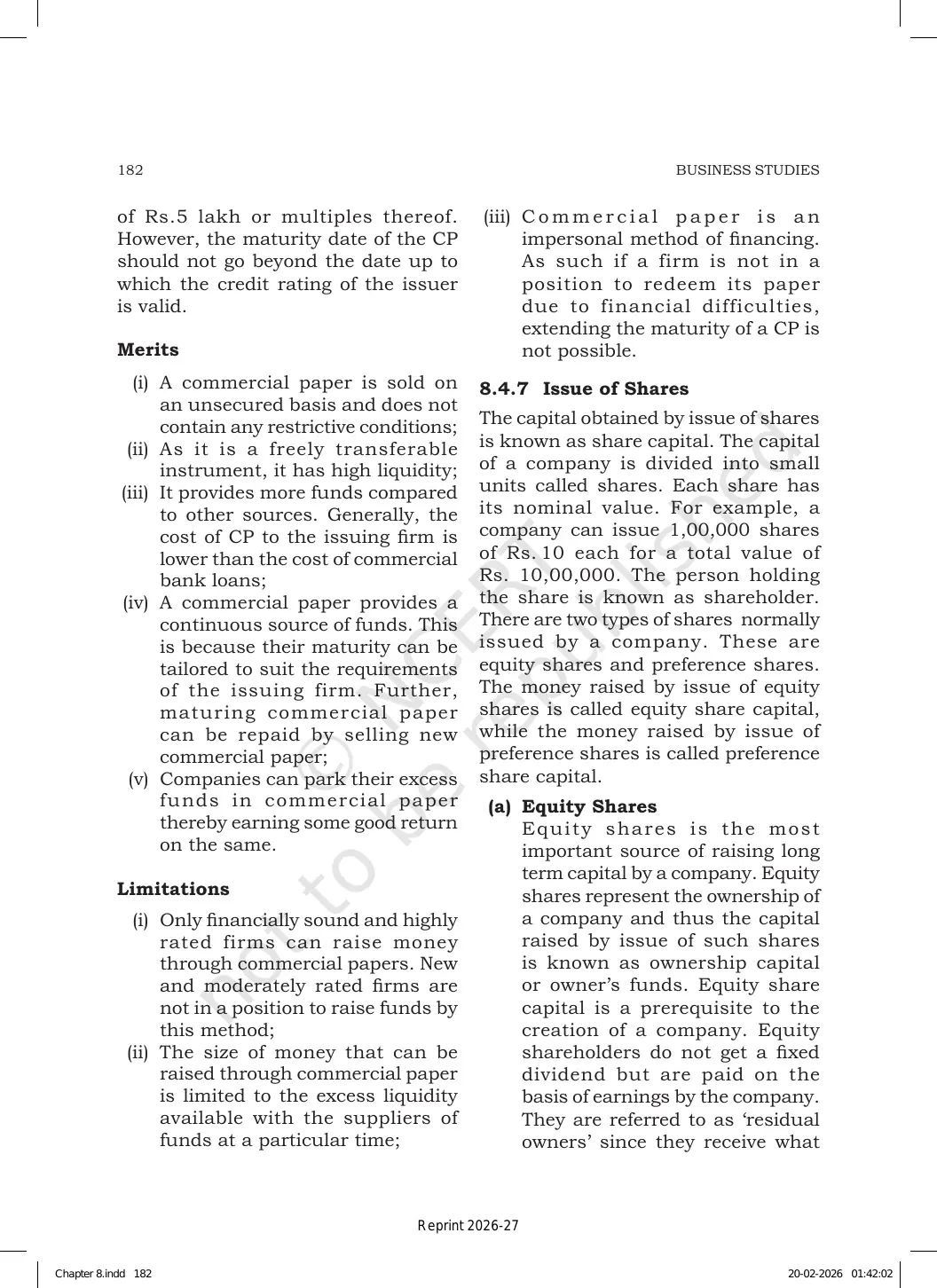
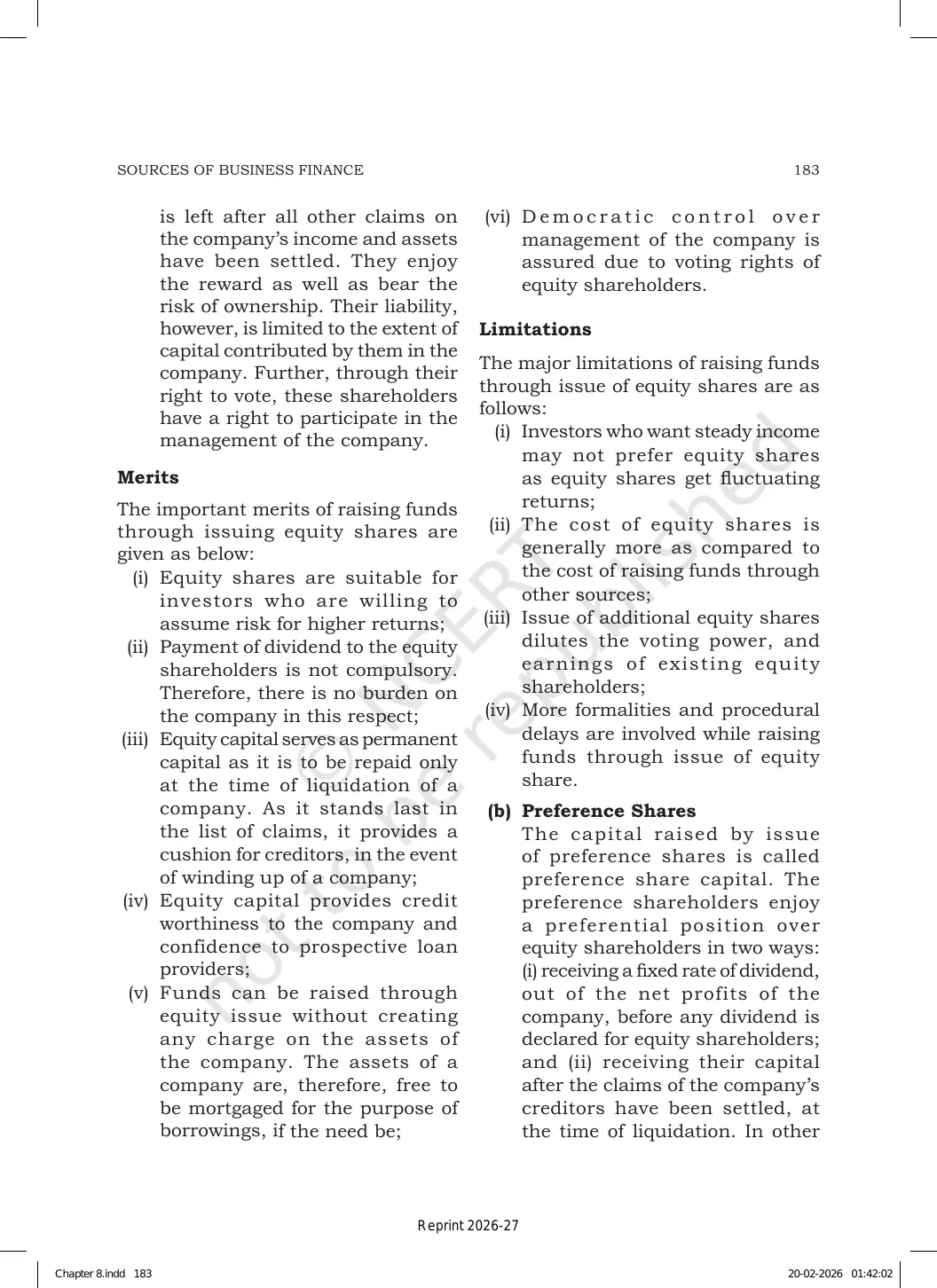
Equity shareholders are the owners of a company. They normally have voting rights and receive dividends after other claims are met. Equity capital has no fixed repayment date, so it supports long-term stability. Its main drawback is possible dilution of control.
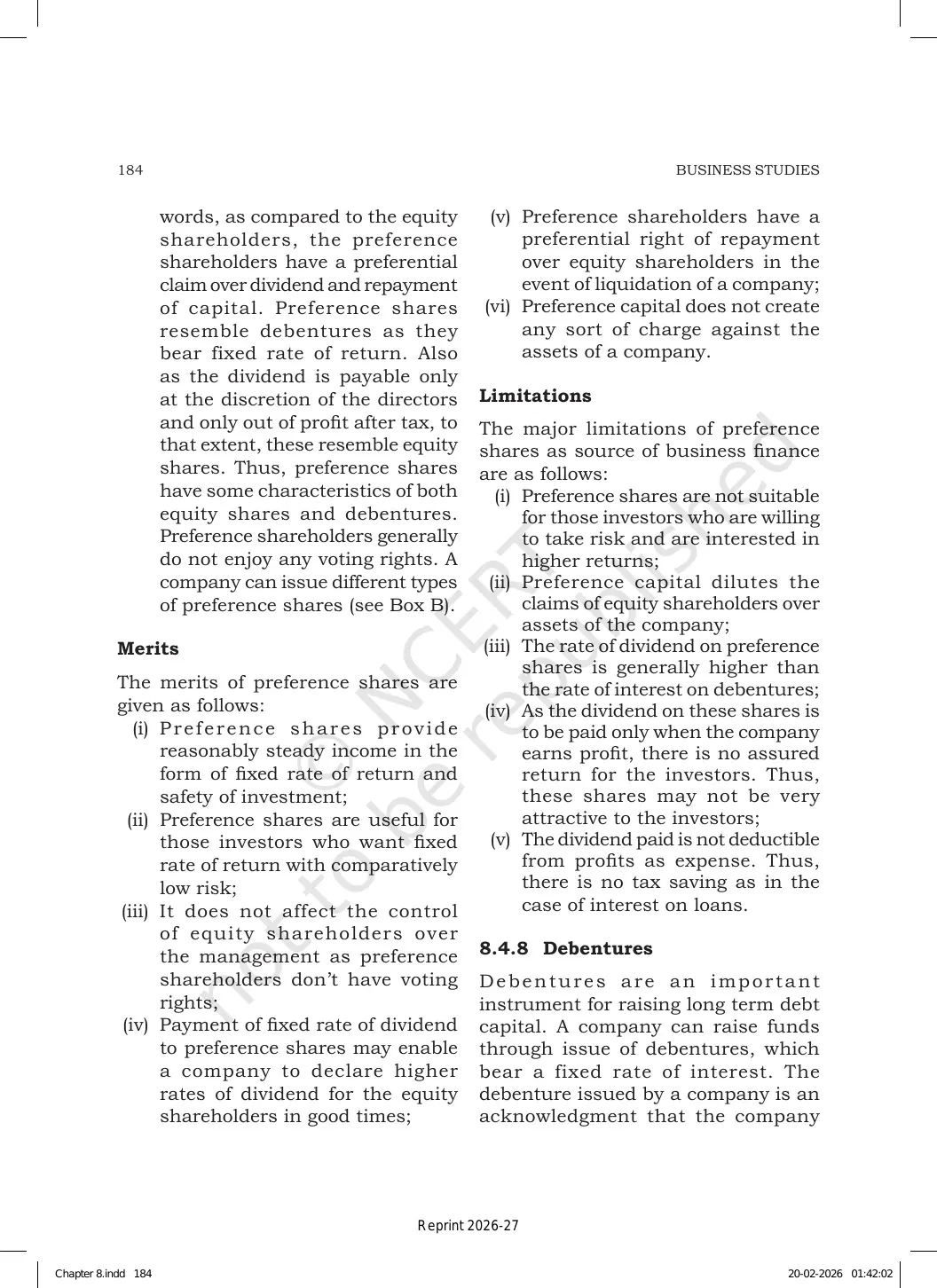
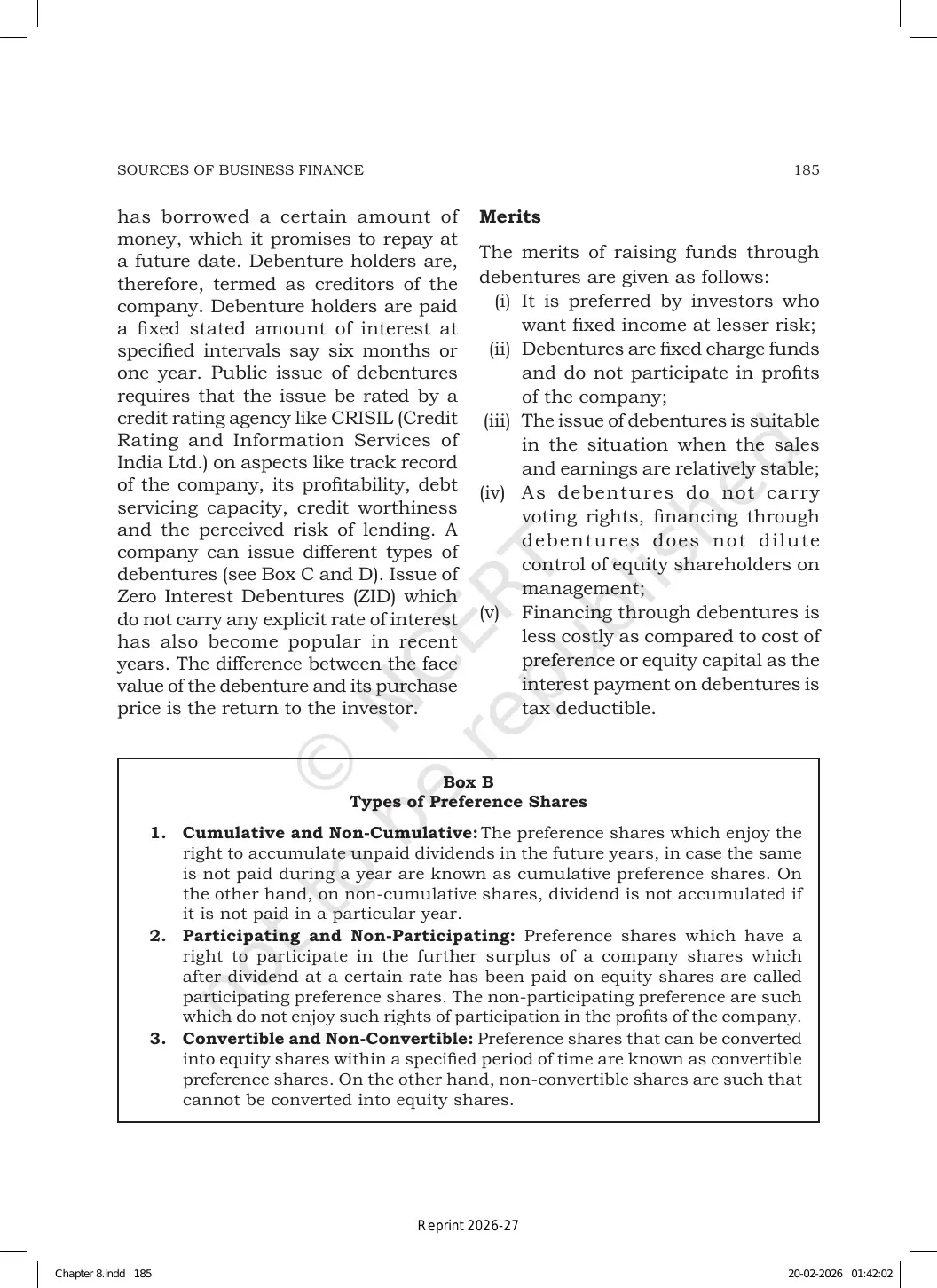
Preference shareholders receive a fixed dividend before equity shareholders and have priority when capital is repaid. They usually have limited voting rights. Preference shares combine selected features of ownership capital and fixed-return finance.
Retained Earnings and Debentures
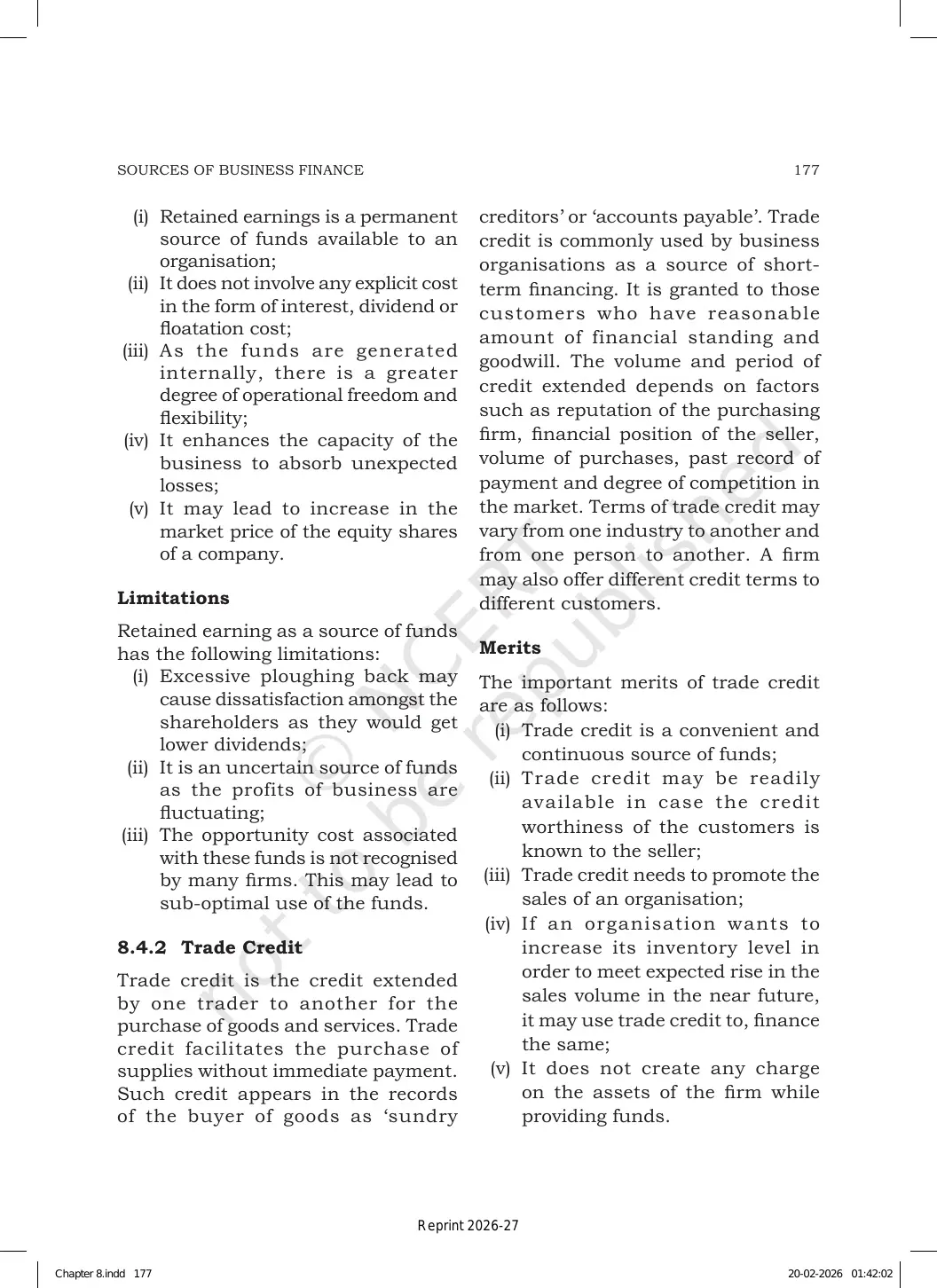
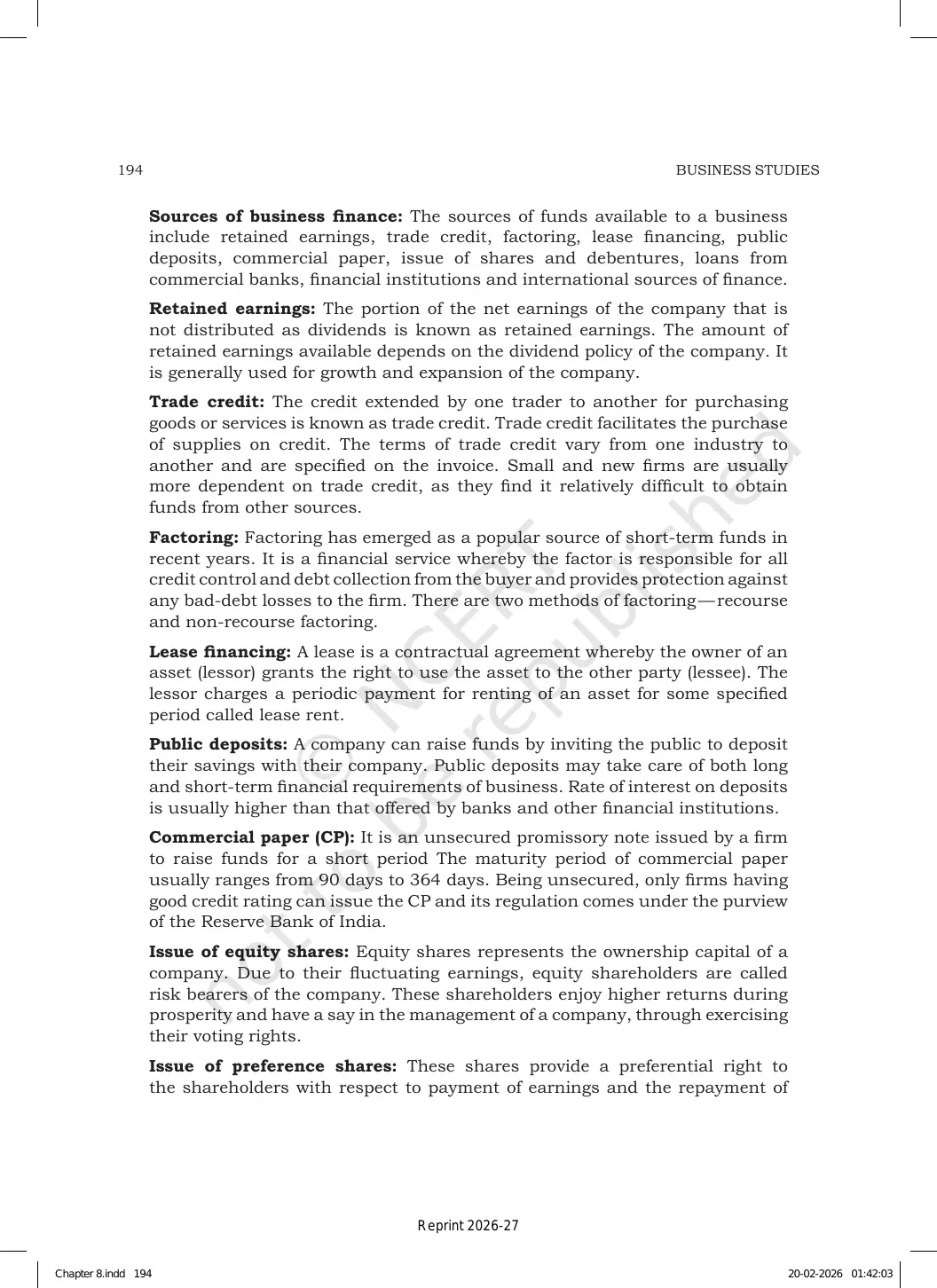
Retained earnings are profits kept in the business instead of being distributed as dividends. This source has no flotation cost and does not create a repayment obligation. However, it depends on profit and may disappoint shareholders who expect dividends.
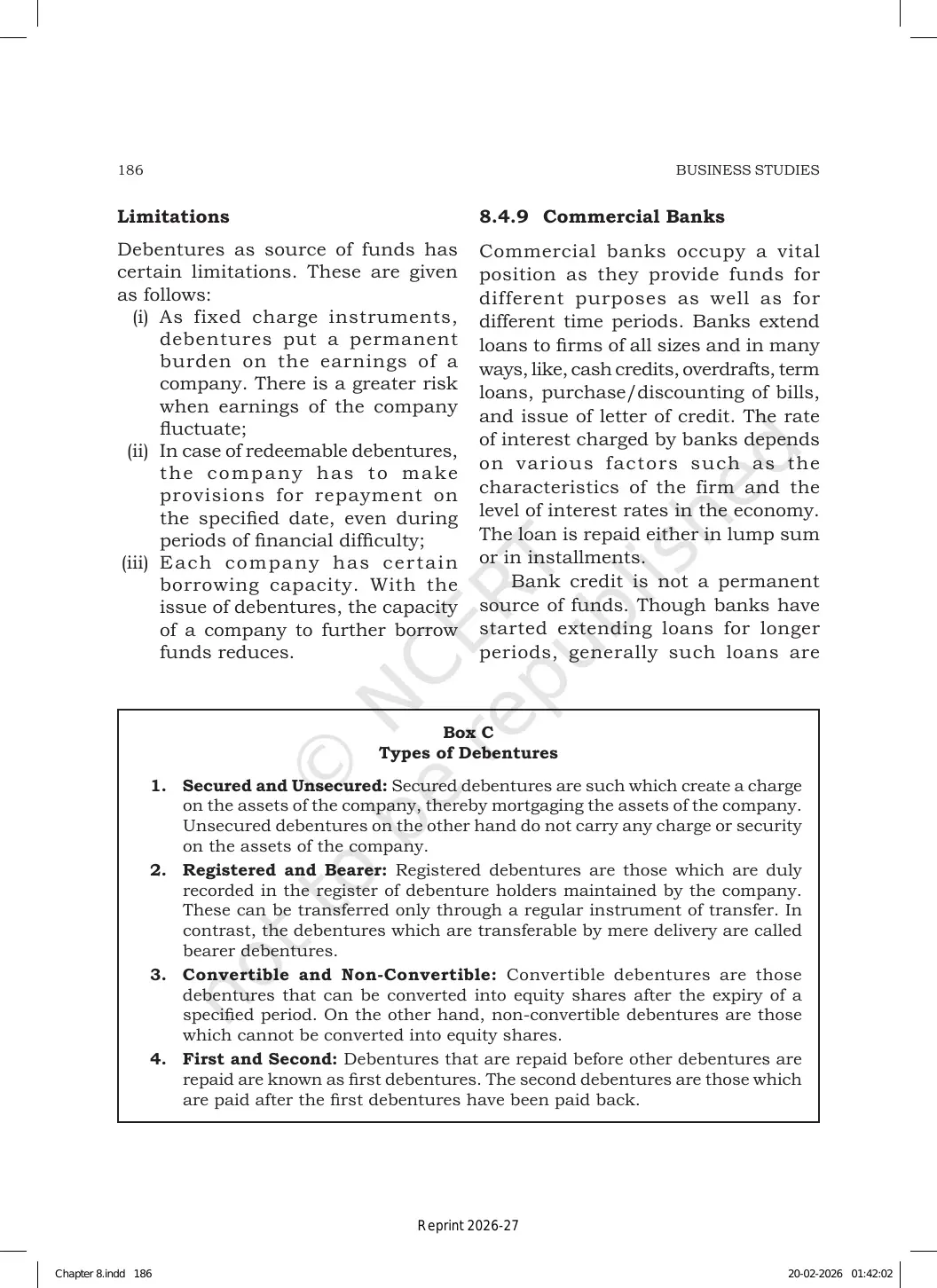
Debentures acknowledge a company's debt. Debenture holders receive a fixed rate of interest and do not become owners. This source can preserve shareholder control, yet it adds a compulsory interest and repayment burden.
Public Deposits, Trade Credit and Factoring
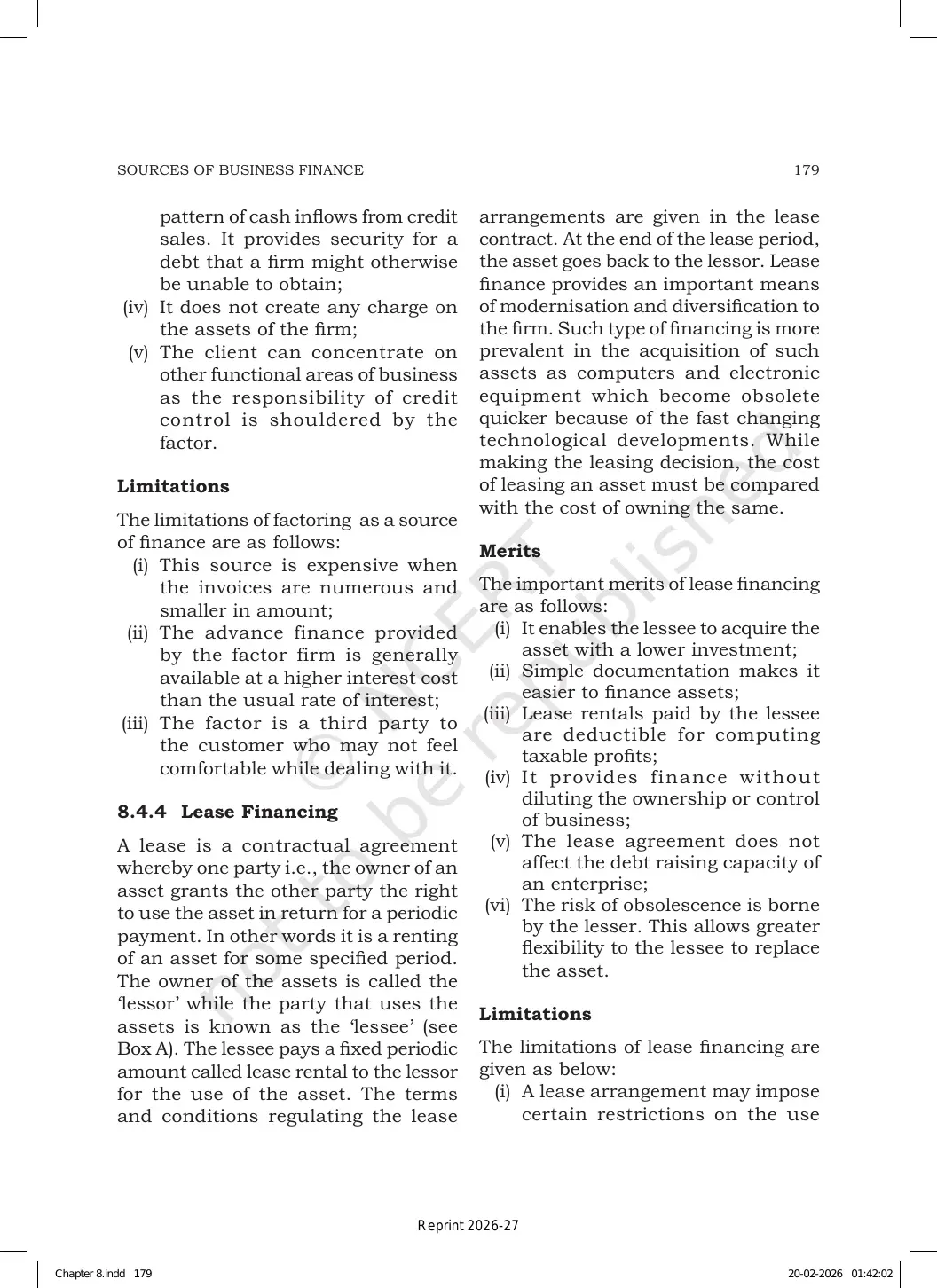
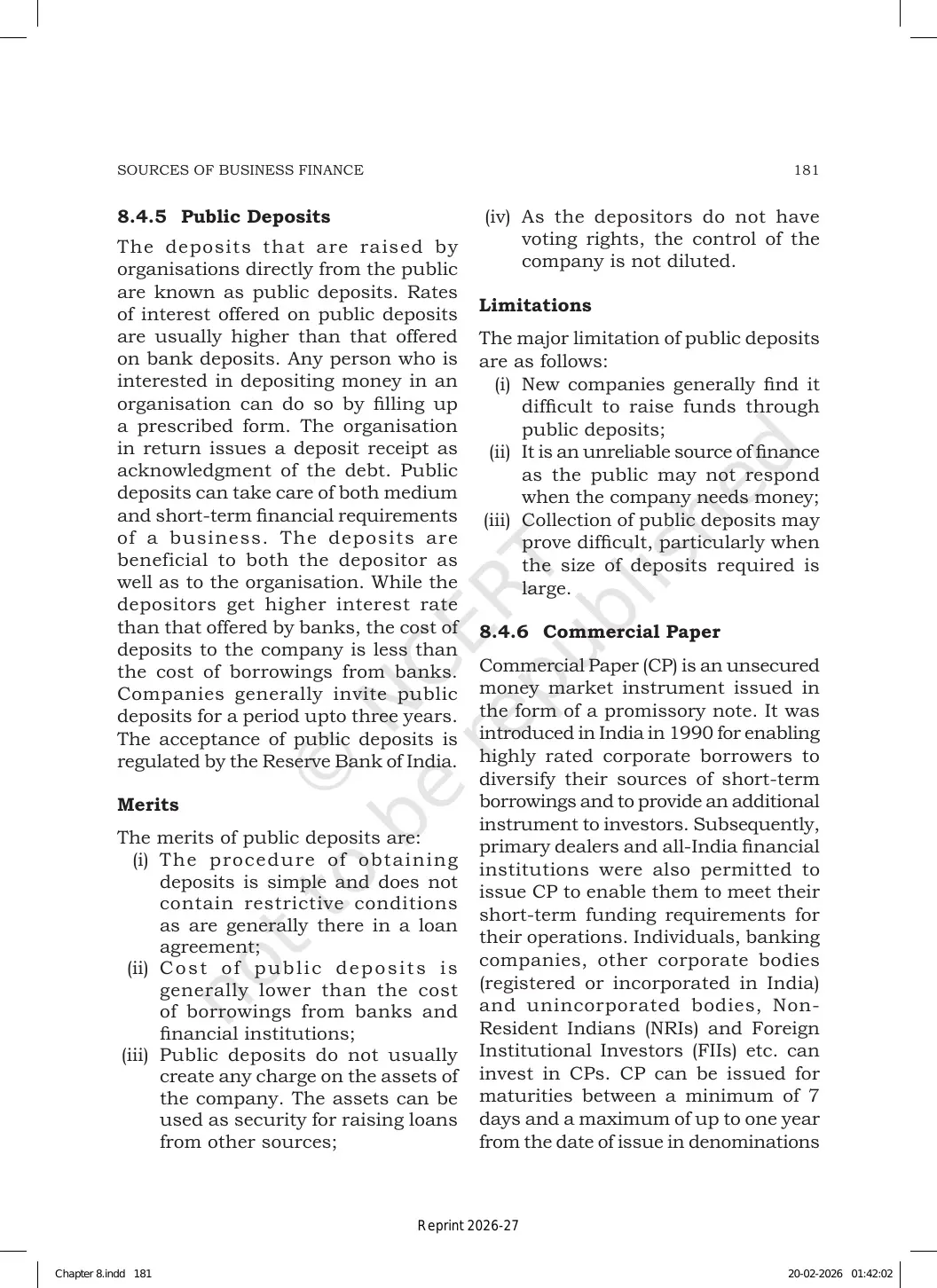
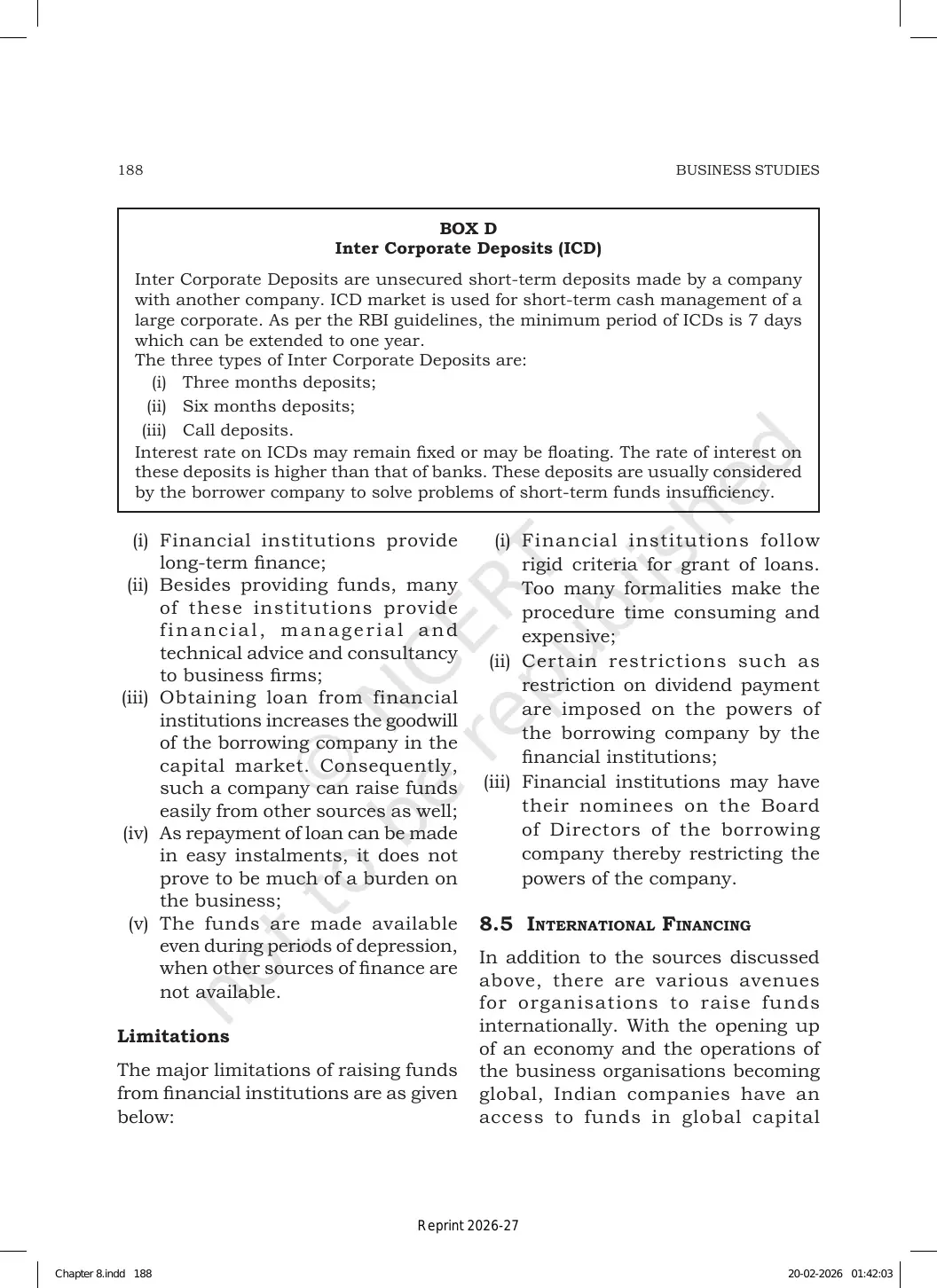
Companies may invite deposits directly from the public for a stated period. Public deposits can be simpler than a bank loan, but their amount and renewal depend on public confidence. They are regulated and cannot be treated as permanent capital.
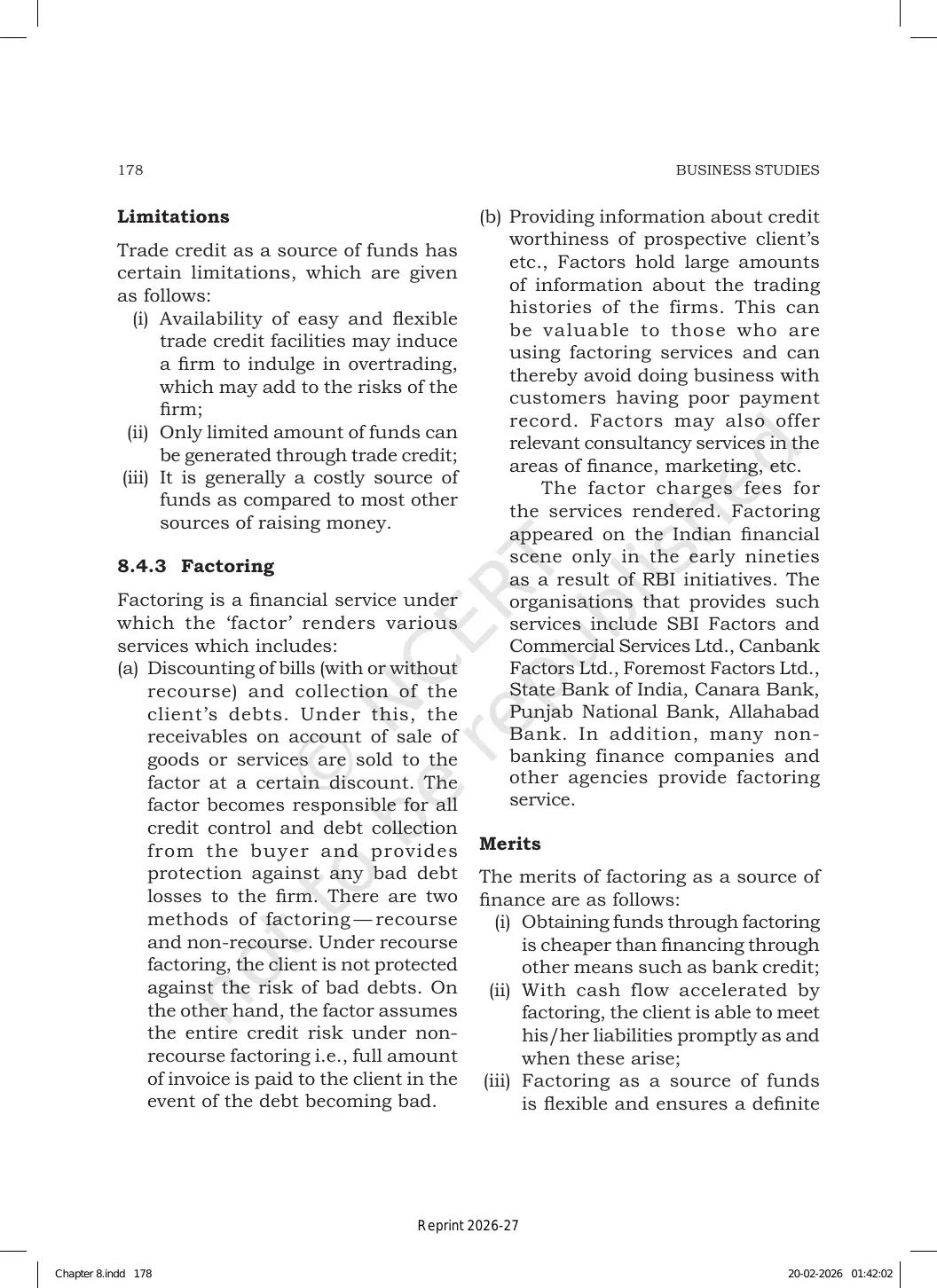
Trade credit arises when a supplier allows a buyer to purchase goods now and pay later. It supports routine working-capital needs. Factoring goes further: a factor manages or purchases receivables and may provide collection services and immediate cash.
Commercial Banks and Financial Institutions
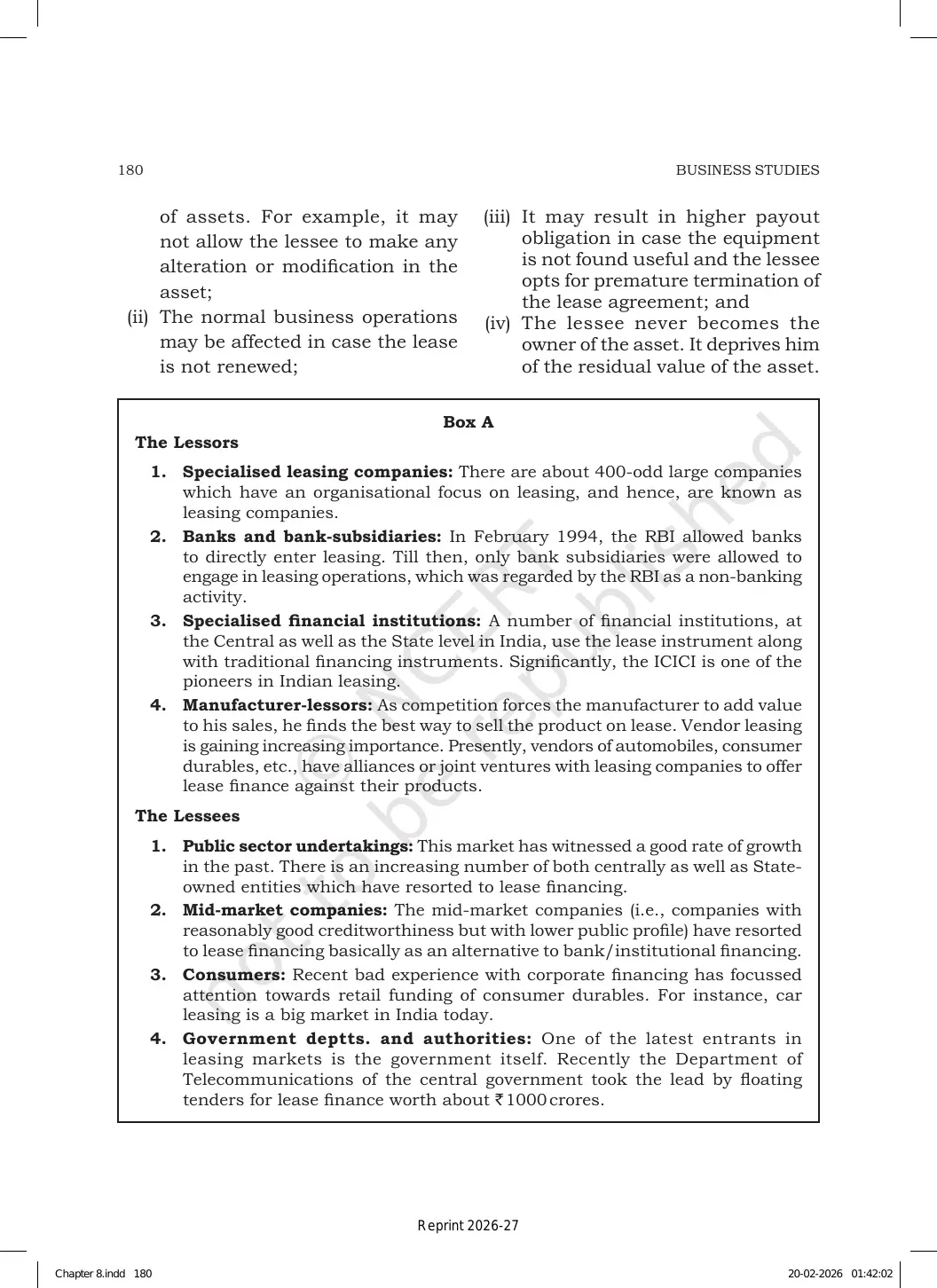
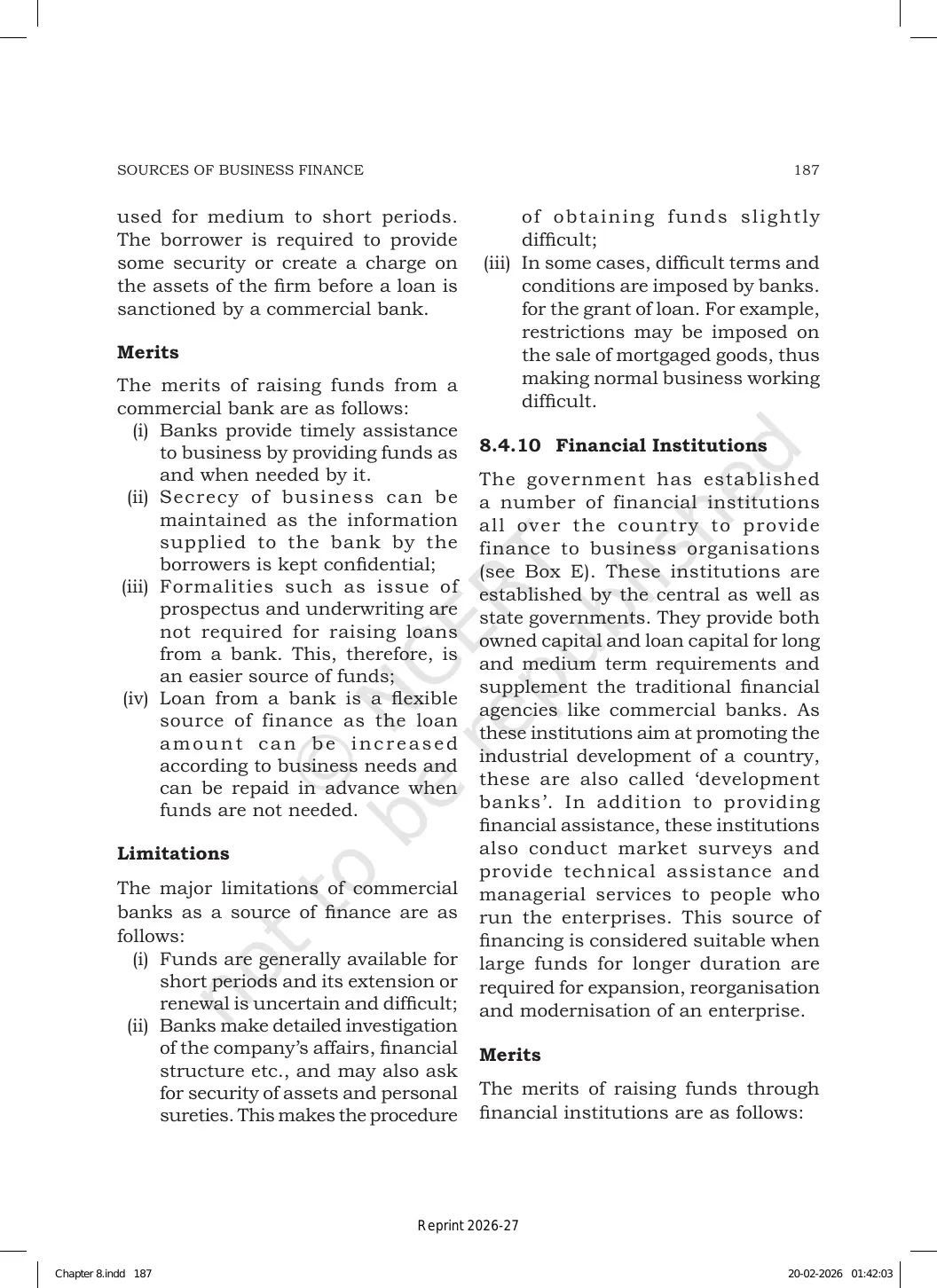
Commercial banks provide overdrafts, cash credit, term loans and other facilities. They can serve short-term and medium-term needs, though security and repayment conditions may apply. Interest cost changes with the facility and the borrower's risk.
Specialised financial institutions support industrial development through medium-term and long-term assistance. Their help may include loans, guarantees and technical guidance. The application process can take time because the institution examines the project's viability.
Choosing a Suitable Source of Finance
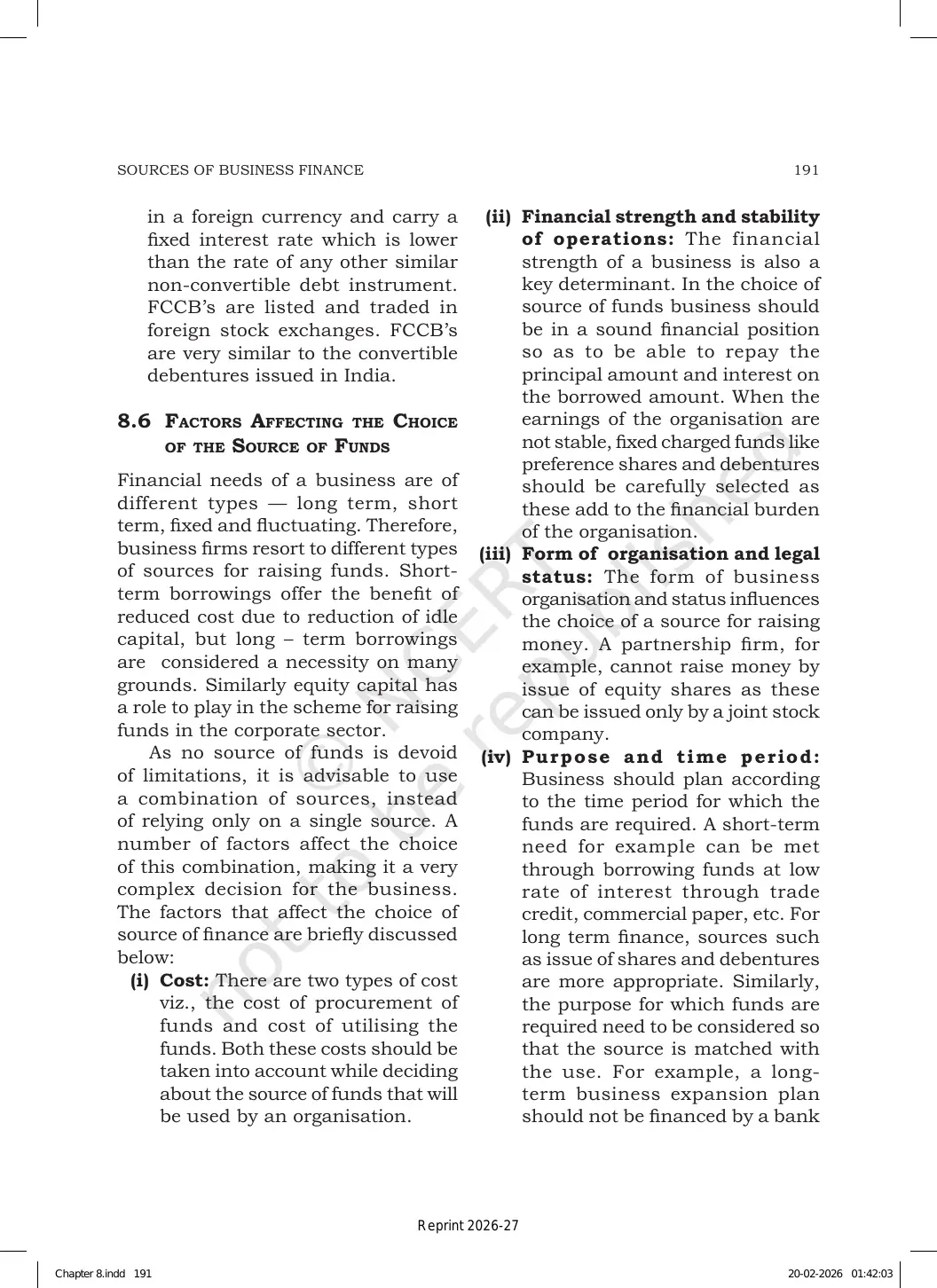
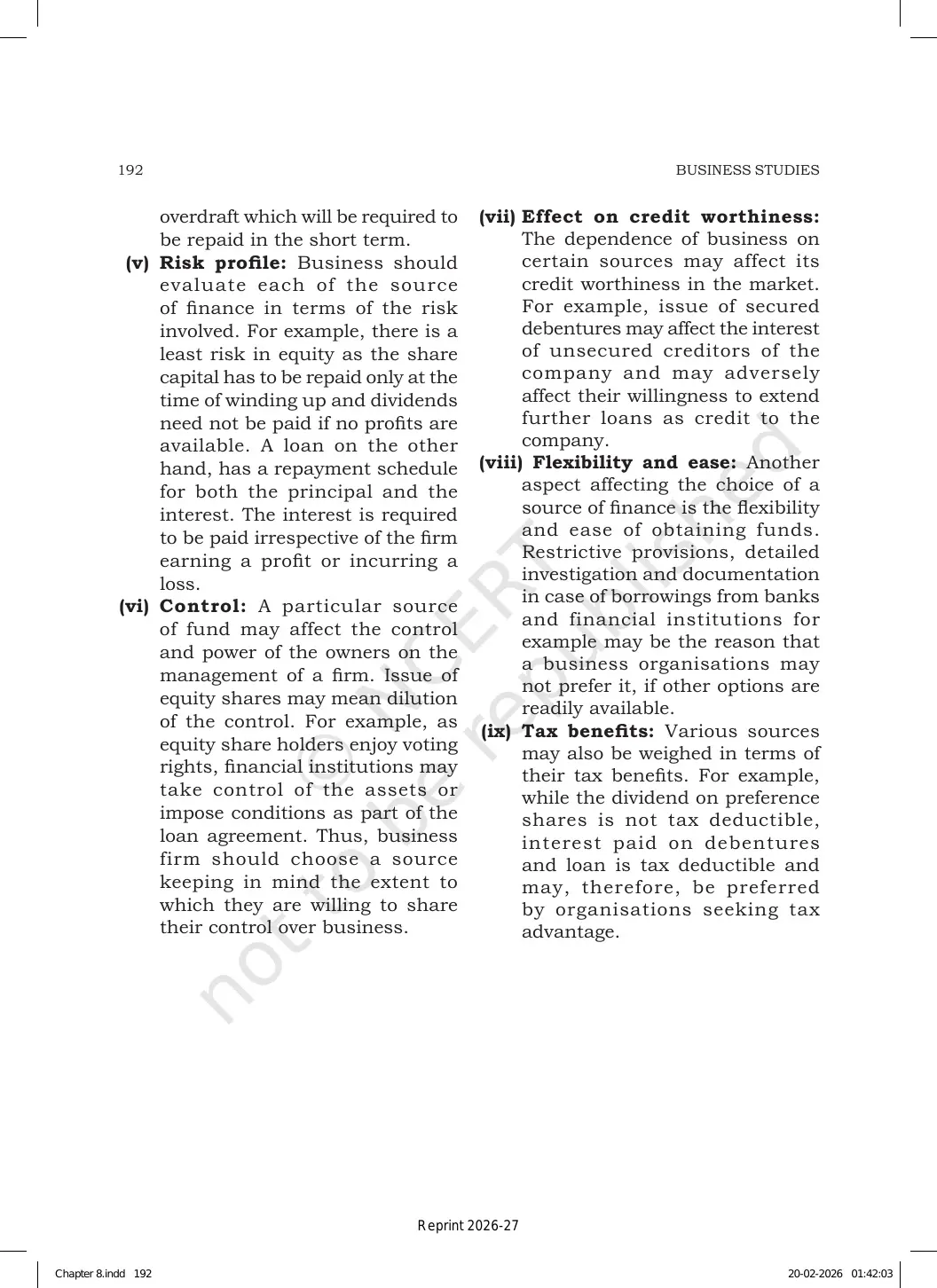
No single source is best for every business. Managers compare cost, risk, repayment period, control, flexibility, tax effects and the firm's credit position. A permanent asset should not depend only on finance that becomes due in a few months.
- Match the funding period with the life of the asset or need.
- Compare the total cost, including interest and issue expenses.
- Check how the choice affects control and voting power.
- Keep repayment commitments within expected cash flow.
How to Study Sources of Business Finance
Read the official chapter once to understand the classifications. Next, make a table with columns for meaning, period, ownership, merits and limitations. Practise case-based questions by identifying the business need before choosing a source.
- Learn one example for every classification.
- Compare equity shares, preference shares and debentures.
- Revise trade credit, factoring and bank credit together.
- Use cost, risk and control as the final selection test.
Related Class 11 Business Studies Chapter 8 Resources
| Resource | Use it for |
|---|---|
| Chapter 8 NCERT Solutions | Textbook question answers |
| Chapter 8 Notes | Fast concept revision |
| Chapter 8 Handwritten Notes | One-shot recall |
All Class 11 Business Studies NCERT Book Chapters
| Chapter | NCERT Book PDF |
|---|---|
| Chapter 5 | Emerging Modes of Business |
| Chapter 6 | Social Responsibilities of Business and Business Ethics |
| Chapter 7 | Formation of a Company |
| Chapter 9 | MSME and Business Entrepreneurship |
Sources of Business Finance NCERT Book FAQs
Ques. What is business finance?
Ans. Business finance is the money required to establish, operate and expand a business.
Ques. What are owners' funds?
Ans. Owners' funds are capital supplied by owners through shares or retained profit and normally carry ownership rights.
Ques. How are borrowed funds different from owners' funds?
Ans. Borrowed funds require repayment and interest but do not give lenders ownership rights.
Ques. What is trade credit?
Ans. Trade credit allows a business to buy goods or services from a supplier and pay at a later date.
Ques. Which factors affect the choice of finance?
Ans. Cost, risk, period, cash flow, control, flexibility and tax effects influence the choice.



Comments