



Content Curator
A cropping pattern is the distribution of the amount of land that is being farmed for various crops throughout time. This describes the timing and arrangement of crops on specific land. Changing the cropping pattern would have the following impacts:
- The modifications in terms of the proportion of land under the purview of various kinds of crops.
- The changes in the sequence pertaining to space and the time related to the crops
The factors influencing the cropping pattern in India include the type of soil, weather, precipitation, technology and temperature.
Also check: Difference Between Micronutrients and Macronutrients
Key terms: Crops, Land, Patterns, Soil, Cropping, Mono cropping, Mixed cropping, Intercropping, Crop Rotation
What are cropping patterns?
[Click Here for Sample Questions]
Cropping pattern refers to the proportion of land cultivated for various crops anywhere at a point in time. Cropping pattern is a dynamic concept that changes through time and place.
- Cropping patterns differ from one location to another. It is determined by the terrain, topography, slope, temperature, amount and frequency of rain, soils, and water availability for irrigation.
- The perception and assessment of the environment are also essential when deciding which crop should be grown in a certain place.
Read More:
Types of Cropping Patterns
[Click Here for Previous Year Questions]
Different kinds of cropping patterns are taken into consideration with the objective to yield the maximum number of crops. There are various kinds of cropping patterns such as mono-cropping, mixed cropping, intercropping and crop rotation.
Monocropping
The concept of monocropping implies the growth of one kind of crop in a specific period. The same crop is planted every year without resting the soil in which crops are planted. Maize, soybeans, and wheat are three typical mono-cropped crops. Monocropping is also called continuous cropping.
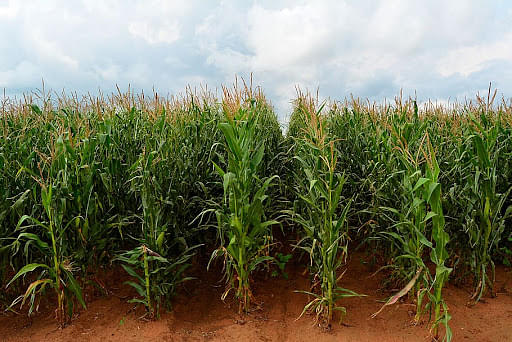
Maize cropping with the use of Mono cropping
Advantages of Monocropping
Monocropping allows farmers to save time, money, and energy by eliminating the need for further land preparation. Monocropping has the following advantages.
- After the first growing season, little labour is necessary for this cropping method; all work is simple.
- Monocropping allows the farmer to grow only one particular crop.
- The farmers, through the practice of monocropping, can invest their money in machinery which is particularly designed for one specific crop.
- It also enables the farmers to purchase high-yield seeds which generate large volumes of the particular crop at the time of harvest.
- Monocropping enables farmers to earn more significant income by growing staple crops like wheat, corn, and soy.
However, from the point of view of the environment, monocropping can prove to be very harmful.
Disadvantages of Monocropping
Monocropping has the potential to be highly harmful to the environment. Planting monoculture crops may appear to farmers and gardeners to be a simple way to get the job done, but the negative impacts of monocropping can lead to a lot of complications later on.
- Monocropping can lead to depletion of the soil, as the specific type of crop will take away all the nutrients from the soil.
- Monocropping can cause deforestation under specific conditions.
- The farmers are forced to use fertilizers due to the lack of nutrients in the soil which further disturbs the natural balance of the soil.
- If the natural balance of the soil is hurt, it can lead to a variety of environmental problems including pollution.
- Monocropping leads to a reduction in crop diversity which proves to be a great loss of biodiversity as well as makes the crop vulnerable once it is subjected to a particular pest or some disease.
Mixed cropping
The growing of two or more crops in agricultural land in a simultaneous manner is known as mixed cropping. Such crops being grown in a simultaneous manner would differ in terms of the times pertaining to maturity and the requirements related to water.
These are the essential elements for mixed cropping.
- There should be a tall crop and a dwarf crop growing together.
- The requirements related to nutrients should be less for one crop in comparison to the other.
- One of the crops should bear deep roots and the other should have shallow ones.
- It aids in the minimization of risk pertaining to the failure of one type of crop and acts as insurance against the failure of a crop as a result of unfavourable conditions in terms of climate.

Mixed cropping of wheat and maize
Advantages of Mixed Cropping
Mixed cropping improves soil fertility and promotes the growth of soil microorganisms. It has the following advantages.
- The method has been used successfully to enhance small farmer profit and food production while lowering the risk of total crop failure since even if one crop fails, others in the field may still yield.
- Mixed cropping also needs fewer nutrient inputs, such as fertiliser, pruning, pest management, and irrigation, and is thus usually more cost-effective.
- Mixed cropping has been proven to create a diversified environment for animals and beneficial insect species such as butterflies and bees by improving habitat and species richness.
Disadvantages of Mixed Cropping
In mixed cropping, two too many distinct plant species or cultivars are grown together. Because of the complex relationships between the various plants, the farmer may encounter a number of issues. Following are some of the disadvantages of mixed cropping.
- It becomes very difficult for the farmers to apply fertilizers to crops individually.
- It is nearly impossible for the farmers to thresh and harvest crops separately.
- If the incorrect combinations are used, soil nutrients may be drained far more quickly.
- It is difficult to use mechanised farming since the entire region is cultivated.
- Some crops may be severe competitors for water, sunshine, and space resources.
- Some insect pests may spread more broadly because they constantly have food available to them.
Intercropping
Intercropping is a multi-cropping method that involves cultivating two or more crops close together. The most common purpose of intercropping is to increase production on a given area of land by utilising resources or natural processes that a single crop would not use.
Types of intercropping
- Row intercropping- It is the arrangement of component crops in alternating rows. It paves the way for optimization in terms of usage of the space of land and the weeds to be suppressed at the initial phases of the primary crop.
- Strip intercropping- The growing of two or more crops in wide strips in order to be managed separately is known as strip intercropping. However, such crops are so close that they can interact. The method is identical to row cropping, but the areas of land are large enough to allow for machine actions and independent cultivation.
- Relay Intercropping- After one crop has matured, farmers who use this strategy plant one or two more varieties on the same plot of ground at various times. Although relay intercropping eliminates temporal overlap in harvesting distinct species, the second crop must be shade tolerant of the first. Cotton and corn, as well as chickpeas and upland rice, are examples of relay cropping systems.
- Alley cropping- The alley cropping method involves planting crops between trees, shrubs, or hedges to form lanes. Alley cropping has the following characteristics. With their strong root systems, higher plants shield lower plants from winds and provide shade from additional sunshine, as well as prevent soil erosion.

Row cropping pattern
Advantages of Intercropping
Intercropping has major advantages over monoculture farming in terms of increasing yields and making better use of land and resources. The following are the most basic advantages of intercropping:
- Reduces insect/mite pest populations due to crop diversification.
- Plant diseases are reduced. Because other crops (from a different family group) are planted in between, the space between plants of the same species grows.
- Reduces slope erosion and topsoil protection, particularly with contour strip cropping.
- More helpful insects are attracted, especially when blooming crops are included in the cropping system.
- Reduces the expense of weed control labour. A combination of crops frequently provides better soil covering, leaving less room for weed growth.
Read More: Nutrient Management
Disadvantages of Intercropping
Although, intercropping is very beneficial to agriculture. It still has some drawbacks. Some of the disadvantages of intercropping are.
- The process of intercropping is expensive and complex.
- If one crop goes bad, all the crops will go bad which can lead to a significant loss for the farmer.
- Yield declines when crops' competitive abilities differ.
- Improved techniques cannot be used effectively.
- Higher amounts of fertiliser or irrigation water cannot be used effectively since the response of the intercropped to these resources varies.
- Harvesting is a challenging task.
Crop Rotation
[Click Here for Sample Questions]
The growing of various kinds of crops on a particular land successively as planned in advance is known as the pattern of crop rotation. The crops are categorized as rotation for one year, two years and three years, taking account of their duration accordingly. In order to ensure the extension of the fertility of the soil, the program of crop rotation involves legumes. The crops whose requirement is high in terms of the level of fertility are generally grown after legumes. The crops whose requirement is low in terms of inputs are mainly grown after those whose requirement is high in terms of inputs.
Planning a Crop Rotation
When planning a crop rotation, there are various elements that must be considered. Planning a successful rotation necessitates taking into account both fixed and changeable production factors, such as market, farm size, labour supply, climate, soil type, growth methods, and so on.
Furthermore, crop rotation must examine how one crop will leave the land for the subsequent crop and as well as how one crop might be seeded with another crop.
Read Also: Cattle Farming
Advantages of Crop Rotation
Each agricultural farm, just like every individual agricultural plot, has distinct characteristics. Each crop rotation is unique to that agricultural production system and is based on the capability of the land and the potential of the farmers. The following benefits from the use of crop rotation are the listed advantages of crop rotation.
- Maintenance of the fertility of the soil for a long period.
- Prevention of pests and weeds being grown.
- No requirement for many chemical fertilizers.
- No alteration in terms of the physical and chemical nature of the soil.
- Diversification and Reduced Cost of Production.
Disadvantages of Crop Rotation
Crop rotation is successful when a different crop is planted each season. As a result, the farmer is unable to focus exclusively on one type of crop. The farmer might not be able to plant a single crop on a wide scale for a while due to potential consequences on the soil.
- Crop rotation requires a lot of investment of money to purchase different seedlings of the different types of crops which are to be planted.
- The farmer will not be allowed to harvest one single crop on a large scale over a long period of time. The farmer will have to keep changing the crops.
- The farmer must have knowledge of all kinds of crops which is very challenging.
- Improper Implementation Can Cause Harm.
- The Difference in Growing conditions
Also Check:
| Concept Related Topics | ||
|---|---|---|
| Mutation | Ganga action plan | Endangered Species |
| Montreal Protocol | Environment Protection Act 1986 | Homeostasis |
Things To Remember
- The cropping pattern is the amount of land that is available for the cultivation of various crops at different times.
- In order to produce the greatest amount of crops, several cropping patterns are taken into account.
- Monocropping refers to the cultivation of only one type of crop during a specified time period.
- Mixed cropping is the practice of jointly growing two or more crops on one agricultural plot.
- Intercropping is the practice of cultivating two or more crops together on the same agricultural land in a planned arrangement.
- Crop rotation is the practice of planting diverse crops on a specific land area in succession as planned ahead of time.
Read Also: Improvement in Food Resources
Previous Year Questions
- BOD stands for…? [JEE Mains 2016]
- Biochemical Oxygen Demand (BOD) value can be a measure of water pollution…? [JEE Mains 2016]
- Which is wrong with respect to our responsibility as a human being to protect…? [JEE Mains 2019]
- Ozone is destroyed by CFCs in the upper stratosphere Ozone holes increase the…? [JEE Mains 2019]
- Addition of phosphate fertilisers to water bodies…? [JEE Mains 2015]
- A water sample has ppm level concentration of the following…? [JEE Mains 2019]
Sample Questions
Ques. What is a cropping pattern? (2 mark)
Ans. A cropping pattern is defined as the area of land under cultivation at various times. In India, factors like average rainfall, temperature, climate, technology, and the kind of agricultural soil are primarily responsible for determining the cropping pattern. Cropping patterns differ in order to maximise yield.
Ques. what are the benefits of Mixed cropping? (2 marks)
Ans. Mixed cropping is a low-risk method. For the reasons given below, farmers have adopted mixed cropping.
- A Variety of Produce
- Reduced Risk Of Crop Failure
- Enhances the Soil's Fertility
- Weed Control
- Pest management
- Improvement in Crop yield
Ques. what are the limitations of Intercropping? (3 marks)
Ans. Some limitations of Intercropping are:
- Intercropping is not usually appropriate for mechanised farming.
- It takes more time since it demands greater focus and calls for skilled management that is intense.
- Planting, weeding, and harvesting are less efficient, which may increase labour expenses for these tasks.
- Careful cultivar selection, suitable spacing, correct spacing, etc. are all components of sound planning, which includes thoughtful cultivar selection, suitable cultivar selection, suitable spacing,
- The ability to plan ahead for the planting, cultivation, fertilisation, spraying, and harvest of many crops in the same area is the main obstacle to the adoption of intercropping systems.
Ques. What is the importance of cropping patterns? (5 mark)
Ans. The cropping pattern improves the yield from a single seasonal harvest. Because of the combination of diverse crop kinds, one receives a diversity of crops after each season and a general surplus harvest.
- Cropping patterns allow the land to renew and revitalise its self-nutrients without the need for additional nutrients to be applied through the usage of fertilisers. Allowing the ground to go barren for a season allows the earth to replenish soil nutrients lost due to absorption by plants harvested the previous season.
- Cropping Pattern aids in the prevention of soil compaction, which improves the physical condition of the soil. Crop rotation enhances both soil structure and texture. This creates favourable circumstances for seed germination and root growth. Compared to other crops, some require less effort and equipment to cultivate.
- Cropping pattern in the distribution of effort and resources throughout the year, lowering crop production costs to some extent.
- Since the roots of the plants hold the top layer of soil together, cropping patterns lessen the impact of raindrops on the soil and water-related erosion in general. Trees placed beside crops in fields also help to reduce soil erosion.
Ques. what factors affect the cropping patterns? (2 mark)
Ans. The following factors affect the various kinds of cropping patterns:
- The level of agricultural productivity is determined in part by the cropping patterns. This is a representation of the local agriculture economy.
- Changes in agrarian policy, the availability of agricultural inputs, and advancements in technology are having a negative impact on cropping patterns.
- Therefore, cropping patterns have a key role in enhancing soil fertility by raising crop yields. It guarantees both crop protection and nutrient accessibility for the crops.
Ques. What are the various kinds of cropping patterns? (5 mark)
Ans. The kinds of cropping patterns include crop rotation, mono-cropping, intercropping, mixed cropping and crop rotation. The main objective of such kinds of cropping patterns is to ensure an increase in productivity in terms of the yielding of crops.
- Monocropping is the agricultural practice of producing the same crop year after year on the same land in the absence of crop rotation. The three primary crops that are frequently cultivated utilising monocropping techniques are maize, soybeans, and wheat. Only the most profitable crops may be planted, and all of the farm's crops can be grown using the same seeds, pesticides, equipment, and growing techniques, potentially increasing farm profitability as a whole.
- Mixed cropping is a technique in which many crops are grown concurrently on the same plot of land. Example: Groundnuts with sunflowers, wheat and mustard, or wheat and grain. This aids in lowering risk factors and offers protection in the event that one of the crops fails.
- Intercropping is the practice of cultivating two or more crops concurrently on the same field in a certain arrangement. A few rows of one crop are followed by a few rows of the other crop. Example: Soybeans with maize.
- Crop rotation is the process of growing various crops on a plot of land in a planned succession is referred to as crop rotation, which is the practice of growing various crops on a plot of land in a planned succession. This practice is referred to as crop rotation.The type of crop to be grown after one harvest depends on the availability of moisture and irrigation facilities.
Ques. what are the three types of crop rotation? (5 marks)
Ans. The three types of crop rotation are:
One-year rotation
Crop rotation can be done for one year, depending on land availability. One crop would be planted for half of the year, and after harvest, the soil that meets the demands of another crop would be planted with the other crop for the remainder of the year.
- Planting maize and subsequently mustard is an example of a one-year crop rotation. Another example is the planting of rice first, followed by wheat.
Two-year rotation
The two-year rotation is similar to the one-year rotation, except that the crop planting rotation is two years and there are additional crop varieties available.
- A two-year crop rotation might include two, three, or four crops seeded during the course of the cycle. Following the harvest of the previous crop, the next crop's nutritional requirements should be met.
- A two-year rotation may involve planting maize, mustard, sugarcane, and fenugreek in succession, as well as maize, potato, sugarcane, and peas in succession.
Three-year rotation
A three-year rotation is a sequence of crops grown over a three-year period that fulfils all of the nutritional requirements of each crop.
- The crops will be grown one after the other on the same plot of land. The nutritional requirements of the following crop will be provided by the previous crops planted.
- A three-year crop rotation may involve planting rice, wheat, mung, and mustard in succession; sugarcane and berseem in succession; and cotton, oat, sugarcane, peas, maize, and wheat in succession.
Ques. How is a crop chosen for crop rotation? (2 marks)
Ans. The following should be done to choose a crop for rotation.
- Look into the potential moisture source. Is it raining or is there irrigation?
- Verify the condition of the soil's nutrients. After each harvest, take into account the soil's nutrient level.
- Assess the accessibility of resources like fertilisers, insecticides, machinery, and labour.
- Assess if the crop is being planted for a short or extended period of time.
- If required, check the marketing and processing facilities.
Ques. what are the advantages and disadvantages of Monocropping? (5 marks)
Ans. The Advantages and Disadvantages of Monocropping are
Advantages of monocropping
Monocropping allows farmers to save time, money, and energy by eliminating the need for further land preparation.
- After the first growing season, this cropping system requires little labour; all activities are basic.
- The farmer's management skills are aided by monocropping since they are required to continue farming on a certain plot of land and ensure that every season produces the greatest results possible.
- Since there is just one type of crop on the farm, fertiliser application will be relatively simple, and any method may be applied.
- It enables the employment of machinery in agricultural activities.
- Farmers also start to specialise as a result of it.
Disadvantages of monocropping
Monocropping will promote low crop yields since the acreage would be exploited continuously. Furthermore, the poor yield will lower market value.
- As the soil is exploited repeatedly, there will be a rapid loss of fertility.
- A downside is the high expense of fertilisers needed to maintain crop yields.
- It promotes erosion of the soil.
- Due to a lack of change, pests and illnesses may readily assault the farm.
- The soil's chemical and physical makeup can be harmed.
- One drawback of the monocropping method is that it is hazardous since crop failure brought on by pests, diseases, or environmental factors would result in the farmer's complete loss of revenue for that year.
Ques How is Mixed cropping different from Intercropping? (5 mark)
Ans. The difference between Mixed cropping and Intercropping is as follows.
- In a mixed cropping arrangement, two or more crops are planted and cultivated simultaneously in the same space. On the other hand, intercropping is a method of growing crops in which two distinct types of crops are planted and grown in a certain pattern on the same plot of land.
- Seeds are sown in distinct rows in a certain sequence during intercropping. Mixed cropping, however, does not show such an order.
- When mixed cropping is used, the seeds are properly incorporated and blended in the field. Intercropping, on the other hand, does not need any pre-seeding mixing.
- In mixed cropping, all of the crops are treated with the same fertiliser and insecticide. In contrast, intercropping employs different fertilisers and pesticides for each crop.
- To reduce the probability of crop failure due to unfavourable weather, mixed cropping is utilised. On the other side, intercropping contributes to increasing crop production.
- Contrary to intercropping, where there is no such competition, mixed cropping involves competition amongst the crops that are sown.
Also check:



Comments