



Education Journalist | Study Abroad Lead
Rounding Off is a type of approximation or estimation. Approximation is used in everyday life and also used in the fields of Mathematics and Physics. Many physical quantities such as the amount of money, distance, length measured, etc are estimated by rounding off the actual number to the nearest possible whole number. The result of figuring with approximate numbers, which consist of more than one uncertain digit, should be rounded off. The rules for rounding off a number or numbers to the suitable significant figures are obvious in most cases. A number 2.756 rounded off to three significant figures is 2.76, whereas the number 2.741 would be 2.74. The rule by convention is simple, if the preceding digit is raised by 1, if the insignificant digit to be dropped is more than ‘5’, and is left unchanged if the latter is less than ‘5’.
Key Terms: Rounding Off, Significant Figures, Estimation, Whole Number, Integer, Decimals, Tens, Fractions, Improper Fraction, Mixed Fraction
What is Rounding Off?
[Click Here for Sample Questions]
Round off of a number in simple terms means keeping its value intact but closer to the next digit. It is done for whole numbers, and or decimals as well at various places of hundreds, tens, tenths, etc. Eventually, rounding off numbers is done to preserve the significant figures. The number of notable figures in a result is the number of figures that are known with some degree of reliability.
The number 13.3 is said to have three significant figures. Non-zero digits are always significant. 3.14159…. has six significant digits which are all the numbers that give you useful data. Thus, 69 has two significant digits, and 69.3 has three significant digits.
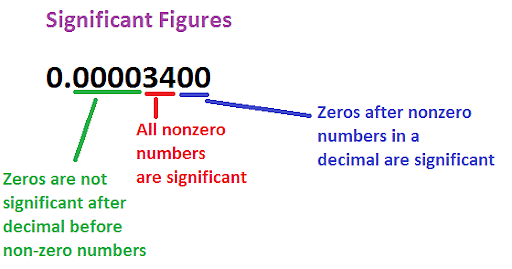
Significant Figures
For example, if the result obtained is 1.538785445 it has ten significant figures. But it is good enough to work with two significant figures, and one can round it off to 1.5.
Significant Figures Video Lecture
Read More: Error Arithmetic Operations Of Significant Figures
Rules For Rounding Off Numbers
[Click Here for Sample Questions]
There are multiple rules which are required to be succeeded to round off the digits. Different numbers such as whole numbers and decimal numbers do not follow a similar rule while rounding off and thus, they should be kept in mind to avoid mistakes.
- Rounding Off Whole Numbers
Rounding rules for whole numbers are as given below:
- To get an exact optimum result, always choose the smaller place value.
- Look for the next smaller place value which is towards the right of the number that is being rounded up. Such as, if you are rounding off a digit from tens lace, look for a digit in the one's place.
- If the digit in the smallest place is less than 5, then the digit is left as it is. Any number of digits after it becomes zero is known as rounding down.
- If the digit in the smallest place is greater than or equal to 5, then the digit is concatenated with +1. Any digit after that number is considered zero and this is called rounding up.
- Rounding Off Decimal Numbers
Rounding rules for decimal numbers is as given below:
- To evaluate the rounding digit and look at its righthand side.
- If the figures on the right-hand side are less than ‘5’, consider them equal to zero.
- If the digits at the righthand side are greater than or equal to ‘5’, then add +1 to that digit and consider all other figures as zero.
- Rounding Off Fractional Numbers
Fractions are numerical values that express a part of a whole. They are noted in the form of ‘p/q’, where ‘q’ cannot be equal to ‘zero’.
- A simple rule to round fraction to the nearest whole number is to compare the proper fraction to 1/2.
- In case of an improper fraction, we need to change it to a mixed fraction and then compare the fractional part with 1/2.
- We round up the fraction if it is equal to or greater than 1/2, and we round down it is less than 1/2.
Read More: Difference Between Fraction and Rational Numbers
How to Round Off Numbers?
[Click Here for Sample Questions]
Here are the steps to round off numbers at various places:
- Rounding Off to Nearest Hundred
Let’s assume a number 3351. To round off to the nearest possible number, consider the hundreds place and follow the steps as listed below:
- Identify the digit present in the hundreds position: ‘3’.
- Identify the next smallest position in the number: ‘5’.
- If the smallest place number is greater than or equal to ‘5’, round up the digit.
- Now, add up +1 to the digit in the hundreds place. 3 + 1 = 4. Hence, the other figures become zero.
- So, the final number becomes ‘3400’.
Read More: Error Significant Figures Exact Numbers: Positional Notation
- Rounding Off to Nearest Ten
Let’s consider the number 399. To round off to the nearest notable number, consider tens place and follow the process as given:
- Identify the digit present in the ten’s place: ‘9’
- Identify the next smallest position in the number: ‘9’
- If the smallest place digit is greater than or equal to ‘5’, then round up the digits.
- As the digit in the one place is greater than 5, one should add +1.
- Hence, 9 + 1 = 10 and the one is carried over to the next place.
- So, the final number we get is 400.
- Rounding Off to Nearest Tenth
Let’s consider the number 0.73. To round off to the nearest probable number, consider tenths place and follow the steps as:
- Identify the digit holding the tenth place: ‘7’.
- Identify the next smallest spot in the number: ‘3’.
- If the smallest place digit is greater than or equal to ‘5’, the digit gets round up.
- As the digit given in the smallest digit is less than ‘5’, the digit gets round down.
- So, the final number is 0.7.
Read Also:
Things to Remember
- Rounding off the numbers make them simpler, easy to estimate, and easier to use. Round off numbers can be less accurate, but their values are still relatively close to that of the original value.
- Some good instances where rounding off numbers is taken into account is the grocery store, restaurants, malls, planning party, and so on.
- Rounding off numbers help in handling the mismatch between fractions and decimals.
- It helps in changing multiplied results, taxes, doing calculations in your head or getting an estimate.
- When we round decimal numbers, we usually come across terms such as, round to the nearest tenths, hundredths, thousandths, and so on.
- When we are asked to round off a number to one decimal place, it means one is asked to round it to the nearest tenths, similarly when asked to round off a number up to two decimal places, it means we need to round it to hundredths.
Sample Questions
Ques. Round the given fractions to the nearest whole number. (3 Marks)
3/5
21/5
Ans. Here are the steps to round off the given numbers:
- 3/5
We can round off the proper fraction to the nearest whole number by following a simple rule of comparing it with 1/2. Since 3/5 is greater than 1/2, it will be rounded up to ‘1’.
- 21/5
21/5 is an improper fraction, so we convert it into a mixed fraction like 41/5. Hence, we will keep the whole number part aside and compare the fractional part with 1/2. So, as 4 is aside, we can check 1/5 is greater or less than 1/2. And as 1/5 is less than 1/2, the given fraction will be rounded up to 4.
Ques. Each side of a cube is given as 7.204m. What is the total surface area of the cube and the volume of the cube to suitable significant figures? (3 Marks)
Ans. The number of noteworthy figures in the measured length is ‘4’. The obtained area and the volume should be therefore rounded off to 4 significant figures.
Surface area of the cube = 6a2
= 6 (7.204)2
= 311.3 m2
Volume of the cube = a3
= (7.204)3
= 373.8 m3
Ques. A boy measures the breadth of a hair by looking at it through a microscope of magnification 100. He makes 19 observations and finds that the average width of the hair in the field of view of the microscope is 3.5 mm. what is the thickness of the hair? (3 Marks)
Ans. Magnification = 100
Average width of microscope = 3.5 mm
Hence, original width = 3.5/100 = 0.035 mm.
The estimate of the breadth of hair is 0.035 mm.
Ques. The total mass of a box measured by the vendor’s balance is 2.300 kg. Two gold pieces of mass 20.14g and 20.18 g are added to the box. What is: (5 Marks)
a. The total mass of the box?
b. The variance in the masses of the pieces to correct significant digits?
Ans. Mi = 2.300 kg---2 significant figures
M1 = 20.14 g =0.02014 ---4 significant figures
M2 = 20.18 g = 0.02018 ----4 significant figures
Adding:
M = 2.3 + 0.02014 + 0.02018 = 2.34032
But as the mass at the first step has least 2 figures, the resultant mass should not have more than 2 significant digits.
Thus, M= 2.3 Kg.
Subtracting:
M2 - M1 = 0.04 g.
As the initial mass has 4 significant digits, the result can have 4 or less significant digits. Hence, the no. of significant figures = 2.
Ques. A physical quantity, T is related to four observables p, q, r, s. (3 Marks)
T = p3 q2 / √ (r s)
The percentage errors of measurement in a, b, c, and d, are 1%, 3%, 4%, 2% respectively. What is the percentage error in the quantity T? if the merit of T estimated using the above relation turns out to be 3.763, to what extent one should round off?
Ans. T = p3 q2 (√ r s)
Maximum fractional error in T is,
ΔT/T = ±[3Δp/p + 2Δq/q + 1/2Δc/c + Δd/d]
On inserting above value, = ±13/100=0.13
Percentage error in T = 13%,
Value of T is 3.763. Thus, by rounding up the given value to the first decimal place, we have T =3.8.
Ques. The length, breadth and width of a rectangular sheet of a metal are 4.286 m, 1.005 m, and 2.02 cm respectively. Find the area and volume of the thin sheet to correct significant figures. (3 Marks)
Ans. 2.02 cm = 2.02 / 100 = 0.0202 m
A = 2 x (L x B + B x T + T x L)
= 2 (4.286 x 1.005 +1.005 x 0.0202 + 0.0202 x 4.286)
= 2 (4.30 + 0.020 + 0.086)
= 8.99 m2 to correct significant figures.
V = L x B x T
V = 4.286 x 1.005 x 0.0202
V = 0.087 m3 to correct significant digits.
Ques. Fill in the blanks: (5 Marks)
a. The volume of a cube, side 1 cm is equal to ------m3
b. The surface area of a solid cylinder or radius 2 cm and height 10 cm is equal to---mm2?
c. An object travelling with a speed of 18 km/hr covers-----m in 1 sec
d. The relative density of lead is 11.3. its density is-----g/cm3
Ans. (a) Length of an edge, a = 1 cm
Volume of a cube, a3 = 1 cm3
- 1 cm3 = 10-6 m3
- So, the volume of a cube with side as 1 cm is equal to 10-6 m3.
(b) The total surface area of a cylinder = 2πr (r +h)
r = 2 x 10 = 20 mm, h = 10 x 10 = 100 mm
= 2 x π x 20 (20 +100)
= 105600/7 = 15085 = 1.5 x 104 mm2.
(c) Conversion: 1 km/hr = 5/18 m/s
1 m/s = 18/5 km/hr
Hence, 18 km/hr x 5/18 = 5 m/s
Distance = speed x time
= 5 m
Hence, distance covered by vehicle is 5 m in 1 s.
(d) Relative density of a substance is,
Relative density = density of a matter = density of H2O
Density of water = 1 g/cm3
1 cm3 = 10-6 m3
11.3 g/cm3 or 11.3 x 10³ kg/m3
Ques. A new unit of length is chosen such that the speed of light in vacuum is unity. What is the span between the Sun and the Earth in terms of new unit, if light takes 8 mins 20 seconds to travel the whole span? (3 Marks)
Ans. The speed of light in vacuum is unity-----given
Distance = speed x time
Speed in unity = 1 unit/s
Time = 8 x 60 + 20 = 500 secs
Hence, distance between Sun and the Earth = 1 x 500 = 500 units.
For Latest Updates on Upcoming Board Exams, Click Here: https://t.me/class_10_12_board_updates
Also Read:



Comments