



Education Journalist | Study Abroad Lead
Isopropyl Alcohol, also known as Isopropanol or n-propanol is a flammable & colorless liquid. Isopropyl has a similar solvent property to that of an ethyl alcohol. Isopropyl Alcohol chemical formula is C3H8O.
Alcohol is formed when a hydrogen atom is replaced by a –OH group in a hydrocarbon, aliphatic or aromatic. Alcohol includes one or more hydroxyl (OH) group(s) directly linked to a carbon atom (C) of an aliphatic system (CH3OH). These kinds of compounds have a wide range of uses in industrial as well as in everyday life.
| Table of Content |
Keyterms: Isopropyl Alcohol, Alcohol, Isopropanol, n-propanol, Isopropyl, Hydroxyl group, Atom, Hydrogen, Carbon, Aliphatic system, Ethyl alcohol, Hydrocarbon
What is Isopropyl Alcohol
[Click Here for Sample Questions]
Isopropyl alcohol is also known as 2-propanol, dimethylcarbinol, or Isopropanol. It is an important member of the organic chemical family. it is a colorless liquid and is commonly used in solvent applications. It is flammable in nature. It was the first commercial synthetic alcohol, created in 1920 by scientists at the Standard Oil Company in New Jersey. Isopropyl alcohol is readily produced by the propylene-sulphuric acid reaction, followed by hydrolysis. The chemical formula of Isopropyl alcohol can be represented as C3H8O or (CH3)2CHOH. The IUPAC name of Isopropyl Alcohol is Propan-2-ol. Other Synonyms of Isopropyl alcohol are Isopropanol, 2-propanol. It has solvent properties like ethyl alcohol. It is also known as Isopropyl solvents.
| Name | Isopropyl alcohol |
|---|---|
| Chemical Formula | C3H8O, (CH3)2CHOH |
| Molecular Weight | 60.1 g/mol |
| Density | 786 kg/m3 |
| Melting point | -89 ºC |
| Boiling Point | 82.5 ºC |
Also Read:
| Related Articles | ||
|---|---|---|
| Uses of Methanol and Ethanol | Isopropyl Alcohol | Preparation of Alcohols |
| Nomenclature of Alcohols Phenols and Ethers | Esterification | IUPAC Nomenclature of Organic Compounds |
Structure of Isopropyl Alcohol
[Click Here for Sample Questions]
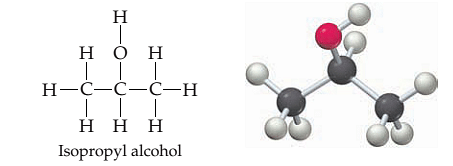
Isopropyl alcohol is a 1-propanol, and ethyl methyl ether structural isomer. The structural formula is shown below:
Physical Properties of Isopropyl Alcohol
[Click Here for Sample Questions]
The physical properties of Isopropyl Alcohol (C3H8O) are:
- Isopropyl alcohol is a clear and colorless liquid.
- Isopropyl alcohol is soluble in water, chloroform, ethanol, and ether.
- It has a specific density of 786 kg/m3 and specific heat of 2.68 J/(gK).
- It has an unpleasant smell similar to ethyl alcohol.
- It dissolves various oils, natural resins, polyvinyl butyral, gums, and alkaloids, as well as ethyl cellulose.
Chemical Properties of Isopropyl Alcohol
[Click Here for Sample Questions]
The chemical properties of Isopropyl Alcohol (C3H8O) are:
- Isopropyl alcohol, like other alcohols, reacts with active metals like potassium to create alkoxides known as isopropoxides.
- Isopropyl Alcohol reacts with bromine, yielding mostly Isopropyl Bromide and brominated acetones like BrCH2COCBr3.
C3H7OH → BrCH2COCBr3 (Brominated acetones) + CH3CH(Br)CH3 (Isopropyl Bromide)
- Isopropyl Alcohol is used as both solvent and a hydride source in transfer hydrogenation reactions or reduction of Meerwein-Ponndorf-Verley. It is converted to 2-bromopropane by using tribromide phosphorus or dehydrated to propene by heating it with sulfuric acid.
- Acetone may be produced by oxidizing isopropyl alcohol. The acetone can be produced by oxidizing agents such as chromic acid or by dehydrogenating isopropyl alcohol over a heating copper catalyst.
(CH3)2CHOH → (CH3)2CO + H2
Synthesis of Isopropyl Alcohol
[Click Here for Sample Questions]
Isopropyl Alcohol synthesis is typically made by mixing water and propene in hydrogenating acetone or hydration reaction. Hydration can be done in two ways. In both the hydration method, the distillation of isopropyl alcohol from water and other by-products are needed.
Isopropyl alcohol and water react to create an azeotrope, simple distillation yields an alcohol concentration of 87.9 % wt isopropyl alcohol and 12.1 5 wt. water. Azeotropic distillation of wet isopropyl alcohol using diisopropyl ether or cyclohexane as azeotropic agents yields pure isopropyl alcohol (anhydrous).
Uses of Isopropyl Alcohol
[Click Here for Sample Questions]
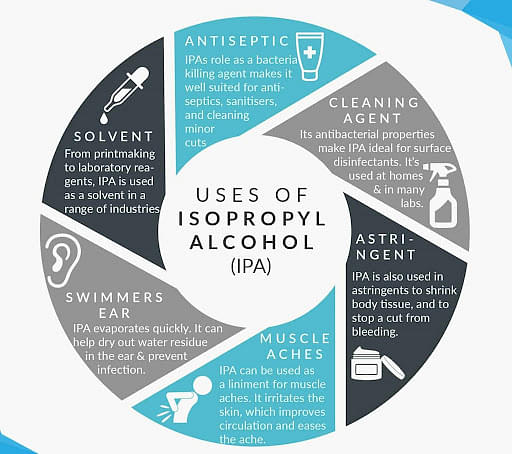
The uses of Isopropyl Alcohol (C3H8O) are:
- Isopropyl Alcohol is used as a solvent in many chemical reactions. It evaporates quickly, leaving little or almost negligible traces of oil behind when compared to ethanol, and is generally non-toxic when compared to other solvents.
- It gives other solvents like isopropyl acetate on esterification. It reacts with sodium hydroxide and carbon disulfide to give a reagent for herbicide, sodium isopropyl xanthate.
- It is used in the operation room as a disinfectant for washing down the surfaces of furniture and shelves. It is efficient against HBV viruses, thus it is used to clean blood or bodily fluids from the surface of the operating room, equipment, or furniture.
- Isopropyl alcohol is a biological preservative that is a safer alternative to formaldehyde and other synthetic preservatives. Isopropyl alcohol solutions with 70–99% alcohol are used to preserve specimens.
- It is used as Rubbing alcohol, hand sanitizer, and disinfection pads. These disinfectants include a 60–70% isopropyl alcohol or ethanol water solution. Water is required to open bacterial membrane pores that serve as a conduit for isopropyl alcohol.
- Isopropyl alcohol can also be used for anesthesia, but it is not recommended due to its numerous unfavorable characteristics or disadvantages.
Uses of Isopropyl Alcohol
Things to Remember
- Isopropyl alcohol is also known as 2-propanol, dimethylcarbinol, or Isopropanol. it is a colorless liquid and is commonly used in solvent applications.
- It is flammable in nature. Isopropyl alcohol is readily produced by the propylene-sulphuric acid reaction, followed by hydrolysis.
- The chemical formula of Isopropyl alcohol can be represented as C3H8O or (CH3)2CHOH. The IUPAC name of Isopropyl Alcohol is Propan-2-ol.
- Isopropyl alcohol is a clear, colorless liquid, and has an unpleasant smell similar to ethyl alcohol. Isopropyl alcohol is soluble in water, chloroform, ethanol, and ether. It dissolves various oils, natural resins, polyvinyl butyral, gums, and alkaloids, as well as ethyl cellulose.
- Isopropyl alcohol, like other alcohols, reacts with active metals like potassium to create alkoxides known as isopropoxides.Isopropyl Alcohol reacts with bromine, yielding mostly Isopropyl Bromide and brominated acetones like BrCH2COCBr3
Also Read:
Sample Questions
Ques. Is Isopropyl Alcohol toxic? Why? (3 Marks)
Ans. Yes, Isopropyl Alcohol is toxic. It can cause irritation in the digestive tract. Drinking a lot of this might induce vomiting, diarrhea, discomfort, and bleeding in the stomach and intestines. Low blood pressure, tiredness, shock, and coma are all possible consequences. When rubbing alcohol is breathed, it can also be hazardous.
Ques. Is isopropyl alcohol similar to other alcohols? (2 Marks)
Ans. Isopropyl, also known as isopropanol, is made from propylene gas. It is toxic if swallowed and is comparable to synthetic ethyl alcohol. It is present in windshield washers and nail paint removers. Isopropyl alcohol is used to combine rubbing alcohol with water.
Ques. Which Alcohol is best to use as a disinfectant? (2 Marks)
Ans. Isopropyl alcohol is the best disinfectant. It is highly antibacterial against bacteria, fungi, and viruses, especially in solutions containing 60–90% alcohol and 10–40% distilled water.
Ques. Does rubbing alcohol have Isopropyl Alcohol? (2 Marks)
Ans. Yes, rubbing alcohol have a water solution with 60%- 70% of isopropyl alcohol or ethanol. It is a good disinfectant. The water opens the pores of the bacterial membrane and makes a way for isopropyl alcohol, which fights against the bacteria.
Ques. How azeotrope is formed from isopropyl alcohol? (2 Marks)
Ans. The Isopropyl alcohol reacts with water, which produces an 80.37 ºC boiling point, and isopropyl alcohol with a composition of 87.7 wt.%. This reaction forms Azeotrope.
Ques. What is indirect hydration? What are the byproducts formed in the process? (3 Marks)
Ans. In the process of indirect hydration, Propene gives a mixture of sulfuric acid and sulfate esters on reaction. Propene used in this method is of low quality. As these methods add water or sulfuric acid to propene, they predominantly produce isopropyl alcohol rather than 1-propanol. Following steam hydrolysis of these esters, distillation yields isopropyl alcohol. The major byproduct formed in this process is Diidopropyl ether. It can be reprocessed and hydrolyzed to form the desired product.
For Latest Updates on Upcoming Board Exams, Click Here: https://t.me/class_10_12_board_updates
Check-Out:



Comments