




These biomolecules class 11 notes bring together every pool, molecule, and rule that the CBSE Boards, NEET and CUET papers actually test in 2026-27. Revise the whole chapter fast, with the acid-soluble and acid-insoluble pools, amino acids and lipids, the four biomacromolecules, the four levels of protein structure, and the full story of enzymes in one place.
This chapter takes the cell you met in the previous chapter and asks what it is chemically made of, so the two pools and the macromolecules here underpin metabolism, nutrition, and every later biochemistry topic.
- CBSE Weightage: 4 to 6 marks, usually a short answer on the two pools or metabolites plus one question on protein structure or enzymes.
- Topics covered: elements in living and non-living matter, the acid-soluble and acid-insoluble pools, amino acids and the zwitterion, lipids, nucleosides and nucleotides, primary and secondary metabolites, the molecular weight divide, why lipids are the odd one out, proteins and polysaccharides, nucleic acids, the four levels of protein structure, and enzymes.
- Key rules: carbon and hydrogen are enriched in living matter, only 20 amino acids build proteins, water is the most abundant chemical in a cell, and enzymes work by lowering activation energy.
These biomolecules class 11 notes are curated by subject experts, based on the 2026-27 NCERT textbook, and checked against the last five years of CBSE Board and NEET papers.
Topic-by-Topic Summary of Biomolecules
The chapter is organised around one simple experiment: grind a tissue in acid and it splits into two pools. Everything else is a tour of what fills each pool. It starts with the elements of life, moves through the small molecules of the acid-soluble pool, crosses to the four macromolecules of the acid-insoluble pool, and ends with enzymes. Here is the quick map of what each topic gives you before you revise the detail.
- Chemical composition: living and non-living matter share elements, but carbon and hydrogen are enriched in life.
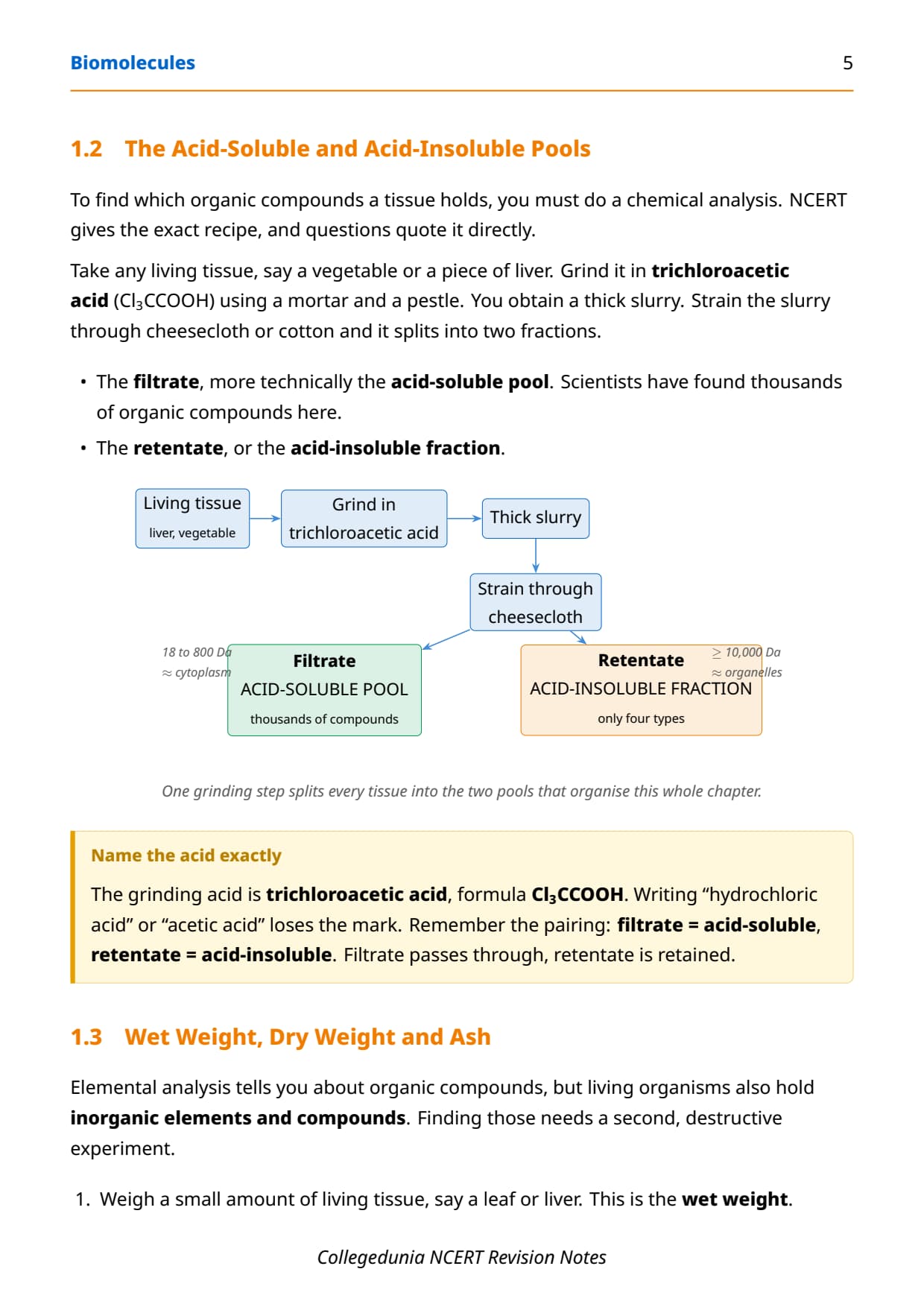
- The two pools: grinding in trichloroacetic acid gives an acid-soluble filtrate and an acid-insoluble retentate.
- Small biomolecules: amino acids, lipids and fatty acids, and the nitrogen bases, nucleosides and nucleotides.
- Metabolites: primary metabolites with known roles and secondary metabolites whose role in the host is often unclear.
- Biomacromolecules: proteins, nucleic acids, and polysaccharides are true polymers, while lipids ride along on a technicality.
- Protein structure and enzymes: the four levels of protein structure and how enzymes cut the activation energy barrier.
Revise the topics in this order, because each one builds on the one before it. Fix the two-pool experiment first, and every molecule after that has a home to sit in. These biomolecules class 11 notes follow the same sequence as the NCERT textbook.
Chemical Composition and the Two Pools
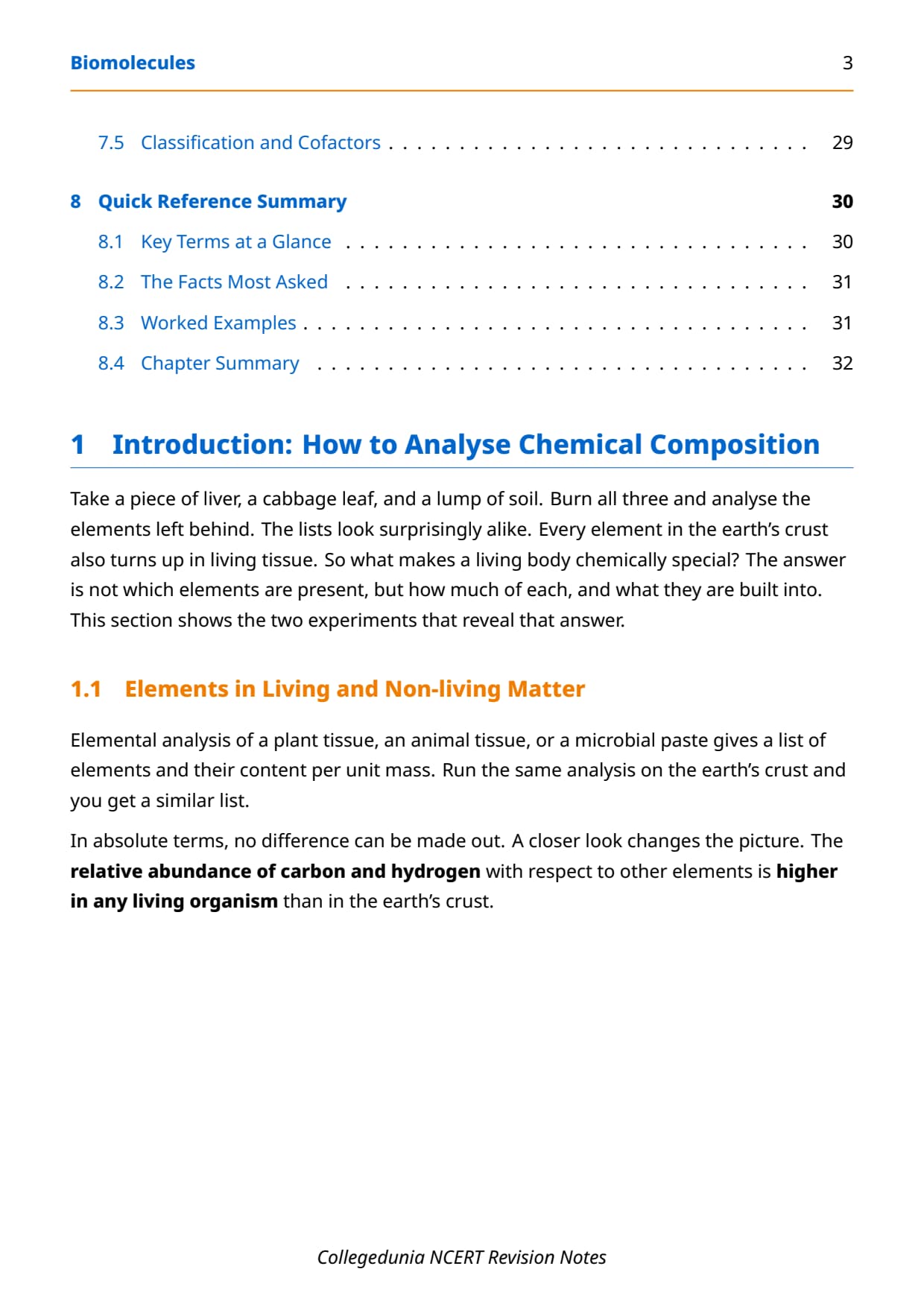
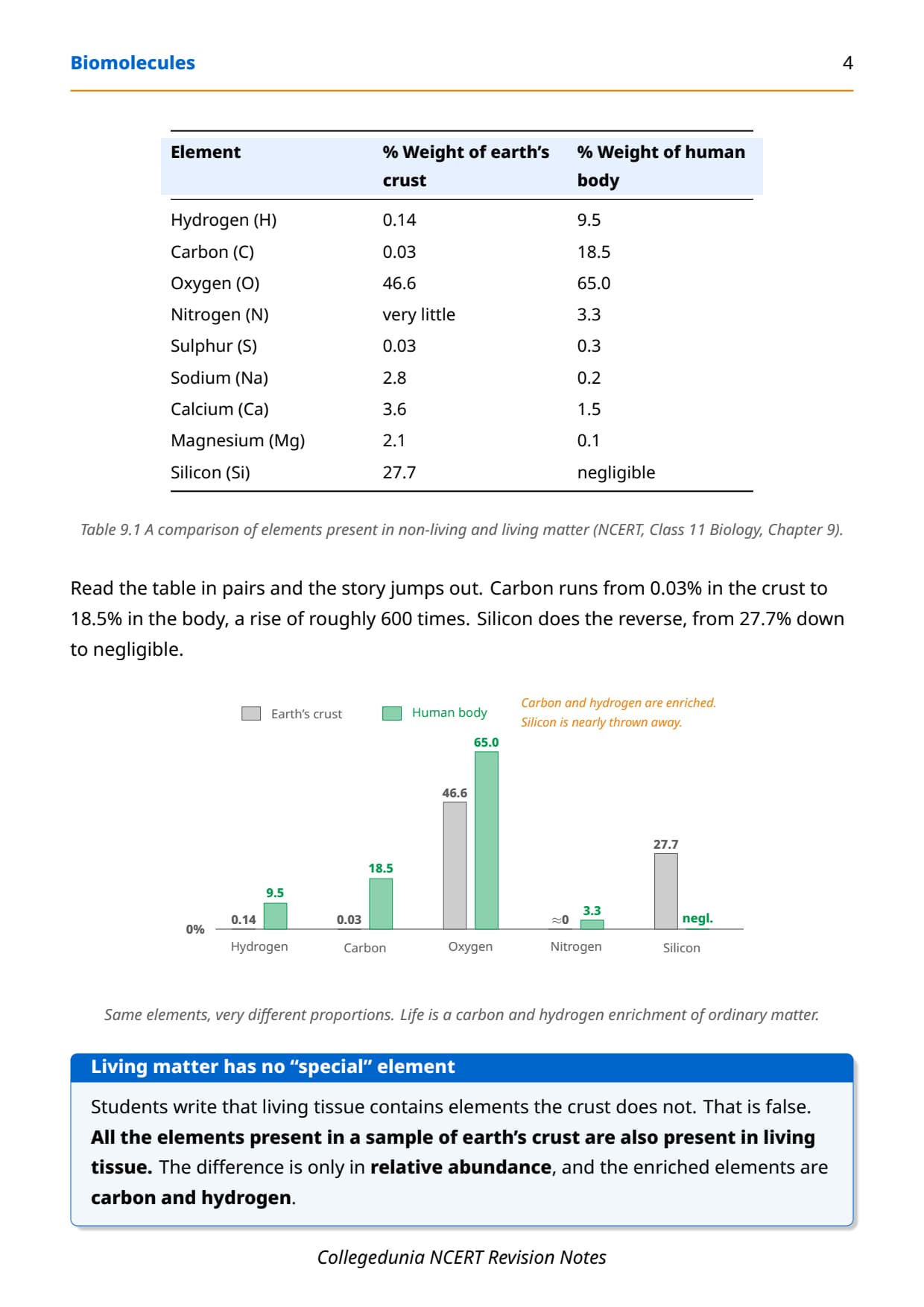
Burn a piece of liver, a cabbage leaf, and a lump of soil and the elements left behind look surprisingly alike, because every element in the earth's crust also turns up in living tissue. In absolute terms no difference can be made out, yet a closer look changes the picture: the relative abundance of carbon and hydrogen with respect to other elements is higher in any living organism than in the earth's crust. Carbon runs from about 0.03% in the crust to 18.5% in the body, while silicon does the reverse, from 27.7% down to negligible.
- Acid-soluble pool: grind any tissue in trichloroacetic acid (Cl3CCOOH), strain the slurry, and the filtrate holds thousands of small organic compounds.
- Acid-insoluble fraction: the retentate holds only four types of compounds, the true macromolecules.
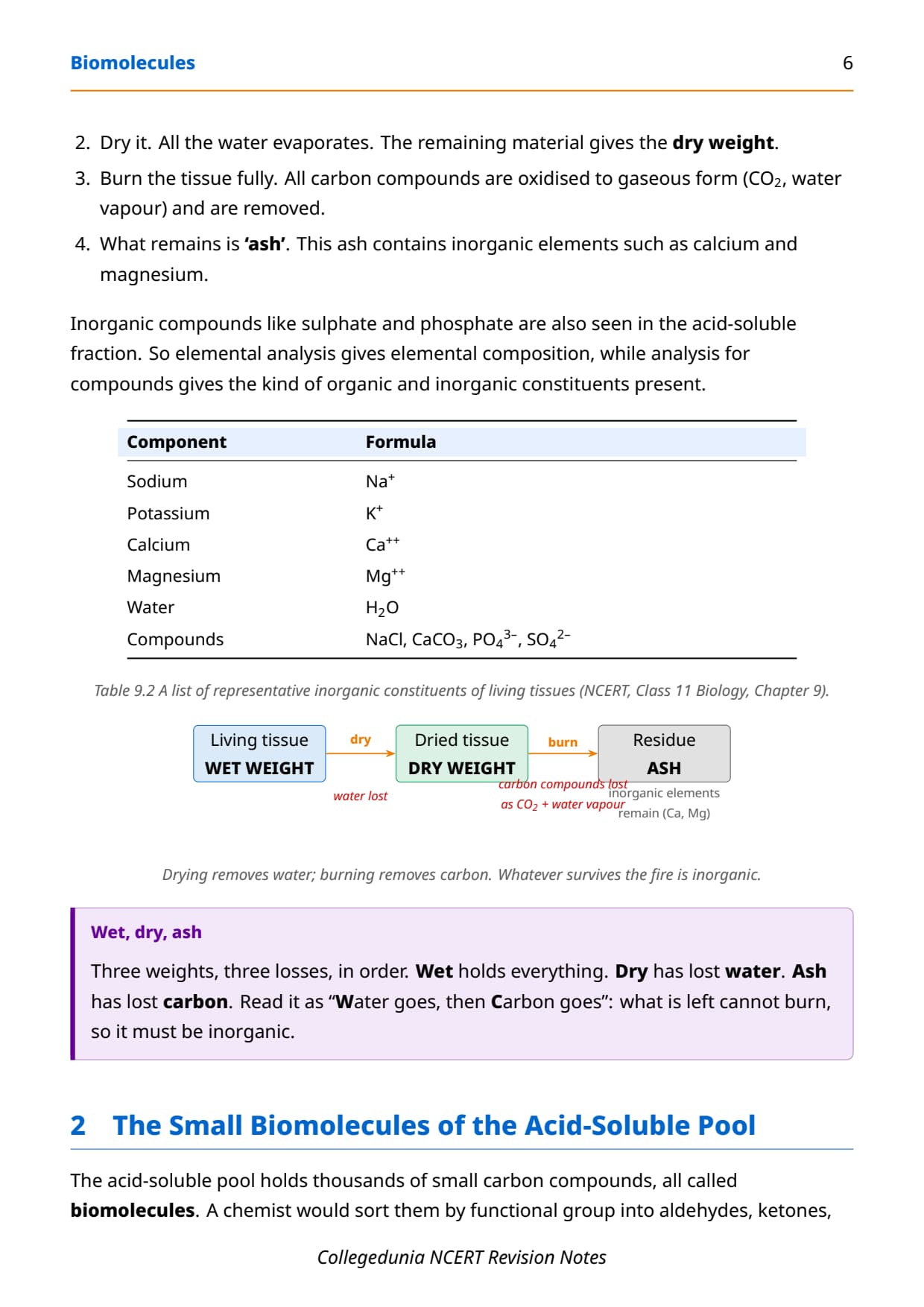
- Wet weight, dry weight, ash: drying removes water, and burning removes carbon compounds as gases, leaving inorganic ash such as calcium and magnesium.
Elemental analysis gives the elemental composition, while analysis for compounds gives the kinds of organic and inorganic constituents present. Inorganic ions such as Na+, K+, Ca++, and Mg++, plus water and compounds like NaCl and CaCO3, appear as constituents. Remember the pairing: filtrate is acid-soluble, retentate is acid-insoluble. Name the grinding acid exactly as trichloroacetic acid, because writing hydrochloric or acetic acid loses the mark.
The Small Biomolecules of the Acid-Soluble Pool
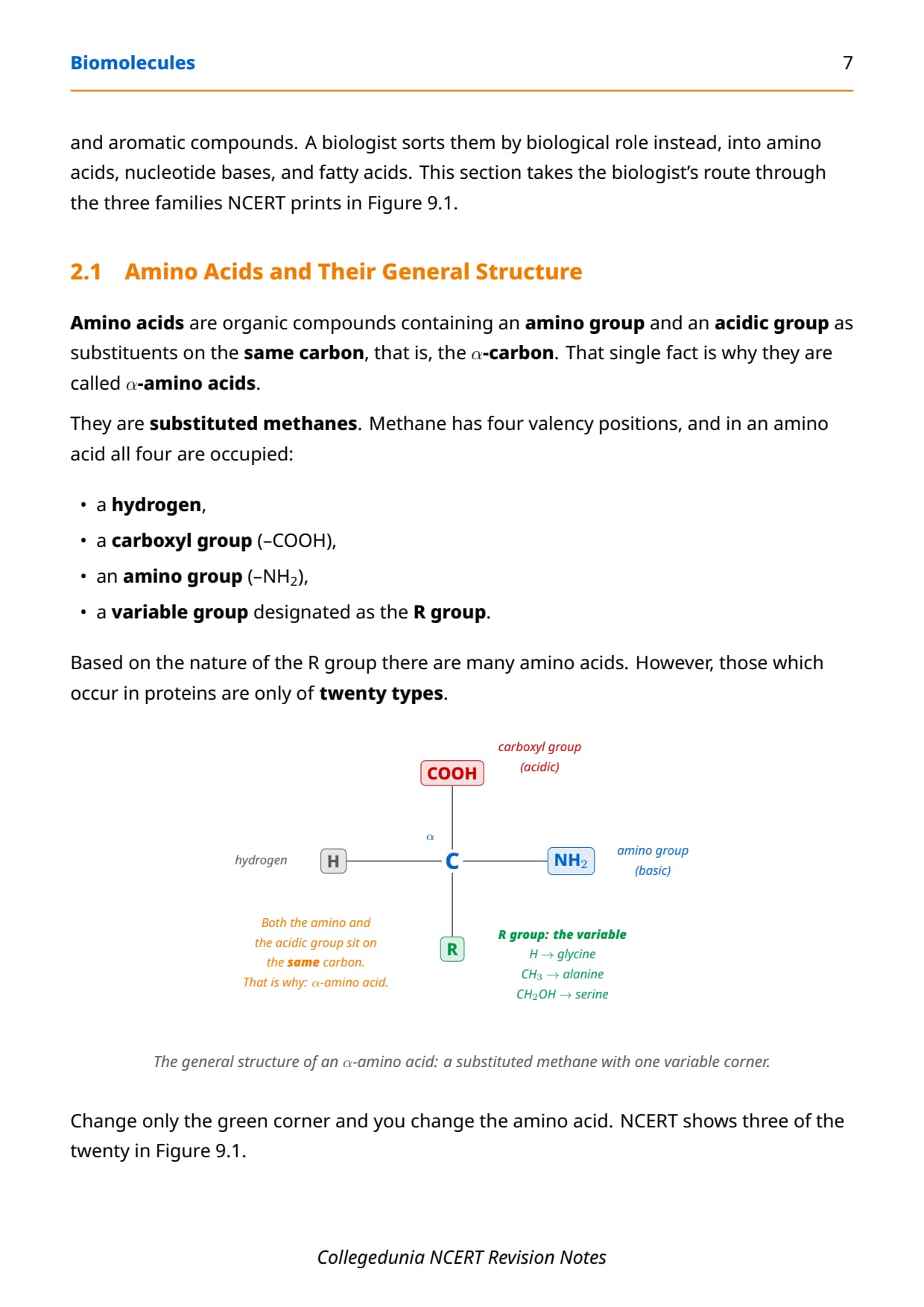
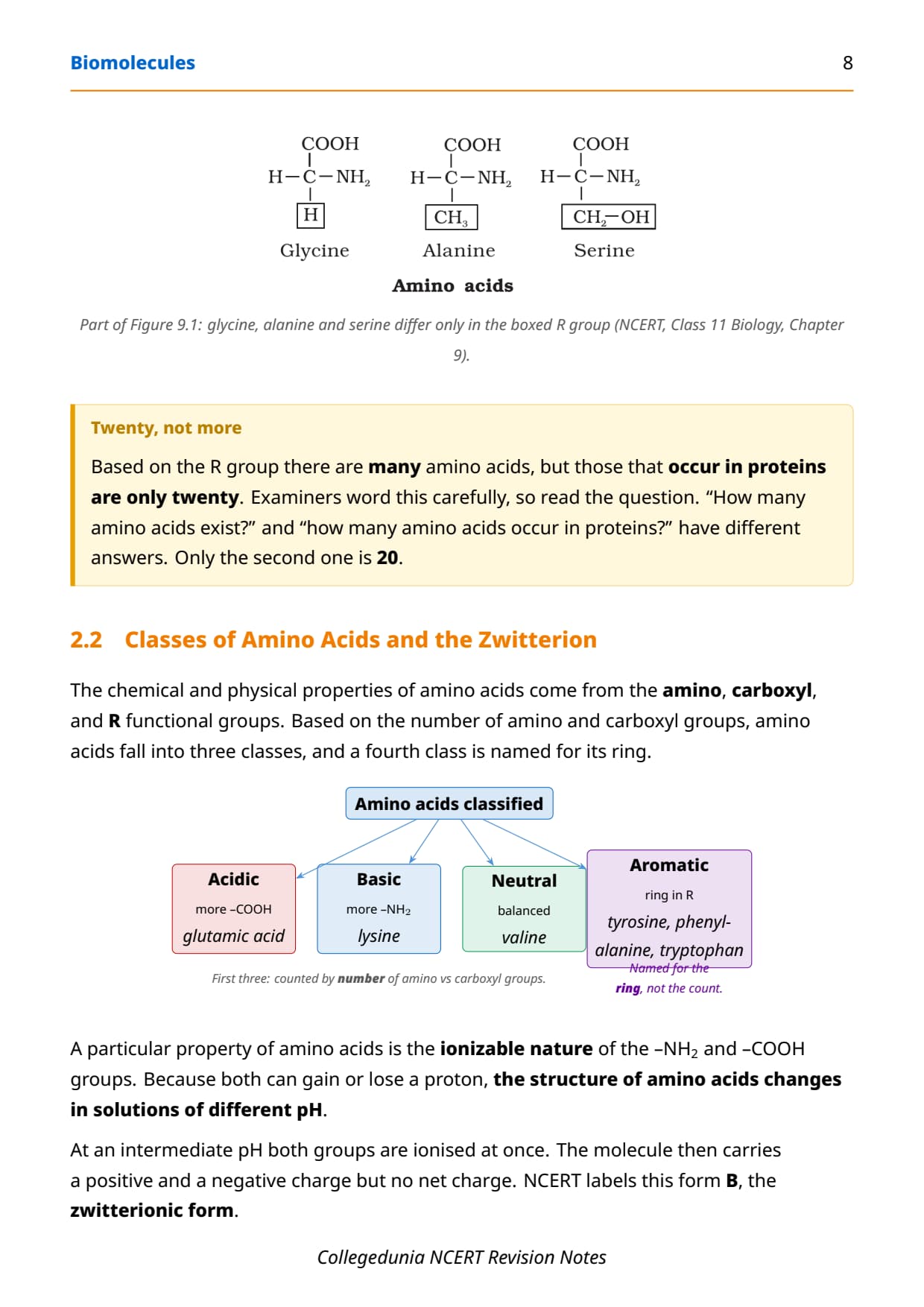
The acid-soluble pool holds thousands of small carbon compounds, all called biomolecules. A biologist sorts them by biological role into amino acids, fatty acids and lipids, and nitrogen bases. Amino acids are organic compounds with an amino group and an acidic group on the same carbon, the α-carbon, which is why they are called α-amino acids. They are substituted methanes carrying a hydrogen, a carboxyl group (−COOH), an amino group (−NH2), and a variable R group. Change only the R group and you change the amino acid, and those that occur in proteins are of only twenty types.
- Classes of amino acids: acidic (glutamic acid), basic (lysine), neutral (valine), and aromatic (tyrosine, phenylalanine, tryptophan).
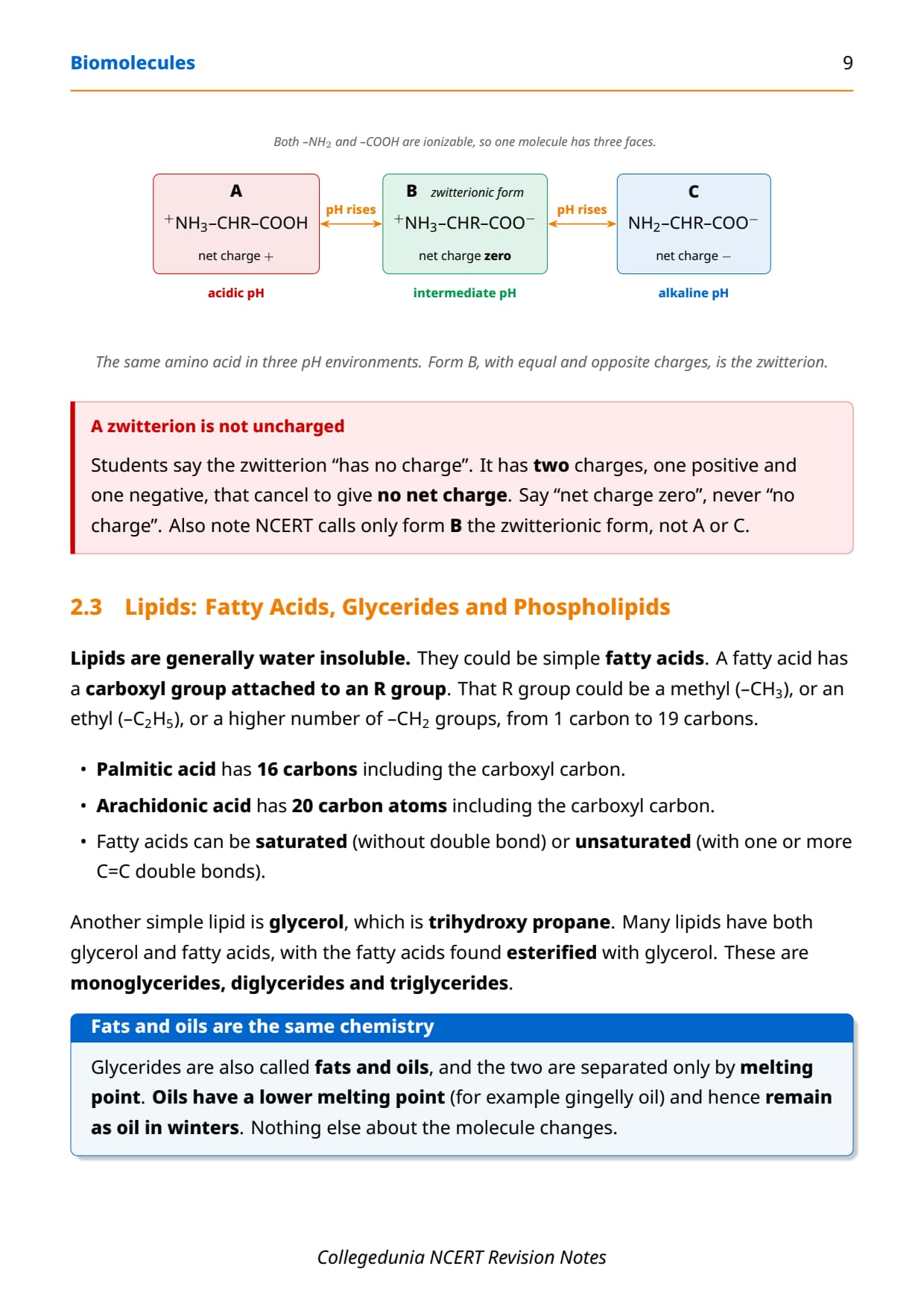
- Zwitterion: at intermediate pH both groups ionise at once, giving a positive and a negative charge but a net charge of zero, which NCERT labels form B.
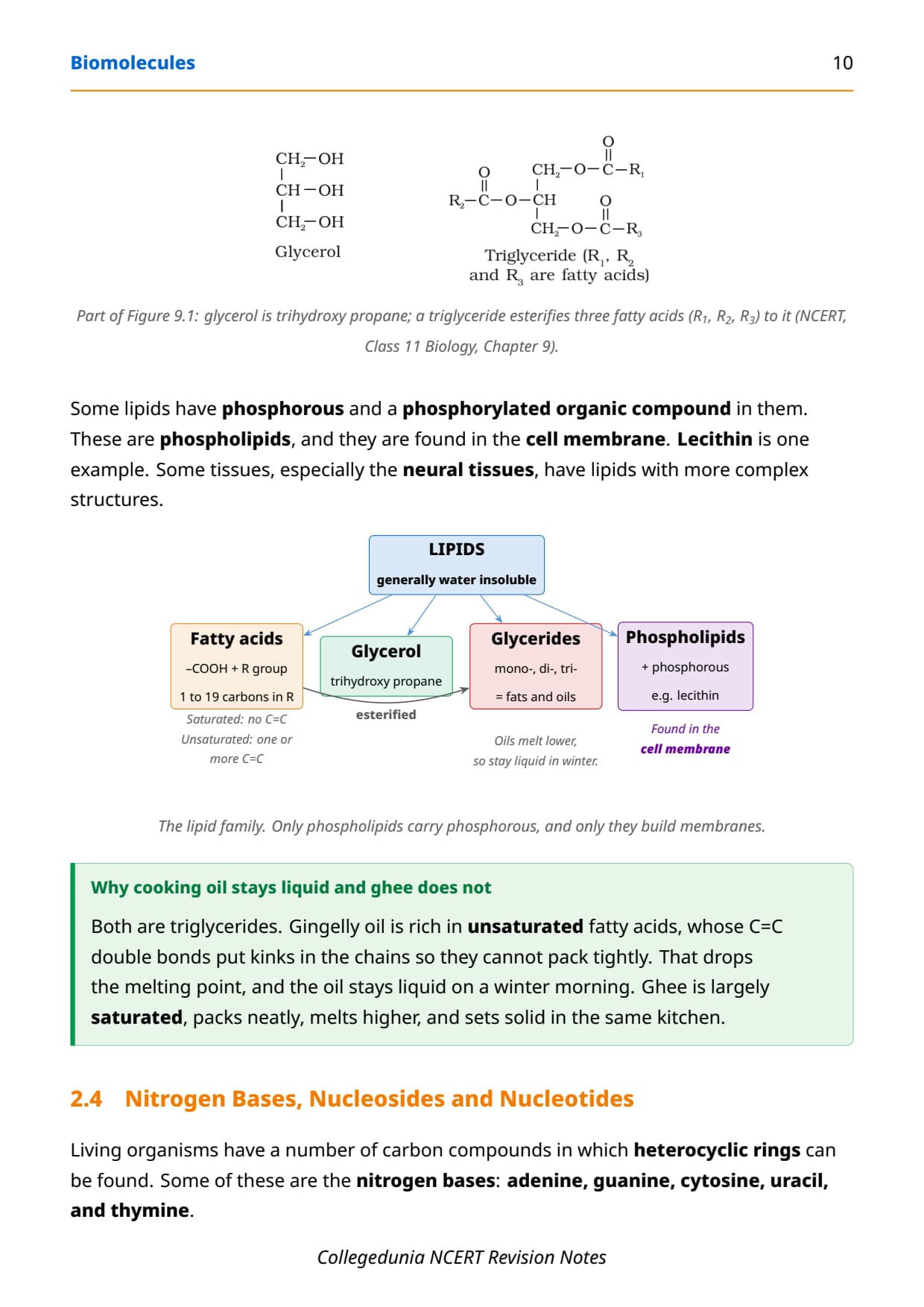
- Lipids: generally water insoluble; simple fatty acids have a carboxyl group on an R group, saturated (no double bond) or unsaturated (one or more C=C bonds).
- Glycerides: fatty acids esterified with glycerol (trihydroxy propane), also called fats and oils, separated only by melting point.
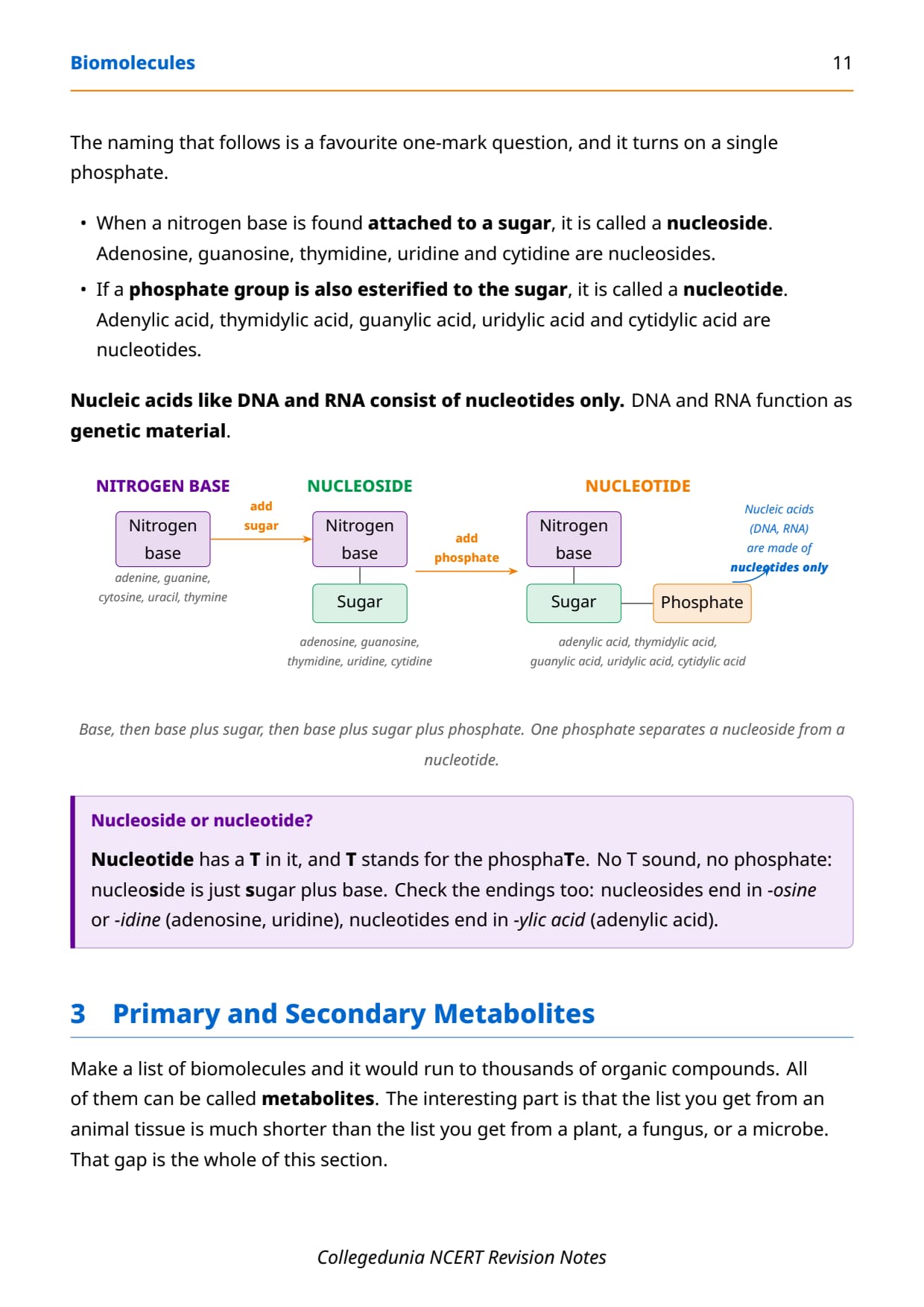
Some lipids carry phosphorous and are phospholipids, found in the cell membrane, with lecithin as an example. Among nitrogen bases, a base attached to a sugar is a nucleoside (adenosine, guanosine), and if a phosphate is also esterified to the sugar it is a nucleotide (adenylic acid, guanylic acid). Nucleic acids like DNA and RNA consist of nucleotides only. A zwitterion is not uncharged; it has two charges that cancel, so always write "net charge zero".
Primary and Secondary Metabolites
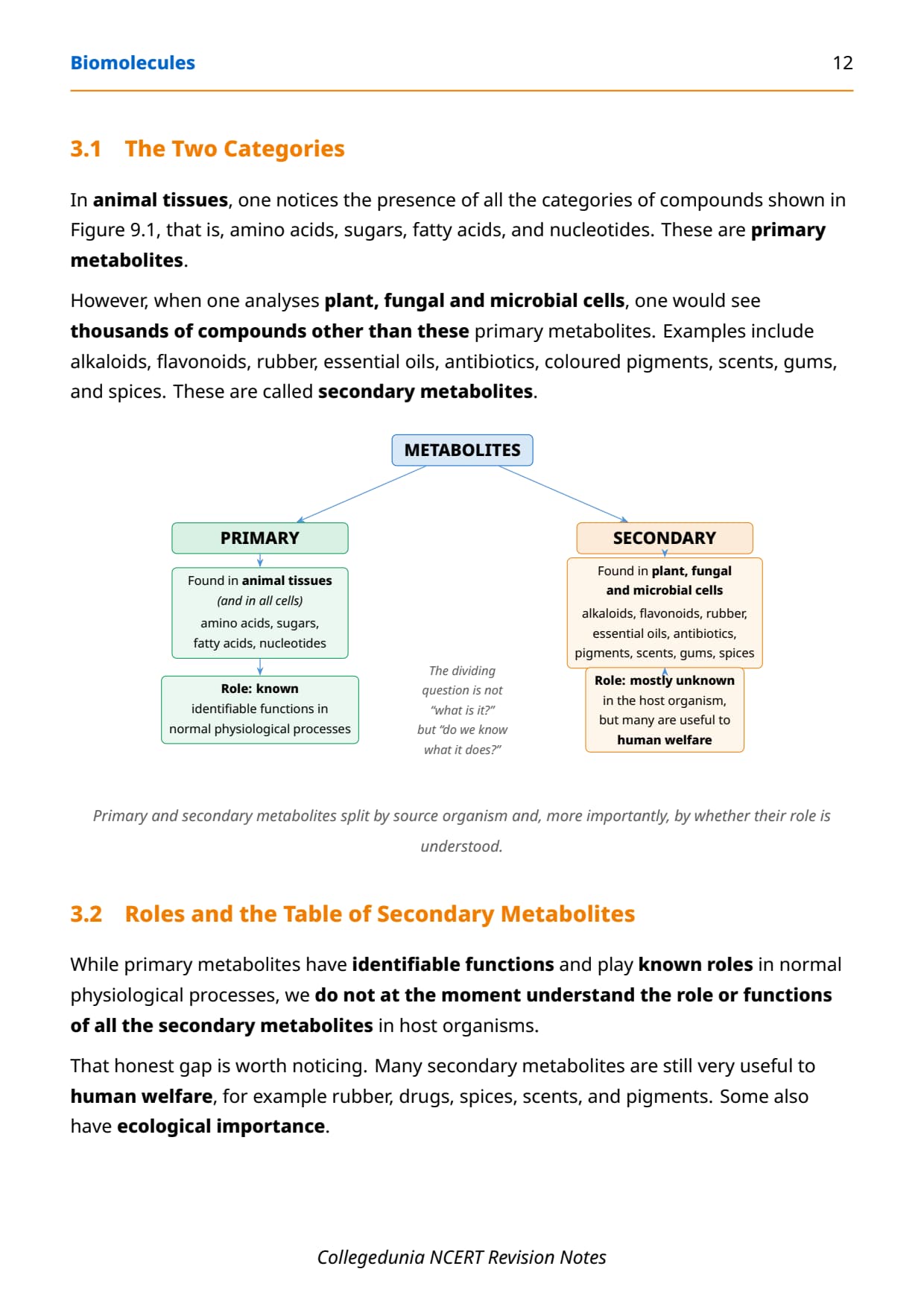
Make a list of biomolecules and it runs to thousands of organic compounds, all of which can be called metabolites. The interesting part is that the list from an animal tissue is much shorter than the list from a plant, a fungus, or a microbe, and that gap is the whole of this topic. In animal tissues one sees the categories of amino acids, sugars, fatty acids, and nucleotides, which are the primary metabolites. Plant, fungal, and microbial cells show thousands of compounds beyond these, the secondary metabolites.
- Primary metabolites have identifiable functions and play known roles in normal physiological processes.
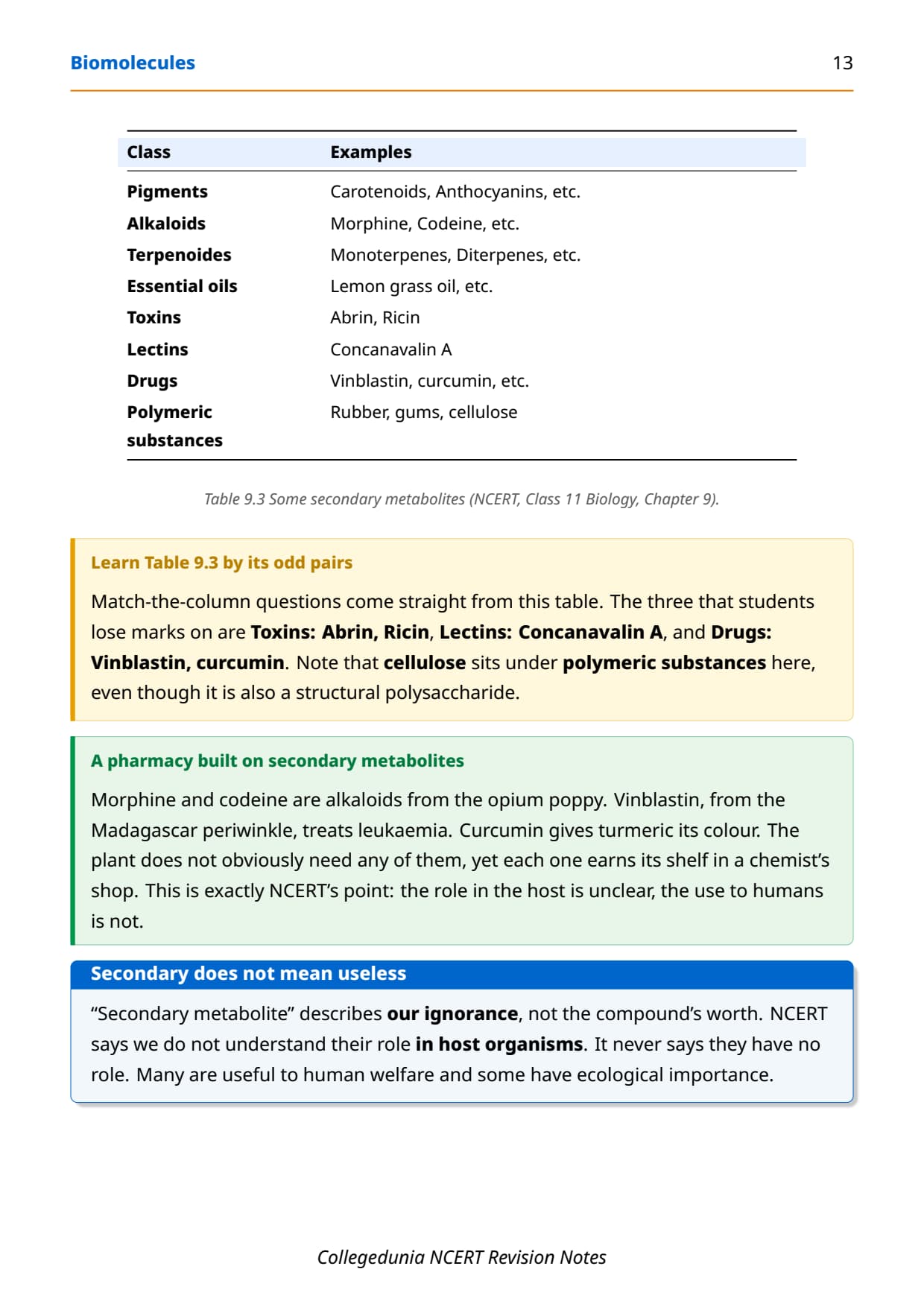
- Secondary metabolites include alkaloids, flavonoids, rubber, essential oils, antibiotics, pigments, scents, gums, and spices.
- Examples from Table 9.3: pigments (carotenoids, anthocyanins), alkaloids (morphine, codeine), toxins (abrin, ricin), lectins (concanavalin A), and drugs (vinblastin, curcumin).
The honest point NCERT makes is that we do not at the moment understand the role or functions of all the secondary metabolites in host organisms, even though many are very useful to human welfare, such as rubber, drugs, spices, and pigments, and some have ecological importance. "Secondary metabolite" describes our ignorance of its role in the host, not the compound's worth. Watch the odd pairs in match-the-column questions, especially toxins with abrin and ricin, and note that cellulose sits under polymeric substances here.
Biomacromolecules and the Molecular Weight Divide
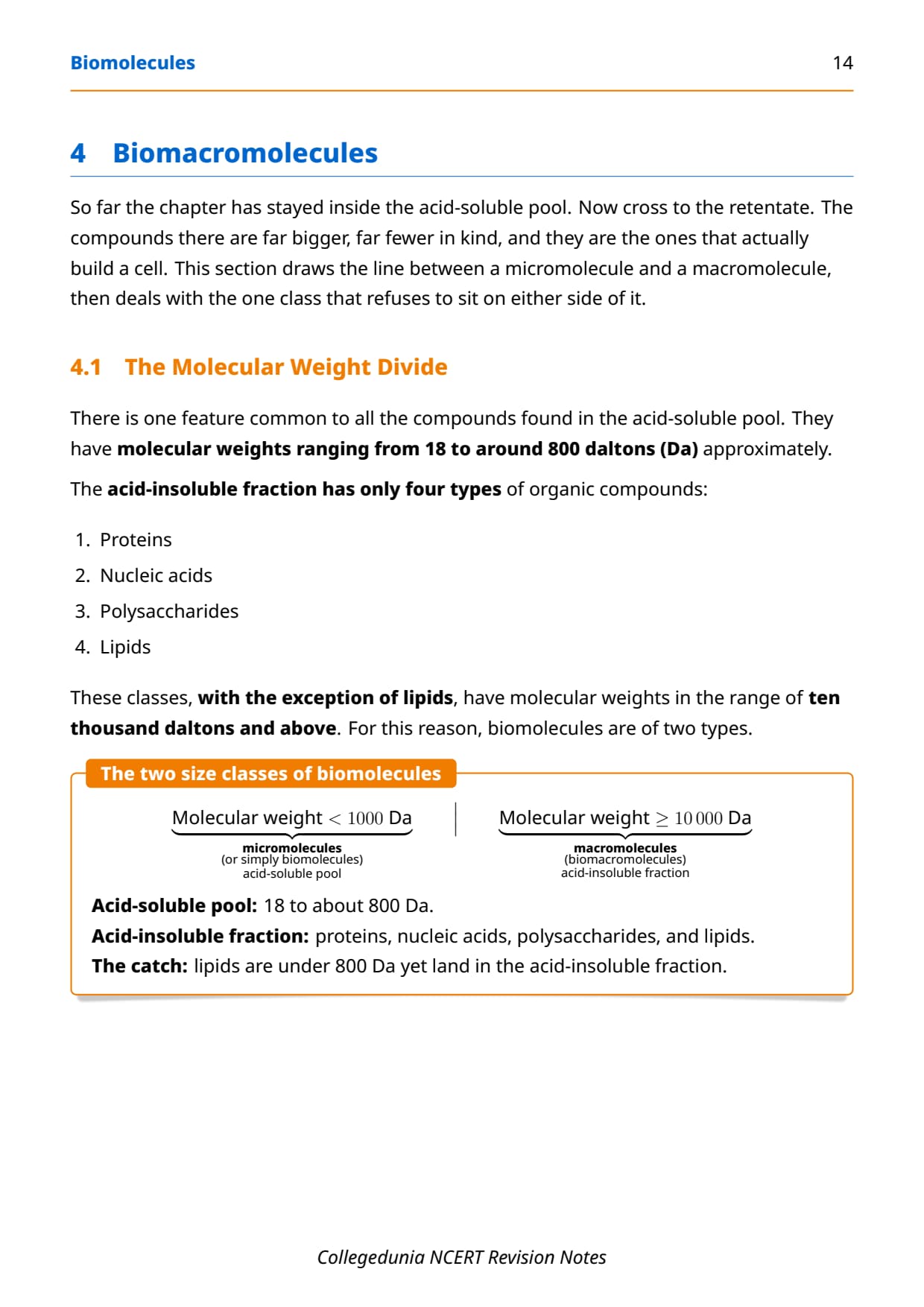
So far the chapter has stayed inside the acid-soluble pool. Cross to the retentate and the compounds are far bigger and far fewer in kind. Every compound in the acid-soluble pool has a molecular weight of roughly 18 to 800 daltons (Da), while the acid-insoluble fraction has only four types of organic compounds: proteins, nucleic acids, polysaccharides, and lipids. With the exception of lipids, these classes have molecular weights of ten thousand daltons and above, so biomolecules split into two size classes.
- Micromolecules: molecular weight under 1000 Da, the acid-soluble pool of 18 to about 800 Da.
- Macromolecules: molecular weight of 10,000 Da and above, the acid-insoluble fraction.
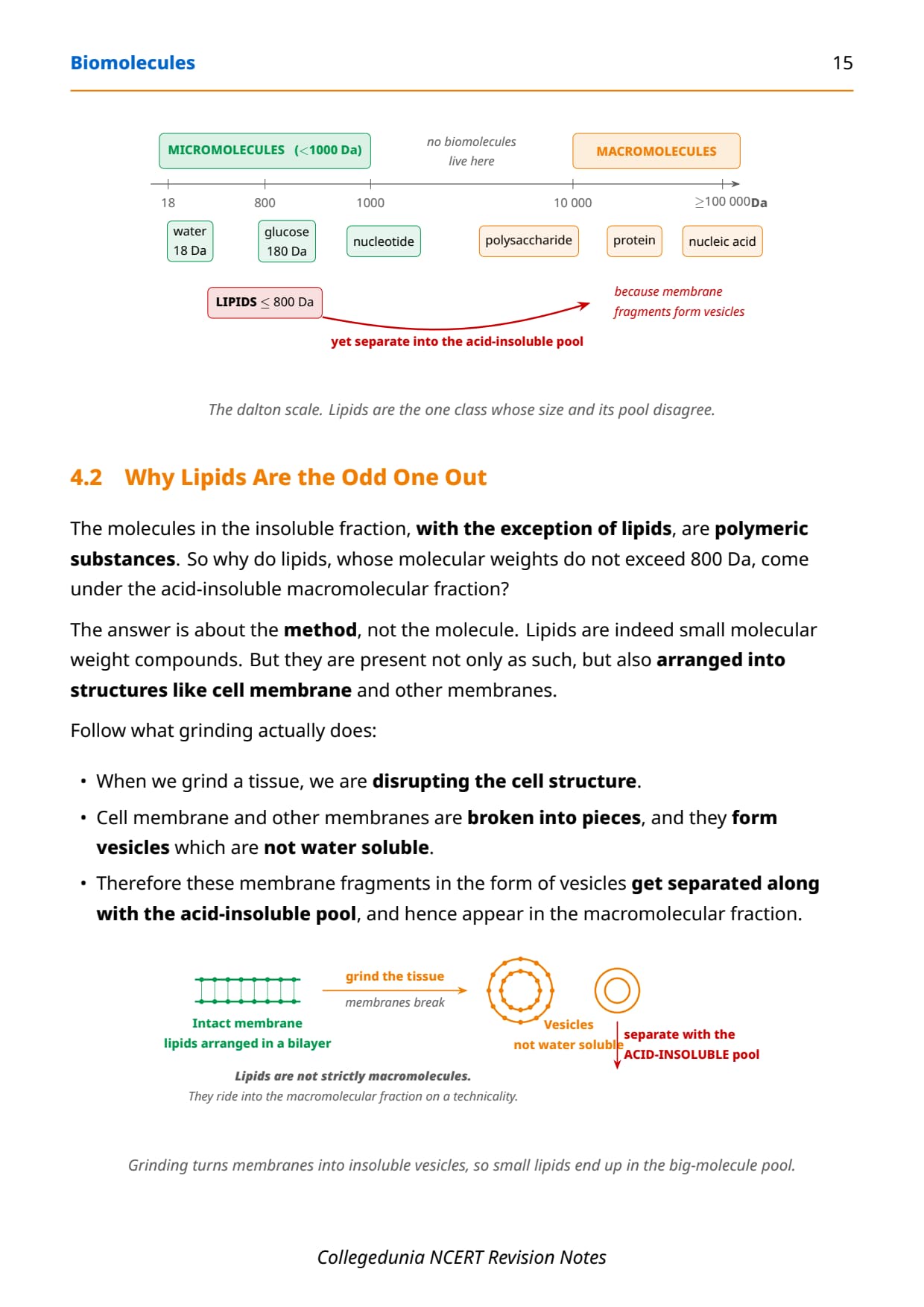
- The lipid catch: lipids are under 800 Da yet land in the acid-insoluble fraction.
- Why lipids ride along: grinding breaks membranes into vesicles that are not water soluble, so they separate with the acid-insoluble pool.
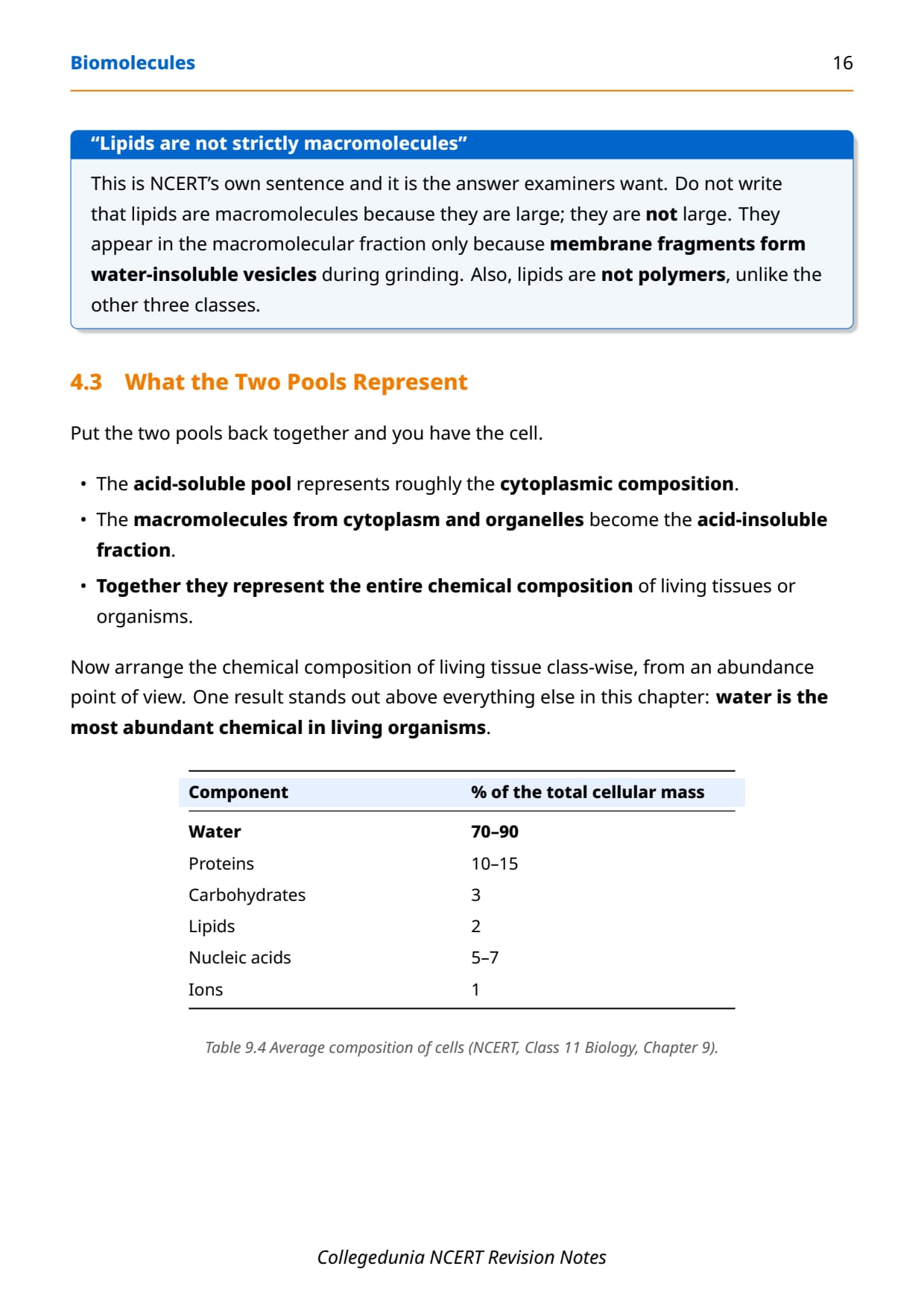
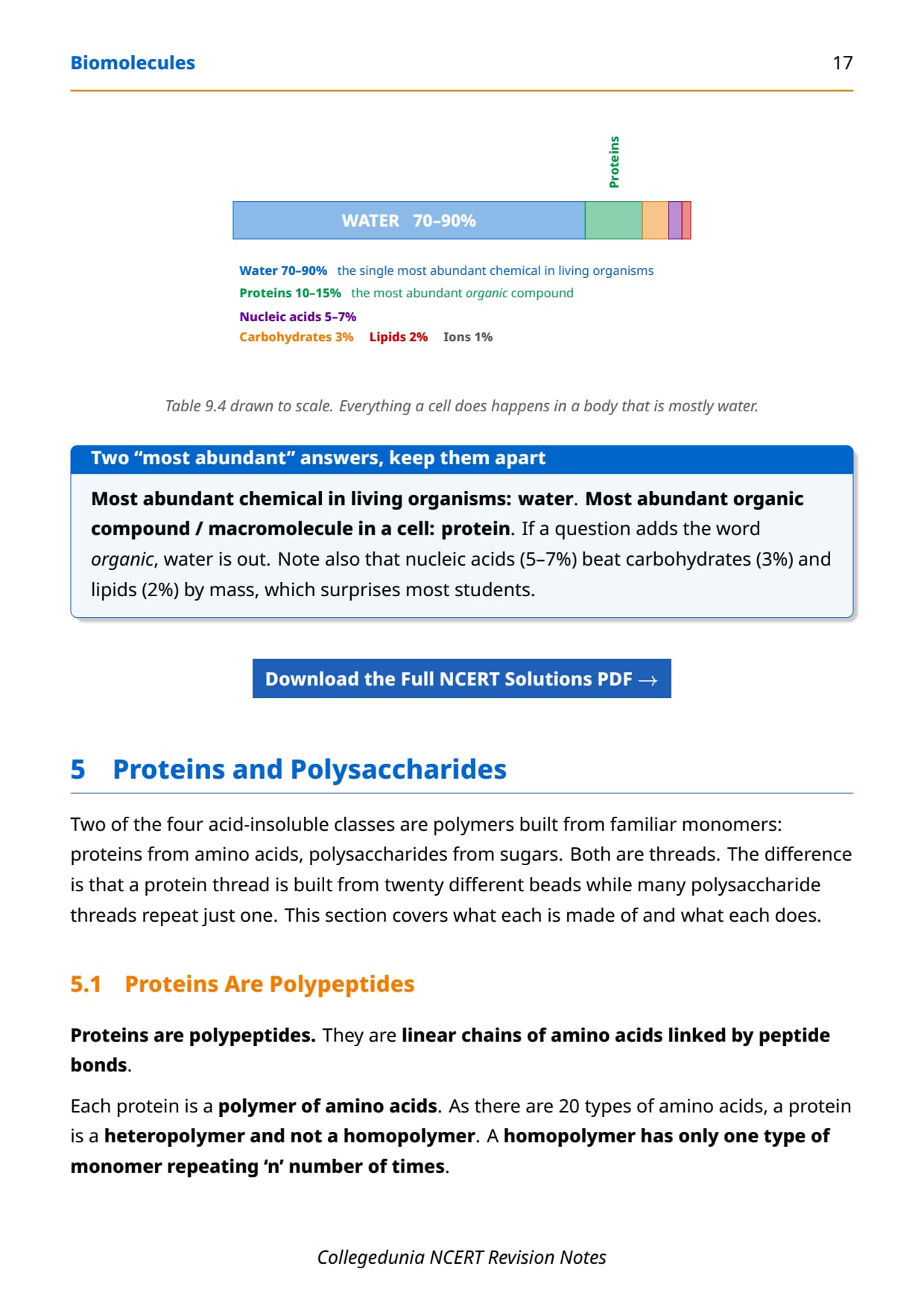
Lipids are therefore not strictly macromolecules, and they are not polymers, unlike the other three classes; they appear in the macromolecular fraction only because membrane fragments form water-insoluble vesicles. Put the two pools back together and they represent the entire chemical composition of living tissue. Water is the most abundant chemical in living organisms at 70 to 90% of cell mass, while protein is the most abundant organic compound. If a question adds the word organic, water is out and protein is the answer.
Proteins, Polysaccharides and Nucleic Acids
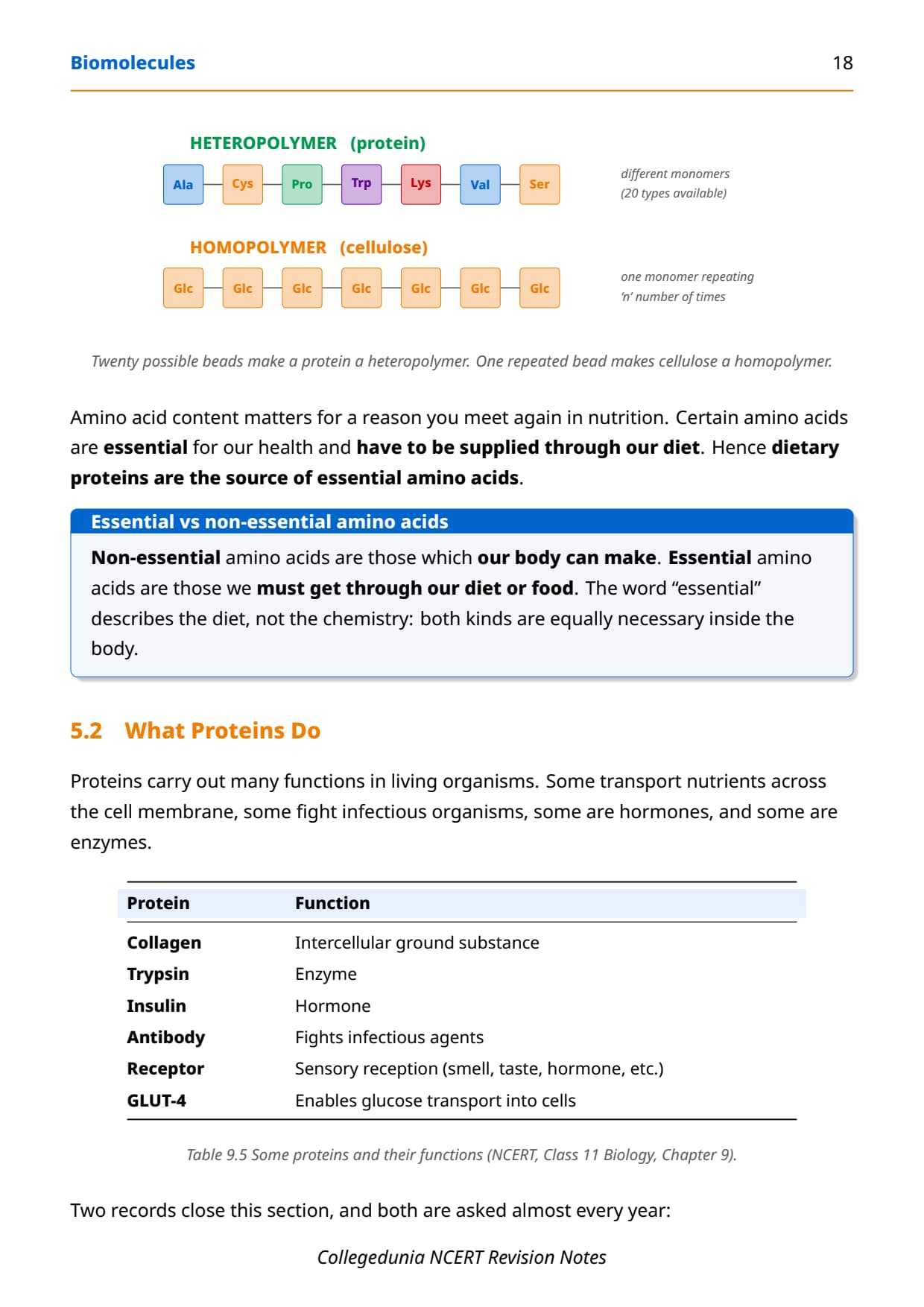
Two of the four acid-insoluble classes are polymers built from familiar monomers: proteins from amino acids and polysaccharides from sugars. A protein is a polymer of amino acids linked by peptide bonds, and because there are 20 amino acids it is a heteropolymer, not a homopolymer. A homopolymer has only one type of monomer repeating n times. Certain amino acids are essential and must come from the diet, so dietary proteins are the source of essential amino acids.
- Protein records: collagen is the most abundant protein in the animal world, while RuBisCO is the most abundant protein in the whole biosphere.
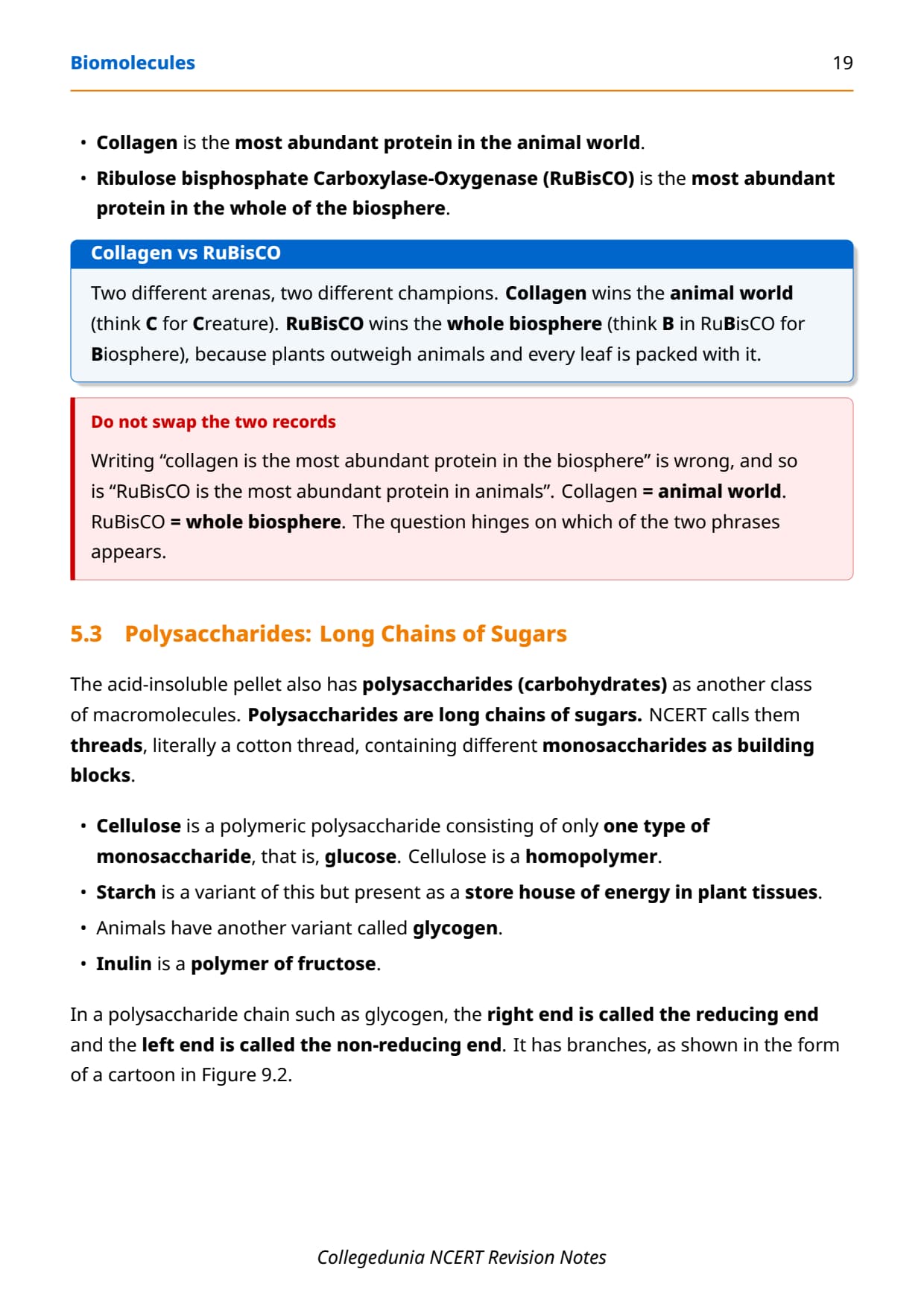
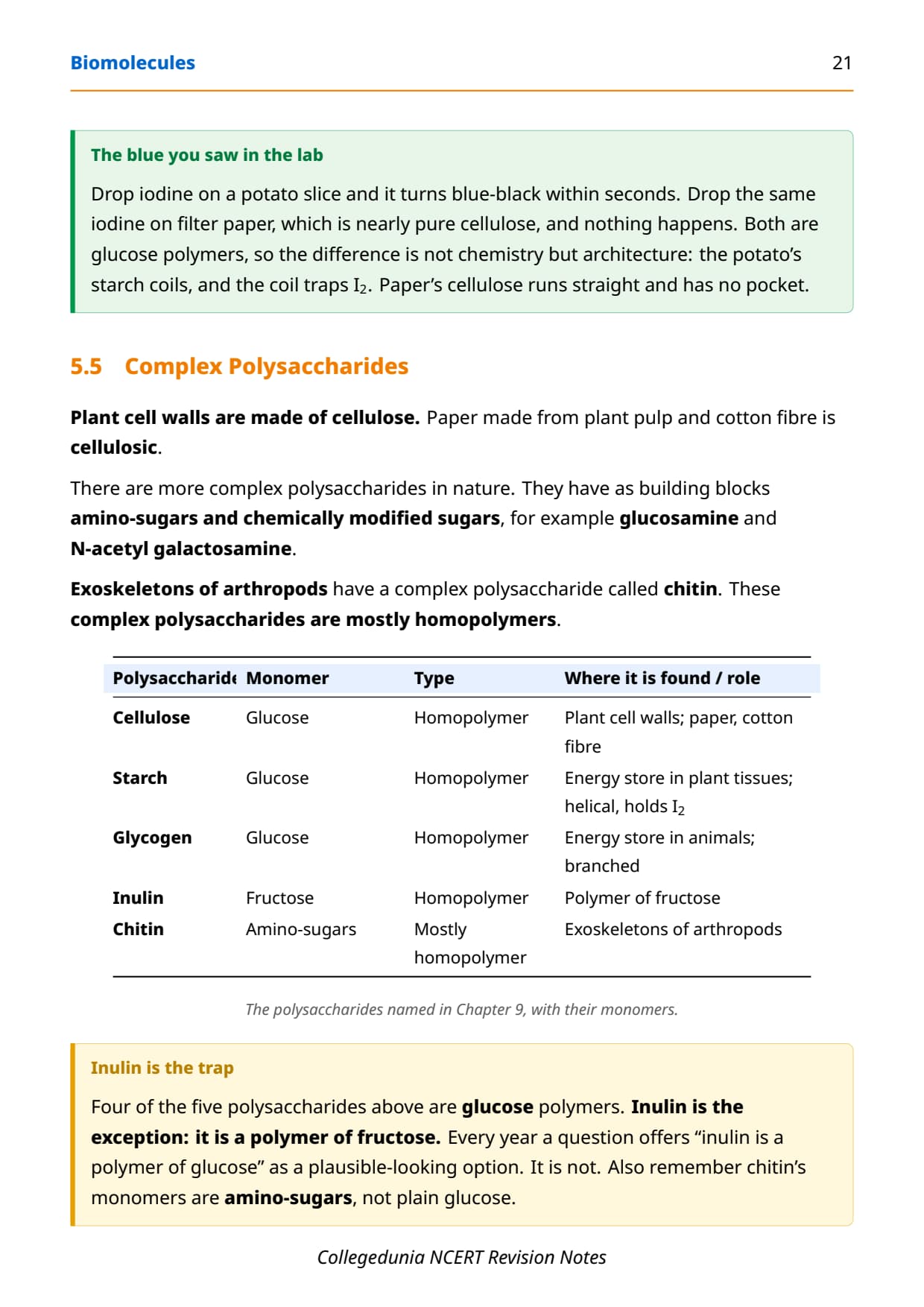
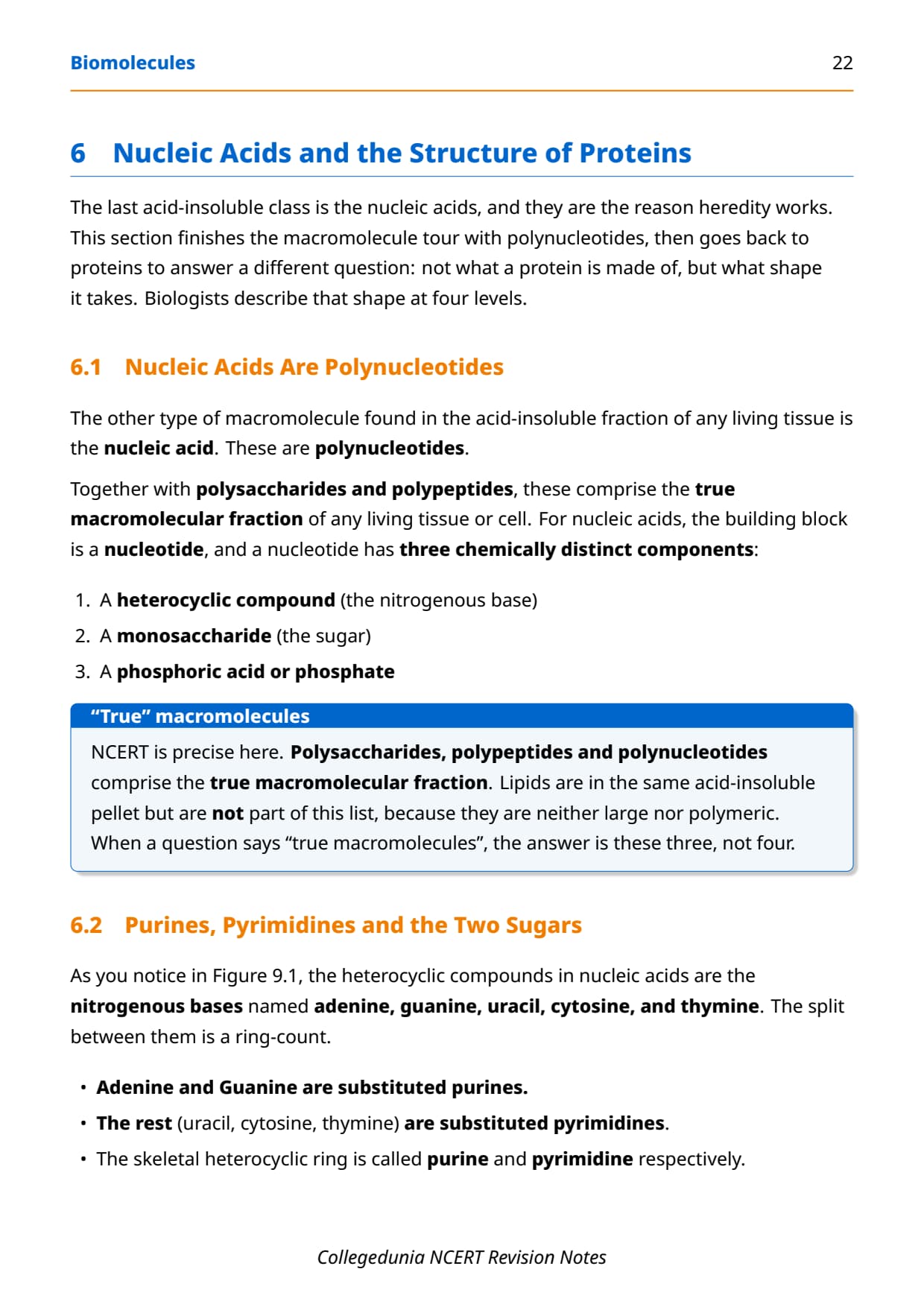
- Polysaccharides: long chains of sugars; cellulose is a homopolymer of glucose, starch stores energy in plants, glycogen stores energy in animals, and inulin is a polymer of fructose.
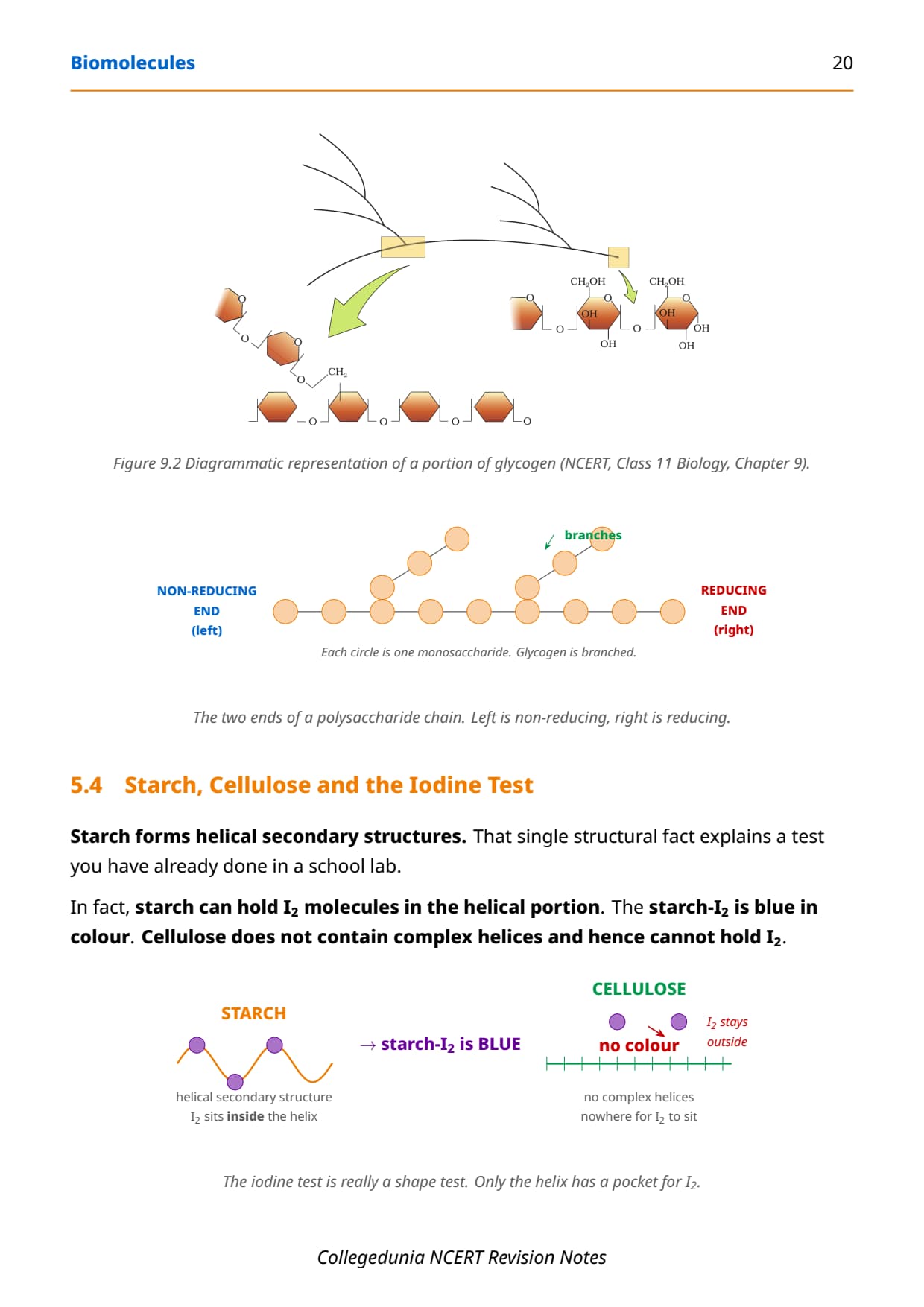
- Iodine test: starch forms helical secondary structures that hold I2 and turn blue, while cellulose has no helices and cannot hold I2.
- Nucleic acids: polynucleotides whose building block, the nucleotide, has a nitrogen base, a sugar, and a phosphate.
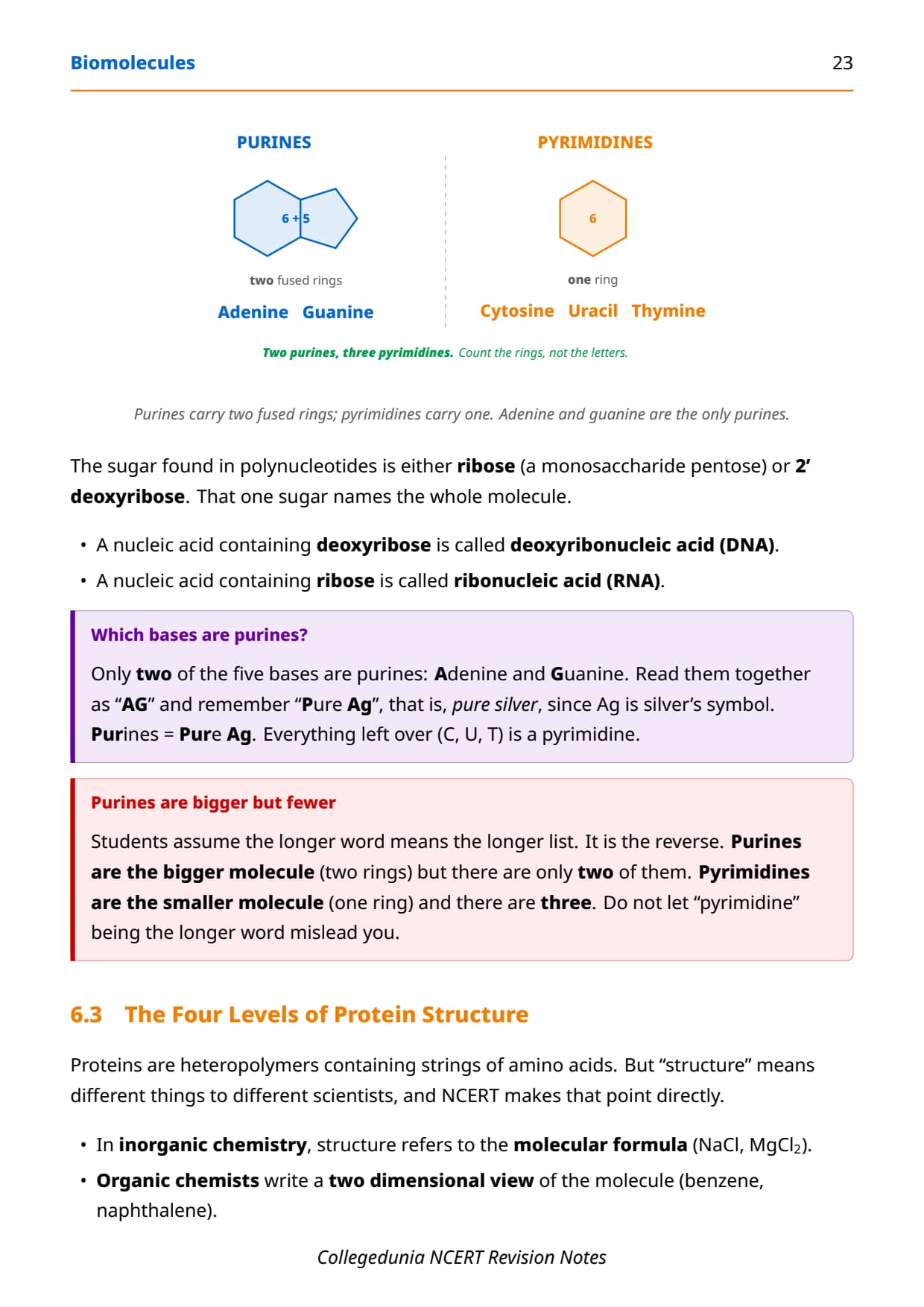
Complex polysaccharides such as chitin, found in the exoskeletons of arthropods, use amino-sugars as monomers and are mostly homopolymers. Among nucleic acid bases, adenine and guanine are purines with two fused rings, while uracil, cytosine, and thymine are pyrimidines with one ring; the sugar is either ribose (RNA) or 2' deoxyribose (DNA). Inulin is the trap: four of the five common polysaccharides are glucose polymers, but inulin is a polymer of fructose. Polysaccharides, polypeptides, and polynucleotides make up the true macromolecular fraction, and lipids are not part of that list.
The Four Levels of Protein Structure
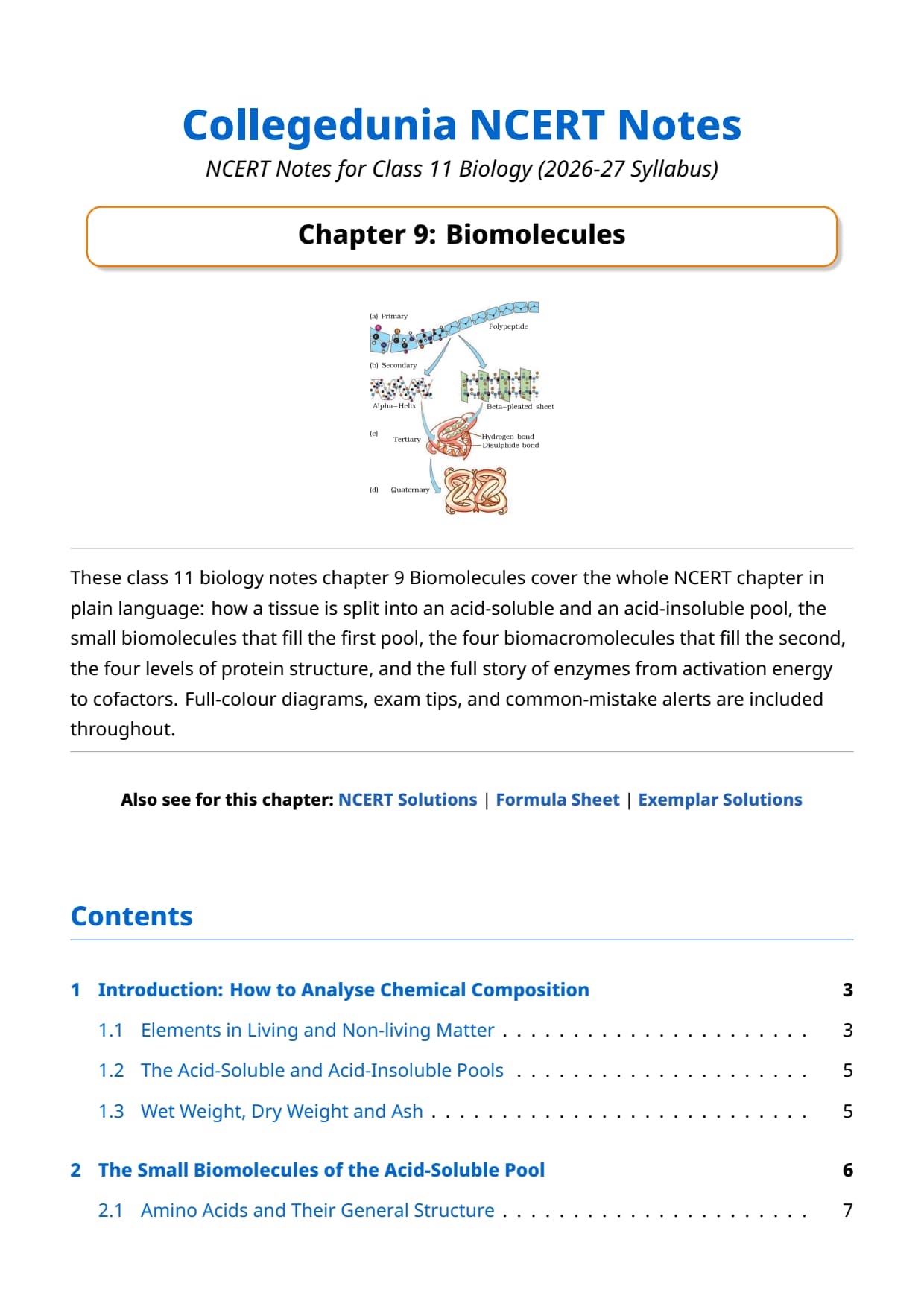
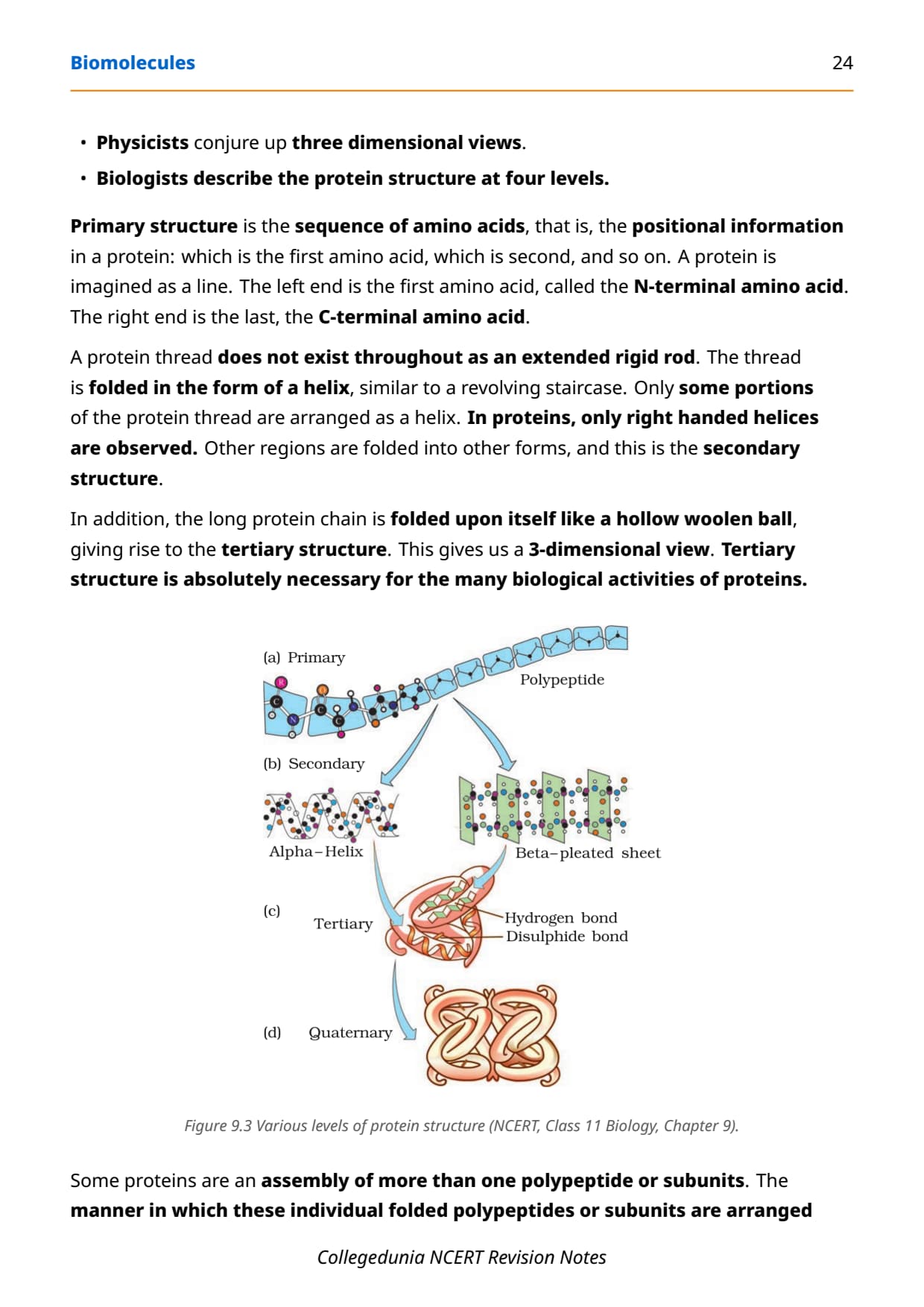
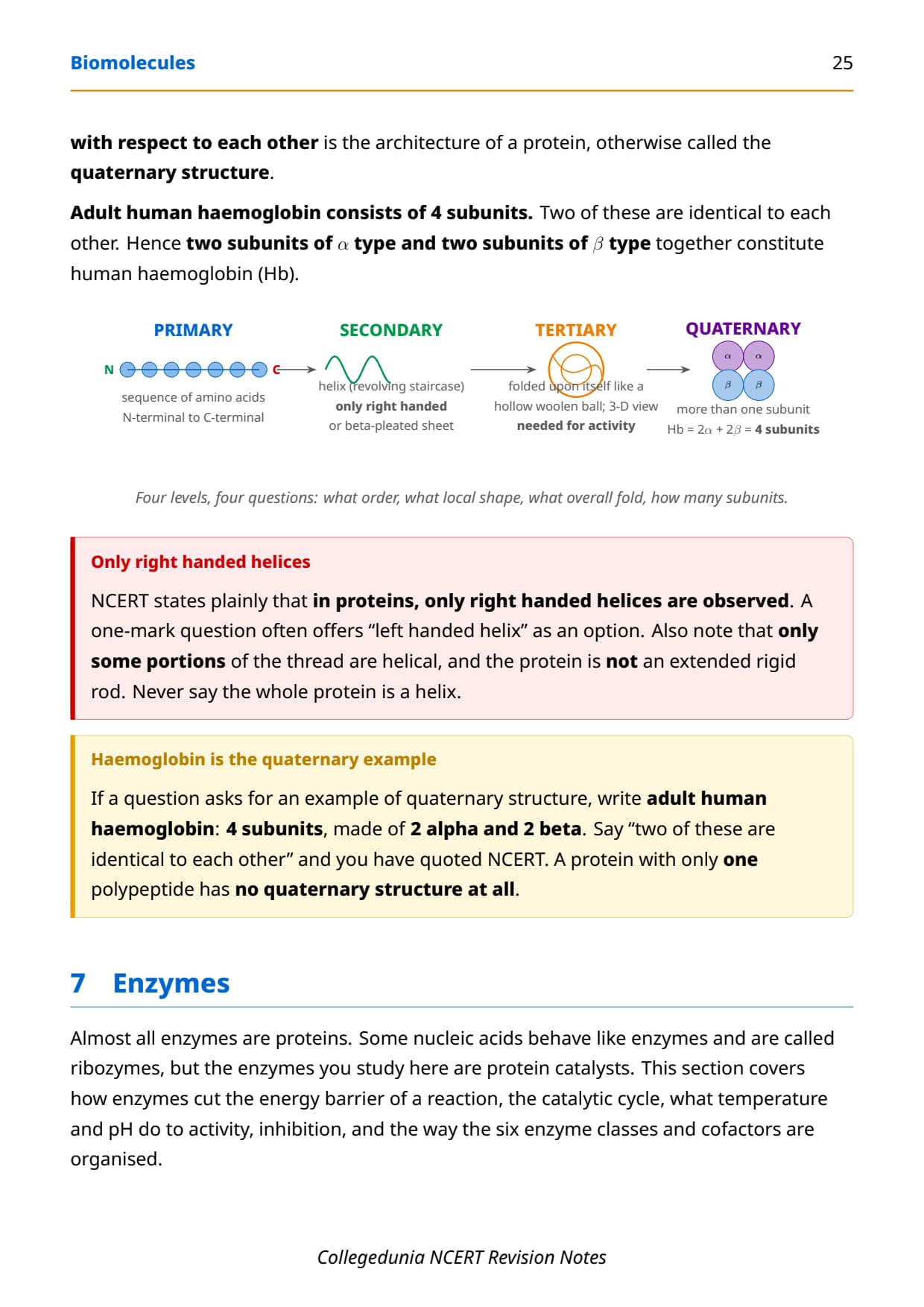
Proteins are heteropolymers of amino acids, but "structure" means different things at different scales, and NCERT describes it at four levels. This is a heavily examined topic because each level answers a different question about the same molecule, and haemoglobin is the standard example for the top level. Learn the four levels as a set, along with the one strict rule about helices.
| Level | What it describes |
|---|---|
| Primary | The sequence of amino acids, from the N-terminal (left) to the C-terminal (right) end. |
| Secondary | Local folding into a helix (only right handed helices) or a sheet; only some portions are helical. |
| Tertiary | The chain folded upon itself like a hollow woolen ball, giving a 3-D view needed for activity. |
| Quaternary | The arrangement of more than one subunit, as in haemoglobin with 2 alpha and 2 beta subunits. |
A protein thread does not exist as an extended rigid rod; only some portions fold into a helix, and in proteins only right handed helices are observed. Tertiary structure is absolutely necessary for the many biological activities of proteins. Adult human haemoglobin has 4 subunits, two alpha and two beta, and is the go-to example of quaternary structure. A protein with only one polypeptide has no quaternary structure at all, so never say the whole protein is a helix.
Enzymes: Activation Energy, Action and Classes
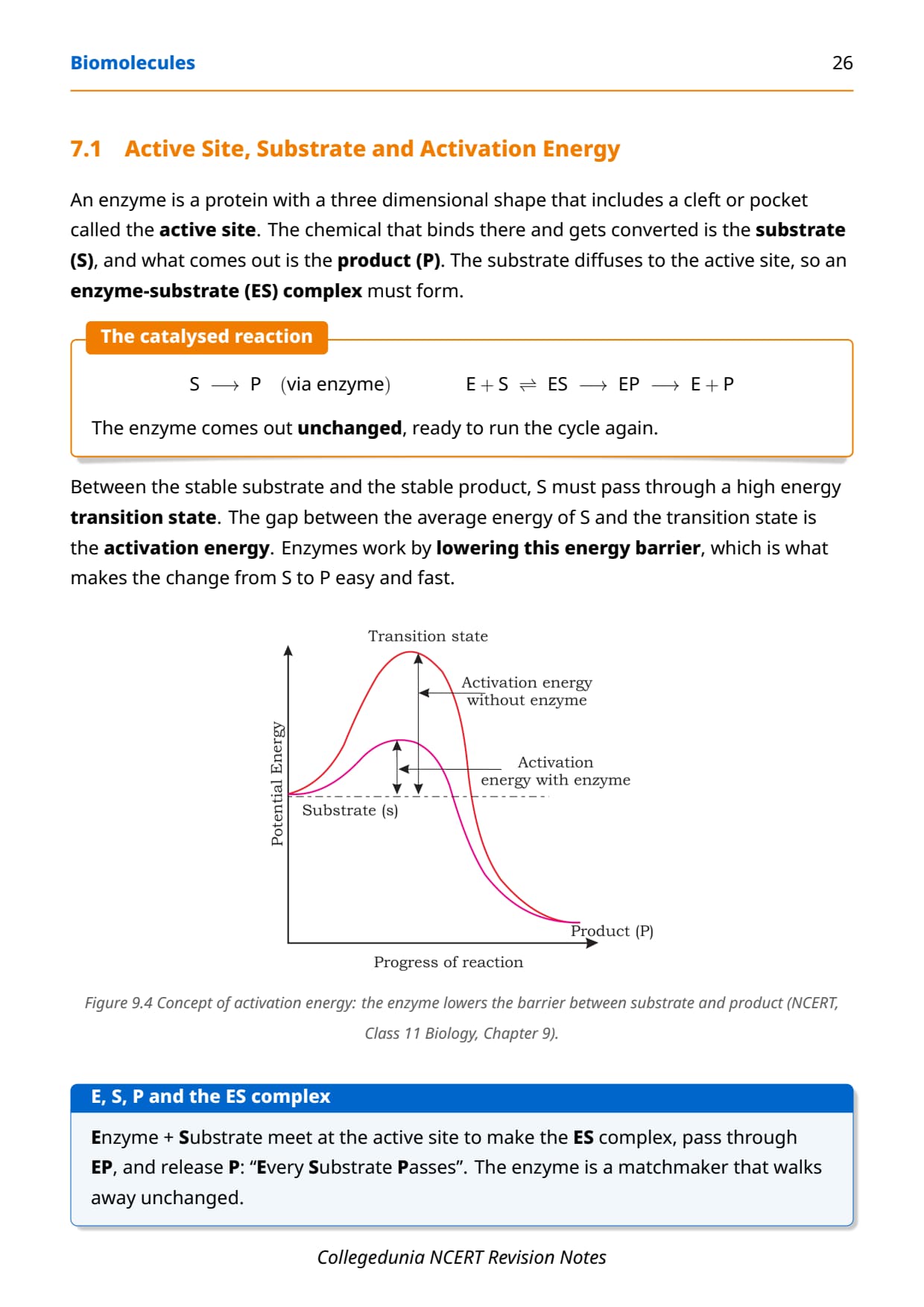
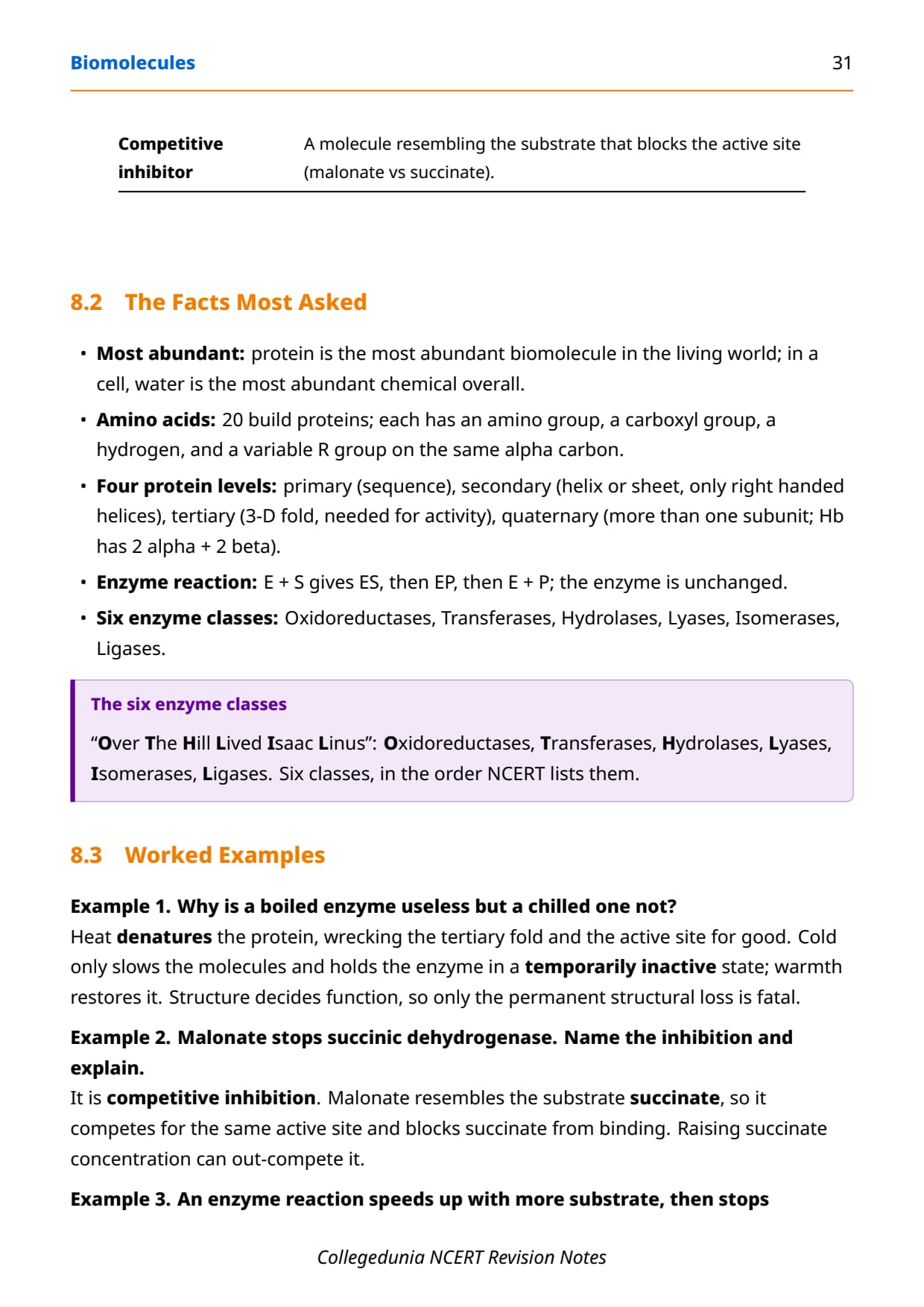
Almost all enzymes are proteins, though some nucleic acids act as enzymes and are called ribozymes. An enzyme has a cleft called the active site where the substrate binds to form an enzyme-substrate (ES) complex, passes through an EP complex, and releases the product while the enzyme comes out unchanged. Between stable substrate and stable product, S must cross a high energy transition state, and the gap to it is the activation energy. Enzymes work by lowering this energy barrier, which makes the change from S to P easy and fast.
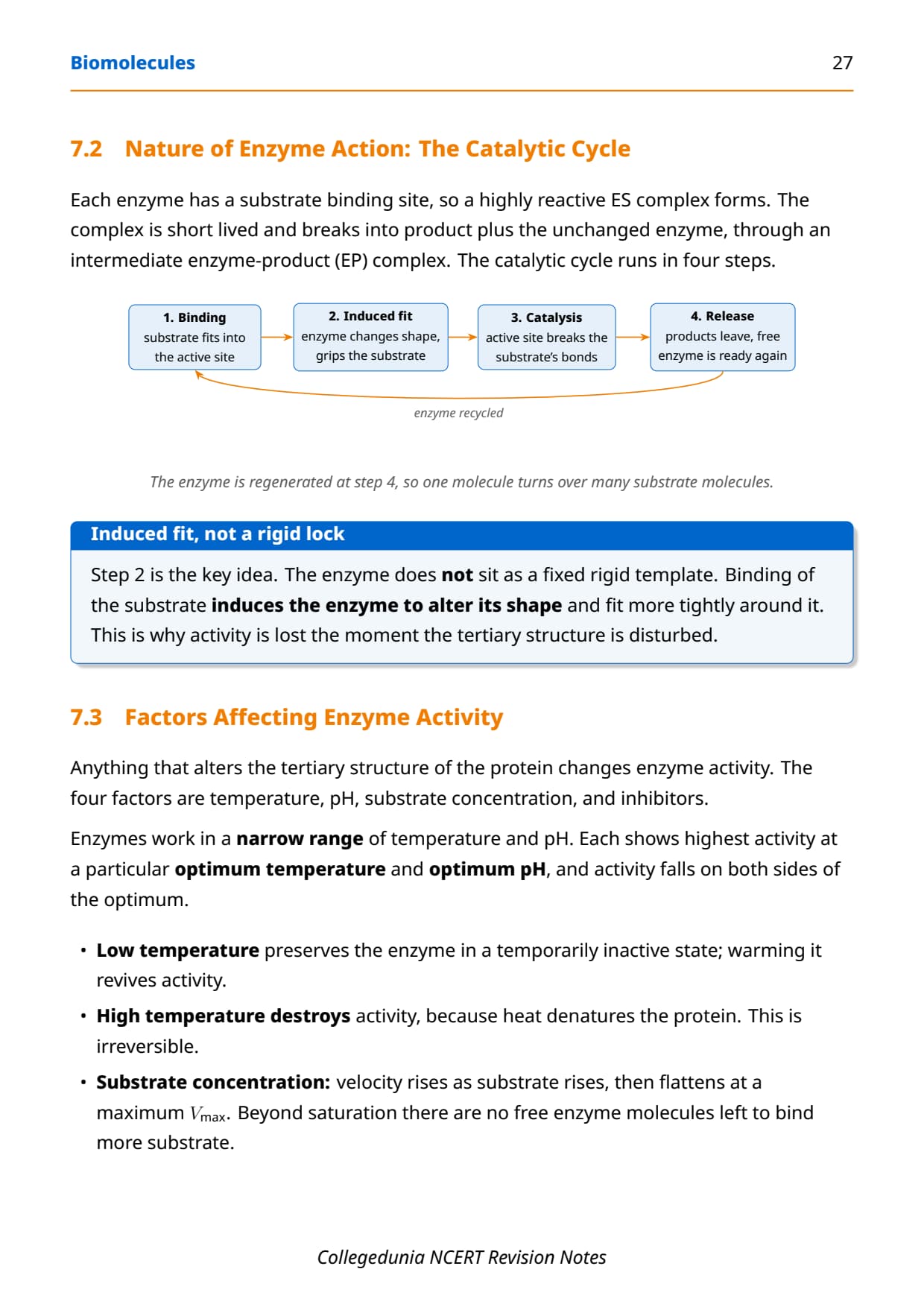
- Induced fit: binding of the substrate induces the enzyme to alter its shape and grip the substrate more tightly, so it is not a rigid lock.
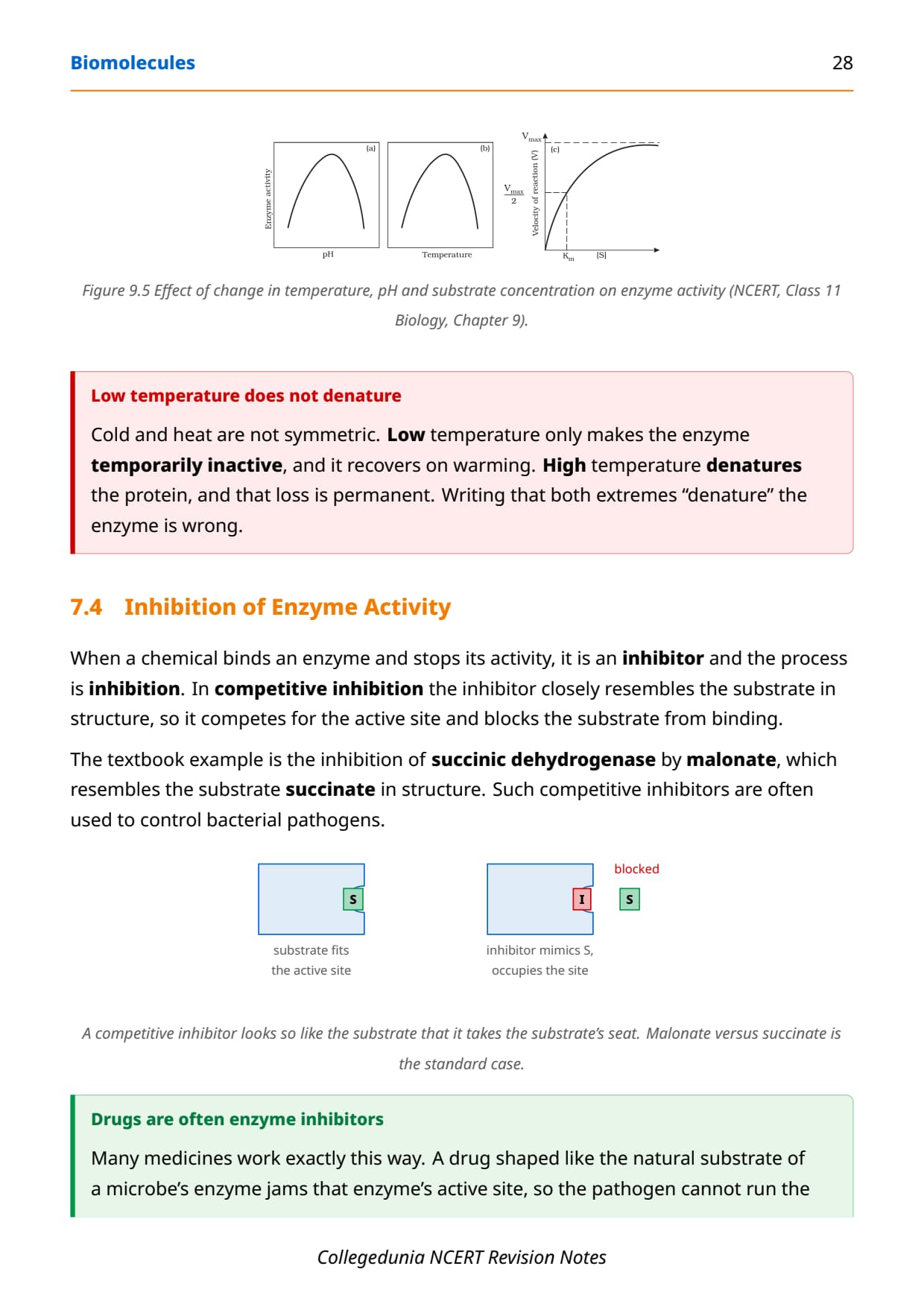
- Temperature and pH: each enzyme has an optimum; low temperature makes it temporarily inactive while high temperature denatures it permanently.
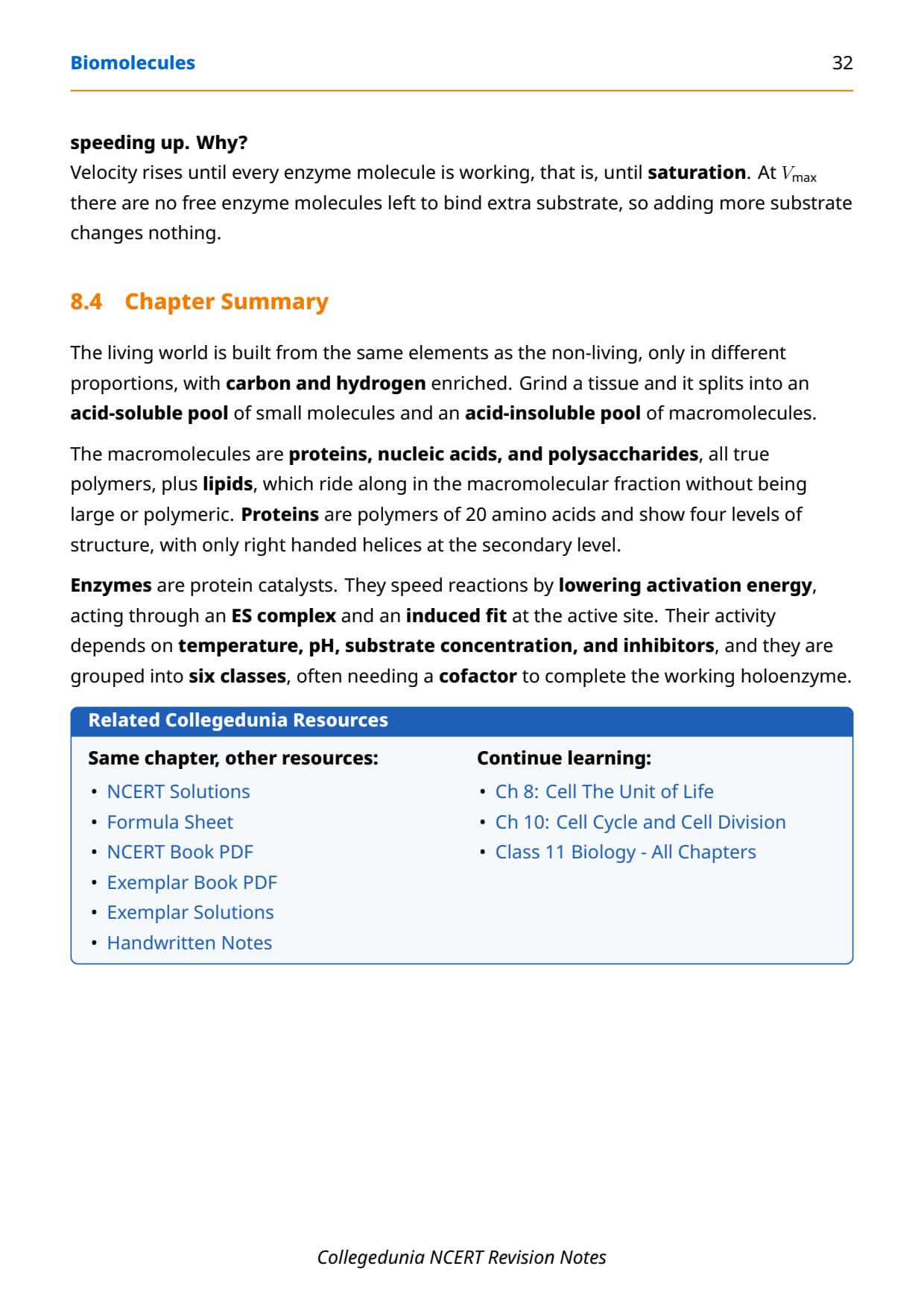
- Substrate concentration: velocity rises then flattens at Vmax when every enzyme molecule is saturated.
- Competitive inhibition: an inhibitor resembling the substrate blocks the active site, as malonate does to succinic dehydrogenase (which acts on succinate).
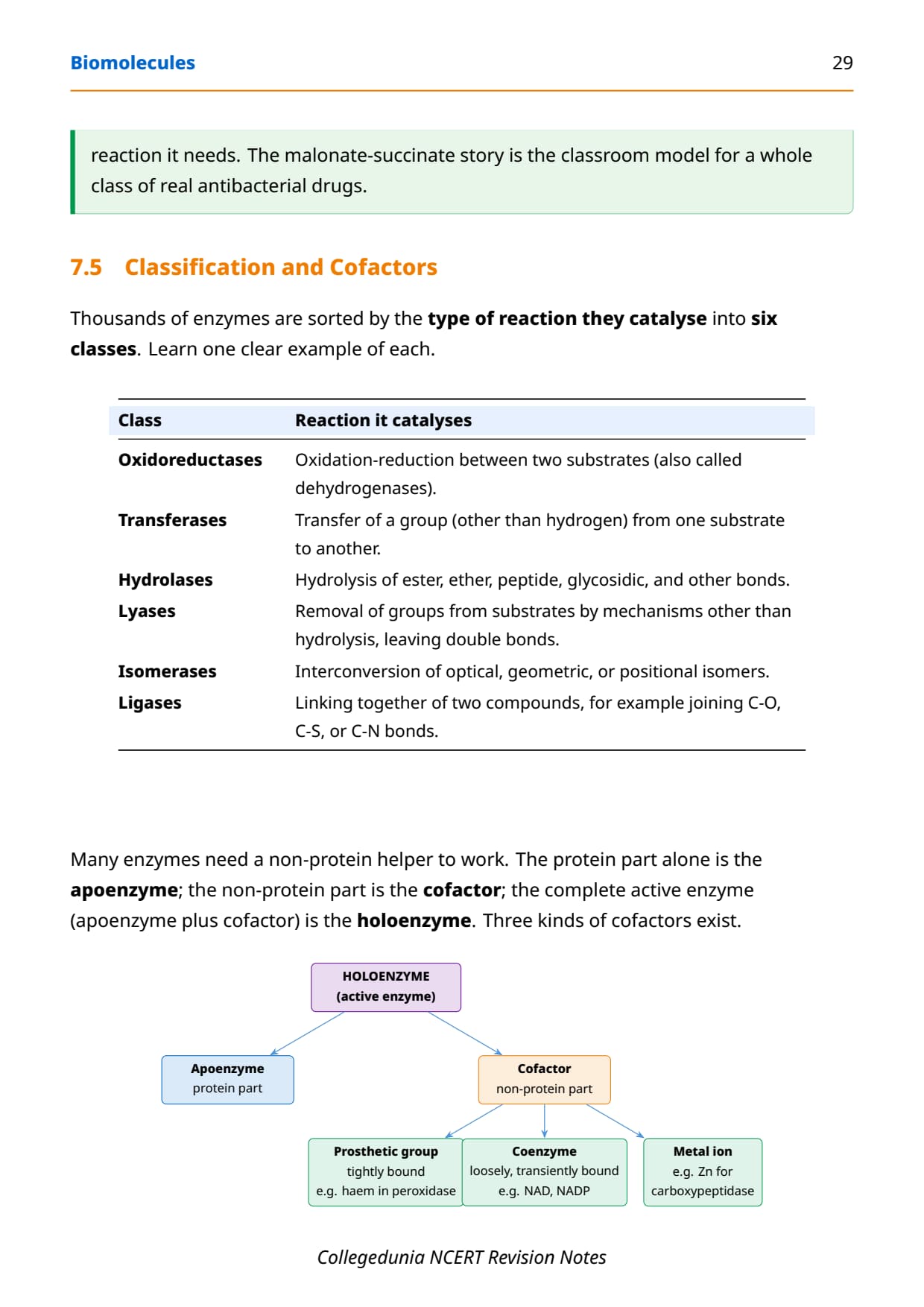
Thousands of enzymes are sorted by the reaction they catalyse into six classes: oxidoreductases, transferases, hydrolases, lyases, isomerases, and ligases. Many enzymes need a non-protein helper, so the protein part alone is the apoenzyme, the non-protein part is the cofactor, and the complete active enzyme is the holoenzyme. Cofactors come as tightly bound prosthetic groups, loosely bound coenzymes such as NAD and NADP, and metal ions. Cold and heat are not symmetric: low temperature is reversible, but high-temperature denaturation is permanent.
Key Definitions in Biomolecules
Board short-answer questions often ask for a clean definition in one or two lines, and a vague answer loses easy marks. Learn these word-for-word, because the wording of the exam question is usually built straight from the NCERT definition. Each term below also connects to an example or diagram you can be asked to explain.
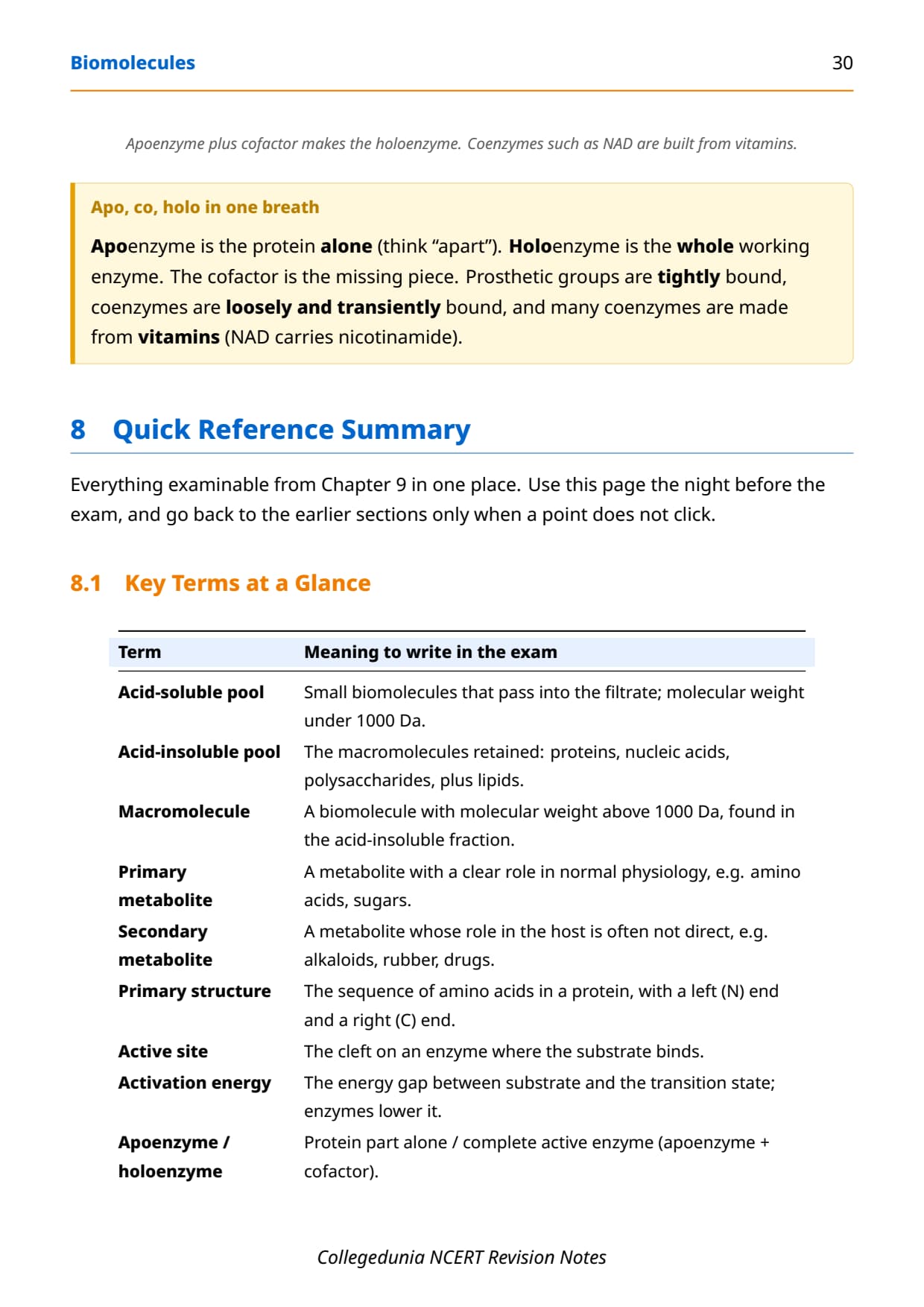
| Term | Definition |
|---|---|
| Acid-soluble pool | Small biomolecules that pass into the filtrate, with molecular weight under 1000 Da. |
| Macromolecule | A biomolecule of 10,000 Da and above, found in the acid-insoluble fraction. |
| Zwitterion | The form of an amino acid at intermediate pH with a positive and a negative charge but net charge zero. |
| Primary metabolite | A metabolite with a clear role in normal physiology, such as amino acids and sugars. |
| Primary structure | The sequence of amino acids in a protein, with an N-terminal and a C-terminal end. |
| Activation energy | The energy gap between substrate and the transition state, which enzymes lower. |
| Holoenzyme | The complete active enzyme, made of the apoenzyme (protein) plus a cofactor. |
A common board question asks you to define a nucleoside and a nucleotide and state the difference. State that a nucleoside is a base plus a sugar, and a nucleotide adds a phosphate to earn the full mark. Learning these definitions makes the wording of almost every one-mark and two-mark question in this chapter familiar.
Common Mistakes Students Make in Biomolecules
These slips happen because two terms look alike, not because the concept is hard. Each one costs 1 to 2 marks in the paper, so watch for them at the exact step where they occur.
Mistake 1: Saying a zwitterion has no charge. It has two charges that cancel to give net charge zero, and only NCERT's form B is the zwitterion.
Mistake 2: Writing that inulin is a polymer of glucose. Inulin is a polymer of fructose, while cellulose, starch, and glycogen are glucose polymers.
Mistake 3: Swapping the two protein records. Collagen is the most abundant protein in the animal world, and RuBisCO in the whole biosphere.
Mistake 4: Saying both temperature extremes denature an enzyme. Only high temperature denatures permanently; low temperature is temporary and reversible.
Mistake 5: Calling lipids macromolecules because they are large. Lipids are not large or polymeric; they only ride into the acid-insoluble fraction as vesicles.
Biomolecules Weightage in CBSE Boards, NEET and CUET
This chapter is short but scoring and biochemistry-heavy. It appears every year as a short answer on the two pools or metabolites plus an objective question on protein structure or enzymes, and it feeds directly into later physiology. Here is how the marks split across the main exams for 2026-27.
| Exam | Typical weightage | What is asked |
|---|---|---|
| CBSE Boards | 4 to 6 marks | A short answer on the two pools or metabolites plus one question on protein structure or enzymes |
| NEET | 2 to 3 questions | Amino acids, the four protein levels, enzyme action and inhibition, and the most-abundant records |
| CUET | 1 to 2 objective questions | The two pools, primary and secondary metabolites, and enzyme classes |
Protein structure and enzymes are the most tested ideas from this chapter across all three exams. Master the four protein levels and the enzyme catalytic cycle first, then the two pools and metabolites, then the molecular records, in that order of return on effort for the 2026-27 session.
How to Revise Biomolecules Quickly
Use these biomolecules class 11 notes for a fast, ordered recap the night before a test. The checklist below takes about 25 minutes and hits every marks-heavy idea in the chapter without opening the full textbook.
- First 8 minutes: draw the two-pool experiment, name trichloroacetic acid, and list the four acid-insoluble classes.
- Next 9 minutes: write the general structure of an amino acid, the four protein levels, and the haemoglobin example.
- Last 8 minutes: sketch the activation-energy curve, list the six enzyme classes, and name apoenzyme, cofactor, and holoenzyme.
Close the loop by explaining why lipids appear in the macromolecular fraction despite being small. If you can do all three blocks without notes, the chapter is exam-ready. Keep the protein-structure and enzyme diagrams beside you for the first pass only, then try the whole checklist closed-book.
Student Feedback on the Biomolecules Notes
What 11,950 students told us about their Biomolecules revision:
- 69% of students rated the four levels of protein structure as the part most worth memorising for the exam.
- Most-confused pair: nucleoside versus nucleotide, mixed up by about 3 in 10 students.
- Students who learnt enzymes through the malonate and succinate example said inhibition questions felt easy afterwards.
Source: 2026-27 Class 11 Biology student poll. Sample of 11,950 students from CBSE schools across 15 states, conducted before the 2026 boards.
Other Biomolecules Class 11 Biology Resources
Pair these notes with the solved answers, the formula sheet, and the textbook PDF for the same chapter.
| Resource | Link |
|---|---|
| NCERT Solutions | Biomolecules Class 11 NCERT Solutions |
| Formula Sheet | Biomolecules Class 11 Formula Sheet |
| Exemplar Solutions | Biomolecules Class 11 Exemplar Solutions |
| NCERT Book PDF | Biomolecules Class 11 Book PDF |
| Exemplar Book PDF | Biomolecules Class 11 Exemplar Book PDF |
NCERT Notes for Class 11 Biology: All Chapters
Jump to the revision notes for any other Class 11 Biology chapter below.
| Chapter | NCERT Notes |
|---|---|
| Chapter 1 | The Living World |
| Chapter 2 | Biological Classification |
| Chapter 3 | Plant Kingdom |
| Chapter 4 | Animal Kingdom |
| Chapter 5 | Morphology of Flowering Plants |
| Chapter 6 | Anatomy of Flowering Plants |
| Chapter 7 | Structural Organisation in Animals |
| Chapter 8 | Cell The Unit of Life |
| Chapter 9 | Biomolecules |
| Chapter 10 | Cell Cycle and Cell Division |
| Chapter 11 | Photosynthesis in Higher Plants |
| Chapter 12 | Respiration in Plants |
| Chapter 13 | Plant Growth and Development |
| Chapter 14 | Breathing and Exchange of Gases |
| Chapter 15 | Body Fluids and Circulation |
| Chapter 16 | Excretory Products and their Elimination |
| Chapter 17 | Locomotion and Movement |
| Chapter 18 | Neural Control and Coordination |
| Chapter 19 | Chemical Coordination and Integration |
FAQs on Biomolecules Class 11 Biology Notes
Biomolecules Notes - Frequently Asked Questions
Ques. What topics do the biomolecules class 11 notes cover?
Ans. These biomolecules class 11 notes cover the elements in living and non-living matter, the acid-soluble and acid-insoluble pools, amino acids and the zwitterion, lipids and fatty acids, nucleosides and nucleotides, primary and secondary metabolites, the molecular weight divide, why lipids are the odd one out, proteins and polysaccharides, nucleic acids, the four levels of protein structure, and enzymes with their action, inhibition, classes, and cofactors. Every key definition and example is included for fast revision.
Ques. What is the difference between the acid-soluble and acid-insoluble pools?
Ans. When a tissue is ground in trichloroacetic acid and strained, it splits into two fractions. The filtrate is the acid-soluble pool, holding thousands of small biomolecules with molecular weights of about 18 to 800 Da. The retentate is the acid-insoluble fraction, holding only four types of compounds: proteins, nucleic acids, polysaccharides, and lipids. Together the two pools represent the entire chemical composition of a living tissue.
Ques. Why are lipids placed in the acid-insoluble macromolecular fraction?
Ans. Lipids are small molecules under 800 Da and are not strictly macromolecules, yet they appear in the acid-insoluble fraction. The reason is the method, not the molecule. Lipids are present in membranes, and when a tissue is ground the membranes break into pieces that form vesicles. These vesicles are not water soluble, so they get separated along with the acid-insoluble pool and appear in the macromolecular fraction. Lipids are also not polymers, unlike the other three classes.
Ques. What are the four levels of protein structure?
Ans. Primary structure is the sequence of amino acids from the N-terminal to the C-terminal end. Secondary structure is local folding into a helix or sheet, and in proteins only right handed helices are observed, with only some portions folded that way. Tertiary structure is the whole chain folded upon itself like a hollow woolen ball, giving a 3-D shape that is necessary for biological activity. Quaternary structure is the arrangement of more than one subunit, as in adult human haemoglobin with two alpha and two beta subunits.
Ques. How do enzymes speed up reactions?
Ans. An enzyme binds the substrate at its active site to form an enzyme-substrate complex, converts it through an enzyme-product complex, and releases the product while the enzyme itself stays unchanged. Between the stable substrate and the stable product lies a high energy transition state, and the gap to it is the activation energy. Enzymes work by lowering this energy barrier, which makes the change from substrate to product easy and fast, and they act through an induced fit at the active site.
Ques. What is the difference between a nucleoside and a nucleotide?
Ans. When a nitrogen base is attached to a sugar, it is called a nucleoside, such as adenosine, guanosine, thymidine, uridine, and cytidine. If a phosphate group is also esterified to the sugar, it becomes a nucleotide, such as adenylic acid, guanylic acid, uridylic acid, and cytidylic acid. Nucleic acids like DNA and RNA consist of nucleotides only, and one phosphate is the single difference between the two terms.
Ques. What is the weightage of this chapter in the CBSE board exam?
Ans. Biomolecules carries about 4 to 6 marks in the CBSE Class 11 Biology paper, usually a short answer on the two pools or metabolites plus one question on protein structure or enzymes. It also appears in NEET as two to three questions on amino acids, the four protein levels, enzyme action and inhibition, and the most-abundant records, and in CUET as objective questions, which makes it a scoring chapter for the 2026-27 session.



Comments