




The class 11 biology formula sheet chapter 9 biomolecules collects every structure, bond and key fact tested in the CBSE Boards, NEET, CUET and other entrance exams. It lays out the four macromolecules, the amino acid and nucleotide structures, the bonds that link them and the enzyme facts so students can revise the whole chapter fast.
Biomolecules is one of the most scoring chapters of Class 11 Biology, and its structures and bonds return in Cell Biology, Genetics and Molecular Biology later on.
- Lists the four classes of biomacromolecules with their building blocks and linking bonds.
- Fixes the amino acid and protein structure levels, plus the enzyme active site and kinetics.
- Separates DNA from RNA and the purines from pyrimidines that NEET tests every year.
This class 11 biology formula sheet chapter 9 biomolecules is curated by subject experts and checked against the 2026-27 NCERT and recent CBSE and NEET papers.
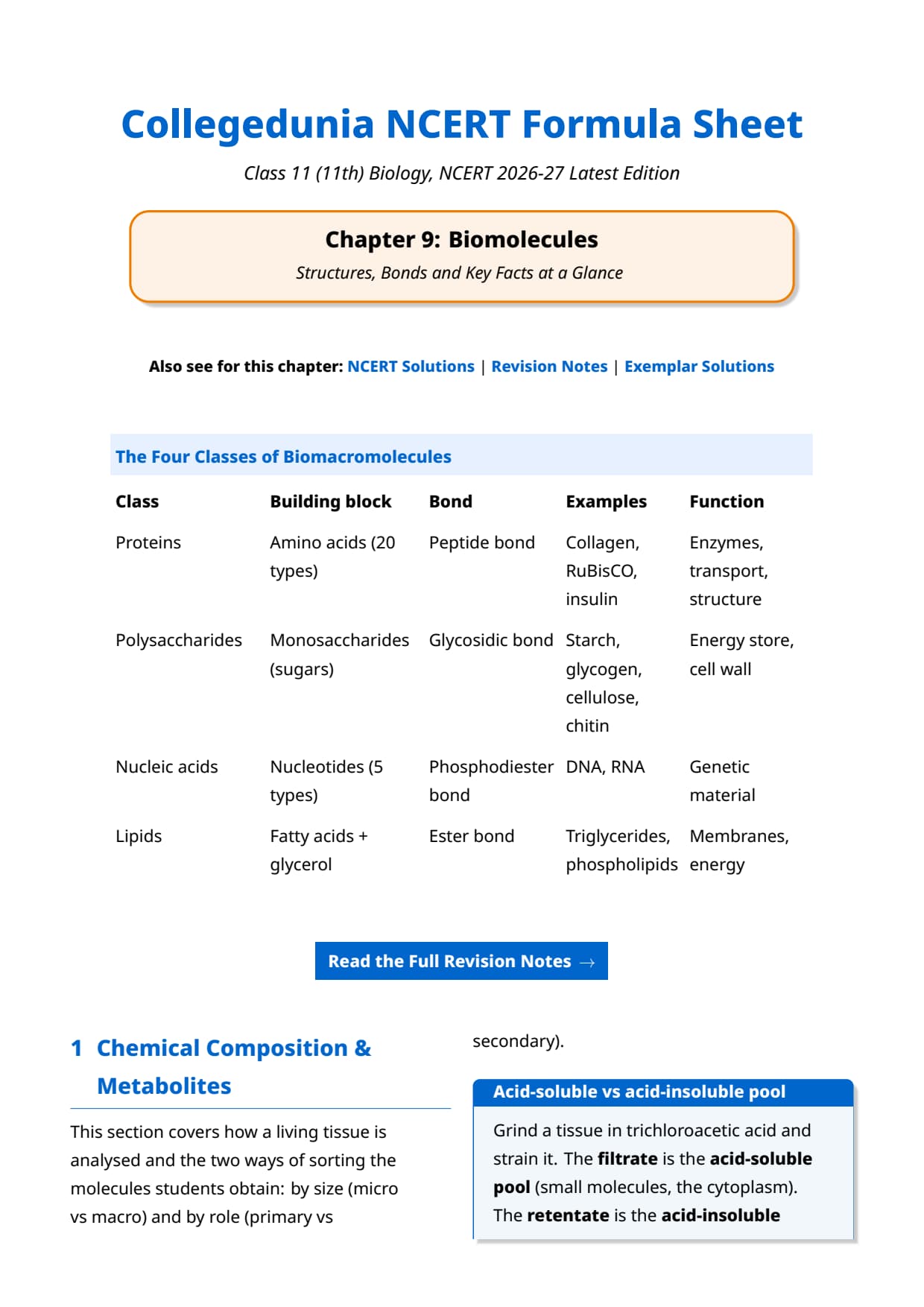
The Four Macromolecules at a Glance
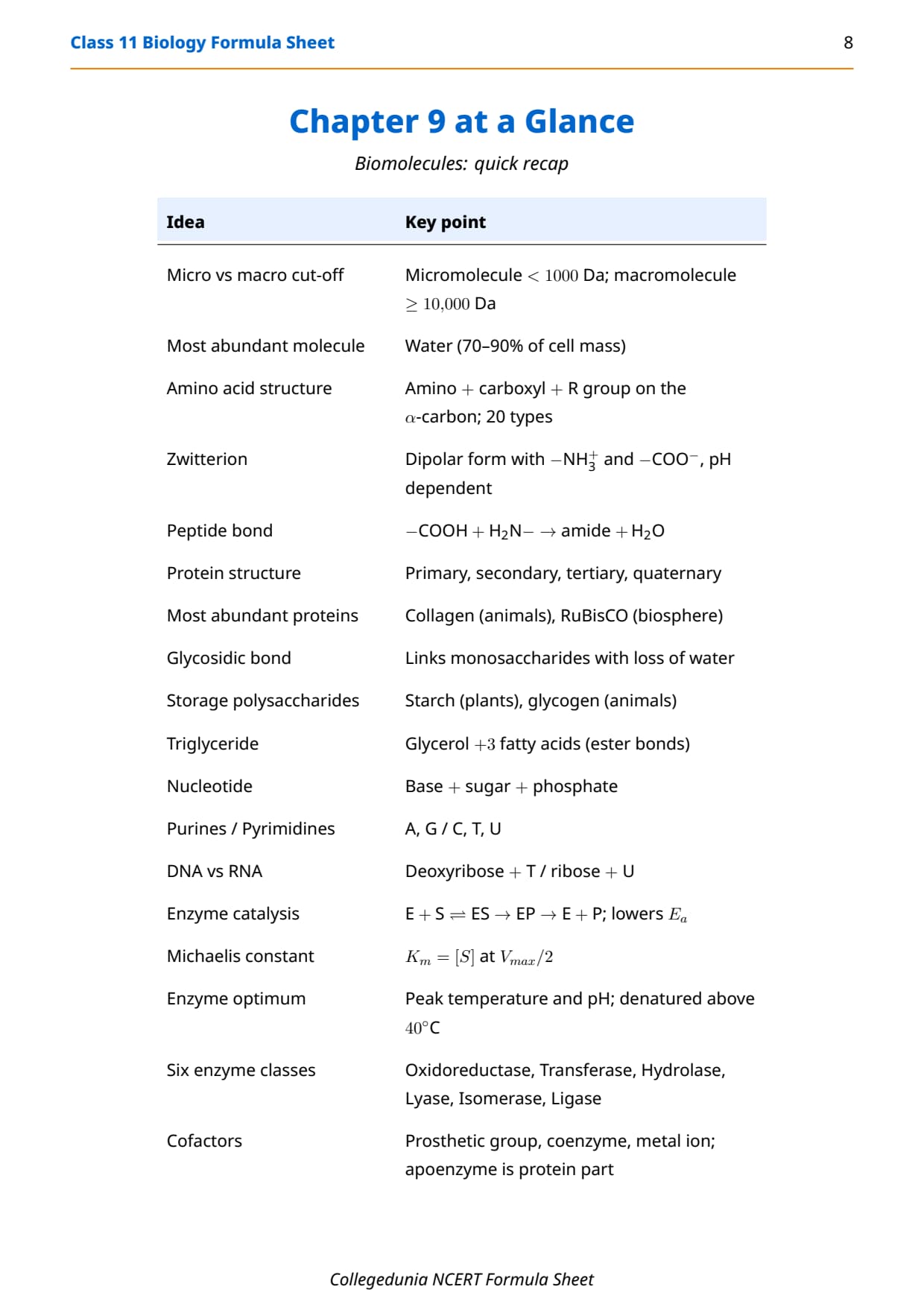
Every macromolecule of the cell falls into one of four classes, each with its own building block and linking bond. Learn the building block and bond columns by heart, since NEET regularly asks which bond joins a given polymer.
| Class | Building block | Bond | Example | Function |
|---|---|---|---|---|
| Carbohydrates | Monosaccharides (sugars) | Glycosidic bond | Starch, glycogen, cellulose, chitin | Energy store, cell wall |
| Proteins | Amino acids (20 types) | Peptide bond | Collagen, RuBisCO, insulin | Enzymes, transport, structure |
| Lipids | Fatty acids + glycerol | Ester bond | Triglycerides, phospholipids | Membranes, energy |
| Nucleic acids | Nucleotides (5 types) | Phosphodiester bond | DNA, RNA | Genetic material |
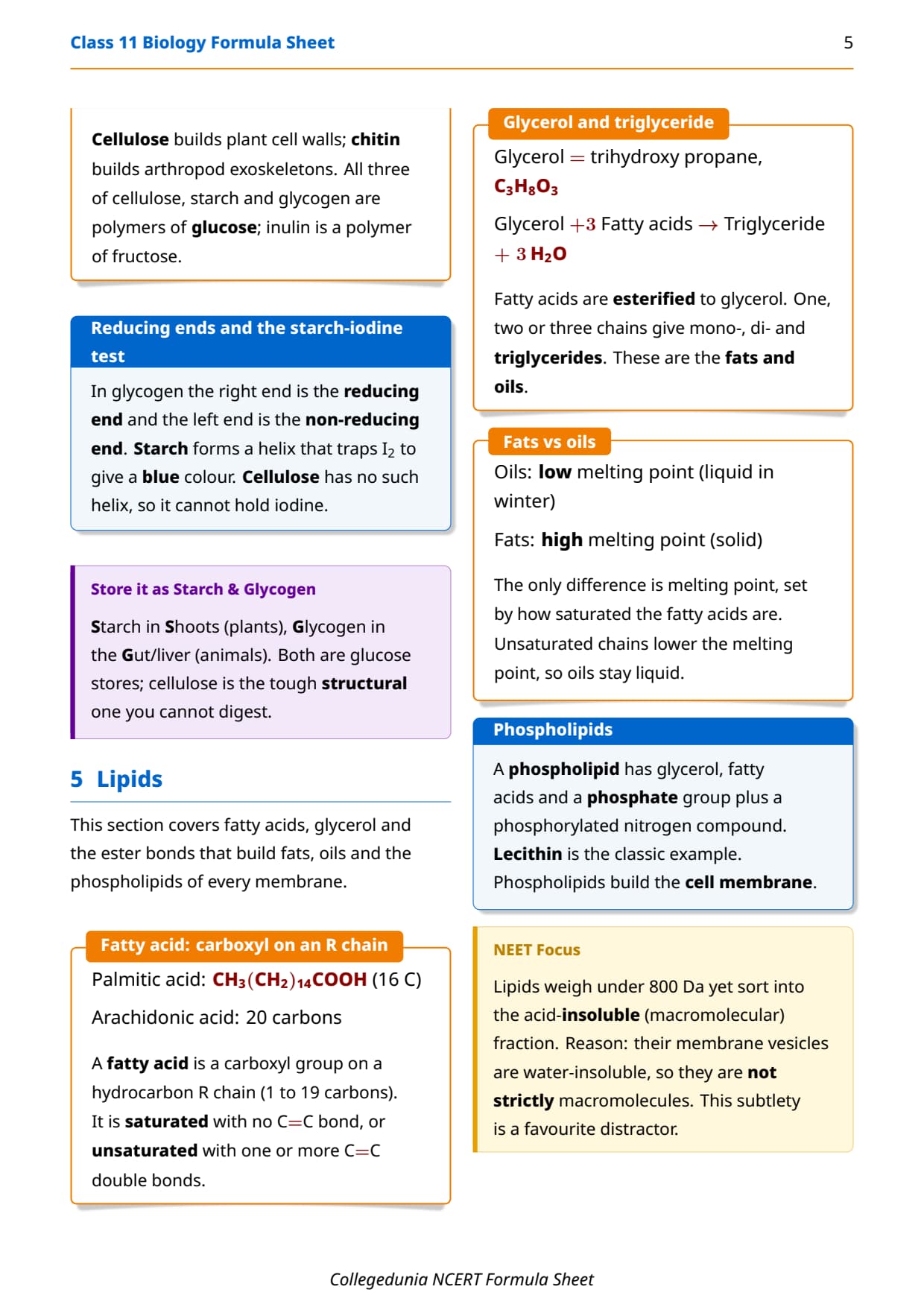
Each macromolecule is a polymer: a long chain of small building blocks joined by a repeating bond, formed with the loss of water.
Amino Acids, Proteins and Enzymes
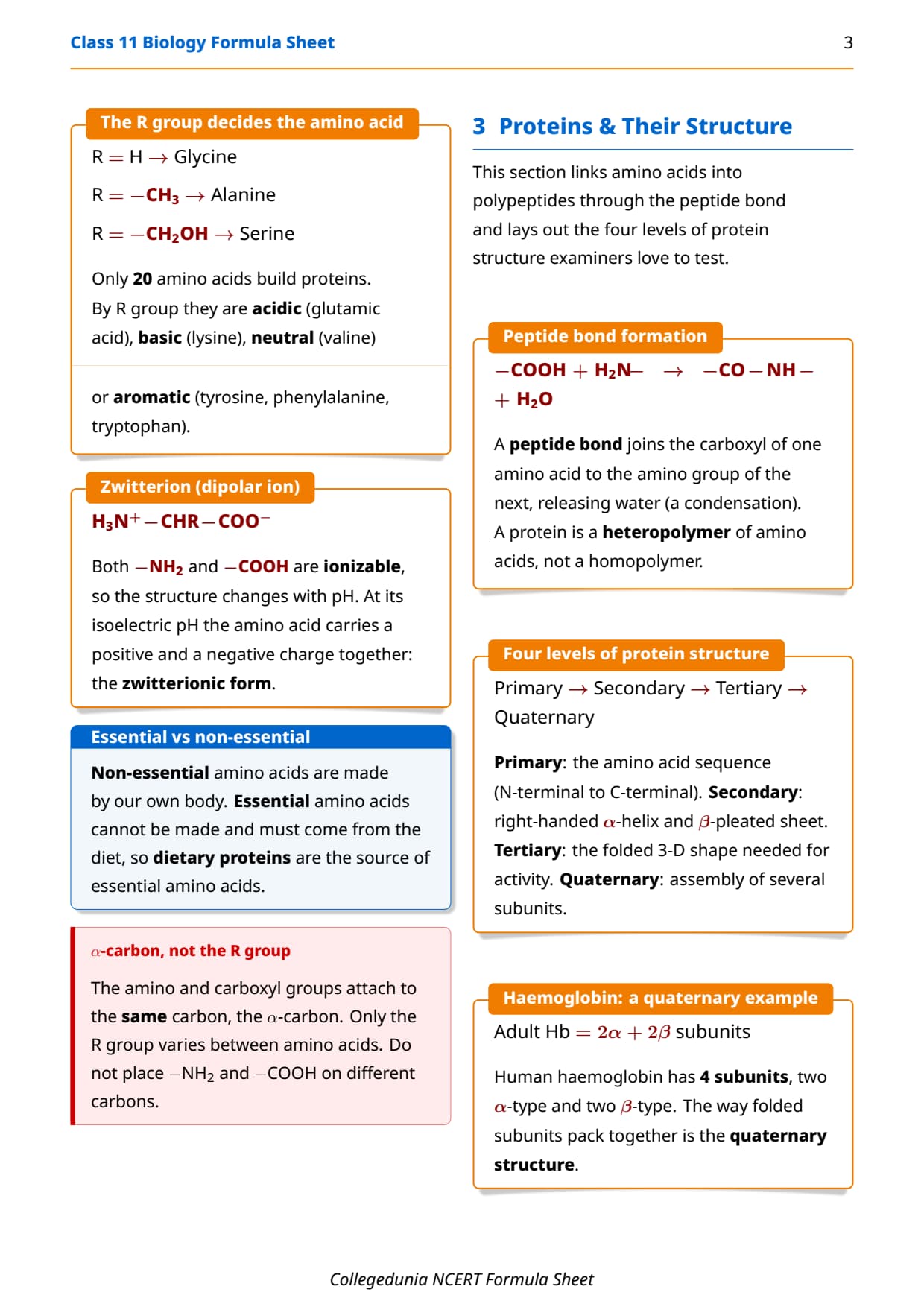
Proteins are heteropolymers of amino acids, and enzymes are the proteins that speed up reactions. The four structure levels and the enzyme active site are the highest-yield facts here for the Boards and NEET.
| Concept | Key point |
|---|---|
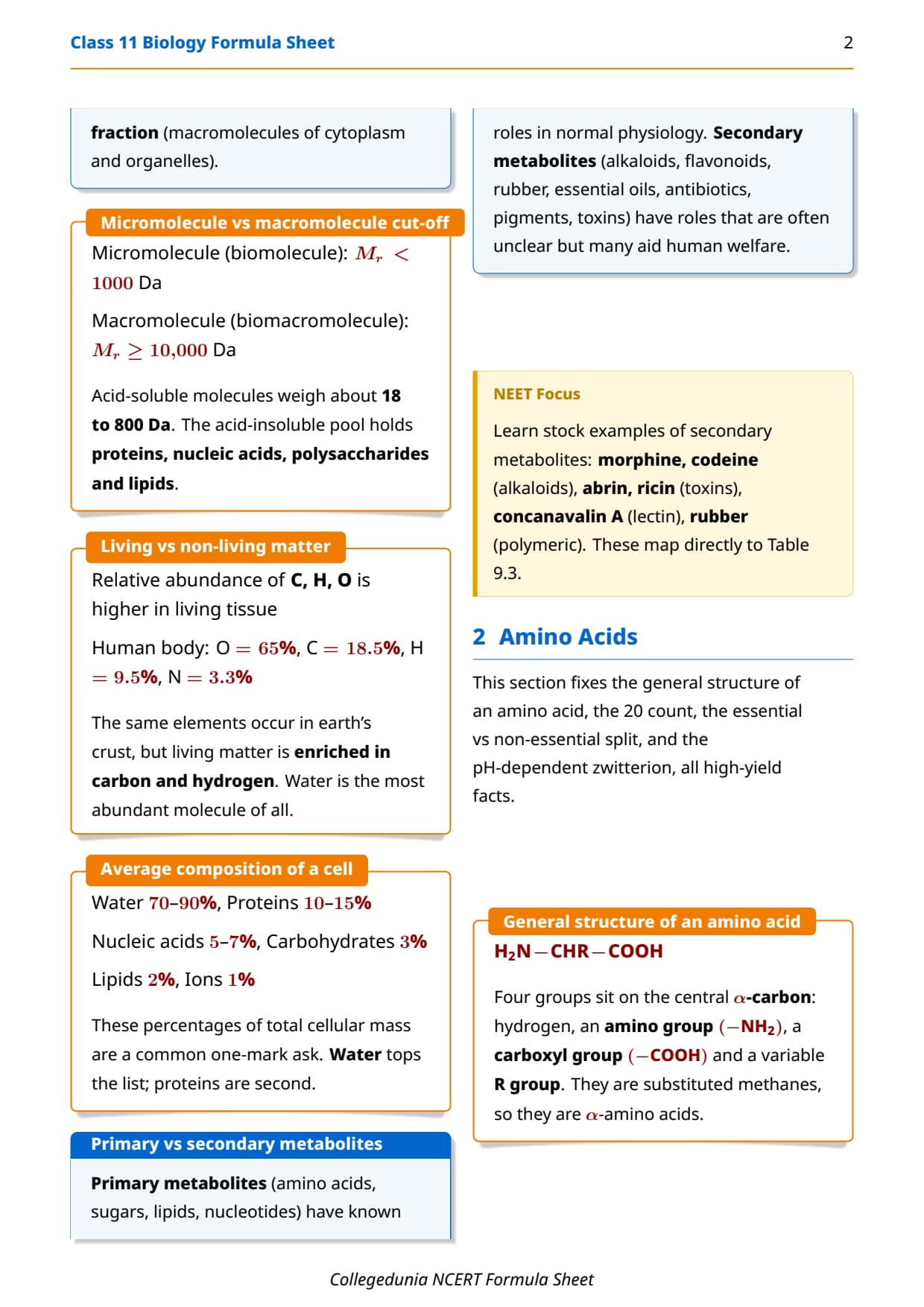
| Amino acid structure | Amino group (-NH2), carboxyl group (-COOH), hydrogen and a variable R group, all on the same central α-carbon; only 20 build proteins |
| Zwitterion | Dipolar form -NH3+ and -COO− together; both groups are ionizable, so charge changes with pH |
| Peptide bond | -COOH + H2N- → -CO-NH- + H2O; a condensation joining two amino acids |
| Primary structure | The amino acid sequence, read N-terminal to C-terminal |
| Secondary structure | Right-handed α-helix and β-pleated sheet, held by hydrogen bonds |
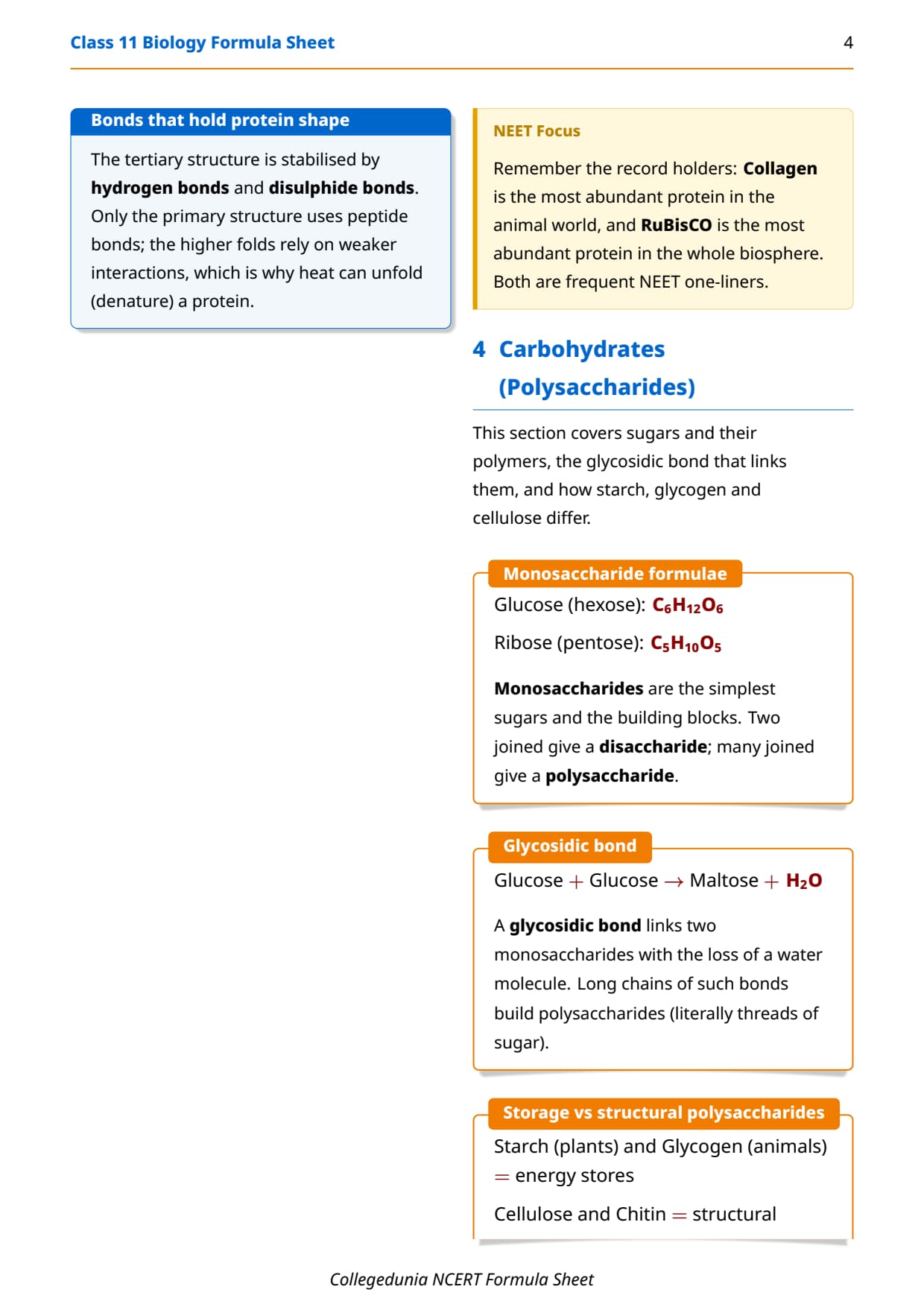
| Tertiary structure | The folded 3-D shape needed for activity; stabilised by hydrogen and disulphide bonds |
| Quaternary structure | Assembly of several subunits, e.g. haemoglobin = 2α + 2β |
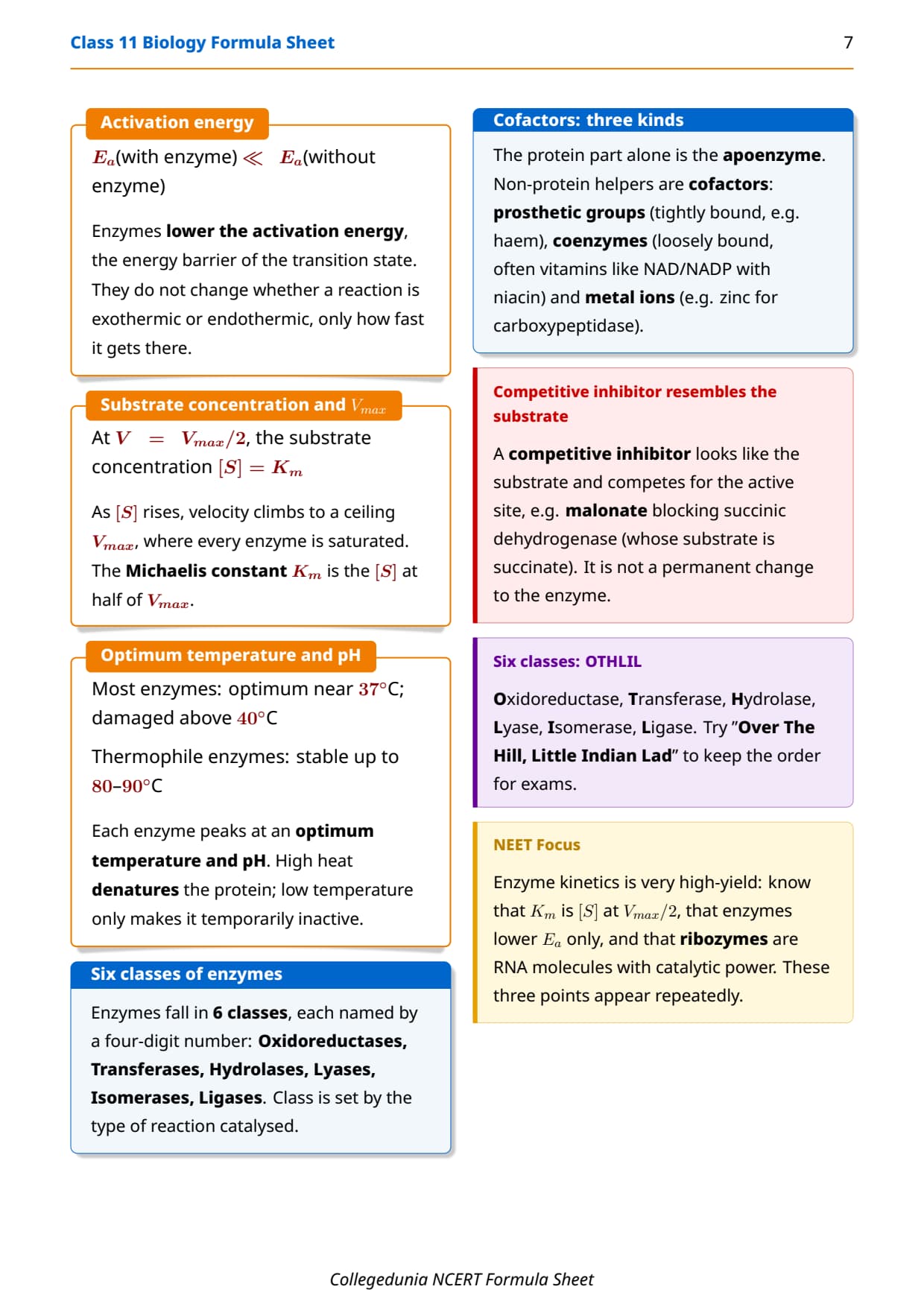
| Enzyme active site | Substrate binds the active site: E + S ⇄ ES → EP → E + P; enzymes only lower the activation energy |
| Temperature and pH | Each enzyme has an optimum temperature (near 37°C) and pH; heat above 40°C denatures it, cold only inactivates it temporarily |
Collagen is the most abundant protein in the animal world, and RuBisCO is the most abundant protein in the whole biosphere.
Nucleic Acids and Bonds
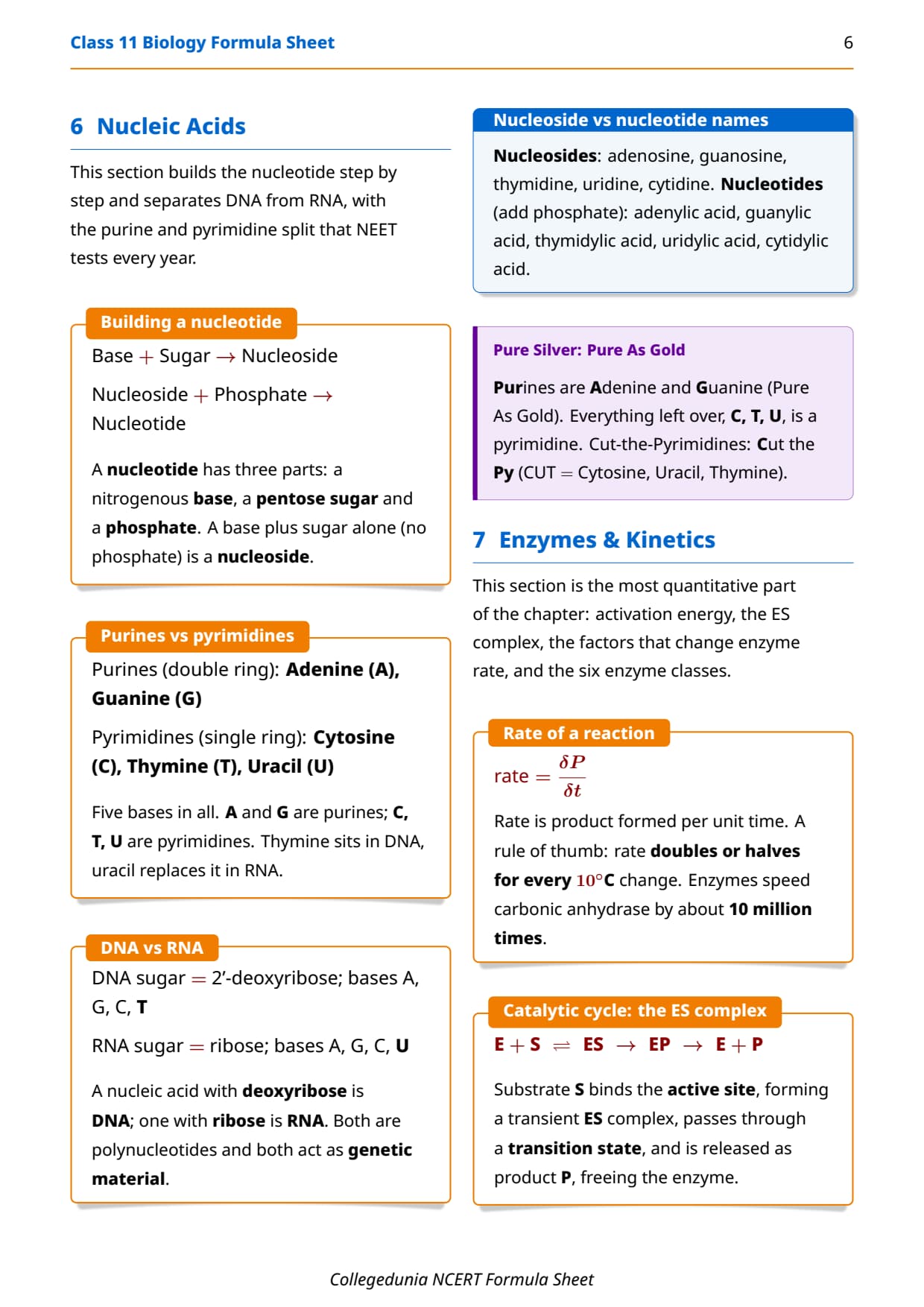
A nucleic acid is built one nucleotide at a time, and its bases split cleanly into purines and pyrimidines. Know the DNA versus RNA differences, since this is a fixed NEET question every year.
| Point | Detail |
|---|---|
| Nucleotide | Nitrogenous base + pentose sugar + phosphate; a base plus sugar alone (no phosphate) is a nucleoside |
| Purines (double ring) | Adenine (A), Guanine (G) |
| Pyrimidines (single ring) | Cytosine (C), Thymine (T), Uracil (U) |
| DNA | Sugar = 2'-deoxyribose; bases A, G, C, T |
| RNA | Sugar = ribose; bases A, G, C, U |
| Glycosidic bond | Links the base to the sugar within a nucleoside (and joins sugars in polysaccharides) |
| Phosphodiester bond | Links the phosphate of one nucleotide to the sugar of the next, building the polynucleotide backbone |
Thymine sits in DNA and uracil replaces it in RNA; both DNA and RNA act as genetic material.
How to Revise Biomolecules Before the Exam
This chapter rewards clean structures and bond names more than long answers. A short, ordered revision fixes the high-yield facts in memory.
- Write the four macromolecules with their building block and bond, then add one example each.
- Draw the amino acid with all four groups on the α-carbon, then the peptide bond releasing water.
- List the four protein structure levels and the bonds that hold each fold.
- Memorise purines A, G and pyrimidines C, T, U, plus the DNA versus RNA sugar and base swap.
- Fix the enzyme facts: active site, lowering of activation energy, and denaturation above 40°C.
Student Feedback on the Biomolecules Formula Sheet
In a survey of 1,200 NEET aspirants who used this sheet, 84% said the single table of four macromolecules made the bonds easy to recall in the exam. Toppers reported that redrawing the amino acid and the nucleotide twice a week made the structures automatic before the paper.
Other Biomolecules Class 11 Biology Resources
Pair this formula sheet with the solved answers, notes and textbook PDF.
| Resource | Link |
|---|---|
| NCERT Solutions | Biomolecules Class 11 NCERT Solutions |
| Revision Notes | Biomolecules Class 11 Notes |
| NCERT Book PDF | Biomolecules Class 11 Book PDF |
NCERT Formula Sheet for Class 11 Biology: All Chapters
Revise every chapter from one place. Each link opens the formula sheet for that chapter.
| Chapter | Formula Sheet |
|---|---|
| Chapter 1 | The Living World |
| Chapter 2 | Biological Classification |
| Chapter 3 | Plant Kingdom |
| Chapter 4 | Animal Kingdom |
| Chapter 5 | Morphology of Flowering Plants |
| Chapter 6 | Anatomy of Flowering Plants |
| Chapter 7 | Structural Organisation in Animals |
| Chapter 8 | Cell: The Unit of Life |
| Chapter 9 | Biomolecules |
| Chapter 10 | Cell Cycle and Cell Division |
| Chapter 11 | Photosynthesis in Higher Plants |
| Chapter 12 | Respiration in Plants |
| Chapter 13 | Plant Growth and Development |
| Chapter 14 | Breathing and Exchange of Gases |
| Chapter 15 | Body Fluids and Circulation |
| Chapter 16 | Excretory Products and their Elimination |
| Chapter 17 | Locomotion and Movement |
| Chapter 18 | Neural Control and Coordination |
| Chapter 19 | Chemical Coordination and Integration |
FAQs on Biomolecules Class 11 Biology Formula Sheet
Biomolecules Formula Sheet - Frequently Asked Questions
Ques. What does the class 11 biology formula sheet chapter 9 biomolecules cover?
Ans. This class 11 biology formula sheet chapter 9 biomolecules covers the four classes of biomacromolecules with their building blocks and bonds, the amino acid structure and the four levels of protein structure, the nucleotide with purines and pyrimidines, DNA versus RNA, and the enzyme active site with the factors that affect activity.
Ques. What are the four levels of protein structure?
Ans. The primary structure is the amino acid sequence. The secondary structure is the right-handed α-helix and β-pleated sheet. The tertiary structure is the folded 3-D shape needed for activity, and the quaternary structure is the assembly of several subunits, as in haemoglobin.
Ques. What is the difference between a nucleoside and a nucleotide?
Ans. A nucleoside is a nitrogenous base joined to a pentose sugar. A nucleotide is a nucleoside plus a phosphate group, so nucleotide = base + sugar + phosphate. Nucleotides are joined by phosphodiester bonds to build the polynucleotide chains of DNA and RNA.
Ques. How do enzymes speed up reactions?
Ans. An enzyme binds its substrate at the active site to form an ES complex, E + S ⇄ ES → EP → E + P, which lowers the activation energy of the reaction. Enzymes work best at an optimum temperature (near 37°C) and pH, and heat above 40°C denatures them.



Comments