




These body fluids and circulation class 11 notes pull together every fluid, cell, valve, and control idea that the CBSE Boards, NEET and CUET papers actually test in 2026-27. Revise the whole chapter fast, with the composition of blood and lymph, the ABO and Rh blood groups, the clotting cascade, the four-chambered heart, the cardiac cycle and ECG, and double circulation in one place.
This human physiology chapter builds directly on Breathing and Exchange of Gases, because the blood you study here is the same transport medium that carries the oxygen and carbon dioxide from the previous chapter.
- CBSE Weightage: 5 to 7 marks, usually one long or short answer on the heart and cardiac cycle plus one question on blood, blood groups, or coagulation.
- Topics covered: plasma and formed elements, ABO and Rh blood grouping, coagulation of blood, lymph, open and closed circulation, the human heart, the cardiac cycle and ECG, double circulation, regulation of the heartbeat, and circulatory disorders.
- Key rules: RBCs lack a nucleus while WBCs are nucleated, the pulmonary artery carries deoxygenated blood, lub is atrioventricular and dub is semilunar, and the heart is myogenic.
These body fluids and circulation class 11 notes are curated by subject experts, based on the 2026-27 NCERT textbook, and checked against the last five years of CBSE Board and NEET papers.
Topic-by-Topic Summary of Body Fluids and Circulation
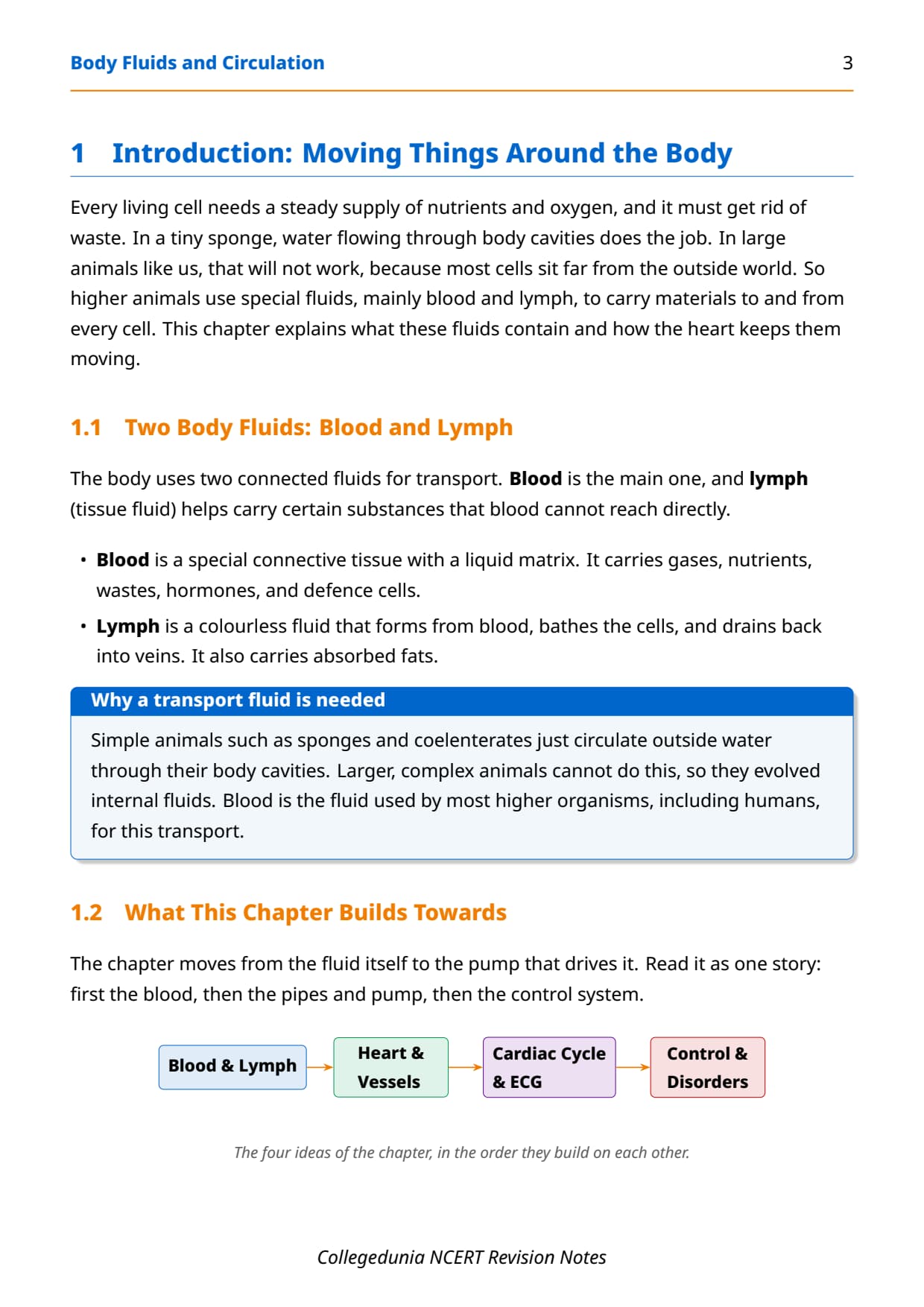
The chapter moves from the fluid itself to the pump that drives it, then to the control system that tunes the pump. Read it as one story: first blood and lymph, then blood groups and clotting, then the circulatory plans and the human heart, and finally the cardiac cycle, double circulation, and the disorders. Here is the quick map of what each topic gives you before you revise the detail.
- Blood: plasma as the liquid matrix and the formed elements RBC, WBC, and platelets, with their counts and jobs.
- Blood groups and coagulation: ABO and Rh grouping, universal donor and recipient, erythroblastosis foetalis, and the fibrin clotting cascade.
- Lymph and circulatory plans: tissue fluid and immunity, open versus closed circulation, and the evolution of the vertebrate heart from two to four chambers.
- The heart and cardiac cycle: the four chambers and valves, the SAN pacemaker, one 0.8-second cycle, and the PQRST of the ECG.
- Double circulation and disorders: the pulmonary and systemic loops, neural regulation, and the disorders hypertension, CAD, angina, and heart failure.
Revise the topics in this order, because each one uses the one before it. Master the four heart chambers and the cardiac cycle first, and the ECG, double circulation, and regulation fall into place around them. These body fluids and circulation class 11 notes follow the same sequence as the NCERT textbook.
Blood: Plasma and the Formed Elements
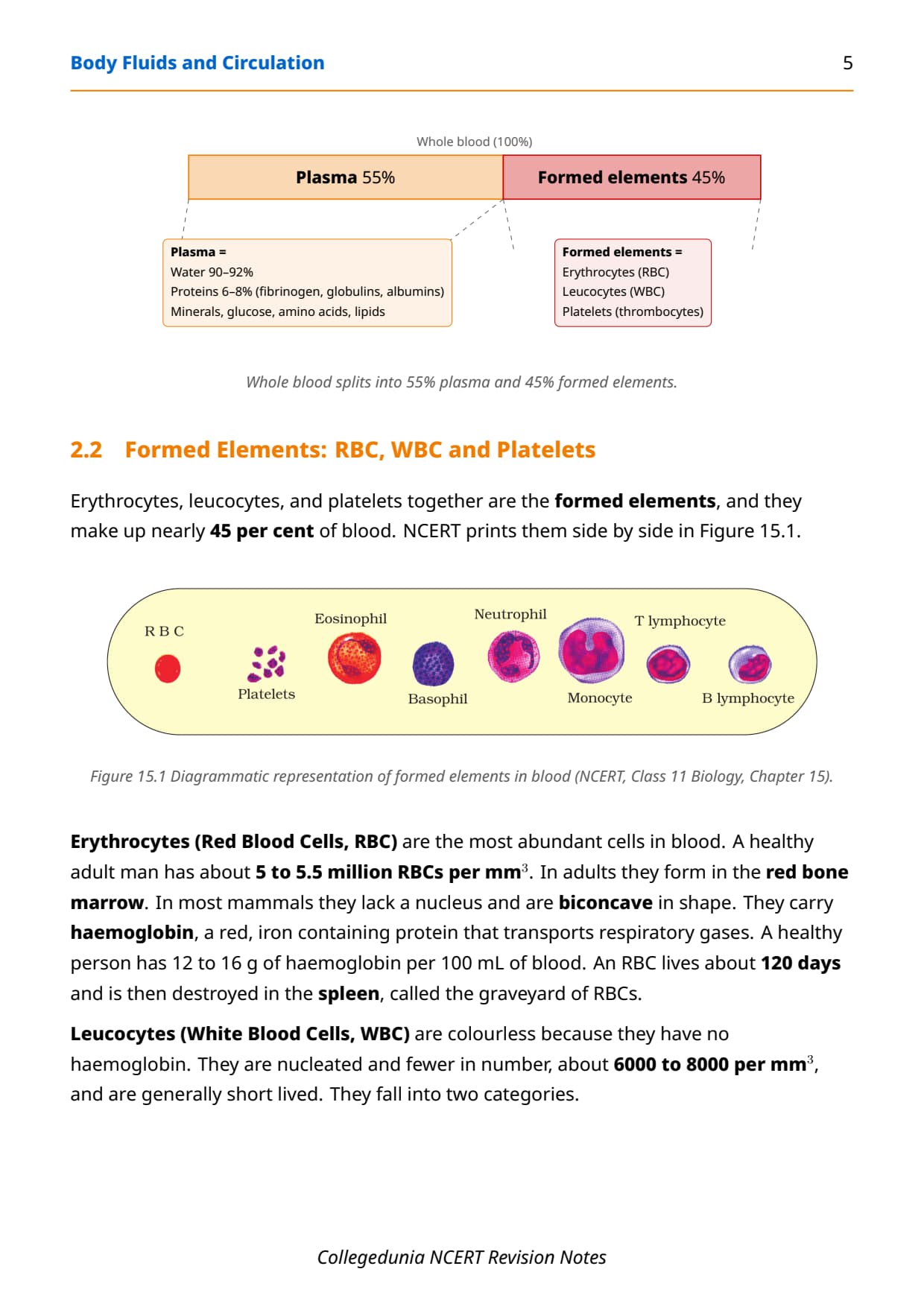
Large animals cannot rely on outside water bathing their cells, so higher organisms use blood, a special connective tissue with a fluid matrix, to carry materials to and from every cell. Blood has two parts: a liquid matrix called plasma and cells and cell fragments called formed elements. Plasma is a straw-coloured, slightly viscous fluid making up nearly 55 per cent of blood, of which 90 to 92 per cent is water and 6 to 8 per cent is protein. The three major plasma proteins each have a clear role: fibrinogen is needed for clotting, globulins work in body defence, and albumins maintain osmotic balance. Plasma without the clotting factors is called serum.
- Erythrocytes (RBC): most abundant cells, 5 to 5.5 million per mm3, biconcave and without a nucleus in most mammals, formed in the red bone marrow, carrying haemoglobin (12 to 16 g per 100 mL), living about 120 days, and destroyed in the spleen.
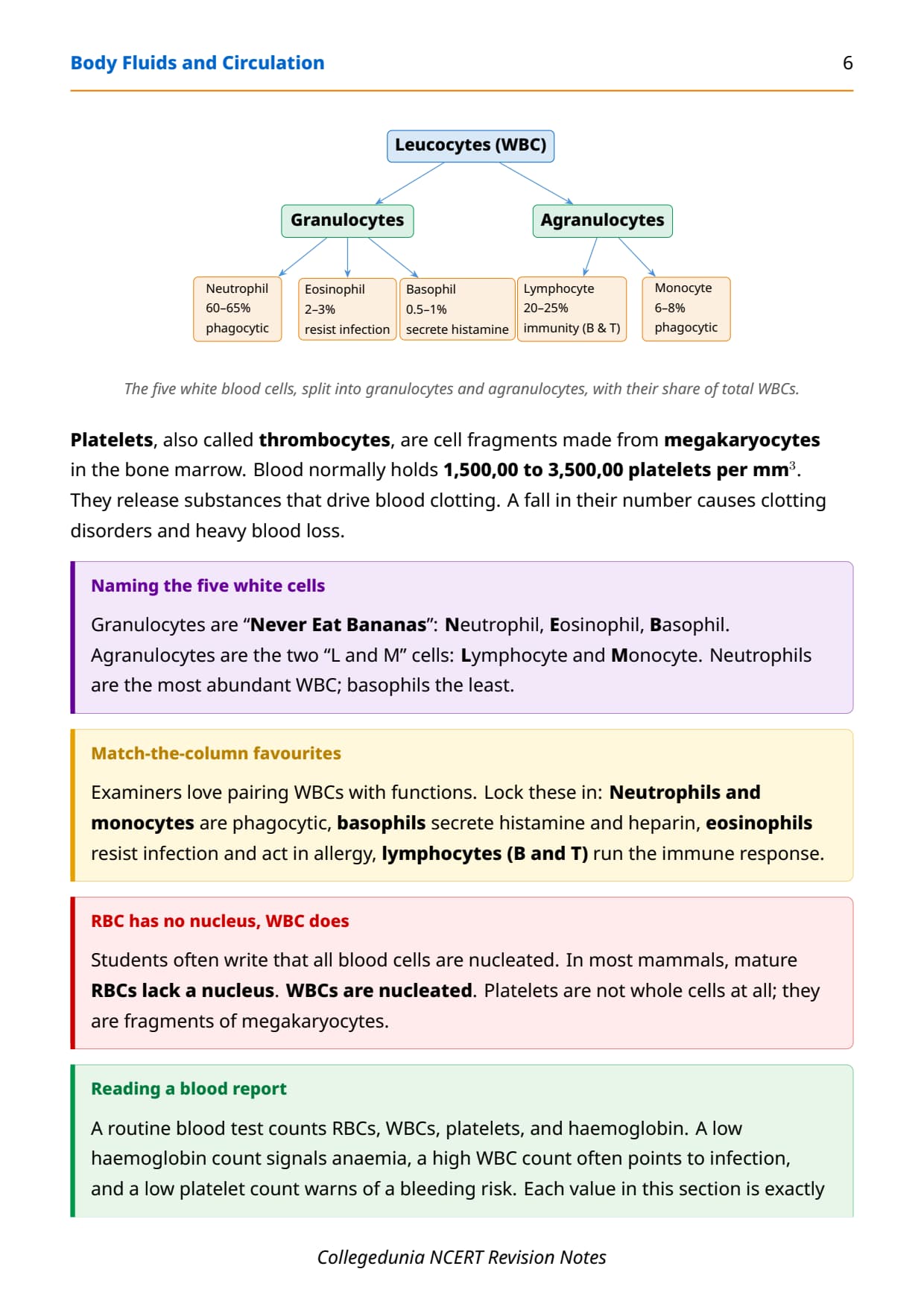
- Leucocytes (WBC): colourless and nucleated, 6000 to 8000 per mm3, split into granulocytes (neutrophil, eosinophil, basophil) and agranulocytes (lymphocyte, monocyte).
- Platelets (thrombocytes): cell fragments of megakaryocytes, 150,000 to 350,000 per mm3, releasing factors that drive clotting.
The five white cells split their labour clearly, and examiners love pairing them with functions. Neutrophils and monocytes are phagocytic, basophils secrete histamine and heparin, eosinophils resist infection and act in allergy, and lymphocytes (B and T) run the immune response. Neutrophils are the most abundant WBC at 60 to 65 per cent, and basophils the least at 0.5 to 1 per cent. Remember that in most mammals mature RBCs lack a nucleus while WBCs are nucleated, and platelets are not whole cells at all but fragments of megakaryocytes.
Blood Groups: ABO, Rh and Coagulation
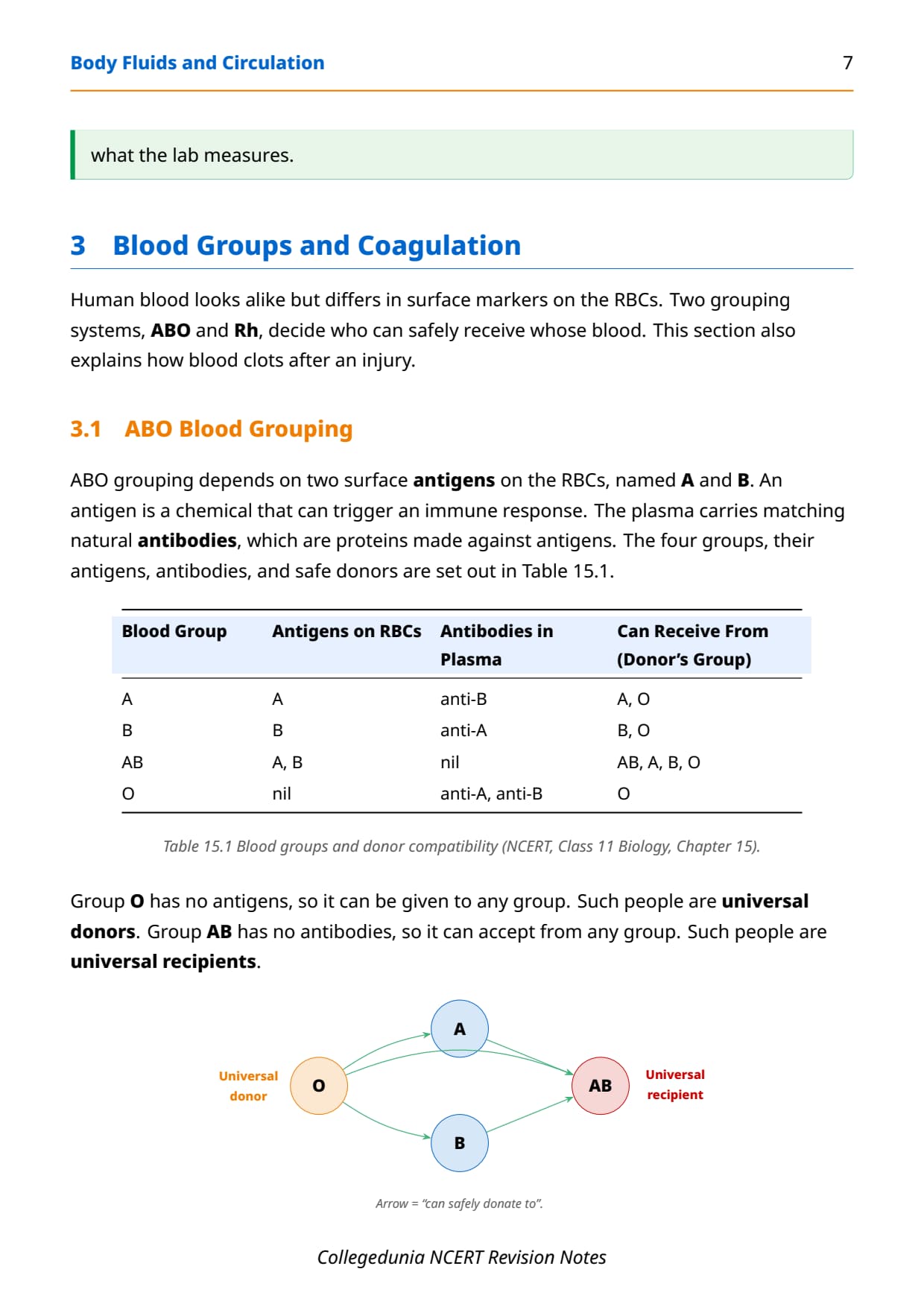
Human blood looks alike but differs in surface markers on the RBCs, and two grouping systems decide who can safely receive whose blood. ABO grouping depends on two surface antigens, A and B, while the plasma carries matching natural antibodies. Group O has no antigens, so it can be given to any group (universal donor), and group AB has no antibodies, so it can accept from any group (universal recipient). The four groups, their antigens, antibodies, and safe donors are set out in Table 15.1.
| Blood Group | Antigens on RBCs | Antibodies in Plasma | Can Receive From |
|---|---|---|---|
| A | A | anti-B | A, O |
| B | B | anti-A | B, O |
| AB | A, B | nil | AB, A, B, O |
| O | nil | anti-A, anti-B | O |
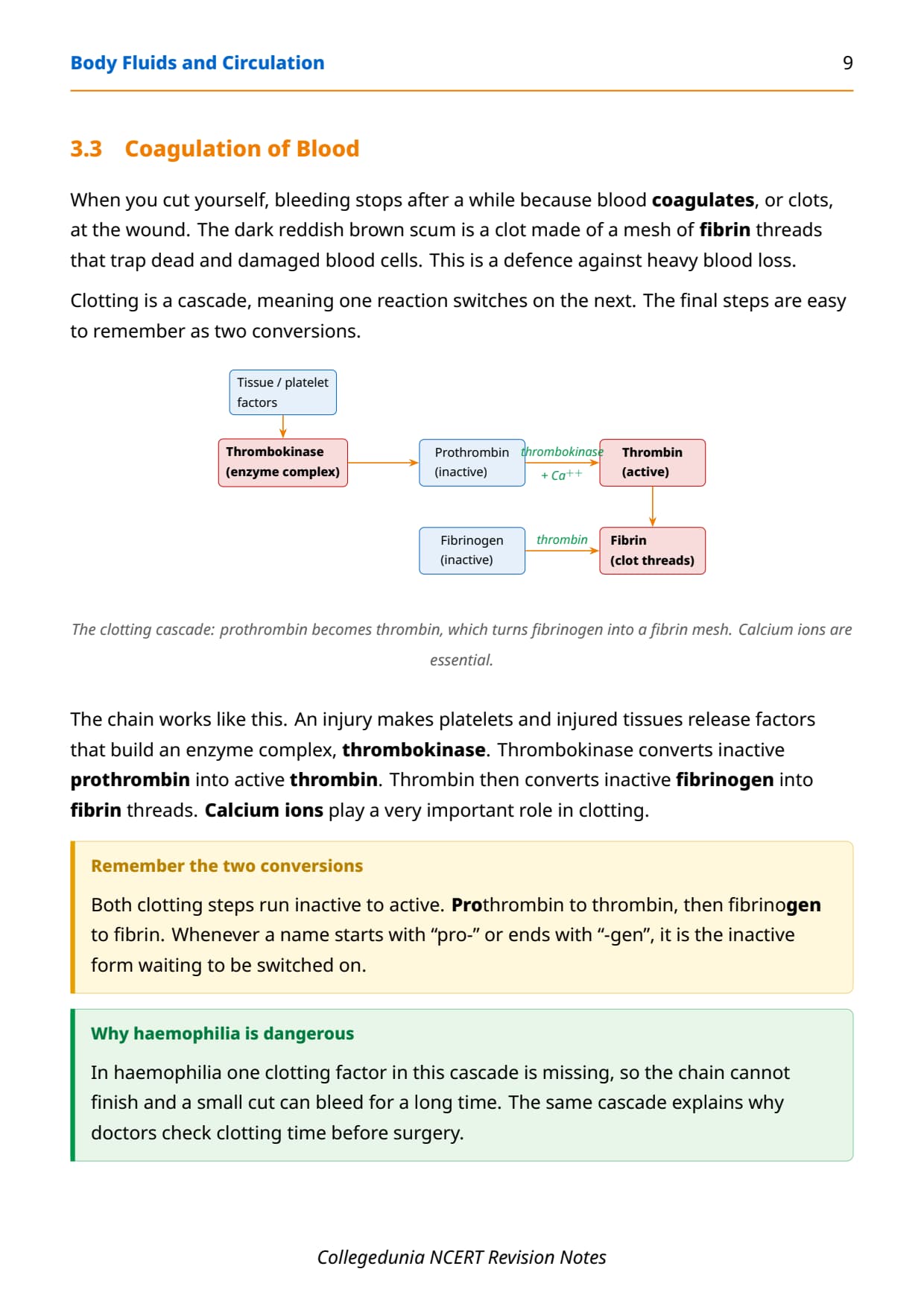
A separate Rh antigen, named after the Rhesus monkey, is found on the RBCs of nearly 80 per cent of people, who are Rh positive; the rest are Rh negative. A special case arises when an Rh negative mother carries an Rh positive foetus. In the first pregnancy the placenta keeps the two bloods apart, but during the first delivery some foetal blood can reach the mother and she starts making anti-Rh antibodies; in a later pregnancy these leak into the foetus and destroy its RBCs, causing erythroblastosis foetalis. Coagulation, meanwhile, seals a wound as a cascade of two conversions.
- Thrombokinase: injured tissues and platelets release factors that build this enzyme complex.
- Prothrombin to thrombin: thrombokinase, with calcium ions, converts inactive prothrombin into active thrombin.
- Fibrinogen to fibrin: thrombin converts inactive fibrinogen into fibrin threads that trap blood cells and form the clot.
Whenever a clotting name starts with "pro-" or ends with "-gen", it is the inactive form waiting to be switched on. A common slip is to say the first Rh positive child is harmed; in fact the placenta protects it and the risk is to later pregnancies, which is why the mother is given anti-Rh antibodies right after the first delivery.
Lymph and Circulatory Pathways
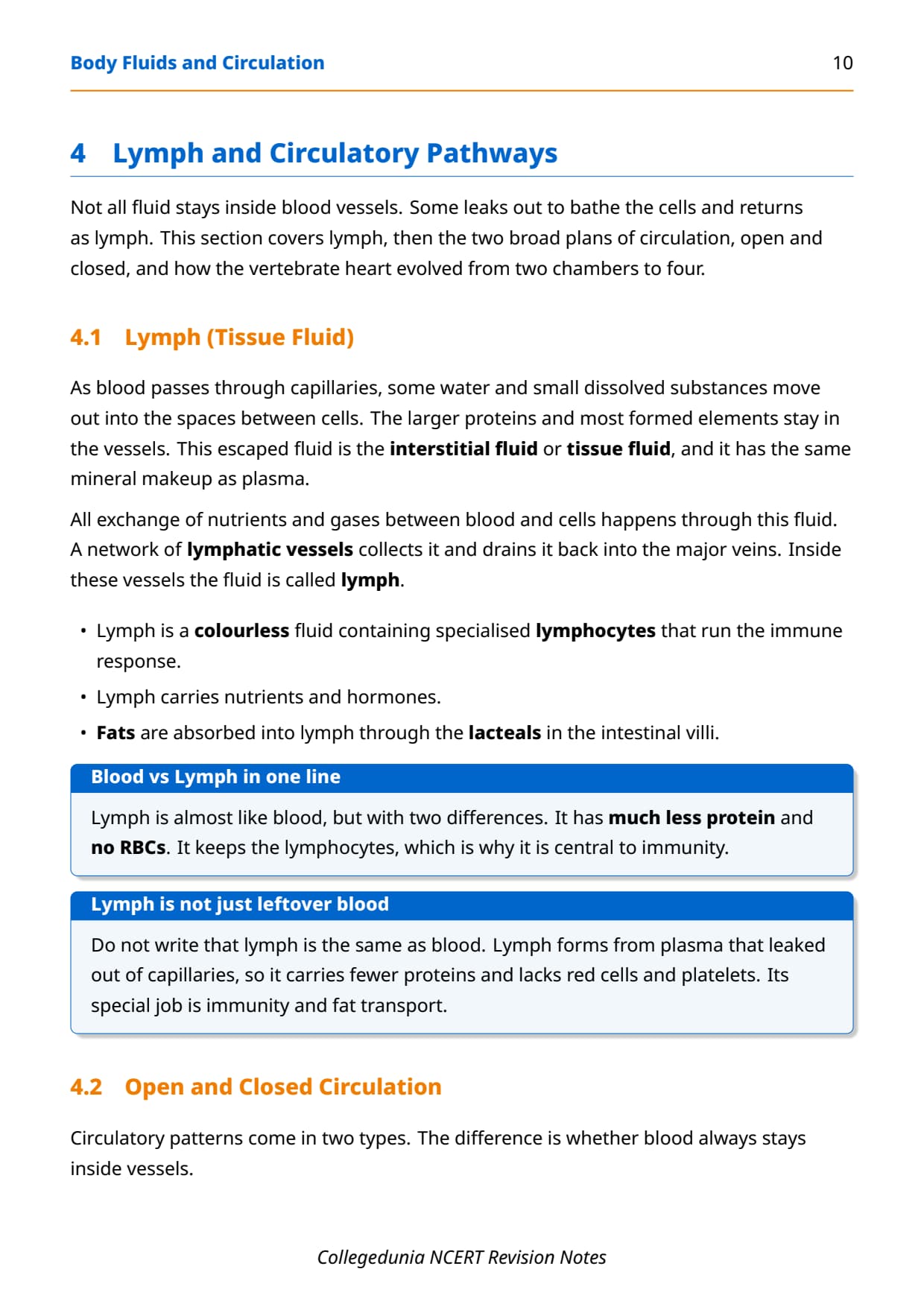
Not all fluid stays inside blood vessels. As blood passes through capillaries, some water and small dissolved substances leak out into the spaces between cells as interstitial fluid or tissue fluid, which has the same mineral makeup as plasma. All exchange of nutrients and gases between blood and cells happens through this fluid, and a network of lymphatic vessels collects it and drains it back into the major veins, where it is called lymph. Lymph is a colourless fluid that carries specialised lymphocytes, nutrients, and hormones, and it absorbs fats through the lacteals in the intestinal villi. Compared with blood, lymph has much less protein and no RBCs.
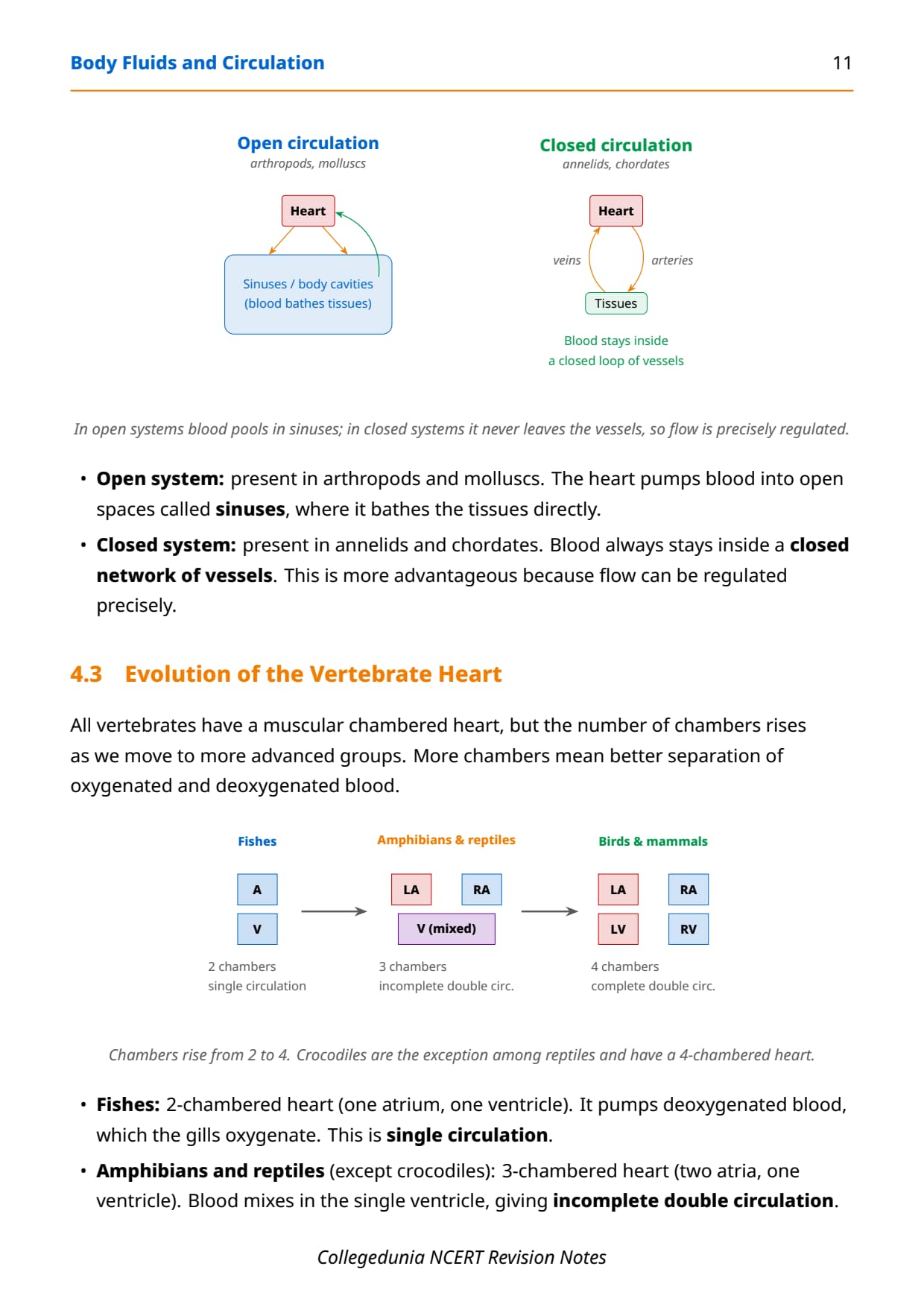
- Open circulation: present in arthropods and molluscs, where the heart pumps blood into open spaces called sinuses that bathe the tissues directly.
- Closed circulation: present in annelids and chordates, where blood always stays inside a closed network of vessels, so flow can be regulated precisely.
All vertebrates have a muscular chambered heart, but the number of chambers rises with the group, and more chambers mean better separation of oxygenated and deoxygenated blood. Fishes have a 2-chambered heart with single circulation, amphibians and most reptiles have a 3-chambered heart with incomplete double circulation because blood mixes in the single ventricle, and birds and mammals have a 4-chambered heart with complete double circulation and no mixing. Crocodiles break the reptile pattern and have a 4-chambered heart, so grouping them with lizards and snakes as 3-chambered is a common exam error.
The Human Heart and the Cardiac Cycle
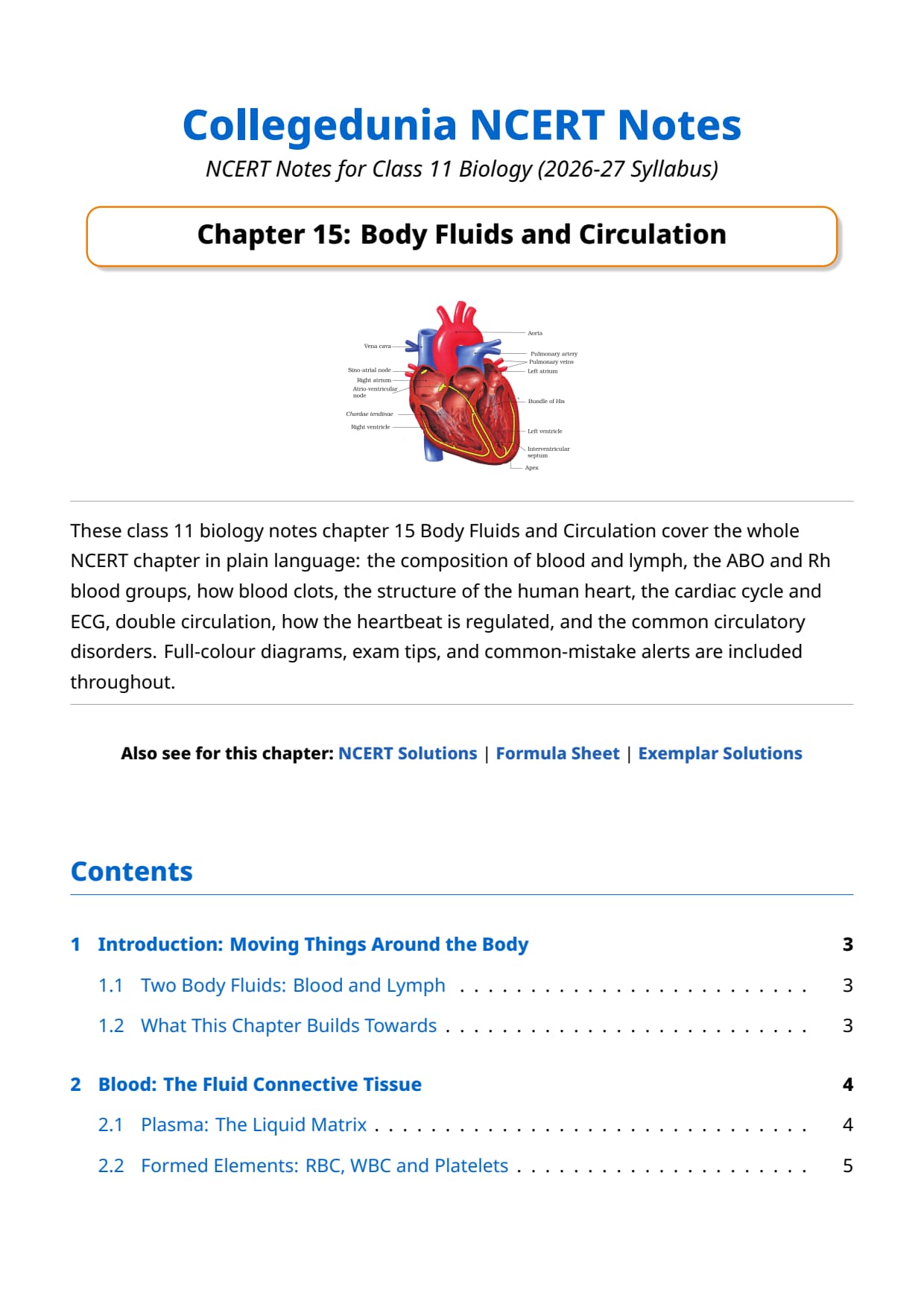
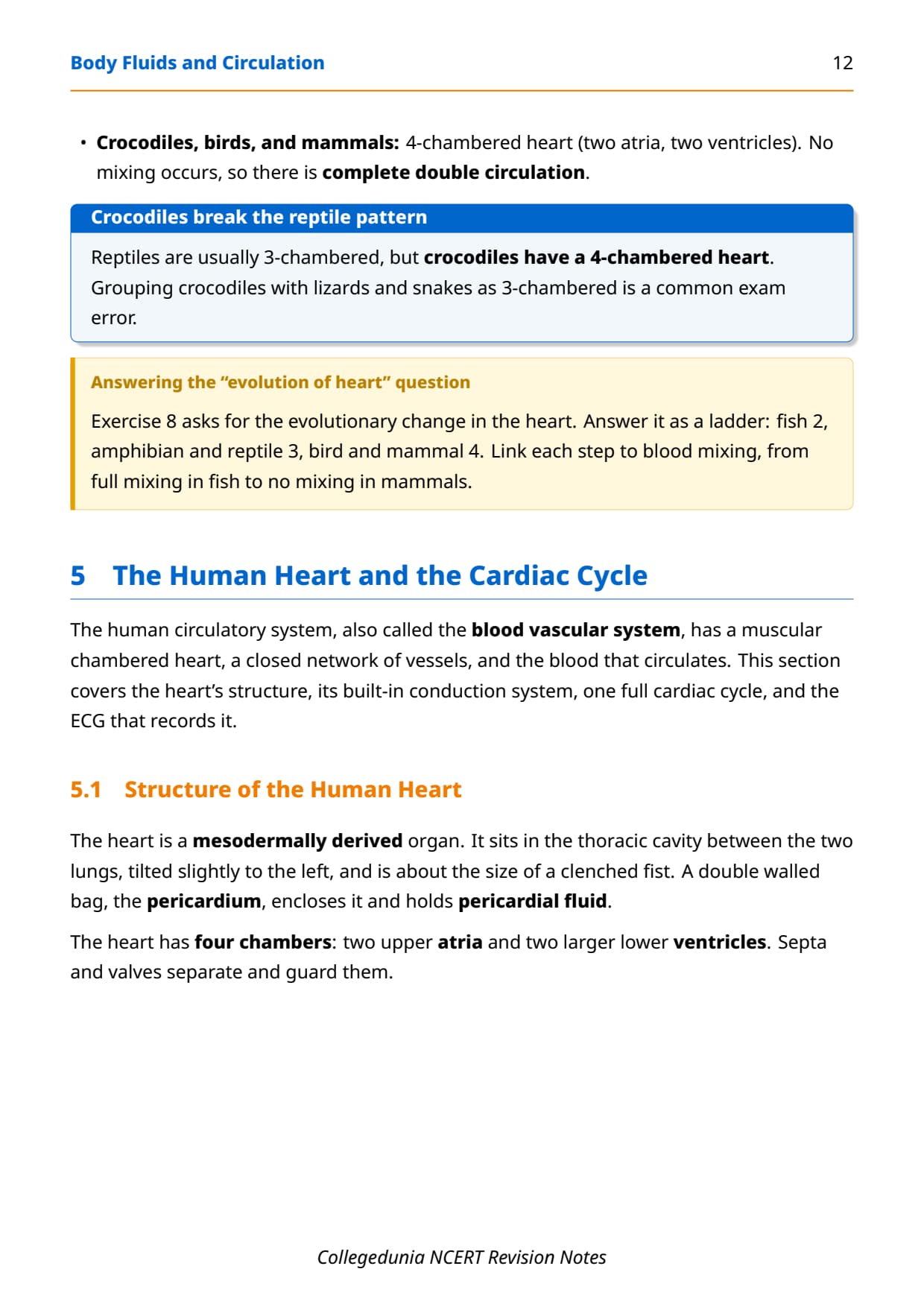
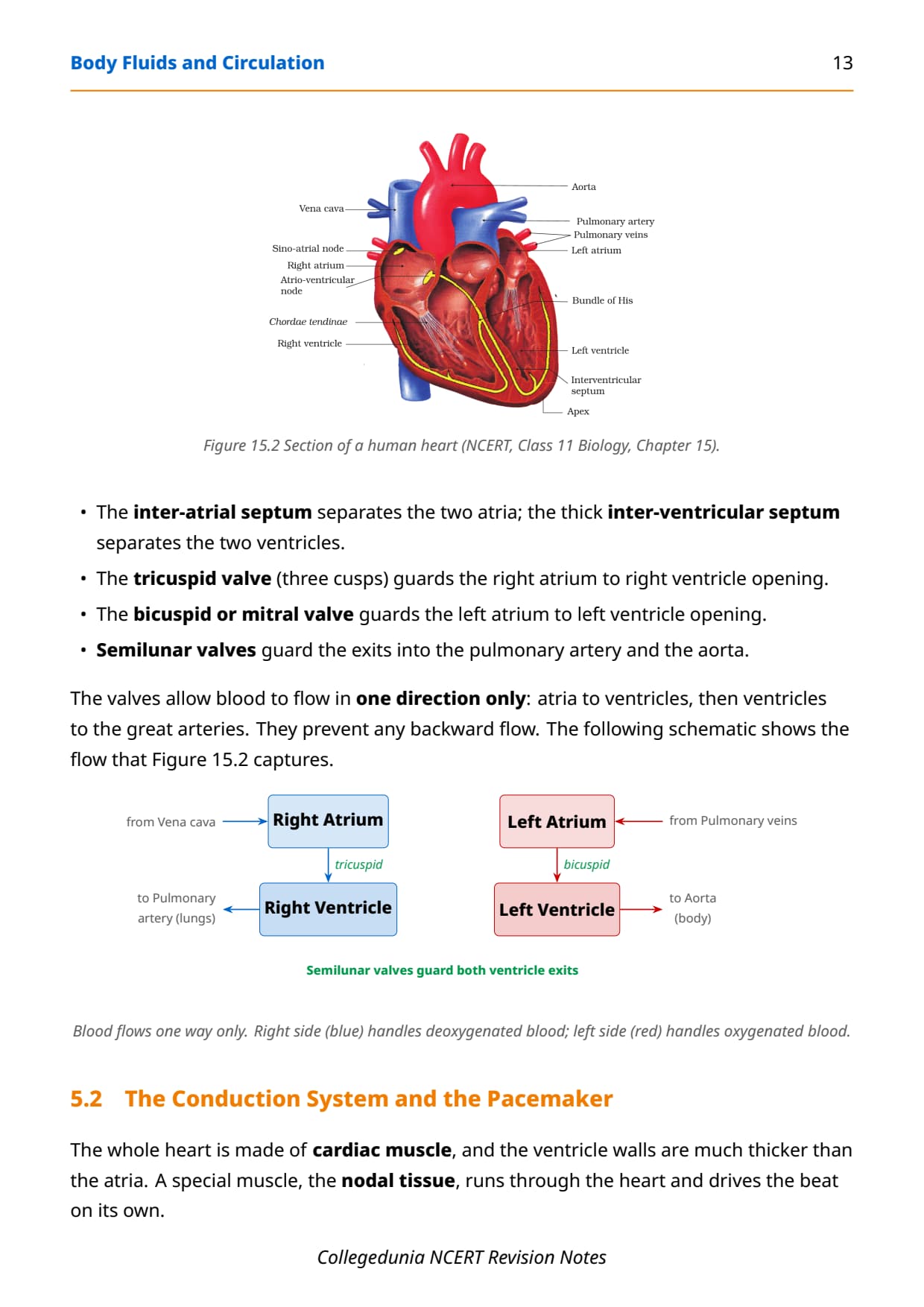
The human circulatory system, or blood vascular system, has a muscular chambered heart, a closed network of vessels, and the blood that circulates. The heart is a mesodermally derived organ about the size of a clenched fist, sitting between the lungs and enclosed in a double-walled pericardium that holds pericardial fluid. It has four chambers, two upper atria and two lower ventricles, guarded by valves that allow one-way flow only. The tricuspid valve guards the right atrium-to-ventricle opening, the bicuspid (mitral) valve guards the left, and semilunar valves guard the exits into the pulmonary artery and aorta. A special nodal tissue drives the beat on its own.
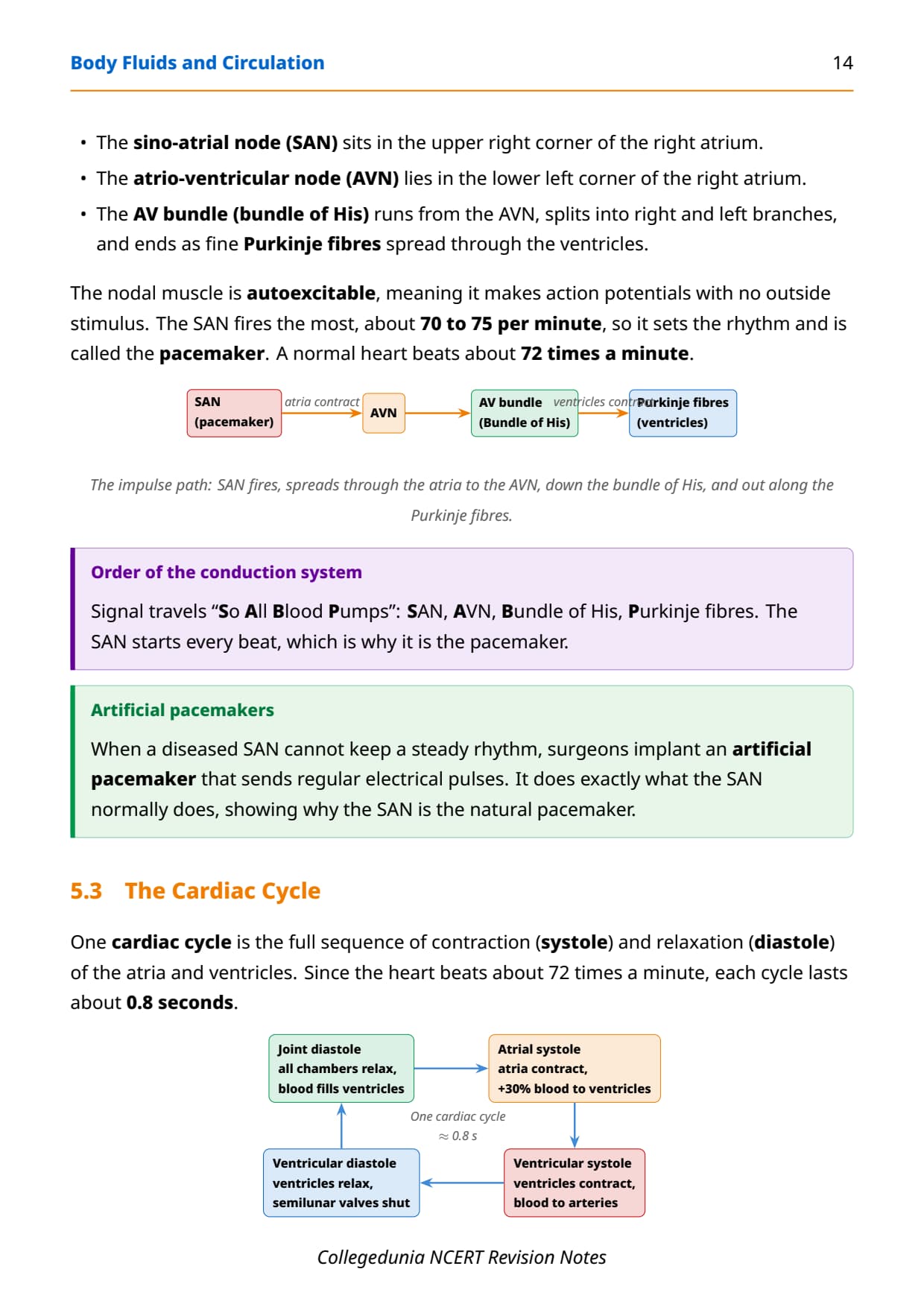
- Sino-atrial node (SAN): in the upper right corner of the right atrium, it fires about 70 to 75 times a minute and sets the rhythm, so it is the pacemaker.
- Atrio-ventricular node (AVN): in the lower left corner of the right atrium, it relays the impulse to the ventricles.
- AV bundle and Purkinje fibres: the bundle of His runs from the AVN, splits into branches, and ends as Purkinje fibres spread through the ventricles.
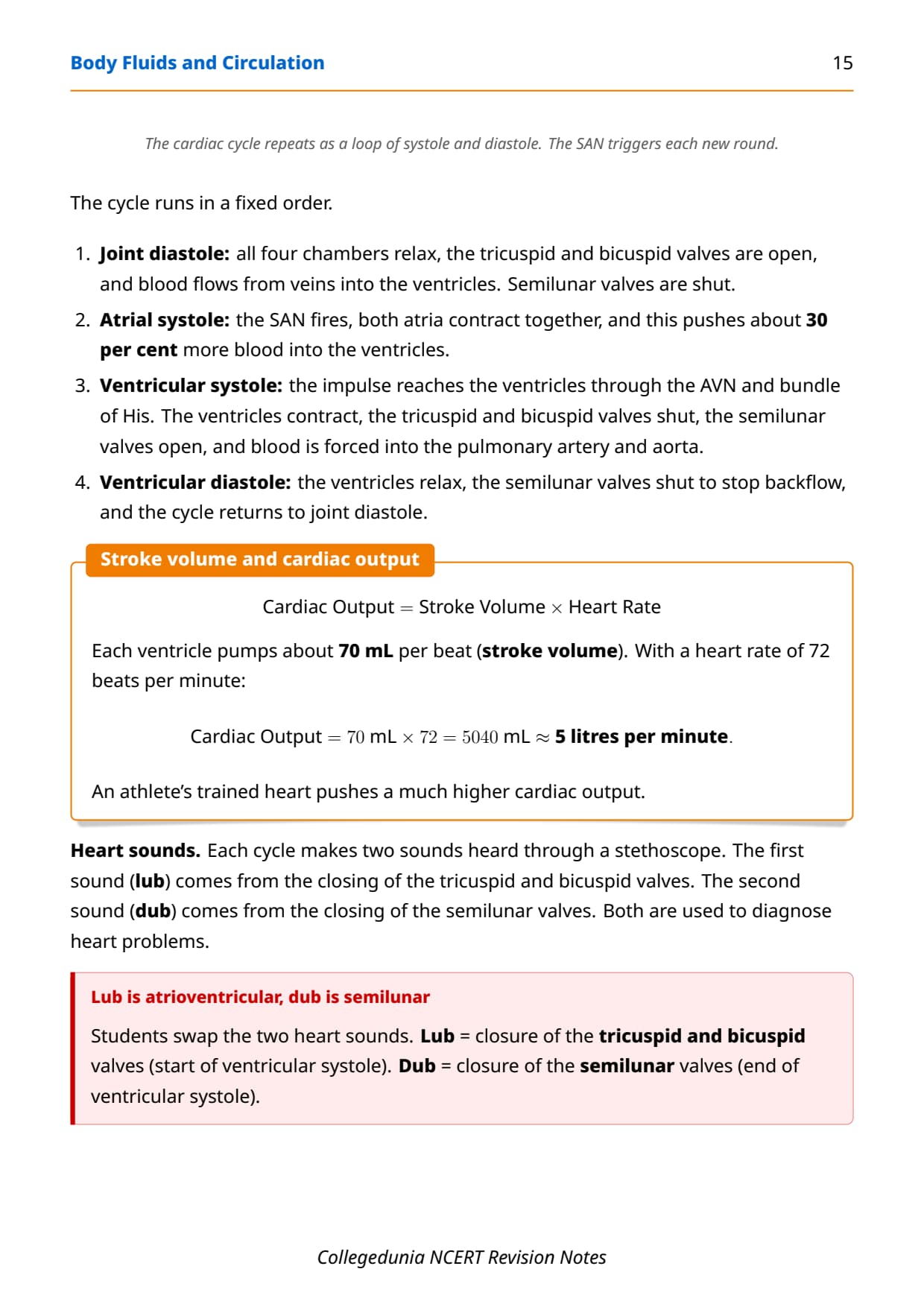
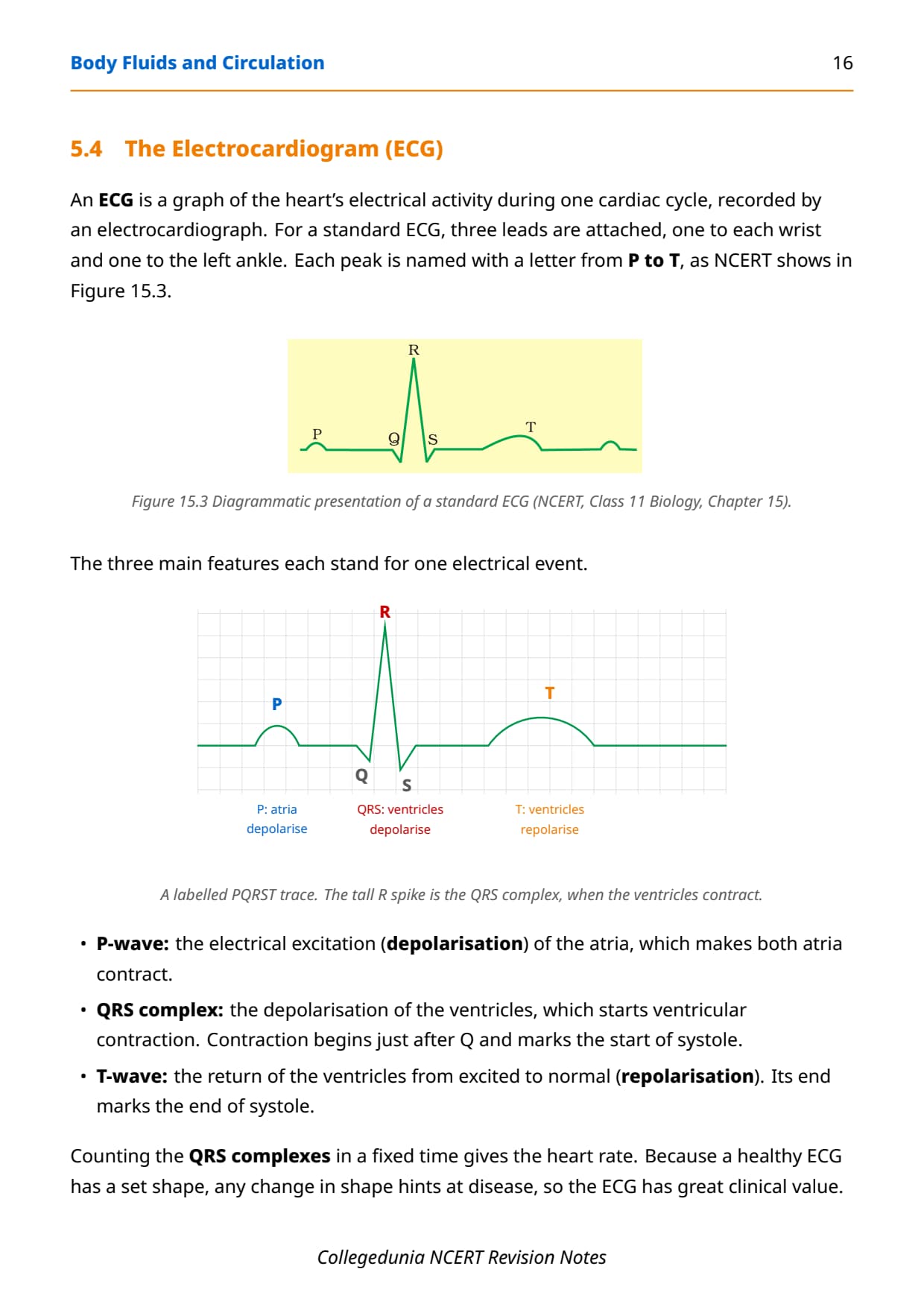
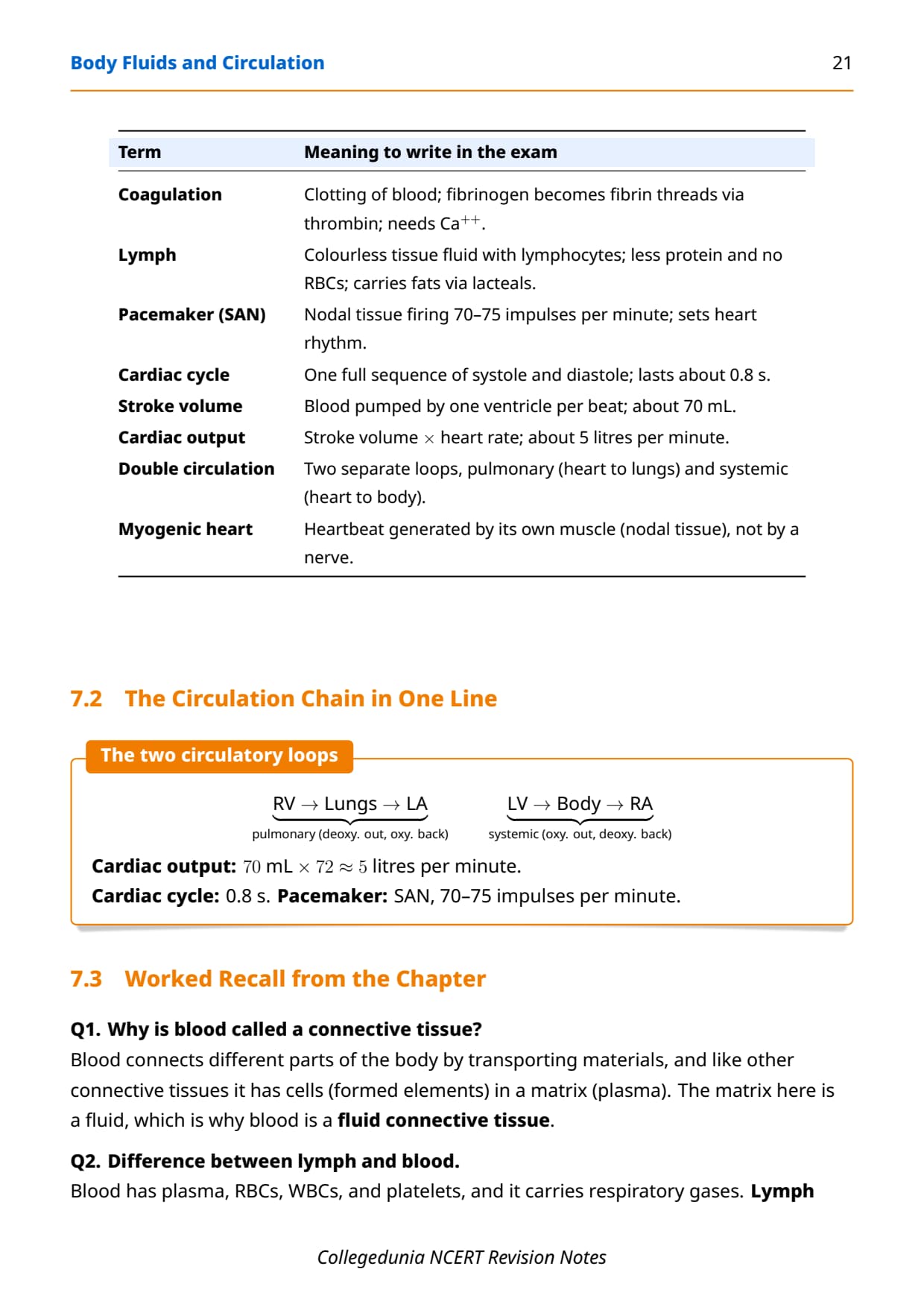
One cardiac cycle is the full sequence of contraction (systole) and relaxation (diastole), running joint diastole, atrial systole (which adds about 30 per cent more blood to the ventricles), ventricular systole, and ventricular diastole. Since the heart beats about 72 times a minute, each cycle lasts about 0.8 seconds. Each ventricle pumps about 70 mL per beat (stroke volume), so cardiac output = stroke volume × heart rate = 70 × 72 ≈ 5 litres per minute. Each cycle makes two sounds: lub from closure of the tricuspid and bicuspid valves, and dub from closure of the semilunar valves. An ECG records the electrical activity as a PQRST trace, where the P-wave is atrial depolarisation, the QRS complex is ventricular depolarisation, and the T-wave is ventricular repolarisation.
Double Circulation, Regulation and Disorders
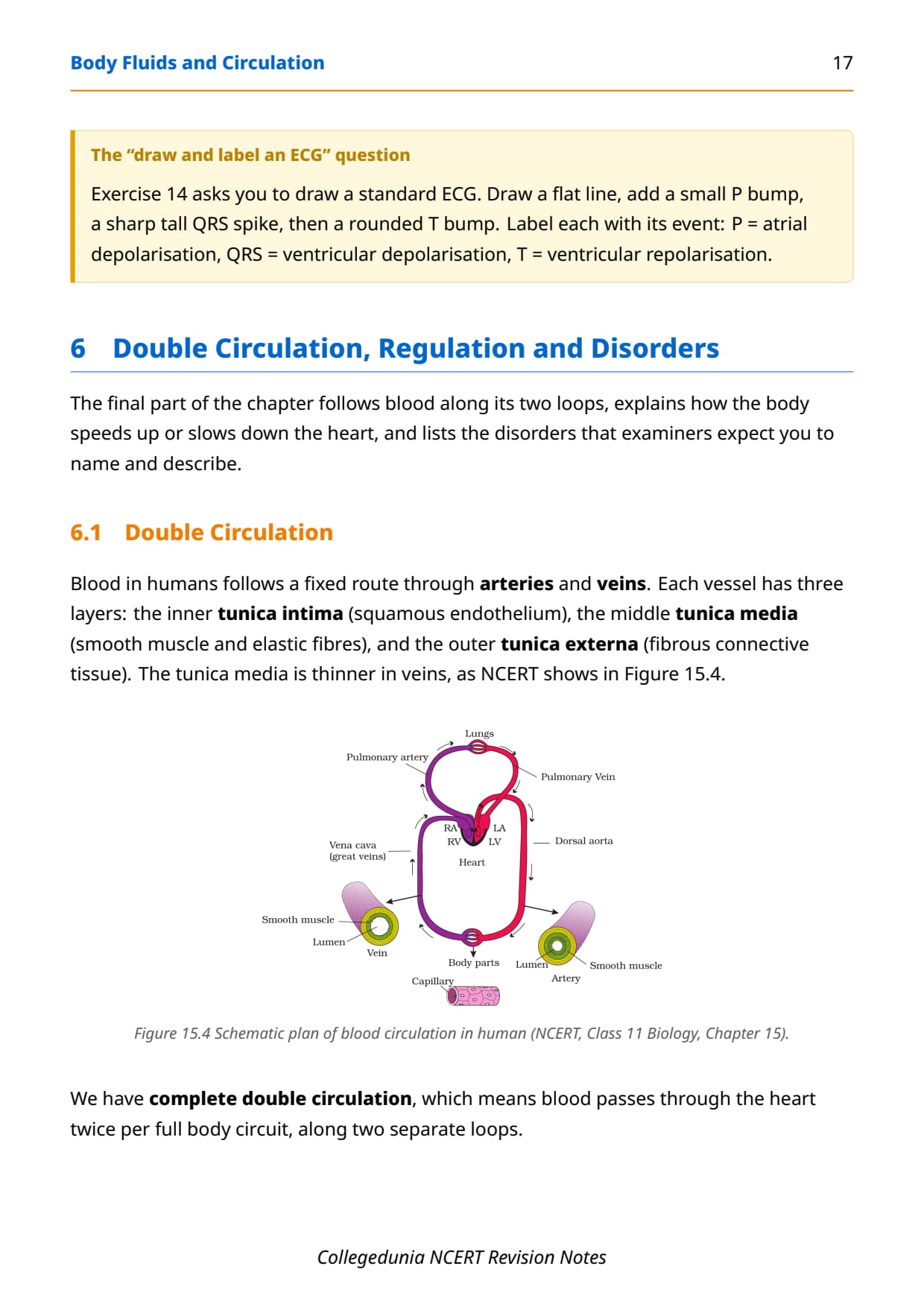
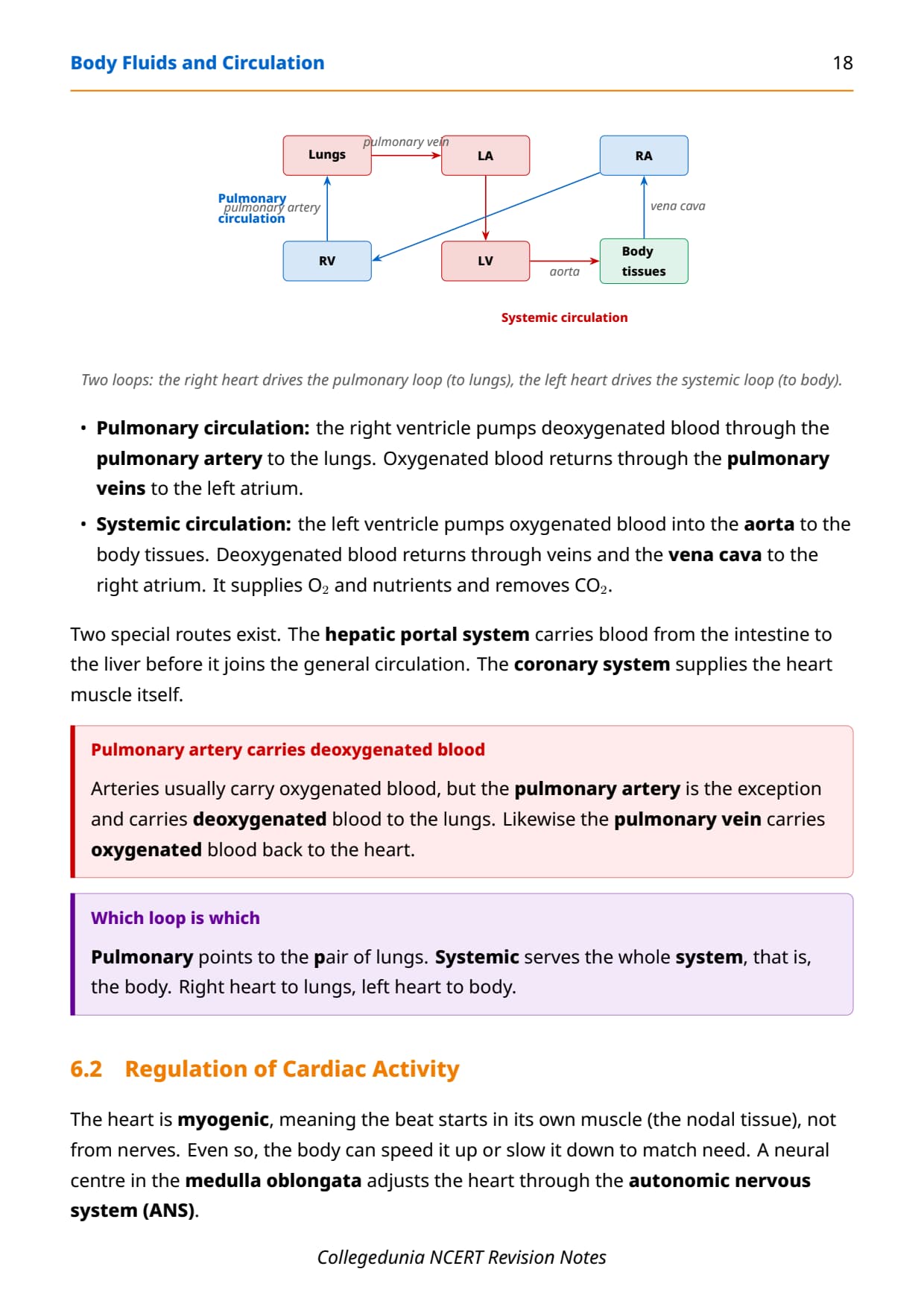
Blood in humans follows a fixed route through arteries and veins, each with three layers, the inner tunica intima, the middle tunica media, and the outer tunica externa. We have complete double circulation, which means blood passes through the heart twice per full body circuit along two separate loops. In the pulmonary circulation the right ventricle pumps deoxygenated blood through the pulmonary artery to the lungs, and oxygenated blood returns through the pulmonary veins to the left atrium. In the systemic circulation the left ventricle pumps oxygenated blood through the aorta to the body tissues, and deoxygenated blood returns through the vena cava to the right atrium.
- Special routes: the hepatic portal system carries blood from the intestine to the liver before it joins the general circulation, and the coronary system supplies the heart muscle itself.
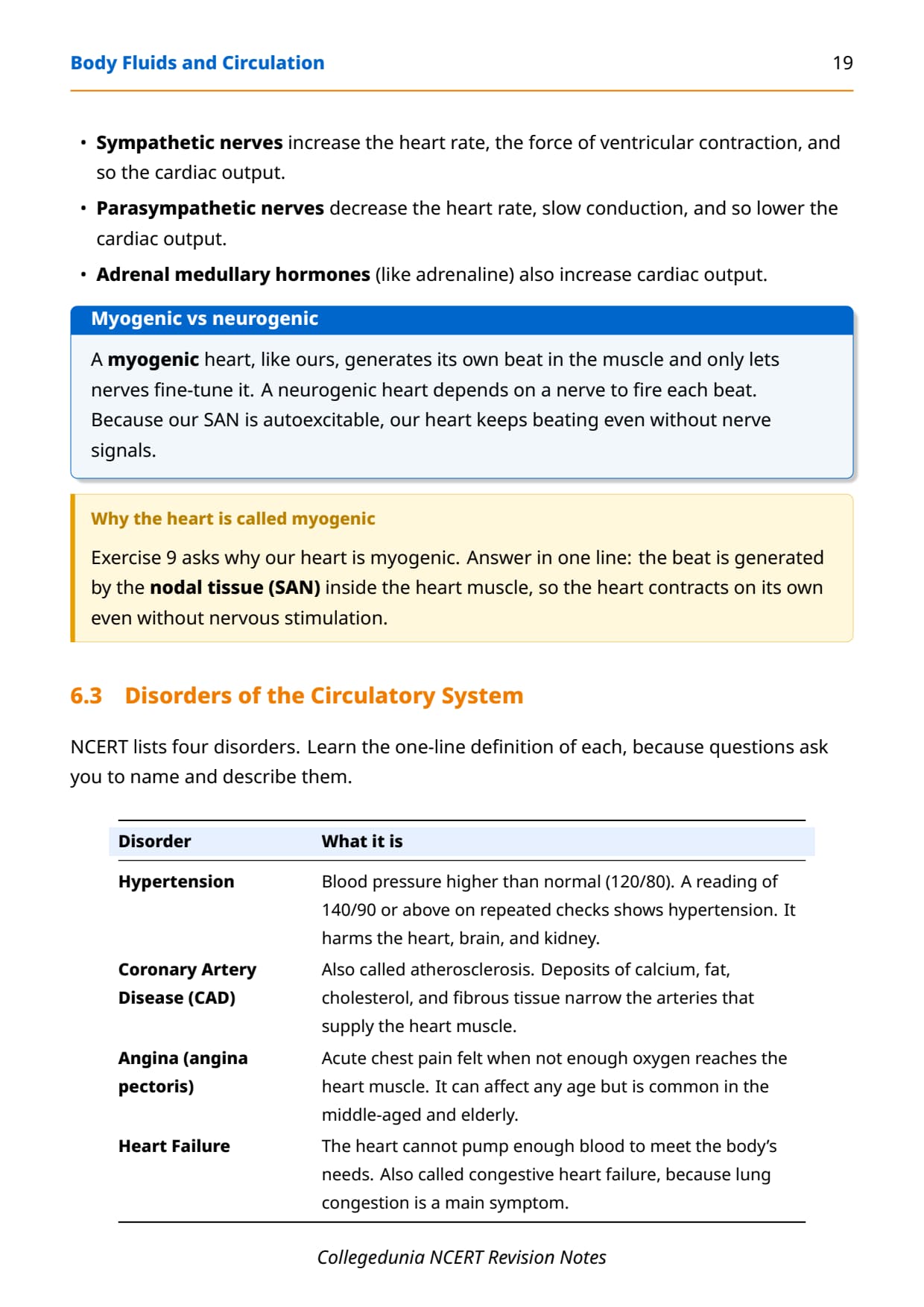
- Regulation: the heart is myogenic, so the beat starts in the nodal tissue, but a centre in the medulla oblongata tunes it through the autonomic nervous system, sympathetic nerves speeding it up and parasympathetic nerves slowing it down; adrenal hormones also raise cardiac output.
- Vessel exception: the pulmonary artery carries deoxygenated blood and the pulmonary vein carries oxygenated blood, the reverse of the usual rule.
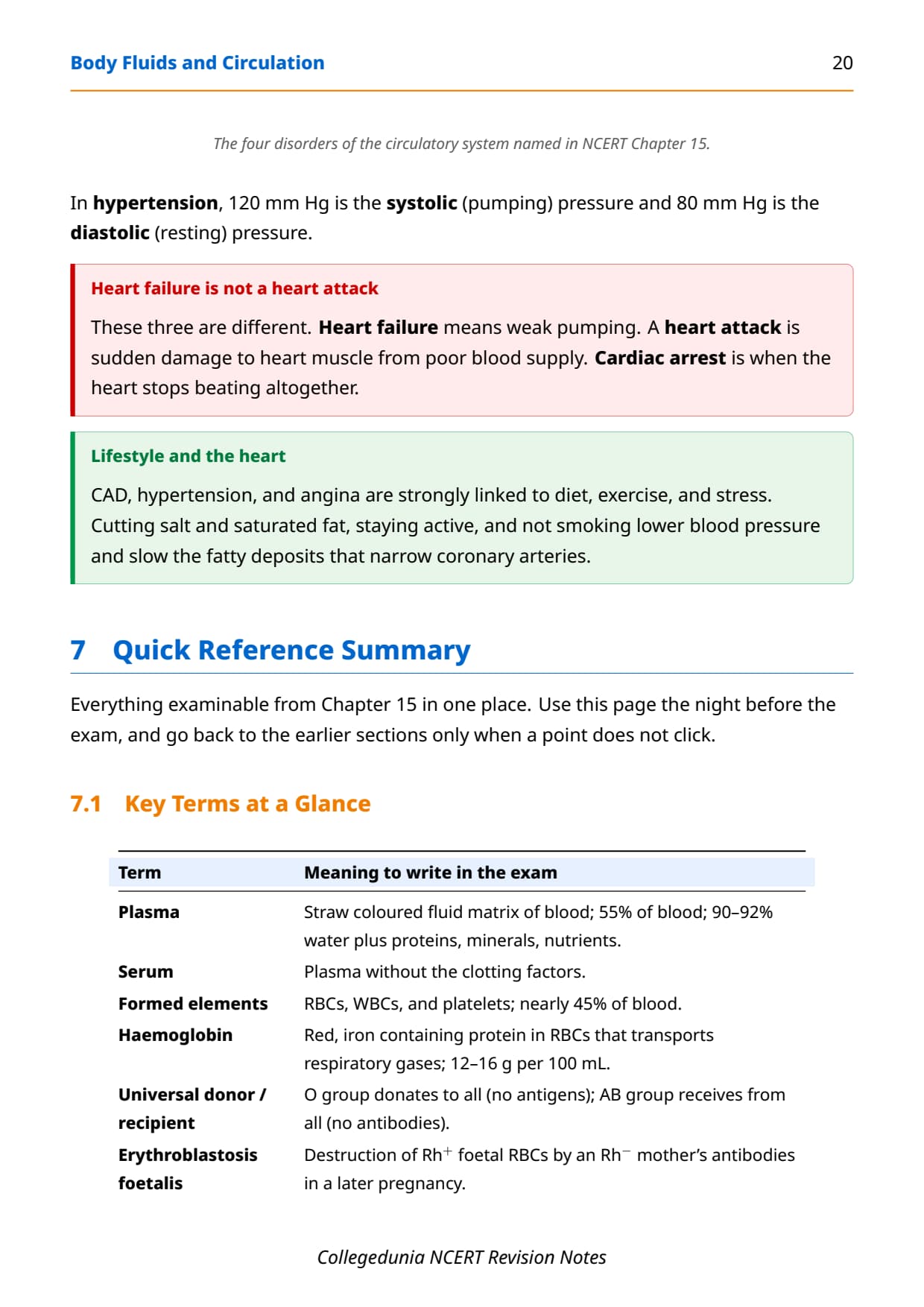
NCERT names four disorders you must be able to describe. Hypertension is blood pressure repeatedly at or above 140/90 against the normal 120/80, and it harms the heart, brain, and kidney. Coronary artery disease (atherosclerosis) narrows the arteries that supply the heart muscle with deposits of calcium, fat, cholesterol, and fibrous tissue. Angina is acute chest pain felt when not enough oxygen reaches the heart muscle, and heart failure means the heart cannot pump enough blood to meet the body's needs. Heart failure is not a heart attack: failure is weak pumping, an attack is sudden muscle damage, and cardiac arrest is when the heart stops beating altogether.
Key Definitions in Body Fluids and Circulation
Board short-answer questions often ask for a clean definition in one or two lines, and a vague answer loses easy marks. Learn these word-for-word, because the wording of the exam question is usually built straight from the NCERT definition. Each term below also connects to a diagram or number you can be asked to explain.
| Term | Definition |
|---|---|
| Plasma | Straw-coloured fluid matrix of blood, about 55 per cent of blood; 90 to 92 per cent water plus proteins and minerals. |
| Serum | Plasma without the clotting factors. |
| Universal donor / recipient | Group O donates to all (no antigens); group AB receives from all (no antibodies). |
| Erythroblastosis foetalis | Destruction of an Rh positive foetus's RBCs by an Rh negative mother's antibodies in a later pregnancy. |
| Lymph | Colourless tissue fluid with lymphocytes; less protein and no RBCs; carries fats via lacteals. |
| Cardiac output | Blood pumped by the heart per minute; stroke volume × heart rate, about 5 litres. |
| Myogenic heart | A heart whose beat is generated by its own muscle (nodal tissue), not by a nerve. |
A common board question asks you to define double circulation and state its significance. Say blood passes through the heart twice per circuit in a pulmonary and a systemic loop, so oxygenated and deoxygenated blood never mix. Learning these definitions makes the wording of almost every one-mark and two-mark question in this chapter familiar.
Common Mistakes Students Make in Body Fluids and Circulation
These slips happen because two terms look alike, not because the concept is hard. Each one costs 1 to 2 marks in the paper, so watch for them at the exact step where they occur.
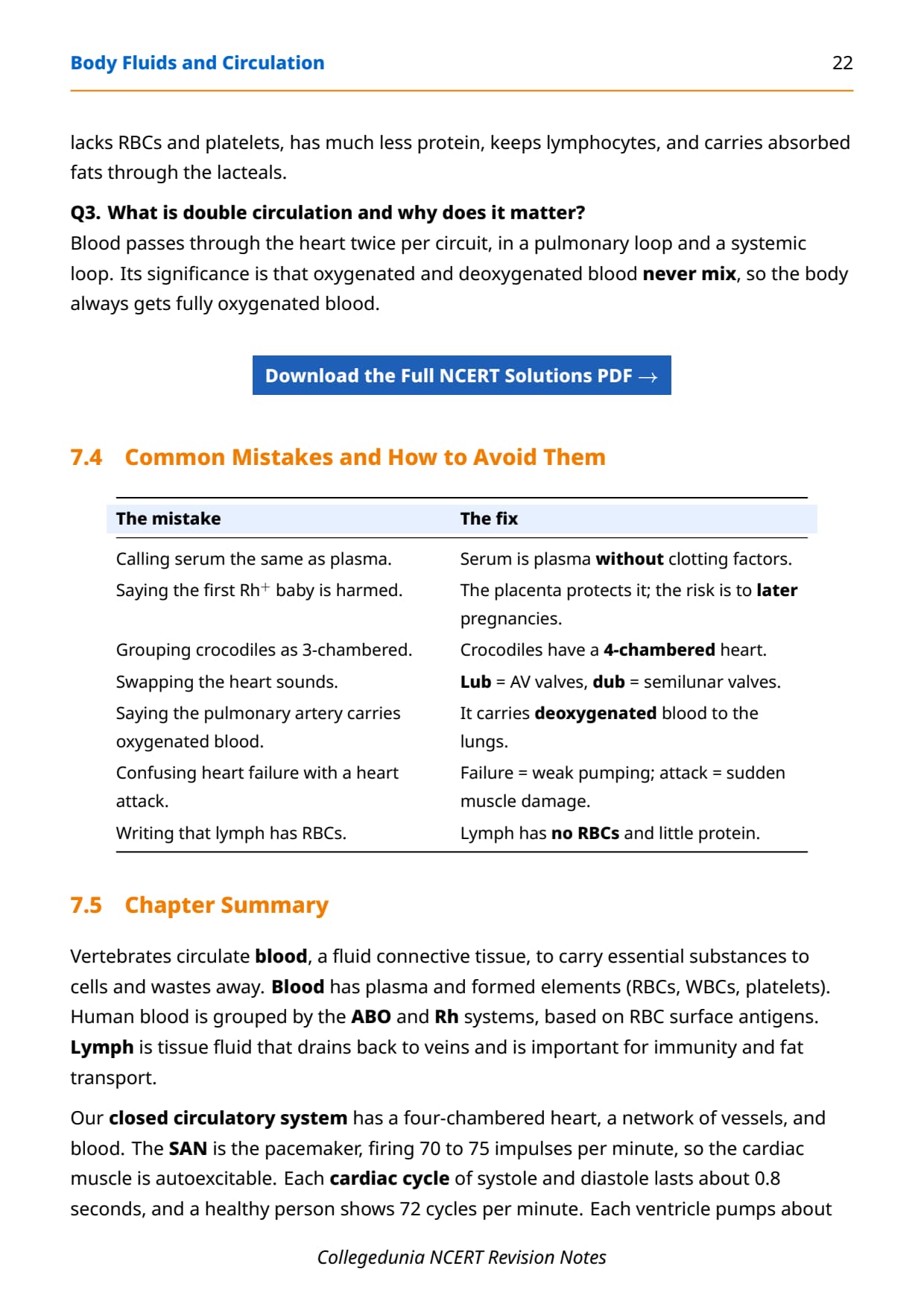
Mistake 1: Calling serum the same as plasma. Serum is plasma without the clotting factors such as fibrinogen.
Mistake 2: Saying the first Rh positive baby is harmed. The placenta protects it, and the risk is to later pregnancies once the mother is sensitised.
Mistake 3: Grouping crocodiles as 3-chambered. Crocodiles have a 4-chambered heart, unlike other reptiles.
Mistake 4: Swapping the heart sounds. Lub is the closure of the tricuspid and bicuspid valves, and dub is the closure of the semilunar valves.
Mistake 5: Saying the pulmonary artery carries oxygenated blood. It carries deoxygenated blood to the lungs, and the pulmonary vein carries oxygenated blood back.
Body Fluids and Circulation Weightage in CBSE Boards, NEET and CUET
This chapter is one of the highest scoring in the human physiology unit because it packs diagrams, numbers, and clean definitions. It appears every year as a heart or cardiac-cycle question, and it is among the most productive chapters in the entrance exams. Here is how the marks split across the main exams for 2026-27.
| Exam | Typical weightage | What is asked |
|---|---|---|
| CBSE Boards | 5 to 7 marks | One long or short answer on the heart and cardiac cycle plus one on blood, blood groups, or coagulation |
| NEET | 2 to 3 questions | Formed elements, ABO and Rh grouping, the cardiac cycle and ECG, and double circulation |
| CUET | 1 to 2 objective questions | Definitions, universal donor and recipient, and the circulatory disorders |
The human heart, cardiac cycle, and double circulation are the most tested ideas from this chapter across all three exams. Master the four chambers and valves and the cardiac cycle first, then the ECG and blood groups, then the disorders, in that order of return on effort for the 2026-27 session.
How to Revise Body Fluids and Circulation Quickly
Use these body fluids and circulation class 11 notes for a fast, ordered recap the night before a test. The checklist below takes about 25 minutes and hits every marks-heavy idea in the chapter without opening the full textbook.
- First 9 minutes: draw the four-chambered heart with its valves, then write the cardiac cycle steps with the 0.8-second and 5-litre figures.
- Next 8 minutes: fill Table 15.1 for ABO groups, then write the clotting cascade from thrombokinase to fibrin.
- Last 8 minutes: sketch and label a PQRST ECG, then one-line the pulmonary and systemic loops and the four disorders.
Close the loop by explaining why the pulmonary artery carries deoxygenated blood and why the heart is called myogenic. If you can do all three blocks without notes, the chapter is exam-ready. Keep Table 15.1 and the cardiac-cycle steps beside you for the first pass only, then try the whole checklist closed-book.
Student Feedback on the Body Fluids and Circulation Notes
What 12,910 students told us about their Body Fluids and Circulation revision:
- 74% of students rated the human heart and cardiac cycle as the part most worth memorising for the exam.
- Most-confused pair: the two heart sounds lub and dub, mixed up by about 3 in 10 students.
- Students who learnt the ABO donor and recipient rules with the universal donor and recipient tags said the transfusion questions felt easy afterwards.
Source: 2026-27 Class 11 Biology student poll. Sample of 12,910 students from CBSE schools across 15 states, conducted before the 2026 boards.
Other Body Fluids and Circulation Class 11 Biology Resources
Pair these notes with the solved answers, the formula sheet, and the textbook PDF for the same chapter.
| Resource | Link |
|---|---|
| NCERT Solutions | Body Fluids and Circulation Class 11 NCERT Solutions |
| Formula Sheet | Body Fluids and Circulation Class 11 Formula Sheet |
| Exemplar Solutions | Body Fluids and Circulation Class 11 Exemplar Solutions |
| NCERT Book PDF | Body Fluids and Circulation Class 11 Book PDF |
| Exemplar Book PDF | Body Fluids and Circulation Class 11 Exemplar Book PDF |
NCERT Notes for Class 11 Biology: All Chapters
Jump to the revision notes for any other Class 11 Biology chapter below.
| Chapter | NCERT Notes |
|---|---|
| Chapter 1 | The Living World |
| Chapter 2 | Biological Classification |
| Chapter 3 | Plant Kingdom |
| Chapter 4 | Animal Kingdom |
| Chapter 5 | Morphology of Flowering Plants |
| Chapter 6 | Anatomy of Flowering Plants |
| Chapter 7 | Structural Organisation in Animals |
| Chapter 8 | Cell The Unit of Life |
| Chapter 9 | Biomolecules |
| Chapter 10 | Cell Cycle and Cell Division |
| Chapter 11 | Photosynthesis in Higher Plants |
| Chapter 12 | Respiration in Plants |
| Chapter 13 | Plant Growth and Development |
| Chapter 14 | Breathing and Exchange of Gases |
| Chapter 15 | Body Fluids and Circulation |
| Chapter 16 | Excretory Products and their Elimination |
| Chapter 17 | Locomotion and Movement |
| Chapter 18 | Neural Control and Coordination |
| Chapter 19 | Chemical Coordination and Integration |
FAQs on Body Fluids and Circulation Class 11 Biology Notes
Body Fluids and Circulation Notes - Frequently Asked Questions
Ques. What topics do the body fluids and circulation class 11 notes cover?
Ans. These body fluids and circulation class 11 notes cover plasma and the formed elements, ABO and Rh blood grouping, coagulation of blood, lymph and tissue fluid, open and closed circulation, the evolution of the vertebrate heart, the structure of the human heart, the conduction system and pacemaker, the cardiac cycle and ECG, double circulation, regulation of cardiac activity, and the circulatory disorders. Every key definition, value, and example is included for fast revision.
Ques. What is the difference between plasma and serum?
Ans. Plasma is the straw-coloured fluid matrix of blood, making up about 55 per cent of blood, with 90 to 92 per cent water and 6 to 8 per cent proteins including fibrinogen, globulins, and albumins. Serum is what remains after the clotting factors, chiefly fibrinogen, are removed from plasma. In short, serum is plasma without the clotting factors, so it cannot clot.
Ques. Who are universal donors and universal recipients?
Ans. Group O has no A or B antigens on its RBCs, so its blood can be given to any group, which makes group O the universal donor. Group AB has no anti-A or anti-B antibodies in its plasma, so it can accept blood from any group, which makes group AB the universal recipient. Remember that antigens sit on the RBC surface while antibodies float in the plasma, and the Rh factor must also be matched before a transfusion.
Ques. What is the cardiac cycle and how long does it last?
Ans. The cardiac cycle is the full sequence of contraction (systole) and relaxation (diastole) of the atria and ventricles. It runs as joint diastole, atrial systole (adding about 30 per cent more blood to the ventricles), ventricular systole, and ventricular diastole. Since the heart beats about 72 times a minute, each cardiac cycle lasts about 0.8 seconds, and each ventricle pumps about 70 mL per beat, giving a cardiac output near 5 litres per minute.
Ques. Why is the human heart called myogenic?
Ans. The human heart is myogenic because its beat is generated by the nodal tissue inside the heart muscle, chiefly the sino-atrial node, which is autoexcitable and fires about 70 to 75 impulses per minute. The heart contracts on its own even without any nervous stimulation. A neural centre in the medulla oblongata and the autonomic nervous system can only speed it up or slow it down, they do not start each beat.
Ques. What is the weightage of this chapter in the CBSE board exam?
Ans. Body Fluids and Circulation carries about 5 to 7 marks in the CBSE Class 11 Biology paper, usually one long or short answer on the heart and cardiac cycle plus one on blood, blood groups, or coagulation. It is also a high-yield chapter in NEET, with 2 to 3 questions on the formed elements, blood grouping, the cardiac cycle and ECG, and double circulation, and it appears in CUET as objective questions for the 2026-27 session.
Ques. Why does the pulmonary artery carry deoxygenated blood?
Ans. Arteries are usually defined by direction of flow, that is, they carry blood away from the heart, not by whether the blood is oxygenated. The pulmonary artery carries deoxygenated blood from the right ventricle to the lungs, where it picks up oxygen, so it is the exception to the usual rule. Likewise the pulmonary vein carries oxygenated blood from the lungs back to the left atrium, which is why these two vessels are common exam traps.



Comments