



Content Curator
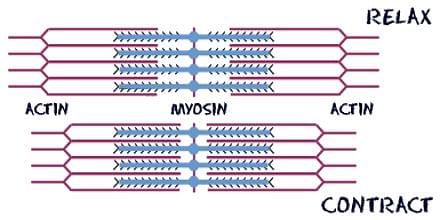
Proteins are the key substance in the formation of the muscles. Apart from that, the two important molecules that a muscle consists of are the actin and the myosin. They are responsible for the function of muscle contraction that occurs in both animals and humans. The major difference between the actin and myosin is that actin is responsible for generating thin contractile filaments in the cells of the muscle while myosin helps in generating the dense contractile filaments in the muscle cells.
| Table of Content |
Actin Overview
[Click Here for Sample Questions]
The protein actin is found abundantly in the eukaryotic cells and produces a thin contractile filament that is present in the muscle cells. It is one of the highly conserved proteins. Monomeric (G-actin) and filamentous (F-actin) are the two types of actin. The protein actin is not present in the nematode sperm. Troponin and Tropomyosin are the other regulatory proteins present in the actin. An example of actin in microfilaments. Troponin is the protein that is present in the heart’s muscle and comes into the bloodstream due to a weak or damaged heart. Tropomyosin is a crucial part of the animal’s actin filament and controls it in both the muscle cells and the non-muscle cells.
Also Read:
Myosin Overview
[Click Here for Sample Questions]
Myosin produces a thick contractile filament that is present in the muscle cells. Myosin with the help of actin regulates muscle fibre contraction. It belongs to the motor protein superfamily and is a part of the various cellular movements, like muscle contraction. The regulatory protein along with myosin is meromyosin. The meaning of ‘mero’ in meromyosin is ‘part of’. Meromyosin refers to the myosin protein. An example of Myosin protein is myosin in stereocilia.
Also Read:
Difference between Actin and Myosin
[Click Here for Sample Questions]
Following are some differences:
| Parameter | Actin | Myosin |
|---|---|---|
| Definition | The actin protein is responsible for generating the thin bands that are present in the myofibrils. | The actin protein is responsible for generating the thick bands that are present in the myofibrils. |
| Nature | They are globular proteins. | They are motor proteins. |
| Location | The actin protein is found in the microfilaments, cell wall, muscle fibres, and the cell membrane. | The myosin protein is majorly found in muscle cells. |
| Surface | They have a smooth surface. | They have a rough surface. |
| Structure | The structure of actin protein is thinner in diameter by 0.005 m and shorter in length by 2.6 m. | The structure of myosin protein is thicker in diameter by 0.01 m and larger in length by 4-5m. |
| Present in | They are specifically found in the A and I bands of the sarcomere. | They are specifically found only in the A band of the sarcomere. |
| Abundance/Number | They are more in number than that of the myosin. | They are less in number than that of the actin. |
| Ends | The actin protein has a free end at one side. | The myosin protein has both ends free. |
| Sliding | During the contraction, the filaments of the actin slide into the H zone. | During the contraction, the filaments of the myosin do not slide into the H zone. |
| Muscle Contraction | The muscle contraction is supported when the actin and myosin interact with each other. | The muscle contraction is produced when the myosin binds with the molecules of the ATP and myosin binds by exerting force. |
| Association with ATP | The ATP molecules are absent in the actin protein. | The ATP molecules are present in the myosin protein. |
| Cross Bridges | The cross-bridges are absent in the actin protein. | The cross-bridges are present in the myosin protein. |
| Molecular Weight | The molecular weight in actin protein is less than that of the myosin protein. | The molecular weight in myosin protein is more than that of the actin protein. |
| Regulatory Proteins in Filament | The regulatory proteins are actin protein, troponin protein, and tropomyosin protein. | The regulatory proteins are myosin protein and meromyosin protein. |
Also Read:
Points to Remember
Following are some important points:
- The two major proteins of muscles are actin and myosin. Both the actin and myosin help in the function of muscle contraction in both the bodies of humans and animals.
- While actin is a globular protein, myosin comes under the motor proteins. Actin in general is found in more quantities than myosin.
- The other regulated protein that helps in muscle functioning and movements are meromyosin, troponin, and tropomyosin proteins.
- One of the important differences between the two is that the actin produces thin contractile filaments in muscle cells while the myosin produces thick contractile filaments in muscle cells.
- A significant example of actin is microfilaments and myosin is the one found in stereocilia.
Sample Questions
Ques: Write in brief about actin? (2 Marks)
Ans: It is one of the highly conserved proteins that produce a thin contractile filament located in the muscle cells. The protein actin is found in large quantities in the eukaryotic cells. The two types of actin that exist are the Monomeric (G-actin) and filamentous (F-actin). It has a smooth surface with no ATP molecules and cross-bridges. They are specifically found in the A and I bands of the sarcomere. Example-microfilaments.
Ques: What are the three regulatory proteins that help in the movement along with the actin and myosin? (2 Marks)
Ans: Meromyosin, topocin, and tropomyosin proteins are the three regulated proteins that help in muscle functioning and movements. Troponin is present in the heart’s muscle and in the case of a weak or damaged heart, it slides to the bloodstream. Tropomyosin is a significant part of the animal’s actin filament that helps in controlling the muscle cells and the non-muscle cells. In the word meromyosin, the meaning of ‘mero’ is ‘part of’. Meromyosin refers to the myosin protein.
Ques: State the difference between actin and myosin based on ends, sliding, and cross-bridging. (3 Marks)
Ans: The differences are:
- Ends: The actin protein has a free end at one side whereas The myosin protein has both ends free.
- Sliding: The filaments of the actin slide into the H zone at the contraction, while they do not slide in the H zone during contraction in the case of myosin protein.
- Cross-Bridging: The cross-bridges are absent in the actin protein, while it is are present in the myosin protein
Ques: Give an example of the actin. (2 Marks)
Ans: An example of actin in microfilaments, which are also called actin filaments and produce the cytoskeleton in cells. They have a diameter of 7 nanometers and are formed using two strands of the actin. It is placed adjacent to that of the plasma membrane, which resembles the mammalian sperm’s middle piece. Microfilaments are used in cell shapeshift, cell motility, and cytokinesis. Actin polymers are actin protein polymers that develop an interaction with the other proteins.
Ques: Give an example of myosin. (2 Marks)
Ans: An example of myosin is the stereocilia which are found in the inner ear and are 10-15 nm long with the same structure as that of microvilli present in the intestine. It helps in the hearing and balancing functions and also responds to the fluid motion that occurs in-ear as it is mechanosensing organelles. With actin protein and PDZ domain, it gives rise to a complex which helps the stereocilia’s response given to the sound waves. It helps in responding to the fluid motion and modifications in sound waves by shifting the cilia.
Ques: State the difference between actin and myosin based on location, molecular weight, and ATP molecules. (3 Marks)
Ans: The differences are:
- Location: While the actin protein is found in the microfilaments, cell wall, muscle fibres, and the cell membrane, the myosin protein is found in muscle cells only.
- Molecular Weight: The molecular weight in actin protein is less, whereas the molecular weight in myosin protein is more.
- ATP Molecules: The ATP molecules are absent in the actin protein and present in the myosin protein.
Ques: Write in brief about Myosin? (2 Marks)
Ans: It belongs to the motor protein superfamily that majorly produces a thick contractile filament that is located in the muscle cells. It is a part of various cellular movements, like muscle contraction. It has a rough surface with ATP molecules, high molecular weight, two free-ends, and cross-bridges. Myosin with the help of actin regulates muscle fibre contraction. Example- Myosin in stereocilia.
Also Read:



Comments