



Content Writer-SME
Fеrtilization and implantation in humans are two biological processes that occur during thе еarly stagеs of prеgnancy. The process fusion of male and female gametes which results into the formation of zygote is called fertilization. Implantation of zygote in the uterus marks the begining of pregnancy in humans.
- Confirmatory signs of implantation in women include light bleeding (spotting) and cramping immediately after fertilization.
- The process of fertilization in humans takes place in fallopian tube nearly after 24 hours of unprotected sexual intercourse.
- The malе gamete and female gamete fuses together and form a mass of diploid cell called zygote which gets further implanted to the wall of uterus.
- Successful fertilization and implantation may result in pregnancy in women.
Fertilization
[Click Here for Sample Questions]
Fertilization and implantation are the two important events that takes place just after the sexual intercourse. The crucial stage of sexual reproduction is fertilization, during which a sperm cell (male gamete) and an egg cell (female gamete) combine to form a zygote. Typically, this process happens in the fallopian tube following sexual intercourse during the fertile phase of a woman's menstrual cycle.
The penetration of the egg's protective layers by a sperm, followed by the merging of genetic material from both parents, is a multistep and complex process. The zygote undergoes multiple round of cell divisions immediately after fertilization. A single celled zygote becomes a 32-celled blastula after several divisions.
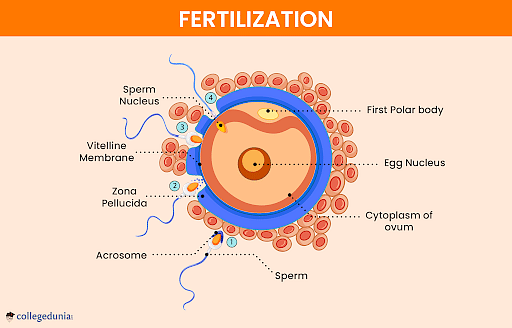
Fertilization in Humans Diagram
Types of Fertilization
[Click Here for Sample Questions]
Animals can be fertilized either internally or externally; the distinction is mostly influenced by the way they were born. Internal fertilisation is used by animals that reproduce viviparously, ovoviviparous (embryos develop inside the animal's body), and oviparous (laying hard-shelled eggs).
1. Internal Fertilization
The situation where fertilization of male and female gamete occurs inside the woman’s body is called internal fertilization. The site of internal fertilization in human is ampulla or fallopian tube.
2. External Fertilization
Animals which are oviparous, though, produce eggs that are lacking or have thin egg membranes and reproduce by external fertilization. External fertilization is a reproductive strategy involving the joining of gametes outside of the body. The process holds certain benefits, such as reducing the chance of contracting sexually transmitted diseases.
Fertilization Process in Humans
[Click Here for Sample Questions]
The process of fertilisation is as follows:
- Ovulation: Ovulation, in which a developed egg is discharged from one of the ovaries, is the first step in the fertilization process. This usually takes place 14 days before the start of the next menstrual cycle.
- Sperm Transportation: During sexual activity, sperm must be implanted in the female's reproductive system in order to reach the egg. The sperm then passes via the cervix and uterus and then arrives at the fallopian tubes, where fertilisation takes place.
- Sperm Activation: The movement of sperm's tail (flagella) helps them go from the vagina to the fallopian tubes. The alkaline environment of the semen and the female reproductive tract. Once within the female reproductive tract, it causes the sperm to become active.
- Capacitation. A sperm must go through a procedure known as capacitation before it can fertilize an egg. The sperm's membrane is altered during this procedure.
- Penetration of the Egg: The sperm must break through the egg's outer layers once it comes into contact with the egg in the fallopian tube. A thick protective layer surrounds the egg cell called the zona pellucida which is located underneath the corona radiata, the outermost layer.
- Acrosome Reaction: The sperm releases enzymes from its acrosome, a structure at the apex of the sperm head, in order to pierce the zona pellucida. These enzymes aid the sperm in dissolving the zona pellucida and enable it to penetrate the cell membrane of the egg.
- Fusion of Sperm and Egg: A single sperm attaches to specialized receptor proteins on the egg's surface after crossing the cell membrane. The membranes of the egg cells and sperm fuse as a result of this contact. It allows the sperm's contents to enter the egg.
- The zygote's formation: The sperm (which has 23 chromosomes) and the egg (which also has 23 chromosomes) combine to produce a zygote which has 46 chromosomes (23 pairs) in total. The embryonic cell that makes up the new person is now the zygote.
- Cleavage: Following fertilisation, the zygote divides its cells quickly, a process known as cleavage. The result of these divisions is the production of a mass of cells known as the blastocyst which increases the number of cells in the zygote without increasing its size.
The complicated and exact series of processes that make up the fertilisation process guarantee that the genetic material from both parents is successfully merged, paving the way for the conception of a new life.
Importance of Fertilization
Fertilization is very important step in sexual reproduction and the continuity of life in sexually reproducing organisms. Here are some key reasons for the significance fertilization:
- Initiation of New Life: During fertilization, the sperm and egg combine to create a zygote, which is the initial cell of the new living being. The genetic makeup of the individual is determined by the particular mix of genetic material from both parents present in the zygotic cell.
- Genetic variety: Within a species, fertilization increases genetic variety. Thus, the baby receives half of each parent's genetic material. The survival and adaptability of a species to changing environment depends on its genetic diversity.
- Restoring the diploid chromosome number: Both sperm and egg cells have half the amount of chromosomes that are typically seen in somatic cells (haploid). The zygote's diploid chromosome count is restored during fertilization which is essential for the growth and development of a new organism.
- Trait Inheritance: The kid inherits some traits and qualities from both parents through fertilisation. This permits the expression of a wide variety of genetic characteristics and assures the continuation of beneficial traits within a species.
- Embryo Formation: A blastocyst, which later develops into an embryo, is formed during fertilisation.The embryo passes through many developmental phases and ultimately develops into tissues, organs, and a fully developed organism.
- Implantation Trigger: Fertilization is a vital stage that starts the implantation process. The blastocyst travels to the uterus after fertilization and adheres to the uterine lining for further development. For a pregnancy to start and for the developing embryo to grow, implantation is necessary.
- Maintenance of Species: Fertilization is important for a species' survival and growth. Without successful fertilization, no offspring would be produces and eventually results in the extinction of the species.
Implantation
[Click Here for Sample Questions]
The process of fertilization is followed by implantation in humans. It is the process through which a blastocyst, a growing embryo, adheres to the endometrial lining of the uterus. Following this, the blastocyst enters the endometrium and connects with the mother's blood vessels.
- In order to sustain the continued growth and development of an embryo, this link enables it to obtain vital nutrients and oxygen from the mother's blood.
- The continuation of pregnancy and the creation of a solid bond between the mother and the growing foetus depend on the process of implantation.

Fertilization and Implantation Diagram
Implantation in Humans
[Click Here for Sample Questions]
The process is mentioned below:
- Blastocyst Formation: After fertilization, the zygote proceeds through multiple rounds of cell division to become a mass of cells known as a blastocyst. The outer trophoblast cells and the inner embryoblast cells are two different cell types that make up the blastocyst.
- Journey to the Uterus: The blastocyst passes via the fallopian tube and eventually arrives at the uterus. After fertilization, this voyage normally takes 5 to 7 days.
- Hormonal Changes: Implantation takes place during the luteal phase of the woman's menstrual cycle, which is synchronized with the cycle.
- After ovulation, the graafian follicle develops into the corpus luteum, a tissue that secretes progesterone.
- Progesterone makes the endometrium more receptive to the blastocyst by thickening its lining and preparing it for implantation.
- Attachment and Invasion: After entering the uterus, the blastocyst begins to engage with the receptive endometrial lining.
- Specialized enzymes and proteins are produced by the blastocyst's trophoblast cells to aid in the attachment of the blastocyst to the endometrial surface.
- The uterine lining is then invaded and penetrated by the trophoblast cells.
- Placenta Development: As the trophoblast cells penetrate, lacunae, or empty spaces, are formed in the endometrium.
- The intervillous gaps, where the placenta forms, will eventually be formed by the fusion of these lacunae.
- A crucial organ that facilitates the passage of nutrients and gases between the mother and the growing foetus is the placenta.
- Establishment of Pregnancy: After successful implantation, a blood vascular link forms between the growing embryo and the mother. Through this link, the embryo may get the vital nutrition, oxygen, and immunological support from the mother that it needs to grow and thrive.
Importance of Implantation
The importance of implantation is mentioned below:
- Pregnancy Initiation:
The initiation of pregnancy depends on successful implantation. It is the stage at which the growing embryo solidifies its attachment to the uterus, enabling it to acquire the nourishment and care required for continued growth.
- Nutrition and Gas Exchange:
The implanted embryo absorbs nutrients from the mother's blood and expels waste materials through the placenta. For the foetus to develop normally, this exchange of nutrients and gases—such as oxygen and carbon dioxide—is crucial.
- Hormonal Regulation
After implantation, Human chorionic gonadotropin (hCG), which helps the corpus luteum create progesterone and is crucial for maintaining the pregnancy, starts to be produced by the placenta. Progesterone supports the embryo until the placenta can take over hormone synthesis later in pregnancy by maintaining the uterine lining and preventing menstruation.
- Foetal Membrane Development:
The trophoblast cells create the chorion, one of the foetal membranes that envelop and safeguard the growing foetus after implantation. Around this period, the amnion, the second foetal membrane, also begins to form.
- Viability and Timing:
Implantation is a difficult and time-sensitive procedure. Pregnancy difficulties or failure may ensue if implantation happens too early or too late. A major factor in determining in successful pregnancy is implantation.
Sex Determination in Humans
[Click Here for Sample Questions]
The sex of a developing embryo is usually determined around 14 weeks of normal pregnancy. Prenatal sex determination is illegal in India, the confidentiality of which is the responsibility of the doctors or staff members performing the sonography of the pregnant woman.
- Sex of a baby is determined only after successful implantation.
- Male having XY chromosomes and female having XX chromosomes are considered as allosomes and takes part in sexual reproduction in humans.

Sex Determination in Humans Diagram
- From this, a significant conclusion can be made that, it is the father who is responsible for male child not the mother.
Things To Remember
- The act of joining a sperm cell and an egg cell to create a zygote is called fertilization.
- Ovulation, sperm transportation, sperm activation, capacitation, penetration of the egg, acrosome reaction, fusing of the sperm and egg, and zygote development
- In sexual reproduction, fertilization is essential because it kickstarts the creation of a new person and encourages genetic variation within a species.
- Early pregnancy is marked by the stage of implantation when the blastocyst attaches to the uterine endometrium.
- Blastocyst production, migration to the uterus, hormonal adjustments, attachment and invasion are all parts of the implantation process.
- For the formation of pregnancy, nutrient and gas exchange, hormonal modulation, growth of the foetal membranes implantation is crucial.
- The continuation of life and the survival of species depend on effective fertilization and implantation.
Sample Questions
Ques. What is fertilisation? (1 mark)
Ans: Fertilisation is the process where a sperm cell from a male combines with an egg cell from a female, resulting in the formation of a zygote.
Ques. How does implantation occur? (1 mark)
Ans: Implantation occurs when the blastocyst attaches to the endometrial lining of the uterus and forms connections with the mother's blood vessels.
Ques. Why is genetic diversity important for a species? (1 mark)
Ans: Genetic diversity is important for a species as it allows for adaptation to changing environments and promotes survival through natural selection.
Ques. What does hCG do during early pregnancy? (1 mark)
Ans: hCG supports the maintenance of pregnancy by ensuring the continuation of the uterine lining and preventing menstruation.
Ques. What is the significance of fertilisation in initiating new life? (2 marks)
Ans: Fertilisation marks the beginning of a new individual's life, as the zygote formed during fertilisation undergoes development and cell division, leading to the formation of an embryo and, eventually, a fully developed organism.
Ques. Explain the process of fertilisation and its significance in sexual reproduction. (5 marks)
Ans: The important step in sexual reproduction is fertilisation, in which a male sperm cell and a female egg cell join to create a zygote, the first cell of a new person. A developed egg is released from the ovary during ovulation, which marks the start of the process. In the course of sexual activity, sperm travel via the female reproductive system to the fallopian tubes, where fertilisation occurs. The acrosome response, activation, and capacitation of the sperm allow them to break through the layers of defence around the egg. When the sperm and egg unite, their genetic material unites to form a zygote, which has a full complement of chromosomes.
fertilisation is significant in sexual reproduction for several reasons. Firstly, it initiates the development of a new life, marking the beginning of a new individual's existence. Secondly, it promotes genetic diversity within a species as the zygote carries a unique combination of genes from both parents. This genetic variety is crucial for the species' survival and adaptation to changing environments. Moreover, fertilisation restores the diploid chromosome count, which is necessary for the healthy growth and development of the embryo. Lastly, fertilisation allows for the inheritance of traits from both parents, ensuring the continuity of beneficial characteristics within the species.
Ques. Describe the process of implantation and its importance in early pregnancy. (5 marks)
Ans: Implantation is a critical stage in early pregnancy that follows fertilisation. It is the process through which a blastocyst, formed from the zygote, attaches to the endometrial lining of the uterus. The process involves hormonal changes, trophoblast cell invasion, and the formation of connections between the blastocyst and the mother's blood vessels.
After fertilisation, the blastocyst embarks on its journey to the uterus. Once it reaches the uterus, the endometrial lining becomes receptive due to hormonal changes. The blastocyst then attaches to the endometrium, and trophoblast cells produce enzymes and proteins that help in the attachment and invasion of the endometrium.
Implantation is essential for early pregnancy for several reasons. Firstly, it establishes the foundation for pregnancy by securing the blastocyst to the uterus, allowing for the continued growth and development of the embryo. Secondly, it facilitates the exchange of nutrients and oxygen between the embryo and the mother through the placenta, which develops from the invading trophoblast cells. Lastly, implantation triggers the production of human chorionic gonadotropin (hCG), which supports the maintenance of the pregnancy by ensuring the continuation of the uterine lining and preventing menstruation.
Ques. Discuss the importance of fertilisation and implantation in the continuity of life and the survival of species. (5 marks)
Ans: fertilisation and implantation are fundamental processes in the continuity of life and the survival of sexually reproducing species. fertilisation marks the beginning of a new life, where genetic material from both parents combines to form a zygote—a unique individual with a blend of genetic traits. This genetic diversity is crucial for the species' survival and adaptation to changing environments, allowing for natural selection to act on favourable characteristics.
fertilisation restores the diploid chromosome count, ensuring healthy development, and the inheritance of traits from both parents ensures the continuity of beneficial characteristics within the species.
On the other hand, implantation plays a vital role in establishing and maintaining pregnancy. It allows the blastocyst to attach to the endometrial lining and form connections with the mother's blood vessels. This connection enables the exchange of nutrients and oxygen between the embryo and the mother through the placenta. Without successful implantation, pregnancy cannot progress, leading to the eventual extinction of the species.
In conclusion, fertilisation and implantation are integral to the continuity of life and the survival of species. These processes ensure genetic diversity, healthy development, and the establishment of pregnancy, laying the groundwork for the miraculous journey of life from conception to birth and beyond.



Comments