



Content Curator
Homogenization is the process of breaking a sample into identical components so that eliminating one portion does not disrupt and yet precisely represents the molecular composition of the remaining sample. It's also used to fully mix together naturally immiscible chemicals in many cases; when a sample is reduced to its tiny, uniform bits, it is indeed easiest and the fastest for the manufacturers as well as scientists to mix it with another sample, resulting in many of the goods utilised in a range of industries.
| Table of Content |
Key Terms: Homogenous, Pressure, Pumps, Heterogeneous, Mixture, Particles, Substances
Read More: Difference Between Galvanic Cell and Electrolytic Cell
Introduction to Homogenization
[Click Here for Sample Questions]
Homogeneity and heterogeneity are the terms that refer to a substance's homogeneity or lack thereof. A homogeneous substance has a uniform composition or a character, whereas a heterogeneous material lacks the uniformity in one of these attributes. The concepts apply to combinations at all levels of complexity, from atoms to animal or human populations to galaxies. As a result, a substance might be homogenous on a wide scale but heterogeneous on a very smaller scale within the similar substance.
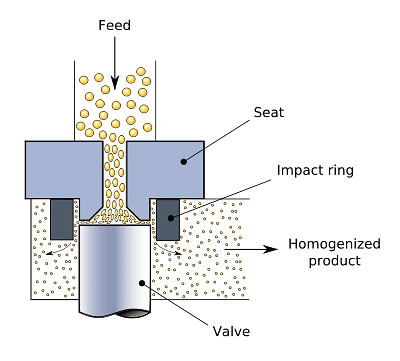
Homogenization
The term "homogenised" was originally used to designate milk prepared by the Gaulin machine, according to the publications and literature of the time. As a result, the terms "homogenization" and "homogenizer" historically refer to Gaulin's procedure and apparatus. The homogenizer is made up of a positive displacement pump with a homogenising valve assembly linked to it. Under pressure, the pump forces the fluids through the homogenising valve. The process or the activity that occurs within the homogenising valve assembly is referred to as "homogenization."
Read More: Collision Theory
Types of Homogenization
[Click Here for Sample Questions]
Homogenization is a broad term that covers a lot of ground. Homogenise means "to make or render homogenous," and homogeneous means "to have the same content, structure, or character throughout." Homogenising is an umbrella term that refers to a broad range of activities. When someone claims they're homogenising, they could be performing one or more of the following: blending, disrupting, mixing, emulsifying, dispersing, stirring, and so on. The present homogenization procedures or methods can be divided into three categories:
- Ultrasonic Homogenising
- Pressure Homogenising
- Mechanical Homogenizers
Ultrasonic Homogenising
Ultrasound homogenization is the first type of homogenization. Ultrasound waves are used to break down the particles into a smaller piece. This method of homogenization is commonly employed in the pharmaceutical and cosmetics industries. Ultrasonic disruption is a common way for disrupting cells. These devices operate by producing a very high-intensity of sonic pressure waves in a liquid medium.
The pressure waves induce liquid to stream and, given the appropriate conditions, the rapid creation of micro-bubbles, which develop and consolidate till they reach them, vibrate violently, resonant size, and eventually disintegrate. Cavitation is the scientific term for these phenomena. The shock wave created by the collapse of the vapour phase bubbles is powerful enough to disrupt covalent bonds. Cells are disrupted by shear from imploding cavitation bubbles and eddying caused by the vibrating sonic transducer.
Pressure Homogenising
For many years, high-pressure homogenizers have really been employed to destroy microbial cells. The approach has been found to be usually acceptable for a various type of bacteria, yeast, and mycelia, with the exception of very filamentous microorganisms. Under pressure, this sort of homogenizer forces cell suspensions through some very tiny channel or orifice. They may or may not thereafter impinge at a very high velocity on the hard-impact rings or against another high velocity flow of cells coming from the other direction, depending on what type of high-pressure homogenizer.

Pressure Homogenising
Machines that use an impingement design are much more efficient than ones that don't. A combination of huge pressure drops, extremely focused turbulent eddies, and powerful shearing forces causes cell wall disruption. The rate of cell rupture is proportional to the turbulent velocity of a product passing through a homogenizer channel, which is proportional to the applied pressure. As a result, higher the pressure, the greater the disruption efficiency per run through the machine.
Read More: Energy Level Diagram
Mechanical Homogenizers
Mechanical homogenization is the most basic method of homogenization. This entails physically breaking up the particles into tiny pieces with a machine. This is the most frequent type of homogenization, which is utilised in a variety of industries such as food, medicines, and cosmetics. Mechanical homogenizers can be divided into two types:
- Rotor-Stator Homogenizers
- Blade Type Homogenizers
Rotor-Stator Homogenizers
Rotor-stator homogenizers (also known as colloid mills or Willems’s homogenizers) are better for plant and animal tissue than cutting blade-type blenders. The rotor-stator homogenizer has really been effectively utilised to disrupt bacteria when combined with glass beads. However, the homogenised material contains tiny glass and stainless-steel particles, resulting in unacceptably high abrasive wear on the rotor-stator homogenizer. Hydraulic and mechanical shear, as well as cavitation, are used in the rotor-stator homogenizer to disrupt cells. Some people in the homogenising area also suggest that high-energy sonic and ultrasonic pressure gradients are implicated to a lesser extent.
Blade Type Homogenizers
Blade homogenizers (also known as blenders) have been used to make fine powders and extract from plant and animal tissue for many years, despite being less effective than rotor-stator homogenizers. The cutting blades on this type of homogenizer rotate at rates ranging from 6,000 to 50,000 rpm and are either top or bottom operated. Blenders are not appropriate for disrupting microorganisms until glass beads or any other abrasives are been added to the media, at which point the same issues as with rotor-stator homogenizers arise. Enzymatic browning, a biological oxidation process that might affect later separation techniques, occurs in many plant tissue homogenizers.
Read More: Group 15 Elements
Homogenised Milk Process
[Click Here for Sample Questions]
High-pressure pumps with a specific discharge valve are known as homogenizers. Homogenizers are used in the dairy sector to shrink fat globules from a diameter of up to 18 micrometres to less than 2 micrometres. Hot milk (in liquid form) is forced through the valve at high pressure, resulting in a consistent and also a stable distribution of the fat in the milk. The benefits of homogenization for milk include a whiter colour, better flavour, more consistent viscosity, stronger "whitening" in coffee, and gentler curd tension (making the milk much more digestible for human beings).
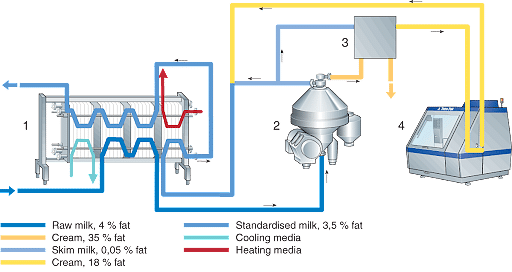
Homogenised Milk Process
Read More: Group 16 Elements
Advantages of Homogenised Milk
[Click Here for Sample Questions]
- Increased overall surface area of the fat globule, which avoids or delays fat creaming and improves light reflection.
- Taste and texture are improved.
- The colour lightens and gets whiter.
- Milk that has been homogenised has a creamier and smoother flavour than milk which has not been homogenised.
- It is more easily digestible than unhomogenized milk.
- Milk that has been homogenised lasts longer than milk which has not been homogenised.
- Prevents fats from churning during agitation or harsh handling.
- Cream formation is prevented.
Disadvantage of Homogenised Milk
[Click Here for Sample Questions]
- Increased surface area for microbial lipase to assault, leading to lipolytic alterations.
- Increased sensitivity to light impacts, resulting in rancid, soupy, or oxidised flavours.
- Microbial contamination has increased due to the increased surface area.
- Homogenised milk has been connected to cancers and heart disease development.
- Reduced protein thermal stability (homogenization must be done after UHT treatment for UHT milk) and reduced nutritional benefits of homogenised milk.
Application of Homogenization
[Click Here for Sample Questions]
The application of Homogenization in various sector mentioned below
Reduce Size Particle: The primary goal of homogenization is to minimise the size of the particles that make up a sample. In simple terms, it's similar to breaking a rock into stone, only the rock bits are all of the same size and form in this situation. Many of the samples can be reduced to nanometer-sized particles during homogenization. This makes it easier for firms to produce and test products like adhesives, resins, paints, and creams/lotions.
Cell Biology: Homogenization is the process of dismantling cells and liberating organelles and cytoplasm. When extracting organelles, it's common to do so in two steps: first, break up the tissue with a blender, then disrupt the tissue with an ultrasonic or mechanical tissue disruptor. Differential centrifugation is then used to separate the organelles. Different techniques are employed to separate subcellular fractions depending on what is desired. When extracting nucleic acids, the tissue is frequently mashed in a mortar and pestle while submerged in liquid nitrogen.
However, in some cases, a far gentler method is used, with the goal of collecting entire, undamaged cells. To avoid autolysis, homogenised cells must be stored at low temperatures and in an isotonic solution to avoid osmotic damage.
Kill Pathogens: The elimination of microorganisms within a sample is one of the additional benefits of several homogenization procedures. Homogenizers can be mechanical, high-pressure, or ultrasonic, and each uses one or more specialised types of force.
Many homogenizers yield samples with varied levels of sterility as a by-product of the processing procedure each force facilitates. High-pressure homogenizers, for example, can successfully eliminate bacteria in food samples. Other high-heat homogenizers (mainly mechanical homogenizers) can also destroy germs, although the heat often damages the entire sample. If product sterility is a requirement, it's critical to choose the correct kind of homogenising equipment.
Food and Dairy Technology: Homogenization is the process of lowering the particle size of fluid products such as milk, fruit juice, and sauces under severe pressure, shear, turbulence, acceleration, and impact in order to make them more stable and texture-friendly.
The effect is obtained by driving the product at a very high pressure through a specific homogenising valve. Particles with diameters ranging from 0.2 to 20 microns enter the homogenizer. Depending on the application, large particles are dispersed to generate a product with particles ranging from 0.4 to 1 micron.
Cosmetics: When compared to traditional devices such as stirrers, agitators, rotor-stator devices, or colloid mills, high-pressure homogenization is critical to the quality and stabilisation of beauty creams, lotions, nail varnishes, toothpaste, shampoo, and emulsions containing different oils because it is a very effective way to create a exact required product texture while also creating a very stable product.
This is accomplished by lowering particle size and homogeneity under severe pressure, shear, and stress conditions. As a result, you get a consistent, effective product with a long shelf life. It is a well-known truth that the ability of some cosmetic products, such as beauty creams, to be absorbed into the skin, is one of the limiting elements in their efficacy.
Pharmaceutical: Homogenization (also known as micronization in the pharmaceutical industry) is the process of shrinking the particle sizes of pharmaceutical goods under extreme pressures, shear, turbulence, acceleration, and impact in order to make them more stable and clinically effective. The product's bioavailability improves, and several medications that were previously considered borderline can be tolerated better.
In the pharmaceutical business, high-pressure homogenization has proven to produce more stable products with higher active ingredient dispersion than conventional stirrers, rotor-stator devices, or colloid mills. This is accomplished by lowering particle size and homogeneity under severe pressure.
Read More: Properties of Matter
Things to Remember
- Milk homogenization is one of the oldest applications of homogenization.
- When it comes to case of milk homogenization, it's critical to take a step back and think about what you're doing.
- Pasteurization and homogenization alter your taste buds and make the milk or food taste completely different.
- Homogenizers are high-pressure, heavy-duty pumps with a specific valve at both discharge end.
- The pressure and capacity factors of the homogenizer are critical. But, before you get too caught up in the specifics, consider what product qualities you'd like to attain through homogenization.
Read more: Haloalkanes
Sample Questions
Ques. Homogenization temperature applied normally are ________ (2 marks)
(a) 30 - 40 o C
(b) 50 - 60 o C
(c) 60 - 70 o C
(d) 90 - 100 o C
Ans. (c) 60- 70 o C
Hint: Homogenization temperatures range from 60 to 70 degrees Celsius, depending on the product. The fat phase is incompletely dispersed when processed at temperatures favourable to partial solidification of milk fat (i.e., 30–35°C). When the fat phase is liquid and at amounts comparable to milk, homogenization is most effective.
Ques. Lack of homogenization leads to which of the following developments? (2 marks)
(a) Cream layer development
(b) Protein development
(c) Astringency development
(d) Increased fat content
Ans. (a) Cream layer development
Hint: The fat globules are scattered in a continuous skim milk phase in milk, which is an oil-in-water emulsion. The fat in raw milk would rise and form a cream layer if let to stand.
Ques. The bacterial counts of milk will _______ after homogenization. (2 marks)
(a) Increase
(b) Decrease
(c) Remain same
(d) First increase then decrease
Ans. (a) Increase
Hint: After homogenization, the bacterial count will appear to grow. The break-up of clumps and colonies of organisms causes the increase.
Ques. Mention the two stages of Homogenization? (2 marks)
Ans. 1) Single Stage
2) Two Stage
Ques. Mention the operating parameter that affects the efficiency of high-pressure homogenizers? (2 marks)
Ans. The operating parameter that affects the efficiency of high-pressure homogenizers are
1) Pressure and Temperature
2) Number of passes
3) Valve and impingement design
4) Flow rate
Ques. List out and explain the factors affecting Homogenization? (2 marks)
Ans. The factors effecting Homogenization are:
Temperature of Milk: For proper subdivision of the fat phase in liquid, the temperature of the milk should be above 33°C at the time of homogenization.
Pressure of Homogenization: 10 – 25 Mpa (100 – 250 bar)
Ques. Mention the variables to be optimised for maximum efficiency Rotor-stator? (2 marks)
Ans. The variables to be optimized for maximum efficiency Rotor-stator homogenizers are as follows:
1) Design and size of rotor-stator (generator)
2) Rotor tip speed
3) Initial size of sample
4) Viscosity of medium
5) Time of processing or flow rate
6) Volume of medium and concentration of sample
7) Shape of vessel and positioning of rotor-stator
Ques: Which postulate of Dalton’s atomic theory is the result of the law of conservation of mass? (2 marks)
Ans: The postulate of Dalton’s atomic theory that is the result of the law of conservation of mass is—the relative number and kinds of atoms are constant in a given compound. Atoms cannot be created nor destroyed in a chemical reaction.
Ques: Define Atomic Mass Unit. (2 marks)
Ans: One atomic mass unit is equal to exactly one-twelfth (1/12th) the mass of one atom of carbon-12. The relative atomic masses of all elements have been found with respect to an atom of carbon-12.
Ques: What are polyatomic ions? Give examples. (2 marks)
Ans: The ions which contain more than one atom (same kind or may be of a different kind) and behave as a single unit are called polyatomic ions e.g., OH–, SO42-, CO32-.
Ques: Give the names of the elements present in the following compounds: (2 marks)
(a) Quick lime
(b) Hydrogen bromide
(c) Baking powder
(d) Potassium sulphate.
Ans: (a) Quick lime (chemical name: Calcium oxide)
Elements → Calcium and oxygen
(b) Hydrogen bromide
Elements → Hydrogen and bromine
(c) Baking powder (chemical name: Sodium hydrogen carbonate)
Elements → Sodium, hydrogen, carbon and oxygen
(d) Potassium sulphate
Elements → Potassium, sulphur and oxygen
Read More about:



Comments