



Content Curator
Plants also exhibit certain responses to changes occurring in the environment. This response is generally seen in the form of different types of movements (growth or nastic). Immediate response to stimulus or nastic movement occurs when a plant moves its leaves in response to some form of touch. The best example would be the “Touch-Me-Not” plant which immediately closes its leaves when touched.
| Table of Content |
Key Terms: Stimulus, tropic movement, phototropism, geotropism, hydrotropism, chemotropism, thermotropism
What is Stimulus?
[Click Here for Sample Questions]
Stimuli are changes in environmental circumstances to which organisms respond. When a living thing is subjected to an external stimulus, it responds to that action. Coordination occurs when several organs work together systematically to respond to a stimulus. For example, plants do not travel from their original location. Instead, they alter their growth patterns. Plants of the same species have varied body shapes for this reason. Tropism refers to a change in development pattern in response to a stimulus.
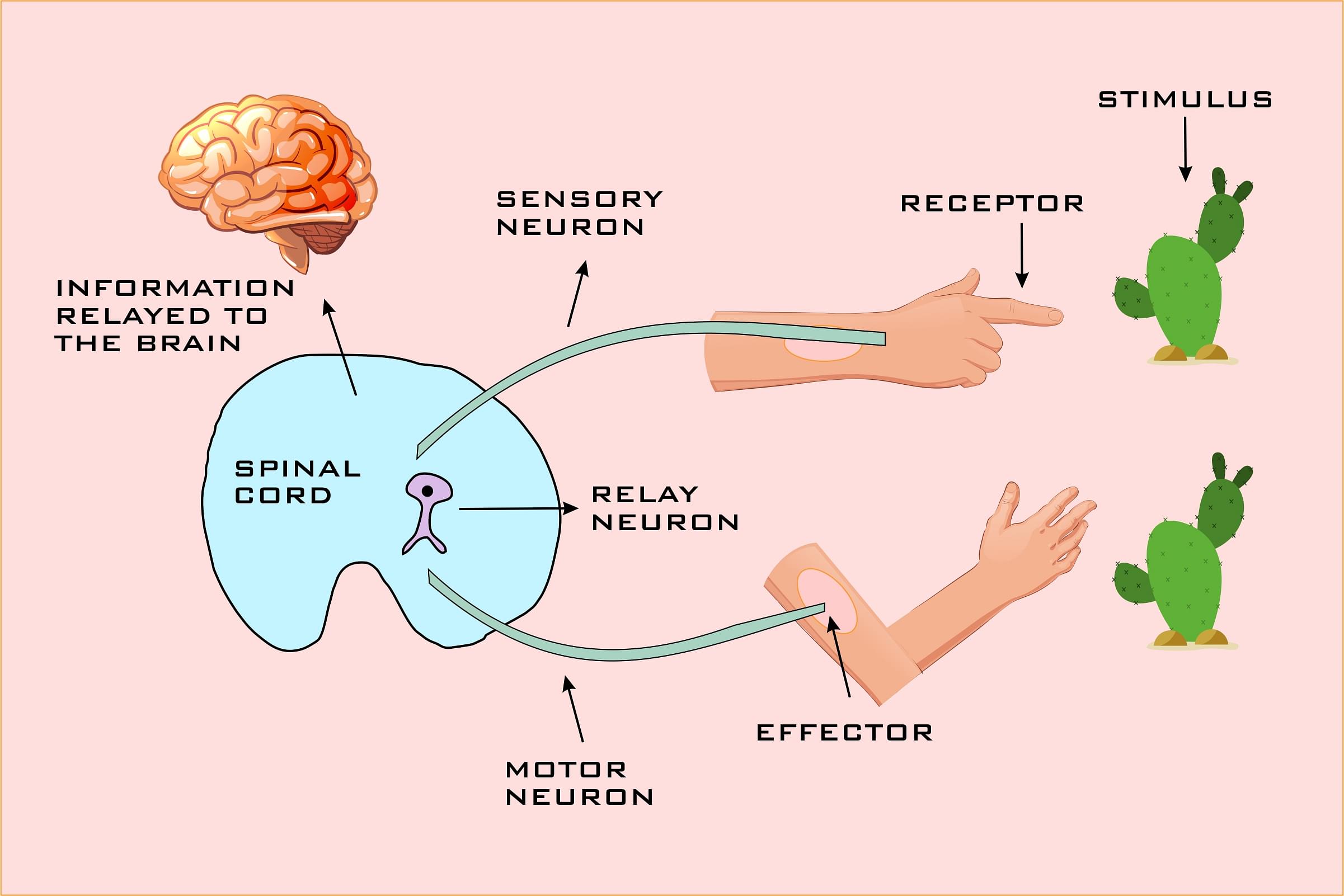
Stimulus
Read more: Budding
Immediate Response to Stimulus
[Click Here for Previous Year Questions]
In contrast to animals, a plant's reaction is controlled by the interplay of two or more plant hormones. Observing the stimuli takes a significant amount of time. The plants communicate information by electrical-chemical mechanisms, but they lack specialized tissues. Plants vary their form by altering the quantity of water in their cells, which causes them to shrink and swell. Mimosa Pudica is an example of a plant that responds to a stimulus.
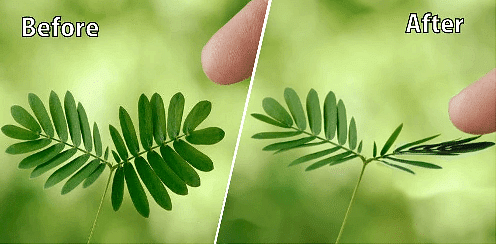
Immediate Response to Stimulus
Stimulus in Plants
[Click Here for Sample Questions]
Water and sunshine are two of a plant's most important necessities. Among the many environmental cues that plants respond to, light, gravity, touch and weather are among the main. A plant's reaction is either positive (growth occurs toward the stimulus) or negative (growth occurs away from the stimulus). For instance, phototropism is a plant's reaction to a stimulus, such as sun rays.
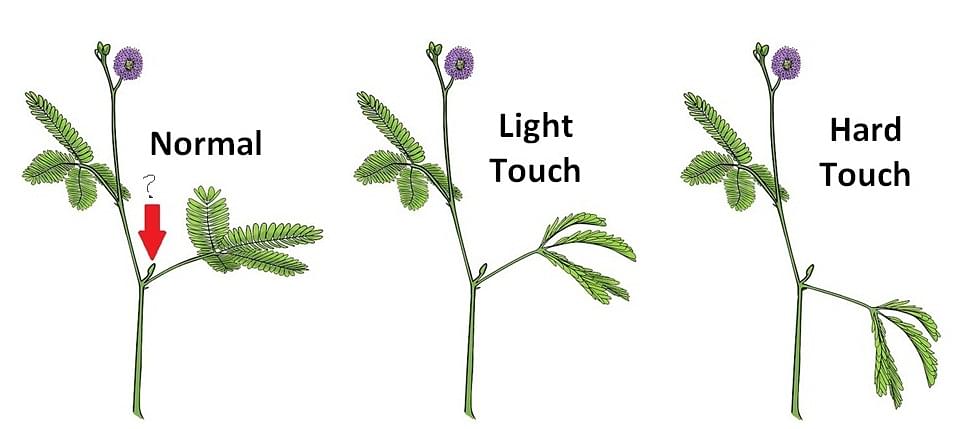
Stimulus in Plants
By triggering growth in a specific part of the stem, the plant enzyme "auxin" retains the plant's orientation towards the light. Vegetation's gravitropism reacts to the stimuli, gravity. The plant should be kept upright to get the nutrients it needs. When a plant falls, auxin levels in the lower region of the stem rise, promoting cell elongation and bending the stem upwards.
Check out:
| Chapter Related Links | ||
|---|---|---|
| Difference of Carpel and Pistil | Flower Structure | Sexual Reproduction in Flowering Plants |
| Pollination by Water | Parthenocarpy | Pollination |
Tropic Movement in Plants and Different Types
[Click Here for Previous Year Questions]
Tropic movement is a biological phenomenon that describes an organism's movement toward an environmental stimulation, such as plants. The following are the many forms of tropic movements:
Stimulus to Temperature – Thermotropism
It is a type of tropic movement in which a plant or a portion of a plant reacts to changes in ambient temperature. Rhododendron plants, for instance, are known for this sort of movement. In response to the cold, the leaves start twisting or bowing.
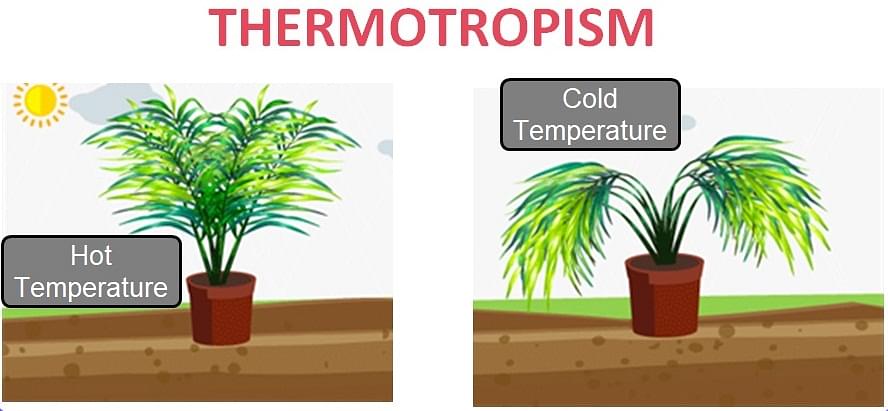
Thermotropism
Stimulus to Gravity - Geotropism
It's a tropism in which plants respond to gravity by growing. The geotropism of stems is negative, whereas the geotropism of roots is positive. Gravitropism is another term for this. The major roots and certain other sections of the root system display positive geotropism by spreading directly towards the centre of gravity, as do other plant components. The stems develop away from the centre of gravity; they are negatively geotropic. The leaves are transversely geotropic because they choose sites perpendicularly to the centre of gravity.
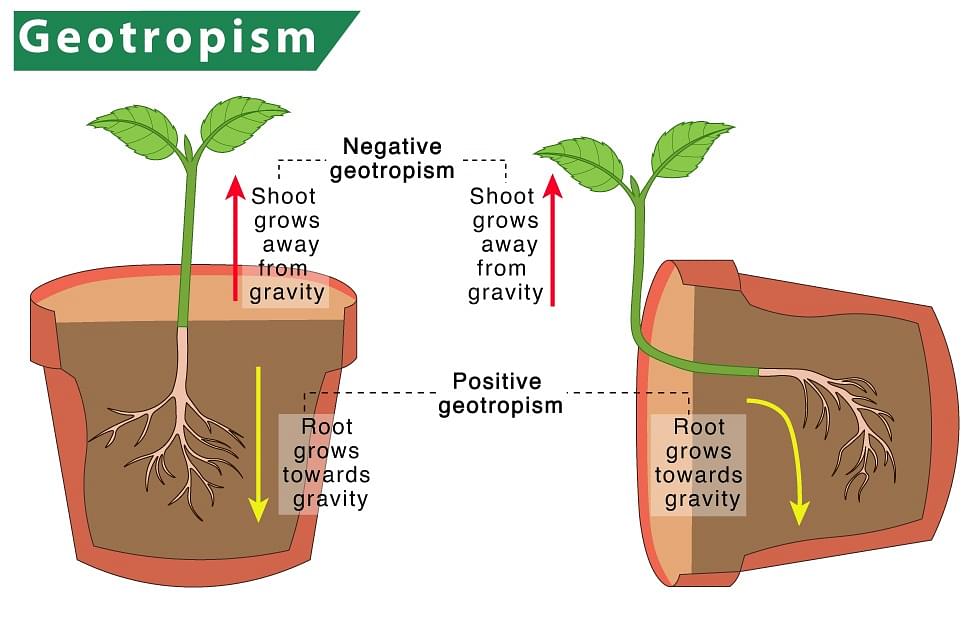
Geotropism
Stimulus to Water - Hydrotropism
Hydrotropic motions refer to a plant's movement or growth in response to a water stimulus, while hydrotropism is analogous to a water stimulus. Roots migrate and develop towards the water in this movement, displaying a positive hydrotropic response.
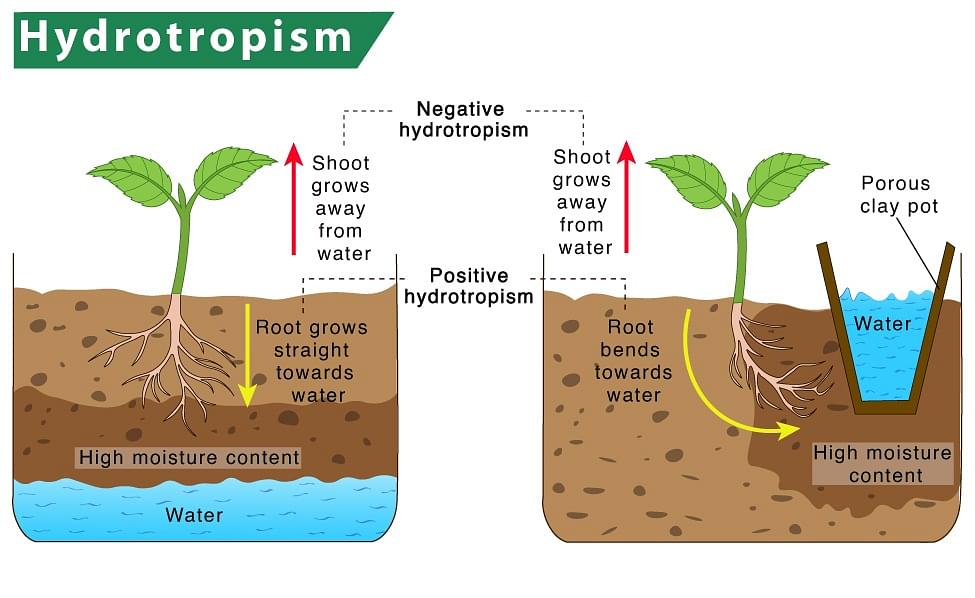
Hydrotropism
Stimulus to Light - Phototropism
Phototropism is a sort of tropism in the reaction to light in which plants grow towards or away from the light. Positive phototropism is generally found in stems, while negative phototropism is seen in roots. The source of light also has a favorable effect on the leaves.
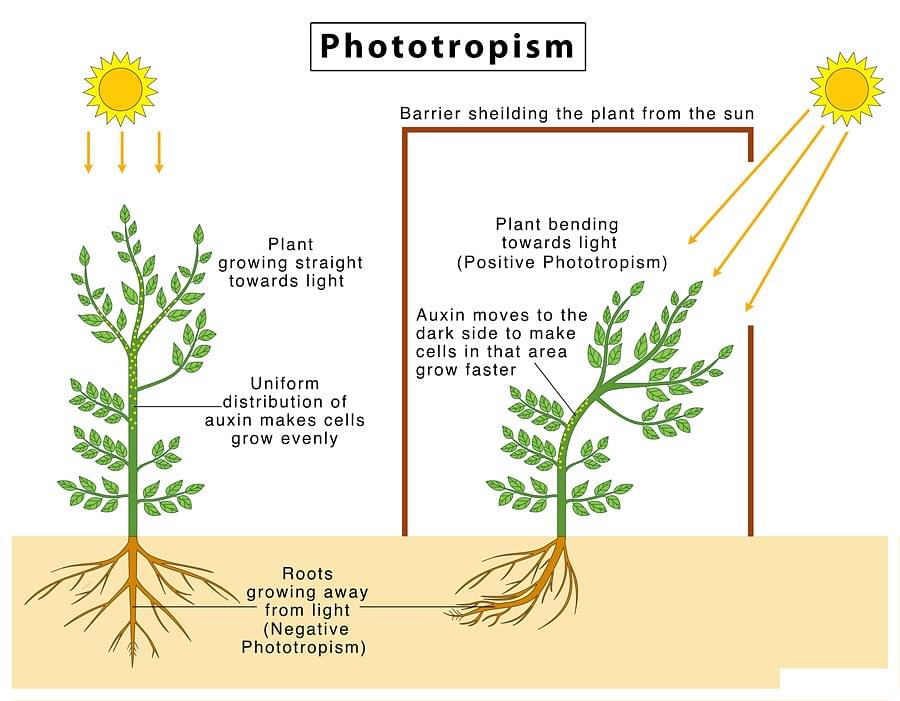
Phototropism
Stimulus to Particular Substances - Chemotropism
Just a few chemical compounds actively cause the bending movement in plant organs. Chemotropism is a reaction in which plants develop in response to particular substances. The transformation of a flower into fruit, the expansion of a pollen tube down the style during fertilization, and the motion of tentacles in Drosera are all instances of chemotropic motions.
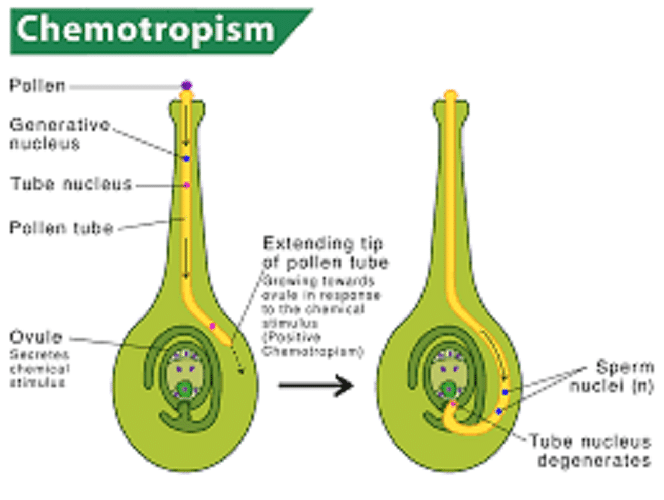
Chemotropism
Stimulus to Mechanical Stimulation - Thigmotropism
Thigmotropism refers to the growing or developing motions that plants make in reaction to contact with a solid object. Tendrils and twiners are examples of this sort of movement. Haptotropism is another name for this movement.

Thigmotropism
Things to Remember
- Plants also respond to daily and seasonal cycles and diseases.
- Mimosa Pudica is an example of a plant that responds to a stimulus.
- Hormones control plant responses. Some plant responses are tropisms.
- Like all organisms, plants detect and respond to stimuli in their environment. Their main response is to change how they grow.
- Rhododendron plants are known for its response to the cold - the leaves start twisting or bowing.
- The plants use Electrical-chemical methods to exchange information, although they lack specialized tissues.
- Thigmotropism is also known as haptotropism.
Also read:
| Related Links | ||
|---|---|---|
| Fragmentation | Reproduction | |
| Flower Structure | Apomixis | Pollen Grains |
Previous Years Questions
- The anthesis is a phenomenon, which refers to… [UPSEEE 2016]
- Proximal end of the filament of stamen is attached to the...[NEET 2016]
- Syngenesious condition of stamens is found in Family...[NEET 1991]
- The ovary is half inferior in...[NEET 2020]
- A bicollateral vascular bundle is characterised by…. [NEET 1992]
- Out of diffuse porous and ring porous woods, which is correct?...[NEET 1989]
- Death of protoplasm is a pre-requisite for a vital function like...[NEET 1989]
- Where do the casparian bands occur?….[NEET 1990]
- Vessels and companion cells are found in….
- Vascular bundles in Cucurbita are….
- In barley stem vascular bundles are…
- Why are vascular bundles termed closed in monocots?
- The presence of corollary corona, sagittate anthers….[KCET 2010]
- The diagram given denotes the various parts of a typical flower….[KCET 2010]
Sample Questions
Ques:- Define stimulus. (3 marks)
Ans - Any change in the organism's internal or external environment that causes the organism to react is referred to as a stimulus(singular). There are two forms of it: exterior and internal. The stimulation from outside the body is known as an external stimulus. For instance, light, heat, chemical, and auditory stimuli are all examples of stimuli. Internal stimuli are those that originate from within an organism. For instance, hunger, thirst, and so forth.
Ques: What is the most common way for plants to react to external stimuli? What is it that regulates their reactions? (2 marks)
Ans - Environmental factors cause plants to develop their stems, roots, or leaves toward or away from the stimulus. Tropism is the term for this type of reaction or behavior. Plant tropisms include the following: Phototropism is how a plant responds to light by growing or moving.
Ques: Describe how plants react to illness. (2 marks)
Ans - Plants lack immune systems, yet they do react to illness. The death of cells around diseased tissue is usually their first line of defense. This stops the virus from spreading further. To combat diseases, many plants generate hormones and poisons.
Ques: Define the term tropism. Give an example of tropism from the world of plants. (3 marks)
Ans - Growth and movement toward (positive) or away from (negative) an external stimulus is tropism. Tropisms are caused by differences in growth and responses caused by receptors and uneven distribution of auxin. For example, pollen tubes exhibit chemotropism, tendrils exhibit thigmotropism, stems exhibit phototropism, and roots exhibit gravitropism.
Ques: Give a few real-life examples of stimuli. (2 marks)
Ans - Mouths watering at the sight of delectable food, Mimosa leaves closing when touched, and our eyes closing when an item is quickly flung at us are all reactions to stimuli.
Ques: Which of the following plants demonstrates immediate reaction to stimulation - Mimosa, tulsi, neem, or rose plant? (2 marks)
Ans - Touch-me-not is the common name for Mimosa pudica. Touch or a comparable stimulation causes it to wilt. The internal circulation of water causes the leaves to wilt. An impulse, like a touch, causes chemicals to be released in particular parts of the stem, causing water to flow from cell vacuoles to intercellular space, causing cell shrinkage.
Ques: Name some parts of the plant where negative geotropism may be found. (3 marks)
Ans - Tropic moments are the points in a plant's development cycle when the direction of the external stimuli is a factor. The development of plant components in reaction to gravity is known as geotropism. Negative geotropism describes the upward development of plant shoots (leaves, stems) against gravity, while positive geotropism describes the downward growth of roots. As a result, negative geotropism is found in the leaves and stems of the plant.
For Latest Updates on Upcoming Board Exams, Click Here: https://t.me/class_10_12_board_updates
Also Check:



Comments