



Content Curator
Pepsin is an enzyme that breaks down proteins into smaller peptides. It is an endopeptidase that is secreted by the gastric chief cells of the stomach as pepsinogen which is the precursor of the enzyme pepsin. Under a highly acidic environment (in presence of HCl) pepsinogen becomes pepsin which is the active form of the enzyme. Pepsin is also an aspartic protease as it has a catalytic aspartate at its active site. Pepsin is one of the main digestive enzymes of the digestive system chiefly responsible for breaking down proteins into their constituent peptides.
Key Terms: Pepsin, Enzymes, Peptides, Proteins, Digestion, Digestive System, Trypsin, Stomach, Hydrochloric Acid, Pepsinogen
What is Pepsin?
[Click Here for Sample Questions]
Human digestive system is a fascinating set of digestive organs and enzymes that work together. The function of these organs and the enzymes are to work together for efficient absorption and proper assimilation of the food that is consumed. Pepsin is one of such enzymes that functions to break down the proteins in the food. It is an endopeptidase that breaks down the protein into smaller peptides. Pepsin is one of the three principal proteases in the human digestive system along with the other two being chymotrypsin and trypsin. These three enzymes collaborate to digest the dietary proteins into smaller peptides and amino acids.

Pepsin
Pepsin was discovered by Theodore Schwann in the year 1836. It is named after the Greek word ‘Pepsis’ that literally means ‘digestion’. The overall chemical structure of pepsin is bilobal containing almost equal C-terminus and N-terminus. The active pepsin breaks down the protein molecules into smaller peptides by preferentially hydrolyzing peptide linkages of the substrate proteins, especially where one of the amino acids is aromatic.
Read More:
Source of Pepsin
[Click Here for Sample Questions]
Pepsin’s proenzyme Pepsinogen is secreted by the gastric chief cells of the stomach wall. Once it is released, it gets mixed with the hydrochloric acid (HCl), present in the gastric juice to become the activated enzyme pepsin. Now, these activated pepsin molecules can break down the proteins into smaller peptides inside the digestive system.
Chemical Structure of Pepsin
[Click Here for Sample Questions]
The overall structure of Pepsin is bilobal, composed of two nearly equal N terminal and C terminal domains related by an intra-dyad. Pepsin is a 326 residue protein residue from 1 to 175 form the N-terminal domain and residues 176 to 327 form the C-terminal domain. The catalytic site of Pepsin is found in the domain junction with two separate aspartic acid residues, named Asp2 and Asp215, in each domain. The catalytic function of Pepsin is aided by the water molecules by allowing the active carboxyl group to bear both positive and negative charges with Asp 215 and Asp 32, respectively, thus breaking the bond in the protein.
Also Read: Microbiology
Activity and Stability of Pepsin
[Click Here for Sample Questions]
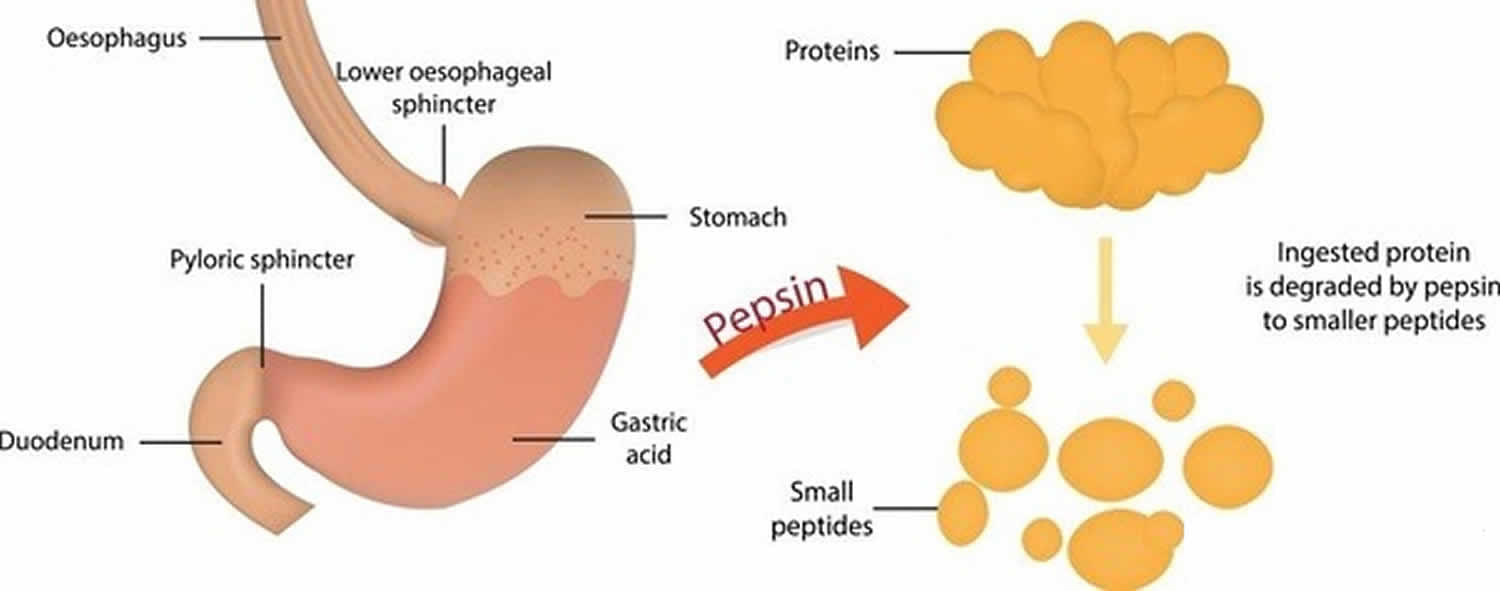
Pepsin shows its optimum activity in a pH range of 1.5 to 2.5. This is when pepsin is most active. Accordingly, its primary site of secretion and activity is the stomach where the usual pH remains 1.5 to 2.0. In the human stomach, its concentration reaches 0.5-1mg/ml. The optimum temperature range for the function of pepsin is 37-42 degrees celsius.
Pepsin Action
At the pH level of 6.5 and above, pepsin is inactive, but it does not get irreversibly inactivated or denature until it reaches a pH of 8.0. Thus, the stability of pepsin has significant implications for diseases attributed to laryngopharyngeal reflux.
Pepsin shows a broad range of cleavage specificity as well. Pepsin can digest up to 20% of the ingested amide bonds. Residues present in the P1 and P1 positions are most important in determining cleavage probability. The presence of hydrophobic amino acids in such positions will increase cleavage probability. Cleavage is not favored by positively charged amino acids such as histidine, lysine, and arginine at the P1 position.
Mechanism of Action of Pepsin
[Click Here for Sample Questions]
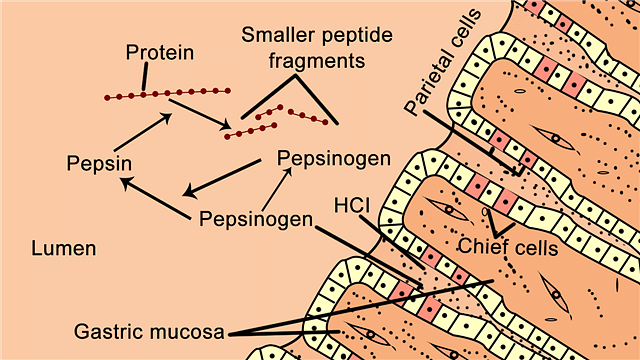
Pepsin is a proteolytic enzyme, secreted by the chief cells of the gut lining. It is a component found in gastric juices that aids in the digestion of food. It is a digestive enzyme that breaks down large polypeptides into smaller peptides in the acidic environment of the stomach. Another hormone named gastrin and the vagus nerve triggers the secretion of both pepsinogens, the precursor of pepsin and HCl from the parietal cells of the stomach.
Mechanism of Pepsin Action
Due to the presence of HCl, the environment becomes highly acidic and the pepsinogen shows an autocatalytic unfolding and cleavage becoming active pepsin. Now, this active pepsin breaks down the protein molecules into smaller peptides by preferentially hydrolyzing peptide linkages of the substrate proteins, especially where one of the amino acids is aromatic.
Applications of Pepsin
[Click Here for Sample Questions]
- Pepsin is widely used in the food manufacturing industry.
- It is generally used in the production of cheese, for adding whipping qualities to soy protein and gelatin, etc.
- It is used in the modification of vegetable proteins used for non-dairy snack items.
- It also has applications in the preparation of animal and vegetable protein hydrolysates for flavoring different foods and beverages.
- It is used in the leather industry for the removal of hair and residual tissue.
- It is also used for the recovery of silver from discarded photographic plates and films.
- It is also used in the manufacturing of chewing gums.
- Pepsin is very commonly used in the preparation of F(ab’)2 antibody generation.
Read More:
Things to Remember
- Pepsin is an endopeptidase that breaks down the protein into smaller peptides.
- Pepsin is one of three principal protease enzymes in the human digestive system along with the other two being chymotrypsin and trypsin.
- Pepsin’s proenzyme Pepsinogen is secreted by the gastric chief cells of the stomach wall.
- Pepsinogen converts into pepsin in a highly acidic environment of the stomach where the pH goes down from 1.5 to 2.5.
- The overall chemical structure of Pepsin is bilobal, having two nearly equal N terminal and C terminal domains related by an intra-dyad.
- Pepsin shows its optimum activity in a pH range of 1.5 to 2.5.
- It has an optimum temperature range of 37-42 degrees Celsius.
- Active pepsin breaks down the proteins into smaller peptides by preferentially hydrolyzing peptide linkages of the substrate proteins, especially where one of the amino acids is aromatic.
- Pepsin has a large number of applications in the food manufacturing industry, leather industry, and medical research.
Sample Questions
Ques. What is Pepsin? (2 Marks)
Ans. Pepsin is an endopeptidase that breaks down the protein into smaller peptides found in the human stomach.
Ques. Where is pepsin secreted? (2 Marks)
Ans. Pepsin’s proenzyme Pepsinogen is secreted by the gastric chief cells of the stomach wall. After its release, it gets mixed with the hydrochloric acid (HCl), present in the gastric juice to become the activated form of pepsin.
Ques. What is pepsin made of? (2 Marks)
Ans. Pepsin is the mature active form of pepsinogen, the precursor of it. After its release from the gastric chief cells, pepsinogen is converted into pepsin in a highly acidic environment. Pepsinogen performs an autocatalytic activity to produce shorter but active pepsin.
Ques. State three applications of pepsin. (2 Marks)
Ans. Three applications of pepsin are-
- It is widely used in the food manufacturing industry.
- It is also used in the leather industry for the removal of hair and residual tissue.
- It is also very commonly used in the preparation of F(ab’)2 antibody generation.
Ques. How is the chemical structure of the enzyme pepsin? (2 Marks)
Ans. The chemical structure of Pepsin is bilobal, having two nearly equal N terminal and C terminal domains related by an intra-dyad. It has 326 residues where from 1 to 175 form the N-terminal domain and residues 176 to 327 form the C-terminal domain.
Ques. What is the optimum environment needed for the proper functioning of pepsin? (2 Marks)
Ans. Pepsin shows its optimum activity in a pH range of 1.5 to 2.5. Pepsin is most active in this pH range. The optimum temperature range for pepsin action is 37-42 degree Celsius.
Ques. What is pepsinogen? (2 Marks)
Ans. Pepsinogen is the precursor of the enzyme pepsin. It is released from the gastric chief cells. It converts into its active form of pepsin under a highly acidic condition.
Ques. Why is the enzyme pepsin used by bodybuilders? (2 Marks)
Ans. Bodybuilders tend to take more protein supplements for their muscle building. To ensure proper breakdown and assimilation of the proteins they also take pepsin supplements. Although there is no proven clinical data on it.
Ques. What are some other benefits of pepsin? (2 Marks)
Ans. Some of the other benefits of pepsin are
- It helps to separate Vitamin B12 from the proteins we consume thus, it is an essential enzyme for the steady supply of vitamin B12 in the body.
- Recent studies are suggesting that pepsin is very helpful for breaking down nucleic acids such as DNA and RNA. So, it is extremely beneficial for immunity and growth.
Check-Out:



Comments