



Content Curator
- These are the simplest multicellular invertebrate species, which can be found in colonies or singly.
- They can also be found sitting or swimming freely.
- The Phylum Coelenterata is made up of marine organisms with radially symmetrical bodies and sensory tentacles that aid in the capture of prey.
- Hydra, comb jellies, true jellies, sea pens, coral animals, sea anemones, and other animals are members of the Phylum Coelenterata.
| Table of Content |
Key Terms: Phylum Coelenterata, Invertebrate, Aquatic species, Multicellular organisms, Intracellular digestion, Extracellular digestion, Method of reproduction
Characteristics of Phylum Coelenterata
[Click Here for Sample Questions]
The following are the general characteristics of Phylum Coelenterata
- Most of these organisms live in marine or aquatic environments.
- The mouth is enclosed by thin, short tentacles.
- These species show tissue-level organization.
- They are diploblastic organisms, with a body composed of two layers of cells.
- The first layer known as the Ectoderm makes up the cells outside the body.
- The second layer known as the Endoderm is the inner lining of the body.
- They have cavities in their bodies.
- The digestion occurs both intracellular and extracellular.
- The body is radially symmetrical.
- They excrete and breathe by simple diffusion.
- The nervous system and circulatory systems are not available.
- The method of reproduction is asexual, through budding.
- Only a small number of Coelenterates reproduce sexually. For example, Rhizostoma, Hydra, Xenia, etc.
Also Read:
| Related Articles | ||
|---|---|---|
| Sporulation | Apomixis | Reproductive Health |
Classification of Coelenterata
[Click Here for Sample Questions]
Coelenterates are divided into three categories:
- Hydrozoa
- Scyphozoa
- Anthozoa
Hydrozoa
Hydrozoa is a Coelenterate from Class I. It gets its name from the Greek words hydro (water) and zoon (animal).
- Hydrozoa can be found in all three layers of the marine ecosystem.
- Some, like Physalia and Velella, live on the surface and have large sail-like structures to keep them afloat above water.
- These are also beneficial in terms of locomotion.
- Long tentacles with nematocysts, also known as stinging cells, aid Hydrozoa in catching food that is frequently found below the surface.
- The second group of Hydrozoa is found in the pelagic region, also known as the middle water zone.
- This is where organisms such as Bougainvillea and Chelia can be found.
- These organisms have long tentacles that allow them to jet propel themselves forward while also sinking rapidly when necessary.
- The third group of Hydrozoa lives on the seafloor, where they usually anchor themselves to rocks.
- Sea Corals are a good example of this.
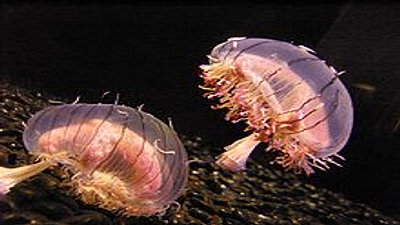
Characteristics of Hydrozoa
The following characteristics are shared by these organisms.
- Some hydrozoa are found to live in colonies, while others live in solidarities.
- These organisms are mostly marine and freshwater in nature.
- Asexual polyps are the most common type.
- In them, the mesoglea is acellular and exists in its most basic form.
- The Medusa possesses true value.
- Hydra, Tubularia, Obelia, and Physalia Physalis are examples of hydrozoa.
- Sexual reproduction results in the production of planula larvae.
- They have two body types: medusae and polyps.
- Cnidocytes are found in the bodies of Hydrozoa. These are also referred to as stinging cells.
- Hydrozoa is classified into 2700 species and 7 orders.
Scyphozoa
Scyphozoa, also known as Scyphomedusae, is a Coelenterate Class II organism. Scyphozoa as a species is frequently a source of concern when it washes up on beaches or comes into contact with humans.
- Jellyfish stings have frequently been known to kill or seriously injure humans.
- They also cause problems for large-scale fishing by frequently clogging nets and straying into communities.
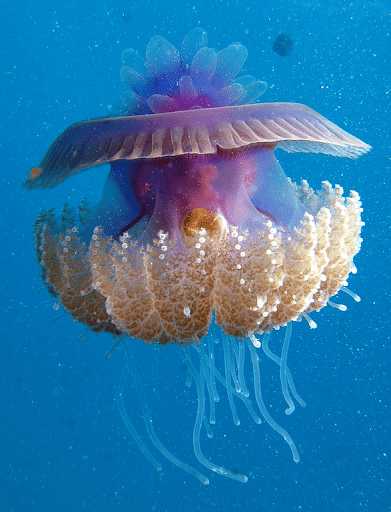
Characteristics of Scyphozoa
These organisms have the following characteristics.
- They are only found in the sea.
- These are mostly solitary and free-swimming organisms.
- Scyphozoa's dominant characteristic is the medusa, which is shaped like an umbrella or a large bell.
- Polyps are either non-existent or extremely short-lived in these organisms.
- The mesoglea is typically cellular in nature.
- Scyphozoa species include Rhizostoma, Jellyfish, and Aurelia aurita.
Anthozoa
Anthozoa and Actinozoa are Coelenterate Class II organisms. These get their names from the Greek words anthos (flower) and zoios (animal).

Characteristics of Anthozoa
The characteristics of Anthozoa include:
- These creatures can only be found in the sea.
- Their way of life is either colonial or solitary.
- These organisms lack a medusa.
- Anthozoa's mesoglea is made up of ameboid cells and fibrous connective tissues.
- Anthozoa species include Xenia, Telesto, Metridium, Tubipora, and others.
- The gastrovascular cavity is present in these organisms.
- Anthozoa protects and supports its soft body tissues by secreting nonliving substances around and outside its body.
- Not all Anthozoa are of the same genus. Some are hermaphroditic, while others have separate sexes.
- Anthozoa can have a variety of appearances. They can range in size from a half-inch to nearly two feet in large clusters of sea pens. Colors can range from red to purple.
Examples of Coelenterates
[Click Here for Sample Questions]
The following are examples of Coelenterates
- Portuguese man-of-war (Physalia)
- Brain coral (Meandrina)
- Sea-pen (Pennatula)
- Sea-fan (Gorgonia)
- Sea anemone (Adamsia)
Things to Remember
- Phylum Coelenterata is the simplest group of animals and belongs to the category of invertebrates.
- They are usually found at the bottom of the sea, often attached to rocks.
- Coelenterates are multicellular organisms that can either be found living solitarily or in groups.
- Moreover, they can also be found sedentary or swimming about freely.
- Coelenterate organisms have a multicellular body organization with tissue grade.
- They have an inner endoderm layer called the gastrodermis and an outer ectoderm layer called the epidermis. Their skin is diploblastic.
- Coelenterates are divided into three categories: Hydrozoa, Scyphozoa, and Anthozoa.
Also Read:
Sample Questions
Ques. What are the characteristics of Coelenterates? (2 Marks)
Ans.
Coelenterates are aquatic, mainly aquatic organisms. The body is radially symmetrical and has a tissue-level structure. Their mouth is encircled by sensitive tentacles, which aid in capturing their prey.Ques. How do Coelenterates feed? (2 Marks)
Ans.
Coelenterates use tentacles to capture and attract food into their opening. The poison they produce is so deadly that it can paralyze even large animals.Ques. What is meant by phylum coelenterata? (3 Marks)
Ans. Coelenterata which is more commonly known as the Phylum Coelenterata are the simplest group of animals that fall under the category of invertebrates. Usually, they are found living at the bottom of the sea, often attached to rocks. Coelenterates, multicellular organisms, can be found either living solitarily or also in groups. They can also be found sedentary or swimming about freely. The Phylum Coelenterata comprises marine organisms that have a body that is radially symmetrical and a mouth that has sensory tentacles that help in capturing prey easily.
Ques. Colenterates are divided into how many categories and what are they? (3 Marks)
Ans. Coelenterates are divided into three categories. They are:
- Hydrozoa: Hydrozoa is a Coelenterate from Class I. It gets its name from the Greek words hydro (water) and zoon (animal). Hydrozoa can be found in all three layers of the marine ecosystem. Some, like Physalia and Velella, live on the surface and have large sail-like structures to keep them afloat above water.
- Scyphozoa: Scyphozoa, also known as Scyphomedusae, is a Coelenterate Class II organism. Scyphozoa as a species is frequently a source of concern when it washes up on beaches or comes into contact with humans.
- Anthozoa: Anthozoa and Actinozoa are Coelenterate Class II organisms. The following characteristics are shared by these organisms. These get their names from the Greek words anthos (flower) and zoios (animal).
Ques. What is the function of the Tentacles of coelenterates? (1 Mark)
Ans. Coelenterates have tentacles that help them capture, eat, and digest their prey. These tentacles are also used in defense.
Ques. Write any 4 characteristics of Hydrozoa. (3 Marks)
Ans. Characteristics of Hydrozoa:
- Some hydrozoa are found to live in colonies, while others live in solidarities.
- These organisms are mostly marine and freshwater in nature.
- Asexual polyps are the most common type.
- In them, the mesoglea is acellular and exists in its most basic form.
Ques. Why are Coelenterates referred to as Cnidarians? (1 Mark)
Ans. Cnidarians are coelenterates that contain specialized cells called cnidoblasts. They have stinging structures known as nematocysts.
Ques. What is the difference between a polyp and a medusa? (1 Mark)
Ans. There are two basic cnidarian body shapes: a polyp, which is attached to a surface, and a medusa, which is an upside-down free-floating form.
Ques. Write about Anthozoa and some of the characteristic features of the same. (5 Marks)
Ans. Anthozoa and Actinozoa are Coelenterate Class II organisms. The following characteristics are shared by these organisms. These get their names from the Greek words anthos (flower) and zoios (animal).
Their characteristics include:
- These creatures can only be found in the sea.
- Their way of life is either colonial or solitary.
- These organisms lack a medusa.
- Anthozoa's mesoglea is made up of ameboid cells and fibrous connective tissues.
- Anthozoa species include Xenia, Telesto, Metridium, Tubipora, and others.
- The gastrovascular cavity is present in these organisms.
- Anthozoa protects and supports its soft body tissues by secreting nonliving substances around and outside its body.
- Not all Anthozoa are of the same genus. Some are hermaphroditic, while others have separate sexes.
Ques. What is Scyphozoa? (2 Marks)
Ans. Scyphozoa, also known as Scyphomedusae, is a Coelenterate Class II organism. Scyphozoa as a species is frequently a source of concern when it washes up on beaches or comes into contact with humans. Jellyfish stings have frequently been known to kill or seriously injure humans. They also cause problems for large-scale fishing by frequently clogging nets and straying into communities.
Ques. What are the characteristics of Sccyphozoa? (4 Marks)
Ans. The characteristics of Sccyphozoa are as follows:
- They are only found in the sea.
- These are mostly solitary and free-swimming organisms.
- Scyphozoa's dominant characteristic is the medusa, which is shaped like an umbrella or a large bell.
- Polyps are either non-existent or extremely short-lived in these organisms.
- The mesoglea is typically cellular in nature.
- Scyphozoa species include Rhizostoma, Jellyfish, and Aurelia aurita.
For Latest Updates on Upcoming Board Exams, Click Here: https://t.me/class_10_12_board_updates
Also Check:



Comments