



Content Curator
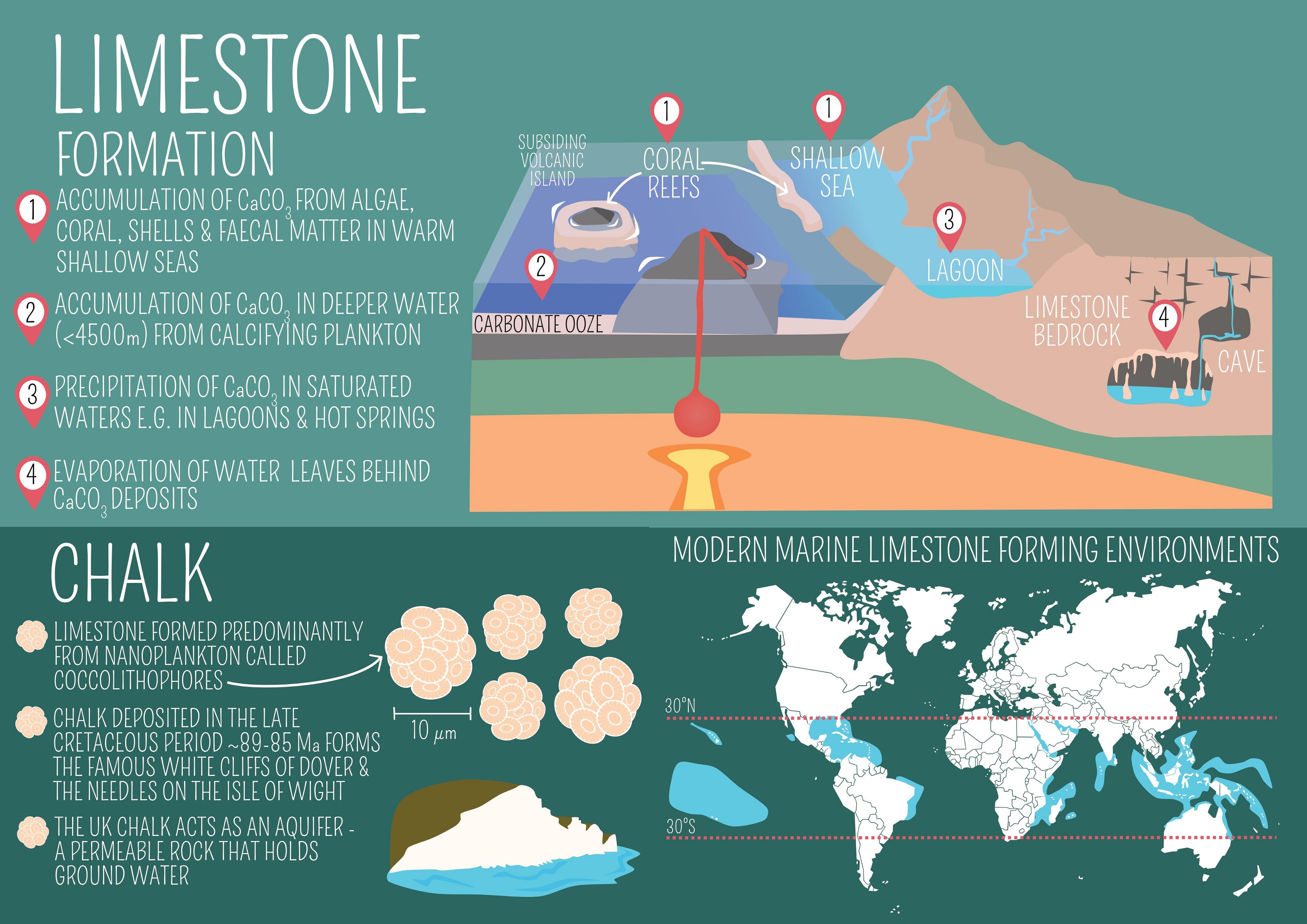
The chemical formula of limestone is CaCO3, which stands for calcium carbonate. Limestone is a sedimentary rock that is composed primarily of calcium carbonate.
Limestone forms through the accumulation of shells, coral, and other organic materials over time, and is often used as a building material and as an ingredient in cement. The chemical reaction between calcium carbonate and an acid, such as acetic acid or hydrochloric acid, releases carbon dioxide and results in the formation of calcium acetate or calcium chloride, respectively.
Limestone
Limestone is a sedimentary rock with several important physical and chemical properties, including:
- Composition: Limestone is primarily composed of calcium carbonate (CaCO3), with smaller amounts of other minerals such as clay, sand, and organic matter.
- Color: Limestone can range in color from white to gray, yellow, and even black, depending on the presence of impurities and minerals.
- Hardness: Limestone is relatively soft compared to other types of rocks, with a hardness of 3 on the Mohs scale.
- Texture: Limestone has a grainy texture, with a visible accumulation of small grains or fragments.
- Porosity and Permeability: Limestone is relatively porous, which means that it can absorb and hold water. However, it is also relatively permeable, which means that water can easily pass through it.
- Reactivity: Limestone is chemically reactive, and can react with acids to form calcium salts and release carbon dioxide gas.
- Use: Limestone has many uses, including as a building material, as an ingredient in cement, as a soil amendment, and as a filler in a variety of industrial products.
These properties, along with its abundant availability and low cost, make limestone a widely used and versatile material in a variety of industries and applications.
Also check:
| Important Learning Concepts | ||
|---|---|---|
| Sedimentary Rocks | Mineral and Energy Resources | Difference between Rocks and Minerals |
| Aquatic Ecosystem | Marine Biology | Importance of Water |



Comments