



Education Journalist | Study Abroad Lead
Limestone is an organic substance which is a type of sedimentary rock. The limestone is formed through organic remains like shells, coral and so on. It is extensively used for the construction of buildings.
- Limestone mainly comprises calcium carbonate in the form of calcite mineral along with other minerals such as quartz, pyrite, clay minerals, feldspar, siderite, etc.
- The physical properties of limestone vary between fine-textured and coarse-textured rocks.
- Limestone is a versatile building material and has applications in construction, agriculture, and industry.
- It is commonly used as a base material for roads and highways.
- Limestone is valued for its practical uses in agriculture, where it is used to neutralize acidic soils and provide nutrients for crops.
Key Terms: Limestone, Sedimentary Rock, Calcium Carbonate, Marine, Organisms, Calcium, Chalk, Fertilizer
What Is Limestone?
[Click Here for Sample Questions]
Limestone is a sedimentary rock. It is made up of calcium carbonate including calcite and aragonite. There are different variations in the formation of limestones it may sometimes form on dry land, sometimes in freshwater in lakes and rivers.
- The presence of limestone is tested by sprinkling acid, if acid starts forming bubbles, the rock is limestone.
- Examples of limestone are travertine and chalk etc.
- It is formed for millions of years through the accumulation of marine fossils and shells.
- These are compressed and cemented together to create a dense and durable stone.
Overall, limestone is a versatile and valuable natural resource that has been used for thousands of years for its practical and aesthetic properties. Its durability, beauty, and versatility make it a popular choice for a wide range of applications, from construction to agriculture to art and design.
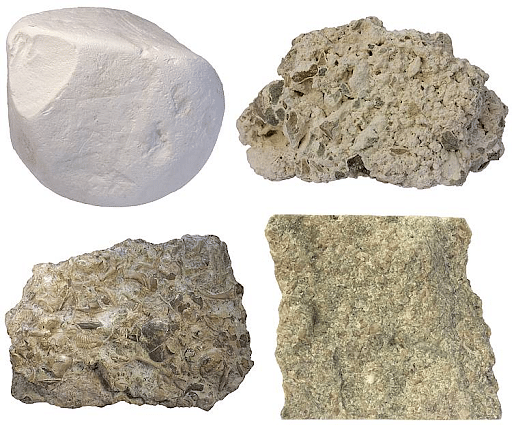
Limestones
Also Check:
| Concept Related Limestone | ||
|---|---|---|
| Sedimentary Rocks | Mineral and Energy Resources | Difference between Rocks and Minerals |
| Calcium Oxide | Soda Lime | Calcination or Roasting |
Uses Of Limestone
[Click Here for Sample Questions]
Limestone is a versatile and widely used natural resource that has many applications and uses in various fields. The significant uses of limestones are:
Limestones In Agriculture
Limestone has several uses in agriculture.
- Soil pH regulation: Limestone is used to regulate the pH of acidic soils. It contains calcium and magnesium carbonates that react with acidic soil to neutralize it, making it more conducive for plant growth. These products are crushed and then sold as ‘agricultural lime or “Aglime” to neutralise soil acidity.
- Nutrient source: Limestone is a natural source of calcium and magnesium, two essential nutrients that plants need to grow and thrive. Limestone provides these nutrients to the soil, helping to improve crop yields.
- Fertilizer filler: Limestone is used as a filler in fertilizers to improve their spreading and adherence characteristics. It also helps to reduce the cost of fertilizers by diluting expensive nutrients.
- Animal feed: Limestone is added to animal feed to provide calcium and other essential minerals that animals need for bone and tissue growth.
- Poultry grit: Limestone is used as grit in poultry feed to aid digestion in birds. It also provides a source of calcium, which is essential for the formation of eggshells.
- Water treatment: Limestone is used in water treatment to remove impurities and improve the quality of drinking water for both humans and animals.
Limestones In Industries
- The powdered form of limestone is used in various industries like rubber, paper, glass, paint and many more.
- The limestone is also used in the medical and cosmetic industries.
- In the steel industry, limestones are used as a flux to remove impurities.
- It is also used for latex treatment.
Limestones In Construction and Architecture
- Limestone is used in construction since ancient times for floor tiles, window sills, and stair treads.
- The clay in limestones helps in preparing the cement.
- A great example of the usage of limestone in architecture is the Taj Mahal, the exquisite marble structure in Agra.
- The resistance of limestone to weather and its aesthetic appeal makes it ideal for architecture.
Other Uses Of Limestones
- Limestone is commonly used as aggregates in construction materials such as concrete and asphalt. Its durability, strength, and availability make it a popular choice for this application.
- It is used to absorb pollutants and to control the dust from coal mines.
- Limestone is used as a filter stone in on-site sewage disposal systems.
- Limestone is used as a raw material in the extraction of fossil fuels such as oil and gas.
- The properties of limestone are used to treat wastewater, neutralize acid and so on.
Characteristics Of Limestone
[Click Here for Sample Questions]
The characteristics of limestone are specified below:
- Because of impurities in it, limestone is never perfectly white in colour.
- Limestone is mostly formed by calcium carbonate shells of dead marine animals.
- Limestone is a diet of terrestrial animals and poultry animals to improve the quality of eggs.
- Most of the limestone is found in the shallow ends of marine water.
- Chalk is also a type of limestone.
- Limestone is a porous rock, which means it can absorb liquids and gases. Hence, it is used for filtration systems, water treatment, and construction applications.
- Limestone is a durable rock that can withstand heavy use and weathering. Therefore, it is used as a building material and in paving, landscaping, and monuments.
- Limestone has a fine texture and is smooth to touch. It can be polished to be used for decorative purposes.
Overall, the unique characteristics of limestone make it a versatile and valuable natural resource with many practical applications in construction, industry, and other fields.
Also Check:
| Chapter Related Topics | ||
|---|---|---|
| Aquatic Ecosystem | Marine Biology | Importance of Water |
| Calcium Chloride | Calcium Sulphate | Calcium Iodide |
Things To Remember
- Limestone is an organic substance, a type of sedimentary rock.
- It is made up of calcium carbonate including calcite and aragonite.
- The limestone is used in the medical and cosmetic industries.
- In steel industry, limestones are used to remove impurities.
- Most of the limestone is found in the shallow ends of marine water.
Sample Questions
Ques. What is limestone? (3 Marks)
Ans. Limestone is a sedimentary rock. It is made up of calcium carbonate including calcite and aragonite. There are different variations in the formation of limestones it may sometimes form on dry land, sometimes in freshwater in lakes and rivers. The limestone is formed through organic remains like shells, coral and so on. It is extensively used for the construction of buildings.
The presence of limestone is tested by sprinkling acid, if acid starts forming bubbles, the rock is limestone. Examples of limestone are travertine and chalk etc.
Ques. State three applications of limestone. (3 Marks)
Ans. The three applications of limestones are
- As a fertilizer to provide plants and pH stabilization of the soil.
- Calcium carbonate in water and sewer treatments is used for the removal of acidity and impurities.
- Calcium carbonate is additive to food products for poultry animals. Works as a supplement for vitamins for humans.
Ques. State the uses of limestone. (5 Marks)
Ans. The significant uses of limestones are:
Limestones In Agriculture
Limestone has several important uses in agriculture. Its primary function is to adjust the pH levels of acidic soils, making them more alkaline and thus more suitable for crop growth. Limestone is also a source of calcium and magnesium, two essential nutrients that promote plant growth and health.
Limestones In Industries
Limestone has a wide range of industrial applications, thanks to its unique characteristics such as high strength, durability, and availability. It is used in construction materials like concrete and asphalt, as well as in the manufacturing of steel, glass, and ceramics. Limestone is also used in the production of lime and cement.
Limestones In Construction and Architecture
Limestone is a popular building material due to its durability and aesthetic appeal. It is used for flooring, walls, facades, and decorative elements in construction and architecture. The natural beauty and texture of limestone have made it a preferred choice for monuments, sculptures, and other ornamental structures.
Other Uses Of Limestones
In addition to its uses in agriculture, industry, construction, and architecture, limestone has several other applications. It is used as a flux in the production of iron and steel, as well as in the manufacture of chemicals, such as calcium carbide and glass.
Ques. Name the fruits rich in calcium. (3 Marks)
Ans. Fruits rich in calcium are:
- Papaya
- Fig
- Orange
- Apricot
Ques. What are the characteristics of limestone? (4 Marks)
Ans. The characteristics of limestone are specified below:
- Because of impurities in it, limestone is never perfectly white in colour.
- Calcium carbonate shells of dead marine animals mostly form limestone.
- Limestone is a diet of terrestrial animals and poultry animals to improve the quality of eggs.
- Most of the limestone is found in the shallow ends of marine water.
- Chalk is also a type of limestone.
Ques. Which of the following sedimentary rocks is used in the manufacturing of cement? (1 Mark)
(a) Quartz
(b) Sandstone
(c) Limestone
(d) Shale
Ans. c. Limestone
Ques. What is the use of limestone in construction? (3 Marks)
Ans. In the field of construction, limestone is used for:
- Used as floor tiles, window sills, and stair treads.
- The clay in limestones makes it used to prepare the cement.
Ques. What is the formula of calcium carbonate? (2 Marks)
Ans. The formula of calcium carbonate is CaCO3
Ques. What is sedimentary rock? (2 Marks)
Ans. Sedimentary rocks are pre-existing rocks or pieces of dead organisms. The rocks are formed from deposits accumulated on the surface of the earth. Sedimentary rocks have distinctive layering or bedding. Examples of sedimentary rocks: are shale, breccia, siltstone, etc.
Ques. State miscellaneous uses of limestone. (3 Marks)
Ans. Miscellaneous uses of limestones are:
- Absorb pollutants.
- Controls dust from coal mines.
- Used as a filter stone in on-site sewage disposal systems.
- Used to treat wastewater, neutralize acid and so on.
Also Read:



Comments