




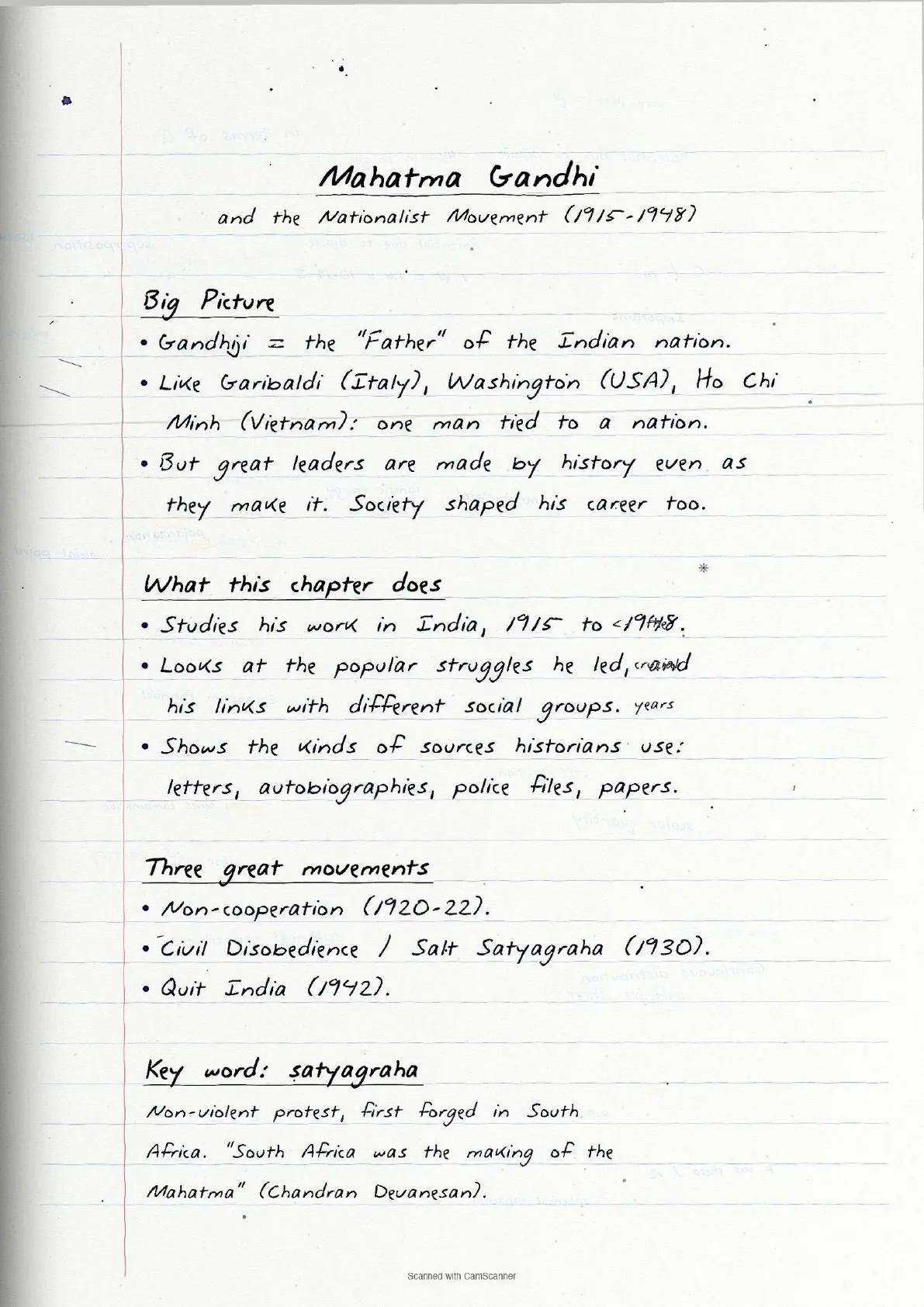
These Mahatma Gandhi and the Nationalist Movement handwritten notes turn the whole freedom-struggle chapter into clean, handwritten pages for fast last-minute revision. They follow the 2026-27 CBSE syllabus and Theme 11 of Themes in Indian History Part III. Students get the dates, movements, sketches and the source theme in a pen-on-paper format that is easy to skim before a test.
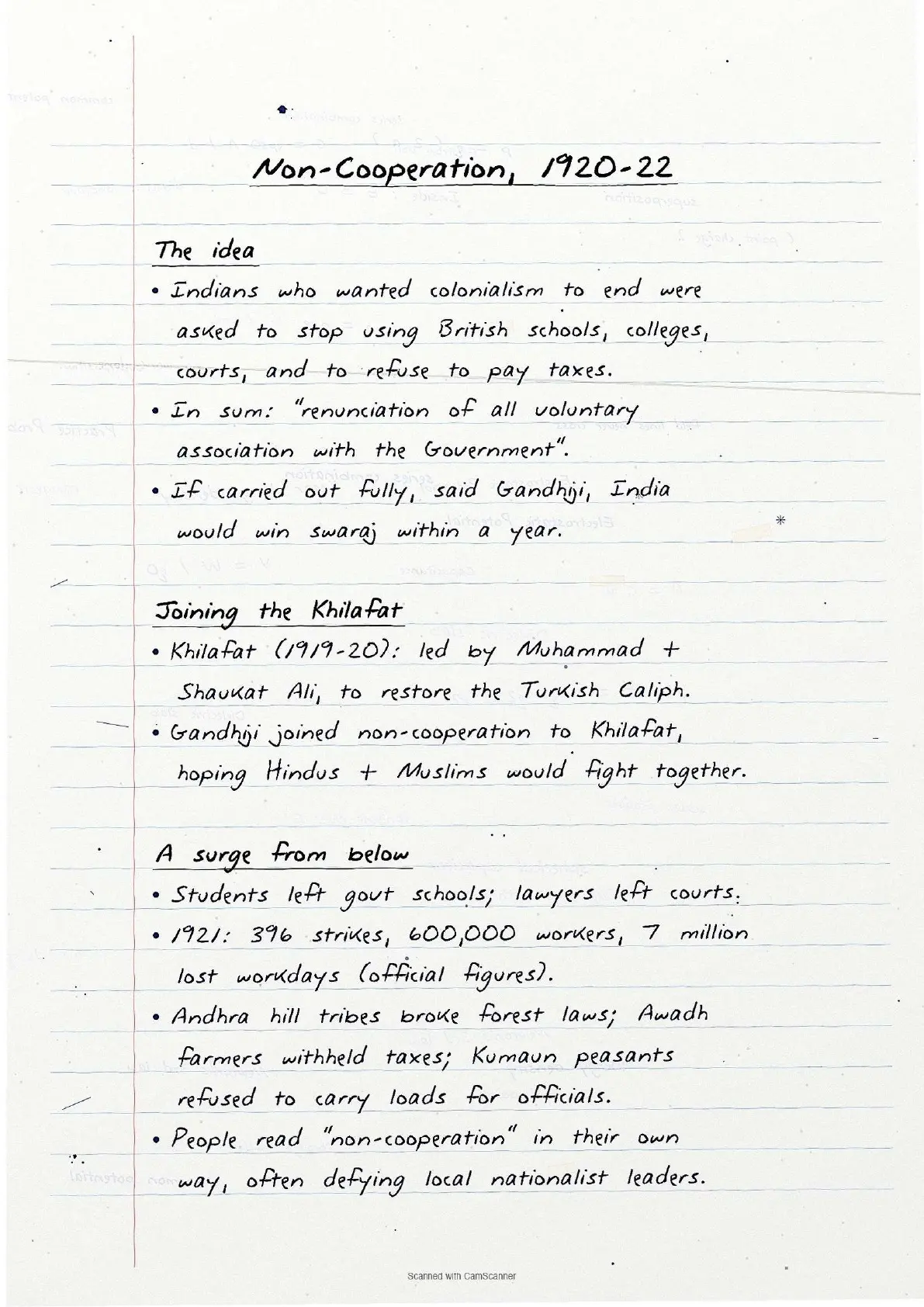
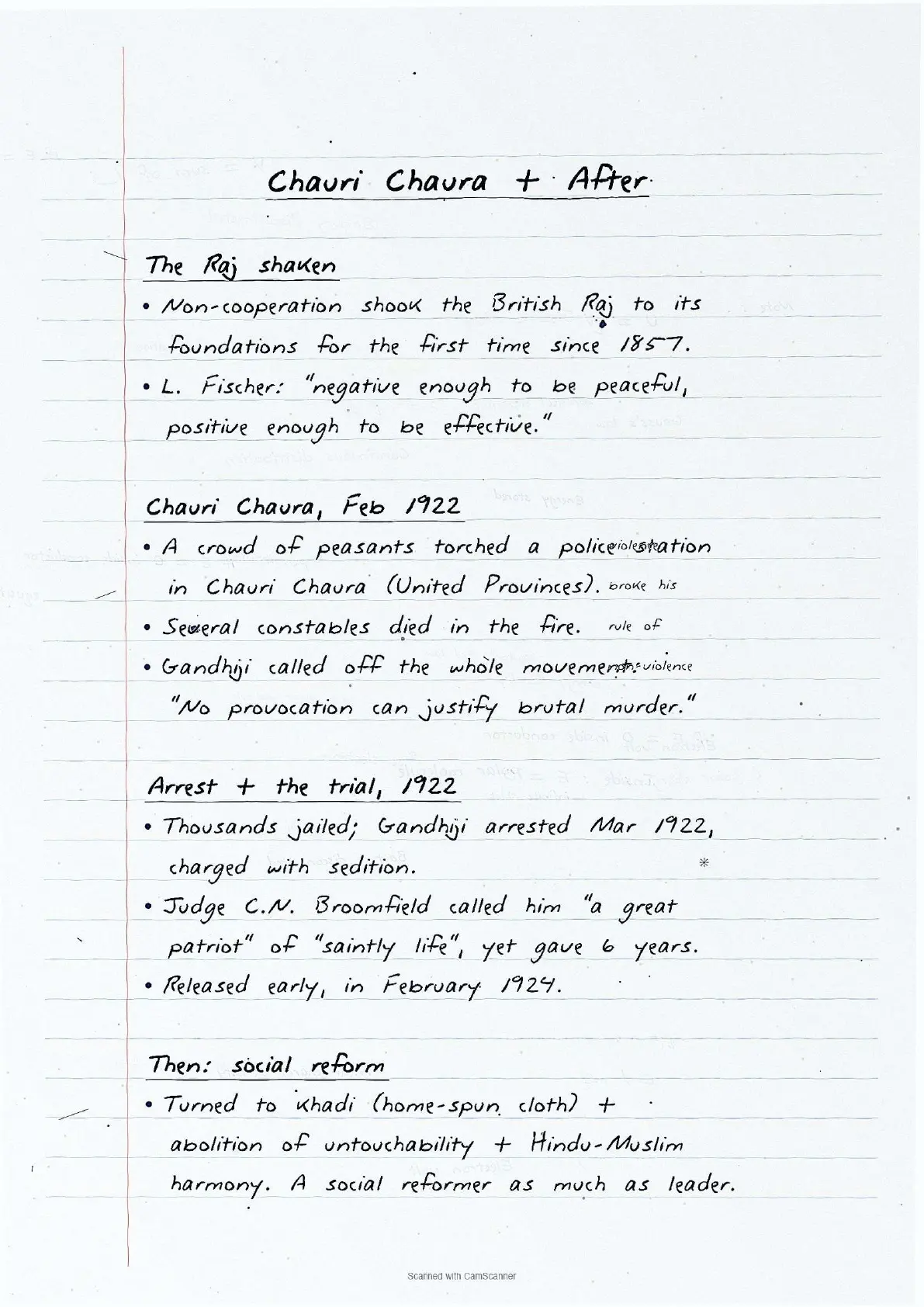
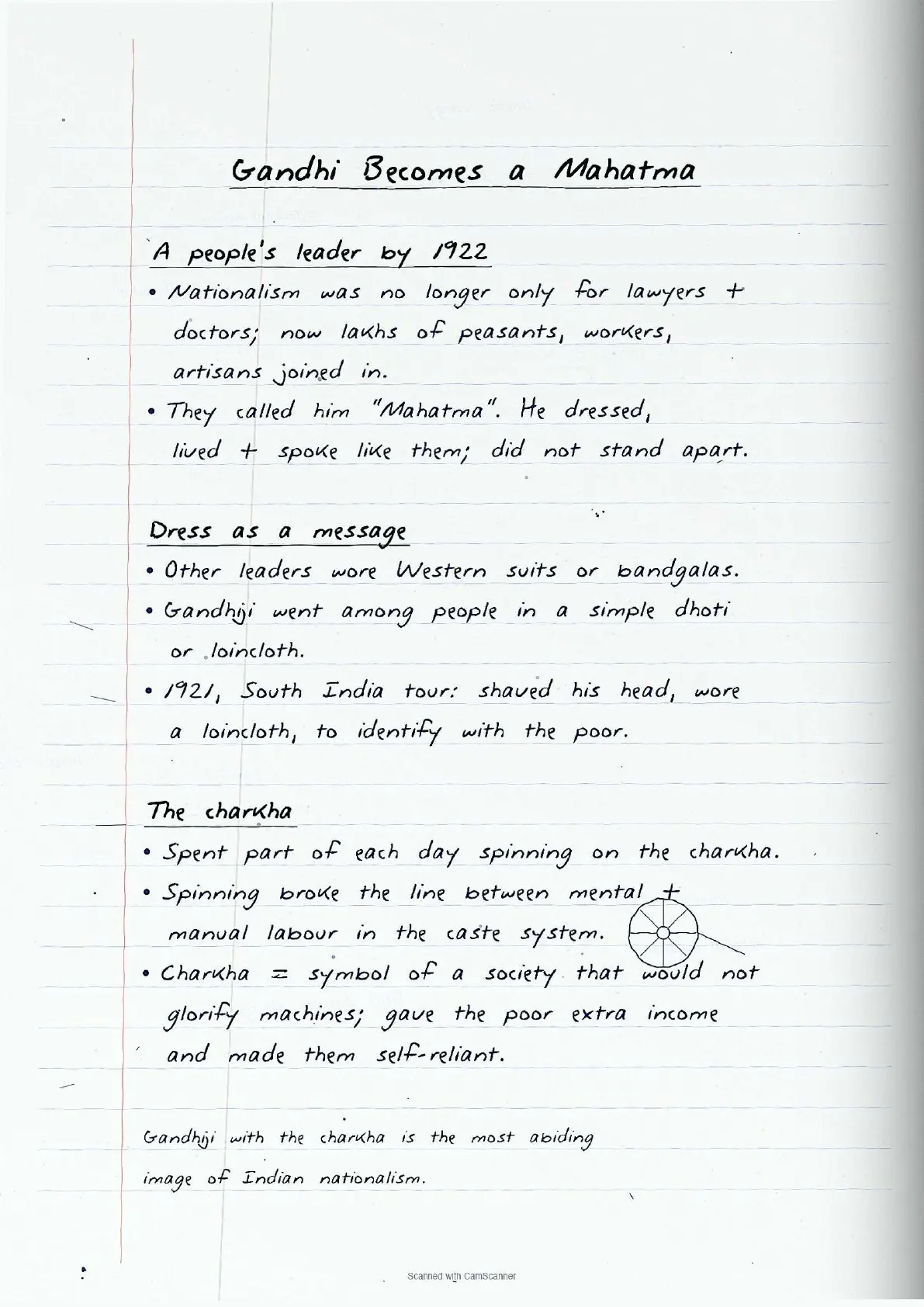
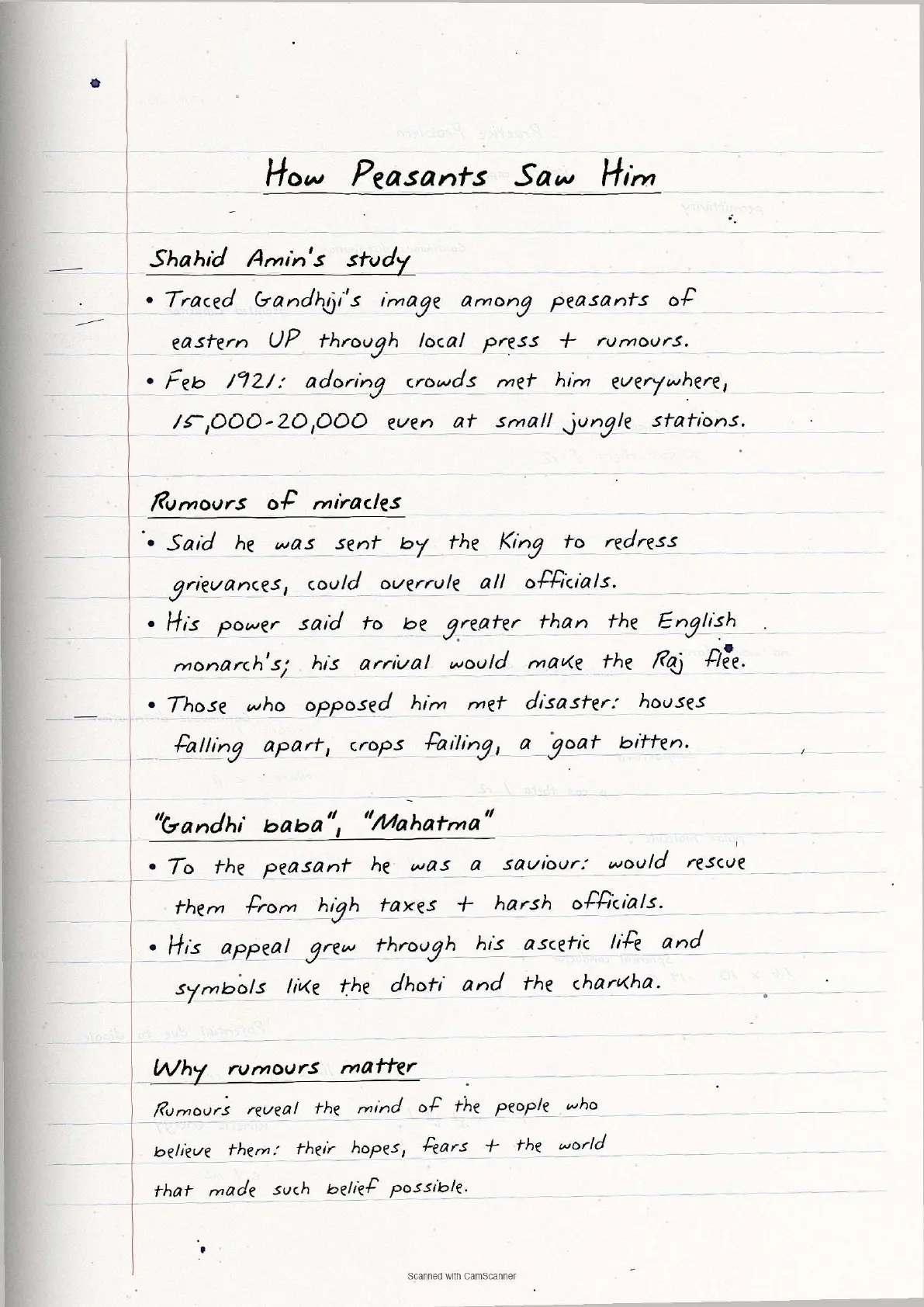
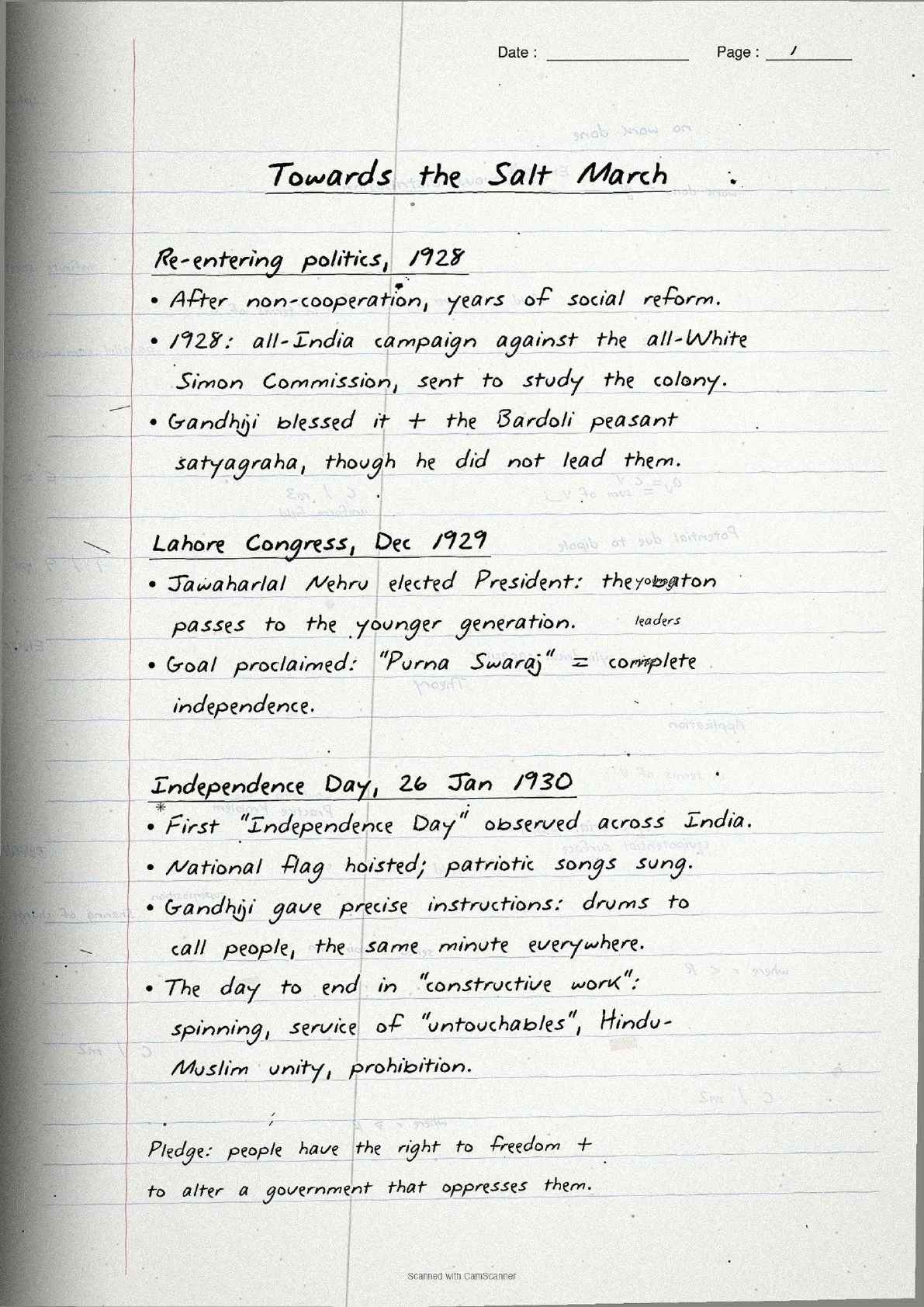
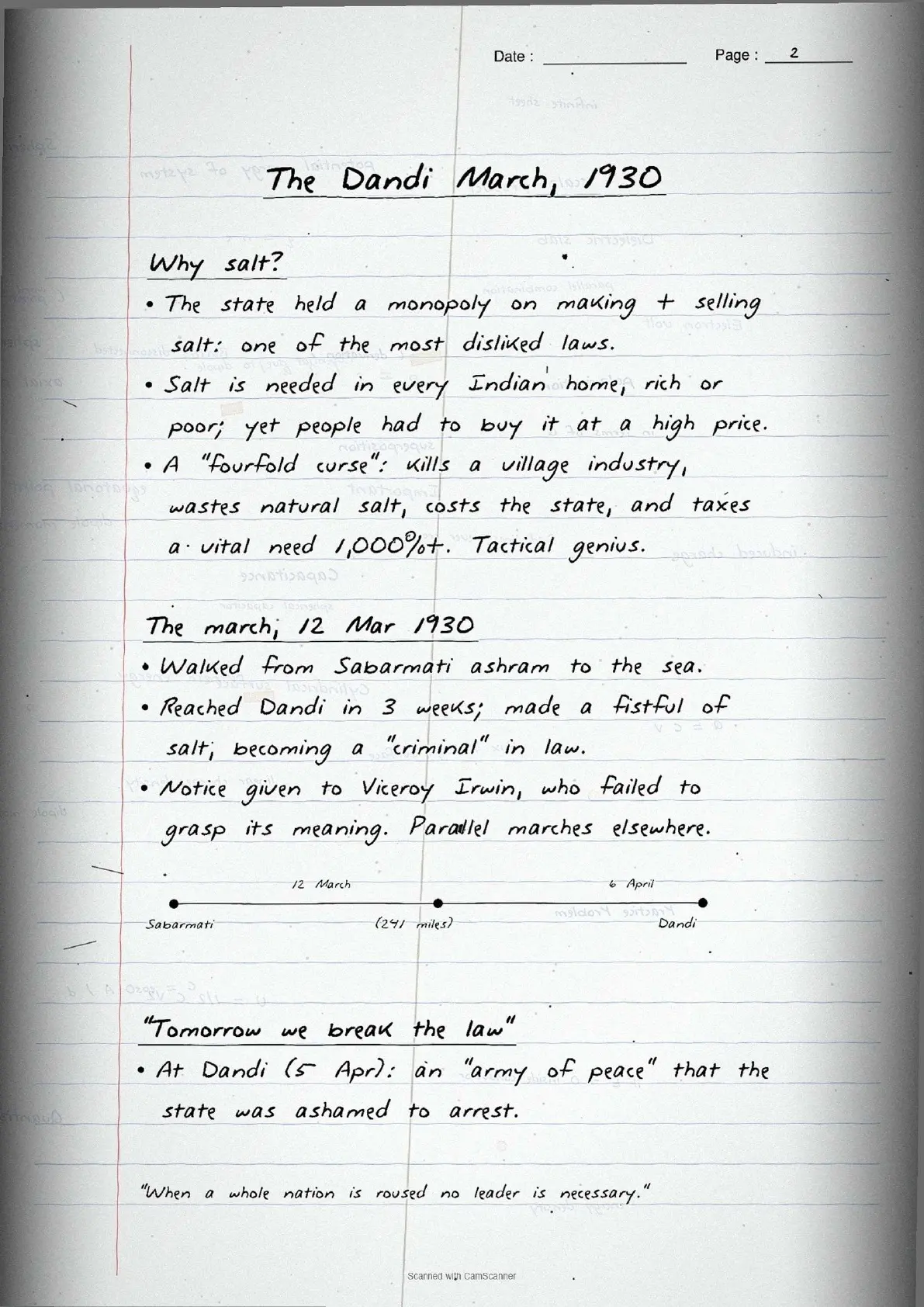
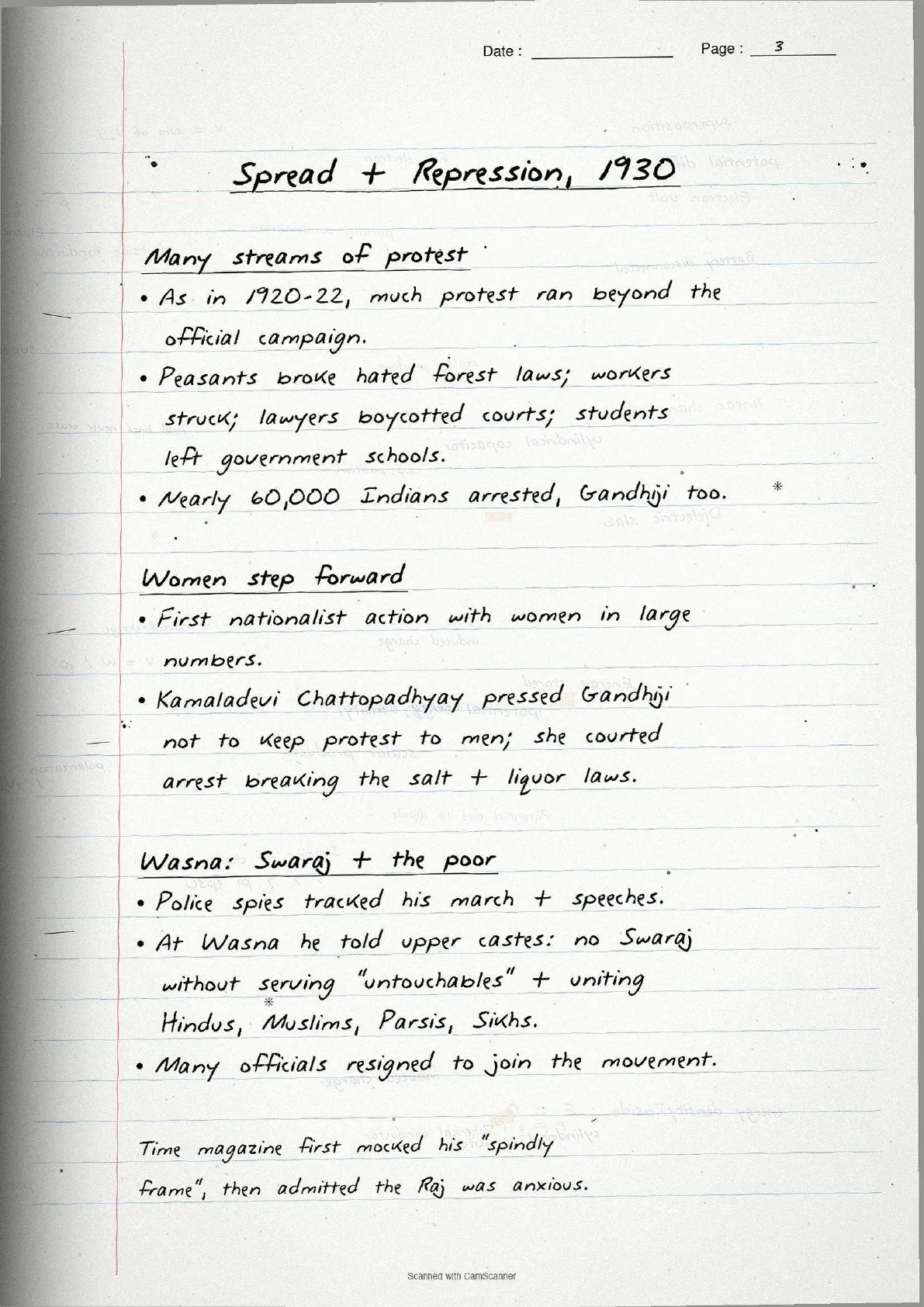
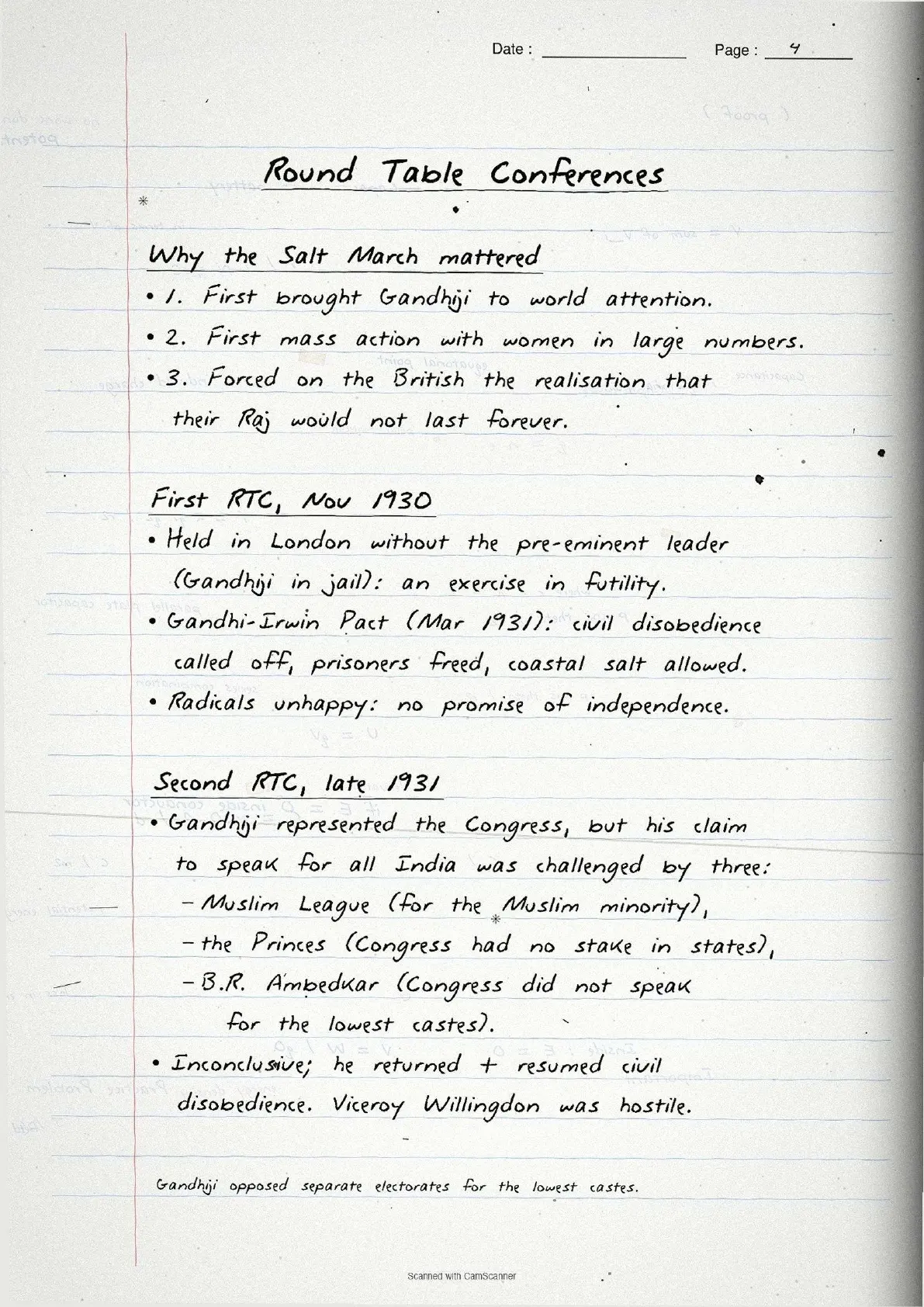
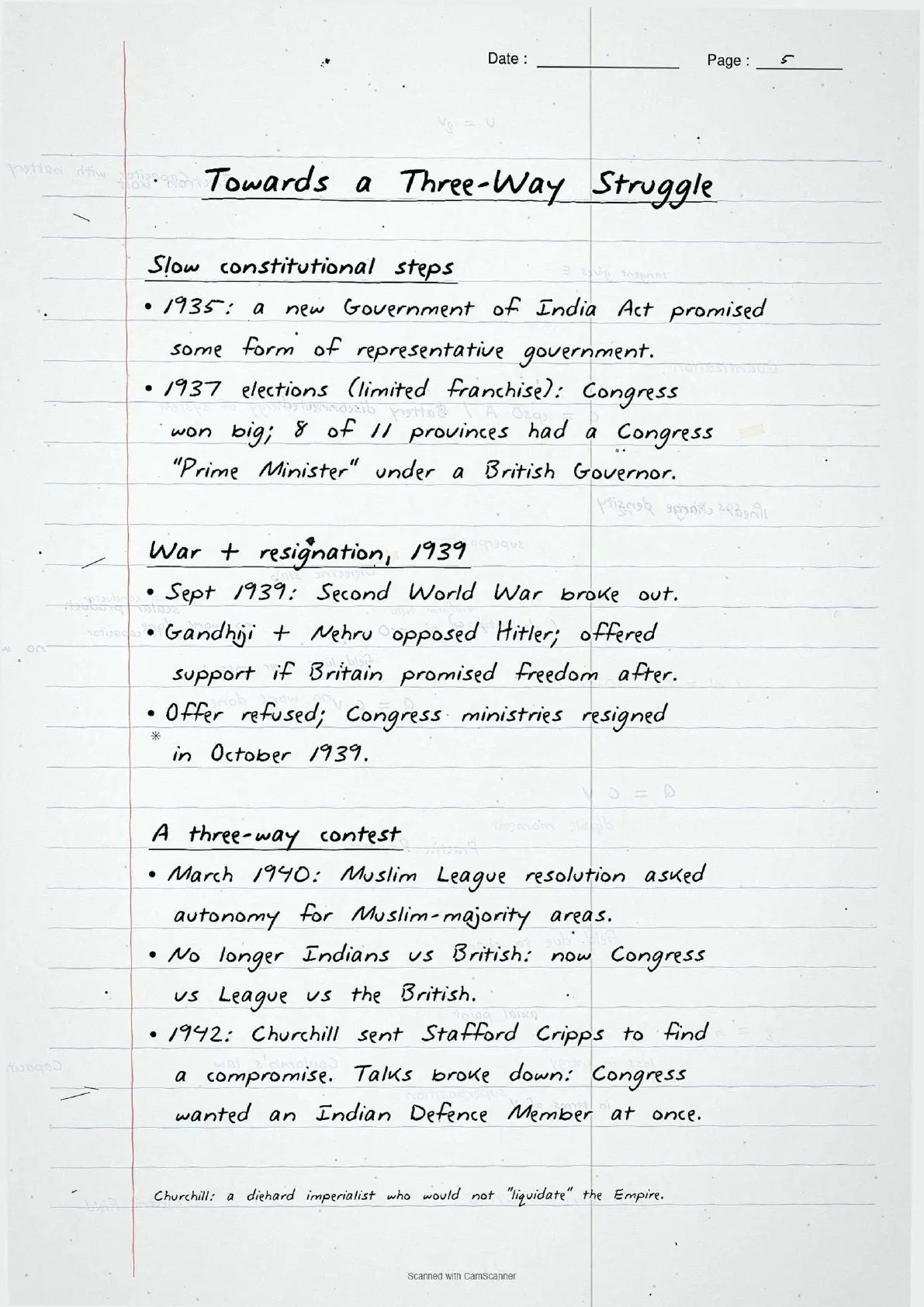
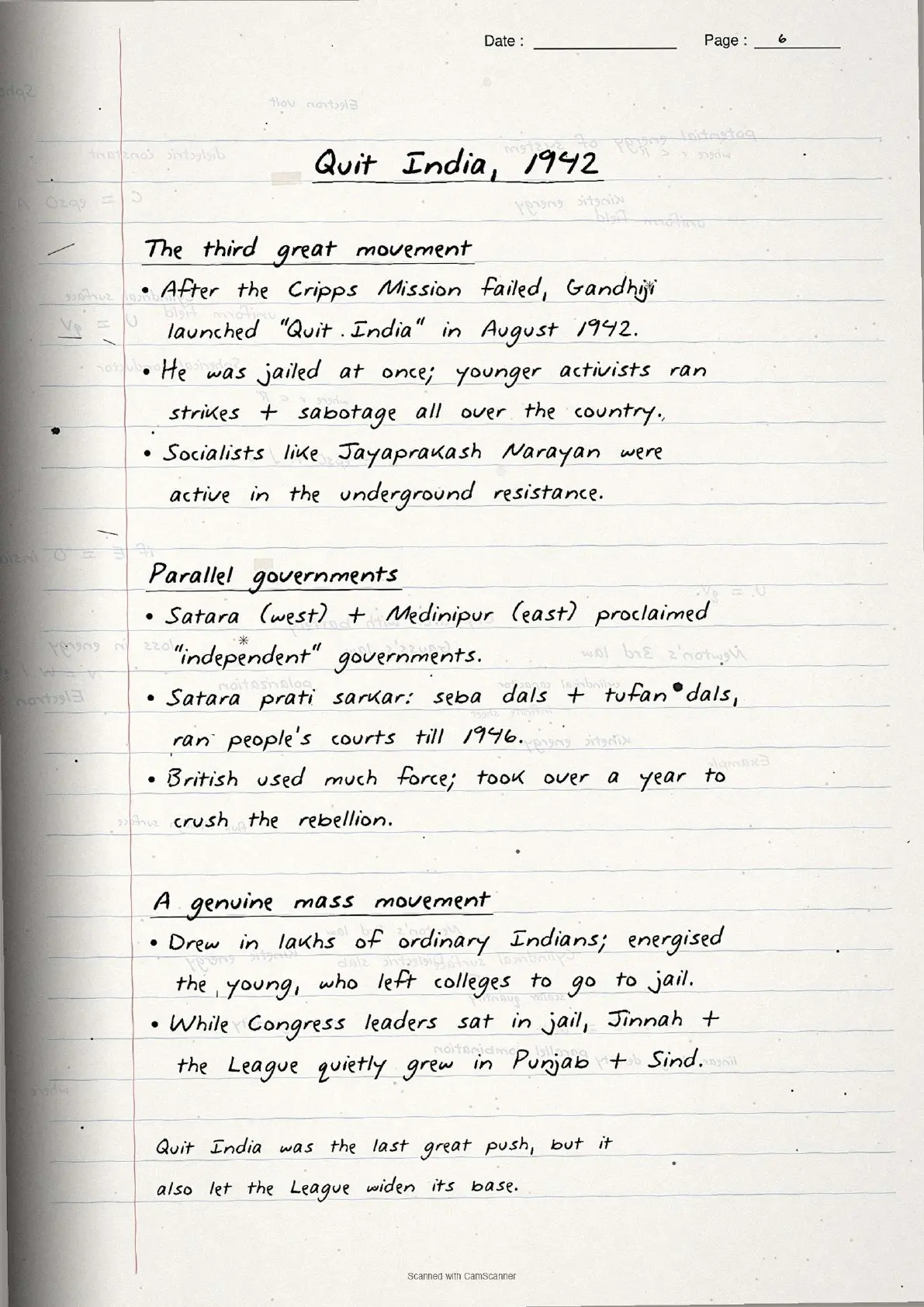
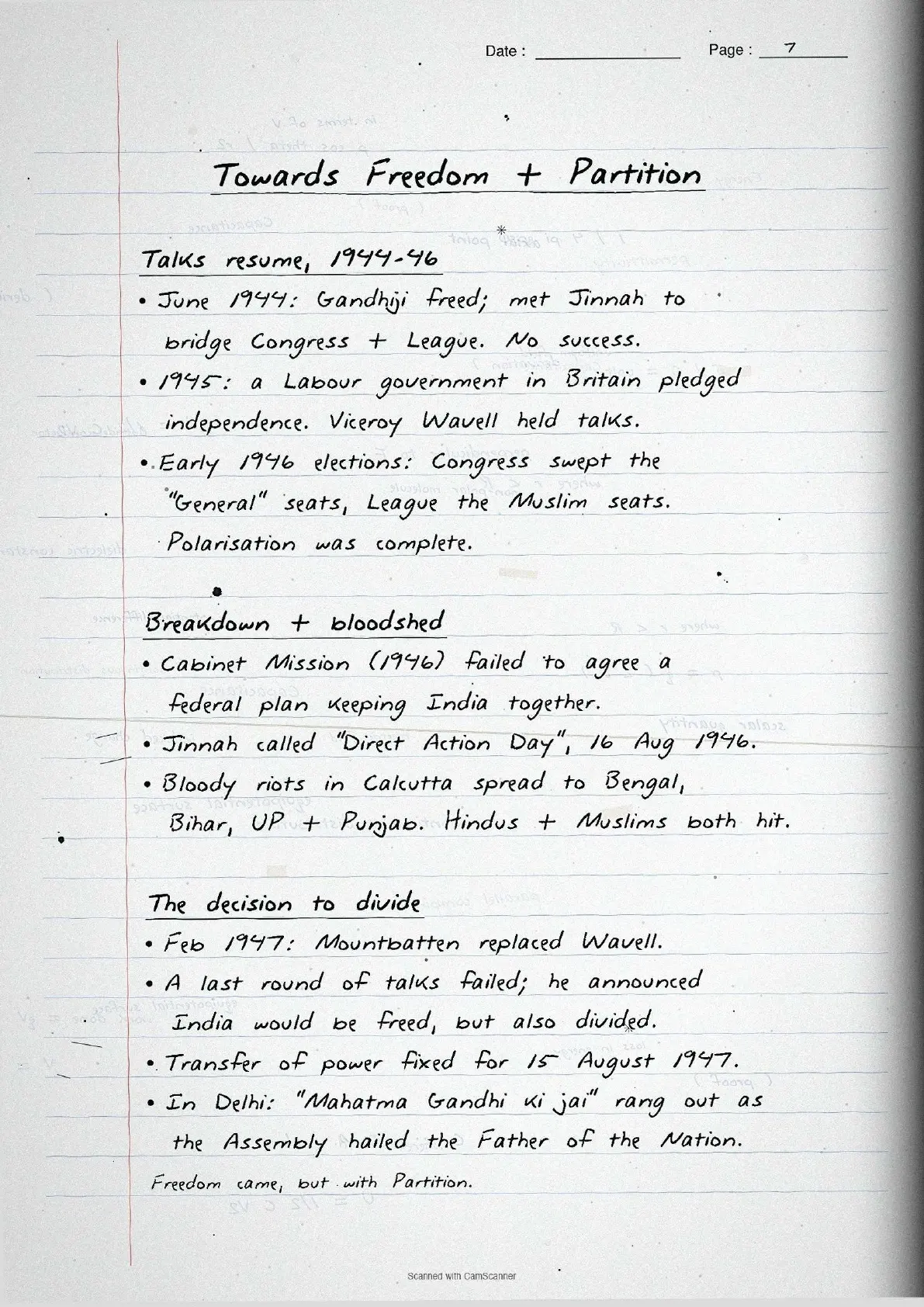
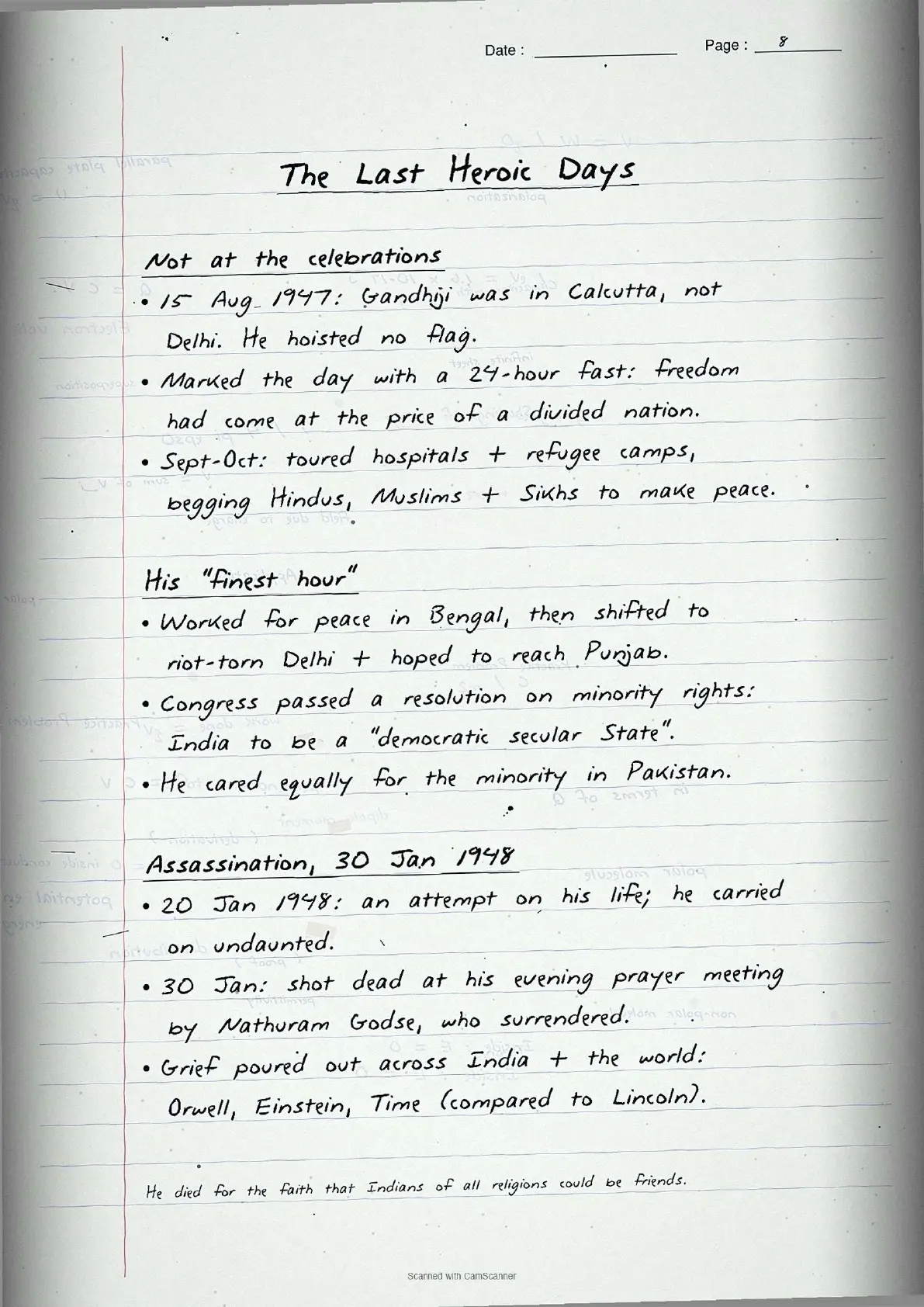
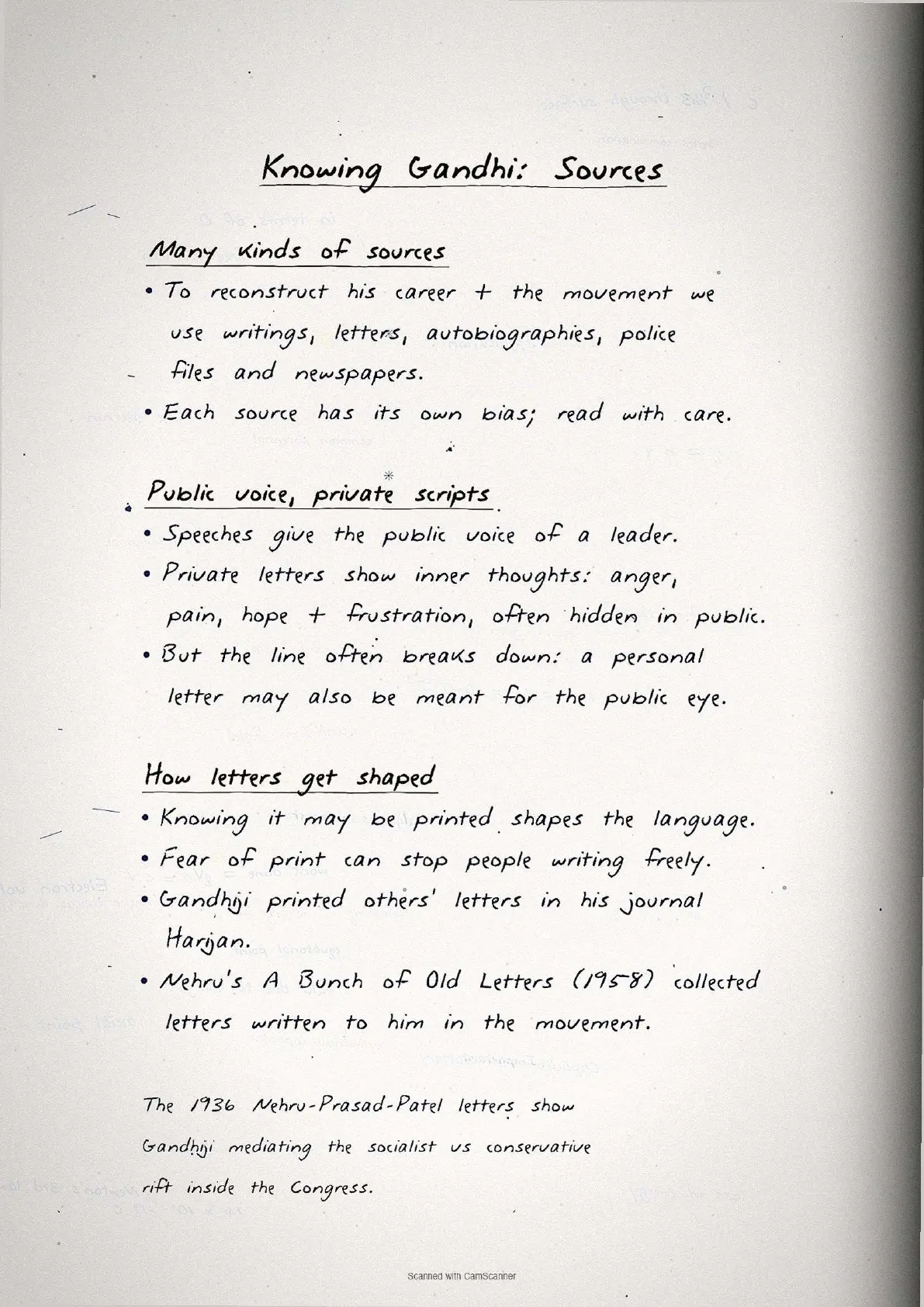
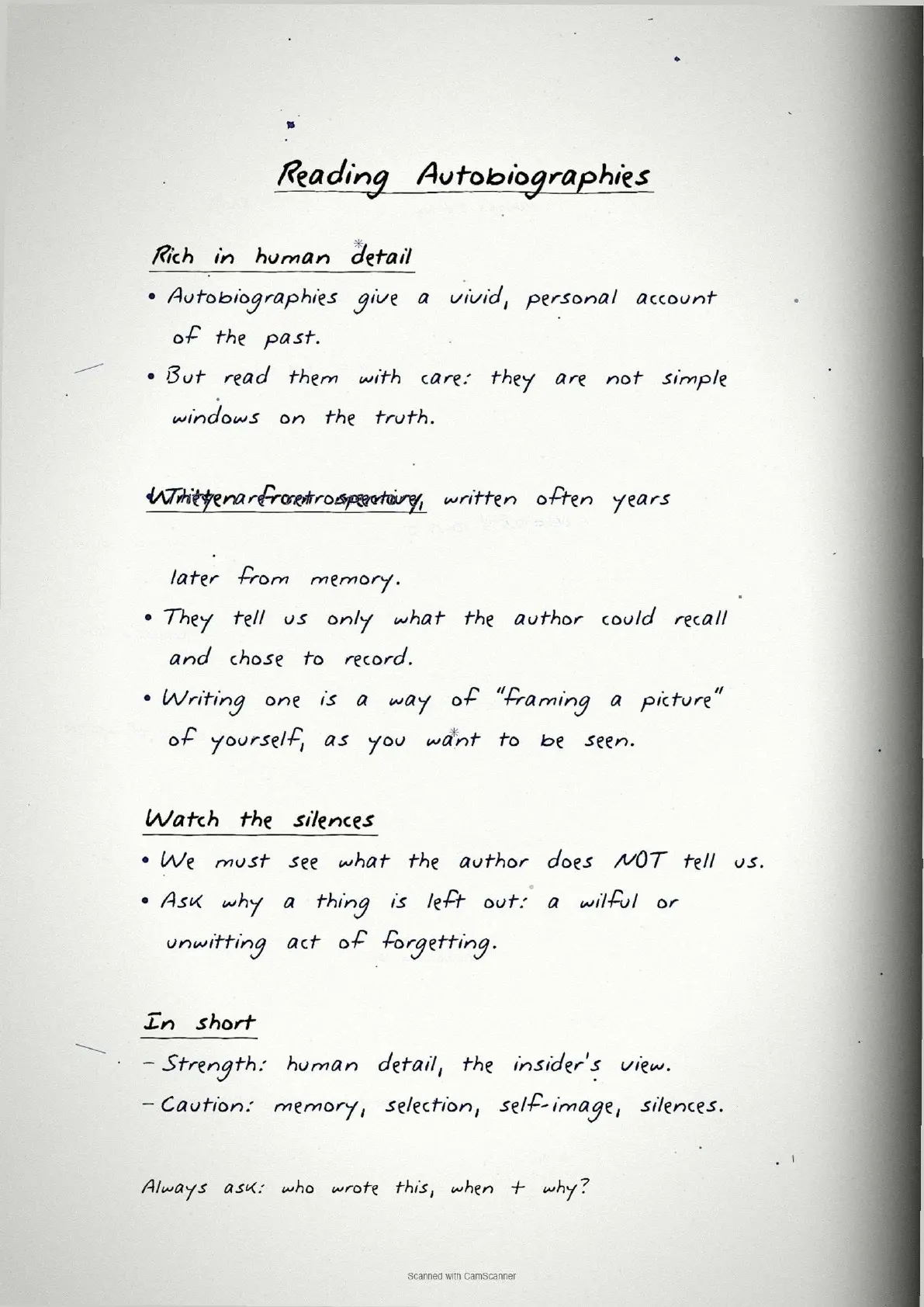
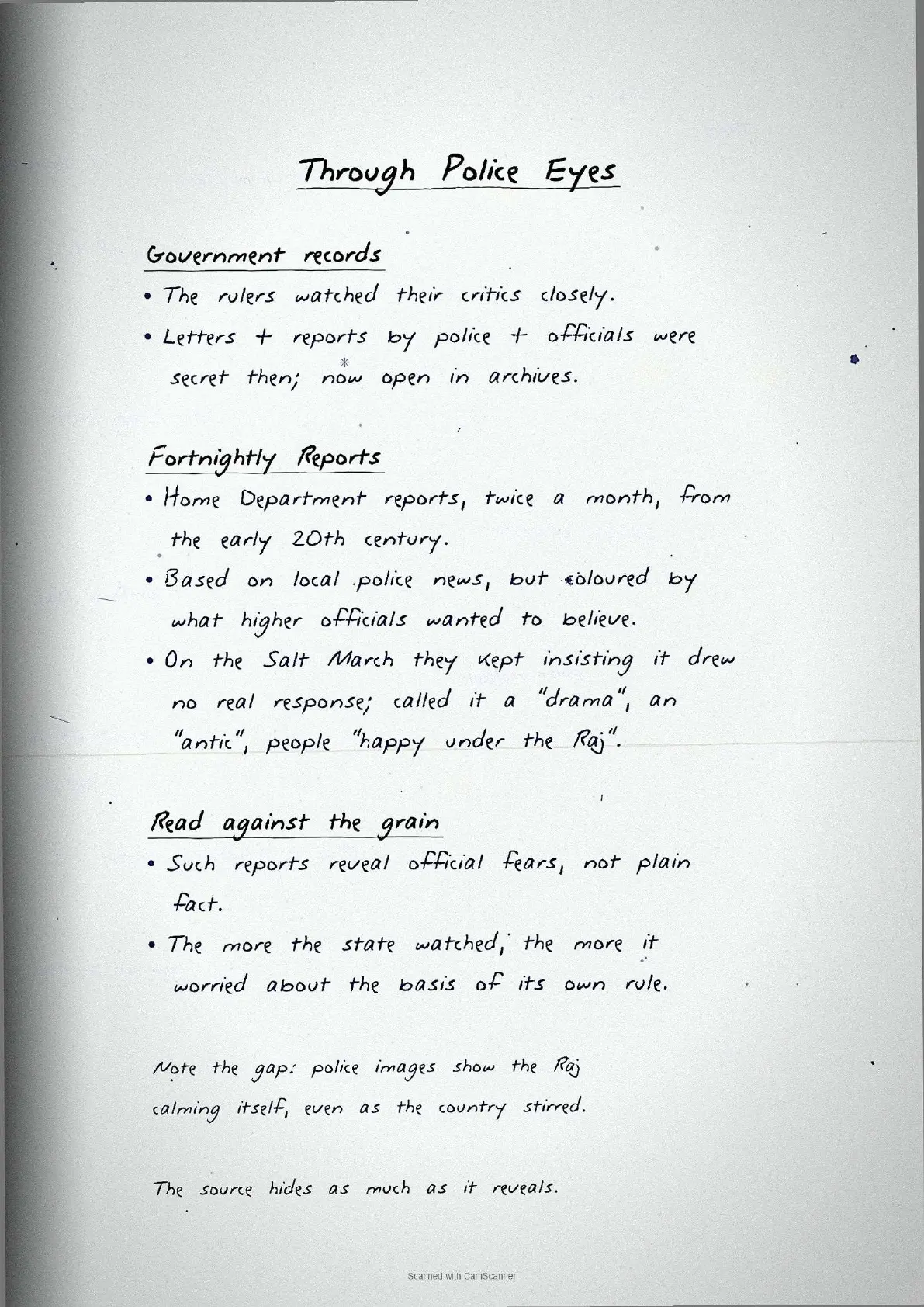
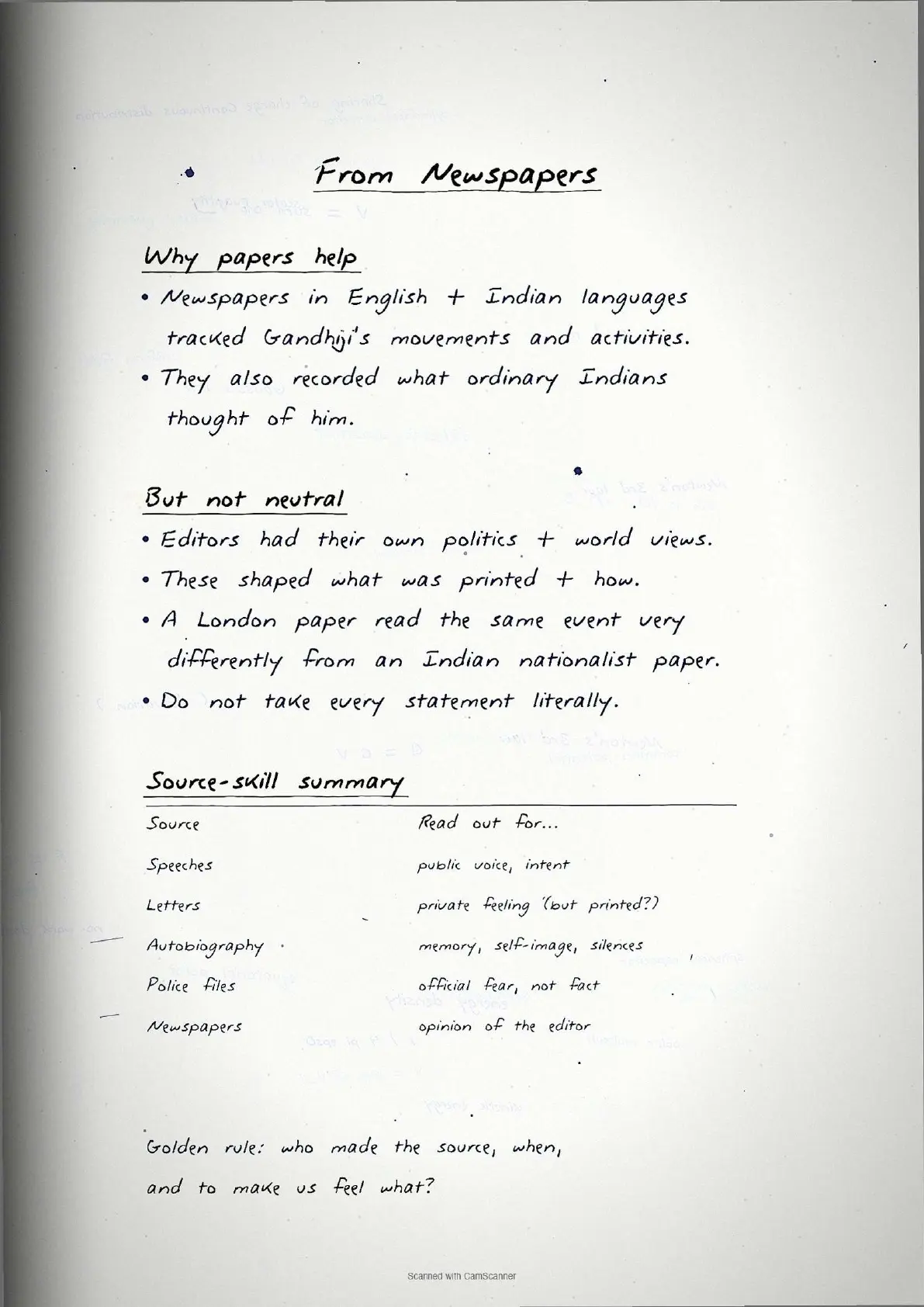
- Handwritten pages with boxed key terms and a dated movement timeline.
- This Class 12 History chapter usually carries 6 to 8 marks in the board paper.
- Pairs with the NCERT Solutions, Notes and Book PDF linked lower on this page.
These Mahatma Gandhi and the Nationalist Movement handwritten notes are prepared from the official NCERT Themes in Indian History Part III and checked against the last five years of CBSE board papers.
Student Feedback: In a Collegedunia poll of 8,210 Class 12 History students before the 2026 boards, 75% of students said handwritten notes felt faster to revise from than printed text for this chapter. Most students used the boxed movement timeline to recall the order of events in the exam.
Source: 2026-27 Class 12 History student poll. Sample of 8,210 students from CBSE schools across 12 states.
What These Handwritten Notes Include
Mahatma Gandhi and the Nationalist Movement is Theme 11 of Themes in Indian History Part III, with the subtitle Civil Disobedience and Beyond. It studies Gandhiji's work in India during the crucial years 1915 to 1948. These handwritten notes condense the chapter into pages a student can read in one sitting.
Every page is built around the two strands of the chapter:
- Movement pages cover Champaran, Rowlatt, Non-Cooperation, Civil Disobedience and Quit India.
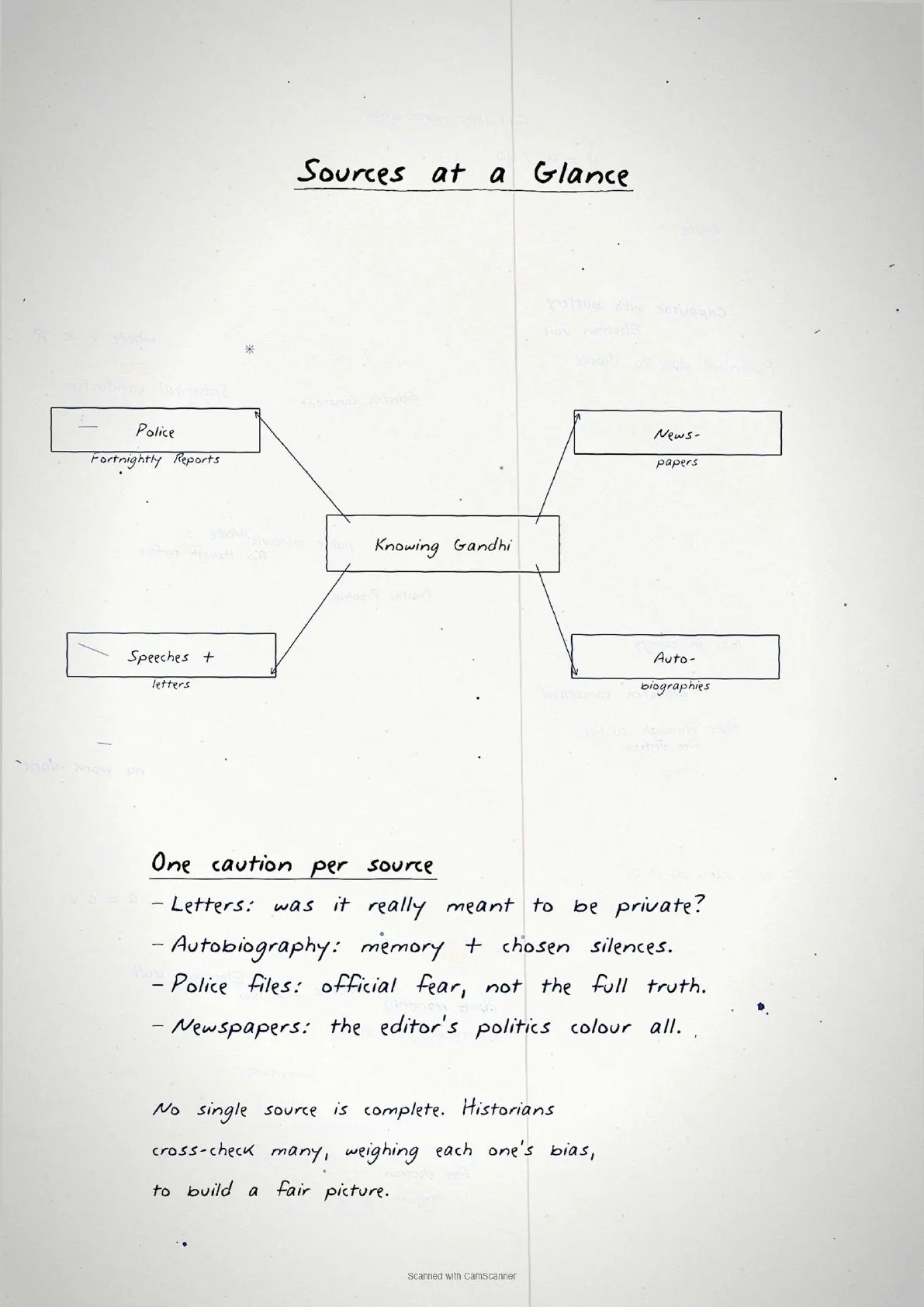
- Source pages cover newspapers, private letters and autobiographies as evidence.
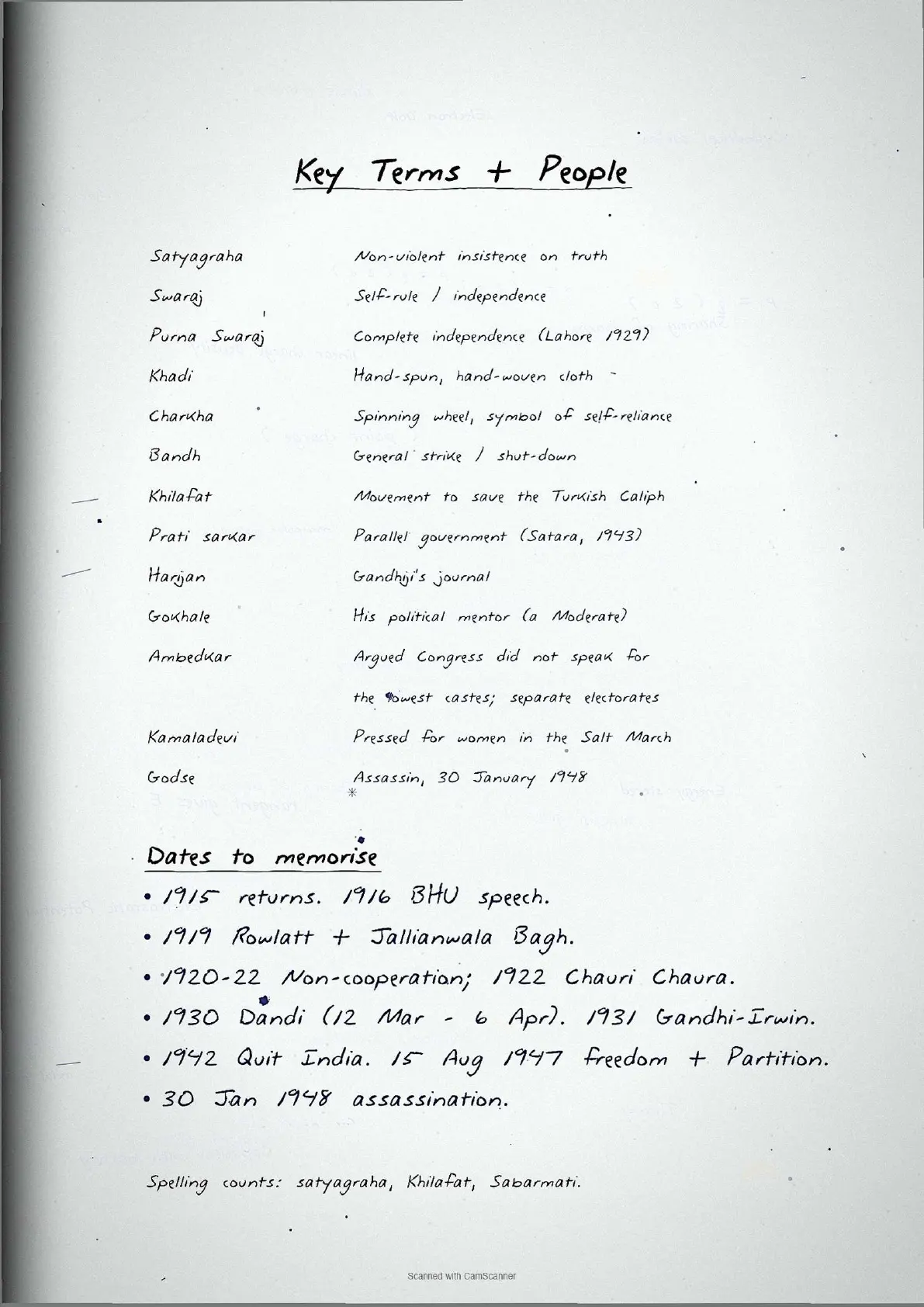
Because the notes are handwritten, the key terms sit in boxes and the important dates are underlined, so the eye jumps straight to them. This makes the mahatma gandhi and the nationalist movement handwritten notes ideal for a last revision when there is no time to read full paragraphs. Sort each fact under "movement" or "source", and the whole of chapter 11 history class 12 falls into place.
A Leader Announces Himself Pages
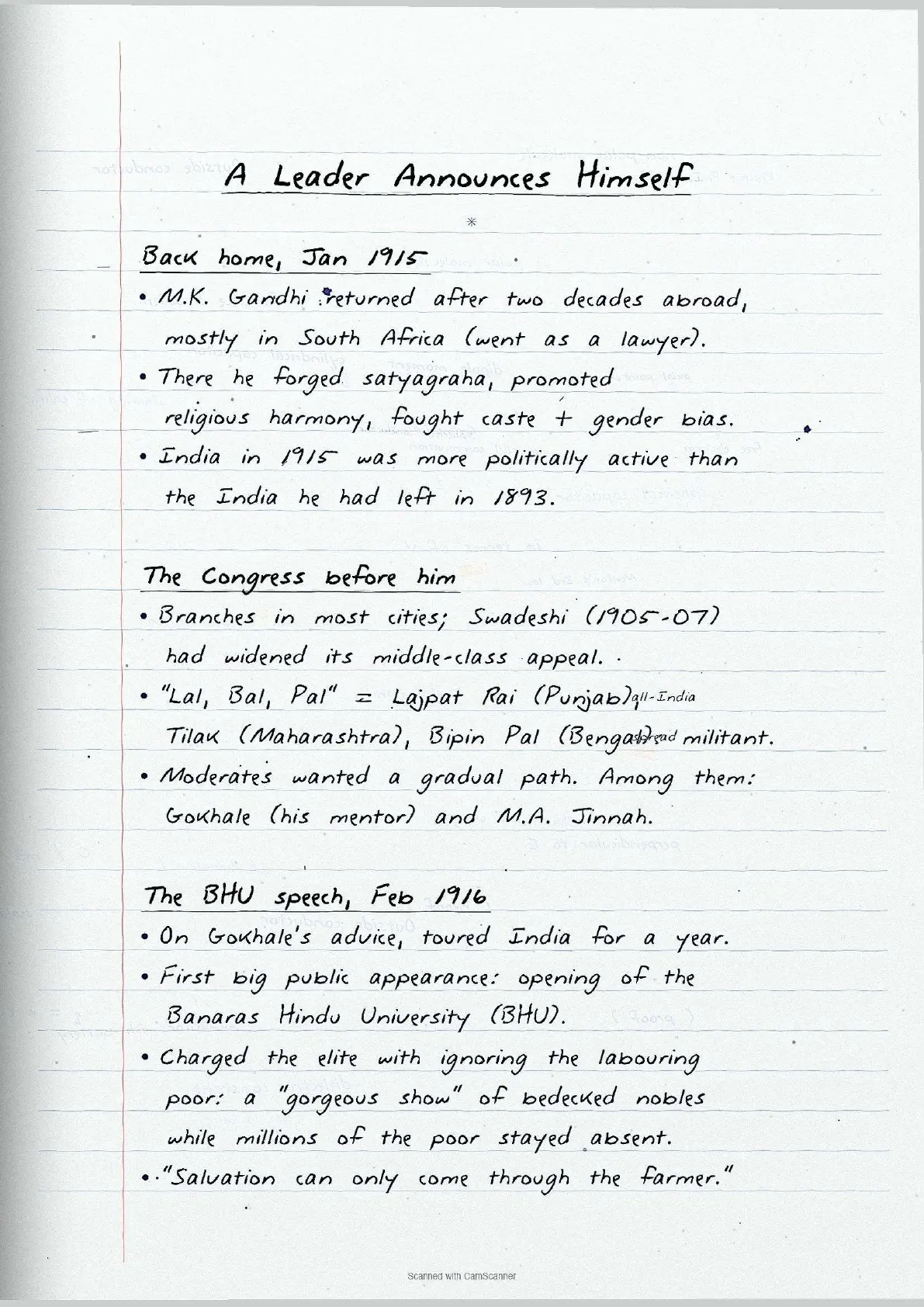
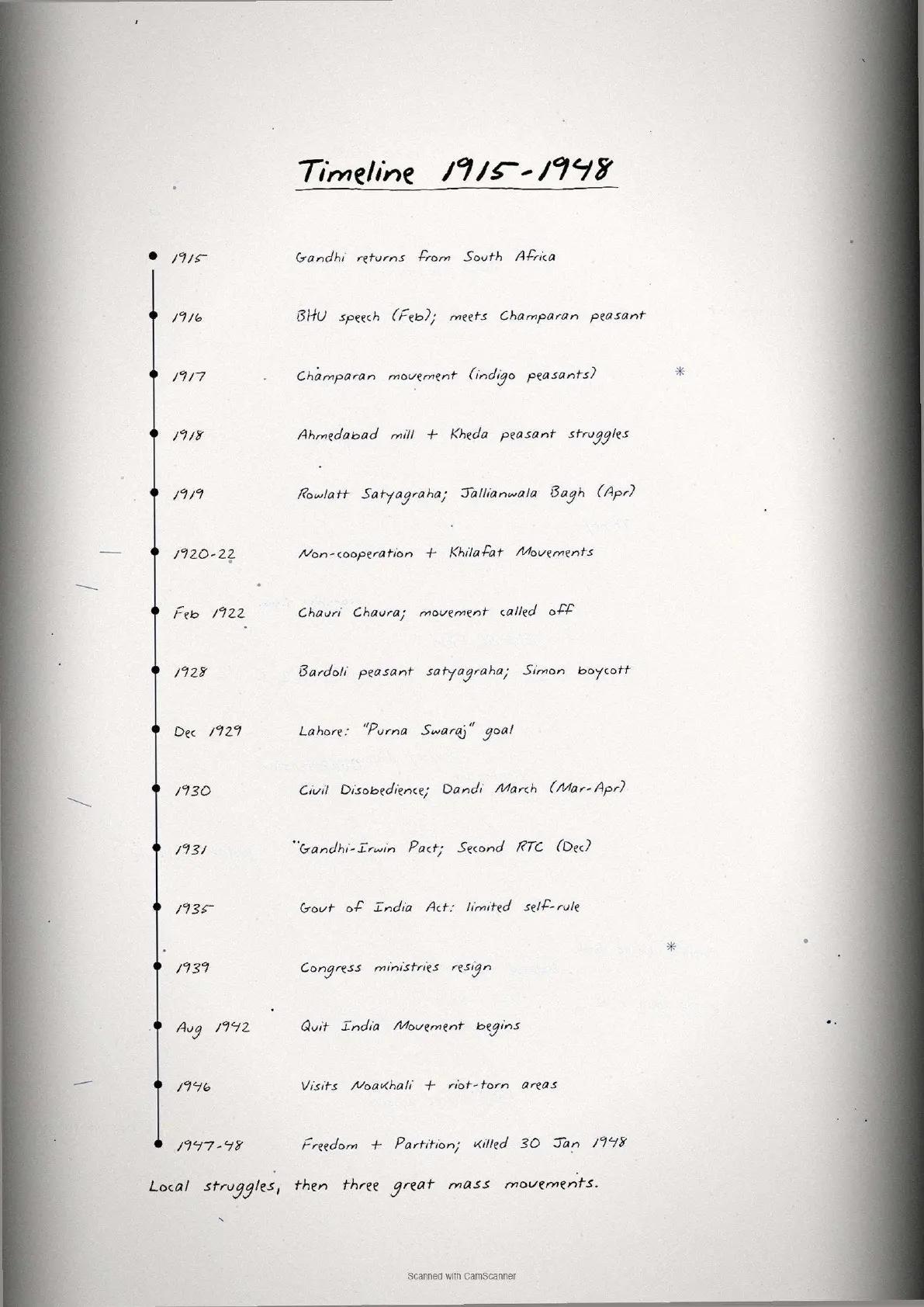
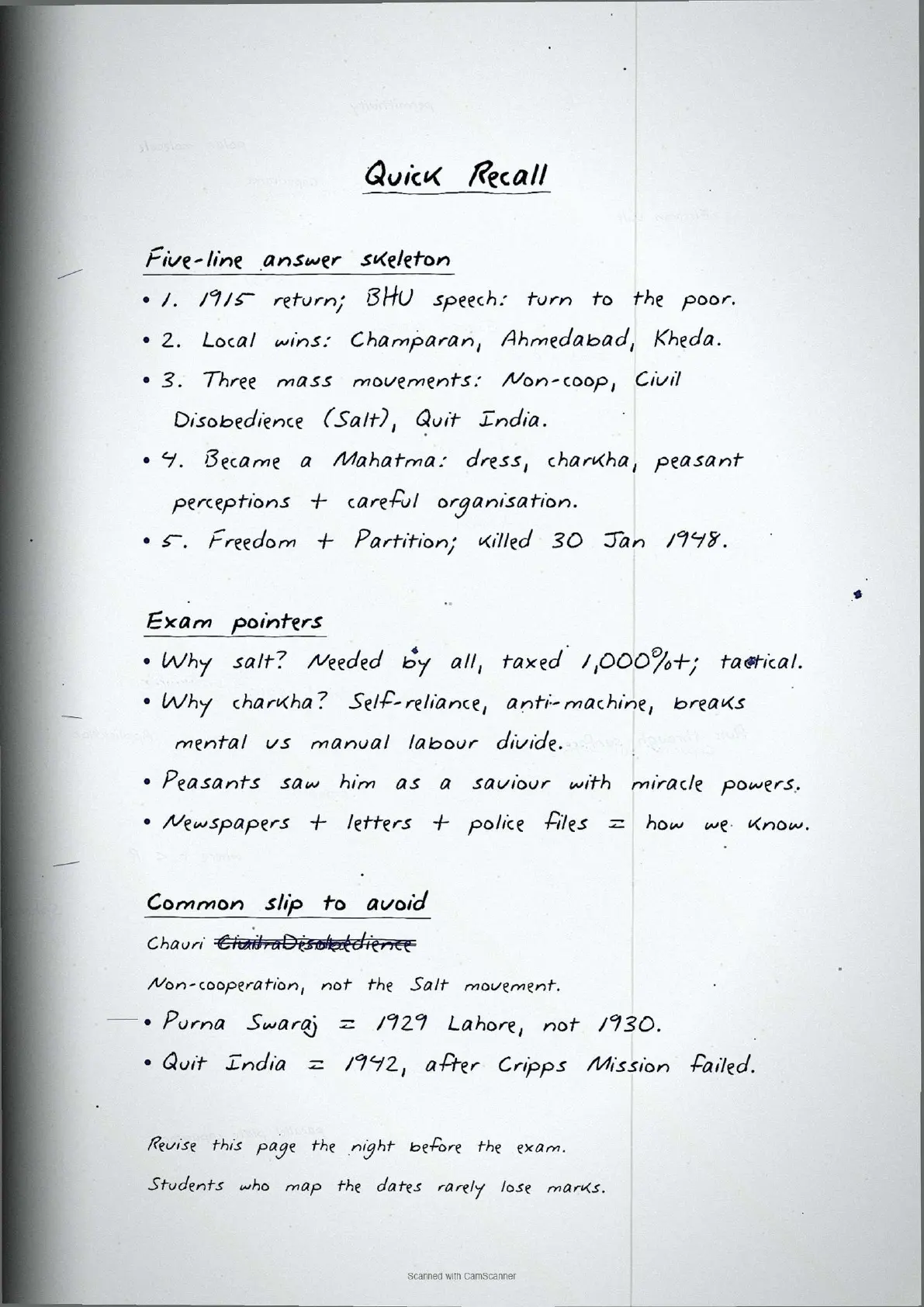
The first pages cover Gandhiji's return and his early struggles. He came back from South Africa in 1915 with the method of satyagraha. The notes keep his early years as a dated, boxed list so students can copy it straight onto the answer sheet.
- 1916 BHU speech: he urged the rich elite to work for the labouring poor.
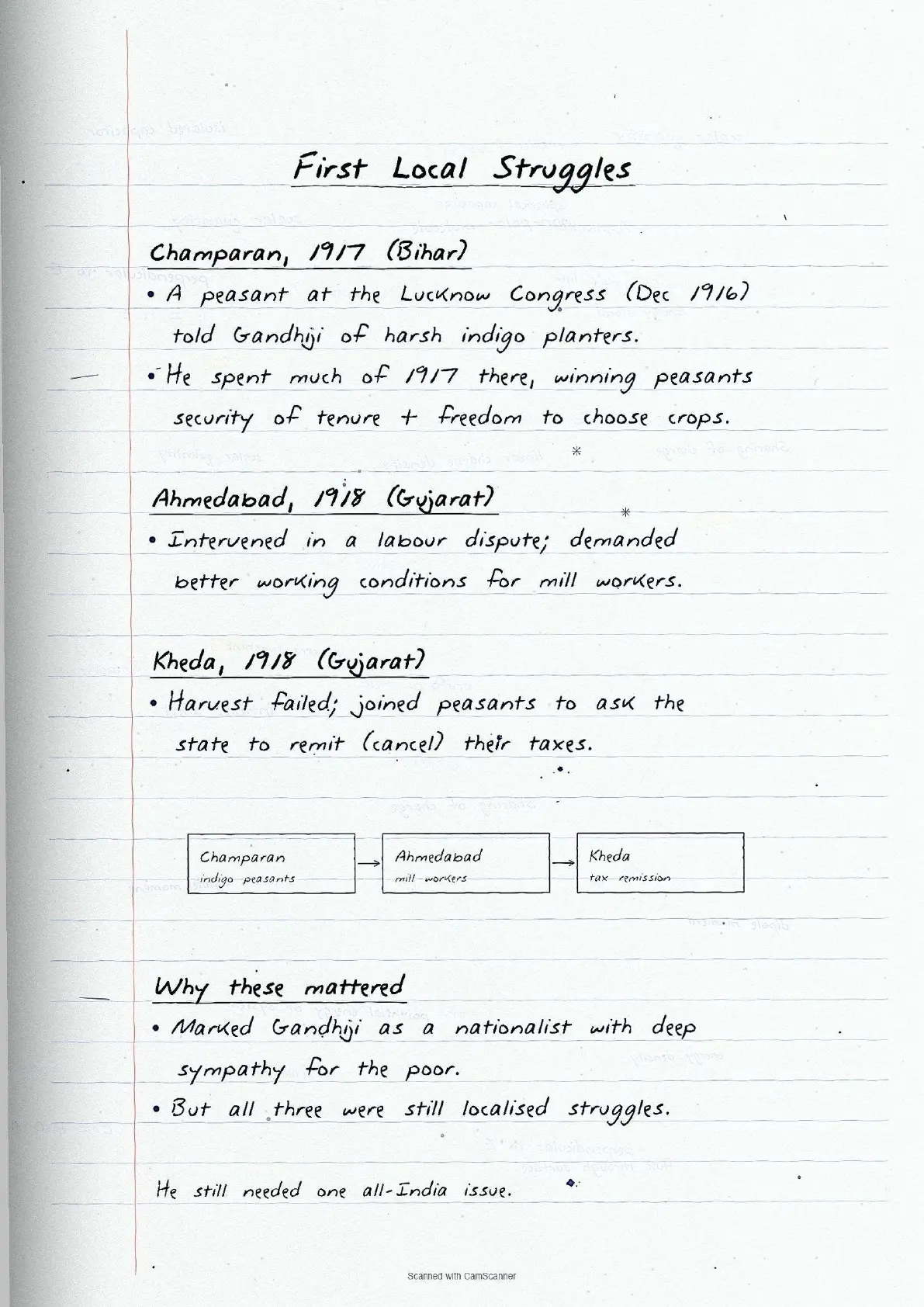
- 1917 Champaran: his first satyagraha in India, for the indigo peasants of Bihar.
- 1918 Ahmedabad and Kheda: a mill-workers' dispute and a no-tax campaign in Gujarat.
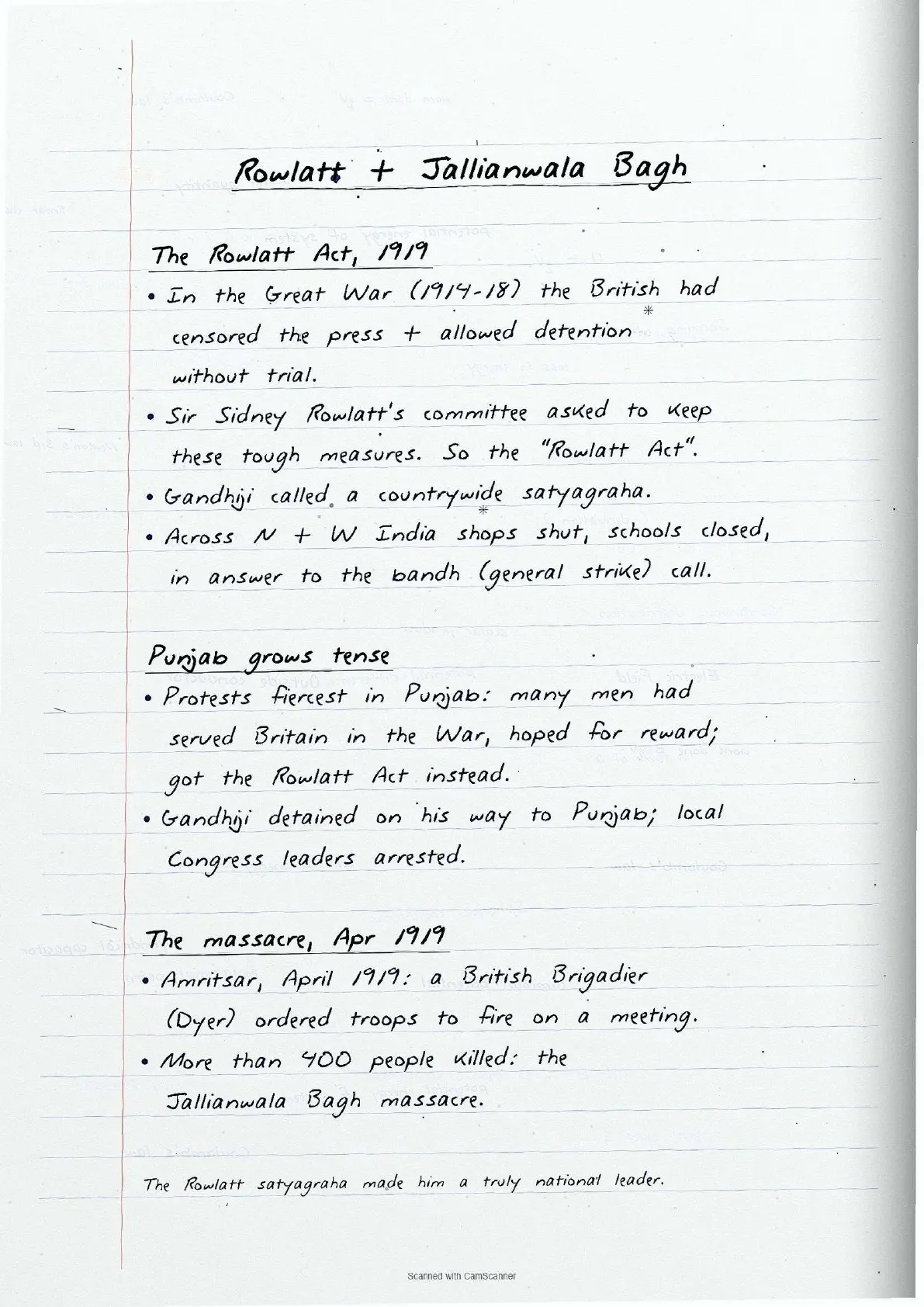
- 1919 Rowlatt satyagraha: a nationwide protest; Jallianwala Bagh followed in Amritsar.
The notes underline the key point: these early struggles marked Gandhiji out as a nationalist with deep sympathy for the poor, and the Rowlatt satyagraha of 1919 made him a truly national leader. A hand-drawn arrow links each event to its year, which makes the timeline easy to recall under exam pressure.
Non-Cooperation and Civil Disobedience Pages
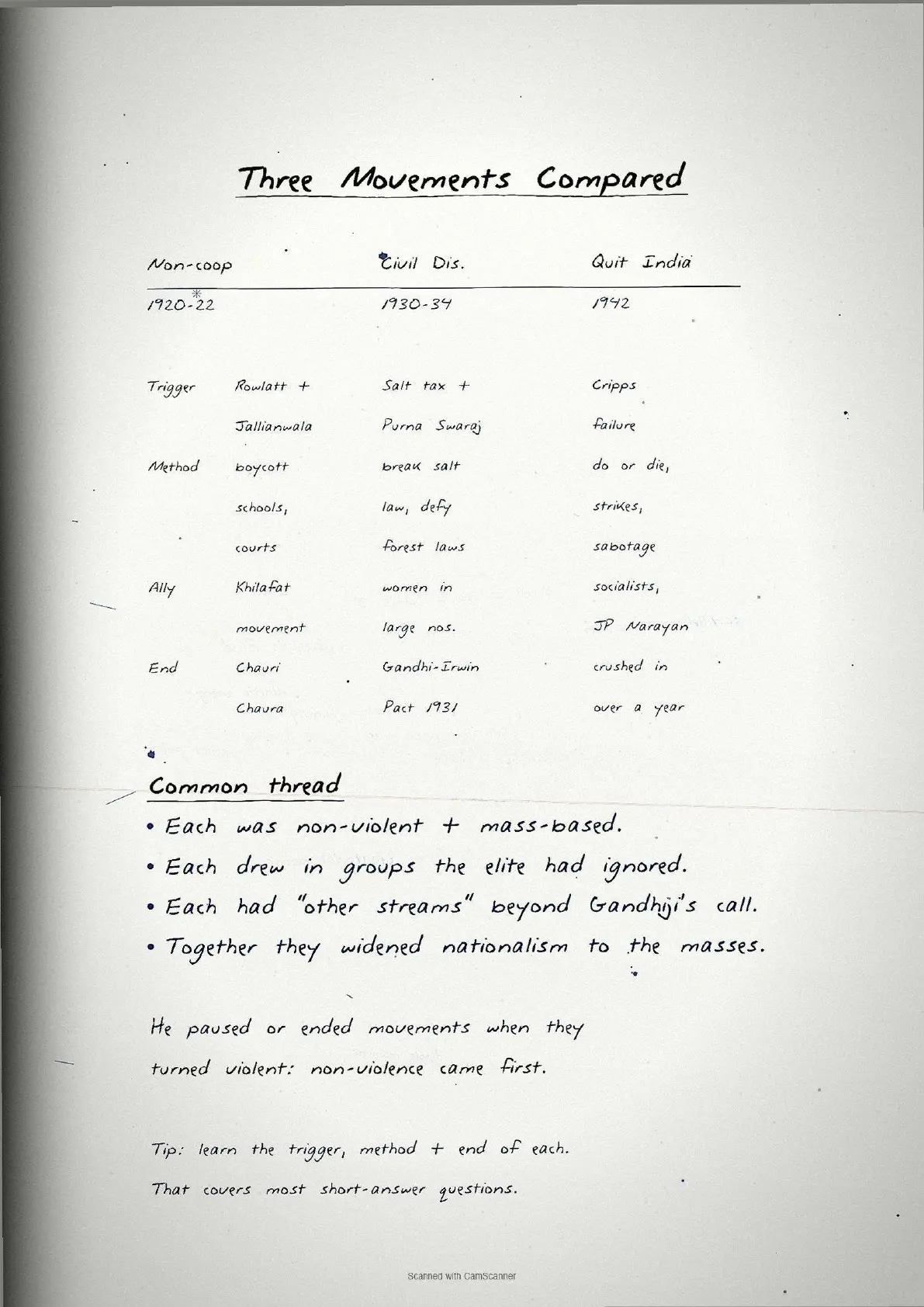
The movement pages carry a boxed timeline of the two great mass movements. The notes split them clearly by date so students do not mix up 1920-22 with 1930. The table below lists what the pages box for quick revision.
| Movement | What the page boxes |
|---|---|
| Non-Cooperation 1920-22 | Boycott of schools, courts, titles and foreign goods; joined with Khilafat; called off after Chauri Chaura. |
| Civil Disobedience 1930 | Salt March to Dandi broke the salt law; spread across classes and regions. |
| The charkha | Symbol of self-reliance and a stand against British mill cloth. |
| Quit India 1942 | The "Do or Die" call for an immediate British exit. |
The notes box the single most important point in red ink: Gandhiji called off Non-Cooperation in 1922 after the Chauri Chaura violence, because the movement had to stay non-violent. The pages also underline that the Salt March was about 240 miles long, and that salt was chosen because everyone used it, which made the tax a perfect symbol to protest.
Sources, Symbols and the Common People Pages
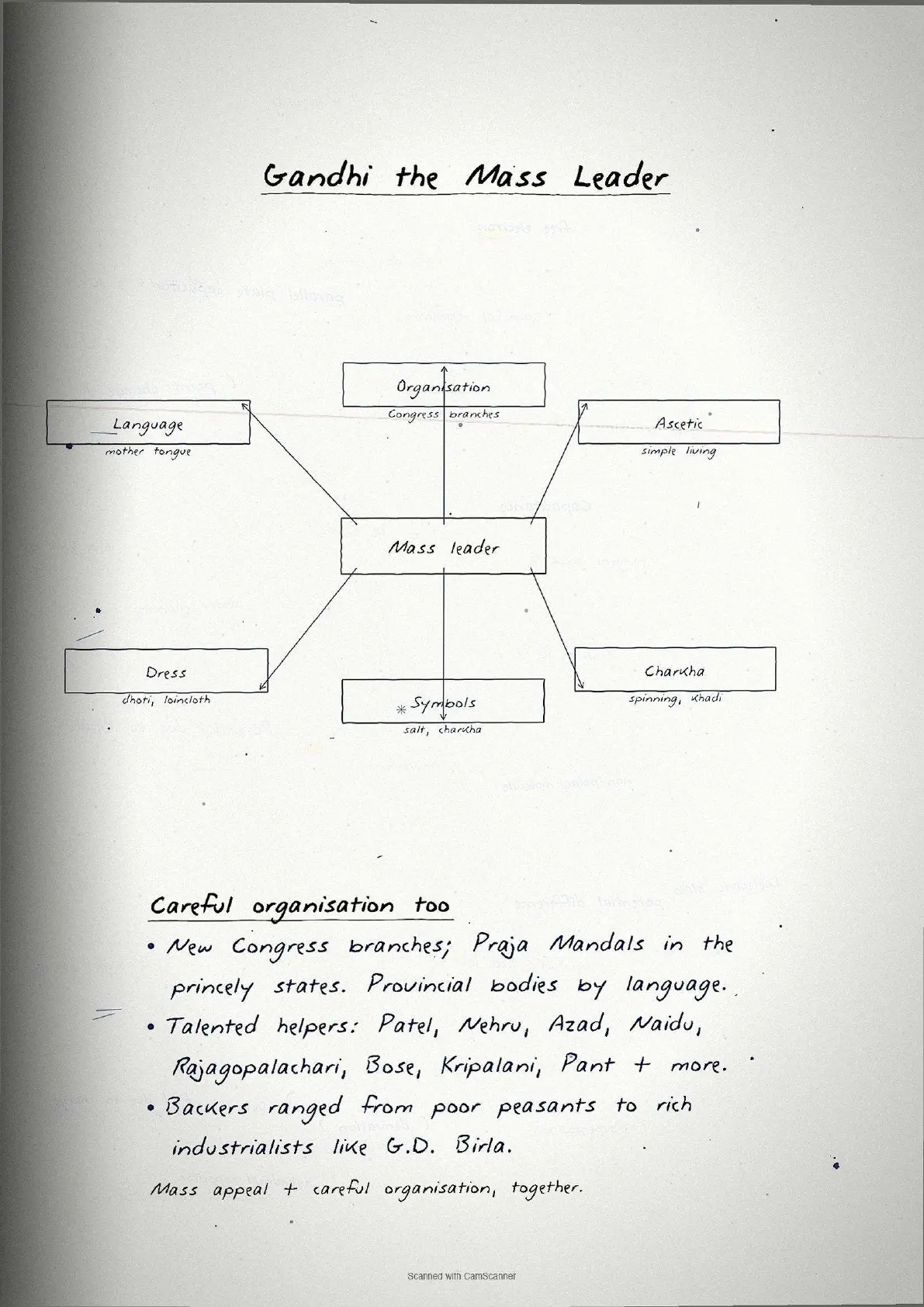
The source pages cover how historians study Gandhiji and how he reached ordinary Indians. These feed the source-based questions and the "common people" question, so the notes keep them as boxed lists for the short answers.
- Identifying with the people: Gandhiji wore a simple dhoti, spoke the people's language, spun the charkha and travelled third class.
- Newspapers: they show daily opinion and spread the news, but carry the writer's bias.
- Private letters: they reveal a person's private thoughts, away from the public eye.
- Autobiographies: they give the writer's own story, but only what the writer chooses to share.
For the source theme, the notes underline one rule: private writing reveals the inner person but is selective, while official accounts give the government's view. A small hand-drawn box links each source to its strength and its limit, which makes the comparison answer easy to picture. The pages also note how the peasants saw Gandhiji as a "Mahatma" with almost miraculous powers.
How to Use These Handwritten Notes
Handwritten notes work best as a final layer of revision, not as your first read. The plan below helps students get the most out of the mahatma gandhi and the nationalist movement handwritten notes before the board exam. Follow it once a week in the run-up to the test.
- First pass: read the notes once, following the movement-then-source order of pages.
- Active recall: cover the boxed terms and try to write the dated timeline from memory.
- Map practice: redraw the Dandi route on a rough map of Gujarat without looking.
- Self-test: attempt a short class 12 history chapter 11 mcq drill to check the small facts.
Because the notes come as a downloadable PDF, students can save them on a phone and revise offline on the way to the exam centre. Many students search for class 12 history chapter 11 notes on their phone the night before a test, so a saved PDF means revision is always at hand. Pair these pages with the full solutions to check your written answers against model points.
Common Mistakes These Notes Help You Avoid
A few errors cost marks in this chapter every year. Most come from muddling the dates of the movements or from missing the source-history theme. The notes flag each soft point in the margin so students phrase it safely on the answer sheet.
- Confusing Non-Cooperation (1920-22) with Civil Disobedience (1930) - keep the two dates clear.
- Forgetting that Gandhiji called off Non-Cooperation after the Chauri Chaura violence.
- Treating newspapers as fully reliable - they carry the writer's bias.
- Writing only events for the source question - it asks you to compare private and official writing.
- Saying the charkha was just for cloth - it was a symbol of self-reliance and protest.
Students who fix these five points usually move from average to high marks. The exam rewards a clear timeline, so write the year next to each movement, and always note both the value and the limit of a source. The handwritten margin notes nudge you to do this in the right places.
How These Notes Pair with the Solutions and Book PDF
These handwritten notes are a revision layer. To prepare fully, students should use them with the other resources for the same chapter, all linked in the table below. Read the notes, then test yourself with the solutions, and open the book PDF for the original text and figures.
| Resource | Best used for |
|---|---|
| Mahatma Gandhi and the Nationalist Movement NCERT Solutions | Step-by-step answers to all 12 back-exercise questions |
| Mahatma Gandhi and the Nationalist Movement Class 12 Notes | Quick chapter summary with all dates and movements in one place |
| Mahatma Gandhi and the Nationalist Movement NCERT Book PDF | Reading the original NCERT chapter text and figures |
Tip: use the boxed timeline to memorise the order of movements, then write the full answer in your own words. Drawing the 1915-to-1942 line once from memory fixes the chapter for good.
All Class 12 History Handwritten Notes by Chapter
The table links the handwritten notes for every chapter in Themes in Indian History so students can move across the book in one click. Chapter 11 is highlighted.
| Chapter | Handwritten Notes |
|---|---|
| Chapter 1 | Bricks, Beads and Bones |
| Chapter 2 | Kings, Farmers and Towns |
| Chapter 3 | Kinship, Caste and Class |
| Chapter 4 | Thinkers, Beliefs and Buildings |
| Chapter 5 | Through the Eyes of Travellers |
| Chapter 6 | Bhakti-Sufi Traditions |
| Chapter 7 | An Imperial Capital Vijayanagara |
| Chapter 8 | Peasants, Zamindars and the State |
| Chapter 9 | Colonialism and the Countryside |
| Chapter 10 | Rebels and the Raj 1857 |
| Chapter 11 | Mahatma Gandhi and the Nationalist Movement |
| Chapter 12 | Framing the Constitution |
FAQs on Mahatma Gandhi and the Nationalist Movement Handwritten Notes
Mahatma Gandhi and the Nationalist Movement Class 12 Handwritten Notes Common Questions
Ques. Where can I download the Mahatma Gandhi and the Nationalist Movement handwritten notes PDF?
Ans. You can download the Mahatma Gandhi and the Nationalist Movement handwritten notes PDF directly from this page. It is free, follows the 2026-27 NCERT, and gives the chapter as clean handwritten pages with boxed terms and a dated timeline.
Ques. Are handwritten notes good enough for the class 12 history board exam?
Ans. Yes, for revision. Handwritten notes are best used as a final layer after you have read the chapter and practised the solutions. They make the dates, movements and the Dandi route quick to recall in the exam.
Ques. What does the Mahatma Gandhi chapter cover?
Ans. It covers Gandhiji's role in the freedom struggle from 1915 to 1948, including Champaran, the Rowlatt satyagraha, Non-Cooperation, Civil Disobedience and the Salt March, the Round Table talks, Quit India, and how historians use sources like letters and newspapers.
Ques. What is the difference between Non-Cooperation and Civil Disobedience?
Ans. Non-Cooperation (1920-22) asked Indians to withdraw from schools, courts, titles and foreign goods. Civil Disobedience (1930) went further and broke specific laws, like the salt law during the Dandi March. Keeping these two dates clear is the key chapter 11 history class 12 point.
Ques. How should I use these notes for quick revision?
Ans. Read the pages once in the movement-then-source order, cover the boxed terms and write the dated timeline from memory, redraw the Dandi route, then attempt a short class 12 history chapter 11 mcq drill to test the small facts.



Comments