




These Bhakti-Sufi Traditions handwritten notes turn the whole chapter on changes in religious beliefs into clean, handwritten pages for fast last-minute revision. They follow the 2026-27 CBSE syllabus and Theme 6 of Themes in Indian History Part II. Students get the saints, shrines, Sufi terms and key dates in a pen-on-paper format that is easy to skim before a test.
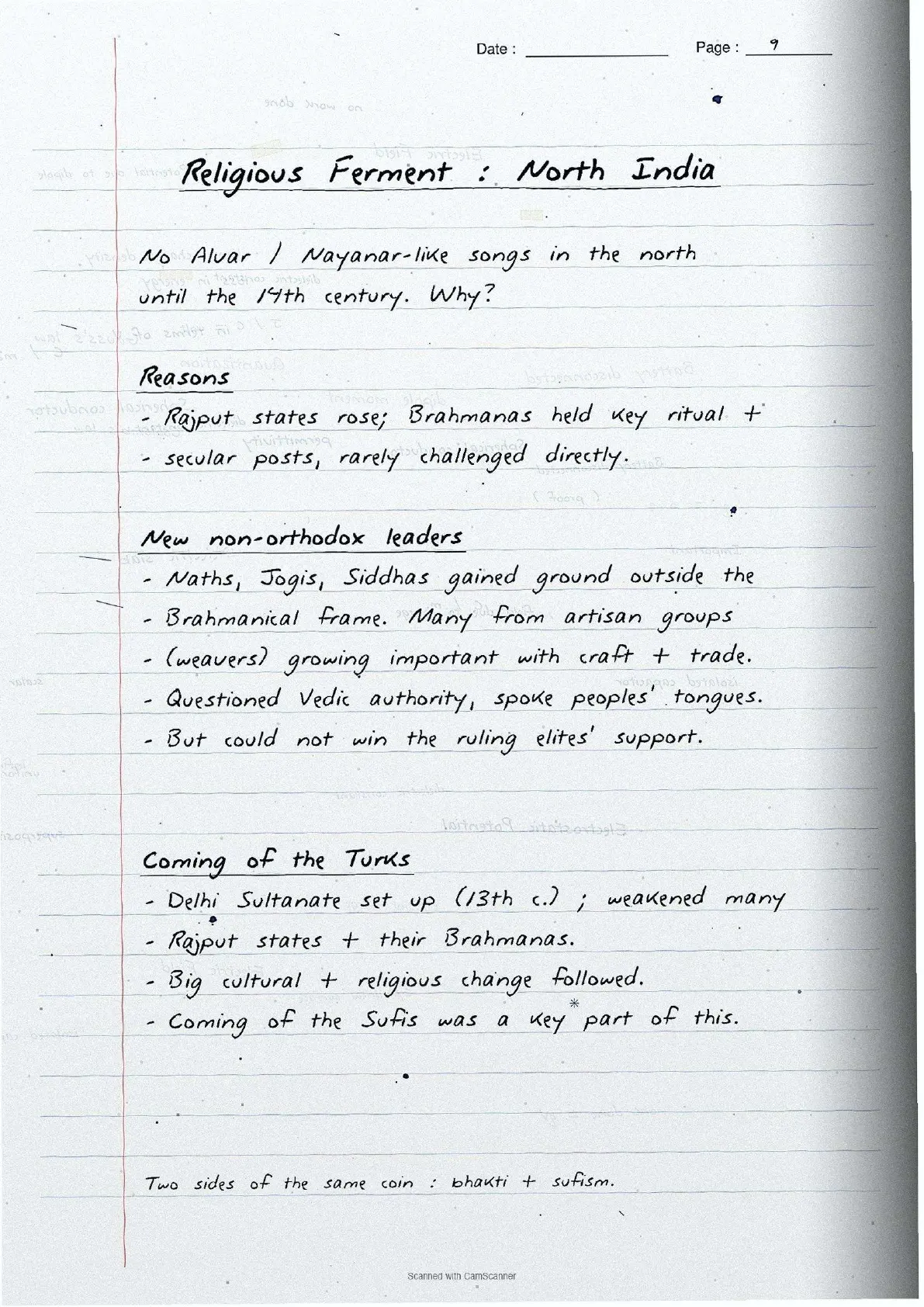
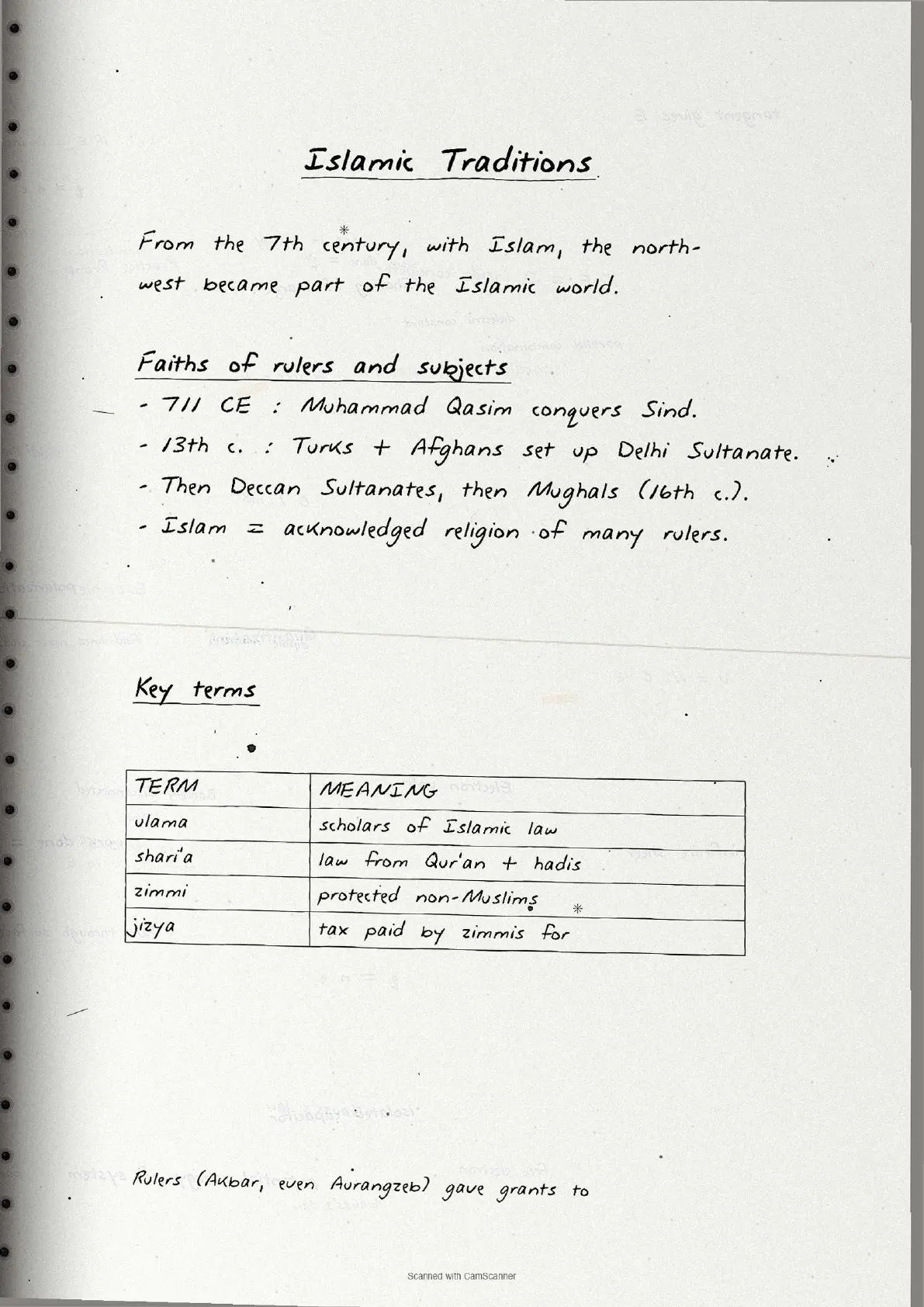
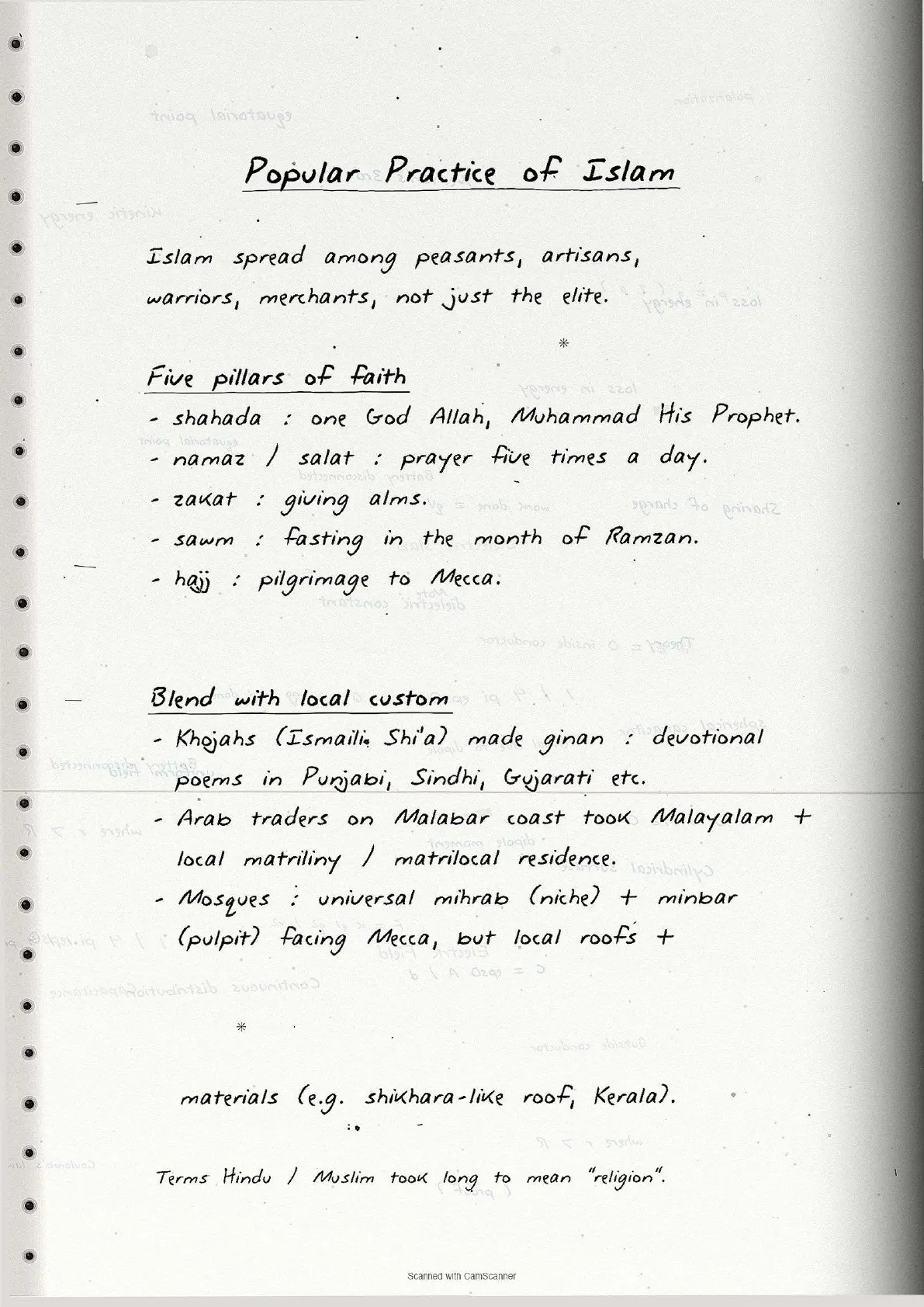
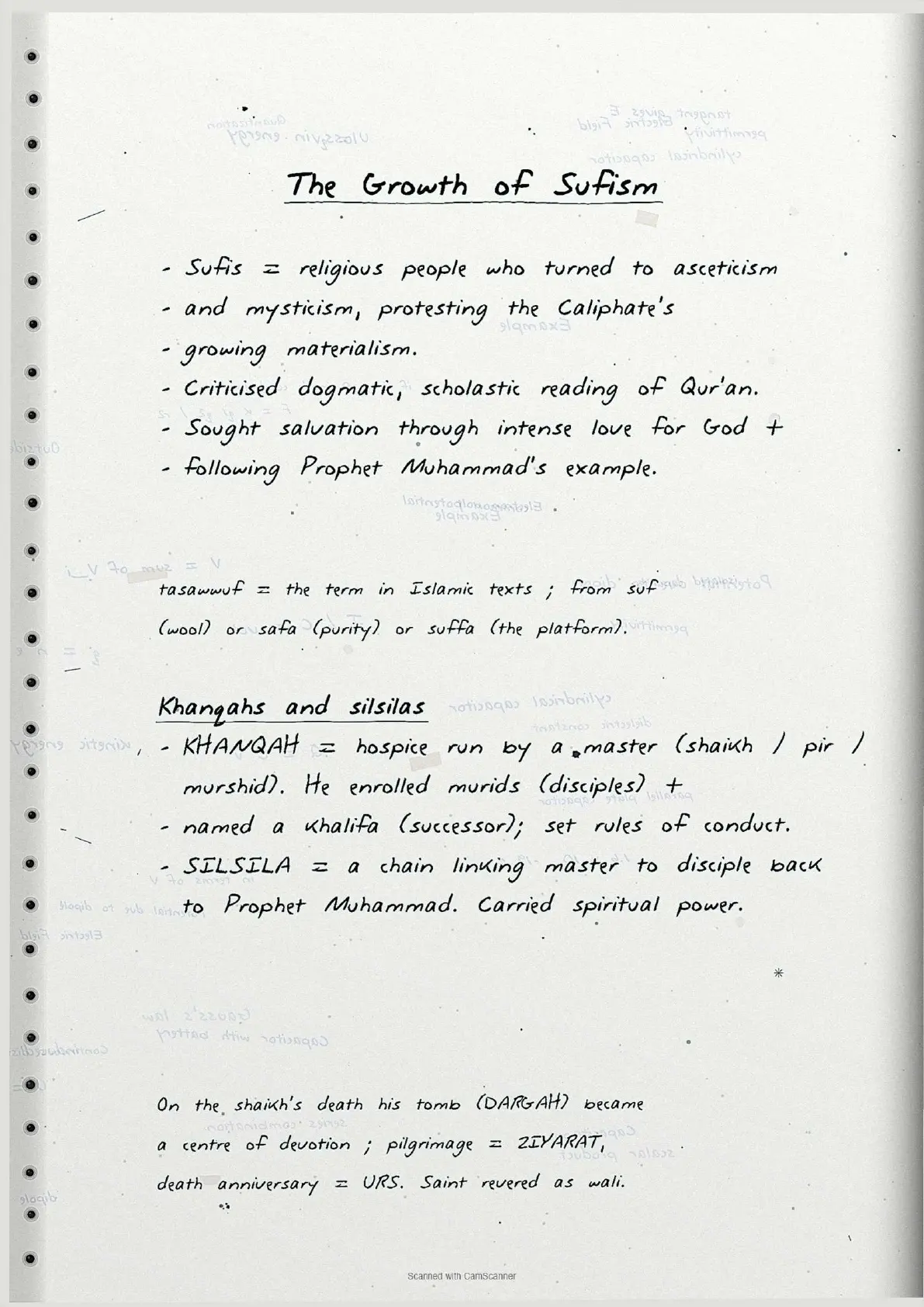
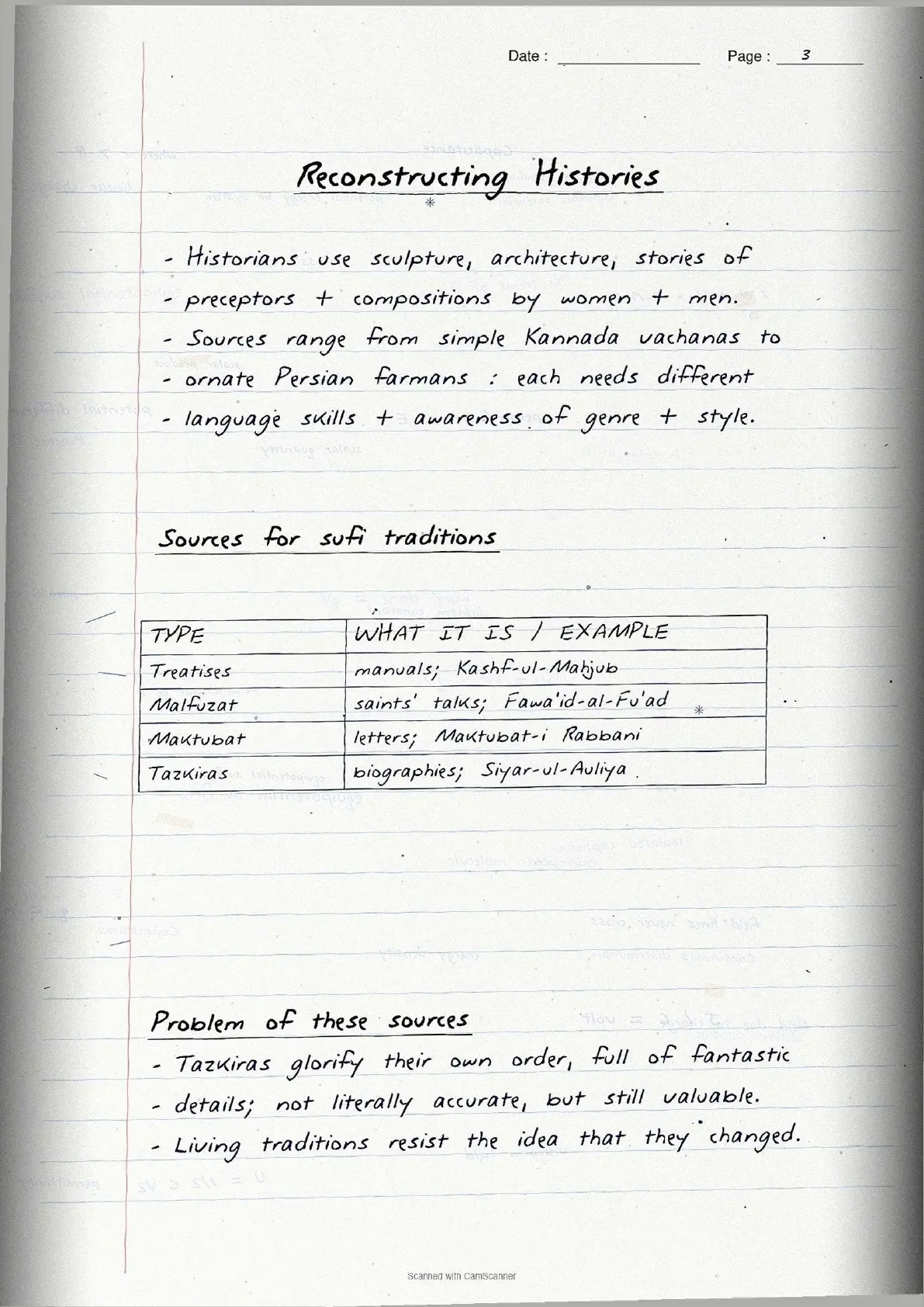
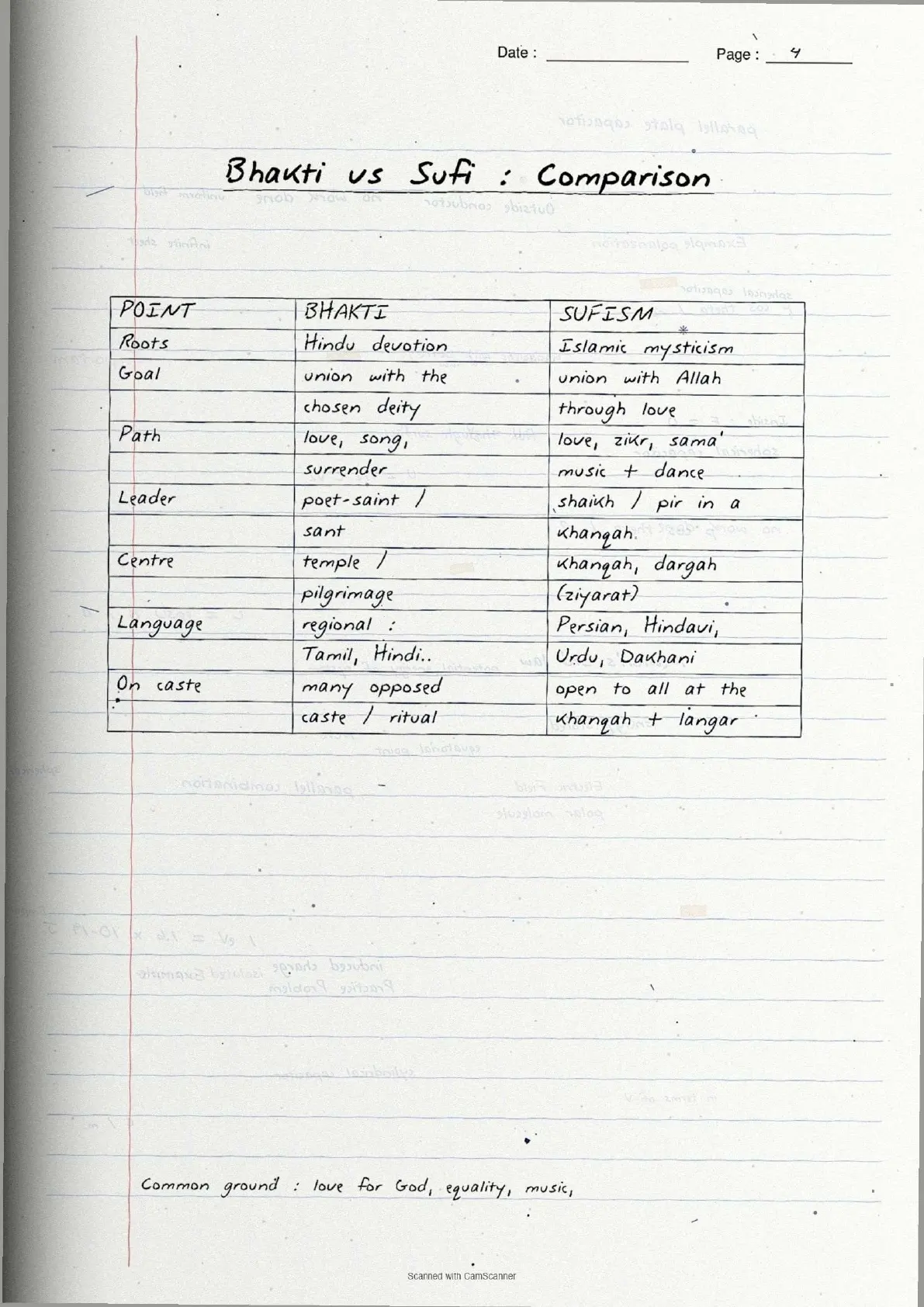
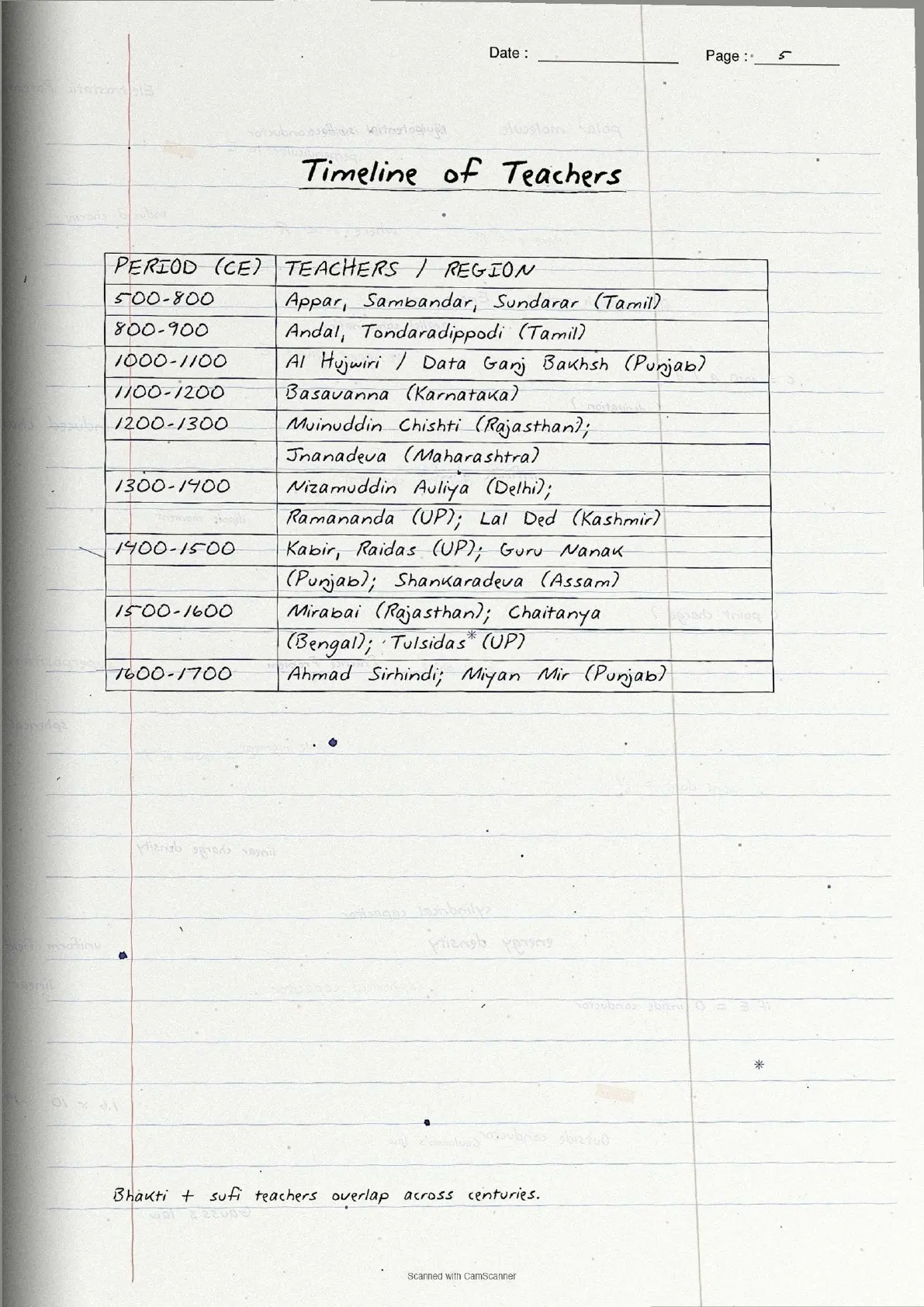
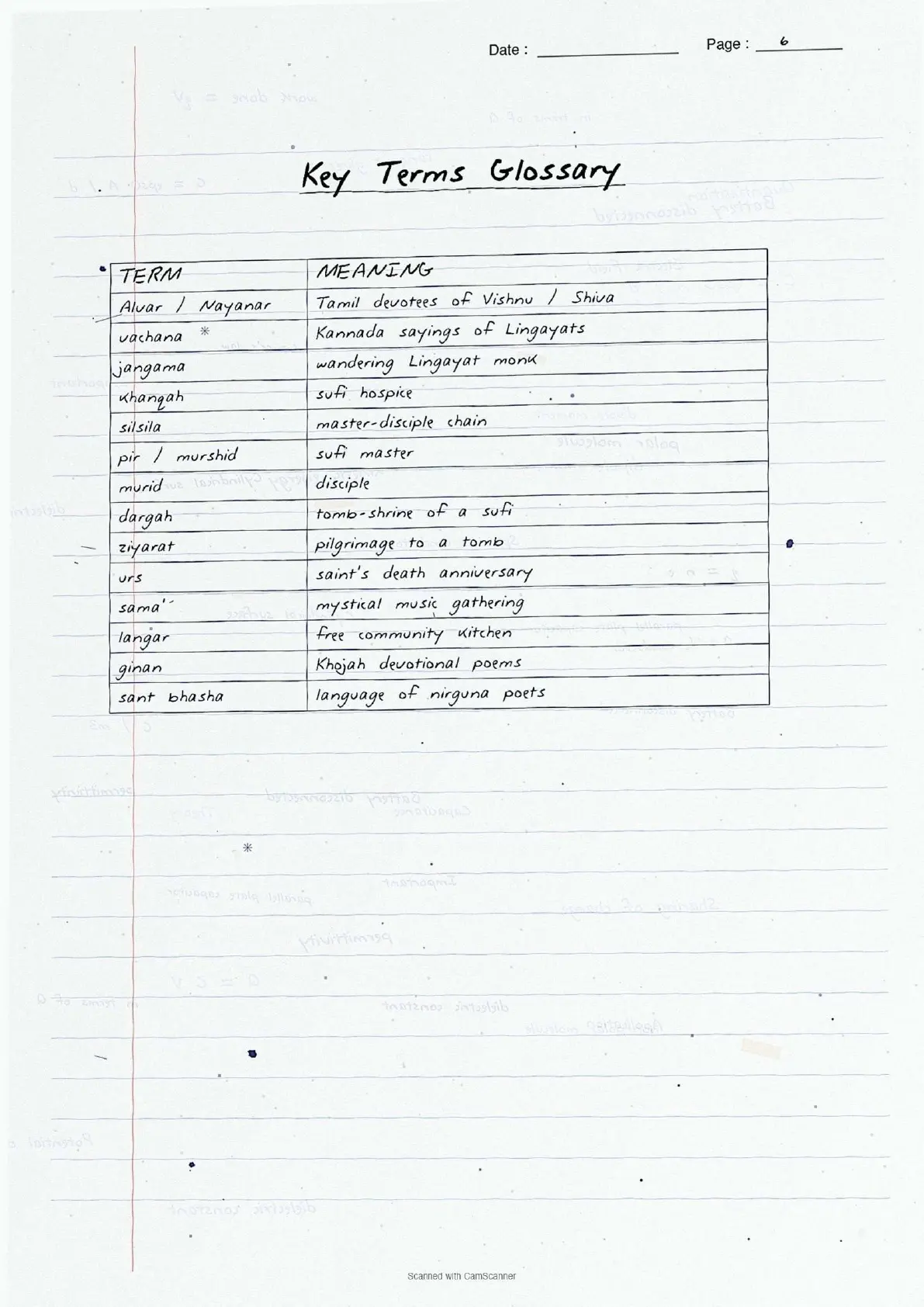
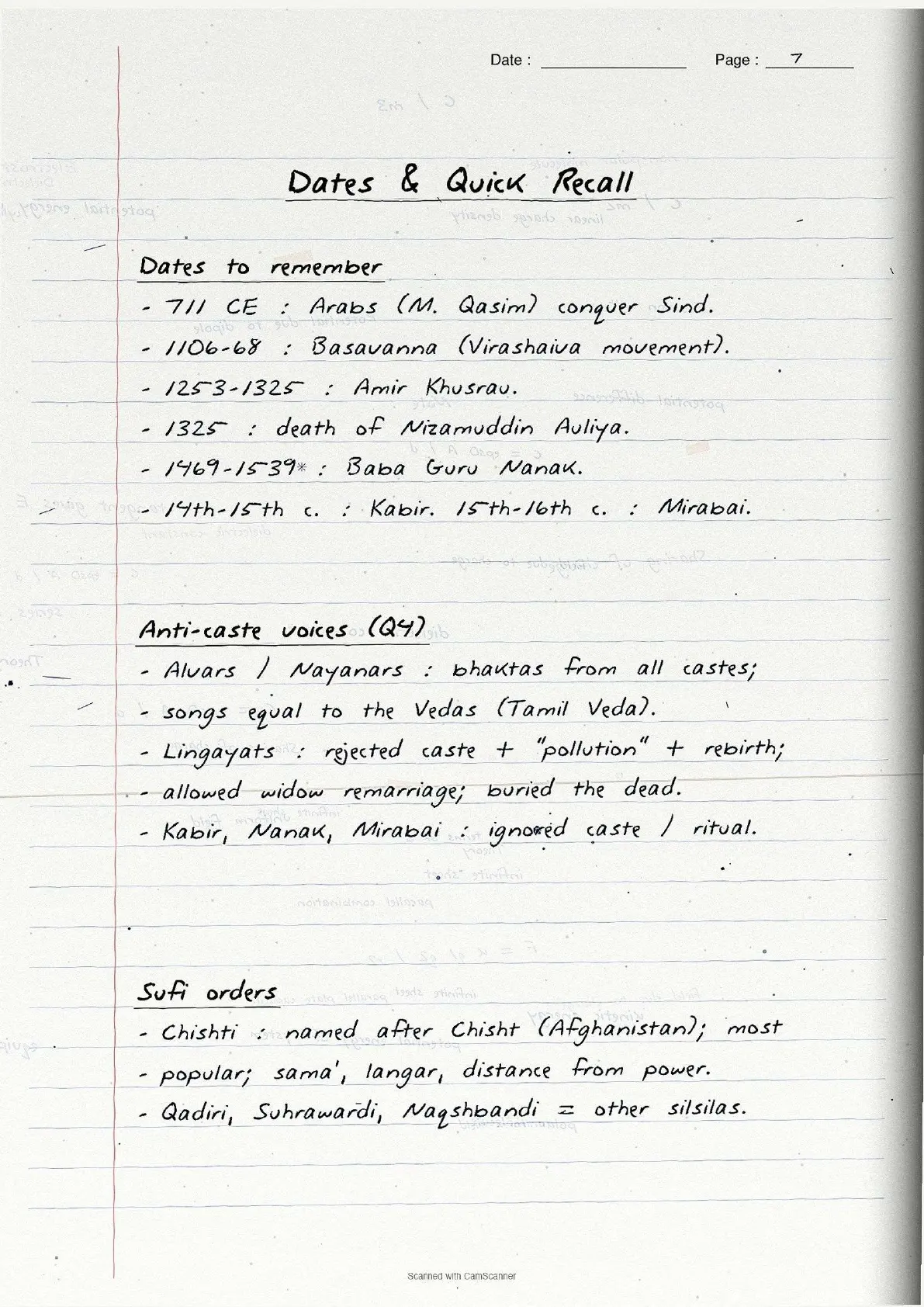
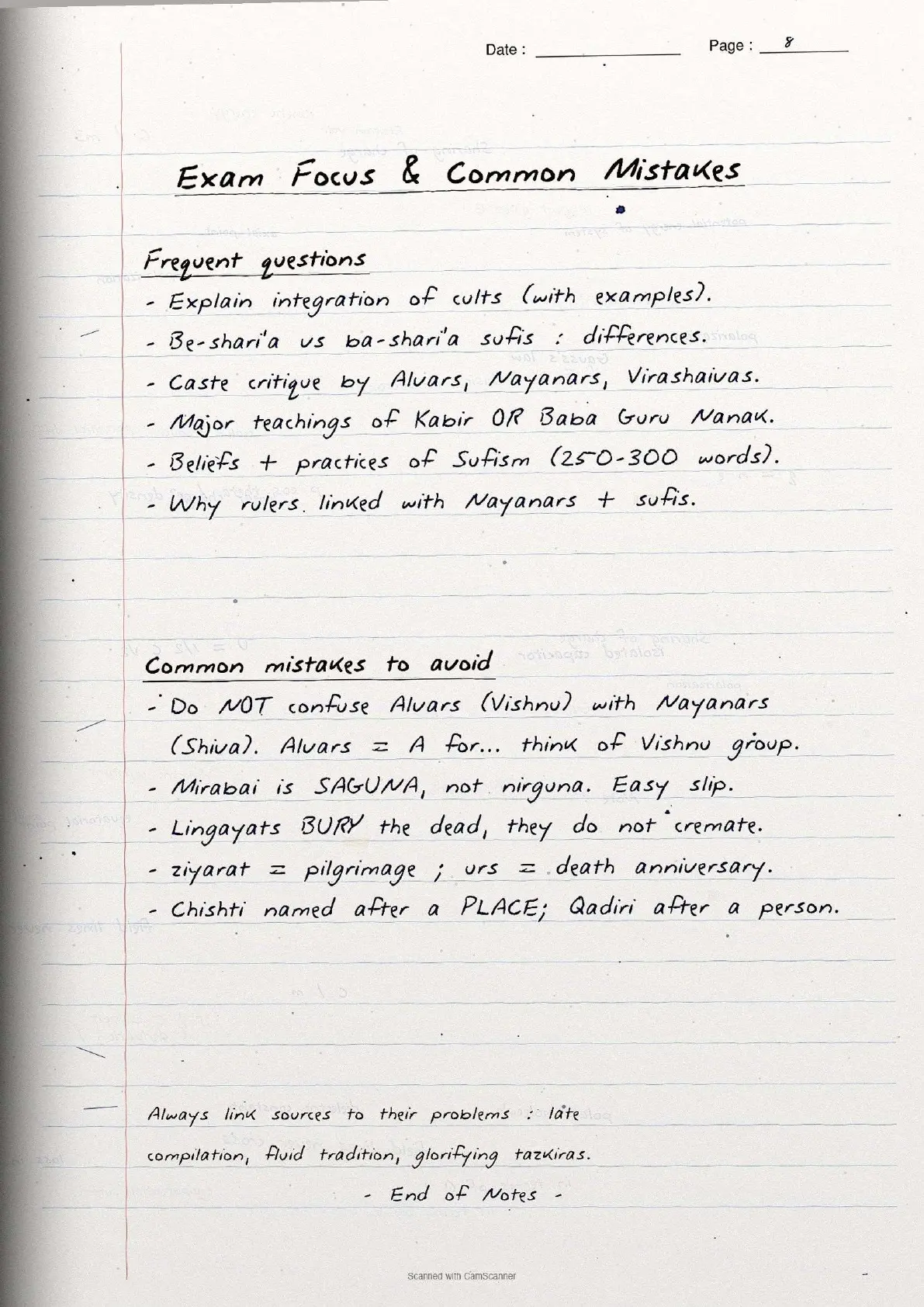
- Handwritten pages with boxed key terms and labelled sketches.
- This Class 12 History chapter usually carries 6 to 8 marks in the board paper.
- Pairs with the NCERT Solutions, Notes and Book PDF linked lower on this page.
These Bhakti-Sufi Traditions handwritten notes are prepared from the official NCERT Themes in Indian History Part II and checked against the last five years of CBSE board papers.
Student Feedback: In a Collegedunia poll of 8,150 Class 12 History students before the 2026 boards, 73% of students said handwritten notes felt faster to revise from than printed text for this chapter. Most students used the boxed Sufi-term glossary to recall the Sufism essay in the exam.
Source: 2026-27 Class 12 History student poll. Sample of 8,150 students from CBSE schools across 12 states.
What These Handwritten Notes Include
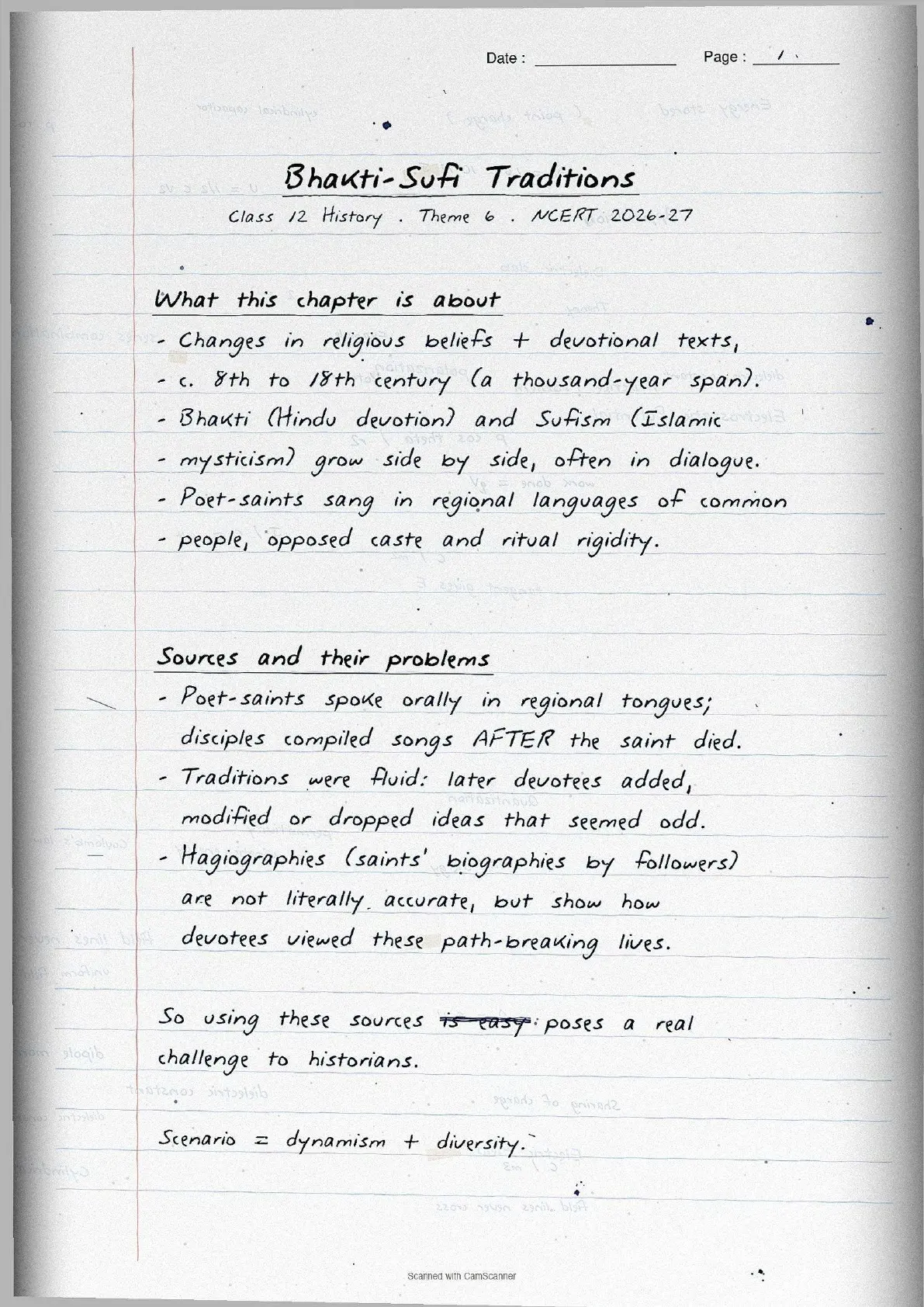
Bhakti-Sufi Traditions is Chapter 6 of Themes in Indian History Part II. It studies changes in religious beliefs and devotional texts between roughly the eighth and eighteenth centuries. These handwritten notes condense the chapter into pages a student can read in one sitting.
Every page is built around the chapter's three big themes:
- Integration pages cover how local cults joined the Brahmanical fold.
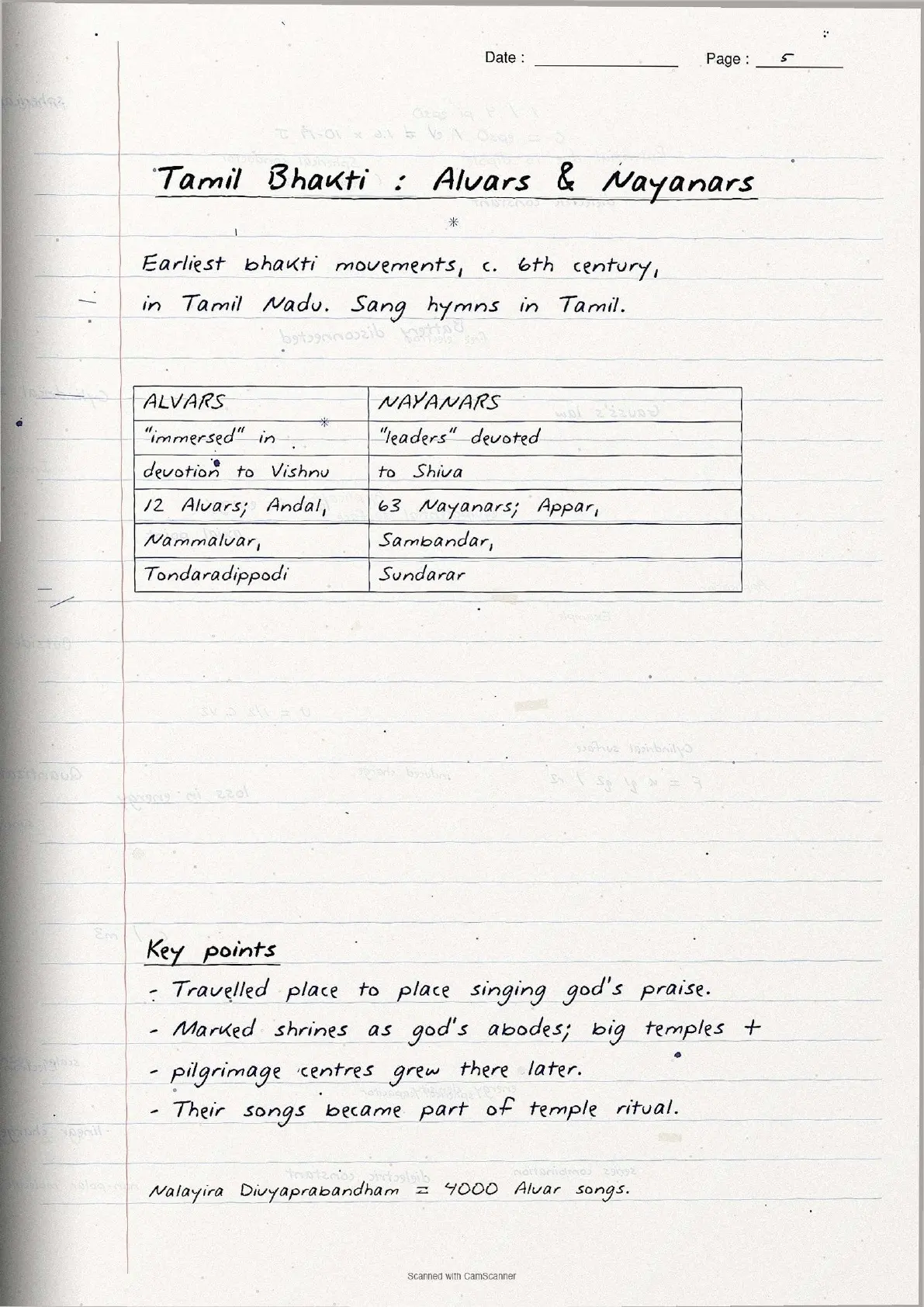
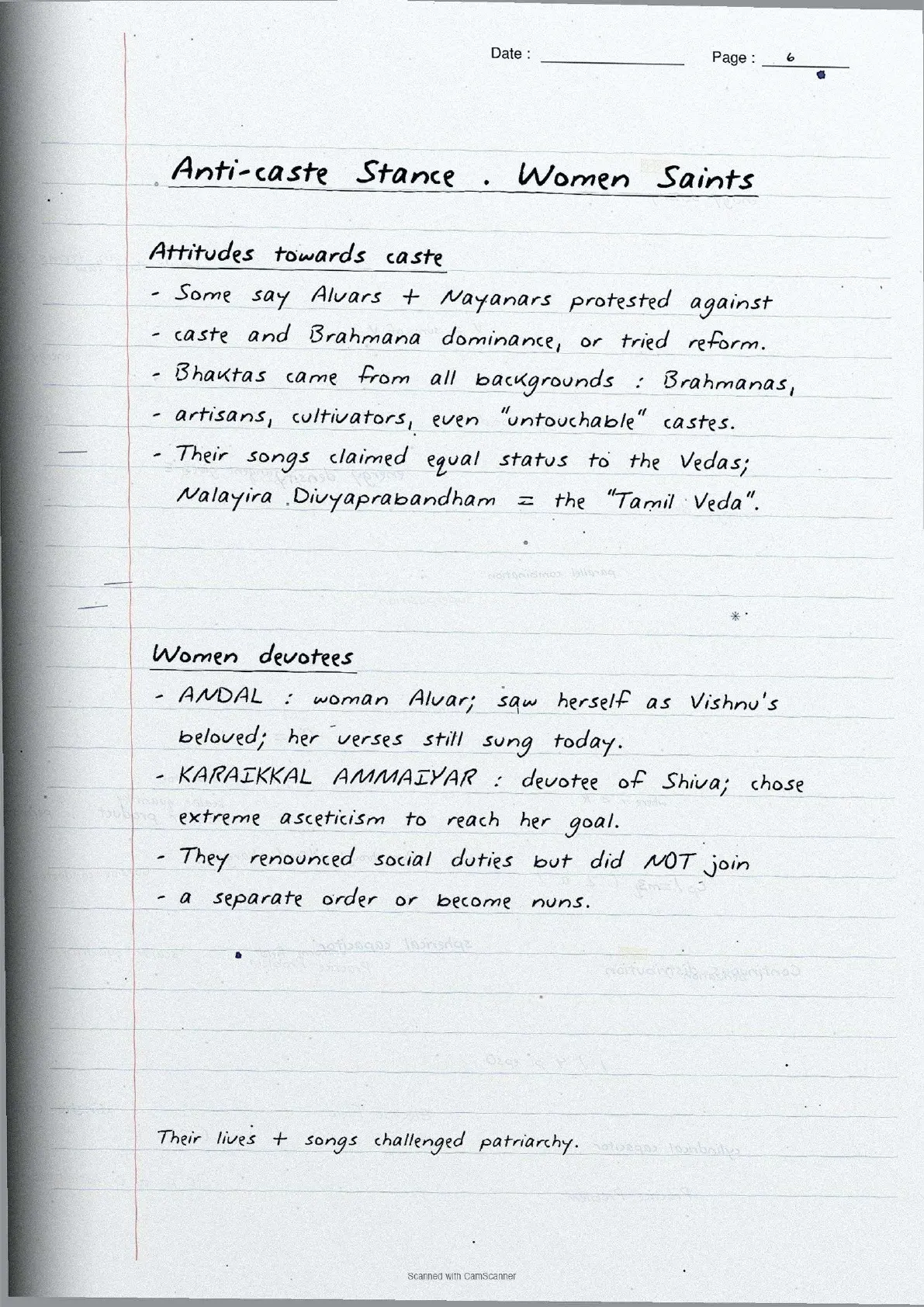
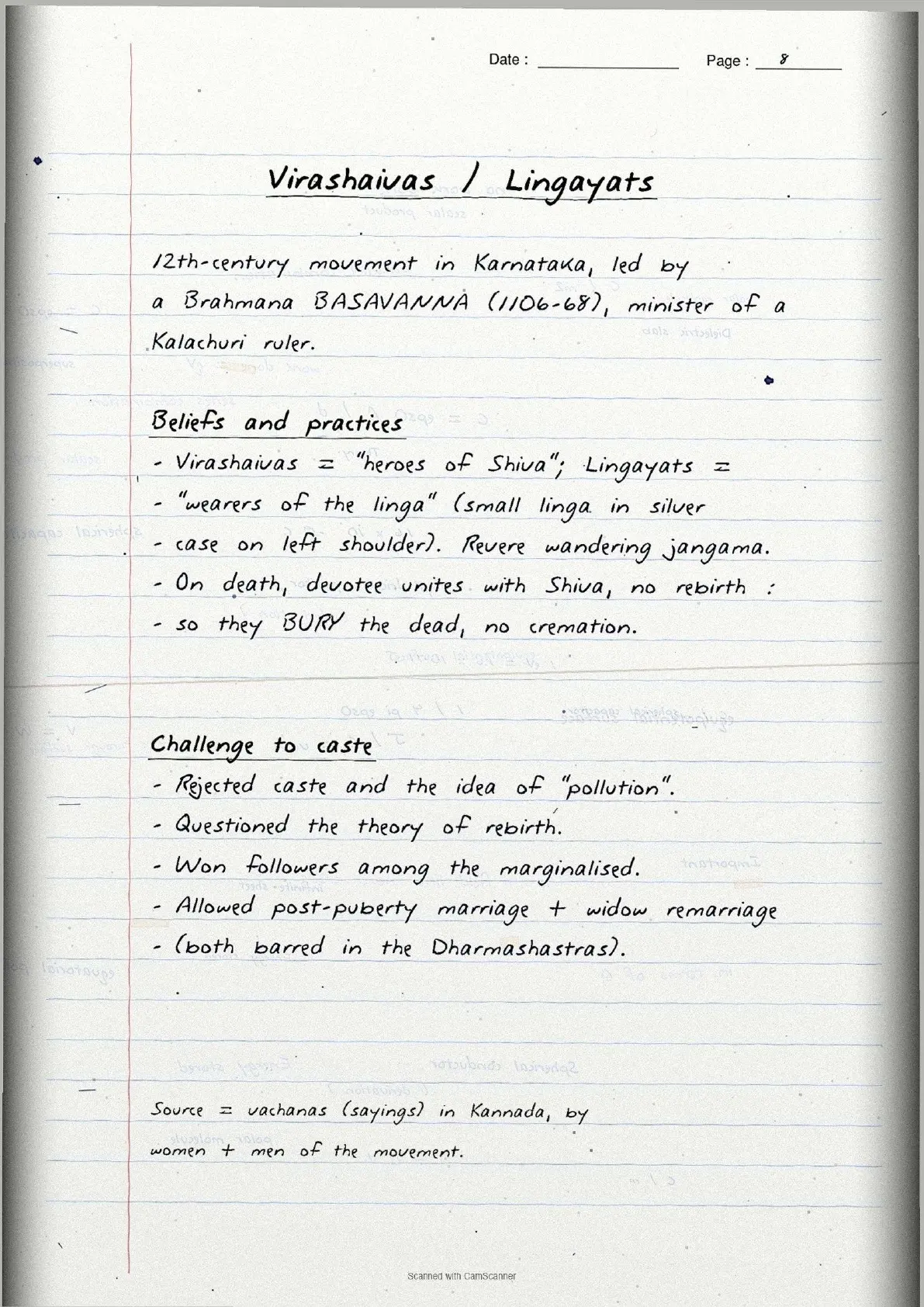
- Bhakti pages cover the Alvars, Nayanars, Virashaivas and the caste critique.
- Sufism pages cover khanqahs, silsilas, the Chishtis and the poet-saints.
Because the notes are handwritten, the key terms sit in boxes and the important dates are underlined, so the eye jumps straight to them. This makes the bhakti sufi traditions handwritten notes ideal for a last revision when there is no time to read full paragraphs. Sort each saint and term under bhakti or Sufism, and the whole of chapter 6 history class 12 falls into place.
Integration of Cults Pages
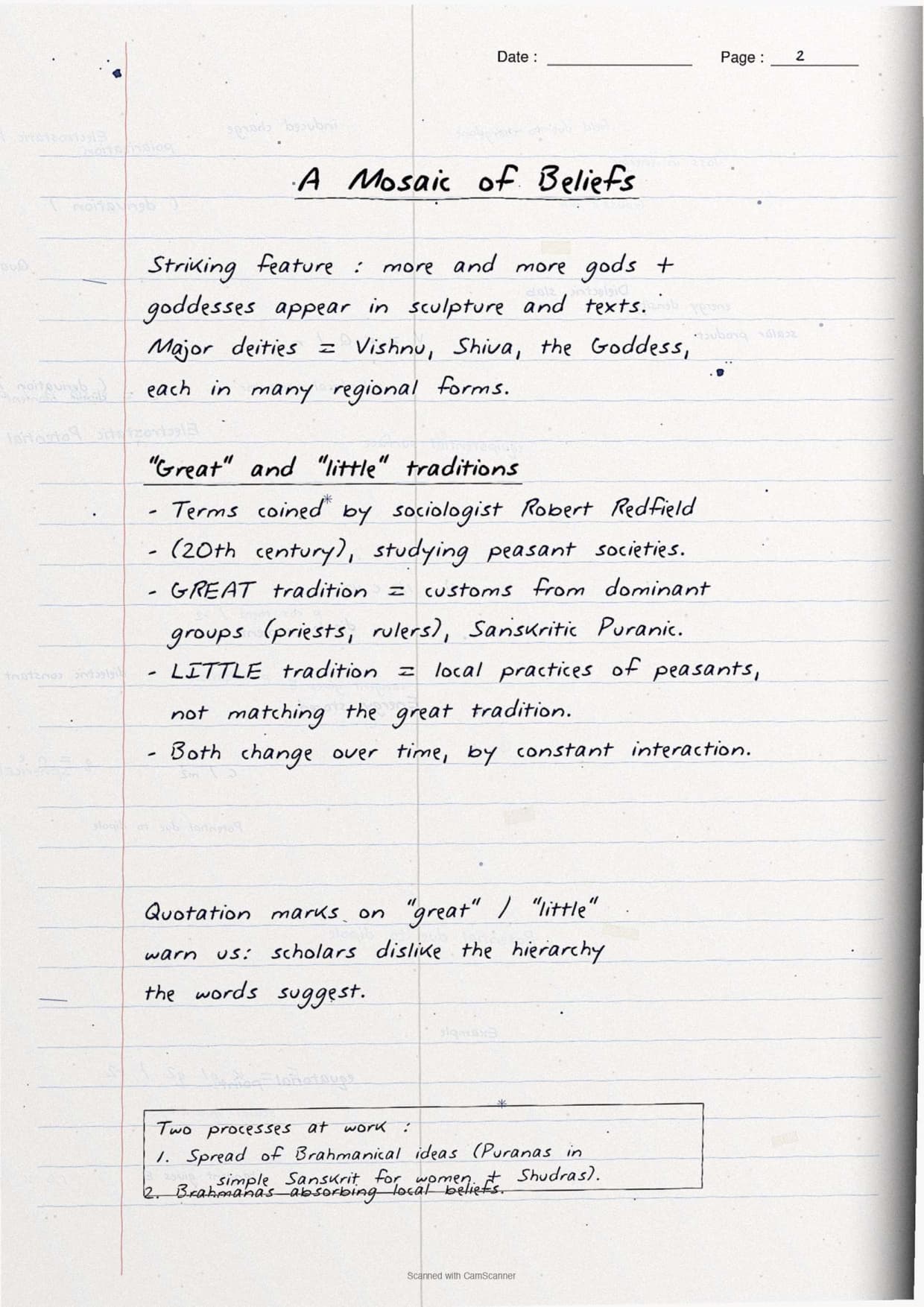
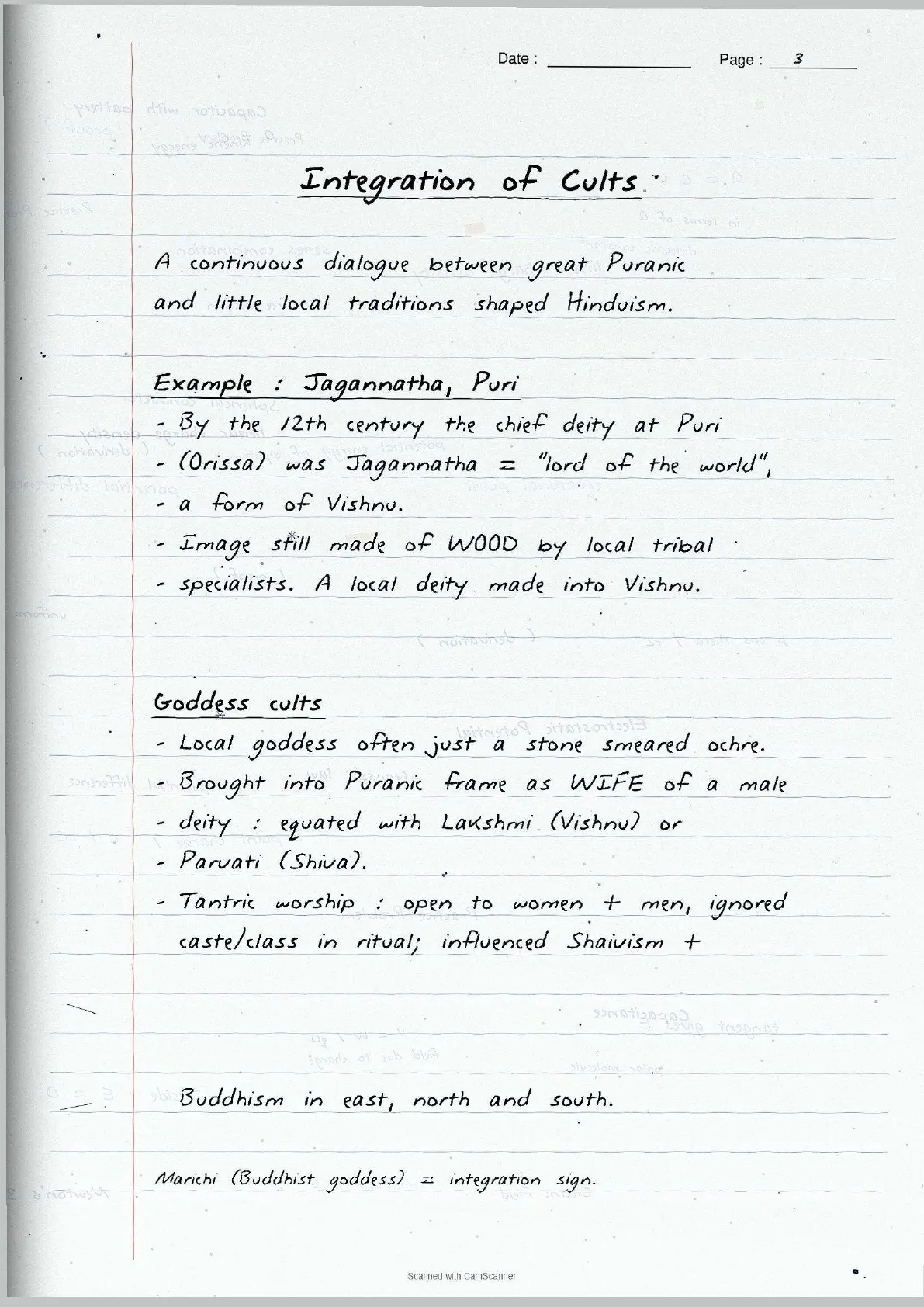
The first pages explain how "Hinduism" of this period was assembled. The notes keep the integration of cults as two boxed processes plus two named examples, so students can copy them straight onto the answer sheet.
- Spreading Brahmanical ideas: Puranic texts in simple Sanskrit verse, open to women and Shudras.
- Absorbing local cults: Brahmanas accepted and reworked local beliefs.
- Jagannatha: a local wooden tribal deity at Puri, made a form of Vishnu by the twelfth century.
- Goddess cults: an ochre-smeared stone folded in as Lakshmi or Parvati.
The notes underline the key point in the margin: integration was two-way, Brahmanas both taught and absorbed. A hand-drawn arrow links the "great" and "little" traditions, which makes the idea easy to recall under exam pressure.
Bhakti Saints and the Caste Critique Pages
The bhakti pages carry a labelled chart of the Tamil and Karnataka saints. The drawing splits them by deity and region and marks each critique, so students can describe the caste-critique answer in detail. The table below lists what the pages box for quick revision.
| Group | What it shows |
|---|---|
| Alvars | Tamil devotees of Vishnu; their hymns (Nalayira Divyaprabandham) called the "Tamil Veda". |
| Nayanars | Tamil devotees of Shiva; Appar dismissed gotra and kula. |
| Virashaivas | Led by Basavanna in twelfth-century Karnataka; rejected caste and "pollution". |
| Lived practice | Buried their dead and backed widow remarriage, against the Dharmashastras. |
The notes box the single most important point in red ink: the Lingayats did not just say caste was wrong, they buried their dead and remarried widows in defiance of the Dharmashastras. That one fact, pairing words with practice, is what wins the marks in the caste-critique answer.
Sufism, Khanqahs and the Chishtis Pages
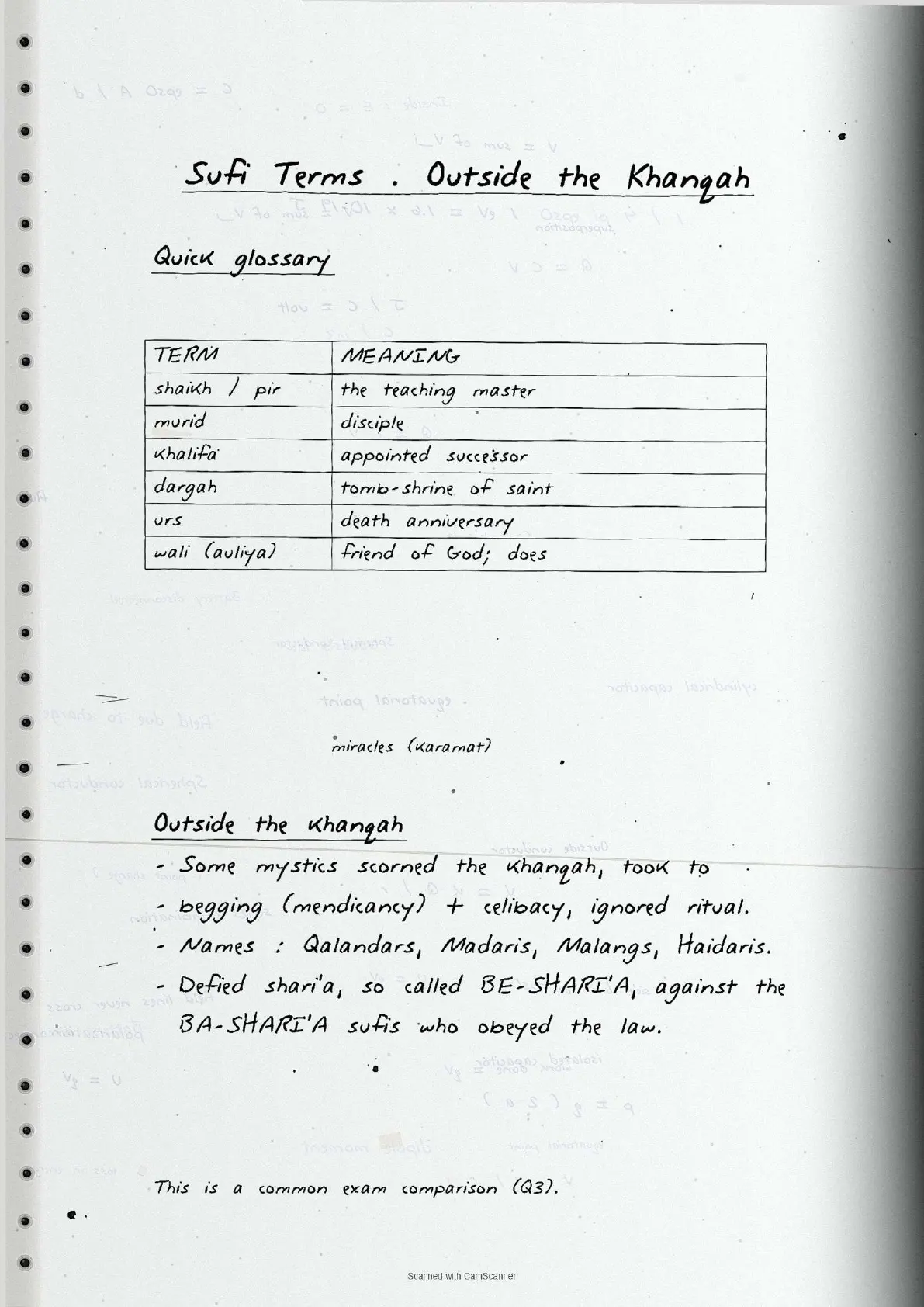
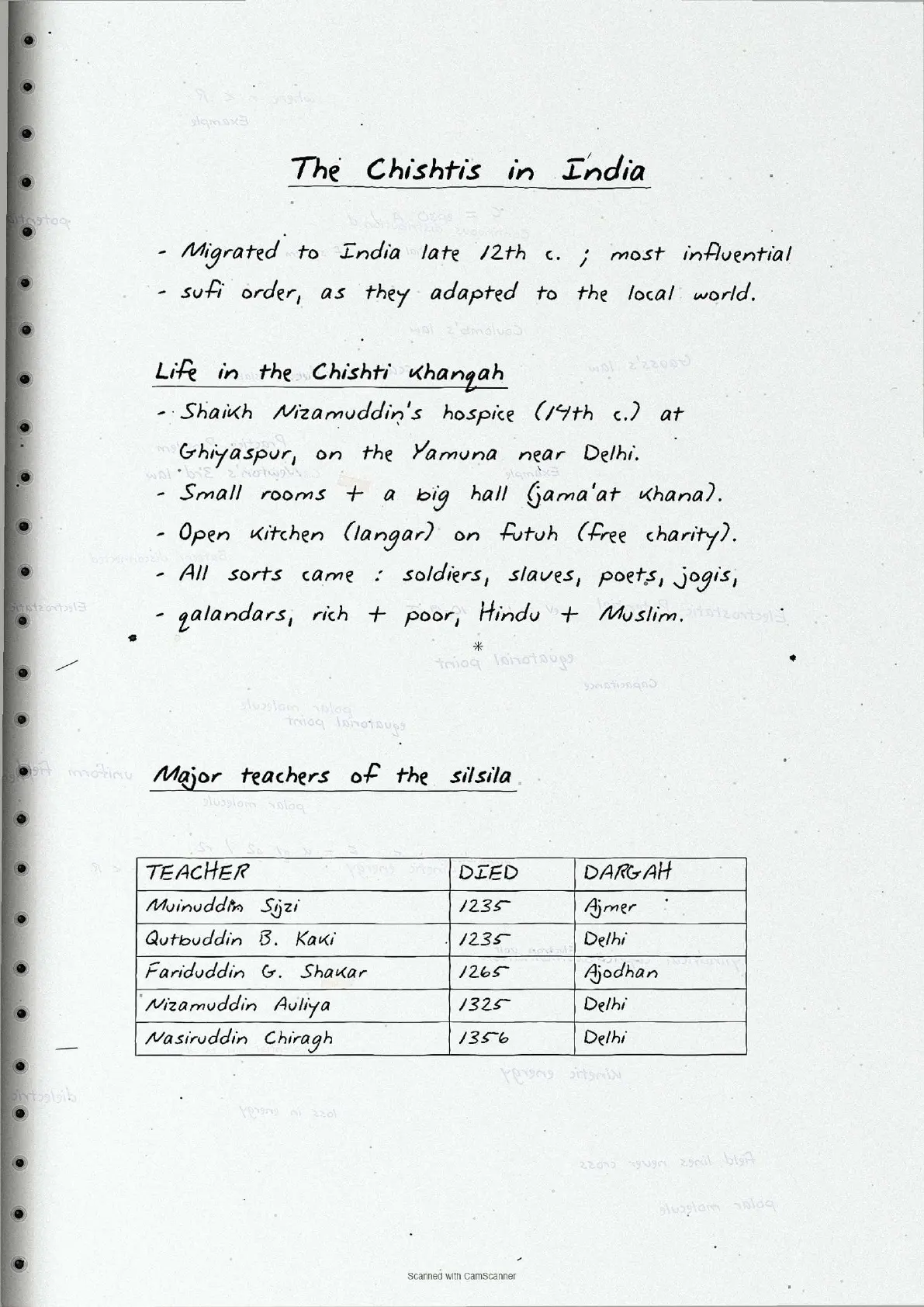
The Sufism pages cover the mystical strand of Islam. The notes use a boxed glossary, since the marks in this topic are almost all vocabulary, and add the Chishti shrines as a short list for the long answers.
- Core belief: salvation through intense love of God, with a personal reading of the Qur'an.
- Khanqah: the Sufi hospice under a shaikh (pir, murshid) who enrolled murids and named a khalifa.
- Silsila: a chain linking master to disciple back to the Prophet.
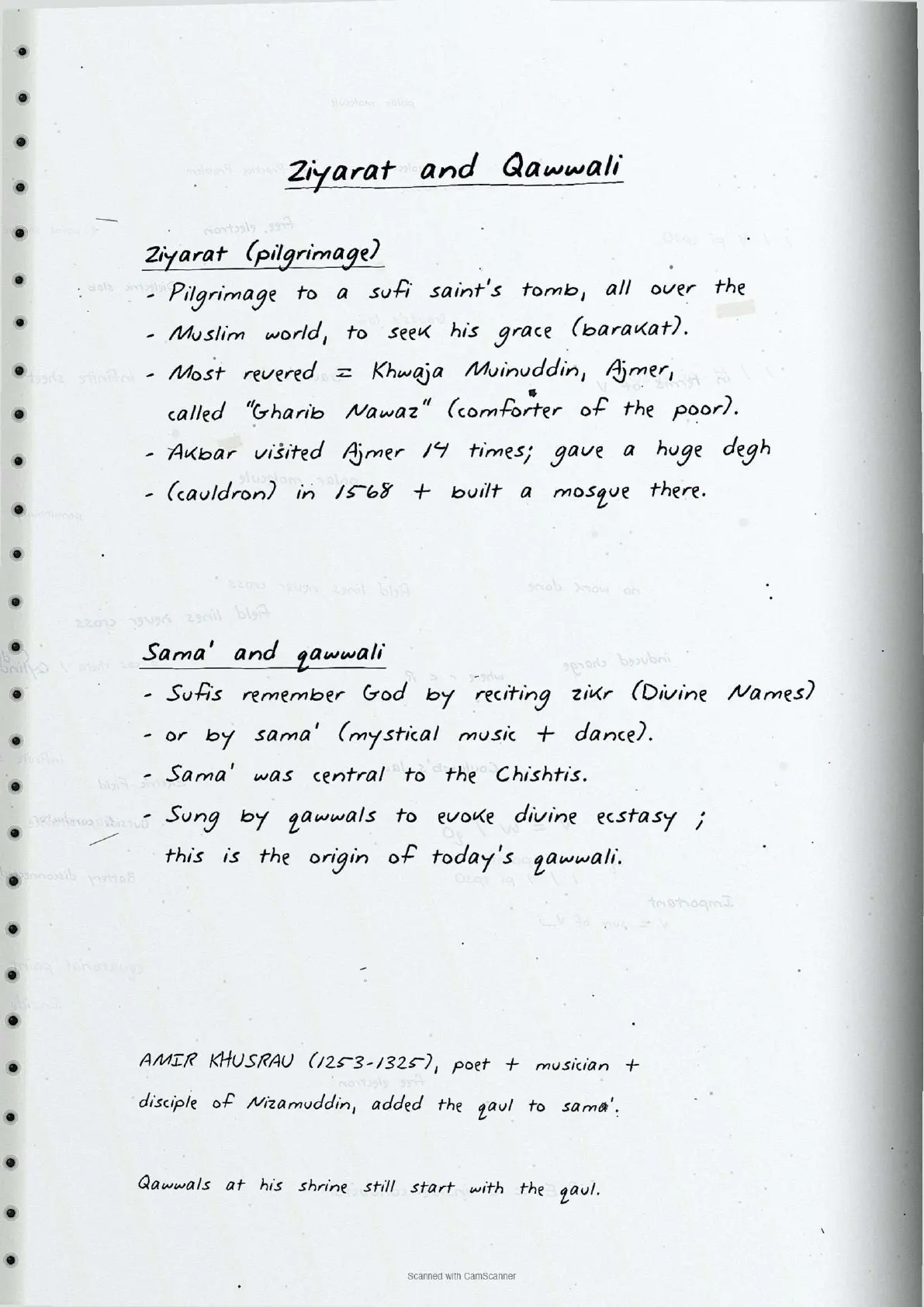
- Dargah, ziyarat, urs: the shaikh's tomb became a shrine, drawing pilgrimage on his death anniversary.
- Zikr and sama: remembering God through the Divine Names and mystical music (qawwali).
For the Chishtis, the notes underline one rule: they were the most influential Sufis in India and adapted to local traditions, with shrines at Ajmer (Muinuddin) and Delhi (Nizamuddin Auliya). A small hand-drawn box keeps the ba-shari'a versus be-shari'a split clear, ba with the law and in khanqahs, be without it and in mendicancy.
Kabir, Baba Guru Nanak and Mirabai Pages
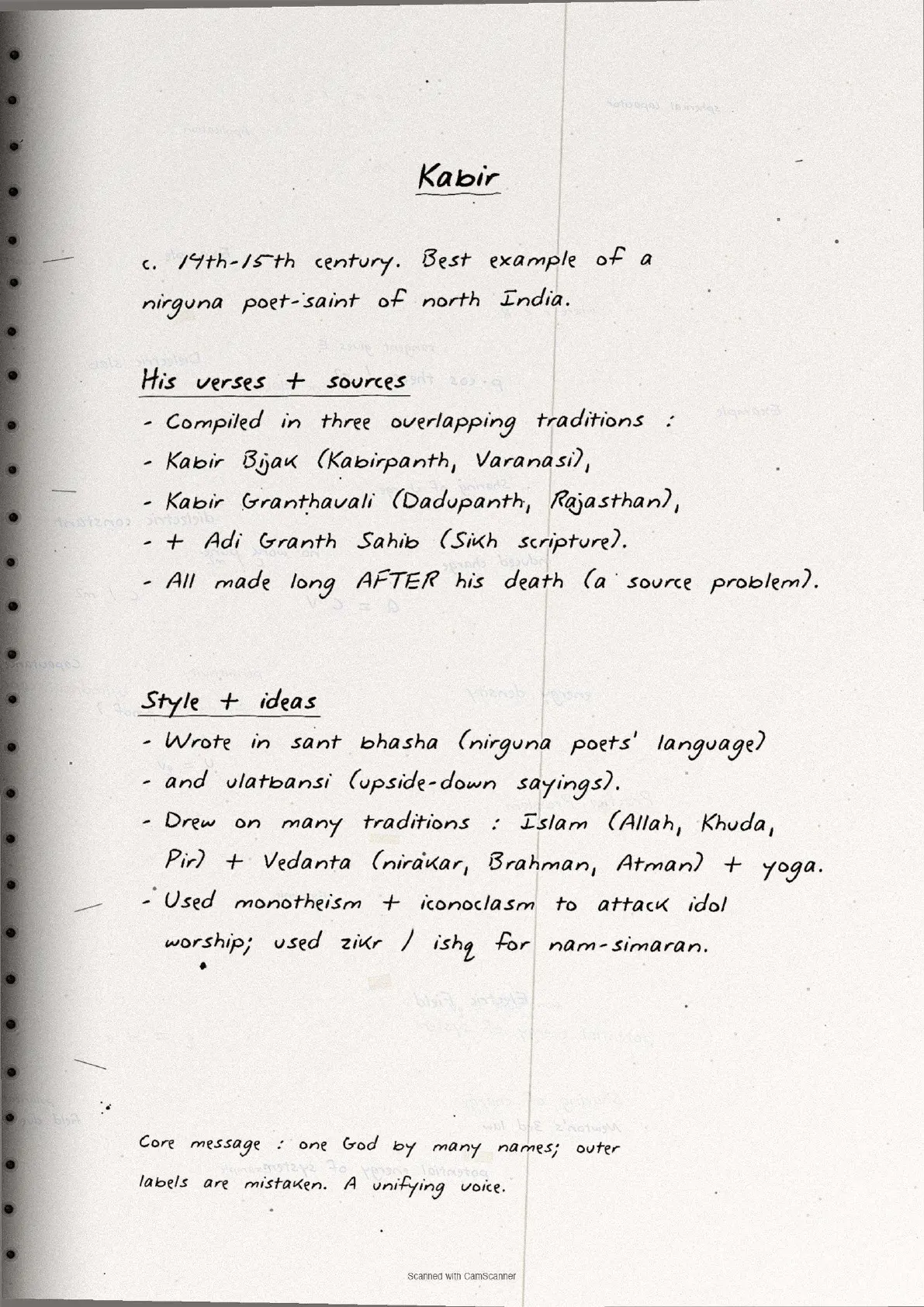
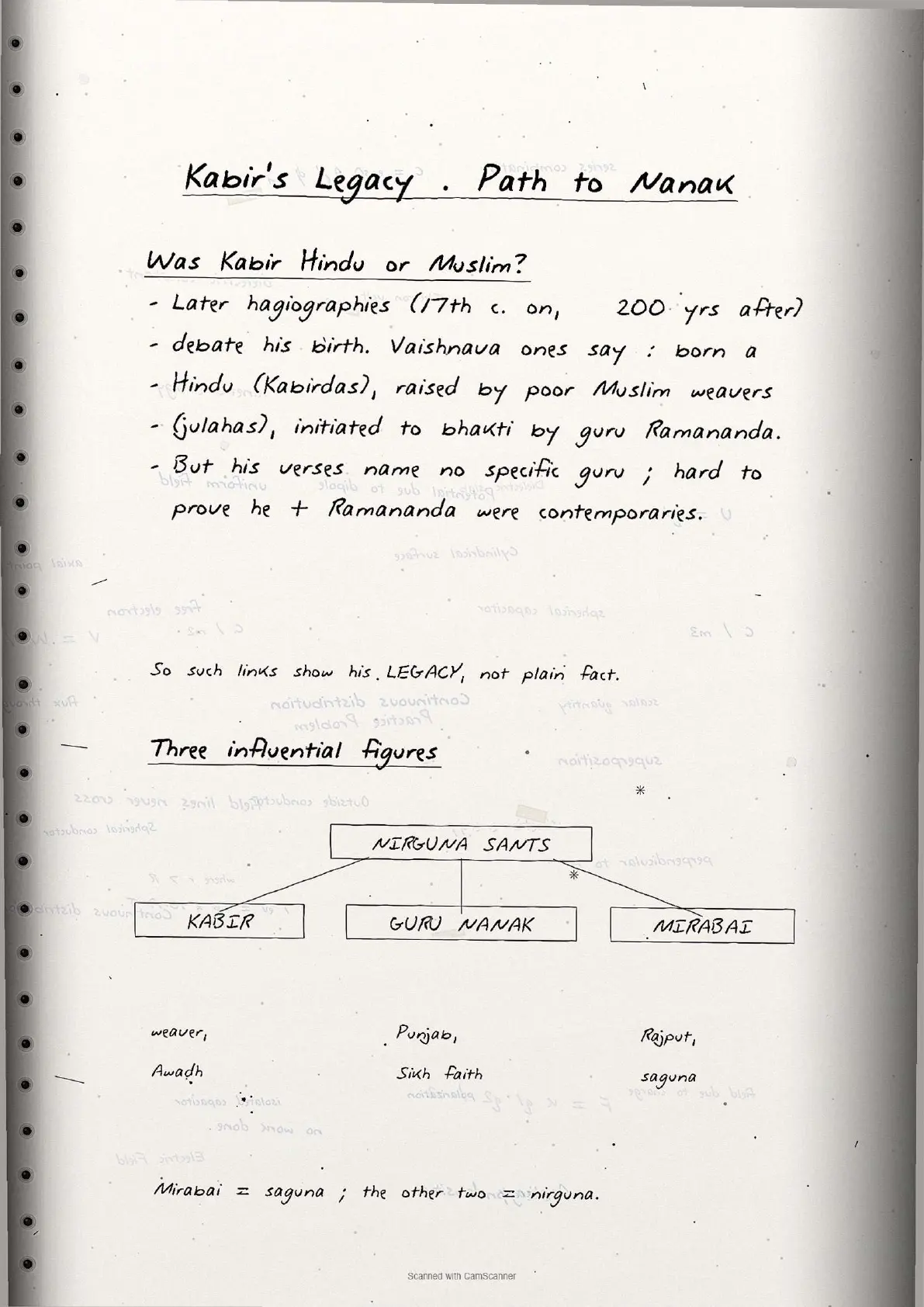
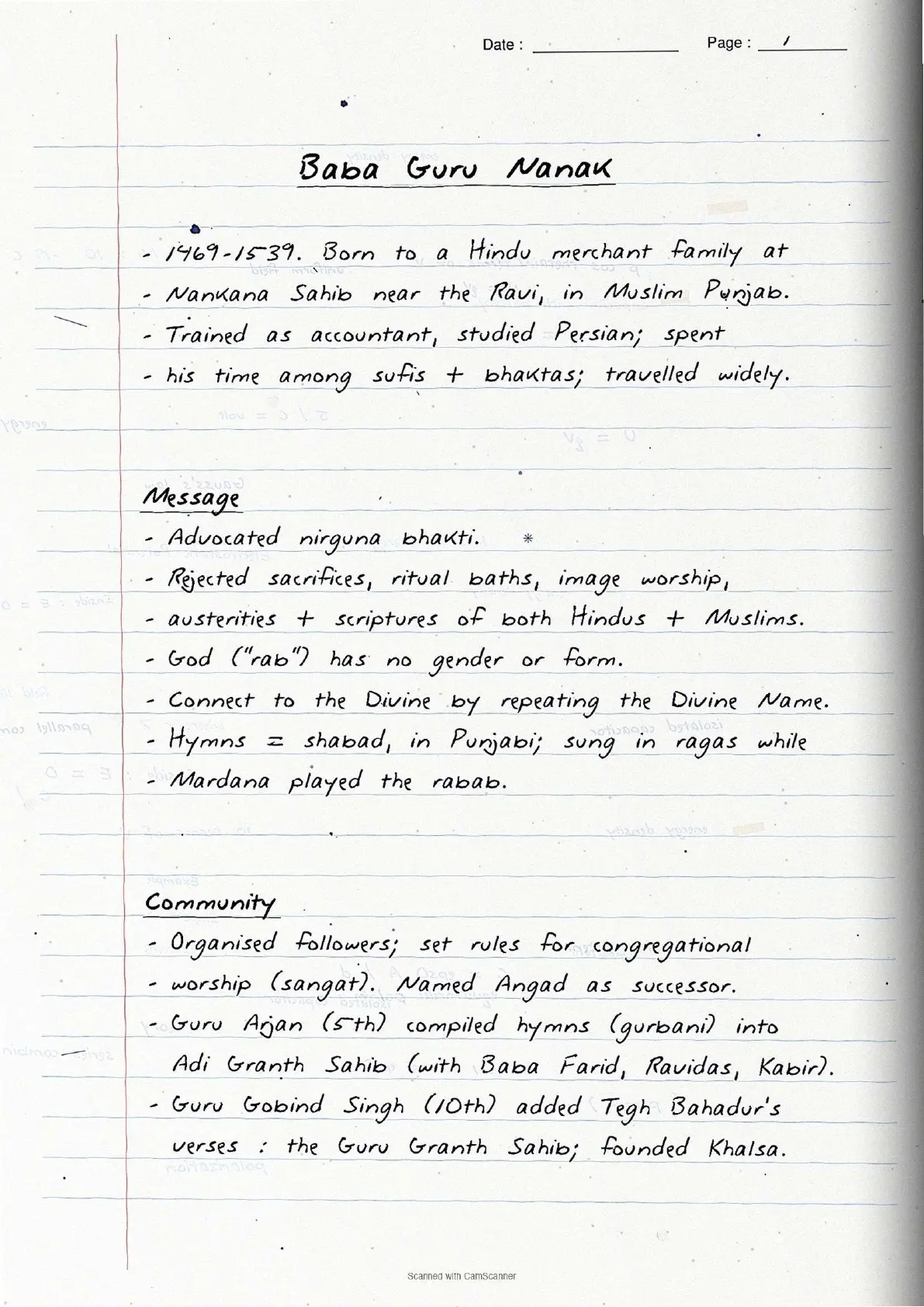
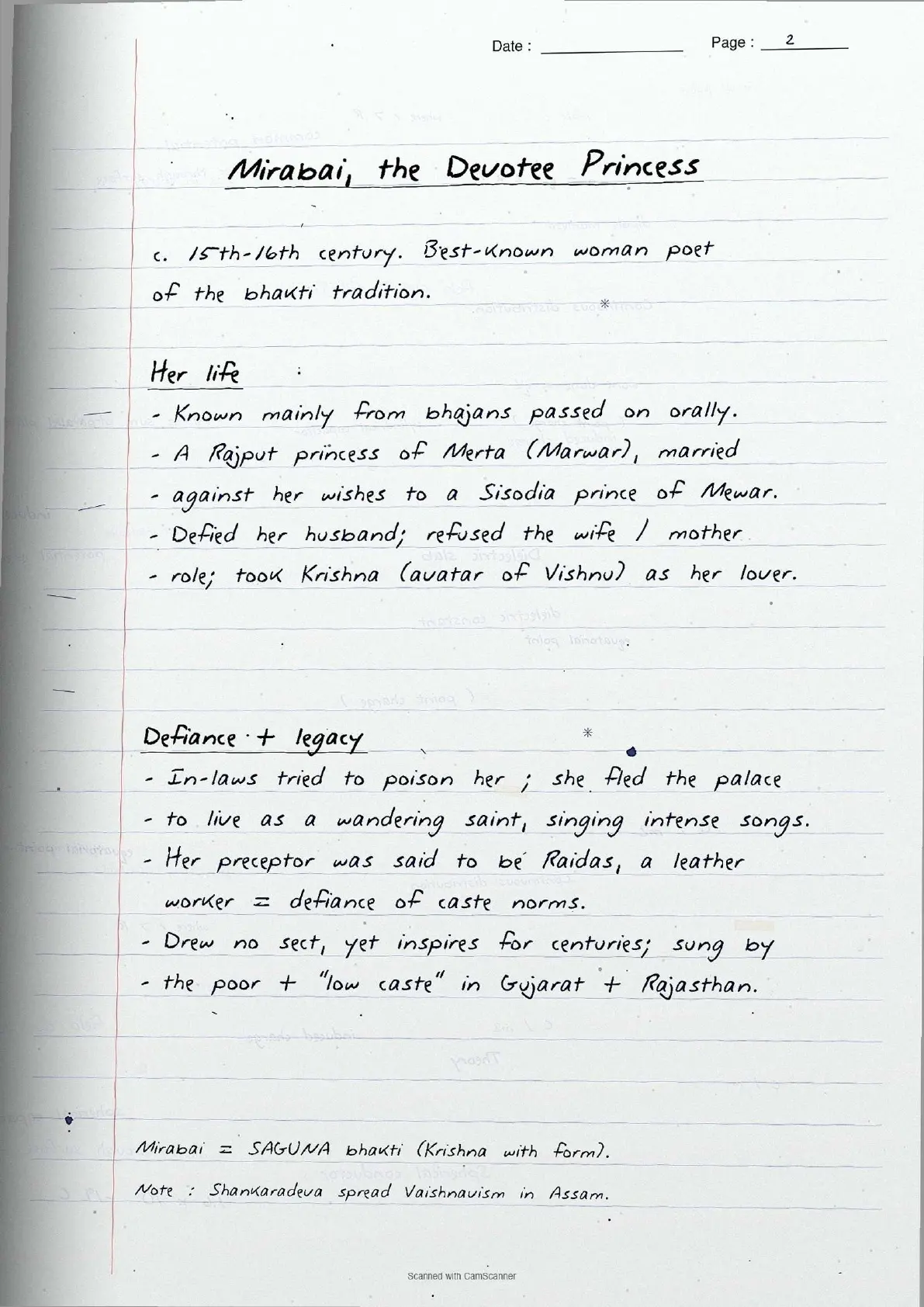
The last bhakti pages cover the great north Indian poet-saints. The notes give this its own set of pages, since it feeds the Kabir-or-Nanak question and the project tasks. Each saint gets one boxed line of teaching.
- Kabir: one Ultimate Reality in Islamic, Vedantic and yogic terms; attacked idol worship and division; used ulatbansi.
- Baba Guru Nanak (1469 to 1539): nirguna bhakti, one formless God reached by the Divine Name; built the sangat and named Angad his successor.
- Mirabai: a Rajput princess of Mewar who took Krishna as her lover-god and defied caste and patriarchy.
For Baba Guru Nanak, the pages also box the three channels of transmission: singing in sangat, the line of gurus from Angad, and the Adi Granth Sahib, later the Guru Granth Sahib. A linking arrow joins teaching to transmission, so students remember that both halves carry marks.
Rulers, Sources and Mosque Architecture Pages
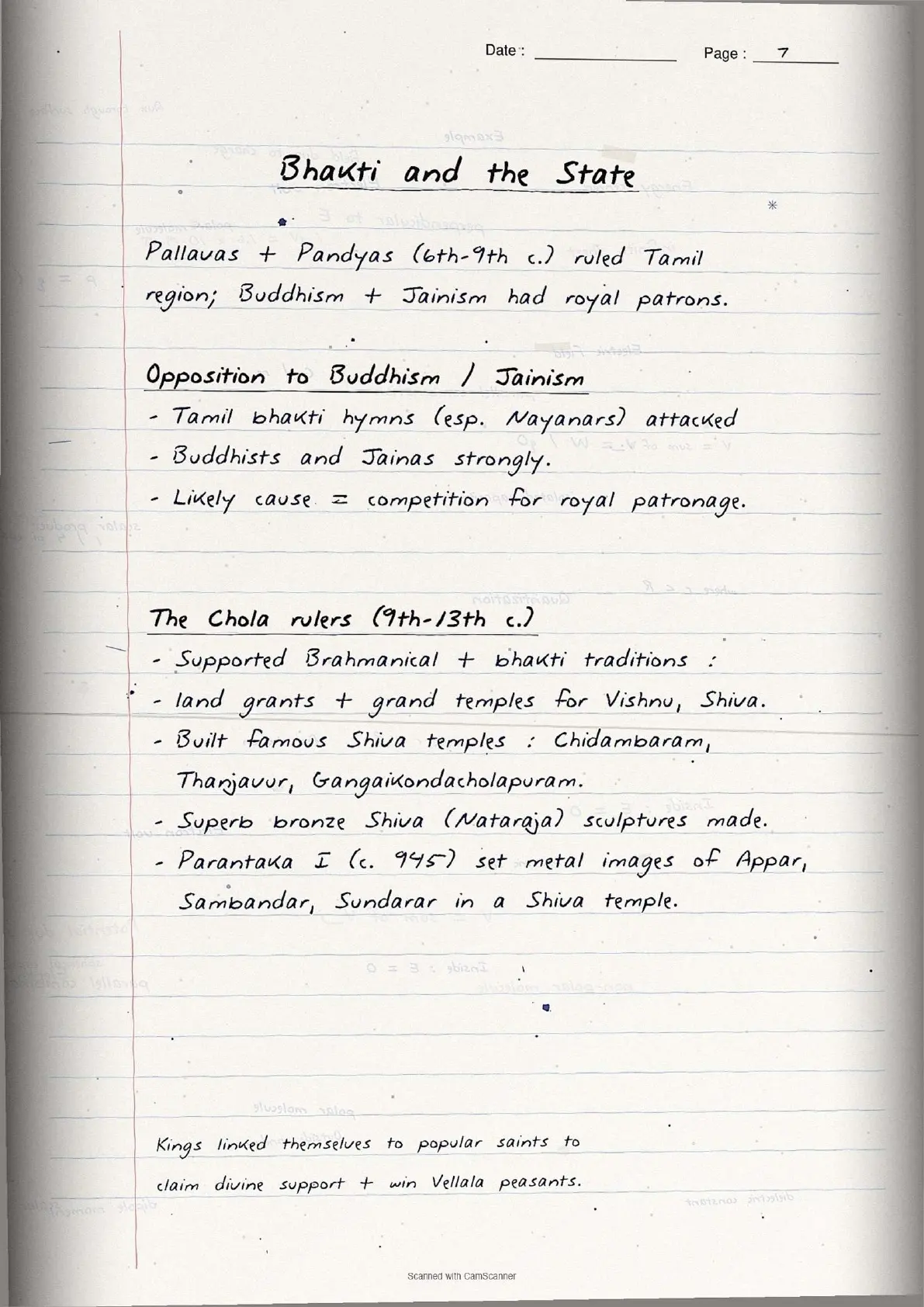
The final pages cover why rulers used these traditions, how historians study them, and the universal-plus-local idea in mosque architecture. The notes keep the points in one boxed table for fast revision.
| Topic | Key points to recall |
|---|---|
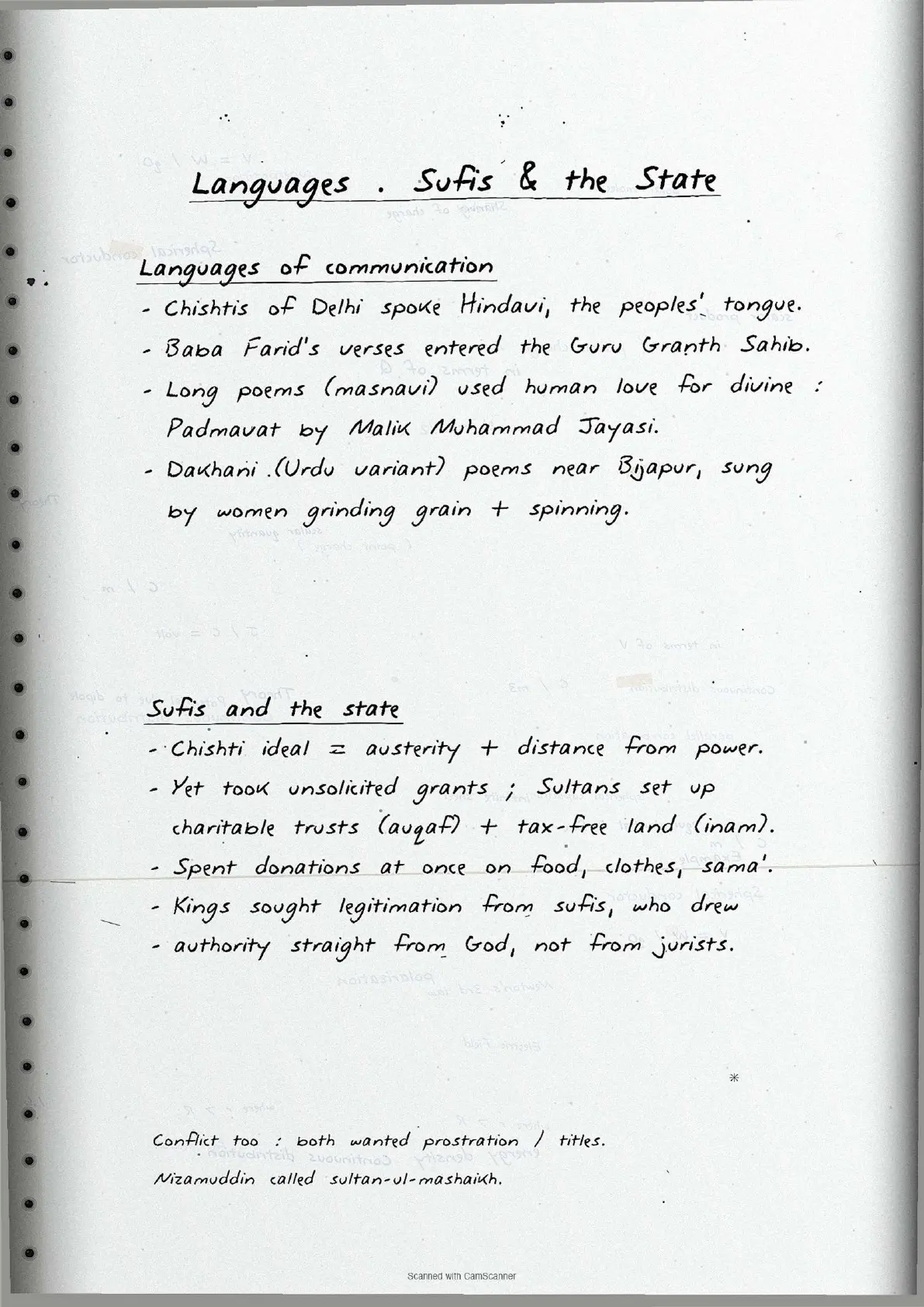
| Rulers & saints | Cholas built Shiva temples and promoted Tamil hymns; Akbar visited Ajmer fourteen times; kings sought legitimacy. |
| Sources & problems | Sculpture, architecture, hagiographies and poems; hagiographies exaggerate and oral poems shift. |
| Mosque architecture | Universal core (Mecca, mihrab, minbar) fixed; roofs and materials local (Kerala shikhara, brick Atiya, wooden Shah Hamadan). |
One sharp point the notes box in the margin: both bhakti and Sufi thinkers chose the language of ordinary people, Tamil, Kannada, Punjabi, Hindavi and Dakhani, to reach past the Sanskrit and Persian elite. A linking arrow ties the languages page back to the wider aim of both movements.
How to Use These Handwritten Notes
Handwritten notes work best as a final layer of revision, not as your first read. The plan below helps students get the most out of the bhakti sufi traditions handwritten notes before the board exam. Follow it once a week in the run-up to the test.
- First pass: read the notes once, following the integration, bhakti and Sufism order of pages.
- Active recall: cover the boxed terms and try to write each list from memory.
- Glossary drill: redraw the Sufi-term box (khanqah, silsila, dargah, ziyarat, zikr) without looking.
- Self-test: attempt a short class 12 history chapter 6 mcq drill to check the small facts.
Because the notes come as a downloadable PDF, students can save them on a phone and revise offline on the way to the exam centre. Many students search for class 12 history chapter 6 notes on their phone the night before a test, so a saved PDF means revision is always at hand. Pair these pages with the full solutions to check your written answers against model points.
Common Mistakes These Notes Help You Avoid
A few errors cost marks in this chapter every year. Most come from mixing up the two traditions or giving only one side of a debate. The notes flag each soft point in the margin so students phrase it safely on the answer sheet.
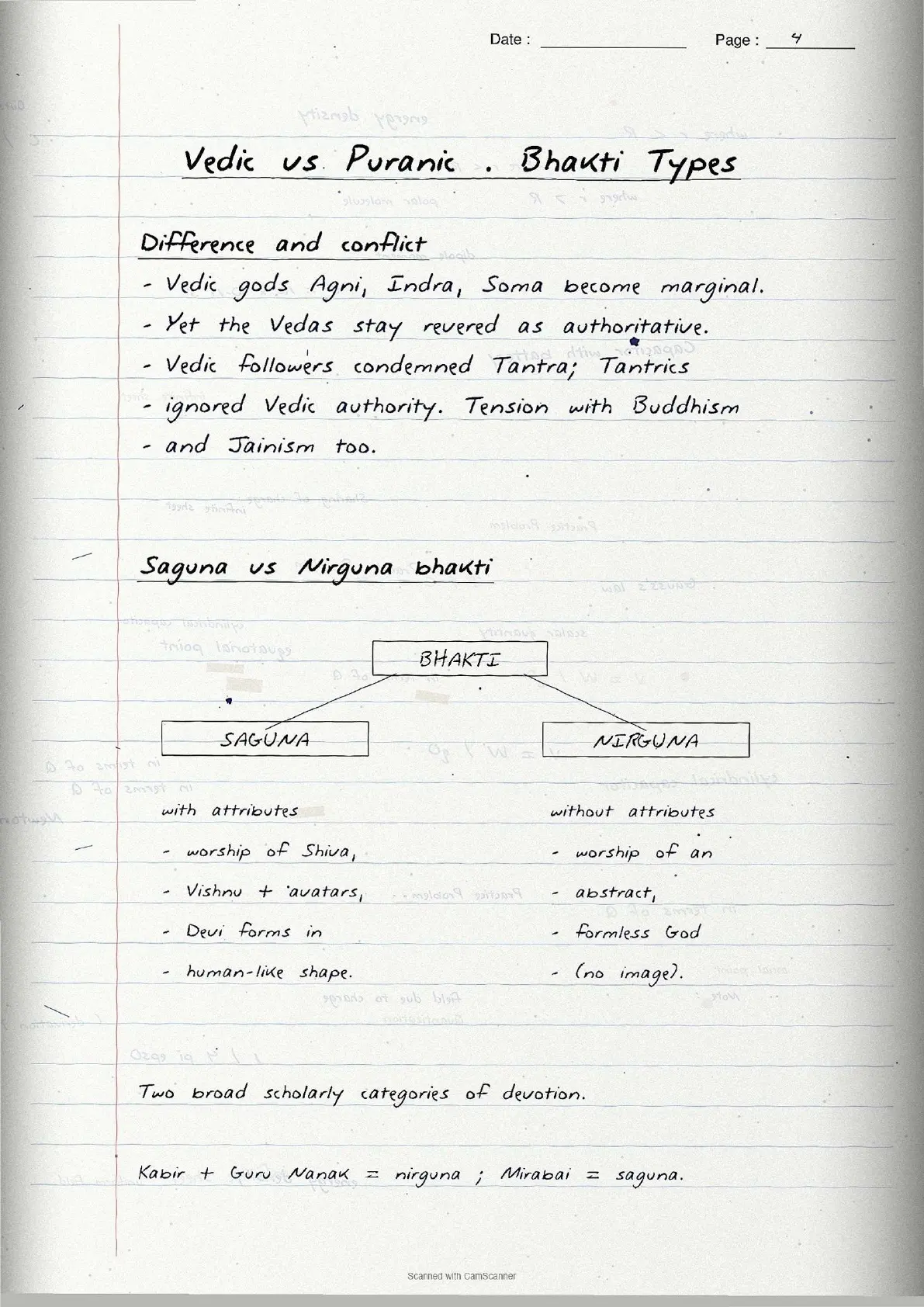
- Mixing bhakti and Sufi terms - keep saguna or nirguna for bhakti and silsila or khanqah for Sufism.
- Reversing ba-shari'a and be-shari'a - ba means with the law, be means without it.
- Forgetting that integration was two-way - Brahmanas both taught and absorbed.
- Giving teachings but not transmission in the Kabir or Nanak question - both halves carry marks.
- Stating a reason without an example in "analyse" questions - always pair the two.
Students who fix these five points usually move from average to high marks. The exam rewards precise vocabulary, so use the exact Sufi and bhakti terms when the question calls for them. The handwritten margin notes nudge you to use the right word in the right place.
How These Notes Pair with the Solutions and Book PDF
These handwritten notes are a revision layer. To prepare fully, students should use them with the other resources for the same chapter, all linked in the table below. Read the notes, then test yourself with the solutions, and open the book PDF for the original text and figures.
| Resource | Best used for |
|---|---|
| Bhakti-Sufi Traditions NCERT Solutions | Step-by-step answers to all 12 back-exercise questions |
| Bhakti-Sufi Traditions Class 12 Notes | Quick chapter summary with all saints, shrines and terms in one place |
| Bhakti-Sufi Traditions NCERT Book PDF | Reading the original NCERT chapter text and figures |
Tip: use the handwritten glossary to memorise the Sufi terms, then write the full answer in your own words. Drawing the term box once from memory fixes the Sufism essay for good.
All Class 12 History Handwritten Notes by Chapter
The table links the handwritten notes for every chapter in Themes in Indian History so students can move across the book in one click. Chapter 6 is highlighted.
| Chapter | Handwritten Notes |
|---|---|
| Chapter 1 | Bricks, Beads and Bones |
| Chapter 2 | Kings, Farmers and Towns |
| Chapter 3 | Kinship, Caste and Class |
| Chapter 4 | Thinkers, Beliefs and Buildings |
| Chapter 5 | Through the Eyes of Travellers |
| Chapter 6 | Bhakti-Sufi Traditions |
| Chapter 7 | An Imperial Capital Vijayanagara |
| Chapter 8 | Peasants, Zamindars and the State |
| Chapter 9 | Colonialism and the Countryside |
| Chapter 10 | Rebels and the Raj 1857 |
| Chapter 11 | Mahatma Gandhi and the Nationalist Movement |
| Chapter 12 | Framing the Constitution |
FAQs on Bhakti-Sufi Traditions Handwritten Notes
Bhakti-Sufi Traditions Class 12 Handwritten Notes Common Questions
Ques. Where can I download the Bhakti-Sufi Traditions handwritten notes PDF?
Ans. You can download the Bhakti-Sufi Traditions handwritten notes PDF directly from this page. It is free, follows the 2026-27 NCERT, and gives the chapter as clean handwritten pages with boxed terms and labelled charts.
Ques. Are handwritten notes good enough for the class 12 history board exam?
Ans. Yes, for revision. Handwritten notes are best used as a final layer after you have read the chapter and practised the solutions. They make saints, shrines, Sufi terms and the caste-critique answer quick to recall in the exam.
Ques. What does the Bhakti-Sufi Traditions chapter cover?
Ans. It covers changes in religious beliefs from about the eighth to the eighteenth century: the integration of cults, the bhakti saints (Alvars, Nayanars, Virashaivas), Sufism with its khanqahs and shrines, the Chishtis, and the poet-saints Kabir, Baba Guru Nanak and Mirabai.
Ques. What is the difference between bhakti and Sufi traditions?
Ans. Bhakti was devotion within the Hindu fold, led by saints like the Alvars, Nayanars, Kabir and Mirabai. Sufism was the mystical strand of Islam, organised around khanqahs, silsilas and shrines. Both sought God through love rather than ritual.
Ques. How should I use these notes for quick revision?
Ans. Read the pages once in the integration, bhakti and Sufism order, cover the boxed terms and write each list from memory, redraw the Sufi-term glossary, then attempt a short class 12 history chapter 6 mcq drill to test the small facts.



Comments